Through Smoke, Fire and Darkness
“We came across numerous bodies at the time—[in] various states. Some of them... you could tell were in their office, and the flames overcame the whole place, and they had no chance whatsoever to get out. Other areas, you could see people that were crawling around on the floor trying to get out, or help others, and they succumbed to the smoke too, and they were just lying in the middle of the floor, in the middle of the hallway, as they tried to get out.”
Dean Tills, Fairfax County Urban Search and Rescue Department,
excerpt from oral history interview, 2012, Charlie Clark Center for Local History
A Changed World
For Arlington County first responders, who for nearly two grueling weeks led the rescue and recovery efforts at the Pentagon, the world after September 11, 2001, would never be the same. They may not have lost any of their own that day, but the 343 firefighters and almost 3,000 victims who perished during the 9/11 terrorist attacks in Arlington, New York City and Shanksville weighed heavily on their minds.
It tested them in ways few could have imagined.
Two firefighters draw plans to work on the impact site at the Pentagon following the 9/11 attack.
Photo credit Michael DeFina. Charlie Clark Center for Local History, 133-01-01-01-0030
Early Civilian and Military Response
Many of the Pentagon’s more than 20,000 civilian and military personnel were already on edge when the attack came. News of the crashes in New York City rang through the corridors, and employees watched their office televisions in disbelief as smoke engulfed the two towers. Then, the unimaginable happened.
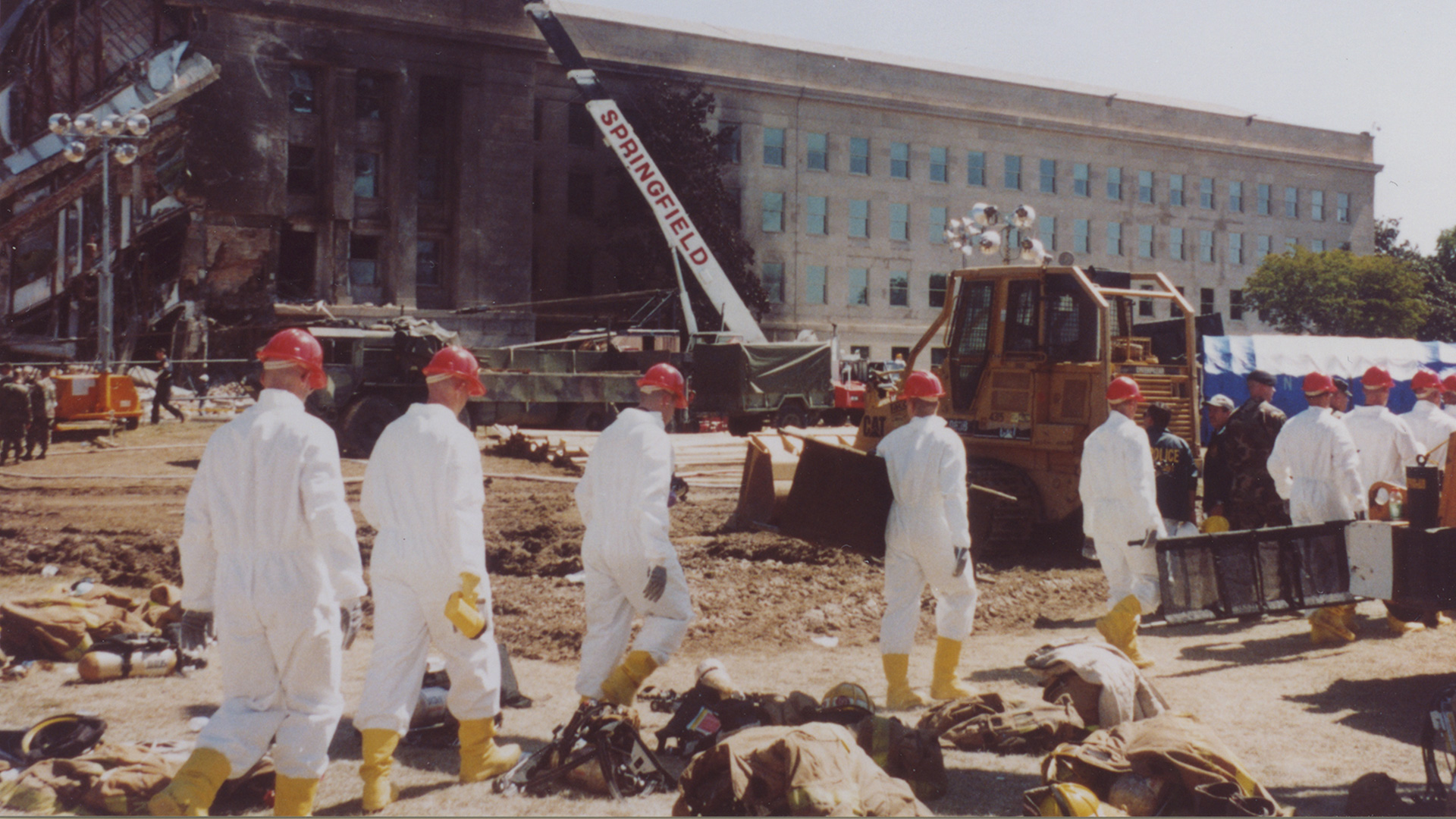
When Flight 77 hit its target, it ripped through three of the five outer rings of the building, destroying all five stories of the western façade of the Pentagon and leaving a 100-foot wide hole of destruction.
In the immediate aftermath, Pentagon employees acted selflessly and heroically to help evacuate their shaken and injured colleagues. Their quick actions, before emergency crews arrived on the scene, meant that more people survived that day.
Rescue Units Arrive
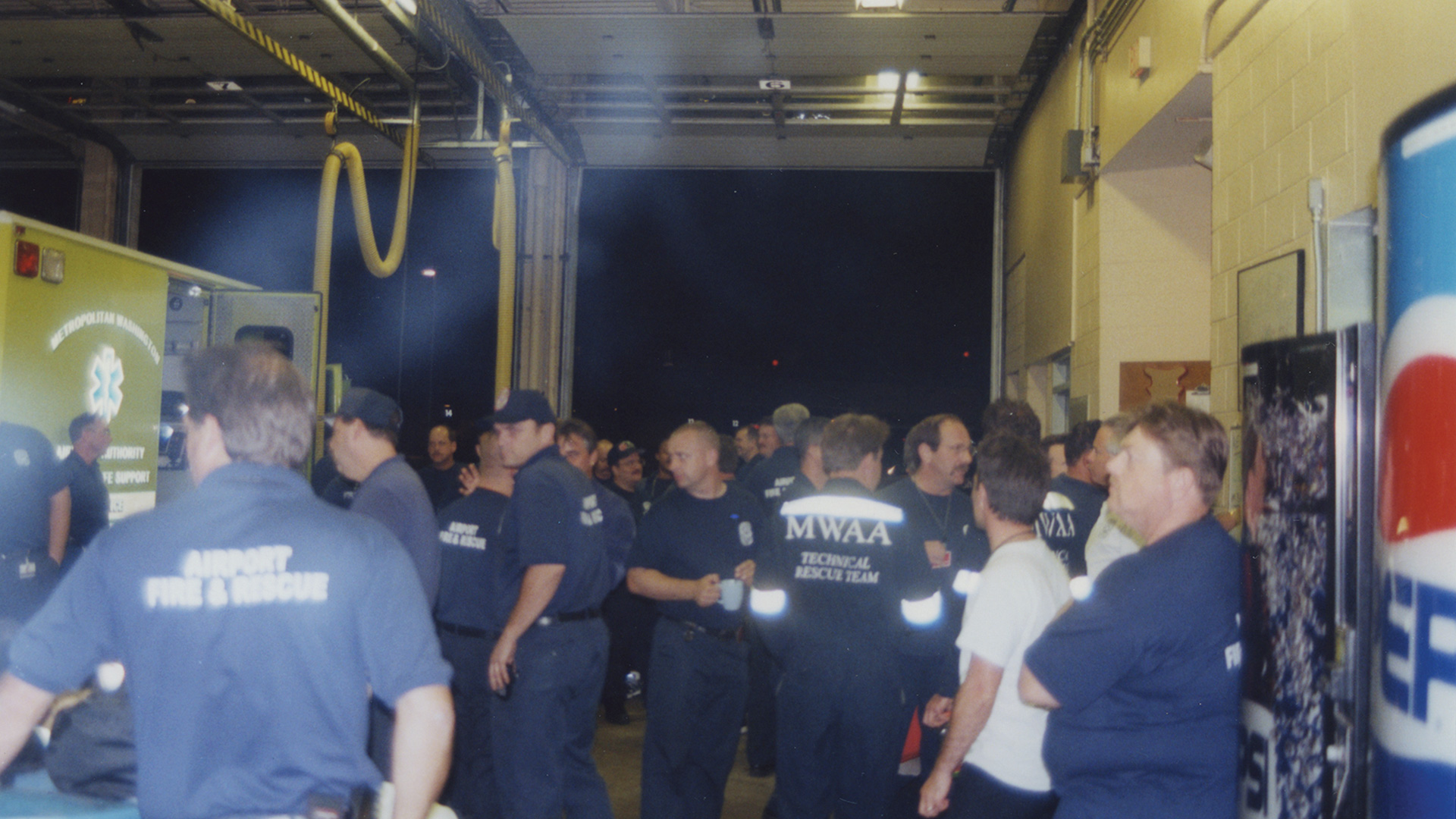
Arlington’s Emergency Operations Center (EOC) received early warnings from County emergency workers who saw the low-flying plane. The Metropolitan Washington Airports Authority (MWAA) Fire & Rescue Departments, serving Fort Myer and Ronald Reagan Washington National Airport, were notified, both of which had already started to respond. Dispatchers also asked Alexandria, Fairfax County and the District of Columbia fire and EMS services to stage units in readiness near the Pentagon.
The number of departments and volunteers responding, combined with the confusion and chaos at the scene underscored the need for effective command and control. This became the responsibility of Arlington County Fire Department (ACFD) Assistant Chief of Operations James Schwartz, who arrived at the scene within ten minutes of the impact. Schwartz set up an incident command center near the crash site.
Rescue units from Arlington, Fort Myer, Ronald Reagan Washington National Airport and the District of Columbia arrived first at the scene and bore the brunt of the fire battle. The firefighters performed their most critical missions during the first 36 hours—at first to save lives, then to contain the blaze.
For ten days following the attack, until the fire was officially declared extinguished, the ACFD retained control of the crash site. They transferred control of the crime scene to the FBI on September 21 at 7 a.m. The FBI returned control of the site to the Department of Defense on September 26.
By that time, most human remains had been recovered from the site and were transported to the Dover Port Mortuary at Dover Air Force Base in Delaware before being returned to their families.
Firefighters Faced Multiple Obstacles
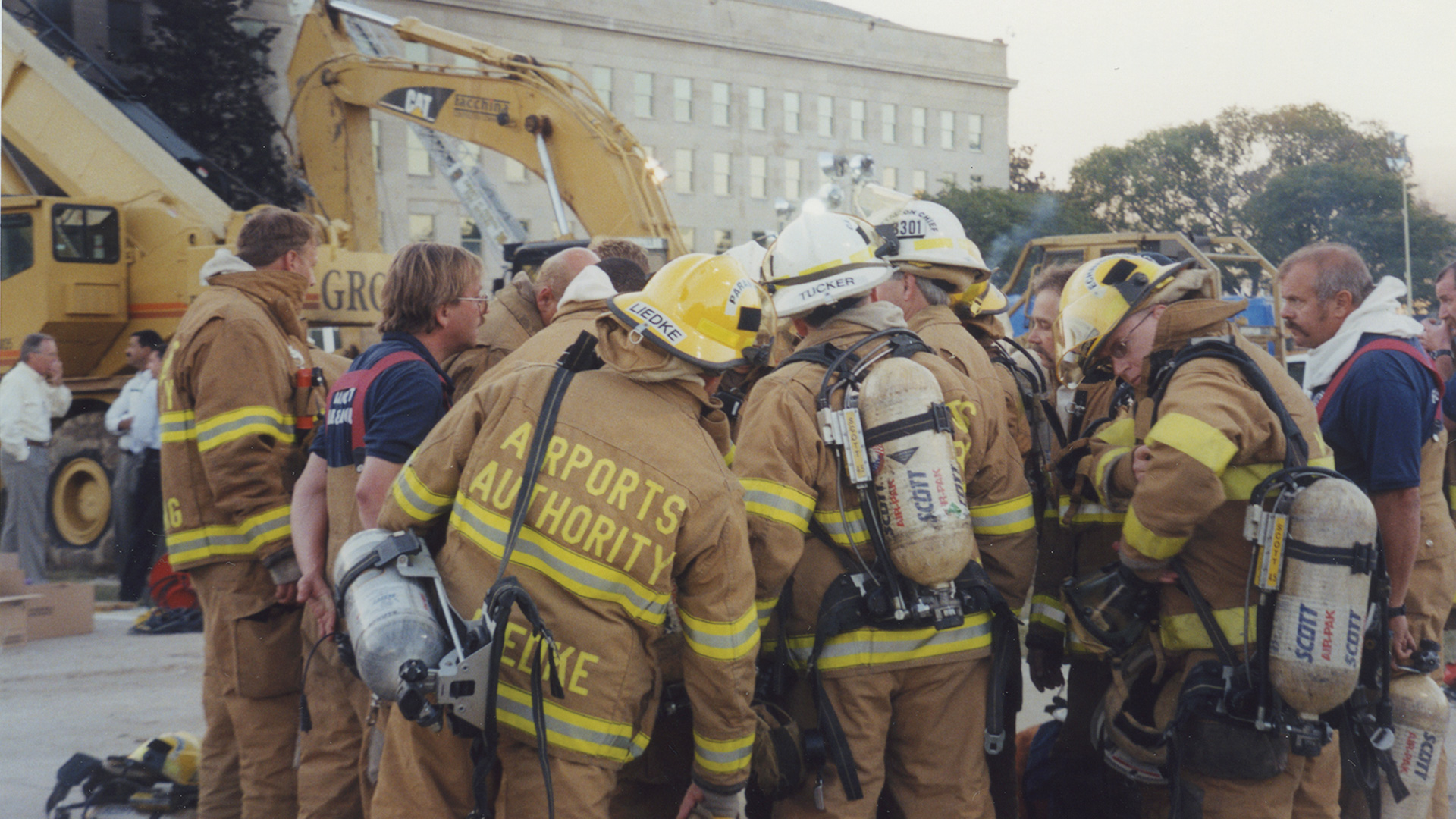
The situation for firefighters was daunting, and initial search and rescue missions were extremely dangerous. Searching from room to room for survivors, firefighters used axes, crowbar-like tools, sledgehammers and a hydraulic device to pry doors open.
They encountered heavy smoke and debris everywhere—broken glass, melted plastic, twisted pipes and a layer of black soot covering every surface. The jet fuel burned fiercely and was intensified by the radiant heat coming from the center of the crash site. Estimates of maximum interior temperatures ranged up to 2,000 degrees Fahrenheit.
Rescue units used thermal energy cameras to look for bodies, but unfortunately they found no one alive. Most rescues happened in the early minutes shortly after the incident before the firefighters arrived.
After the fire finally was contained on the afternoon of Sept. 12, David Lange, Battalion Chief of the Fairfax County Fire and Rescue Department, led a crew of firefighters and soldiers to the roof, where they draped a large American flag over the side of the building, just south of the impact point.
The image of the giant flag would become a strong symbol to the first responders and the public of both the tragedy of 9/11 and also of hope and perseverance.
An American flag is draped over a portion of the Pentagon near where the structure was hit by a plane during the 9/11 attack. Photo credit Diane Kresh. Charlie Clark center for Local History, 133-01-02-01-107
Read on to learn more.
The next post in this series explores how the Arlington community demonstrated remarkable resilience, compassion and determination following the 9/11 terrorist attacks.