• Skip to primary navigation
  • Skip to main content
  • Skip to footer

Alert

Update: Elevator outages, maintenance and upgrades at Central Library More Info

Home - Arlington County Virginia - Logo
MENUMENU
  • Join Now
  • My Account
    • Login
    • My Checkouts
    • My Holds
    • My Lists
    • My Reading History
    • About Borrowing
    • About Holds
    • About My Account
  • Hours & Locations
    • All Hours & Locations
    • Holiday Closings
  • News
    • Library News
    • Director's Blog
    • Get Email Updates
  • Contact Us

Arlington Public Library

MENUMENU
  • Search
  • Collections
  • Library Services
  • Events
  • Community Engagement
  • Join Now
  • My Account
    • Login
    • About Borrowing
    • About Holds
    • About My Account
  • Hours & Locations
    • All Hours & Locations
    • Holiday Closings
  • News
    • Library Blog
    • Get Email Updates
  • Contact Us

Throwback Thursday

Arlington’s African-American Baseball Teams

Post Published: July 17, 2019

While the Washington Nationals dominate most local baseball discussions, there is also a fascinating history of baseball in Arlington’s African-American community.
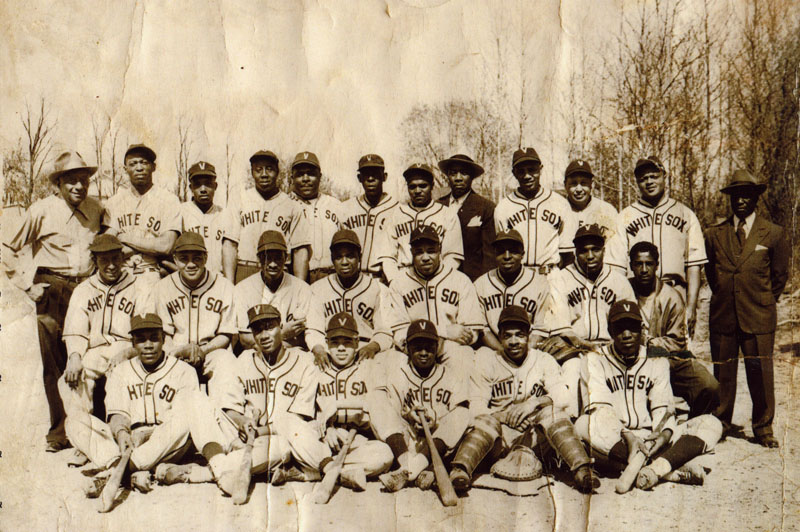
1930s baseball team, all black men, photograph

Arlington's Virginia White Sox baseball team, 1930s (exact date unknown)

The earliest known baseball team, named The Old Virginia Blues, started in 1910. They played each Sunday on a field in East Arlington near Arlington Junction.

The two best known teams—the Virginia White Sox (pictured above) and the Green Valley Black Sox—started playing in the 1930’s. Each weekend throughout the summer, the teams competed at a field near High View Park, on land which is now occupied by the Virginia Hospital Center. Their games provided a social gathering place for local residents and families.

After the land was purchased for development, the teams folded, for lack of a place to play.

To learn more about Arlington's history, visit the Center for Local History on the first floor of the Central Library.

Do you have a question about this story, or a personal experience to share? 

Use this form to send a message to the Center for Local History.

Center For Local History - Blog Post Message Form

Do you have a question about this story, or a personal experience to share? Use this form to send a message to the Center for Local History.

"*" indicates required fields
This field is for validation purposes and should be left unchanged.

Share Your Story

July 17, 2019 by Web Editor

Putt-Putt Golf Courses

Post Published: July 11, 2019

Mini-golf attracted visitors from across the region to Arlington for over 50 years.

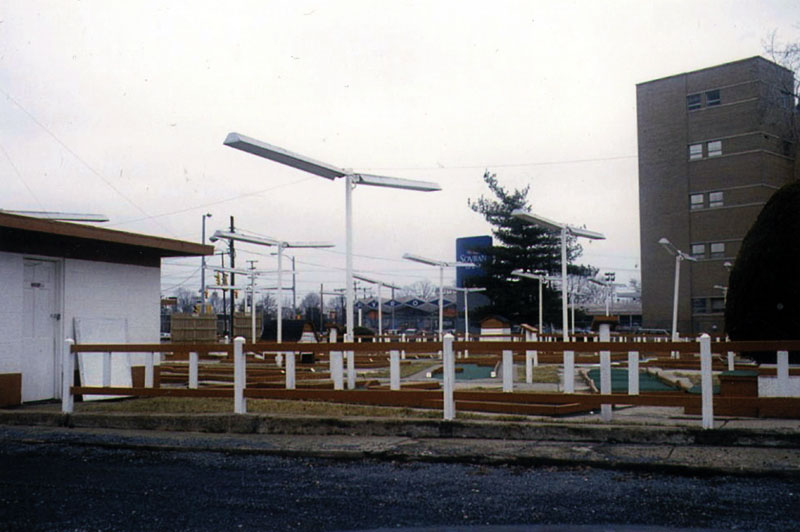
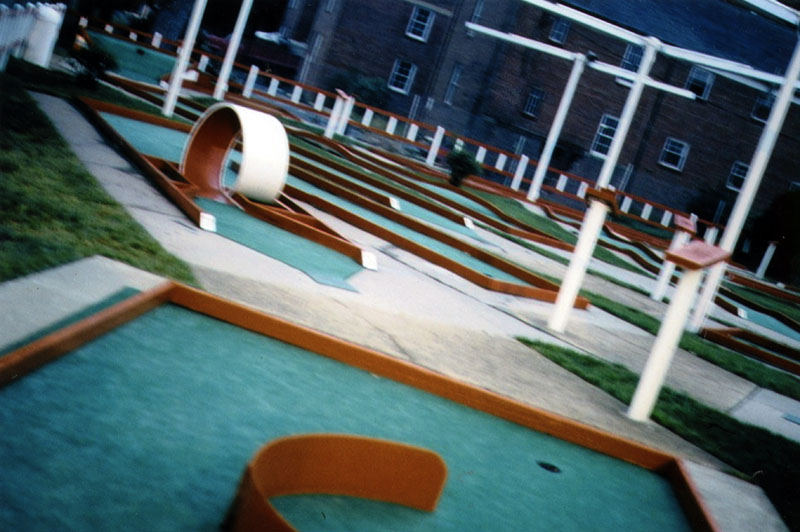
put-put golf course wide view
Putt-putt golf course
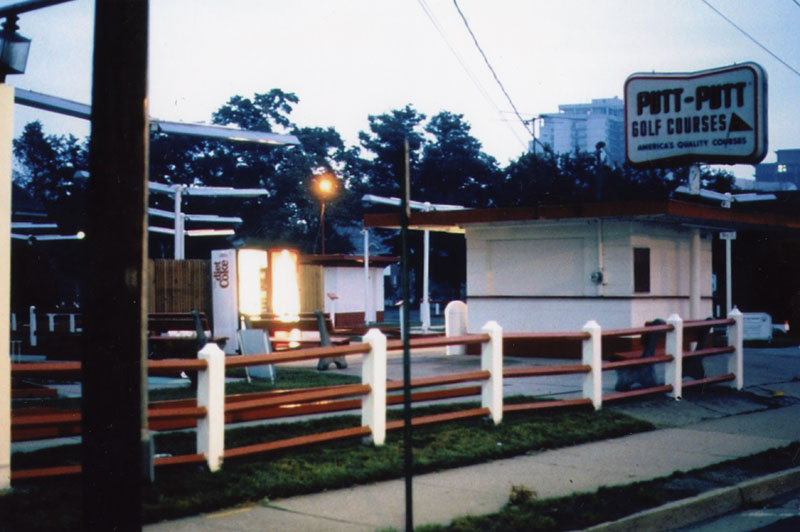
putt-putt-golf course close up

In 1930, Robert P. Balinger opened a miniature golf course on Wilson Blvd. in Ballston. 30 years later, it was replaced by the 36-hole course pictured above.

When Putt-Putt Golf Courses closed for good in 1989, making way for Ballston’s rapid high-rise development, many mourned its loss as a fun, multi-generational activity and hoped it would relocate elsewhere in Arlington.

Unfortunately, the Putt-Putt Golf Courses never found a new home in Arlington, but its memory lives on. Now Arlington putt-putt lovers can go to Upton Hill Park for mini-golf, or sometimes find pop-up mini golf courses like the one in Rosslyn this summer.

Looking for an extra glimpse of Arlington history? In the background of the first image, you can catch a glimpse of Bob Peck Chevrolet, an iconic Arlington landmark from 1964-2008.

To see more items like these, or to learn more about Arlington's history, visit the Center for Local History on the first floor of the Central Library.

Do you have a question about this story, or a personal experience to share? 

Use this form to send a message to the Center for Local History.

Center For Local History - Blog Post Message Form

Do you have a question about this story, or a personal experience to share? Use this form to send a message to the Center for Local History.

"*" indicates required fields
This field is for validation purposes and should be left unchanged.

Share Your Story

July 11, 2019 by Web Editor

Have You Ever Stood Awestruck In A Great Forest?

Post Published: June 27, 2019

Phoebe Knipling

The year is 1967.

Phoebe sees that her high school students are disconnected from the natural world. So she founds The Outdoor Lab in the foothills of the Blue Ridge Mountains.

Now generations of urban Arlington students can study animals and plants in their natural ecosystems.

Transform science education: That’s Women’s Work

Two years in the making, Arlington Public Library's Women's Work exhibit presents the stories of women trailblazers and their far-reaching impact on politics, education, business, social activism and public libraries.

The curated digital collection contains stories, photographs, letters and memorabilia and spotlights both individuals and groups of Arlington women who dedicated their work to improve the lives of others.

Because there are always more layers of history to find and examine, the Center for Local History continually seeks community donations and oral histories. Contact us at 703-228-5966 or by email.

June 27, 2019 by Web Editor

Do You Like Arlington’s Vibrant, Walk-Friendly Culture?

Post Published: June 20, 2019

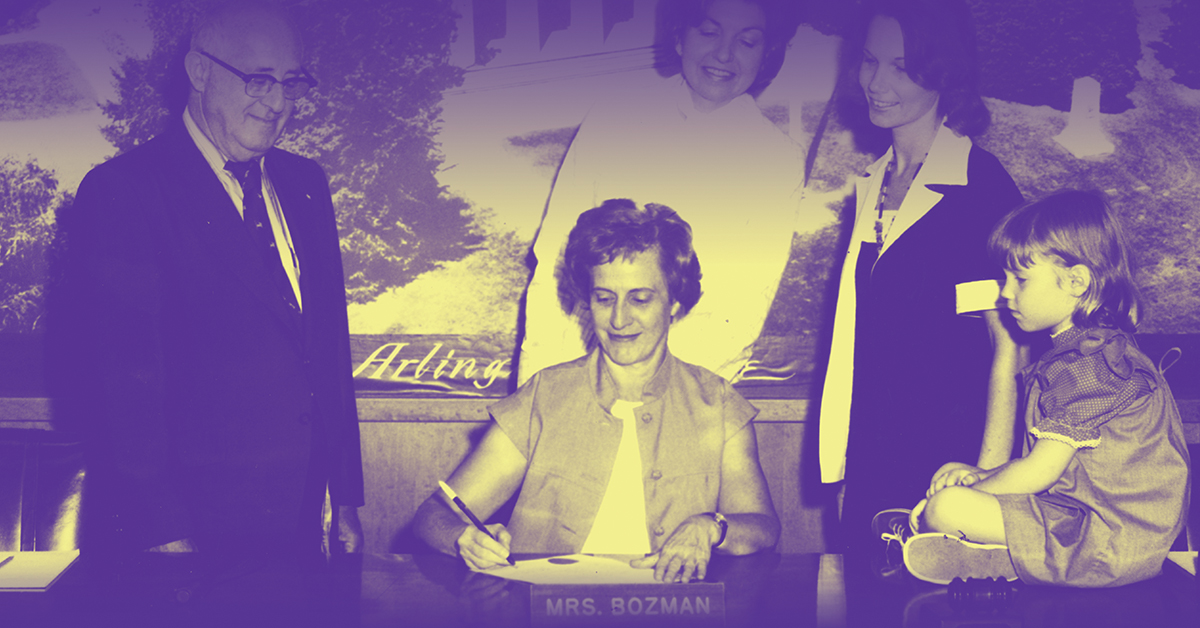
Ellen Bozman sitting in the County Board Room

The year is 1973.

Ellen is elected to the County Board.

She leads the transformation of a Metro corridor surrounded by parks, apartments, shopping and restaurants, where the community can flourish.

Lead this town: That's Women's Work.

Lead this town: That's Women's Work.

Two years in the making, Arlington Public Library's Women's Work exhibit presents the stories of women trailblazers and their far-reaching impact on politics, education, business, social activism and public libraries.

The curated digital collection contains stories, photographs, letters and memorabilia and spotlights both individuals and groups of Arlington women who dedicated their work to improve the lives of others.

Because there are always more layers of history to find and examine, the Center for Local History continually seeks community donations and oral histories. Contact us at 703-228-5966 or by email.

June 20, 2019 by Web Editor

When You See a Problem, Do You Turn it into an Opportunity?

Post Published: June 13, 2019

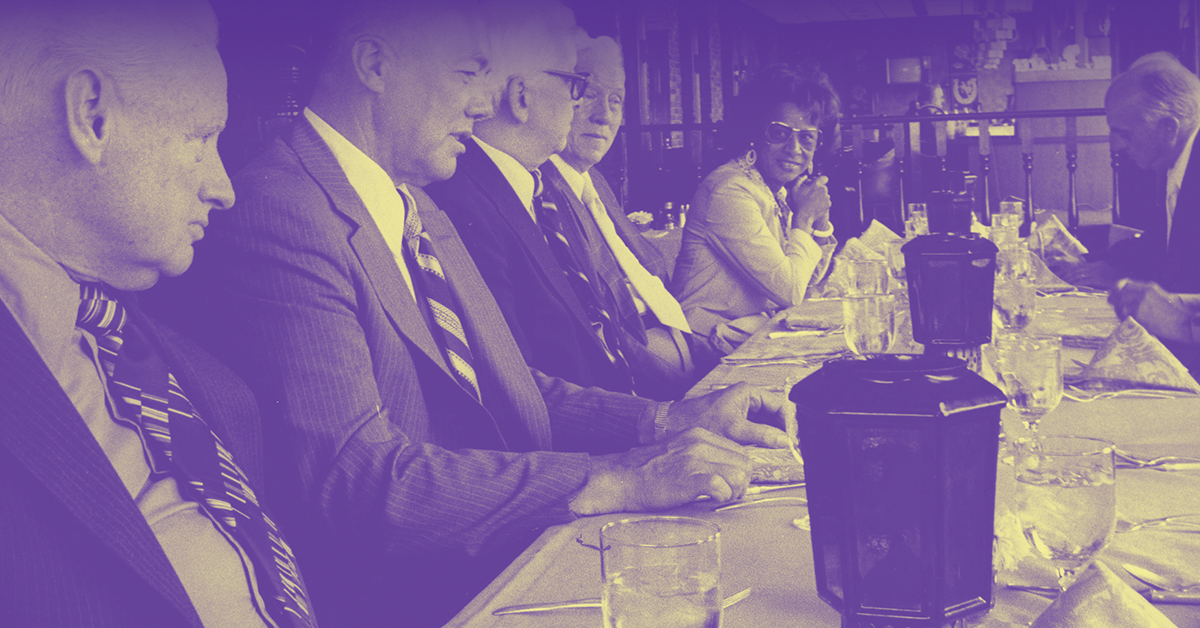
Margarite Syphax sitting at table with a bunch of white guys

The year is 1954.

Margarite sees that Black families are denied fair housing because of segregation, so she starts a successful real estate company that will serve everyone.

The White House recognizes her as an entrepreneurial pioneer.

Build a multimillion-dollar firm: That’s Women’s Work.

Read Margarite Syphax’s Story

Two years in the making, Arlington Public Library's Women's Work exhibit presents the stories of women trailblazers and their far-reaching impact on politics, education, business, social activism and public libraries.

The curated digital collection contains stories, photographs, letters and memorabilia and spotlights both individuals and groups of Arlington women who dedicated their work to improve the lives of others.

Because there are always more layers of history to find and examine, the Center for Local History continually seeks community donations and oral histories. Contact us at 703-228-5966 or by email.

June 13, 2019 by Web Editor

What Would You Give Up Your Freedom For?

Post Published: June 6, 2019

purple tinted photo of Gertrude Crocker

The year is 1917.

33-year old Gertrude becomes a 3-time political prisoner for the right to vote.

Through her participation in the national suffrage movement, over 83 million women are registered to vote in the United States.

Go to jail for the vote: That’s Women’s Work.

Read Gertrude Crocker's Story

Two years in the making, Arlington Public Library's Women's Work exhibit presents the stories of women trailblazers and their far-reaching impact on politics, education, business, social activism and public libraries.

The curated digital collection contains stories, photographs, letters and memorabilia and spotlights both individuals and groups of Arlington women who dedicated their work to improve the lives of others.

Because there are always more layers of history to find and examine, the Center for Local History continually seeks community donations and oral histories. Contact us at 703-228-5966 or by email.

June 6, 2019 by Web Editor

Arlington Farms

Post Published: May 29, 2019

By 1941, the last of the property where the USDA's Experimental Farm had been located (at the northeast tip of Arlington) was transferred to the War Department for use in the National Defense Program.

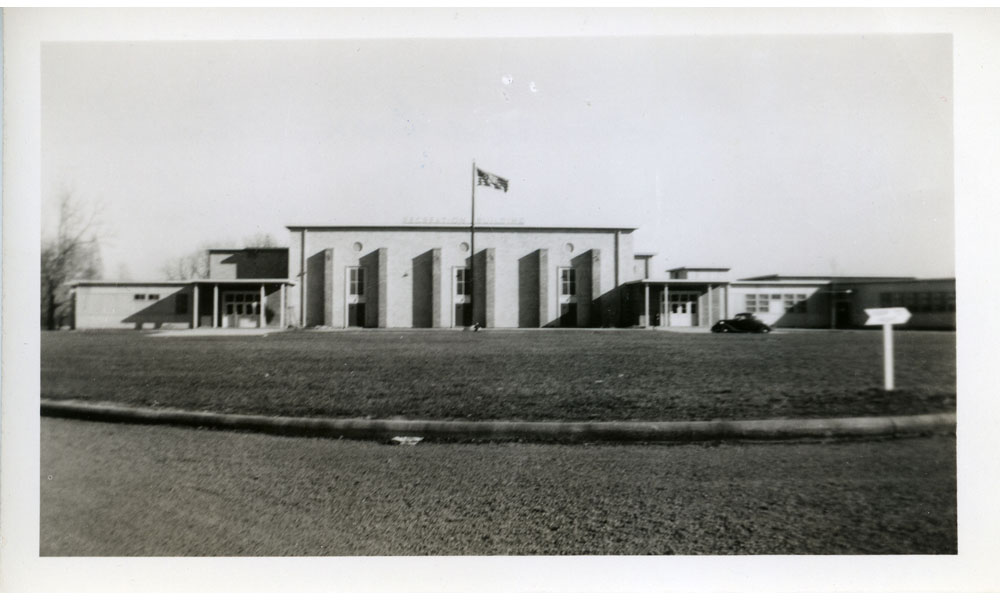
Arlington Farms recreation hall where Saturday night dances were held. Arlington Farms was nicknamed “Girl Town” and was a popular spot for soldiers and sailors stationed at nearby bases.

Arlington Farms recreation hall where Saturday night dances were held.  c. 1944.

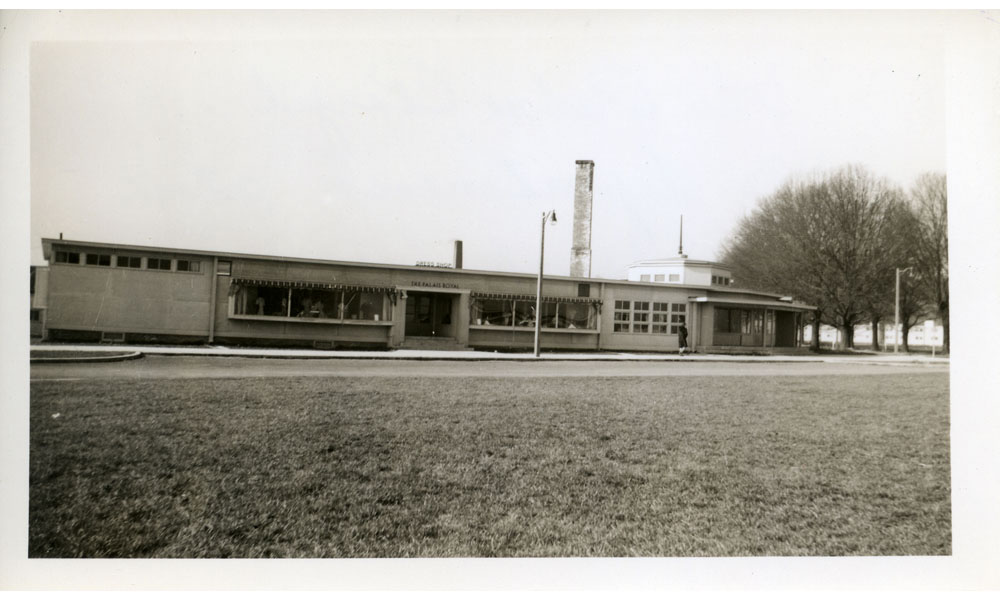
The Palais Royal—Arlington Farms’ department store and beauty shop. In addition to a store and recreation hall, Arlington Farms had a chapel, a post office, and a cafeteria.

The Palais Royal—Arlington Farms’ department store and beauty shop.  c. 1944.

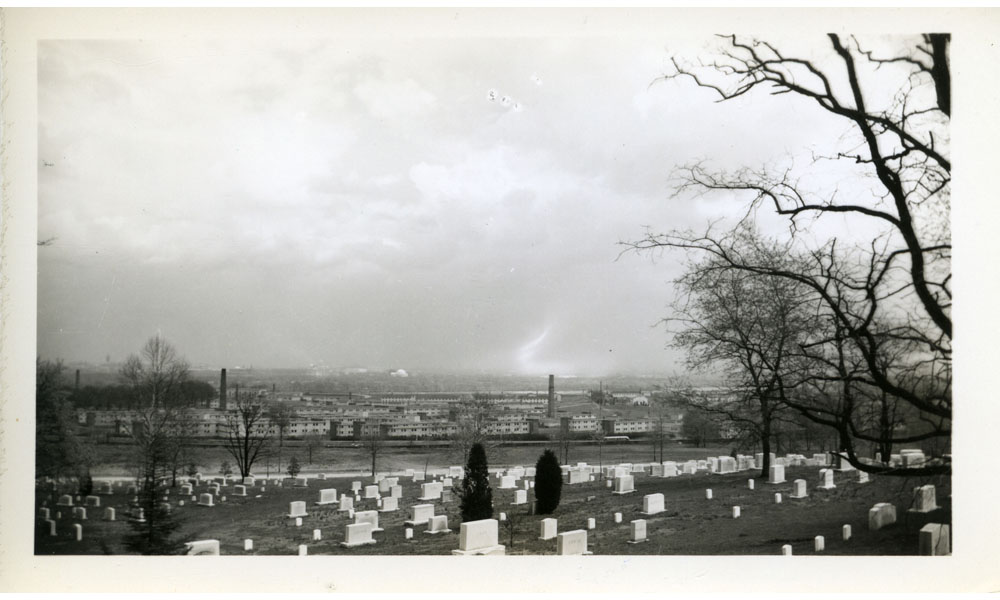
A view of Arlington Farms from Arlington National Cemetery, Washington, D.C. is visible in the background.

A view of Arlington Farms from Arlington National Cemetery, Washington, D.C. is visible in the background. c. 1944.

In 1943, the United States Government transformed that land into war residences for female civil servants and service members during World War II. Six of the ten dorms were reserved for civilians and government employees, while the remaining four were for military servicewomen.

Most of the women living at Arlington Farms worked at the Pentagon, the Navy Annex, or Arlington Hall Station, the headquarters of the Army’s Signal Intelligence Service. During World War II, women entered the workforce in unprecedented numbers—accounting for approximately 40% of the workforce between 1940 and 1945.

Arlington Farms was nicknamed “Girl Town” and was a popular spot for soldiers and sailors stationed at nearby bases. In addition to the department store, beauty shop and recreation hall pictured in the photographs above, Arlington Farms also had a chapel, a post office, and a cafeteria.

The complex’s buildings were demolished in the 1960s and today Arlington National Cemetery occupies the land.

To see more items like these, or to learn more about Arlington's history, visit the Center for Local History on the first floor of the Central Library.

Do you have a question about this story, or a personal experience to share? 

Use this form to send a message to the Center for Local History.

Center For Local History - Blog Post Message Form

Do you have a question about this story, or a personal experience to share? Use this form to send a message to the Center for Local History.

"*" indicates required fields
This field is for validation purposes and should be left unchanged.

Share Your Story

May 29, 2019 by Web Editor

An Experimental Farm

Post Published: May 22, 2019

Did you know that Arlington was at the forefront of experimental farming in the early 20th Century?

In 1900, Congress transferred 400 acres of land along the Potomac near Ft. Myer to the Department of Agriculture in order to create an experimental farm for plant testing, and the improvement of plants and cultivation.

Horse-drawn cultivator, Arlington Farm, 1908, Arlington House in background

Horse-drawn cultivator, Arlington House in background, 1908.

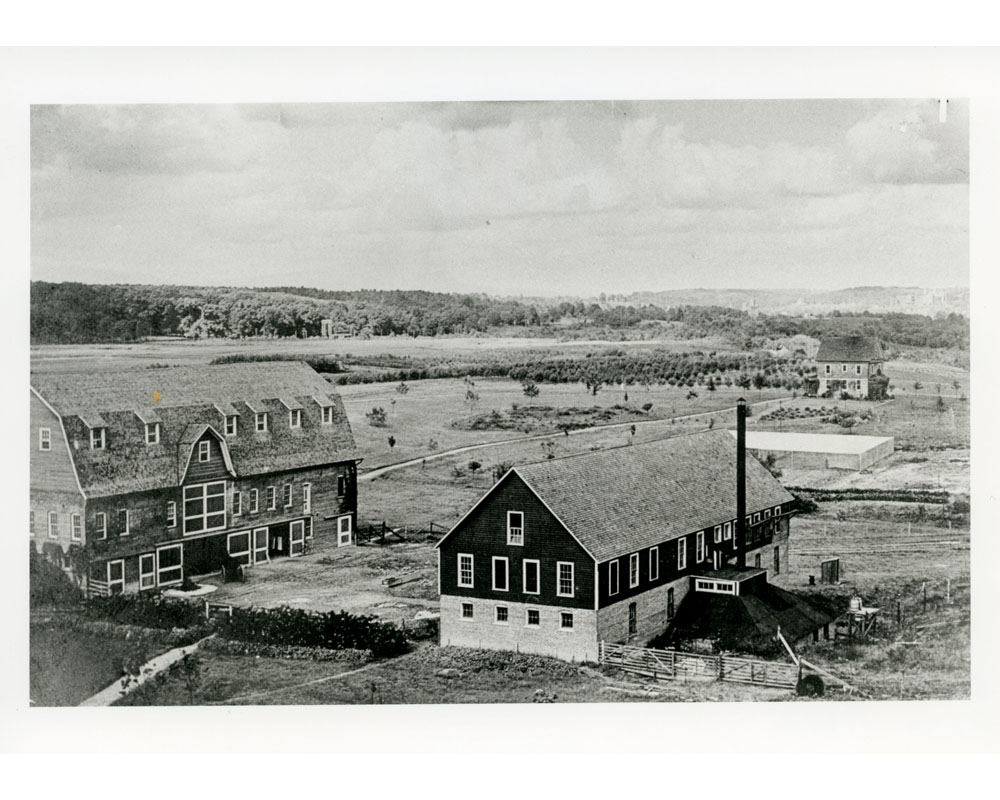
two farm buildings surrounded by open fields

Experimental Farm, USDA, date unknown.

A lot of fascinating and far-reaching work was conducted at the Experimental Farm over the next forty years:

  • The Farm naturalized over 100,000 types of foreign plants for domestic use, using seeds collected from Americans traveling aboard on governmental or private missions. Soybeans are one of the best-known crops to be introduced this way.
  • When a plant disease threatened to wipe out the domestic sugarcane industry in the 1920s the Farm led the way in developing immunity to this blight, which ultimately resulted in the rebuilding of the sugarcane industry.
  • One of the more unusual examples of the Farm’s experiments involved grasses for golf greens. Before WWI the country’s golf courses were almost entirely dependent on German grown seed for their grasses. When the supply was cut off by the war, golf courses throughout the country contributed funds for experiments at Arlington to develop new domestic varieties.
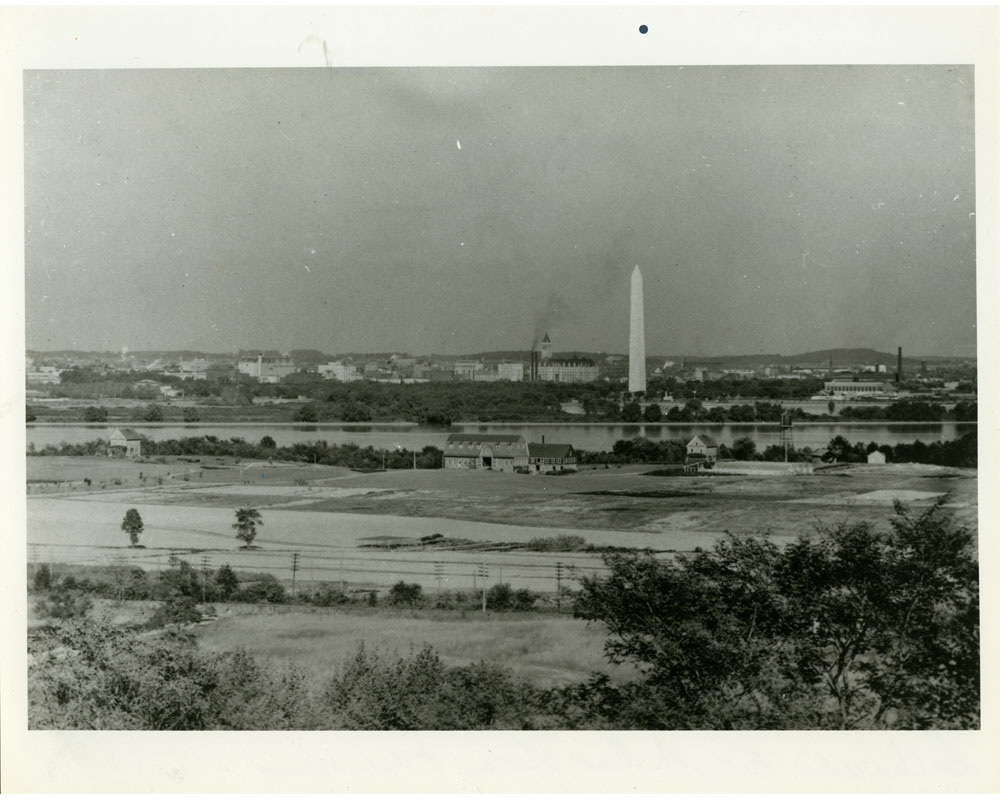
looking over the Experimental Farm land towards the National Monument

U.S. Dept. of Agriculture photo of the Experimental Farm, 1906. National Monument in the background.

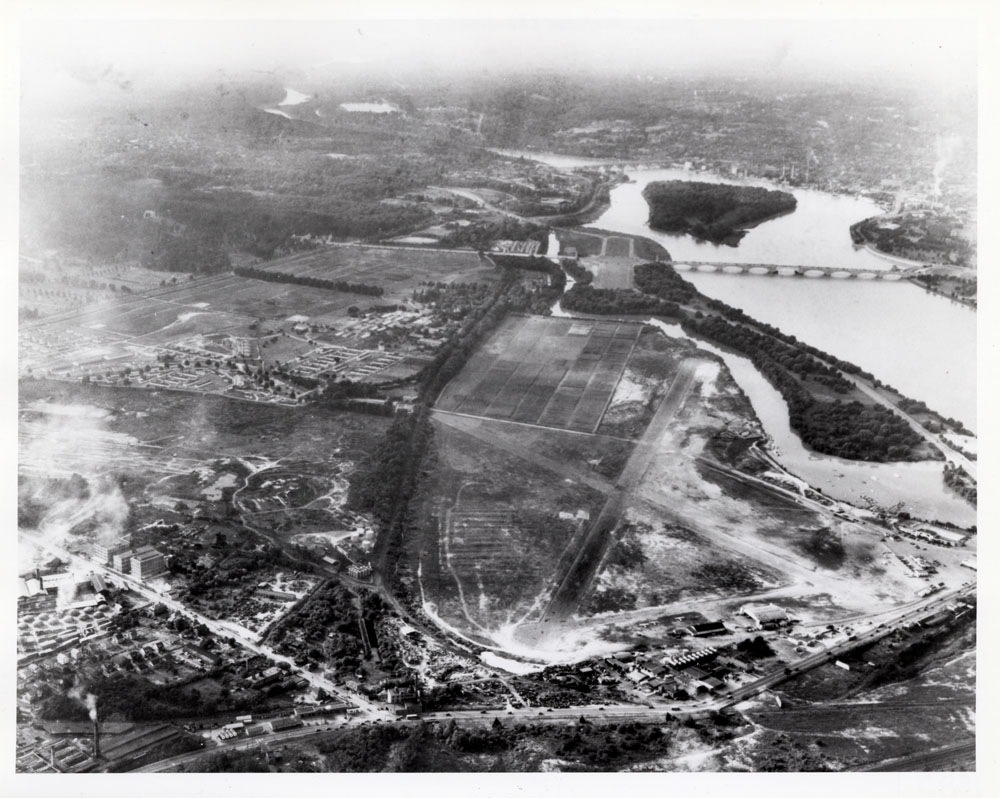
Aerial View, Shows area now occupied by Pentagon, Airport, Memorial Bridge, Aqueduct Bridge, Experimental Farm, 1919

Aerial View of the Experimental Farm, 1919, shows area now occupied by the Pentagon and Airport. Bridges are Memorial Bridge and Aqueduct Bridge.

With the development of Arlington National Cemetery and the construction of Memorial Bridge there was pressure to relocate the farm. In 1932 much of the farm’s work was shifted to Beltsville, MD.

By 1941 the remainder of the property had been transferred to the War Department for use in the National Defense Program.

To see more items like these, or to learn more about Arlington's history, visit the Center for Local History on the first floor of the Central Library.

Do you have a question about this story, or a personal experience to share? 

Use this form to send a message to the Center for Local History.

Center For Local History - Blog Post Message Form

Do you have a question about this story, or a personal experience to share? Use this form to send a message to the Center for Local History.

"*" indicates required fields

This field is for validation purposes and should be left unchanged.

Share Your Story

May 22, 2019 by Web Editor

The Aqueduct Bridge

Post Published: May 15, 2019

Before the Key Bridged spanned the Potomac River from Georgetown to Rosslyn, the Alexandria Aqueduct carried barges on an extension of the C&O Canal from Georgetown to Alexandria (then encompassing Arlington County and the City of Alexandria), to keep the city competitive as a trading center.

NOTE: The following two paragraphs have been edited to correct an error, and add information. 

These two photographs were taken approximately forty years apart.

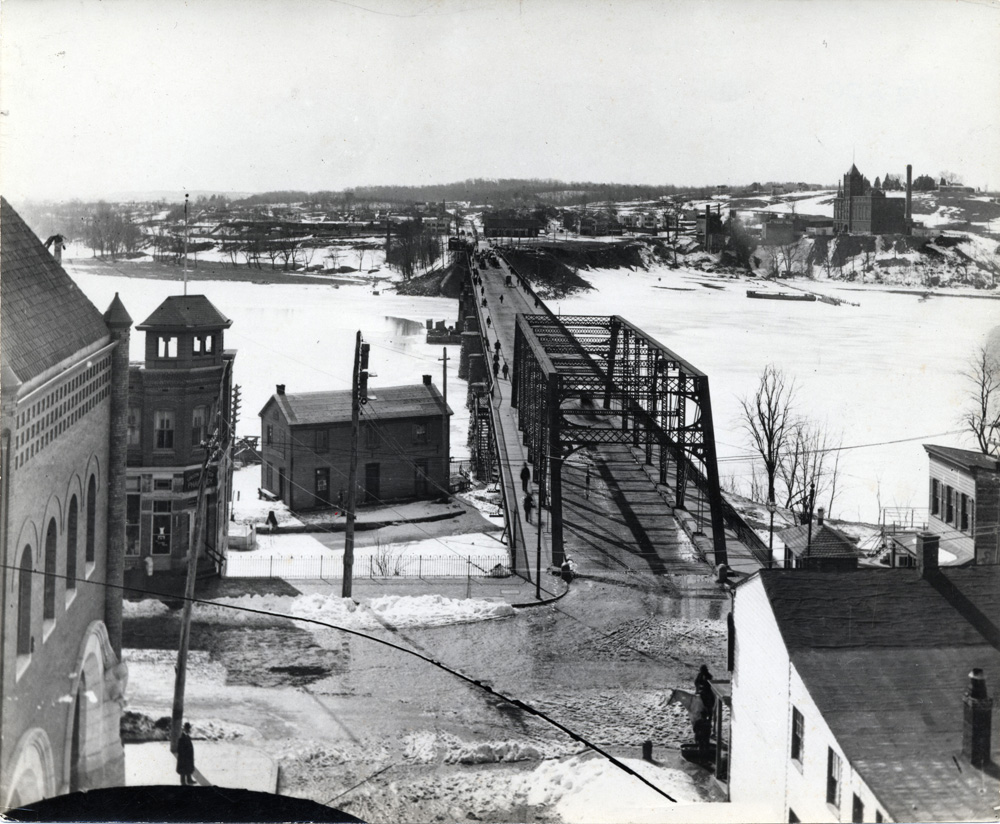
photo of the Alexandria Aqueduct Bridge looking towards Georgetown

Aqueduct Bridge, c. 1900, photographed from Georgetown

Photo of the Key Bridge with Alexandra Aqueduct footings, looking towards Georgetown

Key Bridge with remaining piers of old aqueduct, c. 1940, photographed from Georgetown

The first photo, c.1900, was taken from Georgetown looking towards Rosslyn. It shows the Aqueduct Bridge (also known as the Potomac or Alexandria Aqueduct), which connected Virginia and Georgetown from 1843 to 1923. The tall building in the upper right corner of the first photo was a brewing company that began as the Consumer Brewing Company (1895 -1902) and then became the Arlington Brewing Company (1902 -1918).

The second image shows the Key Bridge with the last vestiges of the Aqueduct Bridge. Construction on the Aqueduct Bridge began in 1833 at the bequest of the Alexandria Canal, which knew its port would suffer because of the C&O Canal. The bridge took ten years to construct, and in 1868, a second level was added to the bridge to serve as a road between Rosslyn and Georgetown for people and carts.

In 1886, the bridge was closed to canal boats, but the Aqueduct Bridge continued to be used as a bridge for traffic between Georgetown and Rosslyn until 1923, when the Key Bridge opened.

The Aqueduct Bridge's iron superstructure was removed in 1933 by the Depression-era Civil Works Administration, and in 1962 the Army Corps of Engineers removed the tops of seven of the eight stone piers visible in the Key Bridge image. The eighth pier—the one closest to Virginia—was left intact and is visible to this day. You can also still see remnants of the Georgetown abutment near the western base of the Key Bridge.

To see more items like these, or to learn more about Arlington's history, visit the Center for Local History on the first floor of the Central Library.

Do you have a question about this story, or a personal experience to share? 

Use this form to send a message to the Center for Local History.

Center For Local History - Blog Post Message Form

Do you have a question about this story, or a personal experience to share? Use this form to send a message to the Center for Local History.

"*" indicates required fields
This field is for validation purposes and should be left unchanged.

Share Your Story

May 15, 2019 by Web Editor

Hygiene Class for New Mothers

Post Published: May 7, 2019

Happy Mother's Day to all the women who have worked to keep us both healthy and clean!

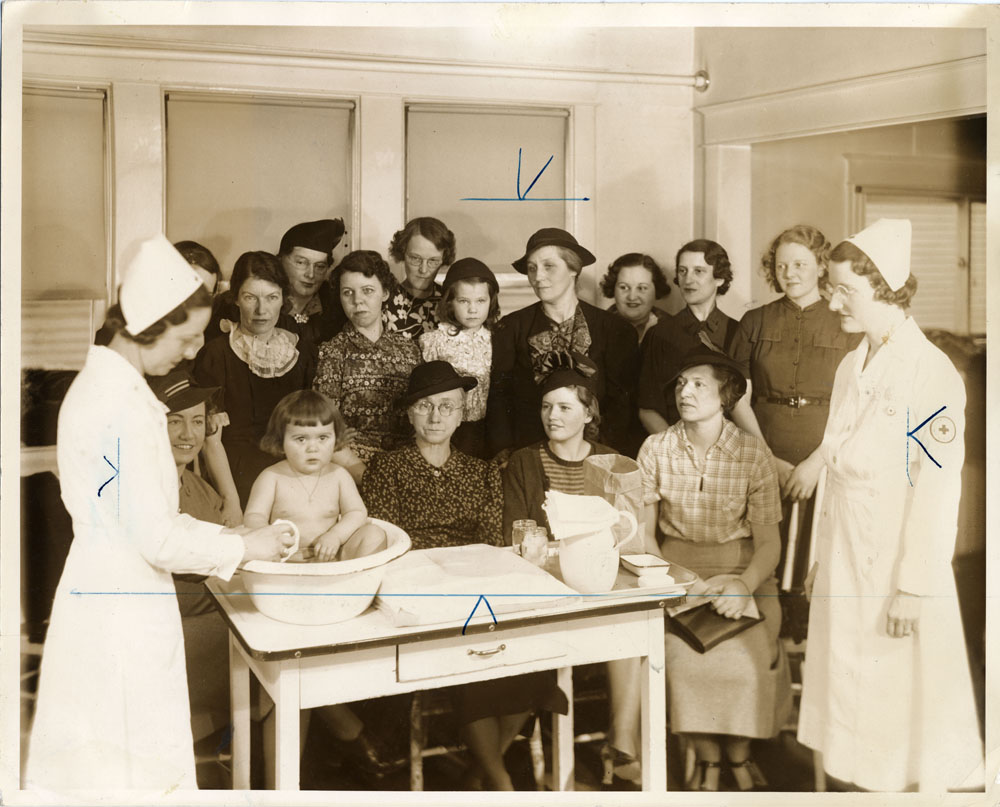
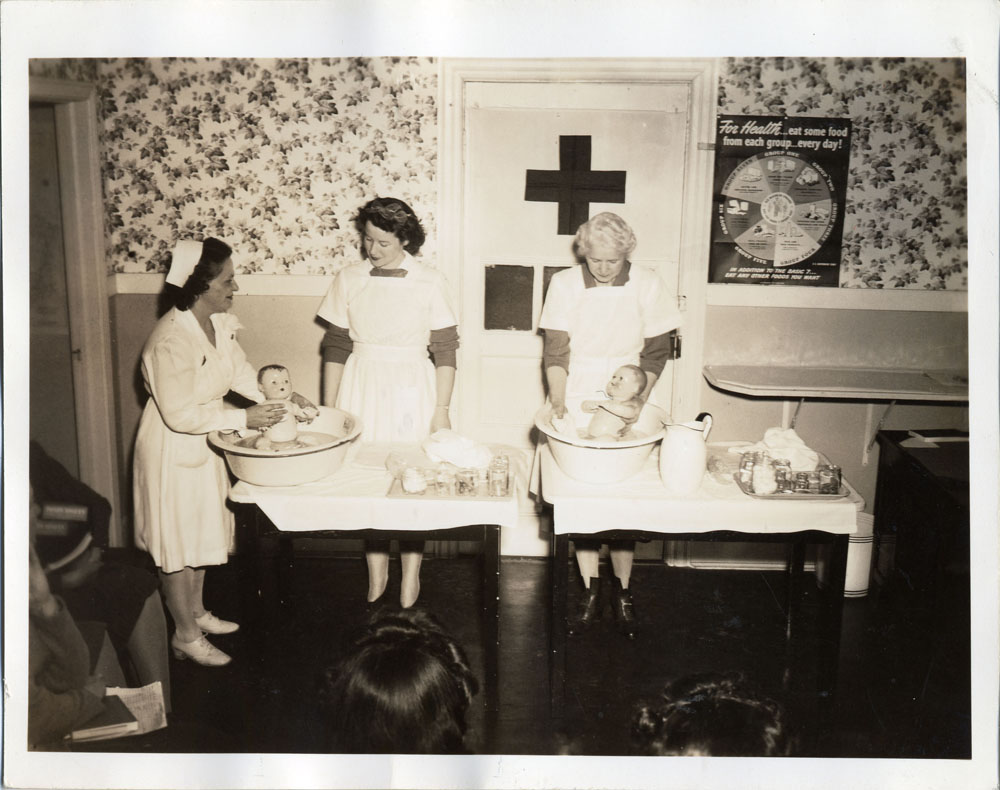
These photos are from Arlington Health Department hygiene classes, which were offered for new and expectant mothers in the 1930s and 1940s.

Health Department baby bath demonstration by home nursing staff, 1943

Home hygiene clinic, 1938

Health Department baby bath demonstration by home nursing staff, 1943

Baby bath demonstration, 1943

During this time period, health and cleanliness were considered one and the same, so personal hygiene was seen as essential to being healthy.

The classes for new mothers covered maternity hygiene, infant hygiene, and preschool hygiene. Among other things, nurses demonstrated the best way to wash a toddler and a baby.

To see more items like these, or to learn more about Arlington's history, visit the Center for Local History on the first floor of the Central Library.

Do you have a question about this story, or a personal experience to share? 

Use this form to send a message to the Center for Local History.

Center For Local History - Blog Post Message Form

Do you have a question about this story, or a personal experience to share? Use this form to send a message to the Center for Local History.

"*" indicates required fields
This field is for validation purposes and should be left unchanged.

Share Your Story

May 7, 2019 by Web Editor

  • « Go to Previous Page
  • Page 1
  • Interim pages omitted …
  • Page 5
  • Page 6
  • Page 7
  • Page 8
  • Page 9
  • Go to Next Page »

Footer

About Us

  • Mission & Vision
  • Charlie Clark Center for Local History
  • News Room
  • Get Email Updates

Administration

  • Policies
  • Library Staff
  • Job Opportunities
  • Propose a Program or Partnership

Support Your Library

  • Friends of the Library
  • Giving Opportunities
  • Donating Materials
  • Volunteer Opportunities

Our Mission

We champion the power of stories, information and ideas.

We create space for culture and connection.

We embrace inclusion and diverse points of view.


Download the Library App

Download the Library App

Arlington County | Terms & Conditions | Accessibility | Site Map
· Copyright © 2026 Arlington County Government ·