• Skip to primary navigation
  • Skip to main content
  • Skip to footer

Alert

Alert: Central Library garage closure and limited elevator access through April 20 More Info

Alert

Book donations will be paused April 13-25 for the FOAL Spring Book Sale More Info

Home - Arlington County Virginia - Logo
MENUMENU
  • Join Now
  • My Account
    • Login
    • My Checkouts
    • My Holds
    • My Lists
    • My Reading History
    • About Borrowing
    • About Holds
    • About My Account
  • Hours & Locations
    • All Hours & Locations
    • Holiday Closings
  • News
    • Library News
    • Director's Blog
    • Get Email Updates
  • Contact Us

Arlington Public Library

MENUMENU
  • Search
  • Collections
  • Library Services
  • Events
  • Community Engagement
  • Join Now
  • My Account
    • Login
    • About Borrowing
    • About Holds
    • About My Account
  • Hours & Locations
    • All Hours & Locations
    • Holiday Closings
  • News
    • Library Blog
    • Get Email Updates
  • Contact Us

Throwback Thursday

Prom Season at Bishop O’Connell

Post Published: May 1, 2019

Spring is in the air... time for April showers, May flowers and prom!

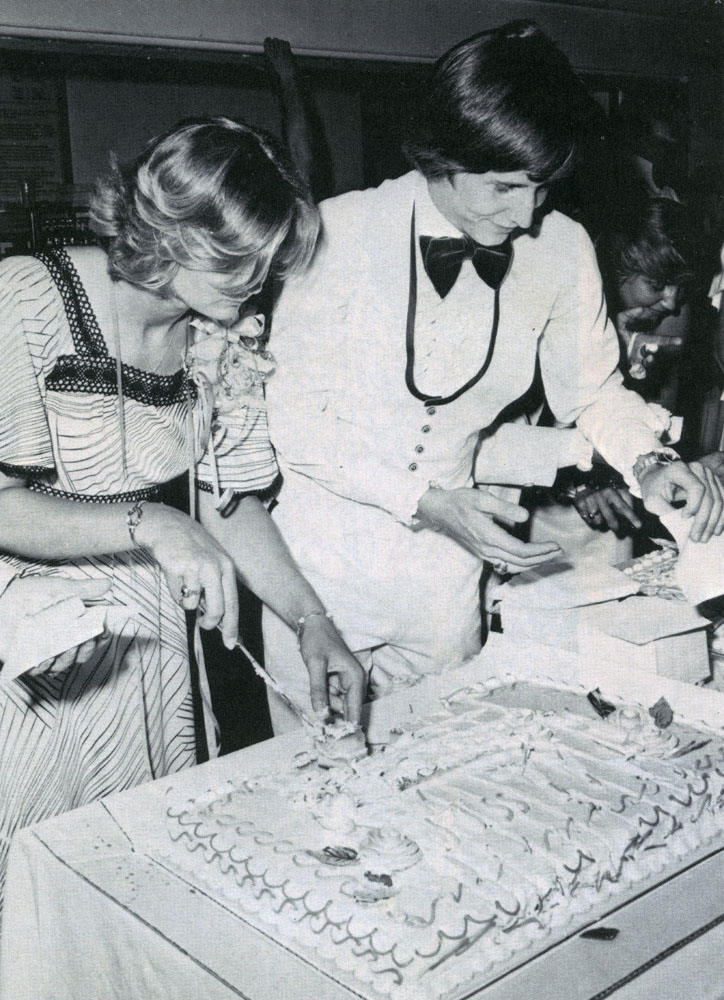
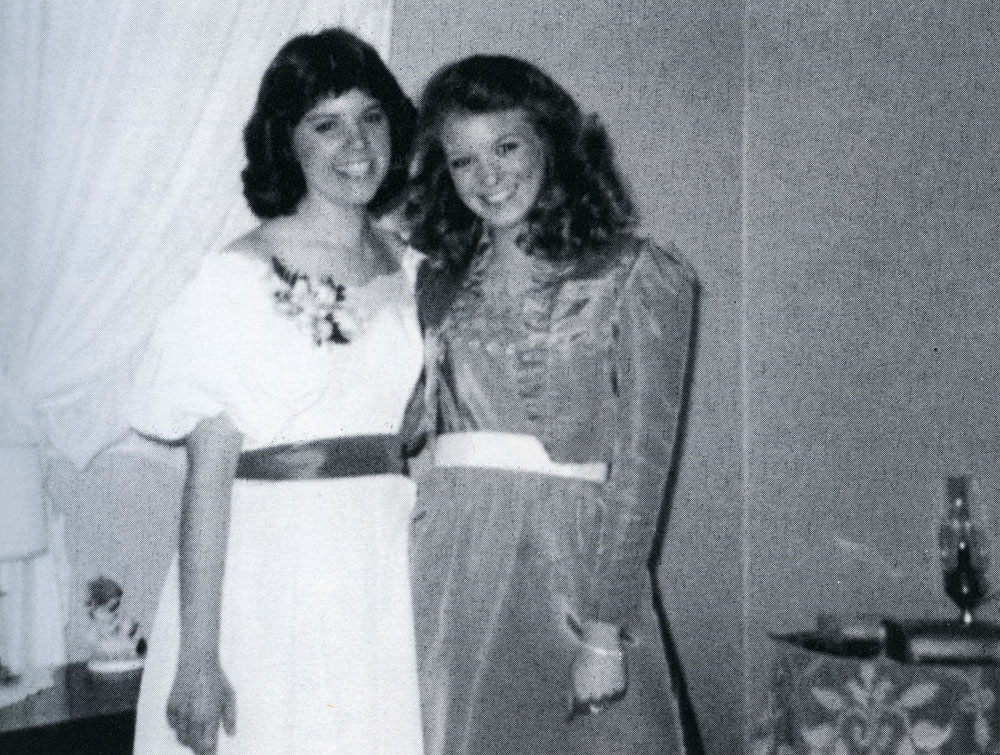
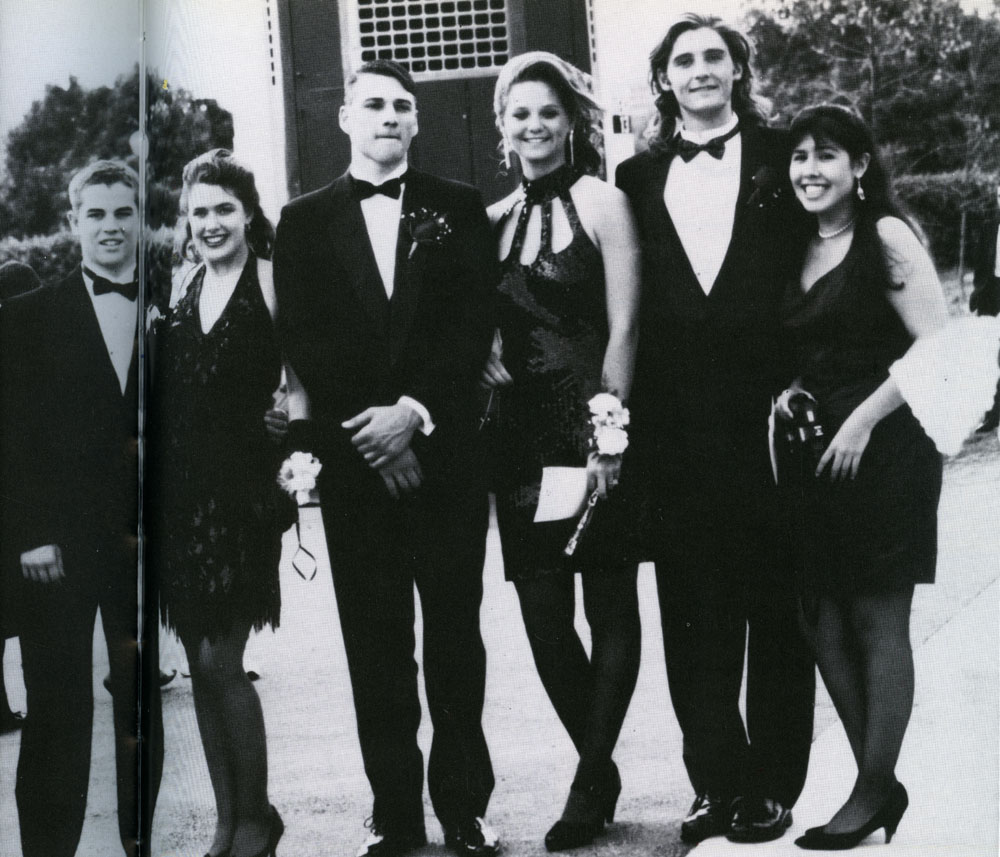
Did you go to your high school prom? These photos, scanned from Bishop O’Connell yearbooks, show prom outfits through the years. How do they compare to what you wore?
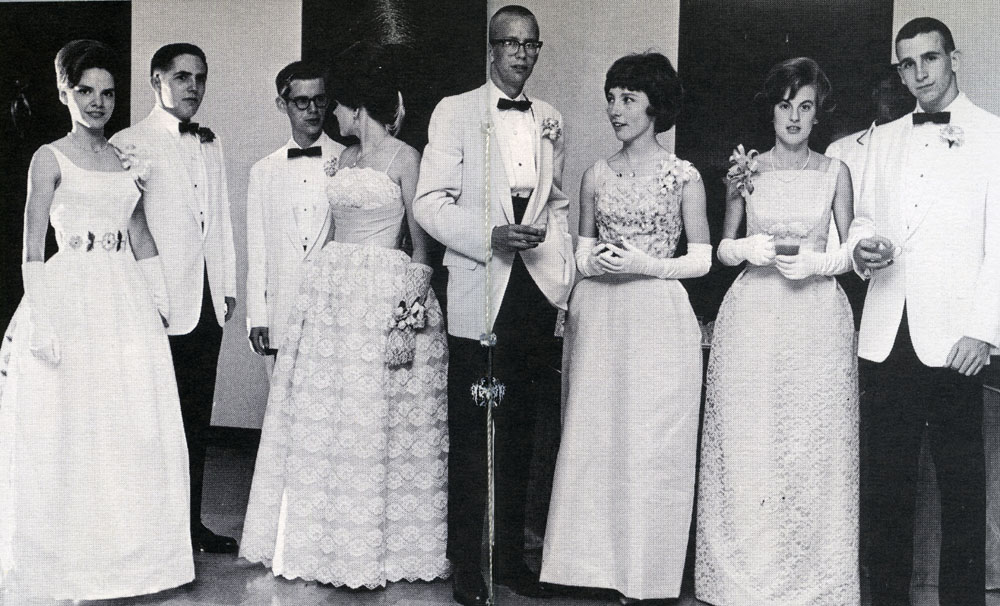
Prom Bishop O'Connell 1964 a row of young women in white dresses and young men in white jackets

Bishop O’Connell, 1964

Bishop O'Connell students serving themselves cake at their Senior Prom

Bishop O’Connell, 1977

Bishop O'Connell juniors wait for the prom dates, 1984

Bishop O’Connell, 1984

Bishop O'Connell students all dressed in black pose before heading to their Senior Prom, 1993

Bishop O’Connell, 1993

Although prom is now a high school tradition known for its extravagance and debauchery, it began in Northeast colleges and universities as pseudo coming-out event (prom is actually short for promenade).

Unfortunately, the Center for Local History's photo archive does not include many prom photos. This is partly because high school yearbooks tend to go to print before most proms are held.

Do you have photos of your Arlington prom that you would like to add to the Center for Local History's Community Archive? Visit or contact the Center for Local History at Central Library, and let us know!

To see more items like these, or to learn more about Arlington's history, visit the Center for Local History on the first floor of the Central Library.

Do you have a question about this story, or a personal experience to share? 

Use this form to send a message to the Center for Local History.

Center For Local History - Blog Post Message Form

Do you have a question about this story, or a personal experience to share? Use this form to send a message to the Center for Local History.

"*" indicates required fields
This field is for validation purposes and should be left unchanged.

Share Your Story

May 1, 2019 by Web Editor

A Coffee Shop’s Many Faces

Post Published: April 24, 2019

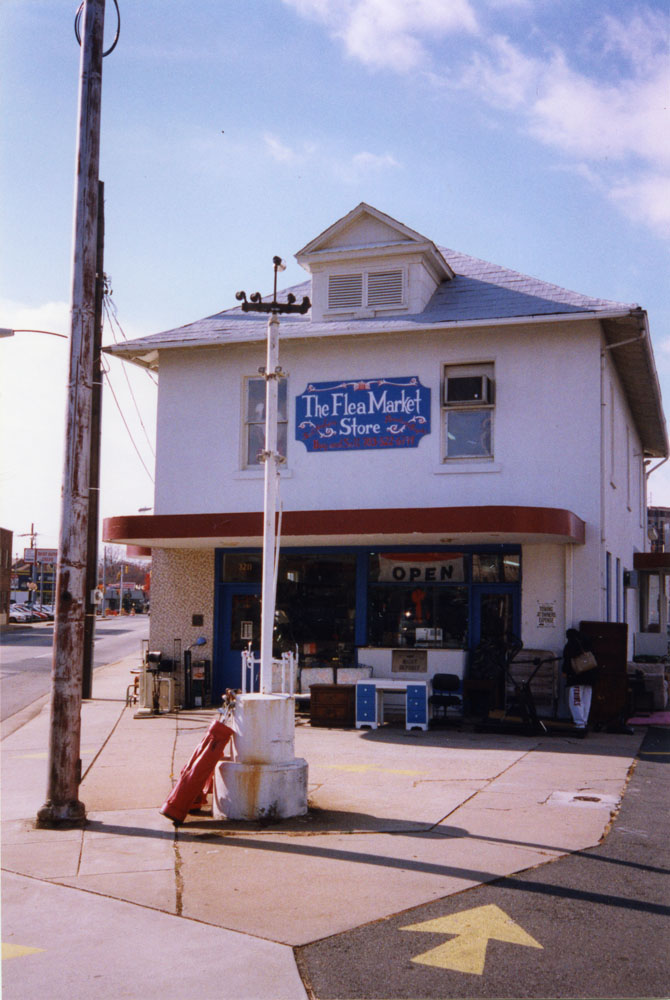
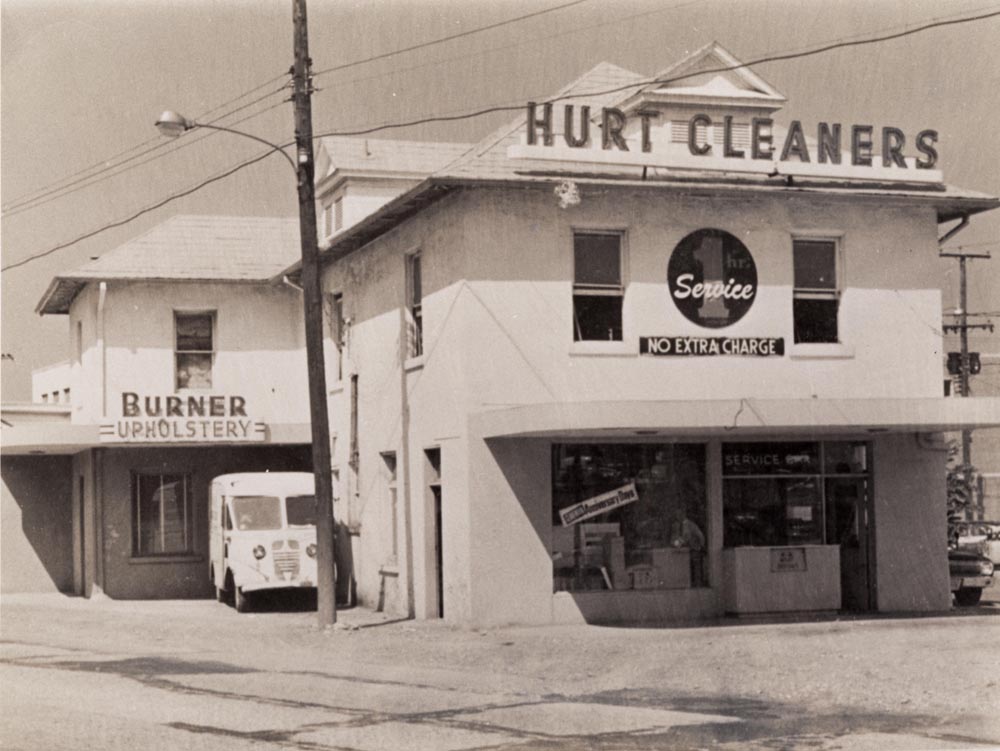
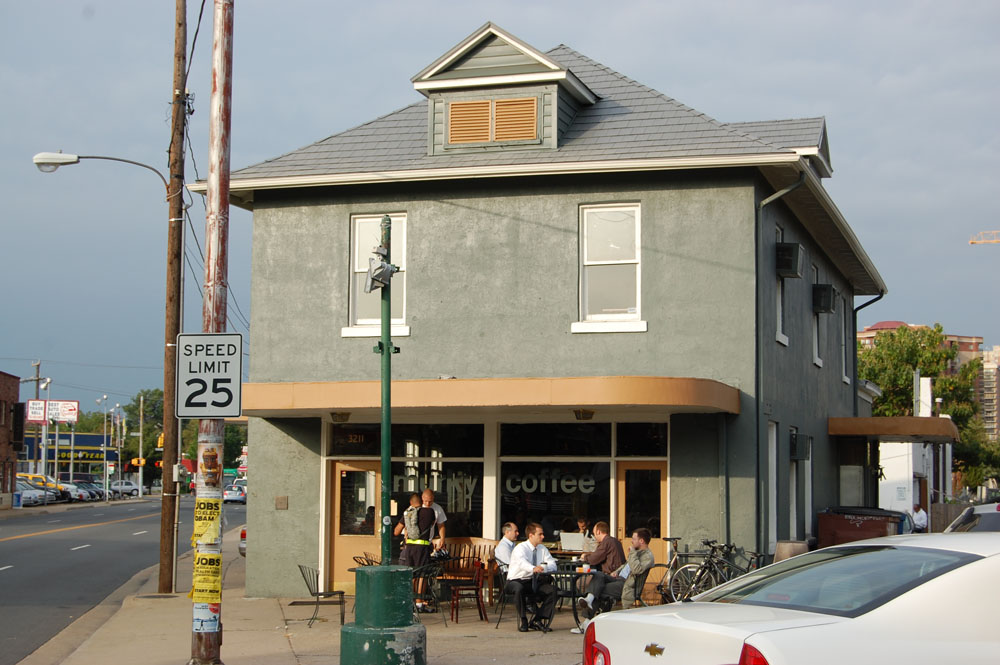
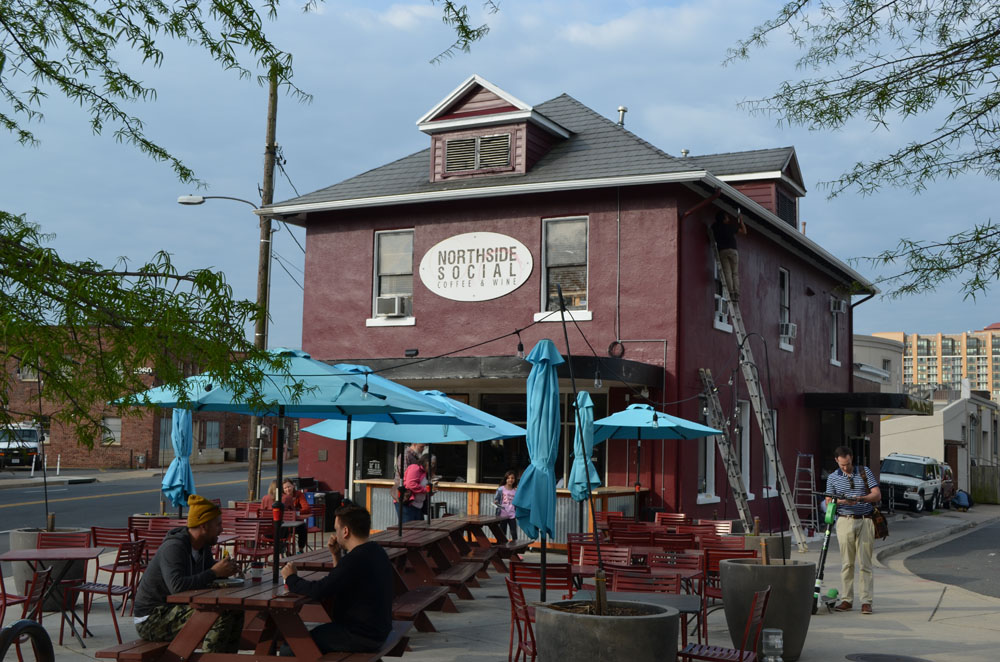
Do the roof lines and windows of these buildings look familiar?

The Flea Market Store, 1998
Hurt Cleaners, c. 1949
Marky Coffee, 27 August 2008
Northside Social, April 2019

If you thought each of these photos is of the same building, then you are correct!

The building was modeled after the Clarendon trolley station, constructed in 1904 and pictured here circa 1910. The trolley station stood opposite to 3211 Wilson Boulevard at North Washington and Clarendon Boulevard. Arlington‘s trolley stations ran throughout the County beginning in the 1890s up until the Great Depression when they were unable to compete with the rise of the automobile.

One way to trace Arlington’s history is through its development. The changing use of this building has paralleled Clarendon’s role for Arlington residents—as a place of utility in the mid-20th Century; utility and leisure in the late-20th Century; and leisure and socialization in the last 20 years.

Can you match the photos to the businesses, and put them in order by date?

Photos:

  • Murkey Coffee
  • Northside Social
  • Hurt Cleaners
  • The Flea Market Store

Dates:

  • c. 1949
  • 1998
  • 2008
  • 2019

To see more items like these, or to learn more about Arlington's history, visit the Center for Local History on the first floor of the Central Library.

Do you have a question about this story, or a personal experience to share? 

Use this form to send a message to the Center for Local History.

Center For Local History - Blog Post Message Form

Do you have a question about this story, or a personal experience to share? Use this form to send a message to the Center for Local History.

"*" indicates required fields
This field is for validation purposes and should be left unchanged.

Share Your Story

April 24, 2019 by Web Editor

Edmond C. Fleet, Community Swimming Pool Supporter

Post Published: April 18, 2019

Edmond C. Fleet (1902-1983) was a civilian pastry chef for the United States Navy, who found significant ways to put his organizing talents to good use for the Nauck community.

Besides being a member of the local African-American Elks Lodge, Masonic Lodge, and Oddfellows, he was a co-founder of the Veteran’s Memorial Branch of the YMCA, located at 3440 22nd Street S, one block away from Macedonia Baptist Church.

Built in 1953, the Veteran’s Memorial YMCA served the “non-white” residents of the county. Located near Drew School, it naturally had a strong bond with neighborhood children, especially since the county’s Parks and Recreation system was still segregated.

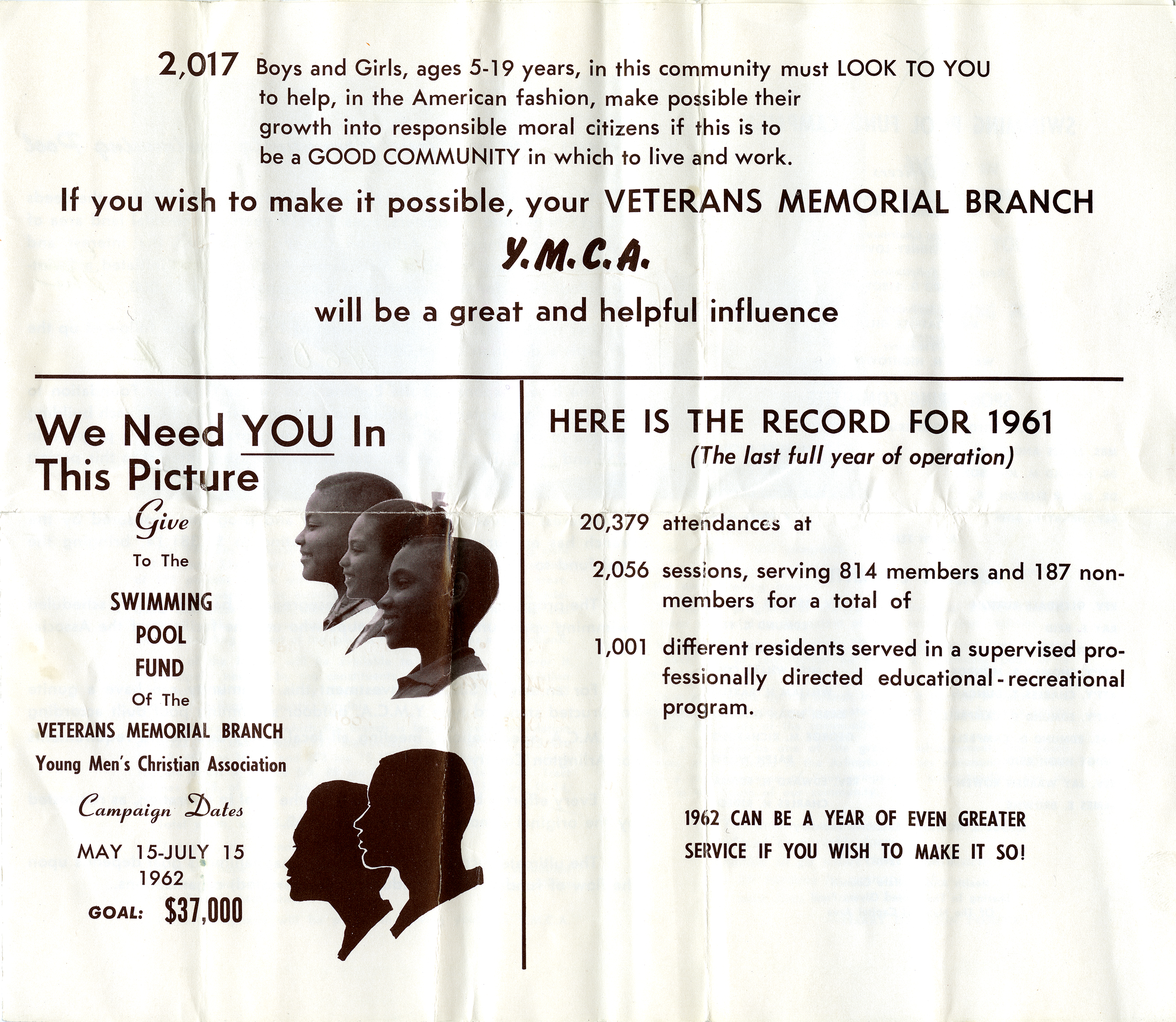
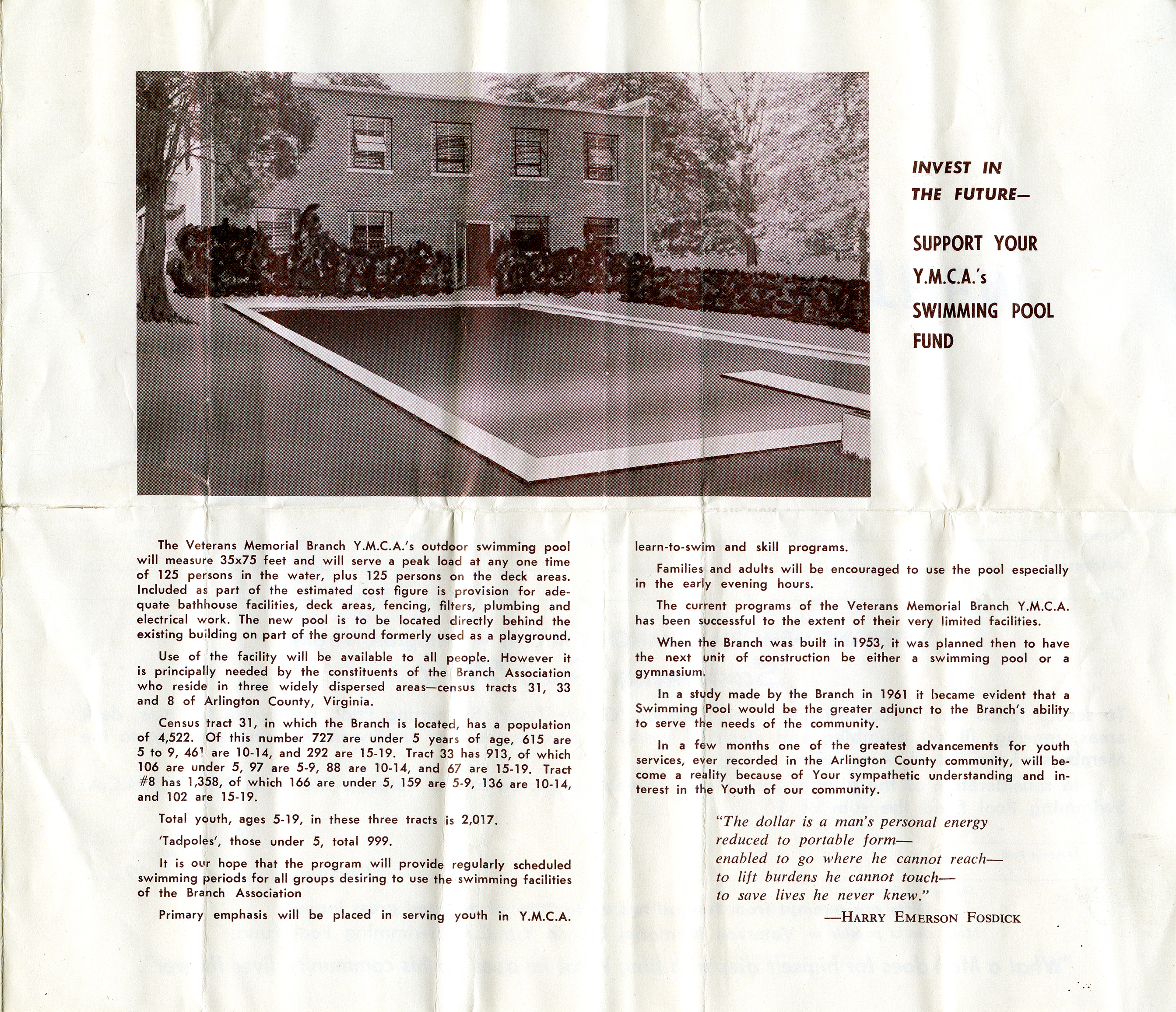
In the late 1950s, this YMCA started a campaign to build a swimming pool as there were no pools in the County that would allow African-Americans in.

Front page of mailer asking for donations for construction of Veteran's Memorial YMCA pool.
Third page of mailer sent out to get contributions for construction of the Veteran's Memorial YMCA swimming pool.

This 1962 pledge brochure, which lists Fleet as a member of the Advisory Committee, details plans for the pool and asks for community support. Fleet put his money where his mouth was, and donated money to the YMCA and other organizations in which he was involved, including Mt. Zion Baptist Church where he was in the choir.

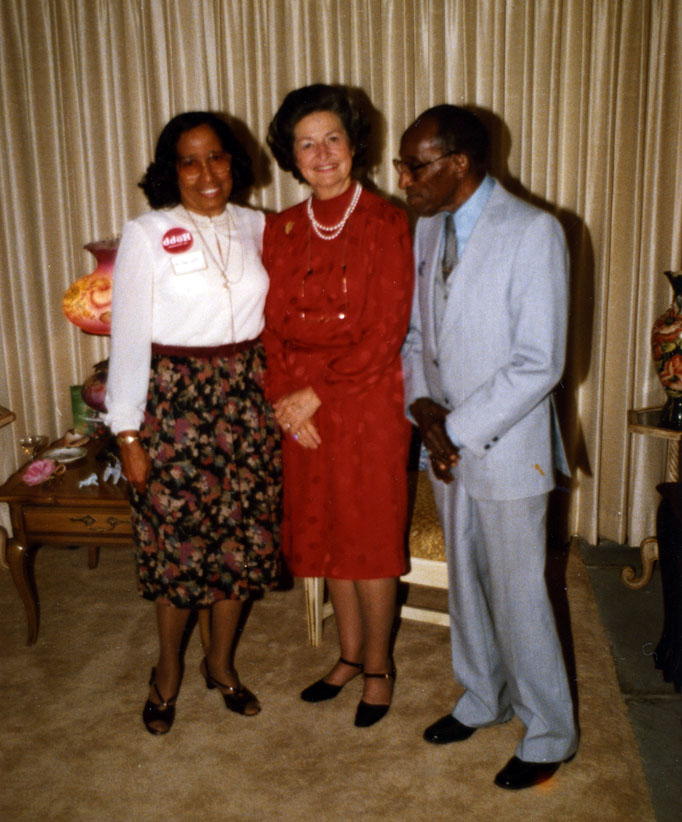
Fleet was involved in local politics too, hosting Lady Bird Johnson at his home for a Chuck Robb campaign event in 1977, when he ran for Lieutenant Governor of Virginia. (Chuck Robb is married to Lady Bird and President Johnson's daughter, Lynda Bird Johnson Robb.)

Edmund Fleet and an unknown woman flank Lady Bird Johnson at a Chuck Robb campaign event held at Fleet's house

Lady Bird Johnson flanked by Edmond C. Fleet and an unidentified Robb supporter, 1977.

To learn more about Edmund C. Fleet and the Veteran’s Memorial YMCA, visit the Center for Local History on the first floor of the Central Library.

Do you have a question about this story, or a personal experience to share? 

Use this form to send a message to the Center for Local History.

Center For Local History - Blog Post Message Form

Do you have a question about this story, or a personal experience to share? Use this form to send a message to the Center for Local History.

"*" indicates required fields
This field is for validation purposes and should be left unchanged.

Share Your Story

April 18, 2019 by Web Editor Tagged With: Green Valley

1945: The Arlington War Memorial Association Plans a “Living Memorial”

Post Published: April 4, 2019

Have you heard of “living memorials”? A popular concept after World War II, they resonated with Depression-era and war time slogans and values such as “better living,” and intersected with the interest in urban planning that intensified during World War II.

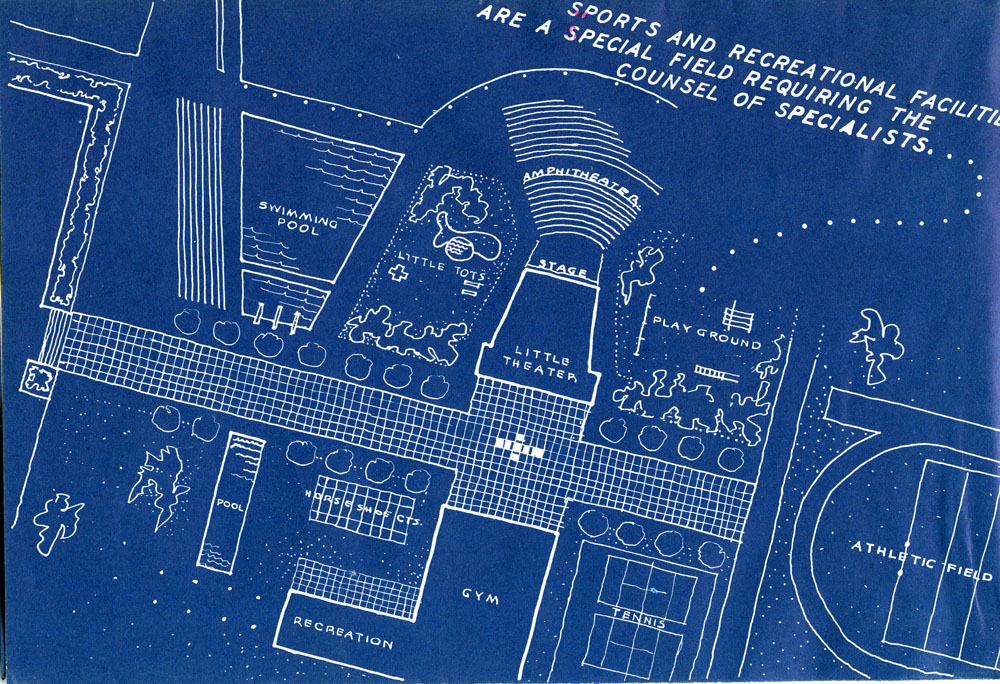
Elevation image from a promotional flyer advertising Potomac Engineering Corporation's services for planning and building a living war memorial.
blueprint plan showing the grounds layout, from a promotional flyer advertising Potomac Engineering Corporation's services for planning and building a living war memorial.

In July 1945, Arlington County residents formed the Arlington War Memorial Association. The purpose of the organization was to “establish and maintain a useful memorial to the veterans of the present war and of all wars of our nation.”

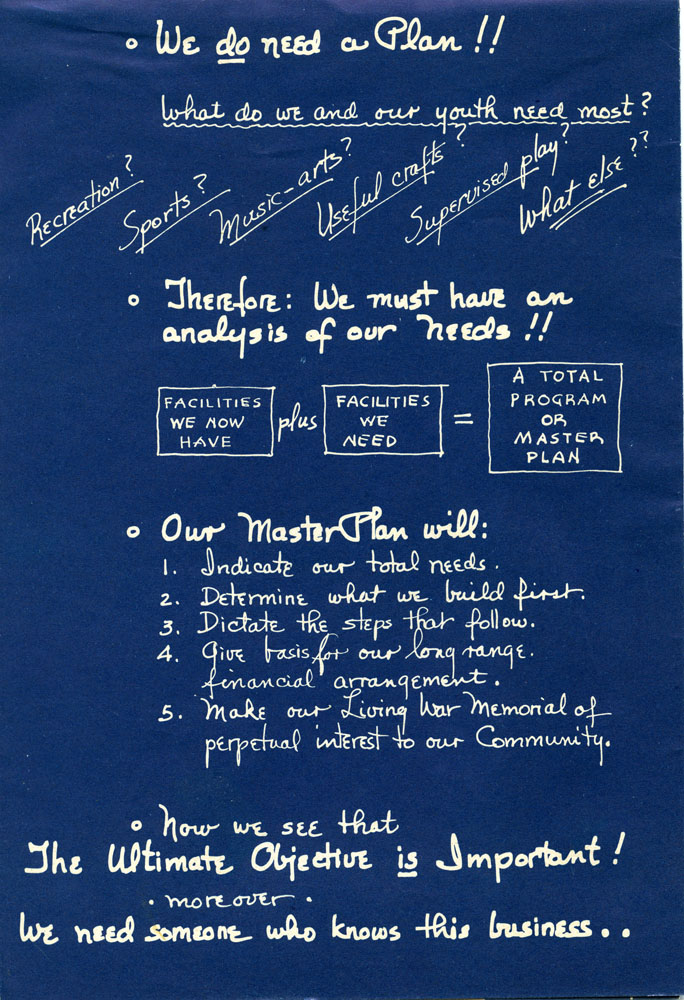
The Arlington War Memorial Association aimed to build a living memorial—a memorial that would honor the sacrifice of Arlington citizens who served in a war, but also that would “become the heartbeat of the county contributing to everyone’s wellbeing.” They planned to do this by building a community center on Lee Boulevard, much like the one depicted in these images from a promotional flyer advertising Potomac Engineering Corporation's services for planning and building a living war memorial.

Promotional flyer advertising Potomac Engineering Corporation's services for planning and building a living war memorial, asking, "what do we and our youth need most?"
Promotional flyer advertising Potomac Engineering Corporation's services for planning and building a living war memorial, emphasizing the need for urban planning

The Arlington War Memorial Association’s efforts ultimately failed. But you can learn more about their plans, and see these images in person, at the Center for Local History.

To see more items like these, or to learn more about Arlington's history, visit the Center for Local History on the first floor of the Central Library.

Do you have a question about this story, or a personal experience to share? 

Use this form to send a message to the Center for Local History.

Center For Local History - Blog Post Message Form

Do you have a question about this story, or a personal experience to share? Use this form to send a message to the Center for Local History.

"*" indicates required fields
This field is for validation purposes and should be left unchanged.

Share Your Story

April 4, 2019 by Web Editor

The Unusual History of the Washington Nationals

Post Published: March 28, 2019

Did you know that today - Thursday, March 28, 2019 - is the earliest Opening Day in the history of Major League Baseball?

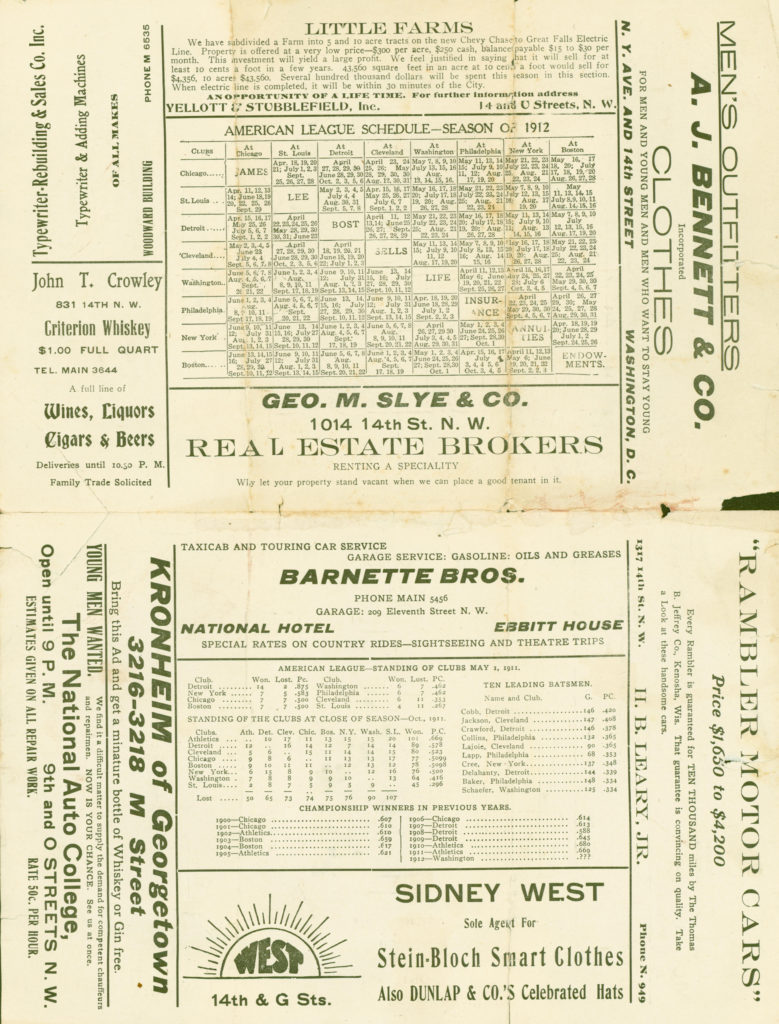
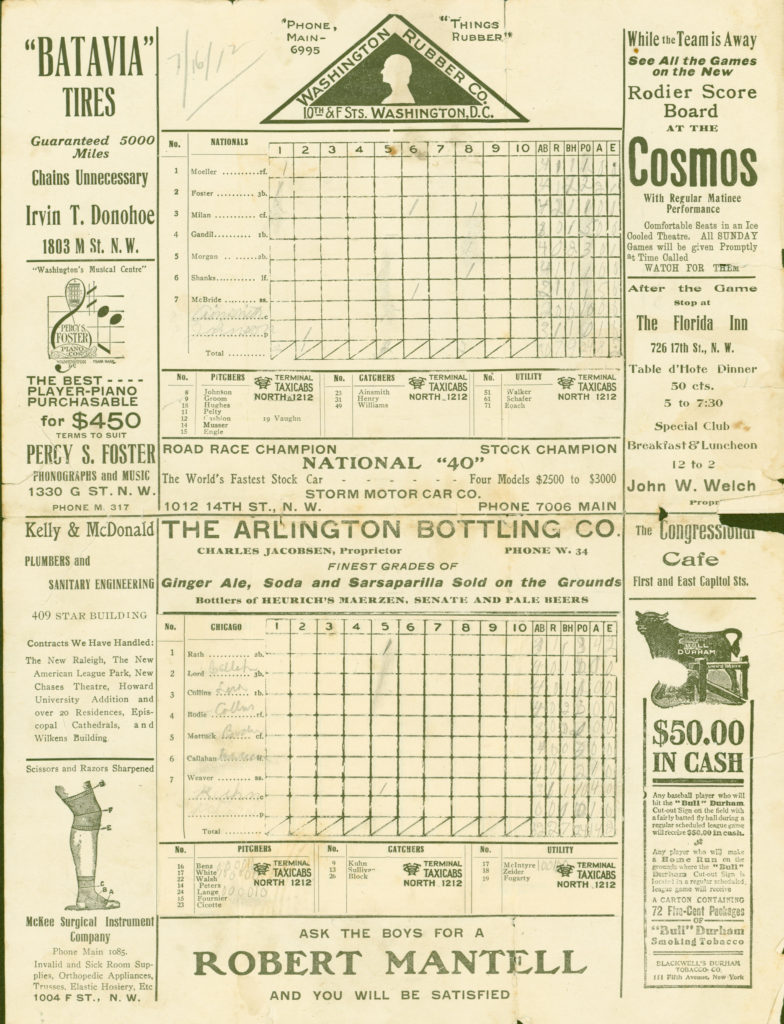
These pages are from a Washington Nationals game against the Chicago White Sox on July 16, 1912, attended by a member of the Olcott family from the Glencarlyn neighborhood.

These pages are from a Washington Nationals game against the Chicago White Sox on July 16, 1912, attended by a member of the Olcott family from the Glencarlyn neighborhood. The first page has the 1912 American League schedule and 1911 standings
These pages are from a Washington Nationals game against the Chicago White Sox on July 16, 1912, attended by a member of the Olcott family from the Glencarlyn neighborhood. The first page has the 1912 American League schedule and 1911 standings, while the second page has a score card and roster for the competing teams.

The first page has the 1912 American League schedule and 1911 standings, while the second page has a score card and roster for the competing teams. The Washington Nationals/Senators beat the Chicago White Sox 7-2 in the July 16 game and finished second in the 1912 American League, losing the Pennant to the Boston Red Sox.

The Washington area may have a fraught history when it comes to baseball teams, but that has not stopped Arlingtonians from cheering for our local team - whatever their name may be.

The Washington Senators—one of the American League’s charter teams—was founded in 1901. In 1905, the team officially changed its name to the Washington Nationals, but was still commonly referred to as the “Senators” until it relocated to Minnesota in 1961, where it became the Twins. The original Nationals/Senators team was almost immediately replaced with another American League team, this time officially named the Washington Senators. The Senators lasted for a decade (1961-1971) before moving to Texas as the Texas Rangers. In 2005—33 years after the Senators departed for Texas—Major League Baseball finally returned to the Washington area, this time as part of the National League and as the Washington Nationals.

So go out this weekend and cheer for your favorite team. We’ve got our Nats caps ready!

To see more items like these, or to learn more about Arlington's history, visit the Center for Local History on the first floor of the Central Library.

Do you have a question about this story, or a personal experience to share? 

Use this form to send a message to the Charlie Clark Center for Local History.

Center For Local History - Blog Post Message Form

Do you have a question about this story, or a personal experience to share? Use this form to send a message to the Center for Local History.

"*" indicates required fields
This field is for validation purposes and should be left unchanged.

Share Your Story

March 28, 2019 by Web Editor

Green Valley Pharmacy

Post Published: February 22, 2019

Dr. Leonard “Doc” Muse

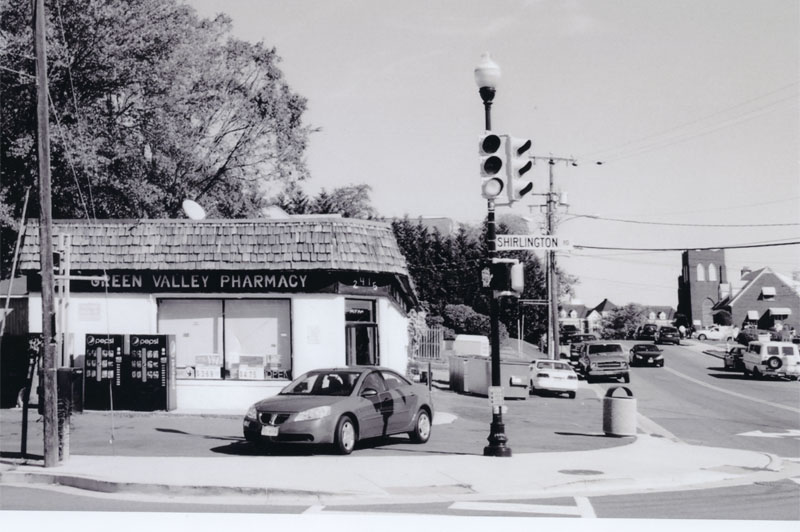
Have you traveled down Shirlington Rd in the Nauck neighborhood, and stopped for a snack at the one story, white, shingled building on the corner of Shirlington Rd and 24th Rd S?

Green Valley Pharmacy 2010

Established in 1952, the Green Valley Pharmacy is the first (and only) pharmacy and lunch counter in Arlington that would serve African American patrons during the Jim Crow era.

The man who opened the pharmacy was Dr. Leonard “Doc” Muse, a pharmacist and social activist. Muse was born in Florida in 1923 and after serving in World War II used his GI benefits to attend the Howard University School of Pharmacy. In 1952, he and his partner Waverly Jones bought the former Hyman’s Grocery and opened the Green Valley Pharmacy. The pharmacy served black and white customers, but mainly served as a neighborhood hub for Nauck- as a lunch counter, a drug store, and a first job for many young people in Green Valley. Doc provided free lunches for the hungry and free medications for those who could not afford their prescriptions.

In 2013, Green Valley Pharmacy was named as an Historic District by the Arlington County Board, and Muse himself was honored by the Arlington NAACP with the Community Appreciation Award. Muse’s commitment to social activism established him as a pillar of the Nauck community, positively influencing the young people of Green Valley and providing a social and political hub for the residents of Nauck.

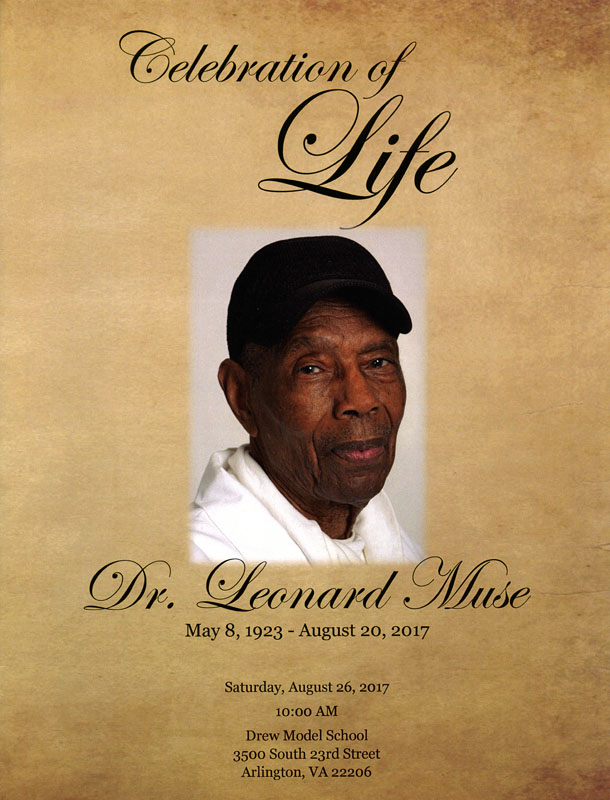
Dr. Leonard Muse died on August 20, 2017.

A celebration of life service was held in his honor at Drew Model School on Saturday, August. 27, 2017.

Memorial program for Dr. Leonard Muse, 8/26/2017

The photo of Green Valley Pharmacy was taken by Matthew Welborn in 2010, as part of a student photography contest, "Capturing Arlington," sponsored by the Center for Local History.

To see more items like these, or to learn more about Arlington's history, visit the Center for Local History on the first floor of the Central Library.

Do you have a question about this story, or a personal experience to share? 

Use this form to send a message to the Center for Local History.

Center For Local History - Blog Post Message Form

Do you have a question about this story, or a personal experience to share? Use this form to send a message to the Center for Local History.

"*" indicates required fields
This field is for validation purposes and should be left unchanged.

Share Your Story

February 22, 2019 by Web Editor

Cub Scout Pack 589 and Ernest Johnson

Post Published: February 14, 2019

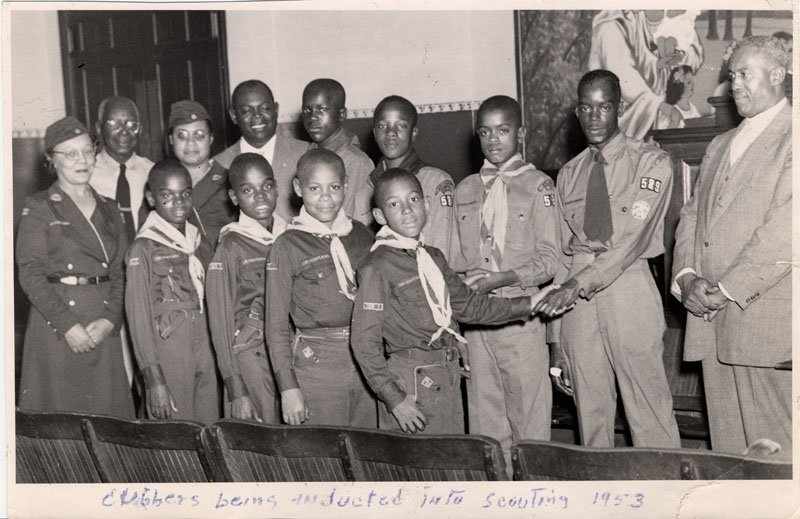
Cub Scout Pack #589 was one of Arlington’s first African American Cub Scout Packs, established in 1952 and founded by Ernest Johnson. 

black and white photo of group of young african american boys in cub scout uniforms with pack leaders

This photo shows the April 1953 induction of new pack members, with Johnson standing to the right.

Founding Cub Scout Pack #589 was part of Ernest Johnson's efforts to give African American children in segregated Arlington a variety of activities to help them grow and have fun. As the director of the Arlington Department of Parks and Recreation’s Negro Recreation Section, (founded in 1950), Johnson worked tirelessly to expand the Section’s sports, arts, and culture programs for African American children in the County. He oversaw the development of Jennie Dean Field and a new recreation center at Hoffman-Boston on S. Queen Street, known as the Carver Center. The Section also organized picnics, beauty pageants, and socials.

The County recognized Johnson’s abilities as an organizer and developer of programs, and when Arlington desegregated their Parks and Recreation facilities and programs in the spring of 1961, he became the Supervisor of the Centers Section, overseeing “teen clubs, free classes, and meeting of non-Department sponsored clubs in the centers.”

Johnson stayed with the Department until his retirement in 1982. Arlington then celebrated Ernest Johnson Day with a parade, softball game, and testimonial dinner.

Ernest Johnson's work for the County is remarkable in another way: he had the foresight to hire a professional photographer to attend many of the Negro Recreation Section’s activities.

To see more of these photographs, visit the Ernest Johnson Collection, Photograph Collection 218, in the Arlington Community Archives online.

February 14, 2019 by Web Editor

George Melvin Richardson

Post Published: February 7, 2019

Hoffman-Boston Principal, 1954-1965

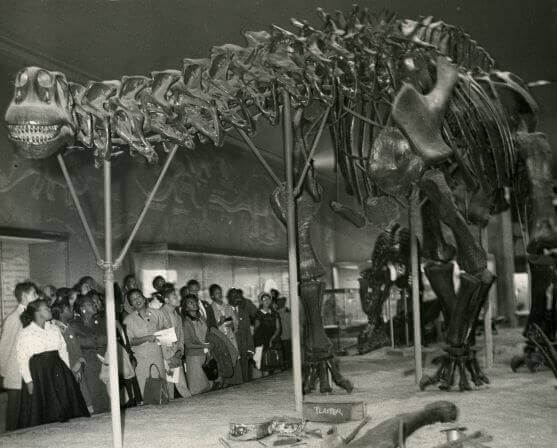
Do you remember your first school field trip to visit the Smithsonian dinosaurs? 

Photo of dinosaur skeleton at the Museum of Natural History with high school class from Hoffman-Boston

In this photo, a group of late 1950s/early 1960s Hoffman-Boston high school students examine the relics on display at the Museum of Natural History.

Their principal at Hoffman-Boston (the combined elementary, junior high, and senior high school for African American students) was George Melvin Richardson, a man of quiet authority and the ideal leader to cope with the complex issues then facing his school and the County.

Richardson was on the initial 1954 committee to study desegregation of the Arlington Public Schools, and principal of Hoffman-Boston from 1954 until the school was closed in 1965. Faced with inadequate classrooms and facilities, Richardson worked for years to improve and expand the school. Field trips such as the one pictured here helped to compensate for the lack of equipment and resources, and to educate students beyond the classroom.

As a resident of the Arlington View neighborhood, Richardson also worked to create the area’s Neighborhood Conservation Plan (one of the first in the county), and later served on the executive board for the Arlington Committee of 100.

George Melvin Richardson’s photographs, oral histories, papers and more can be found on the Center for Local History’s ProjectDAPS.org website, a repository for the Center’s collection of archival documents and photographs relating to the story of the desegregation of Arlington public schools.

View the George Melvin Richardson Collection in ProjectDAPS.org

February 7, 2019 by Web Editor

Rosslyn in the 1960s

Post Published: January 31, 2019

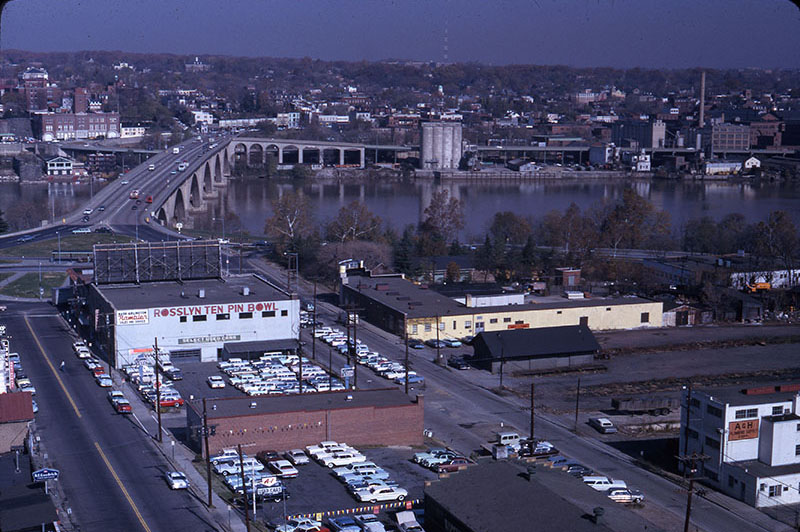
Do you remember Rosslyn Ten Pin Bowl or A & H Plumbing Supply CORP.?

Aerial photo of Rosslyn neighborhood taken looking over the Potomac river towards Georgetown

This image, taken in the 1960s, shows a time when Rosslyn was full of parking spaces, small businesses, and clear views of Key Bridge and Georgetown.

Like many Arlington neighborhoods, Rosslyn has undergone significant growth since this photo was taken. With its proximity to Washington, D.C., the neighborhood has naturally morphed into an urbanized hub, complete with skyscrapers, hotels, numerous restaurants and businesses. It even boasts the title for the third longest continuous span escalator in the world!

Do you remember Rosslyn in the 1960s, before the skyscrapers went up? Did you ever go bowling at Rosslyn Ten Pin Bowl?

To see more images from the “Arlington Photographs: Before and After, The Guy W. Starling Collection,” or to learn more about the history of Rosslyn, visit the Center for Local History on the 1st floor of Central Library.

January 31, 2019 by Web Editor

Where Were These Photos Taken?

Post Published: January 24, 2019

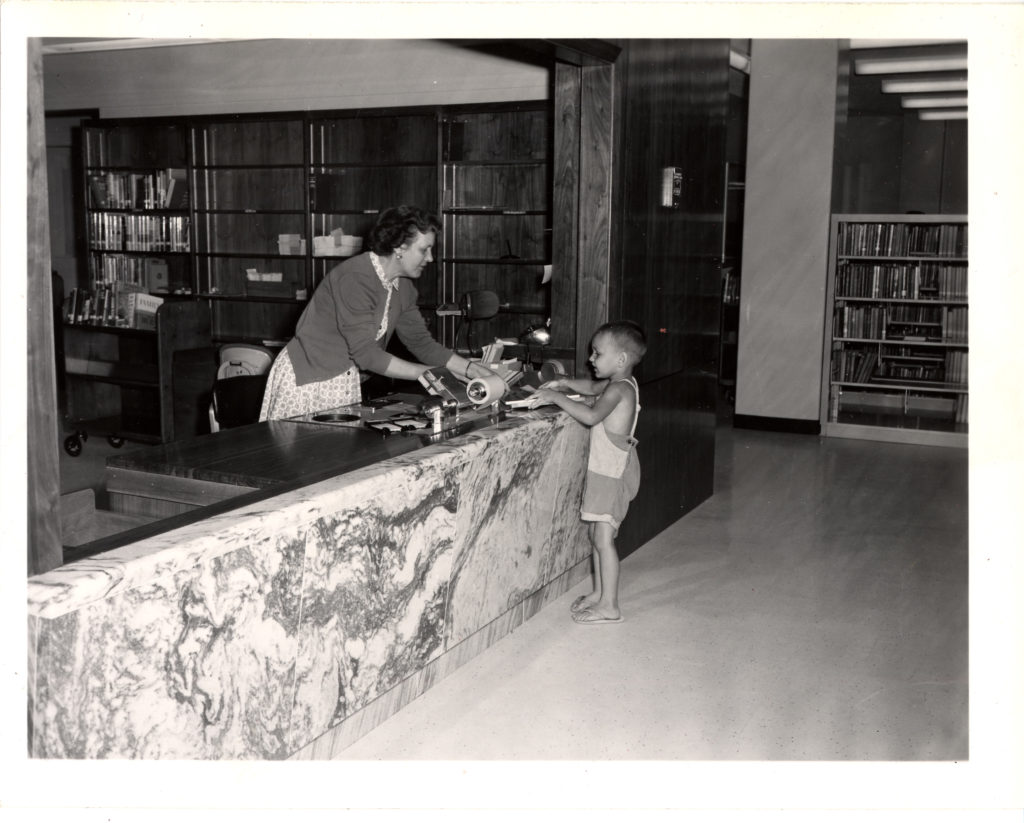
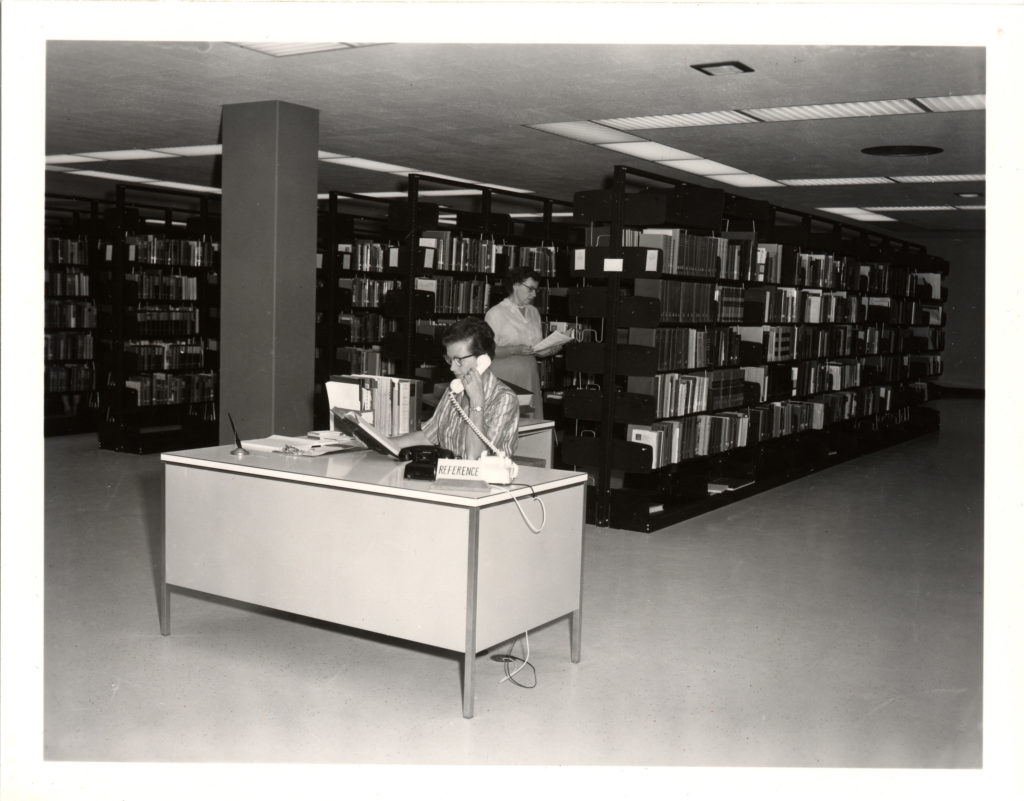
Can you guess the location of these images? 


Central Library Reference Desk, early 1960s, librarians speaks to young child


Central Library Reference Desk, early 1960s, librarian on phone

Here are a few clues:

  • The photos were taken in the early 1960s, shortly after the building was completed.
  • This building was the first publicly financed construction project for this County department, and has housed this department since the 1960s - although it underwent a major renovation in the early 1990s.
  • In 1995, the department installed the first public internet terminals with the help of a grant.

If you guessed that the photos feature Central Library, you are correct!

Although Central Library no longer looks the way it did in these photos, the spirit of the Library has remained the same – to serve the residents of Arlington County and create space for culture and connection.

To learn more about the history of Arlington Public Library visit The Center for Local History's online exhibit “Women’s Work.”

To see more photos from Arlington’s diverse history visit the Center for Local History, located on the 1st floor of Central Library.

January 24, 2019 by Web Editor

  • « Go to Previous Page
  • Page 1
  • Interim pages omitted …
  • Page 6
  • Page 7
  • Page 8
  • Page 9
  • Go to Next Page »

Footer

About Us

  • Mission & Vision
  • Charlie Clark Center for Local History
  • News Room
  • Get Email Updates

Administration

  • Policies
  • Library Staff
  • Job Opportunities
  • Propose a Program or Partnership

Support Your Library

  • Friends of the Library
  • Giving Opportunities
  • Donating Materials
  • Volunteer Opportunities

Our Mission

We champion the power of stories, information and ideas.

We create space for culture and connection.

We embrace inclusion and diverse points of view.


Download the Library App

Download the Library App

Arlington County | Terms & Conditions | Accessibility | Site Map
· Copyright © 2026 Arlington County Government ·