• Skip to primary navigation
  • Skip to main content
  • Skip to footer
Home - Arlington County Virginia - Logo
MENUMENU
  • Join Now
  • My Account
    • Login
    • My Checkouts
    • My Holds
    • My Lists
    • My Reading History
    • About Borrowing
    • About Holds
    • About My Account
  • Hours & Locations
    • All Hours & Locations
    • Holiday Closings
  • News
    • Library News
    • Director's Blog
    • Get Email Updates
  • Contact Us

Arlington Public Library

MENUMENU
  • Search
  • Collections
  • Library Services
  • Events
  • Community Engagement
  • Join Now
  • My Account
    • Login
    • About Borrowing
    • About Holds
    • About My Account
  • Hours & Locations
    • All Hours & Locations
    • Holiday Closings
  • News
    • Library Blog
    • Get Email Updates
  • Contact Us

Unboxed

Saving the Small Stuff

Post Published: January 16, 2007

Although you may think a ticket stub, sign, receipt or postcard is something that you use and then throw away, these materials many times have a much larger value.
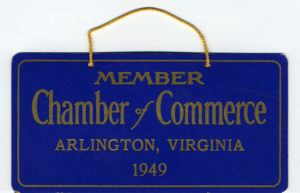
These bits and pieces are called ephemera, and are vital in helping construct Arlington’s history. Ephemera, as defined by the Society of American Archivists, is “materials, usually printed documents, created for a specific, limited purpose, and generally designed to be discarded after use.” Ephemera is collected because of its association with a person, event or subject, such a bill signed by a famous person, a ticket stub to a nationally-known event, or, as above, showing the logo and method of advertisement for the Arlington Chamber of Commerce.

This sign above would be shown in an office or shop window, letting customers know that the business was affiliated with the Chamber of Commerce for 1949. That means they were part of a larger business community, networking with other businesses and working together on community projects.

Because of the date, the sign was meant to be thrown away at the end of the year. However, its existence in the Arlington Community Archives shows the Arlington Chamber of Commerce at the time was robust and active (the sign is made of heavy board with rich colors), and had a plan to showcase and advertise membership. Although the sign was meant to be thrown away, it remains in our collection as a valuable piece of ephemera.

The Arlington Community Archives has an entire collection of ephemera, Record Group 28, Pamphlets and Ephemera, and continues to take donations of this material. To find out more, see also “Ephemera: A Book on its Collection, Conservation and Use,” by Chris E. Makepeace, in the library collection.
 

January 16, 2007 by Web Editor Tagged With: local history news

The Three Sisters

Post Published: January 9, 2007

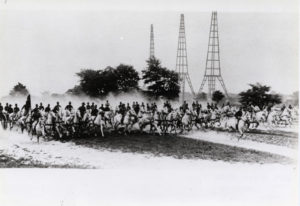
While they may seem quaint or even primitive by modern standards, upon their completion in 1913, the Navy’s Radio Station Arlington Towers were considered to represent the height of cutting edge communications technology.

In their day, “The Three Sisters” as they were known, were the second largest manmade structure in the world behind only the Eiffel Tower, with the tallest of the three standing a full 45 feet higher than the Washington Monument.

Located at the intersection of Columbia Pike and Courthouse Road, the towers were built to launch the Navy’s effort to establish a worldwide communications network. Using the call letters NAA, the towers functioned to provide the first long distance radio conversation, the first transoceanic radio telephone circuit (fittingly, to a French station broadcasting from the Eiffel Tower), and served to introduce the regular broadcasts of time signals, which was important to ships at sea who relied on accurate time checks for navigational purposes.

The towers were taken down in 1941 upon the opening of National Airport as they were considered to be an aviation hazard. Today, the site at Columbia Pike and Courthouse road continues to be occupied by military communications departments, chiefly the Defense Communication Agency. There are photographs like the one above, showing the Three Sisters and cavalry exercises from Fort Myer, and you can find out more information on the towers using newspapers on microfilm, all in the Virginia Room.


What About You?

What do you remember about the Arlington radio towers? What was early radio like in the Washington area? Let us know what you remember!


January 9, 2007 by Web Editor

The Little Tea House

Post Published: January 2, 2007

Little Tea House

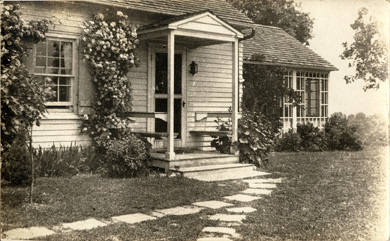
The Little Tea House Restaurant, located on Arlington Ridge Road, opened in 1920 and remained there until 1963 when it was demolished to make room for a high-rise apartment building.

During its heyday, many famous people ate at the restaurant, including Eleanor Roosevelt, Amelia Earhart, and Oliver Wendell Holmes. Known for its lovely gardens and views, it was also one of the first places in Arlington where racially mixed groups could meet.

Gertrude Crocker, who started the restaurant, was active in women’s issues throughout her life and started the restaurant so she could be independent and her own “boss.” When Mrs. Crocker leased, and later sold, the business to Gertrude Allison, it became known for a period as Allison’s Little Tea House.

The Virginia Room’s Oral History Project includes an interview with Ellen C. Puterbaugh, daughter of Gertrude Crocker, and the Arlington Community Archives has a photograph collection, PG 215, of images of the Little Tea House dating primarily from the 1920s.

What About You?

Do you remember the Little Tea House? Did you ever eat there? Let us know what you remember!


January 2, 2007 by Web Editor

A House Fit For A King

Post Published: December 26, 2006

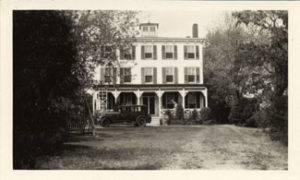
In 1888, John Walter Clark, originally of New Jersey, bought a plot of land in the Clarendon area on what is now Lee Highway.

On it, he built the Fort Strong Villa, near the remnants of Fort Strong, a 21-room mansion that was one of the biggest homes in Arlington County. Clark owned the White House, a well-known gambling house in Rosslyn, and made loans to local merchants and land owners; eventually, large portions of Rosslyn, then known as the bad part of town, ended up in his hands.

Situated at 2627 Lee Highway, Clark used his fortune to make his home truly grand. Annoyed by the dust and dirt of what was then called the Georgetown and Fairfax Turnpike, he lined the road from Rosslyn to his driveway with crushed oyster shells, an early form of paving. Clark frequently held large banquets at his home (with the help of a dumbwaiter installed in the house) and had a separate building on the current Cleveland Street for his retinue of servants.

John Walter Clark died in 1914, and his widow sold Fort Strong Villa to another family in 1921. The property eventually became a fancy guest house for people looking to escape downtown Washington during the summer. However, the property was demolished in 1968. The Virginia Room, however, holds several photographs of Fort Strong Villa and you can read more about it in Eleanor Templeman’s book “Arlington Heritage.”

What About You?

What do you remember about Fort Strong Villa, or Rosslyn before 1960? Let us know what you remember!


December 26, 2006 by Web Editor

Where Are We?

Post Published: December 12, 2006

We Need Your Help!

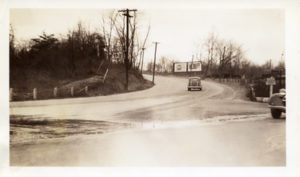
Do you recognize this intersection?

This photograph above was taken around 1937. The signpost on the far right reads “Clarendon” in the center and “Ballston” on the bottom, but we have not identified the road or neighborhood where this photograph was taken.

The original photograph is here in the Center for Local History at the Central Library, if you are interested in taking a closer look. The Library holds many photographs where the people and places are unknown. The staff always welcomes input on these unidentified works.

What About You?

Do you recognize this intersection? Do you have old photographs of a similar location? Let us know what you remember!


December 12, 2006 by Web Editor

The Rucker Legacy

Post Published: December 5, 2006

For a century the company called Rucker Reality has been part of the Arlington business community.

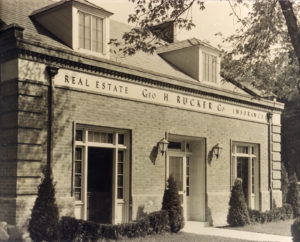
The company was founded in 1906 by George H. Rucker who was the county clerk of Alexandria County from 1899 until his death in 1919. Rucker and his wife Elizabeth began purchasing land in the county in 1899, and by 1906 they had acquired a large tract that he filed for subdividing as “Rucker’s Addition to Clarendon.” That same year Rucker started an insurance business and was a founding officer of Virginia Real Estate Title Company. By 1909, the company had grown and he asked two of his brothers-in-law, Ashton C. Jones and N.A. Rees to join him in the business.

When George Rucker died suddenly in 1919, at the height of his business career, Ashton Jones replaced Rucker in managing the business and in 1920 created the subdivision Ashton Heights. The company was also involved in developing many areas such as Lee Heights, Cherrydale, Tara-Leeway Heights, Ballston and the Westover Shopping Center.

Over the years the company diversified and eventually became the George H. Rucker Realty Corporation. Today, all ownership shares of the privately held company are still owned entirely by descendents of the founders, except for some stock option incentive shares held by the company president and CEO. The Virginia Room holds copies of many important Rucker Realty documents and has some photos of their Clarendon offices.


What About You?

Did you or your family have dealings with Rucker Realty? Let us know what you remember!


December 5, 2006 by Web Editor

Keeping the County Healthy

Post Published: November 28, 2006

In 1919, the Arlington County Department of Health was one of the first full-time county departments for health services in the nation. 

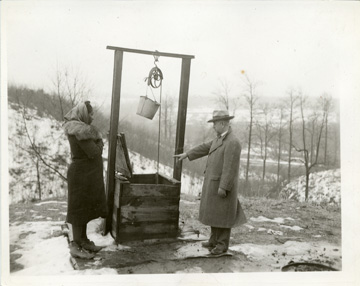
Health dept well inspection

A home well inspection, 1942.

Unique for this type of county service, the Department received most of its funding from private rather than public resources.

The Department of Health was organized to improve the county’s state of public health by enforcing laws regulating sanitation and disease. Over the years, the Department evolved into a social agency serving the community and enhancing the quality of life through many local social programs.

Researchers interested in the early development and organization of municipal health systems and health care services should find this collection (RG 21) from the library’s Community Archives very valuable. The photograph above, a well house inspection from 1942, is from that collection. Information about RG 21 can be found in the library catalog and a full finding aid is available in the Virginia Room.

Today, the Department of Health has become the Arlington County Department of Human Services. 


What About You?
What do you remember about the Health Department? How did you interact with them? Let us know what you remember!


November 28, 2006 by Web Editor

Home Cooking

Post Published: November 21, 2006

The first observance of Thanksgiving in America actually took place in Virginia.

Kid cookingt

A children’s cooking class sponsored by Arlington’s Department of Recreation and Parks.

However, it was religious in nature and involved no form of feasting. On December 4, 1619, a group of 38 English settlers arrived at Berkeley Plantation on the James River, in the area of what is now known as Charles City, Virginia. The charter of the group required that the day of arrival be observed yearly “as a day of Thanksgiving to God.” (In the fall of 1621, the first Thanksgiving in New England was celebrated in Plymouth, Massachusetts and involved much feasting which lasted for three days.)

Today, of course, feasting is very much a part of the holiday. For your Thanksgiving dinner you might enjoy the following recipes from “The Virginia House-wife” by Mary Randolph, 1824, using the traditional sweet potato.

Sweet Potato Pudding

Boil one pound of sweet potatoes very tender, rub them while hot through a colander, add six eggs, well beaten, three quarters of a pound of powdered sugar, three quarters of butter, and some grated nutmeg and lemon-peel, with a glass of brandy; put a paste in the dish, and when the pudding is done, sprinkle the top with sugar, and cover it with bits of citron.

Sweet Potato Buns

Boil and mash a potato, rub into it as much flour as will make it like bread, add spice and sugar to your taste, with a spoonful of yeast; when it has risen well, work in a piece of butter; bake it in small rolls, to be eaten hot with butter.


What About You?
What do you remember about Thanksgiving in Arlington? What was on your table? Let us know what you remember!


November 21, 2006 by Web Editor

All Aboard: The Clarendon Train Station

Post Published: November 14, 2006

Finding the best way to get from one location to another was as much of a concern to Arlington residents over 100 years ago as it is today.

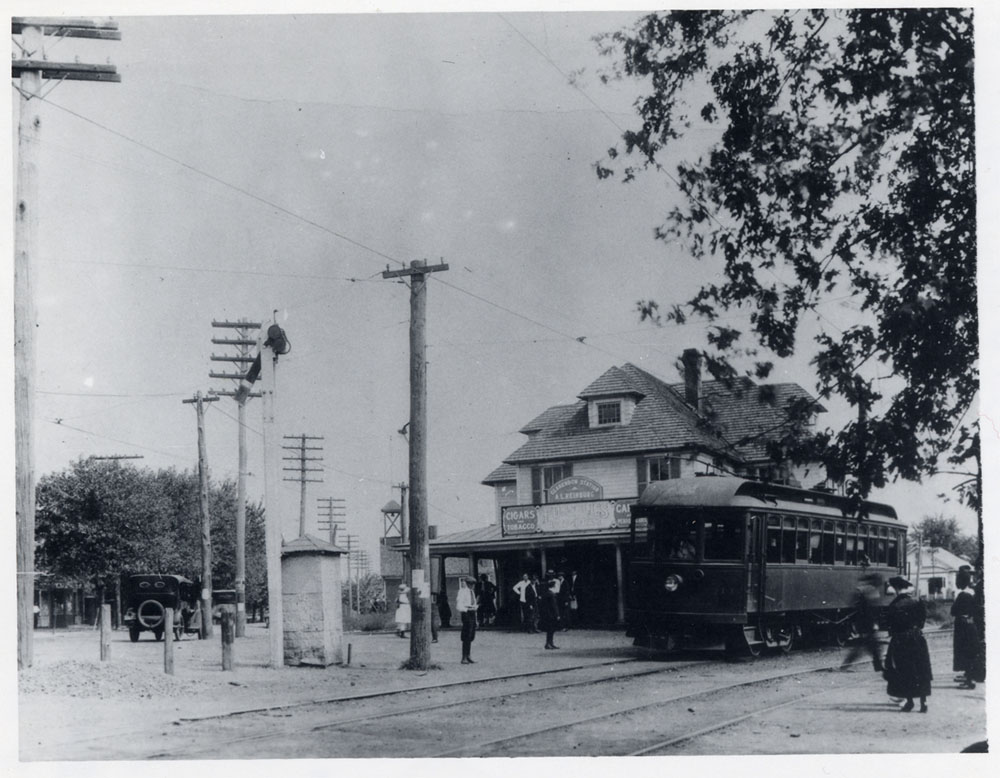
Black and white photo of trolley station with trolley to the right of the building

Clarendon trolley car and station, ca. 1910.

This photograph of the Clarendon train station, ca. 1910, was located at the hub of commercial Clarendon, at the intersection of Fairfax Drive and Wilson Boulevard.

The Washington-Virginia Railway and the Washington & Old Dominion Railway traversed Northern Virginia and the District of Columbia, providing passengers with a variety of options. Whether one chose to travel as far as Bluemont on the Washington and Old Dominion Railway or took the Mount Vernon Line to a more local destination, passengers were offered a wide range of alternatives.

The Center for Local History holds many photographs of trains, trolleys, and the stations they served, as well as railroad maps showing track routes and stops.

From their inception in 1892, peaking in the 1920s, through to their eventual decline in the 1940s, these routes were of vital importance to the communities they served and continue to trace paths not only of travel and transport but of a history and heritage that is vital to an understanding of the development and growth of Arlington.

This blog post was originally written in 2006 and was updated in 2021.

Do you have a question about this story, or a personal experience to share? 

Use this form to send a message to the Center for Local History.

Center For Local History - Blog Post Message Form

Do you have a question about this story, or a personal experience to share? Use this form to send a message to the Center for Local History.

"*" indicates required fields

This field is for validation purposes and should be left unchanged.

Share Your Story

November 14, 2006 by Web Editor

Cracking the Code

Post Published: November 7, 2006

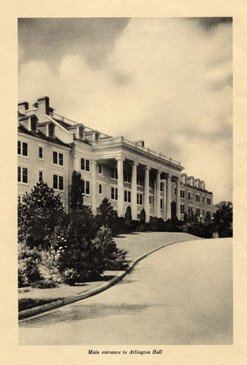
Arlington Hall, located at Route 50 and George Mason Drive, was a girls finishing school founded in 1927.

Arlington Hall

The school suffered financial problems in the 1930s, and finally became a non-profit institution in 1940. In 1942 the facility faced condemnation and was taken over by the Secretary of War under the Second War Powers Act. The property was deemed essential for the war effort, and the school became the headquarters of the Army Signal Corps, later the Intelligence and Security Command; at this time it became known as Arlington Hall Station.

Arlington Hall Station was one of only two primary cryptography operations in the United States during World War II, concentrating mostly on Japanese codes. Along with the Pentagon and other war agencies, Arlington Hall Station provided employment for many women who came to the area looking for work, as you can see in the photograph above.

In the post-war years, Arlington Hall Station continued to do work dealing with espionage and diplomacy. It housed a large portion of the Defense Intelligence Agency, founded in 1961, and today the National Foreign Affairs Training Center and the Army National Guard Readiness Center operate out of Arlington Hall.

The Arlington Community Archives holds materials pertaining to the site, including histories and photographs, and holds several yearbooks and other documents dating to Arlington Hall’s time as a girls school.

What About You?

What do you remember about Arlington Hall? What was Arlington like during World War II? Let us know what you remember!


November 7, 2006 by Web Editor

  • « Go to Previous Page
  • Page 1
  • Interim pages omitted …
  • Page 8
  • Page 9
  • Page 10
  • Page 11
  • Page 12
  • Go to Next Page »

Footer

About Us

  • Mission & Vision
  • Charlie Clark Center for Local History
  • News Room
  • Get Email Updates

Administration

  • Policies
  • Library Staff
  • Job Opportunities
  • Propose a Program or Partnership

Support Your Library

  • Friends of the Library
  • Giving Opportunities
  • Donating Materials
  • Volunteer Opportunities

Our Mission

We champion the power of stories, information and ideas.

We create space for culture and connection.

We embrace inclusion and diverse points of view.


Download the Library App

Download the Library App

Arlington County | Terms & Conditions | Accessibility | Site Map
· Copyright © 2025 Arlington County Government ·