This year’s theme for Arlington Reads is love – sharing it, celebrating it, and reading about it. We thought it was a good opportunity to highlight some of our favorite Arlington power couples who worked together to ‘spread the love’ in their communities. This is part one of an ongoing series of blog posts, each featuring a different couple.
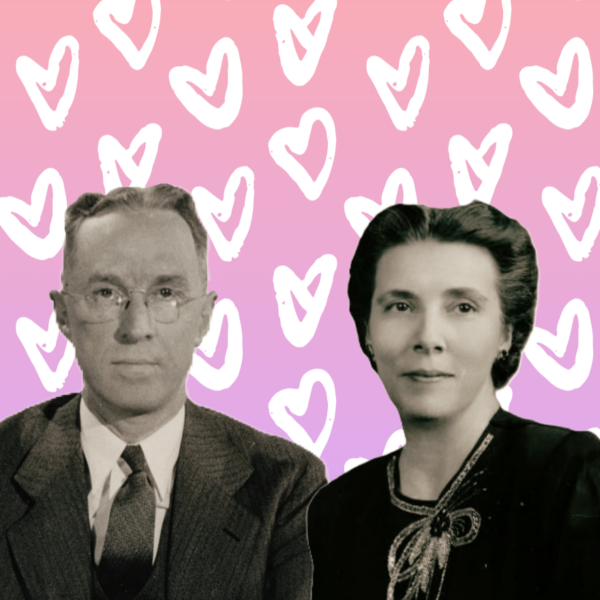
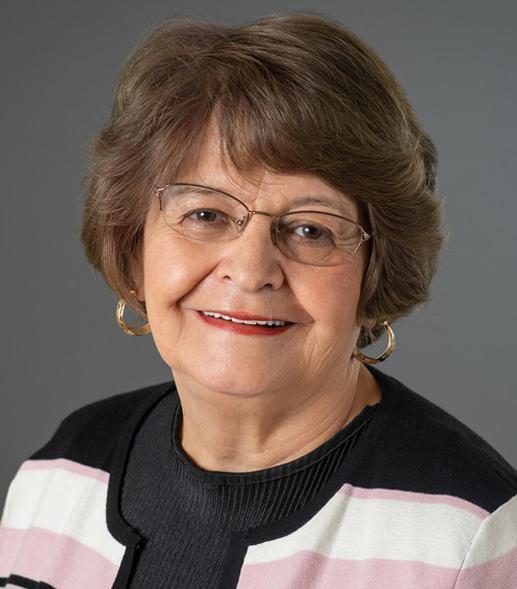
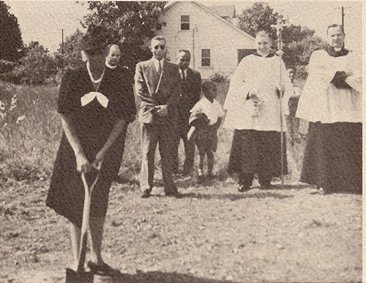
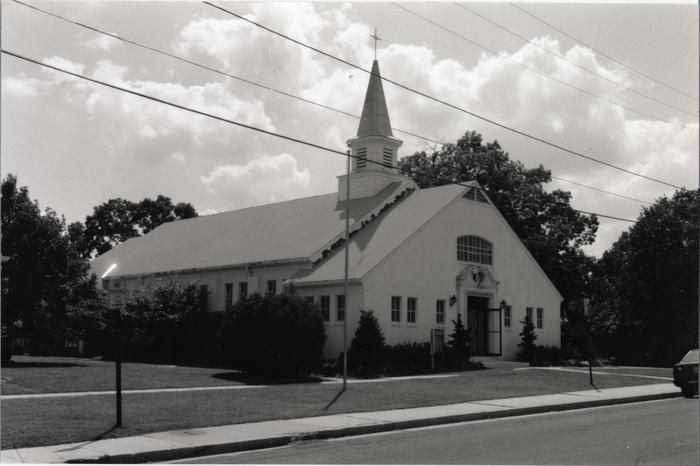
Edmund and Elizabeth Campbell. Photos from RG 19: Personal Papers of Elizabeth Pfohl Campbell, 1942-1991.
During their 60 years of marriage, Elizabeth and Edmund Campbell dedicated themselves to improving Arlington’s public school system. Leveraging their respective skills in education and law, they motivated one another to support their community through political engagement, volunteering and activism.
Edmund Campbell (1899–1995) met Elizabeth Pfohl (1902–2004) in 1936 while Elizabeth was serving as dean of Mary Baldwin College in Staunton, Virginia. After they married, Elizabeth moved to Cherrydale, where Edmund lived while practicing law in Washington. She adopted Edmund’s two children from a previous marriage and in 1941 they had twins of their own.
At that time, Arlington’s population was booming, in part because of the influx of wartime government workers. Between 1870 (when the first public school was established in Arlington) and 1950, the school-age population had nearly quadrupled. The school system was unequipped to teach so many children. Resources were spread thin and teachers were overwhelmed by large class sizes and long hours.
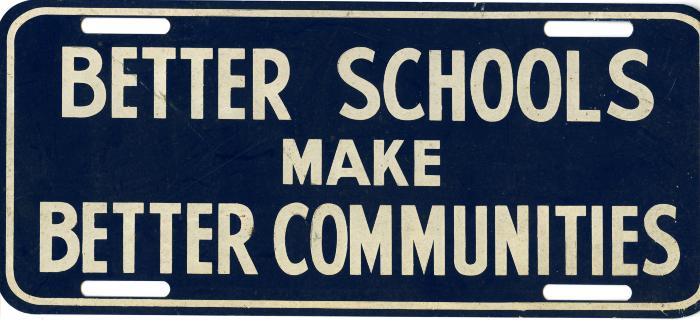
License plate with the phrase, "Better Schools Make Better Communities" From RG 19.
The Campbells, wanting a better education for their children, decided to step up and demand a change. They became charter members of the Citizen Committee for School Improvement ("CCSI").
In 1947, they helped introduce legislation that gave Arlington the right to elect its own School Board, which they hoped would better serve the community. Until then, the School Board had been appointed by a School Trustee Electoral Board which in turn was appointed by the circuit court of Arlington County.
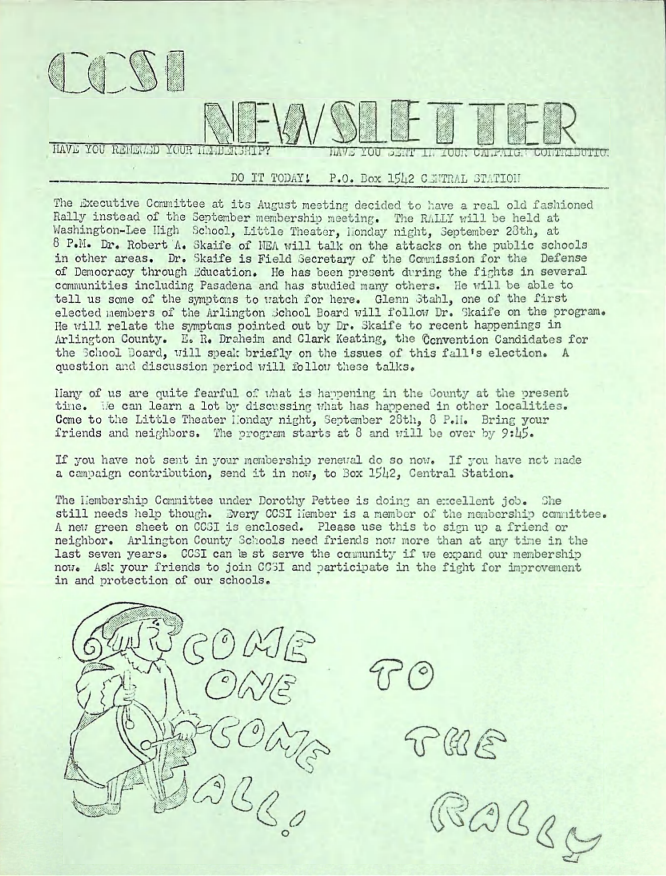
CCSI Newsletter, n.d. From RG 19.
Following this victory, CCSI focused on gathering nominees for the elected School Board. Despite her professional background in education and involvement in the Arlington PTA, Elizabeth Campbell declined to run—until her husband encouraged her to do so.
EDMUND: How did you get involved formally in the Better Schools Movement?
ELIZABETH: Well, I was asked to be a candidate to run for the elected school board, and I think I was asked after the two of us had received a group of Arlington citizens who said, "Which one of you will be a candidate for the School Board?" And you said, "I will not, but Elizabeth, I think you should because you have been active in school affairs."
EDMUND: And I had just finished my term on the County Board.
ELIZABETH: So, then you were asked to be the Chairman of the School Board Nominating Convention. The Convention was held on a hot August night, and I...
EDMUND: Where was it held?
ELIZABETH: It was held in the Ashton Heights Club House south of Pershing Drive on Fillmore Street. I remember that we got ready to go over there. We got in the car, and as we drove, you said, "Now, Elizabeth, you have worked very hard to get an elected School Board. There's no reason why with all of these good people as candidates you shouldn't get yourself nominated.” And I said, "No, I'm not going to."
But I got over there in that crowded room, and I was asked to make my little one-minute or two-minute talk. I looked around at all of the people who had worked so hard to pass this legislation to give us the right to have an elected School Board. I was thrilled with a patriotic fervor that I had never felt before or since. I don't know what I said, but the result of what I said was that I was the one woman nominated to serve with four men as candidates for the Arlington Elected School Board.
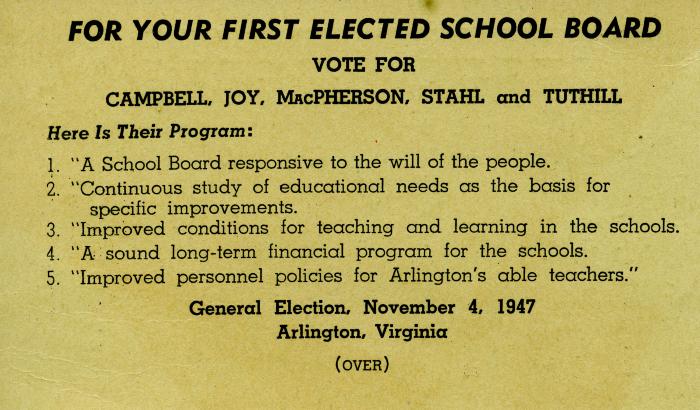
Notecard with a guide on which school board candidates to vote for in the 1947 election. From RG 19.
After a grueling campaign, they succeeded in getting all five nominees elected. Elizabeth served on the School Board from 1948 through 1955, and again from 1960 to 1963. They often held meetings in the Campbells’ home, where Edmund continued to support Elizabeth and the work they were doing to raise funds for school improvements.
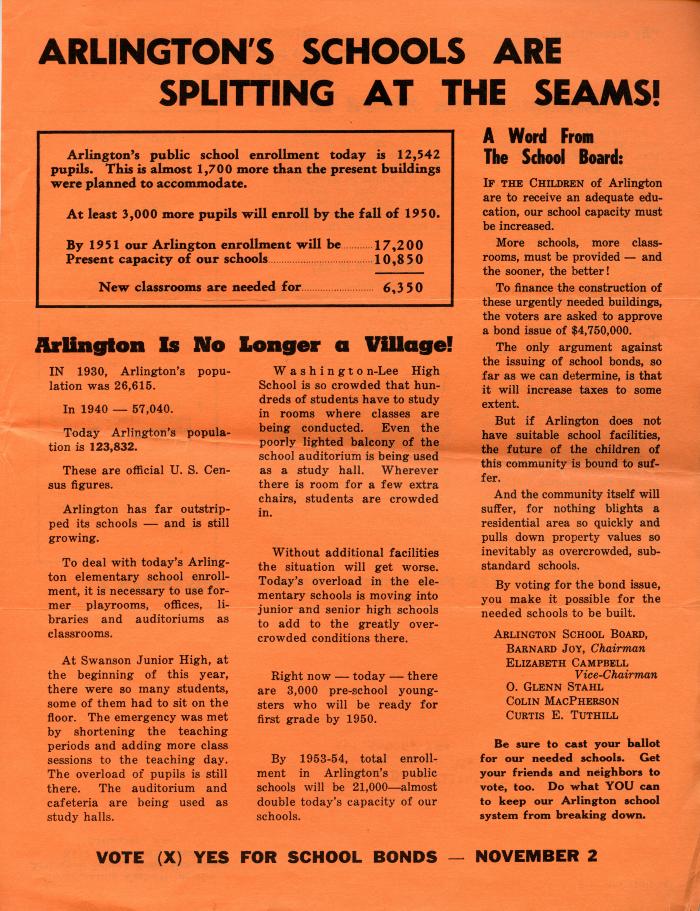
Pamphlet urging Arlington Residents to vote "Yes" to a bond issue of $4,750,000 to build more schools for Arlington's increased population and school enrollment. From RG 19.
The Campbells also helped desegregate Arlington’s schools, vehemently opposing Virginia’s policy of “Massive Resistance,” which occurred in the wake of the U.S. Supreme Court decisions in Brown v. Board of Education. In 1954 and 1955, the couple fought to ensure that Arlington's public schools stay open by organizing the Save Our Schools Committee in defiance of Senator Harry F. Byrd and his allies.
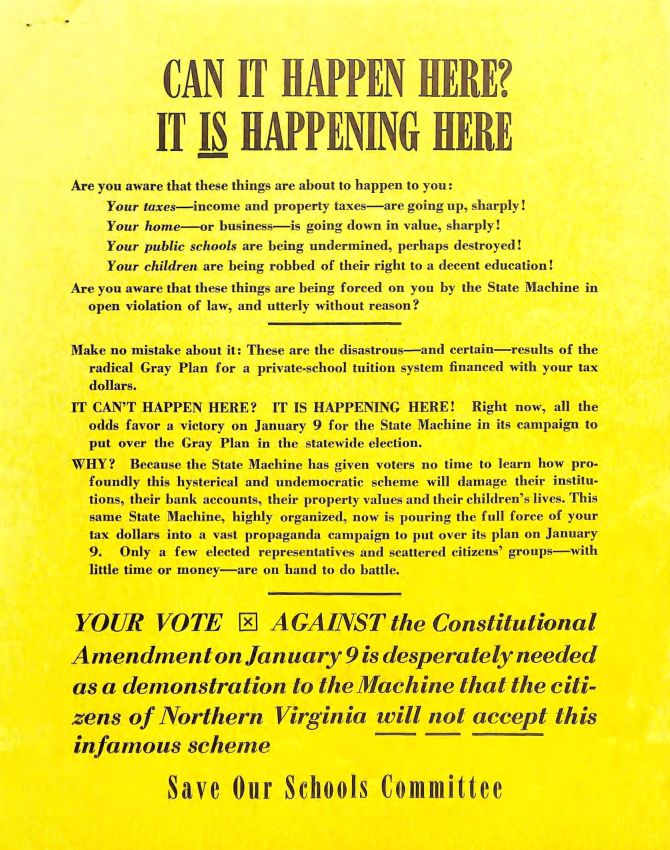
Flyer from the Save Our Schools Committee arguing for a vote against the constitutional convention. From RG 18: Personal Papers of Barbara Marx.
In 1955, Edmund won a case that overturned a Virginia law prohibiting racially integrated seating in public places. In 1958, following the closure of schools in Norfolk, Charlottesville and Front Royal, he successfully argued as the lead attorney in James v. Almond, finally ending Virginia's “Massive Resistance" laws that had forced the closing of all public schools which Federal courts had ordered to integrate. Following that decision, the first Black students entered Stratford Junior High School on February 2, 1959.
Through civic engagement, community organizing and simple kindness, the Campbells worked together to make Arlington a better place for the rest of their lives.
Sources:
- Edmund Campbell: Speaking Out.
- Interview with Elizabeth Campbell, Arlington Public Library Oral History Project.
- March of Time: Fight for Better Schools, 1949.
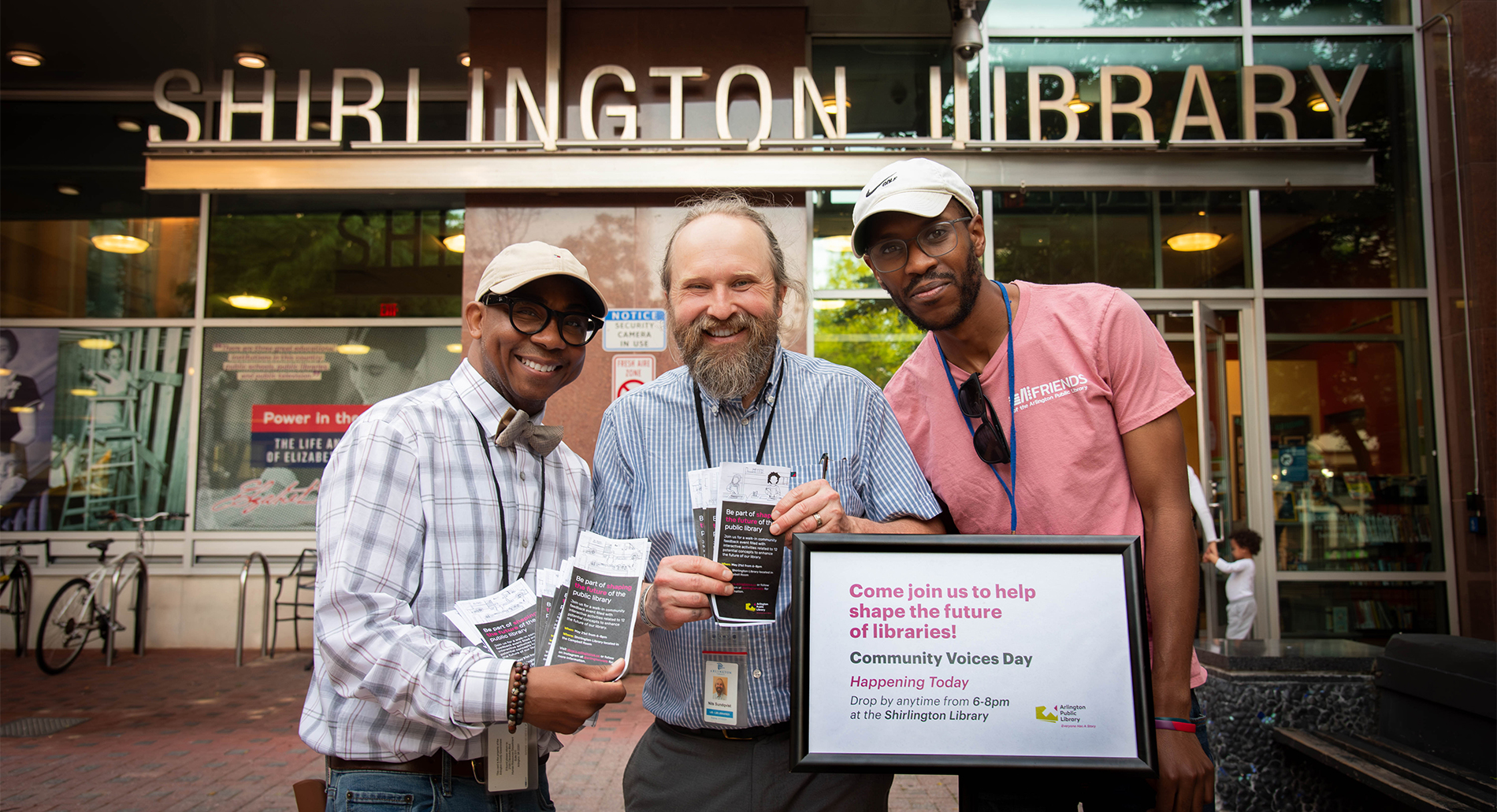
- Power in the Public: The Life and Legacy of Elizabeth Campbell exhibition at Shirlington Library.
- RG 18: Personal Papers of Barbara Marx, 1950-1965.
- RG 19: Personal Papers of Elizabeth Pfohl Campbell, 1942-1991.
Help Build Arlington's Community History
The Charlie Clark Center for Local History (CCCLH) collects, preserves and shares resources that illustrate Arlington County’s history, diversity and communities. Learn how you can play an active role in documenting Arlington's history by donating physical and/or digital materials for the Center for Local History’s permanent collection.
Do you have a question about this story, or a personal experience to share?
Use this form to send a message to the Charlie Clark Center for Local History.
Center For Local History - Blog Post Message Form
Do you have a question about this story, or a personal experience to share? Use this form to send a message to the Center for Local History.
"*" indicates required fields




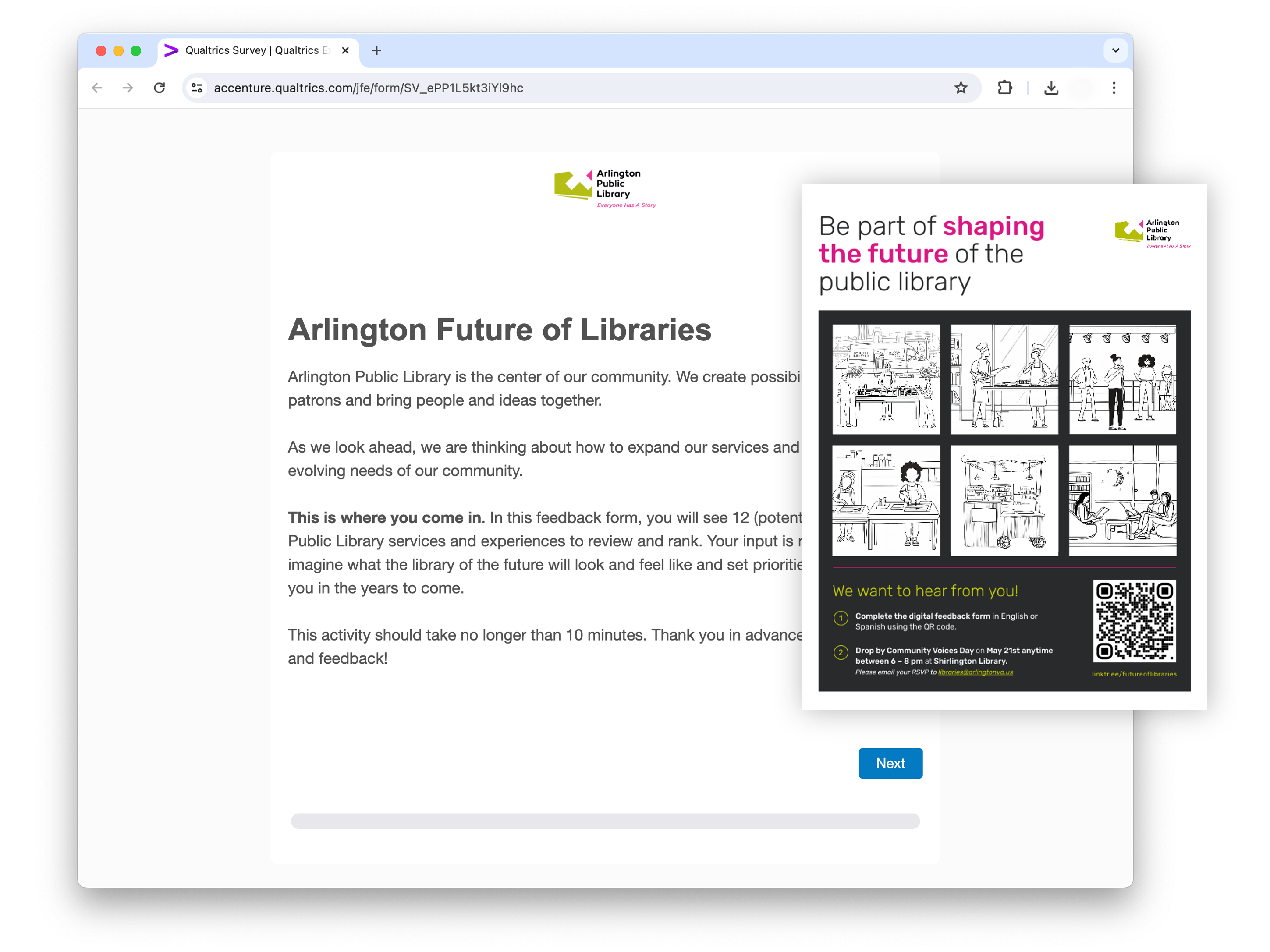
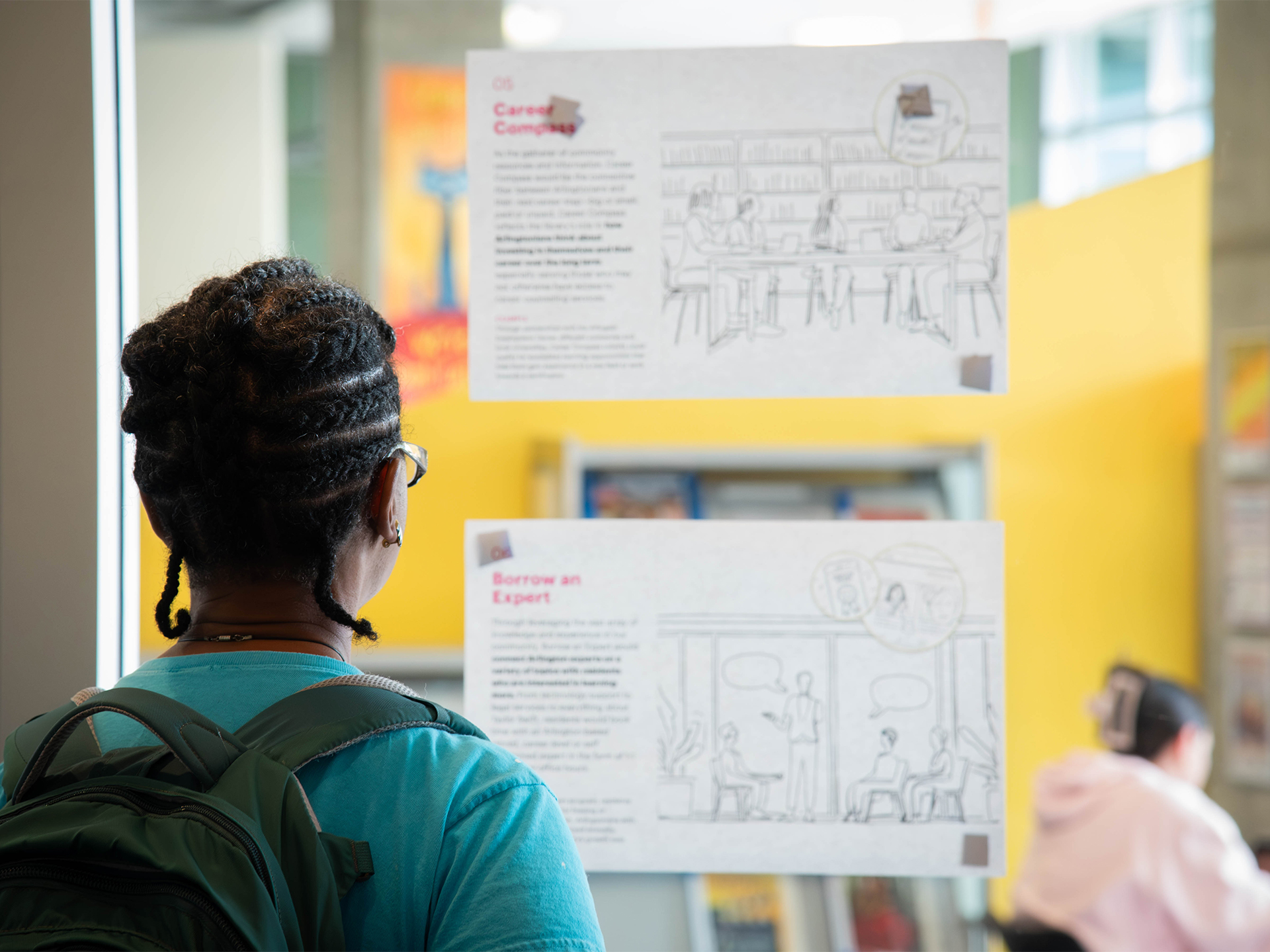
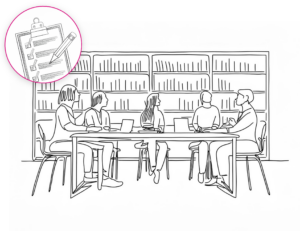 As the gatherer of community resources and information, Career Compass would be the connective fiber between Arlingtonians and their next career step—big or small, paid or unpaid. Career Compass reflects the library's role in how Arlingtonians think about investing in themselves and their career over the long term, especially serving those who may not otherwise have access to career counseling services.
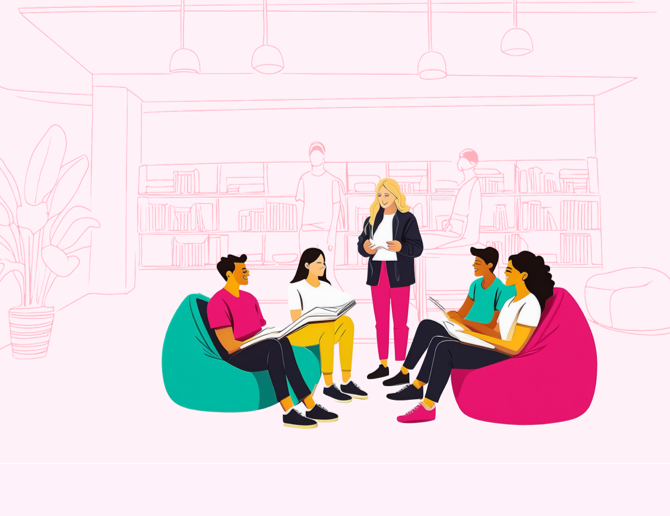
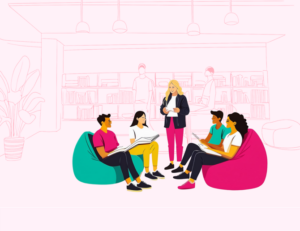 Arlington Public Library would curate a Student Union space for teens age 13-19 across Arlington to conduct everything from academic activities such as tutoring, homework and test prep to casual activities like gaming, reading and playing with new technology—plus organized opportunities to promote civic and community engagement. The space itself will celebrate and reflect the academic and creative expressions of Arlington teens by working closely with Arlington Public Schools (APS) and other community organizations to gather and catalogue student artwork, academic reports and DIY projects.
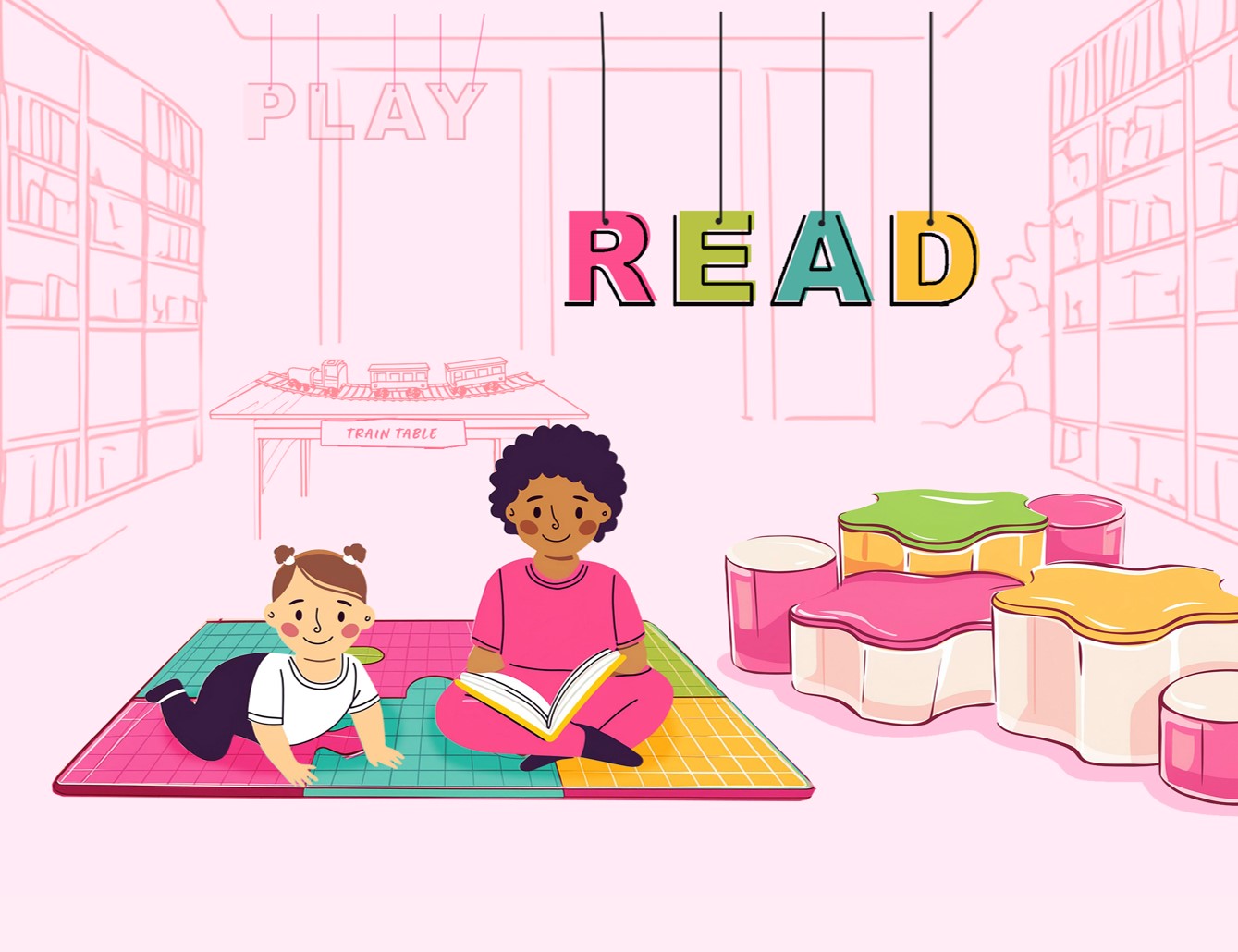
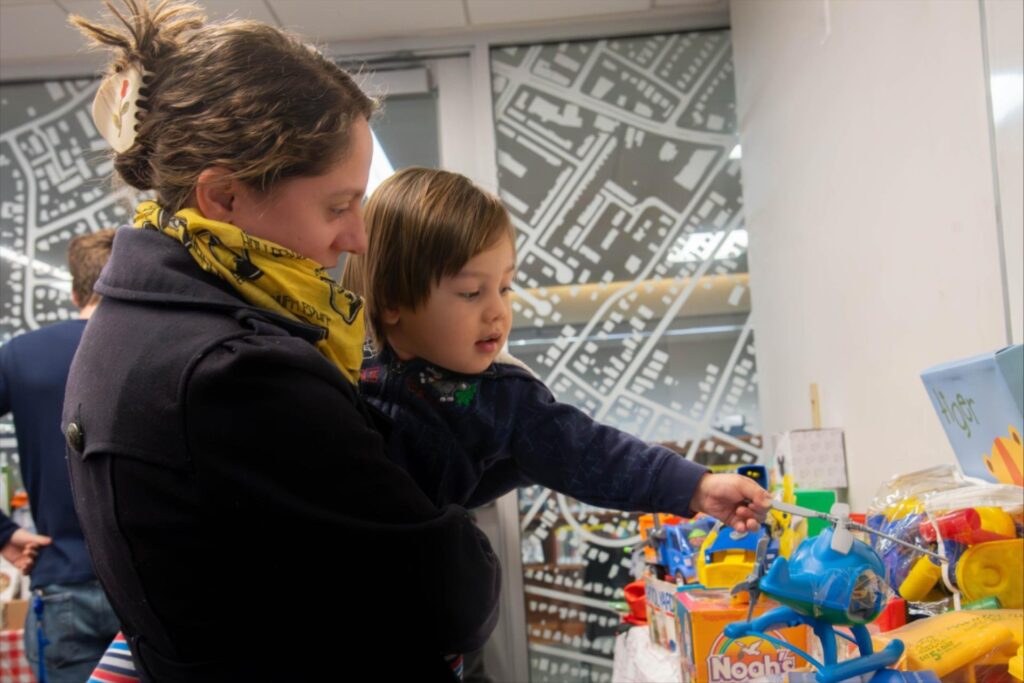
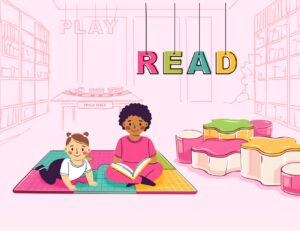 The Kids Zone would be a dedicated literacy area where kids (ages 0 to 5) can be kids—making noise and creative messes encouraged! Having kids space that is a mix between storytime, an arts-and-crafts room and a playground could promote early literacy learning for kids in a highly interactive and social way. The Kids Zone could also support caretakers in finding spaces that would allow their kids to unapologetically act their age and support their caretaking needs.
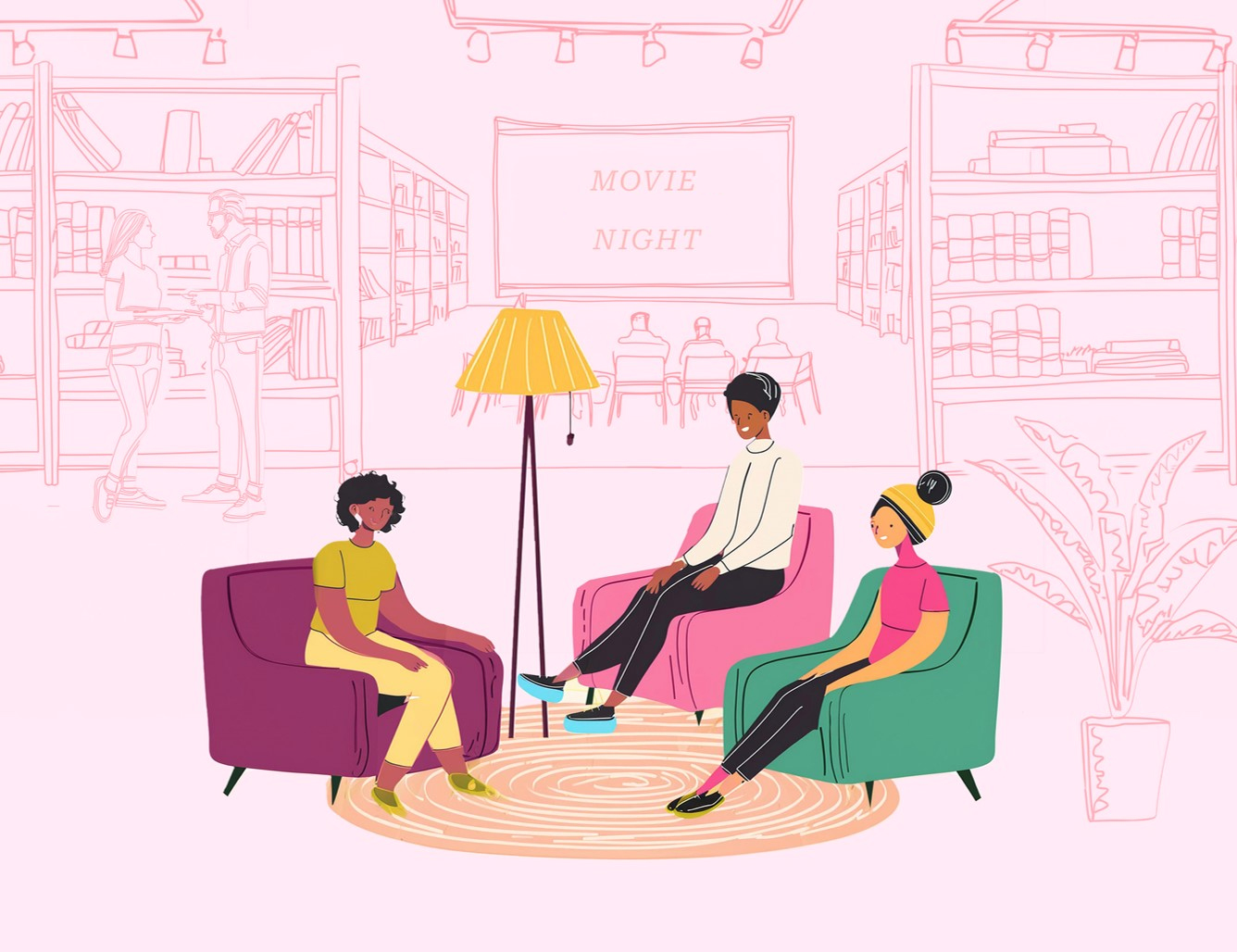
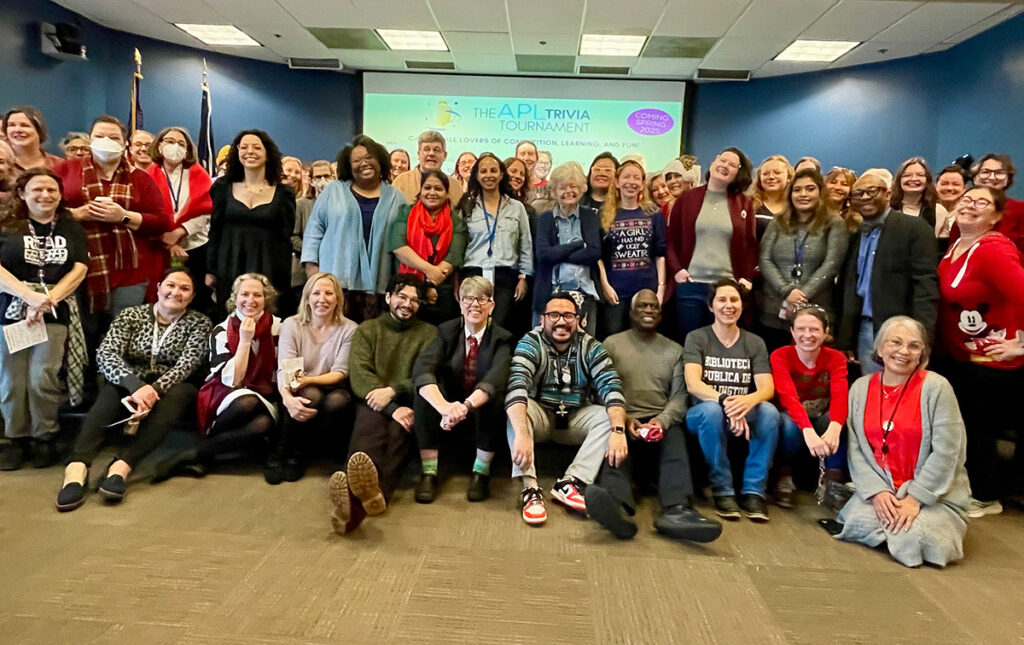
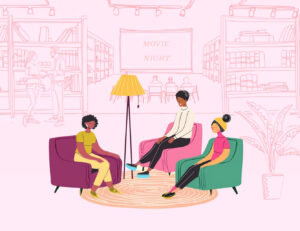 Arlington Public Library would be the best Third Place Space—a social space outside work and home—where residents of all ages could feel a part of the community, find their people, experience serendipitous interactions and conduct passive activities like lounging and browsing. This space would allow library patrons to foster community engagement through events including workshops, book clubs and movie nights organized by the library and other organizations.
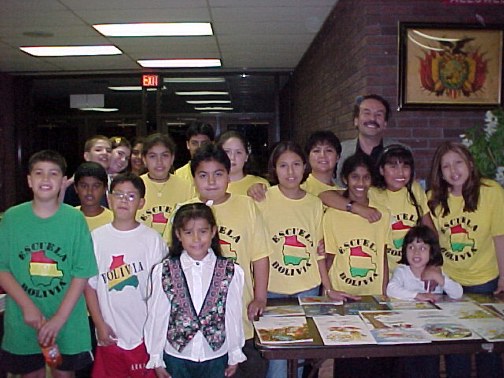
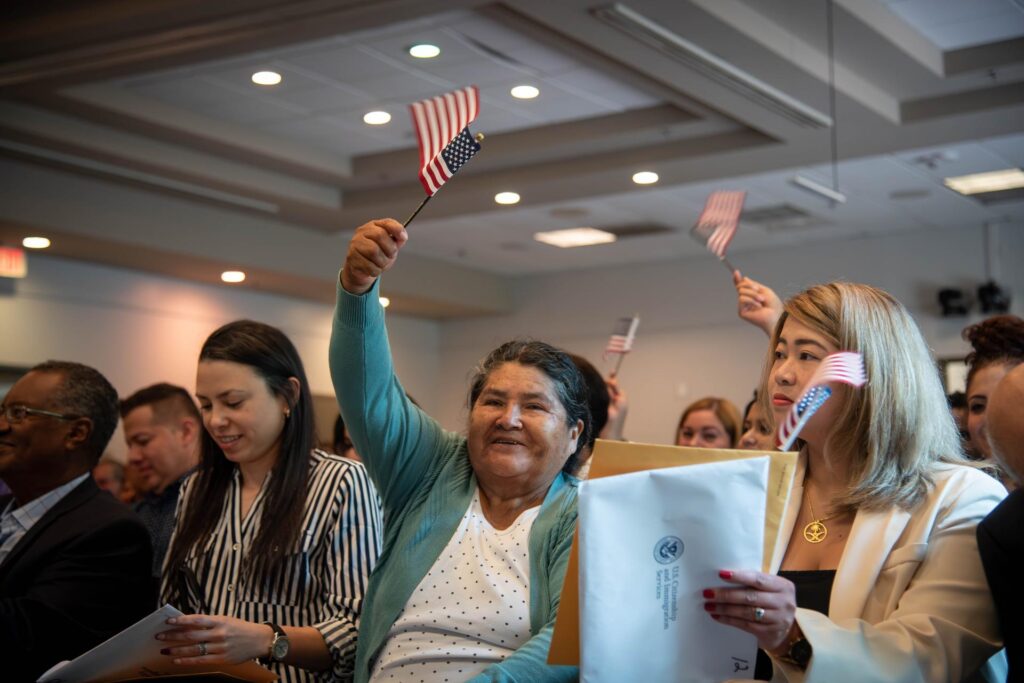
 As our local communities become more internationally-oriented, Citizens of the World would be Arlington’s portal to the globe. This program would connect residents to holistic local and international opportunities to build multi-lingual skills, learn about cultures and increase appreciation for our community’s diversity.
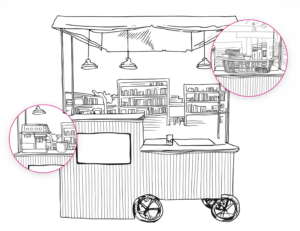 Convertible Kit-Carts take the idea of a "library cart" to a new level. The Kit-Carts would be portable, adaptable stations used by County staff to bring innovative library services into non-library spaces such as malls, hospital lobbies or community plazas. This concept would offer customized services and resources specifically designed for certain spaces.
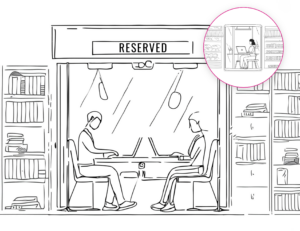 Arlington has one of the highest populations of remote workers in the nation. Remote Work Space would build utilities that are attractive to remote workers—from lendable technology and tools to co-working tables and phone call booths—and could make Arlington Public Library the best destination for this segment of our community.
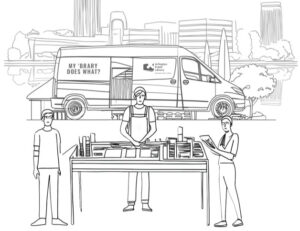 "My Library Does What?" would bring the library on the road via a mobile truck to reach residents in their neighborhoods and challenge their perception of what the library offers. The library truck will have nontraditional branding, which will allow residents to rediscover what the library could mean to them.
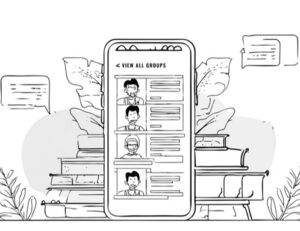 Whether it's encouraging people to meet for the first time or supporting connection between those with similar interests, the library would become a 21st-century version of Arlington's Town Square by encouraging community-building beyond scheduled library program time. A digital platform could provide community-based content and groups to join, real-time tracking of events and security and moderation.
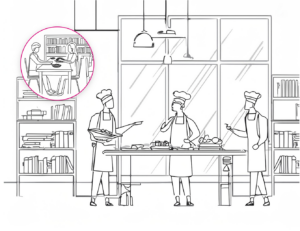 Appetite for Learning would be a hands-on curriculum that builds skills in nutrition, cooking and sustainability through various community engagements. This would provide high-value, continuous learning opportunities for all, improve nutritional and environmental outcomes and embrace Arlington’s multicultural community.
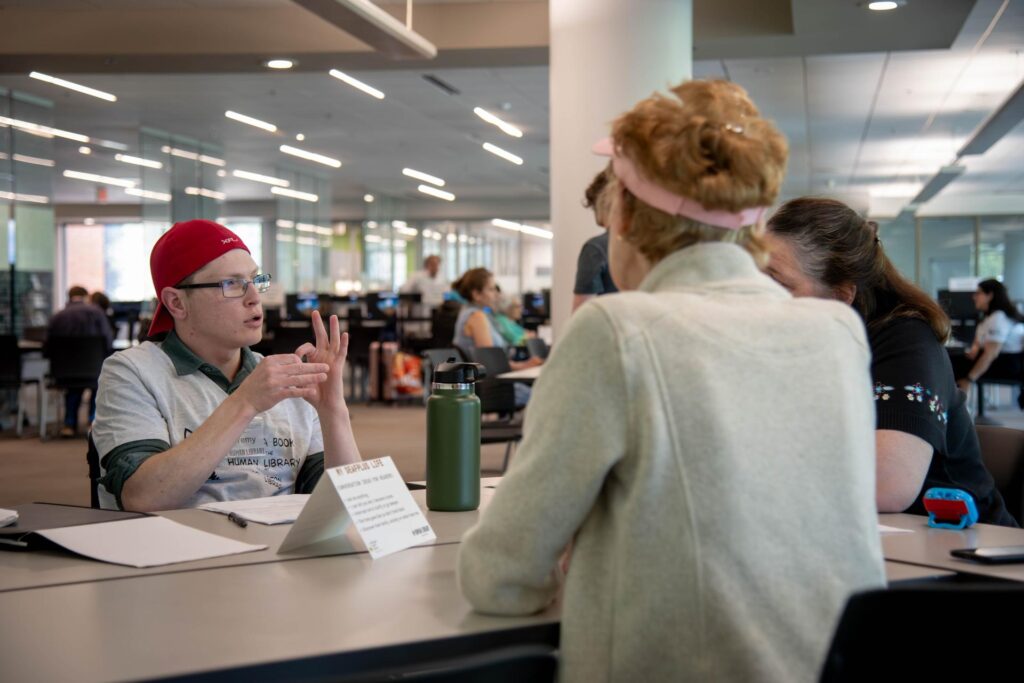
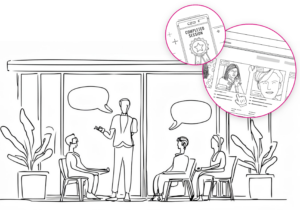 Borrow an Expert would connect patrons with an expert for popular community needs as well as niche topics and hobbies. From technology support to everything about Taylor Swift, residents could book time with an expert or sign up to share their own knowledge with the community. Arlingtonians would have access to specialized resources and build community bonds through knowledge-sharing.
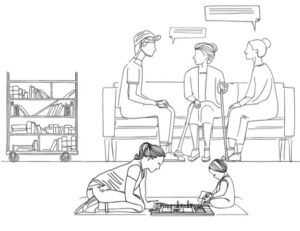 Community Collective would create opportunities for people from all walks of life—from Arlington newcomers to longtime residents—to meet, build bonds, share stories and create multigenerational communities. From cozy coffee meet-ups to lively park picnics, Arlingtonians would get to know their neighbors and engage in dialogue on various life topics in a safe space.