• Skip to primary navigation
  • Skip to main content
  • Skip to footer

Alert

HOLIDAY: All library locations will close starting at 1 p.m., Dec. 24 and remain closed Dec. 25-26 for the Christmas holiday. More Info

Home - Arlington County Virginia - Logo
MENUMENU
  • Join Now
  • My Account
    • Login
    • My Checkouts
    • My Holds
    • My Lists
    • My Reading History
    • About Borrowing
    • About Holds
    • About My Account
  • Hours & Locations
    • All Hours & Locations
    • Holiday Closings
  • News
    • Library News
    • Director's Blog
    • Get Email Updates
  • Contact Us

Arlington Public Library

MENUMENU
  • Search
  • Collections
  • Library Services
  • Events
  • Community Engagement
  • Join Now
  • My Account
    • Login
    • About Borrowing
    • About Holds
    • About My Account
  • Hours & Locations
    • All Hours & Locations
    • Holiday Closings
  • News
    • Library Blog
    • Get Email Updates
  • Contact Us

Throwback Thursday

The History of Arlington’s Logo and Seal

Post Published: May 27, 2021

Arlington is currently in the process of changing its iconography. Let's take a look back at the previous versions of the Arlington Logo as the County begins the process of updating its visual identity.

Arlington County was formally designated in 1920, changing its name from Alexandria County in order to distinguish itself from the nearby City of Alexandria. The County initially used the Virginia state seal in official documents, which depicts the Roman goddess Virtus conquering Tyranny. It is accompanied by Virginia's state motto, “Sic Semper Tyrannis,” or “Thus Always to Tyrants.”
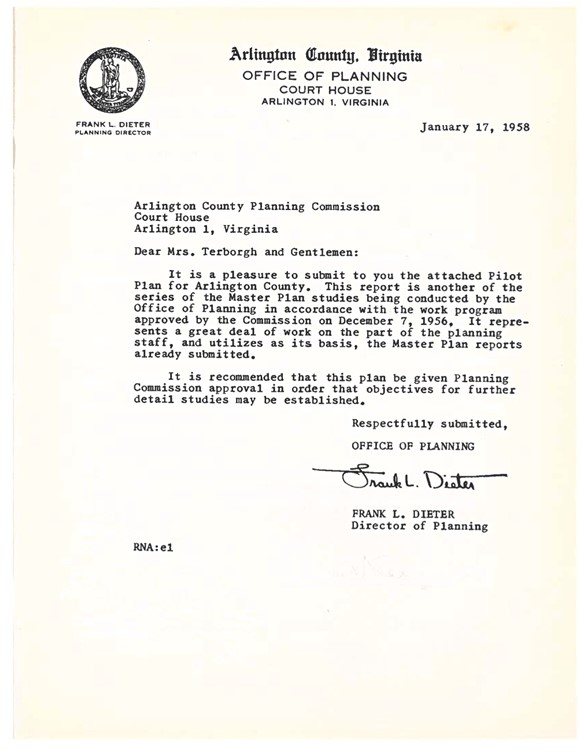
Office of Planning Letter

Example of usage of the Virginia state seal in County documents, circa 1958.

Arlington House

Around the mid-1960s, Arlington began using an unofficial County seal. However, the Commonwealth’s Attorney decided that the County Board did not have the authority to adopt a seal. The County Board subsequently authorized the use of a visual signature on documentation, but in 1969 declined to make it a seal based on this legal guidance. Because of this designation, then-County Manager Vernon Ford described the seal as a “decorative medallion.”

The unofficial seal featured Arlington House and the date 1801 in later versions. This was contested by Arlington history expert Eleanor Templeman. The date was chosen to represent the formal establishment of the County of Alexandria, but Templeman argued that it could be incorrectly interpreted as the date of construction of Arlington House, which commenced in 1802. The 1801 date prevailed, however, remaining on the County seal into the 1980s.

The main image on the seal, Arlington House, was the longtime home of Robert E. Lee, leader of the Confederate Army. The building was constructed by slave labor for George Washington Parke Custis, who was George Washington’s step-grandson and Lee’s father-in-law. After the start of the Civil War, the Lee family fled and the property was used by Union troops as a burial site, and the location would eventually become part of Arlington National Cemetery.

Since 1972, the site has formally been known as “Arlington House, the Robert E. Lee Memorial,” reinstating its ties to the Confederate leader. In 2020, legislation was proposed to remove Lee’s name from the historical site, citing the erasure of Black Americans who lived in slavery on the property.
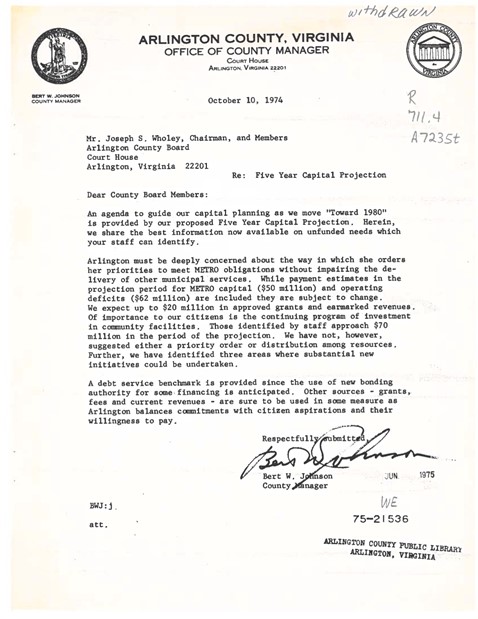
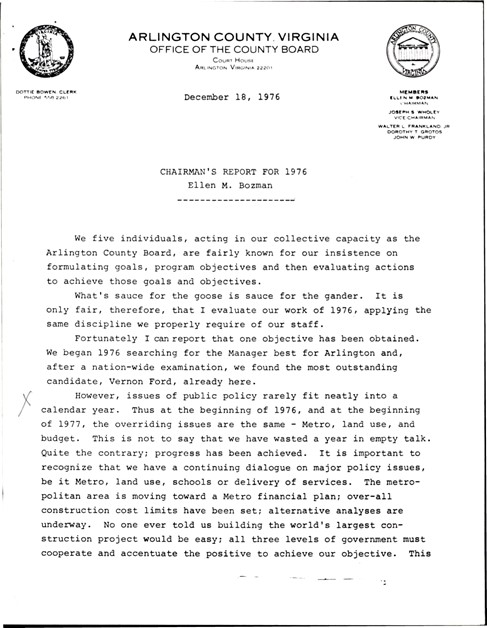
74 State Seal
76 State Seal

Examples of use of the state seal and unofficial County seal, from 1974 and 1976.

The "A" Logo

In 1976, the County began using an unofficial logo in the form of a stylized “A,” with Arlington House also appearing on this image. The logo was designed by Susan Neighbors, a professional illustrator from Arlington, who produced five designs based on County guidance. These options were then voted on by the public at ballot boxes placed at the County libraries, and the “A” logo won the contest.
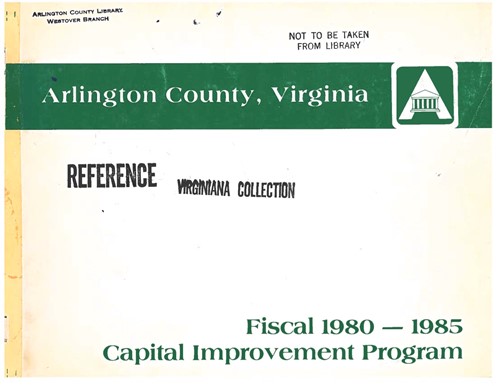
A Logo 79
A Logo 83

Example of the “A” logo used by the County starting in 1976. Image circa 1979 and 1983.

County Flag Design

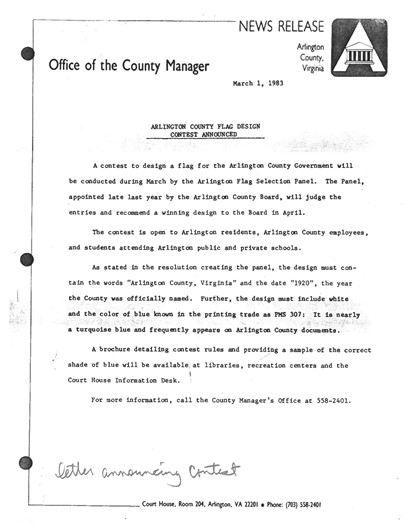
In September 1982, the County set out to adopt an official design for the County flag, and the County Board adopted a resolution for a flag design competition and a Flag Selection Panel to choose the design. In March of 1983, the County released a call for entries for the design of the flag to the public. Design requirements included the use of blue and white colors, and the words “Arlington County, Virginia,” as well as “1920.”

One hundred and ten people submitted designs for the contest, and Harvey J. Wilcox was selected as the winner in April of 1983. Wilcox, a deputy general counsel for the Navy, had no formal design experience and came up with the design while homebound with the flu. His imagery reflected the County’s unofficial logo and seal with a depiction of Arlington House, accompanied by a white ring and sprays of dogwoods underneath. Yellow was chosen as the background color for the flag.
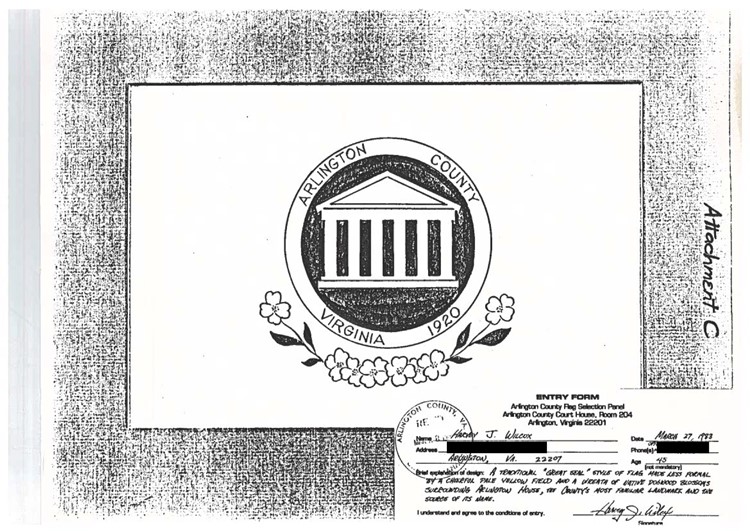
Harvey Wilcox Entry

Harvey Wilcox’s winning entry for the 1983 design contest.

After consulting with the Virginia Attorney General, who issued a different opinion than the one about 20 years prior, the County’s authority to have a flag was dependent on the County having a seal. So, Wilcox’s design then became the County seal, which would subsequently be presented on the County flag.

The inclusion of “1920” from the original design rules was also dropped for the final iteration, due in part to the issues that were raised by Templeman decades before. One of the issues was Arlington had multiple dates in its history that could be considered as equally significant in its history. The County seal and flag were officially adopted on June 18, 1983.
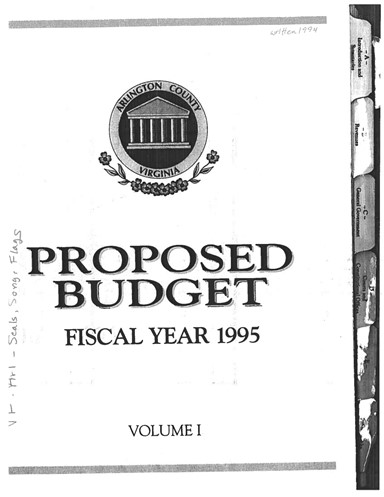
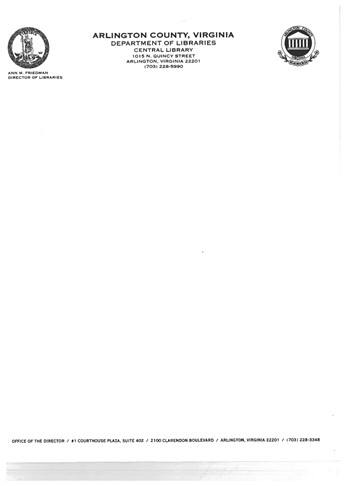
New County Seal 1
New County Seal 2

Examples of the new County seal on official documents and letterhead. Images from 1994 and the late 1990s.

The Future of the Logo

The next major step in Arlington’s formal iconography was when the County created and adopted an official logo in 2004. The logo came along with a redesign of the County website that same year and was designed by the D.C. office of Gensler Studio 585. Focus groups were held with design professionals, members of the business community, and members of the general public.

The resulting design was adopted in the summer of 2004, and, like the County seal, included a stylized representation of Arlington House, but the design drew some criticism. In a public poll of more than 1,000 responses conducted by the Arlington Sun Gazette, 81 percent opposed the new design, 15 percent supported it and 3 percent voted, 'it's OK, I guess.’ In October 2004, a petition was circulated calling for the removal of the logo, and it “even inspired a piece of folk art by an artist, who rendered the new logo in dead cicada shells."
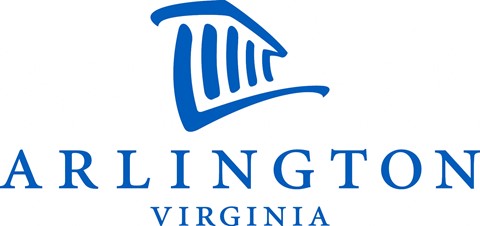
County Logo 04

Arlington County’s logo, adopted in 2004.

The County seal and logo were then used concurrently, but for different outlined purposes. In general, the seal is used for items relating to the County Board and for more permanent items (such as the County flag, permanent signage, and certificates).

The logo is considered a marketing sign and is used on departmental materials (such as County vehicles and general correspondence). In 2007, the County sought public comment and issued an update to the seal due to persistent inconsistencies in its rendering. The update kept the same imagery on the seal, but restored the original “Arlington blue” and refined it for online use.

In September 2020, the County announced that it would adopt a process to develop a new logo and seal, moving away from imagery related to Arlington House in County iconography. In January 2021, a Logo Review Panel was assembled to review concept submissions from the community, and in April announced five options selected from a pool of more than 250 ideas.
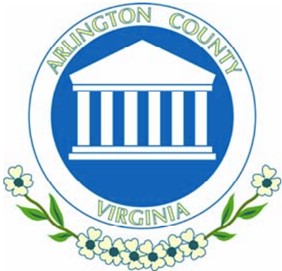
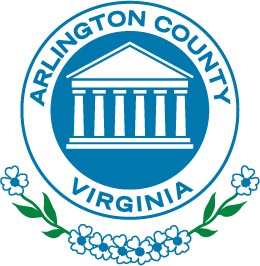
Stay tuned to the County’s homepage to submit your art for the next round of logo design submissions.
Pre 2007 Graphic 1
Pre 2007 Graphic 2

A pre-2007 graphic file of the County seal and the updated version, which is still in use today.

Do you have a question about this story, or a personal experience to share? 

Use this form to send a message to the Charlie Clark Center for Local History.

Center For Local History - Blog Post Message Form

Do you have a question about this story, or a personal experience to share? Use this form to send a message to the Center for Local History.

"*" indicates required fields
This field is for validation purposes and should be left unchanged.

Share Your Story

May 27, 2021 by Web Editor

Cycling Through Arlington’s History

Post Published: May 13, 2021

May is National Biking Month, and to celebrate, let’s take a look at Arlington’s decades-long history of bicycle enthusiasm!

1939

The County Sheriff’s department and a local chapter of the VFW team up to form a bicycle safety club for youth in Arlington. According to a February 24, 1939 news article, the “bicycle rage of the [18]90s” was on the upswing, and conditions for cycling were hazardous on the local roads.

1941

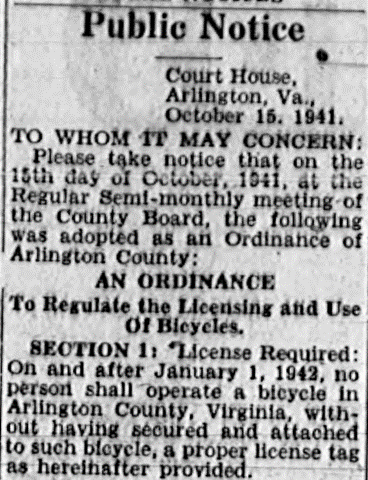
The County issues a set of rules for regulating bicycle use.

Cyclists were required to carry a license and tag, and bicycles were not to be ridden “faster than is reasonable and proper.”

Picture1

Notice about bicycle laws from the October 17, 1941 issue of the Northern Virginia Sun. Image courtesy of Virginia Chronicle.

1950s

Bicycling remains a popular recreational activity in Arlington, though largely regulated to neighborhood street cycling alongside pedestrians.

1967

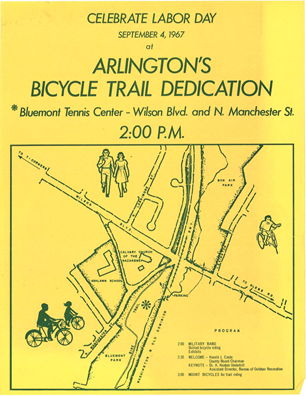
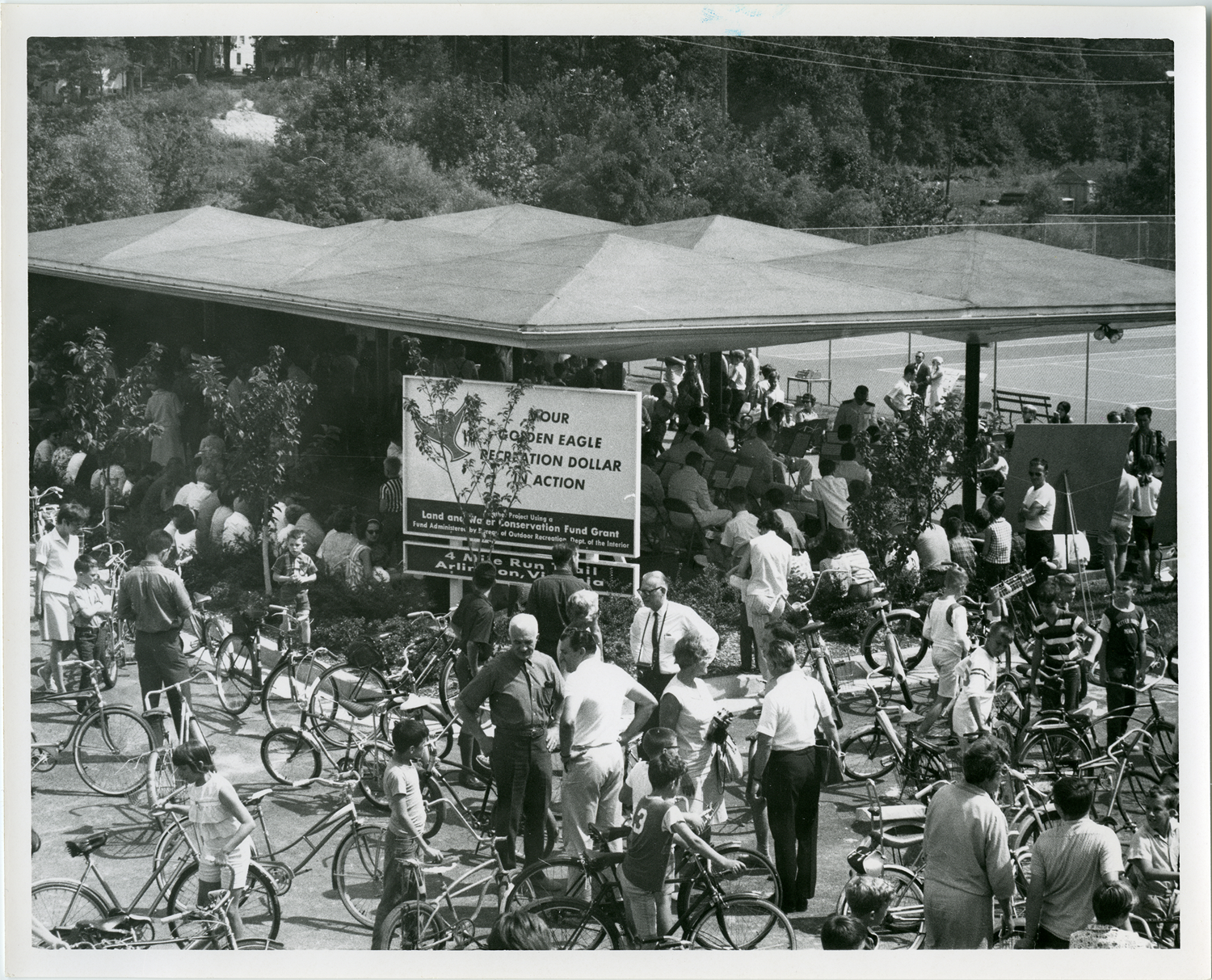
Arlington paves its first bicycle facility: a multi-use trail made of crushed limestone of about three miles along Four Mile Run. The trail opening included a ceremony at Bluemont Park, a performance by the Navy band, and cycling exhibitions.

This was also the first bicycle trail in the nation to be built with federal funds.

Picture4

Program from the opening of Arlington’s first bike trail. Image courtesy of the VA State Department of Conservation and Recreation via BikeArlington.

Picture5

A crowd gathers on bikes for a conservation event at Four Mile Run, circa the late 1960s. (214-9205)

1972

The Washington Area Bicyclists Association is formed, drawing members from the DMV region and advocating for improved bicycle facilities.

1973

The County completes its first commuter bikeway, connecting to the Spout Run Parkway and providing access to Rosslyn. Additionally, an eleven-member Bicycle Advisory Committee is established to advise on cycling-related issues and development.

Picture7

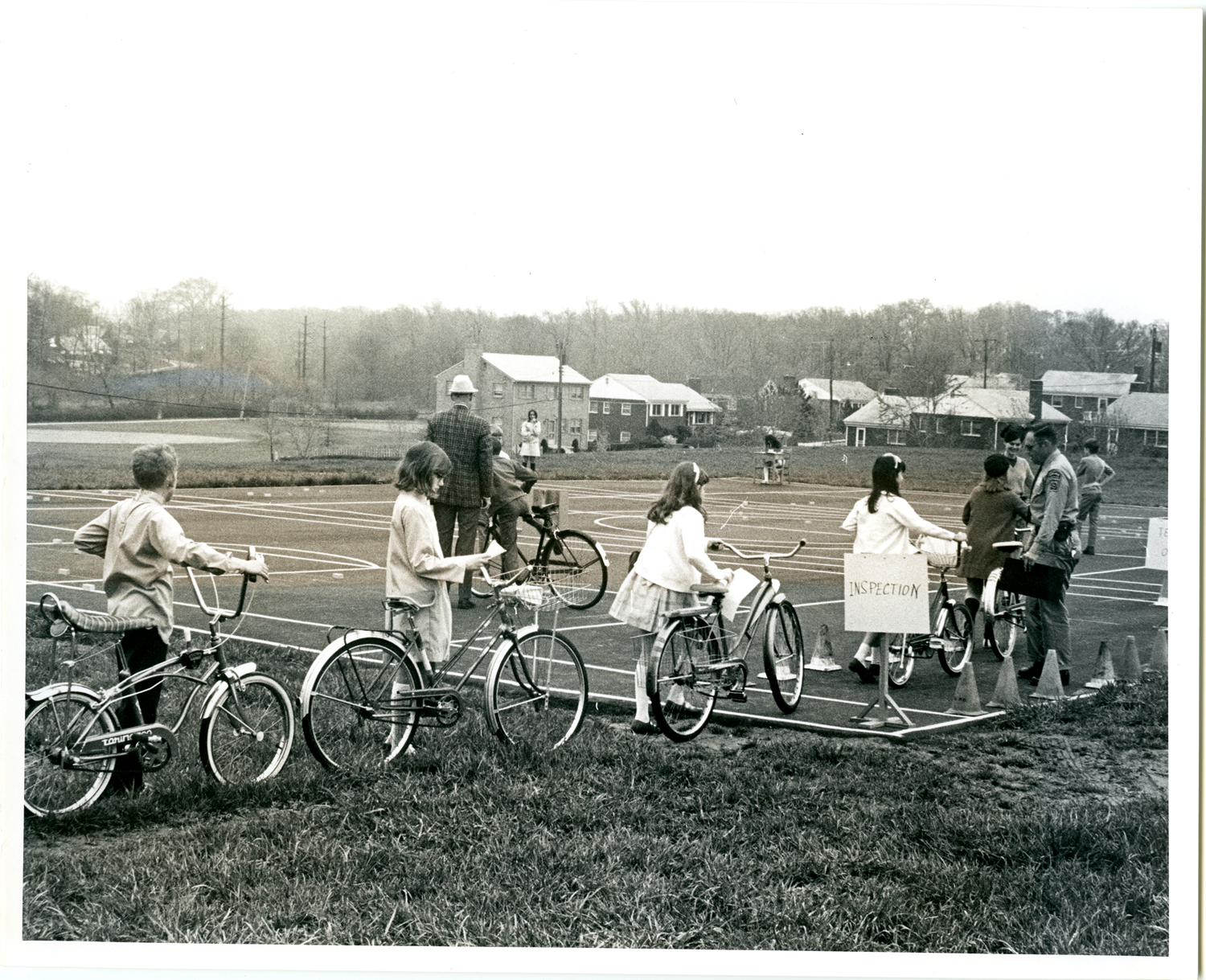
Children line up for bicycle safety inspection, run by the Arlington County Police Department, 1969.

1974

Arlington’s Master Bikeway plan is released, which calls for an 80-mile network of trails for commuter and recreational use.

1977

Metro stations debut in Arlington, which shapes the County’s transportation plan to include a bike trail along the route of I-66 and bicycle parking at the new stations.

1982

Custis Trail is completed, adding 8.5 miles of trail to the area.

Picture9

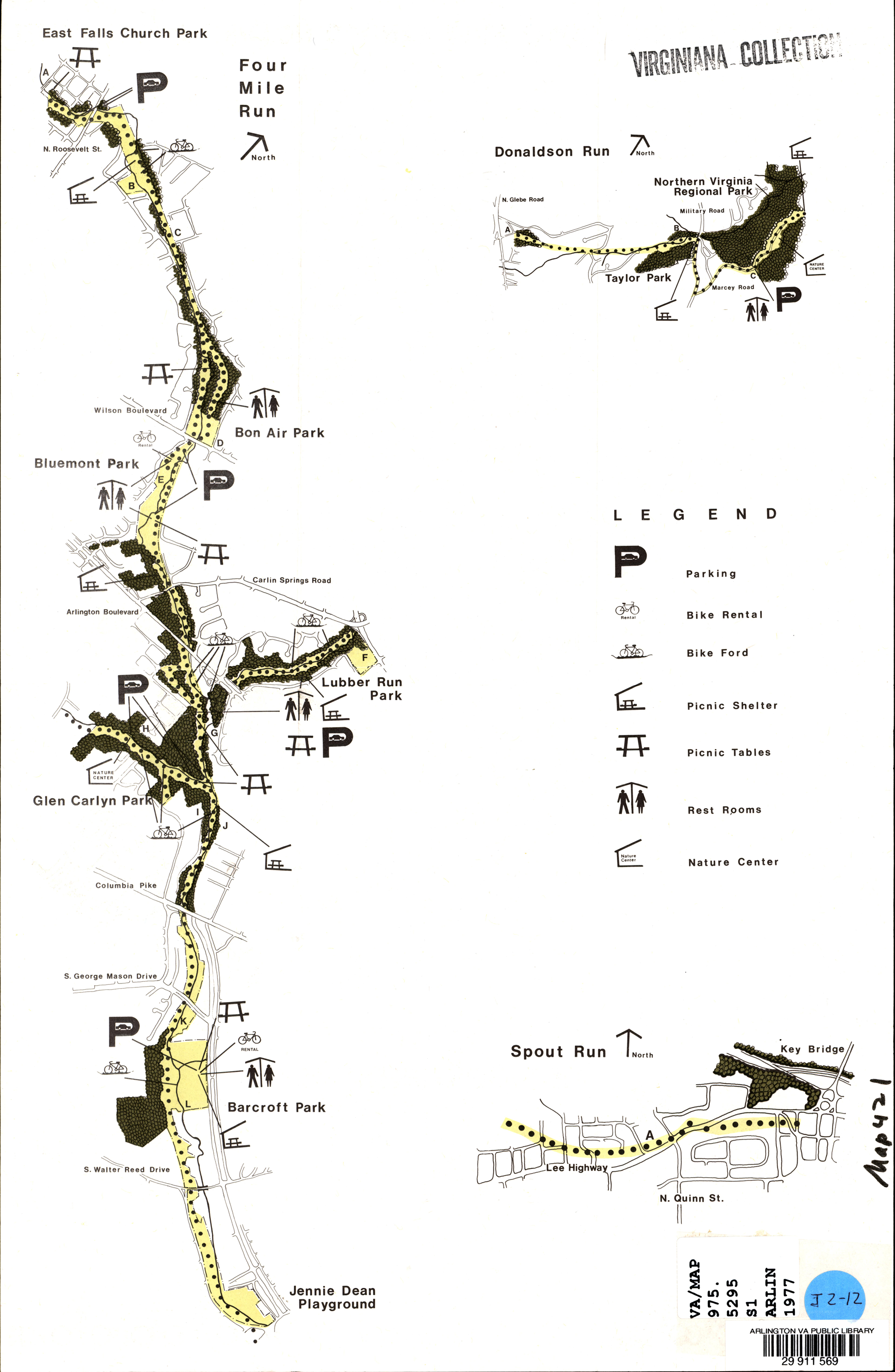
Map of County bike trails, 1977.

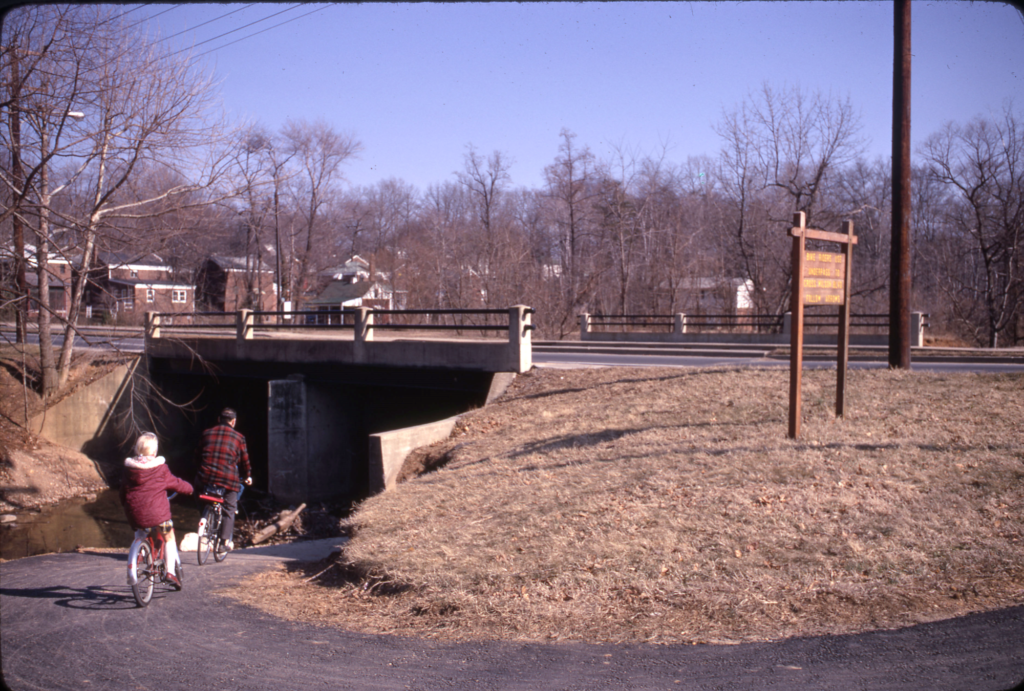
Bike underpass at Wilson Boulevard and Four Mile Run

Bike underpass at Wilson Boulevard and Four Mile Run. Date unknown. (210-0103)

1994

The Arlington Bicycle Transportation plan is adopted, and $7.3 million is eventually allocated to develop new bike trails, bicycle lanes, and bicycle parking.

2008

The County adopts the Bicycle Element, a new planning document focused on continuing bicycle development.

2010

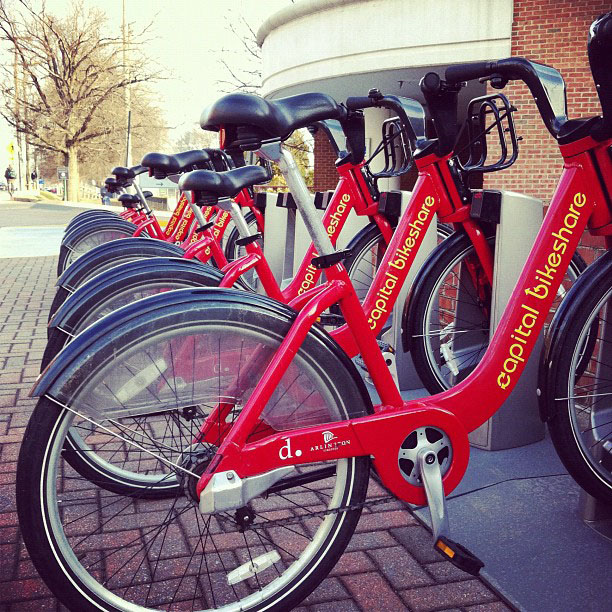
Arlington launches Capital Bikeshare in partnership with the District of Columbia.

bike share

First generation Capital Bikeshare bicycles, February 2012 at Central Library.

Sources

Active Living and Biking: Tracing the Evolution of a Biking System in Arlington, Virginia, by Royce Hanson and Garry Young

Baseline Report – The State of Bicycling in Arlington, County publication

To learn more about Arlington's history, visit the Center for Local History on the first floor of the Central Library.

Do you have a question about this story, or a personal experience to share? 

Use this form to send a message to the Center for Local History.

Center For Local History - Blog Post Message Form

Do you have a question about this story, or a personal experience to share? Use this form to send a message to the Center for Local History.

"*" indicates required fields
This field is for validation purposes and should be left unchanged.

Share Your Story

May 13, 2021 by Web Editor

Arlington’s Signature Soda: Cherry Smash

Post Published: April 15, 2021

Did you know that Arlington was once home to one of the country’s most popular sodas?

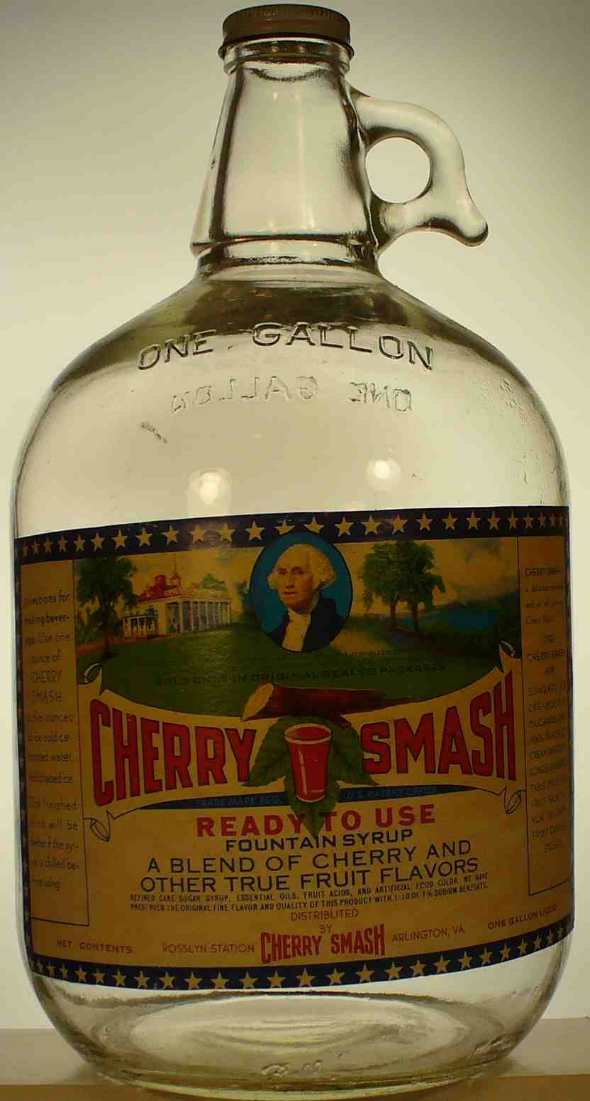
Gallon Jug
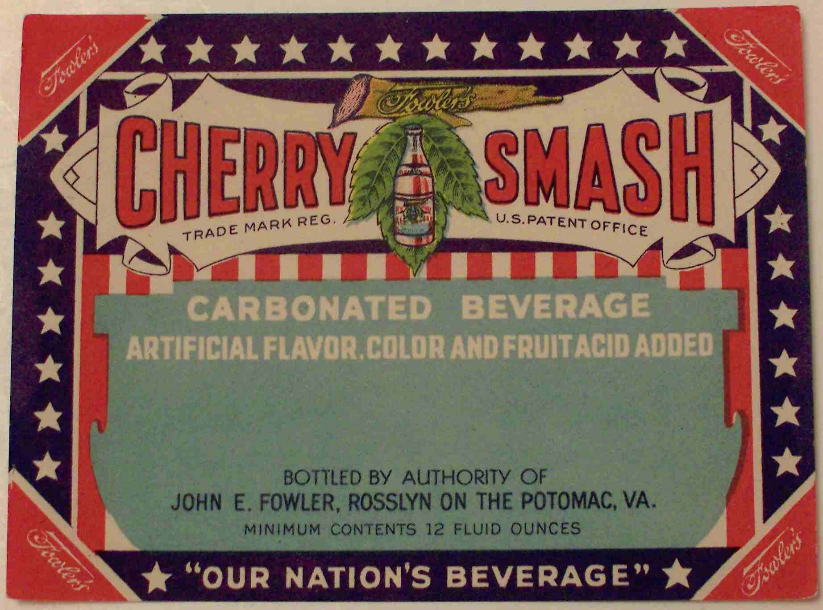
Bottling Location

A one-gallon Cherry Smash syrup jug, from the Rosslyn bottling location (left). A Cherry Smash logo, noting the Rosslyn location (right). Images courtesy of Washington, D.C., Area Beer and Soda Bottles collector, Chosi.

Cherry Smash soda was founded in 1901 by John E. Fowler in Richmond, Virginia. The company produced a cherry-flavored syrup that could be added to carbonated water or ice cream, and the drink gained early popularity amidst the rise of the soda fountain, earning the nickname of “Our nation’s beverage.” Throughout the early 1900s, there was even a Cherry Smash-sponsored amateur baseball team in the Richmond League.

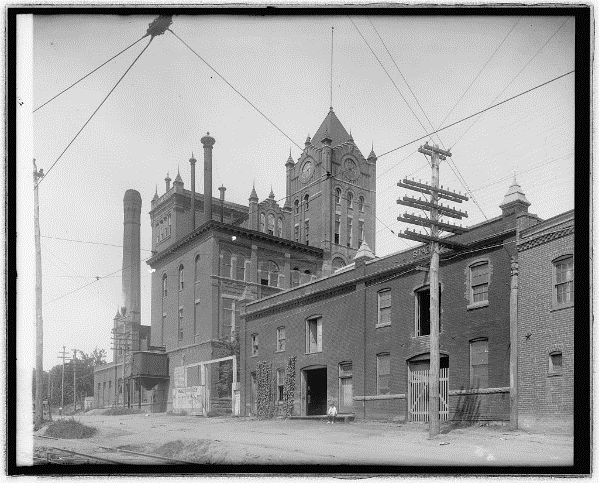
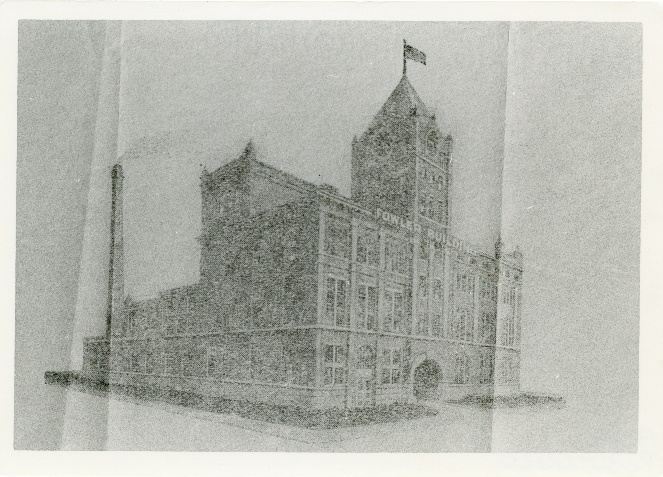
The soda came to Arlington right around the time Prohibition went into effect. With a plan to move the company’s headquarters from Richmond to Arlington, Fowler purchased the Arlington Brewery in 1920 for $125,000 and converted it into a Cherry Smash plant (also referred to as the “Fowler Building”).

Brewing Company
Fowler

Arlington Brewing Company, which became known as the Fowler Brewery after purchase by John Fowler (left). Dated between 1910 and 1926. Image courtesy of the Library of Congress. Fowler Brewery Letterhead, date unknown (right).

The site was initially known as the Consumer Brewery and was built in 1896 by Albert Goenner, a local architect who also oversaw the construction of the original County courthouse. Located near what was the old Aqueduct Bridge, it was a major purveyor of alcohol in the region during a time when Rosslyn was known for being a hotbed of criminality. From the 1880s to the early 1900s, people from the District and the greater Capital region would come over Arlington’s bridges to gamble and drink, most notably in Rosslyn’s saloons.

In 1904, however, nearly 50 of the saloons, bordellos, and gambling houses were shut down by Virginia Commonwealth Attorney Crandall Mackey, and Rosslyn’s salacious reputation began to wane. The same year, the Consumer Brewery reorganized and was renamed the Arlington Brewing Company and continued to produce beer for out-of-state sale until production was banned in 1918.

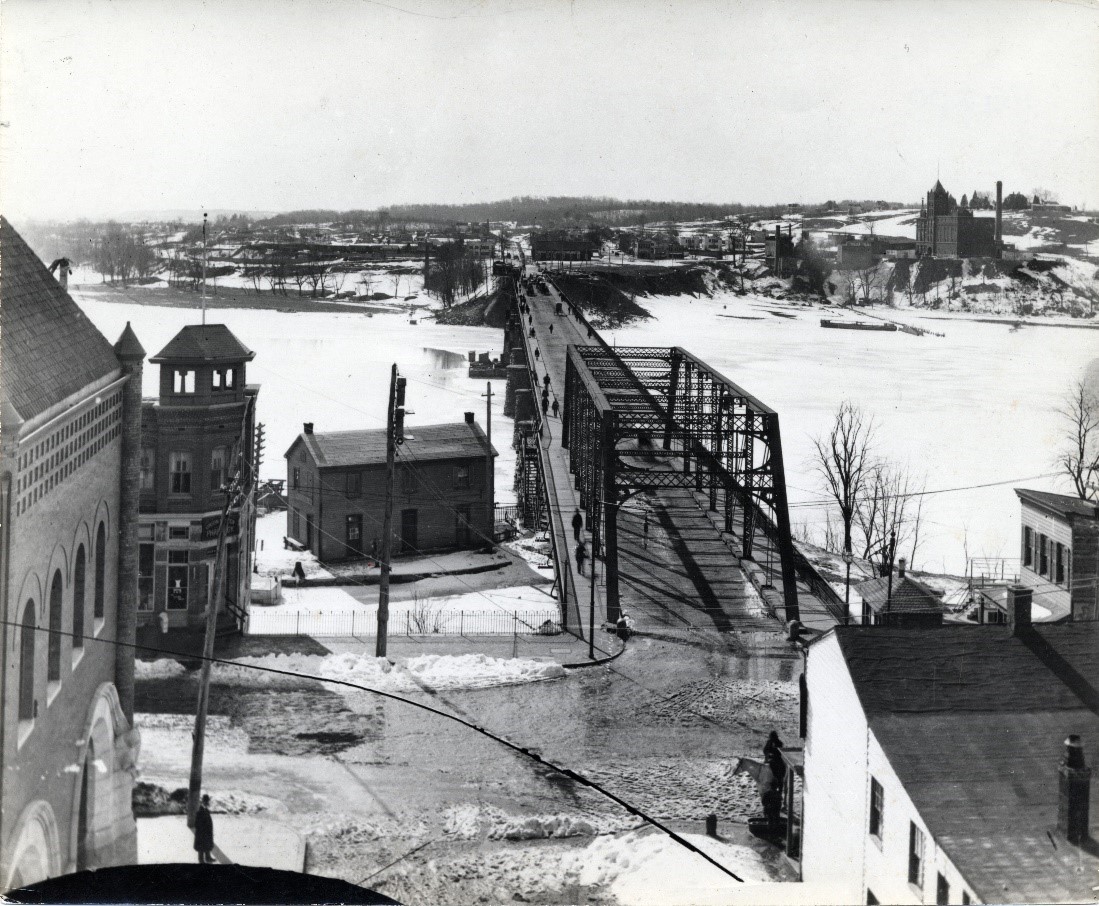
Bridge

View from Georgetown of the Rosslyn area across the Aqueduct Bridge, circa 1900. The then-Consumer Brewery can be seen at the top right corner.

When the Cherry Smash company set up shop in Arlington in 1920, the soda was one of the largest soda brands in the country, second only to Coca-Cola. As Cherry Smash ingratiated itself into the Arlington landscape, Fowler also became a prominent member of Arlington’s business community, advocating for business development in Rosslyn in the 1920s and serving as chairman of the Arlington Trust Company Bank from 1925 until his death in 1960.

Cherry Smash continued to be manufactured and bottled at the Rosslyn site until around the 1950s. Numerous other operations also took place on or adjacent to the Cherry Smash property, including a lithographing company, a laundry facility, a hardware warehouse, a millwork facility, and a tree surgery company. In 1943, part of the Cherry Smash plant was used to manufacture and bottle wine, connecting the location back to its pre-Prohibition roots.

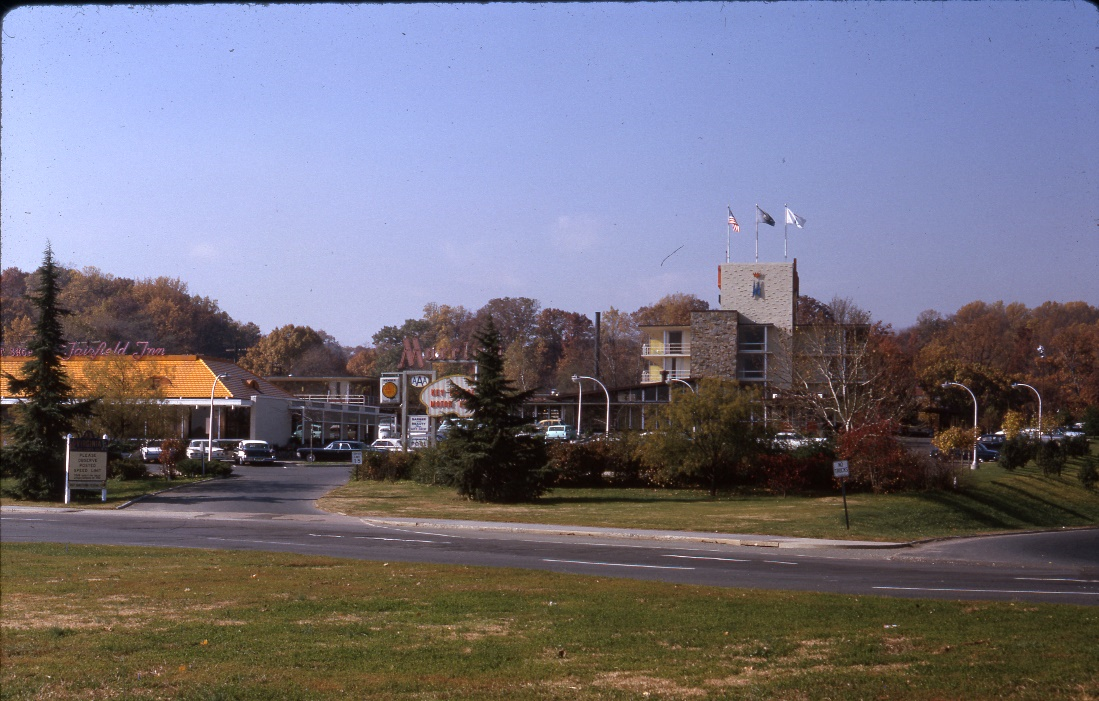
In 1940, J. Willard Marriott opened a Hot Shoppe next to the Cherry Smash facilities, which had become a highly successful local restaurant chain since the first location debuted in D.C. in 1927. In 1958, Marriott demolished the soda plant to construct a “Hot Shoppe’s Motel,” which in 1959 debuted as the “Marriott Motor Hotel,” and was later called the Key Bridge Marriot.


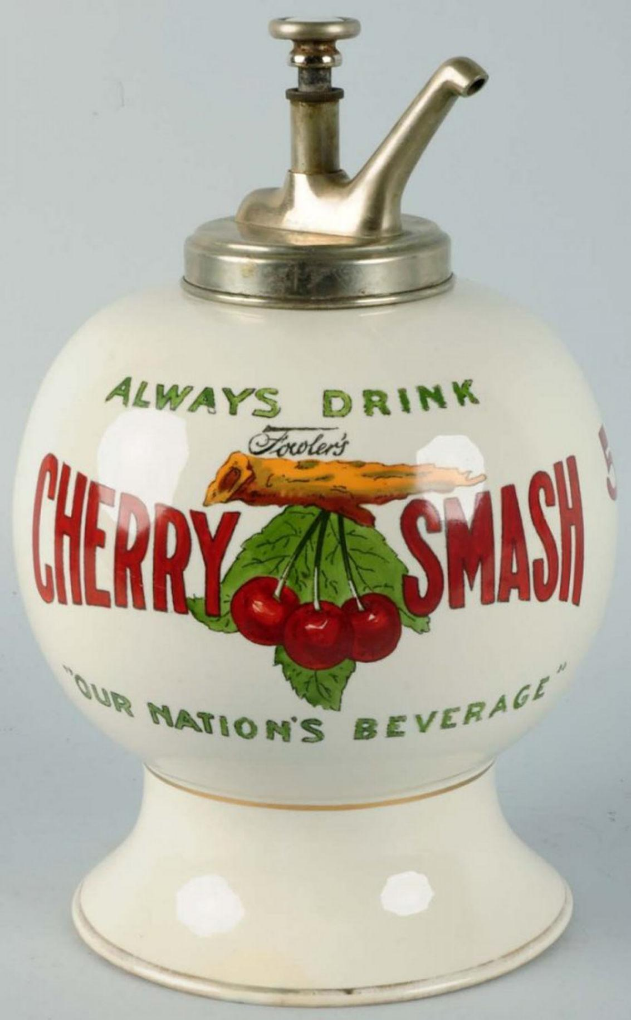
Syrup Dispenser

An early Cherry Smash syrup dispenser that would have been used at a soda fountain. This particular style was called a ball dispenser. Image courtesy of Lancaster County News.

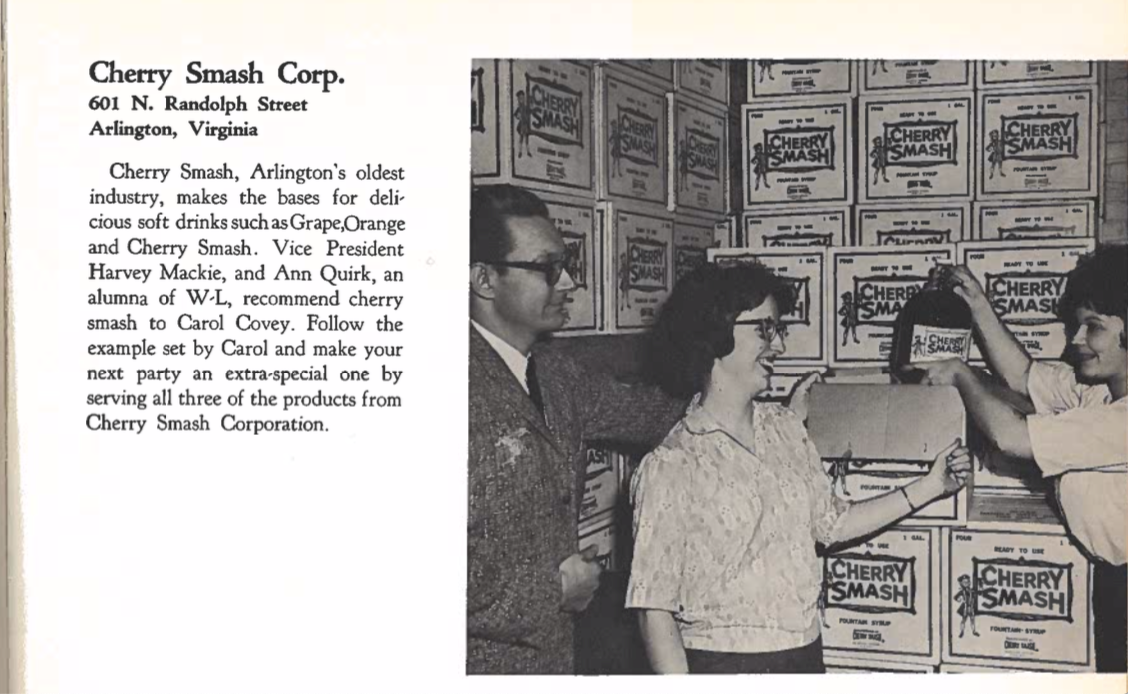
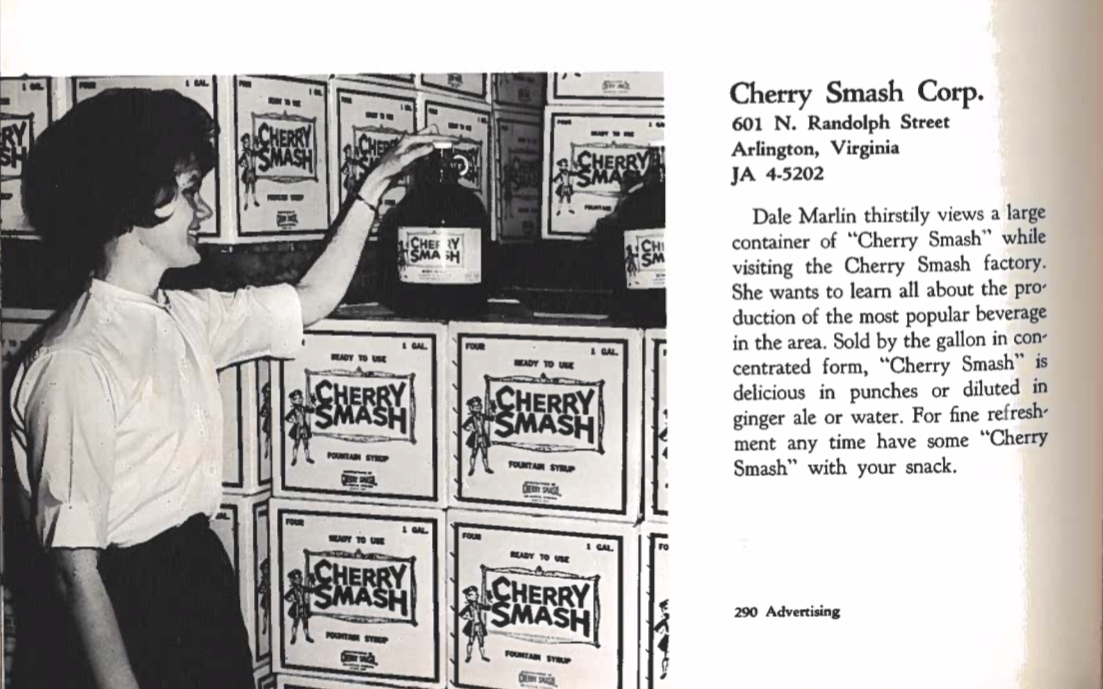
In the 1950s, Washington A-list investor C. Wyatt Dickerson purchased the company, and Robert Pond (who later founded the still-existing Pond Roofing) served as president during this era. Cherry Smash continued to be manufactured in Arlington into the 1960s at a new location at 601 North Randolph Street in the Ballston area, where it was bottled and sold in gallon form.

Cherry Smash’s legacy lives on in Arlington through artifacts at the Arlington Historical Society and through throwbacks such as New District Brewery’s Sour Cherry Smash beer.

News Excerpt

Excerpt from the “Year of Bargaining Accomplished” advertising section of the 1962 “Blue and Gray” yearbook from Washington-Lee High School (now Washington-Liberty High School).

Newspaper Excerpt

Excerpt from the “Reflections through Enterprise” advertising section of the 1963 “Blue and Gray” yearbook from Washington-Lee High School (now Washington-Liberty High School).

Formerly Cherry Smash

View of the old Marriott Hotel near the Key Bridge, on the site of what was formerly the Cherry Smash factory. Photo was taken in December 1962.

Learn more:

For more information about the area’s history with brewing, check out Capital Beer: A Heady History of Brewing in Washington, D.C., available at the Library.

To learn more about Arlington's history, visit the Center for Local History on the first floor of the Central Library.

Do you have a question about this story, or a personal experience to share? 

Use this form to send a message to the Center for Local History.

Center For Local History - Blog Post Message Form

Do you have a question about this story, or a personal experience to share? Use this form to send a message to the Center for Local History.

"*" indicates required fields
This field is for validation purposes and should be left unchanged.

Share Your Story

April 15, 2021 by Web Editor

Roberta Flack’s Arlington Roots

Post Published: March 18, 2021

Roberta Flack is known worldwide for her voice, songwriting and overall musical ability, for which she has won multiple Grammys. Flack has performed on stages across the world, and her roots are here in her hometown of Arlington.

Early Life

Flack was born near Asheville, North Carolina, in 1937, and moved to the Green Valley (formerly referred to as Nauck) neighborhood in Arlington when she was five years old. Musical from an early age, Flack began playing the organ and piano around age 9 and performed at local churches including Macedonia Baptist Church and Lomax AME Zion.

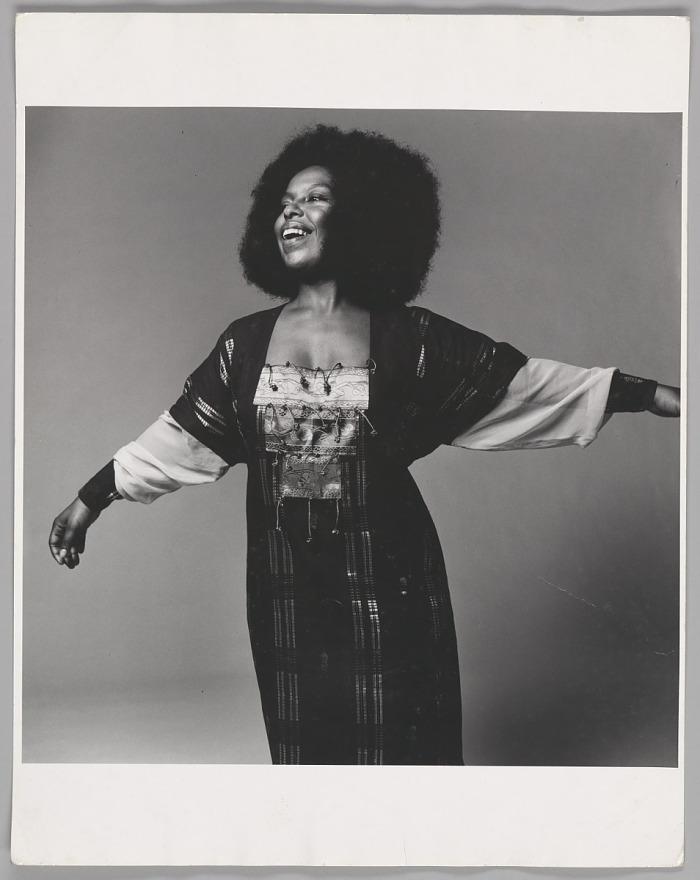
Roberta Flack 2

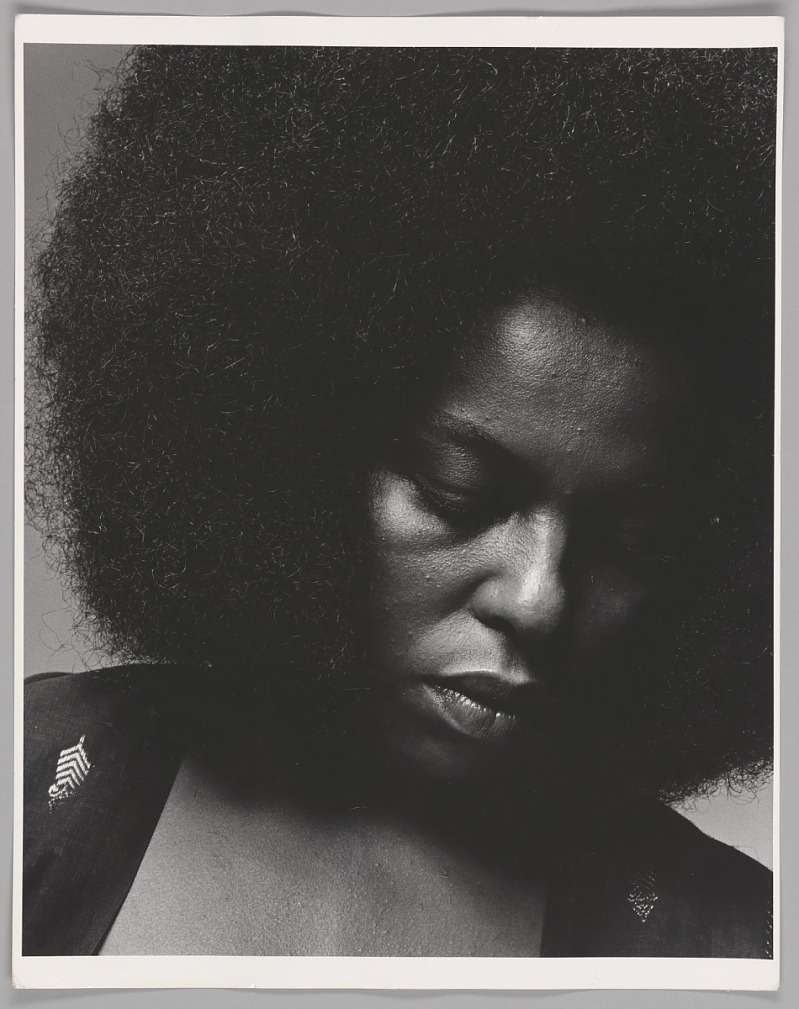
Roberta Flack photographed by Anthony Barboza, 1971. Image courtesy of the National Museum of African American History and Culture.

Flack grew up playing Chopin, Schumann, Bach, and Beethoven, and at 13, won a statewide contest by performing a Scarlatti sonata. One of her piano teachers was Lottie B. Bellamy, an Arlington resident and longtime organist at Macedonia Baptist Church. Flack’s mother, Irene Flack, was also a prominent community member, serving as the longtime chief baker at Wakefield High School and as an organist at Lomax AME Zion.

Flack attended Hoffman-Boston High School – then the only school available for African American children in Arlington – until age 15, when she was awarded a full music scholarship to Howard University. After graduating at 19, she went on to become a music teacher in Farmville, North Carolina, teaching about 1,300 students at all grade levels in the city’s segregated school system.

Senior Yearbook 1
Senior Yearbook 2

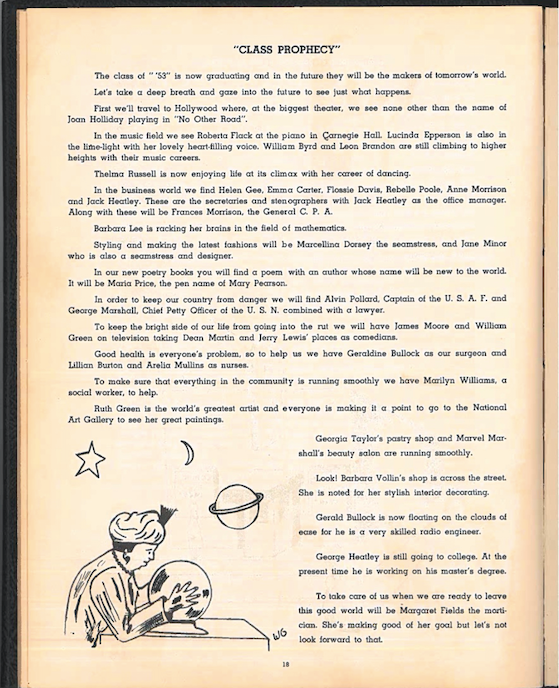
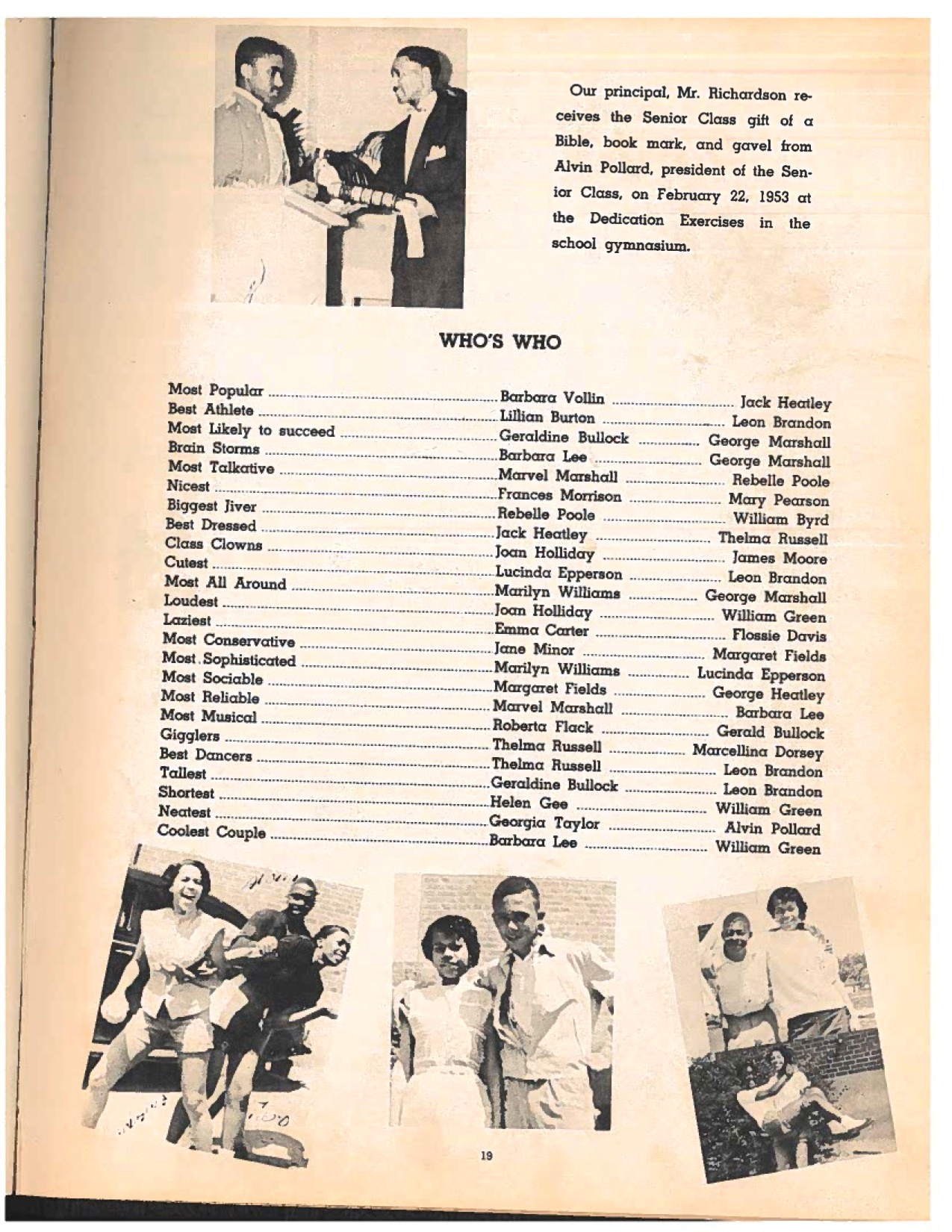
In Roberta Flack’s 1953 senior yearbook at Hoffman-Boston, she was listed as “most musical” in the class superlatives, and in the “Class Prophecy,” her classmates predicted she would play piano at Carnegie Hall. This prediction eventually came true when Flack performed there in 1971 (and again in 1981).

Starting Her Career

Flack's music career took off in D.C., where she also continued to work as a teacher at the Rabaut and Brown junior high schools in the D.C. public school system. She began performing in the evenings at locations such as the Tivoli Theater and Mr. Henry’s in the District. At the Tivoli, she also worked as a backing pianist for opera singers, and her spark as a solo performer came with a rendition of “Jingle Bell Rock” performed at the restaurant, where Flack said it was her "cue that people would listen to [her] as a singer.”

Mr. Henry’s became one of her regular venues, and the club’s owner, Henry Yaffe, even turned the apartment above the club into the “Roberta Flack Room” for her performances – adding in church pews and a Mason & Hamlin piano to create a more intimate energy than the more raucous main stage. She started off playing Sunday brunch sets for $20 a week, initially with a folk-inspired repertoire. However, as her fame and success as a performer quickly grew, she began to consider pursuing it full-time. Of this time in her life, she said:

"It took courage to leave my classroom job because I was a Black person who had grown up in Arlington, Virginia, through the ‘50s and ‘60s; now I’m teaching school in the late ‘60s and I decide I want to sing. These days, there’s lots of things that you can go for, but in those days you had to have a lot of heart and a strong desire to do that.”

Watercolor Portraits

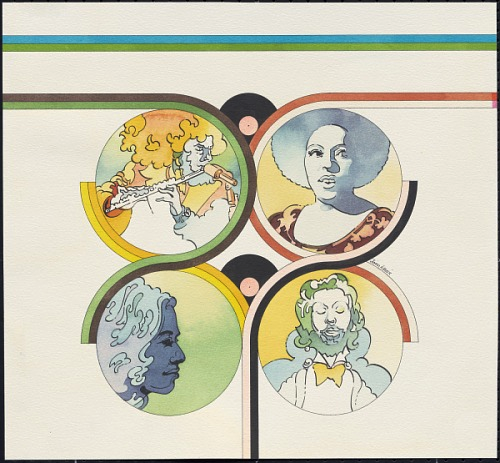
Watercolor portraits of Roberta Flack, Harry Nilsson, Carole King, and Ian Anderson (starting clockwise from top right), circa 1973. Image courtesy of the National Portrait Gallery.

Legacy

In 1969, she recorded her first album, First Take, with Atlantic Records. Aptly recorded in only 10 hours, the song’s discography was informed by pieces she had developed at Mr. Henry’s. Flack continued to return to the venue as her career took off, using it as a home base during her other performances in the District.

One of her first big hits was from that first album when in 1973 Clint Eastwood featured her song “The First Time Ever I Saw Your Face” (a folk ballad Flack had taught to her students in school glee clubs) in the film “Play Misty for Me.” Flack collaborated with many artists over the course of her career, including Donny Hathaway, Peabo Bryson, and for her album Oasis, Flack collaborated with longtime friend Maya Angelou on four songs, including “And So It Goes.”

Flack has continued to make music well into the 21st century, and in 2020, was the recipient of the Grammy’s Lifetime Achievement Award.

Roberta Flack

Roberta Flack photographed by Anthony Barboza, 1971. Image courtesy of the National Museum of African American History and Culture.

Human Kindness Day

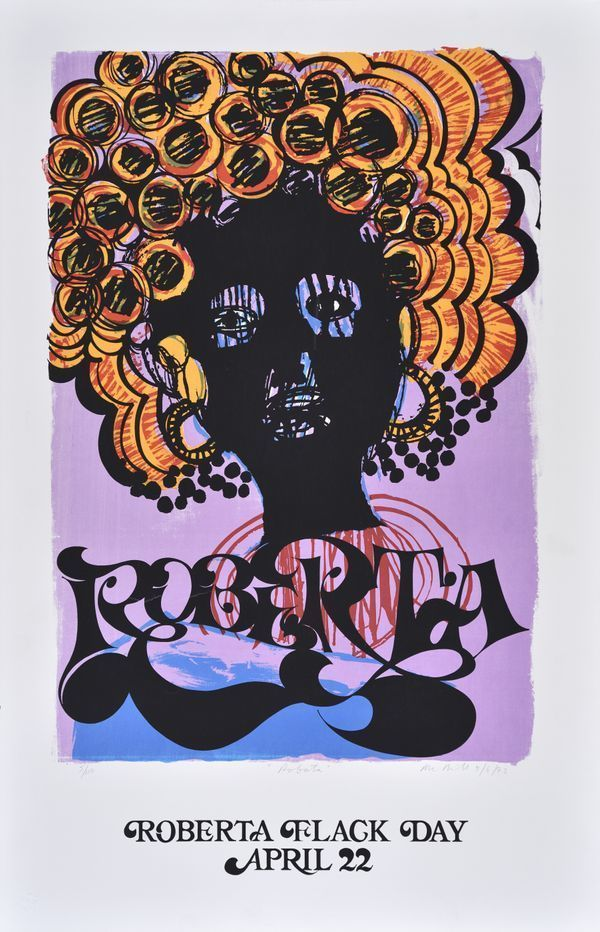
Poster from “Roberta Flack Human Kindness Day” on April 22, 1972, in Washington, D.C., to celebrate Flack. Image by Lloyd McNeill & Lou Stovall, courtesy of Di and Lou Stovall from the “What's Going Around: Lou Stovall and the Community Poster, 1967–1976” exhibit at the Columbus Museum.

Learn More

“Cover Me: The Stories Behind the Greatest Cover Songs of All Time” features a section discussing the history of Roberta Flack’s cover of “Killing Me Softly,” and the subsequent Fugees rendition.

March 18, 2021 by Web Editor Tagged With: Green Valley

Arlington’s First Black Legislators

Post Published: February 18, 2021

On March 30, 1870, the 15th Amendment was ratified, extending the right to vote to all male citizens - regardless of race or if they had previously been enslaved. All of the nation, African-Americans took to the polls, and many became engaged in the political process as elected officials at all levels of government.

Arlington – which until 1920 was known as Alexandria County – was included in this political renaissance, and had a number of prominent Black politicians who won elected office and served as leaders following the Civil War.

However, African-American political organization in the County predates Reconstruction. Freedman’s Village was an epicenter of politics starting in 1865, when community members held a mass meeting that petitioned the military governor to guarantee equal rights. Months later, a group at Freedman’s Village held the first statewide political convention for African-Americans.

Freedman's Village

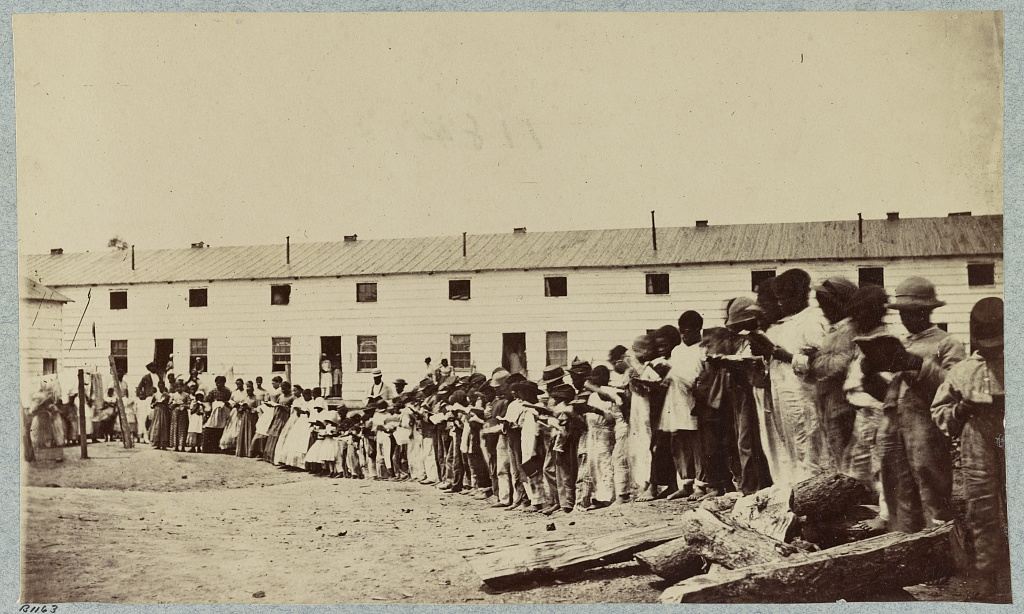
Freedman’s Village, pictured above in 1862, was a center of political activity in Arlington both before and after the Civil War. Image courtesy of the Library of Congress.

George Lewis Seaton

In 1869, George Lewis Seaton was elected to the Virginia House of Delegates representing Alexandria.

According to the records of the House, Seaton was the first African American person to hold this position in Alexandria. While in office, Seaton voted to ratify both the 14th and 15th amendments. He was also one of six African American men appointed to the grand jury of the United States Circuit Court for Virginia – likely the first interracial jury in the state. This group indicted several Confederate officials for high treason.

Prior to holding office, Seaton worked as a carpenter and also helped establish a local branch of the Freedman’s Savings Bank and Trust Company.

George Lewis Seaton House

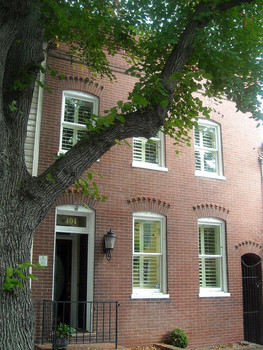
The George Lewis Seaton House on South Royal Street in Alexandria. Image courtesy of Encyclopedia Virginia.

Alexandria Gazette GLS

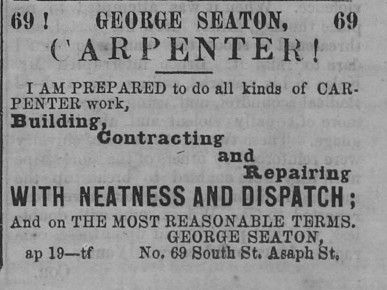
In the May 19, 1868, edition of the Alexandria Gazette, George Seaton advertised his carpentry business. Image courtesy of Virginia Chronicle.

John B. Syphax

John B. Syphax was another Black legislator in Alexandria County. The son of Charles and Maria Syphax, he was born a free person on the Parke-Custis Estate in 1835.

Syphax served in the Virginia House of Delegates from 1874 to 1875, as the County’s treasurer from 1875 to 1879, and as a justice of the peace and county clerk.

John B. Syphax

John B. Syphax, date unknown. Image from “Arlington County, Virginia: A History,” by C.B. Rose.

Alfred William Harris

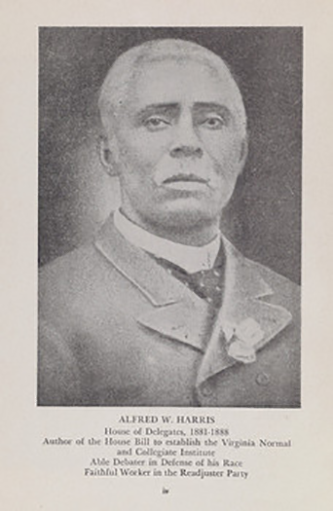
At the age of only 20, Alfred William Harris was elected to the Alexandria common council. Born enslaved in Fairfax County, Harris later moved to Alexandria and attended a school organized by the Freedman’s Bureau.

After holding office in Alexandria, Harris went on to serve four consecutive terms in the Virginia House of Delegates, representing Dinwiddie County. His accomplishments while there included introducing the bill that chartered what is now Virginia State University.

Alfred W. Harris

Alfred W. Harris, date unknown. 

Alfred W. Harris photo caption reads: “House of Delegates 1881-1888, Author of the House Bill to establish the Virginia Normal and Collegiate Institute, Able Debater in Defense of his Race, Faithful Worker in the Readjuster Party.” Image courtesy of the Virginia General Assembly.

Learn more: The Dr. Martin Luther King, Jr., Memorial Commission of the Virginia General Assembly has compiled a database of all the African American legislators elected to the General Assembly during the 20th and 21st centuries.

The Long Post-Reconstruction and Jim Crow Era

Black residents of Alexandria/Arlington County eventually held council seats and offices including treasurer, clerk, commissioner of revenue, sheriff, superintendent of roads, and overseer of the poor. H. L. Holmes was one notable officeholder, serving as commissioner of revenue from 1875 to 1903.

But following the initial prominence of Black legislators following the Civil War, for most of the 20th century, Arlington’s government was dominated by white legislators as many of the post-war resources and promises of equality quickly fell by the wayside nationwide. Reconstruction, which lasted from 1866-1877, was the Congressional attempt to reorganize the Southern states and offer support to formerly enslaved individuals. During this time, there was a brief period where African Americans were protected in their right to vote and participate in the political process. This progress was reflected nationally: at one point, there was an African American majority in the South Carolina government, and several African American men were elected to the Senate.

But even during Reconstruction, there were attempts by opponents to undermine support given to African Americans and undo the progress that had been made. Jim Crow law and “black codes” began to emerge during this time – discriminatory laws at the state and local level that systematically denied Black individuals from public accommodations suppressed their right to vote and prevented them from holding public office. Jim Crow laws could be seen in the County as early as 1868 when the Washington and Alexandria Railroad established segregated seating. Groups resembling the Ku Klux Klan also emerged in Northern Virginia during this time, and measures such as the poll tax and dual registration were implemented as early as 1876 in the County to disenfranchise African American voters.

When Reconstruction formally ended in 1877, all of these measures amounted to a systemic suppression of Black Americans’ right to vote and limitation on political power that would last well into the 20th century.

Leaders in the 20th Century & Judge William T. Newman, Jr.

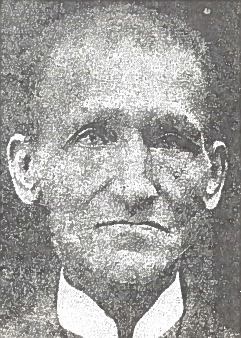
In 1932, Arlington adopted a new form of County government with a County Manager and County Board members elected at large.  According to research conducted by Wilma Jones, Dr. Edward T. Morton was one of the Black community members to run for office under this new system of government. Dr. Morton was a longtime Hall’s Hill resident and the community’s first Black physician, operating a practice on Lee Highway. He ran for a County Board seat in 1931, and while he lost the election, he remained active in the community and civic life.

Learn more: "My Hall’s Hill Family," by Wilma Jones; Washington Post article announcing Dr. Edward T. Morton’s candidacy.

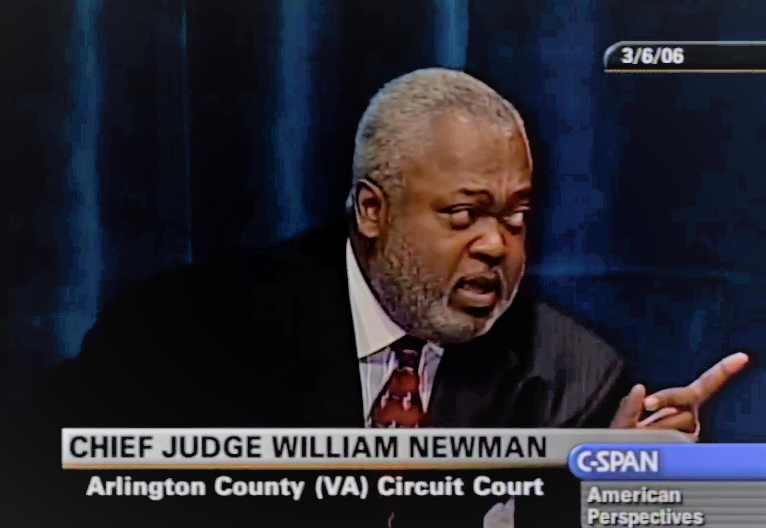
In 1987, William T. Newman, Jr., became the first Black member of the Arlington County Board. On the Board, one of his signature policies was establishing the County’s Human Rights Commission, and he was known for advocating for public safety and resources for drug abuse. In 1990, he was elected as Chairman of the County Board, becoming the first Black person to hold the position in the 20th century.

Newman grew up in the Nauck community of Arlington and attended Hoffman-Boston until the school closed in 1964 following desegregation. He trained and worked as both a lawyer and an actor, and has performed in soap operas, film, and theater performances. In 1993, Newman was appointed as a judge in the 17th judicial circuit court, covering Arlington County and the city of Falls Church. In 2003, he became chief judge of the County Circuit Court, where he continues to serve today.

Since Newman’s tenure, there have been two African American members of the County Board. Charles P. Monroe was elected to the Board in 1999 and served until his death in 2003. He had begun his first turn as Board chair at the time of his death. Christian Dorsey was elected to the County Board in 2015 and is currently serving his second term in office. He served as Board chair in 2019.

William T. Newman

Chief Judge William T. Newman, Jr., performs in the 14th Annual Arena Stage Benefit for Community Engagement in “The Pundit Whodunit: The Case of the Political Puzzle,” on March 6, 2006. Image courtesy of C-SPAN.

Note: This article features only a sampling of the many African American community members who have held positions at the local level and who engaged in civic life. If you know of African-American individuals who have run for or held office in Arlington, and who should be included in this article, please let us know using the form below.

To learn more about Arlington's history, visit the Center for Local History on the first floor of the Central Library.

Do you have a question about this story, or a personal experience to share? 

Use this form to send a message to the Center for Local History.

Center For Local History - Blog Post Message Form

Do you have a question about this story, or a personal experience to share? Use this form to send a message to the Center for Local History.

"*" indicates required fields
This field is for validation purposes and should be left unchanged.

Share Your Story

February 18, 2021 by Web Editor

Notes on the Arlington Symphony

Post Published: January 7, 2021

Between 1945 and 2005, Arlington County was home to the renowned Arlington Symphony, organized and maintained as a volunteer effort by members of the community.

Over its 60-year run, the symphony performed a wide variety of music across the County and was one of Arlington's first, and longest-running, arts organizations.

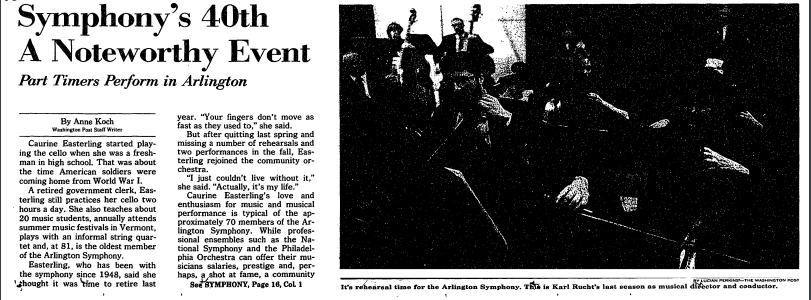
Excerpt from Wash Post

Excerpt from the Washington Post’s 40th-anniversary feature on the Arlington Symphony. Image courtesy of the Washington Post.

First Movement

The Arlington Symphony was organized in the years following World War II, providing a source of respite from the turmoil of the wartime years.

Van Lier Lanning – an Arlington resident – was the leader of these initial organizing efforts. Lanning had also organized and directed the War Production Board orchestra during WWII. Lanning’s vision was to establish a suburban orchestra. This dream materialized in late 1945 as local citizens began to sign on to establish what was called a “civic orchestra.”

A volunteer group of Arlingtonians formed a Steering Committee and recruited players, who also chipped in $10 apiece for the purchase of sheet music. Ellis Chasens, former concertmaster of the War Production Board Orchestra, signed on as the Arlington Symphony’s first concertmaster.

Opening Night

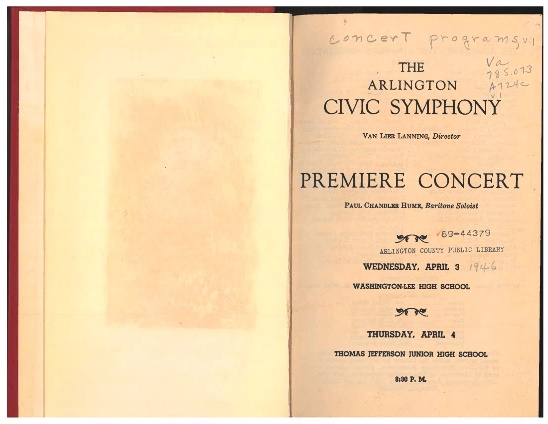
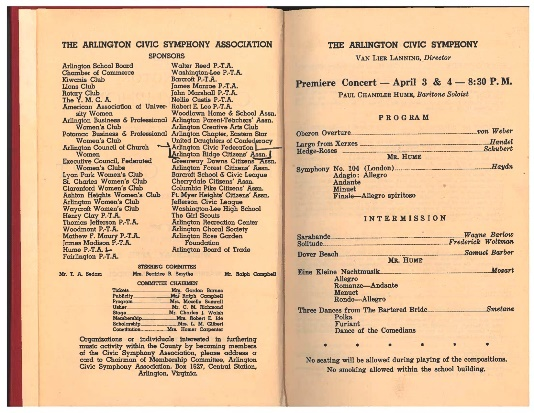
Program Excerpt 1
Program Excerpt 2

Program excerpts from the Arlington Symphony’s first concert on April 3, 1946.

The premiere concert took place on Friday, April 3, 1946, at Washington-Lee High School (now Washington-Liberty). This opening night featured baritone soloist Paul Hume,  who went on to serve as the Washington Post’s music critic. The evening was a resounding success, and a second performance followed the next evening. Another performance in June followed, and by fall 1946, plans for a full program were underway.

A program of eight concerts was approved for the following year: four of them would be evening, adults-only, concerts and four would be Sunday afternoon children’s concerts, followed by performances of a youth orchestra. This set the pattern for the orchestra’s early schedules.

Tickets in this first program year were 75 cents for the adult concerts and 30 cents for the children’s concerts. From 1951-1968, programming was free, but tickets were reinstated in later years to accommodate for budgeting gaps.

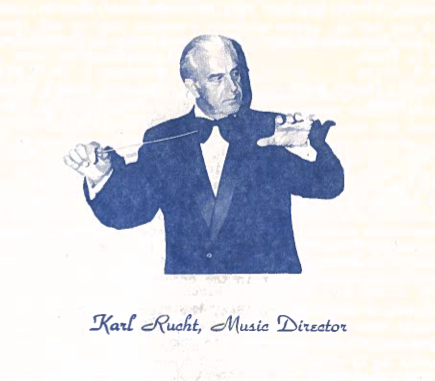
Numerous conductors served in these early years, but by the 1954-1955 season, the position went unoccupied due to insufficient funds for the part-time work. Later that year, John Wigent signed on to the job. Wigent, a trained clarinetist and double bassist, had previously served as Harry Truman’s pianist and as an organ player at the Arlington Temple in Rosslyn. Karl Rucht signed on as the next director, where he served for more than 15 years. Rucht was known for his drama, flare, and “spectaculars” – including full concert versions of operas, special soloists, and concerts with more than 300 performers on stage.

Karl Rucht

Karl Rucht, the Arlington Symphony’s Music Director from 1960-1985.

Style and Substance

One of the Symphony’s signature elements was solo performers, who were featured in the hundreds over the course of the symphony’s seasons. The soloist program was not only a chance to highlight talent, but it also broadened the scope of the Symphony, as they included performers from across the nation and abroad. One of the Symphony’s most popular soloists was Evelyn Swartout, who performed four consecutive years in a row.

The soloist program was also a way to incorporate younger members of the Arlington community, who were sometimes selected from the Association’s scholarship program. In the 1940s, public education in music was limited, and the Symphony filled this gap with its musical programming, even as the move toward public music courses increased in later decades.

Organization and Funding

The Symphony Association, County government, and other civic and social groups often worked together to help support the group’s artistic efforts. Spaces for rehearsals and concerts were provided by the School Board for no or reduced fees, and in 1966, members of the Association met with County Manager Bert Johnson, who provided $3,600 in funding from the County budget. This arrangement lasted for much of the symphony’s lifetime, increasing over the years due to inflation. Other fees were supplemented by Association fundraising and external grants.

The Association’s Board of Directors was incorporated in 1966 and consisted of 26 to 30 members. The group was augmented and supported by a Women’s Committee for the Symphony, as well, which consisted of 114 members by 1980.


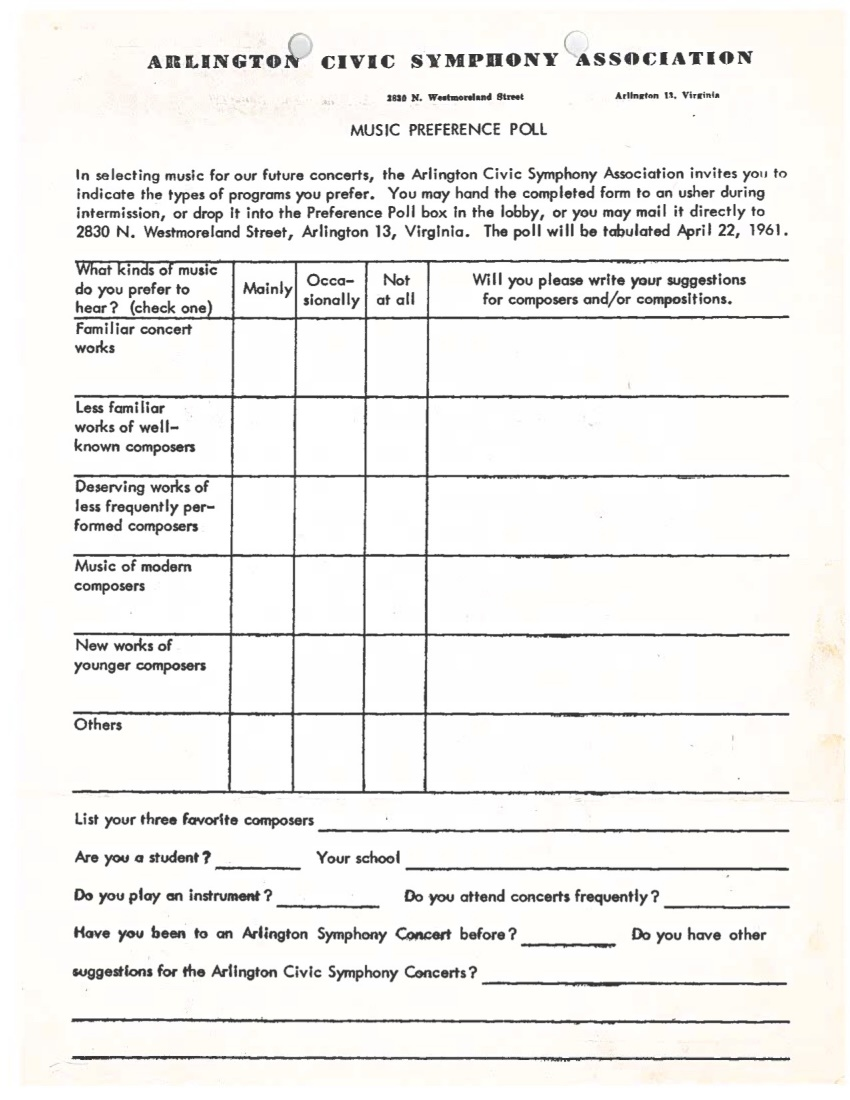
Music Poll

Music preference poll sent out by the Arlington Civic Symphony Association in April 1961.

In 1980, March was designated as “Arlington Symphony Month” by the Arlington County Board.

In 1985, the Arlington Symphony celebrated its 40th anniversary – among its members that season was a 40-year veteran of the symphony, Caurine Easterling. A write-up on the event in the Washington Post notes the symphony’s range of ages – from teenagers to octogenarians – and also notes that this was the final season Karl Rucht served as musical director.

Photo of Symphony from 1980

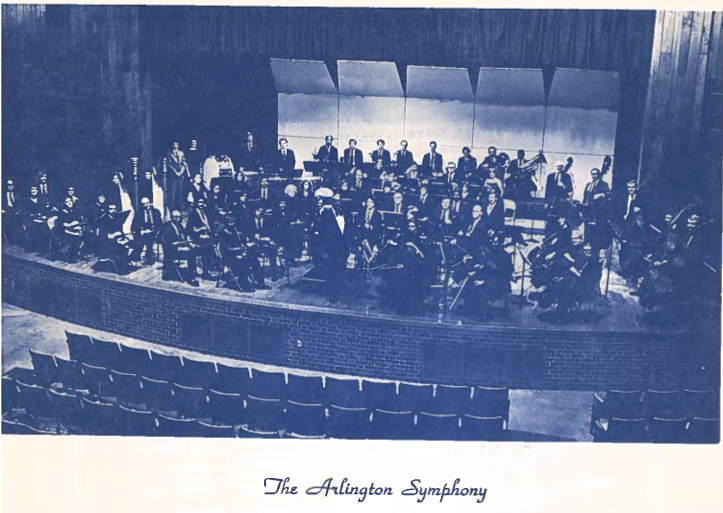
Photo of the Arlington Symphony, from “The Story of the Arlington Symphony Association: Trials and Triumphs of a Volunteer Effort,” published in 1980.

Final Act

The Arlington Symphony came to a close in 2005 after declaring bankruptcy. Its final music director was Ruben Vartanyan, who served with the symphony for 13 years. In 2006, a group of former Symphony members joined together as the Arlington Philharmonic, and Vartanyan directed the new group’s inaugural concert, leading a performance of Tchaikovsky's Serenade for Strings, Op. 48.

Arlington is still home to the Arlington Philharmonic, as well as the Arlington Concert Band and many other classically-focused musical groups and other musical organizations.

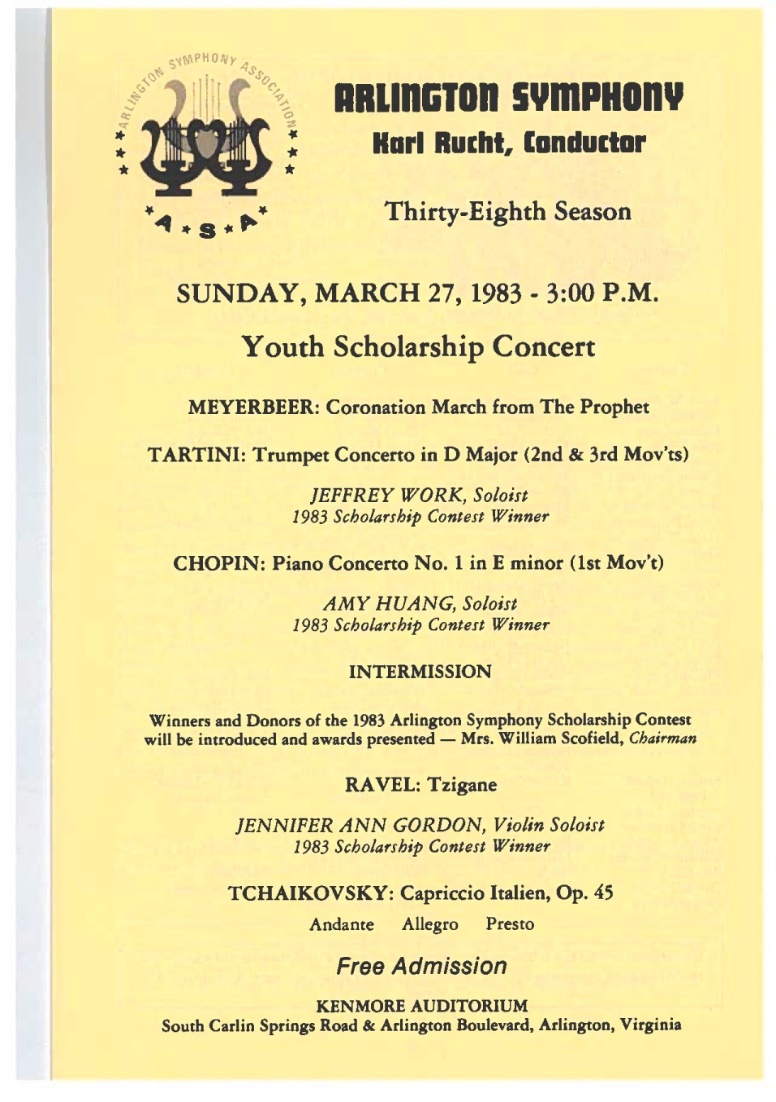
1983 Youth Scholarship Concert Program

Program for a 1983 Youth Scholarship Concert held by the Arlington Symphony.

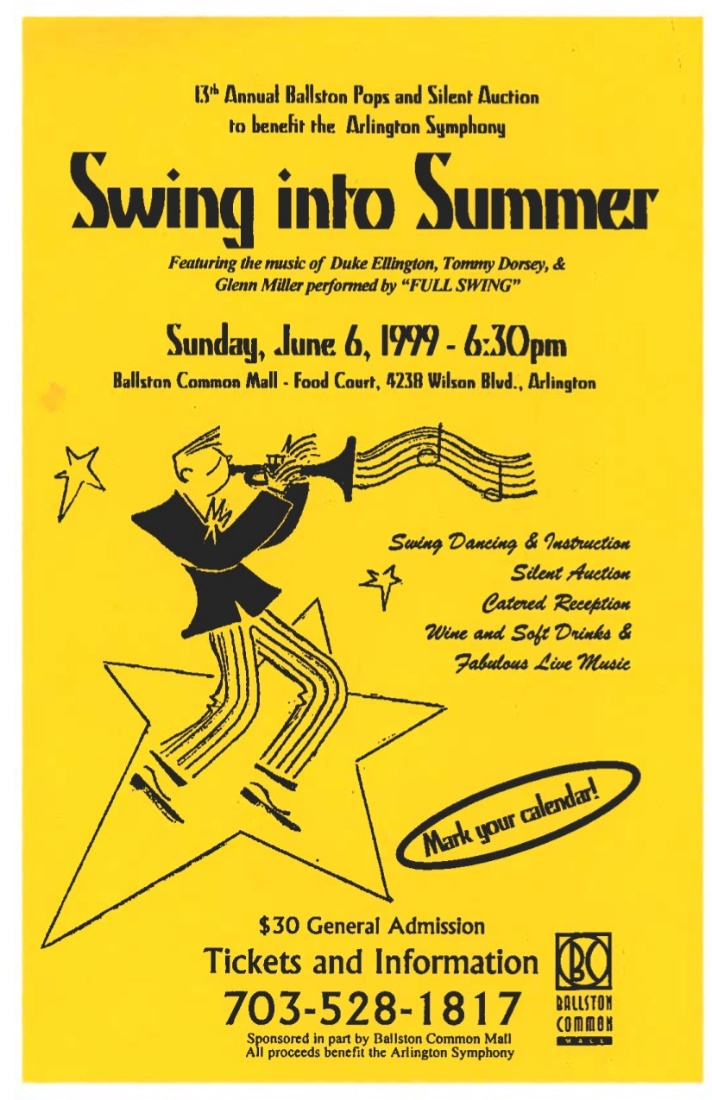
Ad for Symphony

Advertisement for the Arlington Symphony’s 1999 “Swing into Summer” benefit concert.

Want to learn more? Arlington’s Center for Local History holds records of the Arlington Symphony in RG 54, and documents related to the Arlington Symphony are also available in RG 57, the personal papers of Hugh Johnson, who served as one of the Symphony’s presidents.

CLH also has an oral history interview in its collections with Theodore and Jean Taylor, where the couple describes the early days of the symphony and their involvement in the group, including Jean Taylor’s role as president of the Women’s Committee.

To learn more about Arlington's history, visit the Center for Local History on the first floor of the Central Library.

Do you have a question about this story, or a personal experience to share? 

Use this form to send a message to the Center for Local History.

Center For Local History - Blog Post Message Form

Do you have a question about this story, or a personal experience to share? Use this form to send a message to the Center for Local History.

"*" indicates required fields
This field is for validation purposes and should be left unchanged.

Share Your Story

January 7, 2021 by Web Editor

Arlington’s Own Fast and Furious

Post Published: December 10, 2020

Virginia has a long history of horse and car racing, and Arlington County has had a role in both of these historically popular pastimes.

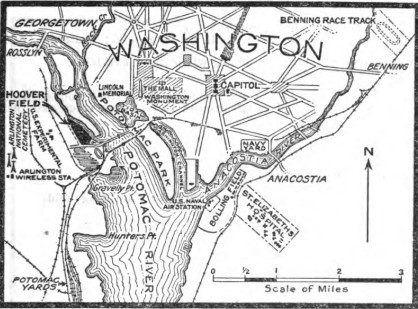
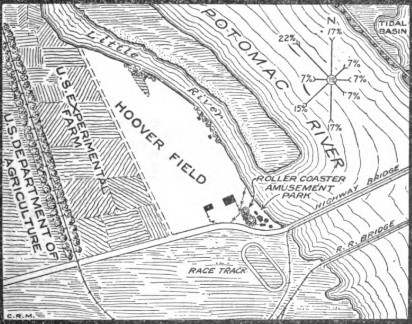
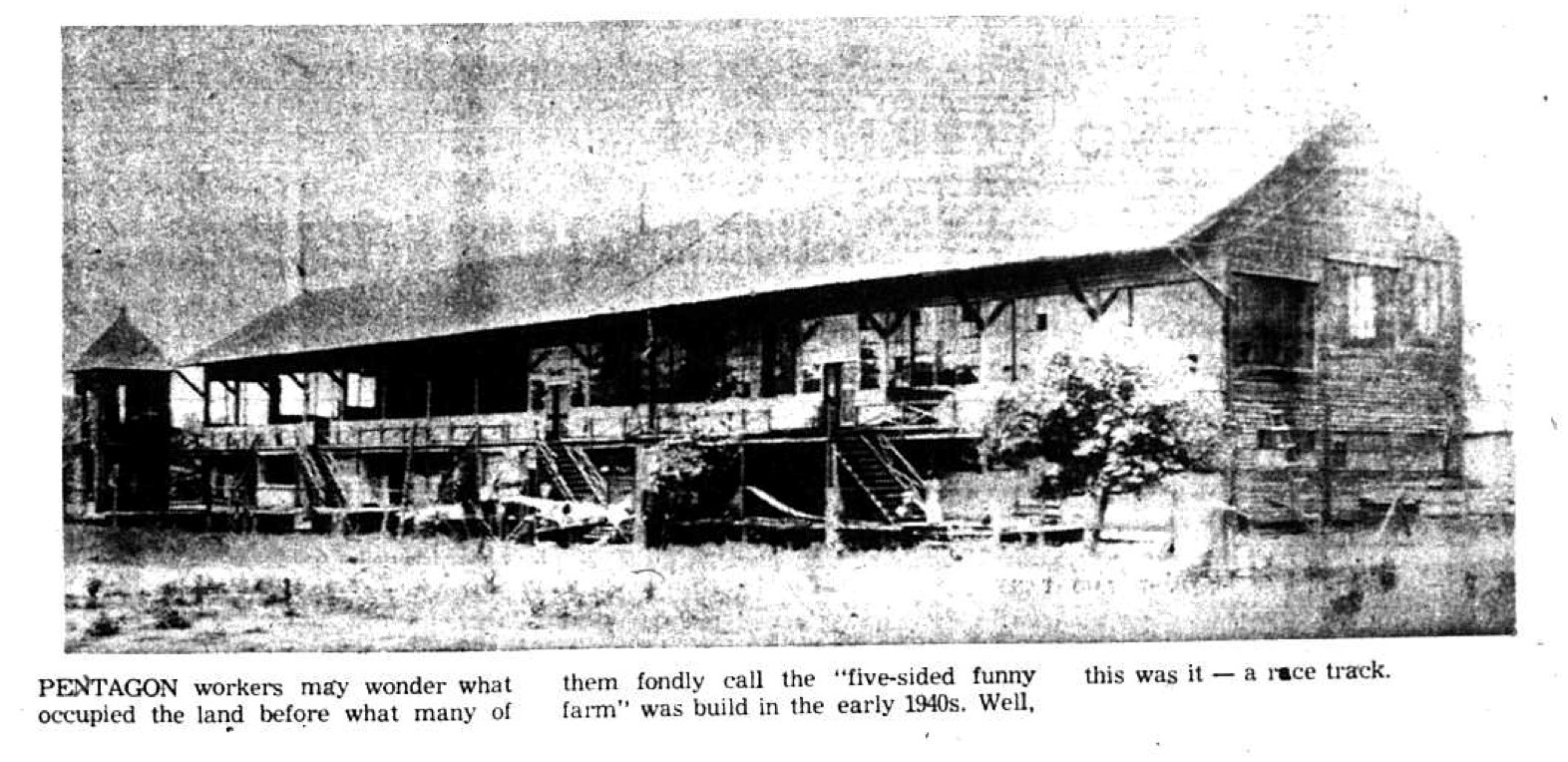
Beginning in the 1890s, Arlington (then known as Alexandria County) was home to a half-mile-long racetrack that drew thrill-seekers and daredevils from the County and beyond. The track, located on the grounds of what would become the Washington Airport next to the Hoover Airport, was on the land south of 14th Street bridge now occupied by the Pentagon.

Racing venues like Alexander Island in Arlington, and the St. Asaph Racetrack in Alexandria also became the focus of nationwide anti-gambling measures around the turn of the century.

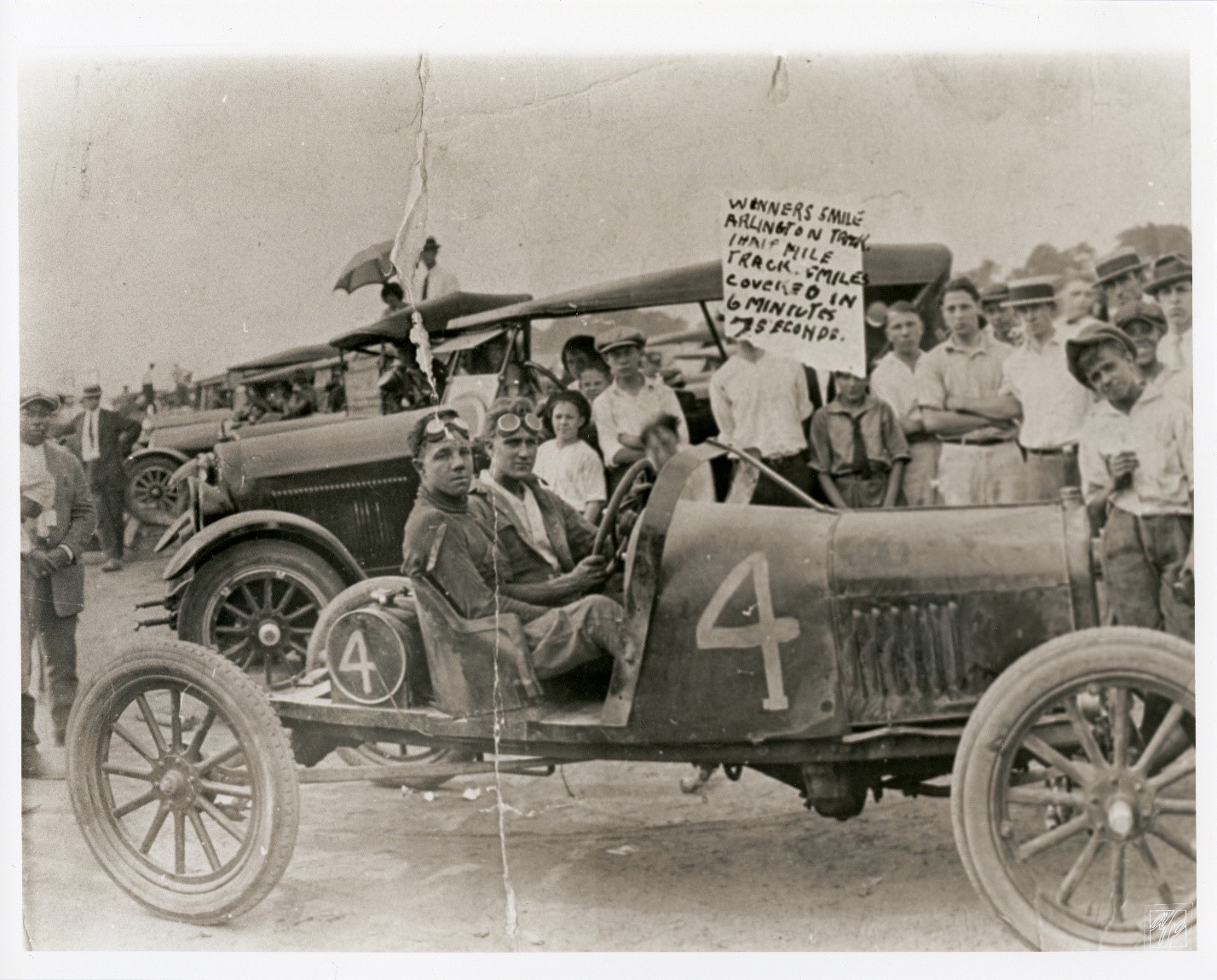
Old Number 4

Winners in “Old Number 4” at the Arlington racetrack, circa the early 1920s. According to the note on the photo, the 5-mile race on the half-mile-long track was covered in 6 minutes and 7 seconds – meaning the amateur driver nearly overcame the 50-mile-an-hour speed barrier.

A Racetrack for Arlington’s “Miniature Monte Carlo”

Arlington’s racetrack has its origins in the controversial history of the now extinct Jackson City neighborhood, and its then twin, Rosslyn. In the late 19th century, the two areas were considered hubs of criminality, associated with betting, gambling, and other unsavory activities.

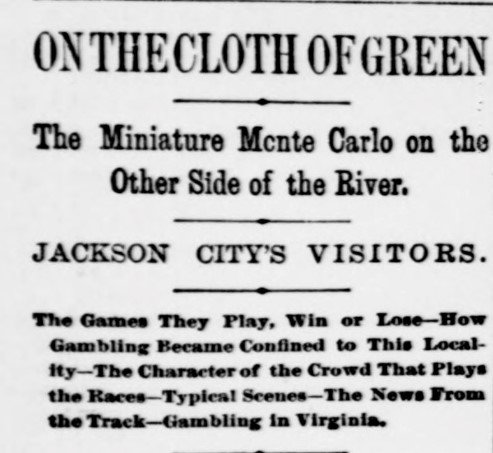
Jackson City was even referred to as a “Miniature Monte Carlo.” Following the post-Civil War ban on gambling in Washington, D.C., the neighborhoods drew customers across the Potomac to Rosslyn, conveniently located by the Aqueduct Bridge, and to Jackson City at the Long Bridge.

Evening Star Clipping

An article from the Washington, D.C., Evening Star on January 30, 1892, alludes to the controversial nature of the Jackson City area in Arlington. Image courtesy of the Library of Congress.

In the 1890s, Virginia lawmakers attempted to control the gambling that had overtaken the state, but corrupt legislators slipped in a loophole to allow an exemption for driving clubs, agricultural organizations, and grange organizations. Thanks to this provision, the Jones family in Arlington was able to secure a charter from the Grange Camp Association of Virginia and began investing in a racetrack in Jackson City.

Over the years, the racetrack would sometimes be referred to as the “Alexander Island” racetrack, referring to the also-controversial piece of land it sat on, which was considered Virginia at low tide and Washington, D.C., at high tide.

When a judge ruled the racetrack could stand, this set the precedent for the area formerly being considered part of Virginia – as horse betting was illegal in the District. This decision was later reversed in the 1930s, but Alexander Island ultimately came under the Pentagon’s jurisdiction a decade later and is now the present-day site of the Connector Parking Lot.

The City of Alexandria’s Racetrack Rises

Around the same time the Arlington racetrack got its start, investors in the city of Alexandria were also capitalizing on the loose gambling laws. A Gentlemen’s Driving Club was chartered in 1888, and by 1894 this would materialize into the St. Asaph Racetrack – the more notorious track in the Northern Virginia region.

This track was backed by the Hill family and other numerous high-profile investors, among them Virginia Senator George Mushback, who had helped pass legislation allowing for gambling to continue.

Arlington- Yesterday and Today

Photo from the Northern Virginia Sun, October 8, 1970, for an article titled “Arlington-- Yesterday and Today.” Though the caption and title suggest this was the Arlington racetrack, this photo is of the St. Asaph grandstand.

Located in the Del Rey neighborhood, the St. Asaph racetrack was extremely popular, drawing in thousands of dollars on its racing days. The operation made an estimated $150,000 per year – bolstered by its poolroom, where gamblers could stay connected and bet on other races via the establishment’s telegraph wires. The track was ¾ miles long and was frequently noted for the beauty of the landscape and architecture.

By 1895, the competing Arlington and city of Alexandria tracks and their investors had reached an agreement to race on alternate days, keeping both in business. In 1897, horse racing was outlawed outright by the state, though betting for out-of-state races at St. Asaph continued with the racetrack’s extensive telegraph setup. In 1898, during the Spanish-American War, St. Asaph’s was also used by the U.S. Army as a mobilization camp.

July 6 Map Pt.1
July 6 Map Pt.2

Maps from July 6, 1927, Airway Bulletin (No. 124) show Arlington’s racetrack adjacent to Hoover Field. Image courtesy of the University of California.

Drama, Debauchery, and Depositions

The scale of the St. Asaph’s track eventually made it a target for Crandall Mackey, who after being elected the commonwealth’s attorney in 1903, set his sights on eliminating crime in the region. Mackey had become a prominent figure in both Rosslyn and Jackson City, shutting down the area’s illegal bars, bordellos, and casinos over his tenure, and the racetrack was next on his list.

After Mushback’s death, Mackey swooped in to take down the racetrack and its not-so-savory reputation. In May of 1904, he staged a dramatic raid on the track, backed by a posse with sledgehammers and axes who destroyed slot machines and other equipment.

However, the track soon resumed business as usual. Mackey would eventually obtain 19 warrants against the track’s owners, igniting an extended courtroom battle against some of the region’s richest and most prominent figures. Mackey was ultimately successful in 1905 when the St. Asaph racetrack shut down for good.

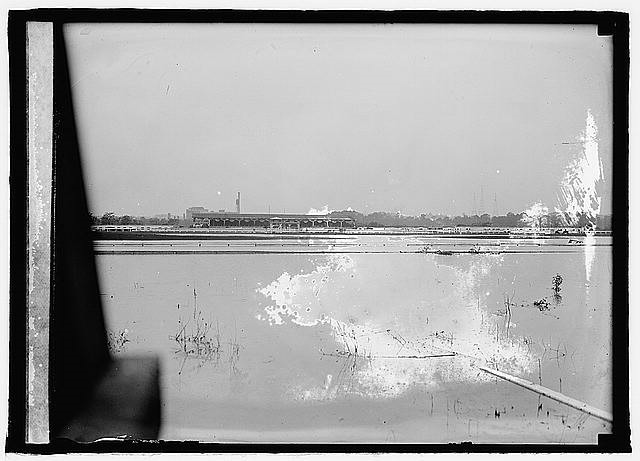
Flood with Racetrack

“Flood with racetrack in the background,” Image of the abandoned St. Asaph Racetrack, 1924, with the Arlington radio towers in the background. Image courtesy of the Library of Congress.

Memories of the Arlington Racetrack

It’s unclear why the Jackson City racetrack eluded Mackey’s “shotgun justice,” but it managed to disassociate itself from the historical notoriety of its Alexandria counterpart.

In the early 1900s, the Arlington racetrack remained a place for spectators to take in the thrills of the burgeoning sport of car racing. It was also near another popular spot for Arlingtonians to pass the time, the Arlington Beach, which featured a dance hall and amusement park rides.

Want to learn more about early 20th Arlington? Check out “Shotgun Justice: One Prosecutor’s Crusade Against Crime and Corruption in Alexandria & Arlington,” available at the Library.

Do you have a question about this story, or a personal experience to share? 

Use this form to send a message to the Charlie Clark Center for Local History.

Center For Local History - Blog Post Message Form

Do you have a question about this story, or a personal experience to share? Use this form to send a message to the Center for Local History.

"*" indicates required fields
This field is for validation purposes and should be left unchanged.

Share Your Story

December 10, 2020 by Web Editor

Voting in Arlington: Then & Now

Post Published: October 29, 2020

November 3 is fast approaching and voting this year has taken an unprecedented turn in the wake of the pandemic, with thousands of Arlingtonians voting early or sending in absentee ballots. The voting process in Arlington and beyond has historically been anything but static – here’s a look at how the voting process has changed over the years.

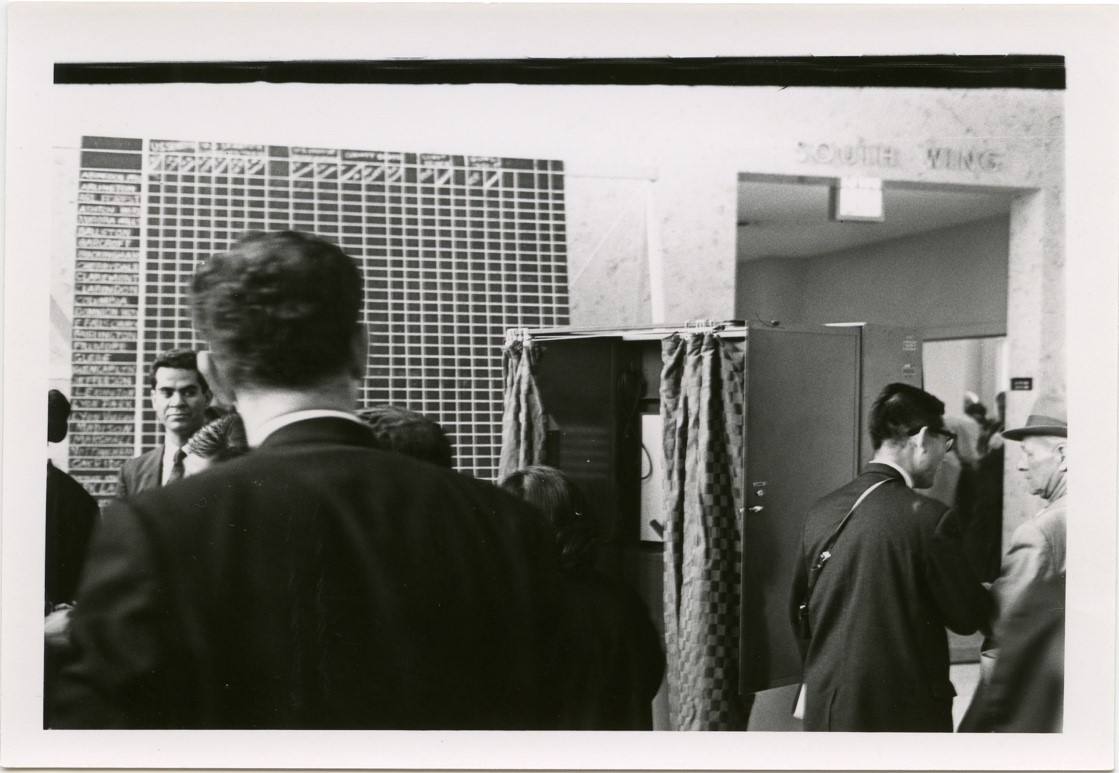
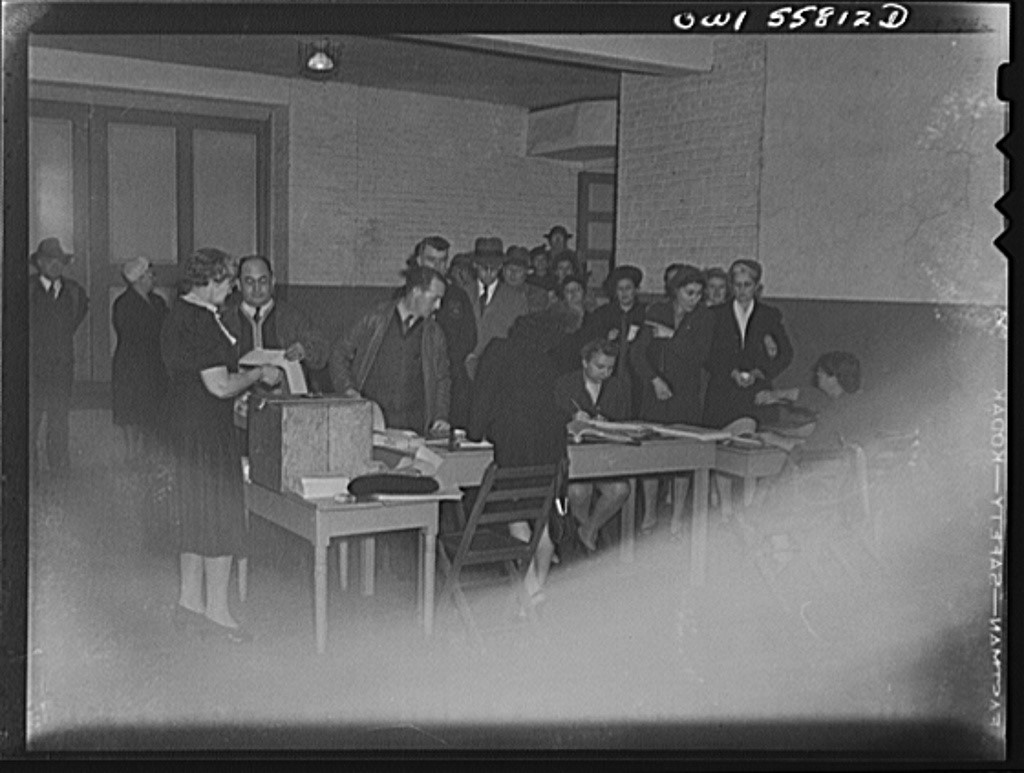
People Standing Around

“People standing around a voting booth,” Arlington County, 1968. PG 214

Vote Sign

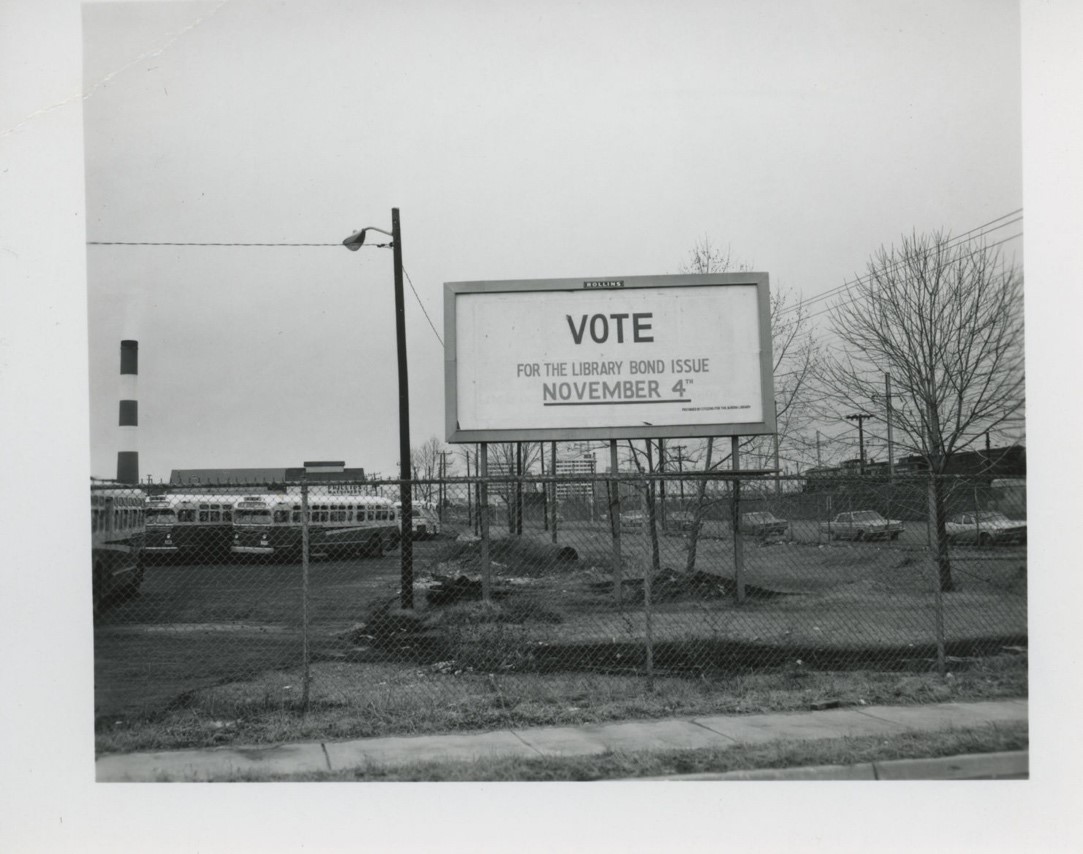
Sign that says “Vote for the Library Bond, November 4.” Arlington County, 1959. RG 29

Arlington’s First Elections

According to historian C.B. Rose, no one living in what is now Arlington would have been able to vote until these early settlements were incorporated around 1645. Voting likely increased when the land of present-day Arlington was established as Fairfax County and received its own Court House in the town of Alexandria in 1752. At this point in time, all voting had to take place at a Court House, which limited eligible voters who lived far away from these buildings.

The first American elections were conducted by voice vote, or with paper ballots also known as “party tickets.” Unlike the “Australian” or “blanket ballots” that were used in the latter half of the 19th century, these early ballots only carried the name of candidates from a single party. These ballots would then be counted by local party and election officials.

In 1869, a change to the Constitution meant that “secret” ballots were now required and required voters to register prior to elections. A registrar was assigned for 1,000 voters along with an accompanying polling place – an early version of the precinct system.

The Struggle for Women’s Suffrage

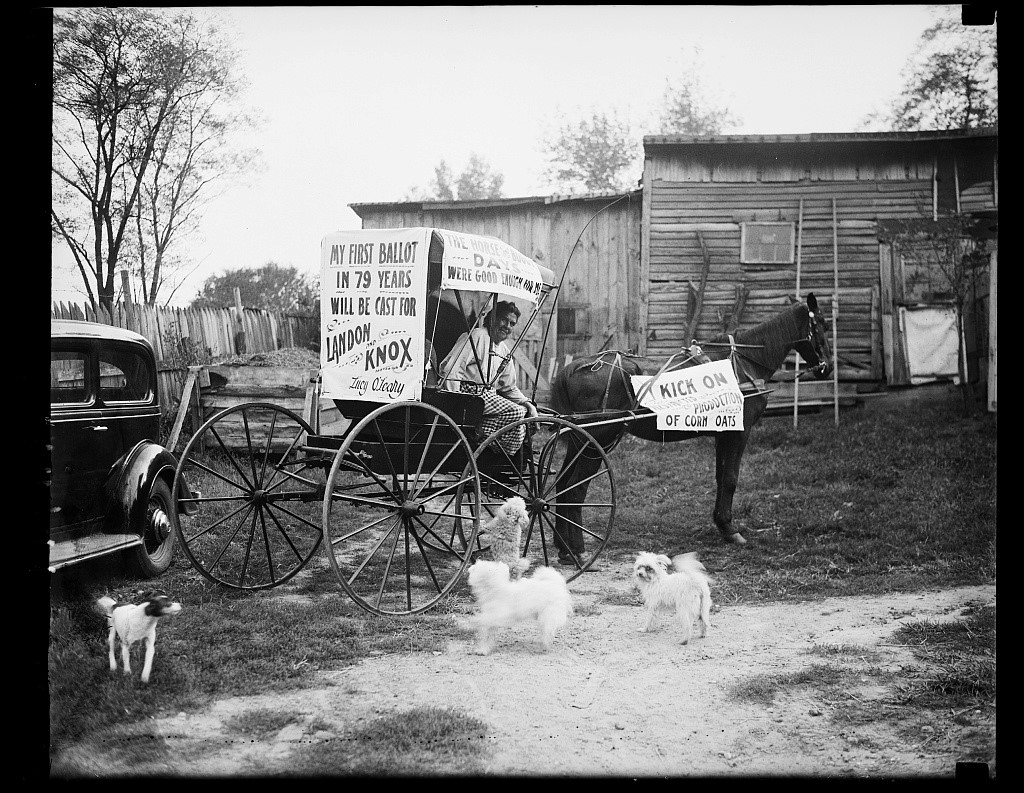
Voting for First Time at 79

“Votes for first time at 79. Arlington, VA, Oct. 15. This is Mrs. O'Leary (not the Mrs. O'Leary who kissed the cow who kicked over the lantern to start the Chicago fire) but Mrs. Lucy O'Leary of this town who will cast her first vote on November 3 at age 79, for Gov. Landon. She now lives on small government pension with the aid of a small garden.” Arlington County, October 15, 1936. Image courtesy of the Library of Congress.

In these early elections, only a fraction of the population was permitted to vote, initially granting the right solely to propertied white men. Because of these limitations, throughout the 19th and 20th centuries, women’s suffrage was a major reform issue nationwide.

Gertrude Crocker was among those on the front lines fighting for women’s right to vote, and would later become a prominent Arlington citizen, owning and operating the Little Tea House. Crocker was among the “Silent Sentinels,” who, on January 10, 1917, participated in the first picket protest outside of the White House.

The 19th Amendment was adopted on August 18, 1920, after decades of advocacy. But after the milestone of women’s suffrage came another portion of the journey for equal voting rights for all. Though women had achieved the right to vote, large portions of the country’s non-white population were still disenfranchised.

Read our series on important figures and events leading up to the passage of the 19th Amendment.

Election

“Citizens at the Wilson High School waiting to vote in the national presidential election. The election started at 7:45 a.m., and a continuous stream of people, mostly men, came in. The women came later in the day.” Arlington County, November 7, 1944. Image courtesy of the Library of Congress.

Fighting Discrimination and Voter Suppression

Though the legal milestones of the 15th and 19th were achieved, in practice, African American voters faced innumerable barriers to voting – from Jim Crow laws, voter suppression tactics, and overt violence.

Shortly after the passage of the 15th amendment, Virginia instituted a poll tax to restrict African American men from voting in 1876. This law was repealed in 1882, but in 1901 the state’s General Assembly called for a new constitution granted suffrage solely to white men.

A new constitution passed in 1902 and required voters to pay a tax of $1.50 six months prior to an election for each of the three years preceding an election. This disenfranchised approximately 90% of the state’s African American voting population and nearly 50% of the white men who had previously been registered to vote in Virginia. The 1902 constitution also created an administrative structure that was difficult for any average citizen to navigate. Virginia maintained poll taxes until 1966.

Read more about voter suppression and how local activists responded to these policies in Arlington in “If You Don’t Vote, You Don’t Count”

Local activists and groups such as the Arlington chapter of the NAACP worked tirelessly to combat voter suppression, instituting outreach campaigns and legal challenges to the poll tax. In a suit from Arlingtonian Portia Haskins against the Virginia Board of Elections and the Arlington County general registrar, the court ruled in her favor in 1966, determining that “[t]he provisions of Virginia’s dual voter registration…which treat persons who are registered only for federal elections differently from persons registered for all elections violate the equal protection laws of the 14th Amendment.”

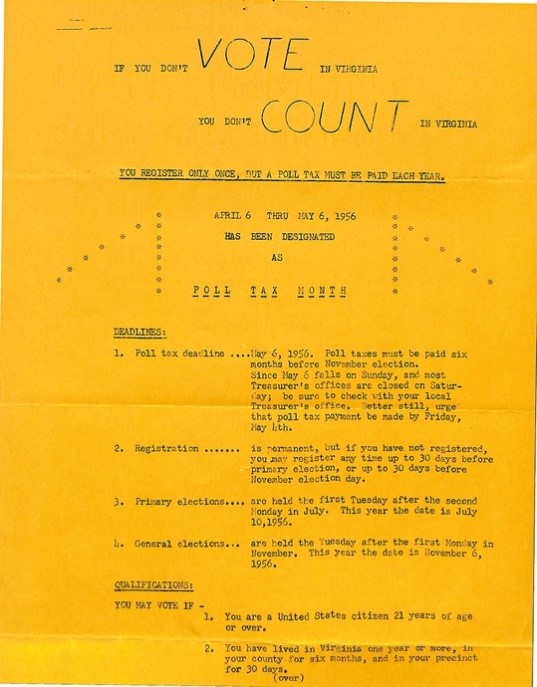
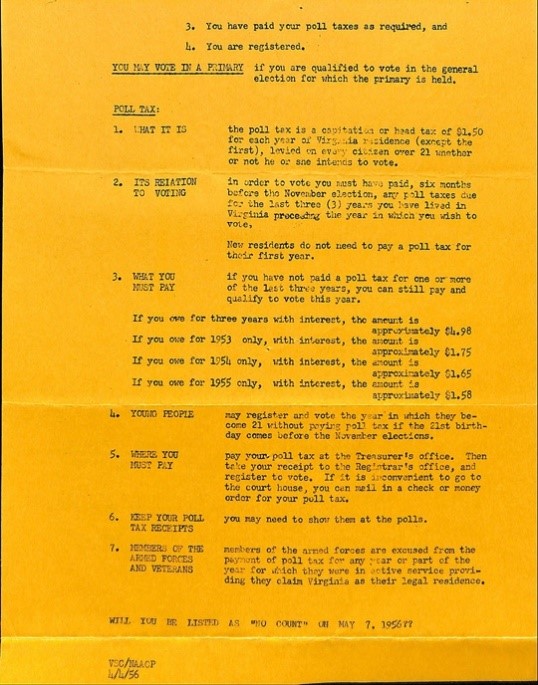
Poll Tax 1
Poll Tax 2

Poll Tax Month: a 1956 Virginia Poll Tax Flyer created by the NAACP, explaining what the poll tax was and how it related to being able to vote in both local and federal elections. View item information in Project DAPS.

The Modern Age of Voting

The last century has also seen technological developments in how we place our votes. From paper ballots, voting machines were introduced in the mid-20th century to modernize the voting process. Today, further developments, such as digital scanners introduced in 2015, continue to streamline how we vote and how our votes are counted.

Arlington County has also seen incredible growth from its humble electoral beginnings. The County now has 54 voter precincts and accompanying polling places. Almost every aspect of voting has changed in the centuries since the County’s beginnings: from who had the right to vote, to how voting was carried out. Be sure to cast your ballot on November 3!

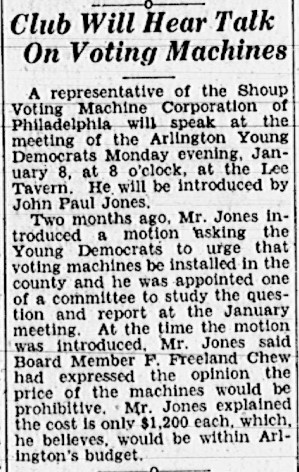
Voting Machine

An early mention of the use of voting machines in Arlington. From the Northern Virginia Sun, January 5, 1940.

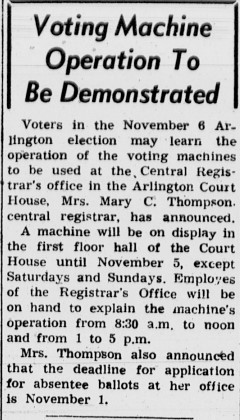
Voting Machine Demo

An early opportunity for voter to try out a voting machine. From the Northern Virginia Sun, October 18, 1951.

For more information on the history of Arlington voting, see the Arlington Historical Society’s Virtual Exhibit: A Short History of Voting in Arlington.

Election day 2020 is on November 3! Early voting will be taking place until October 31, and all mail-in ballots must be postmarked by November 3 or returned in person by November 3 at 7 p.m. Ballot drop-offs are available throughout the County. Information about in-person voting locations and other voter information in Arlington can be found through the County’s elections website.

To learn more about Arlington's history, visit the Center for Local History on the first floor of the Central Library.

Do you have a question about this story, or a personal experience to share? 

Use this form to send a message to the Center for Local History.

Center For Local History - Blog Post Message Form

Do you have a question about this story, or a personal experience to share? Use this form to send a message to the Center for Local History.

"*" indicates required fields
This field is for validation purposes and should be left unchanged.

Share Your Story

October 29, 2020 by Web Editor

Delve Into Arlington’s History Through The 1920 Census

Post Published: October 1, 2020

It has been 100 years since Arlington took on its name – changing from “Alexandria County” to the more distinct “Arlington” to avoid confusion with the nearby city of Alexandria. But how else has Arlington changed since then?

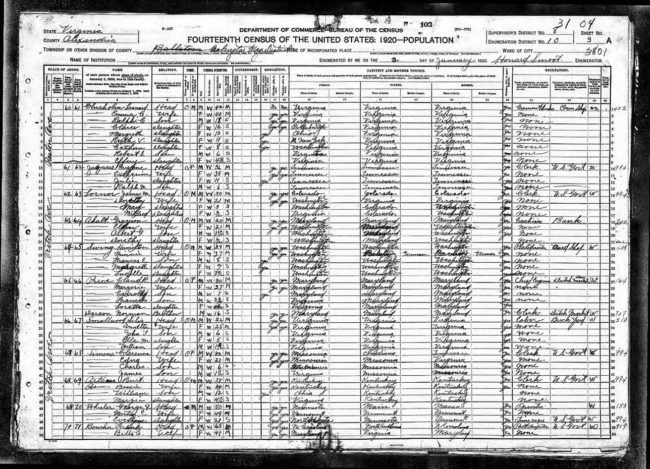
Arlington Magisterial District Sheet

Sheet 3A from the Arlington Magisterial District, covering Veitch Avenue and Reston Avenue. Image courtesy of the National Archives.

New County resources show the vast changes Arlington has experienced over the last century, as it shifted from a mostly rural cluster of farms and a few small businesses to the bustling urban region we know today. Using data from the 1920 Census (made available through the Census Bureau’s “72-year rule,” which allows Census data to go into historical record after 72 years), along with local archival material, a rich picture of Arlington’s past has been revealed.

Read about how the 1920 Census project came to be from County Manager Mark Schwartz.

The project’s StoryMap shows an interactive view of the County’s history, highlighting the five enumeration districts within then-Alexandria County that are part of present-day Arlington. The Map looks at the notable people and places within each district that made up the vibrant communities of their day.

After scrolling through the various neighborhoods and citizens of 1920 Arlington, you can also view directly how present-day Arlington looks compared to 1920 – seeing how your home, school, or favorite spots around the County looked 100 years ago.

Arlington Central Library

The Arlington Central Library (and Quincy Park) today, along with what the rest of the area looked like in 1920. Image taken from the 1920 Census StoryMap.

Watch: A Peek at the Census – Celebrating Arlington Then and Now (1920-2020)

View: Slideshow presentation from A Peek at the Census

Among these County resources also include the direct data from the 1920 Census. This data was taken from both the Census itself and augmented with information from death certificates, enlistments forms for World War I draftees, and the 1910 and 1930 censuses. These supplemental sources helped to fill in gaps where data from the 1920 Census was obscured, illegible, or missing.

With these additional materials, the 1920 Census tells us who was living in Arlington, where they lived, where they worked, and other important details that show what life was like at this point in time.

  • 1920 – Arlington Census Record Data on the Open Data Portal
  • 1920 – Arlington Census Record Data 
  • 1920 – Arlington Detailed Datasheet
  • 1920 – Arlington Census Surname Ranking
  • 2020 – Arlington Detailed Datasheet
  • 1920-2020 Arlington Data Comparison

Taken all together, these resources show a vastly different Arlington, from its very population (going from 16,040 in 1920 to an estimated 228,400 in 2020), its demographic makeup, and even the street names that Arlingtonians traversed. Dive into these newly released resources to learn more about just how much the County has changed in the last 100 years.

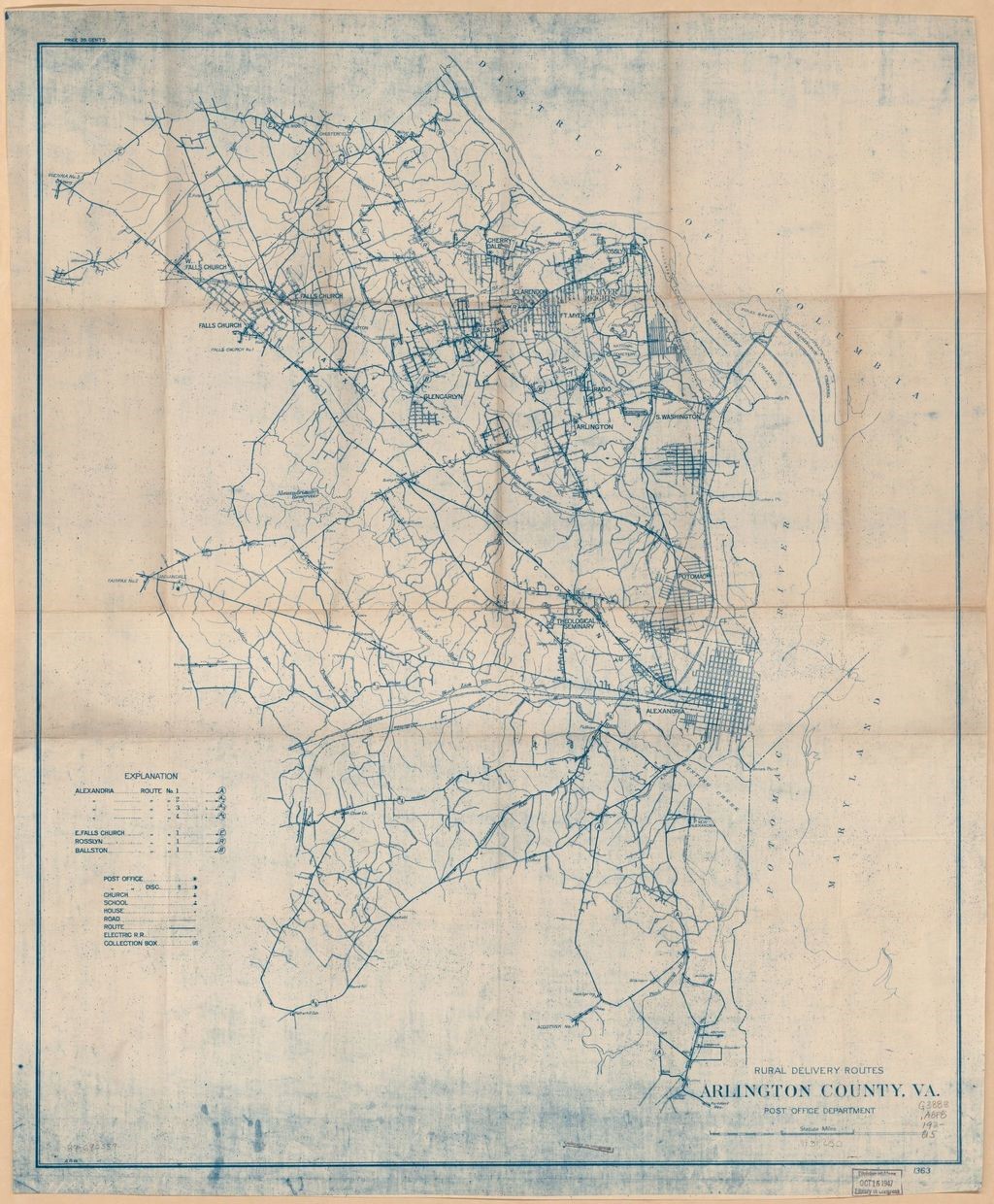
1920 Map

A 1920 map of Arlington County rural delivery routes gestures to the largely rural composition of the County 100 years ago. Image courtesy of the Library of Congress.

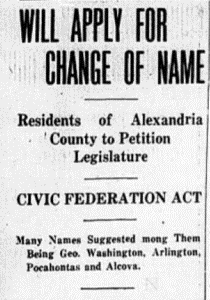
Headline from the Alexandria Gazette

Headline from the Alexandria Gazette from September 25, 1919, signaling the County’s move to change its name. Image courtesy of the Alexandria Gazette.

Interested in learning more?

  • You can find national census records from 1790-1940 online through the National Archives.
  • Additional Arlington-related enumeration data going back to 1782 is available through the Center for Local History.
  • Do you have a question, feedback, or contributions to the 1920 Census Project? Email census1920@arlingtonva.us

To learn more about Arlington's history, visit the Center for Local History on the first floor of the Central Library.

Do you have a question about this story, or a personal experience to share? 

Use this form to send a message to the Center for Local History.

Center For Local History - Blog Post Message Form

Do you have a question about this story, or a personal experience to share? Use this form to send a message to the Center for Local History.

"*" indicates required fields
This field is for validation purposes and should be left unchanged.

Share Your Story

October 1, 2020 by Web Editor

America’s First All-Women Swing Band Lived in Arlington

Post Published: September 17, 2020

In the first half of the 20th century, only a handful of women were able to make it as successful musicians. This precedent was upturned by the International Sweethearts of Rhythm – the first all-female, racially integrated swing band.

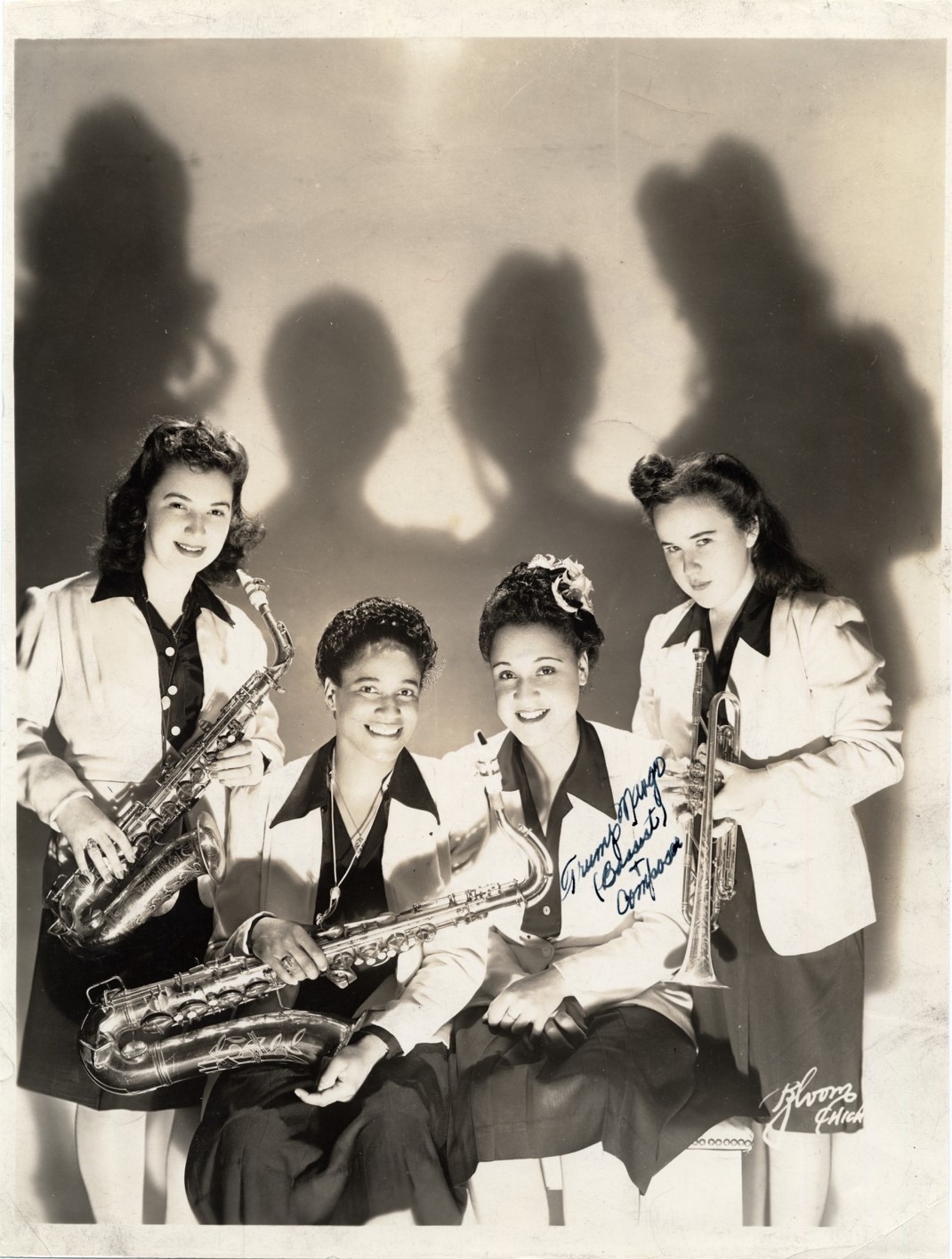
Four beautiful dark skinned women in black skirts and blouses with white blazers hold saxophones and trumpets.

Four members of the International Sweethearts of Rhythm. Image courtesy of the National Museum of American History.

Its members took the nation by storm, fearlessly touring even as they faced discrimination, Jim Crow law, and sexism. In the 1940s, the group called Arlington home, making their mark on our local community as they toured both the nation and abroad.

Getting Their Start

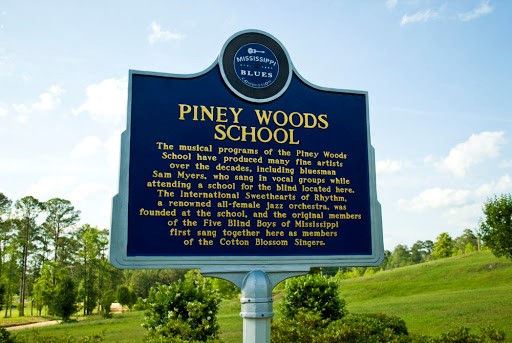
The founding members of the International Sweethearts of Rhythm met as students at the Piney Woods Country Life School in central Mississippi, a boarding school for African American children. The school was known for producing musical groups, who were instructed in music and toured the country to fundraise for the school. In addition to the Sweethearts of Rhythm, the school produced the groups the Cotton Blossom Singers and The Five Blind Boys of Mississippi, both of which also toured nationally.

The Sweethearts were founded at the school in 1937, and after success touring and performing while affiliated with the school, left in April 1941 to formally become professional musicians.

Piney Woods

Historical marker paying tribute to the International Sweethearts of Rhythm and other groups from the Piney Woods School. Image courtesy of Simpson County.

The Band Arrives in Arlington

After leaving the school to become professional musicians, the Sweethearts relocated to Arlington with financial support from a now-anonymous wealthy Virginian. While living in Arlington, the band recruited professional musicians to fill the gaps of some of the younger members who had stayed at Piney Woods to finish school. They also joined the American Federation of Musicians, Local 710, Washington D.C.’s African American union for musicians. During this time, Anne Mae Winburn also took on the role as the group’s bandleader.

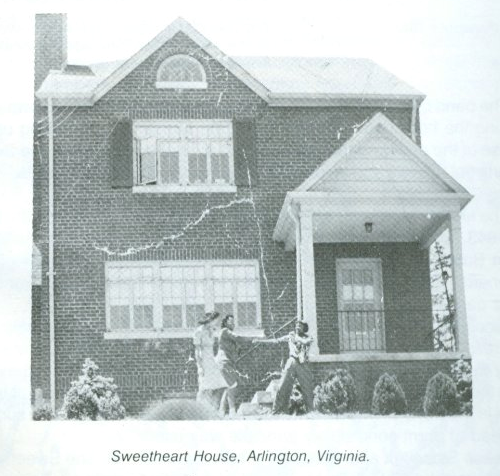
The band lived in a 10-room home near Columbia Pike that was referred to as the “Sweetheart House.” In an oral history with Arlington resident Delores Downing, she recalls listening to the band practice at the home as a young girl.

Listen to Delores Downing Discuss the Sweethearts:

https://library.arlingtonva.us/wp-content/uploads/2020/09/Downing_Delores_C_Sweethearts-of-Rhythm.mp3
Sweetheart House

The “Sweetheart House,” near Columbia Pike, where members of the Sweethearts lived while they were based in Arlington. Image courtesy of Queer Music Heritage.

National and International Success

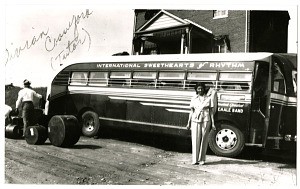
During their time in Arlington, the band toured extensively, playing famous venues such as the Apollo Theatre and Savoy Ballroom in New York, and the Howard Theatre closer to home in Washington, D.C., where they set an attendance record in August 1941, drawing 35,000 patrons over the course of a week. They often performed with other star musicians, including Ella Fitzgerald, Billie Holiday, Dizzy Gillespie, and Ruby Dee. They also appeared in some short films called “soundies.” When touring, the band traveled on a customized bus call “Big Bertha” built during their Piney Woods days.

Big Bertha

“Big Bertha,” the band’s customized tour bus. Image courtesy of the National Museum of American History.

Watch: The Sweethearts of Rhythm perform “Jump Children” led by bandleader Anna Mae Winburn.

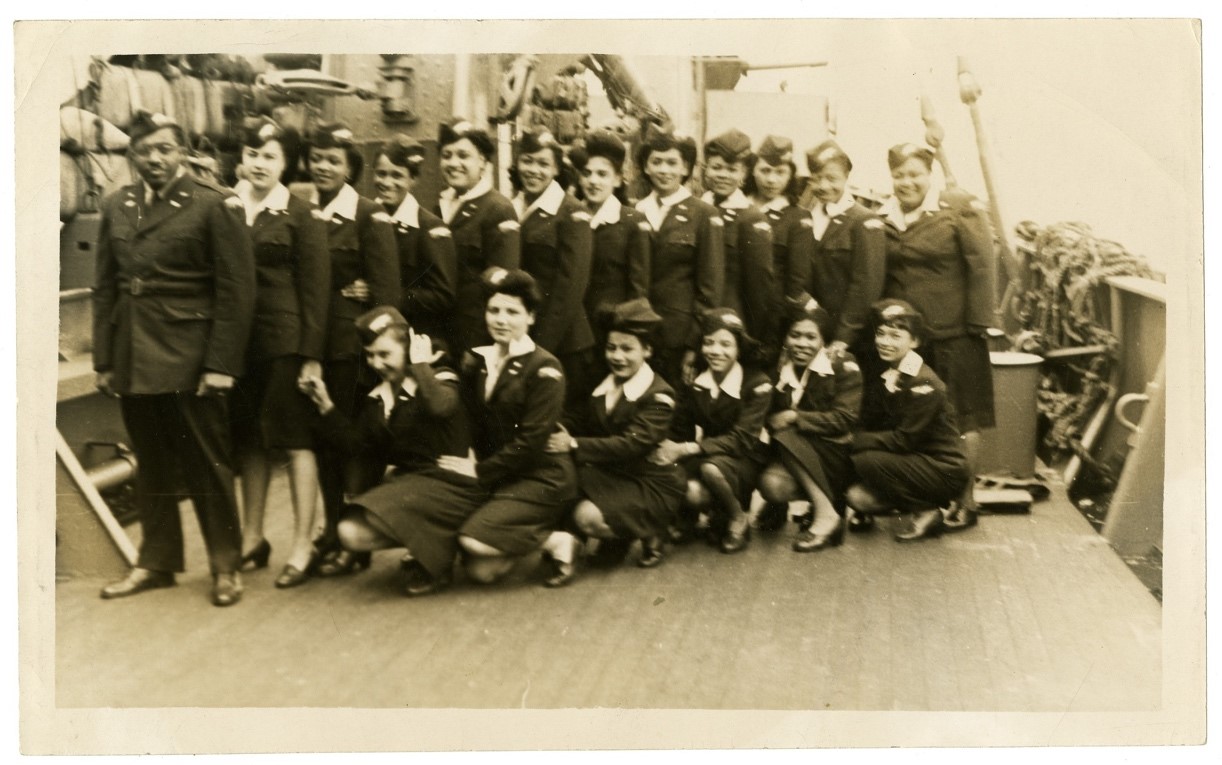
Their popularity increased when the United States’ entered World War II when they added military bases to their performance repertoire. In July of 1945, after requests from GIs serving overseas, the Sweethearts embarked on a six-month-long tour of Europe, sponsored by the USO. During their tour, the band performed in Paris, and in occupied Germany, including the cities of Heidelberg, Stuttgart, Munich, and Mannheim.

Two lines of women stand on the deck on a ship.

"The Sweethearts ready to depart for Europe on Liberty ship,” July 1945. Image courtesy of the National Museum of American History.

Confronting Discrimination

The Sweethearts were known both for being all-female, which was a rarity in big bands at the time, and because the group was multi-racial, which was even rarer. Members of the group included women of African American, Chinese, Mexican, and Native American descent, along with a few white members in their later years.

Because the group toured nationally, their multiracial composition brought them hostility, particularly in the segregated south, where some members had to hide or wear makeup to appear lighter or darker in skin tone. Additionally, when the group went abroad to perform for U.S. soldiers, they often played to segregated audiences where African-American GIs were asked to sit separately.

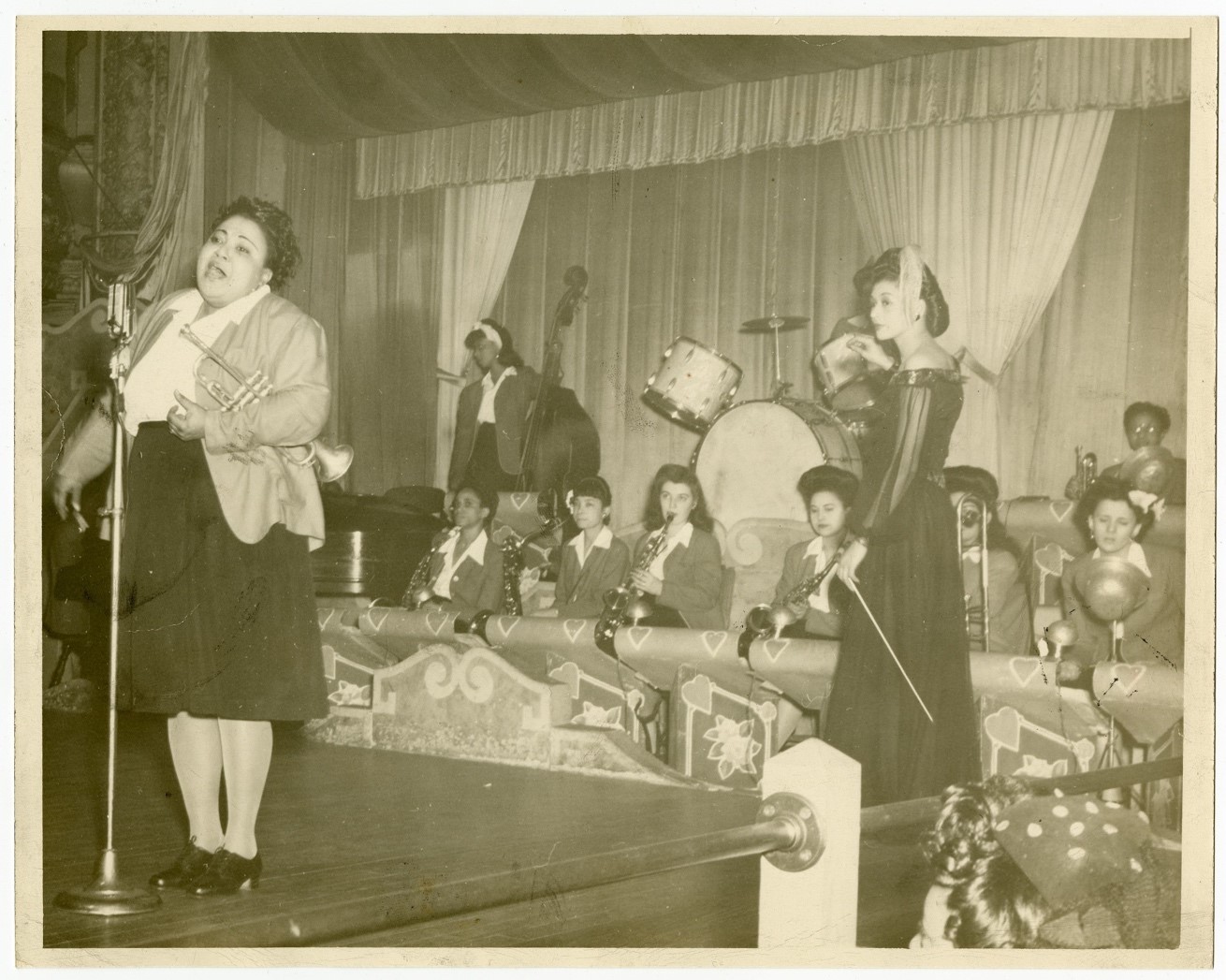
A woman on stage holds a trumpet and sings while a second woman conducts an orchestra of women.

Performance in St. Louis in 1944. Bandleader and vocalist Anna Mae Winburn vocalist (right); Tiny Davis (front); Willie Mae Wong (second from left); Roz Cron (third from left). Image courtesy of the National Museum of American History.

The Sweethearts Gradually Disband

After successful tours both domestically and abroad, the original band broke up in 1949 amid changing tides in the jazz sound and performance demands. The group had a reunion in 1980 at the Third Annual Women’s Jazz Festival in Kansas City.

Leaving a Powerful Legacy

The Sweethearts are often left out of mainstream discussion of the jazz and swing greats, but their legacy as a pioneering interracial, and all-female band has left an indelible mark on American music.

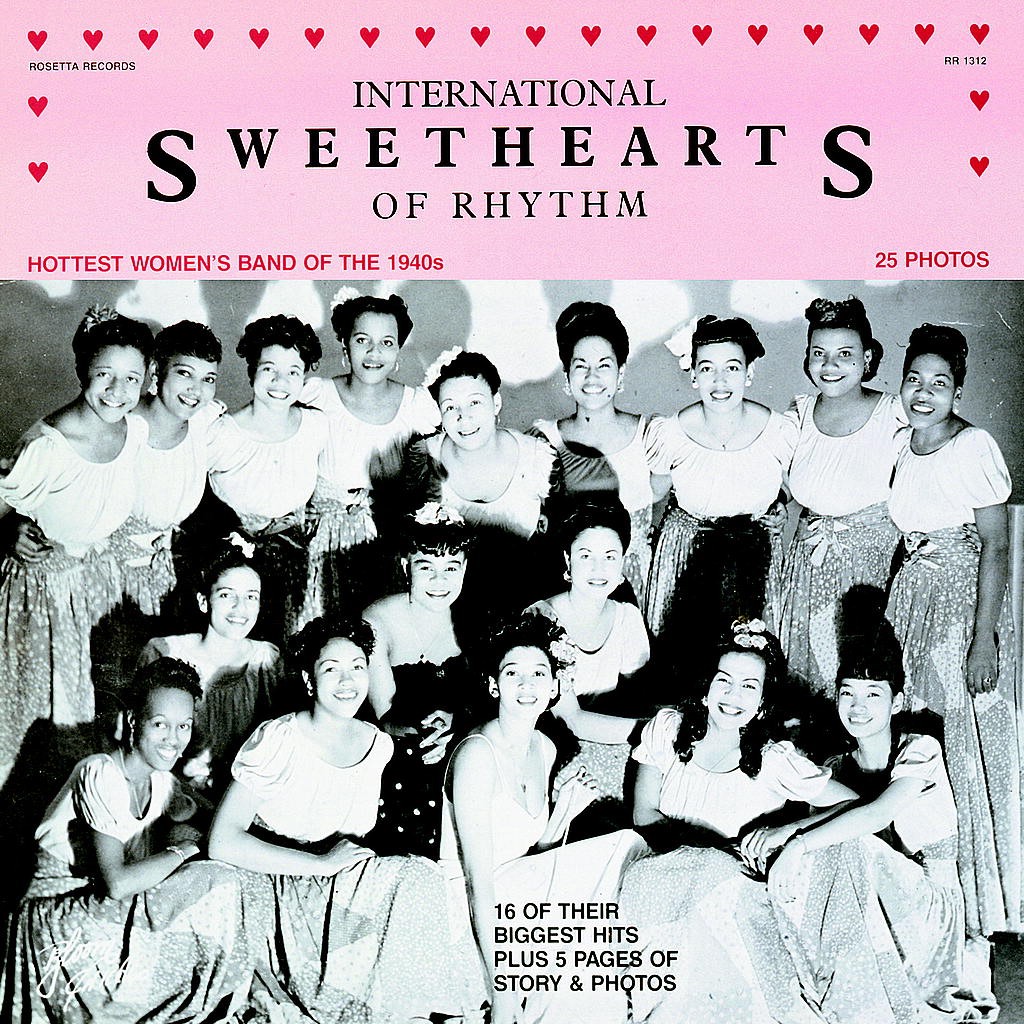
In 2012, their record “International Sweethearts of Rhythm: Hottest Women’s Band of the 1940s” was added to the National Recording Registry at the Library of Congress. It featured recordings from 1944-1946, including commercial tracks and excerpts from an appearance on the Armed Forces radio service program “Jubilee.” It was released in 1984 by Rosetta Records – a label that exclusively released reissued performances by female blues and jazz artists.

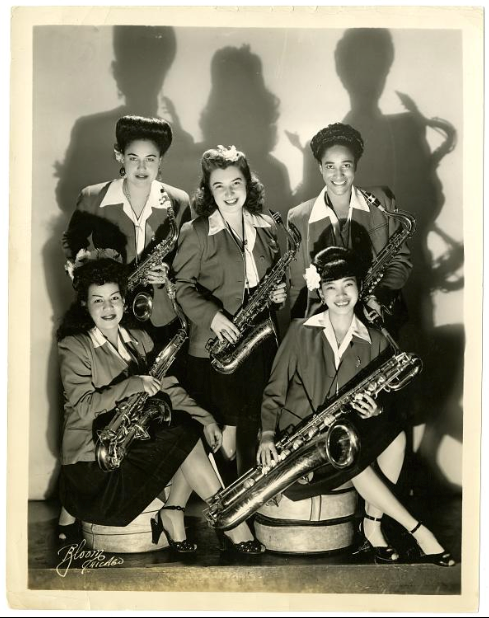
Five women hold saxaphones and smile.

Promotional photo for the International Sweethearts of Rhythm featuring members of the saxophone section. Image courtesy of the National Museum of American History.

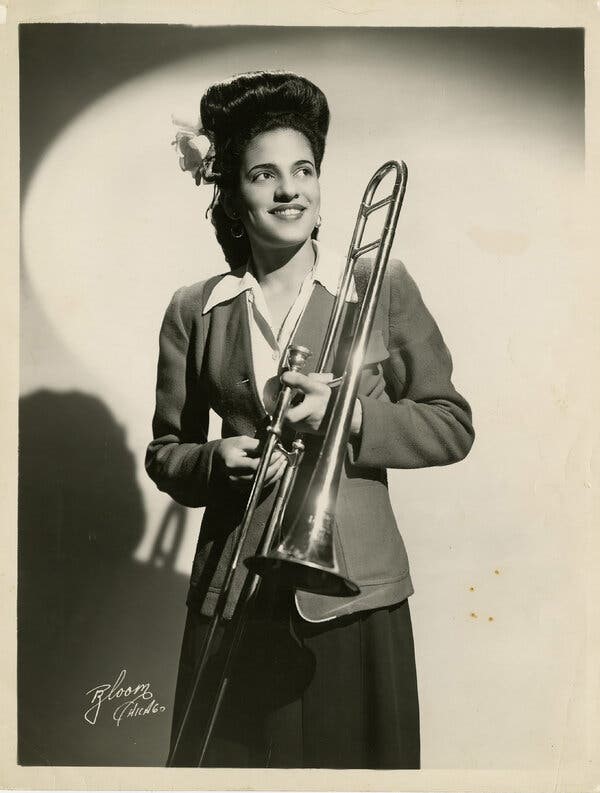
A woman holds a trombone and smiles.

Photo of trombonist Helen Jones, one of the original members of the Sweethearts and the daughter of Piney Woods founder Laurence C. Jones. Jones passed away early last month. Image courtesy of the New York Times, where you can read her obituary.

16 of their biggest hits plus five pages of story and photos.

International Sweethearts of Rhythm album cover, Rosetta Records. Published in 1984 and recorded between 1945-1946. Image courtesy of the Library of Congress.

Children’s books about the International Sweethearts of Rhythm available at the Library:

  • “Swing Sisters: The Story of the International Sweethearts of Rhythm,” by Karen Deans
  •  “Sweethearts of Rhythm: The Story of the Greatest All-Girl Swing Band in the World,” by Marilyn Nelson

Want to learn more? The National Museum of American History has extensive photo records of the Sweethearts, which are available to the public online.

Do you have a question about this story, or a personal experience to share? 

Use this form to send a message to the Charlie Clark Center for Local History.

Center For Local History - Blog Post Message Form

Do you have a question about this story, or a personal experience to share? Use this form to send a message to the Center for Local History.

"*" indicates required fields
This field is for validation purposes and should be left unchanged.

Share Your Story

September 17, 2020 by Web Editor

  • « Go to Previous Page
  • Page 1
  • Page 2
  • Page 3
  • Page 4
  • Page 5
  • Interim pages omitted …
  • Page 9
  • Go to Next Page »

Footer

About Us

  • Mission & Vision
  • Charlie Clark Center for Local History
  • News Room
  • Get Email Updates

Administration

  • Policies
  • Library Staff
  • Job Opportunities
  • Propose a Program or Partnership

Support Your Library

  • Friends of the Library
  • Giving Opportunities
  • Donating Materials
  • Volunteer Opportunities

Our Mission

We champion the power of stories, information and ideas.

We create space for culture and connection.

We embrace inclusion and diverse points of view.


Download the Library App

Download the Library App

Arlington County | Terms & Conditions | Accessibility | Site Map
· Copyright © 2025 Arlington County Government ·