• Skip to primary navigation
  • Skip to main content
  • Skip to footer

Alert

Holiday: All library locations closed Sunday, April 5 for Easter. More Info

Alert

Update: Elevator outages, maintenance and upgrades at Central Library More Info

Home - Arlington County Virginia - Logo
MENUMENU
  • Join Now
  • My Account
    • Login
    • My Checkouts
    • My Holds
    • My Lists
    • My Reading History
    • About Borrowing
    • About Holds
    • About My Account
  • Hours & Locations
    • All Hours & Locations
    • Holiday Closings
  • News
    • Library News
    • Director's Blog
    • Get Email Updates
  • Contact Us

Arlington Public Library

MENUMENU
  • Search
  • Collections
  • Library Services
  • Events
  • Community Engagement
  • Join Now
  • My Account
    • Login
    • About Borrowing
    • About Holds
    • About My Account
  • Hours & Locations
    • All Hours & Locations
    • Holiday Closings
  • News
    • Library Blog
    • Get Email Updates
  • Contact Us

Web Editor

Writer, Suffragist, Feminist Icon: Louisa May Alcott

Post Published: April 1, 2020

Celebrate the 100th anniversary of the 19th Amendment with stories about the people and events that led to the passage of women’s suffrage in the United States.

Louisa May Alcott (1832-1888)

Author of the internationally renowned “Little Women,” Louisa May Alcott blazed a path for female authors and thinkers to follow. She was also a dedicated abolitionist, suffragist, and nurse.
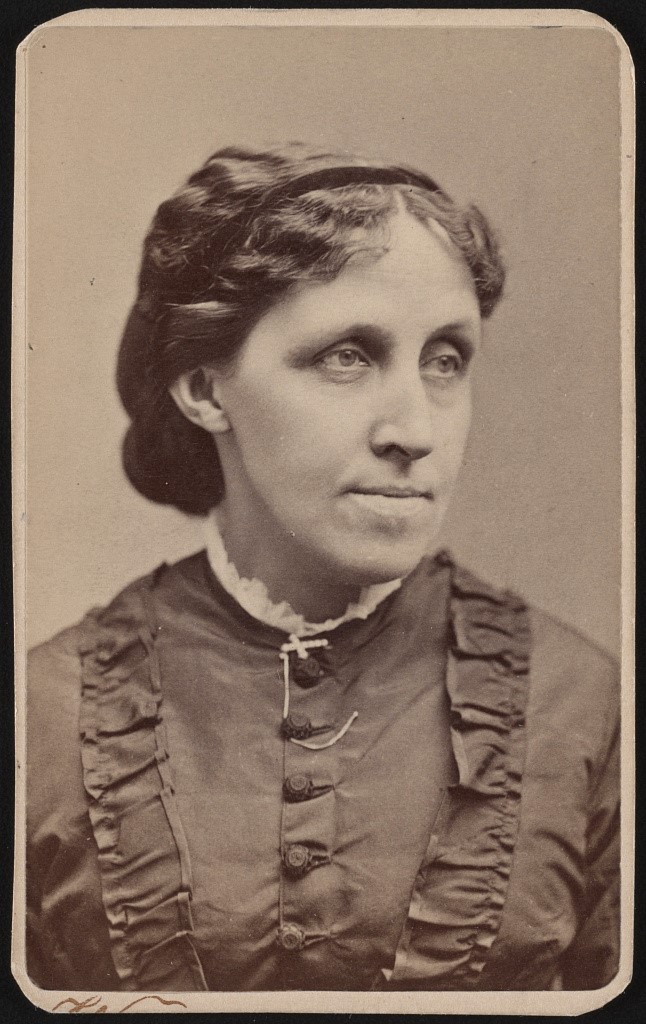
Louisa May Alcott

“Louisa May Alcott, writer, abolitionist, and Civil War nurse,” ca. 1870. Image courtesy of the Library of Congress.

Early Life

Louisa May Alcott was born on November 29, 1832, in Germantown, Pennsylvania. Alcott and her three sisters – who would go on to inspire the central quartet of “Little Women” – spent their childhood in Concord, Massachusetts, where they were educated by their father, Bronson Alcott.

The Alcott’s had a somewhat unique childhood, growing up in part on a transcendentalist commune. The family held strong political convictions that influenced Louisa Alcott’s life in great measures, such as when she helped her parents hide escaped slaves traveling north on the Underground Railroad. The Concord community was also filled with radical thinkers who made up the Alcott’s social circles, including Margaret Fuller, Henry David Thoreau, Ralph Waldo Emerson, and Nathaniel Hawthorne.

Writing became an early passion for Alcott, who augmented her education with poetry writing, visits to Emerson’s library, nature excursions with Thoreau (about whom she also wrote the poem “Thoreau’s Flute”), and staged plays in the barn at Hillside House in Concord (now known as the Wayside).
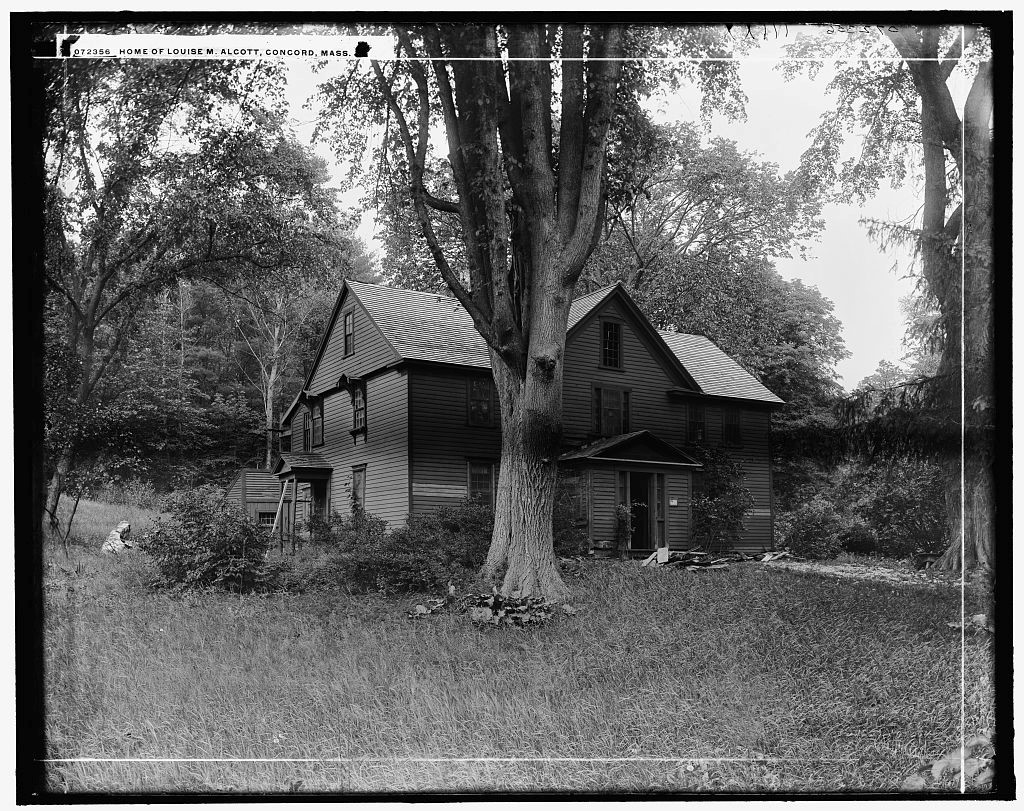
House

Orchard House, the childhood home of Louisa May Alcott and her sisters in Concord, Massachusetts. Image courtesy of the Library of Congress.

When Louisa was a teenager, the Alcott family faced years of poverty that worked their way into the stories of “Little Women.” This period encouraged Alcott to take matters into her own hands in a world that offered little to no fiscal opportunity for women outside of marriage.

Before publishing her own works, Alcott worked as a teacher, seamstress, governess, and household servant to make ends meet. Alcott then vowed: “I will make a battering-ram of my head and make my way through this rough and tumble world.”

Flower Fables and Other Early Works

Alcott began her career with the publication of poetry and short stories. Some of these early works were signed “A.M. Barnard” and were categorized as “potboilers,” often lurid and violent tales – but they always featured female characters who were strong and independent. At age 22, Alcott achieved a major milestone with the publication of her first book, “Flower Fables.”
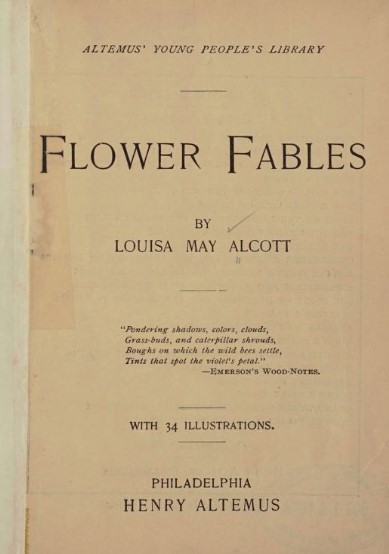
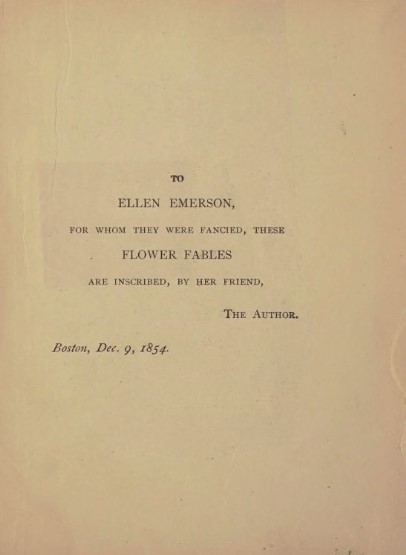
Flower Fables 1
Flower Fables 2

Cover and inscription of an 1898 edition of Louisa May Alcott’s first book, “Flower Fables.”  The book was dedicated to Ellen Emerson, daughter of Alcott’s friend Ralph Waldo Emerson. Images courtesy of the Library of Congress, where a fully scanned version of the text is also available.

Throughout her life, Alcott was involved with causes such as women’s suffrage and abolition, influenced by the many intellectuals who shared her home community. Alcott and her mother canvassed door-to-door in their community to encourage women to vote, and in 1879 Louisa was registered as the first woman to vote in the Concord school committee election.

As an adult, she also socialized with Frederick Douglass and Julia Howe, leaders in their respective causes. In 1861, after the start of the Civil War, Alcott enlisted as a nurse in a Union Hospital in Georgetown in Washington, D.C. Though she had to leave her assignment early due to typhoid fever, the time proved to be immensely influential. In 1863, she published “Hospital Sketches,” a memoir detailing her time as a nurse, inspired by the letters she wrote to her family during this time.

Little Women

Well into her career, at age 35, Alcott’s publisher asked her to pivot and write a “girls’ story.” This directive led Alcott to write her magnum opus, “Little Women,” which stands the test of time as a seminal American text. The 492 pages of “Little Women, Part I” were written in three months at the desk her father built for her at her childhood home of Orchard House.

The book became an instant hit, resonating with stories of domestic life and realistic depictions of women not typically seen in contemporary fiction.

Alcott published 30 books over the course of her life, cementing her in the pantheon of great American writers. She died on March 6, 1888, and is buried in Sleepy Hollow Cemetery in Concord.
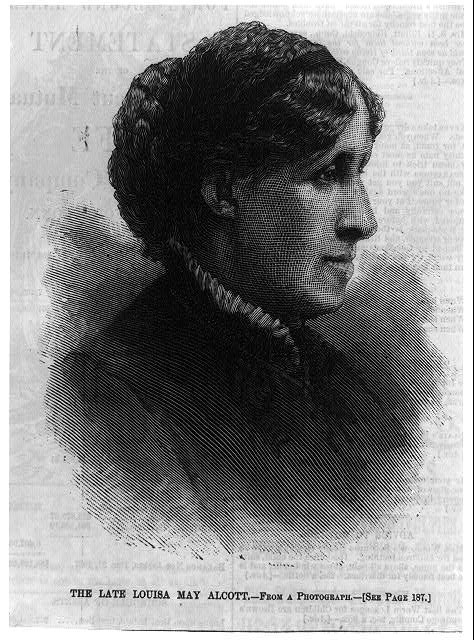
Portrait

“The Late Louisa May Alcott,” wood engraving after photo, 1888. Image courtesy of the Library of Congress.

Additional Resources

  • Read “Little Women,” available online at the Library.
  • Explore Louisa May Alcott’s Orchard House virtually.
  • Watch the 1994 or 2019 film adaptations of “Little Women,” available on streaming sites.

2020 marks the centennial of women’s suffrage in the United States. 
April 1, 2020 by Web Editor

Anna Barber: AFAC Founding Member

Post Published: March 26, 2020

Although the Library is currently closed, we want to share the inspiring story of Anna Barber in honor of Women’s History Month.

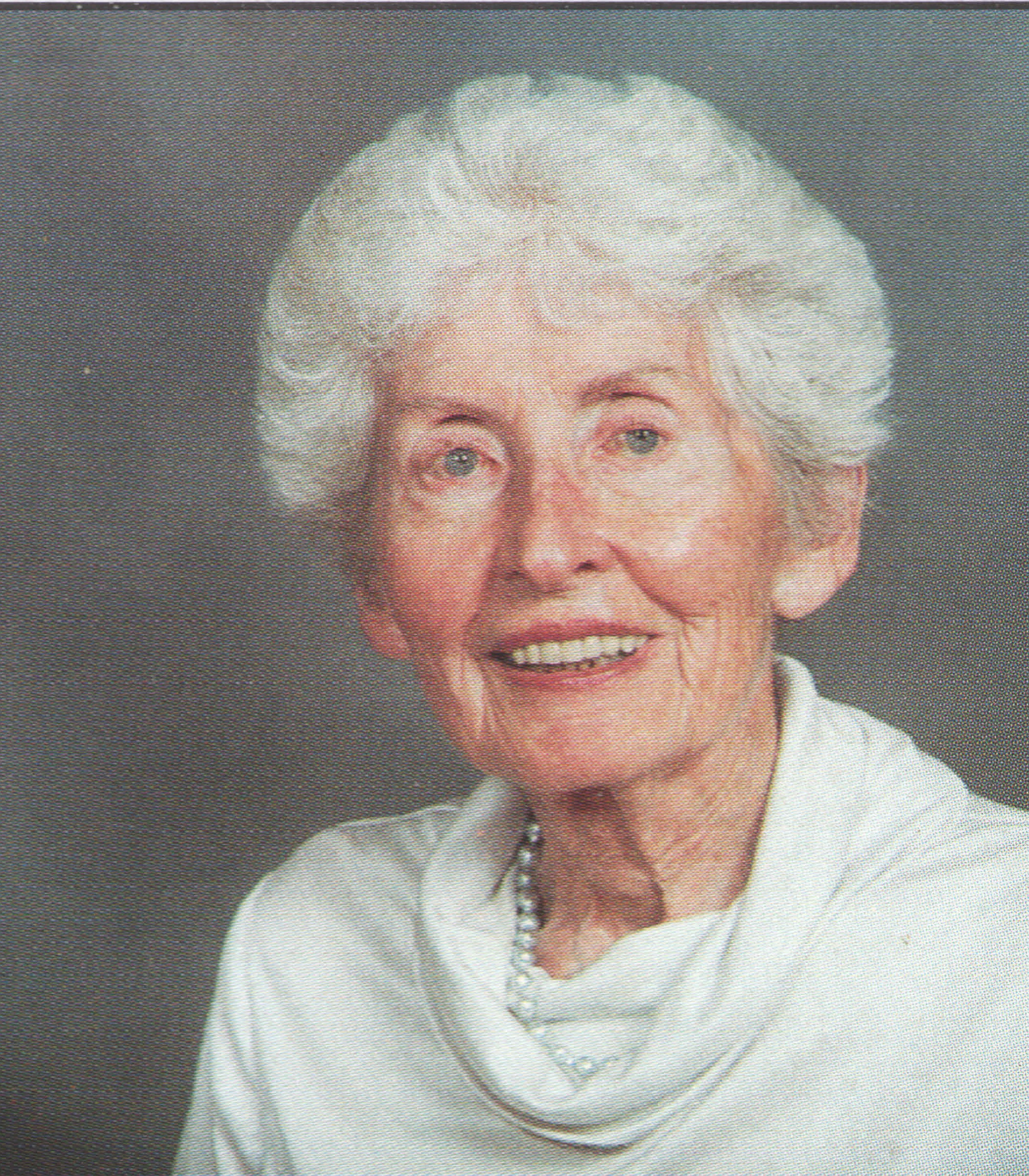
One of the founding members of the Arlington Food Assistance Center (AFAC), Anna Barber was known as a community advocate and activist throughout her life.

AnnaBarberPhoto

After beginning her career in government at the Census Bureau, Barber later taught high school and became involved in numerous social causes. Some of her activities included establishing other key community foundations such as Arlington Thrive, the Arlington Street People’s Assistance Network (ASPAN), Bridges to Independence, and For Immediate Sympathetic Help.

Her dedication to helping others is evidenced in these robust organizations; most notably, 32 years after its founding, AFAC now serves over 3,100 families each month.

Anna Barber passed away in 2007. You can read her obituary in The Washington Post.

Anna Barber was one of the women nominated by a community organization to be featured in the Library’s Women’s Work: Then and Now exhibition which opened at Central Library on March 5, 2020.

Do you have a question about this story, or a personal experience to share? 

Use this form to send a message to the Charlie Clark Center for Local History.

Center For Local History - Blog Post Message Form

Do you have a question about this story, or a personal experience to share? Use this form to send a message to the Center for Local History.

"*" indicates required fields

This field is for validation purposes and should be left unchanged.

Share Your Story

March 26, 2020 by Web Editor

Dancing with Myself: Playlist for a Pandemic

Post Published: March 24, 2020

Tunes from the Library Director

The Library may be physically closed during the COVID-19 outbreak, but we are here for you!

We promise to continue to be an essential link to information you can trust. You can find updates on COVID-19 on the Arlington County website and to resources to help keep you going on the Library website and our social media accounts.

We also want to provide our neighbors with some respite and rejuvenation through one of our favorite virtual offerings, the Director’s Playlist.

While some of the songs are... a little on the nose... many serve a functional purpose: the CDC has directed us to scrub our hands for at least 20 seconds each time we wash, which is one of the most effective ways to prevent the spread of germs. Don’t have a timer? Tired of humming the “Happy Birthday” song? No problem!

man damcig alone in his apartment

The first three tracks on this playlist have a chorus/pre-chorus of at least 20 seconds - sing or hum along (at the top of your lungs or in your head) while washing your hands, and you'll meet the CDC’s hand washing guidelines.

Open playlist in Spotify

Whether you are waiting in the lobby of your Microsoft Team's meeting, planning fun and educational projects for your kids, starting that side-hustle, taking the dog out for her fifth walk, finally reading that book that has been on your nightstand for the last 6 months, or whiling away the hours on a Netflix binge, we hope that these songs can lift your spirits, give you a valuable break, or at the very least, remind you that we are all workin' together (track 20).

We know that Arlington Public Library is a valued resource for many in our community, and we look forward to when we can resume full, safe operations. To that end, we are in constant communication with the County Manager’s Office and the Public Health Department and look forward to welcoming you back when we can reopen.

But until then, join me as I dance on my own to Robyn (track 5).

Stay safe and stay home!

Diane K.

Scrawled signature of Diane Kresh

March 24, 2020 by Web Editor

Angel of the Battlefield: Humanitarian Clara Barton

Post Published: March 19, 2020

Clara Barton (1821-1912)

Celebrate the 100th anniversary of the 19th Amendment with stories about women who have used their voices and their votes to better their communities and help shape the United States.

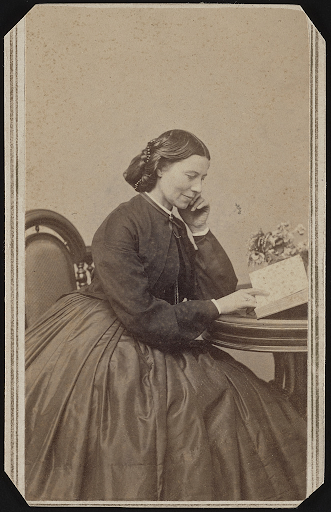
pic3

“Union Nurse Clara Burton,” photograph by C.R. Claflin, ca. 1865. Image courtesy of the Library of Congress. 

Clara Barton is an enduring symbol of humanitarianism for her work during the American Civil War, where she played a fundamental role in distributing much needed provisions and medical supplies to the Union Army. She was also renowned as an educator, nurse and a founder of the American Red Cross.

Barton was born on December 25, 1821, in Oxford, Massachusetts, the youngest of five children. She had her first experience in nursing while caring for her brother David and later became a teacher at age 18.

Early Career

At 24, she founded a school for children on the site of her brother’s mill and in 1852 she established the first free school in Bordentown, New Jersey. Barton resigned from her teaching position upon discovery that the school had hired a man at twice her salary. She left the post on the principle that she would never work for less than a man.

Following her teaching career, Barton began working as a recording clerk for the U.S. Patent Office in Washington, D.C., making her the first woman to hold the position. In line with her beliefs on the fundamental equality of women, she was paid $1,400 as a salary – the same as her male colleagues. After this milestone, however, she faced backlash. The then-Secretary of the Interior Robert McClelland opposed women serving in the government and demoted her to a copyist position at a lower salary.

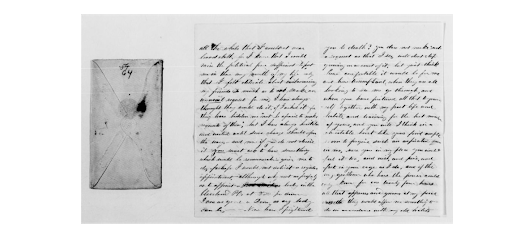
pic4

February 13, 1860, Letter from Clara Barton to her nephew Bernard Vassall, which discusses women’s oppression. Part of the Clara Barton Papers at the Library of Congress.

American Civil War

In 1861, like all Americans, Barton’s life changed with the start of the Civil War. She quit her post in government and dedicated herself to bringing supplies to Union soldiers in need. She started by taking supplies to the men of the 6th Massachusetts Infantry housed in the unfinished Capitol building, some of whom had been her students and her peers growing up.

Barton collected relief articles including clothing, assorted foods, and supplies for sick and wounded soldiers, and appealed to the public to garner more donations. She also read to soldiers in the camps, wrote letters and prayed with them.

pic1

Soldiers of the 6th Regiment Massachusetts volunteer militia, one of the groups that Clara Barton helped bring supplies during the Civil War. Image courtesy of the Library of Congress.

In 1862, she received official permission to transport supplies to battlefields and was present at every major battle in Maryland, Virginia and South Carolina. After the battle of Cedar Mountain in August 1862, Barton brought in a wagon load of supplies drawn by a four-mule team to the field hospital. Upon her arrival, the surgeon on duty commented: “I thought that night if heaven ever sent out a[n] … angel, she must be one – her assistance was so timely.” This led to Barton gaining the nickname “Angel of the Battlefield.”

Of her time on the battlefield, Barton said: “I may be compelled to face danger, but never fear it, and while our soldiers can stand and fight, I can stand and feed and nurse them."

Though she had no formal medical training, in 1864 she was named head nurse for one of General Benjamin Butler’s units. In the aftermath of the war, Barton was also involved in helping prepare former enslaved people for freedom, as well as marking graves, testifying to Congress about her experience in the war, and helping locate missing soldiers. To help the latter cause, she established the Office of Correspondence with Friends of the Missing Men, which she operated out of her home on 7th Street in Washington, D.C. The Office received and answered over 63,000 letters and identified over 22,000 missing men during its four years of operation. A tracing service similar to this operation would eventually become a crucial part of the operations of the Red Cross.

file

“Clara Barton. A wartime photograph by Brady,” ca. 1890-1910. Image courtesy of the Library of Congress.

Red Cross

After the war, Barton continued to serve her nation. After a visit to Europe, she was inspired by the Red Cross in Geneva, Switzerland, and lobbied to establish a branch in the United States. On May 21, 1881, the American Association of the Red Cross was formed, built up by Barton’s work writing pamphlets, lecturing and meeting with President Rutherford B. Hayes on the topic of support for the organization.

Barton was elected the group’s first president, and in 1882, the United States joined the International Red Cross. As its leader, Barton oversaw relief work for victims of the Johnstown Flood in 1889 and the Galveston Flood in 1900, among other events. She remained with the Red Cross until 1904, and that same year established the National First Aid Association of America.

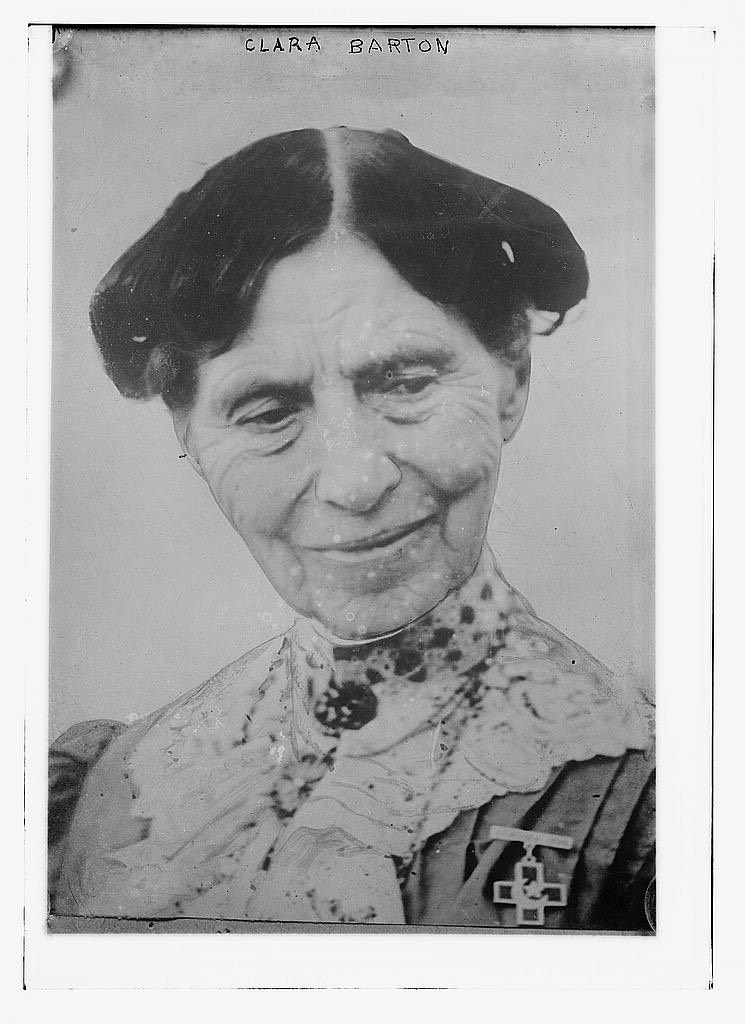
pic

Clara Barton, ca. 1911. Image courtesy of the Library of Congress.

Later Years

Barton was also involved in civic causes including education, prison reform, women’s suffrage, and civil rights.

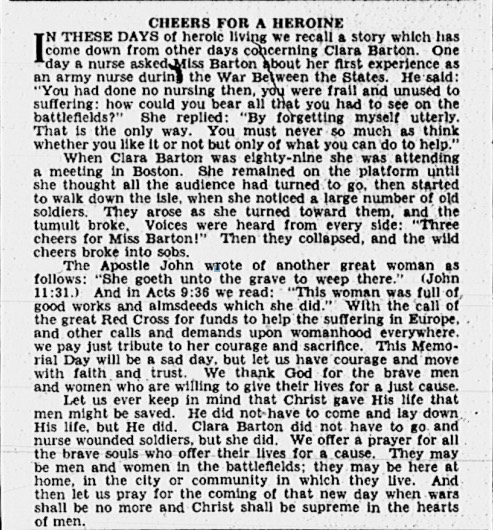
Barton died on April 12, 1912. Since her death, Barton has frequently been turned to as an example and reminder of American heroism, as in this newspaper article from May 31, 1940, written by The Northern Virginia Sun in the days leading up to World War II:

pic 5

March 19, 2020 by Web Editor

This Week in 19th Amendment History: Hallie Quinn Brown

Post Published: March 11, 2020

March 10, 1845

Celebrate the 100th anniversary of the 19th Amendment with stories about the people and events that led to the passage of women’s suffrage in the United States.

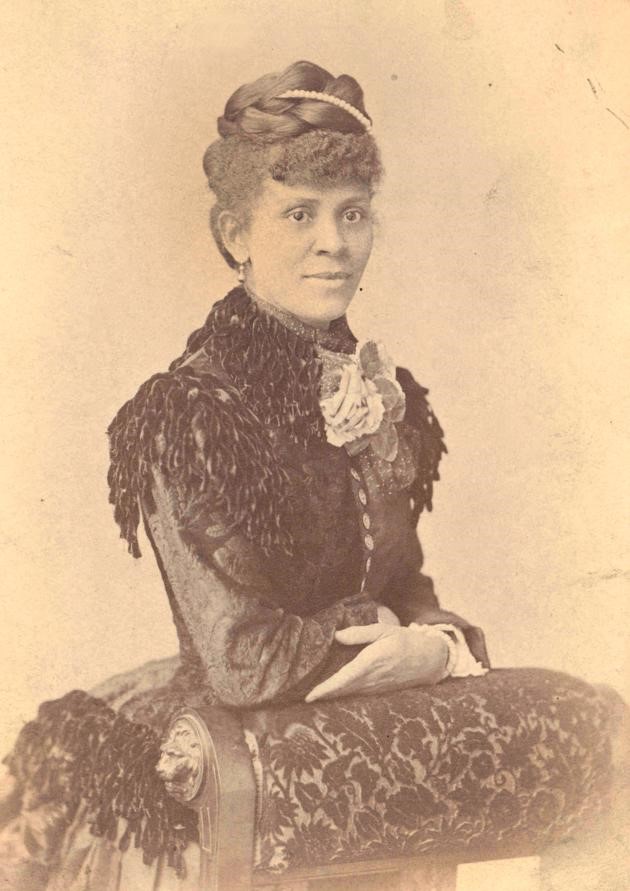
Hallie Quinn Brown was a preeminent educator, writer, public speaker and activist in the causes of civil rights and suffrage throughout the 19th and 20th centuries. 

Portrait of Hallie

Hallie Quinn Brown. Image courtesy of Wilberforce-Payne Unified Library.

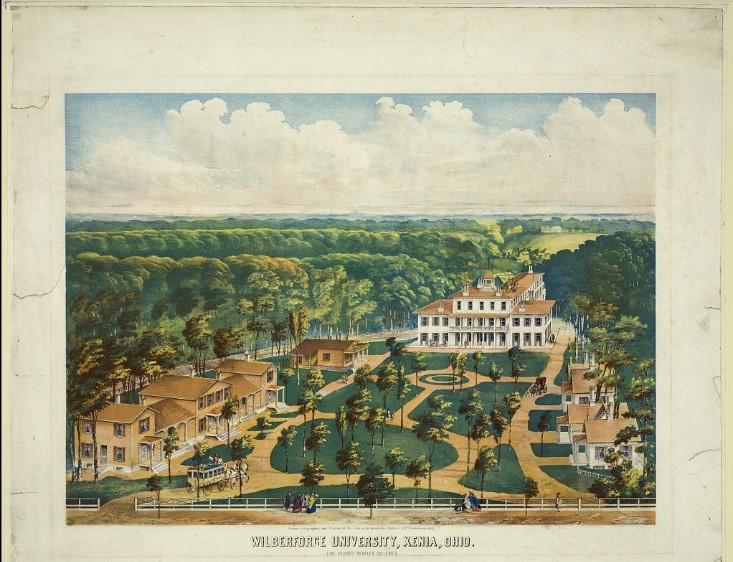
Brown was born on March 10, 1845 (sometimes reported as 1849) in Pittsburgh, Pennsylvania, to Frances Jane Scroggins and Thomas Arthur Brown – both of whom were freed slaves and involved with the Underground Railroad. Brown attended Wilberforce University in Ohio and graduated as the salutatorian. She also studied at the Chautauqua Lecture School, making her among the first African American woman university graduates in the United States at the time.

Following graduation Brown taught in Mississippi and South Carolina, and in 1885 became dean of Allen University. She also worked at public schools in Dayton, Ohio, establishing a night class for migrant workers. Brown was eventually appointed dean of women at the Tuskegee Institute in Alabama, where she worked alongside Booker T. Washington. She later returned to her alma mater as a professor, and from 1893-1903 served as professor of elocution at Wilberforce.

Wilberforce U

Lithograph of Wilberforce University, ca. 1850-1860. Courtesy of the Library of Congress.

Brown was dedicated to the advancement of women’s clubs for African American women. In 1893, she was the principal promoter of the Colored Woman’s League, which went on to become part of the National Association of Colored Women (NACW). She also served as president of the Ohio Federation of Colored Women’s Clubs from 1905-1912 and as president of NACW from 1920-1924.

A renowned elocutionist, Brown conducted speaking tours and gained a significant following, particularly in the United Kingdom. During these tours, she made several appearances before Queen Victoria, and in 1889, shared tea with the queen. In 1899, she also represented the United States at the International Congress of Women, which met in London. Brown was also a staunch advocate for temperance causes, women’s suffrage, and civil rights, often delivering speeches on the topic of granting full citizenship to women and guaranteeing civil rights for African Americans.

Hallie Quinn

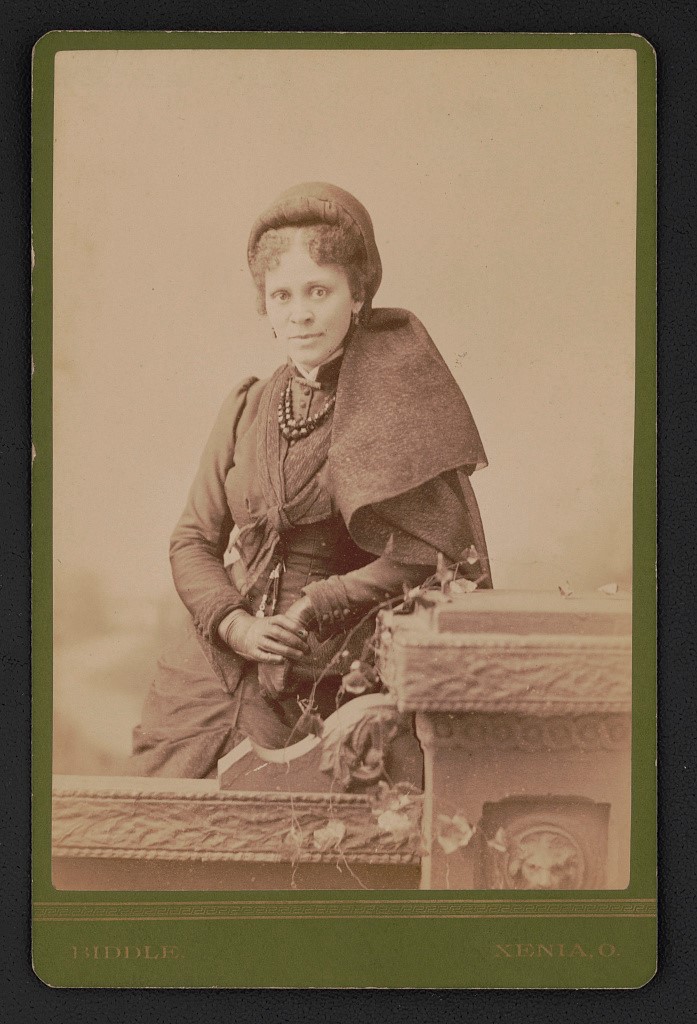
Hallie Quinn Brown photographed by F.S. Biddle between 1875 and 1888. Courtesy of the Library of Congress.

In a speech delivered at an 1889 conference of the African Methodist Episcopal Church (AME Church), Brown drove home her point of equality between men and women:

“I believe there are as great possibilities in women as there are in men. … We are marching onward grandly. … I repeat we want a grand and noble womanhood, scattered all over the land. There is a great vanguard of scholars and teachers of our sex who are at the head of institutions of learning all over the country. We need teachers, lecturers of force and character to help to teach this great nation of women.”

Throughout her life, Brown continued to stand up for her belief in equality, and in 1893 she organized a campaign against the exclusion of African American women from the Columbian Exposition in Chicago.

As president of NACW, she also denounced, through writings and speeches, a statue proposed by the United Daughters of the Confederacy that portrayed African American women in a stereotypical light. After widespread protest led by the African American community, including D.C. activist Mary Church Terrell, the bill proposing the monument died in the House (though it had passed in the Senate).

Among her other activist efforts, she began a campaign to preserve the home of Frederick Douglass in Washington, D.C., which was ultimately successful. Brown was later active in Republican politics, directing campaign work on behalf of President Calvin Coolidge and addressing the Republican party’s national convention in 1924.

Newspaper Hallie

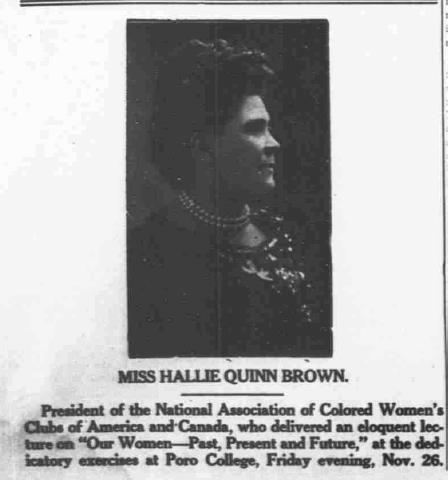
A feature on Hallie Quinn Brown from the December 4, 1920, issue of Poro College’s The Broad Ax newspaper. Courtesy of the Illinois Digital Newspaper Collection.

Brown passed away on September 16, 1949. Her legacy lives on through her many published works, including the 1926 “Homespun Heroines and Other Women of Distinction,” which includes short biographies of sixty African-American women.

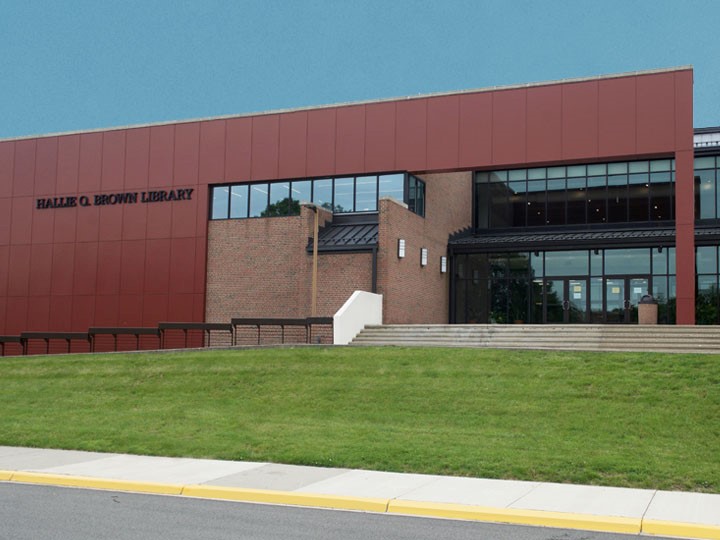
Brown is also the namesake of the Hallie Q. Brown Memorial Library at Central State University in Wilberforce, Ohio and the Hallie Q. Brown Community Center in St. Paul, Minnesota.

Library

The Hallie Q. Brown Memorial Library at Central State University in Wilberforce, Ohio. Image courtesy of Central State University.

2020 marked the centennial of women’s suffrage in the United States. 

March 11, 2020 by Web Editor

The Consumer Brewery

Post Published: March 10, 2020

In celebration of Arlington's 100th Anniversary and New District's small-batch Arlington 100 lager, we are republishing our "Consumer Brewery" post, originally published December 3, 2010.

The small-batch Arlington 100 lager will be available in the New District taproom on Saturday, March 14 beginning at 2 p.m., where County Board Chair Libby Garvey is scheduled to act as honorary barkeep and pull the Arlington 100 tap for the first time.

Arlington's Brewery of Note

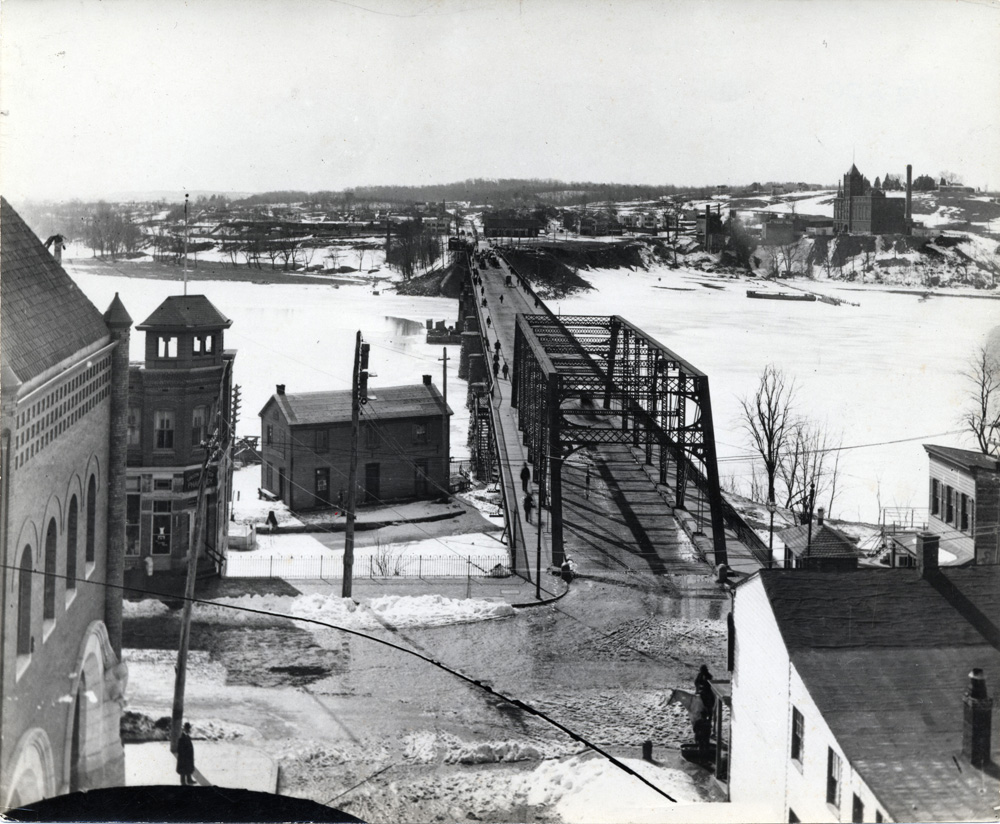
photo of the Alexandria Aqueduct Bridge looking towards Georgetown

View of Rosslyn and the Aqueduct Bridge from Georgetown, c.1900. Consumer brewery and the smokestack is in the upper right section of the image.

Built in 1896 in Rosslyn under the direction of noted local architect Albert Goenner, the Consumer Brewery building was located above the site of the old Aqueduct Bridge. Rosslyn at this time was a notorious area, home of many taverns, gambling establishments and brothels. Local breweries like the Consumer Brewery were important to their communities because they gave tavern owners and other customers another, convenient source of beer, besides relying exclusively on larger commercial breweries.

The building itself was a distinctive red brick structure with turrets on the ends, a clock tower in the center, and a large smokestack at the back. Goenner was also responsible for building the original Arlington County Courthouse.

Around 1904, the brewery business was reorganized and William McGuire became president, changing the name to the Arlington Brewery. It continued operations until 1920 when Prohibition went into effect.

The building subsequently served as a lithographic print shop and warehouse until its demolition in 1958, when the property was used for the construction of a Marriott motel.

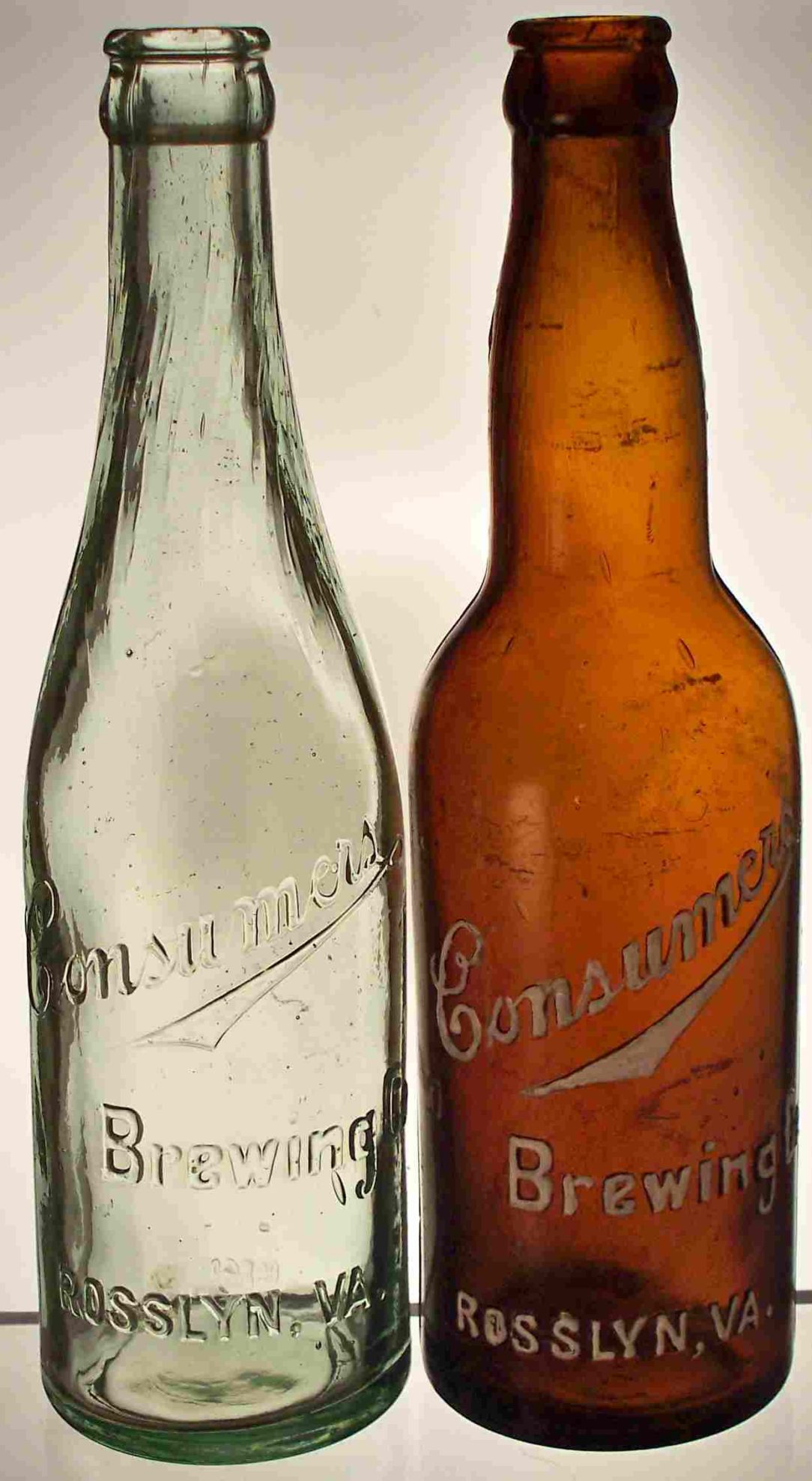
consumers_01

Consumer Brewery bottles

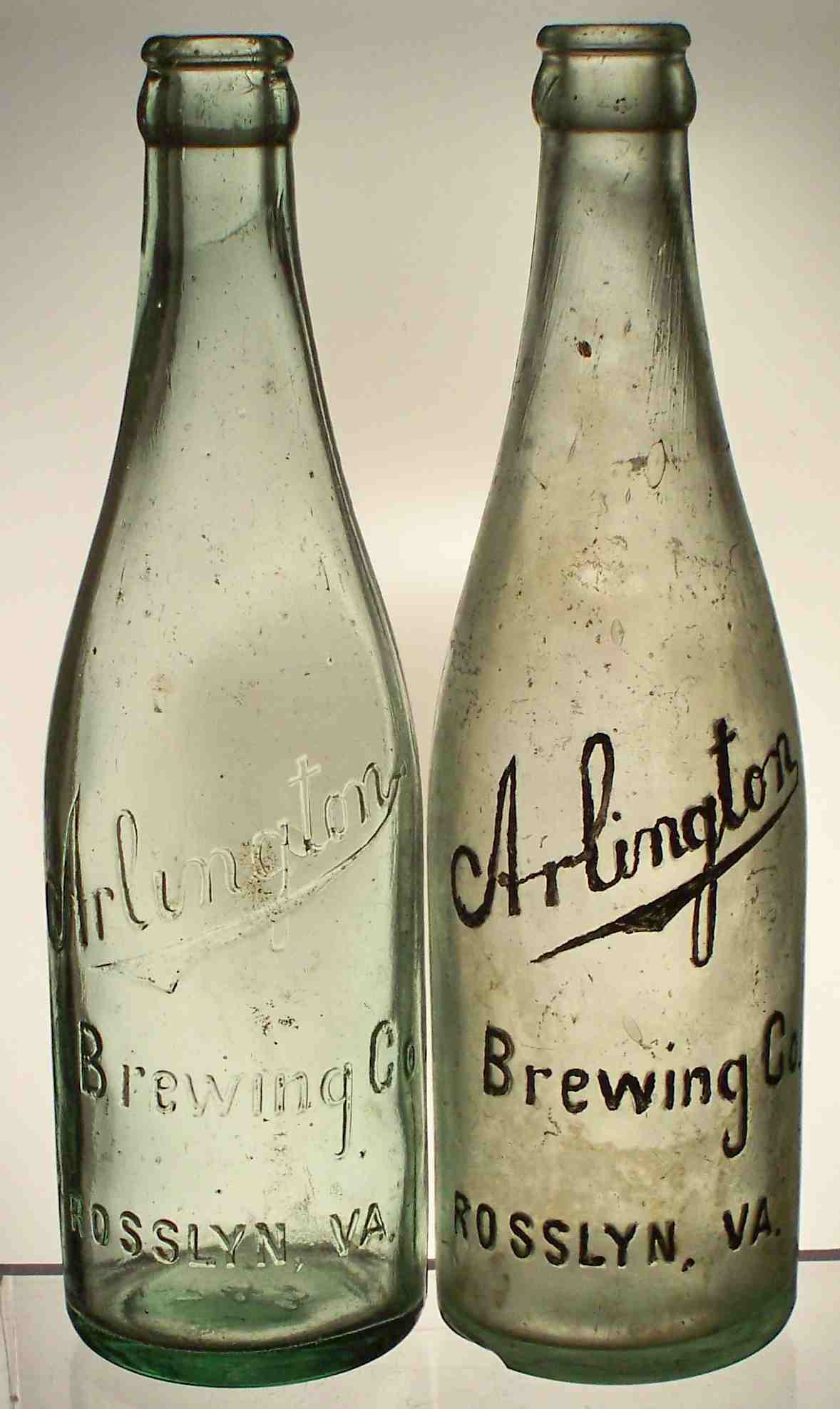
arlington_03

Arlington Brewery bottles

Bottle photos used courtesy of Washington DC Area Beer & Soda Bottles collector, Chosi.

To learn more about Arlington's history, visit the Center for Local History on the first floor of the Central Library.

Do you have a question about this story, or a personal experience to share? 

Use this form to send a message to the Center for Local History.

Center For Local History - Blog Post Message Form

Do you have a question about this story, or a personal experience to share? Use this form to send a message to the Center for Local History.

"*" indicates required fields

This field is for validation purposes and should be left unchanged.

Share Your Story

March 10, 2020 by Web Editor

Oral History: Bringing the Metro to Arlington

Post Published: March 4, 2020

Interview with Roye Lowry

The arrival of the Metrorail in 1977 forever changed the landscape of Arlington, shaping the region for decades to come.

Arlington Voices the Oral History Collection

Oral histories are used to understand historical events, actors, and movements from the point of view of real people’s personal experiences.

In 2010, Arlington County released the documentary, “Arlington County’s Smart Growth Journey." It focused on the development of Arlington via the Metro system and featured interviews with people involved in this historic growth period. In this interview, narrator Roye Lowry details the trials and tribulations of the landmark Metro project, some of which are featured in the Smart Growth documentary.

Lowry served on Arlington’s County Board from 1962-1965. During that time he helped lay the groundwork for the construction of the Northern Virginia Metro system and related County development.

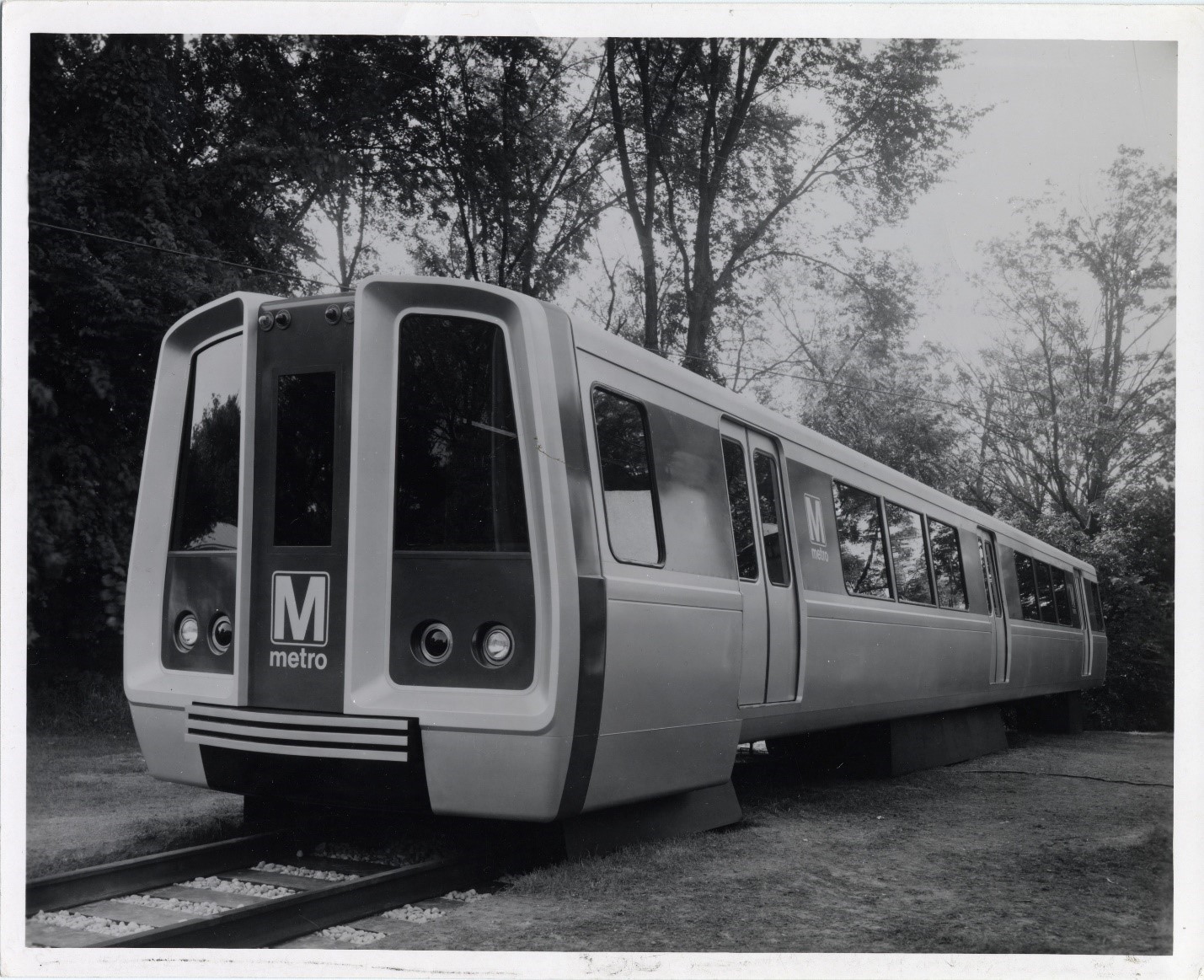
Metro 1

Metrorail car, 1969, WMATA photo.

Narrator:  Roye Lowry
Interviewer: Mary Curtius
Date: December 5, 2007

From the documentary:

[7:35]: The schools were a major interest. But also, the development of Arlington became of interest because we were just building apartments and gas stations almost everywhere.

[14:57]: The first place was Rosslyn. We got to give a lot of credit to the man who was then the head of our highway division, Stoneburner, Mr. Stoneburner because they wanted to run 66 right flat down what would have then been the middle of Rosslyn, which would distort any possibility of development.

[13:27]: When they began to talk Metro plans, we were for it because that is the only way we’re going to escape having highways.

[29:17]: The notion was we tried to unite public purpose and private profit. If you can successfully do that in anything you’ve got a winner.

From the oral history interview:

On the Metrorail coming to Arlington:

Roye Lowry: Arlington was just in the way. People who lived out in the hinterlands, no matter where, they just wanted to get through here to get to Washington. We lived here. We were in the way and we weren’t going to move. We had this notion of preserving a community of approximately 200-210,000 people. That was the notion and it turned out to be pretty good.

Mary Curtius: What was the population back in ‘61, ‘62? Was it anywhere near 200,000?

RL: No, it had to be 160,000 maybe, something like that.

Metro 2

Rosslyn Station construction sign with crane in background.

On development in Arlington:

MC: Do you think you understood at the time. I understand the preservation motive, you wanted to save Arlington from being carved up.

RL: But we’re redeveloping at the same time.

MC: Did you think it would help redevelopment, that Metro would help redevelopment?

RL: We were pretty sure it would. Metro is going to run through Arlington. There are going to be some stations. It’s not just going to run through Arlington. It took much longer than was anticipated to get it going. I remember when there was some kind of ceremony, dedication ceremony or something in Clarendon when the Orange Line. It was a big celebration. I was standing there in the crowd and I saying it’s seven years behind schedule right now when it gets there.

Roye Lowry conducted this interview as part of Arlington County’s “Smart Growth” documentation project, and the full interview can be accessed at the Center for Local History – VA 975.5295 A7243oh series 8, no. 10. Fifteen additional interviews in this series are also available at the Center for Local History, and the full “Arlington County Smart Growth Journey” documentary is available online.

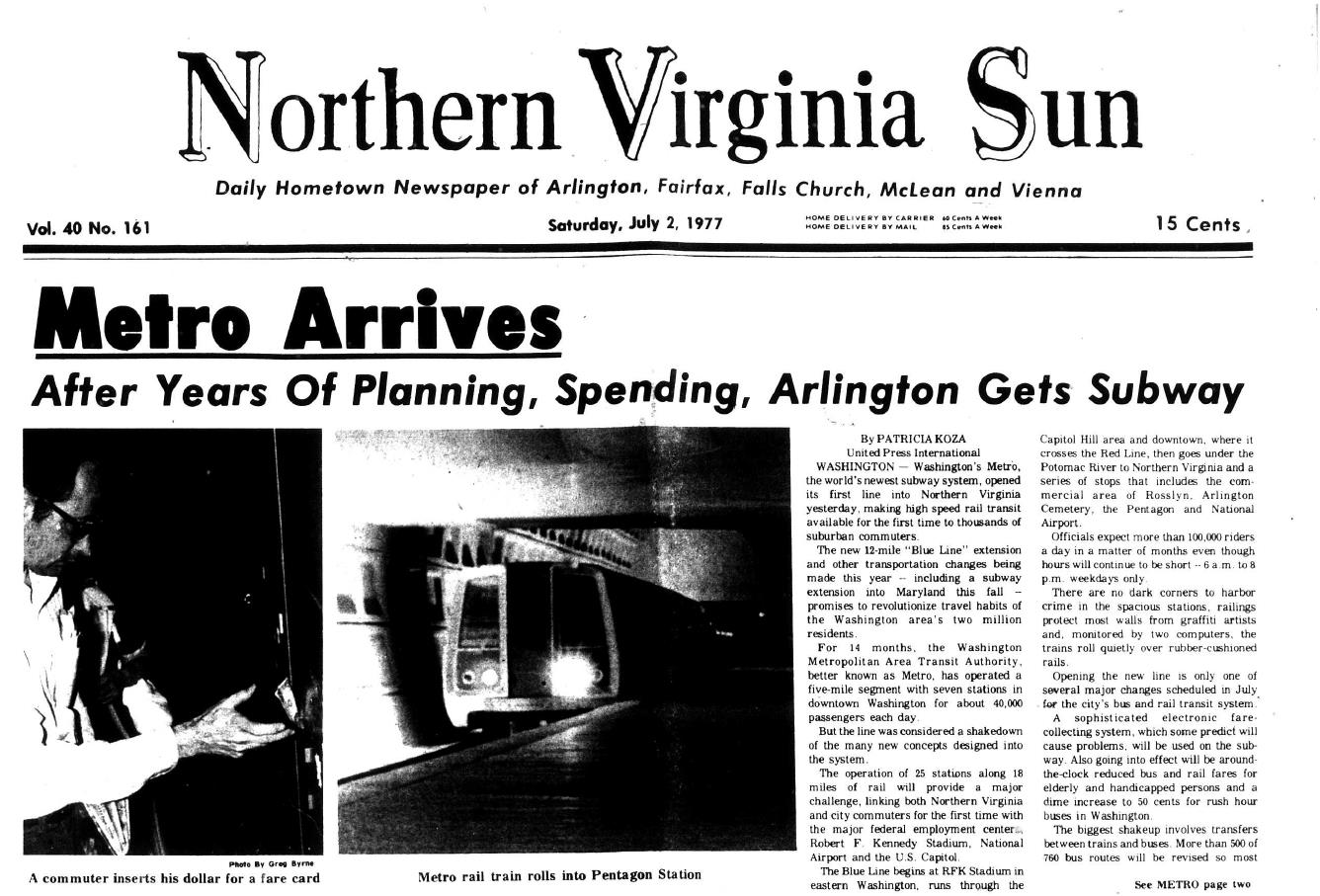
Metro 3

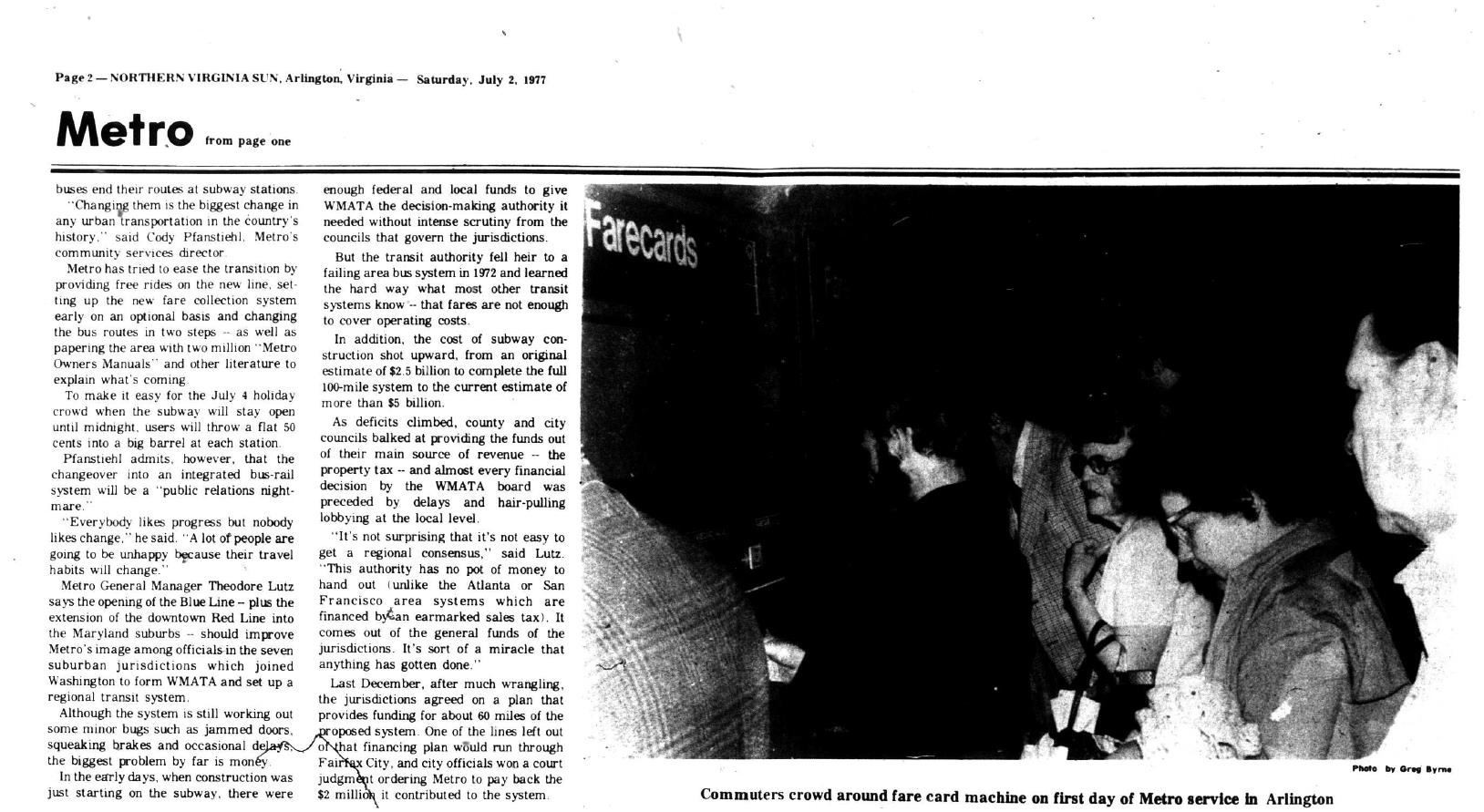
Front page of the Northern Virginia Sun, from July 2, 1977.

Metro 4

Page 2 of the Northern Virginia Sun, from July 2, 1977.

The goal of the Arlington Voices project is to showcase the Center for Local History’s oral history collection in a publicly accessible and shareable way.

The Arlington Public Library began collecting oral histories of long-time residents in the 1970s, and since then the scope of the collection has expanded to capture the diverse voices of Arlington’s community. In 2016, staff members and volunteers recorded many additional hours of interviews, building the collection to 575 catalogued oral histories.

To browse our list of narrators indexed by interview subject, check out our community archive. To read a full transcript of an interview, visit the Center for Local History located at Central Library.

March 4, 2020 by Web Editor

A Fight for Educational Equality: Civil Rights Activist Dorothy Hamm

Post Published: February 27, 2020

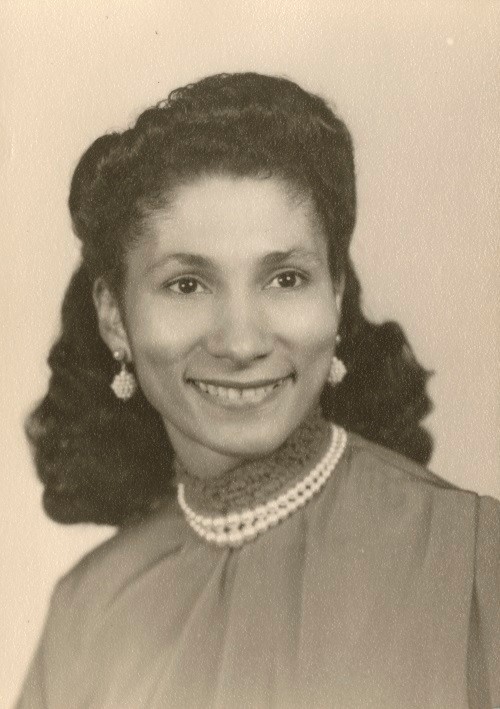
Dorothy Hamm (1919-2004)

Celebrate Black History Month and the 100th anniversary of the 19th Amendment with stories about women who have used their voices and their votes to better their communities and help shape the United States.
For decades, Dorothy Hamm was at the forefront of the civil rights movement in Arlington, working tirelessly to bring equality to the County. She led the charge to successfully desegregate Arlington’s schools and theaters, and was involved in numerous community organizations and leadership positions.

Early Life

Dorothy Hamm was born in 1919 in Caroline County, Virginia, in a family of seven children. The only school that accepted African-American students was six miles away from their home, so in 1926 the family moved to Fairfax County where the children could attend elementary school.

However, Virginia was still a segregated state, and when Hamm graduated from primary school the family found that there was no junior high or high school for African-American students within a thirty-five-mile radius. Instead, because her mother was a government employee, Dorothy was able to attend secondary schools in Washington, D.C. She went on to enroll in Miner Teacher’s College, also in D.C.. She also attended classes at the Cortez Peters School of Business and George Washington University.

Dorothy Hamm Portrait

Image courtesy of Carmela Hamm, from the Library of Virginia.

Hamm married Edward Leslie Hamm, Sr., in 1942 and the couple moved to Arlington in 1950, where they would raise their three children. During this time, Hamm worked in numerous government positions, including as an administrator in the Army Surgeon General’s Office, where she worked until 1963.

The catalyst for Hamm’s involvement in the civil rights movement came in the form of the 1954 Supreme Court decision that ruled segregation illegal in public schools.

Arlington Public Schools

In 1956, Hamm, along with her husband, became plaintiffs in the first civil action case filed to integrate the Arlington Public School system. When no action towards integration had been taken a year after the suit was filed, Hamm and her husband took their oldest son, Edward Leslie Jr., to enroll at Stratford Junior High School. They, and other African-American students who attempted to enroll in the still segregated Arlington schools, were denied admission that year. In September 1957, a few days after the opening of the school year, crosses were burned on the lawns of two Arlington families, and at the Calloway United Methodist Church, a central location for organizers in the effort to desegregate the schools, and a site of workshops held by ministers, lawyers and educators preparing parents and students for school integration.

Over the course of this process, Hamm recalled in interviews many experiences with discrimination and intimidation.

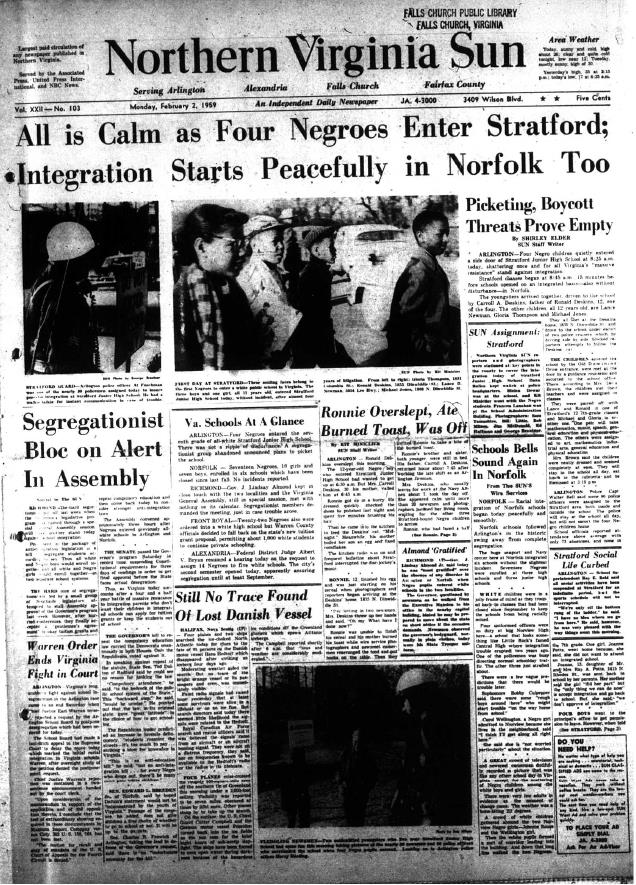
North VA Sun Article

Frontpage of The Northern Virginia Sun, February 2, 1959.

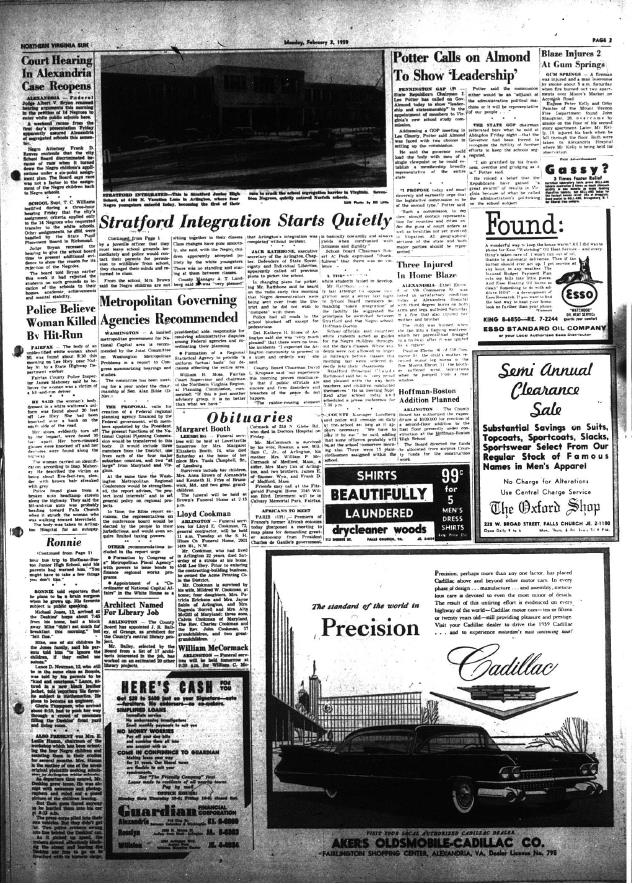
Second page of article Northern Virginia Sun, headline reads "Stratford Integration Starts Quietly."

Page 2 of The Northern Virginia Sun, February 2, 1959.

On January 19, 1959, Senator Harry F. Byrd’s statewide policy of “massive resistance” to the Supreme Court ruling was outlawed by the Virginia Supreme Court.

On February 2, Ronald Deskins, Michael Jones, Lance Newman, and Gloria Thompson were enrolled as the first black students at Stratford Junior High, making Arlington the first county in Virginia to integrate its schools. Hamm’s sons would enter Stratford later that year.

In 1960 Dorothy Hamm was a plaintiff in another case, a court action to eliminate the pupil placement form, which was used to exclusively assign African-American students to certain schools as a means to get around the Supreme Court’s ruling on desegregation.

In 1961, Hamm was again a plaintiff in a court action to integrate the athletic program of the Arlington Public Schools, after Hamm’s son had been barred from participating in Stratford’s wrestling program because of the physical contact between Black and white students. As a result of the court action, discrimination in Arlington athletic programs was declared to be illegal.

Civic Life

In 1963, Hamm was the plaintiff in a civil action case to eliminate the poll tax and remove the race designation from public forms and voting records in Arlington County. (Read "If you Don't Vote, You Don't Count", our story from August 15, 2019, about the history of the poll tax in Arlington County, to learn more.)

The same year, Hamm also became involved in the fight to desegregate Arlington’s theaters. She initiated another civil court suit and helped to organize what would become a year of picketing efforts in protest of segregation. Along with four other protesters, Hamm was arrested for picketing at the Glebe Theater. The theater owner then struck a deal with the protesters that if they ceased picketing for thirty days, he would admit African-American patrons to the theater. This was successful, and Hamm and her son Edward Leslie Jr., became the first African-American customers to be admitted.

Hamm and her husband also participated in the 1963 March on Washington, helping to organize bus transportation to take Arlington residents into the city to take part in the March. In 1968, they also participated in the Poor People’s March on Washington, and helped to provide food and housing for fellow marchers.

Hamm continued her political activism as a delegate to Arlington County and Virginia State conventions in 1964 and was appointed Assistant Registrar and Chief Election Officer in Arlington’s Woodlawn precinct. She also worked with the Congress on Racial Equality (CORE) as they organized in Arlington and served as an officer of elections in Arlington for more than twenty-seven years.

Writing

Dorothy Hamm was also known for her work as a poet and playwright.

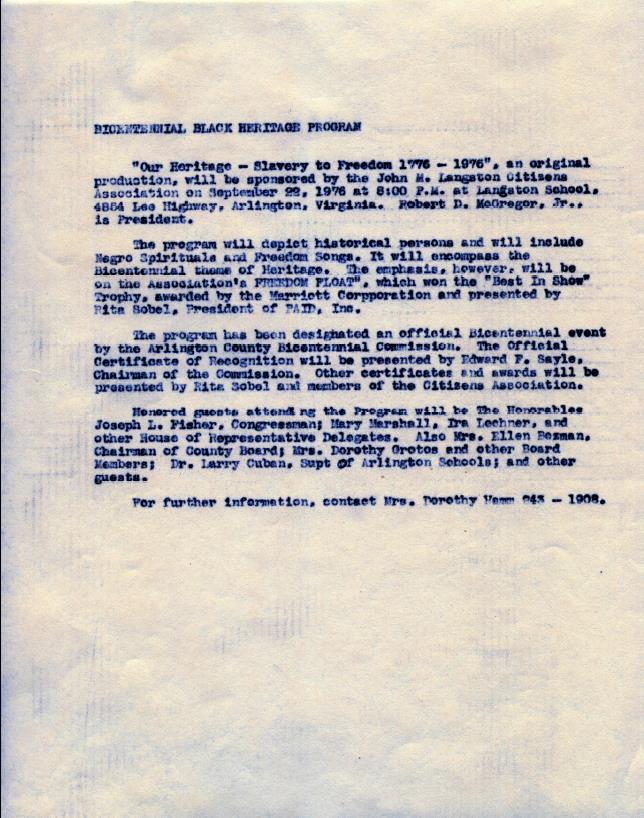
In 1976, her play “Our Heritage: Slavery to Freedom 1776-1976” was designated as an official bicentennial event in Arlington County. In 1984, she wrote and directed the play “Our Struggle for Equality,” which was performed by the drama club of Calloway United Methodist Church and later developed into a documentary for television.

Play Description

Description of Dorothy Hamm’s 1976 play “Our Heritage: Slavery to Freedom 1776-1976,” which was performed as part of Arlington’s bicentennial celebrations. Part of the Dorothy Hamm Papers.

Legacy

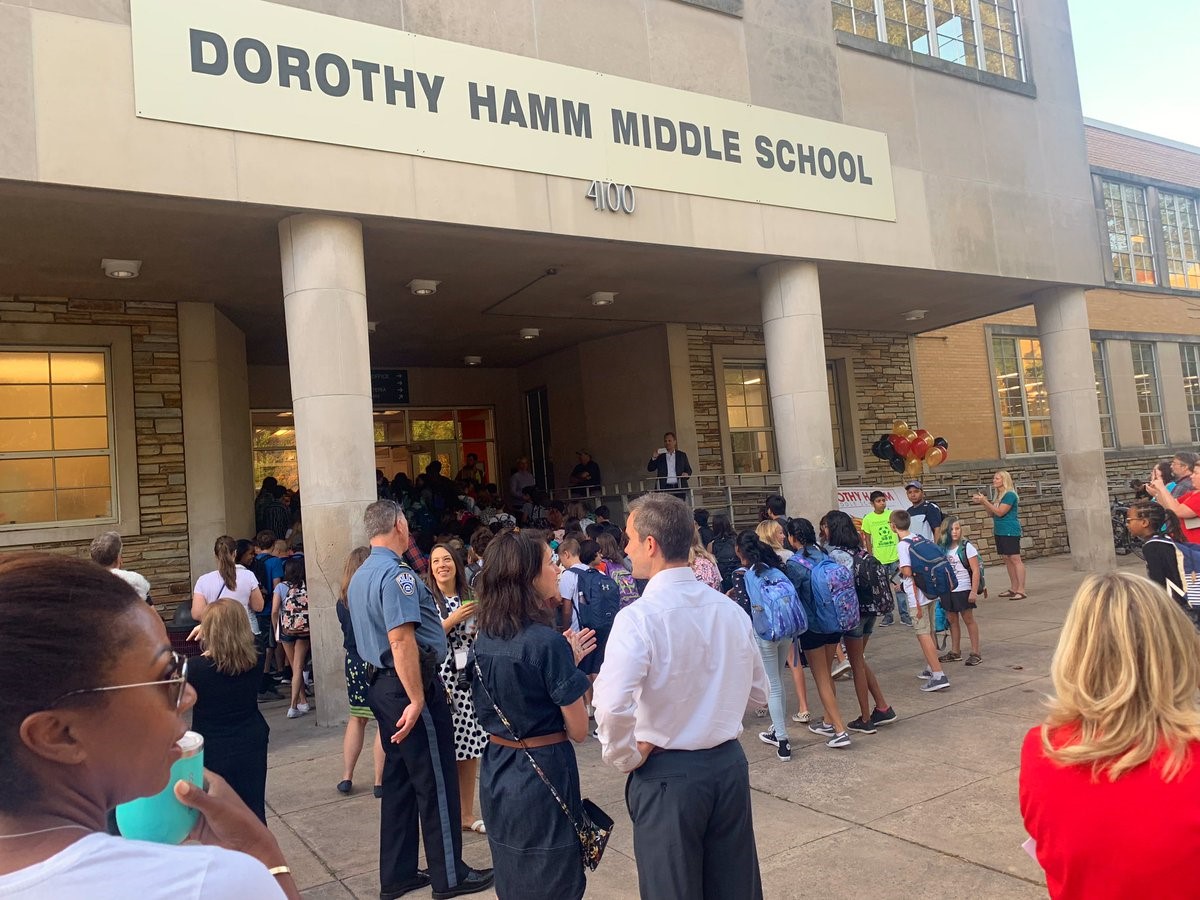
Dorothy Hamm died in 2004, but her legacy and mark on Arlington live on. On March 1, 2002, the Virginia Legislature’s House Joint Resolution No. 458 was enacted commending Hamm and her efforts in the civil rights movement.  And in 2019, the Dorothy Hamm Middle School began its first year named in her honor (in the building that formerly was the site of Stratford Junior High and the H-B Woodlawn Secondary Program).

In her autobiography, Hamm wrote about her response to the question of why she fought so hard for equal education and other equal opportunities. She writes:

“Even now, I am asked the same questions. There are many reasons, but one of the most important was my determination to answer the “Why can’t I?” question raised by our eight-year-old son, Bernard Caldwell Hamm. … Finally, I had to truthfully answer his ‘Why can’t I?’ question and explain to him that Stratford was for White children and he could not attend because he was a colored boy. I knew then that with the help of others, I had to fight to help change the ‘Separate but Equal Laws.’”

Dorothy Hamm Middle School

Dorothy Hamm Middle School, which was named in Hamm’s honor in 2019. Image courtesy of Arlington Public Schools.

Learn More

“Notable Women of Arlington: Third Series,” published by the Arlington County Commission on the Status of Women.

“Integration of Arlington County Schools: My Story,” by Dorothy Hamm.

Interview Dorothy M. Hamm, conducted in 1986, VA 975.5295 A7243oh ser.3 no.58.

The Dorothy M. Hamm Papers, 1937-1977, VA/ARCH RG 349.

February 27, 2020 by Web Editor

Unbought and Unbossed: U.S. Representative Shirley Chisholm

Post Published: February 20, 2020

Shirley Anita St. Hill Chisholm (1924-2005)

Celebrate Black History Month and the 100th anniversary of the 19th Amendment with stories about women who have used their voices and their votes to better their communities and help shape the United States.
In 1968, Shirley Chisholm made history as the first African-American woman to be elected to Congress. She also broke barriers as the first woman to seek the Democratic presidential nomination in 1972.

Throughout her life, Shirley Chisholm became one of the most influential and iconic policymakers and activists in the United States, and a tireless advocate for women and minority groups.

Shirley Chisholm was born in 1924 in Brooklyn, New York, to immigrant parents from Guyana and Barbados. She graduated cum laude from Brooklyn College in 1946, where she was also a top member of the debate team. After college, she worked as a nursery school teacher and went on to receive a master’s degree from Columbia University in early childhood education. She continued to excel in her field and later served as a consultant to the New York City Division of Day Care.

Shirley Chisholm Black Caucus

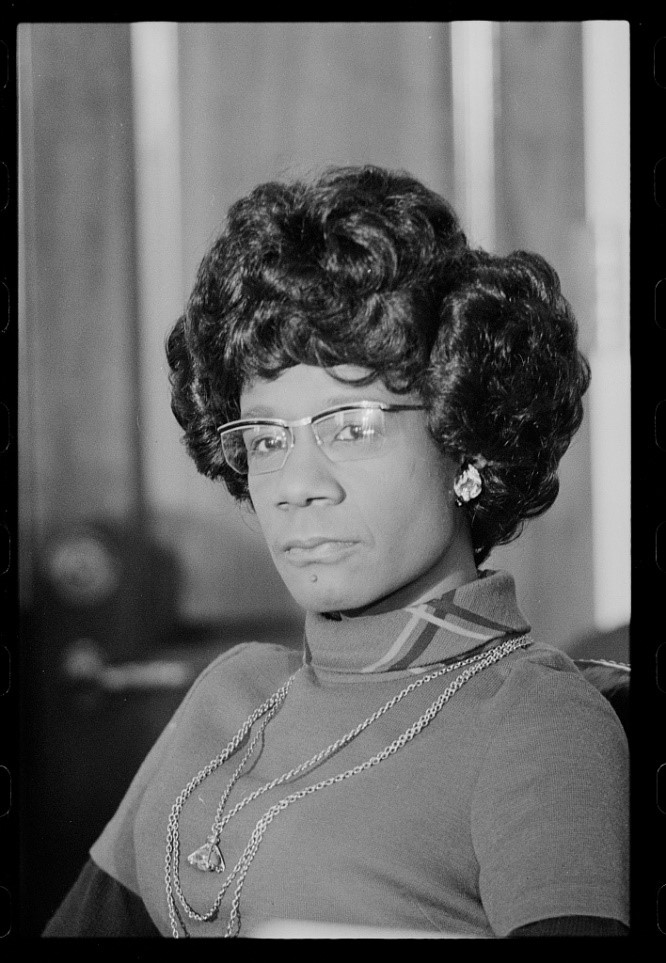
Shirley Chisholm at the Black Caucus State of the Union event, 1973. Courtesy of the Library of Congress

As her career progressed, Chisholm was also politically active and participated in many groups that sought to combat racial and gender inequality, including the League of Women Voters, the NAACP, the Urban League, and the Democratic Party Club. In 1964, she was elected to the New York State Legislature, making her the second African-American person to do so. Four years later, in 1968, she ran for and was elected to Congress. After her historic win, considered an upset in her district, she aptly declared: “Just wait, there may be some fireworks.”

Chisholm’s time in Congress was one of prolific work and steadfast determination, marked by her slogan “unbought and unbossed.” Nicknamed “Fighting Shirley,” she focused on causes including racial and gender equality, helping the poor, and putting an end to the Vietnam War. During her time in office, she introduced more than 50 pieces of legislation and continued to achieve milestones, including becoming the first Black woman and the second woman ever to serve on the House Rules Committee in 1977. Chisholm was also one of the co-founders of the National Women’s Political Caucus, which sought to broaden women’s political participation.

Congresswoman Shirley Chisholm

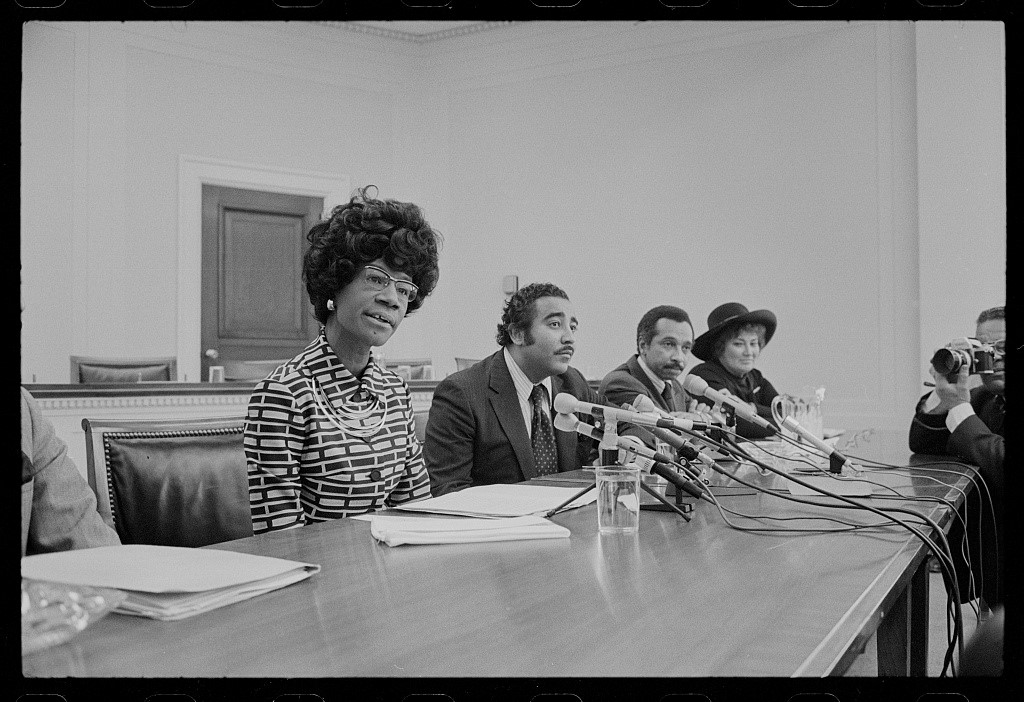
Congresswoman Shirley Chisholm announces her candidacy for the presidential nomination, January 25, 1972. L-R, Shirley Chisholm, Parren Mitchell, Charles Rangel, Bella Abzug. Courtesy of the Library of Congress.

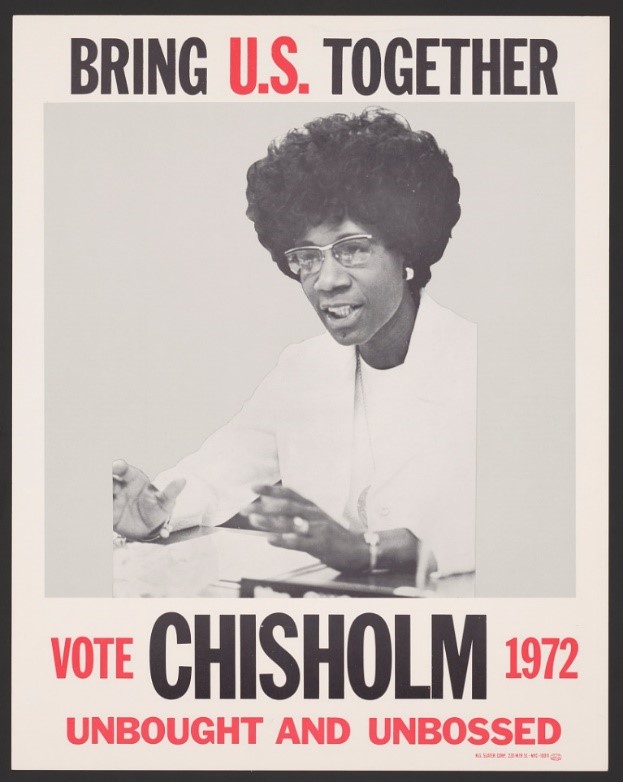
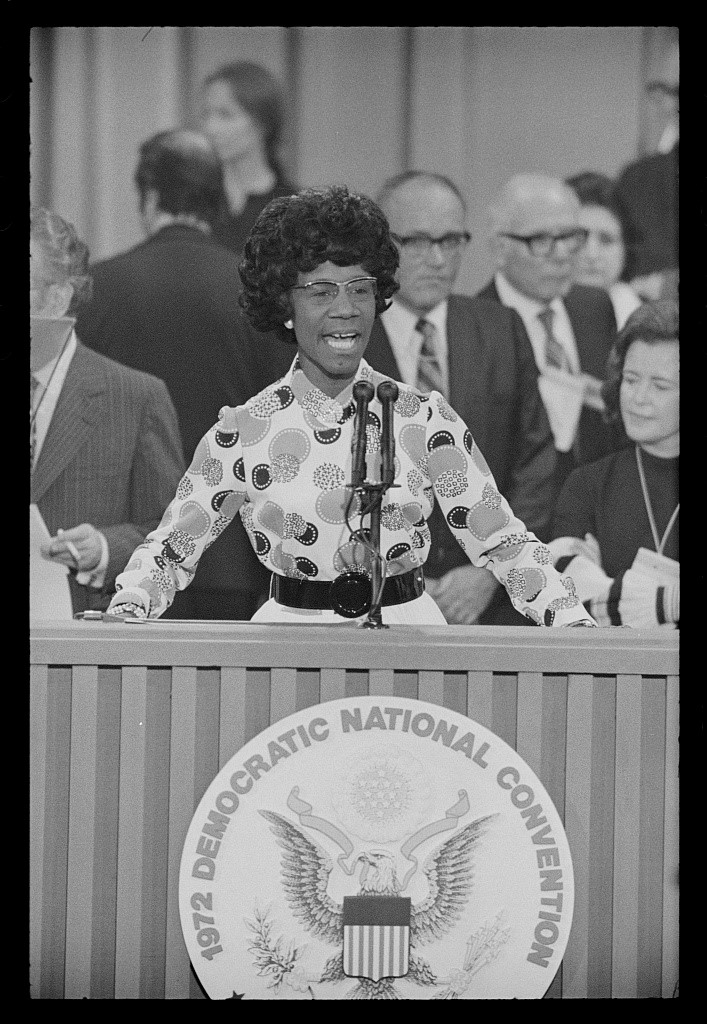
In 1972, Chisholm trailblazed into yet another region of the political realm when she sought the Democratic Party’s presidential nomination, the first woman to do so. Due to discrimination, numerous obstacles were placed in her way: she received little establishment support, and was blocked from taking part in televised primary debates, only making one speech after seeking legal intervention. And while the nomination ultimately went to George McGovern, Chisholm entered 12 primaries and was able to gain 10 percent of the total vote.

Presidential Campaign Poster

Shirley Chisholm presidential campaign poster, 1972. Courtesy of the Library of Congress.

DNC Speech

Shirley Chisholm speaks at the third session of the Democratic National Convention in Miami Beach, July 12, 1972. Courtesy of the Library of Congress.

Chisholm retired from Congress in 1983 but continued to be politically active, co-founding the National Political Congress of Black Women and teaching at Mount Holyoke College.

After a life on the forefront of trailblazing politics, she reflected on her life:

“I’d like them to say that Shirley Chisholm had guts. That’s how I’d like to be remembered.”

Learn more about Shirley Chisholm in her autobiography, "Unbought and Unbossed," available at the Library.

February 20, 2020 by Web Editor

Lomax Church and Library Celebrate Records Acquisition

Post Published: February 18, 2020

Donation Received from one of Arlington's Oldest Black Churches

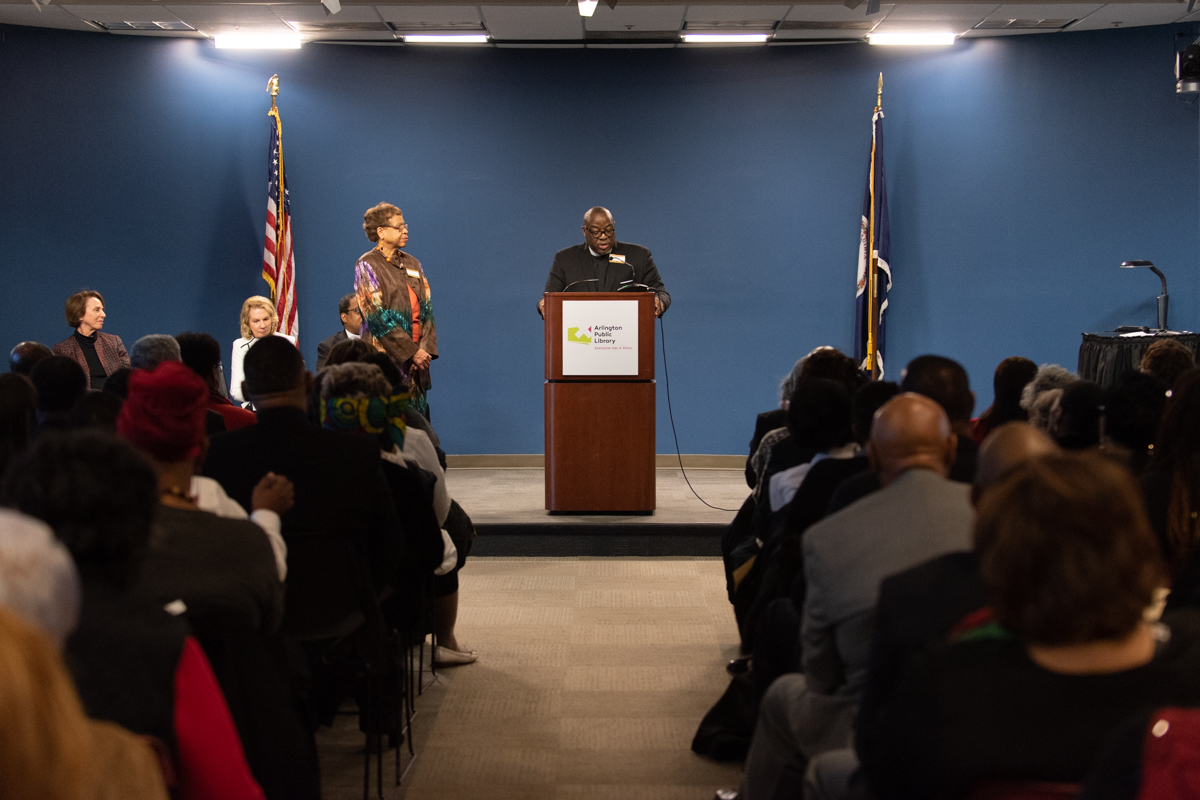
On February 9, 2020, Arlington's Lomax A.M.E. Zion Church and the Center for Local History celebrated the donation of the Church's archival records to the Center's Community Archives. 
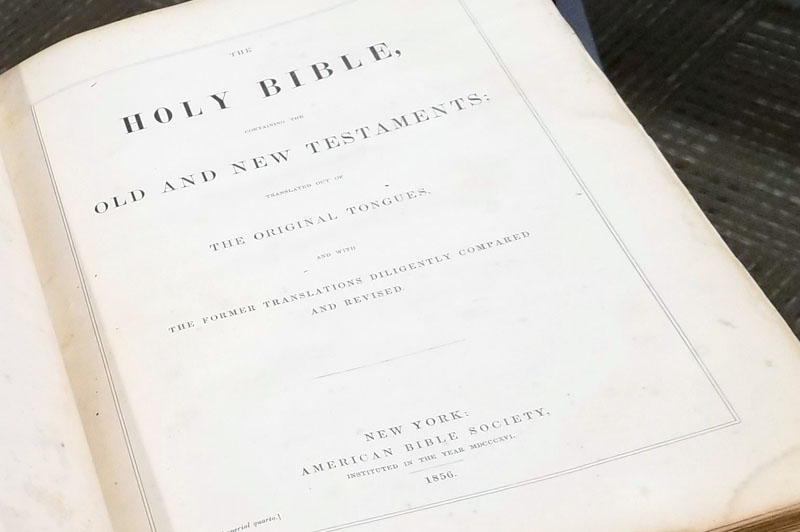
The donation included a large 19th century pulpit bible, printed in 1856.

Now members of the community and beyond can research and discover more about the history of one of Arlington's oldest African-American churches.

Photo of Lomax Bible

19th-century pulpit Bible, currently on display at the Center for Local History.

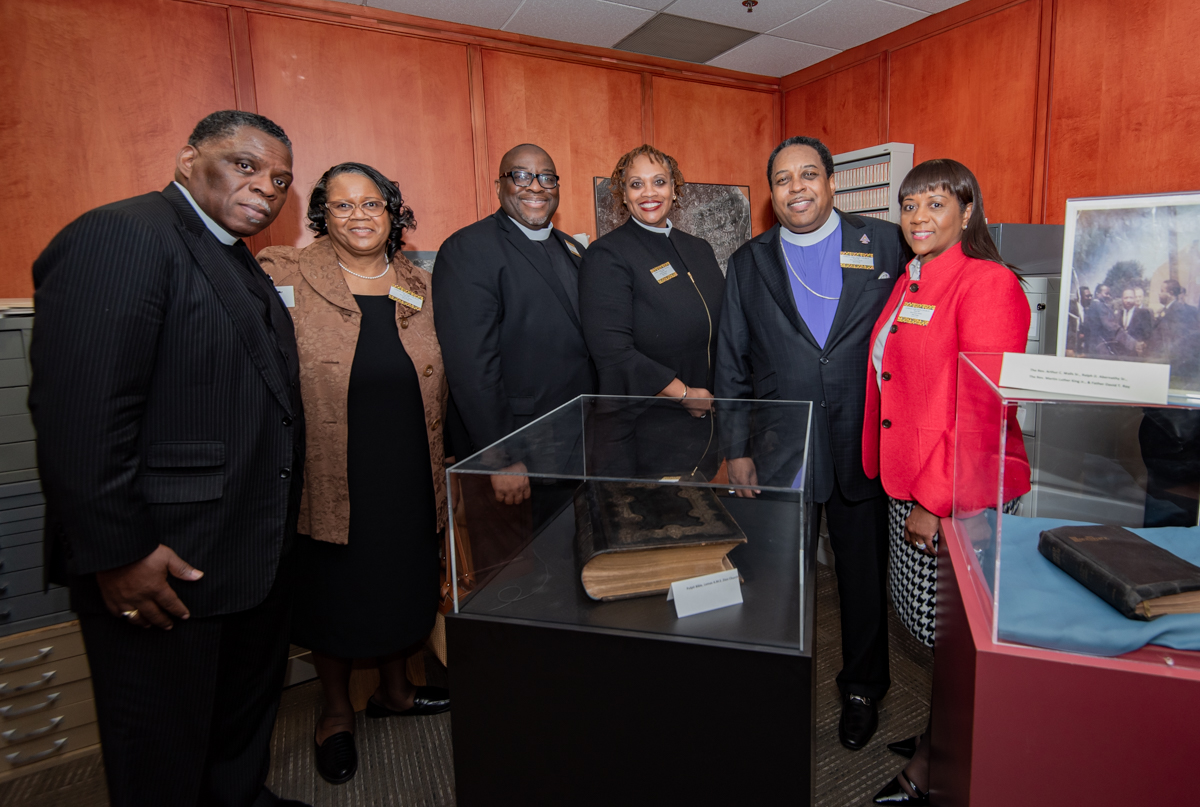
JBG_0656

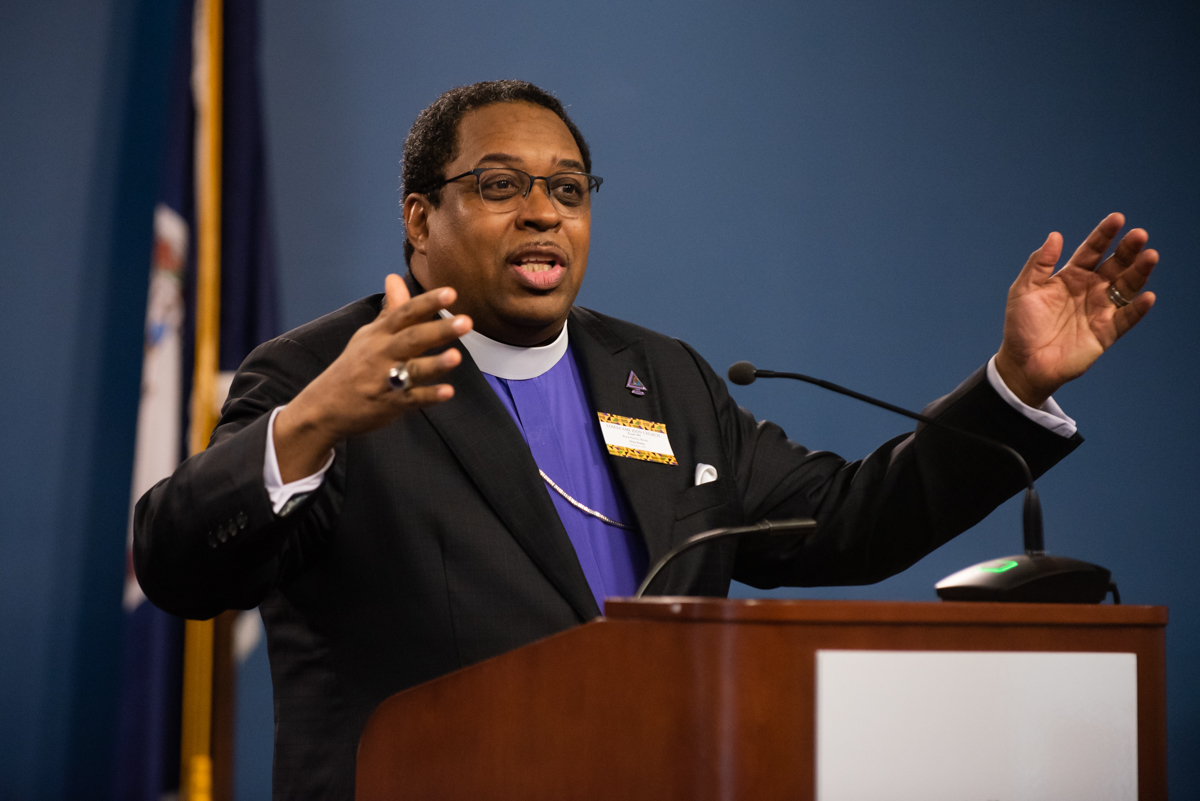
From Left: Arlington County Board Member Matt de Ferranti, Reverend Dr. Adrian V. Nelson, Arlington County Board Chairwoman Libby Garvey, Unidentified Church Member, Center for Local History Manager Judith Knudsen, Lomax Archives Chairwoman Brenda Cox, Unidentified Church Member, Bishop W. Darin Moore, Virtual Library Services Manager Stacia Aho, and Unidentified Church Members.

First established by freed slaves on June 12, 1866, in Freedman's Village, Lomax was originally named Wesley Zion Church under the leadership of Reverend Richard Thompkins. In 1874, the congregation decided to purchase land for a permanent home at an original price of $75 with a down payment of $5. In 1876, when T.H. Lomax was elected Bishop and assigned to the Lomax District, the name was changed to Lomax A.M.E. Zion Church.

In the days leading up to the March on Washington in August of 1963, civil-rights activists from around the country were housed in the Lomax Fellowship Hall, and the Reverend Dr. Martin Luther King Jr. and Reverend Ralph Abernathy spoke in the church parking lot prior to this monumental event. A photo of Reverend Dr. Martin Luther King Jr. and Reverend Ralph Abernathy speaking with members of the Lomax Church can be viewed at the Center for Local History.

JBG_0677

Reverend Dr. Adrian V. Nelson (third from left) and Bishop W. Darin Moore (second from right) with members of the Lomax Church in front of 19th-century pulpit Bible on display at the Center for Local History.

Lmaz Bible, frontspiece

19th-century pulpit Bible, printed in 1856, donated by Arlington's Lomax A.M.E. Zion Church; currently on display at the Center for Local History.

Center for Local History manager Judith Knudsen and her team worked with Lomax Church Archives Committee and its Chairwoman, Brenda Cox, to prepare and move materials for the acquisition. This donation was years in the making and both the Center for Local History and the church's Archives Committee spent countless hours to facilitate the exchange of materials.

Over 100 members of the Lomax Church, as well as Deputy County Manager Shannon Flanagan-Watson and three County Board Members: Arlington County Board Chairwoman Libby Garvey; Arlington County Board Member Matt de Ferranti; and Arlington County Board Member Christian Dorsey attended the ceremony.

Judith Knudsen and Libby Garvey both gave introductions before Reverend Dr. Adrian V. Nelson and Bishop W. Darin Moore each delivered a speech to those in attendance, highlighting the history of the Church and the significance of the archival donation.

DSC_7828

Reverend Dr. Adrian V. Nelson

DSC_7878

Bishop W. Darin Moore

After the ceremony, a reception was held in the Center for Local History, where food and refreshments were served, courtesy of the Friends of the Arlington Public Library.

The Center for Local History invites the Arlington Community to play an active role in documenting their history by donating physical and/or digital materials for the Center for Local History’s permanent collection.

Learn more about the donation process, and how to make a donation.

February 18, 2020 by Web Editor

  • « Go to Previous Page
  • Page 1
  • Interim pages omitted …
  • Page 8
  • Page 9
  • Page 10
  • Page 11
  • Page 12
  • Interim pages omitted …
  • Page 40
  • Go to Next Page »

Footer

About Us

  • Mission & Vision
  • Charlie Clark Center for Local History
  • News Room
  • Get Email Updates

Administration

  • Policies
  • Library Staff
  • Job Opportunities
  • Propose a Program or Partnership

Support Your Library

  • Friends of the Library
  • Giving Opportunities
  • Donating Materials
  • Volunteer Opportunities

Our Mission

We champion the power of stories, information and ideas.

We create space for culture and connection.

We embrace inclusion and diverse points of view.


Download the Library App

Download the Library App

Arlington County | Terms & Conditions | Accessibility | Site Map
· Copyright © 2026 Arlington County Government ·