• Skip to primary navigation
  • Skip to main content
  • Skip to footer

Alert

Holiday: All library locations closed Sunday, April 5 for Easter. More Info

Alert

Update: Elevator outages, maintenance and upgrades at Central Library More Info

Home - Arlington County Virginia - Logo
MENUMENU
  • Join Now
  • My Account
    • Login
    • My Checkouts
    • My Holds
    • My Lists
    • My Reading History
    • About Borrowing
    • About Holds
    • About My Account
  • Hours & Locations
    • All Hours & Locations
    • Holiday Closings
  • News
    • Library News
    • Director's Blog
    • Get Email Updates
  • Contact Us

Arlington Public Library

MENUMENU
  • Search
  • Collections
  • Library Services
  • Events
  • Community Engagement
  • Join Now
  • My Account
    • Login
    • About Borrowing
    • About Holds
    • About My Account
  • Hours & Locations
    • All Hours & Locations
    • Holiday Closings
  • News
    • Library Blog
    • Get Email Updates
  • Contact Us

Web Editor

This Week in 19th Amendment History: The Death of Sojourner Truth

Post Published: November 27, 2019

November 26, 1883

Celebrate the 100th anniversary of the 19th Amendment with stories about the people and events that led to the passage of women’s suffrage in the United States.

Born into slavery as Isabella Baumfree (sometimes written as Bomfree) in 1797, Truth was enslaved in Dutch-speaking Ulster County, New York, where she was bought and sold four times throughout her life. In 1827, she escaped with her daughter, Sophia after her master failed to uphold the recently-passed New York Anti-Slavery law, and Truth and her daughter were taken in by an abolitionist family who bought their freedom.

Soon after her escape, Truth sued for the freedom of her five-year-old son Peter, who had been sold illegally under the New York law and transported to Alabama. Truth won the case and secured the return of her son, making her among the first black women to successfully sue a white man in court.
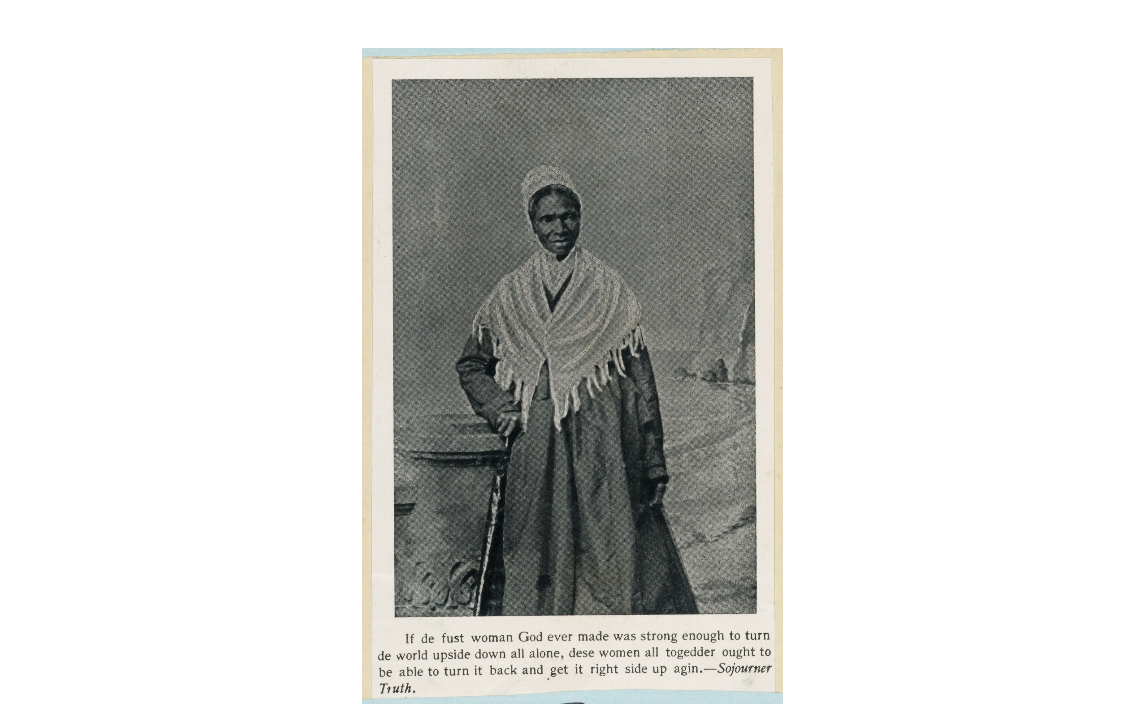
Sojouner Truth 4

Photo of Sojourner Truth. Caption on photo reads: "If de fust woman God ever made was strong enough to turn de world upside down all alone, dese women all togedder ought to be able to turn it back and get it right side up agin." Library of Congress Prints and Photographs Division.

Beginning in 1828, Truth lived in New York City where she joined in the religious revival movement that came to be known as the Second Great Awakening. She became a Christian and worked in a Methodist perfectionist commune which stressed the belief of the equality of all human beings.

Truth renamed herself on June 1, 1843 - the day of Pentecost, which commemorates the Holy Spirit filling Jesus’ disciples - and was christened “Sojourner Truth.”

Working as a traveling preacher, Truth met William Lloyd Garrison and Frederick Douglass, prominent members of the abolitionist movement. She also met suffragists Elizabeth Cady Stanton and Susan B. Anthony over the course of her travels. Later in life, however, Truth distanced herself from the mainstream suffrage movement because activists such as Anthony did not support granting the right to vote to African Americans.
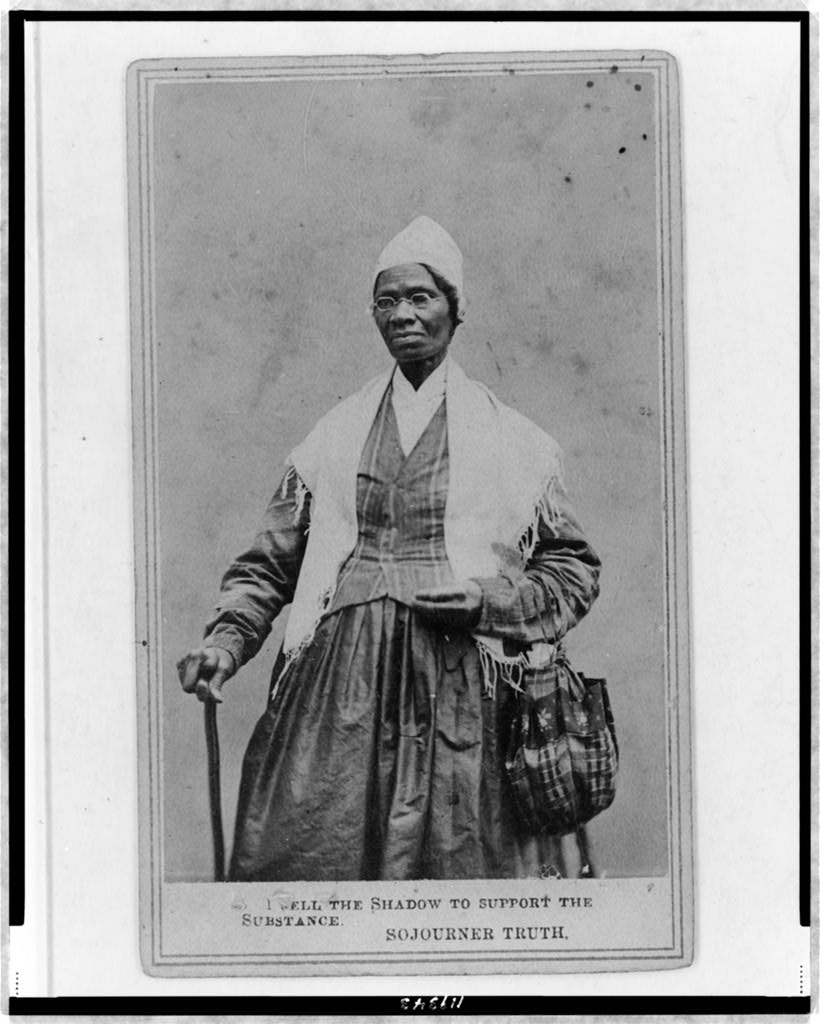
Sojouner Truth 2

Portrait of Sojourner Truth. Caption on portrait reads: "I sell the shadow to support the substance." Library of Congress Prints and Photographs Division.

Truth rose to national prominence both for her speeches and published works. In 1850, she published her autobiography, “The Narrative of Sojourner Truth,” which reached widespread acclaim and readership. In 1851, Truth embarked on a lecture tour that included a stop at the National Women’s Convention (the second of its kind) in Akron, Ohio, where she delivered what would become the famous “Ain’t I a Woman?” speech.

The speech is best known in its 1863 reproduction by a white abolitionist named Frances Dana Barker Gage, which introduced the line “Ain’t I a Woman?” (originally written as “Ar’n’t I a woman?”). However, this iteration was an extreme reworking of Truth’s original speech, with Gage changing most of Truth’s words and falsely attributing a southern slave dialect. The most authentic version of the speech was published soon after its delivery by Rev. Marius Robinson in the Anti-Slavery Bugle and does not include its famous titular line. From that original 1851 transcript:

“May I say a few words? I want to say a few words about this matter. I am a woman’s rights. I have as much muscle as any man and can do as much work as any man. I have plowed and reaped and husked and chopped and mowed, and can any man do more than that? I have heard much about the sexes being equal; I can carry as much as any man, and can eat as much too, if I can get it. I am as strong as any man that is now. As for intellect, all I can say is, if women have a pint and man a quart - why can’t she have her little pint full? You need not be afraid to give us our rights for fear we will take too much, for we can’t take more than our pint’ll hold.”
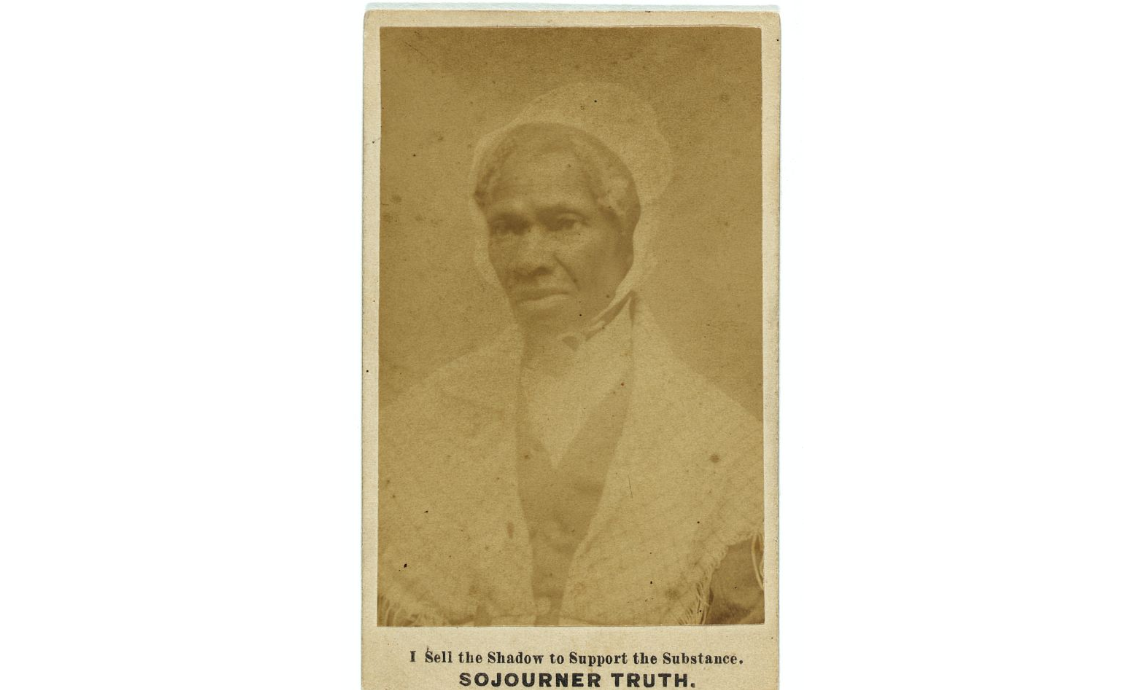
Sojouner Truth 3

Portrait of Sojourner Truth. Caption on portrait says: "I sell the shadow to support the substance." Library of Congress Prints and Photographs Division.

In 1857, Truth moved to Battle Creek, Michigan, where she helped escaped slaves cross to the North via the Underground Railroad. When the Civil War commenced, she worked to recruit African American men to fight in the Union Army and collected money and supplies for the troops. Among those who joined the cause was Truth’s grandson, James Caldwell, who was taken prisoner as a member of the Massachusetts Infantry Regiment and spent years in a few prisoner of war camps.

During the Civil War, she continued to lobby against segregation, and spent time in Washington, D.C. In 1864, following a violent incident she faced on a D.C. streetcar, Truth met with Abraham Lincoln to challenge the segregation of streetcars. She also counseled African American soldiers, taught former slaves domestic skills, and sought out jobs for African Americans who were left homeless and without jobs. In a letter written in February 1864, Truth commented on a visit to freedmen during the war: “It is good to live in it & behold the shackles fall from the manacled limbs. Oh if I were ten years younger I would go down with these soldiers here & be the Mother of the Regiment!”
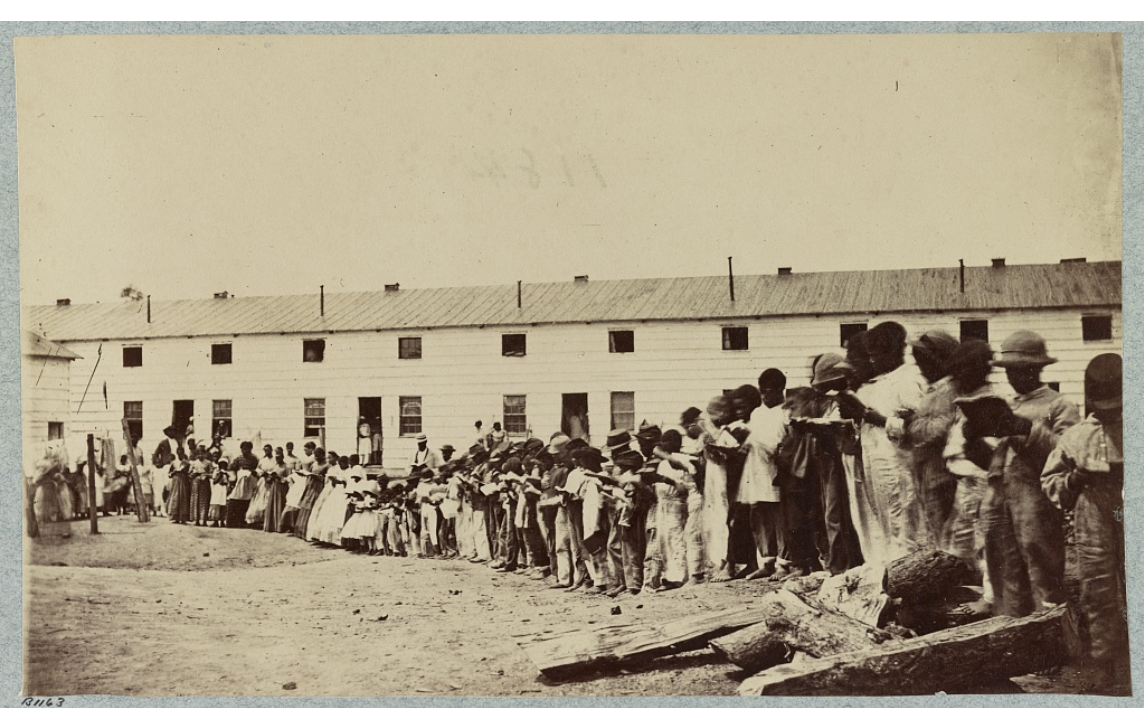
Freedmen's Village

The photograph shows African-American adults and children reading books in front of their barracks. Library of Congress Prints and Photographs Division

In 1865, Truth accepted a position with the National Relief Association at Freedmen’s Village in Arlington Heights. Situated at the intersection between Columbia Pike and South Joyce Street, this stretch of land was a settlement for former slaves between 1863 and 1900. Here, Truth served as “counselor to the freed people,” and provided support at the Freedmen’s Bureau, where she collected provisions for patients in the Freedmen’s Hospital. Truth also advocated securing land grants from the government to former slaves, though these calls largely went unanswered by Congress.

Truth spent her final years in Michigan. She continued to speak on and advocate for the issues of women’s rights, universal suffrage, and prison reform until her death in 1883.

Learn more in “The Narrative of Sojourner Truth,” available at the Library and online.

2020 marked the centennial of women’s suffrage in the United States. 
November 27, 2019 by Web Editor

The Library Director’s 2019 Playlist

Post Published: November 25, 2019

Forever "Too Cool for Yule"

Years ago I began creating a holiday playlist each November, known variously as “Don’t Touch that Dial,” the “Too Cool for Yule” blog, and more simply, the Director’s Playlist.

Each playlist is a collection of seasonal tunes -- from schlock (hopefully not too much of that) to rock and everything in between. By now we have managed to amass quite an eclectic set of “mix tapes.” This year is no exception.

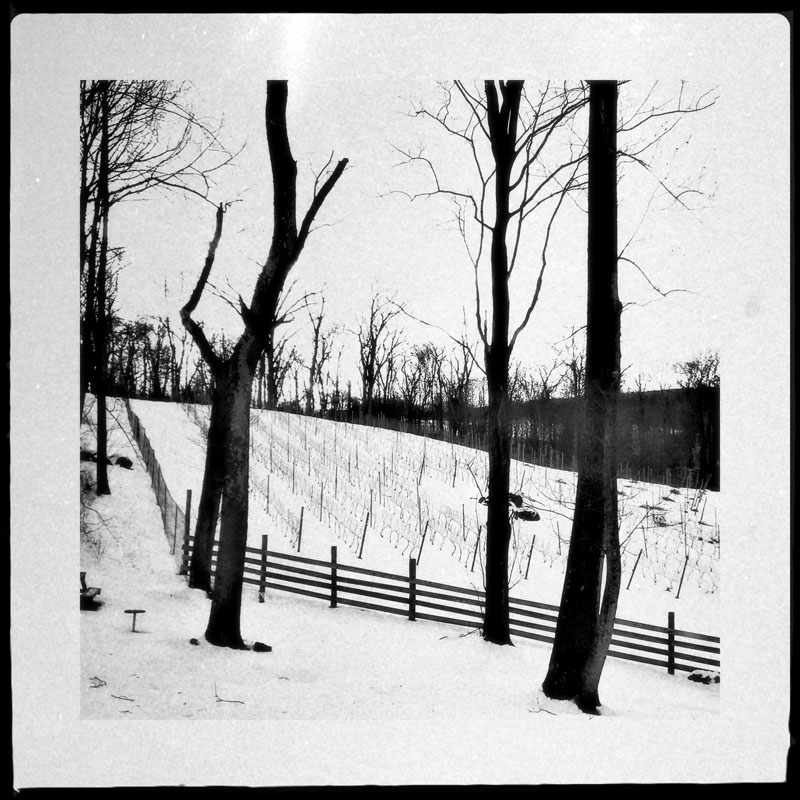
bare trees on a snowy hill next to a wood fence in winter

Before you start clicking and singing along, however, a couple of explanatory notes (pun intended) are in order:

Peter Tork (born Torkelson in 1942 in Washington, DC) died earlier this year.  Known as the keyboardist and bass player of The Monkees, Tork, along with Mickey Dolenz, Michael Nesmith and Davy Jones, formed the mid-sixties American answer to the Beatles and over the course of their career sold over 75 million records worldwide.  Not bad for a made for TV band (track 5).

Soul singer Roberta Flack (track 13) was raised in Arlington, and rose to prominence singing upstairs at Mr. Henry’s, the Capitol Hill bar and restaurant.  Established in 1966 by Henry Jaffe, within two years Jaffe hired a local school teacher to sing in the pub. “She told me that if I could give her work three nights a week, she could quit teaching,” Jaffe later recalled.  The singer, none other than Roberta Flack, would go on to win four Grammys for the songs “Killing Me Softly” and “The First Time Ever I Saw Your Face.”

I’ve closed this playlist as I did last year’s list with a song by Bob Dylan whose lyrics are as relevant today as they were when he wrote them. Released as the title track of his 1964 album of the same name, “The Times they are a Changin'” was Dylan’s attempt to create an anthem of change. Read through the lyrics and see if you agree.

The line it is drawn
The curse it is cast
The slow one now
Will later be fast
As the present now
Will later be past
The order is
Rapidly fadin'
And the first one now
Will later be last
For the times they are a-changin'.

Open playlist in Spotify

Whether you eat Chinese food and see a movie on Christmas Day, attend a church, binge watch “Mindhunter,” curl up with a good book or board game you borrowed from the library, or sit quietly with your thoughts, all of us at Arlington Public Library wish you and yours the very best.

Diane

Scrawled signature of Diane Kresh

November 25, 2019 by Web Editor Tagged With: yule blog

The Royal Family in Arlington

Post Published: November 21, 2019

You probably know that members of the United Kingdom’s royal family make regular visits to the United States for diplomatic and ceremonial purposes.

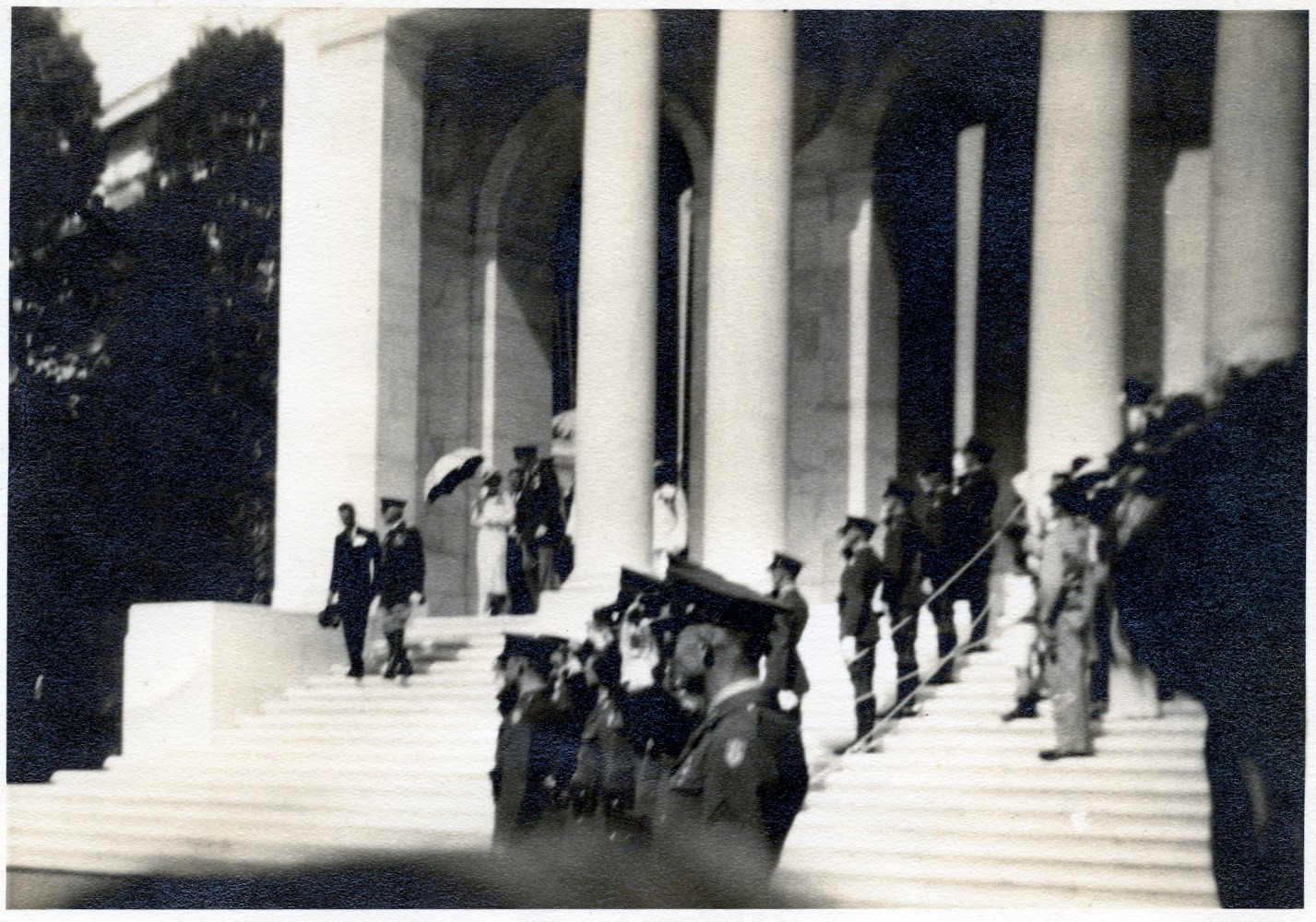
King George VI and Queen Elizabeth at the Arlington Cemetery, June 1939.

King George VI and Queen Elizabeth at the Arlington Cemetery, June 1939.

But over the last 100 years members of the royal family have stopped in Arlington too, drawing much local attention and stirring up royal fervor!

Here are a few of their notable visits to the area:

June 1939

King George VI and Queen Elizabeth, parents to the current Queen Elizabeth II, were the first reigning British monarchs to visit the United States and made a stop in Arlington during their time in the country. The trip garnered both local and national excitement, with one columnist from The Northern Virginia Sun declaring that “you will look a long time to find in your history books anything that quite reaches the level of the moment which will be recorded this afternoon.”

Those gathered in Washington D.C. to greet the royals upon their arrival on June 8 included a group of approximately 300 Arlington residents. An entire division of the Arlington Boy Scouts attended the event. Three children from Arlington were also selected to participate as guards of honor for the royal arrival, including a representative from the Girl Scouts, a member of the Rover Scouts, and a cub scout from the Clarendon Methodist Church. In preparation for the occasion, the Arlington County Board voted for the hours between 10 a.m. and 2 p.m. on June 8 to be considered a holiday. Arlington County schools were also given the day off as a holiday, marking a slightly early end to the school year.

In the society pages of The Sun newspaper, it was reported that numerous Arlington residents attended the garden party thrown for the royal couple at the British Embassy during their stay. On the second day of their visit, the couple toured Mount Vernon and laid a wreath at the Tomb of the Unknown Soldier at the Arlington National Cemetery, before embarking north for appointments in New York.

October/November 1951

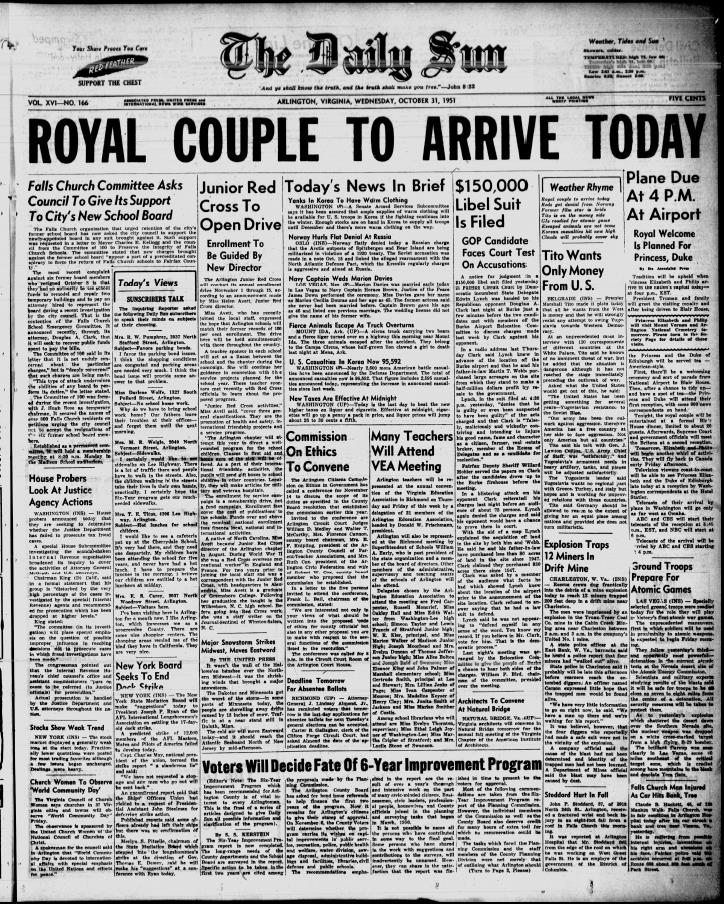
As part of a tour of the nation’s capital, Princess Elizabeth (who wouldn’t begin her reign as queen until February 1952) and Prince Philip also made stops at Mount Vernon and the Arlington National Cemetery during their brief three-day visit to the Washington, D.C., area, which bookended a longer tour of the Canadian territories.

Newspaper headline: Royal couple to arrive today.

From The Daily Sun, October 31, 1951.

During their time in D.C., the royal couple stayed at Blair House, the temporary residence of President Truman while the White House was being renovated – a project that lasted four years, from 1949 to 1952.

The princess and prince’s visit proved to be a whirlwind, scheduled out to the minute with activities and events. On the second day of their trip, the couple hosted a reception at the British Embassy, during which 2,000 people were selected to shake the princess’s hand. The honored guests were notified of their selection via mailed invitations in late October, which included the forewarning that the reception line “will be kept moving briskly at the request of Scotland Yard” and “Princess Elizabeth and Prince Philip may not be questioned or quoted.” The couple was then treated to a dinner and party hosted by the President and First Lady.

Stops at Mount Vernon and the Arlington National Cemetery also took place on the second day of their visit. A 21-gun salute was fired in honor of the princess, after which their motorcade proceeded to the amphitheater through the cemetery’s west entrance. The couple was then brought through the trophy room to the Tomb of the Unknown Soldier, where Princess Elizabeth laid a wreath.

The ceremony was accompanied by a performance of “Taps,” as well as “God Save the King” and “The Star-Spangled Banner” during the visit. The cemetery was understandably closed to traffic the day of the event, though citizens were permitted to attend the ceremony on foot.

October 1957

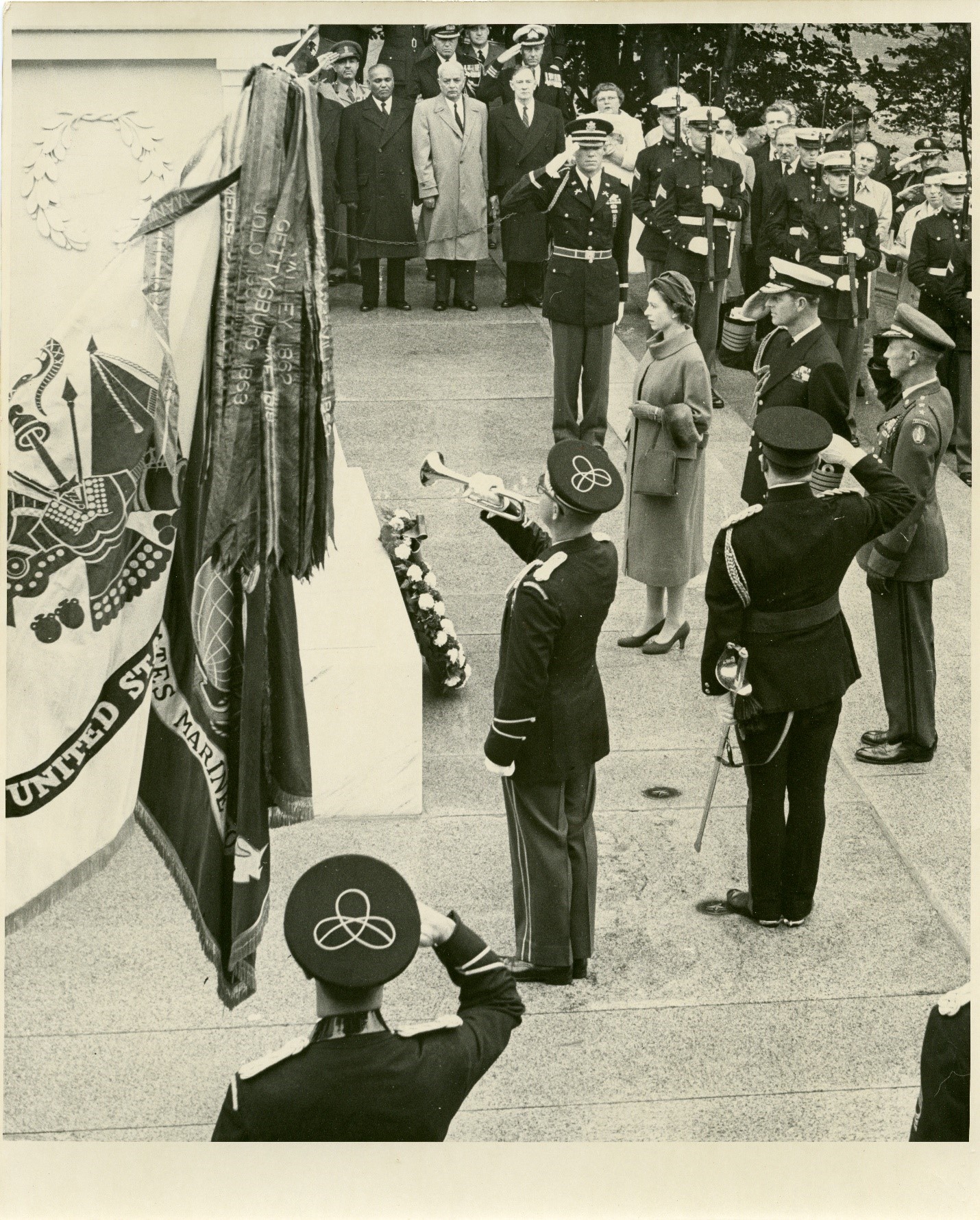
Six years after her first visit to the U.S., this trip marked Queen Elizabeth’s first American visit as sovereign. This tour also included a stop at the Arlington National Cemetery, where the Queen would once again pay respects at the Tomb of the Unknown Soldier.

Queen Elizabeth lays a wreath at the Tomb of the Unknown Soldier at the Arlington National Cemetery, 1957.

Queen Elizabeth lays a wreath at the Tomb of the Unknown Soldier at the Arlington National Cemetery, 1957.

During this trip, Queen Elizabeth and Prince Philip touched down stateside October 16 at the Patrick Henry Airport (now the Newport News/Williamsburg International Airport), where they kicked off a two-day stay in Virginia. The couple attended the 350th-anniversary celebration of the founding of Jamestown, toured the College of William and Mary, and dined at the Williamsburg Inn before departing for the D.C. area on President Eisenhower’s official airplane, the Columbine III.

From there, the queen and prince were welcomed by President Eisenhower and the First Lady, as well as Secretary of State John Foster Dulles, and set off on a full schedule of appearances. The pair toured the Capitol Building with Vice President Richard Nixon and Pat Nixon, visited the National Cathedral, laid the cornerstone for the new British Embassy, and laid a wreath at the Tomb of the Unknown Soldier crossing over to Arlington for this appointment.

The couple also traveled to College Park to take in a football game on October 19, in which Maryland upset UNC 21-7. After the game, Queen Elizabeth infamously asked to see an American supermarket and the royal motorcade headed for the Queenstown Giant Food grocery store in West Hyattsville, where they were given a brief tour as awestruck shoppers looked on.

To learn more about Arlington's history, visit the Center for Local History on the first floor of the Central Library.

Do you have a question about this story, or a personal experience to share? 

Use this form to send a message to the Center for Local History.

Center For Local History - Blog Post Message Form

Do you have a question about this story, or a personal experience to share? Use this form to send a message to the Center for Local History.

"*" indicates required fields

This field is for validation purposes and should be left unchanged.

Share Your Story

November 21, 2019 by Web Editor

This Week in 19th Amendment History: The Night of Terror

Post Published: November 12, 2019

November 14, 1917

Celebrate the 100th anniversary of the 19th Amendment with stories about the people and events that led to the passage of women’s suffrage in the United States.

Just over 100 years ago this week, on November 14, 1917, a group of suffragists underwent a horrifying night of torture and abuse that would come to be known as the “Night of Terror.”

33 women protesters were taken to the Occoquan Workhouse in Fairfax County and subjected to brutal treatment by the prison’s guards in retaliation for the women’s ongoing peaceful protest for the right to vote.

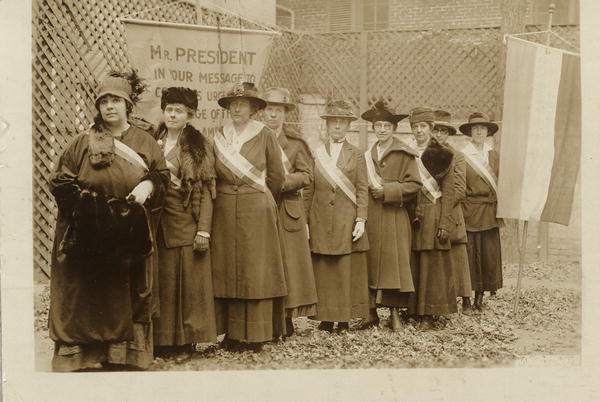
Photograph of nine suffrage pickets standing single file along a tall lattice fence, with suffrage banners. Left to R: Catherine Martinette, Elizabeth Kent, Mary Bartlett Dixon, C. T. Robertson, Cora Week, Amy Jungling, Hattie Kruger, Belle Sheinberg, Julia Emory.

Some of the picket line on Nov. 10, 1917. Left to right: Mrs. Catherine Martinette, Eagle Grove, Iowa. Mrs. William Kent, Kentfield, California. Miss Mary Bartlett Dixon, Easton, Md. Mrs. C.T. Robertson, Salt Lake City, Utah. Miss Cora Week, New York City. Miss Amy Ju[e]ngling, Buffalo, N.Y. Miss Ha. Harris & Ewing, Washington, D.C. (Photographer). Library of Congress Prints and Photographs Division.

The arrest and imprisonment of the women was the culmination of months of organized protest. In response to the reelection of Woodrow Wilson, members of the National Woman’s Party (sometimes referred to as the “Silent Sentinels”) picketed for months outside of the White House. Bolstered by banners, signs, and a consistent physical presence, they called for the president to back a federal amendment granting women the right to vote (by 1917, nine U.S. states had extended voting rights to women).

The protests – carried out on a rotating basis to ensure a constant presence at the White House - had gone smoothly following their start after Wilson’s reelection. Wilson had even invited protesters inside the White House for coffee, although the invitation was declined.

But the mood changed after the U.S. entry into World War I, on April 6, 1917. The heightened patriotic fervor made criticism of the government more and more fraught, and members of the suffrage movement suffered for their outspoken and visible criticism of the president.

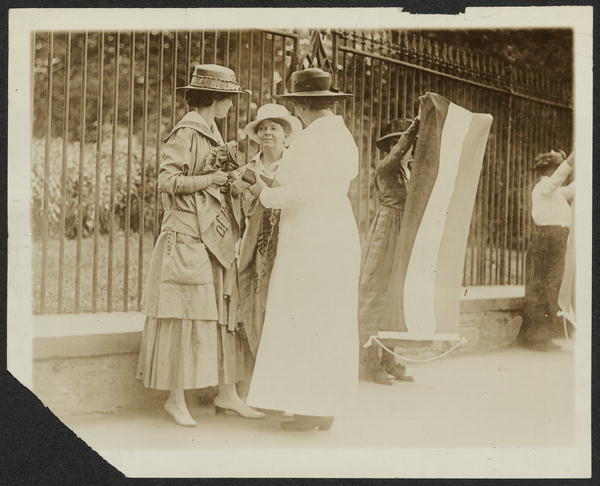
Florence Youmans of Minnesota (left), clutching a suffrage propaganda banner, and Annie Arniel of Delaware (center), being approached in front of the White House gates by an unidentified policewoman, who appears to have seized Arniel's banner, while a third unidentified suffrage picket watches from behind her tri-color purple, white, and gold National Woman's Party flag, and a fourth picket looks away in a different direction.

Policewoman arrests Florence Youmans of Minnesota and Annie Arniel (center) of Delaware for refusing to give up their banners. June 1917. Library of Congress Prints and Photographs Division.

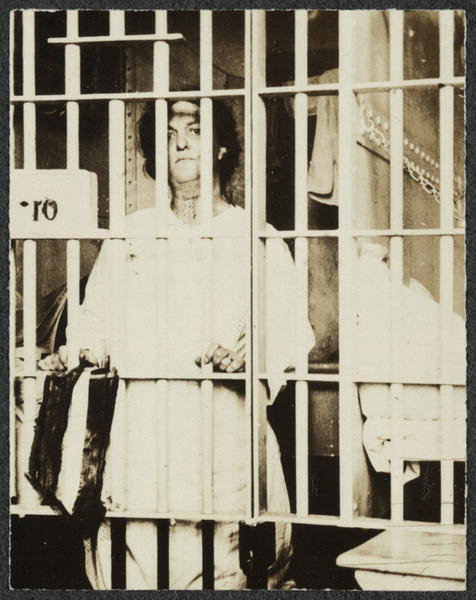
Photograph of Helena Hill Weed, facing forward, standing behind bars in a prison cell.

Helena Hill Weed, of Norwalk, CT, serving 3 day sentence in D.C. prison for carrying banner "Governments derive their just powers from the consent of the governed." July 6-8, 1917. Library of Congress Prints and Photographs Division.

In June 1917, members of the ongoing picket began to get arrested. By October, police issued an ultimatum: if the picket continued, protesters could face sentences of up to six months in prison. Many of the arrested protesters were charged with “obstructing traffic” or given fines.

Hunger strikes emerged in the jails and workhouses where protesters were held, leading to force-feeding and other violent practices carried out by prison staff. In response to this, leader Alice Paul marched from the National Woman’s Party headquarters to the White House with a banner reading: “The time has come to conquer or submit for there is but one choice - we have made it” - the same slogan President Wilson used on posters encouraging Americans to buy war bonds.

Photograph of Alice Paul emerging from National Woman's Party headquarters holding banner, followed by Dora Lewis (with no banner). Unidentified women stand with a banner in doorway of building. Banner Paul carries reads: "The Time Has Come to Conquer or Submit, For Us There Is But One Choice. [I] Have Made It. President Wilson." Paul is leading picket line from headquarters to the White House.

The day after the police announce that future pickets would be given limit of 6 mos. in prison, Alice Paul led picket line with banner reading "The time has come to conquer or submit for there is but one choice - we have made it." October 20, 1917, Harris & Ewing, Washington, D.C. (Photographer). Library of Congress Prints and Photographs Division.

Ten months into the ongoing picketing efforts, on November 13, 1917, 33 women were arrested around the White House. By the next day, they arrived at the Occoquan Workhouse, where, demanding to be recognized as political prisoners, they refused to put on prison uniforms or participate in the mandated work shifts.

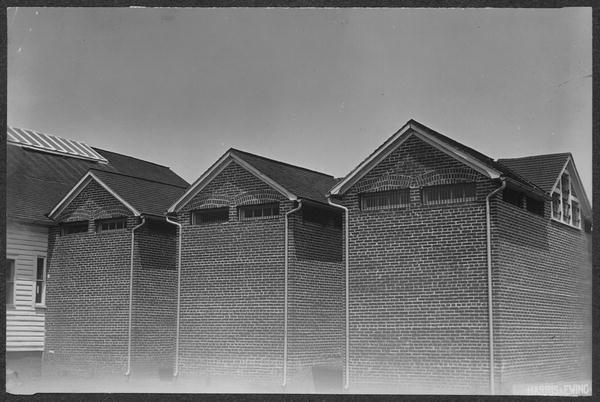
Photograph of the exterior of cell blocks at Occoquan prison.

Cell blocks at Occoquan [Workhouse], ca. 1917, Harris & Ewing, Washington, D.C. (Photographer). Library of Congress Prints and Photographs Division.

The prison guards responded with violence. On orders from Occoquan Superintendent W.H. Whittaker, guards physically assaulted the women and threw them into dark and filthy cells.

One suffragist, Dora Lewis, was violently thrown down, hitting her head on an iron bed. Alice Cosu, who witnessed this, suffered a heart attack and did not receive medical treatment until the next day.  Organizer Lucy Burns was chained with her hands over her head to the bars in her cell and forced to stand for the entirety of the night.  Fellow protester Julia Emory assumed the same position for the night in solidarity.

One of the protesters, Doris Stevens, wrote an account of the “Night of Terror” entitled “Jailed for Freedom,” which chronicled the events of their imprisonment. She included excerpts of Lucy Burn’s accounts, which were recorded clandestinely during her imprisonment on scraps of paper and smuggled out of the workhouse.


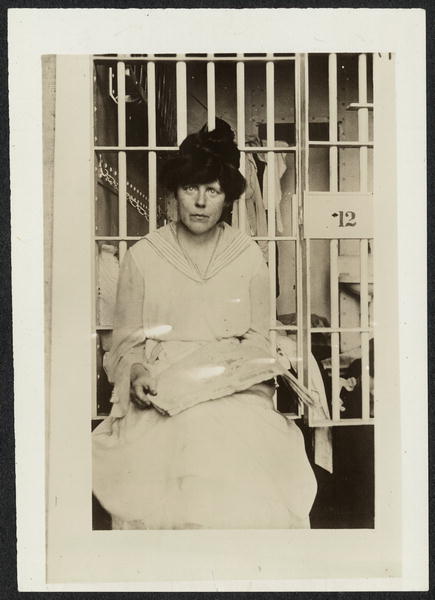
Informal portrait, Lucy Burns, three-quarter length, seated, facing forward, holding a newspaper in her lap in front of a prison cell, likely at Occoquan Workhouse in Virginia.

Miss [Lucy] Burns in Occoquan Workhouse, November 1917, Harris & Ewing, Washington, D.C. (Photographer). Library of Congress Prints and Photographs Division.

Burns writes: “(Whittaker) refused to hear our demand for political rights. Seized by guards from behind, flung off my feet, and shot out of the room. All of us were seized by men guards and dragged to cells in men’s part.”

During their time in Occoquan, many arrestees resorted to hunger strikes. In response to this, the guards force-fed the women raw eggs and milk, causing them to become ill.  At one point, marines from the nearby Quantico Station were brought in to support the Occoquan guards.  By the time the women were released, many were too weak to walk on their own.

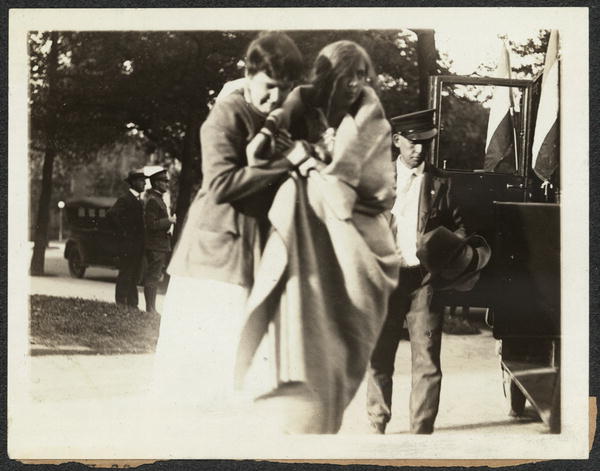
Photograph of a woman escorting Kate Heffelfinger, wrapped in blanket, outside near a car, after release from jail.

Kate Heffelfinger after her release from Occoquan Prison, ca. 1917. Library of Congress Prints and Photographs Division.

The imprisoned suffragists were returned to D.C. after a November 23 ruling determined that, since they were arrested in D.C., it was illegal to incarcerate them in Virginia.  By November 28, they were out on bail, and by March of the following year, all of their arrests had been declared unconstitutional.

In early January 1918, President Wilson expressed his support for the voting rights amendment, which passed in the House but failed in Senate.  It would take until 1920 before the amendment was formally incorporated into the U.S. Constitution. The “Night of Terror” remains a pivotal point in the struggle for suffrage, a true show of the solidarity of the protesters and the lengths to which they would go for their cause – and the lengths their opposition would go to hamper their efforts.

Research sources used in this piece:

  • The Night of Terror: When Suffragists Were Imprisoned and Tortured in 1917 - History.com
  • Wilson and Women's Suffrage - PBS American Experience
  • Suffragist History - Turning Point Suffragist Memorial
  • Women of Protest: Photographs from the Records of the National Woman's Party - Library of Congress
  • History of the Workhouse - Workhouse Art Center
  • "In 1917, the ‘Night of Terror’ at a Virginia prison changed history. Now it’s a site of beauty" - Los Angeles Times
  • "‘Night of terror’: The suffragists who were beaten and tortured for seeking the vote" - Retopolis, Washington Post

Read about Gertrude Crocker, Arlington's own Silent Sentinel suffragette, also jailed multiple time in 1917.

Learn more in these books available at the Library:

  • "The long loneliness: the autobiography of Dorothy Day," by Dorothy Day
  • "Mr. President, how long must we wait?: Alice Paul, Woodrow Wilson, and the fight for the right to vote," by Tina Cassidy
  • "Votes for women!: American suffragists and the battle for the ballot," by Winifred Conkling

2020 marks the centennial of women’s suffrage in the United States. 
November 12, 2019 by Web Editor

Arlington Theatre ‘N’ Bowling

Post Published: November 7, 2019

On August 15, 1940, one of Arlington’s premier cinemas – the Arlington Theatre – opened its doors.

Arlington Theatre and Alley

Architect’s conception of the Arlington Recreation Center, which included the Arlington Theatre. From special coverage of the building’s opening in The Sun, August 16, 1940.

Located at the intersection of Columbia Pike and South Fillmore Street, the Art Deco style building was a cinematic façade fit for its wide variety of movie screenings and could seat over 600 moviegoers at a time.

Part of a boom in cinema construction around the county, the Arlington Theatre joined the Wilson, Ashton, and Buckingham Theatres – all of which were part of the Neighborhood Theatres franchise. The Arlington Theatre was designed by architect Fred Bishop, who also designed Richmond’s iconic Byrd Theater and the Beacon Theatre in Hopewell.

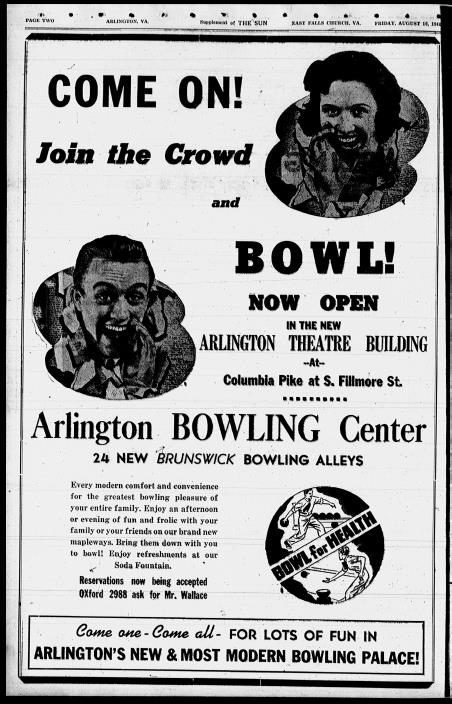
The Arlington Theatre was a part of a larger building called the Arlington Recreation Center, which included commercial storefronts, a pharmacy, and a 24-lane bowling alley on the second and third floors. The bowling alley featured “modern, high speed” Brunswick Balke alleys and acoustical soundproofing. Bowlers could also treat themselves to the Center’s soda fountain and sandwich bar, or have orders delivered straight to their lanes.

Bowling Alley

Ad for the Bowling Center at Arlington Theatre

The Arlington Theatre drew major media attention for its inaugural night. Its opening was covered in a special section of the August 16, 1940, edition of The Sun, where it was featured alongside pieces on the broader growth and development around the Columbia Pike area. A reporter described the theatre:

“Modern in every respect, housed in a fireproof building and equipped with the famous Carrier air conditioning system, which also cools and refreshes the bowling alleys and the pharmacy. Large, spring-bottom seat(s), amply spaced, assure comfort for theatre patrons, while the lobby, lounges, and restrooms are furnished and decorated in modern and attractive styles.”

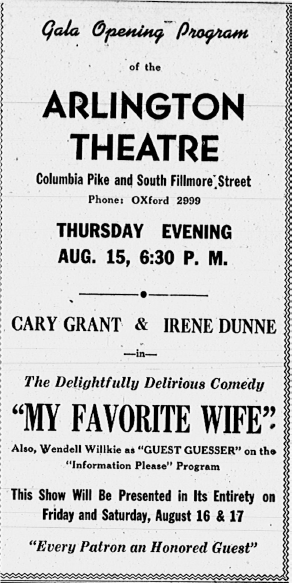
The theatre’s first film showing was a 6:30 p.m. screening of the 1940 film “My Favorite Wife,” the “delightfully delirious comedy” (according to the theatre’s advertisement) starring Cary Grant and Irene Dunne. Part of the popular screwball comedy genre of the era and adapted from the Alfred Lord Tennyson poem, “Enoch Arden,” the film garnered a successful opening night, with one reviewer describing it as “fast-paced, delightful comedy entertainment.”

My Favorite Wife Ad

The film played for two additional showings during opening week, screening in full on Friday, August 16 and Saturday, August 17. All screenings were accompanied by a screening of the “Information Please” program, a radio quiz show in which audience members would ask experts questions. The panel show was so popular that RKO-Pathé Pictures released filmed versions of the radio program that were released as 10-minute-long clips to accompany feature film screenings. The “guest guesser” for this particular broadcast was the 1940 Republican presidential nominee Wendell Willkie.

The Arlington Theatre also became a popular location for numerous community events, and in 1940 hosted then First Lady Eleanor Roosevelt for a charity Christmas Party held by the Kiwanis Club. During World War II, the theater was a place to buy bonds and defense stamps to support the troops. The Arlington Theatre and the other Neighborhood Theatres in the area would host themed screenings, including designating September 1942 as “Salute to our Heroes” month, with ads for showtimes also including the call, “Come on, moviegoers! Buy war stamps here!”

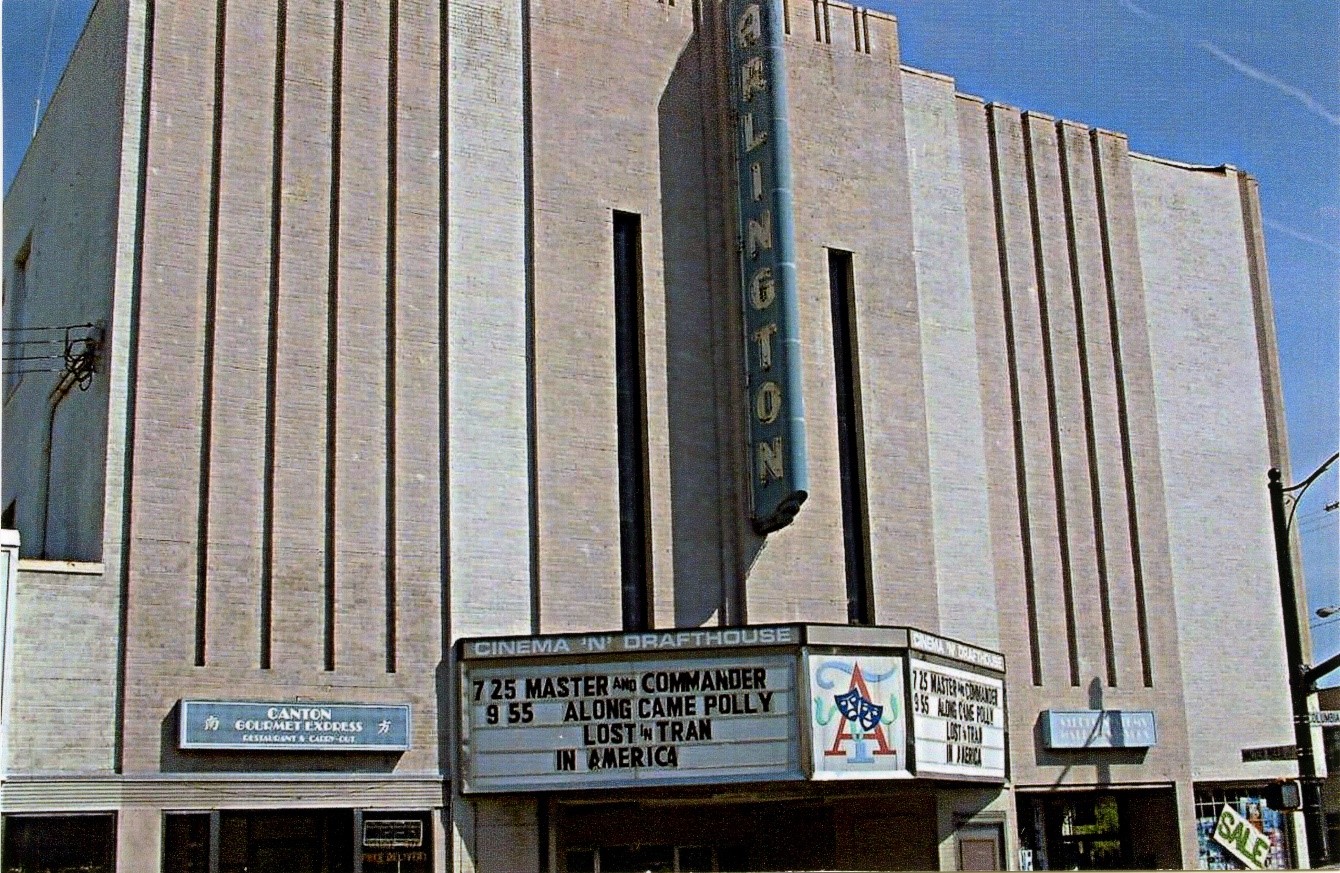
Arlington Drafthouse 2004

The Arlington Cinema ‘N’ Drafthouse in 2004

In 1985, the building transitioned to its modern iteration as the Arlington Cinema ‘N’ Drafthouse, which still operates today. It stands as one of the last operational cinema buildings from the heyday of the 1930s and 1940s construction and includes the Arlington Theatre’s original theater behind its movie screen with lighting, storage, and a green room. The Cinema seats up to 275 guests and features both movie screenings and live entertainment.

Read The Sun’s coverage of the Arlington Theatre’s 1940 opening in the Community Archives.

Learn more about local cinema history in “Movie Theaters of Washington DC,” by Robert K. Headley, available at the Library.

To learn more about Arlington's history, visit the Center for Local History on the first floor of the Central Library.

Do you have a question about this story, or a personal experience to share? 

Use this form to send a message to the Center for Local History.

Center For Local History - Blog Post Message Form

Do you have a question about this story, or a personal experience to share? Use this form to send a message to the Center for Local History.

"*" indicates required fields

This field is for validation purposes and should be left unchanged.

Share Your Story

November 7, 2019 by Web Editor

Rediscover Haunted Arlington

Post Published: October 28, 2019

Four stories to keep you up at night this October...

The Spirits at Overlee

Have you met the ghost of Margaret Febrey?

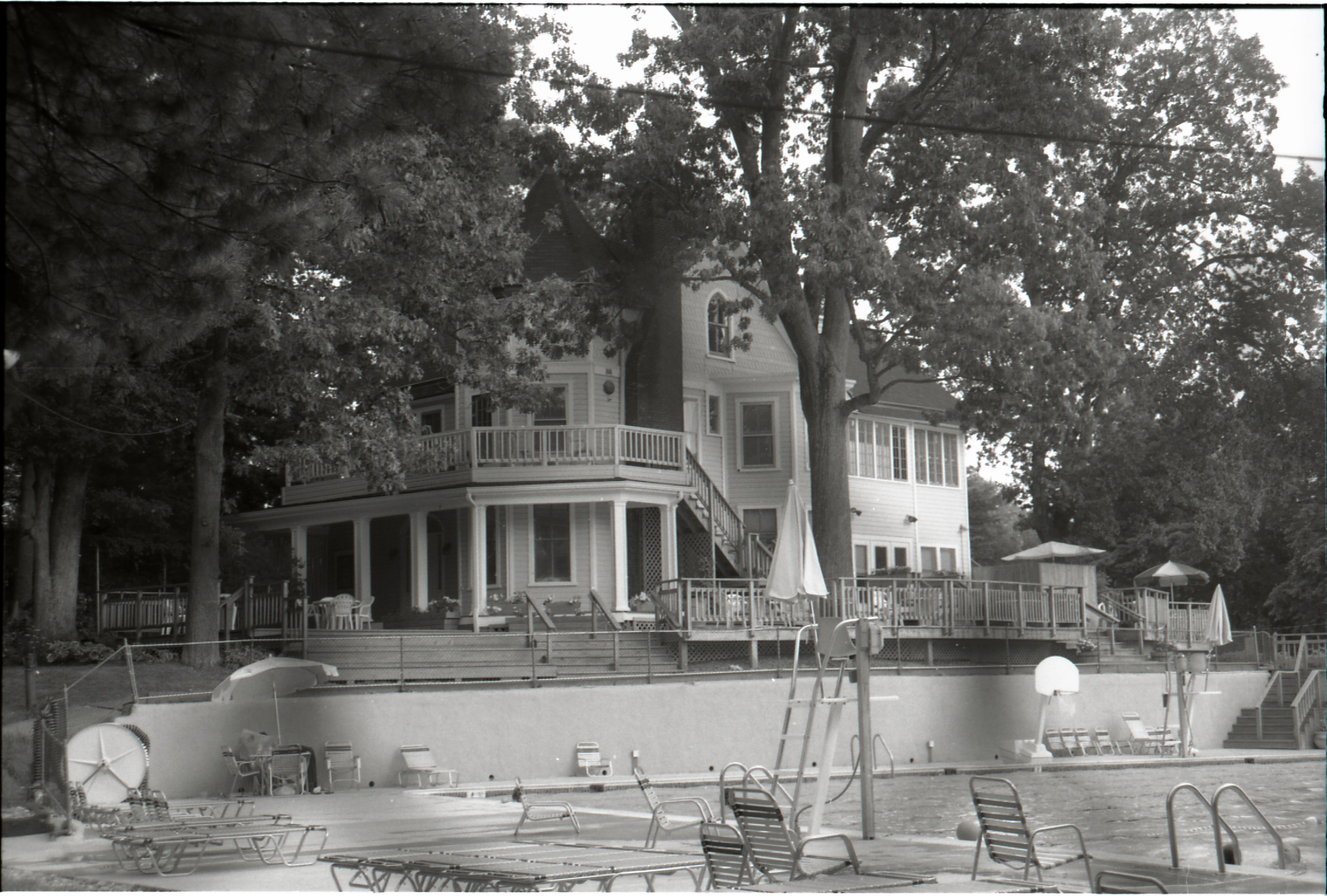
Overlee

Febrey-Kincheloe House, from Poolside, 1997

In 2012 construction workers at the Overlee Community Center pool site reported that they were not alone - they would often see a little girl in Victorian clothing climbing through the debris and walking the site.

The construction site was on the grounds of a former historic mansion, known most recently as the Febrey-Kincheloe House, which stood for more than a century. Ernest Febrey constructed the grand home in the 1890s, where he raised his daughter, Margaret.

The Kincheloe family eventually bought the house from the Febrey family. When Mr. Kincheloe suddenly died, Mrs. Kincheloe converted the house into a rest home for Washington dignitaries called the Crestwood Sanitarium in 1947. In 1957 the house was converted into a community center clubhouse, and a pool was installed for the neighbors to enjoy. For many years clubhouse caretakers reported hearing music and laughing late into the night, but when they would investigate the noises, the sounds immediately ceased. The caretakers attributed the unseen source of the noises to the home's time as a sanitarium.

Young Margaret died in January of 1913 of a tubercular infection of the spine called Pott’s disease, and rumors are that the Febrey family abandoned the home soon after she passed away. But unlike the unseen clubhouse spirits, Margaret is not shy. Not only has she been seen around the property often, many people have reported speaking to her. Before the sale of the Febrey-Kincheloe House, contractors and realtors spoke of seeing a strangely dressed girl in the house standing by the basement stairs, and demolition workers spoke to her when they were razing the house in 2012. She’s been seen poolside and swimmers have reported speaking to a girl in a grey Victorian dress.

Children, if you meet Margaret at the pool, don’t be afraid. It’s said she likes to make friends with the children she meets.

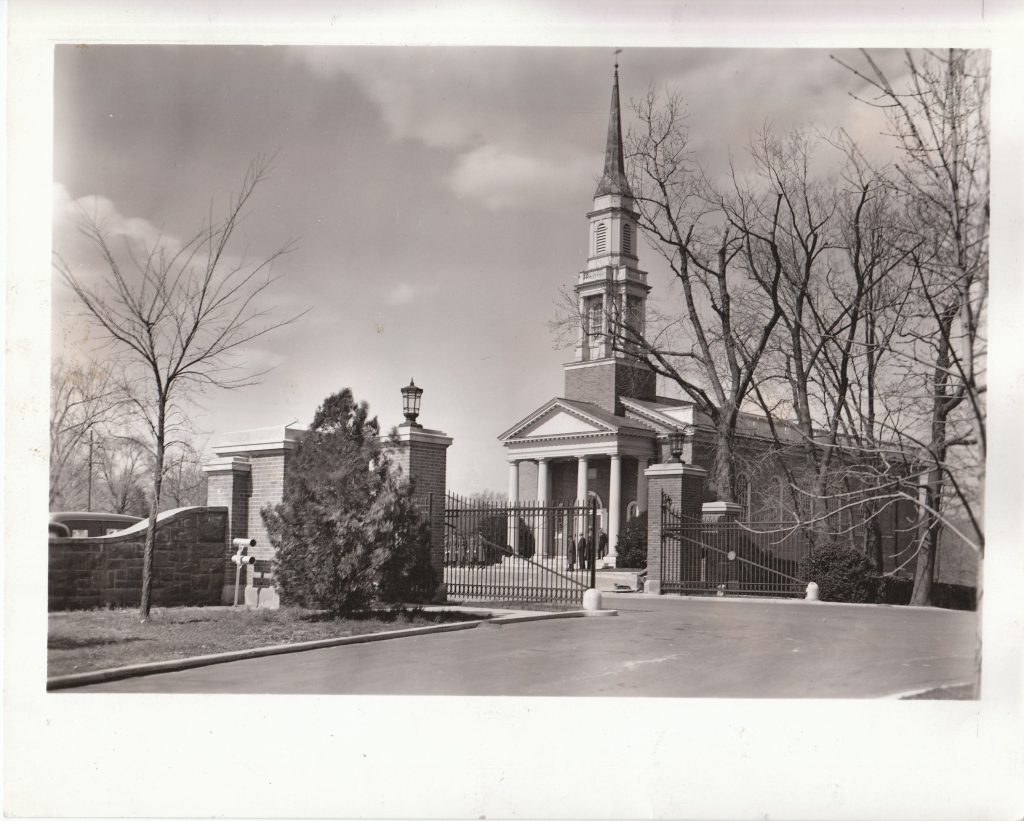
Old Post Chapel

Fort Myer, now Joint Base Myer-Henderson Hall, has always had a storied history...

Chapel

Old Post Chapel and New Gate at the Arlington National Cemetery

In 1864 the United States government began converting what had been the Lee Family’s estate into a burial ground for Union Army dead, housing for freed slaves and land for various military purposes. In 1861 Fort Ramsey, later renamed Fort Cass, was built on part of the land. However, after the end of the Civil War, it was abandoned.

In 1862 the Army built Fort Whipple a short distance southeast of Fort Cass. Its fortifications likewise were abandoned after the war ended, but its grounds were converted into the Signal School of Instruction for Army and Navy Officers in 1869. In 1881 it was renamed Fort Myer after Brigadier General Albert J. Myer, who had led the Signal School until his death in 1880.

In 1908 Fort Myer was the site of the first aviation fatality during one of Orville Wright’s first exhibition flights. And it was the location of the “Three Sisters” radio towers, which were the first to broadcast a voice across the United States and eventually over the Atlantic.

The Old Post Chapel, the only chapel on the grounds of the former Fort Whipple, holds the most claims of paranormal presences.

The Old Post Chapel was commissioned by Major George Patton Jr. in 1933 when he toured the chapels on the grounds of the Walter Reed Hospital. Patton told Post Commander Colonel Kenyon Joyce that the new chapel should combine the functions of a principal chapel with those of a mortuary chapel in one building.

Workers broke ground in February 1934, and the chapel was officially dedicated on April 21, 1935, where it was known for its attractive spire and intricate stained-glass windows. The chapel serves as a place of worship for the community, a wedding chapel, and a place of final honors for those laid to rest at Arlington National Cemetery. Many fallen service members have lain in wait in the Old Post Chapel for their final trip, and it has allowed family members to grieve in private.

So it is unsurprising that many active duty service members have reported hearing disembodied voices and footsteps in the chapel when they have been alone.

Locked doors have unlocked themselves and opened on their own. K9 units patrolling with service people will refuse to go into the building, and balk at the door, especially at night. And visitors describe a young grief-stricken woman dressed in white who waits for her sweetheart; rumors are that she threw herself from the bell tower, which remains locked to this day.

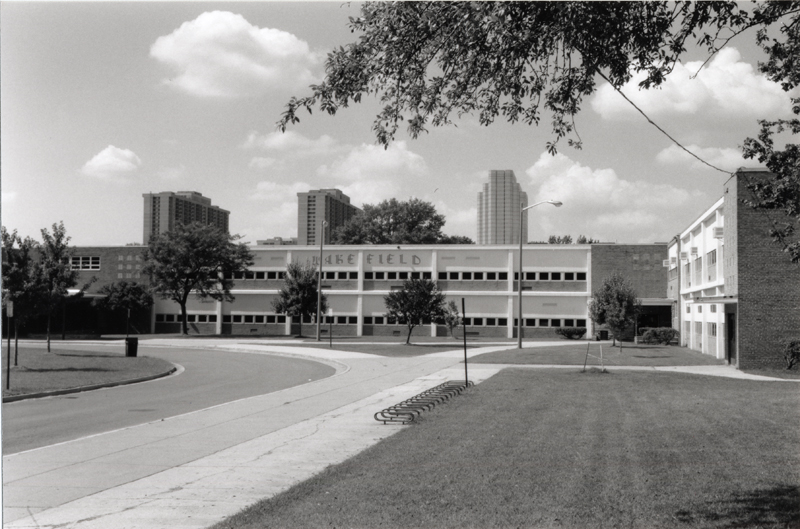
Wakefield High School

Phantom of the Theater

Wakefield High School, 8/31/1996

Wakefield High School in 1996

Who knows where the Wakefield High School ghost has chosen to perform since the school theater it used to haunt was demolished in 2013...

Students and staff said that if you sat very quietly in the balcony seats of the theater, you might see and hear things you could not explain. The piano would begin to play even though no one was sitting at the keyboard. The lights would operate even though no one was in the lighting booth. And the light fixtures themselves would turn to impossible angles, sometimes coming to rest on the person in the balcony or the lone audience member.

Who was the ghost? Rumors say a crew member fell from the catwalk and died in the early 1960s, and was sometimes seen high up on the catwalk, once again reliving his last moments.

Arlington Hall

Who was that woman?

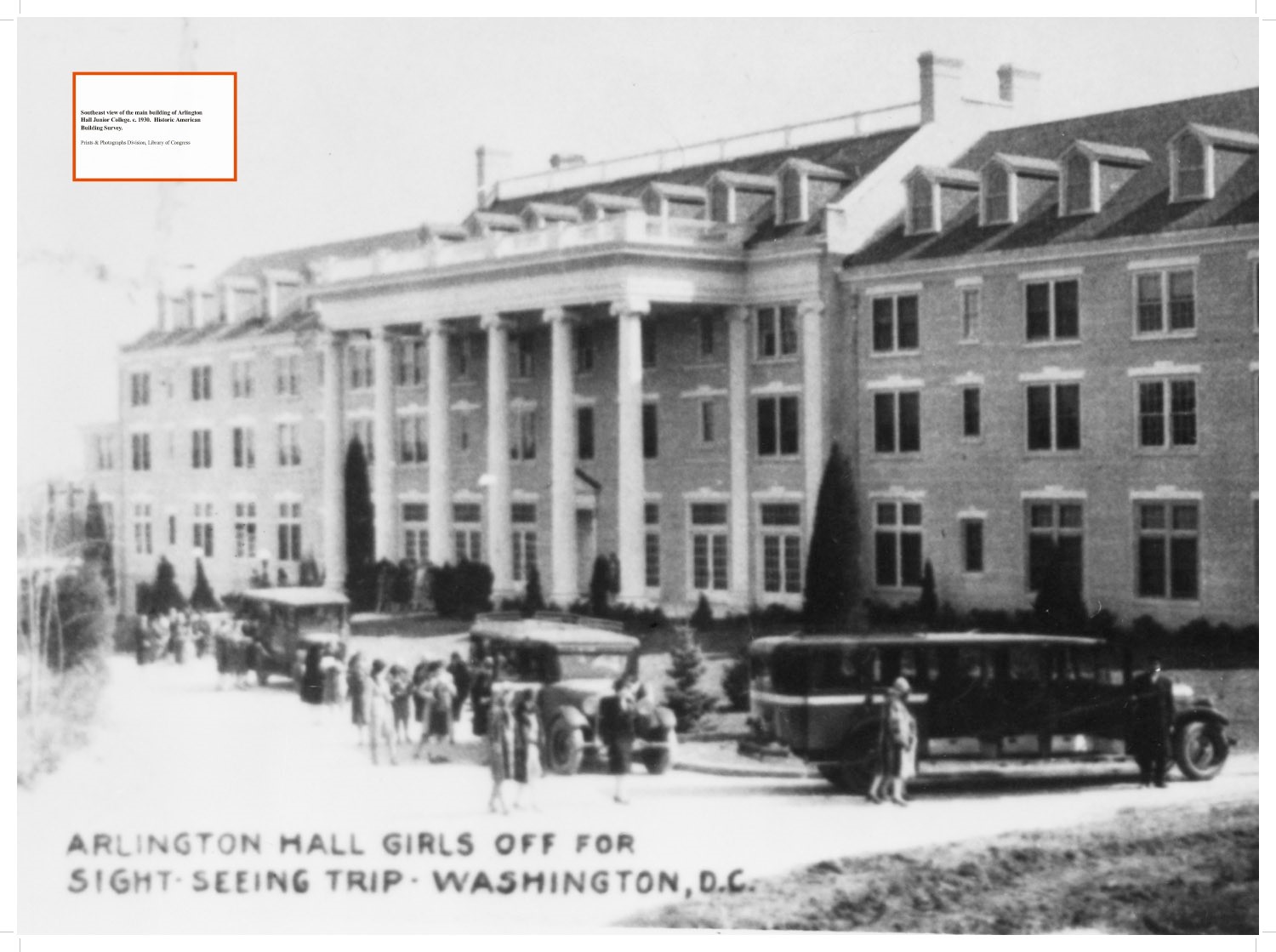
AHall LOC

Arlington Hall Girls off for Sight-Seeing Trip - Washington, D.C.

The stately building near the intersection of Arlington Boulevard and South George Mason Drive may no longer be home to military codebreakers, but it's still a place of mystery.

In 1927 Dr. William Martin founded the Arlington Hall Junior College for Women. The rolling 100-acre campus included an award-winning riding club, and the stately Arlington Hall itself was home to many enviable social events including dinners, teas, balls, and formal dances.

In 1942 the Arlington Hall Junior College for Women quietly became the secret headquarters for the Signal Intelligence Service, a department dedicated to breaking German and Russian codes. Unbeknownst to the men and women working to end the war, the KGB had already infiltrated the center, spying via a long-time analyst who had defected to the U.S.S.R. After the Signal Intelligence Service expanded and transferred its headquarters, the building began its third life as a research center, and then as a satellite office for the State Department in 1989.

The building still holds its secrets - not only the unexploded Civil War-era rifle shell found sitting precariously under the hall during an excavation in 2008, but the unexplained noises that occupants hear in the quietest hours.

It is said that if you are downstairs when it is silent, and you know you are alone, you will hear footsteps above you, walking across the hard floor and then stepping onto the carpet and continuing their journey. If you go upstairs to investigate, you’ll see a young woman in a floral dress walking into and out of the women’s powder room on the way to a party. She stops to check her make-up in the mirror before she turns and vanishes...

"Preservation Today: Rediscovering Arlington" is a partnership between the Arlington Public Library and the Arlington County Historic Preservation Program.

Preservation Today: Rediscovering Arlington
Stories from Arlington’s Historic Preservation Program

Arlington’s heritage is a diverse fabric, where people, places, and moments are knitted together into the physical and social landscape of the County.

Arlington County’s Historic Preservation Program is dedicated to protecting this heritage and inspiring placemaking by uncovering and recognizing all these elements in Arlington’s history.

To learn more about historic sites in Arlington, visit the Arlington County Historic Preservation Program.

October 28, 2019 by Web Editor

This Week in 19th Amendment History: National Woman’s Rights Convention

Post Published: October 22, 2019

October 23, 1850

Celebrate the 100th anniversary of the 19th Amendment with stories about the people and events that led to the passage of women’s suffrage in the United States.
On October 23, 1850, the first National Woman’s Rights Convention began in Worcester, Massachusetts. Amidst the ringing fervor of the mid-19th-century clarion call for expanding women’s rights – with the right to vote as its central tenet – this day would emerge as a significant step in solidifying the goals and action plan of the women’s suffrage movement in the United States.

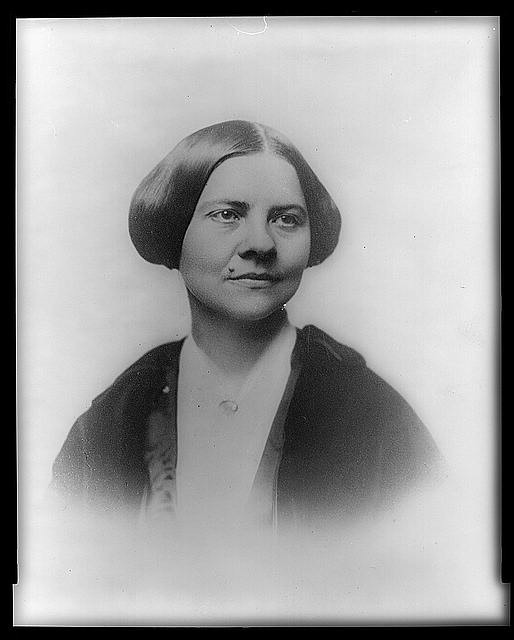
Womans convention 2

Lucy Stone, one of the Convention’s lead organizers and a speaker at the event.

Held over two days in Worcester, Massachusetts, the 1850 Woman’s Rights Convention was planned by members of the Anti-Slavery Society, among them Lucy Stone, Abby Kelley Foster, Paulina Wright Davis and Harriot Kezia Hunt.

Davis – a New York suffrage advocate who helped petition for the passage of the Married Women’s Property Act of 1848 – would later be elected president of the convention during the event’s proceedings.

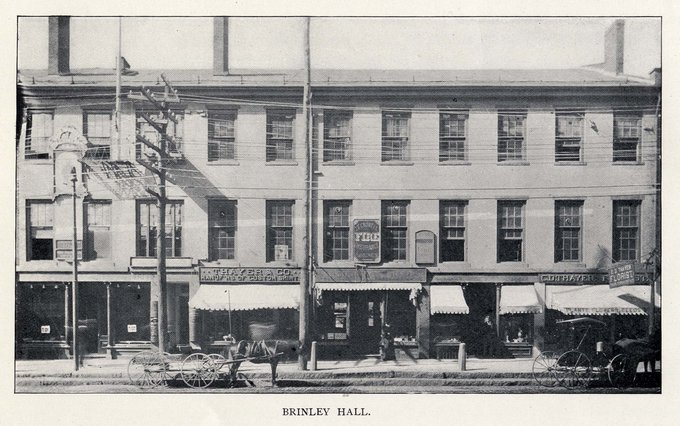
More than 1,000 delegates from 11 states gathered in Worcester’s Brinley Hall for numerous speeches on topics ranging from the right to vote, owning property, and women’s admittance to the fields of higher education, medicine, and the ministry.

Brinley Hall Postcard

Brinley Hall, Worcester, MA, where the National Woman’s Convention was held in 1850 and 1851. Photo from the Massachusetts State Library.

Among the convention’s attendees were Frederick Douglass, William Lloyd Garrison, and Sojourner Truth. Truth and many other prominent suffragists, including Ernestine Rose, Antoinette Brown and Lucretia Mott, delivered speeches over the course of the convention.

The press was largely derisive in its reporting on the convention. The New York Herald, for instance, attacked the speakers’ appearances and portrayed the attendees' demands as ridiculous, framing the convention in their headlines as an “Awful combination of socialism, abolitionism and infidelity. The Pantalettes striking for the Pantaloons. Bible and Constitution Repudiated.”

In a satirical take, the newspaper reported that the Woman’s Rights Convention organizers aimed to:

  1. abolish the Bible
  2. abolish the constitution and the laws of the land
  3. reorganize society upon a social platform of perfect equality in all things, of sexes and colors
  4. establish the most free and miscellaneous amalgamation of sexes and colors
  5. elect Abby Kelley Foster President of the United States and Lucretia Mott Commander-in-chief-of the Army
  6. cut throats ad libitum
  7. abolish the gallows

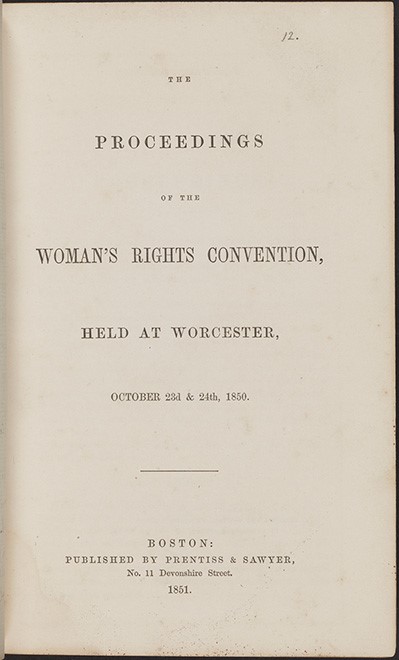
In some ways, this condescending portrayal helped expand the notoriety and message of the convention. The convention’s proceedings were recorded and sold after the event as pamphlets, gaining international readers and recognition.

Womans convention 1

The Proceedings of the Woman’s Rights Convention, held at Worcester, October 23d & 24th, 1850. Boston: Prentiss & Sawyer, 1851. Source: NAWSA Collection, Rare Book and Special Collections Division, Library of Congress (014.00.00)

The British writer and women’s rights advocate Harriet Taylor Mill was significantly inspired by the events of the convention, referencing the organizer’s work in her 1851 piece “The Enfranchisement of Women.”

The 1850 convention would be the first of many national events that would occur annually from this point forward for about a decade, setting a precedent for national suffrage organizing.

The twelfth and final Woman’s Rights Convention would be held in 1869 in Washington, D.C. This would be the last meeting of an organized suffrage front: later in 1869, the movement would split into two groups, divided by the issue of suffrage for other disenfranchised populations.

Under the leadership of Elizabeth Cady Stanton and Susan B. Anthony, the National Woman Suffrage Association directly opposed the 14th and 15th Amendments that would have allowed for African-American men to vote. Lucy Stone and others would go on to form the American Woman Suffrage Association, which supported the 15th Amendment. The suffrage movement would not see widespread unification again until 1890 with the establishment of the National American Woman Suffrage Association, bringing together Stanton, Anthony, Stone, Howe and other suffrage leaders, including Alice Paul and Mary Church Terrell. The group would hold its first convention in 1890 in Washington, D.C.

The 1850 National Woman’s Suffrage Convention represents a historic moment in the suffrage cause, on both scale and in terms of what resulted from the meeting. Although large suffrage conventions had been held in the past – most notably, the 1848 Seneca Falls Convention in New York -- this was the first time a convention of its sort was held on a national level.

This event set an organizing precedent within the suffrage movement for decades to come.

Learn more in “Women’s Suffrage in America: An Eyewitness History” by Elizabeth Frost-Knappman and Kathryn Cullen-DuPont, available at the Library.

2020 marked the centennial of women’s suffrage in the United States. 
October 22, 2019 by Web Editor

This Week in 19th Amendment History: Agatha Tiegel Hanson

Post Published: October 14, 2019

October 17, 1959

Celebrate the 100th anniversary of the 19th Amendment with stories about the people and events that led to the passage of women’s suffrage in the United States.
“Woman should be free as the air to learn what she will and to devote her life to whatever vocation seems good to her.”

On October 17, 1959, Agatha Tiegel Hanson, the first female graduate (and valedictorian) of Gallaudet University and an early champion of both deaf and women’s rights, passed away at age 86.

Hanson was born in 1873 in Pittsburgh, Pennsylvania. She became deaf and lost her eyesight in one eye at the age of 7 due to spinal meningitis. In 1888, at only 15 years old, Hanson enrolled at Gallaudet University in Washington, D.C., which remains to this day the world’s only university designed to be barrier-free for deaf and hard of hearing students. Gallaudet had only provisionally accepted a small group of female students by that time, and none of them had completed the requirements for a degree.

In 1888, when Hanson entered Gallaudet, women were permanently allowed enrollment to the university. Enrollment, however, came with limitations. Because of the dearth of facilities for women, all female students were required to live in House One, an on-campus residence that also served as the president’s home.

Women could only participate in campus extracurriculars by invitation, and were not allowed to participate in debates with male students. Female students were also not permitted to leave the campus alone, and could only attend classes, extracurriculars, and meetings of the campus’s male-led literary societies with a chaperone.

In response to these various barriers placed on women at the university, Hanson organized a women’s debate group that would meet in their residence at House One. Due to the success of this endeavor, by 1889 the university president lifted the ban on women’s activities.

Hanson and a fellow student, May Martin, established O.W.L.S., a secret society for women. The group would meet to debate, discuss poetry and literature, and establish bonds of sisterhood – filling in the social gaps left in their male majority campus. In January of 1892, the group held its first meeting, and Hanson was elected its first president. The group, now known as the Phi Kappa Zeta sorority, still has an active chapter on the Gallaudet campus.

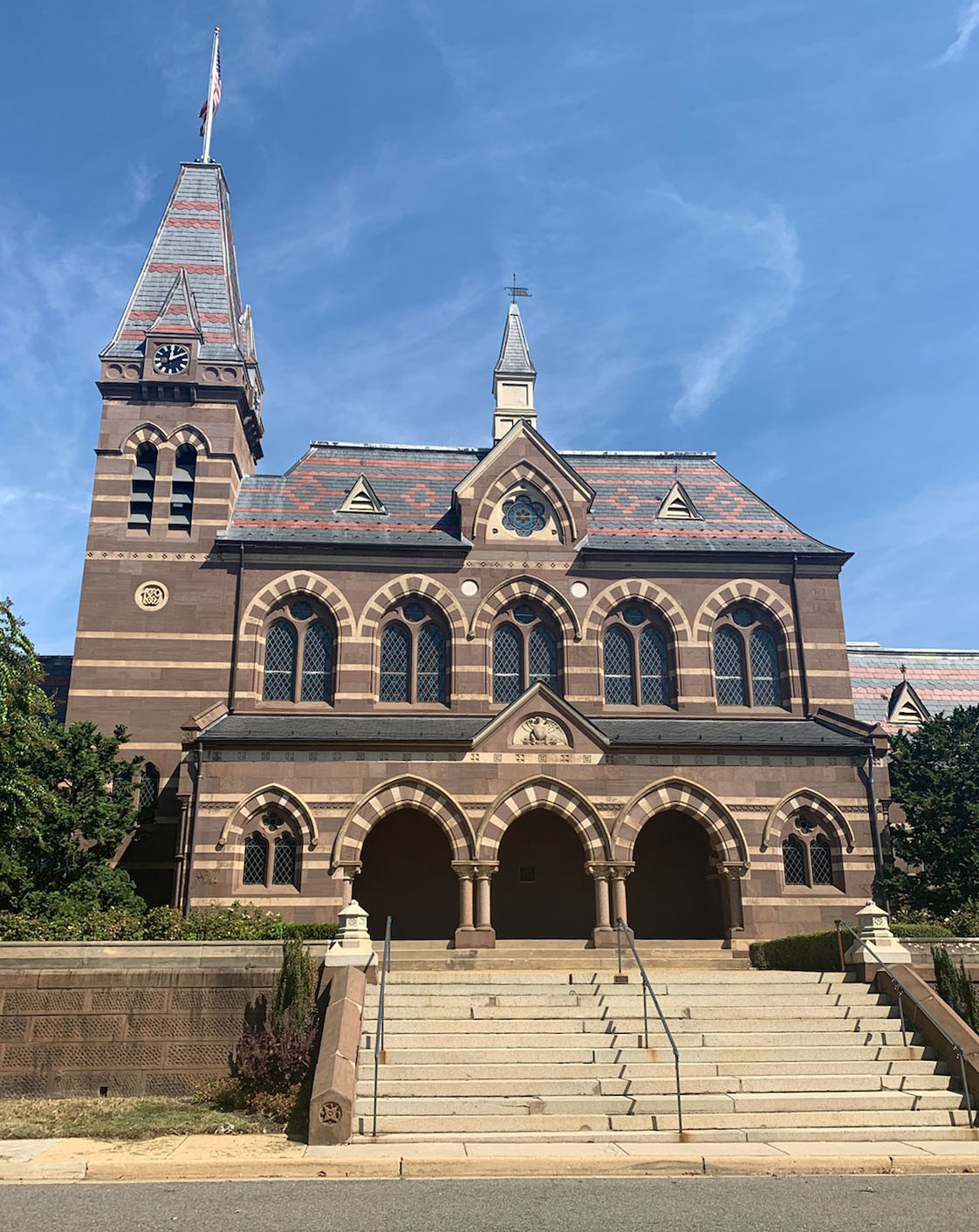
National Deaf Life museum, at Chapel Hall Gallaudet University

National Deaf Life Museum, at Chapel Hall, Gallaudet University, 2019. From 2015-2017 the Museum presented Deaf HERstory, which will become part of their virtual exhibition in the near future. Photo courtesy of Michelle Fernandez.

Hanson graduated from Gallaudet in 1893 as the university’s first woman to receive a Bachelor of Arts degree, and first female valedictorian. Upon graduation, Hanson delivered the commencement speech, entitled “The Intellect of Women,” in which she railed against the structural inequalities that stood between women and success:

"That such repression and restraint upon mental action are artificial has been demonstrated in all ages by women whose independence has bust every fetter and won them recognition in the fields of sciences, theology, literature, politics, and art. It is impossible to estimate the immensity of the influence that woman's mind has exerted on the history of the world, an influence silently wielded and never obtruded, but of a potency inferior to no other. If, during these ages of wrong custom, of false sentiment, she has often retained much of her greatness of intellect and soul, she will better do justice to her inborn powers when she has room and light in which to grow."

Following her graduation from Gallaudet, Hanson went on to teach at the Minnesota School for the Deaf. She later relocated to the Pacific Northwest, where she became involved in the Puget Sound Association of the Deaf, the Episcopal Church’s deaf mission, and the Washington State Association of the Deaf.

Hanson was also a prolific writer, contributing to “The Silent Worker” – a national newspaper serving the deaf community – as well as publishing a book of poetry entitled “Overflow Verses.” She also later served as an editor at the Seattle Observer, a newspaper for the deaf.

Learn more about the disability rights movement in “A Disability History of the United States” by Kim E. Nielsen, available in the Library catalog.

2020 marked the centennial of women’s suffrage in the United States.
October 14, 2019 by Web Editor

Oral History: Presidential Sightings

Post Published: October 9, 2019

Interview with Captain Carl Porter

Arlington Voices the Oral History Collection

Oral histories are used to understand historical events, actors, and movements from the point of view of real people’s personal experiences.

Carl Washburn Porter, a retired Navy captain and veteran of both world wars, lived in Arlington for most of his life.

Porter’s father worked in construction in the area during the early 20th century and Carl worked alongside his father during the summers, often using a horse-drawn wagon to bring construction supplies to job sites throughout the county.

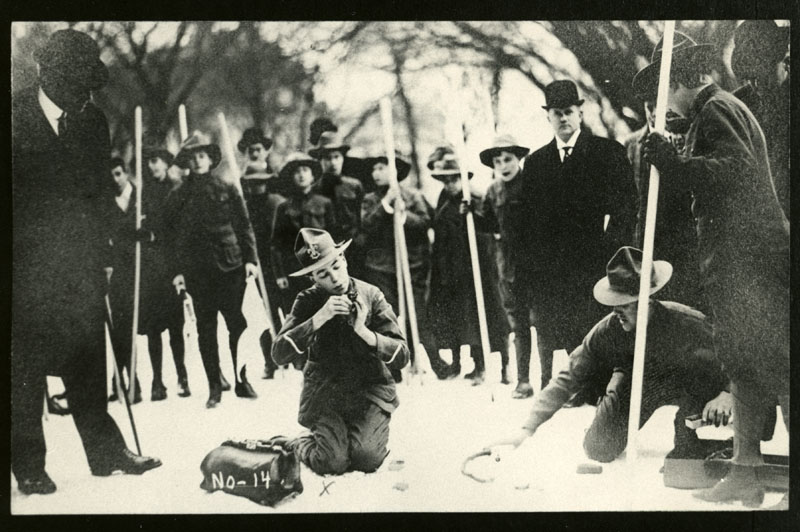
Young Carl Porter kneels in front of a row a Scouts to demonstrate fire building

Carl Porter as Boy Scout, c. 1909. Porter was a member of Troop #1, one of the first Boy Scout troops organized in the United States.

On more than one occasion during his childhood, Porter saw some famous faces in his travels around the area. Porter and his father even met President Wilson when their car broke down on Lee Highway! Porter shares that story, and other tales of Presidential sightings, in the following audio clip:

Narrator: Captain Carl Porter
Interviewer: Arthur W. True
Date: March 5, 1975

CP: While I am speaking of this, I also remember another time that my dad was going up Lee Highway (above Cherrydale) and we had a flat tire; and this was not uncommon in those days. And Dad had pulled over to the far side of the road and just started to work on the car, when another car pulled up behind. Someone got out and walked over, and it was – again, it was President Wilson, who was probably on his way up to the Golf Club – and stopped and asked if they could be of any help in fixing the tire. It shows how times have changed.

While I am mentioning this, I also recall that Theodore Roosevelt (a number of years before that), when he was President, he used to walk around the area between the White House and the Ellipse and Lafayette Park; and I remember seeing him standing out on the street in from of the old Boy’s YMCA on G Street, between 17th and 18th Street, with derby hat, frock coat, and pince-nez glasses. I remember his sons, approximately the same age as my brother and me – they attended Friends School in Washington – but they were, of course, just the same as any other boys: they liked to play baseball and whatnot; and when they went into the White House, they wouldn’t hesitate to barge in the front door and yell, “Ma, where is my baseball glove?” or something like that – any more than youngsters do that we are familiar with, or as we did ourselves.

Porter died in 1989, at age 92. You can find his oral history interview in its entirety in the Center for Local History - VA 975.5295 A7243oh ser.2 no.23.

Photo: Carl Porter, Boy Scout Troop #1, c. 1909.

The goal of the Arlington Voices project is to showcase the Center for Local History’s oral history collection in a publicly accessible and shareable way.

The Arlington Public Library began collecting oral histories of long-time residents in the 1970s, and since then the scope of the collection has expanded to capture the diverse voices of Arlington’s community. In 2016, staff members and volunteers recorded many additional hours of interviews, building the collection to 575 catalogued oral histories.

To browse our list of narrators indexed by interview subject, check out our community archive. To read a full transcript of an interview, visit the Center for Local History located at Central Library.

October 9, 2019 by Web Editor

Taking it Personally: National Coming Out Day

Post Published: October 7, 2019

Friday, October 11, marks the 31st anniversary of National Coming Out Day, an annual observance to raise awareness of the interests and rights of the LGBTQIA+ community.

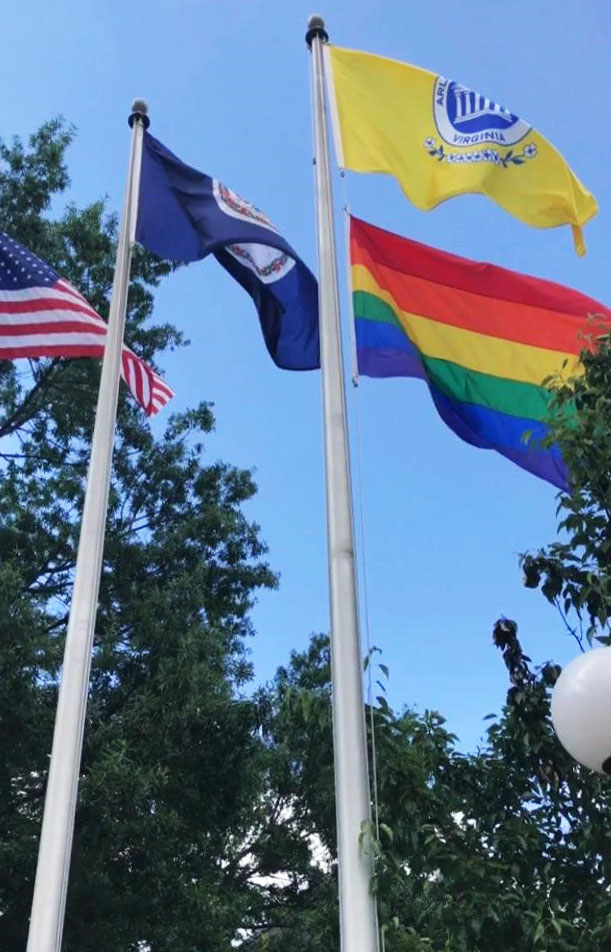
Arlington Public Library is honoring this date by displaying Pride flags at all of our locations.

As a gay person, National Coming Out Day holds personal significance.

I take it personally when we discover pages in our Library’s children’s books about gay moms and dads have been deliberately torn or defaced.

Photo of the Pride flag flying on the flagpole under the Arlington County flag at Central Library

I take it personally when a patron writes me and tells me that the Library’s Pride Month book displays promote sexually deviant behavior.

And I take it personally when a patron threatens to trash a branch library because it has displayed the Pride flag.

As an Arlington County leader, my support of National Coming Out Day means that I encourage Library staff to show up at work as they truly are — proudly and without fear of consequence.

As a public library director, National Coming Out Day reminds me that each day in a library is coming out day. Libraries are judgement free zones – safe spaces that welcome all who enter their doors, regardless of beliefs, preferences, country of origin, age, income status or appearance.

And as a gay person, National Coming Out Day affirms a commitment I made to myself: to respect and honor my choices and to be who I am, this day and every day.

Diane

Scrawled signature of Diane Kresh

October 7, 2019 by Web Editor

  • « Go to Previous Page
  • Page 1
  • Interim pages omitted …
  • Page 10
  • Page 11
  • Page 12
  • Page 13
  • Page 14
  • Interim pages omitted …
  • Page 40
  • Go to Next Page »

Footer

About Us

  • Mission & Vision
  • Charlie Clark Center for Local History
  • News Room
  • Get Email Updates

Administration

  • Policies
  • Library Staff
  • Job Opportunities
  • Propose a Program or Partnership

Support Your Library

  • Friends of the Library
  • Giving Opportunities
  • Donating Materials
  • Volunteer Opportunities

Our Mission

We champion the power of stories, information and ideas.

We create space for culture and connection.

We embrace inclusion and diverse points of view.


Download the Library App

Download the Library App

Arlington County | Terms & Conditions | Accessibility | Site Map
· Copyright © 2026 Arlington County Government ·