• Skip to primary navigation
  • Skip to main content
  • Skip to footer

Alert

Parking Updates for Columbia Pike Library More Info

Alert

Update: Elevator outages, maintenance and upgrades at Central Library More Info

Home - Arlington County Virginia - Logo
MENUMENU
  • Join Now
  • My Account
    • Login
    • My Checkouts
    • My Holds
    • My Lists
    • My Reading History
    • About Borrowing
    • About Holds
    • About My Account
  • Hours & Locations
    • All Hours & Locations
    • Holiday Closings
  • News
    • Library News
    • Director's Blog
    • Get Email Updates
  • Contact Us

Arlington Public Library

MENUMENU
  • Search
  • Collections
  • Library Services
  • Events
  • Community Engagement
  • Join Now
  • My Account
    • Login
    • About Borrowing
    • About Holds
    • About My Account
  • Hours & Locations
    • All Hours & Locations
    • Holiday Closings
  • News
    • Library Blog
    • Get Email Updates
  • Contact Us

Web Editor

Pencil Me In: Waneta’s Dance Card

Post Published: August 7, 2019

Have you ever “penciled someone in” for coffee, or said “my dance card is full” when you're busy?

Both sayings refer back to the historic dance cards used at formal dances in the 19th and early 20th centuries.
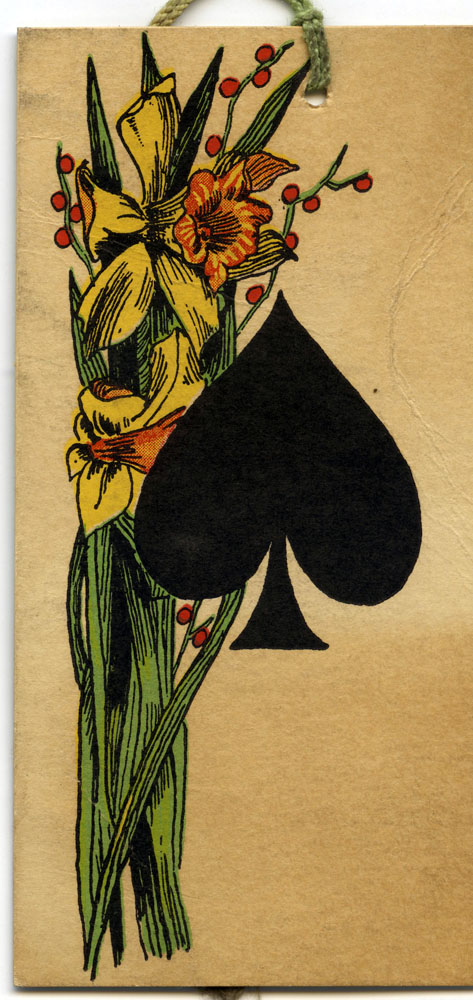
dance card decorated with daffodils and a spade
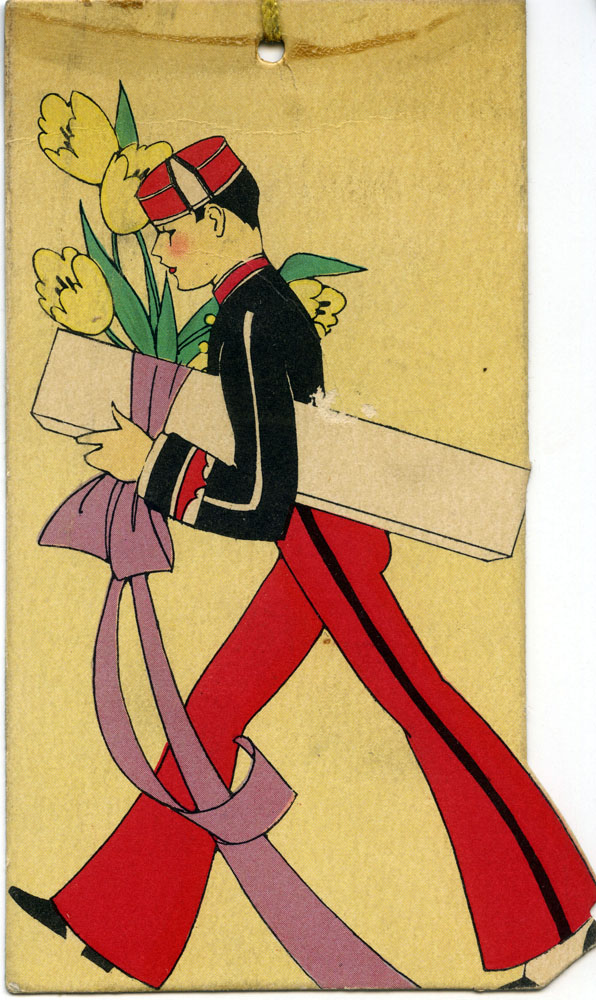
dance card decorated with a drawing of a bellboy carrying a flower box

These beautifully decorated dance cards, from Waneta Blue’s time at the University of Virginia during the 1920s, were not only a practical way to keep track of social engagements and dance partners, but also a small keepsake from formal dances and parties.

Dance cards became popular at balls and social events in Europe and the United States during the 1800s and remained common at dances planned for students until the 1940s.

At a dance, young men wrote their names just once in the card of each of the young women with whom they wanted to dance. Dance cards often looked like a booklet with decorative cover, and included the order of dances, including the music and composers.
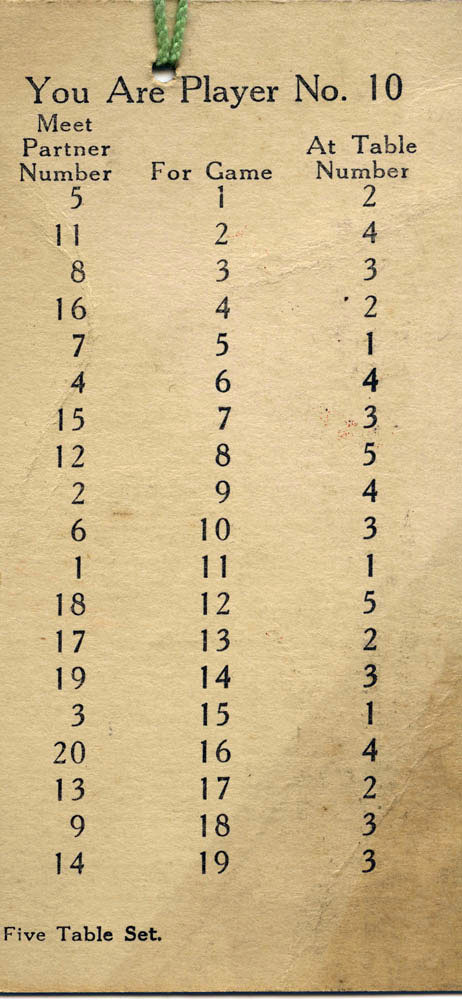
Card reading "You are player no. 10" and then instructions for where to sit and how to find your partner
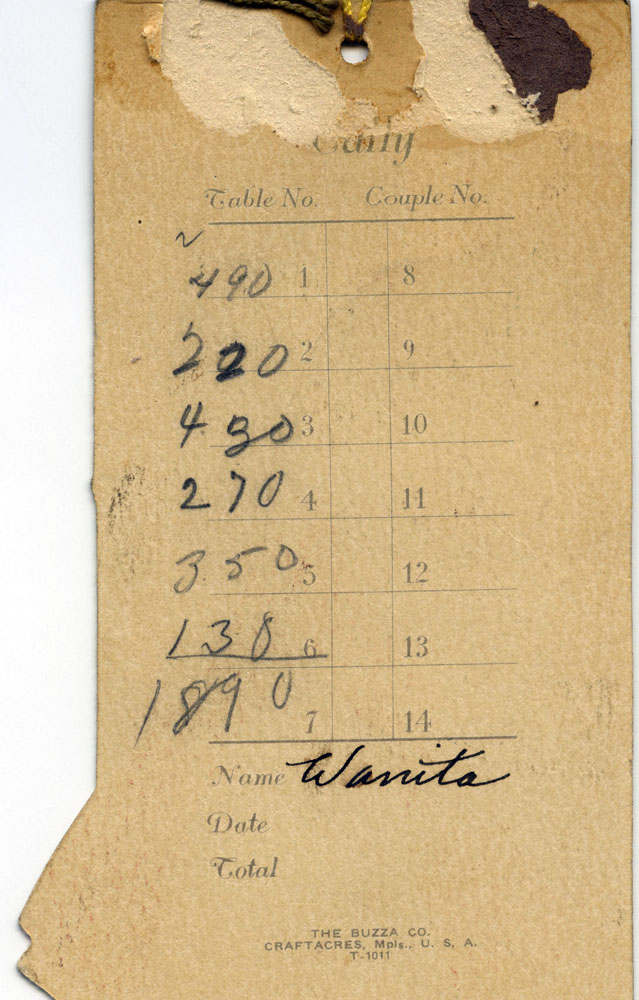
Waneta Blue's dance card, with no names filled in

As you’ve probably noticed, it was completely up to the men to decide to put their names on a woman’s dance card, and to initiate the dancing. While Waneta Blue's card doesn’t reveal any of the names of her dance partners, her evening appears to have also included at least one table game with a randomly assigned partner.

One interesting note: judging by the records in our collection, Waneta Blue appears to have experimented at times with spelling her first name with an "i" instead of an "e." An example of this can be seen at the bottom of her dance card.

The items photographed here are from our Community Archives collection, Records of the Blue Family. The collection also includes greeting cards to members of the family, school records of the Blue sisters, and more materials from Waneta Blue’s years at the University of Virginia in the 1920’s.

To learn more, visit the Center for Local History on the first floor of the Central Library.

Do you have a question about this story, or a personal experience to share? 

Use this form to send a message to the Center for Local History.

Center For Local History - Blog Post Message Form

Do you have a question about this story, or a personal experience to share? Use this form to send a message to the Center for Local History.

"*" indicates required fields
This field is for validation purposes and should be left unchanged.

Share Your Story

August 7, 2019 by Web Editor

Dog Days with the Allwine Children

Post Published: August 1, 2019

Arlingtonians have always loved dogs...

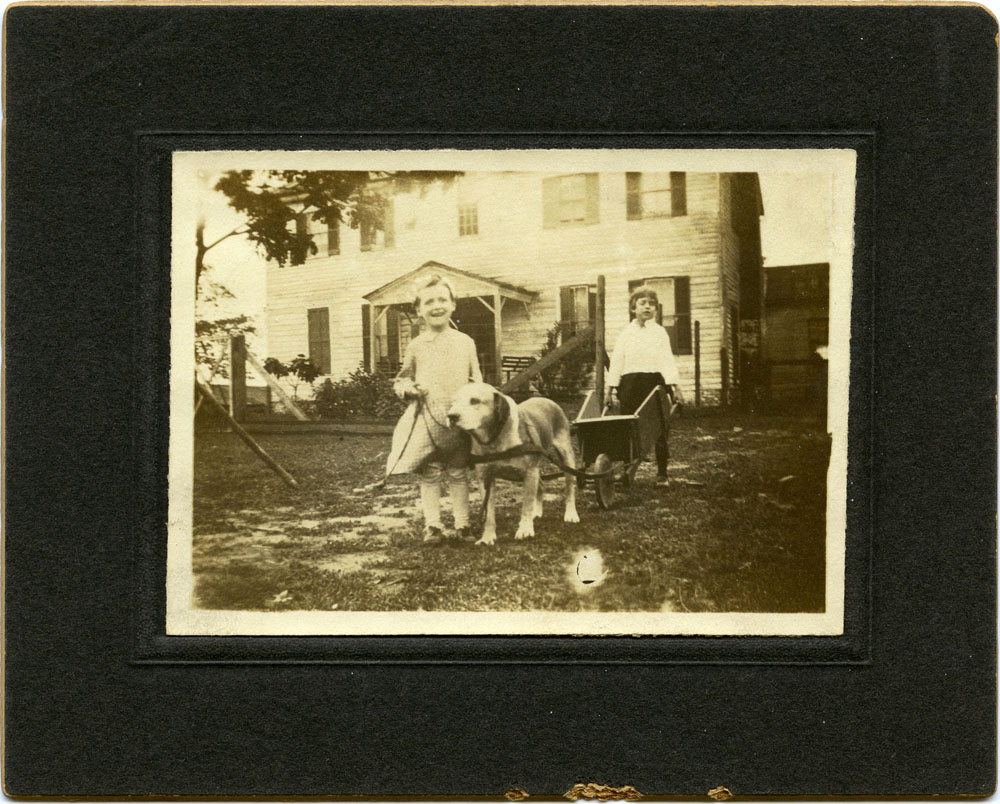
Two children and a dog cart, date unknown, after 1912

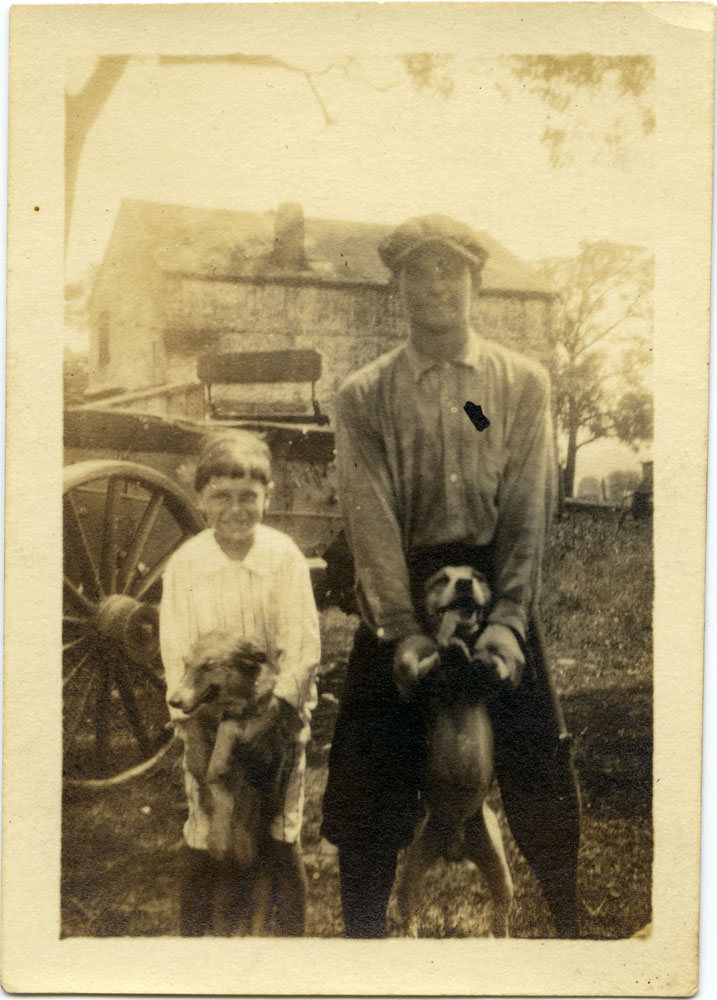
The inscription on this photo reads: "V.A., A.A., Taft" - Vivian Allwine, --- Allwine (her brother, first name unknown), and Taft the dog.

In the early part of the 1900s, on the site that later became Reagan National Airport, Vivian Allwine Ford grew up on a farm named Abingdon Plantation.

She was born at home, on December 31, 1912, and lived there with her mother, father, and six brothers until 1922. The Allwine family grew corn, tomatoes, apples, and peppers, and sold their produce in Washington, DC. They also raised animals including donkeys, chickens and turkeys.

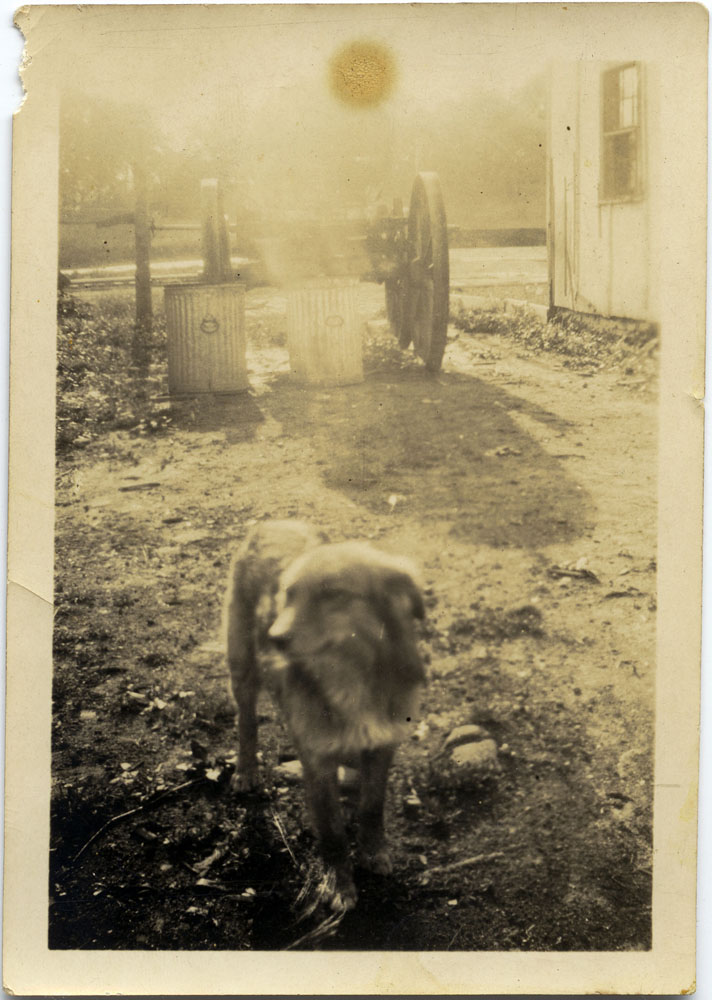
But as these photos show the Allwine family children were particularly fond of their four-legged best friends.

Two boys with dogs
Collie looking dog

Although the dogs in the photos are not identified by breed, they appear to be mixed herding and hunting dogs – maybe a collie and a beagle mix - which would have made them well suited for farm work as well as playing with rambunctious children. Based on the inscription on the back of the first photo, one of the dogs appears to have been named "Taft," possibly after President William Howard Taft who held office from 1909-1913.

In an oral history conducted in 2005, when she was 92, Vivian Allwine Ford recalled life on Abingdon Plantation in the 1920’s. Her father managed the brickyard on the property and her mother, Jeanette, opened a small grocery store on 23rd Street in Arlington.

The original Abingdon Plantation was once the home of George Washington’s stepson, John Parke Custis. Custis bought the land in 1778 in order to raise his family near Washington’s home at Mt. Vernon, as well as the family home of his wife Eleanor Calvert, in Mt. Airy, Maryland.

The remains of the plantation are still visible today near the airport.

To learn more about Arlington's history, visit the Center for Local History on the first floor of the Central Library.

Do you have a question about this story, or a personal experience to share? 

Use this form to send a message to the Center for Local History.

Center For Local History - Blog Post Message Form

Do you have a question about this story, or a personal experience to share? Use this form to send a message to the Center for Local History.

"*" indicates required fields
This field is for validation purposes and should be left unchanged.

Share Your Story

August 1, 2019 by Web Editor

Thrills and Chills at Arlington Beach

Post Published: July 24, 2019

A day at the beach sounds relaxing, but visitors to Arlington Amusement Beach in the 1920s sometimes got more thrills - and even chills - than anticipated…

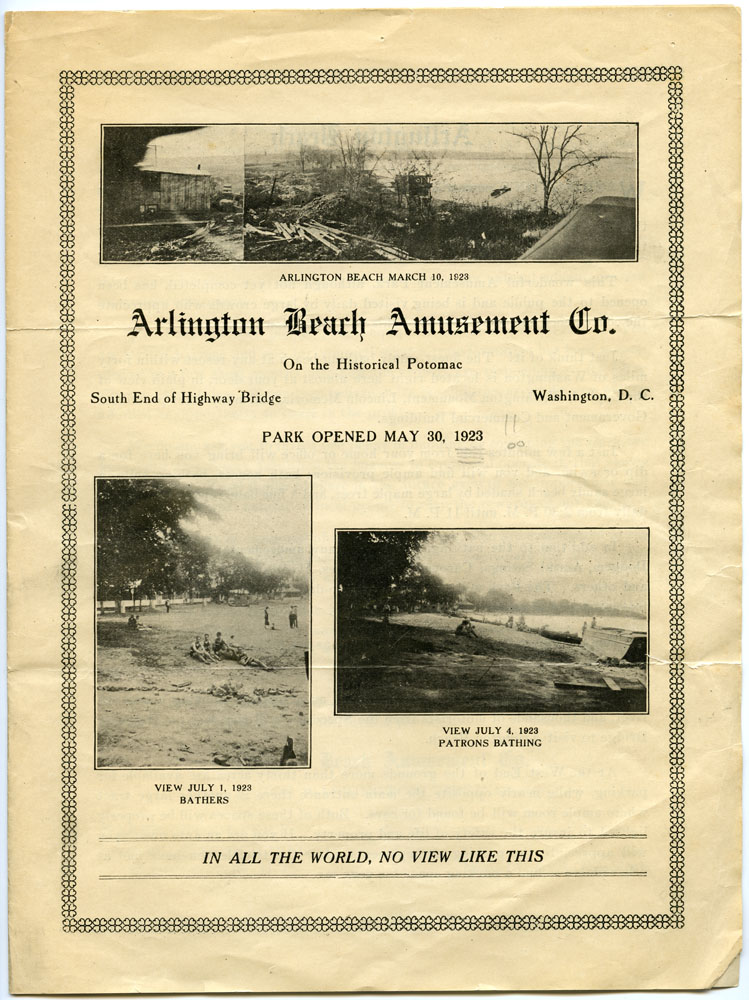
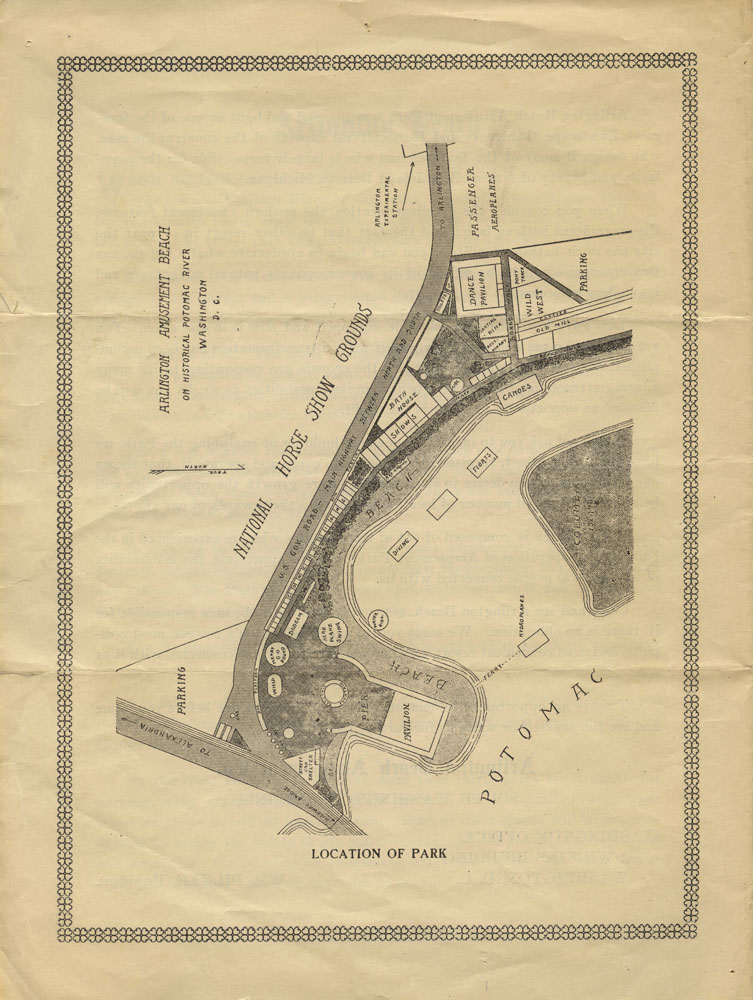
Located along the Potomac River near present-day Long Bridge Park from 1923-1929, Arlington Amusement Beach was also quite close to a local aviation field.

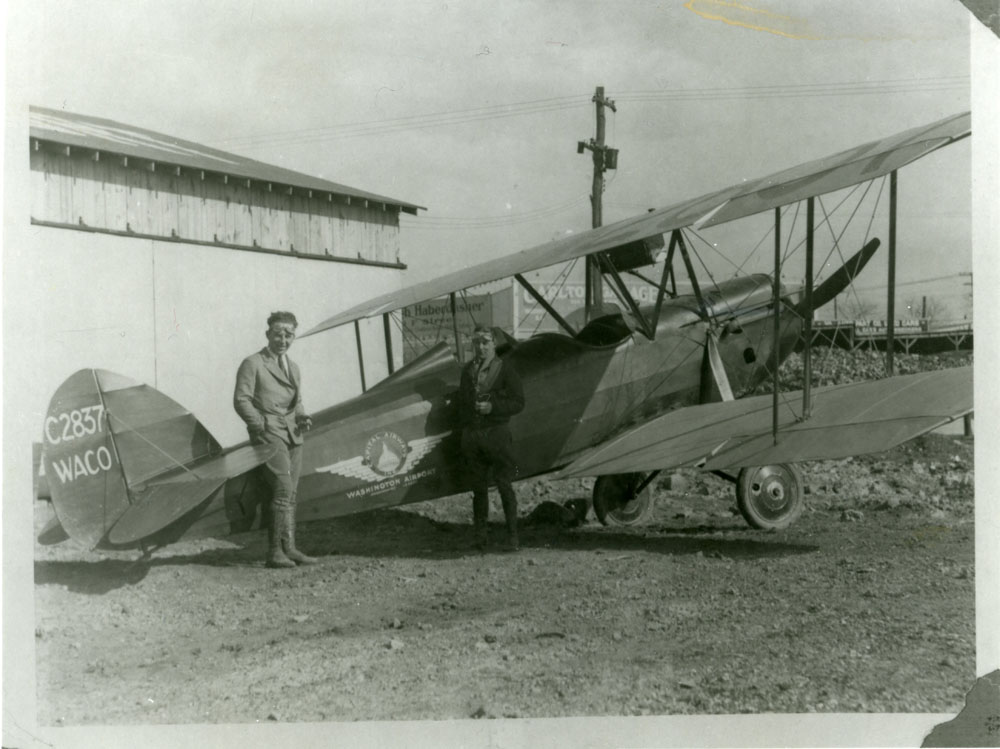
photo of a biplane at Washington Airport, 1920s

A biplane at Washington Airport, 1920s (exact date unknown)

black and white aerial photo showing Hoover field, the beach, and Washington airport, 1926

Aerial view of Hoover field, the Arlington Amusement Beach, and Washington airport, 1926.

The famous aviator Charles Lindbergh didn’t make his first historic trans-Atlantic flight until 1927, so many beach-goers were as fascinated by the spectacle of low flying planes practicing takeoffs and landings at National Aviation Field - and later Hoover Field and Washington Airport - as they were interested in a day on the water.

The first photo, taken in the late 1920s, shows a plane at Washington Airport. The second photo, taken in 1926, shows an aerial view of Hoover field, the Arlington Amusement Beach, and Washington airport.

Arlington Branch Amusement Park cover of flyer
Arlington Branch Amusement Park map

Arlington Beach pamphlet, cover and page 4

But airplane watching wasn’t always fun. Beach-goers occasionally witnessed plane crashes and accidents, some even fatal.

On June 17, 1923, 2,000 people watched as Clarendon resident Clarence A. Rossignol fell to his death attempting to jump from airplanes to entertain the beach crowd. He was reportedly hoping that by successfully completing this stunt he would sign a contract with Arlington Amusement Beach to perform regularly.

In another accident, due to a heavy tailwind, a two-passenger plane crashed into the Potomac. Luckily both the pilot and his passenger—a tourist seeking the “thrill of a ride in an airplane”—survived.

To learn more visit the Center for Local History on the first floor of the Central Library.

Do you have a question about this story, or a personal experience to share? 

Use this form to send a message to the Center for Local History.

Center For Local History - Blog Post Message Form

Do you have a question about this story, or a personal experience to share? Use this form to send a message to the Center for Local History.

"*" indicates required fields
This field is for validation purposes and should be left unchanged.

Share Your Story

July 24, 2019 by Web Editor

Oral History: Introducing New Breads to Arlington

Post Published: July 18, 2019

Arlington Voices the Oral History Collection

Interview with Carla and Wolfgang Buchler of Heidelberg Pastry Shoppe

Heidelberg Bakery is a local landmark in Arlington. Like the county itself, the restaurants and bakeries throughout the area are incredibly diverse and delicious.

In this oral history clip, Carla and Wolfgang Buchler, owners of the Heidelberg Pastry Shoppe, discuss the lack of diversity in breads that Wolfgang found in America when he first came to the U.S. in the 1970’s—and how tastes have changed, partly due to Heidelberg Pastry Shoppe’s delicious treats.

NARRATOR 1: Wolfgang Buchler
NARRATOR 2: Carla Buchler
INTERVIEWER: Andrew Ausel
DATE: March 8, 2017

Transcript:

WB: Well, for me, I didn’t have—like, in America you couldn’t find a good bread. Okay? That was my—you could find some pastries, but you couldn’t find any good bread around. So at the beginning, they actually gave me a very rough time when I baked bread like we baked in Germany. They brought it back, as if it was stale, but it was just normal, so we had to adjust some of our baking—

CB: In the 70’s people were—I guess exotic bread was French bread. So switching over to rye breads—

WB: Rye breads.

CB: Hearty breads. Kind of heavier things.

WB: Seeded breads, and everything. Yeah.

CB: Now it’s different, people are exposed to—I think they are more international with their tastes. In the 70’s it was a little different.

WB: And our white bread was not like in America. White bread, we tuck under and tuck over and it comes back up again. (Laughs). It was very different, but that difference is what established our name and our breads and our good products.

AA: Did you find that people were sort of—they had a hard time adjusting to your style of bread? Or was it like “Oh my Gosh! Why have I not been eating this?”

WB: I think it’s just the style. A lot of people just had never been used to eating a healthy bread.

You can find Carla and Wolfgang Buchler's interview in its entirety in the Center for Local History - VA 975.5295 A7243oh ser. 13 no. 6. Photo: RG216-0491, Eleanor Schlesinger Photograph Collection.


The goal of the Arlington Voices project is to showcase the Center for Local History’s oral history collection in a publicly accessible and shareable way.

What is the oral history collection?

Oral history is a popular method of research used for understanding historical events, actors, and movements from the point of view of people’s personal experiences.

The Arlington Public Library began collecting oral histories of long-time residents in the 1970s, and since then the scope of the collection has expanded to capture the diverse voices of Arlington’s community. In 2016, staff members and volunteers recorded many additional hours of interviews, building the collection to 575 cataloged oral histories.

To browse our list of narrators indexed by interview subject, check out our community archive. To read a full transcript of an interview, visit the Center for Local History located at Central Library.

July 18, 2019 by Web Editor

Arlington’s African-American Baseball Teams

Post Published: July 17, 2019

While the Washington Nationals dominate most local baseball discussions, there is also a fascinating history of baseball in Arlington’s African-American community.

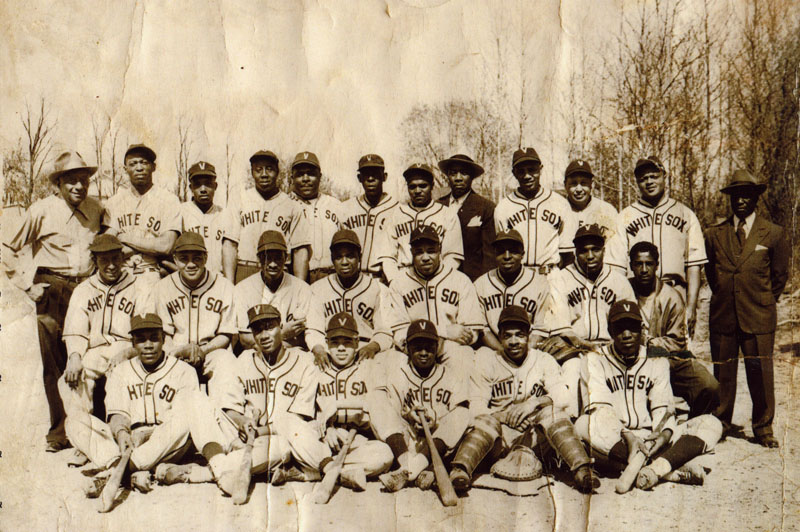
1930s baseball team, all black men, photograph

Arlington's Virginia White Sox baseball team, 1930s (exact date unknown)

The earliest known baseball team, named The Old Virginia Blues, started in 1910. They played each Sunday on a field in East Arlington near Arlington Junction.

The two best known teams—the Virginia White Sox (pictured above) and the Green Valley Black Sox—started playing in the 1930’s. Each weekend throughout the summer, the teams competed at a field near High View Park, on land which is now occupied by the Virginia Hospital Center. Their games provided a social gathering place for local residents and families.

After the land was purchased for development, the teams folded, for lack of a place to play.

To learn more about Arlington's history, visit the Center for Local History on the first floor of the Central Library.

Do you have a question about this story, or a personal experience to share? 

Use this form to send a message to the Center for Local History.

Center For Local History - Blog Post Message Form

Do you have a question about this story, or a personal experience to share? Use this form to send a message to the Center for Local History.

"*" indicates required fields
This field is for validation purposes and should be left unchanged.

Share Your Story

July 17, 2019 by Web Editor

Putt-Putt Golf Courses

Post Published: July 11, 2019

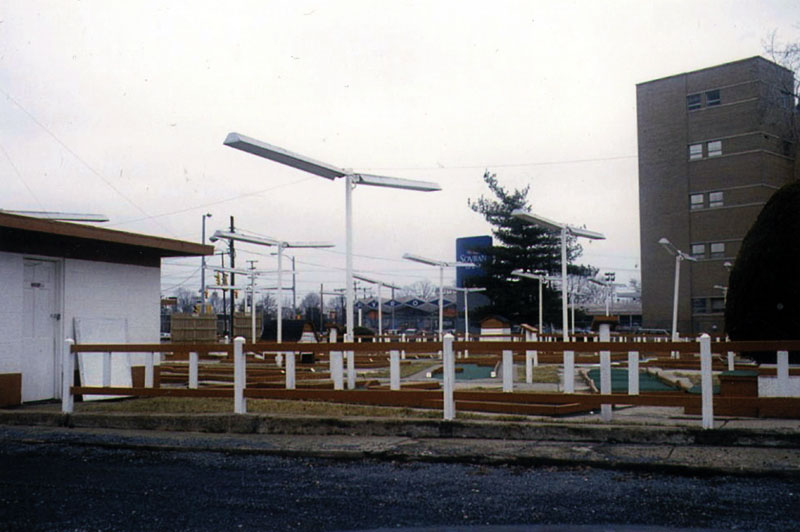
Mini-golf attracted visitors from across the region to Arlington for over 50 years.

put-put golf course wide view
Putt-putt golf course
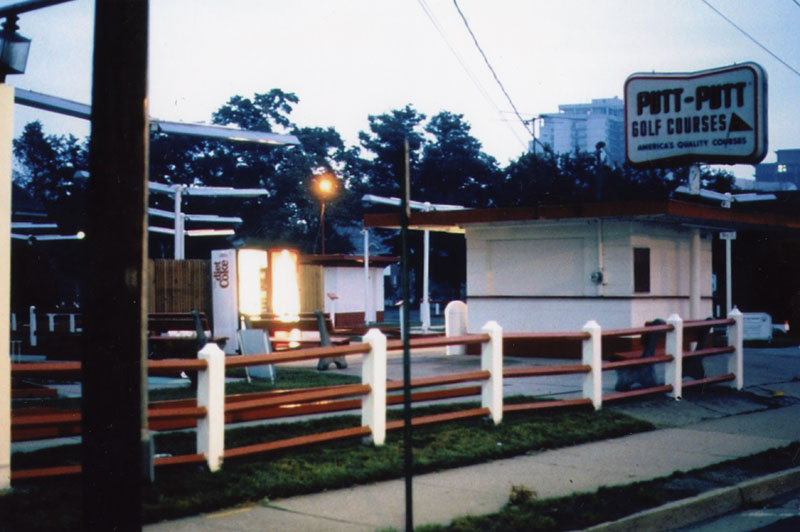
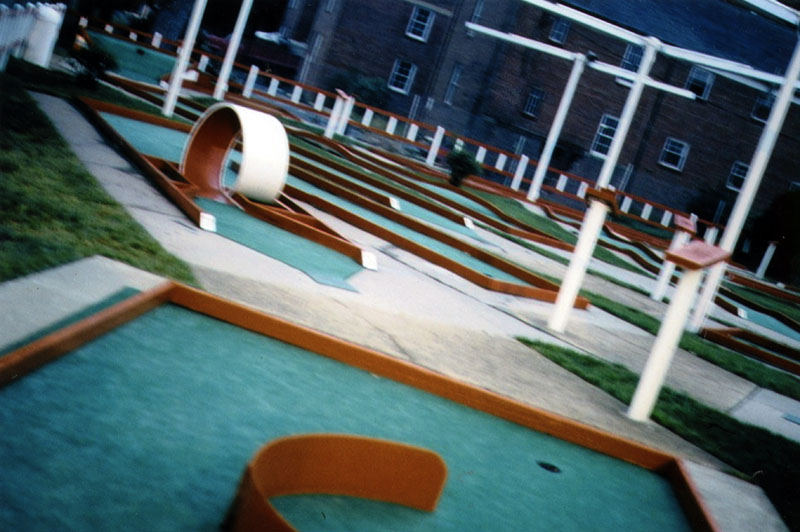
putt-putt-golf course close up

In 1930, Robert P. Balinger opened a miniature golf course on Wilson Blvd. in Ballston. 30 years later, it was replaced by the 36-hole course pictured above.

When Putt-Putt Golf Courses closed for good in 1989, making way for Ballston’s rapid high-rise development, many mourned its loss as a fun, multi-generational activity and hoped it would relocate elsewhere in Arlington.

Unfortunately, the Putt-Putt Golf Courses never found a new home in Arlington, but its memory lives on. Now Arlington putt-putt lovers can go to Upton Hill Park for mini-golf, or sometimes find pop-up mini golf courses like the one in Rosslyn this summer.

Looking for an extra glimpse of Arlington history? In the background of the first image, you can catch a glimpse of Bob Peck Chevrolet, an iconic Arlington landmark from 1964-2008.

To see more items like these, or to learn more about Arlington's history, visit the Center for Local History on the first floor of the Central Library.

Do you have a question about this story, or a personal experience to share? 

Use this form to send a message to the Center for Local History.

Center For Local History - Blog Post Message Form

Do you have a question about this story, or a personal experience to share? Use this form to send a message to the Center for Local History.

"*" indicates required fields

This field is for validation purposes and should be left unchanged.

Share Your Story

July 11, 2019 by Web Editor

What Arlington Treasures Are Hiding In Your Attic or Filing Cabinet?

Post Published: July 10, 2019

Contribute to the Community Archive

Donate your papers and photos to the Center for Local History and help to tell Arlington's story!

Students looking at an old yearbook from the Center for Local History archive
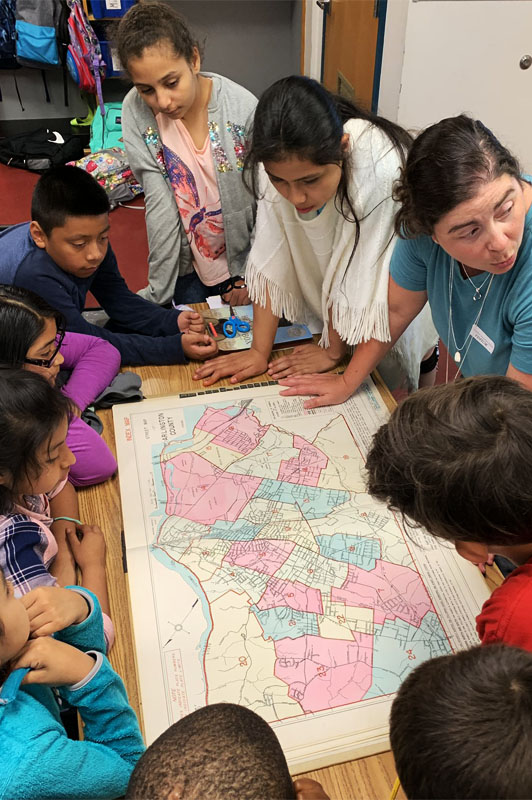
Students looking at a map from the Center for Local History archive

Center for Local History Archivist Heather shows an Arlington yearbook and a 1935 Franklin Property Atlas to a class of 4th graders at Barrett Elementary School.

During Pride Month, we had hoped to share a story from our archive relating to Arlington's LGBTQIA+ community and history. Unfortunately, we were unable to do so because our collection currently has a shortage of materials related to these topics.

We'd love to fix this gap, and many others, so that we may continue to fulfill our mission to document all of Arlington's diverse community. If you have photos, newsletters, flyers, and/or other materials (physical or digital) related to untold Arlington County history - LGBTQIA+ or anything else - we'd love to add it to the Community Archive.

To donate, visit the Center for Local History at Central Library, call us at 703-228-5966, or email us at localhistory@arlingtonva.us.

Learn more about the kinds of materials that can be donated to the Center for Local History.

July 10, 2019 by Web Editor

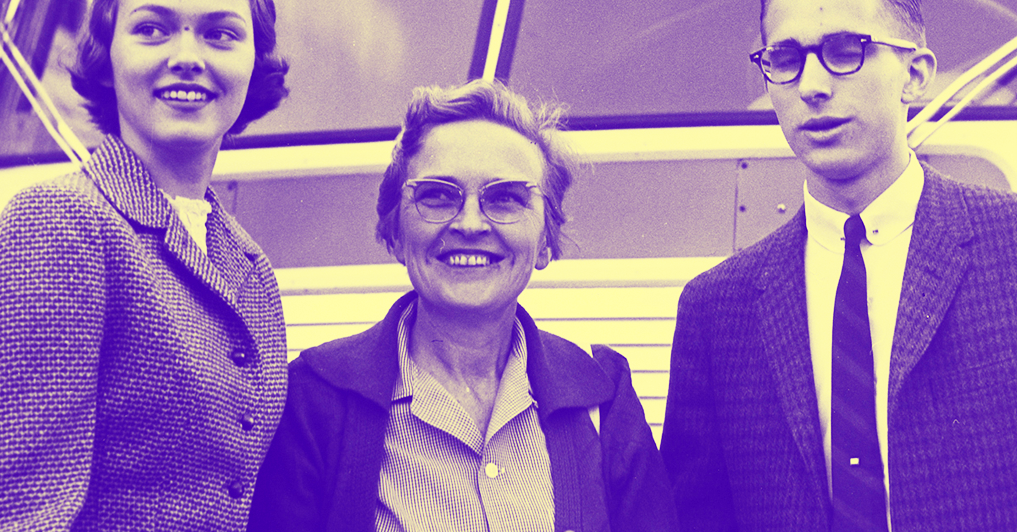
Have You Ever Stood Awestruck In A Great Forest?

Post Published: June 27, 2019

Phoebe Knipling

The year is 1967.

Phoebe sees that her high school students are disconnected from the natural world. So she founds The Outdoor Lab in the foothills of the Blue Ridge Mountains.

Now generations of urban Arlington students can study animals and plants in their natural ecosystems.

Transform science education: That’s Women’s Work

Two years in the making, Arlington Public Library's Women's Work exhibit presents the stories of women trailblazers and their far-reaching impact on politics, education, business, social activism and public libraries.

The curated digital collection contains stories, photographs, letters and memorabilia and spotlights both individuals and groups of Arlington women who dedicated their work to improve the lives of others.

Because there are always more layers of history to find and examine, the Center for Local History continually seeks community donations and oral histories. Contact us at 703-228-5966 or by email.

June 27, 2019 by Web Editor

Happy 100th Birthday, Birdie Alston!

Post Published: June 26, 2019

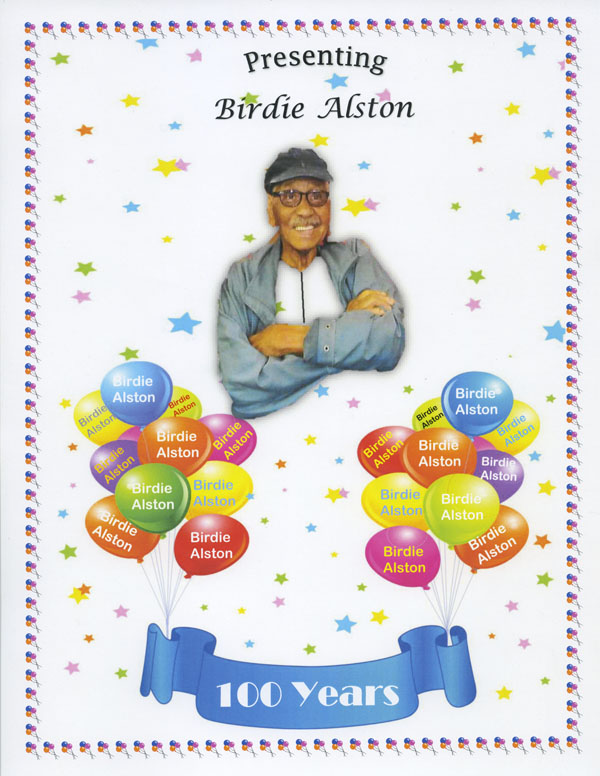
Longtime Arlington resident Birdie Alston recently celebrated his 100th birthday.

Mr. Alston’s life has been marked by a commitment to community service, civil rights, and a love of photography and gardening.

Birdie Alston's birthday poster with balloons

Born in June 1919, Mr. Alston grew up in South Carolina. He came to Arlington as a young man in 1944, first settling in South Arlington and then moving to the Hall’s Hill/High View Park neighborhood with his wife, Mable Shirley Alston in 1947. He worked first as a short order cook and then at Olmstead Oldsmobile for forty years.

After the end of World War II, Mr. Alston became involved with civic and civil rights movements, as a member of the Langston Civic Association (and President of the organization in the 1960’s) and the NAACP of Arlington and Fairfax Counties. He was instrumental in growing the memberships of both groups and working alongside other well-known Arlingtonians such as Dorothy Hamm and Barbara Marx. In addition to these activities, Mr. Alston was on the Board of Directors at the Veteran’s YMCA and helped to found the North Arlington Child Care Centers, Inc.

Mr. Alston was also involved with the Neighborhood Conservation Plan, established in 1964 as a way for communities within Arlington to meet as neighbors and discuss ideas about improving their own neighborhoods. As an avid gardener, Mr. Alston was instrumental to the sustained improvement of the Hall’s Hill/High View Park neighborhood. Mr. Alston further supported the mission of the Neighborhood Conservation Plan by petitioning and working with the Arlington County Board for street improvements throughout High View Park. He has also been a longtime member of Calloway United Methodist Church.

As an enthusiastic photographer, he took pictures of family, friends, and everyday life in Arlington throughout the 1950’s, ‘60’s, and beyond, and was involved with local black heritage events such as Nauck Pride Day and Feel the Heritage Festival.

In an oral history conducted in 1991 with Mr. Alston, he remarked: “…I was just an average citizen in the community. I didn't wear no fancy clothes…I was a working man, I went to work.”

We think that Mr. Birdie Alston’s life and commitment to community involvement have been anything but average or ordinary and wish him a happy 100th birthday.

The Personal Papers of Birdie and Mable Alston (RG 338) were donated to the Center for Local History in October 2017. This collection includes photographs, physical objects, and materials from Mr. Alston’s involvement with various civil rights and community activities throughout the mid to late 20th century.

For more information, and to see items from the collection, visit the Center for Local History on the first floor at Central Library.

June 26, 2019 by Web Editor

Do You Like Arlington’s Vibrant, Walk-Friendly Culture?

Post Published: June 20, 2019

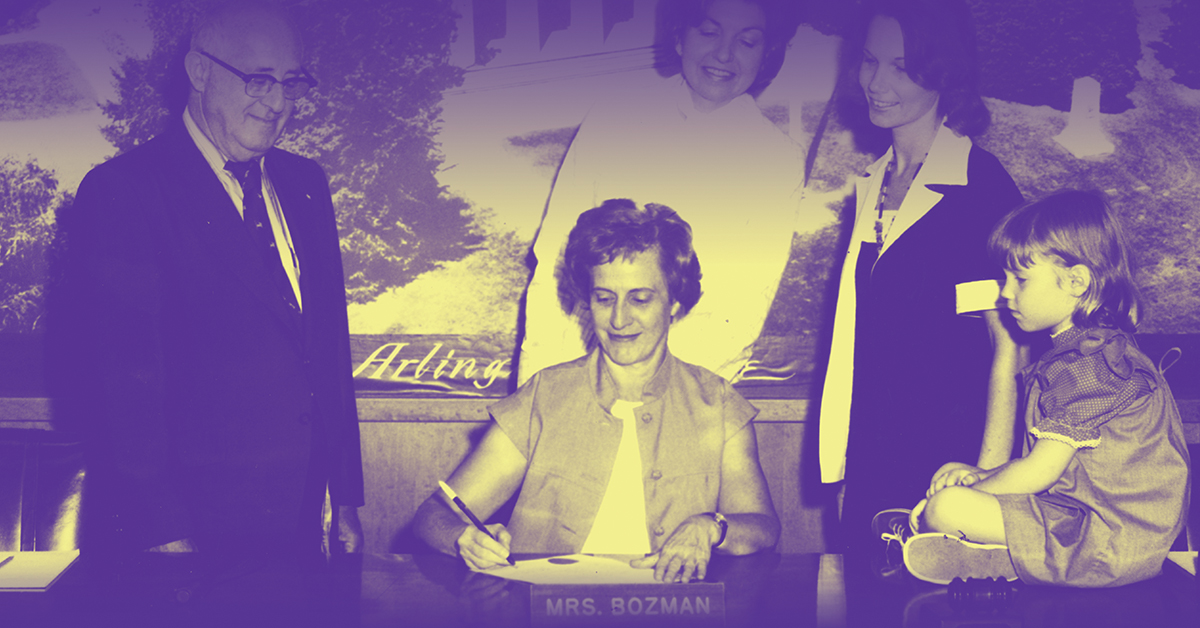
Ellen Bozman sitting in the County Board Room

The year is 1973.

Ellen is elected to the County Board.

She leads the transformation of a Metro corridor surrounded by parks, apartments, shopping and restaurants, where the community can flourish.

Lead this town: That's Women's Work.

Lead this town: That's Women's Work.

Two years in the making, Arlington Public Library's Women's Work exhibit presents the stories of women trailblazers and their far-reaching impact on politics, education, business, social activism and public libraries.

The curated digital collection contains stories, photographs, letters and memorabilia and spotlights both individuals and groups of Arlington women who dedicated their work to improve the lives of others.

Because there are always more layers of history to find and examine, the Center for Local History continually seeks community donations and oral histories. Contact us at 703-228-5966 or by email.

June 20, 2019 by Web Editor

  • « Go to Previous Page
  • Page 1
  • Interim pages omitted …
  • Page 12
  • Page 13
  • Page 14
  • Page 15
  • Page 16
  • Interim pages omitted …
  • Page 40
  • Go to Next Page »

Footer

About Us

  • Mission & Vision
  • Charlie Clark Center for Local History
  • News Room
  • Get Email Updates

Administration

  • Policies
  • Library Staff
  • Job Opportunities
  • Propose a Program or Partnership

Support Your Library

  • Friends of the Library
  • Giving Opportunities
  • Donating Materials
  • Volunteer Opportunities

Our Mission

We champion the power of stories, information and ideas.

We create space for culture and connection.

We embrace inclusion and diverse points of view.


Download the Library App

Download the Library App

Arlington County | Terms & Conditions | Accessibility | Site Map
· Copyright © 2026 Arlington County Government ·