• Skip to primary navigation
  • Skip to main content
  • Skip to footer

Alert

Book donations will be paused April 13-25 for the FOAL Spring Book Sale More Info

Alert

Update: Elevator outages, maintenance and upgrades at Central Library More Info

Home - Arlington County Virginia - Logo
MENUMENU
  • Join Now
  • My Account
    • Login
    • My Checkouts
    • My Holds
    • My Lists
    • My Reading History
    • About Borrowing
    • About Holds
    • About My Account
  • Hours & Locations
    • All Hours & Locations
    • Holiday Closings
  • News
    • Library News
    • Director's Blog
    • Get Email Updates
  • Contact Us

Arlington Public Library

MENUMENU
  • Search
  • Collections
  • Library Services
  • Events
  • Community Engagement
  • Join Now
  • My Account
    • Login
    • About Borrowing
    • About Holds
    • About My Account
  • Hours & Locations
    • All Hours & Locations
    • Holiday Closings
  • News
    • Library Blog
    • Get Email Updates
  • Contact Us

Web Editor

Oral History: Rayfield Barber

Post Published: February 10, 2022

A Lifetime at the Center of Arlington's Airport History
ArlingtonVoices800pxpinksoundwave

Oral histories are used to understand historical events, actors, and movements from the point of view of real people’s personal experiences.

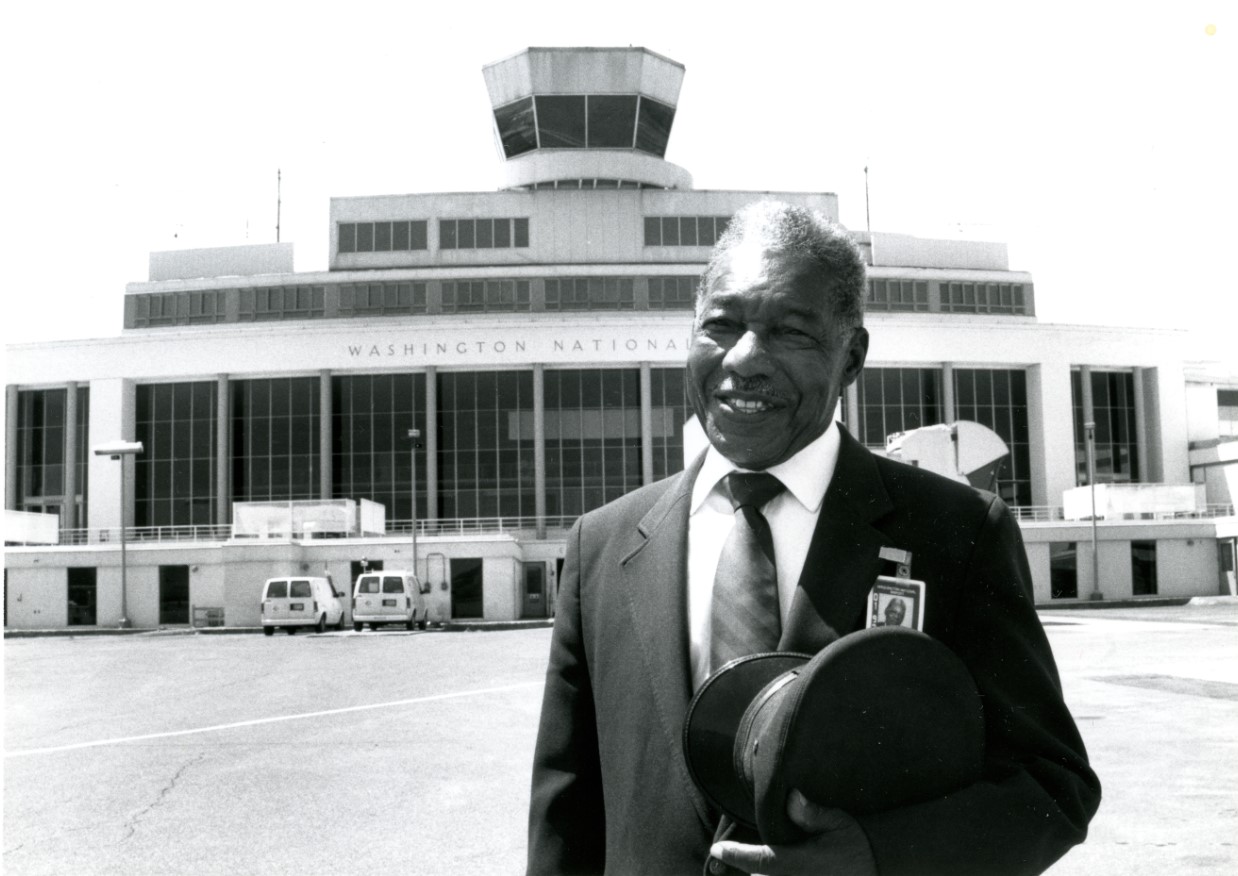
Rayfield Barber (1914-2011) was one of the few witnesses to the full trajectory of Arlington’s airport history over the course of his life, and was key to the success of the County's regional airfields.

Among one of the first airport employees in the burgeoning field of commercial flying, he had a distinguished career at both Washington-Hoover Airport and the National Airport.

Barber was born in 1914 in North Carolina, and came to live in Alexandria around 1920. Barber attended the Parker-Gray School, which at the time was Alexandria’s only primary school for Black children.
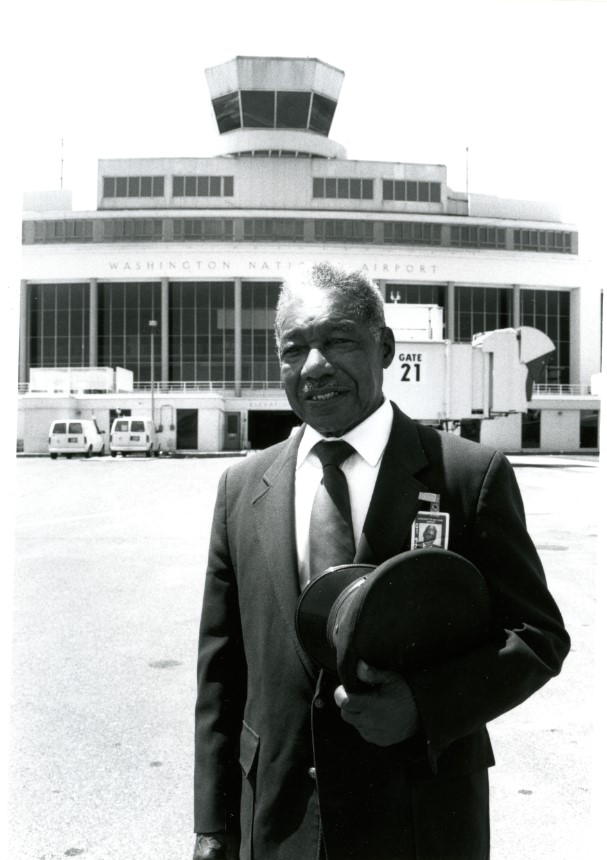
Screenshot 2022-02-09 160526

Rayfield Barber at National Airport, circa 1990s.

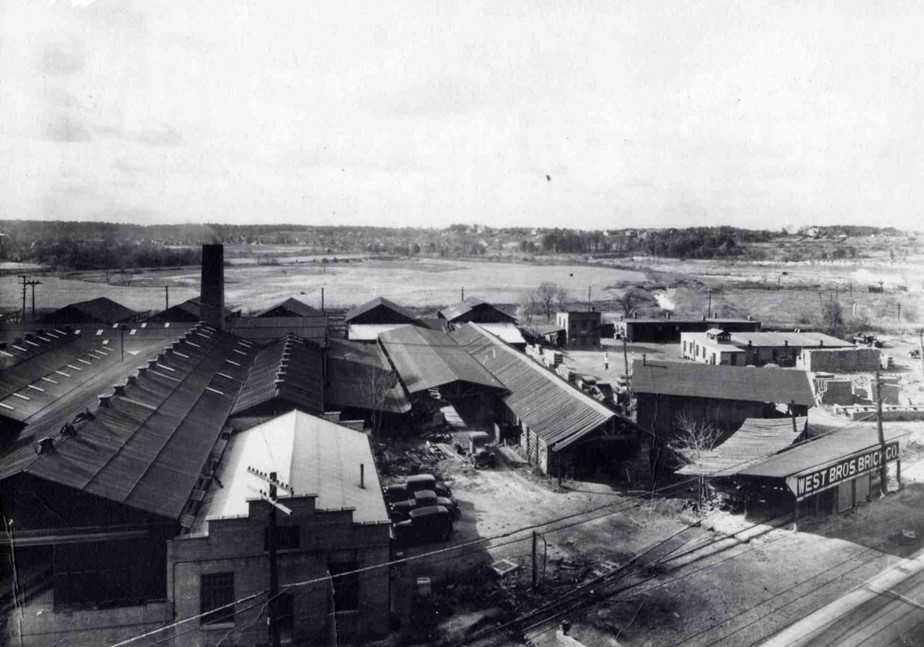
In 1932, Barber began working for the West Brothers Brick company, an Arlington-based operation that used materials from the clay deposits on the Potomac to create its product. Barber worked as a machine operator at the factory until 1937. 

Panoramic 1
Panoramic 2

Panoramic of the West Brothers brickyard, circa 1903.
Read and listen to Rayfield Barber speaking about his time working at the West Brothers Brick Company in our blog post for April 2021.

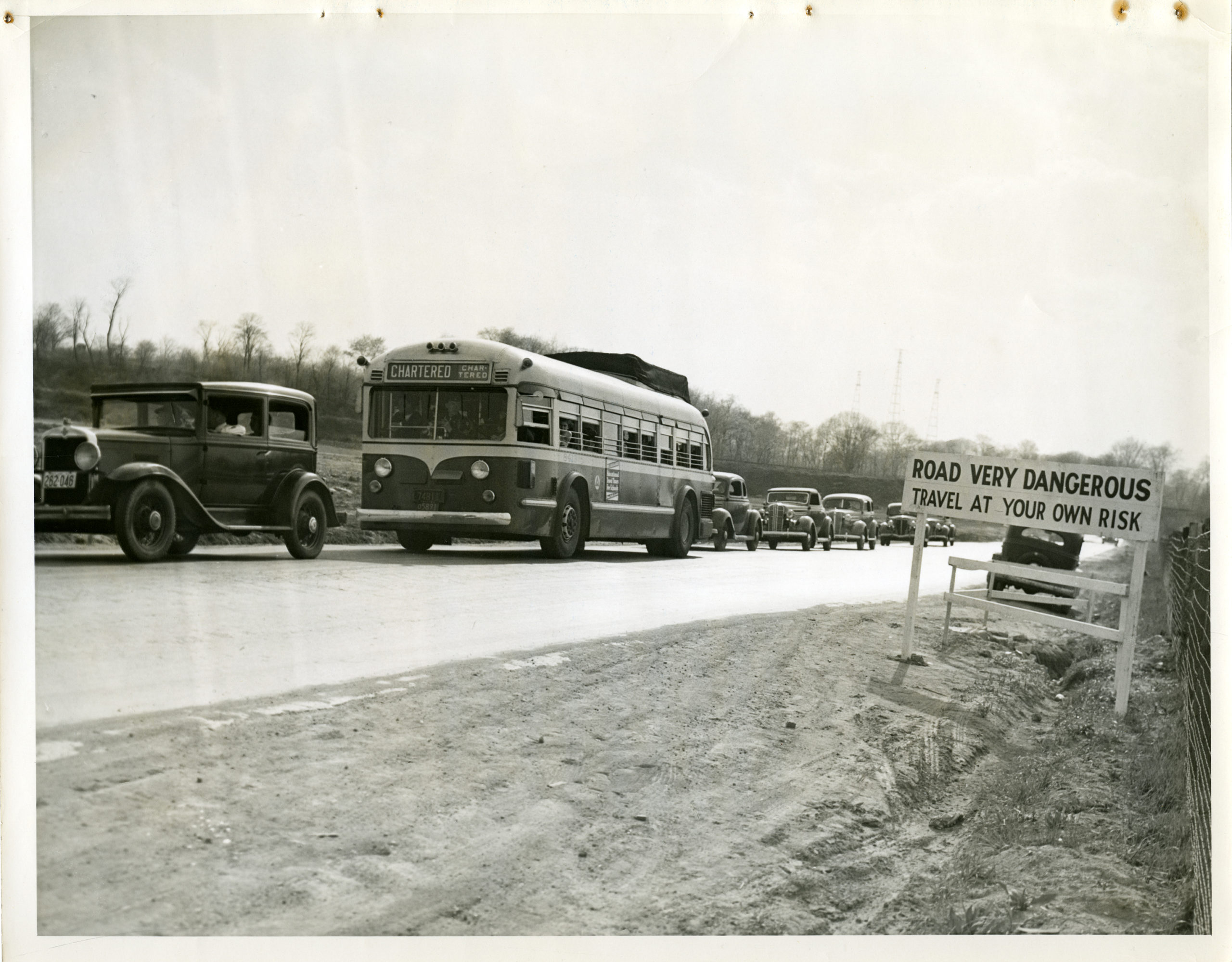
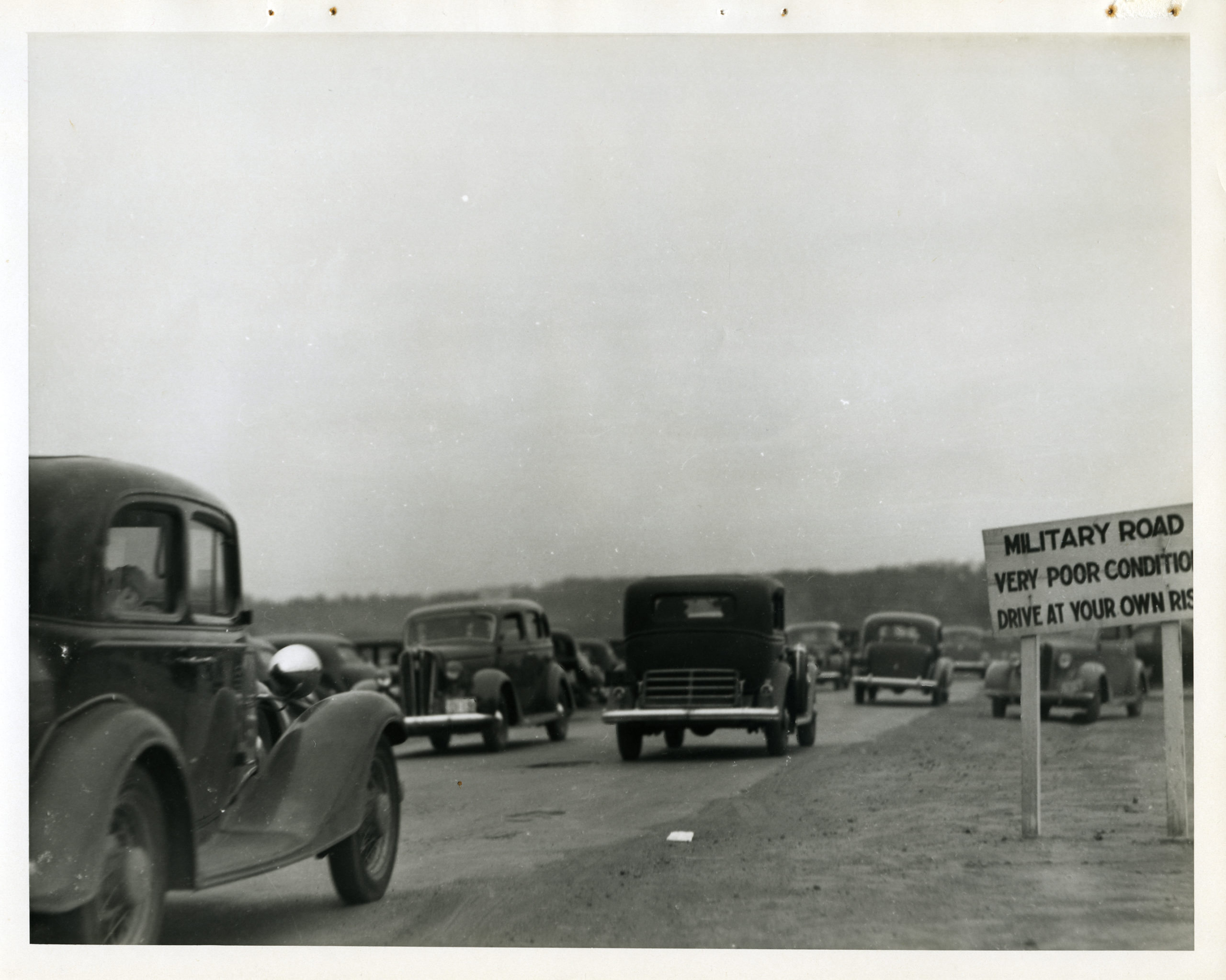
When Barber was still working at the brick factory, the Hoover Airport was in its nescient stages. The airfield opened in 1926, and merged with the adjacent Washington Airport in 1933. It was known as one of the most dangerous airfields in the country at this point, in part due to Military Road – a large thoroughfare that brought car traffic between the two airfields.
Barber began working at the airfield in the summer of 1939. In this excerpt from his oral history interview, he describes the early scenes of the airport.

Narrator: Rayfield Barber
Interviewers: Edmund Campbell and Cas Cocklin
Date: July 17, 1991

Edmund Campbell: Tell us something about the Hoover Airport, what it looked like and what were the conditions? 

Rayfield Barber: It had a hangar that was right on No. 1 Highway. You know, just right off Number 1 Highway. The terminal was setting, say, a little to the northwest of the hangar.    

Cas Cocklin: Sort of where that marina is now?  

RB: Yes, that's where it was.  Right back of the hangar was where the airplanes coming in would come down on the runway.    

EC: Only one runway, wasn't it?  

RB: That's all.  
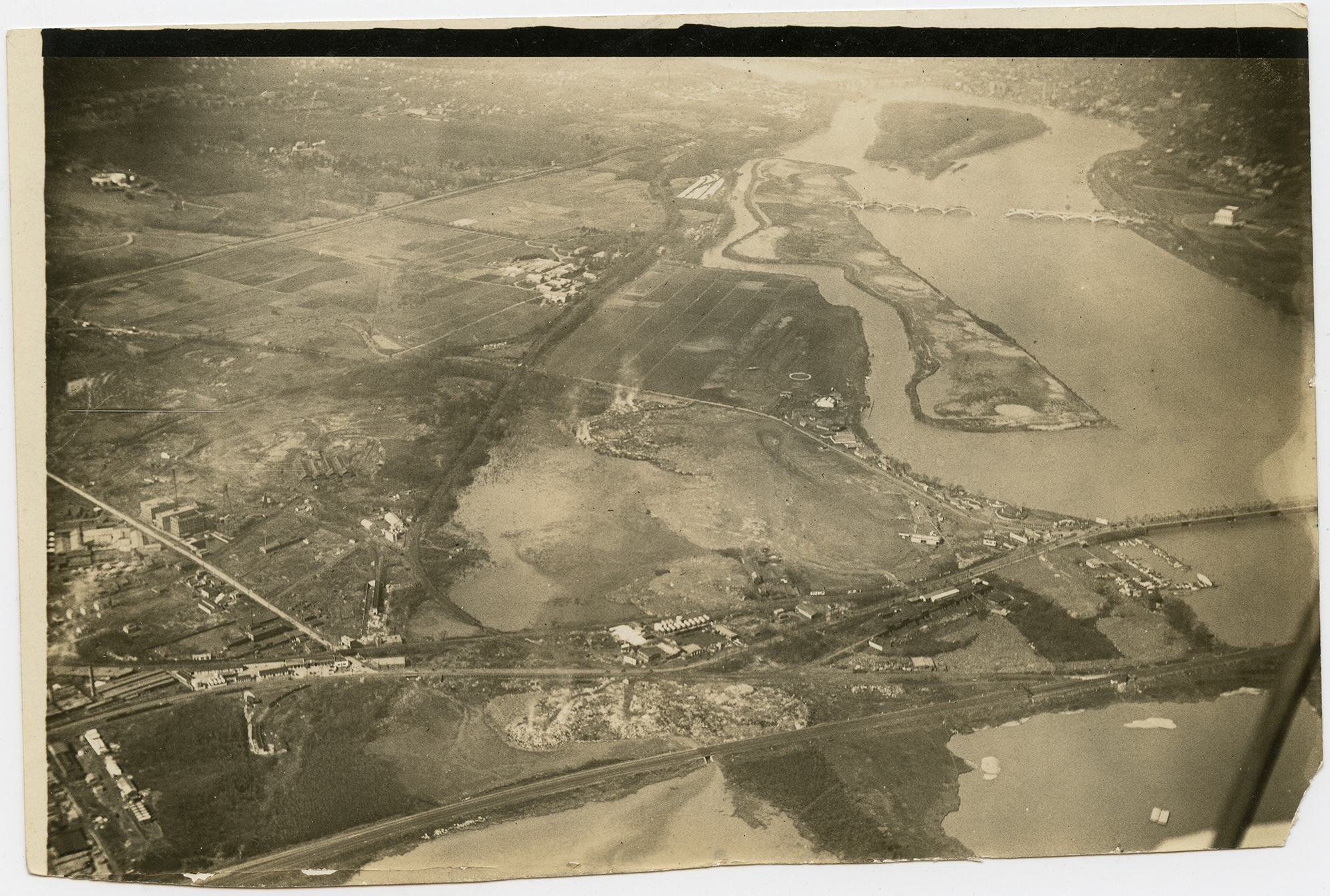
Aerial photograph of Washington Airport, Hoover Field, and the Arlington Beach and Amusement Park on the Potomac River. 1920, 1 print, b&w, 4.25 x 6.5 in..

Aerial photograph of Washington Airport, Hoover Field, and the Arlington Beach and Amusement Park on the Potomac River, circa 1920s.

EC: And where did that runway go from?  

RB: It ran right on down close to the experimental farm. You see the roadway would come up by the restaurant and food.   

EC: The roadway ran right through the runway, right across the runway, didn't it?
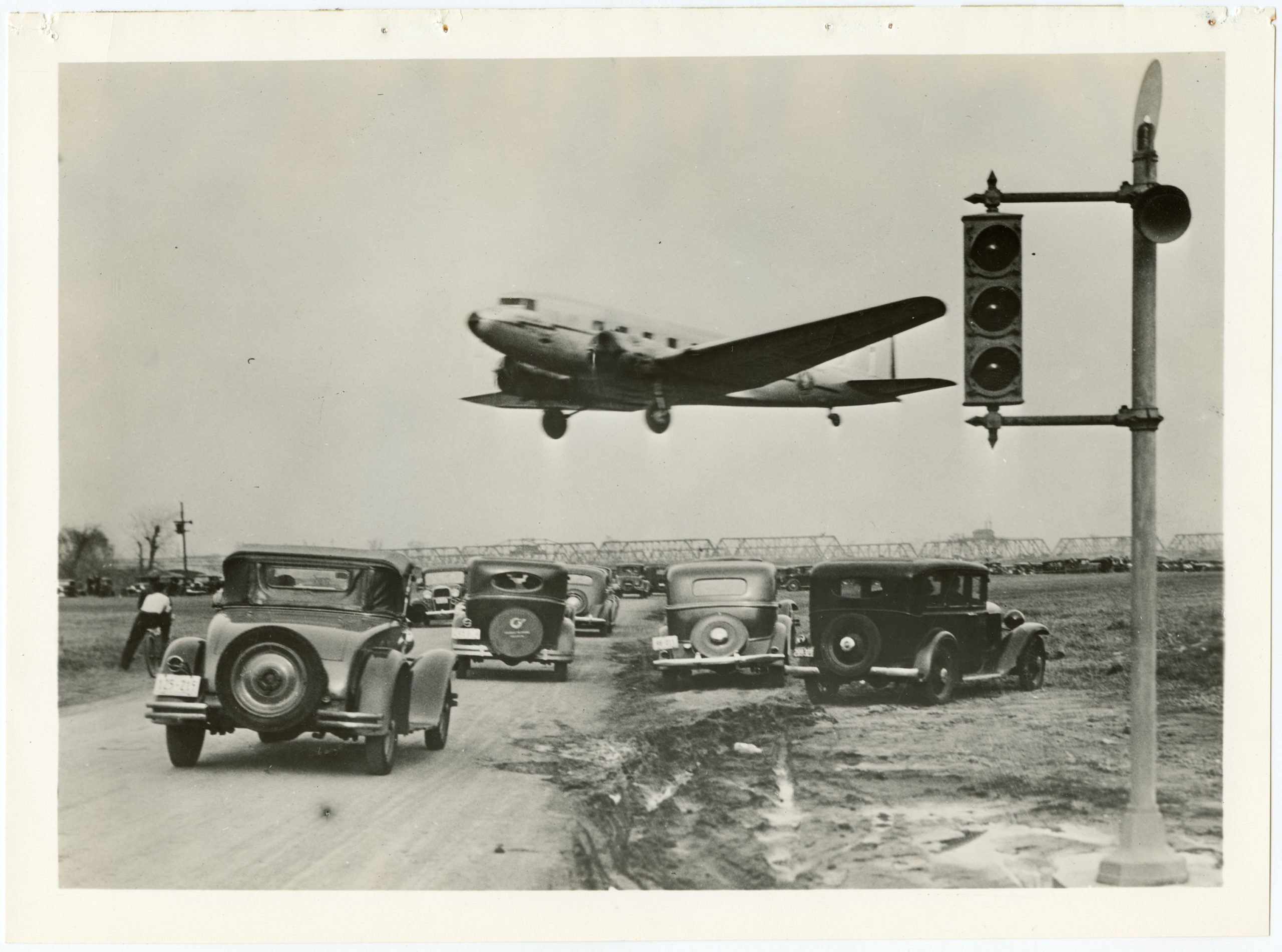
A passenger plane flying low over several cars. 1930, 1 print, b&w, 7.5 x 10 in..

A passenger plane flying low over several cars at Hoover Field, circa 1930s.

RB: That road would run right across the runway and they had those lights set up.   

CC: Stoplights.  

RB: Stoplights.

CC: To stop the traffic if a plane was landing or taking off.  

RB: That's right. See, because that road was coming right along from, coming away from Arlington Cemetery . . .  

CC: Going toward Route One. 

Listen to this audio from Barber's interview:
https://library.arlingtonva.us/wp-content/uploads/2022/02/Barber_RayField_p1.mp3
13-5110_original_

Several cars and a bus driving on Military Road with a sign that says "Road Very Dangerous, Travel at your own risk," circa 1930s.
13-5107_original_

Several cars driving down a road with a sign that says "Military road, very poor conditions, drive at your own risk," circa 1930s.

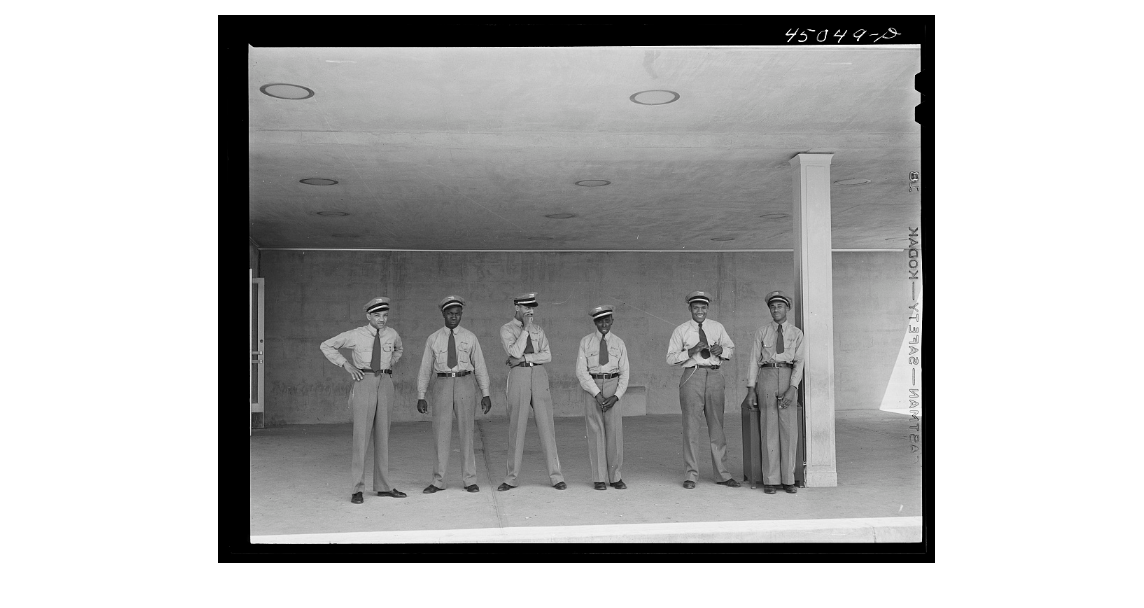
Porters at the airfield were initially called “Redcaps” due to the red hats they were required to wear as part of their uniforms. Later they were known more generally as “skycaps," most notably at the National Airport. Initially, Barber was initially paid only in tips, ranging from 10 cents to a dollar, depending on the customer.
download

“ ’Skycaps’ at the entrance to the administration building. Municipal airport, Washington, D.C,” circa 1941. Image courtesy of the Library of Congress.

Simultaneously, Barber also worked as a taxi driver. He was one of the first Black operators of a taxicab service in Northern Virginia, which he ran through the early 1940s before the start of WWII. When the United States entered the war, it became too difficult to obtain equipment such as tires due to the war production effort.

During this time, Black people in Arlington had to travel to Washington, D.C., to receive medical care, as Virginia hospitals were segregated and had limited resources for Black patients, and expectant mothers were often barred from the maternity ward in full. The Friendly Cab Company was another local service that addressed this issue, providing ride services to Black customers beginning in 1947.

At the Washington-Hoover Airport, Barber met notable figures such as Horace Dodge, Clark Gable, Wallace Berry, the Roosevelts, and the Kennedy family. At the time, Washington Hoover was the only major airport in the area, so it was a thoroughfare for notable individuals.

Flying was also still a new form of transportation and was no exception to the Jim Crow laws that affected every level of life for Black Americans. This made commercial flying largely exclusive to wealthy, white customers.

Reproduction image of a National Archives print that reads: A full view of the four-motored Douglas C-54 skymaster dubbed the 'Flying White House', an ATC transport specially built for President Roosevelt.  It has flown over 44 countries and established six world records since it was put into service exactly a year ago [1944].  Seven pilots are seen walking in front of the plane. 1945, 1 print, b&w, 8 x 10 in..

Reproduction image of a National Archives print that reads: "A full view of the four-motored Douglas C-54 skymaster dubbed the 'Flying White House', an ATC transport specially built for President Roosevelt." From RG 13.

In the 1930s and 1940s, airports across the South began to segregate their facilities, either by sanctioned law or racist informal practices. In 1944, during World War II, members of the Tuskegee Airmen integrated the National Airport’s cafeteria after initially being denied service. However, after the war ended, segregation soon re-installed itself in airport facilities. After pressure from President Truman, the airport desegregated its restaurants in 1948, but only the next year, a D.C. resident brought a suit against the Air Terminal Services arguing that she had been denied service on account of her race.

In June 1941, when Hoover closed, Barber moved to the National Airport. On its opening day, Barber was the first on the runway, unloading one of three planes that inaugurated the debut (and American Airlines DC-3). As one of three skycaps working at the time, he earned $1.25 for 10 hours of work each day.
200-0726_original_

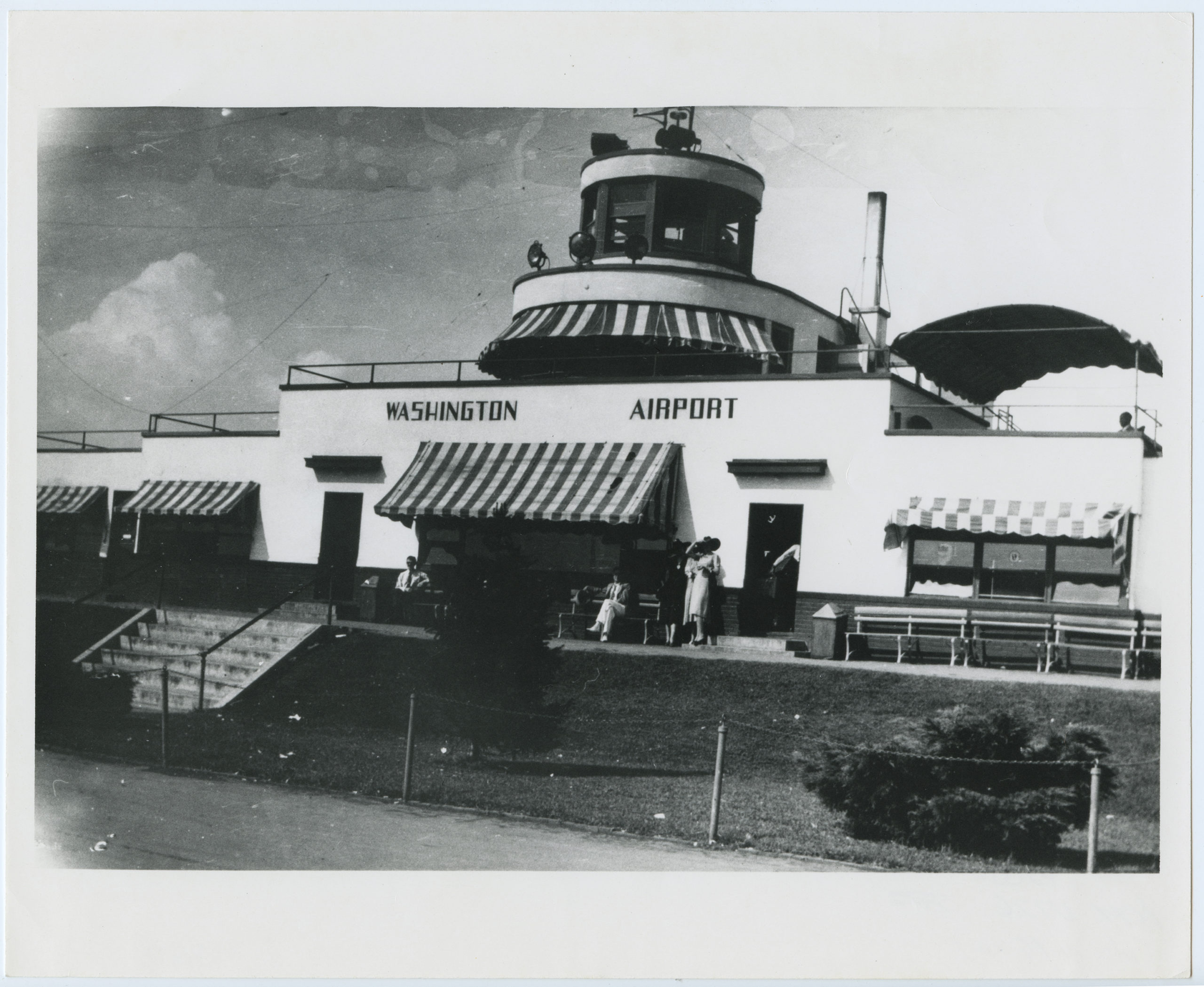
The main building of the Washington Airport, in the early 1930s.
Freshly completed Terminal A of the Washington National Airport. 1930, 1 print, b&w, 8 x 10 in..

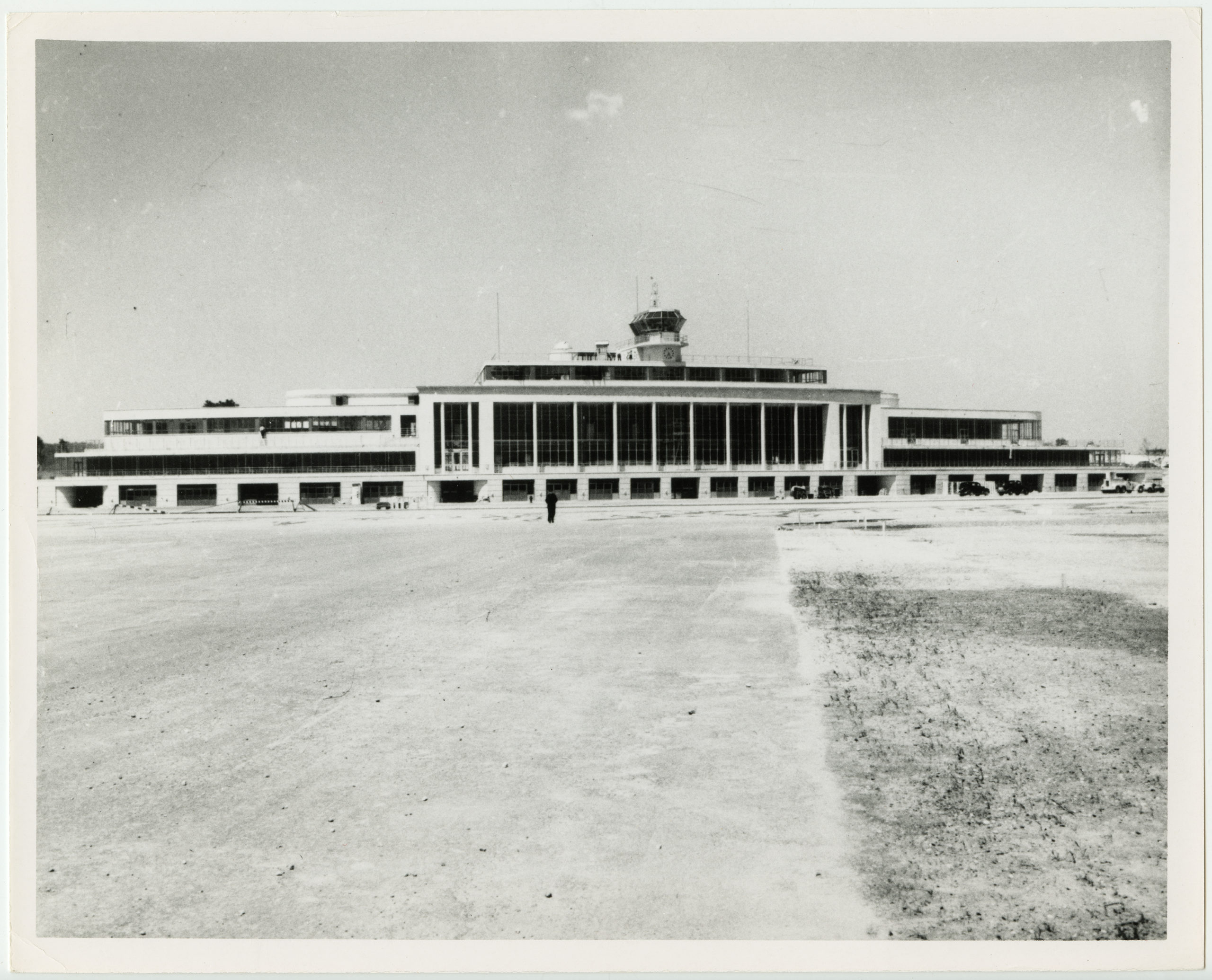
Freshly completed Terminal A of the Washington National Airport, circa late 1930s.

Barber worked at National Airport until the early 1990s, accruing more than 50 years of airport experience. Barber’s interview describes many fascinating aspects of his life, such as fortuitously being home from work the day of the 14th Street Bridge crash, to meeting every first lady since Eleanor Roosevelt over the course of his career. In this selection, Barber sums up his work at the airport: 

EC: As soon as Hoover Airport was closed, you moved over to National, did you?  

RB: That's right.  

EC: And acted as a porter there? 

RB: That's right.  

EC: And you still are a porter at National? 

RB: I'm still there.  I'm considering retiring. 

EC: But you haven't retired yet? 

RB: I haven't retired yet. 

EC: So, you have been a porter either at Hoover Airport or at National Airport or both for how long? 

RB: About fifty‑two years.  Fifty‑two years.  I had been at National fifty years.  I went to National June 16th, 1941.   

EC: They had a special ceremony, didn't they, last month for you?   

RB: Yeah, they had a special ceremony at Crystal City Marriott Hotel and a real special one was over at Crystal City building they sometime call No. 3, that's when Mr. Robb was there, and former governor Holton of Virginia. 

Listen to this audio from Barber's interview:

https://library.arlingtonva.us/wp-content/uploads/2022/02/Barber_RayField_p2.mp3
Screenshot 2022-02-09 161021
Screenshot 2022-02-09 161050

Additional photos of Rayfield Barber at Washington National Airport, circa 1990s. Photos by former County photographer Deborah Ernst.

The goal of the Arlington Voices project is to showcase the Center for Local History’s oral history collection in a publicly accessible and shareable way.

The Arlington Public Library began collecting oral histories of long-time residents in the 1970s, and since then the scope of the collection has expanded to capture the diverse voices of Arlington’s community. In 2016, staff members and volunteers recorded many additional hours of interviews, building the collection to 575 catalogued oral histories.

To browse our list of narrators indexed by interview subject, check out our community archive. To read a full transcript of an interview, make an appointment to visit the Center for Local History located at Central Library.

Do you have a question about this story, or a personal experience to share? 

Use this form to send a message to the Charlie Clark Center for Local History.

Center For Local History - Blog Post Message Form

Do you have a question about this story, or a personal experience to share? Use this form to send a message to the Center for Local History.

"*" indicates required fields
This field is for validation purposes and should be left unchanged.

Share Your Story

February 10, 2022 by Web Editor

The Activists who Desegregated Arlington’s Movie Theaters

Post Published: February 2, 2022

"The Price of a Ticket at the Cost of Your Conscience"

In 1959, Arlington became the first school system in Virginia to desegregate, and in 1960, after a series of organized sit-ins, the County desegregated its lunch counters. But the long road toward full desegregation of public and private institutions in Arlington and Virginia was just beginning, and an important milestone in this journey was Arlington’s movie theaters.

The process to extend equal rights to members of the Black community who wished to attend films and shows in the communities where they lived took three years, the dedication of Black activists, and extended legal battles against the County and the State.

The Right to Equal Enjoyment

In 1960, Arlington's six theaters – the Arlington, Buckingham, Byrd, Centre, Glebe and Wilson - were for the enjoyment of white people only, with no separate areas or alternate local options for Black patrons. Black Arlingtonians had to travel to Prince William County, Washington, D.C., or Alexandria to attend film screenings at integrated theaters.

Alexandria had a single theater open to Black patrons, the Capitol Theater at Queen and Henry Streets, which operated from 1937-1947, and later the Carver-Alexandria Theater, which operated until 1965.

Washington, D.C., had desegregated its theaters in the 1950s following extended boycotting, activism, and legal maneuvering led by Black Washingtonians. In 1950, two integrated theaters opened, and in 1952, the National Theatre (at the center of the integration battle) ceased segregation in its audiences. Finally, in 1953, a U.S. Supreme Court ruling struck down a law that permitted segregation in D.C. restaurants, and this ruling was applied to local theaters as well.

2f4ecf71ad8a1fad6c69c50d69bfeff9

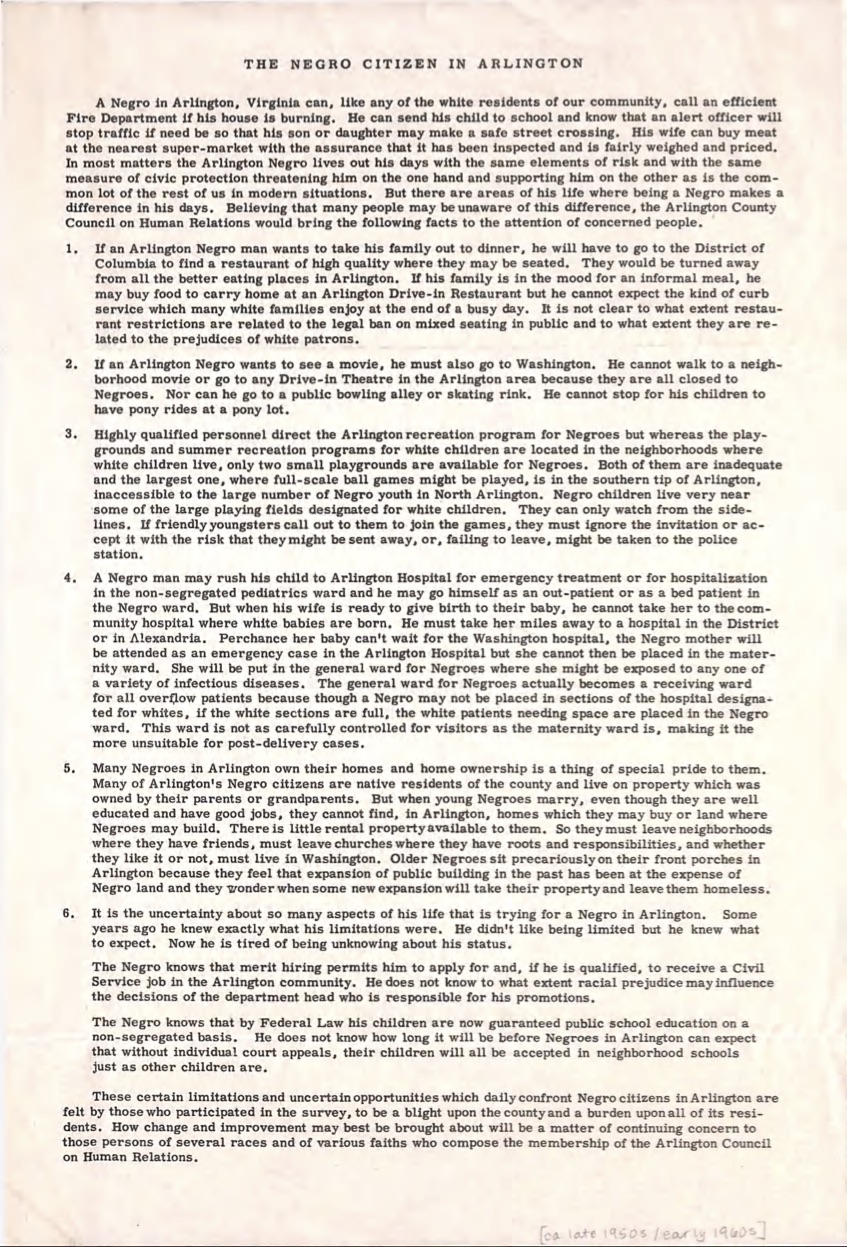
In an undated edition of “The Negro Citizen in Arlington,” published by the American Council on Human Relations, the broadside lays out the various inequities faced by members of the Black community in Arlington. Among the still-existing barriers listed was a lack of access to theaters in item 2: “If an Arlington Negro wants to see a movie, he must go to Washington. He cannot walk to a neighborhood movie or go to any Drive-In Theatre in the Arlington area because they are all closed to Negroes.” From RG 123.


Arlington, however, wouldn’t follow suit for another decade. In an oral history interview with Michael Jones, one of the first children to desegregate Arlington Public Schools, he recalls traveling outside of the County to attend movie screenings:

“At the time, we spent a lot of time going to D.C. because there were no movies. We couldn’t go to the movie theaters there, so we had to catch the bus to go to D.C. to watch movies. That was also something we had to do. It was just life as it was at the time. ... Yeah. Oh, yeah. I mean, we frequently caught the bus on Lee Highway, and it took us right down to D.C. — 11th and E. or the stops where the movie theaters were — so we spent a lot of time going back and forth. No subway then, so we — it was just the un-air-conditioned bus down there with the fans and everything like that.”

The segregation of Arlington’s movie theaters was aligned with other Jim Crow practices that  permeated the County's legal system at that time, and were based in segregation law surrounding public assembly and seating.

Virginia’s laws regarding "Separation of Races" in public settings had been adopted in 1926, requiring racially separate seating at any “public hall, theater, opera house, motion picture show or any place of public entertainment or public assemblage.” This law also provided that any proprietor who failed to segregate their audience would "be fined not less than $100 nor more than $500 for each offense” and that any patron of the theater who refused to take a seat in the assigned section or refused to move to the assigned section when requested, "shall be deemed guilty of a misdemeanor and upon conviction thereof fined not less than $10 no more than $25 for each offense.”

This law had been periodically challenged in local and state courts, but judicial results and the actual local practices differed.

An Arlington judge ruled in 1957 that the segregated seating laws were valid, but in 1958 another judge ruled the law unconstitutional. And though no court had reversed the 1958 ruling, the laws still existed in practice.

f292d13a82a99ac1b7939b59a7447a6d

Scanned document: Excerpt of Section 18-327 of the Virginia Code, which laid out the laws mandating segregated public assemblies. Image from RG 07, circa 1960.

Around 1960, following the successful desegregation of Arlington’s public schools, local activists directed their attention to the theaters. Civil rights groups initiated a letter writing campaign and conferences to encourage theater owners to bypass these laws, which had been done by other businesses that required public assemblages. The activists encountered only opposition from these campaigns.

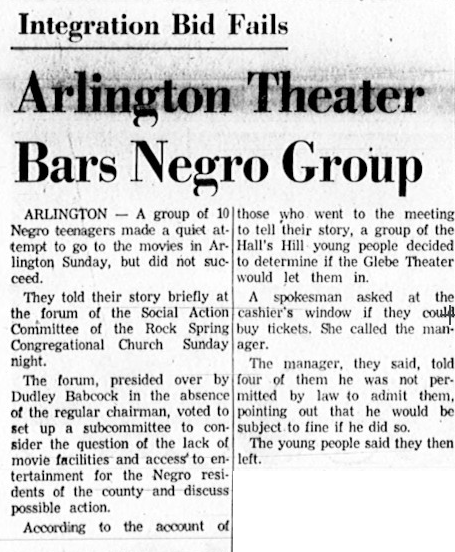
On March 18, 1962, a group of 10 Black teenagers from Hall’s Hill attempted to attend a film in Arlington at the Glebe Theater and were denied entry.

The group reported this experience to the Social Action Committee of the Rock Spring Congregational Church, who agreed to create a subcommittee to address the issue of theaters.

Screen Shot 2022-01-21 at 11.58.08 AM

Article from the Northern Virginia Sun on March 19, 1962. Image courtesy of Virginia Chronicle.

The Northern Virginia Committee to End Theater Discrimination was subsequently organized by the Councils on Human Relations of Alexandria, Fairfax, and Arlington to further support theater desegregation efforts.

Picketting Arlington Movie Theaters

Picketing was the next step in the fight, and was also sponsored by the local branch of the Congress of Racial Equality (CORE). Picketing efforts were spearheaded by Dorothy Hamm, who led the picket lines. Hamm was a prominent local activist, and had been deeply involved in the legal and organizational effort to desegregate Arlington Public Schools and eliminate the poll tax.

Pickets were announced by CORE in early May 1962, and began on May 11 at the Glebe Theatre. This theater was selected as it was the site of the offices of Wade Pearson, who managed Neighborhood Theaters, the chain that operated theaters across Arlington and Fairfax.

See photo: The AP has an additional photo of the protests at the Arlington Theater. Dorothy Hamm holds a sign in the foreground, bearing the words at the start of this article.

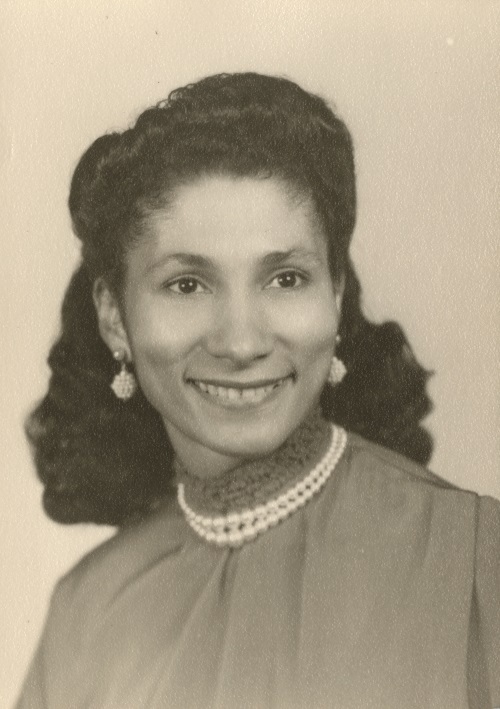
Dorothy Hamm

Dorothy Hamm (1919-2004), who led the Arlington theater pickets. Image courtesy of Carmela Hamm via the Library of Virginia.

7a65bc40e4bc0d4cefe5547e6ad41763

A 1962 pamphlet from the NAACP Arlington branch newsletter calls for participants in the picketing efforts to desegregate Arlington’s theaters. From RG 18.

In late May 1962, the Arlington County Board publicly denied responsibility for initiating integration by not taking an official stand on the segregation of the theaters. After local advocates appealed for public support for integration, Board Members argued it wasn’t within their authority to do so, or believed the decisions should rest with individual business owners (though they claimed to oppose the discrimination on a personal level). In response, individuals later called for a boycott of Arlington theaters in a Letter to the Editor in the Northern Virginia Sun, arguing “only white citizens can economically affect the theater owners by refusing to patronize their theaters.”

Additional pickets began in early June 1962, demonstrating at five of the County’s movie theaters. These protesters were faced with harassment from members from the American Nazi Party (led by George Rockwell and founded in Arlington in 1959), who launched their own counter-picket in response to the calls for desegregation.

A New Legal Barrier is Challenged in Court

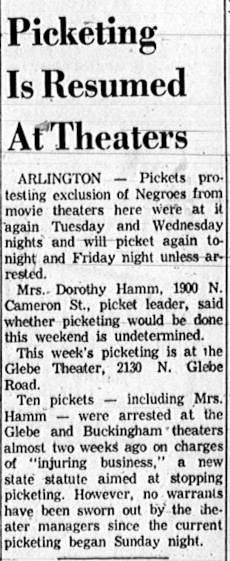
Picketing continued throughout the summer, but the protesters soon faced a new obstacle. On June 28, 1962, it was reported that members of the Committee to End Theater Discrimination had been served with a notice by the Arlington Chief of Police that a new law would go into effect on June 30, putting the picketers at risk of arrest.

This amendment to the Virginia Code provided that individuals picketing against theaters and other businesses with the intent to “injure” a business “willfully and maliciously” could be found guilty of a misdemeanor, with a maximum penalty of $1,000 fine or 12 months in jail or both.

NVS

From The Northern Virginia Sun, July 12, 1962. Image courtesy of Virginia Chronicle.

On June 29, and July 1, 1962, 10 protesters were arrested while protesting at the Glebe and Buckingham theaters on the charges of “injuring business" under the new picketing law. Dorothy Hamm was among this group arrested, and all were released without bond. Hamm’s case, along with four others, was initially dismissed by the County Courts on July 2 on a lack of evidence that their actions had halted or injured business. Amidst this legal challenge, picketing paused until July 8, and continued throughout the week.

Meanwhile, the remaining five picketers who had been arrested were charged under all sections of the picketing law. The case then became an attempt to test the constitutionality of the amendment and the American Civil Liberties Union (ACLU) joined to assist in the legal proceedings.

The five individuals were represented in court on July 17 by civil rights lawyer Joseph L. Rauh, Jr., who argued that “How can it be ill will, malicious, wicked or mischievous to tell the public a theater does not admit Negroes, which is true, and to try to get them to change the policy?” and that picketing was a form of protected free speech.

The theaters were represented by Commonwealth’s Attorney William J. Hassan, who had argued the pickets injured the business policies established by the theater, and that the theater was “exclusionary” rather than segregated, as it did not offer even separate seating for Black patrons.

Screen Shot 2022-01-31 at 1.07.35 PM

The lawyer Joseph L. Rauh, Jr. (1911-1992), represented the picketers who had been arrested protesting Arlington's segregated theater policy. Rauh was a prominent civil rights lawyer and advocate, and lobbied for the passage of the Civil Rights and Voting Rights Act. Image courtesy of the Library of Congress.


The ruling was initially deferred, and the remaining five picketers were ultimately acquitted on August 14. County Court Judge Paul D. Brown stated that the facts were not sufficient to support a conviction, though it was not necessary to rule on the constitutionality of the law forbidding injury of business.

Change at Last

The next year saw an increase in legal interventions related to movie theaters and public assemblies around the state. In early 1963, theaters in Norfolk, Portsmouth, and downtown Richmond began to desegregate. They were followed by Alexandria theaters in May of 1963, which desegregated its Reed, Richmond, Virginia, and Vernon theaters.

On June 17, 1963, Arlington finally, and relatively quietly, desegregated its theaters.

In a June 18, 1963, Northern Virginia Sun report on the desegregation, the Neighborhood Theaters manager Wade Pearson denied that the theaters had ever been segregated at all, and claimed “the Neighborhood Theaters have never made it a practice of admitting persons to the movies on the basis of religion, creed, or race.” Regardless of this legally contradictory and factually incorrect messaging, the local branch of the NAACP was assured the theater would be integrated as of the June 17 date given by the theater owners.

200-0366p

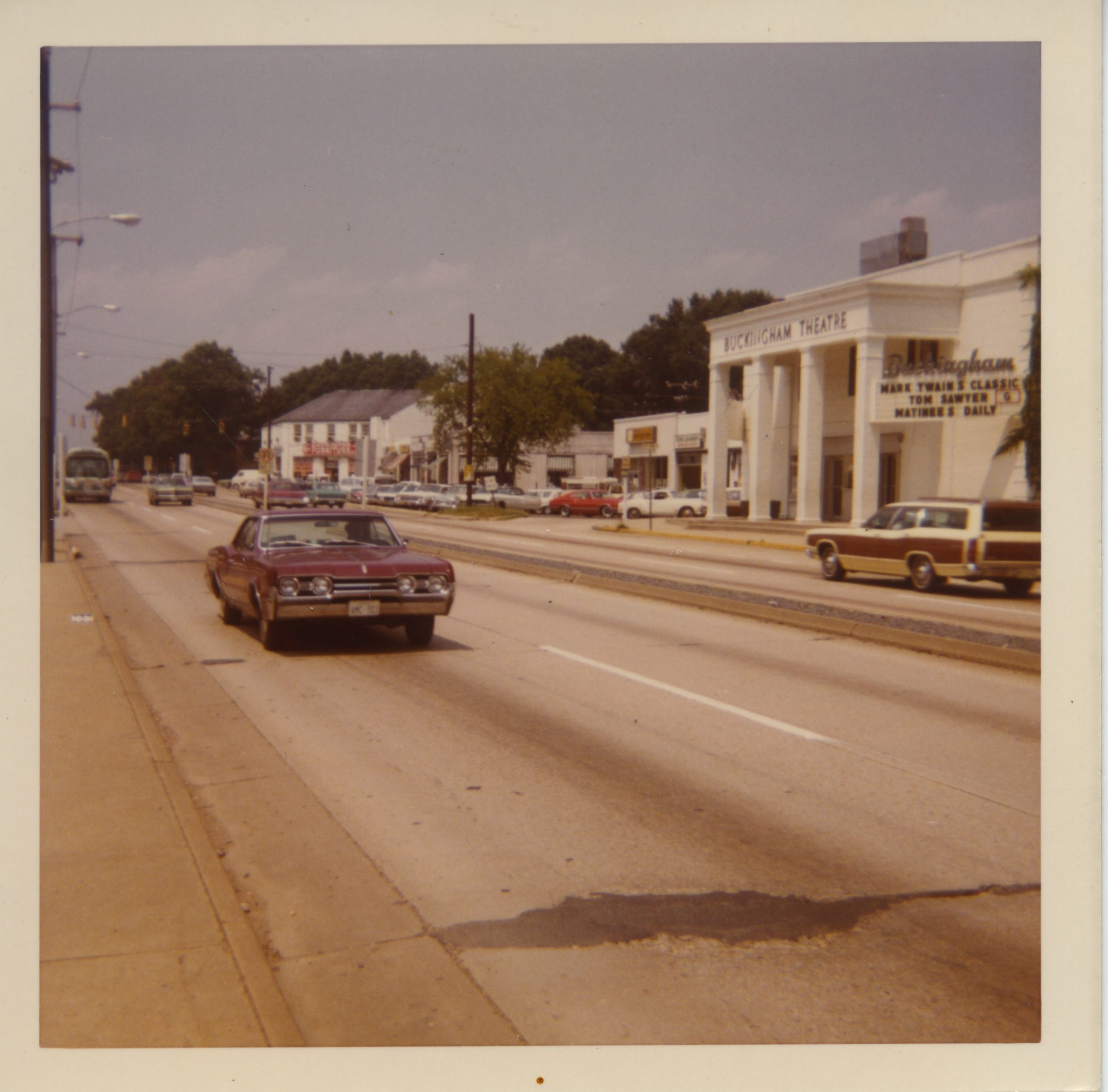
The Buckingham Theatre, pictured in 1973, on Glebe Road. The theater - one of the theaters that was picketed in 1962 - remained operational until 1986 and was converted to a Post Office in 1990.

Screen Shot 2022-01-31 at 1.00.27 PM

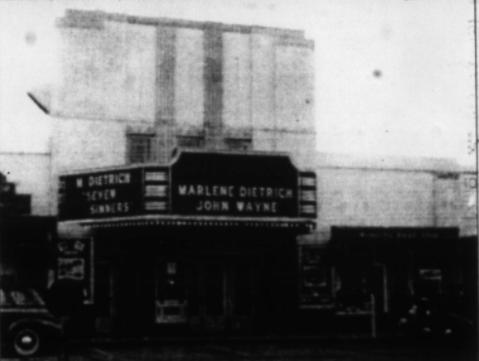
The Wilson Theater, another of the theaters that was picketed, at 1724 Wilson Boulevard. Pictured in 1940, this photo is from the Arlington Journal, October 5, 1998.

Dorothy Hamm and her son Edward Leslie, Jr., were the first Black patrons to attend a movie theater in Arlington. In this oral history interview, Dorothy Hamm recalled attending the theater for the first time:

Dorothy Hamm: On the first night when it was OK for us to go, my son and I and a white couple were among the ones who went to the theaters.

Edmund Campbell: Any particular incident of interest when you went into the theater?

DH: Well, I wasn't really sure whether they were going to let us in or not, so on that night a white couple and my son and I went to the theater.  The white couple purchased tickets, and when I went to purchase a ticket I wasn't really sure whether they were going to sell me a ticket or not.  We had prearranged it where I would be given a ticket by one of the white people, and I was going into the theater.  However, it happened that we were sold tickets, and my son and I went into the theater with the white couple.

EC: You spoke earlier of Arlington County, or perhaps they were state, seating laws.  Now with the theater selling you tickets, was this their own decision or had the seating law been changed?

DH: I don't believe the seating law...well, I'm not certain about that. I do know that it was a decision made by the manager of the theaters.  However, prior to this ‑‑

EC: Did you know him?  Mr. Wade Pearson?

DH: This was Mr. [Morton] Thalhimer. Prior to this, I had been called by the manager of the Glebe Theatre, and he had indicated even if he gave Blacks separate seating they only had one toilet facility, and separate toilet facilities were also required...

EC: When was that practice of separate toilet facilities abandoned in Arlington?  Later?

DH: Yes, it was.

On July 1, 1963, soon after the Arlington theaters opened their doors to Black patrons, Virginia’s seating law was officially struck down. The law had been challenged in a suit filed in February 1963 by two local women, Lillian S. Blackwell of Vienna, and Freddie Lee Harrison of Arlington, after they had been refused entry to the Jefferson Theater in Fairfax and the Glebe Theater in Arlington on account of their race. The women were represented by Noel Hemmendinger (also chairman on the Committee to End Theater Discrimination), and the court first heard the case in May, and by July ruled that the state statute was contrary to the 14th Amendment.

The struggle to desegregate Arlington’s theaters was a labyrinthine process that took immense courage, planning and organizations by the County’s civil rights activists. This achievement was just one milestone in the journey to make Arlington truly equal and equitable for all residents, a journey that continues to this day.

0013

Front page of the Northern Virginia Sun on July 2, 1963. Image courtesy of Virginia Chronicle.

The Center for Local History at the Arlington Public Library collects, preserves and shares historical documents that tell the history of Arlington County, its citizens, organizations, businesses and social issues. The CLH operates the Research Room at Central Library and the Community Archives program.

Because there are always more layers of history to find and examine, the CLH continually seeks community donations and oral histories. Do you, or does someone in your family, have documentation or story to tell related to segregation or desegregation in Arlington?

Use this form to send a message to the Center for Local History or contact us at localhistory@arlingtonva.us.

Center For Local History - Blog Post Message Form

Do you have a question about this story, or a personal experience to share? Use this form to send a message to the Center for Local History.

"*" indicates required fields

This field is for validation purposes and should be left unchanged.

Share Your Story

February 2, 2022 by Web Editor

Oral History: Remembering Dr. Martin Luther King, Jr., in Arlington

Post Published: January 14, 2022

A Crucial Leader of the Civil Rights Movement

Dr. Martin Luther King's leadership and message of nonviolent protest were essential to the steps made toward equality that culminated in legislation such as the Civil Rights Act of 1964. The following are a few memories from our collections, and from broader Arlington history, to reflect on Dr. King’s legacy as we celebrate Martin Luther King, Jr., day on Monday, January 17th.

USMC-09611

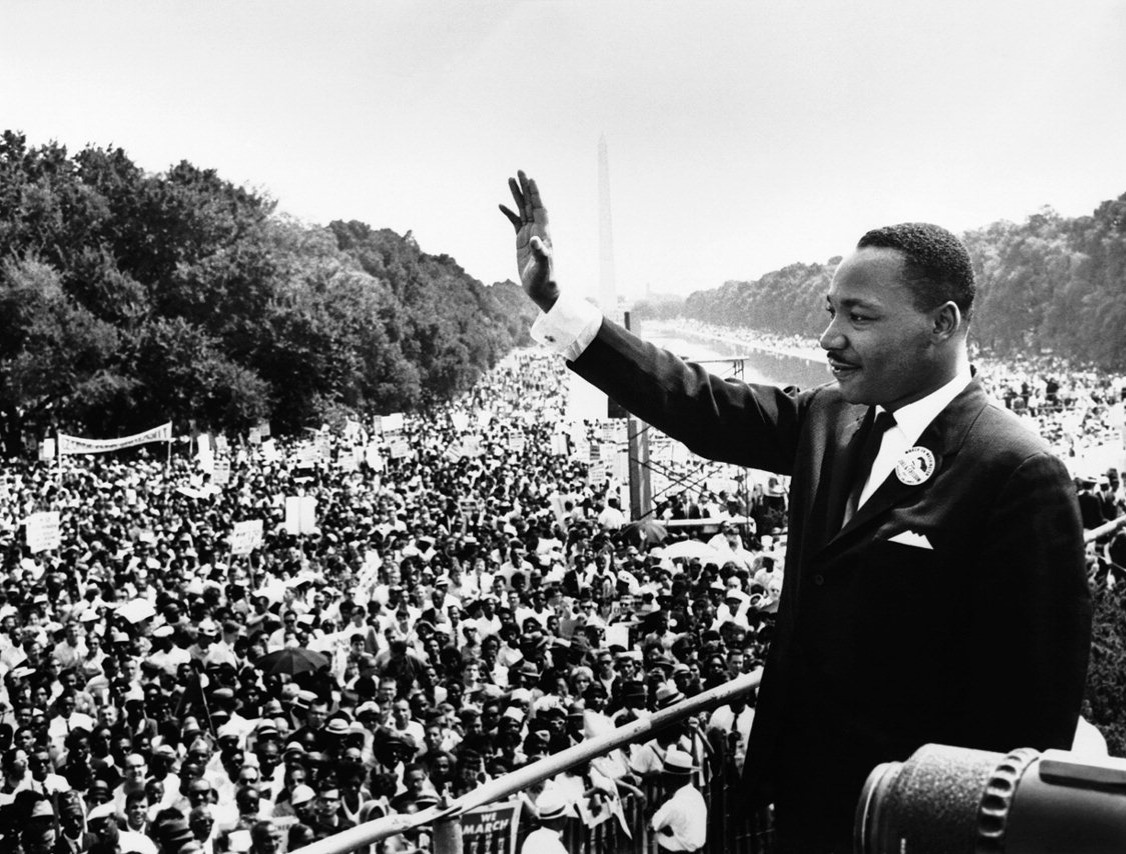
Dr. King addresses the crowd at the August 28, 1963, March on Washington. Image courtesy of Wikimedia Commons.

1963 March on Washington

On Wednesday, Aug. 28, 1963, Dr. King led the March on Washington for Jobs and Freedom — often referred to as “The March on Washington."

This was a massive peaceful protest with the aim to advocate and speak on the need for economic and civil rights for Black Americans, with more than 200,000 people attending to take a stand against inequality. The march culminated with Dr. King’s “I Have a Dream Speech” on the steps of the Lincoln Memorial.

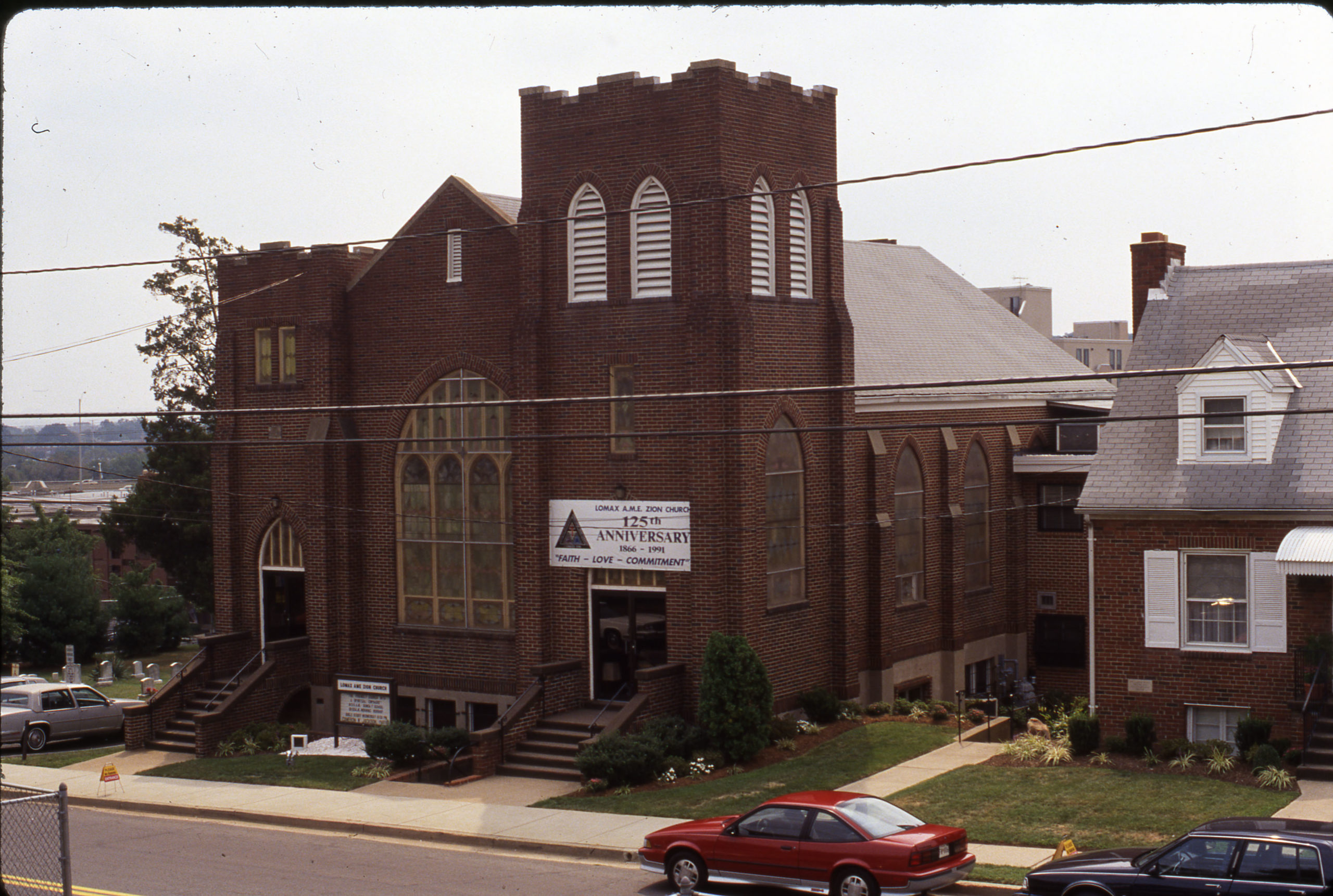
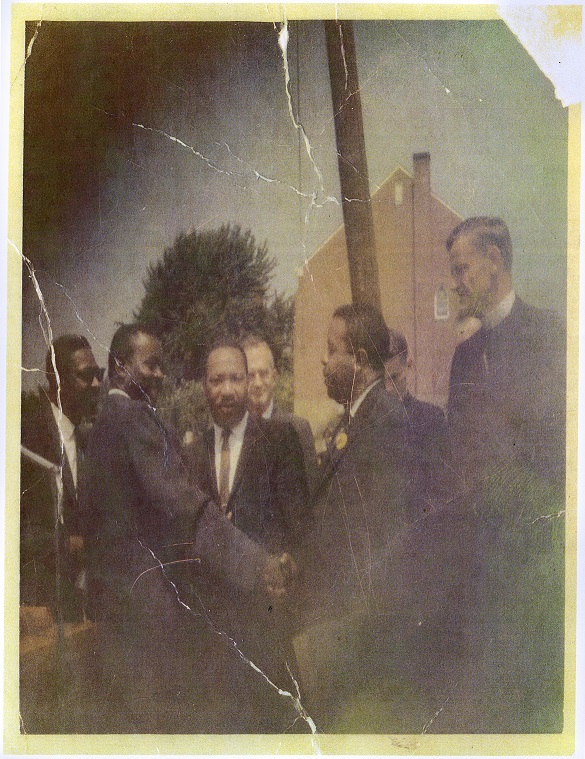
In the days leading up to the march, civil rights activists from across the country stayed at Lomax Fellowship Hall at the Lomax AME Zion Church in Arlington’s Green Valley neighborhood. Dr. King and his close friend and advisor, the Reverend Ralph Abernathy, spoke in the church’s parking lot the day before the start of the march.

In the following interview from our oral history collection, Marionne Walls-Fort discusses Dr. King’s visit to Lomax. Walls-Fort is the daughter of Reverend Arthur W. Walls, who was a pastor at Lomax from 1960-1976.

175-0272

Lomax AME Zion Church (photo 1991)

Narrator: Marionne Walls-Fort
Interviewer: Judy Knudsen
Date: October 7, 2016

Marionne Walls-Fort: "My parents were very influential in keeping us together in the civil rights movement. In fact, Dr. Martin Luther King spoke in the back of Lomax. When he was coming, he was looking for a church in Virginia, and my father volunteered. So he did one of his speeches in the backyard, because there’s a large back area behind Lomax Church. We got to meet Dr. Martin Luther King, and of course, Jesse Jackson who also spoke at our church for equal rights.

Dad had the Poor People’s March, when they came [in 1968]—and they would travel from church to church—we had them to stay overnight in our church. So when Dad said we’re going to help, we’re going to help get these cots together, we’re going to help in feeding the poor, we did everything as a family. And that instilled in all of us a sense of service even today that was instilled in our hearts, and that’s what we grew up with."

KingLomax - Copy

Dr. Martin Luther King Jr., and Reverend Ralph Abernathy with members of the Lomax AME Zion Church and Father Ray from Our Lady Queen of Peace on August 27, 1963. This photo is from Record Group 328, comprising the archives of Lomax AME Zion Church which were donated to the Center for Local History in 2020.

In another oral history interview, Arlington resident Jackie Smith discusses attending the March on Washington along with other members of Our Lady Queen of Peace Roman Catholic Church, also located in Green Valley.

Narrator: Jackie Smith
Interviewer: Virginia Smith
Date: May 31, 2019

Virginia Smith: Tell me about the day you all went to the Martin Luther King March on Washington.

Jackie Smith: Okay. Well, I remember we went on the bus, the whole group, a busload of Our Lady Queen of Peace people.

VS: With Father Ray?

JS: Father Ray, I don't remember him being on the bus.

VS: But he went?

JS: But I think he did. My memories are of the crowds of people. And the fact that I was going to see Martin Luther King Jr. who I'd heard about and seen on TV and I really loved the man, you know, and what he had to say, you know, but me being a little small, petite person, I went down by the waiting pool and everything. I couldn't see anything. So I climbed up in a tree so I could see him. And I did. I got to see him and of course, heard the speech because they had the big loudspeakers and all of that.

VS: So everybody heard the speech.

JS: But that was one of the greatest days of my life to be able to see Dr. Martin Luther King.

VS: And you knew what he was saying was important?

JS: Absolutely, yeah, I was a teenager, so I knew what he was saying was important, especially for Black people. I was looking at it from that perspective, too.

VS: And the atmosphere in the crowd?

JS: People were elated. They were all kinds of signs and all. It was wonderful.

MicrosoftTeams-image

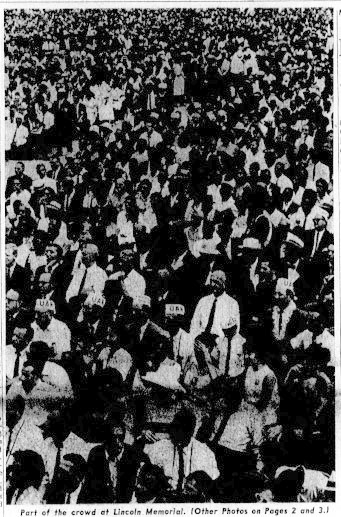
"Part of the crowd at the Lincoln Memorial."

MicrosoftTeams-image (2)

These photos from the August 29, 1963, edition of the Northern Virginia Sun capture scenes from the March on Washington. The caption on the photo at right reads, “READY TO MARCH – Members of the Catholic Interracial Council of Northern Virginia are shown as they left to march in the Wednesday parade following mass at St. Agnes and Blessed Sacrament Catholic churches. Left to right are John Phoenix, first president of the group, Edward J. Kelly, Mrs. James J. Rigdon, David Lee Scott, and Bernard Wiesmann, present president of the group. (SUN Photo by Beryl D. Kneen)” Images courtesy of Virginia Chronicle.

A Community Mourns

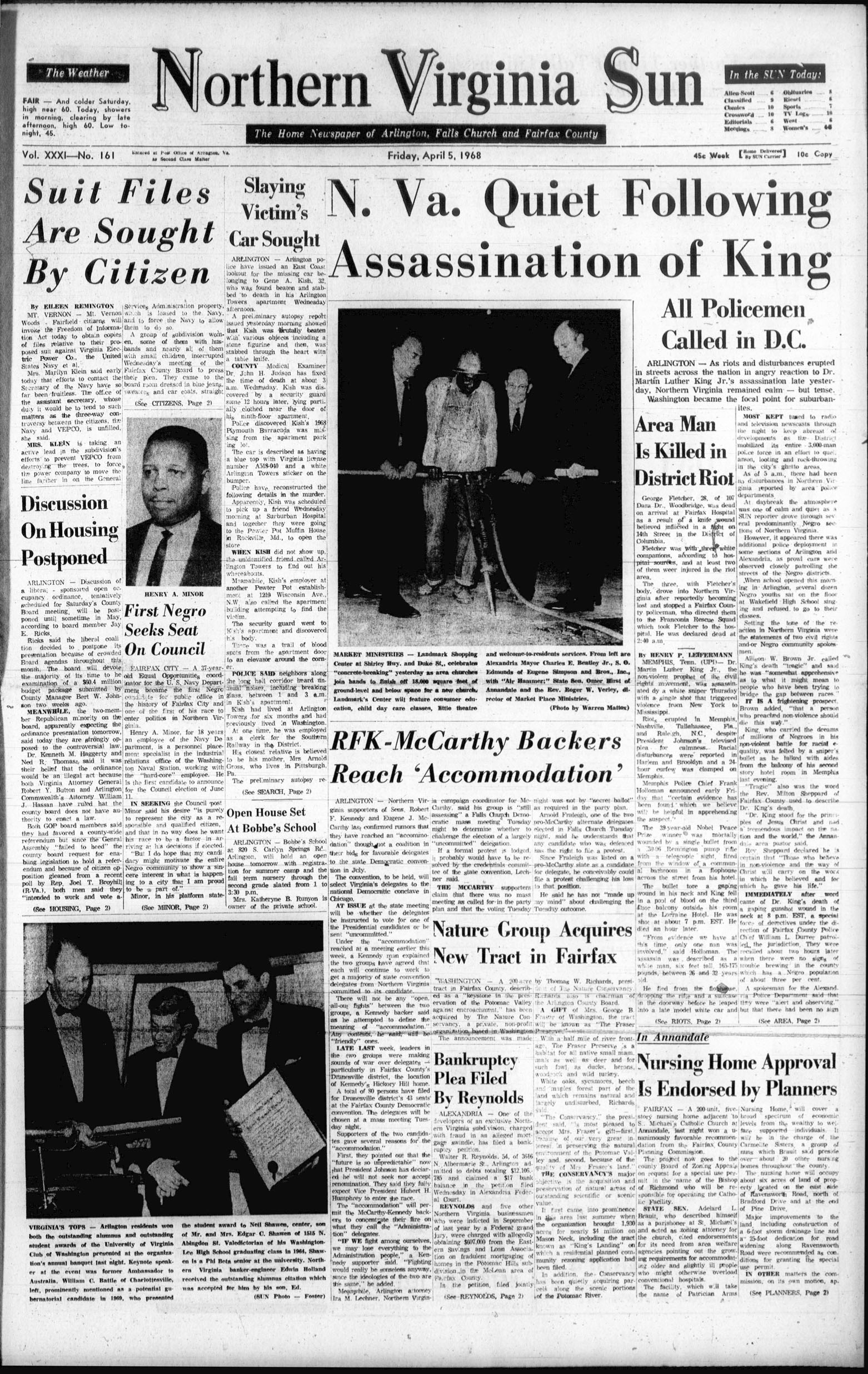
On April 4, 1968, Dr. King was murdered on his hotel balcony in Memphis, Tennessee. Word reached the District of Columbia region around 8 p.m. that night, over the radio.

On April 5, the day following King’s death, an interracial group of about 400 students at Wakefield High School held an all-day sit-in in memory of the civil rights leader. Student leaders planned the demonstration, which was led by about 40 Black students who started the vigil in the school’s gymnasium.

Instead of attending classes that day, the group gathered to remember Dr. King and his impact, and over the course of the day the group was joined by hundreds of their peers. An impromptu memorial service was held in the school auditorium, led by Reverend Walls. For the rest of the day the students gathered in the school’s courtyard to have disscussions and sing songs associated with the Civil Rights Movement including “We Shall Overcome” and “If I Had a Hammer.”    

MicrosoftTeams-image (1)

The front page of the Northern Virginia Sun on April 5, 1968, the day following the assassination of Dr. Martin Luther King, Jr. Image courtesy of Virginia Chronicle.

Do you have a question about this story, or a personal experience to share? 

Use this form to send a message to the Charlie Clark Center for Local History.

Center For Local History - Blog Post Message Form

Do you have a question about this story, or a personal experience to share? Use this form to send a message to the Center for Local History.

"*" indicates required fields
This field is for validation purposes and should be left unchanged.

Share Your Story

January 14, 2022 by Web Editor Tagged With: Green Valley

WETA’s Arlington History: “It is the Programming that Counts”

Post Published: December 21, 2021

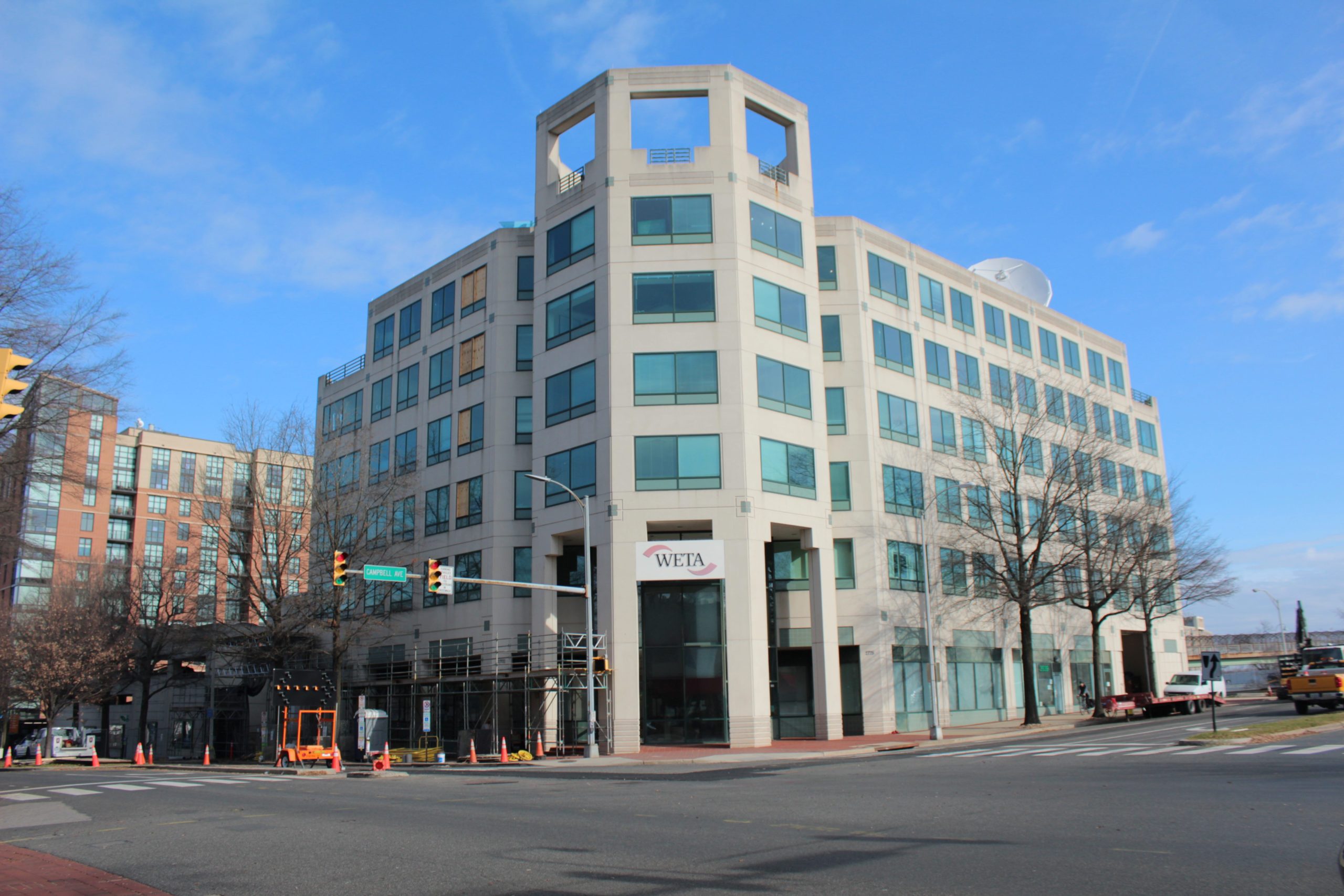
WETA — the Washington Educational Telecommunications Association — is an iconic public media institution, serving the community in the national capital area for more than a half-century. Though its content explores topics and ideas spanning the globe, the public broadcasting station’s roots are in Arlington, where its headquarters are still located.

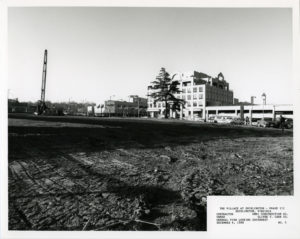
Pre-construction of The Village at Shirlington, 1988

This empty lot across from the Village at Shirlington would eventually be home to WETA's headquarters. Pictured here in 1988, the building was completed in 1989 and purchased by WETA in 1995.

IMG_5144

Campbell Place, as it is known, has been home to WETA ever since. Pictured here in 2021, it is located at 3939 Campbell Avenue. A second WETA building is located nearby at 3620 South 27th Street. The Campbell Avenue headquarters is currently undergoing a renovation scheduled for completion in late 2023.

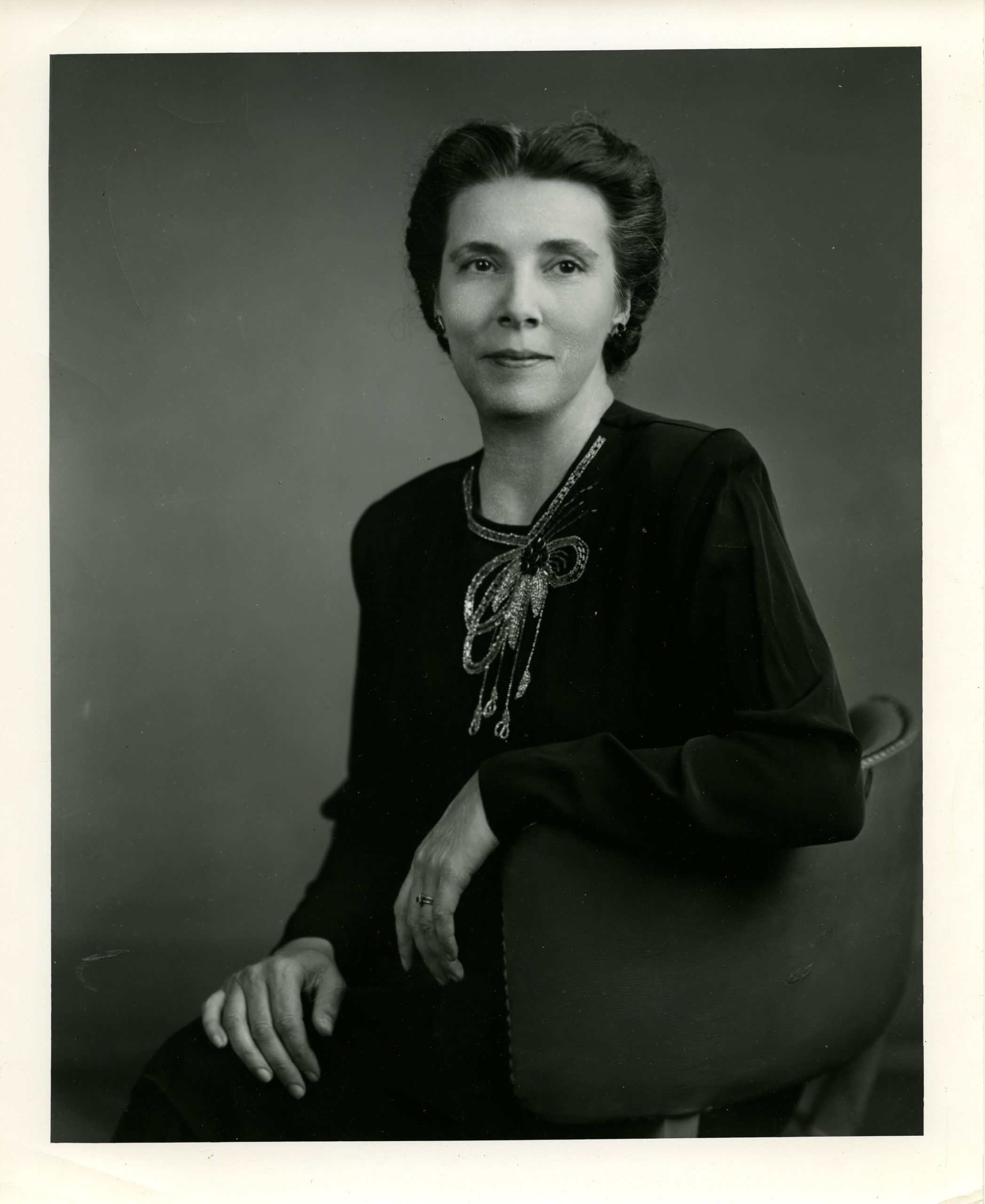
The inaugural broadcast of WETA TV 26 took place on October 2, 1961, after an eight-year effort to bring public television to the national capital area. After the FCC reserved television channels for noncommercial educational programming in 1952, local publisher Willard Kiplinger organized and led what was then called the Greater Washington Educational Television Association to develop Channel 26, which had been set aside for the area. In 1956, Elizabeth Pfohl Campbell was brought on and began work as president in 1957. Campbell was a notable local educator; the first female School Board member in Virginia; and an activist who had worked to help desegregate Arlington’s schools. . Campbell served as WETA president until 1971, stepping aside to become vice president for community affairs, a position she held until her death in 2004 at the age of 101.

WETA originally operated out of Yorktown High School, with business offices located in the Campbells’ home. When Yorktown expanded, WETA later moved operations to American University and then Howard University's men's gymnasium in 1965. When Howard began its own broadcasting station in 1972, WETA-TV and WETA-FM operations were scattered at locations throughout the region, including at L’Enfant plaza in the District and at North 19th Road in Arlington.

In 1983, WETA’s Board of Trustees voted to consolidate operations at the 3620 South 27th Street location. The current WETA headquarters was constructed in 1989 and was purchased by WETA in 1995. It remains the company’s headquarters today.

R19-5837_original_

Elizabeth Campbell, date unknown.

From WETA, the following is one of Elizabeth Campbell’s reflections on education and the WETA mission:

"Education opens doors. A life without education can be one of insularity and emptiness. Our schools and universities are vital resources, but it has been my belief for a very long time that television and radio can be powerful educators as well. However, television and radio are simply broadcast tools — it is the programming that counts. That's why public broadcasting is so important."

In 2007, the Arlington County Board renamed what had been 28th Street South to Campbell Avenue in honor of Elizabeth Campbell and her husband, Edmund Campbell, a prominent local attorney and activist who played an important role in desegregating Virginia’s — and Arlington’s — public schools..

December 21, 2021 by Web Editor

Oral History: Mary Cook Hackman

Post Published: December 15, 2021

Politics, Parks and the Law

ArlingtonVoices800pxpinksoundwave

Oral histories are used to understand historical events, actors, and movements from the point of view of real people’s personal experiences.

Mary Cook Hackman (1911-2005) was a prolific leader in Arlington, with a decades-long career that took on multiple paths.

Hackman moved to Arlington in 1949, and quickly became involved in local civic affairs such as the desegregation of Arlington Public Schools. Over the years she also held positions including president of the Rock Springs Civic Association and later served as president of the Arlington Civic Association. She also took part in politics as a committee member for Arlingtonians for a Better County (ABC), and as a member of the 10th District Women’s Democratic Club.

Hackman

Mary Cook Hackman, circa 1958.

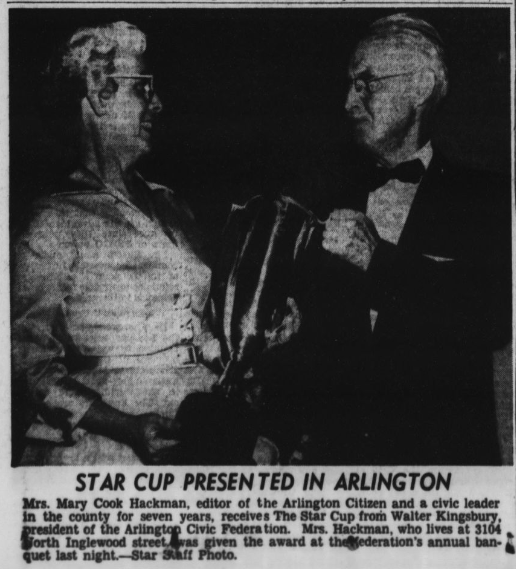
Hackman later entered the newspaper industry, creating a rival publication to what was then Arlington’s main newspaper, the Daily Sun. This new publication was founded in 1956 by Hackman and Anne Crutcher, and early investors included County Board member David Krupsaw and local lawyer and activist Edmund Campbell (also one of the interviewers of the subsequent oral history interview). The resulting weekly newspaper was called the Arlington Citizen and was distributed via mail to subscribers. After the Arlington Citizen eventually shut down publication, Hackman wrote a weekly political column in the Northern Virginia Sun.

Narrator: Mary Cook Hackman
Interviewers: Edmund Campbell and Cas Cocklin
Date: September 28, 1992
Note: The audio for this interview is currently unavailable.

Edmund Campbell/Cas Cocklin: Mary Cook, you had no printing office, you had no printing facilities, you had no clerks, how did you get out a newspaper?

Mary Cook Hackman: We found that there was somebody over in Georgetown, a printing company, and we hired them to do the printing. I don't remember what it cost but it was quite a lot. Anne and I would go over there every Wednesday morning with all of the typewritten pages that we wanted them to fit into this newspaper and then they would work on it a while and then we would say no, we want this story over to the left or up or down or something.

EC/CC: All your copy though, that you provided them was all written on the typewriter.

MCH: Yes, it was written by Anne or me.

EC/CC: On the typewriter.

MCH: Yes.

Screen Shot 2021-12-12 at 9.15.18 PM

Article from the May 2, 1957, edition of the Evening Star. Image courtesy of the Library of Congress.

Hackman was later one of the two original members from Arlington on the Northern Virginia Regional Park Authority – a group that was authorized by the Virginia Assembly in order to oversee land purchases by local governments that would eventually become public land for regional parks. Hackman served on the Park Authority for 11 years and assisted with milestones including the purchase of the first regional park in Viriginia, in Fairfax in 1959, and early work to develop Four Mile Run as a park.

EC/CC: Any experiences that you had on the Park Authority?

MCH: One of the things that taught me a great deal was the chairman, Ira Gabrielson, who was internationally known as a conservationist. He and I, we didn't have any staff, we didn't have anybody. He and I would go to the various governing bodies and ask for money and so we were in Fairfax and he got up and went up to, the case was called and went up and stood at the podium and he was so dull and didn't seem to understand the questions. And I thought should I go stand with him and explain all of this but something told me, “No, don't do that.” So I sat and the Board voted four to three to give us what we've been asking for and I thought, “Well, I'd better drive Gabe home because he obviously isn't well.” So we got out in the parking lot and Gabe's eyes were twinkling like always and I said, "What was the matter with you in there?" and he said, "I learned long ago when you have a majority of the votes in your pocket, don't say anything interesting."

link to read Mary Cook Hackman story.

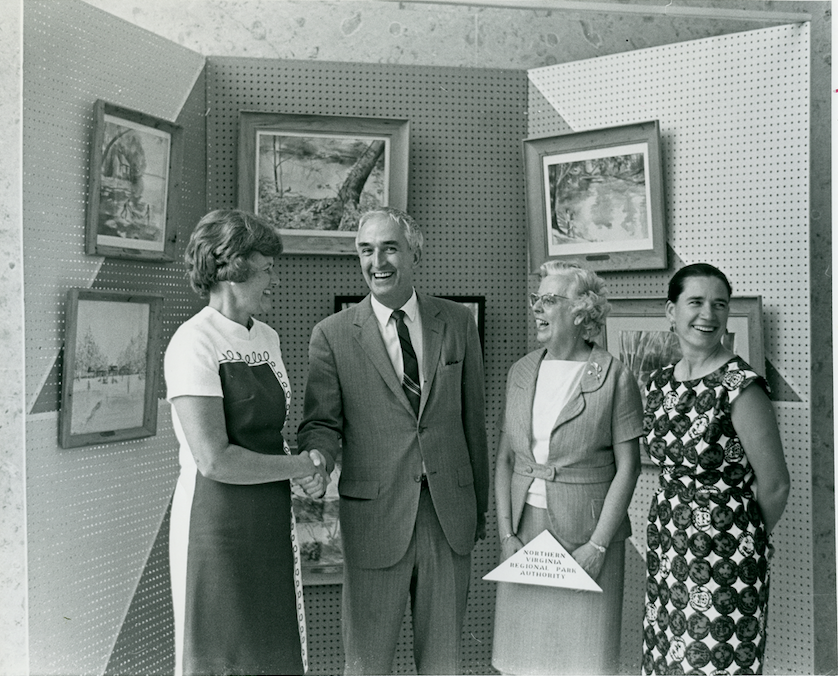
From left to right: Peggy Fisher, Dr. Kenneth Haggerty, and Northern Virginia Regional Park Board members Mary Cook Hackman and Dorothy Grotos in 1968.

However, Hackman’s career didn’t end here. Though she hadn’t attended college, she was accepted probationally to the American University School of Law to take classes. And while she wasn’t initially permitted to earn a law degree, the university offered her the certification to complete the Virginia Bar following her passage of the coursework. She later passed the courses and the bar, and was eventually awarded a law degree. After that, she opened her own law practice and practiced law for over 30 years, into her eighties.

EC/CC: You did take your Virginia Bar and passed.

MCH: Yes.

EC/CC: And then opened a law office.

MCH: Yes, because nobody hired women then. So I opened my own law office.

EC/CC: You've been practicing ever since?

MCH: Yes.

EC/CC: That was approximately when, when you opened that?

MCH: 1962.

The goal of the Arlington Voices project is to showcase the Center for Local History’s oral history collection in a publicly accessible and shareable way.

The Arlington Public Library began collecting oral histories of long-time residents in the 1970s, and since then the scope of the collection has expanded to capture the diverse voices of Arlington’s community. In 2016, staff members and volunteers recorded many additional hours of interviews, building the collection to 575 catalogued oral histories.

To browse our list of narrators indexed by interview subject, check out our community archive. To read a full transcript of an interview, make an appointment to visit the Center for Local History located at Central Library.

December 15, 2021 by Web Editor

Shirlington’s Cinematic Past

Post Published: December 2, 2021

Shirlington has long been a bustling shopping center in Arlington, and is home to the AMC Shirlington Cinema 7, one of four movie theaters in Arlington County.

The existing cinema at 2772 South Randolph Street is the second major theater to serve Shirlington’s movie-loving population, which began with the Shirlington Theatre nearby at 2800 South Randolph Street.

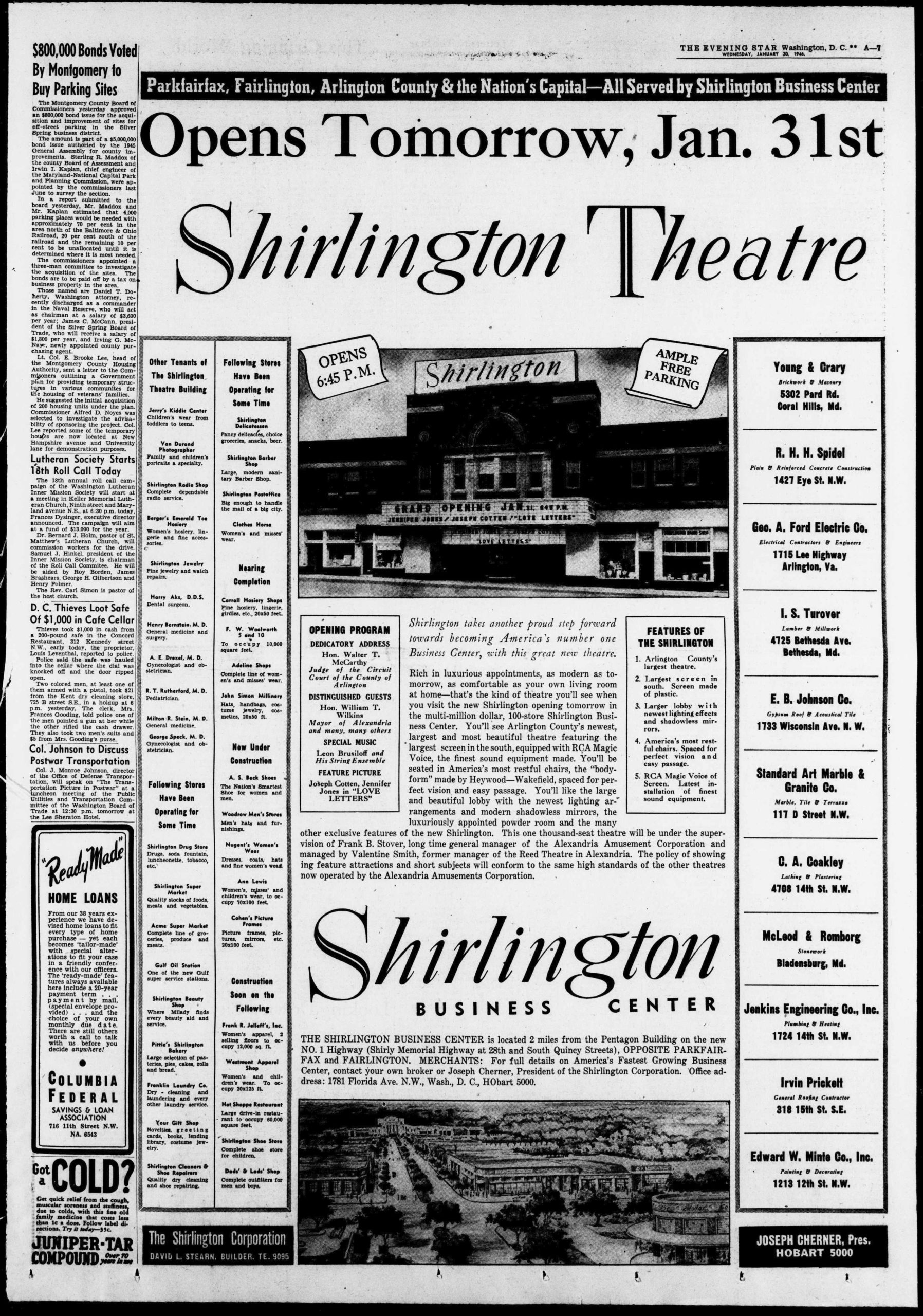
The Shirlington Theatre opened on January 31, 1946, and at the time was the County’s largest theater (and also was touted as possessing “the South’s largest screen”). The 980-seat cinema debuted with the film “Love Letters” and featured a pre-show performance by local composer Leon Brusiloff’s string ensemble.

0519

Advertisement from the January 30, 1946, edition of the Evening Star announcing the debut of the Shirlington Theatre. Image courtesy of the Library of Congress

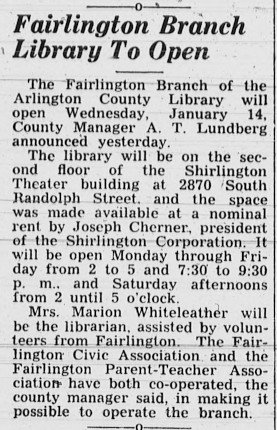
The theater was operated by the Alexandria Amusement Company and was part of a larger complex known as the “Shirlington Theatre Building,” which was home to other businesses including the Shirlington Radio Shop and various medical offices. In 1948, a notable addition to the Theatre Building was the Fairlington Library, which later became the Shirlington Library.

The Theatre Building was in turn part of the larger Shirlington Business Center, which until the 1960s was essentially segregated: Black patrons were allowed to shop, but were denied access to services such as eating at lunch counters or using leisure facilities like theaters. In June 1960, activists held a series of sit-ins at lunch counters around the County, including Lansburgh’s Colonial Room and Woolworth’s lunch counter in Shirlington. On June 22, Lansburgh's became the first Arlington lunch counter to desegregate, followed that same day by a number of other local restaurants. Arlington's theaters would not be desegregated until 1963, following protests led by civil rights leader Dorothy Hamm.

The Shirlington Theatre closed in 1957 and the building was demolished the following year to make way for the construction of a 150,000-square-foot Lansburgh’s department store, which operated in Arlington until the company went defunct in 1973.

Sun

Notice in the January 9, 1948, edition of the Sun about the opening of the Fairlington Library, which was located in the Shirlington Theater building. Image courtesy of Virginia Chronicle.

Arlington Daily

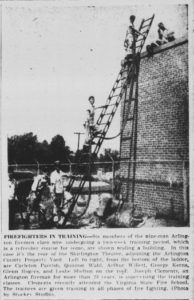
A July 8, 1947, article in the Arlington Daily shows local firefighters using the Shirlington Theatre as a training location.
Seven acres of land in the adjacent County Property Yard mentioned here were sold to the corporation for parking purposes after the theater was demolished. Image courtesy of Virginia Chronicle. 

Shirlington Cinema 7 opened on December 18, 1987, once again bringing film to the South Arlington area. The 6-screen theater was operated by Circle Theatres, a popular local cinema chain that had been founded in 1957 by two law students at George Washington University.

The same year the Shirlington Cinema opened, Circle Cinemas was bought out by Cineplex Odeon, which later managed the Shirlington location. Subsequent mergers led to the theater being referred to as the “Shirlington Loews Cinema” and in 2006 it formally became an AMC theater.

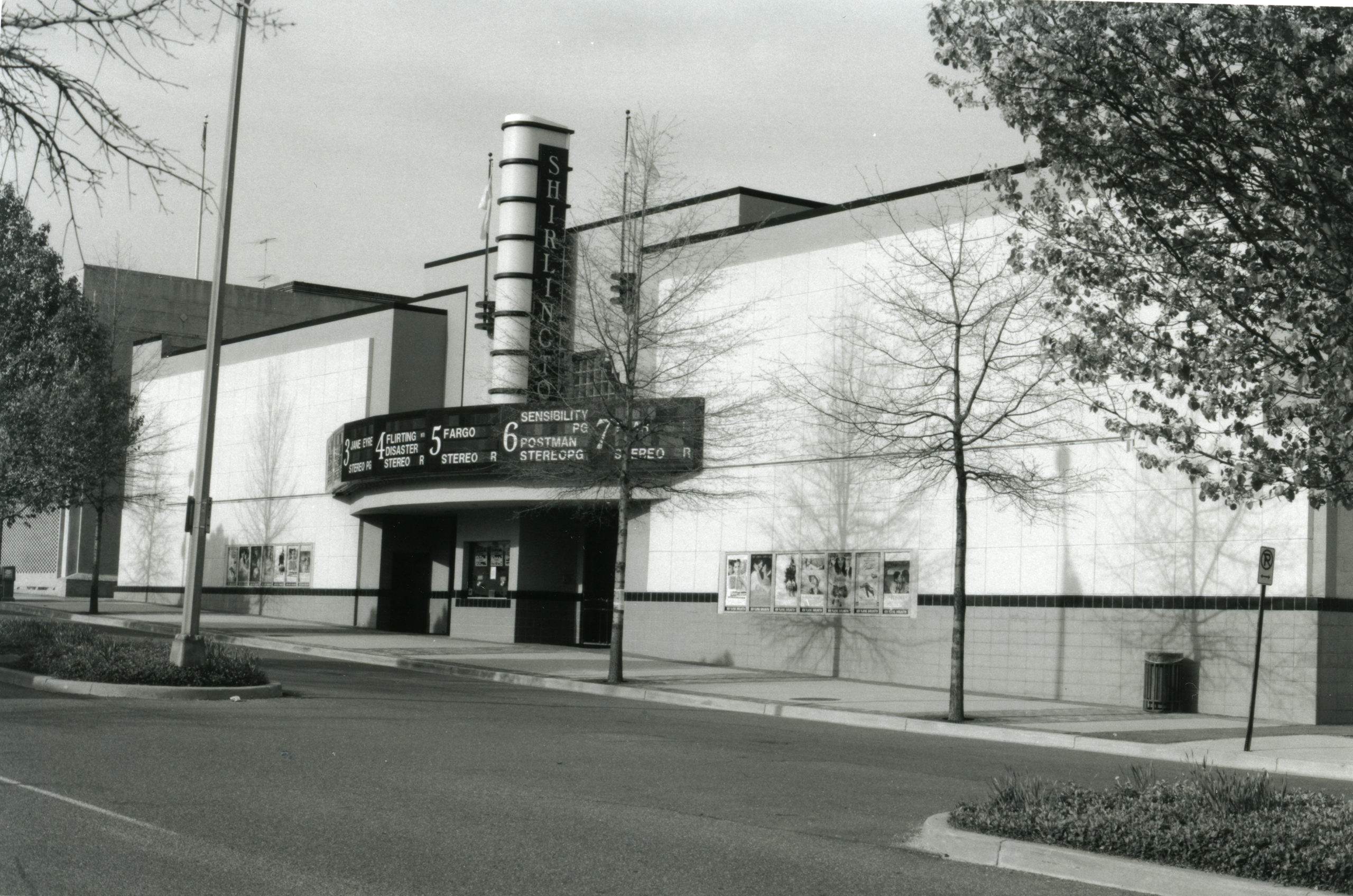
Shirlington movie theater, advertising Jane Eyre, Flirting with Disaster, Fargo, Sense and Sensibility, and the Postman. 1996, 1 negative, b&w, 35mm.

Shirlington Cinema 7 at 2772 South Randolph Street in 1996. 

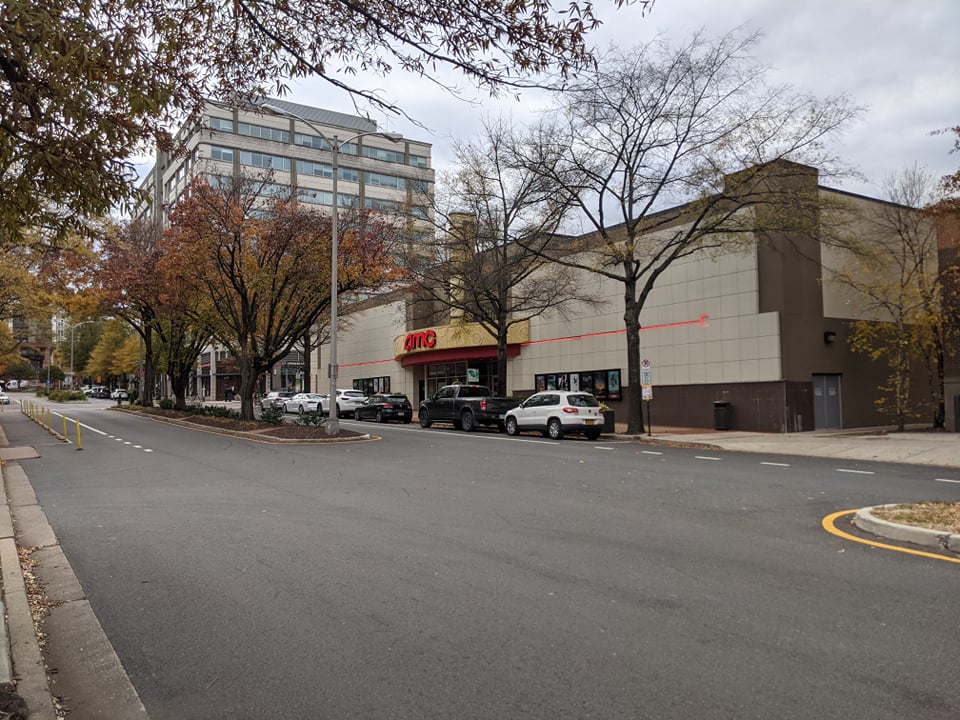
Shirlington-2021

AMC Shirlington Cinema 7 in 2021. 

In 2015, the theater underwent a major renovation that included an expansion of its concessions and a reduction of its seating capacity in favor of the reclining chairs now popular in today’s cinemas. The theater is pictured here in 1996, with films including “Sense and Sensibility” and “Fargo” displayed on the marquee.

Do you have a question about this story, or a personal experience to share? 

Use this form to send a message to the Charlie Clark Center for Local History.

Center For Local History - Blog Post Message Form

Do you have a question about this story, or a personal experience to share? Use this form to send a message to the Center for Local History.

"*" indicates required fields
This field is for validation purposes and should be left unchanged.

Share Your Story

December 2, 2021 by Web Editor

Too Cool for Yule, 2021

Post Published: November 29, 2021

Social Media Ads_Facebook

Since 2008, I have created a holiday playlist variously known as “Don’t Touch that Dial” or "Too Cool for Yule." (There is even a movement afoot to change the name to the “Ding a Ling Thing,” but I digress.)

Many years ago, I made mixtapes for my friends, my siblings, my work colleagues, and often, just for me. For those of you under the age of... fill in the blank... who might not have had the pleasure of methodically mining for nuggets in an LP collection, or waiting patiently by the radio for the hourly replay of the one tune that truly captures the essence of the person you are making the tape for, the mixtape can be a work of art. Each tape tells a story, and the best ones contain an eclectic blend of edgy and whimsical, happy and sad; a little silly, a little snappy and occasionally, a little sappy.

A couple of notes about this year’s edition. Each year I honor a few of the musicians who have left us. Charlie Watts of the Rolling Stones, Graeme Edge of the Moody Blues, Mary Wilson of the Supremes, and Don Everly, the last surviving member of the Everly Brothers, sadly made it to the list. (I wanted to honor Nanci Griffith but could not locate a suitable holiday song.)

Open playlist in Spotify

Listeners will find pop, jazz, instrumental, New Orleans, country, bluegrass, R&B, old school pop, The Chipmunks, and more. Perhaps my favorite is a bluesy tune by the inimitable Fats Domino, who wants to “Stop the Clock.” Wouldn’t we all.

The last words and notes go to Dave Frishberg, brilliant jazz pianist and satirist, musical mainstay of Schoolhouse Rock (“I’m Just a Bill"), who died November 17. His talk-singing of “You are There” touchingly sums it up for anyone who misses special someones.
As Year Two of the pandemic winds down, take a moment (or 5760 -- thank you, Alexa), grab a beverage, any kind will do, and enjoy “Too Cool for Yule 2021.”

And above all…

Stay safe, stay hopeful.

Diane Kresh
Director
Arlington Public Library

Scrawled signature of Diane Kresh

November 29, 2021 by Web Editor Tagged With: yule blog

Arlington’s Courthouse: A Tale in Three Acts

Post Published: November 18, 2021

A Central Landmark of Local Government

Arlington’s Courthouse has served the community in many ways for over 170 years.

Arlington’s first courthouse was technically not even in Arlington: from 1847 to 1920, Arlington was a part of Alexandria, and the Alexandria Courthouse (which served what is now the Arlington area) was located at North Columbus Street and Queen Street.

However, due to the long distances people would have to travel from the present-day-Arlington area to get to that courthouse, a new site for a County courthouse was selected in Fort Myer Heights, on the Civil War site of Fort Woodbury.

Screen Shot 2021-11-17 at 6.18.23 PM

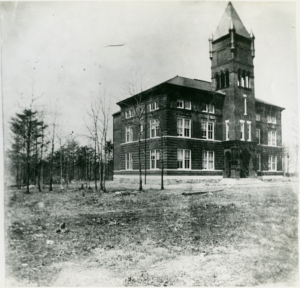
Arlington County Courthouse, date unknown.

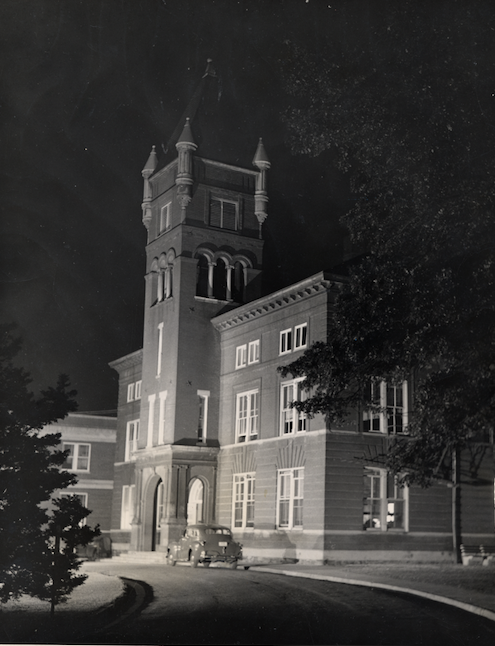
This building, which was designed by Albert Goenner, debuted for public use in 1898. The Victorian-style structure was instantly recognizable with its imposing 75-foot clocktower (though a clock was never installed).

Electricity was added around 1913 and adjoining wings were gradually constructed as Arlington’s population grew in the early decades of the 20th century.

Screen Shot 2021-11-17 at 5.52.30 PM

The original Arlington County Courthouse, circa 1898, the year it was built.

Screen Shot 2021-11-17 at 6.05.15 PM

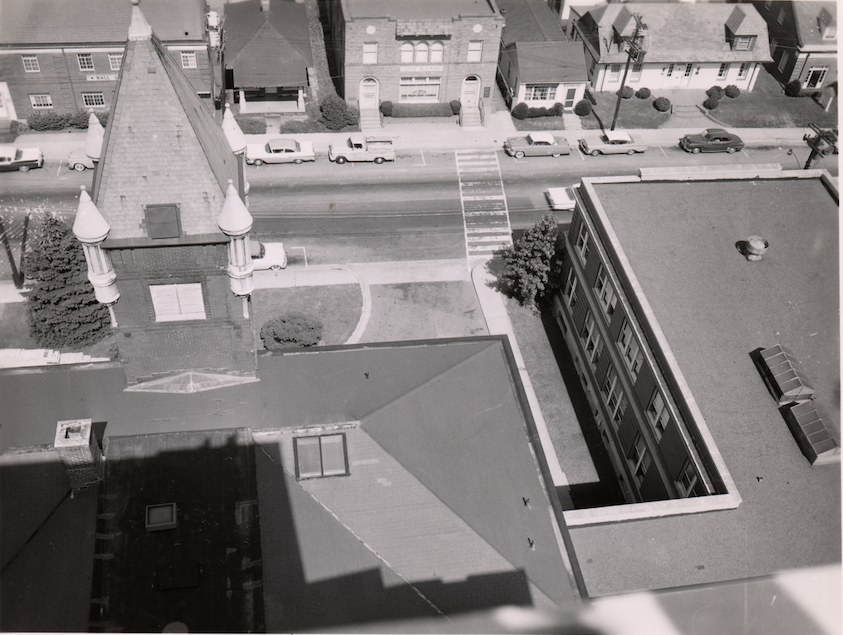
A bird's-eye view of the Courthouse, featuring one of the later additions to the building. 

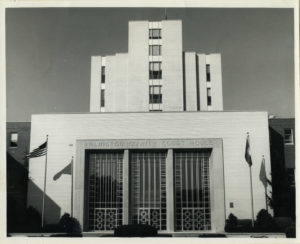
Due to increasing demands as Arlington continued to grow, the 1898 building was torn down in 1960 and replaced by a more modern building. The seven-story tower was dedicated the following year and joined the existing additions and renovated wings, but the original Victorian-style edifice was fully replaced.

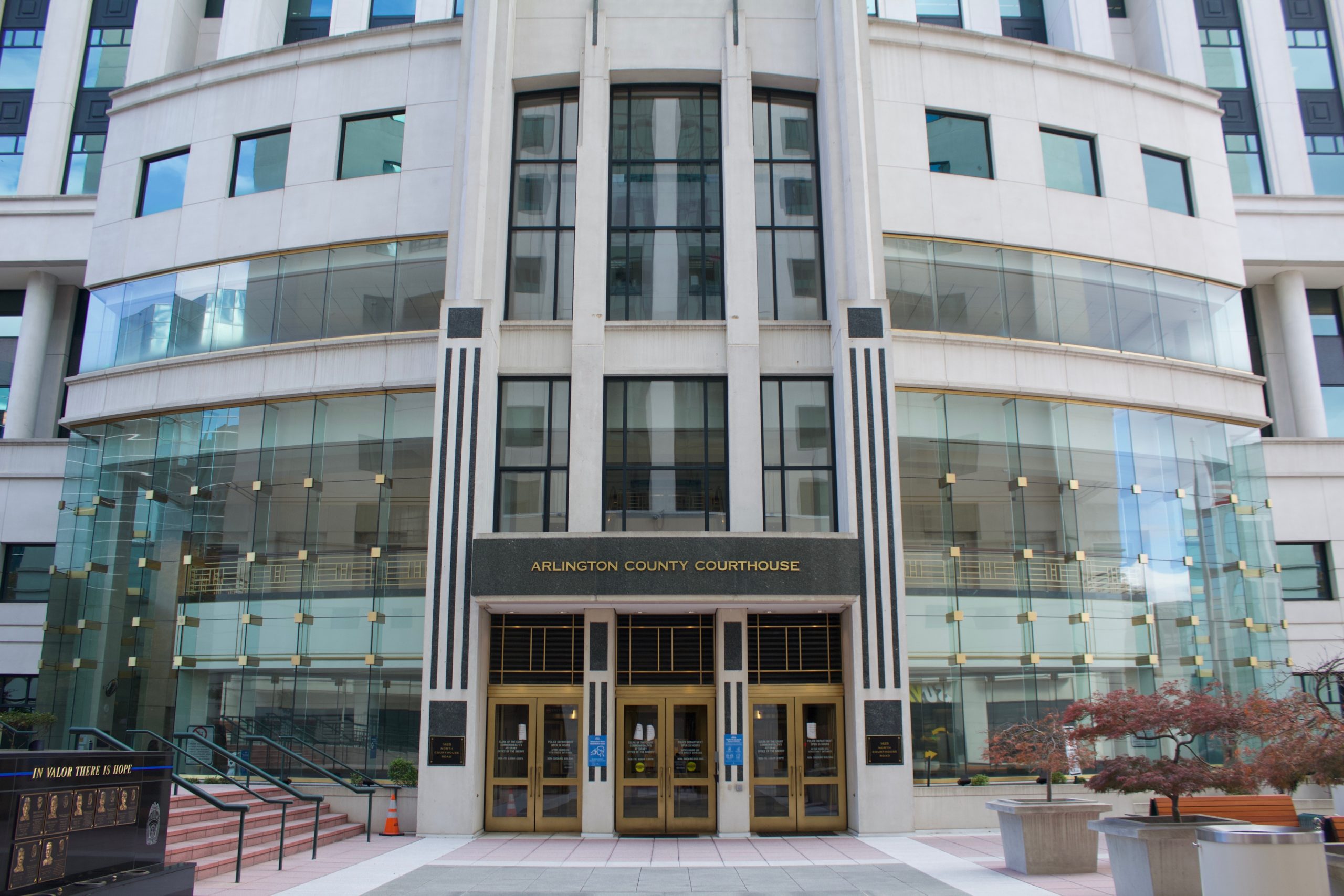
In 1990, a fire broke out in the Courthouse, causing damage and exposing asbestos in the facilities. After decontamination, the 1960s-era building served the County until 1995, when the present-day Courthouse building was completed at a site across the street at 1425 North Courthouse Road (pictured in 2021 in slide three).

Arlington County Courthouse, ca. 1970

The façade of Arlington's second Courthouse, pictured in 1972.

IMG_5138 2

The current County Courthouse at 1425 North Courthouse Road., pictured in 2021

The old courthouse location was used by the fire department for training exercises until 1997, when it was demolished in a controlled implosion. That site is now a parking lot adjacent from the current Courthouse and detention center facility.

You can learn more about the Arlington Courthouse in these articles from the Arlington Historical Magazine, published by the Arlington Historical Society:

  • A History of the Arlington County Courthouse, by Jeanne Rose
  • Albert Goenner: The Forgotten Architect of Arlington's First Courthouse, by Willard J. Webb
  • Symbols of Justice from the Three Courthouses of Arlington, by George W. Dodge

November 18, 2021 by Web Editor

Oral History: Don Tenoso

Post Published: October 14, 2021

Arlington-based Native American artist and educator

Arlington Voices the Oral History Collection

Oral histories are used to understand historical events, actors, and movements from the point of view of real people’s personal experiences.

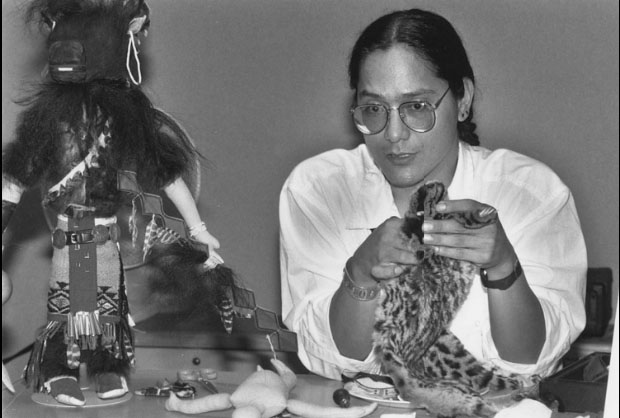
Artist Don Tenoso is a prolific creator, known for his Lakota-style dollmaking that depicts Sioux culture. Tenoso came to the Washington, D.C., area in 1991 as the first artist-in-residence at the Smithsonian’s Natural History Museum, where he created new pieces and led demonstrations for the public.


Don Tenoso, Sioux Doll-maker and Puppeteer.

Don Tenoso, circa 1990 at the Smithsonian Museum of Natural History. Image courtesy of the Smithsonian Institution Archives.

Tenoso was born in Riverside, California, and is a member of the Hunkpapa, one of the seven bands of the Teton Lakota Nation and part of the Sioux-speaking indigenous population. Tenoso’s mother was born on the Standing Rock reservation in South Dakota, and he is a descendant of One Bull and Sitting Bull. His father was in the U.S. military during Tenoso’s early life and the family often moved around the country and abroad.

The following interview excerpts are from a 2008 oral history with Tenoso. At the time of this interview, he had lived in Arlington for about 14 years. In the full interview, which can be accessed in print at the Center for Local History, Tenoso also discusses his family and lineage, as well as tribal traditions and the Lakota language.

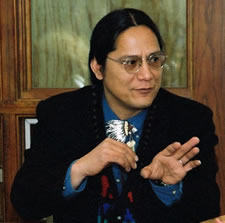
tenoso

Don Tenoso, circa 2005. Image courtesy of the University of Illinois Urbana-Champaign, where Tenoso was the university’s first artist-in-residence at the Native American House. 

Narrator: Don Tenoso
Interviewer: Tom Dickinson
Date: January 23, 2008
Note: The audio for this interview is currently unavailable.

Don Tenoso: I was the first artist-in-residence in the Natural History Museum. Prior to that they had brought me in for a three-day doll demonstration where they had taken one of the glass cases out of one of the Native halls there in Natural History at Smithsonian and by different artists coming in. Me, a Sioux doll maker, was invited to come up and do that. I guess they had spent like nine months trying to find me. I started dollmaking back in the seventies.

Anyway, in the eighties, ‘86 or so, ‘87, there was an article in American Indian Art magazine that was published about dolls. In ‘86 I believe it was, I had a one-man show down in Andrew Park, Oklahoma and they collected the International Crafts Board for four of my dolls.

So one of them got in that article and then the director over at education in the outreach program saw the doll and they said they wanted to find that guy.

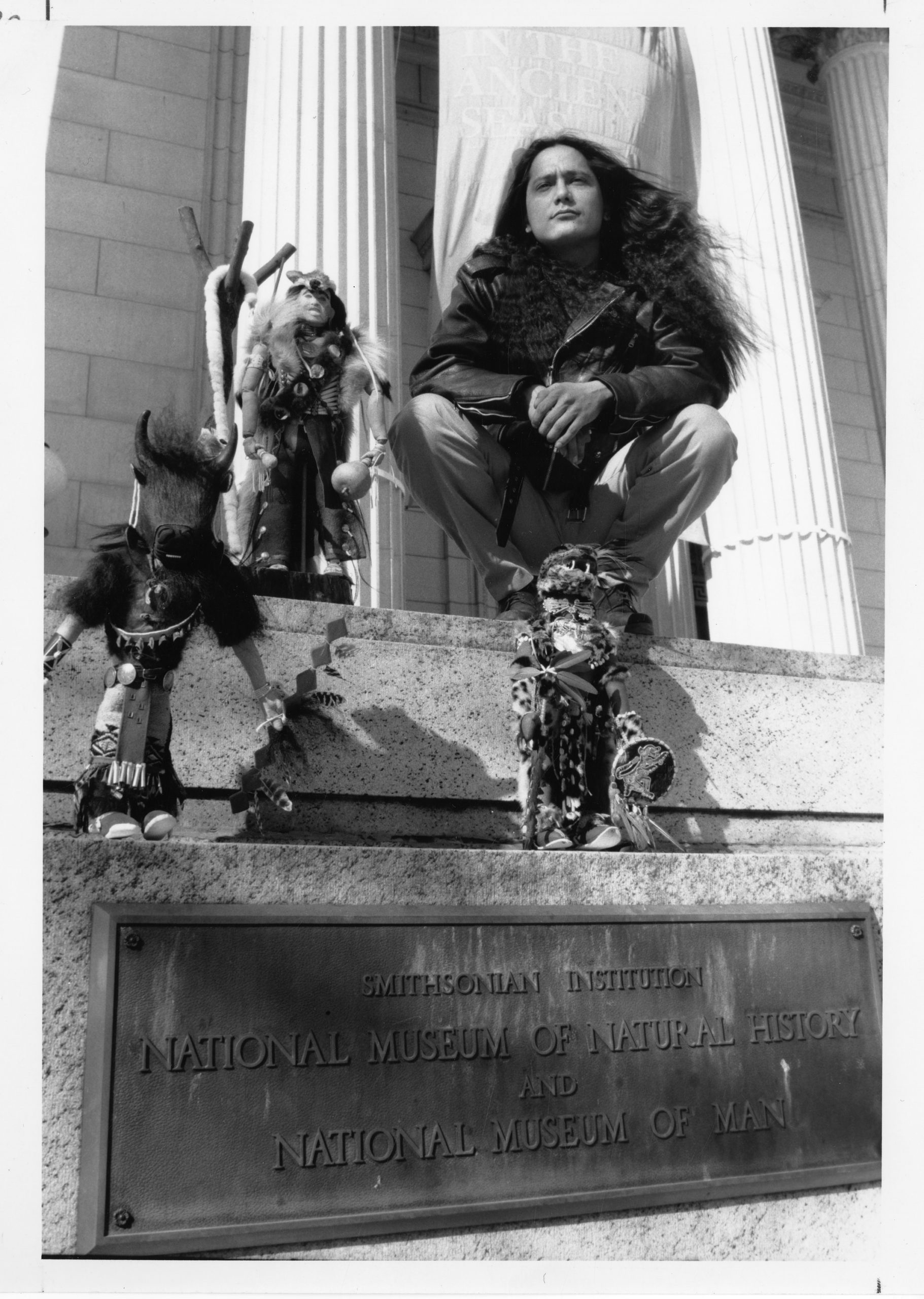
Don Tenoso SIA-SIA2010-0383

Don Tenoso circa 1991 outside of the National Museum of Natural History with some of his works of art. The doll beside Tenoso is called “Iktorni,” or “trickster doll.” Image courtesy of the Smithsonian Institution Archives.

Tenoso beadwork

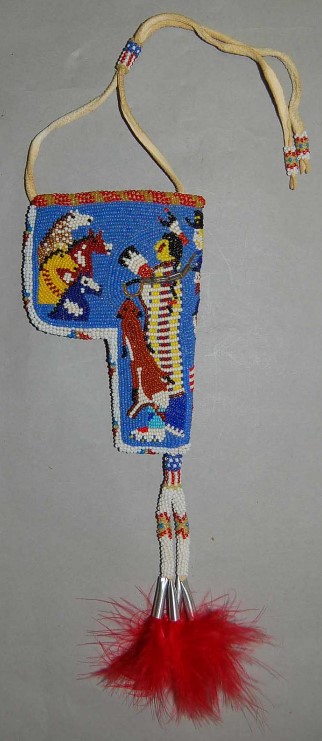
Leather holster created by Tenoso in 2006, covered in a beadwork design. Image courtesy of the British Museum, where the piece is held. 

Tom Dickinson: How did you get started doing this [art practice]?

DT: Actually I started when I was in New York. I went out there because I heard that C. W. Post [campus of Long Island University] had a scholarship for Natives who wanted it to be teachers. It turns out they didn’t so I went to the American Indian Community House there in New York.

Actually, backpedal a little bit. I was born in Riverside, California in 1960. In ‘63 we were in France. We were there when de Gaulle kicked us out. So my earliest memories are there when the French high school kids were throwing rocks at us on the playground. They would stone our bus. I remember flying out of there and the U.S. piling up all these brand new, big boxes and stuff and just setting them on fire. Big old wrecking balls smashing holes into runways as you flew out. I also got to see some whales as we flew, that’s how low they went across the ocean. You can see the spouts and little tails going across.

So from there we go to Oklahoma City, so I got to meet all these Natives. They used to call it Indian Territory which is sort of a penal colony for Native Americans starting back through Trail of Tears, Andrew Jackson and all of that stuff.

From there we went and lived in Rapid [City] back where my grandma lived, lot of relatives in Rapid City, South Dakota, in the Black Hills which is our sacred area, which actually by federal courts is still our property. But they offered us $10 million or $100 million or something but we still don’t take it. Because our sacred Wind Cave is there and that’s one of our origin stories. We came from there. The thing about Wind Cave you stand there one hour of the day and it blows your hair back.

So geologists say, “Yeah, there’s probably an underground stream - they haven’t found it yet - flowing and air displacement and that’s causing your hair to go that way.” The only thing is you come back some hours later, same day, and now it’s sucking your hair into the cave. “I guess there’s a tilting rock or something under there that messes with it.” We say that’s Mother Earth breathing, that’s where she breathes from.

Learn more: View a program from the 1992 exhibit Contemporary Plains Indian Dolls, which took place at the Southern Plains Indian Museum and Crafts Center in Anadarko, Oklahoma. The exhibit featured a piece by Don Tenoso (“Gourd Clain Dancer,” figure 10). 
 
This interview was conducted as part of The Many Faces of Arlington oral history project, which sought to document the County’s diverse population as a reflection on the 400th anniversary of the settlement of Jamestown by English colonizers. 

The goal of the Arlington Voices project is to showcase the Center for Local History’s oral history collection in a publicly accessible and shareable way.

The Arlington Public Library began collecting oral histories of long-time residents in the 1970s, and since then the scope of the collection has expanded to capture the diverse voices of Arlington’s community. In 2016, staff members and volunteers recorded many additional hours of interviews, building the collection to 575 catalogued oral histories.

To browse our list of narrators indexed by interview subject, check out our community archive. To read a full transcript of an interview, visit the Center for Local History located at Central Library.

October 14, 2021 by Web Editor

Oral History: J. Walter Tejada

Post Published: September 23, 2021

Community Activist; Arlington County Board Member from 2003 - 2015

Arlington Voices the Oral History Collection

Oral histories are used to understand historical events, actors, and movements from the point of view of real people’s personal experiences.

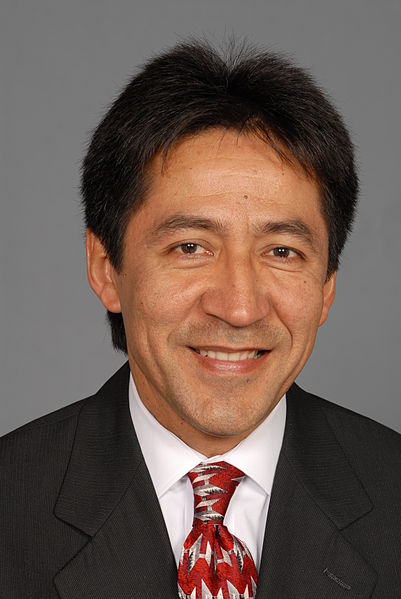
401px-Arlington_County_Board_Chair_J._Walter_Tejada_USE_THIS_ONE_(4251361999)

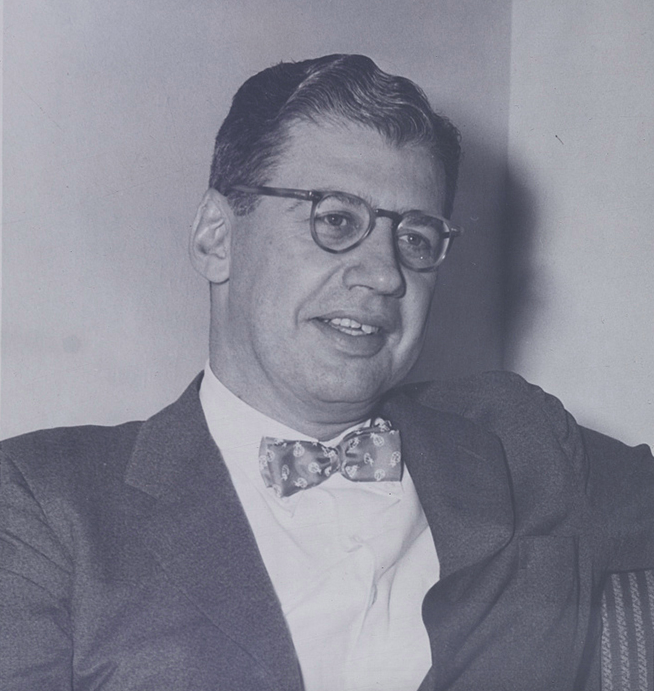
Walter Tejada’s County Board portrait, circa 2007.

In 2003, J. Walter Tejada became the first person of Latin American heritage to be elected to the Arlington County Board, or to any governing body in Northern Virginia.

Tejada served as County Board Chair in 2008 and 2013.

Tejada was born in El Salvador and immigrated to the United States at age 13, first settling with his family in Brooklyn, New York, and later moving to Trenton, New Jersey. After attending college and playing soccer at Keystone Junior College and Mercer College, he eventually moved to Arlington in 1987.

Tejada got his start as an activist and organizer after witnessing inequities faced by members of the Latinx community. He initially worked in groups addressing fair housing, job opportunities, and the League of United Latin American Citizens (LULAC). He also helped to establish a Salvadoran festival in Arlington, starting in 1995, focusing on Salvadoran culture.

Screenshot 2021-09-22 105027

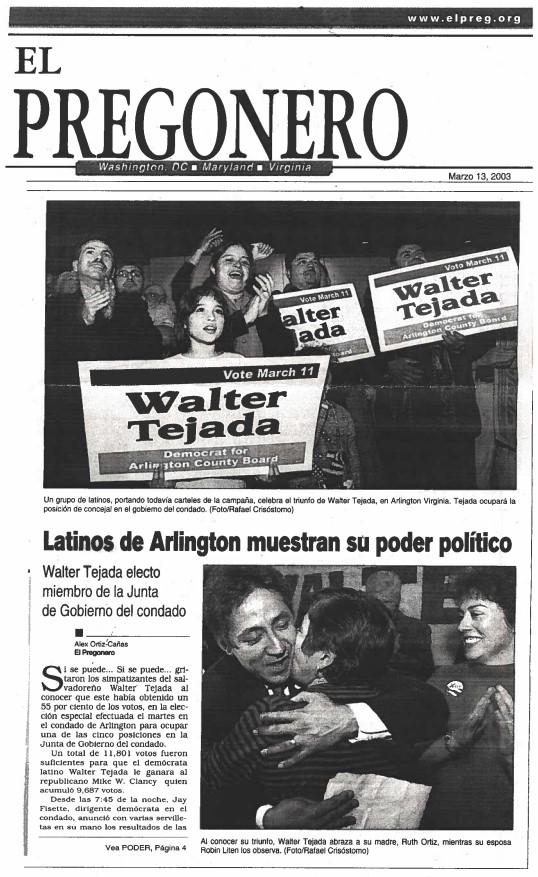
The front page of El Pregonero, the official Spanish-language newspaper of the Roman Catholic Archdiocese of Washington, D.C., on March 13, 2003, following Tejada’s election to the County Board.

In 2003, Tejada was elected to the Arlington County Board in a special election following the death of Board member Charles P. Monroe. Tejada defeated longtime GOP activist Mike W. Clancy in the contest.

During his time on the board, Tejada continued to advocate for immigrant and Spanish-speaking communities, and served on numerous task forces and groups, including as chair on the governor’s Latino Advisory Commission.

Tejada

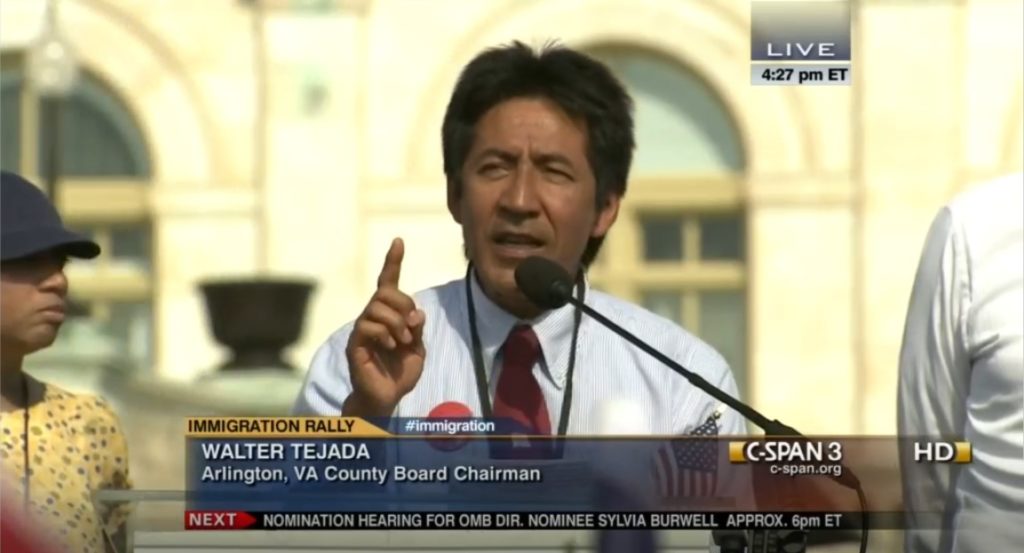
J. Walter Tejada speaking at the National Rally for Citizenship on the West Lawn of the Capitol on April 10, 2013. Image courtesy of C-SPAN.

Arlington_County_Board_2014

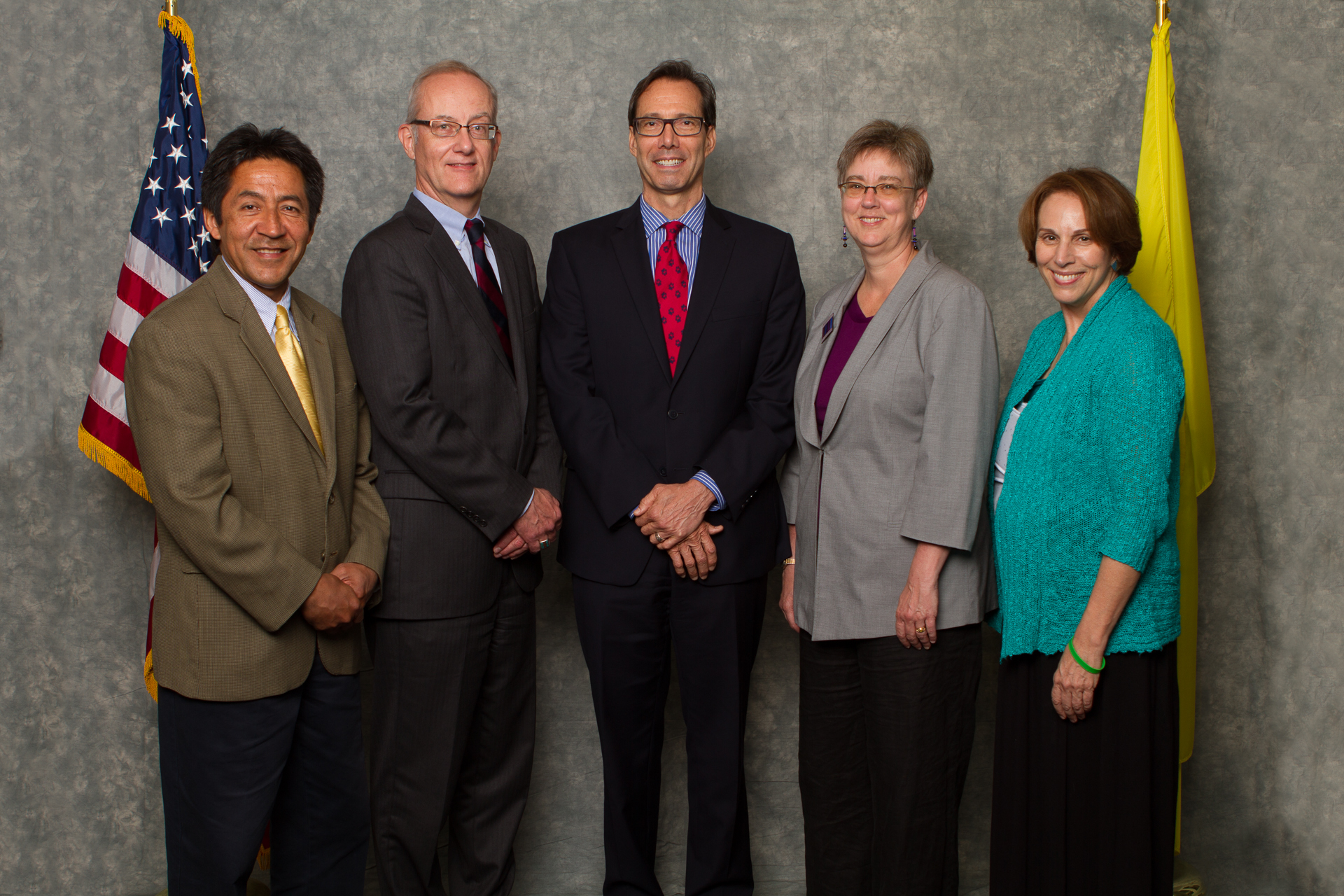
From left to right: County Board members J. Walter Tejada, John Vihstadt, Jay Fisette, Mary Hynes and Libby Garvey in 2014.

Since his time in County government, he was appointed to the Metropolitan Washington Airports Authority Board of Directors and is president of the Virginia Latino Leaders Council.

In the following oral history interview, conducted prior to his election to the County Board, Tejada discusses his childhood, coming to Arlington, and his early work in activism. In these excerpts from the interview, he discusses first impressions of the County and his work with LULAC’S Council 4609, which encompasses Arlington. 

This interview is available in full at the Center for Local History. Note: The audio for this interview is currently not available.  

Narrator: J. Walter Tejada 

Interviewer: Ingrid Kauffman

Date: October 27, 2000 

J. Walter Tejada: One of the things I saw when I lived in DC - actually, one of the first things I recognized was that - actually since I started visiting Robin [Liten-Tejada] when she went to school here -- is that DC had a much larger Latino population than New Jersey, and I liked that. Remember, I mentioned that when we lived in New York there weren't that many Salvadorans at all, even when we lived in New Jersey, there was one person that was Salvadoran, and he lived like 10 miles away. It was odd that I came here and suddenly there was a Salvadoran population. 

Ingrid Kauffman: What year was that? 

WT: 1987. I thought, “this is great.” There were some restaurants; I hadn't eaten pupusas for years, which is one of my favorite Salvadoran dishes, just like almost every day. I saw this and it really piqued my interest. In fact, it was a determining point why I ended up moving here, when we were talking about what we were going to do with our lives. I'd come to visit and see all this and I liked that. The climate here, so many people from different backgrounds, different perspectives and accents, cultural activities - to me, it was like a paradise for these activities. When I was working in D.C. I also saw that the Latino community was really - first of all, there was no political power. Then - the community - not all but certainly a good portion of the community finds itself in a very tough socio-economic situation.

WT: Three things [LULAC Council 4609] did were voter registration, citizenship, and leadership development. That part I liked because it made it so broad for different things. I decided I was going to be involved in that aspect, because we would promote meetings, forums, community forums, where elected officials or public officials would meet with the community to address issues of concern with the community, sort of like putting a little bridge into what needed - the issues of importance. I started, and I would go to places and grab chairs, move them around, set up the coffee machine, make sure donuts were there.  

We did forums on gang prevention activities, the educational system in Arlington, how it was being responsive to Latinos or not. We've done forums in the business community - what opportunities there could be to incorporate Latinos into the business world. We did citizenship workshops where we published that on a certain day people could come in with all their material that we would specify, like passport, proof of where they lived, proof where they worked, birth certificates for their kids, and helped them fill out these applications in order to apply to become citizens. We would have lawyer friends who would come and volunteer in these workshops so that we can help people.

The goal of the Arlington Voices project is to showcase the Center for Local History’s oral history collection in a publicly accessible and shareable way.

The Arlington Public Library began collecting oral histories of long-time residents in the 1970s, and since then the scope of the collection has expanded to capture the diverse voices of Arlington’s community. In 2016, staff members and volunteers recorded many additional hours of interviews, building the collection to 575 catalogued oral histories.

To browse our list of narrators indexed by interview subject, check out our community archive. To read a full transcript of an interview, visit the Center for Local History located at Central Library.

September 23, 2021 by Web Editor

  • « Go to Previous Page
  • Page 1
  • Page 2
  • Page 3
  • Page 4
  • Interim pages omitted …
  • Page 40
  • Go to Next Page »

Footer

About Us

  • Mission & Vision
  • Charlie Clark Center for Local History
  • News Room
  • Get Email Updates

Administration

  • Policies
  • Library Staff
  • Job Opportunities
  • Propose a Program or Partnership

Support Your Library

  • Friends of the Library
  • Giving Opportunities
  • Donating Materials
  • Volunteer Opportunities

Our Mission

We champion the power of stories, information and ideas.

We create space for culture and connection.

We embrace inclusion and diverse points of view.


Download the Library App

Download the Library App

Arlington County | Terms & Conditions | Accessibility | Site Map
· Copyright © 2026 Arlington County Government ·