• Skip to primary navigation
  • Skip to main content
  • Skip to primary sidebar
  • Skip to footer

Alert

Holiday: All library locations closed Fri., June 19, for Juneteenth. More Info

Alert

Update: Elevator outages, maintenance and upgrades at Central Library More Info

Alert

Storytimes Will “Take a Nap” through June 20 More Info

Home - Arlington County Virginia - Logo
MENUMENU
  • Join Now
  • My Account
    • Login
    • My Checkouts
    • My Holds
    • My Lists
    • My Reading History
    • About Borrowing
    • About Holds
    • About My Account
  • Hours & Locations
    • All Hours & Locations
    • Holiday Closings
  • News
    • Library News
    • Director's Blog
    • Get Email Updates
  • Contact Us

Arlington Public Library

MENUMENU
  • Search
  • Collections
  • Library Services
  • Events
  • Community Engagement
  • Join Now
  • My Account
    • Login
    • About Borrowing
    • About Holds
    • About My Account
  • Hours & Locations
    • All Hours & Locations
    • Holiday Closings
  • News
    • Library Blog
    • Get Email Updates
  • Contact Us

News

The Census: Then & Now

Post Published: June 25, 2020

The 2020 census is currently underway nationally – but what did the census look like in the past?

The U.S. census is a ten-year event in the United States, as stipulated in the constitution in Article I, Section 2, empowering Congress to carry out the census in “such manner as they shall by Law direct.” Every decade, each household gets a chance to count themselves, contributing data that determines nearly $1 trillion of funding that is distributed on the local level as well as congressional apportionment.
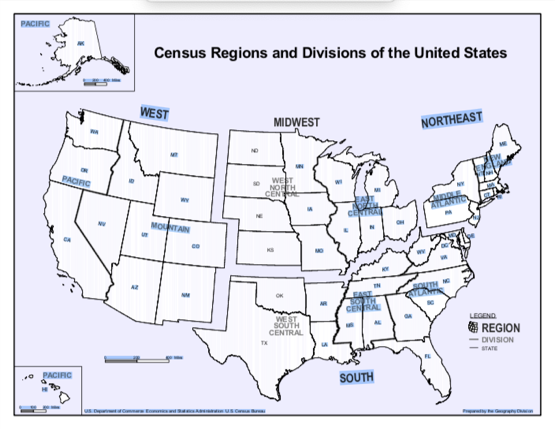
Census Regions Map

Image courtesy of the U.S. Census Bureau.

Early Censuses

The first U.S. census was taken in 1790 and counted 3.9 million residents in the whole of the country. The census has occurred every 10 years since – making it one of the very first and longest-lasting actions made by our early government. The early censuses were conducted by assistant U.S. marshals who were instructed to “make a just and perfect enumeration and description of all persons … according to the best of [their] ability.” Virginia is part of Region 3, Division 2, of the census’ designated statistical regions and is part of the South Atlantic group. Arlington was part of the first 1790 census, however, the residents of what is now Arlington County would have been counted under the regional designation of Fairfax County.
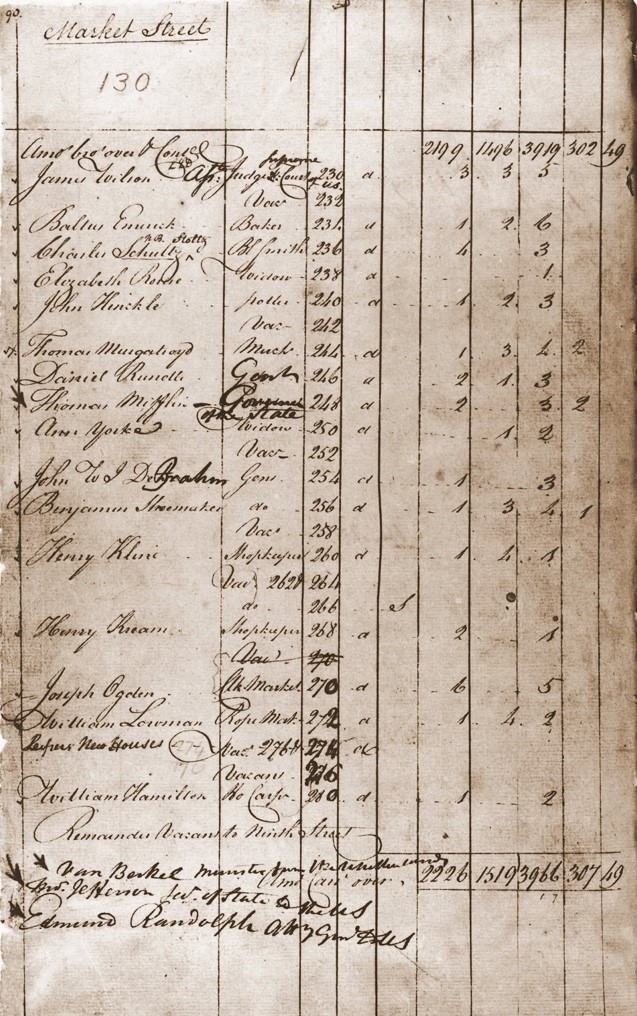
Census Records

A census enumerator’s records from the 1790 census. Image courtesy of the U.S. Census Bureau.

Although you can now take the census by multiple methods, early copies of the census were completed exclusively by paper. Early iterations of the census show a much different set of questions that are now included in a modern-day census.

There were only six questions on the first census – the name of the white, male householder, and then the names of all the other people in the household, divided into these categories: Free white males who were at least 16 years old; free white males who were under 16 years old; free white females; all other free persons; and slaves, who under the constitution were counted as three-fifths of a person. These questions highlight the fundamental inequalities that determined life at this point in U.S. history and are cause to reflect on who was counted, how they were counted, and who got to do the counting – all important questions when evaluating census data from a historical lens.
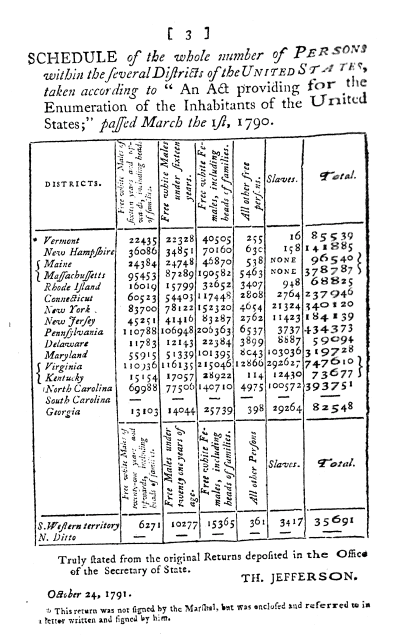
1790 Census 1
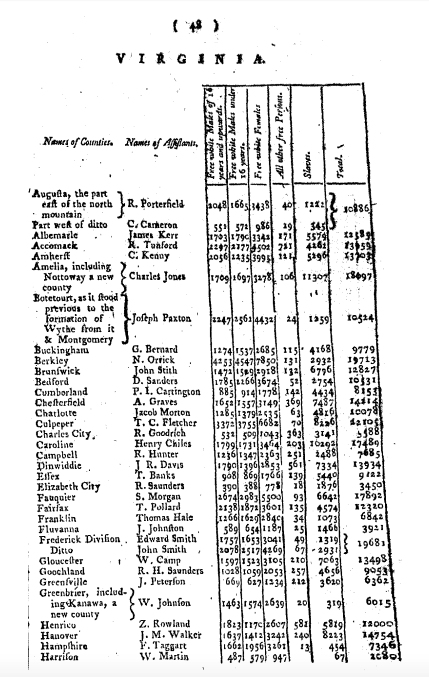
1790 Census 2

Excerpts from the 1790 census highlighting Virginia. Image courtesy of the U.S. Census Bureau.

Changes to the Census

Over the years, the census has changed its format and its questions. The 1870 census was the first to eliminate what was called the “slave questionnaire,” and was reordered after the conclusion of the Civil War to only include schedules for "General Population," "Mortality," "Agriculture," "Products of Industry," and "Social Statistics."

The census only started counting Native Americans in 1860 and started including Native Americans living on reservations in 1890. Other racial categories on the census also developed into the latter half of the 19th century as immigration from non-European countries increased. These categories are an ever-developing part of the census and continue to diversify today. (For a more detailed look at how the U.S. census has historically measured race in the U.S., Science News has an overview of some of the key changes the census has seen.)
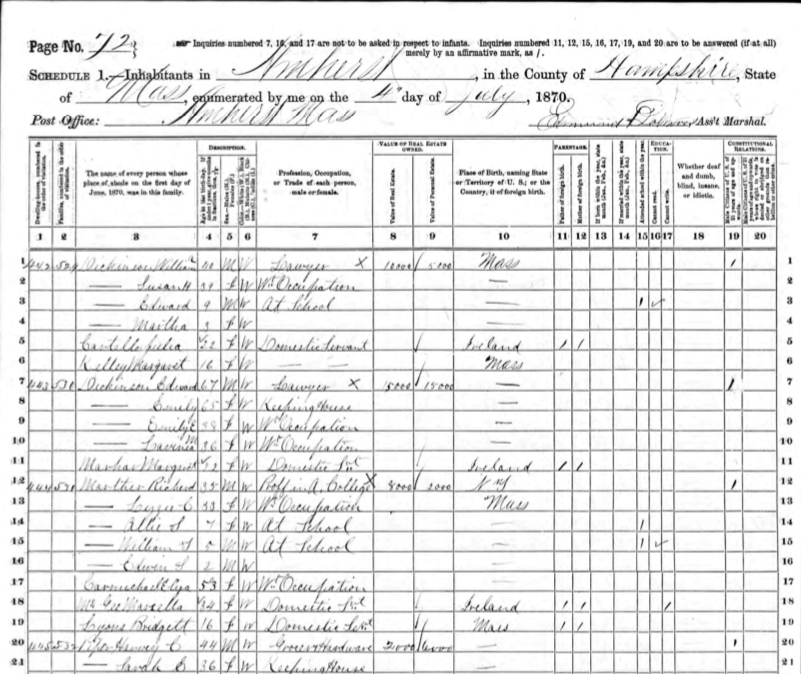
1870 Census

An example of an 1870 census schedule. Image courtesy of the U.S. Census Bureau.

Some other technical changes have occurred over the years as well: the 1810 Census collected economic data on the quantity and value of manufactured goods, expanding for the first time on the original six questions. In 1850, the census began collecting "social statistics,” such as information about taxes, education, crime, and value of estate, and mortality data. In 1940, in response to the devastation of the Great Depression, additional questions were asked of a sample of the population, including questions on internal migration, veteran status, and the number of children ever born to women. In recent decades, the census has turned toward more simplified forms – the 2000 census was the shortest since 1820, with only seven questions on the short form, and this trend has continued up to today.

Other changes over the years have included the methods of taking the census: the 1960 census was the first census to be mailed out to households and was the first year the census results were counted by computer. This year’s census is the first with the option to complete the form by phone or online.

Another historical development to this year’s census is it is the first to include a question about same-sex relationships, where respondents can identify as “same-sex husband/wife/spouse” or “same-sex unmarried partner.”
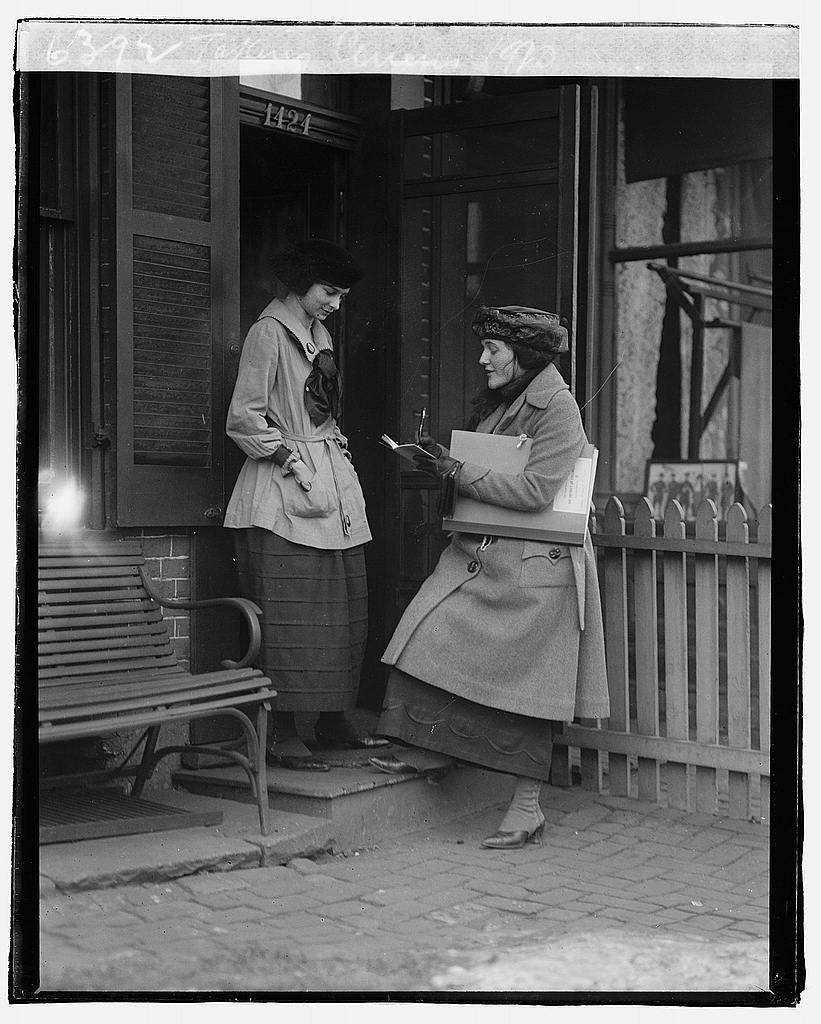
Census Taker 1920

A census-taker circa 1920. Image courtesy of the Library of Congress.

Want to learn more? You can explore historical census data through the county going back to 2000. This site also includes maps and other data related to the history and demographics of Arlington. You can also search through historical census documents through the National Archives’ digital collections.

Do you have a question about this story, or a personal experience to share? 

Use this form to send a message to the Charlie Clark Center for Local History.

Center For Local History - Blog Post Message Form

Do you have a question about this story, or a personal experience to share? Use this form to send a message to the Center for Local History.

"*" indicates required fields
This field is for validation purposes and should be left unchanged.

Share Your Story

June 25, 2020 by Web Editor

A Change is Gonna Come: A Playlist for Black Lives Matter

Post Published: June 18, 2020

From the Library Director

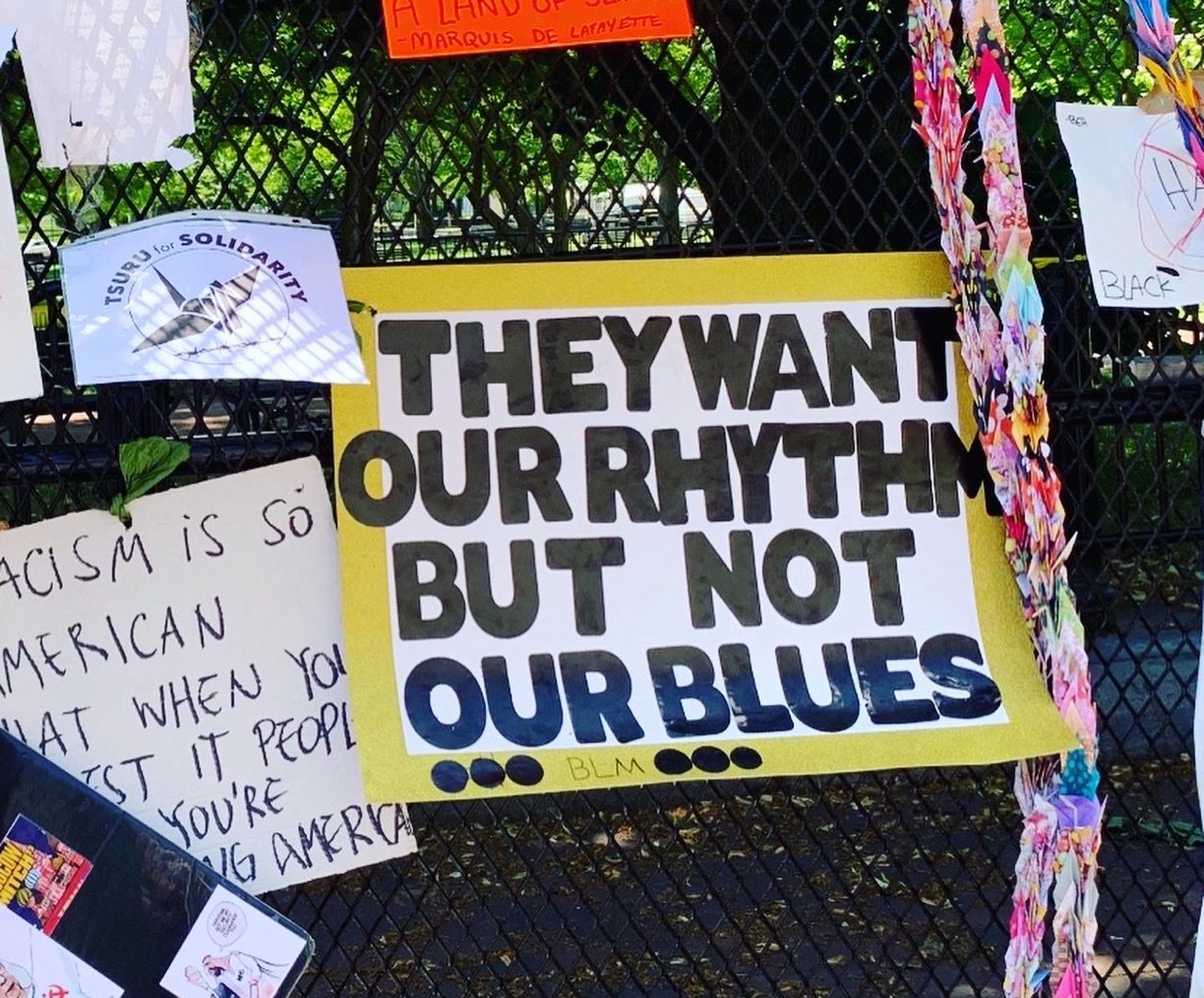
Signs

Sign photographed on the wall surrounding the White House at Black Lives Matter Plaza.

When I was attending Arlington Public Schools in the 1960s and early 1970s (Yorktown High School Class of 1972), I didn’t learn about Juneteenth, the date commemorating the emancipation of enslaved people in the United States. I didn’t learn about the 1921 Tulsa Race Massacre, either. And the study of literature by African-American authors had only just begun with works like “Blues for Mister Charlie” by James Baldwin.

As Director of Arlington Public Library, I have an opportunity each day to ensure dates in our history like those cited above are recognized and understood through our collections and programs and through modeling the Library’s values of acceptance and inclusion.

From time to time, we have created music playlists to capture a moment. Many of you are familiar with my annual holiday playlist. When the pandemic hit, we created “Dancing with Myself: Playlist for a Pandemic.”

Now, with conversations about race front and center across the nation, we turn again to music.

Music heals, music unites, and music can change minds.

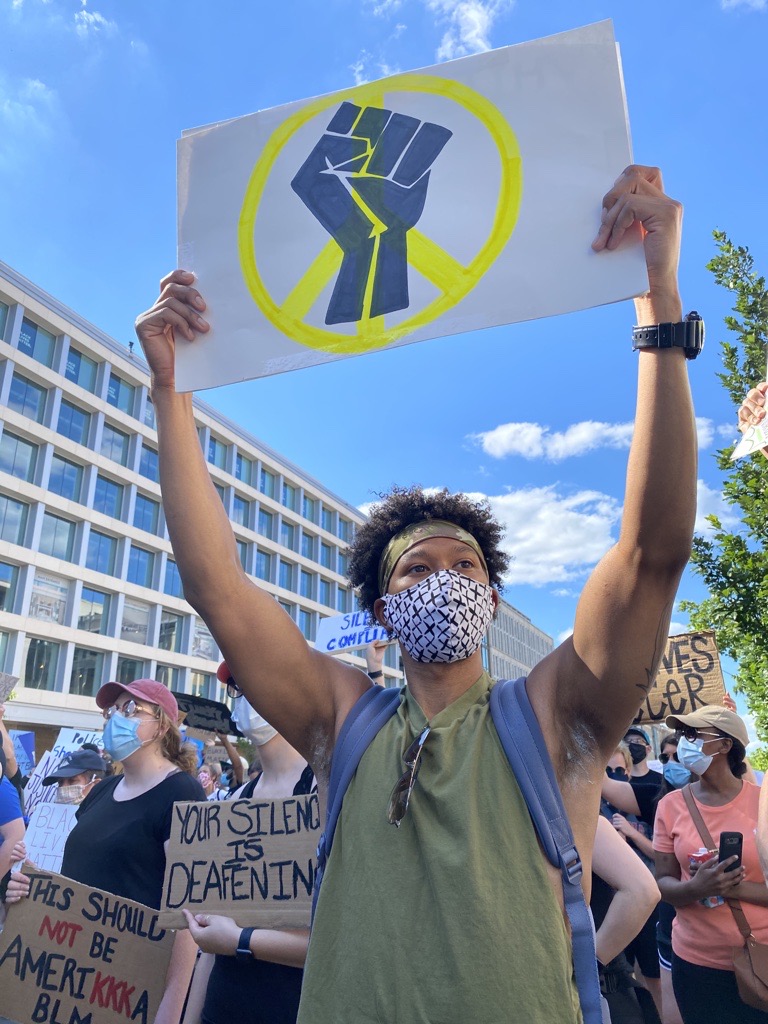
Black Lives Matters

Black Lives Matter Plaza, June 7.

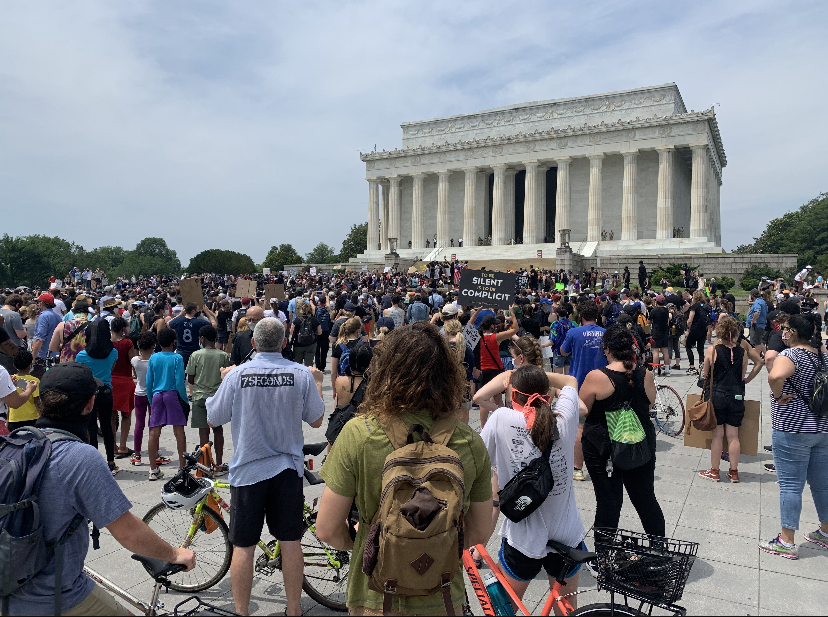
Lincoln Memorial

Protesters gathered at the Lincoln Memorial, June 6.

The late great First Lady of Soul, Aretha Franklin, who knew something about music, once said, “Music does a lot of things for a lot of people. It's transporting, for sure. It can take you right back, years back, to the very moment certain things happened in your life. It's uplifting, it's encouraging, it's strengthening.”

So with those words in mind ... press play and play it loud and proud.

Open playlist in Spotify

Diane K.

Scrawled signature of Diane Kresh

June 18, 2020 by Web Editor

Rediscover Shirlington

Post Published: June 18, 2020

Before European colonization, a Necostin Native American village was located on the land near the current Village at Shirlington shopping center.

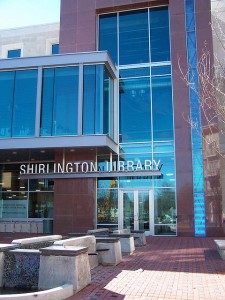
Shirlington Library

Shirlington Branch Library, circa 2007.

On January 21, 1705, William Struttfield, one of 48 original settlers who owned land in present-day Arlington, patented a 543-acre tract south of Four Mile Run that included what is now Shirlington. He sold the land to Colonel John Carlyle and it stayed in the Carlyle family into the mid-19th century.

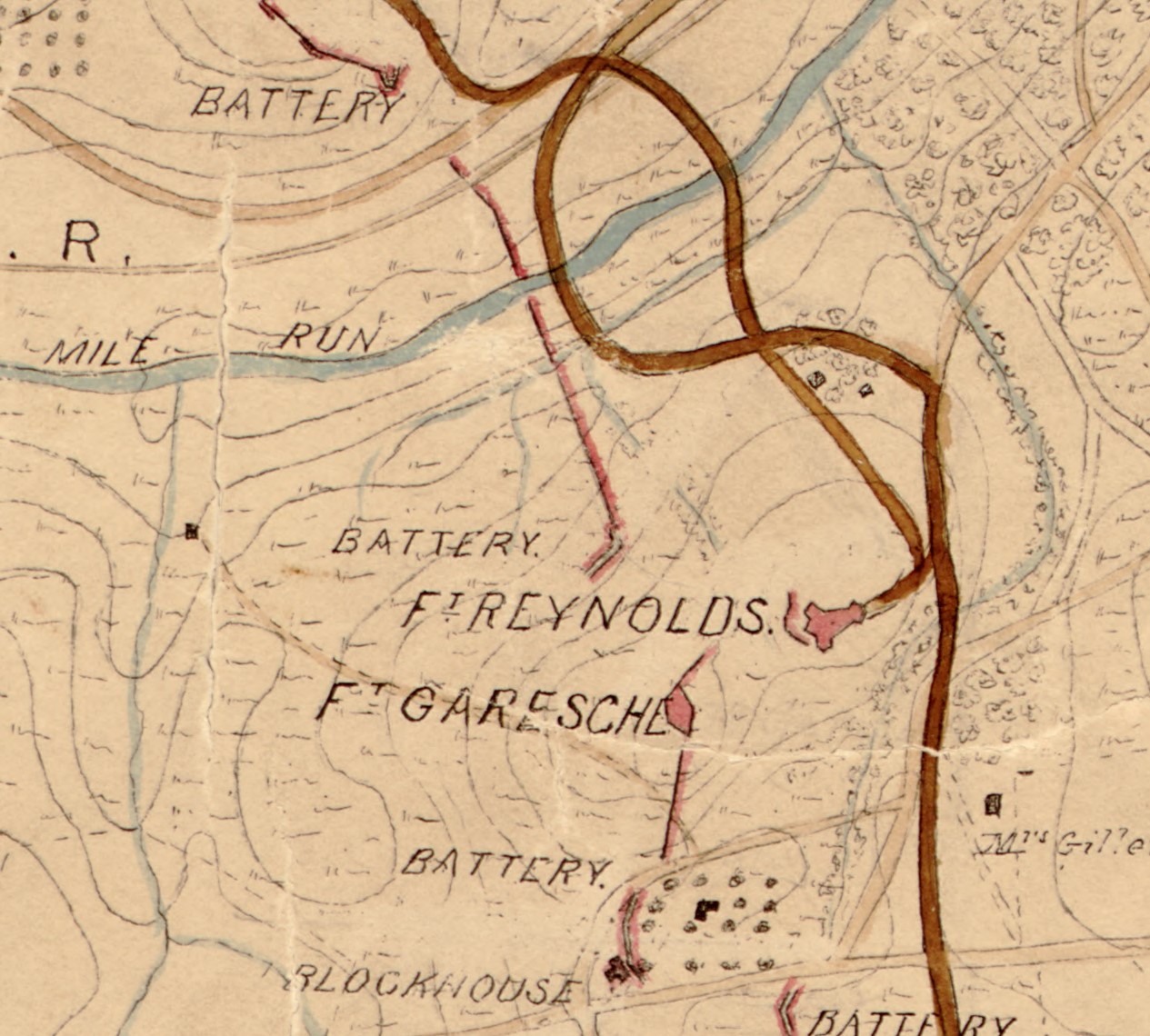
The hill southwest of present-day Shirlington served as a fortification within the Defenses of Washington that were erected by Union forces during the Civil War. Fort Blenker, later renamed Fort Reynolds, was built in 1861 and selected by the Union due to the view it afforded of the valley along Four Mile Run.

Shirlington Forts

Map of the Environs of Washington: Compiled from Boschkes’ Map of the District of Columbia and From Surveys of the U.S. Coast Survey showing the Line of Defenses of Washington as Constructed during the War from 1861 to 1865 Inclusive. The red arrow points to Fort Reynolds and the blue arrow points to the approximate present-day location of the Village at Shirlington. Source: Library of Congress.

Joseph Cherner, a Jewish immigrant from Russia with a successful car dealership and repair shop, considered opening an airport near Four Mile Run but decided to invest in a shopping center instead. He purchased 200,000 cubic yards of fill to raise the grade by as much as 13 feet, channelized two creeks, and constructed roads and alleyways through the property. Cherner attracted new businesses to the development by offering tenants very low rental rates in exchange for a percentage of the businesses’ profits. He combined the names of nearby Shirley Highway (Interstate 395) and Arlington to name the area. The proximity to this still-under-construction roadway was meant to promote traffic to the new shopping center.

The shopping center opened in December 1943, with a supermarket, gift shop, clothing cleaners, beauty parlor, and shoe repair shop in one-story storefronts of limestone and granite construction with Art Deco architectural detailing. The layout of the streets was as it is now, with the shops facing each other across a central median. More stores opened in 1944, including a Gulf filling station which is likely the extant gas station but with substantial changes

While stores allowed African Americans patrons to shop, they were barred from services, such as eating at lunch counters and restaurants and using leisure facilities. This was particularly difficult for residents of Fort Barnard Heights and Green Valley, the primarily African American communities next to the shopping center.

Following Joseph Cherner’s death in 1956, his wife Ruth (née Schlom) Cherner, assumed the role of the president of the Shirlington Corporation. She led the company through a land swap with Arlington County’s Property Yard in May 1957 that increased acreage at the north boundary of the Shirlington Business Center by seven acres. She became a prominent businesswoman in the Arlington real estate market. Lansburgh’s Department Store opened in September 1959 on the former Property Yard land and served as a new retail anchor for the shopping center.

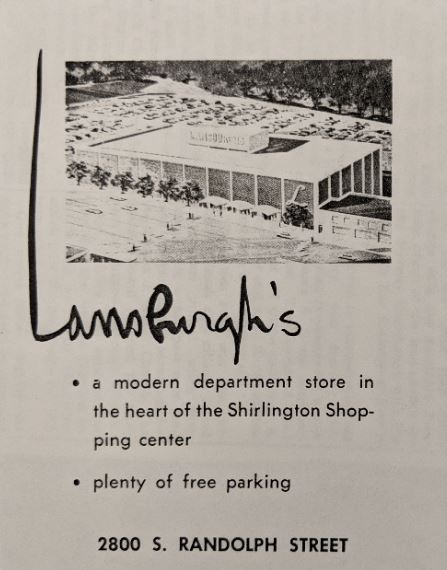
1962 Arl Blu Book

Bird’s eye view rendering of Lansburgh’s Department Store at the Shirlington Shopping Center, 1962. Source: Arlington Blu Book, 1962, Center for Local History Archives, Arlington County Public Library.

In January 1960, the Nauck Citizens’ Association (a precursor to the present-day Green Valley Civic Association) proposed a business district along South Shirlington Road to offer services to people of color. This business area would include a motel, theater, restaurant, bowling alley, and office space for professional services. Lutrelle F. Parker, chairman of the Nauck Citizens’ Association, asserted that they did not intend for the business center to detract from desegregation efforts that were currently being undertaken throughout the south. Rather the citizens’ group aimed to supply necessary services to African American citizens until other commercial areas were desegregated.

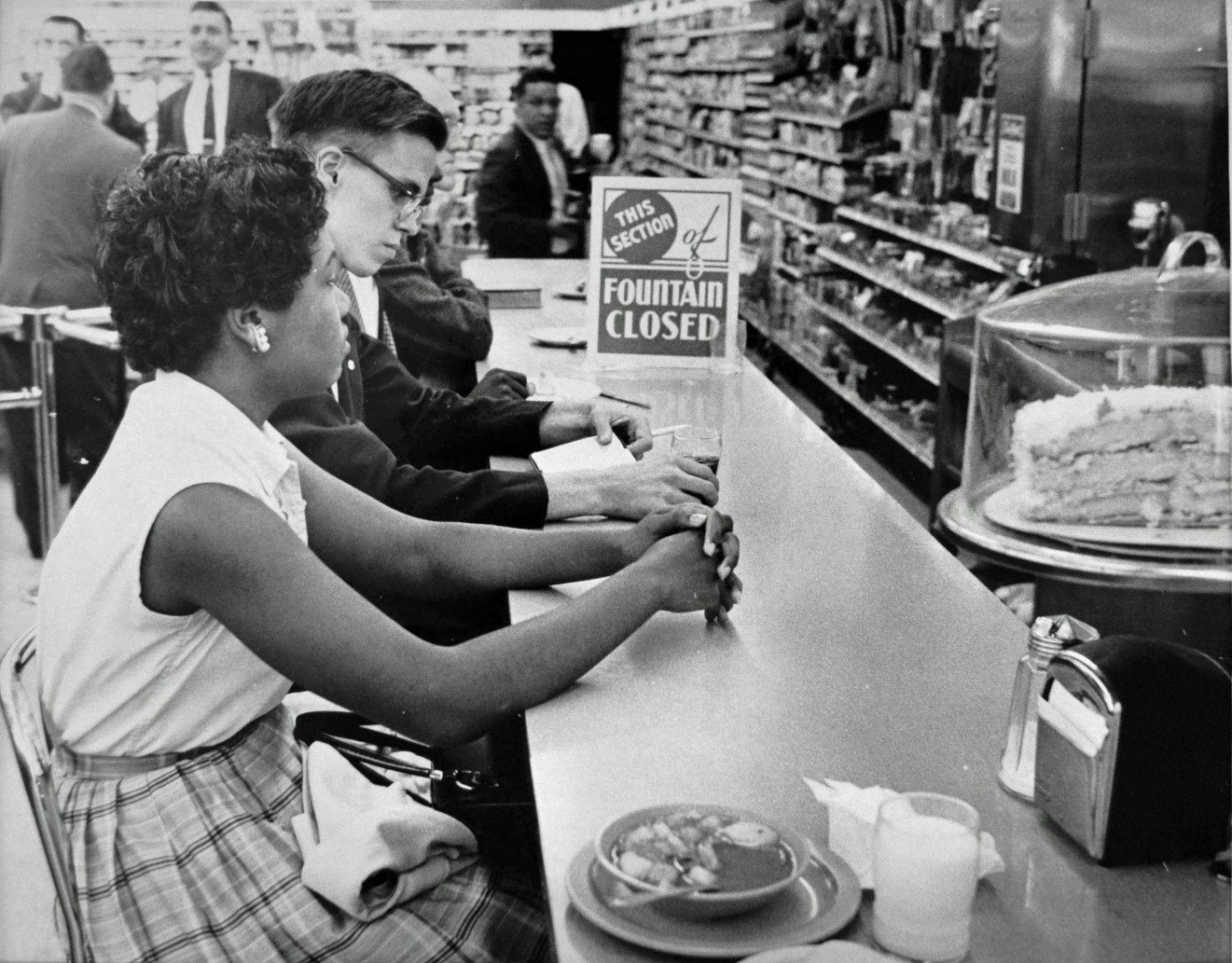
In June 1960, spurred by protest movements across America, black and white college students held sit-ins at lunch counters around Arlington including Lansburgh’s Colonial Room and Woolworth’s lunch counter in Shirlington. Both businesses responded by closing their counters. After negotiations between demonstrators and business owners, Woolworth’s in Shirlington was the first lunch counter to desegregate on June 22, serving a group of black and white students. Woolworth’s action was followed that same day as Lansburgh’s, Kahn’s, Peoples, and Drug Fair desegregated their Arlington restaurants.

Sitins

June 10, 1960, Gwendolyn Green (later Britt) and David Hartsough sit at the People’s Drug Store counter. Protests such as this happened at counters in seven locations in Arlington including two in Shirlington. DC Public Library, Star Collection, ©Washington Post.

The popularity of Shirlington declined in the mid-1960s and into the 1970s with the opening of several new shopping centers. In the early-1970s, Shirlington Business Center saw the closure of many of its anchor retail stores. Jelleff’s closed in 1972, followed shortly by Lansburgh’s (which was replaced by Best Products) and the Shirlington Motor Company’s Ford dealership, both in 1973.

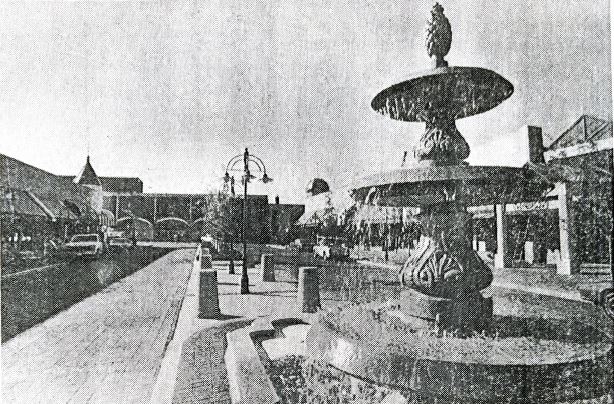
Several revitalizations were considered, including one featuring a manmade lagoon. The owners abandoned this project before construction began. In July 1982, a new $250-million renovation began, led by developer Oliver T. Carr. Carr’s plan called for up to 429,000 square feet of additional retail space and 694,000 square feet of office space in 8- to 12-story buildings. It also included the construction of a 400-room hotel and 590 condominium units. The limestone and granite façades of the existing buildings were reused while most of the ground level architecture and all the interiors were demolished. The 1987 finished design included copper turrets and domes crowning the buildings at the entrance off South Randolph Street, Victorian-era inspired street lighting, cut-throughs for increased pedestrian circulation, and a large Beaux-Arts fountain in the central median.

1986-11-1

Redesigned 28th Street South (renamed Campbell Avenue in 2007), 1986. Source: Benjamin Forgey, “In Shirlington, Main Street Revisited,” The Washington Star, November 1, 1986, Center for Local History Archives, Arlington County Public Library.

Federal Realty Investment Trust purchased what is now known as the ‘Village at Shirlington’ in 1996. In November 2006, the new Shirlington Town Center was unveiled, including the Shirlington Branch Library and a new location for the Signature Theatre Company. In July 2007, the County changed the name of 28th Street South to Campbell Avenue in honor of Edmund and Margaret Elizabeth Pfohl Campbell, who were instrumental in desegregating Arlington’s public schools. Elizabeth Campbell founded and was later president of WETA public broadcasting station, located in Shirlington.

Joseph and Ruth Cherner’s 1943 vision is still a destination shopping location in Arlington. The popularity of this neighborhood hub is evidence of the Cherners’ shrewd perception of the retail services the community needed.

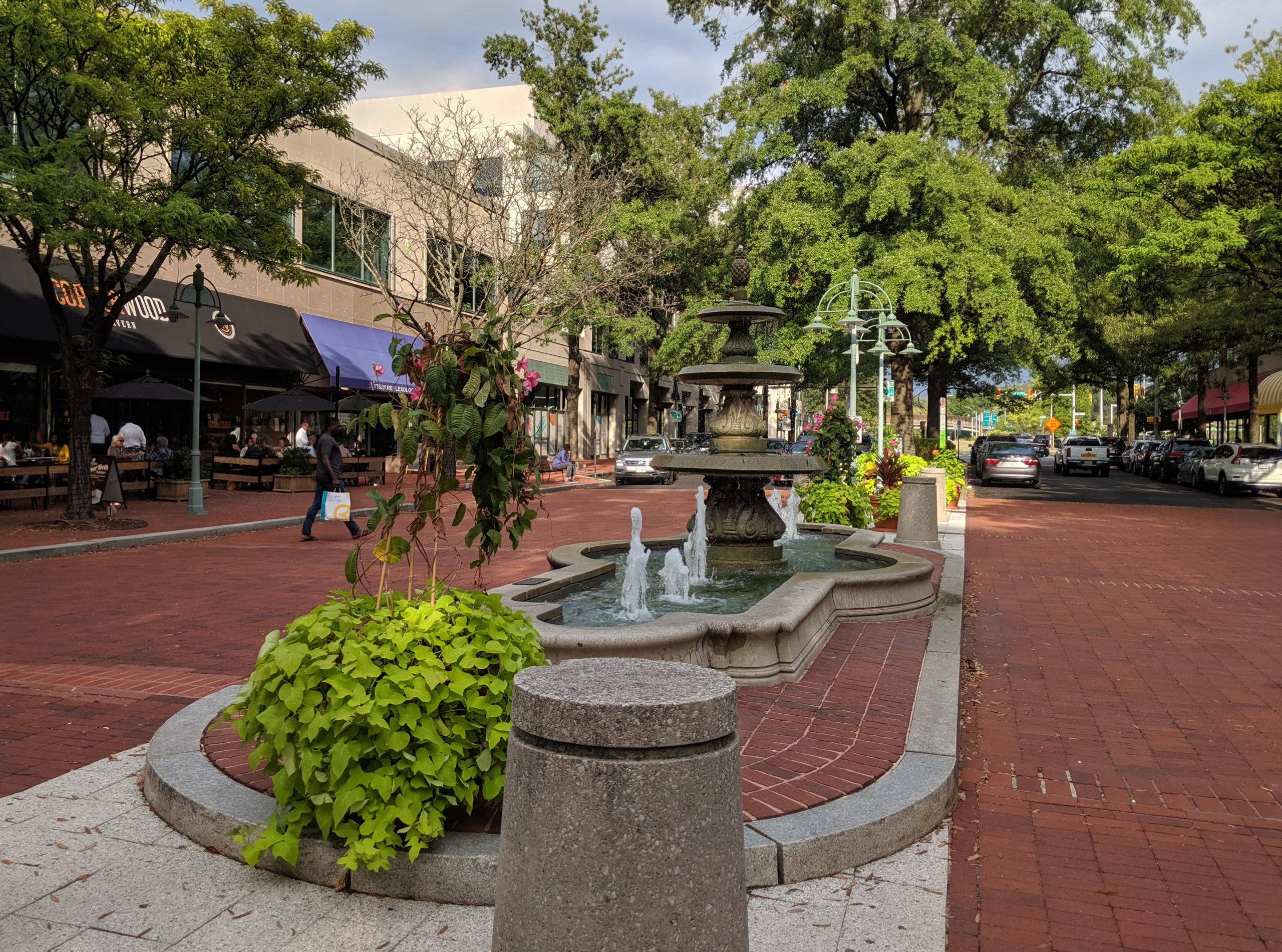
IMG_20190906_173948

View of the Shirlington shopping complex looking east from the median on Campbell Avenue, 2019.  Source: Arlington County Historic Preservation Program.

"Preservation Today: Rediscovering Arlington" is a partnership between the Arlington Public Library and the Arlington County Historic Preservation Program.

Preservation Today: Rediscovering Arlington
Stories from Arlington’s Historic Preservation Program

Arlington’s heritage is a diverse fabric, where people, places, and moments are knitted together into the physical and social landscape of the County.

Arlington County’s Historic Preservation Program is dedicated to protecting this heritage and inspiring placemaking by uncovering and recognizing all these elements in Arlington’s history.

To learn more about historic sites in Arlington, visit the Arlington County Historic Preservation Program.

June 18, 2020 by Web Editor

Happy Pride…

Post Published: June 8, 2020

We Have Work To Do

Happy Pride. Or not really.

In one of those simple twists of fate, we celebrate the start of Pride Month as the nation-wide, largely peaceful assemblies against racial inequity enter their third week, in the midst of a global pandemic that has already claimed more than 400,000 lives, including more than 100 in Arlington.

And as if that were not enough, the forcible removal of a Pride flag from the DHS building at Sequoia last week by a visitor to that building is a reminder that we have work to do — as individuals, as a community, and as a nation — to promote and visibly demonstrate understanding and acceptance.

During my tenure as Library Director, I have been accused of promoting the “gay agenda” and “deviant sex” when our buildings have flown the Pride flag. We have been threatened with the destruction of Library property. And, perhaps saddest of all, we have discovered the defacing of library books - books acquired to explain to our young people that there are many kinds of families, and there is not one right way to love another person.

Being gay is not “a thing” to be derided and disrespected, any more than being black or brown or Muslim or female is a thing. It is who we are: as we are also parents, sports figures, artists, educators, law enforcement, elected leaders, citizens. Each of us has and will continue to make important contributions to our communities and to our nation. And we deserve to do so openly and without fear.

That is my wish for this month and every month.

Diane

Scrawled signature of Diane Kresh

Diane Kresh
Director
Arlington Public Library

June 8, 2020 by Web Editor

Rediscover The Arlington Post Office

Post Published: May 28, 2020

If you live in Arlington County, you have the Arlington Post Office in Clarendon to thank for the name of your street.

APO2

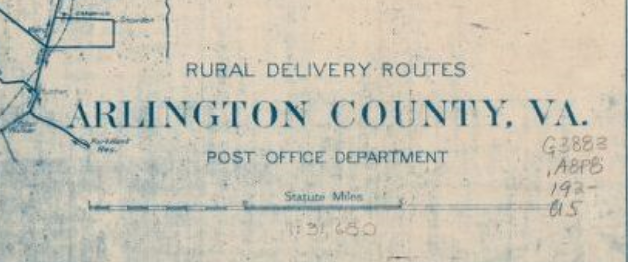
Arlington County Rural Delivery Routes, Library of Congress, 1920.

After the boom of World War I, Arlington’s previously bucolic countryside began to develop into small sleeper communities, off-shoots from Washington, D.C. The rural roadways of Arlington evolved organically, along with the neighborhoods. They took unexpected turns, dead-ended, and had different names from one end to the other, using local neighborhood names rather than official ones. Among the more than 200 duplicate roads in Arlington in 1930, there were eight Arlington Avenues and two Arlington Streets, five Cedar Streets, five Maple Streets, three Hamilton Avenues, and ironically, two First Streets.

Much of the County was served by rural mail delivery from the Georgetown post office in Washington, whose service was unreliable partly because of the disconnected, changing, and unpredictable Arlington street names. The U.S. Postal Service required clear enumeration systems for properties to provide dependable service, so Arlington established a committee of citizens to create a coherent street naming system. This also provided an opportunity for the County to create a unified sense of identity for all its residents.

In September 1934, Arlington changed its street names to embrace an alphanumeric system which had latitudinal streets taking numeric names, and longitudinal streets taking alphabetical and syllable-based names. Since the County had not developed strictly along a grid system, many streets did not fall within this pattern, so some allowances were made for major thoroughfares whose names did not follow this standard.

This standardization of Arlington’s street names paved the way for a county-wide postal system, and within two years the sum of $200,000 was allocated for a new postal building whose service would cover everywhere from Georgetown to Glencarlyn. The land was purchased for $24,850 in August 1936 (equivalent to roughly $3.7 million in 2020) and by the end of that year designs for the building were already underway. Louis A. Simon, Supervising Architect of the Treasury, was the highest authority on the project; however, there were so many individual designers on the plans that no one author could be identified.

APO1

From a guide on Arlington’s complicated street system, Arlington County Department of Public Works “Arlington County Street Naming System,” September 1984.


The construction of the Post Office - first federal building in Arlington County - attracted a lot of attention. Thousands of people attended the May 1937 ceremony for the laying of the cornerstone after watching a 40-float parade. The Postmaster General, James Farley, and Arlington’s Congressman, Howard Smith, watched as the cornerstone was laid with same trowel that was used to lay the founding stone of the U.S. Capitol and Washington Monument.

The Sun noted on May 7, 1937, “The fact that Uncle Sam decided it was time to build us a ‘real’ post office means we are not the only ones who think we’re an important community.”

Construction moved quickly, and the office opened for business on December 13, 1937.

Boundary marker ceremony, 1937

Laying the cornerstone for the Arlington Post Office, S.I. Markle, 1937. Courtesy of the Arlington Historical Society.

The architectural style of the Arlington Post Office (APO) is considered Georgian Revival, which is characterized by exaggerations and adaptations of the 18th-century Georgian style popular in New England. The Georgian style was denoted commonly by two-story rectangular buildings with five window/door openings on each floor and decorative embellishment around the central door.

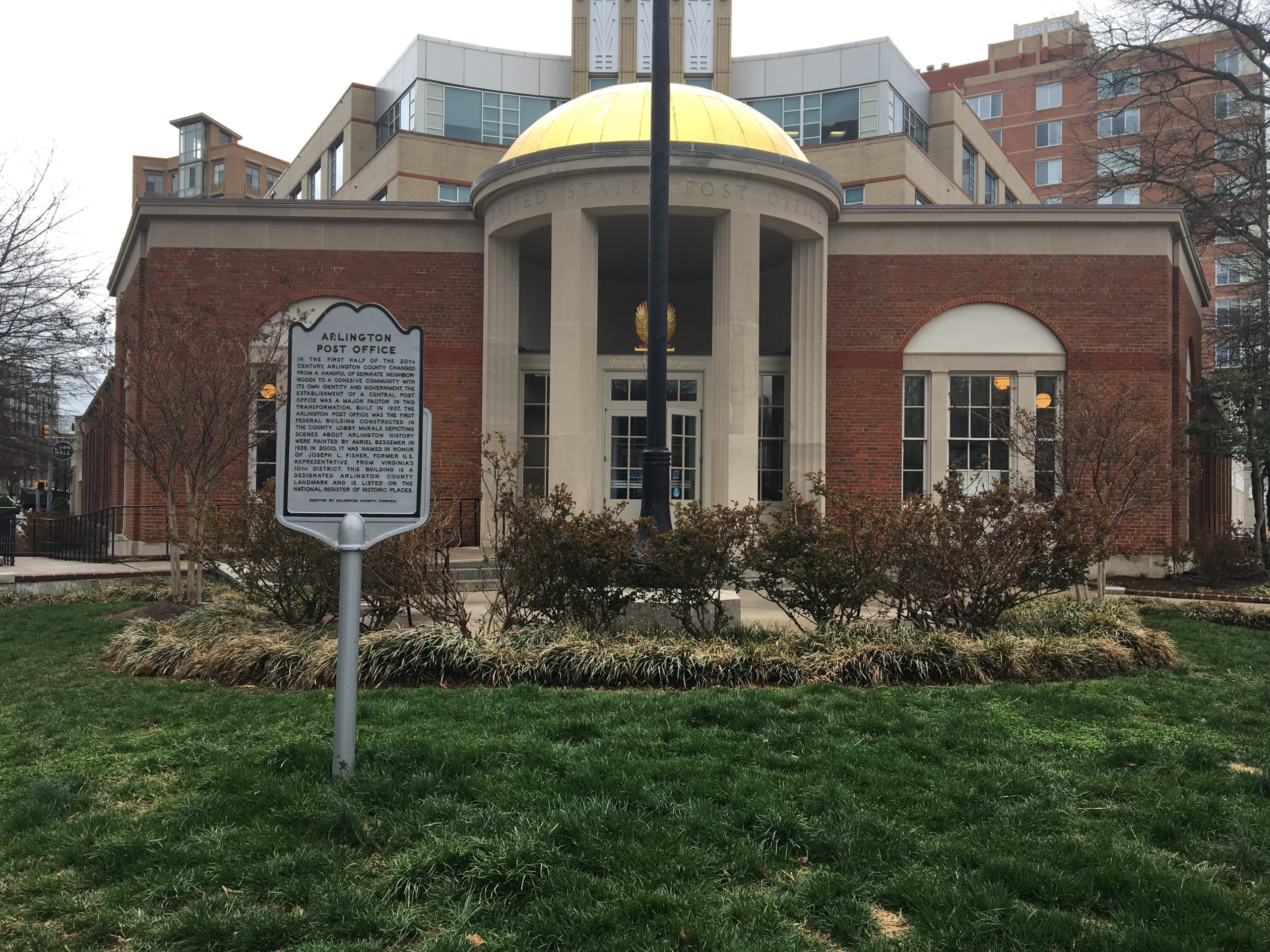
The APO building is a common bond brick single-story with a full basement. The domed portico is a signature characteristic, flanked by stylized tri-partite (or Palladian) windows which are typical of Georgian design. The imposing throwback to classical architecture and the use of imposing fluted concrete columns at the entrance is typical of the 1930s style.

PO

Arlington Post Office, 2018, Historic Preservation Program Archive

After the Great Depression, the Federal government began to invest in many infrastructure systems, both to provide jobs and to improve national morale. Although the Federal Art Project of the Works Projects Administration (WPA) is the best-known New Deal-era funding program, the murals in the Arlington Post Office were funded by the Treasury Department’s Section of Fine Art (The Section) which had been established by President Roosevelt in October 1934. Roosevelt had been inspired by a friend to develop The Section modeled after a Mexican project which paid artists to paint murals in government buildings.

Over nine years, The Section paid for 1,309 murals and 332 sculptures for courthouses and post offices nationwide. These were meant to depict America’s values - hard work and simple lifestyles - to encourage people during an era of economic hardship.

"I, too, have a dream - to show people in the out of the way places, some of whom are not only in small villages but in corners of New York City - something they cannot get from between the covers of books -some real paintings and prints and etchings and some real music." - Franklin Roosevelt to Hendrik Willem Van Loon, January 6, 1938

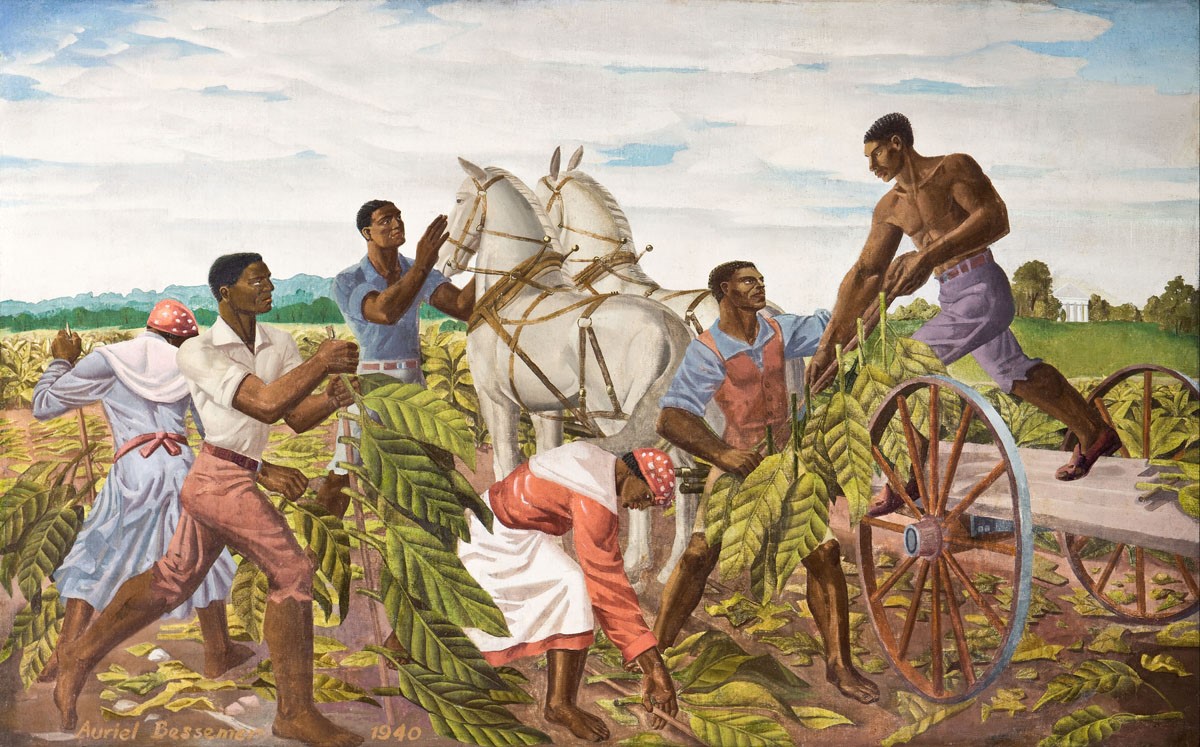
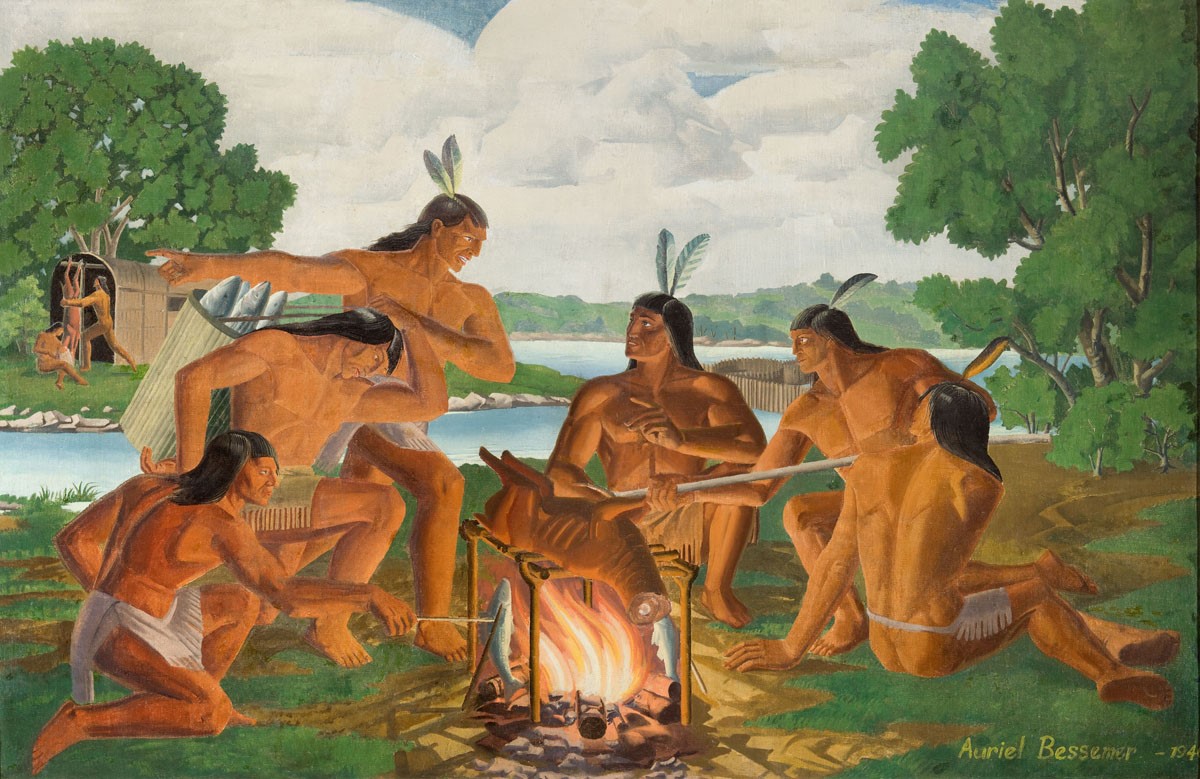
Auriel Bessemer won the national competition to paint the Arlington Post Office murals and based his images on local sites and occurrences. His painting style was characteristic of the Art Deco era. The scenes include picnicking at Great Falls, romanticized visualizations of the encounter of Native Americans and settlers, the lives of enslaved people in Virginia, and the apocryphal story of John Smith’s journey. Bessemer produced sanctioned work for the Federal Government, while also owning a progressive art gallery in Dupont Circle, Washington, D.C. and writing anti-fascist poetry, including the stanza “Prepare mankind, yet blind, for mutual slaughter.”

Tobacco picking

Auriel Bessemer, Tobacco Picking in the Late Colonial Era, 1940. Arlington Post Office Mural. 

Analostan

Auriel Bessemer, Early Indian Life on Analostan Island, 1940. Arlington Post Office Mural.

The Arlington Post Office, renamed for County Board chair and Congressman Joseph L. Fisher in the 2000s, became an Arlington County Local Historic District in October 1984, which provided it with protections from demolition and unregulated exterior alterations. It was added to the honorary National Register of Historic Places in February 1986 for its role in creating a single Arlington identity, and for its distinctive architecture. As Clarendon grew, the landscape changed around the APO, transforming a mid-century single-story commercial streetscape into a growing multi-use corridor. When a site plan project was proposed adjacent to the historic building and its 1946 commercial neighbor (originally the Scheff Store, then the Dan Kain trophy store, now Lyon Hall), the Local Historic District status of both historic buildings protected them during redevelopment.

The Arlington County Historical Affairs and Landmark Review Board (HALRB) helped preserve the single-story streetscape while allowing new development behind the historic buildings to provide commercial and residential density in the popular downtown area. During the development, the Keating Partners funded the restoration of the murals which were on display in the Arlington Public Library before they were returned to the post office.

Visit the original Arlington Post Office (once it is safe to) to patronize a mail center with an 83-year history, as well as to see the restored Treasury Department’s Section of Fine Art murals in place.

"Preservation Today: Rediscovering Arlington" is a partnership between the Arlington Public Library and the Arlington County Historic Preservation Program.

Preservation Today: Rediscovering Arlington
Stories from Arlington’s Historic Preservation Program

Arlington’s heritage is a diverse fabric, where people, places, and moments are knitted together into the physical and social landscape of the County.

Arlington County’s Historic Preservation Program is dedicated to protecting this heritage and inspiring placemaking by uncovering and recognizing all these elements in Arlington’s history.

To learn more about historic sites in Arlington, visit the Arlington County Historic Preservation Program.

May 28, 2020 by Web Editor

This Week in 19th Amendment History: Nannie Helen Burroughs

Post Published: May 21, 2020

May 20, 1961: Nannie Helen Burroughs Passes Away

Celebrate the 100th anniversary of the 19th Amendment with stories about the people and events that led to the passage of women’s suffrage in the United States.

Nannie Helen Burroughs, who was a leading educator, feminist and suffragist in the Washington, D.C., area throughout the early 20th century, founded a school for girls and women and was an active member in her community.

Nannie Helen

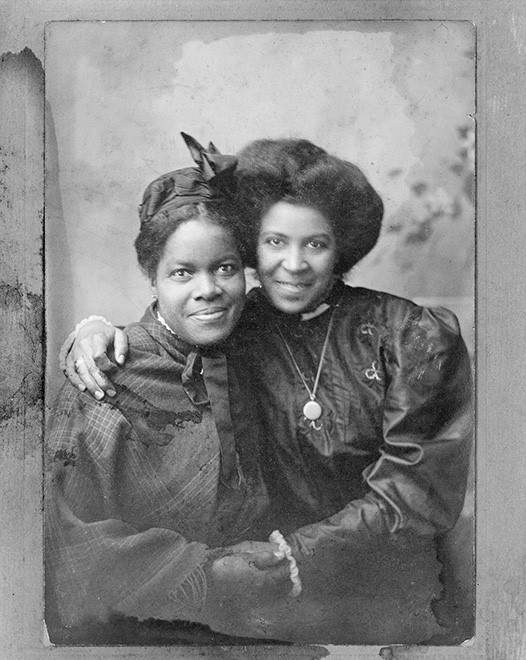
Portrait of Nannie Helen Burroughs (left) and unidentified companion, ca. 1900. Image courtesy of the Library of Congress.

Early Life

Burroughs was born on May 2, 1879, in rural Orange, Virginia. Both of her parents were formerly enslaved, and her father passed away when Burroughs was a young girl. She and her mother subsequently moved to Washington, D.C., where Burroughs spent the majority of her childhood.

She was an exemplary student and graduated with honors from the M Street High School, now the Paul Laurence Dunbar High School. Though she excelled academically, she was denied a teaching job in the Washington, D.C., public school system – however, this setback would not hinder her goal to further the education of those in need.

Nannie Training School

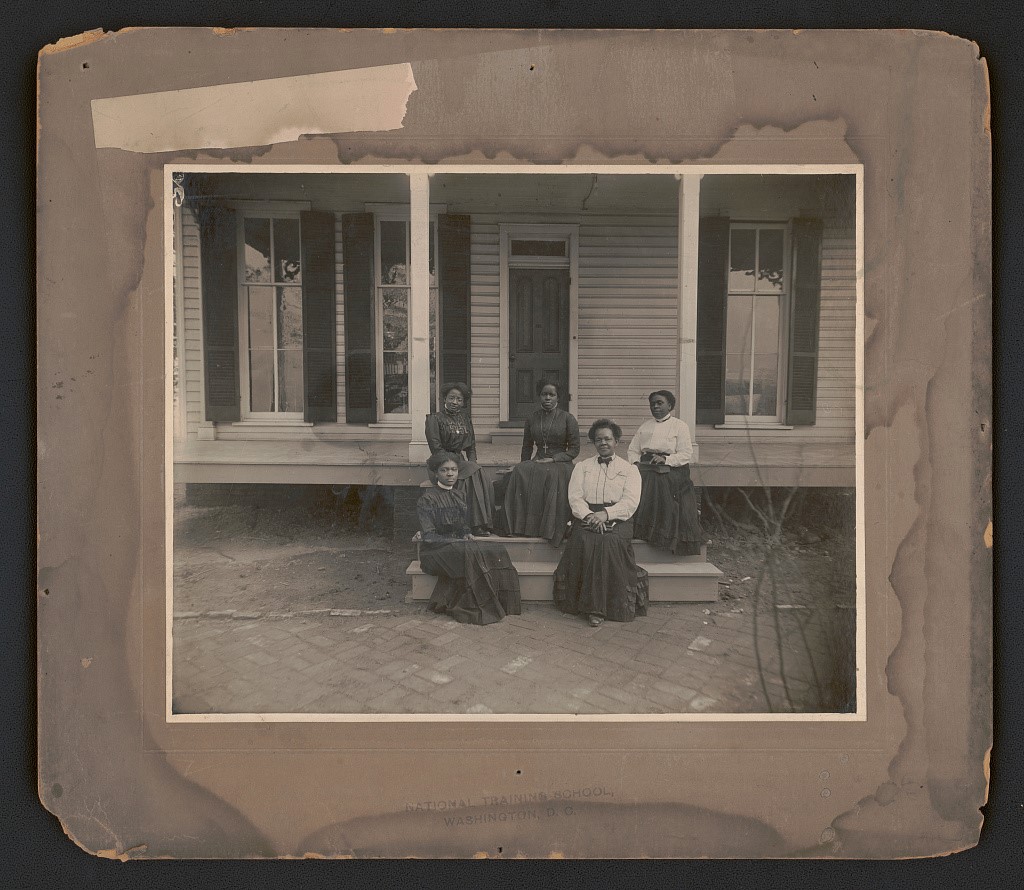
Nannie Helen Burroughs (center) and others at the National Training School in Washington, D.C., taken around 1909. Image courtesy of the Library of Congress.

Training School

Burroughs then decided to establish her own school to educate and train African American women who could not pursue a traditional educational path. Burroughs brought her proposal to the National Baptist Convention, and the organization decided to support her idea. The group bought six acres of land in the Lincoln Heights area of Northwest Washington, D.C., but this was only the beginning of her journey to open the school. Not wanting to rely on wealthy white donors, Burroughs gained the support of small donations from African American women and children to raise the funds to open the school. Once the fiscal matters were in order, Burroughs was able to open the National Training School for Women and Girls in 1909.

Originally operating out of a small farmhouse on the property, the school was popular and well-attended through the first half of the 20th century. The curriculum at the school was rigorous, including courses both vocational and academic, such as dressmaking, power machine operation, music, and physical education. Students could also participate in activities such as the school newspaper. Most of the students came from working-class backgrounds and hailed both from the Washington, D.C., area and other countries around the world.

Early supporters of the school included Black history scholar Dr. Carter G. Woodson and president of the National Association of Colored Women, Mary McCleod Bethune, who also spoke at the dedication ceremony. Burroughs outlined her goals for the school as training women for jobs both in and outside of the traditional female job sphere, and aiming for each student to become “the fiber of a sturdy moral, industrious and intellectual woman.” In 1928, the school saw an expansion, and a larger building – called Trades Hall – was constructed, with 12 classrooms, three offices, an assembly hall, and a print shop.

Basketball Players

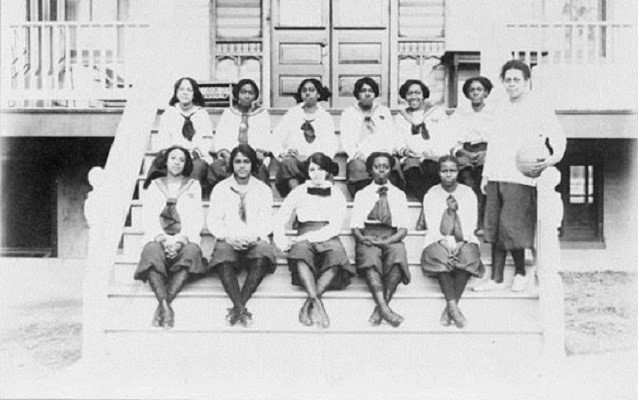
Student basketball players at the National Training School for Women and Girls, between 1900 and 1920. Image courtesy of the Library of Congress.

Woman’s Convention of the National Baptist Convention

At the same time as Burroughs lead her school and students, she was also an activist and advocate. Notably, she was involved in supporting greater civil rights and suffrage for African Americans and women. She wrote and spoke extensively on these topics, highlighting the need for African American and white women to work together to achieve the right to vote for all. She also emphasized that suffrage for African American women was key in protecting them in a persistently prejudiced and discriminatory society.

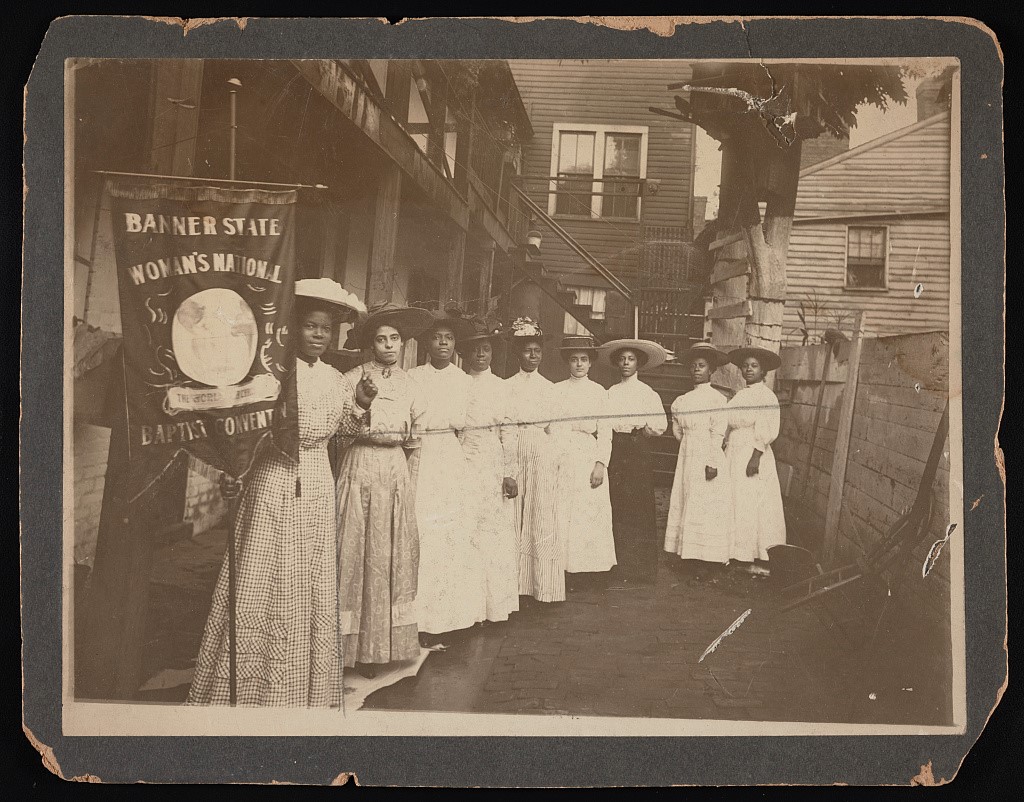
Starting early in her career, she was active in the Woman’s Convention of the National Baptist Convention, many of whose members were fellow suffragists and who discussed suffrage topics at their meetings. In 1900 she delivered a speech at the group’s annual meeting entitled “How Sisters Are Hindered from Helping,” and at the 1905 First Baptist World Alliance meeting in London, gave a speech called “Women’s Part in the World’s Work.” Burroughs also served as the corresponding secretary of the Woman’s Convention for 48 years and helped the organization grow its membership to 1.5 million by 1907.

Baptist Convention

“Nine African-American women posed, standing, full length, with Nannie Burroughs holding banner reading, Banner State Woman's National Baptist Convention.” Published between 1905 and 1915. Image courtesy of the Library of Congress.

Legacy

Throughout her life she also became part of the vibrant community of African American women suffragists, advocating for the cause alongside Coralie Franklin Cook, Anna Julia Cooper, Angelina Weld Grimké, Lucy Diggs Slowe, and Mary Church Terrell. African American women’s clubs were a strong network in Washington, D.C., and Burroughs was also active in these groups, including the National Association of Colored Women, the National Association of Wage Earners, and the Association for the Study of Negro Life and History.

Burroughs served as president of her school until her death on May 20, 1961, and three years later, the school changed its name to the Nannie Helen Burroughs School in her honor. Trades Hall now houses the Progressive National Baptist Convention and is a National Historic Landmark.

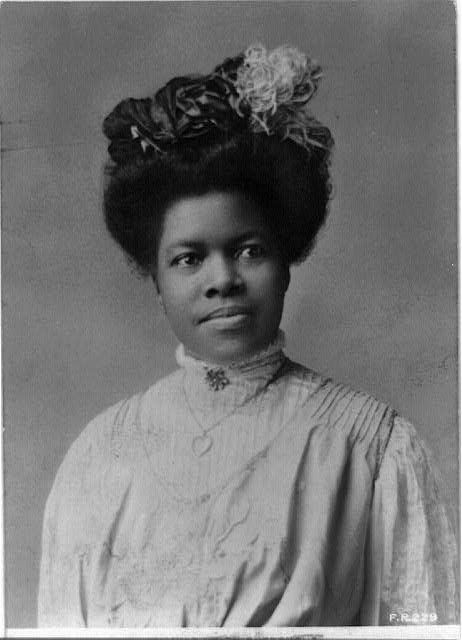
Nannie 1920

Nannie Helen Burroughs photographed between 1900 and 1920. Image courtesy of the Library of Congress.

2020 marked the centennial of the passage of the 19th Amendment. 

May 21, 2020 by Web Editor

This Week in 19th Amendment History: Shifts and Splits in the Suffrage Movement

Post Published: May 14, 2020

May 10, 1866: 11th National Woman’s Right Convention

Celebrate the 100th anniversary of the 19th Amendment with stories about the people and events that led to the passage of women’s suffrage in the United States.

In 1866, the women’s suffrage movement experienced a significant change in its organization as the various groups leading the struggle toward women’s suffrage split over certain issues.

Key among them was support for the 15th Amendment, (passed in 1869), which states that "The right of citizens of the United States to vote shall not be denied or abridged by the United States or by any State on account of race, color, or previous condition of servitude."

American Equal Rights Association

One of the major groups leading the suffrage movement at this point was the American Equal Rights Association (AERA). The organization was founded on May 10, 1866, at the eleventh National Woman’s Right Convention by suffrage leaders Elizabeth Cady Stanton and Susan B. Anthony. The group outlined its goal to “secure Equal Rights to all Americans citizens, especially the right of suffrage, irrespective of race, color, or sex.”

The AERA featured a diverse group of members, many prominent figures in the suffrage and abolition movements. Among those who played significant roles in the group were Lucretia Mott, Lucy Stone, Frederick Douglass, and Henry Blackwell. A number of African-American women also held leadership roles, including Harriet Purvis, Sarah Remond, and Sojourner Truth.

Liz Stanton and Susan B. Anthony

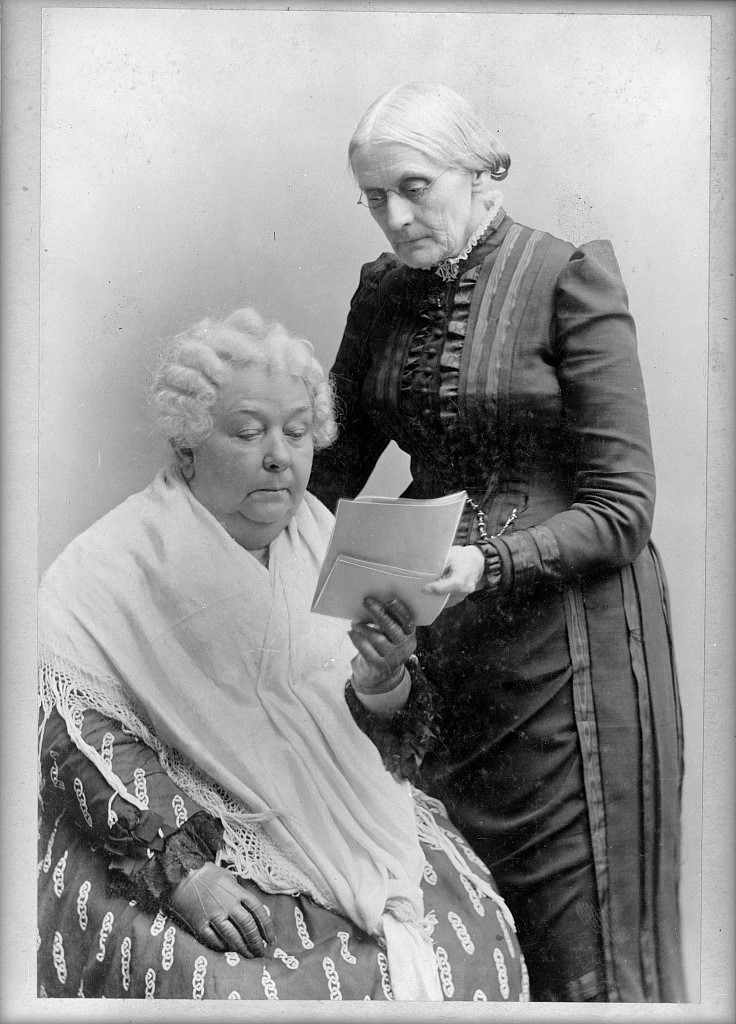
Elizabeth Cady Stanton (left) and Susan B. Anthony (right). Stanton and Anthony broke off to form the National Woman Suffrage Association in 1869 after disagreement over the 15th Amendment, which they both opposed. Image courtesy of the Library of Congress.

Advocacy for All

The American Equal Rights Association was initially focused on advocating and campaigning for the rights of both women and African Americans in the United States, and on gaining suffrage for both.

At the first anniversary meeting of the group, on May 9 and 10 in 1867, the group’s leadership wrote:

“Let the gathering, then, at this anniversary be, in numbers and character, worthy, in some degree, the demands of the hour. The black man, even the black soldier, is yet but half emancipated, nor will he be, until full suffrage and citizenship, are secured to him in the Federal Constitution. Still more deplorable is the condition of the black woman; and legally, that of the white woman is no better!

Shall the sun of the nineteenth century go down on wrongs like these, in this nation, consecrated in its infancy to justice and freedom? Rather let out meeting be pledge as well as prophecy to the world of mankind, that the redemption of at least one great nation is near at hand.”

Divisions in the AERA

This approach was short-lived, however, as prejudices were increasingly exposed in the group. This was particularly clear in New York and Kansas, two states with notable and controversial suffrage campaigns led by the AERA.

The New York campaign focused on entering women’s suffrage into the state’s constitutional revisions, as well as fighting discrimination against Black voters. Horace Greeley, a notable newspaper editor, and abolitionist, was chair of this campaign’s suffrage committee, and later came into disagreement with Stanton and Anthony. Greeley wanted to focus solely on Black male suffrage, while Stanton and Anthony wanted the focus on white women's suffrage.

The Kansas campaign was even more pivotal to the split, as the state was about to vote on both suffrage for white women and suffrage for African American men. Stanton and Anthony decided to back George Train, who used racist vitriol to further his campaign against granting African American men suffrage. Anthony’s writing also became more anti-Black during this time. Other members of the AERA stood up against this approach, notably Lucy Stone, but ultimately neither suffrage bill passed in Kansas.

In 1869, a final blow was dealt to the existing structure of the women’s movement. Two days prior at the AERA annual meeting, acrimonious debates had marked the group’s discussions. Frederick Douglass notably called out Stanton for denigrating Black male voters in her work in Kansas.

Two days later, on May 15, 1869, the AERA disbanded permanently. On that same day, Stanton and Anthony broke off to form the National Woman Suffrage Association (NWSA).

Executive Commitee

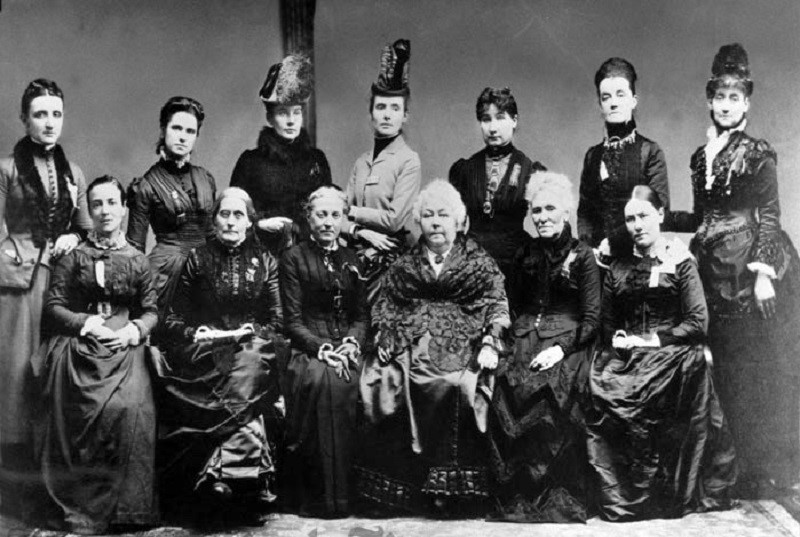
The executive committee of the National Woman’s Suffrage Association. Image courtesy of Spartacus Educational.

National Woman Suffrage Association / American Woman Suffrage Association

Headquartered in New York City, the aim of National Woman Suffrage Association (NWSA) was to promote suffrage for white women and to oppose the 15th Amendment.

Later that year, another group emerged: led by Lucy Stone and her husband Henry Brown Blackwell, as well as Julia Ward Howe, the American Woman Suffrage Association (AWSA) supported the 15th Amendment along with women’s suffrage.

The split between these two groups lasted nearly two decades. However, in 1890, Lucy Stone’s daughter, Alice Stone Blackwell, successfully led a merger, leading to the creation of the National American Woman Suffrage Association (NAWSA). (Among the founding members was Washington DC activist Mary Church Terrell.)

This was the first time in decades the suffrage movement had been united under one banner, but racism within the movement persisted. Though the group was not segregated nationally, local chapters could and did exclude African American women. The struggles and shifts in these groups demonstrate the deeply ingrained prejudices that have accompanied the American suffrage movement for decades.

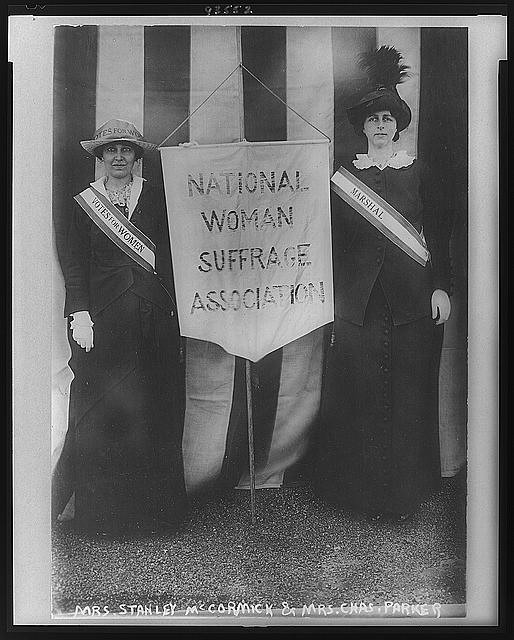
McCormick and Parker

“Suffragists Mrs. Stanley McCormick and Mrs. Charles Parker, April 22, 1913.” Image courtesy of the Library of Congress.

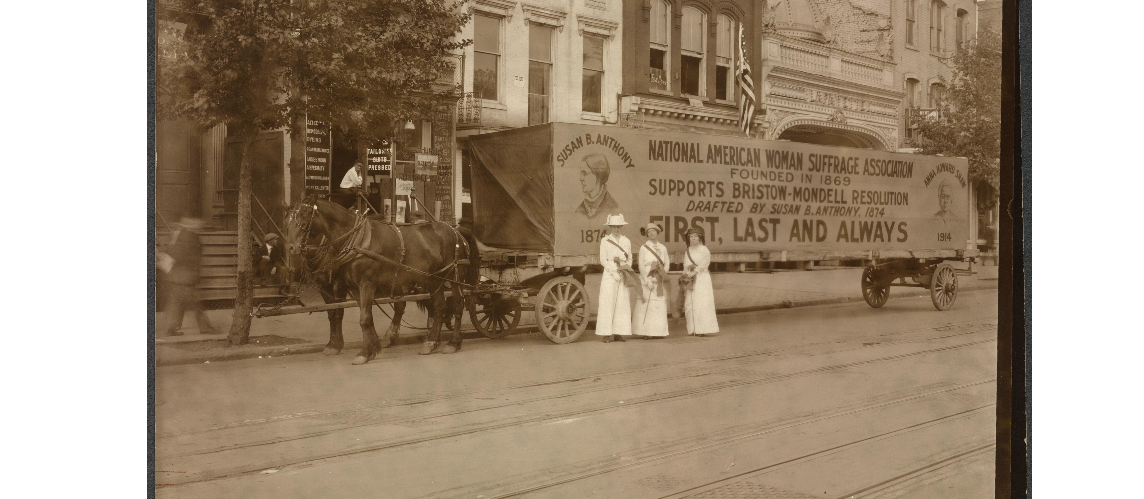
Horse Drawn Float

“Horse drawn float declares National American Woman Suffrage Association’s support for Bristow-Mondell amendment.” Circa 1914. Image courtesy of the Library of Congress.

2020 marked the centennial of the passage of the 19th Amendment. 

May 14, 2020 by Web Editor

This Week in 19th Amendment History: Suffragist Mabel Ping-Hua Lee

Post Published: May 7, 2020

May 4, 1912

Celebrate the 100th anniversary of the 19th Amendment with stories about the people and events that led to the passage of women’s suffrage in the United States.

Over 100 years ago this week a 16-year-old suffragist named Mabel Ping-Hua Lee made history when she lead one of the major women’s suffrage marches in New York City.

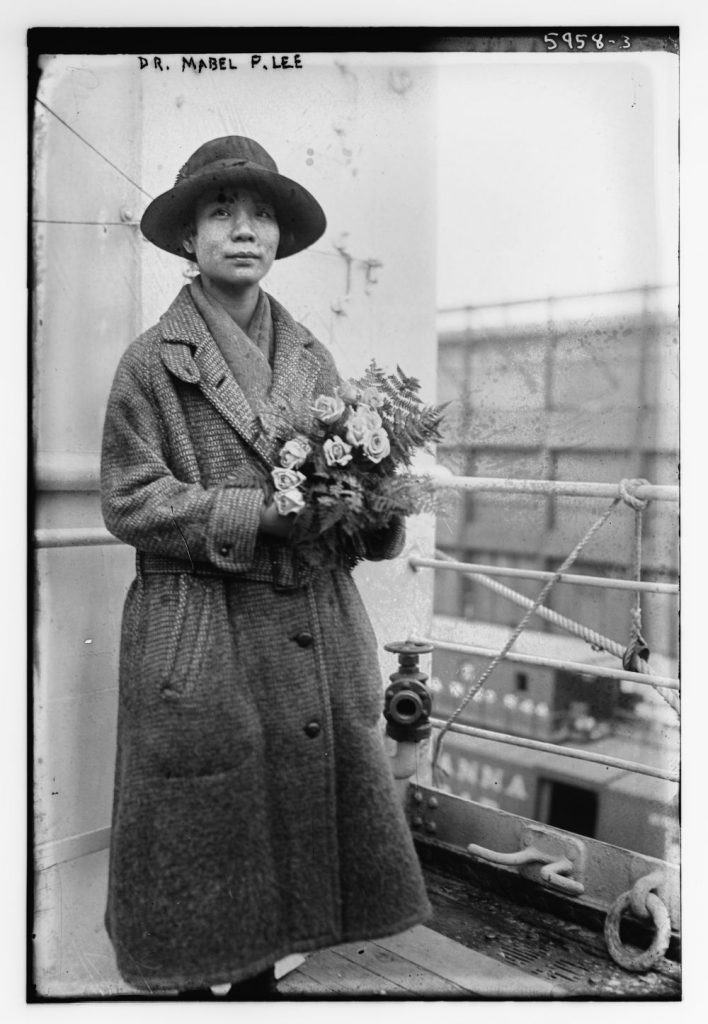
Mabel Lee

Dr. Mabel Lee, date unknown. Photo from the George Grantham Bain Collection, courtesy of the Library of Congress.

Lee was born near Hong Kong in 1896 and moved to the United States in 1905 to join her father, who was serving as a missionary. Lee was granted a visa as part of an academic scholarship and attended the Erasmus Hall Academy in New York City, one of the oldest schools in the nation.

Throughout her teens, Lee grew increasingly involved in New York’s suffrage movement. On May 4, 1912, Lee rode on horseback at the head of a parade to advocate for women’s voting rights, along with suffragists Annie Rensselaer Tinker, Anna Howard Shaw (carrying a banner from the National American Woman Suffrage Association), and members of the Women’s Political Union. Ten thousand people attended this gathering, which started in Greenwich Village.

She later spearheaded another major march in 1917, leading Chinese-American women in a pro-suffrage parade down Fifth Avenue along with the Women’s Political Equality League.

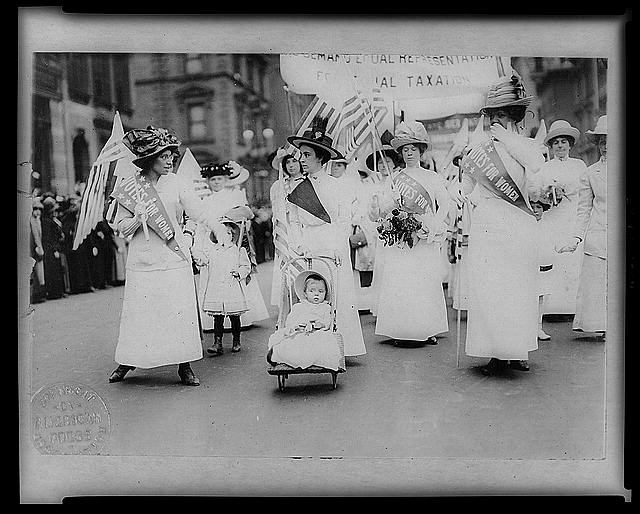
Suffragist Parade

“Youngest parader in New York City suffragist parade.” Participants in the May 4, 1912, women’s march in New York City that Mabel Lee helped to lead. Image courtesy of the Library of Congress.

Lee later attended Barnard College, an all women’s school founded because the nearby Columbia University refused to admit women at the time. There, Lee was part of the Chinese Students’ Association and wrote feminist essays – among them “The Meaning of Women’s Suffrage,” written in 1914. In this piece, Lee argued that suffrage for women was essential to a successful democracy.

She also continued her advocacy work as a speaker, and in 1915 delivered a speech on behalf of the Women’s Political Union, which was covered by the New York Times. Entitled “The Submerged Half,” it urged members of the Chinese-American community to promote girls’ education and women’s participation in civic life.

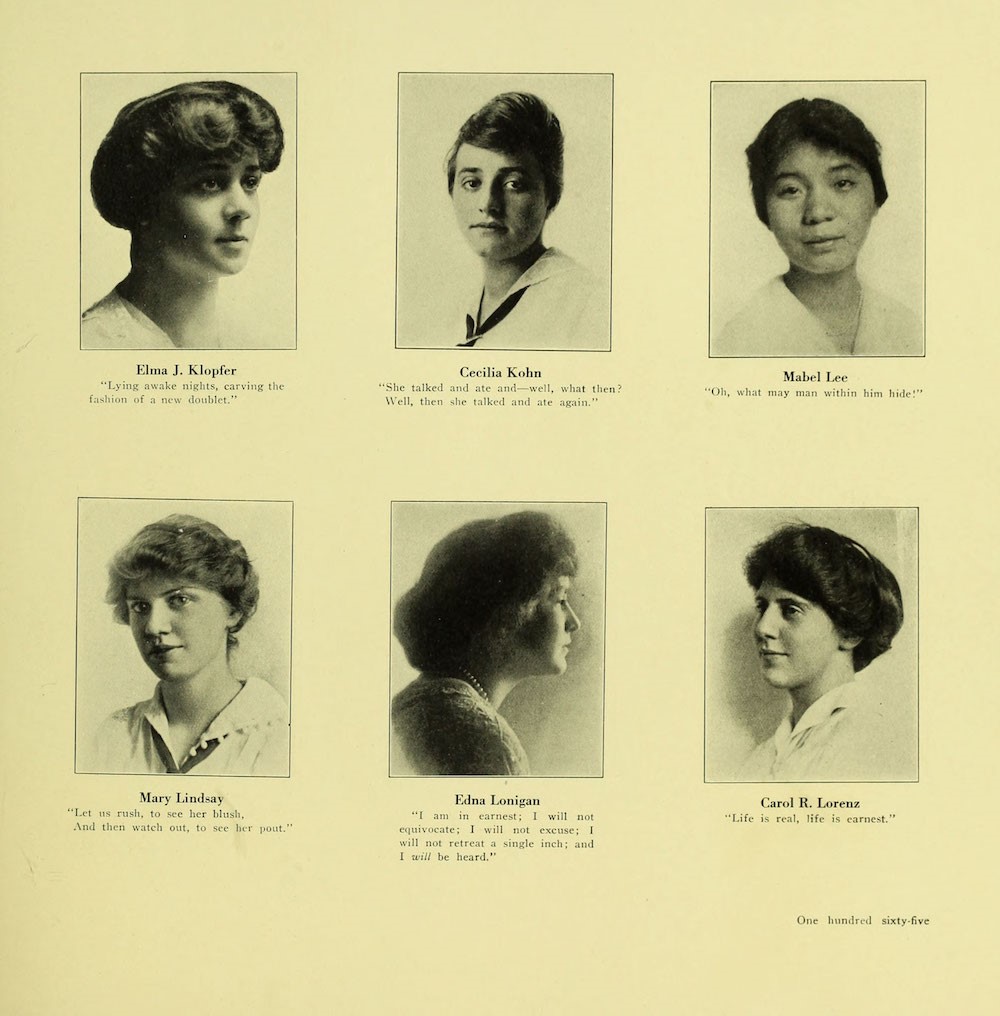
Mabel Lee Yearbook

Mabel Lee in her Barnard College yearbook. Image courtesy of Barnard College.

Though women were granted the right to vote in New York in 1917, and nationally in 1920, Lee’s fight for universal suffrage would continue onward. The reality was that not all women benefitted from these laws: under the Chinese Exclusion Act, Chinese women were not allowed to vote. Under the law, which also limited Chinese immigration, Chinese immigrants were not allowed to become citizens, and Chinese women like Lee would not be able to vote until the law was removed in 1943 and they could become citizens. Despite these barriers, Lee and fellow suffragists continued to advocate for women’s rights.

She also went on to receive a Ph.D. in economics at the previously all-male Columbia University, the first Chinese woman to do so. Later in life, Dr. Lee also served as director of the First Chinese Baptist Church in New York City.

Dr. Mabel Lee died in 1966. In 2018, U.S. Congress approved legislation to rename the United States Post Office at 6 Doyers Street in China Town, New York City, in her honor.

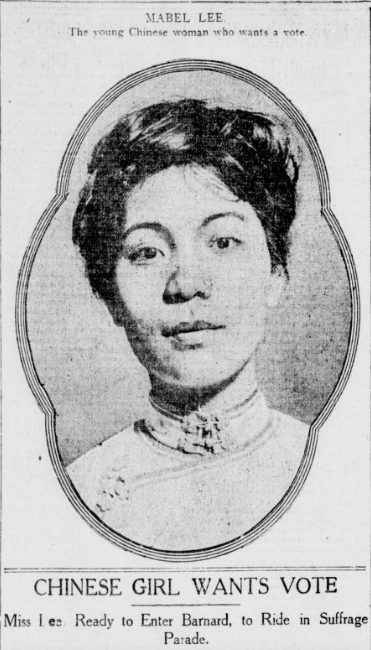
New York Tribune

Lee was featured in an April 13, 1912, New York Tribune article prior to her participation in the women’s march in New York City on May 4. Image courtesy of the Library of Congress.

Read More:

NY Times Article from May 5, 1912, about the suffrage parade.

2020 marked the centennial of women’s suffrage in the United States. 

May 7, 2020 by Web Editor

Preservation Week: Preserving Your Family’s Documents

Post Published: April 29, 2020

To celebrate Preservation Week this year, the Center for Local History is offering some tips and resources that will help ensure that your family documents and photographs will be available to future generations!

191022-preservation-week-10-year-anniversary-logo

In 2010 the American Library Association organized the first Preservation Week to highlight the importance of preserving cultural heritage materials, to raise awareness about collecting and preservation, and to provide information and guidance to the general public about preserving family collections.

Here is a guide to preserving your documents and photographs:

Part 1: Physical Documents and Photographs

When you start working on your documents/photos keep in mind the four enemies of paper and photographs:

  • Heat
  • Humidity
  • Light
  • Careless handling by people

Make sure to have a clean, clear space prepared to place the originals before you get them out and do not eat, drink, or smoke around originals.

Papers and Documents

  • Wash hands before handling paper and don’t apply lotion as it can stain paper. Paper can be handled without gloves because clean, lotion-free hands will not stain the paper, and gloves can make it hard to handle delicate paper.
  • It is best to handle important, fragile paper items by their edges
  • Remove paper clips and rubber bands which can cause permanent damage to paper
  • Turn pages carefully, don’t force.
  • Store papers opened and flat rather than folded
  • Separate highly acidic pieces of paper, e.g. newsprint, from other items by sandwiching blank sheets of archival quality paper between them, or if possible, make copies on acid-free paper and throw the clippings away.
  • Store items in protective enclosures such as archival folders or polypropylene film sleeves in acid-free boxes
  • Always store paper records in a cool, dry place, generally not in attics or basements. A temperature of 68 degrees or less and 35%-40% humidity is best. Wide fluctuations in temperature and humidity are the most harmful and to be avoided.
  • Display framed items on interior walls away from sunlight and keep indoor lighting exposure to a minimum. Use UV filtered glazing for frames. Alternately, make copies for display and keep the originals stored away from all exposure to light.
  • Always store paper away from bright light. Damage from light is cumulative and irreversible and can cause fading of inks, yellowing as well as darkening of paper.

Photographs

  • As with paper always wash your hands and don’t use lotion before handling photographs. However, unlike paper, photographs should be handled WITH  Fingerprints can cause permanent stains that may not show up immediately.  If gloves are not available, handle photos by the edge.
  • Store photographs and important documents in a cool, dry place where there is minimal fluctuation in temperature and humidity. Avoid attics and basements. Damp conditions encourage mold and cause photographs to stick together. Hot storage can speed deterioration
  • Temperatures of about 68 degrees and 30% to 40% humidity is fine. Below 15% humidity and photos can become brittle.
  • Store individual photographs and slides in polyester or polypropylene pages or sleeves.
  • When purchasing albums or storage boxes, look for those that are acid-free.
  • Never use an adhesive on your photographs. Use photo corners, polyester mounting strips, or sleeves to mount photographs in albums.
  • Store negatives in a separate location from albums and prints. That way you will ensure that one copy will survive in case of a disaster.
  • Use a soft #2 pencil to label photographs if you must label on the back. For photos with a slick back you can use light blue art pencil such as a “Prismacolor non-photo blue.” DO NOT label with a regular pen.
  • If the photos are encapsulated in a sleeve you can write the information on a piece of acid-free paper and place with the photo. It is very important to label photos so your descendants will know who is who! If you can’t identify someone, try to find a relative who can help.

Part 2: Scanning and Organizing Your Digital Photographs

Planning it Out

Take some time to figure out what you have and what you want to do with your digital images. Everyone’s home collections are different; you know best what you have and what your end goals are. Planning out your home digitization project can help you make decisions about storage and organization of digital images farther down the road.

  • What do you have?
    • What physical materials do you have that you want to scan? How many digital images do you have? And what formats are they all in?
  • What’s your goal?
    • Sharing and displaying – how do you imagine using these images?
    • Storage – you will need enough room to hold all your current digital images with space for future ones. You’ll also want to organize them in a way that you can find them later when you (or someone else) need them.
    • Information – where and when were the photos taken? Who is in them? Images have more value if you know that information.

Doing the Work

For your photos at home, you’ll want to use a flatbed scanner. Do NOT throw those photos away after you scan them! Those originals are the link to your history. Scans are just copies.

Scanning of Physical Media

  • Scan to a format that is well established (nowadays, that is TIFF and JPEG).
  • You will need two copies of every scan – a master and an access copy.
    • The master is your original scan, at a high resolution with great detail. It’s the parent of any access copy you make.
    • Access copy is the smaller copy you can play with. Its easier to send and save. You can play around with this copy: make it black and white, crop it, do effects, etc. If you mess up or need a clean copy for a new project, you can go back to your master and start again.
  • Scan your master and create your access copy with editing software according to the following specs:
    • Prints – 400-600 dpi TIFF files, 16-bit depth, always in color (master); 300-600 dpi JPEG (access copy)
    • Slides (aka Transparencies) – 3000-4000 PPI TIFF files, 16-bit depth (master); 2800 PPI JPEG (access copy)
    • Negatives – 3000-4000 PPI TIFF files, 16-bit depth (master); 2800 PPI JPEG (access copy)

Naming Files

  • Before you start scanning, plan ahead on how you would like to name your scans and how you would like to organize them. How do you look for your photos? How do you organize them in your brain? Your folder organization can reflect that.
  • File names are important. Each image should have its own unique name. However, make sure that the file name for your master and your access copy is the same, maybe with a suffix added, like “access.”
  • When using dates for file or folder names, use the YYYYMMDD format so items will show up in real chronological order.
  • You will want to rename your born-digital files too since the camera or phone does not do a good job initially.
  • You can create a separate list with file names and image descriptions.

Digital Images

  • Photos from your phone are 1-2 MB. A RAW file from your SLR (like a digital negative) can be up to 40 MB (more commonly 20-30), and JPEGS made from that are around 7MB. RAW files can be turned into TIFFs as your master using photo editing software.
  • Access copies should be around 600 PPI JPEGs, which is good for printing but can be a lower resolution for images that will only be shown online.

Storing Your Images

The 3/2/1 Rule

  • You should have three copies of everything (primary copy and two backups), on two different types of media (hard drive and separate storage) and have one backup in a separate location.

Where To Store It All?

  • The Cloud: Cloud storage acts like your hard drive, where you primarily store your images instead of on your computer or laptop. Cloud backup replicates your hard drive, so you are saving everything on your hard drive, but there is a backup copy in the Cloud.
  • Pros: makes your images accessible anywhere, from any device, and makes it easy to share images with other people. Puts the onus of maintenance on the provider – save it and forget it!
  • Cons: some providers take copyright of your images when you upload them into the cloud, can cost money for subscriptions for better service. You have little control – your images are subject to hackers or the whims of the company and the free market.

External Hard Drives

  • External hard drives are under your control and the preferred location for your masters. Make sure you open the drive on a regular basis to make sure everything is working correctly.
  • How much space do I need?
    • 1 TB = 1000 GB
    • 1 GB = 1000 MB
    • If you have scanned physical photos and/or images from a digital SLR camera, a 1 TB drive may be a good option, giving you some room to grow.
    • At the very least, put your masters on an external hard drive!!

WHERE TO BUY PRESERVATION SUPPLIES:

Hollinger Metal Edge
9401 Northeast Dr.
Fredericksburg, VA 22408
www.hollingermetaledge.com
800-634-0491

Gaylord Bros
P.O. Box 4901
Syracuse, NY 13221-4901
www.gaylord.com
800-962-9580

University Products Inc.
517 Main Street
Holyoke, MA 01040
www.universityproducts.com
800-628-1912

April 29, 2020 by Web Editor

Biochemist and Nobel Prize Winner: Gertrude Elion

Post Published: April 23, 2020

Gertrude Elion (1918-1999)

This week we're honoring the health care and public health people working tirelessly to protect our communities in the midst of the COVID-19 crisis.

Biochemist and pharmacologist Gertrude Elion was a trailblazer of modern medicine, and her work has shaped the way professionals today create new and life-saving pharmaceuticals. Elion was crucial in the development of multiple new medications, and in 1988 she was awarded for her work with the Nobel Prize.

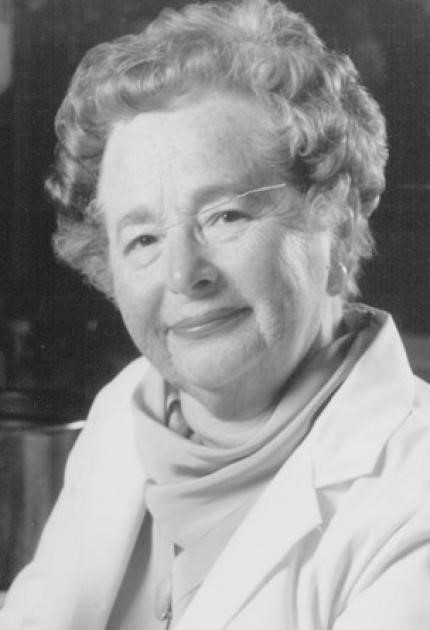
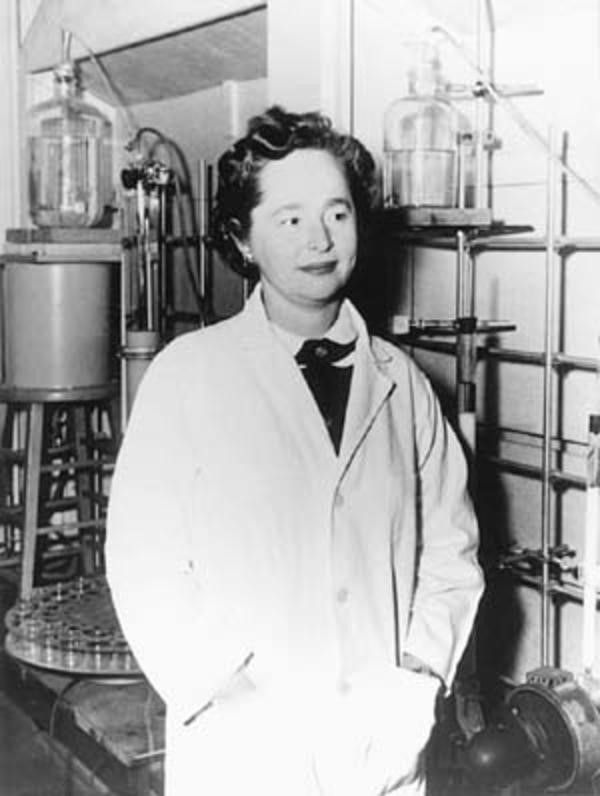
Gertrude Elion

Gertrude Elion, image courtesy of the National Inventors Hall of Fame.

Elion was born in 1918 in New York City to immigrant parents. She grew up in Manhattan and the Bronx and from an early age showed a talent for academic work. She described herself as “a child with an insatiable thirst for knowledge and remember enjoying all of my courses almost equally.” At age 15, Elion attended Hunter College, graduating with high honors in chemistry at 19. Elion was inspired to enter the medical field from a young age, motivated by her grandfather’s death from stomach cancer.

After graduation from college Elion had difficulty getting work in a laboratory, as most did not hire female chemists. Finding only part-time employment as a lab assistant and substitute teacher, she entered New York University to pursue her master’s degree. She was the only woman in her graduate classes, and of this time in her life said: “I hadn’t been aware that any doors were closed to me until I started knocking on them.”

Laboratory

Gertrude Elion in laboratory circa 1950s. Image courtesy of GlaxoSmithKline Heritage Center, via the Jewish Women’s Archive.

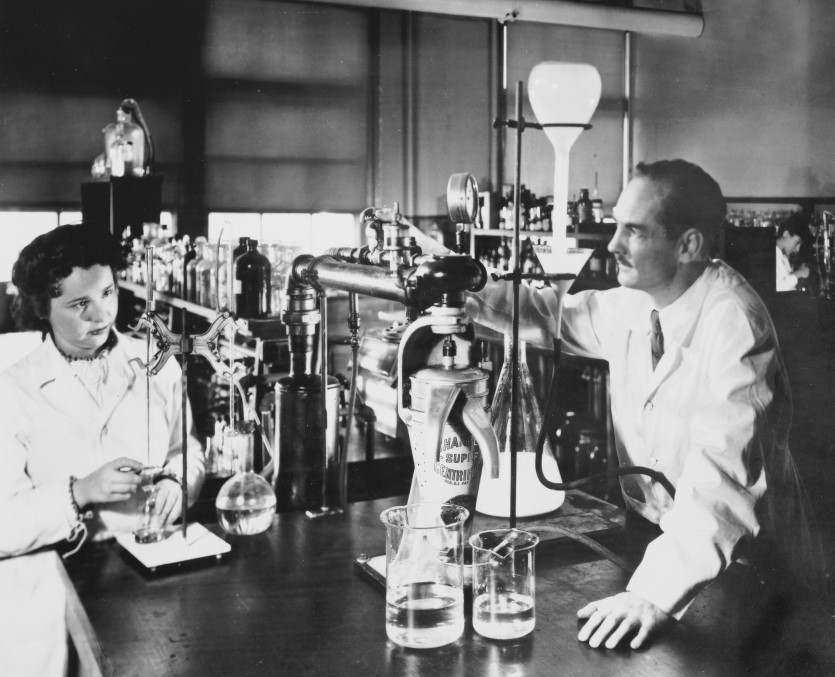
The start of World War II drastically changed the job field for American women, offering up more opportunities as many men were called to the war cause. During this time, Elion began working fully in the pharmaceutical field, starting out at Burroughs-Wellcome in nucleic acid research in 1944. This position was the start of her 40-year collaboration with Dr. George Hitchings, who would become her scientific partner in developing new solutions to diseases.

Elion and Hitchings took an innovative approach in creating medicine, focusing on the study of the chemical composition of diseased cells. This was in contrast to the more mainstream process used in their industry, which involved reliance on trial-and-error methods. The pair instead analyzed the differences in biochemistry between normal cells and pathogens to create medications that would block viral infections. This method was known as “rational drug design,” and allowed for successful interference with cell growth.

Over the course of her career, Elion registered 45 patents in medicine, published 225 papers on her medical findings, and helped develop numerous medicines. Among them were effective drugs for treating leukemia, AIDS, gout, malaria, herpes, and treatments related to kidney transplants.

Gertrude and George

Gertrude Elion and George Hitchings in a laboratory, 1948. Image courtesy of GlaxoSmithKline and Jon Elion, via the Science History Institute.

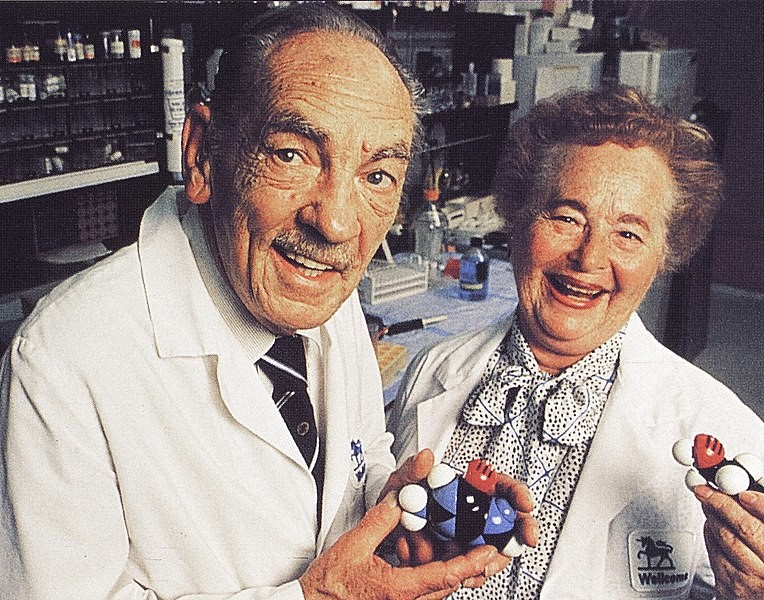
Colored

Gertrude Elion and George Hitchings 1988. Wikimedia Commons.

In 1983, Elion officially retired, but remained active in her field, continuing as a consultant and an adviser for the World Health Organization and American Association for Cancer Research.

In 1988 she was awarded the Nobel Prize along with Hitchings and Sir James Black, “for discoveries of important principles for drug treatment.” In 1991, she became the first woman inducted to the National Inventors Hall of Fame. Elion passed away in 1999.

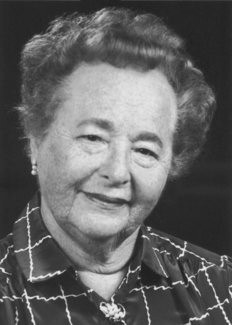
Gert

Gertrude Elion, image courtesy of the Nobel Prize Foundation.

Learn More

The Jewish Women’s Archive has an exhibit on Gertrude Elion as part of their “Women of Valor” series.

The Nobel Prize Foundation featured Gertrude Elion as part of their “Women who changed science” series. The Foundation also has a short autobiography from Gertrude Elion that describes her life in her own words.

Do you have a question about this story, or a personal experience to share? 

Use this form to send a message to the Charlie Clark Center for Local History.

Center For Local History - Blog Post Message Form

Do you have a question about this story, or a personal experience to share? Use this form to send a message to the Center for Local History.

"*" indicates required fields
This field is for validation purposes and should be left unchanged.

Share Your Story

April 23, 2020 by Web Editor

  • « Go to Previous Page
  • Page 1
  • Interim pages omitted …
  • Page 15
  • Page 16
  • Page 17
  • Page 18
  • Page 19
  • Interim pages omitted …
  • Page 25
  • Go to Next Page »

Primary Sidebar

News

All library locations will be closed for Juneteenth.

Holiday: All library locations closed Fri., June 19, for Juneteenth.

All Library locations and Arlington County … ... about Holiday: All library locations closed Fri., June 19, for Juneteenth.

Read More News
See More Service Updates

Center for Local History

Three men writing on squares of the AIDS Quilt.

New: Explore 2,800+ Arlington Courier Photos

Explore more than 2,800 photos of local life in … ... about New: Explore 2,800+ Arlington Courier Photos

Read More Local History

Director’s Blog

Arlington Public Library staff marching in the 2025 D.C. World Pride Parade.

Director’s Message: Pride Month

Words Matter Arlington Public Library … ... about Director’s Message: Pride Month

More Director's Blog

Footer

About Us

  • Mission & Vision
  • Charlie Clark Center for Local History
  • News Room
  • Get Email Updates

Administration

  • Policies
  • Library Staff
  • Job Opportunities
  • Propose a Program or Partnership

Support Your Library

  • Friends of the Library
  • Giving Opportunities
  • Donating Materials
  • Volunteer Opportunities

Our Mission

We champion the power of stories, information and ideas.

We create space for culture and connection.

We embrace inclusion and diverse points of view.


Download the Library App

Download the Library App

Arlington County | Terms & Conditions | Accessibility | Site Map
· Copyright © 2026 Arlington County Government ·