• Skip to primary navigation
  • Skip to main content
  • Skip to primary sidebar
  • Skip to footer

Alert

Update: Elevator outages, maintenance and upgrades at Central Library More Info

Alert

Storytimes Will “Take a Nap” through June 20 More Info

Home - Arlington County Virginia - Logo
MENUMENU
  • Join Now
  • My Account
    • Login
    • My Checkouts
    • My Holds
    • My Lists
    • My Reading History
    • About Borrowing
    • About Holds
    • About My Account
  • Hours & Locations
    • All Hours & Locations
    • Holiday Closings
  • News
    • Library News
    • Director's Blog
    • Get Email Updates
  • Contact Us

Arlington Public Library

MENUMENU
  • Search
  • Collections
  • Library Services
  • Events
  • Community Engagement
  • Join Now
  • My Account
    • Login
    • About Borrowing
    • About Holds
    • About My Account
  • Hours & Locations
    • All Hours & Locations
    • Holiday Closings
  • News
    • Library Blog
    • Get Email Updates
  • Contact Us

News

Have You Ever Stood Awestruck In A Great Forest?

Post Published: June 27, 2019

Phoebe Knipling

The year is 1967.

Phoebe sees that her high school students are disconnected from the natural world. So she founds The Outdoor Lab in the foothills of the Blue Ridge Mountains.

Now generations of urban Arlington students can study animals and plants in their natural ecosystems.

Transform science education: That’s Women’s Work

Two years in the making, Arlington Public Library's Women's Work exhibit presents the stories of women trailblazers and their far-reaching impact on politics, education, business, social activism and public libraries.

The curated digital collection contains stories, photographs, letters and memorabilia and spotlights both individuals and groups of Arlington women who dedicated their work to improve the lives of others.

Because there are always more layers of history to find and examine, the Center for Local History continually seeks community donations and oral histories. Contact us at 703-228-5966 or by email.
June 27, 2019 by Web Editor

Happy 100th Birthday, Birdie Alston!

Post Published: June 26, 2019

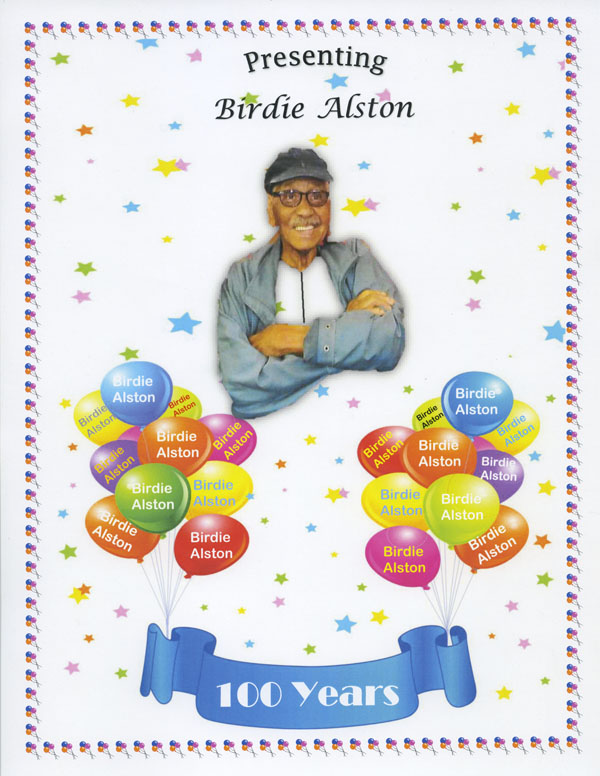
Longtime Arlington resident Birdie Alston recently celebrated his 100th birthday.

Mr. Alston’s life has been marked by a commitment to community service, civil rights, and a love of photography and gardening.

Birdie Alston's birthday poster with balloons

Born in June 1919, Mr. Alston grew up in South Carolina. He came to Arlington as a young man in 1944, first settling in South Arlington and then moving to the Hall’s Hill/High View Park neighborhood with his wife, Mable Shirley Alston in 1947. He worked first as a short order cook and then at Olmstead Oldsmobile for forty years.

After the end of World War II, Mr. Alston became involved with civic and civil rights movements, as a member of the Langston Civic Association (and President of the organization in the 1960’s) and the NAACP of Arlington and Fairfax Counties. He was instrumental in growing the memberships of both groups and working alongside other well-known Arlingtonians such as Dorothy Hamm and Barbara Marx. In addition to these activities, Mr. Alston was on the Board of Directors at the Veteran’s YMCA and helped to found the North Arlington Child Care Centers, Inc.

Mr. Alston was also involved with the Neighborhood Conservation Plan, established in 1964 as a way for communities within Arlington to meet as neighbors and discuss ideas about improving their own neighborhoods. As an avid gardener, Mr. Alston was instrumental to the sustained improvement of the Hall’s Hill/High View Park neighborhood. Mr. Alston further supported the mission of the Neighborhood Conservation Plan by petitioning and working with the Arlington County Board for street improvements throughout High View Park. He has also been a longtime member of Calloway United Methodist Church.

As an enthusiastic photographer, he took pictures of family, friends, and everyday life in Arlington throughout the 1950’s, ‘60’s, and beyond, and was involved with local black heritage events such as Nauck Pride Day and Feel the Heritage Festival.

In an oral history conducted in 1991 with Mr. Alston, he remarked: “…I was just an average citizen in the community. I didn't wear no fancy clothes…I was a working man, I went to work.”

We think that Mr. Birdie Alston’s life and commitment to community involvement have been anything but average or ordinary and wish him a happy 100th birthday.

The Personal Papers of Birdie and Mable Alston (RG 338) were donated to the Center for Local History in October 2017. This collection includes photographs, physical objects, and materials from Mr. Alston’s involvement with various civil rights and community activities throughout the mid to late 20th century.

For more information, and to see items from the collection, visit the Center for Local History on the first floor at Central Library.

June 26, 2019 by Web Editor

Do You Like Arlington’s Vibrant, Walk-Friendly Culture?

Post Published: June 20, 2019

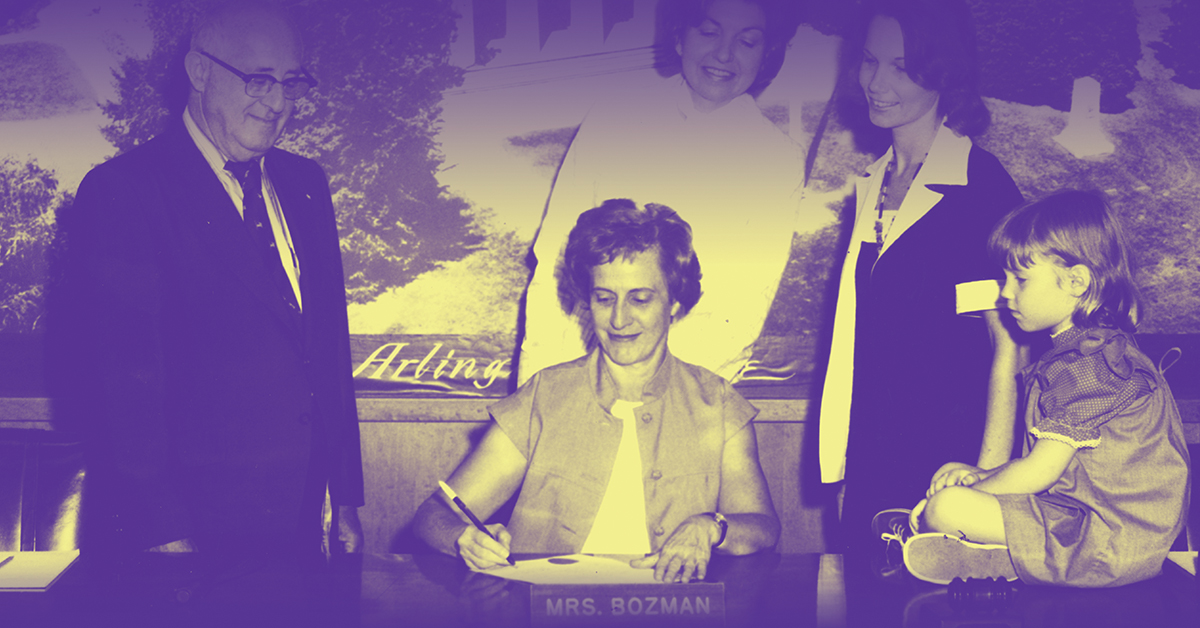
Ellen Bozman sitting in the County Board Room

The year is 1973.

Ellen is elected to the County Board.

She leads the transformation of a Metro corridor surrounded by parks, apartments, shopping and restaurants, where the community can flourish.

Lead this town: That's Women's Work.

Lead this town: That's Women's Work.

Two years in the making, Arlington Public Library's Women's Work exhibit presents the stories of women trailblazers and their far-reaching impact on politics, education, business, social activism and public libraries.

The curated digital collection contains stories, photographs, letters and memorabilia and spotlights both individuals and groups of Arlington women who dedicated their work to improve the lives of others.

Because there are always more layers of history to find and examine, the Center for Local History continually seeks community donations and oral histories. Contact us at 703-228-5966 or by email.
June 20, 2019 by Web Editor

When You See a Problem, Do You Turn it into an Opportunity?

Post Published: June 13, 2019

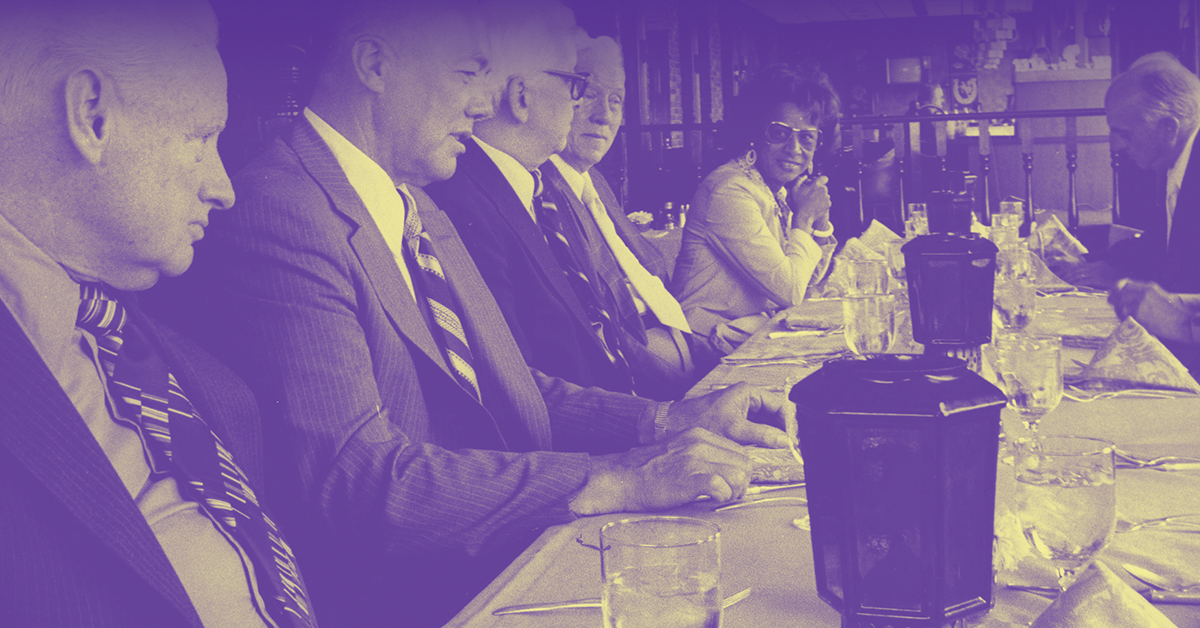
Margarite Syphax sitting at table with a bunch of white guys

The year is 1954.

Margarite sees that Black families are denied fair housing because of segregation, so she starts a successful real estate company that will serve everyone.

The White House recognizes her as an entrepreneurial pioneer.

Build a multimillion-dollar firm: That’s Women’s Work.

Read Margarite Syphax’s Story

Two years in the making, Arlington Public Library's Women's Work exhibit presents the stories of women trailblazers and their far-reaching impact on politics, education, business, social activism and public libraries.

The curated digital collection contains stories, photographs, letters and memorabilia and spotlights both individuals and groups of Arlington women who dedicated their work to improve the lives of others.

Because there are always more layers of history to find and examine, the Center for Local History continually seeks community donations and oral histories. Contact us at 703-228-5966 or by email.

June 13, 2019 by Web Editor

What Would You Give Up Your Freedom For?

Post Published: June 6, 2019

purple tinted photo of Gertrude Crocker

The year is 1917.

33-year old Gertrude becomes a 3-time political prisoner for the right to vote.

Through her participation in the national suffrage movement, over 83 million women are registered to vote in the United States.

Go to jail for the vote: That’s Women’s Work.

Read Gertrude Crocker's Story

Two years in the making, Arlington Public Library's Women's Work exhibit presents the stories of women trailblazers and their far-reaching impact on politics, education, business, social activism and public libraries.

The curated digital collection contains stories, photographs, letters and memorabilia and spotlights both individuals and groups of Arlington women who dedicated their work to improve the lives of others.

Because there are always more layers of history to find and examine, the Center for Local History continually seeks community donations and oral histories. Contact us at 703-228-5966 or by email.
June 6, 2019 by Web Editor

Arlington Farms

Post Published: May 29, 2019

By 1941, the last of the property where the USDA's Experimental Farm had been located (at the northeast tip of Arlington) was transferred to the War Department for use in the National Defense Program.

Arlington Farms recreation hall where Saturday night dances were held. Arlington Farms was nicknamed “Girl Town” and was a popular spot for soldiers and sailors stationed at nearby bases.

Arlington Farms recreation hall where Saturday night dances were held.  c. 1944.

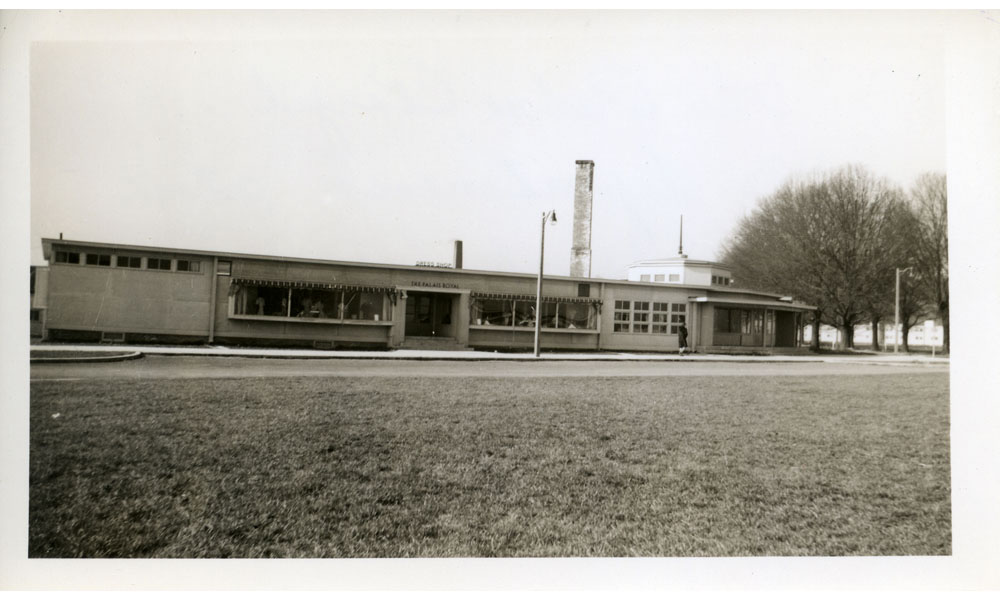
The Palais Royal—Arlington Farms’ department store and beauty shop. In addition to a store and recreation hall, Arlington Farms had a chapel, a post office, and a cafeteria.

The Palais Royal—Arlington Farms’ department store and beauty shop.  c. 1944.

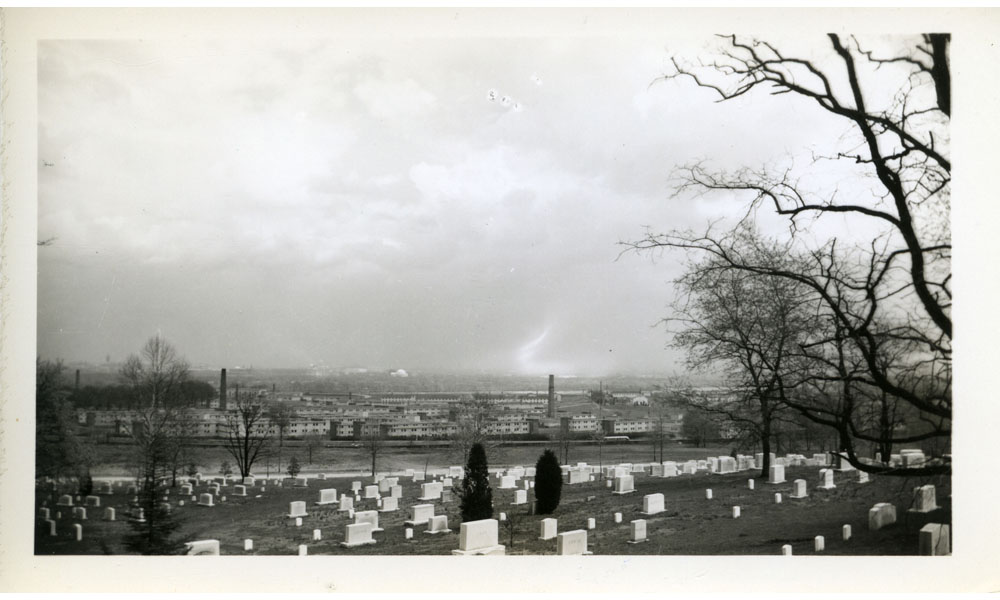
A view of Arlington Farms from Arlington National Cemetery, Washington, D.C. is visible in the background.

A view of Arlington Farms from Arlington National Cemetery, Washington, D.C. is visible in the background. c. 1944.

In 1943, the United States Government transformed that land into war residences for female civil servants and service members during World War II. Six of the ten dorms were reserved for civilians and government employees, while the remaining four were for military servicewomen.

Most of the women living at Arlington Farms worked at the Pentagon, the Navy Annex, or Arlington Hall Station, the headquarters of the Army’s Signal Intelligence Service. During World War II, women entered the workforce in unprecedented numbers—accounting for approximately 40% of the workforce between 1940 and 1945.

Arlington Farms was nicknamed “Girl Town” and was a popular spot for soldiers and sailors stationed at nearby bases. In addition to the department store, beauty shop and recreation hall pictured in the photographs above, Arlington Farms also had a chapel, a post office, and a cafeteria.

The complex’s buildings were demolished in the 1960s and today Arlington National Cemetery occupies the land.

To see more items like these, or to learn more about Arlington's history, visit the Center for Local History on the first floor of the Central Library.

Do you have a question about this story, or a personal experience to share? 

Use this form to send a message to the Center for Local History.

Center For Local History - Blog Post Message Form

Do you have a question about this story, or a personal experience to share? Use this form to send a message to the Center for Local History.

"*" indicates required fields

This field is for validation purposes and should be left unchanged.

Share Your Story

May 29, 2019 by Web Editor

An Experimental Farm

Post Published: May 22, 2019

Did you know that Arlington was at the forefront of experimental farming in the early 20th Century?

In 1900, Congress transferred 400 acres of land along the Potomac near Ft. Myer to the Department of Agriculture in order to create an experimental farm for plant testing, and the improvement of plants and cultivation.

Horse-drawn cultivator, Arlington Farm, 1908, Arlington House in background

Horse-drawn cultivator, Arlington House in background, 1908.

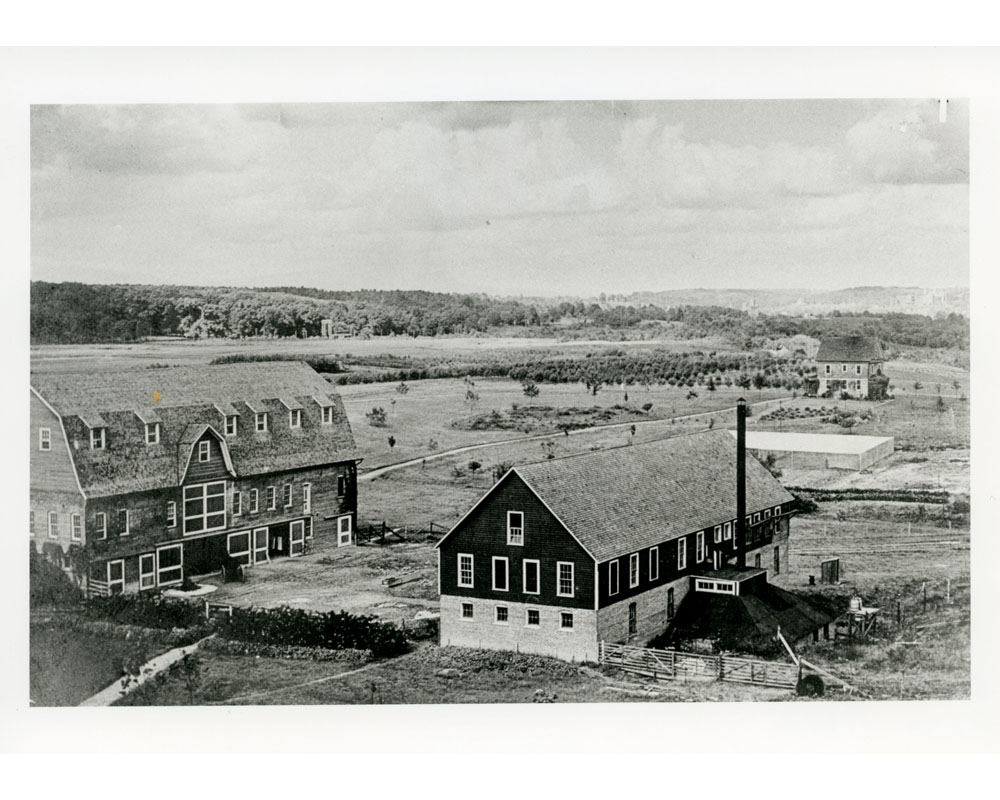
two farm buildings surrounded by open fields

Experimental Farm, USDA, date unknown.

A lot of fascinating and far-reaching work was conducted at the Experimental Farm over the next forty years:

  • The Farm naturalized over 100,000 types of foreign plants for domestic use, using seeds collected from Americans traveling aboard on governmental or private missions. Soybeans are one of the best-known crops to be introduced this way.
  • When a plant disease threatened to wipe out the domestic sugarcane industry in the 1920s the Farm led the way in developing immunity to this blight, which ultimately resulted in the rebuilding of the sugarcane industry.
  • One of the more unusual examples of the Farm’s experiments involved grasses for golf greens. Before WWI the country’s golf courses were almost entirely dependent on German grown seed for their grasses. When the supply was cut off by the war, golf courses throughout the country contributed funds for experiments at Arlington to develop new domestic varieties.
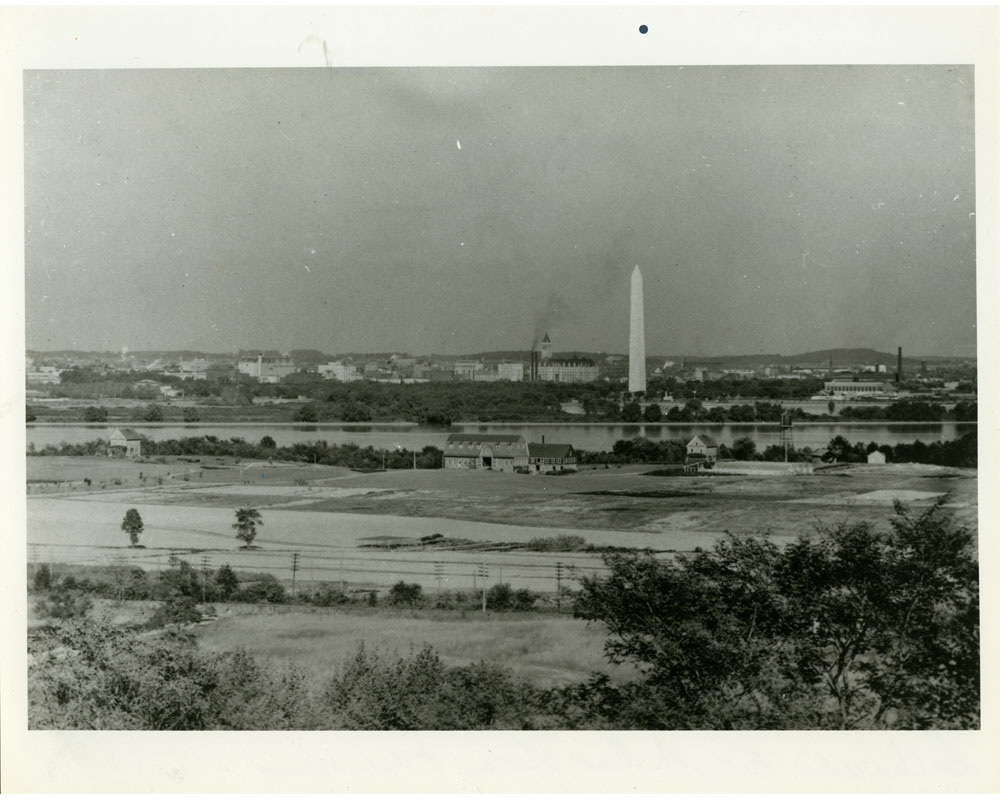
looking over the Experimental Farm land towards the National Monument

U.S. Dept. of Agriculture photo of the Experimental Farm, 1906. National Monument in the background.

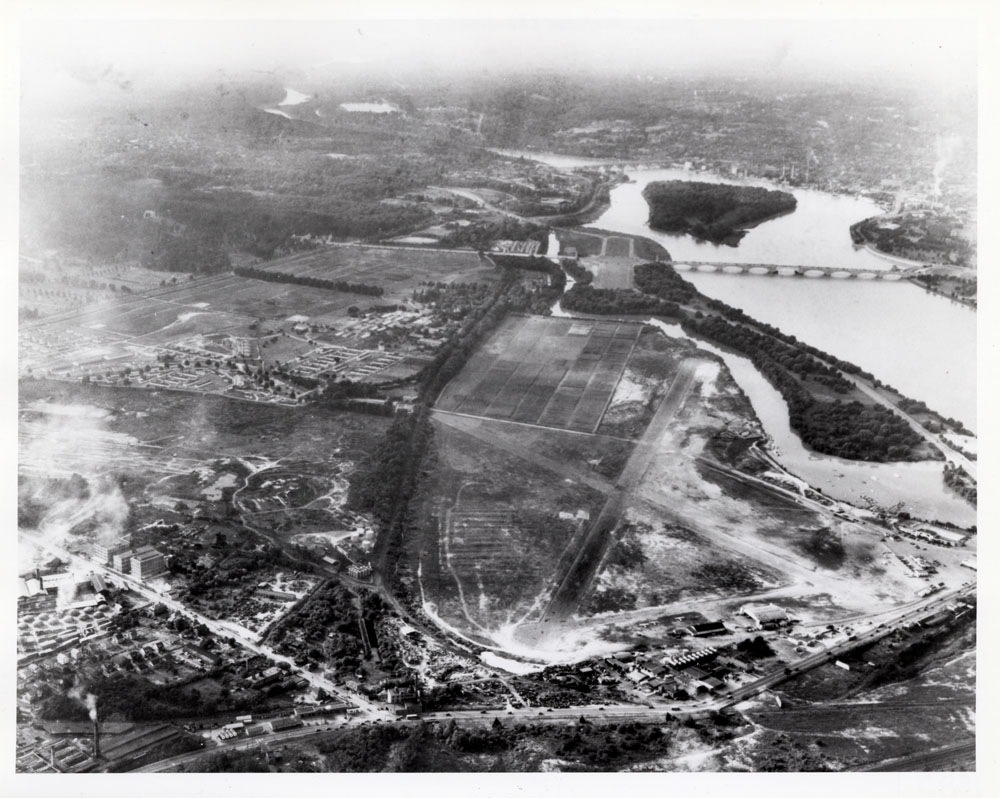
Aerial View, Shows area now occupied by Pentagon, Airport, Memorial Bridge, Aqueduct Bridge, Experimental Farm, 1919

Aerial View of the Experimental Farm, 1919, shows area now occupied by the Pentagon and Airport. Bridges are Memorial Bridge and Aqueduct Bridge.

With the development of Arlington National Cemetery and the construction of Memorial Bridge there was pressure to relocate the farm. In 1932 much of the farm’s work was shifted to Beltsville, MD.

By 1941 the remainder of the property had been transferred to the War Department for use in the National Defense Program.

To see more items like these, or to learn more about Arlington's history, visit the Center for Local History on the first floor of the Central Library.

Do you have a question about this story, or a personal experience to share? 

Use this form to send a message to the Center for Local History.

Center For Local History - Blog Post Message Form

Do you have a question about this story, or a personal experience to share? Use this form to send a message to the Center for Local History.

"*" indicates required fields

This field is for validation purposes and should be left unchanged.

Share Your Story

May 22, 2019 by Web Editor

Hygiene Class for New Mothers

Post Published: May 7, 2019

Happy Mother's Day to all the women who have worked to keep us both healthy and clean!

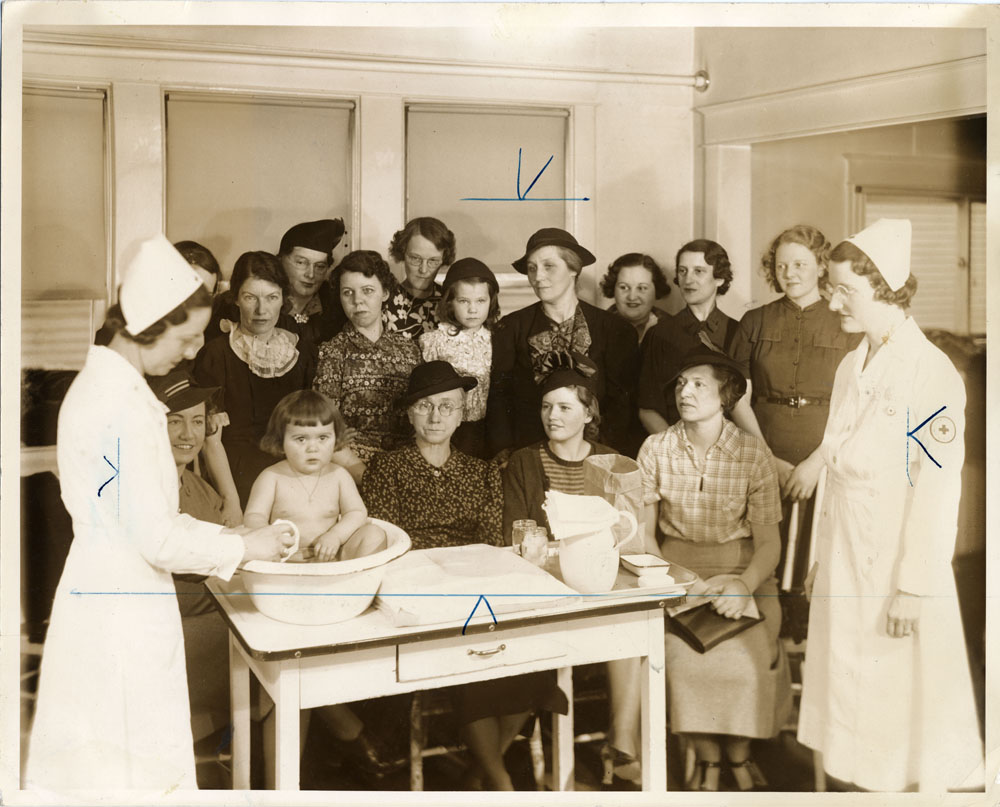
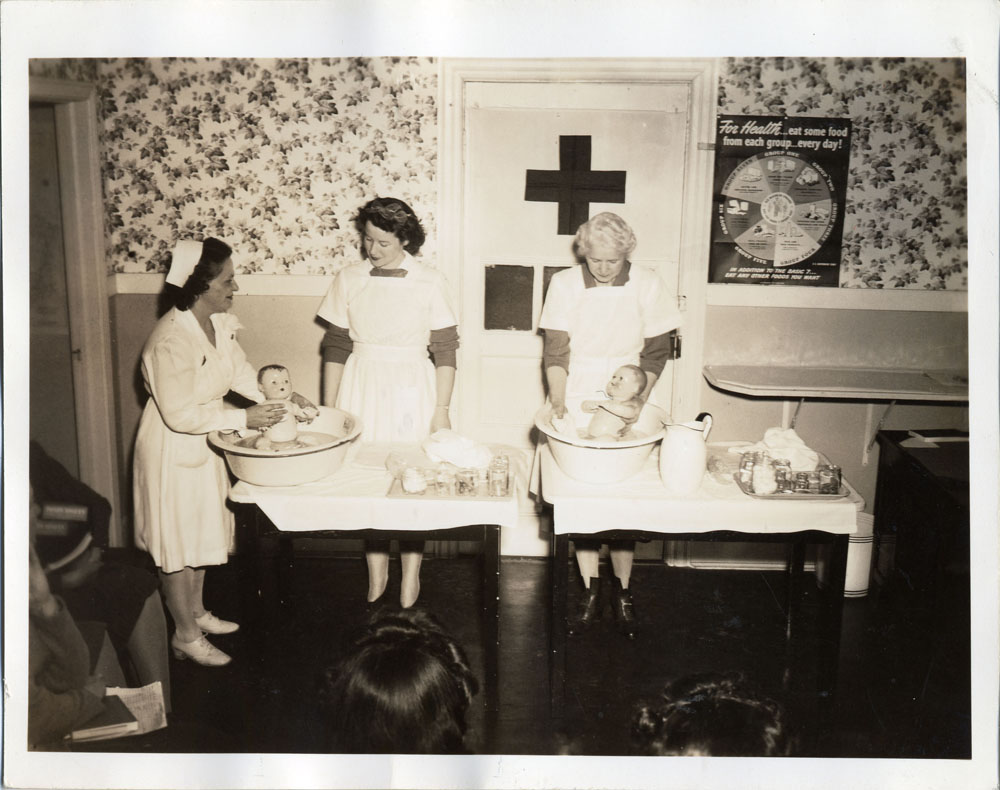
These photos are from Arlington Health Department hygiene classes, which were offered for new and expectant mothers in the 1930s and 1940s.

Health Department baby bath demonstration by home nursing staff, 1943

Home hygiene clinic, 1938

Health Department baby bath demonstration by home nursing staff, 1943

Baby bath demonstration, 1943

During this time period, health and cleanliness were considered one and the same, so personal hygiene was seen as essential to being healthy.

The classes for new mothers covered maternity hygiene, infant hygiene, and preschool hygiene. Among other things, nurses demonstrated the best way to wash a toddler and a baby.

To see more items like these, or to learn more about Arlington's history, visit the Center for Local History on the first floor of the Central Library.

Do you have a question about this story, or a personal experience to share? 

Use this form to send a message to the Center for Local History.

Center For Local History - Blog Post Message Form

Do you have a question about this story, or a personal experience to share? Use this form to send a message to the Center for Local History.

"*" indicates required fields

This field is for validation purposes and should be left unchanged.

Share Your Story

May 7, 2019 by Web Editor

Edmond C. Fleet, Community Swimming Pool Supporter

Post Published: April 18, 2019

Edmond C. Fleet (1902-1983) was a civilian pastry chef for the United States Navy, who found significant ways to put his organizing talents to good use for the Nauck community.

Besides being a member of the local African-American Elks Lodge, Masonic Lodge, and Oddfellows, he was a co-founder of the Veteran’s Memorial Branch of the YMCA, located at 3440 22nd Street S, one block away from Macedonia Baptist Church.

Built in 1953, the Veteran’s Memorial YMCA served the “non-white” residents of the county. Located near Drew School, it naturally had a strong bond with neighborhood children, especially since the county’s Parks and Recreation system was still segregated.

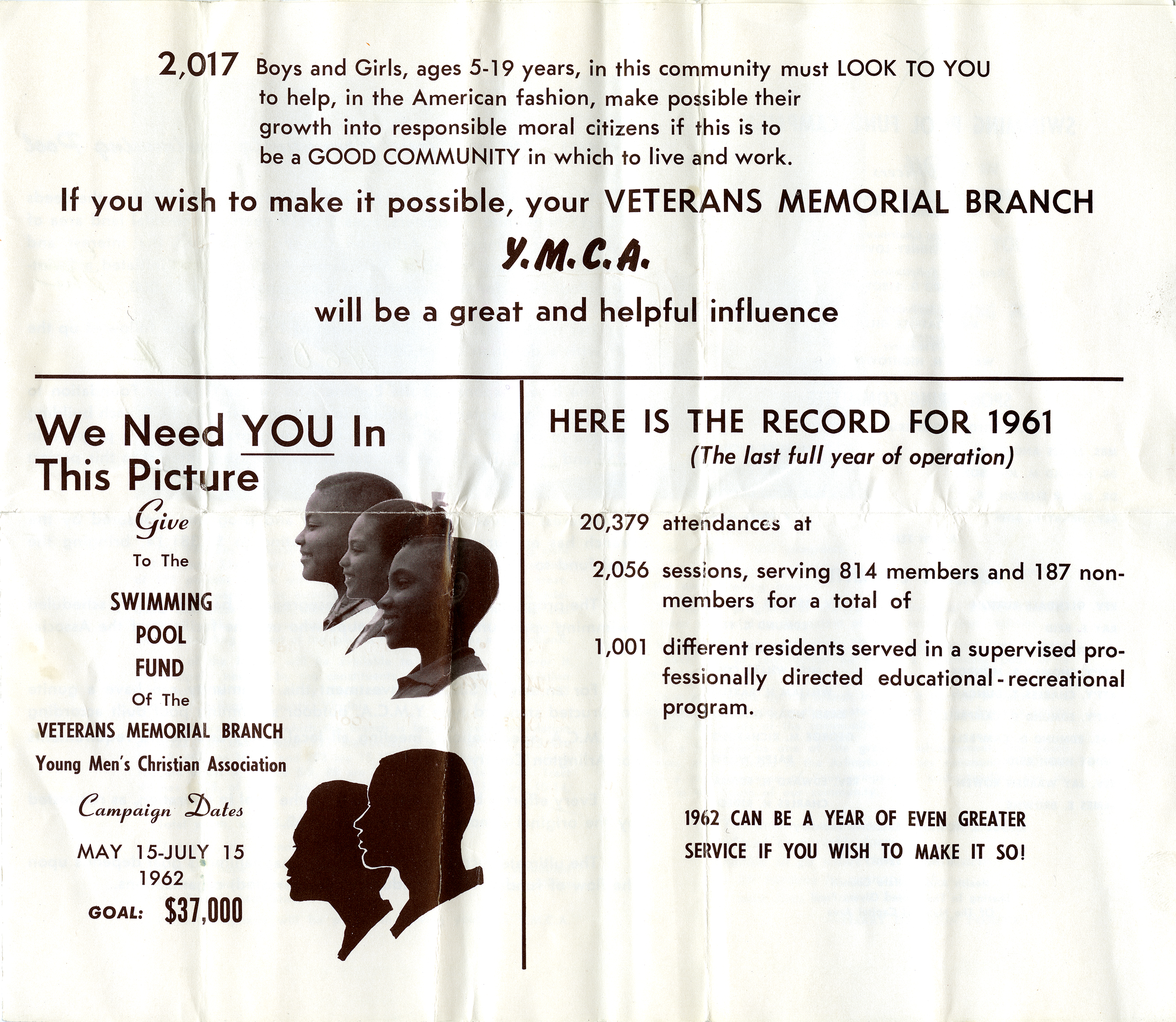
In the late 1950s, this YMCA started a campaign to build a swimming pool as there were no pools in the County that would allow African-Americans in.

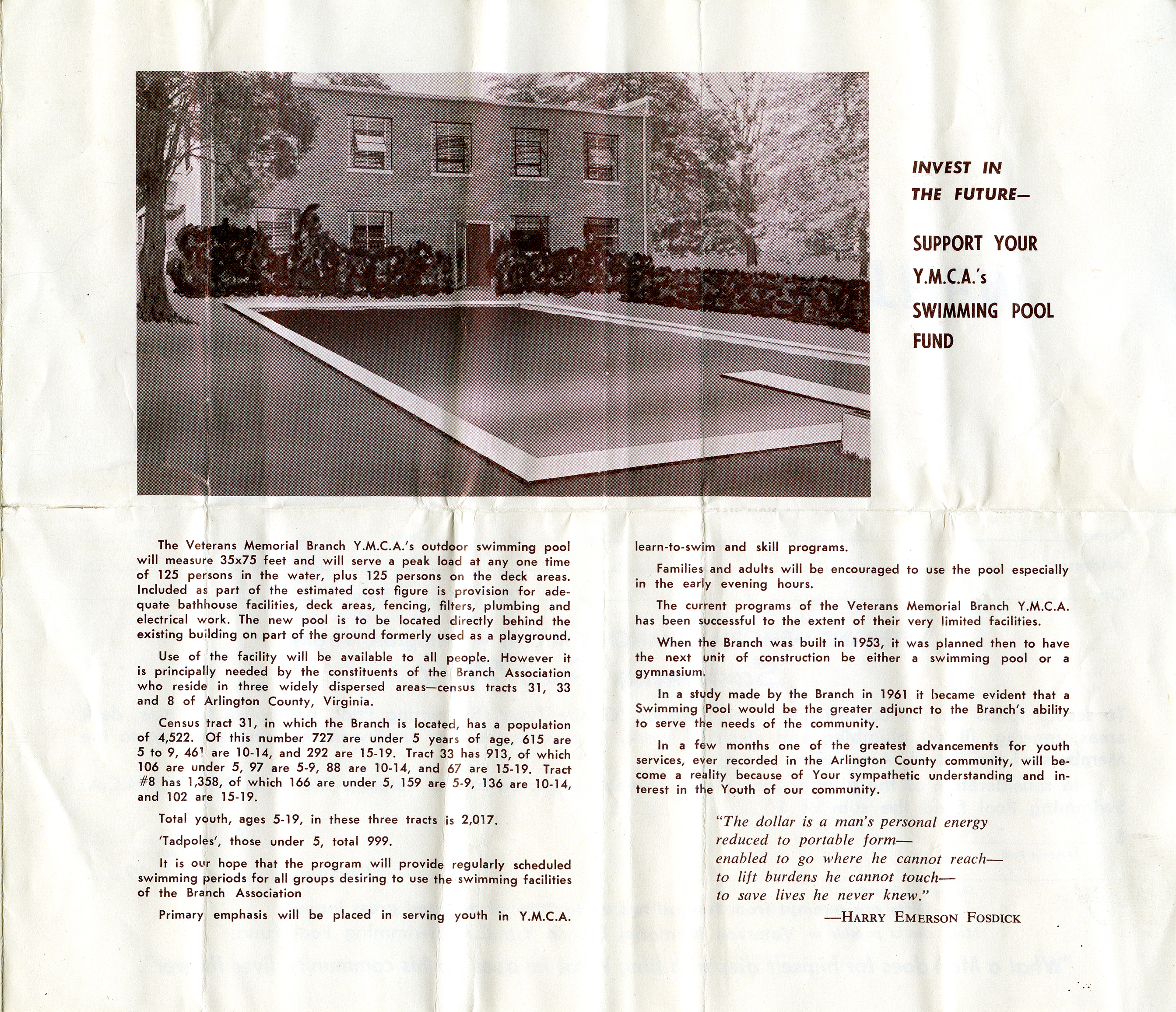
Front page of mailer asking for donations for construction of Veteran's Memorial YMCA pool.
Third page of mailer sent out to get contributions for construction of the Veteran's Memorial YMCA swimming pool.

This 1962 pledge brochure, which lists Fleet as a member of the Advisory Committee, details plans for the pool and asks for community support. Fleet put his money where his mouth was, and donated money to the YMCA and other organizations in which he was involved, including Mt. Zion Baptist Church where he was in the choir.

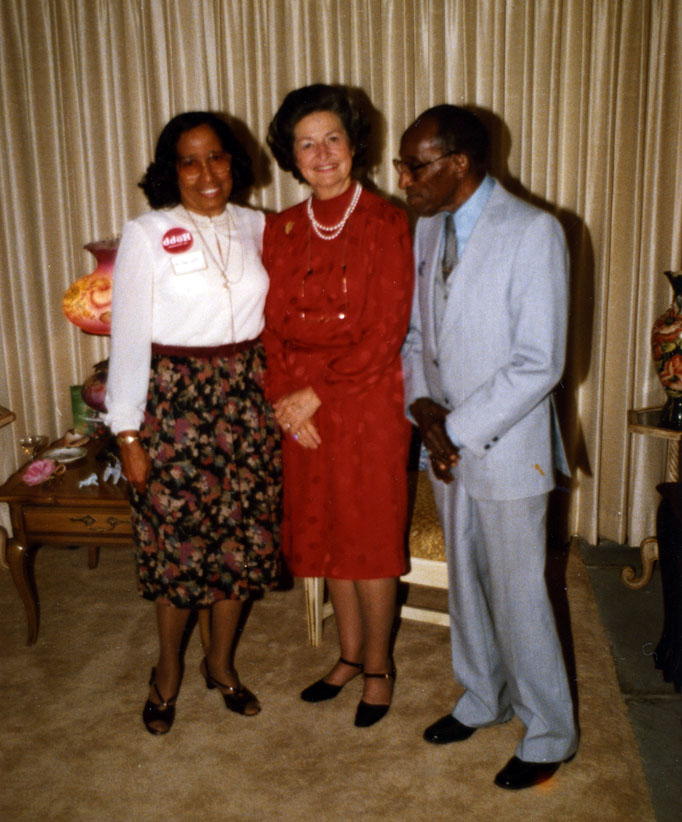
Fleet was involved in local politics too, hosting Lady Bird Johnson at his home for a Chuck Robb campaign event in 1977, when he ran for Lieutenant Governor of Virginia. (Chuck Robb is married to Lady Bird and President Johnson's daughter, Lynda Bird Johnson Robb.)

Edmund Fleet and an unknown woman flank Lady Bird Johnson at a Chuck Robb campaign event held at Fleet's house

Lady Bird Johnson flanked by Edmond C. Fleet and an unidentified Robb supporter, 1977.

To learn more about Edmund C. Fleet and the Veteran’s Memorial YMCA, visit the Center for Local History on the first floor of the Central Library.

Do you have a question about this story, or a personal experience to share? 

Use this form to send a message to the Center for Local History.

Center For Local History - Blog Post Message Form

Do you have a question about this story, or a personal experience to share? Use this form to send a message to the Center for Local History.

"*" indicates required fields

This field is for validation purposes and should be left unchanged.

Share Your Story

April 18, 2019 by Web Editor Tagged With: Green Valley

Rediscover Zitkála-Šá

Post Published: March 13, 2019

Native American Advocate and Author

On January 26, 1938, Zitkála-Šá, life-long advocate for Native American rights and a resident of 261 North Barton Street in Lyon Park, died at age 61. She was buried under the name Gertrude Simmons Bonnin, in Arlington National Cemetery.

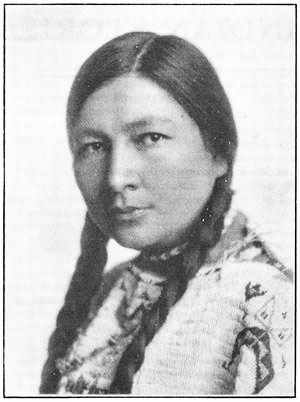
Photo of a woman in traditional native american clothing

Image of Zitkála-Šá ca. 1921, courtesy of the Library of Congress

A nationally recognized Native American author and activist, Zitkála-Šá was a vocal proponent for citizenship rights for Native Americans. Born in South Dakota into a Yankton Dakota Sioux family, she thrived on the Yankton Indian Reservation until Quaker missionaries recruited some of the reservation’s children to attend a Quaker manual labor school where she was given the Christian name Gertrude Simmons. Although she enjoyed learning to read and write, she experienced first-hand the damage of having her heritage stripped away. Feeling torn between her life on the reservation and her forced assimilation into white mainstream culture, Zitkála-Šá pursued higher education and distinguished herself as a public speaker on social and political issues.

“Folded hands lie in my lap, for the time forgot. My heart and I lie small upon the earth like a grain of throbbing sand. Drifting clouds and tinkling waters, together with the warmth of a genial summer day, bespeak with eloquence the loving Mystery round about us.”  

"Why I Am A Pagan," Atlantic Monthly, Volume 90, 1902

Her largely autobiographical work on indigenous life was published by the Atlantic Monthly and Harper’s Monthly, including “Impressions of an Indian Childhood” and “The Trial Path” among many more. She collected tribal stories and legends into collections, and authored poems examining the intersection of nature, Native American life, and mainstream white American life.

In 1910, she began a collaboration with composer William F. Hanson, and the subsequent “The Sun Dance Opera” was the first opera authored by a Native American (under the name Gertrude Simmons).

“It was next to impossible to leave the iron routine after the civilizing machine had once begun its day's buzzing; and as it was inbred in me to suffer in silence rather than to appeal to the ears of one whose open eyes could not see my pain, I have many times trudged in the day's harness heavy-footed, like a dumb sick brute.”

"The School Days of an Indian Girl," Atlantic Monthly, Volume 85, 1900

As a member of the Society of American Indians, Gertrude Simmons (the name she used in records and public affairs) lectured nationally and lobbied for citizenship rights for Native Americans who were not naturalized U.S. citizens by birth but could apply through pathways such as military service, renouncing tribal affiliations, or accepting land allotments. As a previous clerk for the Bureau of Indian Affairs, she criticized the bureau for its mistreatment of Indigenous children placed in national education systems that forced assimilation and Christian values.

In 1916, her husband, Captain Raymond Talefase Bonnin (also of Yankton descent), lost his position at the Bureau of Indian Affairs in Utah and they moved to Washington D.C.  where, as editor of the Society of American Indian’s publication American Indian Magazine, Gertrude Simmons Bonnin wrote about and exhibited treatises on many controversial issues. In 1923, she co-authored “Oklahoma’s Poor Rich Indians: An Orgy of Graft and Exploitation of the Five Civilized Tribe, Legalized Robbery” which discussed theft and murder by corporations seeking access to Native American-owned oil-rich lands. The article is credited with influencing the development of the Indian Reorganization Act of 1934, which returned government and land management to Native Americans.

On November 3, 1925, Gertrude and Raymond Bonnin purchased the stone bungalow at 261 North Barton Street in Arlington. from the first owners, Loyd and Bernice Claire. The Claires had built the house only one year earlier, having bought it from the well-known Lyon & Fitch real estate development. The Lyon & Fitch real estate team sold the Lyon Park subdivision properties with deed restrictions and covenants, including one preventing the property from being sold or rented to non-whites for a period of 99 years. The census recognized people of Native American ancestry as white and therefore the Bonnins were not prevented from purchasing the property.

In 1924, the Indian Citizenship Act granted citizenship to all Native Americans, but did not automatically afford voting rights. In response, Gertrude Simmons Bonnin co-founded and presided over the National Council of American Indians to unify First Nations in the movement to gain voting rights, healthcare, legal standing, and land rights. She also created the Indian Welfare Committee of the General Federation of Women’s Clubs, speaking often in Washington, Arlington, and Fairfax.  

Gertrude Simmons Bonnin spent the remainder of her life in Arlington as president of the Council of American Indians, speaking and writing about the continuing political and social mistreatment of Native Americans. After her death, her husband continued to live in their home until his death in 1942 when the property was left in trust to their grandchildren.

References

United States of America, Bureau of the Census. Fifteenth Census of the United States, 1930. Washington, D.C.: National Archives and Records Administration, 1930. T626, 2,667 rolls.

Arlington County Land Records Office, various deeds pertaining to Gertrude S. Bonnin and R.T. Bonnin: Deed Book 609, p. 237, book 319, p. 64, and book 174, p. 152.

Zitkála-Šá, “The School Days of an Indian Girl”, Atlantic Monthly, Volume 85, 1900.

Zitkála-Šá, “Why I Am A Pagan”, Atlantic Monthly, Volume 90, 1902.

Further Reading

Lewandowski, Tadeusz. Red Bird, Red Power: The Life and Legacy of Zitkala-Ša, Norman: University of Oklahoma Press, 2016. (Available from the Library)

Susag, Dorothea M., Zitkala-Sa (Gertrude Simmons Bonnin): A Power(full) Literary Voice, Studies in American Indian Literatures, University of Nebraska Press, Series 2, Vol. 5, No. 4 (Winter 1993), pp. 3-24.

Tsjeng, Zing, Forgotten Women: The Leaders. London: Cassell Illustrated, 2018. (Available from the Library)

Capaldi, Gina. Red Bird Sings: the Story of Zitkala-̈Sa, Native American Author, Musician, and Activist, Carolrhoda Books, 2011. (Available from the Library)

"Preservation Today: Rediscovering Arlington" is a partnership between the Arlington Public Library and the Arlington County Historic Preservation Program.

Preservation Today: Rediscovering Arlington
Stories from Arlington’s Historic Preservation Program

Arlington’s heritage is a diverse fabric, where people, places, and moments are knitted together into the physical and social landscape of the County.

Arlington County’s Historic Preservation Program is dedicated to protecting this heritage and inspiring placemaking by uncovering and recognizing all these elements in Arlington’s history.

To learn more about historic sites in Arlington, visit the Arlington County Historic Preservation Program.

March 13, 2019 by Web Editor

  • « Go to Previous Page
  • Page 1
  • Interim pages omitted …
  • Page 18
  • Page 19
  • Page 20
  • Page 21
  • Page 22
  • Interim pages omitted …
  • Page 25
  • Go to Next Page »

Primary Sidebar

News

LibraryFest: Happy 250!

July 18, enjoy free all-day fun at LibraryFest!

Join us for a free, all-day community … ... about July 18, enjoy free all-day fun at LibraryFest!

Read More News
See More Service Updates

Center for Local History

Three men writing on squares of the AIDS Quilt.

New: Explore 2,800+ Arlington Courier Photos

Explore more than 2,800 photos of local life in … ... about New: Explore 2,800+ Arlington Courier Photos

Read More Local History

Director’s Blog

Arlington Public Library staff marching in the 2025 D.C. World Pride Parade.

Director’s Message: Pride Month

Words Matter Arlington Public Library … ... about Director’s Message: Pride Month

More Director's Blog

Footer

About Us

  • Mission & Vision
  • Charlie Clark Center for Local History
  • News Room
  • Get Email Updates

Administration

  • Policies
  • Library Staff
  • Job Opportunities
  • Propose a Program or Partnership

Support Your Library

  • Friends of the Library
  • Giving Opportunities
  • Donating Materials
  • Volunteer Opportunities

Our Mission

We champion the power of stories, information and ideas.

We create space for culture and connection.

We embrace inclusion and diverse points of view.


Download the Library App

Download the Library App

Arlington County | Terms & Conditions | Accessibility | Site Map
· Copyright © 2026 Arlington County Government ·