• Skip to primary navigation
  • Skip to main content
  • Skip to primary sidebar
  • Skip to footer

Alert

Holiday: All library locations closed Sunday, April 5 for Easter. More Info

Alert

Update: Elevator outages, maintenance and upgrades at Central Library More Info

Home - Arlington County Virginia - Logo
MENUMENU
  • Join Now
  • My Account
    • Login
    • My Checkouts
    • My Holds
    • My Lists
    • My Reading History
    • About Borrowing
    • About Holds
    • About My Account
  • Hours & Locations
    • All Hours & Locations
    • Holiday Closings
  • News
    • Library News
    • Director's Blog
    • Get Email Updates
  • Contact Us

Arlington Public Library

MENUMENU
  • Search
  • Collections
  • Library Services
  • Events
  • Community Engagement
  • Join Now
  • My Account
    • Login
    • About Borrowing
    • About Holds
    • About My Account
  • Hours & Locations
    • All Hours & Locations
    • Holiday Closings
  • News
    • Library Blog
    • Get Email Updates
  • Contact Us

News

Legacy: Hall’s Hill VFD and Station No. 8

Post Published: August 4, 2015

A Timeline of the Rich History of the Hall’s Hill Volunteer Fire Department

For decades during segregation, Fire Station #8 was the only Arlington, Va. station staffed by African Americans.

Tap or click on images to view larger versions.


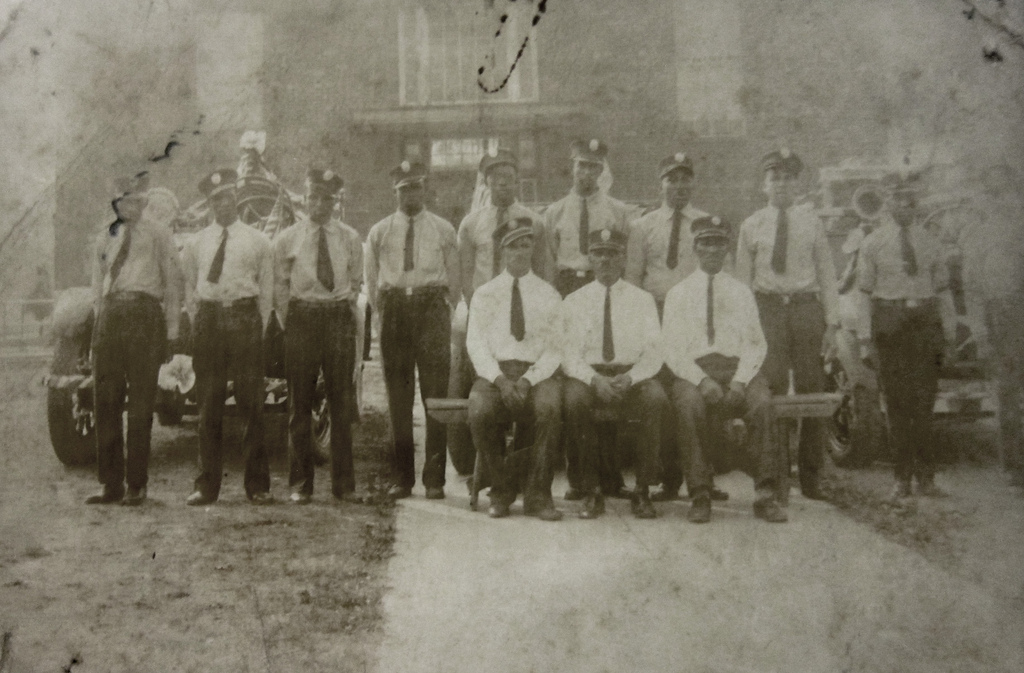
African American men in white shirts and dark ties

Halls Hill Volunteer Fire Department, taken on the grounds of the John M. Langston Elementary School, probably 1930s

1898

First firefighting company in future Arlington County formed in Cherrydale by volunteers.

Other volunteer firefighting companies to follow will include Ballston in 1908 and Clarendon in 1909.

1918

Group of volunteer firefighters forms in the Hall’s Hill area, an African American neighborhood that began as home to many freed slaves and was kept separate from adjacent white communities in part by an 8-foot wooden fence.

The Hall’s Hill firefighters acquire a 60-gallon chemical tank, which has to be pulled by six men over unpaved, often muddy roads. At some point, company equipment is housed on the grounds of the John Langston Elementary School, 2121 N. Culpeper St.

1920

Arlington County is formally established by the Virginia General Assembly from the previously named “Alexandria County.”

Hall's Hill Volunteer Fire Station

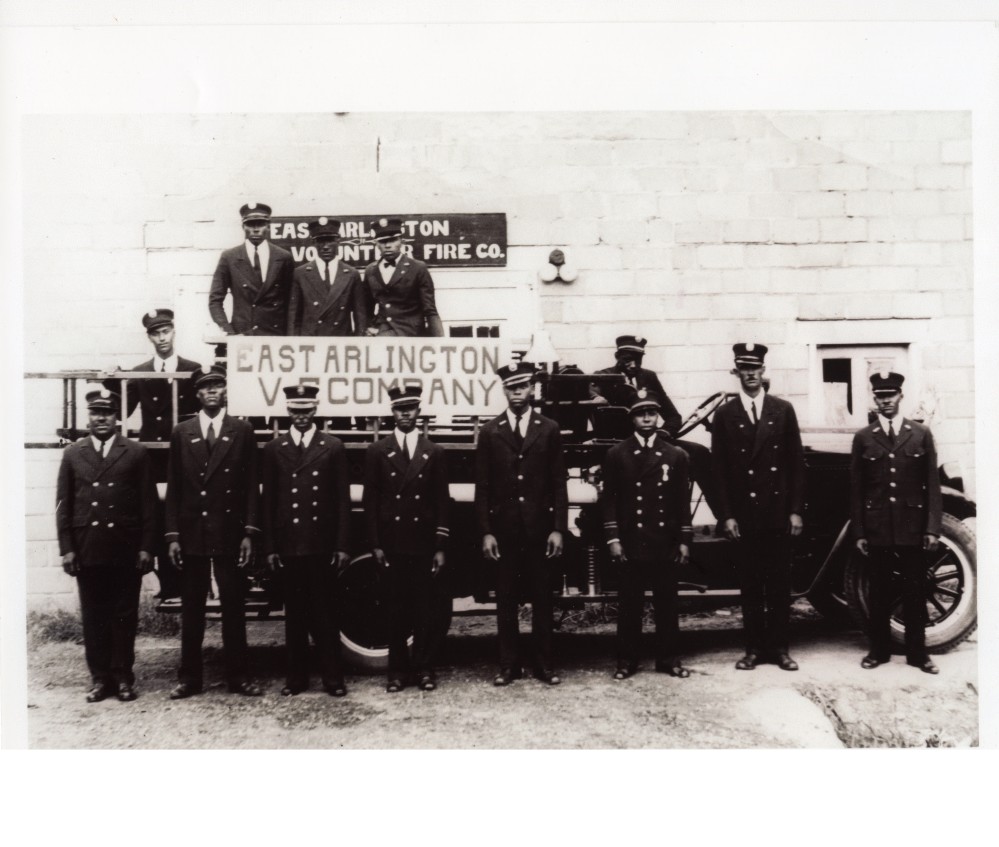
East Arlington Volunteer Fire Company 

1925

Hall’s Hill Volunteer Fire Department (HHVFD) elects its first officers and trustees.

Another African-American volunteer firefighter company is formed, the East Arlington VFD, later to be disbanded by the County Board in February 1941 as the “Hell’s Bottom” area of Arlington is prepared for construction of the Pentagon.

1926

HHVFD buys its first motor-driven engine, a 1917 Mitchell, with funds raised through door-to-door canvassing and pledged donations. The 60-gallon tank is mounted on the Mitchell.

1927

HHVFD is officially incorporated. The company buys a one-ton Chevrolet chassis, which is mounted with two 60-gallon tanks.

HHVFD moves to a lot on Lee Highway and a telephone is installed in the firehouse. Each residence in the community receives a card asking for a donation of 25 cents each month to support the fire company. Fire calls are routed by the chief operator of the local phone company.

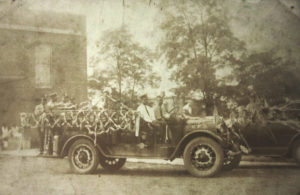
African American man driving an old firetruck draped in bunting

Hall’s Hill Volunteer Firetruck, probably 1930s, apparently marking a national celebration. 

1932 

Arlington government begins paying for equipment and the utility bills for volunteer fire companies in the County and provides HHVFD with its first pumper.

1933 

HHVFD company acquires a 1929 Diamond-T truck.

1934 

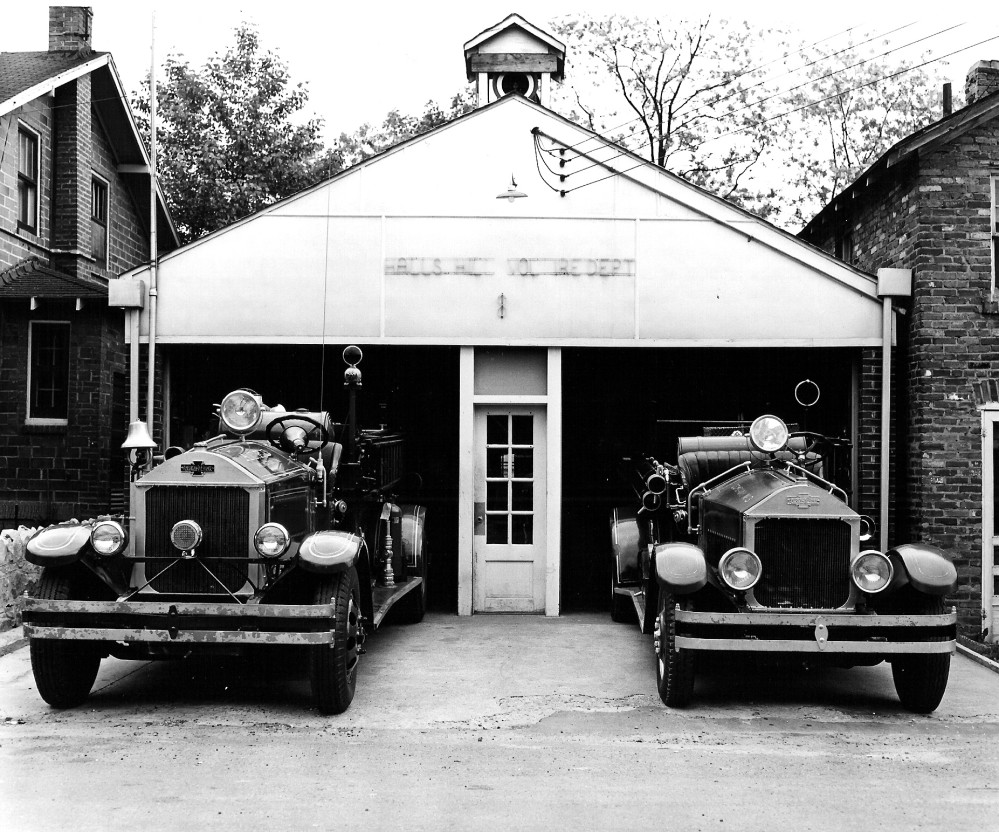
The HHVFD relocates to a lot at 2209 North Culpeper St. near Lee Highway and a new firehouse is built. The land is owned by the Hicks family, which runs several businesses including the Hicks Store and Restaurant just west.

Hall's Hill Volunteer Fire Station

Halls Hill Station 8, 2 trucks

The firehouse develops as a de facto community center, providing a constant source for local news and conversation and eventually offering the convenience of a pay telephone and a soda machine. The volunteers would eventually add recreation and sleeping quarters in the 1950s to accommodate expanded shifts and more firefighters.

To indicate a fire call, volunteers are summoned to the station by a blaring siren mounted on the roof under a simple square belfry.

1935 

A blanket organization of Arlington fire companies—the Arlington County Fireman’s Association– is formed but without the Hall’s Hill and East Arlington men.

1937 

The Arlington County Fire Marshall becomes the Chief of the Fire and Safety Division and goes on the official government payroll as the first firefighting professional.

1940 

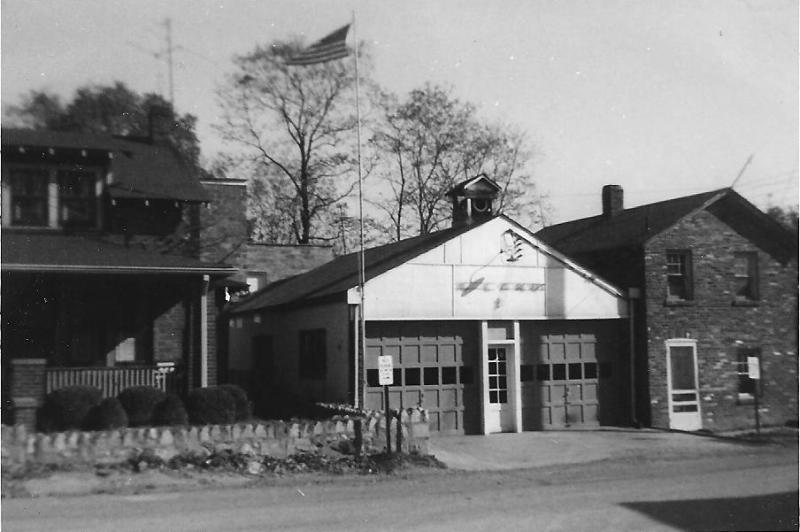
Hall's Hill Volunteer Fire Station

Fire Station 8, 2209 Culpeper St

The County begins negotiating a pay rate for a professional fire staff—to work within the volunteer companies primarily as drivers–in July. Hall’s Hill will be last among the firefighting companies assigned paid professionals with three men added in January 1951.

As a unified County Fire Department comes together, Arlington government formally begins paying rent to the volunteer companies, including Hall’s Hill, for the use of their firehouses.

Jimmie Taylor, born in 1936 and a Hall’s Hill resident from childhood, remembers the HHVFD having an unofficial mascot, a large German Shepard named Brownie, who seemed to have no specific owners but would often hang around the firehouse and even follow crews on calls. Brownie’s role was later taken, on a somewhat more official basis, by a Dalmatian named Miss Weeks, who had puppies each named for a day of the week.

Taylor recalls HHVFD volunteers sometimes pushing an aging firetruck onto Lee Highway to get its engine started as the vehicle rolled down the hill. Rochester Weeden was frequently behind the wheel. Weeden was known throughout the neighborhood as “Maybe-so,” the result of what Taylor says was Weeden’s ready response to almost any question and also his philosophy toward the balky truck.


Hall's Hill Volunteer Fire Department

Rear view of Hall’s Hill Fire Station No. 8, 2209 North Culpeper 

1941

The County Board agrees to pay six of Arlington’s seven volunteer fire departments a monthly rate of $455 for designated professional firefighters. The HHVFD is excluded.

Equipment from the now-disbanded East Arlington VFD is transferred to the HHVFC.

The HHVFD company’s Diamond-T is replaced with a 1935 GMC truck.

1944 

The Hicks family deeds the 2209 North Culpeper lot to the “Trustees of the Arlington County Fire Department Engine No. 8.”

1950-1951 

The company’s 1935 GMC truck is replaced by a 600-gallon pumper built in 1929. Two-way radios are also added.

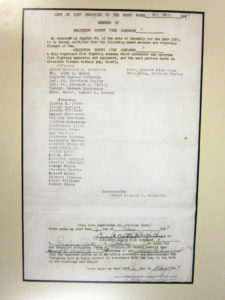
Typed list of volunteer firefighters

1947 list of Volunteer Firefighters at Fire Station 8

1951 

Station No. 8’s first three County-paid firefighters arrive in January to be followed by a fourth later in the year. A fifth is added in 1952, a sixth in 1953 and two more in 1954. All men are African-American. The same will hold true for subsequent hires into the early 1960s.

A popular notion holds that No. 8 is the first officially black-run and -operated fire station south of the Mason-Dixon line.

Original paid firefighters of Station No. 8, in order of hire: Alfred Clark, Julian Syphax, George McNeal, Archie Syphax, Hartman Reed, James K. Jones, Carroll Deskins, Henry Vincent, Carl Cooper, Ervin Richardson, Jimmy Terry, Wilton Hendricks, Bill Warrington and Bobby Hill.

According to Station No. 8 firefighter Hartman Reed, who was hired in 1952, “We were a segregated station and for some reason, the feeling during those years was that they wouldn’t involve us in things that were outside of our jurisdiction too often.” Reed was interviewed for a 2008 Arlington Public Library oral history.

During a huge inferno in Rosslyn on a particularly cold night, almost all County fire crews are called in except those of Station No. 8. That night Reed tells the only other man on duty at Hall’s Hill: “Thank goodness for Jim Crow.”

Hall's Hill Volunteer Fire Department

1929 American LaFrance 600 gallon pumper Acquired by HHVFD in 1953

Reed recalls a house fire at which the owner would not let Station No. 8 crews take their positions. Other stations had to be summoned. He describes the episode as somewhat rare but says that when Station No. 8 responded to calls beyond Hall’s Hill, he and colleagues would often hear insults including one barrage from a drunk man being treated for a broken ankle. “We were trying to help him but it didn’t make no difference,” Reed remembered with a laugh in 2008.


1957  

Alfred Clark becomes the first African American fire captain in the County, continuing to serve at Station No. 8. His daughter Kitty remembers that when the station later became integrated in the 1960s, some white firefighters said they “would not serve under a ‘Ni…’ and even wrote it on the chalkboard. The battalion chief came up, ordered it removed, and told the white firefighters they will serve and respect Captain Clark.”

black and white photo of Halls Hill volunteer Fire Department

Halls Hill Pumper

1959

In an attempt to prevent the integration of Arlington’s Stratford Junior High School, Rep. Joel T. Broyhill (R-Va.) visits the home of Carrol Deskins to imply that the Station No. 8 firefighter could lose his job if his son Ronnie joins other African American students in enrolling at the school. Deskins tells Broyhill to leave. Ronnie Deskins and three other students make Stratford Virginia’s first integrated public school on Feb. 2. Carrol Deskins remained a firefighter.


1960

The Arlington Council on Human Relations issues a leaflet condemning the “limitations and uncertain opportunities which daily confront Negro citizens in Arlington” as “a blight on the  county and a burden upon all of its residents.” In June, civil rights activists launch a series of lunch counter sit-ins at Arlington drug stores and eateries, including some within blocks of Hall’s Hill. Corporate ownerships drop segregated seating within days.

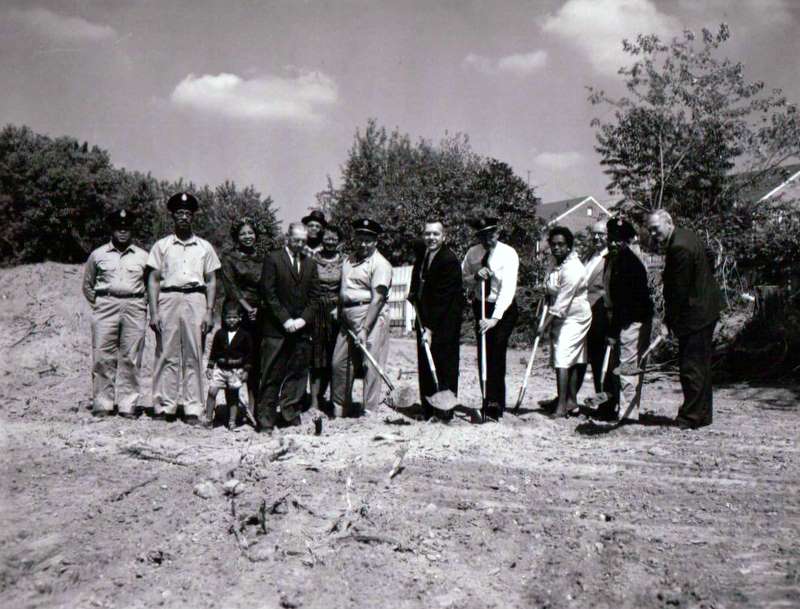
Hall's Hills Volunteer Fire Department

Ground breaking for new Fire Station No. 8, 1962. Construction lasted about a year.

1962

Ground is broken for a new Station No. 8 on land immediately east of the 2209 North Culpeper site, where, among other things, a small grocery store and an auto shop had stood. The new firehouse will have the address 4845 Lee Highway. The site is made up of five parcels that will be purchased by the County from 1962 to 1968. The final parcel is deeded by the Hall’s Hill Volunteer Fire Department and the Hicks family.


Late 1962-Early 1963

Integration reaches the Arlington County Fire Department including Station No. 8, as it prepares for a new, larger home next door.

1963

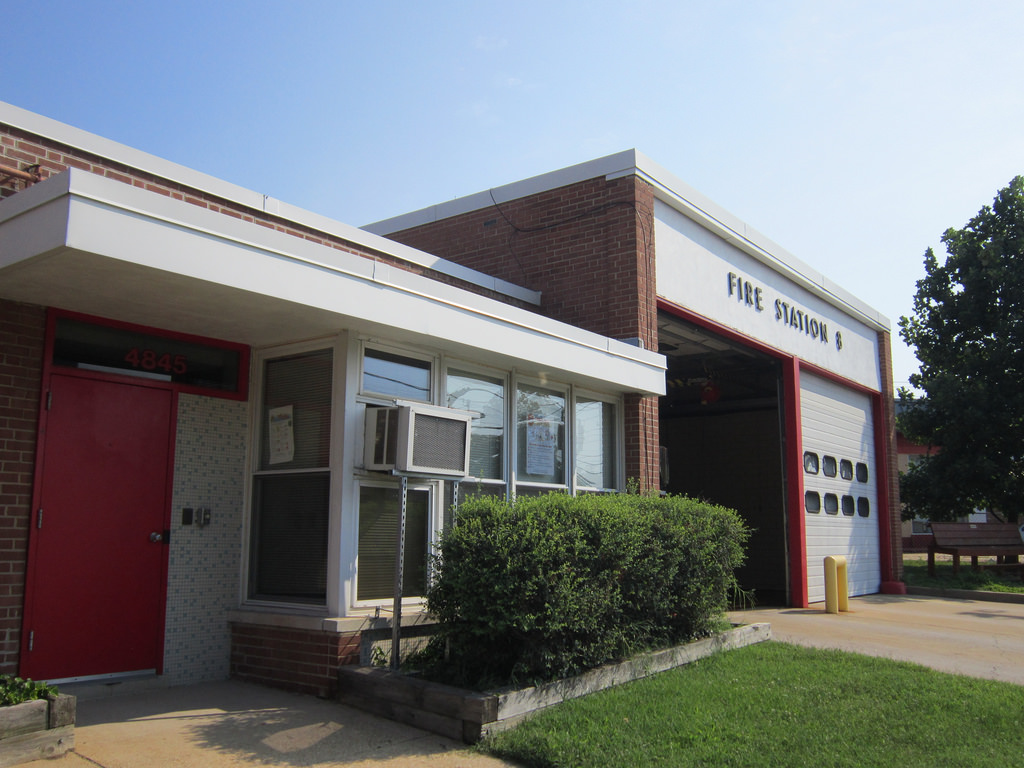
The new Station No. 8 at 4845 Lee Highway opens June 17 with two pumpers and a new 100-foot aerial ladder truck. It is staffed with 17 paid firefighters and several volunteers. The first floor contains a dispatch board, offices, sleeping and recreation areas. The basement includes a community room.

Hall's Hill Volunteer Fire Department

New Fire Station No. 8, 1963

Probably 1964

Arlington-based American Nazi Party leader George Lincoln Rockwell visits Station No. 8 in full storm trooper regalia to speak with firefighters about his plan to pay African Americans to relocate to Africa. Then-Lieutenant Reed remembers the meeting as “amusing” but describes Rockwell as “dead serious.” Rockwell, who had taunted civil rights protesters during Arlington lunch counter sit-ins in 1960, will be shot dead by an associate in the parking lot of the Dominion Hills Shopping Center on Wilson Boulevard in August 1967.

1968

While other Arlington fire stations are dispatched into the District when riots break out following the April 4 assassination of Dr. Martin Luther King, Station No. 8 is not asked to participate. Reed says he never knew why.

1974

The Arlington County Fire Department makes history with the hiring of Judy Livers (later Brewer), the nation’s first female firefighter. She is assigned to Station No. 4 in Clarendon and goes on to a distinguished career, retiring in 1999 as a battalion chief.

1999

Fire Station 8, 2015

Fire Station 8, 2015

A study for the County Manager identifies Station No. 8, plus three others, for possible “relocation, consolidation, replacement or closure” because it is on a “cramped site” and “poorly situated in relation to the heavy traffic on Lee Highway.” Studies of response times in 2000 and 2012 will reinforce County interest in moving Station No. 8 to a new location in north Arlington.

2016

After community resistance to a move, the Arlington County Board votes to build a new Fire Station No. 8 on the station’s current Lee Highway site.

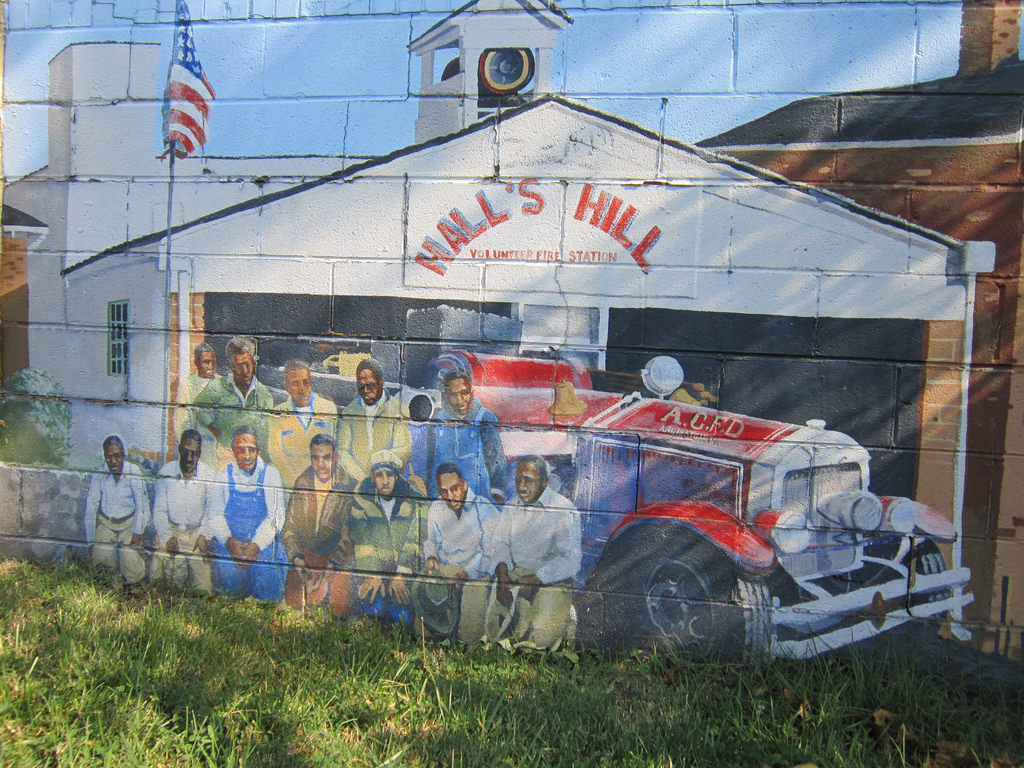
From the Hall’s Hill murals by Roderick Turner, located adjacent to Langston-Brown Community Center.
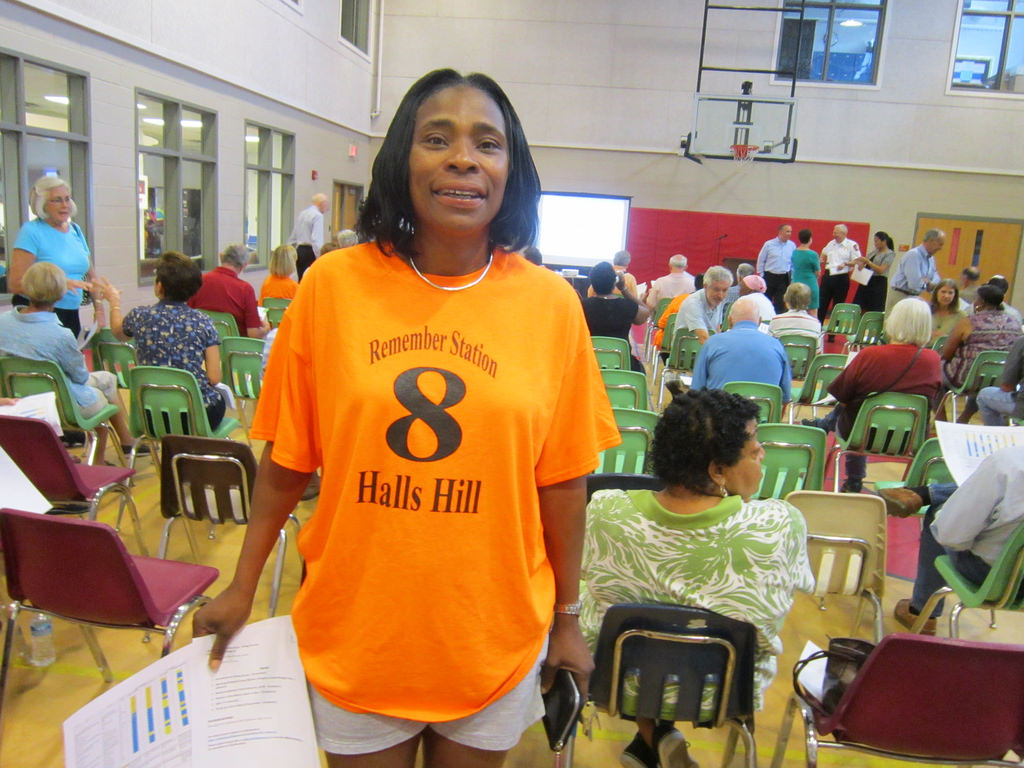
Remember Station 8, Paulette Washington
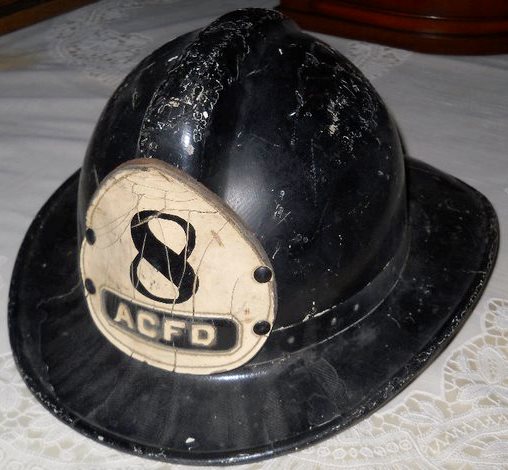
Rare Vintage Station No. 8 Turnout Gear

More images of HHFVD/Station No. 8 on flickr


Do you have suggested additions or corrections for this timeline? Please use the comments section below.

This timeline was written by Peter Golkin, a former Library staff person. Assistance was provided by Judy and Arthur Branch, Kitty Clark-Stevenson, Capt. Chuck Kramaric, Jimmie Taylor, Hartman Reed and the Arlington VA Virtual Fire Museum.

Read more articles on Arlington’s history on the Center for Local History Blog.

For more information regarding the materials and collections available for research, please contact the Center for Local History at 703-228-5966.


August 4, 2015 by Web Editor Tagged With: local history news

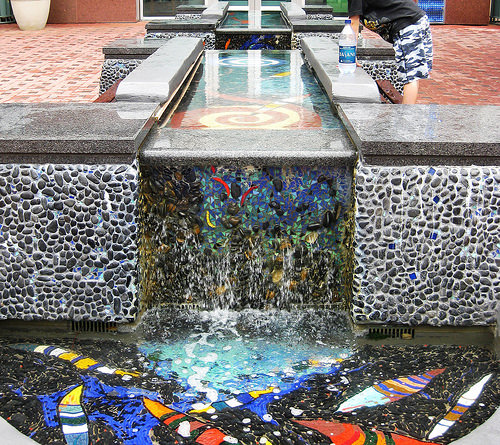
Down Stream

Post Published: March 14, 2014

Artist: Martha Jackson Jarvis

Installed: 2006
Materials: Ceramic, glass and stone mosaic fountain.

Down Stream at Shirlington

Permanently installed in front of the Shirlington Branch Library.

Learn more about this piece from Arlington Public Art.

March 14, 2014 by Web Editor Tagged With: art permanent collection

Mystery Photo: Football Edition

Post Published: September 19, 2013

Can You Help Us Identify This Photograph?

The Center for Local History is looking for your help in learning more about this photo, found in the attic of a house on 21st Street South – the Arlington Ridge/Aurora Highlands neighborhood.

In the photo, a football team stands in front of a public school:

early football team

Finds like this are fascinating to us, because they pose so many questions… Who are these young men? What school are they from?  And when was the photo taken?

The thirteen young men appear to be high-school aged, and they are wearing turn-of-the-century or early-twentieth-century football gear. The two men in suits are presumably coaches. They stand before an arched doorway labeled “Public School.” The back row of young men seem to be standing on miniature chairs. One man holds a football, upon which is painted “04.” The “04” suggests that they were either playing in 1904, or were from the class of 1904. But what other details back up that assumption? How do we know that “04” wasn’t painted onto the ball for some other reason?

Figuring out the date of a photo can be tricky, but fun. 

Different historians, archivists, and history buffs have preferred methods. Some like to date pictures by finding the latest-model car in a street scene. Hairstyles and clothing can be good indications, though they can be misleading. In professional sports, uniforms change slightly but noticeably over the years, but these boys aren’t wearing uniforms.

Man with nose guard around his neck

Their gear, however, does present some clues. The minimal padding, sewn into their clothes and not worn separately, suggest that this was from the earliest days of football– “harnessed” leather pads that pulled on over the head began appearing around the turn of the century. Likewise, their boots suggest something from football’s earliest days.

The most interesting detail is the nose guards that several of the men are wearing.

While we have helmets with face masks to protect the mouth and nose today, there were no such protections in the early years of football. Instead, some players wore nose guards like the one seen to the right, which during play strapped around the players’ heads and protected the nose and teeth. At first we thought it resembled this nose guard, patented by Frank Wilcox in 1904, but the strap on Wilcox’s design is a bit lower. We eventually found our nose guard patented by the Morrill Company in 1891, which according to this page from the University of Michigan was for sale in the “Spaulding [sic] catalog” in 1902. Thus, we find support for the 1904 date.

But what team was this, and where were they photographed?

Our first thought was that the nearby Hume School (now the Arlington Historical Society) and other Arlington-area schools from that time period have somewhat similar arched entrances. But none that we are aware of have the stonework “Public School” over them.

More importantly, there was no public high school in the county at that time, so young men of this age would likely be going to school– and perhaps playing football for that school– at high schools in the District.

With all the above in mind, we turn it over to you, the public.

What clues can you glean from this picture? Do you recognize anyone? Can you identify the archway behind these men? Is there anything in the above post that seems off-base?

What can you tell us about this picture?

September 19, 2013 by Web Editor Tagged With: local history news

Introducing the Center for Local History at Arlington Public Library

Post Published: May 28, 2013

We’re Saying goodbye to the name “Virginia Room”…

This year has brought big changes to Central Library, with building-wide renovation and redesign.

CLHbannerSmall

The Local History Team has used these renovations as an opportunity to re-evaluate how we present our mission and projects to the public. After much consideration, as of our reopening this week, the “Virginia Room” name is being retired.

We are now the Center for Local History at Arlington Public Library.


What’s in a name?

Simply put, the name “Virginia Room” was insufficient to convey the scope of the work that we do and the resources we offer.

Our mission has not changed: we are still dedicated to collecting, preserving, and sharing the history of our community.

Our rich historical collections and range of projects offer the Arlington community the ability to not only learn about and research their history, but also contribute to its telling. We are, and have always been, much more than just a room; now our name will reflect this.

By changing our name to the Center for Local History we hope to provide a better explanation of who we are: our many projects and the mission that links them.


What is it you do, anyway?

The Center for Local History has three primary components:

  • The Virginiana Collection, located in our research room, is a special collection of library holdings including books, newsletters, maps, oral histories, and other materials pertaining to the history of the Arlington area specifically and Virginia more generally. These materials are not available to be checked out, but can be used by researchers during our research room hours.
  • The Arlington Community Archives, which collects and preserves documents about the history of Arlington County, its citizens, and organizations. The collection focuses on personal papers, photographs, and archival records of local organizations, clubs, and associations. Most of these holdings are kept off-site at our archives, but can be requested by researchers for perusal in our research room.
  • Finally, our Digital Initiatives include efforts to improve access to our holdings by digitizing them and making them accessible to the community online. This includes the digitization of holdings, the creation of online exhibits, and the preservation of born-digital holdings in the archives.

Later this summer, we will add another element to our Digital Initiatives program, as the Library’s Digital Projects Lab will become part of the Center for Local History.

The Digital Projects Lab will provide a variety of software and hardware to allow anyone to come in and share their own pieces of Arlington history, through scanning family photographs or recording oral histories, along with providing a space and resources to create digital projects.

The Center for Local History at the Arlington Public Library is located on the first floor of Central Library. We hope you will come and visit us, explore our collections and follow all the exciting new projects coming up this year and beyond.

unboxed

This blog post represents the first in our new series, Unboxed, where we will give a behind-the-scenes view of new and interesting Center for Local History projects. 

We have a lot of exciting projects in the pipeline, and this blog series will be a place where we can let you behind the scenes, show you what we’ve got in the works, and what we’re working on. Hope you follow along and enjoy it!


The Center for Local History at the Arlington Public Library

Website: library.arlingtonva.us/localhistory

Phone: 703-228-5966

Email: localhistory@arlingtonva.us

Research Room
1015 N. Quincy Street
Arlington, Virginia 22201

Sunday: Closed
Monday: 10 a.m. – 5 p.m
Tuesday: 10 a.m. – 5 p.m.
Wednesday: 1 p.m. – 9 p.m
Thursday: 10 a.m. – 5 p.m
Friday: Closed
Saturday: 10 a.m. – 5 p.m.


May 28, 2013 by Web Editor Tagged With: local history news

Director's Blog: November's Happy Ending

Post Published: November 27, 2012

It’s been quite an autumn in Arlington.

First came Hurricane Sandy, which thankfully caused little of the heart-breaking destruction seen to the north. Still, Sandy forced this region into shutdown mode and that included two days without services like the Library.

Then there was the big election, which just missed a record turnout but still found Arlingtonians waiting hours in some long, cold lines outside Central Library and other polling sites.

Just days ago we were dealing with the almost-meltdown of the shared Public Library and Public Schools catalog and accounts system.  If you’ve ever lost your wallet, it was a similar feeling of dread. And then if you’ve ever had a lost wallet returned pretty much intact, it was a similar feeling of elation.

Board Chair Mary Hughes Hynes, left, with Diane Kresh.

And now bolstering a happy ending to November: the Library just won a pair of Arlington’s Best Business Awards–one for “Best Family Friendly Spot” and the other for “Best Customer Service.”

Thank you– for all the continued support, patience and best wishes we have received in the past weeks. If the Library could give out its own award, it would be a big collective one for “Best Customers.” 

So, with the equivalent of a thousand words, Arlington Public Library presents to you, below, its enduring appreciation. You’re the best.

                                                                                                          Photo by Diane Kresh

Director's Blog

November 27, 2012 by Web Editor

Answers to (Almost) Anything

Post Published: October 2, 2012

Meet the Public (through the Press)

I had the pleasure of taking part last week in a new feature at the ArlNow.com local news site.

The “Ask Me (Almost) Anything” feature invited readers to post questions about Arlington Public Library and I spent about two hours answering in real time. It was great fun to tackle such a wide range of topics.

If you missed the chat, thanks for taking a look now.

And of course if you have any questions for the Library, the best place to start is our Help page.

October 2, 2012 by Web Editor

From Marching Bands to Indie Rock: The Story of Gerald Lewis Recording

Post Published: September 23, 2012

1979 Arlington County All-County Elementary Orchestra and Chorus album cover

In today’s music scene, it isn’t uncommon for those involved to wear many hats.

Artists crossover from performing to producing, find parallel careers in film, literature, and the visual arts with regularity. In earlier times, this phenomenon was less prevalent, excepting well-known performers such as Elvis and Frank Sinatra. Arlington’s own Gerald M. Lewis had a rich and varied career, being involved in many different aspects of music including performing, instruction, production, and recording.

From 1954-1979, Mr. Lewis served as a band director for Gunston and Stratford Junior High Schools, and Wakefield and Washington-Lee High Schools. At his home on 216 S. Pershing Drive, Lewis also owned and operated Gerald Lewis Recording. Housed in a mobile home adjacent to his residence, Gerald Lewis Recording was a mobile recording unit that offered him the ability to record performers and public events on location.

Operating from 1964-1991, a remarkably diverse customer base utilized Mr. Lewis’ recording service. Local Virginia and Maryland schools and churches recorded public events and concerts, including performances from high school marching bands and public speakers.

Local recording artists also took advantage of Lewis’ expertise. In 1985, Teen-Beat Records artists Unrest used the mobile studio to master their debut 7” single “So You Want To Be a Rock ‘n’ Roll Star”/ “Zelda” (Side A) – “The Hill” (Side B), which was also the first Teen-Beat vinyl release. Unrest band member and Teen-Beat impresario Mark Robinson recalls, “He [Lewis] essentially was the broker for Teen-Beat to press our first record. He put the master tape together, sent it to the pressing plant, etc. I paid him, and he paid the pressing plant. I found his number in the Yellow Pages. He also recorded and pressed up the Arlington All-County Orchestra record that I was on back in 4th or 5th grade, so I knew that this guy knew how to make a record.”

In 1996, Mr. Lewis and his wife Elizabeth, a music teacher at Wakefield High School, moved to Tennessee where he continued to be involved in music, directing, arranging, and playing trombone for the Pleasant Hill Ensemble until his passing in March of 2008, at the age of 82.

What about you?

Do you have any memories of Mr. Lewis or his recording services?

September 23, 2012 by Web Editor Tagged With: local history news

How to Preserve Arlington’s Past

Post Published: May 25, 2012

The Virginia Room at Central Library is the County’s official history archive.

But how does the Library keep a steady flow of history coming in? Donations, from people like you.

Scott McCaffrey of the Sun Gazette was on hand for a recent donation by the Potomac Women’s Club, just one of several civic groups that now has its newsletters, yearbooks and scrapbooks preserved for future generations of Arlington residents and researchers.

In the case of the Potomac Women’s Club, the records go back to the early 1950s and create a fascinating timeline of both dramatic changes in the County and the evolving influence of women’s organizations nationwide.

See more images from the Potomac Women’s Club donation.


Learn more about the Virginia Room and local history. 


May 25, 2012 by Web Editor Tagged With: local history news

Our Back Pages: Swillers Music

Post Published: May 14, 2012

Serving as both a location to find the latest recorded music and a popular gathering spot, Swillers Music is still fondly remembered by longtime Arlington residents. 

Known over the years as Swillers Music, Swillers Music Center, or just Swillers, the store’s location in Clarendon at 1206 N. Hartford St. helped it become a magnet for residents looking for phonograph records of all genres. Turntables, televisions, radios, and related accessories were also kept in stock for the customer’s convenience.

Priding themselves on adding new merchandise on a near daily basis, many local residents found themselves visiting Swillers regularly, enjoying each other’s company, making new friends, or just passing the time. All of this seems quite fitting for a family owned business overseen by president Milton Swiller, vice president Anna Swiller, and treasurer Sydney Swiller.

The first listing for Swillers in an Arlington County directory appeared in 1948, while the last entry is from 1961.

 What About You?

 Do you have any recollections about Swillers Music?  If you do, please share in our comments section. Thanks.


May 14, 2012 by Web Editor Tagged With: local history news

Our Back Pages: Shreve’s in Cherrydale

Post Published: March 27, 2012

Shreve’s Store on Lee Highway in Cherrydale was the second general store in Cherrydale, the first being Nelson’s. In addition to being a store it was also, for a time, the Cherrydale Post Office.

Double track trolley lines in front of the store ran to Great Falls in one direction and Rosslyn in the other. The tracks, which followed what is now Old Dominion Drive, were removed in 1935.

According to an article in the Sun newspaper, there was a water trough for horses in front of the store, which was filled from a nearby pump. When the pump was eventually electrified, the horses were so scared by the new device they wouldn’t drink!

As Lee Highway was not paved in the early years, the Shreve family often hitched their own road grader to their horse to smooth out the street.

The photograph above was taken circa 1910.

What About You?

What do you remember or have heard about Shreve’s or other stores in Cherrydale? We want to know!

March 27, 2012 by Web Editor Tagged With: local history news

  • « Go to Previous Page
  • Page 1
  • Interim pages omitted …
  • Page 21
  • Page 22
  • Page 23
  • Page 24
  • Go to Next Page »

Primary Sidebar

News

Henry Wadsworth Longfellow.

Director’s Message: National Poetry Month

I Hear America April is National … ... about Director’s Message: National Poetry Month

Read More News
See More Service Updates

Center for Local History

Photo of President Lyndon B. Johnson shaking hands with Martin Luther King, Jr., at the signing of the Voting Rights Act of 1965. Photograph by Yoichi Okamoto. Courtesy of the Lyndon B. Johnson Library.

The Voting Rights Act of 1965: Remarks by Rev. Dr. DeLishia A. Davis

NAACP Arlington Branch president and pastor Dr. … ... about The Voting Rights Act of 1965: Remarks by Rev. Dr. DeLishia A. Davis

Read More Local History

Director’s Blog

Henry Wadsworth Longfellow.

Director’s Message: National Poetry Month

I Hear America April is National … ... about Director’s Message: National Poetry Month

More Director's Blog

Footer

About Us

  • Mission & Vision
  • Charlie Clark Center for Local History
  • News Room
  • Get Email Updates

Administration

  • Policies
  • Library Staff
  • Job Opportunities
  • Propose a Program or Partnership

Support Your Library

  • Friends of the Library
  • Giving Opportunities
  • Donating Materials
  • Volunteer Opportunities

Our Mission

We champion the power of stories, information and ideas.

We create space for culture and connection.

We embrace inclusion and diverse points of view.


Download the Library App

Download the Library App

Arlington County | Terms & Conditions | Accessibility | Site Map
· Copyright © 2026 Arlington County Government ·