• Skip to primary navigation
  • Skip to main content
  • Skip to primary sidebar
  • Skip to footer
Home - Arlington County Virginia - Logo
MENUMENU
  • Join Now
  • My Account
    • Login
    • My Checkouts
    • My Holds
    • My Lists
    • My Reading History
    • About Borrowing
    • About Holds
    • About My Account
  • Hours & Locations
    • All Hours & Locations
    • Holiday Closings
  • News
    • Library News
    • Director's Blog
    • Get Email Updates
  • Contact Us

Arlington Public Library

MENUMENU
  • Search
  • Collections
  • Library Services
  • Events
  • Community Engagement
  • Join Now
  • My Account
    • Login
    • About Borrowing
    • About Holds
    • About My Account
  • Hours & Locations
    • All Hours & Locations
    • Holiday Closings
  • News
    • Library Blog
    • Get Email Updates
  • Contact Us

Center for Local History Blog

Dedicated to collecting, preserving and sharing the history of the community.

Dr. Charles Drew: Taking a Stand

Post Published: April 8, 2021

Graphic image of a megaphone

Join us for a new series of stories from the Center for Local History highlighting members of our community who made a difference in ways that helped shape our history and created positive change.

Their voices were not always loud, but what they said or did had a significant impact on our community.

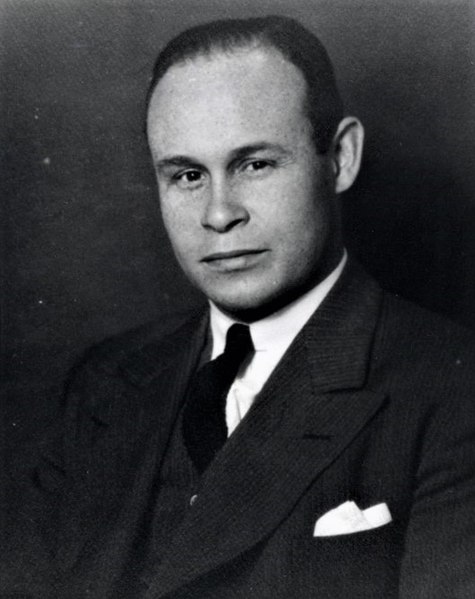
Dr. Charles Drew

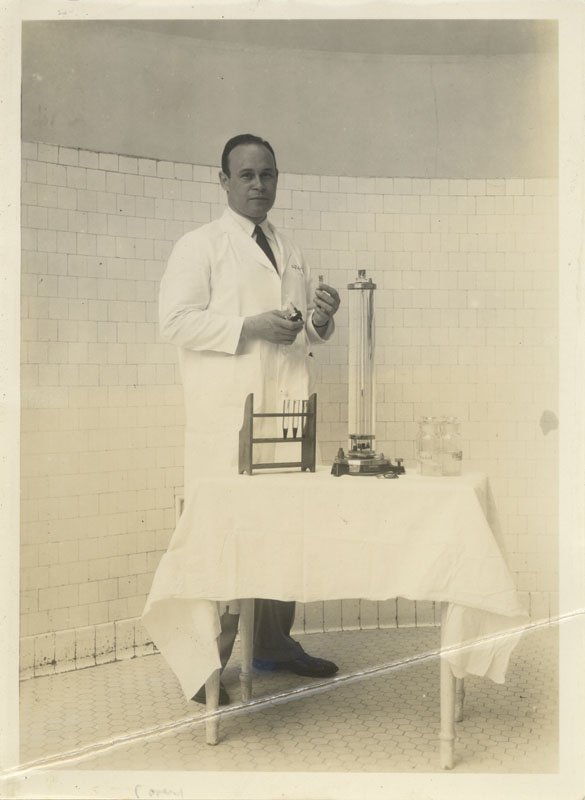
Dr. Charles Richard Drew (1904-1950) was a surgeon and a pioneer in the field of blood plasma preservation, storage, and transfusions.  His accomplishments as the creator of the modern-day blood bank came during a time when opportunities for minorities in the medical field were nearly non-existent and society at large was beset with racial division and prejudice.
Charles_Drew

Dr. Charles Drew

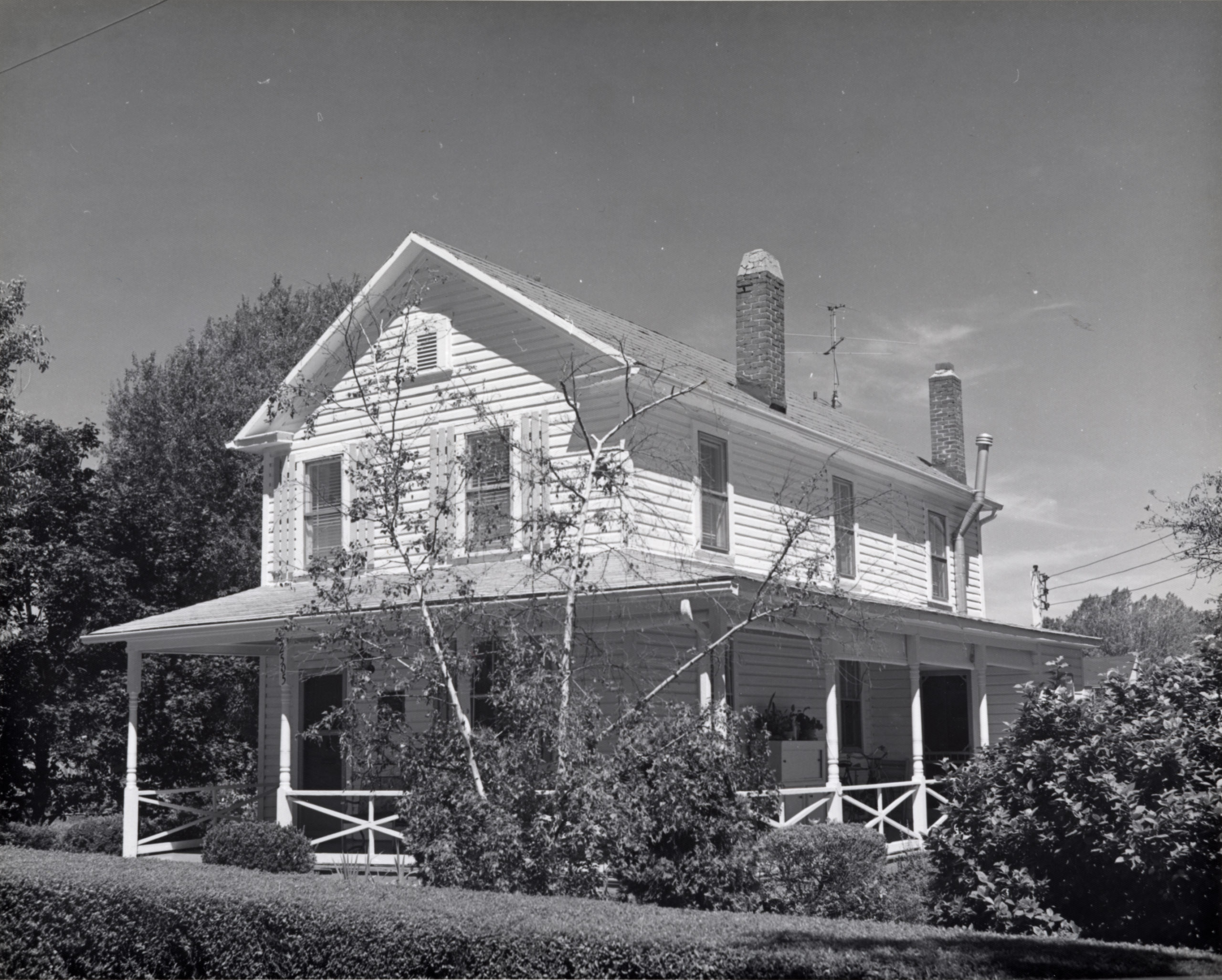
Born in Washington D.C., Drew arrived in Arlington County in 1920 when his parents relocated to what is now known as the Penrose neighborhood, although he continued to attend the District’s Dunbar High School. Awarded an athletic scholarship by Amherst University in Massachusetts, he graduated and subsequently gained employment at Morgan College in Baltimore, Maryland. From 1926–1928, he was a professor of chemistry and biology, served as football coach, and was the first athletic director at the historically Black institution.

Using the money he saved from his tenure at Morgan College, Drew studied medicine at McGill University in Montreal, Quebec, finishing second in his class while earning his Doctor of Medicine and Master of Surgery degree in 1933. Following a brief time spent as a faculty instructor for pathology at Howard University and teaching surgery/assistant surgeon at Freedman's Hospital, in 1938 Drew undertook graduate and then postgraduate studies at Columbia University in New York City. This marked the genesis of Drew’s groundbreaking research, authoring his seminal dissertation "Banked Blood: A Study in Blood Preservation”, which his mentor Dr. John Scudder described as “a masterpiece” and “one of the most distinguished essays ever written, both in form and content.”
200-1062p

Home of Dr. Charles Drew in the now Penrose Neighborhood in Arlington County

In 1940, he became the first Black to earn a Doctor of Science degree in medicine before traveling to New York City, where he headed the World War II-era “Blood for Britain” program. “Blood for Britain” used Drew’s research in the field of blood plasma to enable the preservation, storage, transport, and distribution of donated blood from United States donors to British soldiers and civilians. The program also ushered in the use of “bloodmobiles”, a means by which refrigerated containers of stored blood were transported by trucks and vans to hospitals, clinics, and individuals in need.

In 1941, Drew became director of the American Red Cross Blood Bank but resigned from the position a year later, following a pronouncement by the armed forces that the donated blood of African-Americans would be stored separately from those of whites. This 1944 quote reflects Drew’s feelings:

"It is fundamentally wrong for any great nation to willfully discriminate against such a large group of its people…One can say quite truthfully that on the battlefields nobody is very interested in where the plasma comes from when they are hurt…It is unfortunate that such a worthwhile and scientific bit of work should have been hampered by such stupidity."

Drew then returned to Howard University and Freedmen’s Hospital where he taught and performed numerous surgeries.
BGBBCP_

Dr. Charles Drew

On April 1, 1950, during a visit to Tuskegee, Alabama where he attended the annual free clinic at the John A. Andrew Memorial Hospital, Drew was involved in a tragic automobile accident. The accident was a result of exhaustion and fatigue after spending the previous evening performing operations and surgeries.

The accident caused his three passengers only minor injuries, but Drew’s were severe and proved to be fatal. Drew passed away that same day, and his funeral was held on April 5, 1950, at the Nineteenth Street Baptist Church in Washington, D.C.

Do you have a question about this story, or a personal experience to share? 

Use this form to send a message to the Charlie Clark Center for Local History.

Center For Local History - Blog Post Message Form

Do you have a question about this story, or a personal experience to share? Use this form to send a message to the Center for Local History.

"*" indicates required fields
This field is for validation purposes and should be left unchanged.

Share Your Story

April 8, 2021 by Web Editor

Oral History: Bob & Edith’s Diner

Post Published: April 1, 2021

Interview with Gregory Bolton

Diner 1

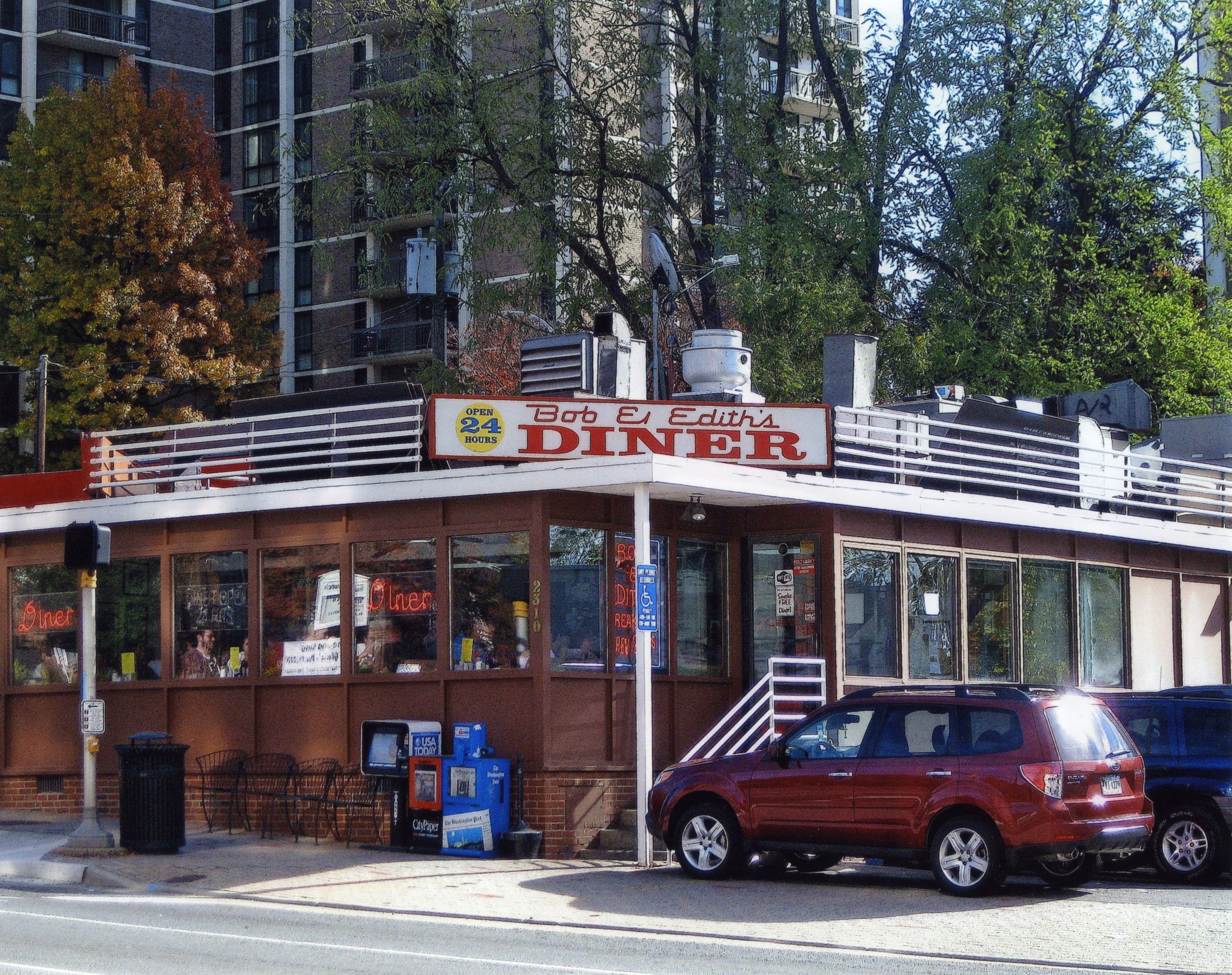
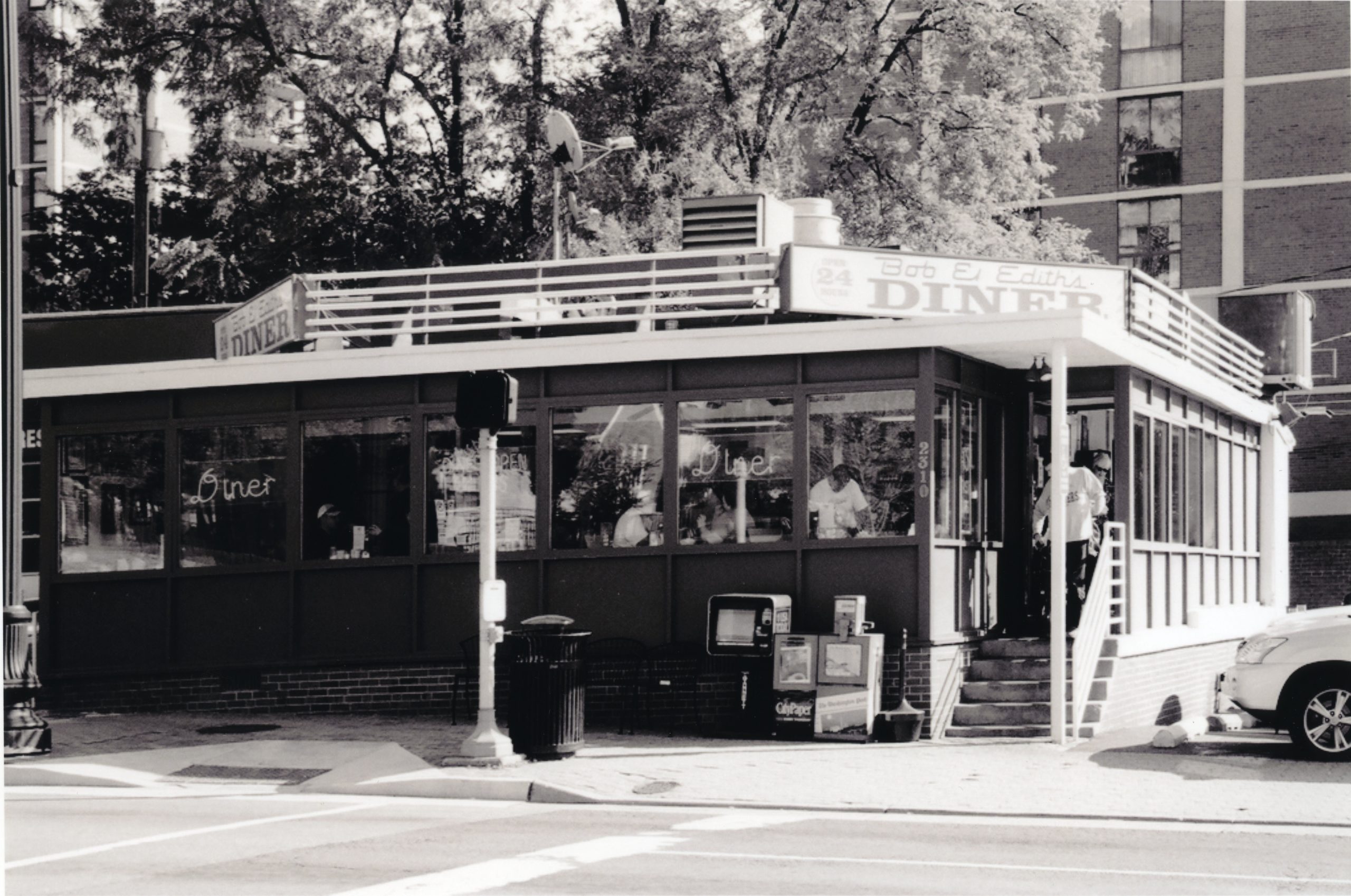
“Bob & Edith’s Diner with high rise apartment in background,” 2010. Photo by Emma Chaplin as part of the “Capturing Arlington” photo contest.

Arlington Voices the Oral History Collection

Oral histories are used to understand historical events, actors, and movements from the point of view of real people’s personal experiences.

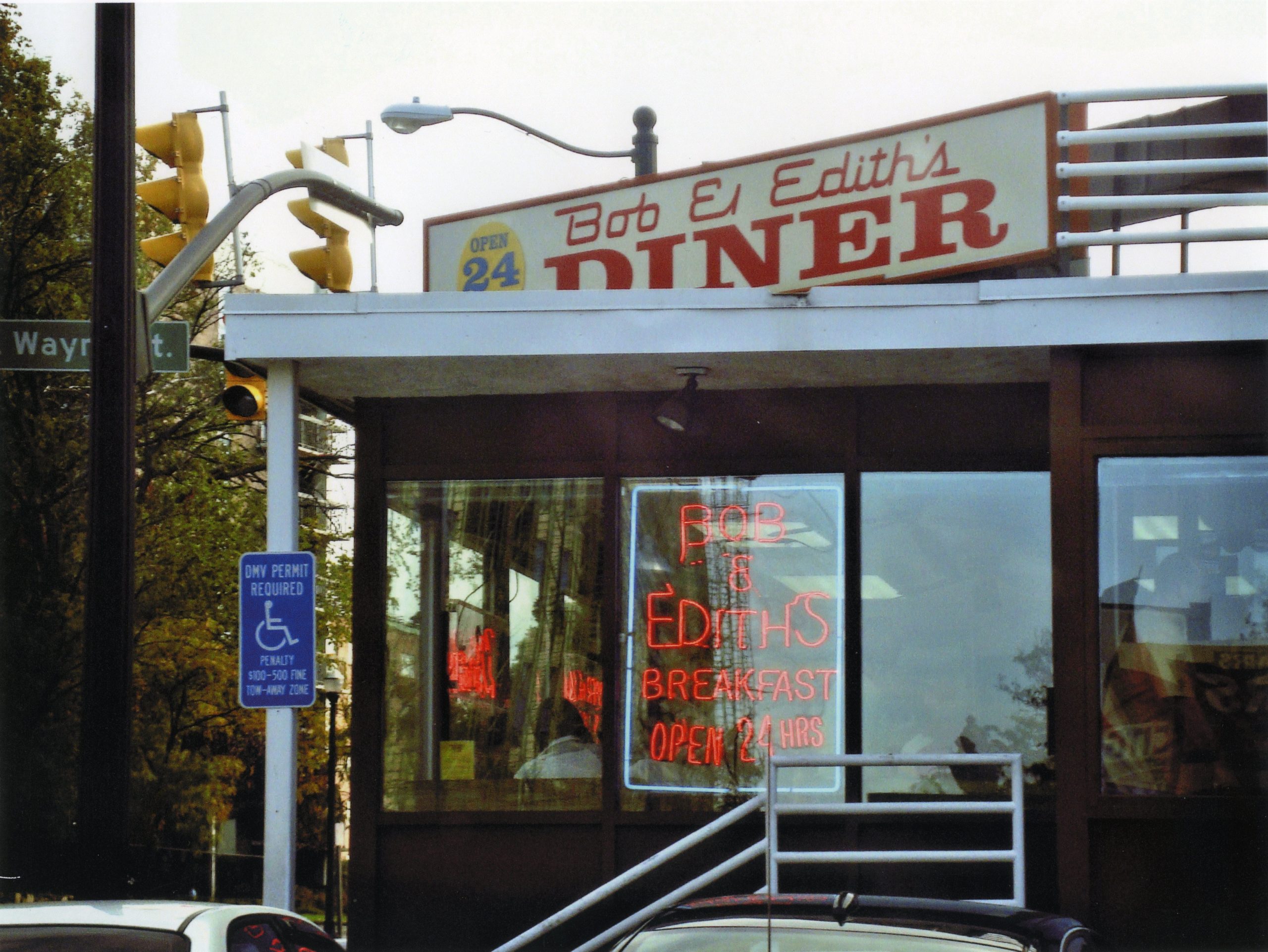
Bob & Edith’s Diner has been an Arlington mainstay for more than 50 years. Established in 1969 by Bob and Edith Bolton, the original Bob & Edith’s got started when the couple took over the location of a “Gary’s Donut Dinette” for $800. The diner started with simple Southern dishes, such as country hams, scrapple, bologna, bacon, and country breakfasts.

The Boltons later added several locations in addition to the flagship diner on Columbia Pike, and in 1982, the diner expanded from a 10-stool counter to 5 stools and 7 booths. The interiors include many photos of the Bolton family, as well as Dallas Cowboys ephemera and a jukebox.

Bob & Ediths

“Color shot of Bob & Edith’s Diner,” 2010. Photo by Muna Abdulkader as part of the “Capturing Arlington” photo contest.

In this oral history interview, Bob and Edith’s son Gregory Bolton describes the history and operations of the diner and its expanding menu. Today, his son and daughter, Christopher and Tamara Bolton run Bob & Edith’s, continuing the family tradition.

Narrator: Gregory Bolton
Interviewer: Virginia Smith
Date: December 19, 2011

https://library.arlingtonva.us/wp-content/uploads/2021/03/Bolton_Gregory_20111219.mp3
Hotel Guide 84

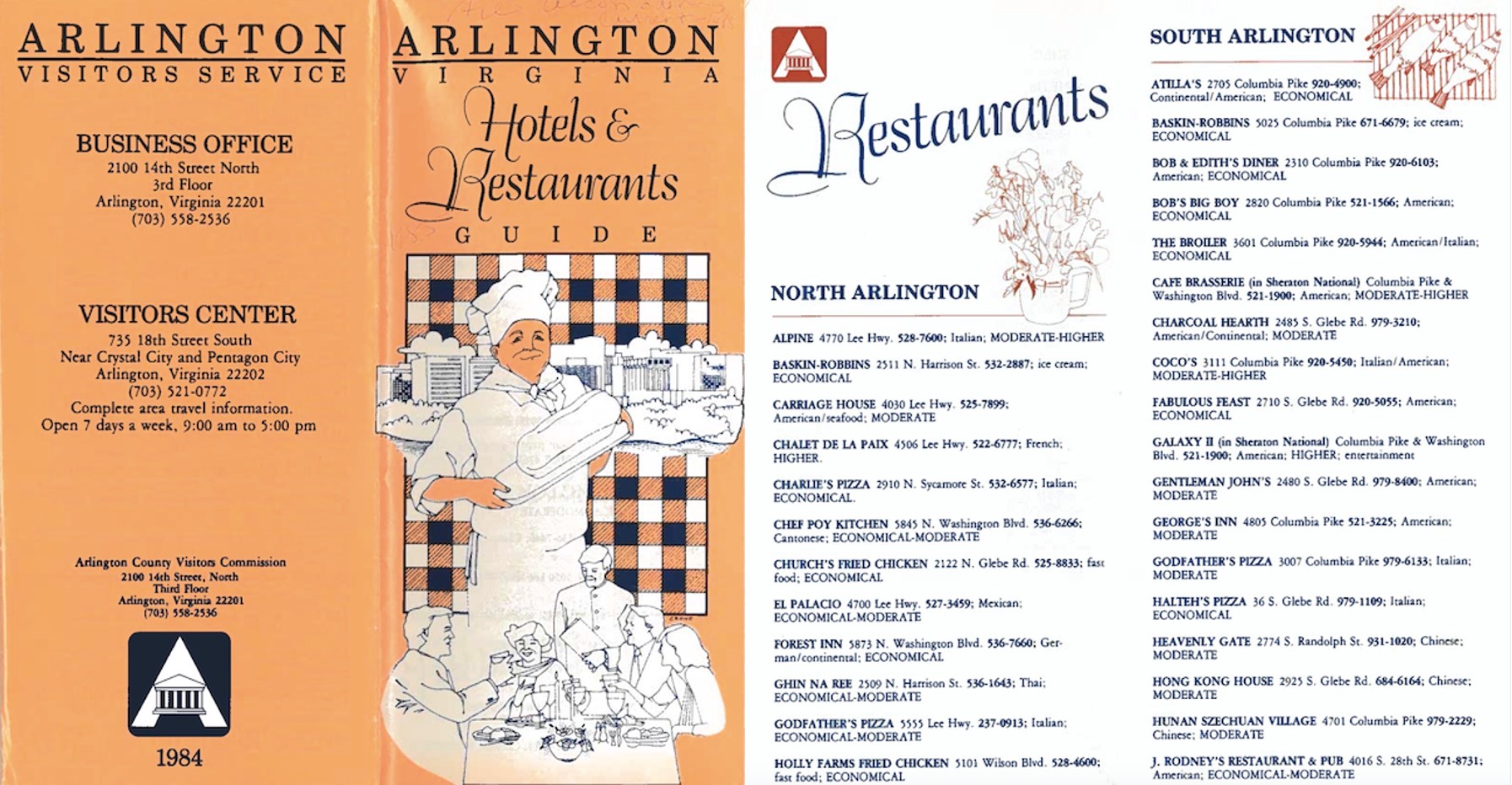
Bob & Edith’s Diner featured in the South Arlington section of a 1984 Arlington hotel and restaurant guide.

Hotel Restaurant Guide

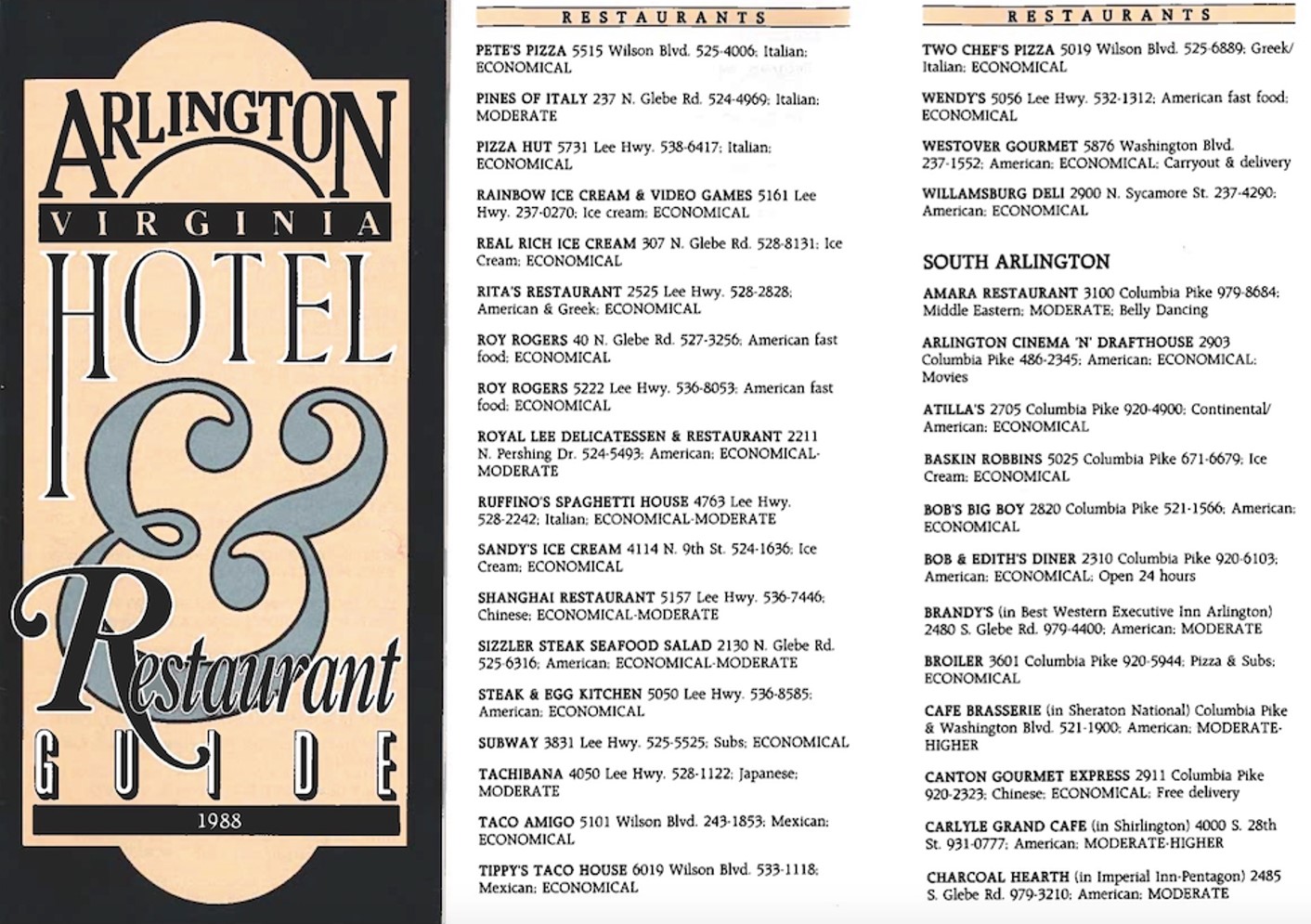
Bob & Edith’s Diner featured in the South Arlington section of a 1988 Arlington hotel and restaurant guide.

Gregory Bolton: When I was growing up, there was no such thing as really a menu. What there was—above the, in front of the ten stools that were there, and above the grills, there were just signs, such as The Serviceman’s Special. We’d have an artist that would paint these signs up, roughly around sixteen inches, by maybe twenty inches. And it would, for example, would have a serviceman eating a chipped beef breakfast, that we would call it SOS, Serviceman’s Special. And each product was put across the front of the diner, and that’s how you would choose what you would like. There was no hand menu; it was across the board. And we’d replace them like once or twice a year.

Virginia Smith: And then when did you go to a menu, a printed menu?

GB: We probably went to a menu, I would say maybe about twenty-five years ago. The first ten or fifteen years it was pretty much all up in front of you; you picked it out, different ideas and different products. But the menu’s ten, fifteen times larger now than it was back then.

VS: Yeah. Did you get people coming down from the Pentagon?

GB: Yes ma’am. We had Pentagon, and the Navy Annex are very big customers. We had a lot of servicemen. I would say it’s seventy-five, eighty percent is government-related, whether it’s the County, state, Pentagon—

VS: Well, it’s affordable.

GB: —The military. They seem to be very pleased with the operation, and they keep coming back.

OG Bob

“The original Bob & Edith’s Diner,” 2010. Photo by Matthew Welborn as part of the “Capturing Arlington” photo contest.

Sources
https://www.bobandedithsdiner.com/About-Us

The goal of the Arlington Voices project is to showcase the Center for Local History’s oral history collection in a publicly accessible and shareable way.

The Arlington Public Library began collecting oral histories of long-time residents in the 1970s, and since then the scope of the collection has expanded to capture the diverse voices of Arlington’s community. In 2016, staff members and volunteers recorded many additional hours of interviews, building the collection to 575 catalogued oral histories.

To browse our list of narrators indexed by interview subject, check out our community archive. To read a full transcript of an interview, visit the Center for Local History located at Central Library.

April 1, 2021 by Web Editor

William A. Rowe: Taking a Stand

Post Published: March 25, 2021

Graphic image of a megaphone

Join us for a new series of stories from the Center for Local History highlighting members of our community who made a difference in ways that helped shape our history and created positive change.

Their voices were not always loud, but what they said or did had a significant impact on our community.

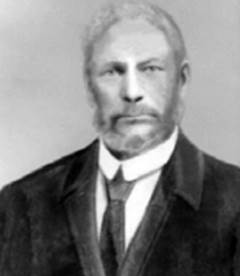
William A. Rowe

William Augustus Rowe (1834-1907) was a pivotal figure in the early development of the Green Valley/Nauck community. In the face of a post-Civil War world in which the Emancipation Proclamation was more legal decree than societal reality, Rowe persevered to achieve many firsts as a Black policeman, politician, elected official, district Supervisor and Chairman, and community leader.

William A. Rowe

William A. Rowe, possibly 1880's

Born into enslavement around 1834, Rowe eventually escaped and settled in the Freedman’s Village community. There, he trained and became a skilled blacksmith prior to becoming the first Black policeman in Arlington County. Rowe soon proved himself to be an able and effective politician, becoming the first Black elected to the Board of Supervisors. He served as Supervisor of the Jefferson District from 1871 to 1879 and as Arlington District Board Chairman from 1879 to 1883 after moving to Green Valley/Nauck, where he had previously purchased 5 acres of land from Sewell Corbett.

Upon Rowe’s departure from the Jefferson District, he earned this extraordinary resolution from the other two white supervisors:

“Resolved that the resignation of William A. Rowe as a member of this board having been made known, the faithful and efficient discharge of his duties during the past ten years, and the upright and honorable conduct that has marked his public service entitles him to the confidence, esteem, and gratitude of the people of this County.”

William A. Rowe’s tenure with the Board of Supervisors is as follows:

  • July 1, 1871-June 30, 1872, Jefferson Township, Board of Supervisors
  • July 1, 1872- June 30, 1873, Jefferson Township, Chairman, Board of Supervisors
  • July 1, 1873- June 30, 1874, Jefferson Township, “President” (Chairman), Board of Supervisors
  • July 1, 1874- April 2, 1879, Jefferson District, Chairman (moved from Jefferson to Arlington District)
  • July 1, 1879- June 30, 1883, Arlington District, Chairman

After his resignation as Chairman in 1883, he was appointed Superintendent of the Poor, a position he held through June of 1886.

Rowe continued to live in Green Valley/Nauck, where his son George served as a deacon at Lomax AME Zion Church, until his passing on December 5, 1907.

Do you have a question about this story, or a personal experience to share? 

Use this form to send a message to the Charlie Clark Center for Local History.

Center For Local History - Blog Post Message Form

Do you have a question about this story, or a personal experience to share? Use this form to send a message to the Center for Local History.

"*" indicates required fields

This field is for validation purposes and should be left unchanged.

Share Your Story

March 25, 2021 by Web Editor

Roberta Flack’s Arlington Roots

Post Published: March 18, 2021

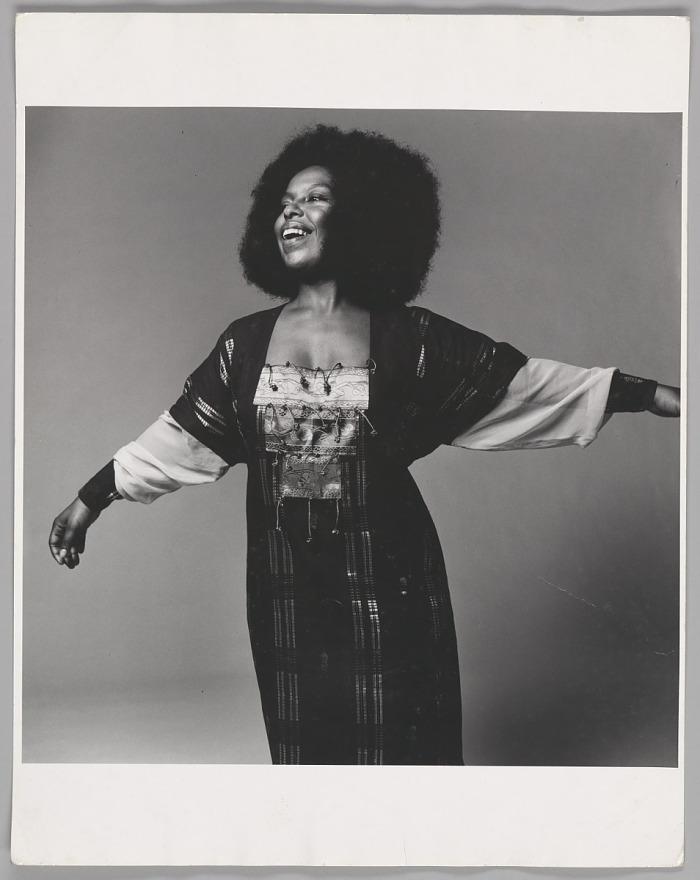
Roberta Flack is known worldwide for her voice, songwriting and overall musical ability, for which she has won multiple Grammys. Flack has performed on stages across the world, and her roots are here in her hometown of Arlington.

Early Life

Flack was born near Asheville, North Carolina, in 1937, and moved to the Green Valley (formerly referred to as Nauck) neighborhood in Arlington when she was five years old. Musical from an early age, Flack began playing the organ and piano around age 9 and performed at local churches including Macedonia Baptist Church and Lomax AME Zion.

Roberta Flack 2

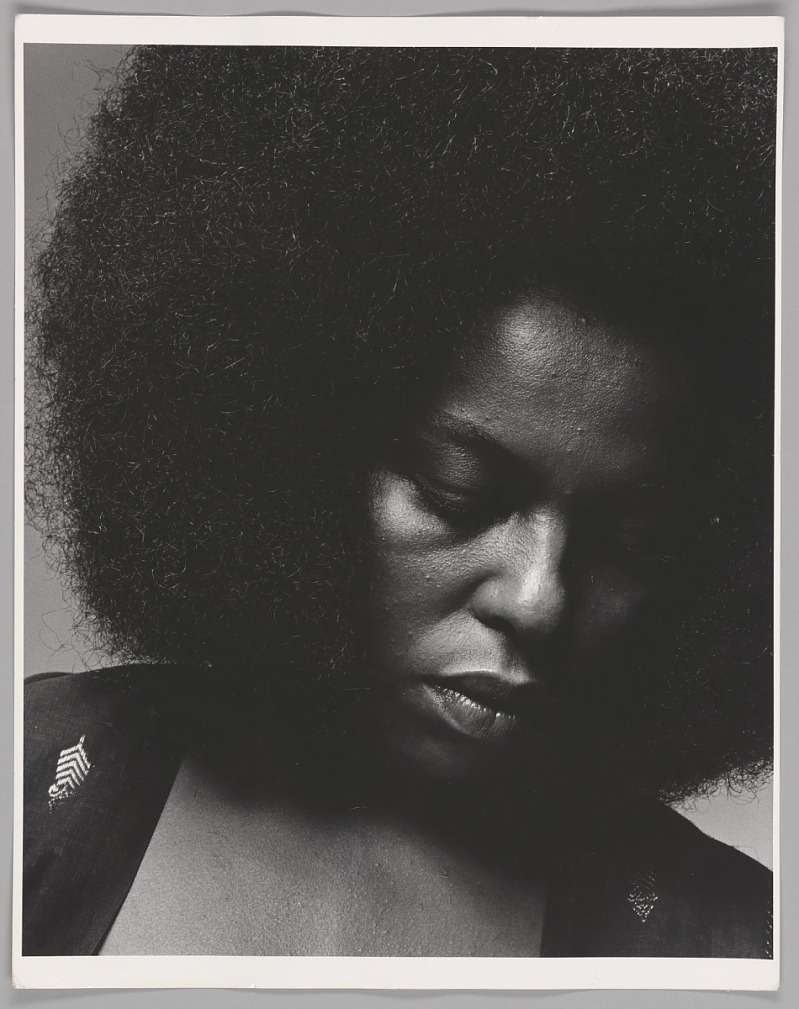
Roberta Flack photographed by Anthony Barboza, 1971. Image courtesy of the National Museum of African American History and Culture.

Flack grew up playing Chopin, Schumann, Bach, and Beethoven, and at 13, won a statewide contest by performing a Scarlatti sonata. One of her piano teachers was Lottie B. Bellamy, an Arlington resident and longtime organist at Macedonia Baptist Church. Flack’s mother, Irene Flack, was also a prominent community member, serving as the longtime chief baker at Wakefield High School and as an organist at Lomax AME Zion.

Flack attended Hoffman-Boston High School – then the only school available for African American children in Arlington – until age 15, when she was awarded a full music scholarship to Howard University. After graduating at 19, she went on to become a music teacher in Farmville, North Carolina, teaching about 1,300 students at all grade levels in the city’s segregated school system.

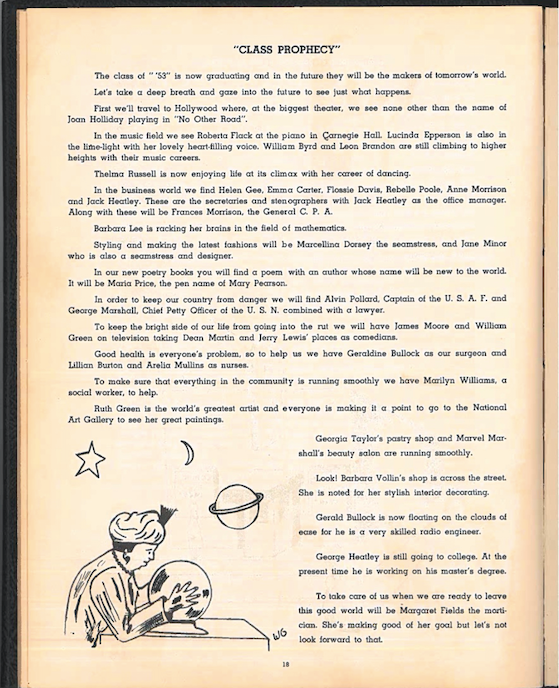
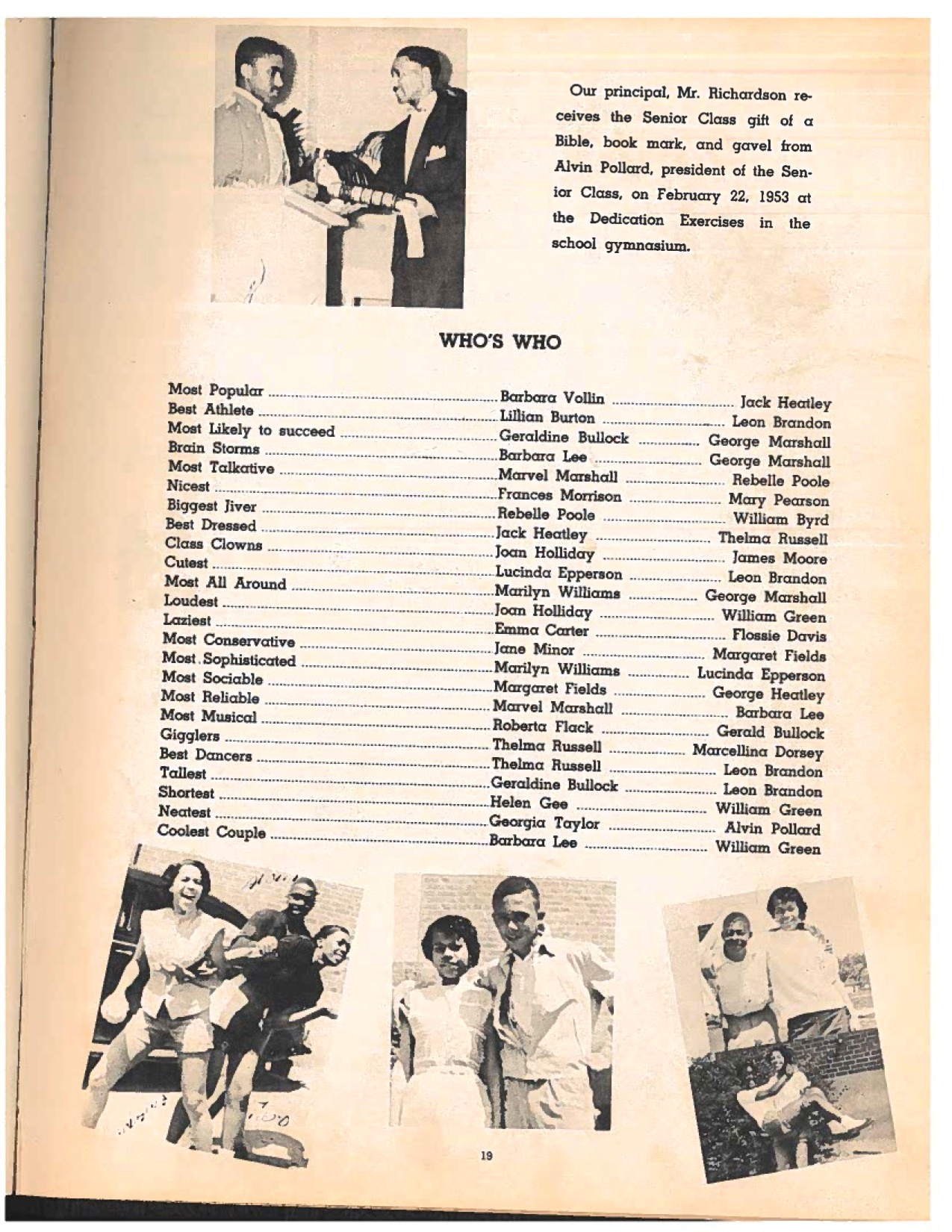
Senior Yearbook 1
Senior Yearbook 2

In Roberta Flack’s 1953 senior yearbook at Hoffman-Boston, she was listed as “most musical” in the class superlatives, and in the “Class Prophecy,” her classmates predicted she would play piano at Carnegie Hall. This prediction eventually came true when Flack performed there in 1971 (and again in 1981).

Starting Her Career

Flack's music career took off in D.C., where she also continued to work as a teacher at the Rabaut and Brown junior high schools in the D.C. public school system. She began performing in the evenings at locations such as the Tivoli Theater and Mr. Henry’s in the District. At the Tivoli, she also worked as a backing pianist for opera singers, and her spark as a solo performer came with a rendition of “Jingle Bell Rock” performed at the restaurant, where Flack said it was her "cue that people would listen to [her] as a singer.”

Mr. Henry’s became one of her regular venues, and the club’s owner, Henry Yaffe, even turned the apartment above the club into the “Roberta Flack Room” for her performances – adding in church pews and a Mason & Hamlin piano to create a more intimate energy than the more raucous main stage. She started off playing Sunday brunch sets for $20 a week, initially with a folk-inspired repertoire. However, as her fame and success as a performer quickly grew, she began to consider pursuing it full-time. Of this time in her life, she said:

"It took courage to leave my classroom job because I was a Black person who had grown up in Arlington, Virginia, through the ‘50s and ‘60s; now I’m teaching school in the late ‘60s and I decide I want to sing. These days, there’s lots of things that you can go for, but in those days you had to have a lot of heart and a strong desire to do that.”

Watercolor Portraits

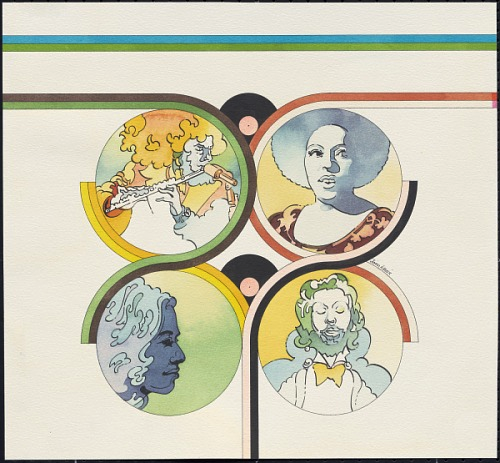
Watercolor portraits of Roberta Flack, Harry Nilsson, Carole King, and Ian Anderson (starting clockwise from top right), circa 1973. Image courtesy of the National Portrait Gallery.

Legacy

In 1969, she recorded her first album, First Take, with Atlantic Records. Aptly recorded in only 10 hours, the song’s discography was informed by pieces she had developed at Mr. Henry’s. Flack continued to return to the venue as her career took off, using it as a home base during her other performances in the District.

One of her first big hits was from that first album when in 1973 Clint Eastwood featured her song “The First Time Ever I Saw Your Face” (a folk ballad Flack had taught to her students in school glee clubs) in the film “Play Misty for Me.” Flack collaborated with many artists over the course of her career, including Donny Hathaway, Peabo Bryson, and for her album Oasis, Flack collaborated with longtime friend Maya Angelou on four songs, including “And So It Goes.”

Flack has continued to make music well into the 21st century, and in 2020, was the recipient of the Grammy’s Lifetime Achievement Award.

Roberta Flack

Roberta Flack photographed by Anthony Barboza, 1971. Image courtesy of the National Museum of African American History and Culture.

Human Kindness Day

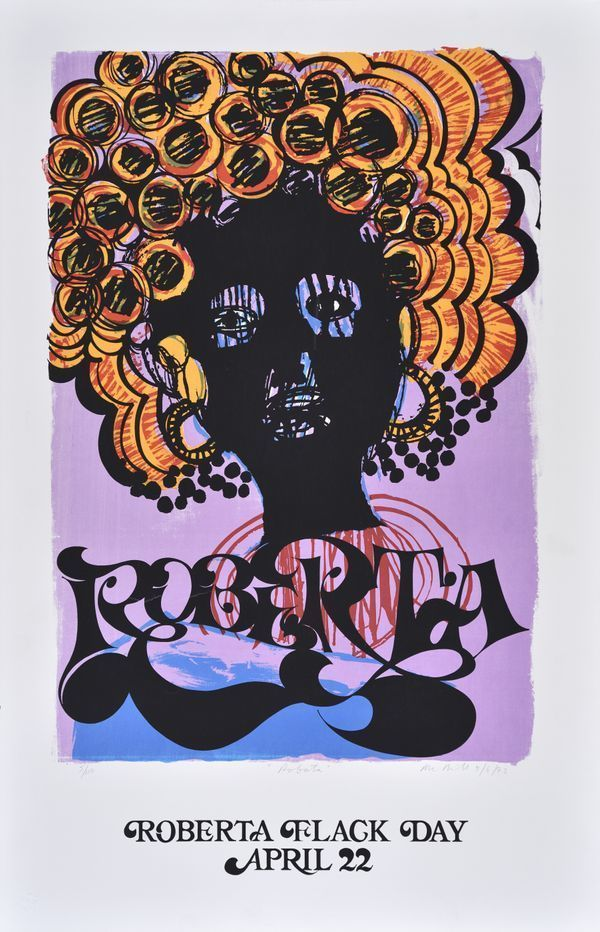
Poster from “Roberta Flack Human Kindness Day” on April 22, 1972, in Washington, D.C., to celebrate Flack. Image by Lloyd McNeill & Lou Stovall, courtesy of Di and Lou Stovall from the “What's Going Around: Lou Stovall and the Community Poster, 1967–1976” exhibit at the Columbus Museum.

Learn More

“Cover Me: The Stories Behind the Greatest Cover Songs of All Time” features a section discussing the history of Roberta Flack’s cover of “Killing Me Softly,” and the subsequent Fugees rendition.

March 18, 2021 by Web Editor Tagged With: Green Valley

Nguyen Ngoc Bich: Speaking Out

Post Published: March 11, 2021

Graphic image of a megaphone

Join us for a new series of stories from the Center for Local History highlighting members of our community who made a difference in ways that helped shape our history and created positive change. 

Their voices were not always loud, but what they said or did had a significant impact on our community.

Nguyen Ngoc Bich

Nguyen Ngoc Bich (1937-2016) was a pivotal Arlingtonian in commercial and community affairs alike.  After his arrival in the U.S. in 1975, Bich became an educator in Arlington County, teaching adults at the Arlington Career Center as well as students at Key Elementary and Wakefield High School before teaching Vietnamese culture, literature, and civilization at George Mason University.

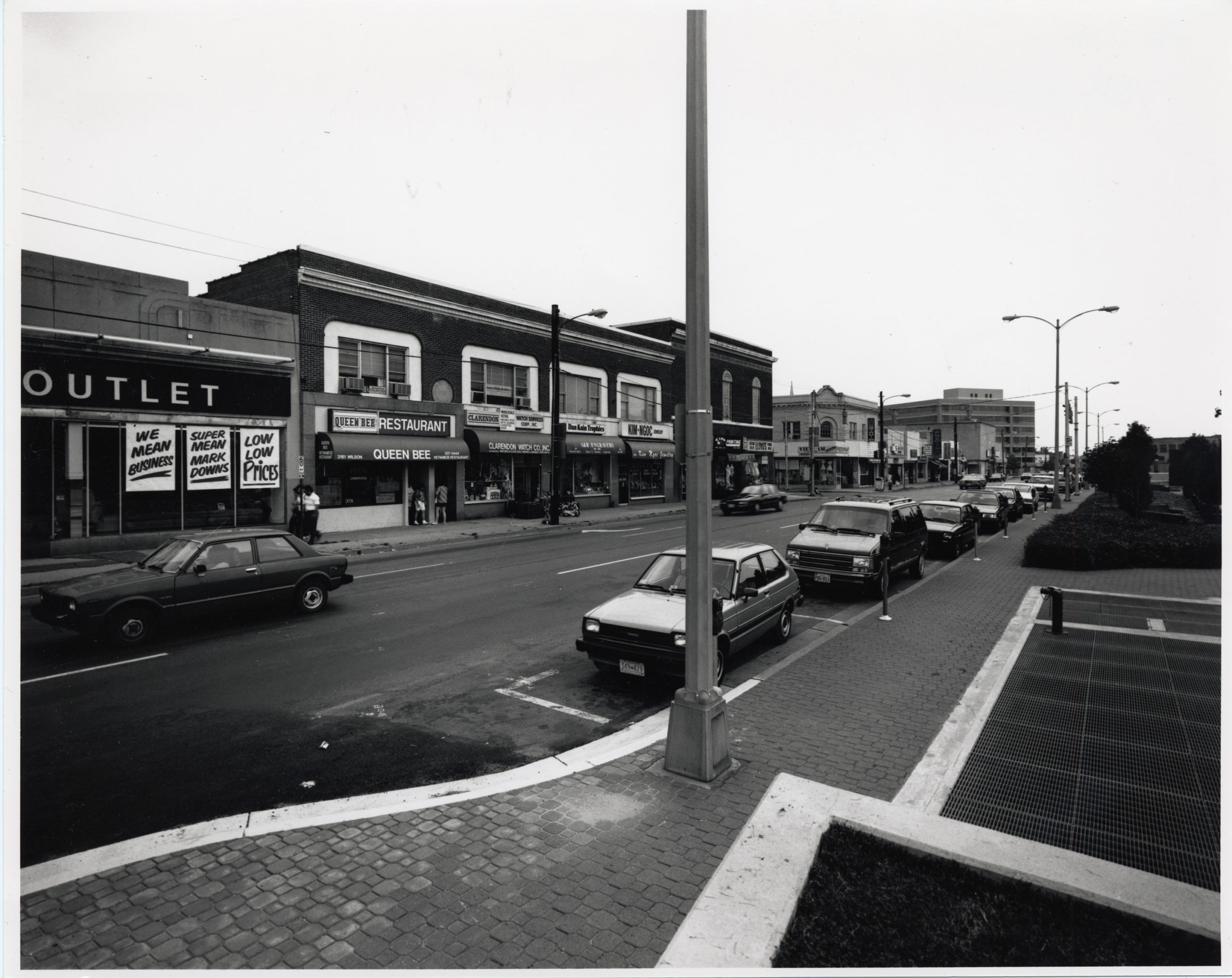
Little Saigon 1

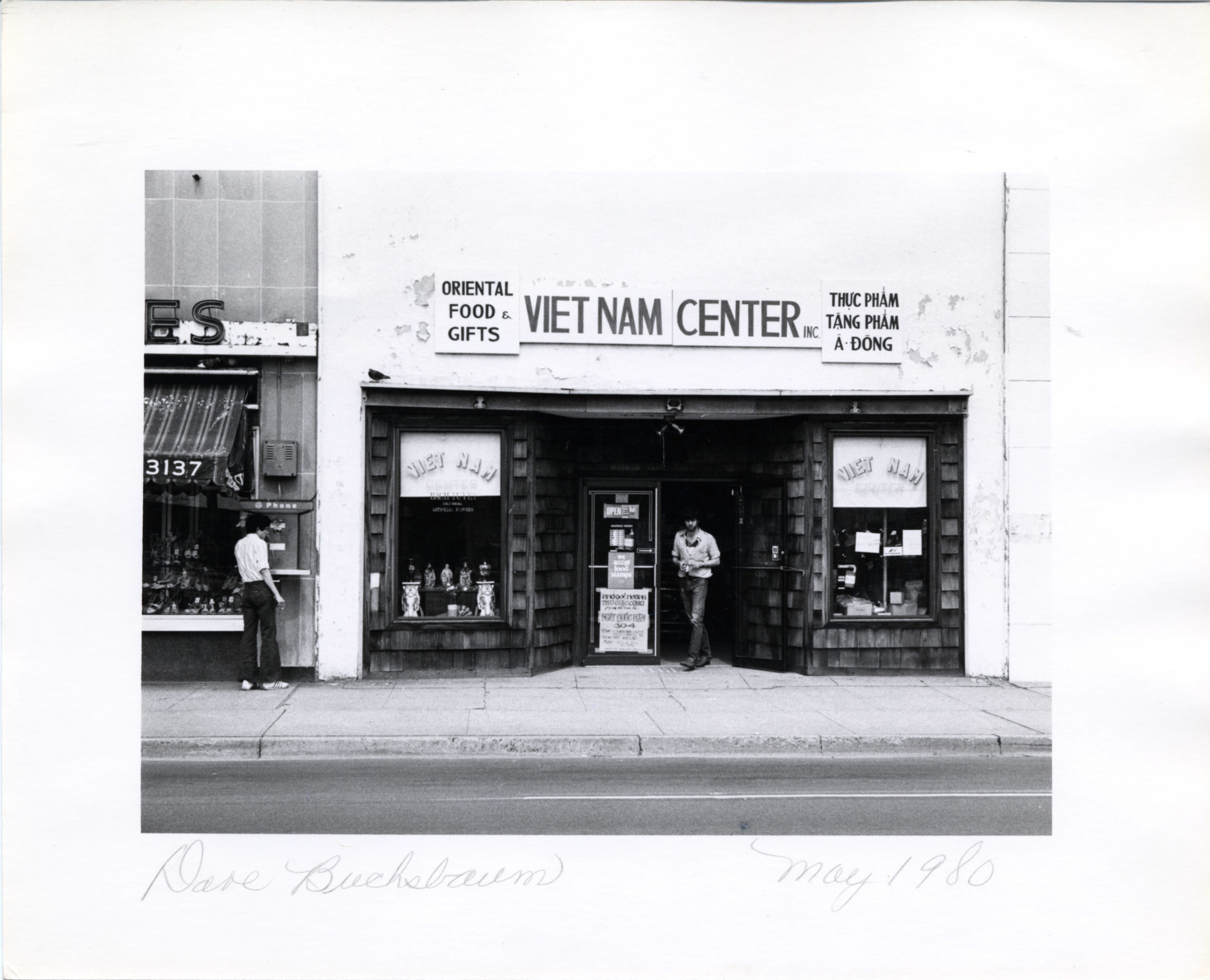
Little Saigon, date unknown

Bich branched out into endeavors such as authoring and editing works of both non-fiction and poetry, translating books into Vietnamese and English, and becoming Director of the Vietnamese Service for Radio Free Asia. Bich also played a crucial role in the establishment of the restaurants and shops in Clarendon known as “Little Saigon”.

He advocated and urged his fellow Vietnamese residents to take advantage of inexpensive short-term real estate contracts made available by vacancies from businesses that left as a result of demolition for Metro construction.  It is estimated that at the height of Little Saigon’s heyday, it comprised as many as 70-80 establishments.

Little Saigon 2

Little Saigon, date unknown

Despite often facing resistance as a result of tensions from the Vietnam War, Bich became the Multicultural Coordinator for Arlington County from 1987-1991.  In his own words:

“I knew every single person, establishment in the area, and not just the Vietnamese…I knew the Hispanic… Cambodian… Ethiopian…the whole community, and that’s why they called me the deputy mayor of Arlington.”

Further Reading:

  • https://littlesaigonclarendon.com/the-history/
  • https://virginiahumanities.org/wp-content/uploads/2016/09/Echoes-of-Little-Saigon.pdf

Do you have a question about this story, or a personal experience to share? 

Use this form to send a message to the Charlie Clark Center for Local History.

Center For Local History - Blog Post Message Form

Do you have a question about this story, or a personal experience to share? Use this form to send a message to the Center for Local History.

"*" indicates required fields
This field is for validation purposes and should be left unchanged.

Share Your Story

March 11, 2021 by Web Editor

Oral History: Margaret Troxell

Post Published: March 4, 2021

Margaret Troxell (1909-2002) was a pioneering local journalist who helped found the Northern Virginia Sun.

Arlington Voices the Oral History Collection

Oral histories are used to understand historical events, actors, and movements from the point of view of real people’s personal experiences.

Margaret Troxell moved to Arlington in 1932 after attending St. Joseph College in Maryland. She first worked for the Commonwealth Monitor, where her salary started off at $8 (half of which was used to pay for her rent as a boarder on Fillmore Street). She later took on part-time work at the Washington Post and the Washington Times, as well as a music studio manager and music instructor, teaching guitar and mandolin.

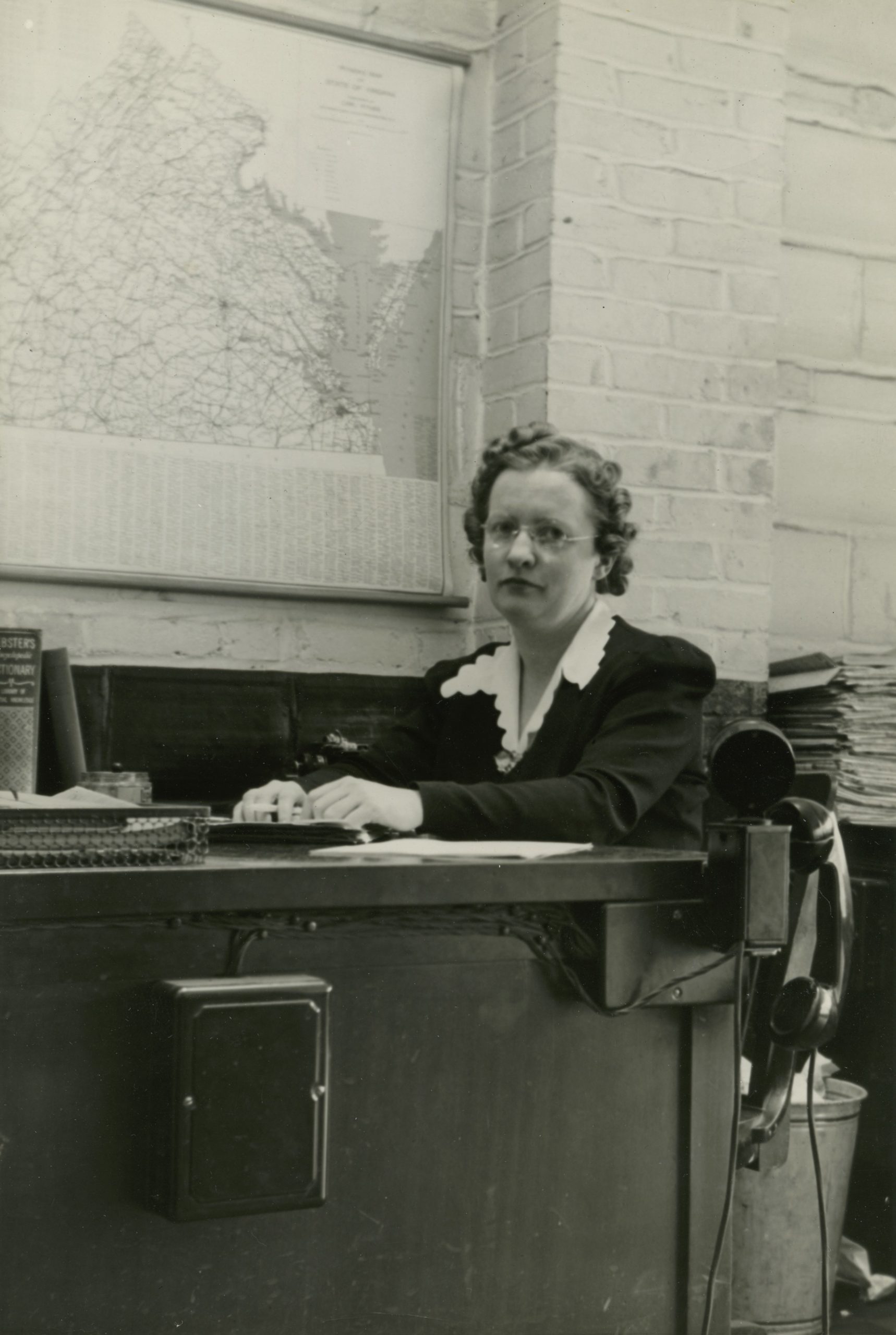
Margaret Troxell Desk

Margaret Troxell at her desk, date unknown.

To make ends meet, she also did news broadcasts for the first radio station in Arlington, WARL. In 1935, Troxell and a group of other local journalists founded the Sun, a weekly paper based in Arlington. There she worked as a journalist and editor and was known for never missing a County Board meeting in her 16 years as news editor.

Troxell and the other owners sold the Sun in 1951, and it is now known as the Northern Virginia Sun. Later in life, Troxell opened a public relations office and worked on numerous campaigns around the County. She lived in Colonial Village for over 40 years, and outside of journalism, was an active member of Arlington’s Business and Professional Women’s Club and the Virginia Conservation Commission.

In the following oral history interview, Margaret Troxell discusses what initially inspired her to become a journalist, and how she became interested in writing.

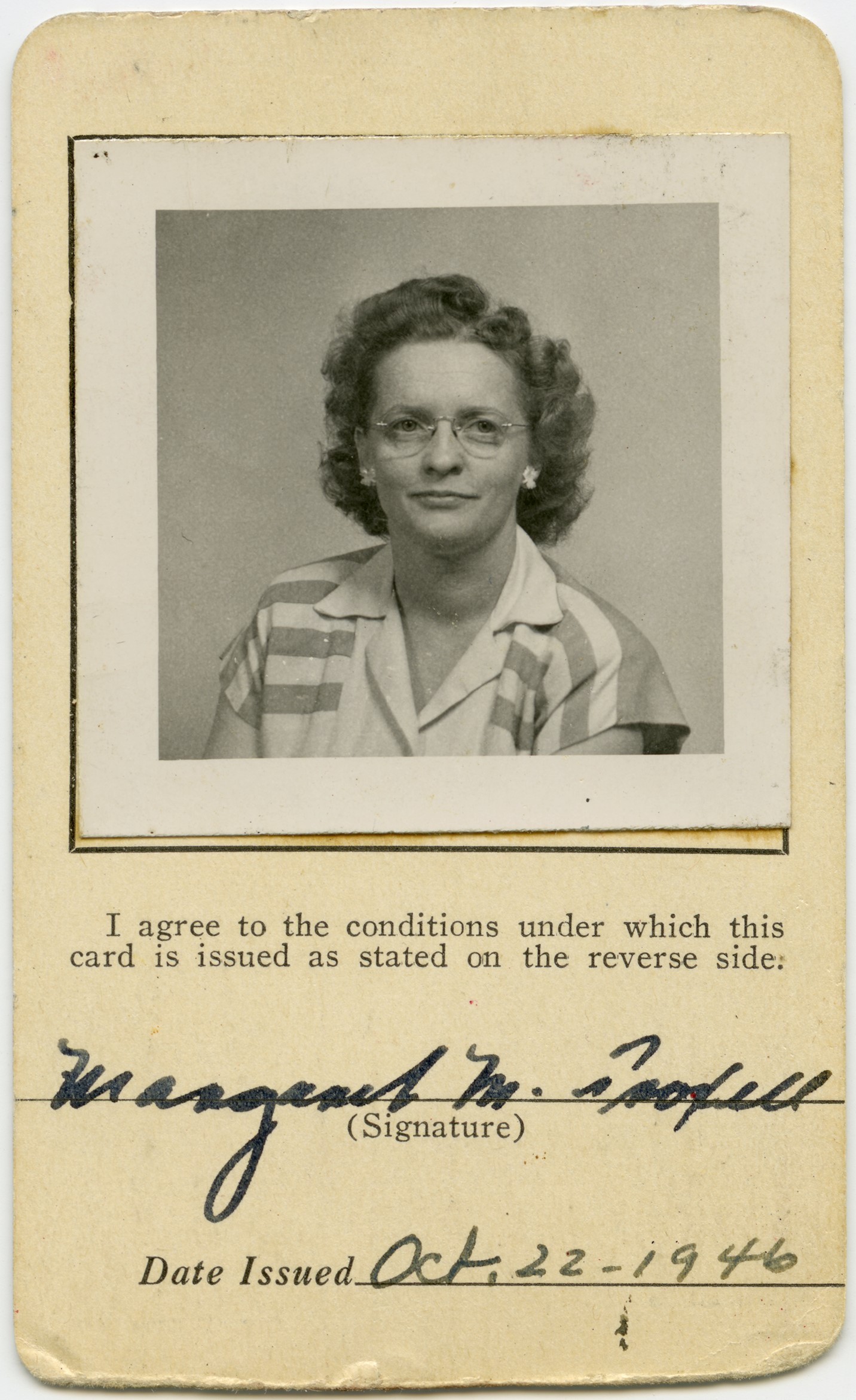
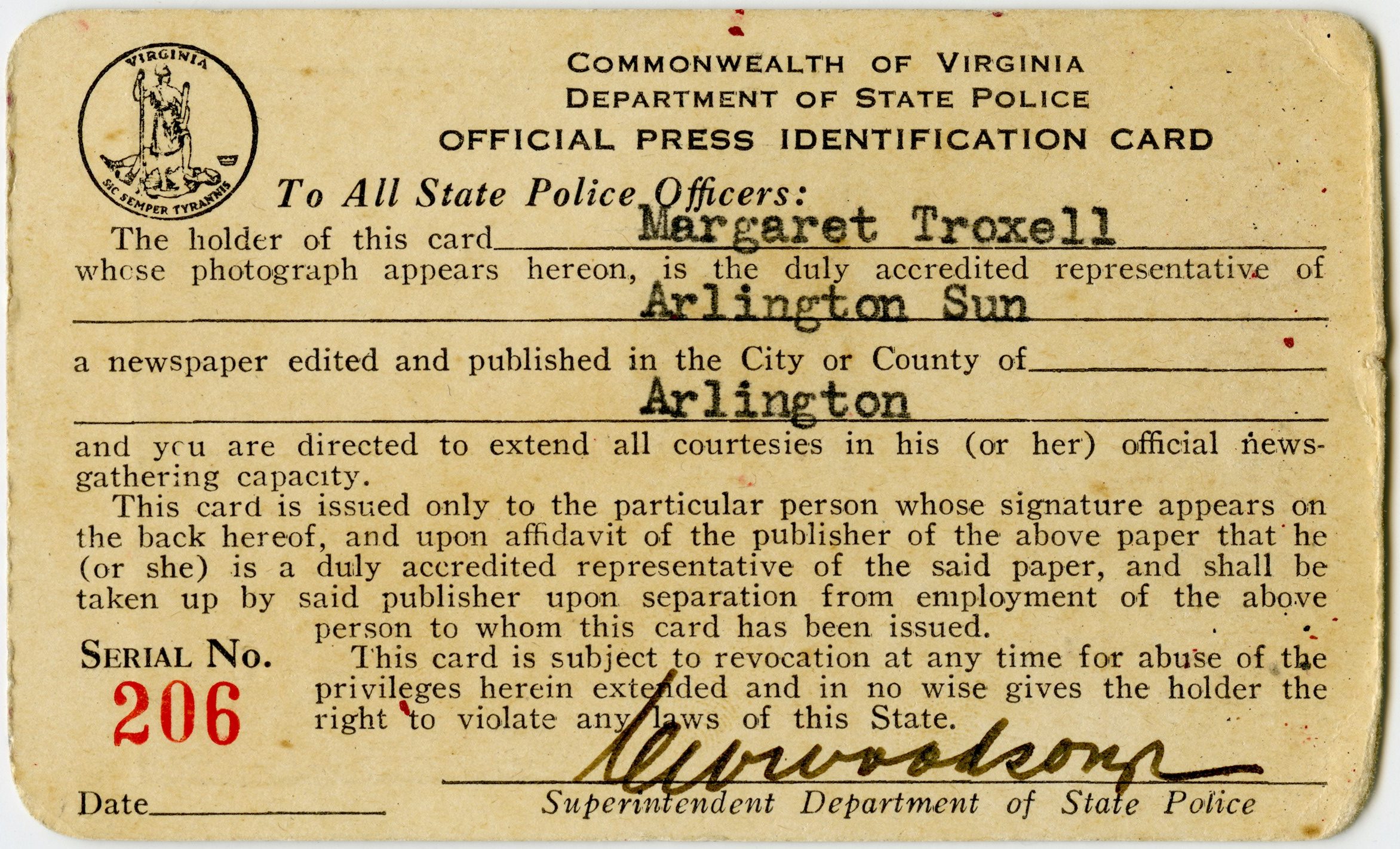
Press Pass 1
Press Pass 2

Margaret Troxell’s press pass, issued October 22, 1946

Narrator: Margaret Troxell
Interviewer: Ellen MacMahon
Date: 1984
Note: The audio for this interview is currently unavailable.

Ellen MacMahon: Can we talk, then, about your work - when you got started in journalism and what made you choose journalism.

Margaret Troxell: Well, when I was in school, in those days, professions for women were somewhat limited to teaching or nursing or something like that and, of course, I had started writing just as a child.  I have a vivid imagination, and I used to send articles and stories to papers and I would have them returned with a check when I was just 10, 12 years old - and, of course, they had no idea how old I was.  And this was very encouraging so when I reached the college level each summer in high school I worked on a newspaper.

EM: A local newspaper?

MT: Local newspapers.  Since we had this summer home in Emmetsburg, I worked on the Emmetsburg Chronicle, and that was a weekly - and I went in to see the editor, and he told me he couldn't pay me anything.  That was perfectly all right because at the time I didn't need any money.  But he taught me so much. And we had a regular barter system.  I used to go out and collect bills, and if people couldn't pay, I'd take a bushel of apples, a couple of chickens or a ham.  That was a lot of fun.  And then I worked on The Baltimore Sun one summer - different papers, Gettysburg Times and a little paper in Thurmont - and that was very interesting because I went there just to work on the paper, and the editor became very ill, and I ran the paper all summer.

EM: What an experience.

MT: That was quite an experience.  It gave me a lot of experience.  Then when I was ready to go to college, the family had a conference, and they decided that newspaper was not for their daughter, certainly not.  My father was very broadminded, and he said, "Sis, you stick to your guns, and I'm on your side." So it was finally agreed that I could take journalism if I also took education. So I am a graduate teacher.

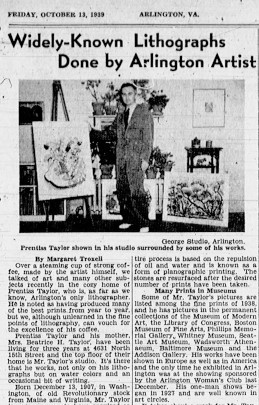
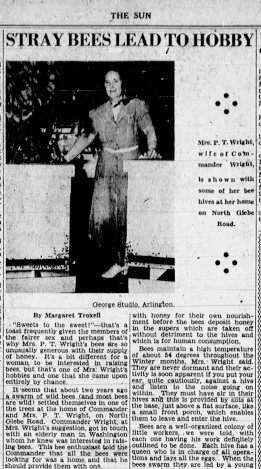
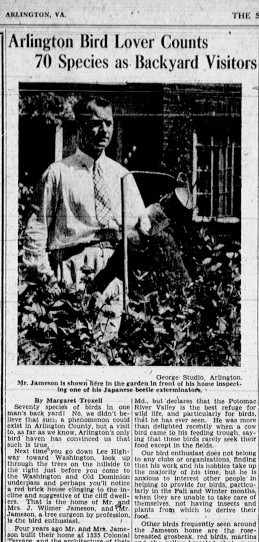
News Clipping 1
News Clipping 2
News Clipping 3

A selection of clippings from some of Margaret Troxell’s human interest articles, from the Northern Virginia Sun (Dates from right to left: October 13, 1939; September 15, 1939; August 25, 1939)

This interview is available at the Center for History, and issues of the Sun and Northern Virginia Sun are available online through the CLH Community Archives and through Virginia Chronicle.

The goal of the Arlington Voices project is to showcase the Center for Local History’s oral history collection in a publicly accessible and shareable way.

The Arlington Public Library began collecting oral histories of long-time residents in the 1970s, and since then the scope of the collection has expanded to capture the diverse voices of Arlington’s community. In 2016, staff members and volunteers recorded many additional hours of interviews, building the collection to 575 catalogued oral histories.

To browse our list of narrators indexed by interview subject, check out our community archive. To read a full transcript of an interview, visit the Center for Local History located at Central Library.

March 4, 2021 by Web Editor

William T. Syphax: Taking a Stand

Post Published: February 25, 2021

Graphic image of a megaphone

Join us for a new series of stories from the Center for Local History highlighting members of our community who made a difference in ways that helped shape our history and created positive change.

Their voices were not always loud, but what they said or did had a significant impact on our community.

William T. Syphax

Native Arlingtonian William Thomas Syphax (1920-1989) was a prominent Black business entrepreneur, philanthropist, and advocate for the Black community in Arlington County.

Born into Arlington’s venerable Syphax family (which included his great uncles William Syphax and John B. Syphax), Syphax earned a bachelor’s degree in math from Virginia State in 1942, a master’s degree in engineering administration from George Washington University, and eventually a Ph.D. in behavioral philosophy from Pacific Western University.  After a stint with the Army Air Force during WW2, he worked for the Department of Defense as an electrical engineer until 1964.

Syphax_2

Margarite and William Syphax, spring 1957.

In the mid-late 1950s before his retirement from the Department of Defense, Syphax and his wife Margarite began building houses in Arlington. After seeing how many Blacks in Arlington County had to accept unsafe and inadequate conditions in the predominantly segregated Northern Virginia housing market, the couple began to concentrate on building well-crafted and affordable homes for their community.

Together, with William as developer and Margarite as secretary-treasurer, they founded Ballston-based W.T. Syphax Real Estate Co. and Syphax Management Co., ranking among the nation’s top 100 Black-owned businesses in the early 1970s and were profiled in Newsweek and Black Enterprise magazine.  They built homes in Arlington View (where William had grown up), Highland Park, Green Valley and elsewhere. Their first apartment complex was Arlington View Terrace, a 77-unit complex of garden apartments near Army Navy Country Club.

Syphax_1

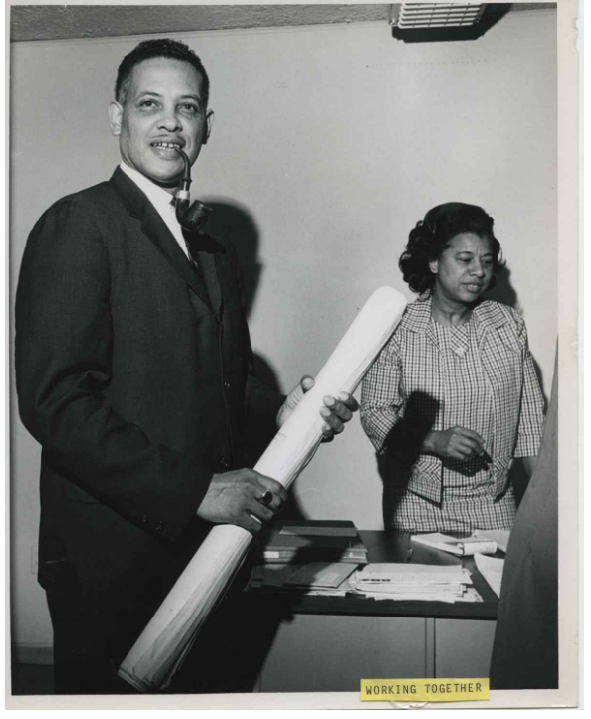
William T. Syphax and Margarite Syphax "Working Together" at their construction firm, 1960s.

Syphax was president of the Virginia Real Estate Brokers Association, chairman of the Arlington County Building Code Board of Appeals, as well as serving as director of the Arlington County Red Cross. He provided financial assistance to over 100 students from the segregated Hoffman-Boston public school for their college education and was music department chairman and senior choir director at Mount Olive Baptist Church in Arlington.

Do you have a question about this story, or a personal experience to share? 

Use this form to send a message to the Charlie Clark Center for Local History.

Center For Local History - Blog Post Message Form

Do you have a question about this story, or a personal experience to share? Use this form to send a message to the Center for Local History.

"*" indicates required fields
This field is for validation purposes and should be left unchanged.

Share Your Story

February 25, 2021 by Web Editor

Arlington’s First Black Legislators

Post Published: February 18, 2021

On March 30, 1870, the 15th Amendment was ratified, extending the right to vote to all male citizens - regardless of race or if they had previously been enslaved. All of the nation, African-Americans took to the polls, and many became engaged in the political process as elected officials at all levels of government.

Arlington – which until 1920 was known as Alexandria County – was included in this political renaissance, and had a number of prominent Black politicians who won elected office and served as leaders following the Civil War.

However, African-American political organization in the County predates Reconstruction. Freedman’s Village was an epicenter of politics starting in 1865, when community members held a mass meeting that petitioned the military governor to guarantee equal rights. Months later, a group at Freedman’s Village held the first statewide political convention for African-Americans.

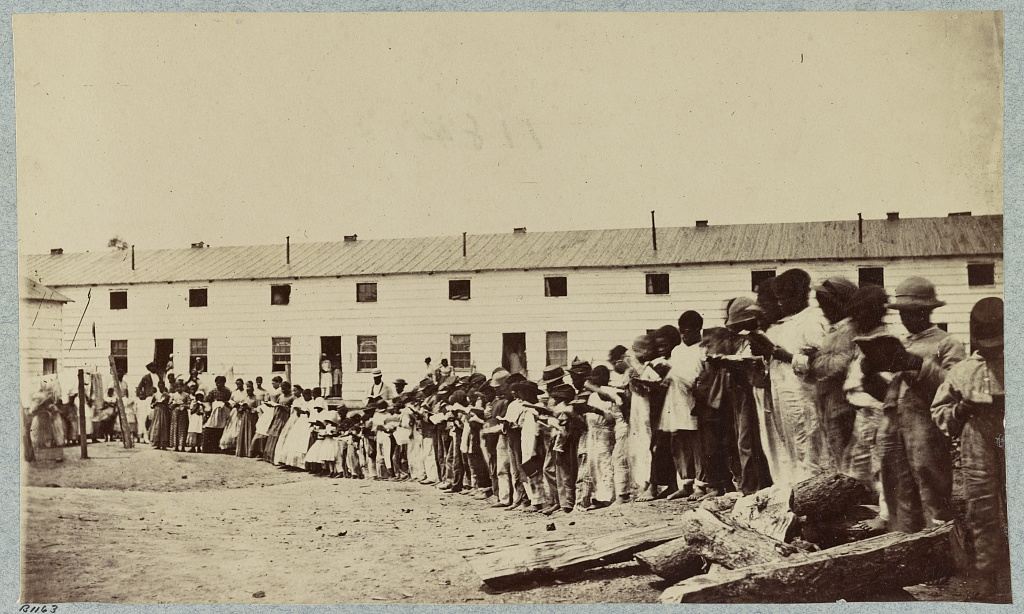
Freedman's Village

Freedman’s Village, pictured above in 1862, was a center of political activity in Arlington both before and after the Civil War. Image courtesy of the Library of Congress.

George Lewis Seaton

In 1869, George Lewis Seaton was elected to the Virginia House of Delegates representing Alexandria.

According to the records of the House, Seaton was the first African American person to hold this position in Alexandria. While in office, Seaton voted to ratify both the 14th and 15th amendments. He was also one of six African American men appointed to the grand jury of the United States Circuit Court for Virginia – likely the first interracial jury in the state. This group indicted several Confederate officials for high treason.

Prior to holding office, Seaton worked as a carpenter and also helped establish a local branch of the Freedman’s Savings Bank and Trust Company.

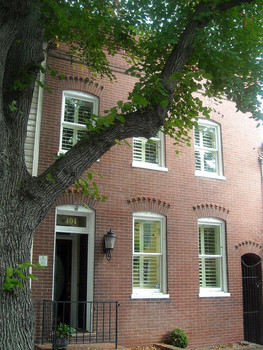
George Lewis Seaton House

The George Lewis Seaton House on South Royal Street in Alexandria. Image courtesy of Encyclopedia Virginia.

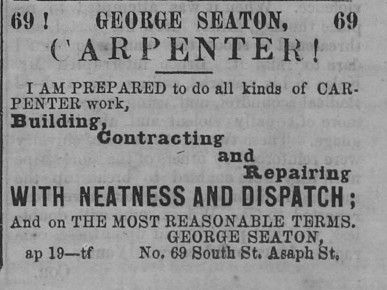
Alexandria Gazette GLS

In the May 19, 1868, edition of the Alexandria Gazette, George Seaton advertised his carpentry business. Image courtesy of Virginia Chronicle.

John B. Syphax

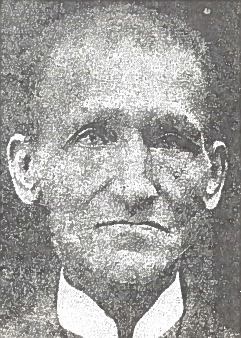
John B. Syphax was another Black legislator in Alexandria County. The son of Charles and Maria Syphax, he was born a free person on the Parke-Custis Estate in 1835.

Syphax served in the Virginia House of Delegates from 1874 to 1875, as the County’s treasurer from 1875 to 1879, and as a justice of the peace and county clerk.

John B. Syphax

John B. Syphax, date unknown. Image from “Arlington County, Virginia: A History,” by C.B. Rose.

Alfred William Harris

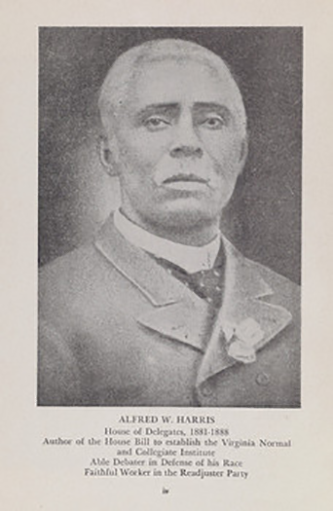
At the age of only 20, Alfred William Harris was elected to the Alexandria common council. Born enslaved in Fairfax County, Harris later moved to Alexandria and attended a school organized by the Freedman’s Bureau.

After holding office in Alexandria, Harris went on to serve four consecutive terms in the Virginia House of Delegates, representing Dinwiddie County. His accomplishments while there included introducing the bill that chartered what is now Virginia State University.

Alfred W. Harris

Alfred W. Harris, date unknown. 

Alfred W. Harris photo caption reads: “House of Delegates 1881-1888, Author of the House Bill to establish the Virginia Normal and Collegiate Institute, Able Debater in Defense of his Race, Faithful Worker in the Readjuster Party.” Image courtesy of the Virginia General Assembly.

Learn more: The Dr. Martin Luther King, Jr., Memorial Commission of the Virginia General Assembly has compiled a database of all the African American legislators elected to the General Assembly during the 20th and 21st centuries.

The Long Post-Reconstruction and Jim Crow Era

Black residents of Alexandria/Arlington County eventually held council seats and offices including treasurer, clerk, commissioner of revenue, sheriff, superintendent of roads, and overseer of the poor. H. L. Holmes was one notable officeholder, serving as commissioner of revenue from 1875 to 1903.

But following the initial prominence of Black legislators following the Civil War, for most of the 20th century, Arlington’s government was dominated by white legislators as many of the post-war resources and promises of equality quickly fell by the wayside nationwide. Reconstruction, which lasted from 1866-1877, was the Congressional attempt to reorganize the Southern states and offer support to formerly enslaved individuals. During this time, there was a brief period where African Americans were protected in their right to vote and participate in the political process. This progress was reflected nationally: at one point, there was an African American majority in the South Carolina government, and several African American men were elected to the Senate.

But even during Reconstruction, there were attempts by opponents to undermine support given to African Americans and undo the progress that had been made. Jim Crow law and “black codes” began to emerge during this time – discriminatory laws at the state and local level that systematically denied Black individuals from public accommodations suppressed their right to vote and prevented them from holding public office. Jim Crow laws could be seen in the County as early as 1868 when the Washington and Alexandria Railroad established segregated seating. Groups resembling the Ku Klux Klan also emerged in Northern Virginia during this time, and measures such as the poll tax and dual registration were implemented as early as 1876 in the County to disenfranchise African American voters.

When Reconstruction formally ended in 1877, all of these measures amounted to a systemic suppression of Black Americans’ right to vote and limitation on political power that would last well into the 20th century.

Leaders in the 20th Century & Judge William T. Newman, Jr.

In 1932, Arlington adopted a new form of County government with a County Manager and County Board members elected at large.  According to research conducted by Wilma Jones, Dr. Edward T. Morton was one of the Black community members to run for office under this new system of government. Dr. Morton was a longtime Hall’s Hill resident and the community’s first Black physician, operating a practice on Lee Highway. He ran for a County Board seat in 1931, and while he lost the election, he remained active in the community and civic life.

Learn more: "My Hall’s Hill Family," by Wilma Jones; Washington Post article announcing Dr. Edward T. Morton’s candidacy.

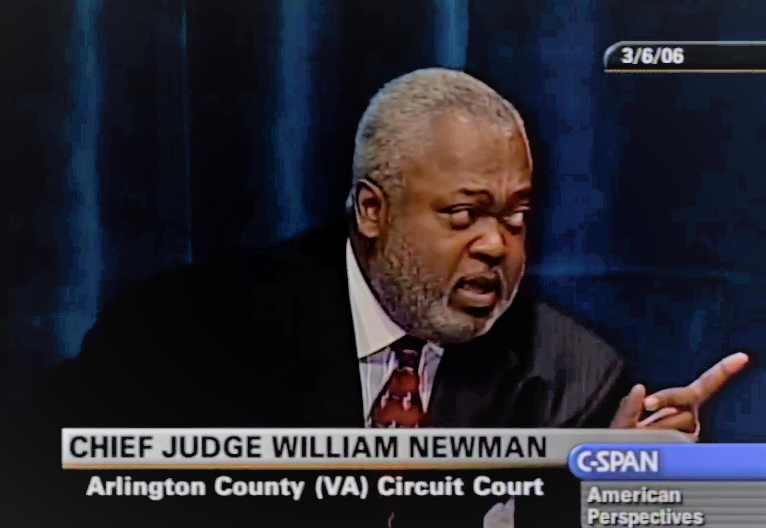
In 1987, William T. Newman, Jr., became the first Black member of the Arlington County Board. On the Board, one of his signature policies was establishing the County’s Human Rights Commission, and he was known for advocating for public safety and resources for drug abuse. In 1990, he was elected as Chairman of the County Board, becoming the first Black person to hold the position in the 20th century.

Newman grew up in the Nauck community of Arlington and attended Hoffman-Boston until the school closed in 1964 following desegregation. He trained and worked as both a lawyer and an actor, and has performed in soap operas, film, and theater performances. In 1993, Newman was appointed as a judge in the 17th judicial circuit court, covering Arlington County and the city of Falls Church. In 2003, he became chief judge of the County Circuit Court, where he continues to serve today.

Since Newman’s tenure, there have been two African American members of the County Board. Charles P. Monroe was elected to the Board in 1999 and served until his death in 2003. He had begun his first turn as Board chair at the time of his death. Christian Dorsey was elected to the County Board in 2015 and is currently serving his second term in office. He served as Board chair in 2019.

William T. Newman

Chief Judge William T. Newman, Jr., performs in the 14th Annual Arena Stage Benefit for Community Engagement in “The Pundit Whodunit: The Case of the Political Puzzle,” on March 6, 2006. Image courtesy of C-SPAN.

Note: This article features only a sampling of the many African American community members who have held positions at the local level and who engaged in civic life. If you know of African-American individuals who have run for or held office in Arlington, and who should be included in this article, please let us know using the form below.

To learn more about Arlington's history, visit the Center for Local History on the first floor of the Central Library.

Do you have a question about this story, or a personal experience to share? 

Use this form to send a message to the Center for Local History.

Center For Local History - Blog Post Message Form

Do you have a question about this story, or a personal experience to share? Use this form to send a message to the Center for Local History.

"*" indicates required fields
This field is for validation purposes and should be left unchanged.

Share Your Story

February 18, 2021 by Web Editor

Edmund Campbell: Speaking Out

Post Published: February 11, 2021

Graphic image of a megaphone

Join us for a new series of stories from the Center for Local History highlighting members of our community who made a difference in ways that helped shape our history and created positive change. 

Their voices were not always loud, but what they said or did had a significant impact on our community.

Edmund Campbell

Edmund Douglas Campbell (1899–1995) was a lawyer, social activist, and Arlington County Board member who advocated for civil rights, school desegregation, and state representation according to population. Campbell vehemently opposed Virginia’s policy of “Massive Resistance” which occurred in the wake of the U.S. Supreme Court decisions in Brown v. Board of Education. In 1954 and 1955, along with his wife Elizabeth, Campbell fought to ensure that Arlington's public schools remain open by organizing the Save Our Schools Committee (comprised of parents and citizens from across Virginia) in defiance of Senator Harry F. Byrd and his allies.

Edmund Campbell

Edmund Campbell sitting at his desk, date unknown

Among his other accomplishments, in 1955, Campbell won a case that overturned a Virginia law prohibiting racially integrated seating in public places. In 1958, following the closure of schools in Norfolk, Charlottesville, and Front Royal, he successfully argued as the lead attorney in James v. Almond, finally ending Virginia's “Massive Resistance" laws that had forced the closing of all public schools which Federal courts had ordered to integrate. Following that decision, the first Black students entered Stratford Junior High School on February 2, 1959.

In the lawsuit Davis v. Mann, the Supreme Court decided in 1964 that Campbell successfully argued that Arlington and Fairfax counties were illegally under-represented in the Virginia legislature, finding that legislative apportioning gave less populated rural areas more legislative influence per voter than more densely populated Northern Virginia as a result of the 1960 census.

In his memoir “Musings of a 95-Year-Old”, Campbell said, "I could not live with myself if I did not stand up publicly for what I knew was right."

Do you have a question about this story, or a personal experience to share? 

Use this form to send a message to the Charlie Clark Center for Local History.

Center For Local History - Blog Post Message Form

Do you have a question about this story, or a personal experience to share? Use this form to send a message to the Center for Local History.

"*" indicates required fields
This field is for validation purposes and should be left unchanged.

Share Your Story

February 11, 2021 by Web Editor

Poetry by Earlene Green Evans

Post Published: February 10, 2021

Earlene Green Evans grew up and attended public schools in Arlington, Virginia, graduating from Hoffman-Boston High School. She received a B.S. degree from Saint Paul’s College in Lawrenceville, Virginia, and an M.S. degree in Library Media from Virginia State University. She worked as a middle and high school librarian until she retired.

Earlene authored a children’s book, "I Love You, Ugly Old Hag," and co-authored three educational books. They are "A Step Beyond: Multimedia Activities For Learning American History"; "Hidden Skeletons and Other Funny Stories," and "3-D Displays For Libraries, Schools, and Media Centers."

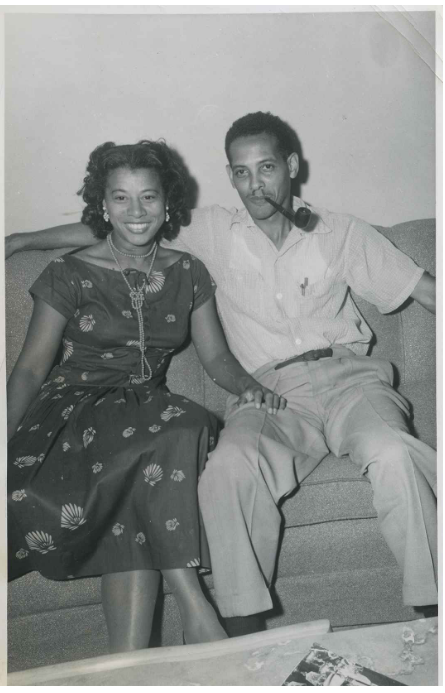
Earlene Green and Godfrey Moore 2

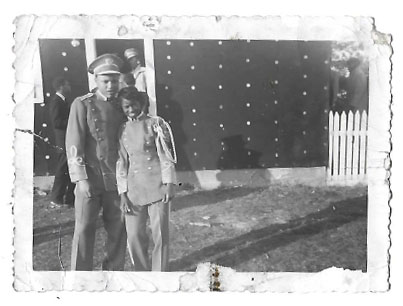
Earlene Green Evans and Godfrey Moore, date unknown

Earlene is a member of Pi Lambda Theta International Honor Society, Virginia Museum of History and Culture, Northwoods Civic Association, Virginia State Alumni Association, Alpha Kappa Alpha Sorority, Inc., and several committees at her church. In addition to writing, Earlene enjoys reading, sewing, and playing the flute. She lives in Henrico County, Virginia with her husband, Alga. They have two adult children and a grandson.

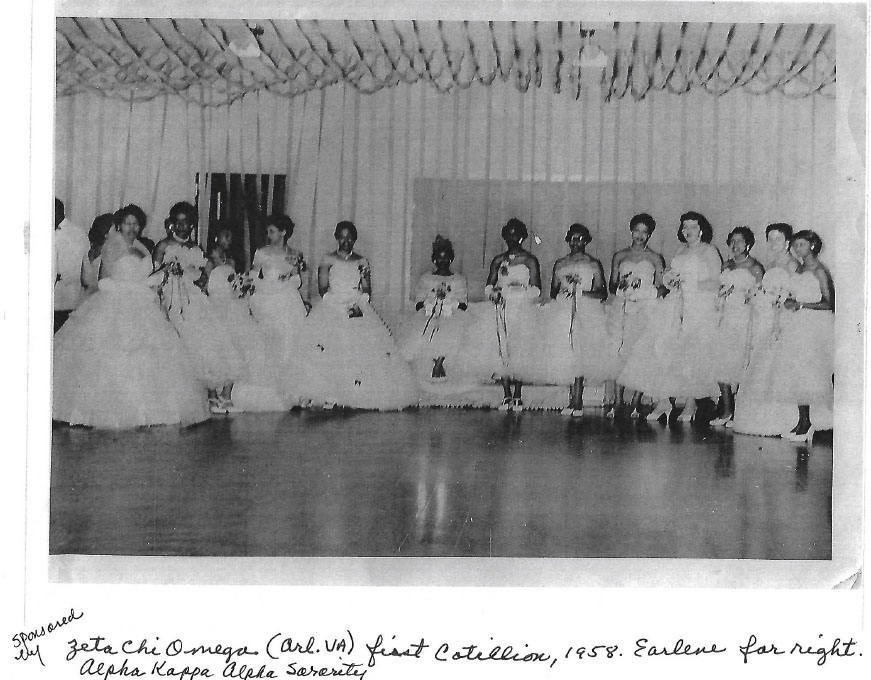
First AKA Cotillion 1958

First AKA Cotillion 1958. Image Caption says "Sponsored by Zeta Chi Omega (Arl. VA) First Cotillion, 1958. Earlene Far Right. Alpha Kappa Alpha Sorority.

Earlene Green Evans started writing the poems about four years ago, and continued to add others to the collection as time went by.  Her latest poem was written in 2019, and she still gets ideas for other poems to this day. Ms. Green writes with wit and charm about what it was like growing up during the fifties in Johnson’s Hill (now Arlington View), a predominantly African American neighborhood at that time.  

She describes the general feeling of cooperation and respect among neighbors and the good manners expected from every child; reflects on the influence that radio and television had on families, describes what school was like, popular fashion trends, what was important in the news both locally and nationally as well as what young people did for fun.

In the following poems from her upcoming poetry book, learn what it was like to go to Hoffman-Boston during "School Desegregation", what it was like to attend a high school “House Party,” and having the first “Neighborhood Television" set.

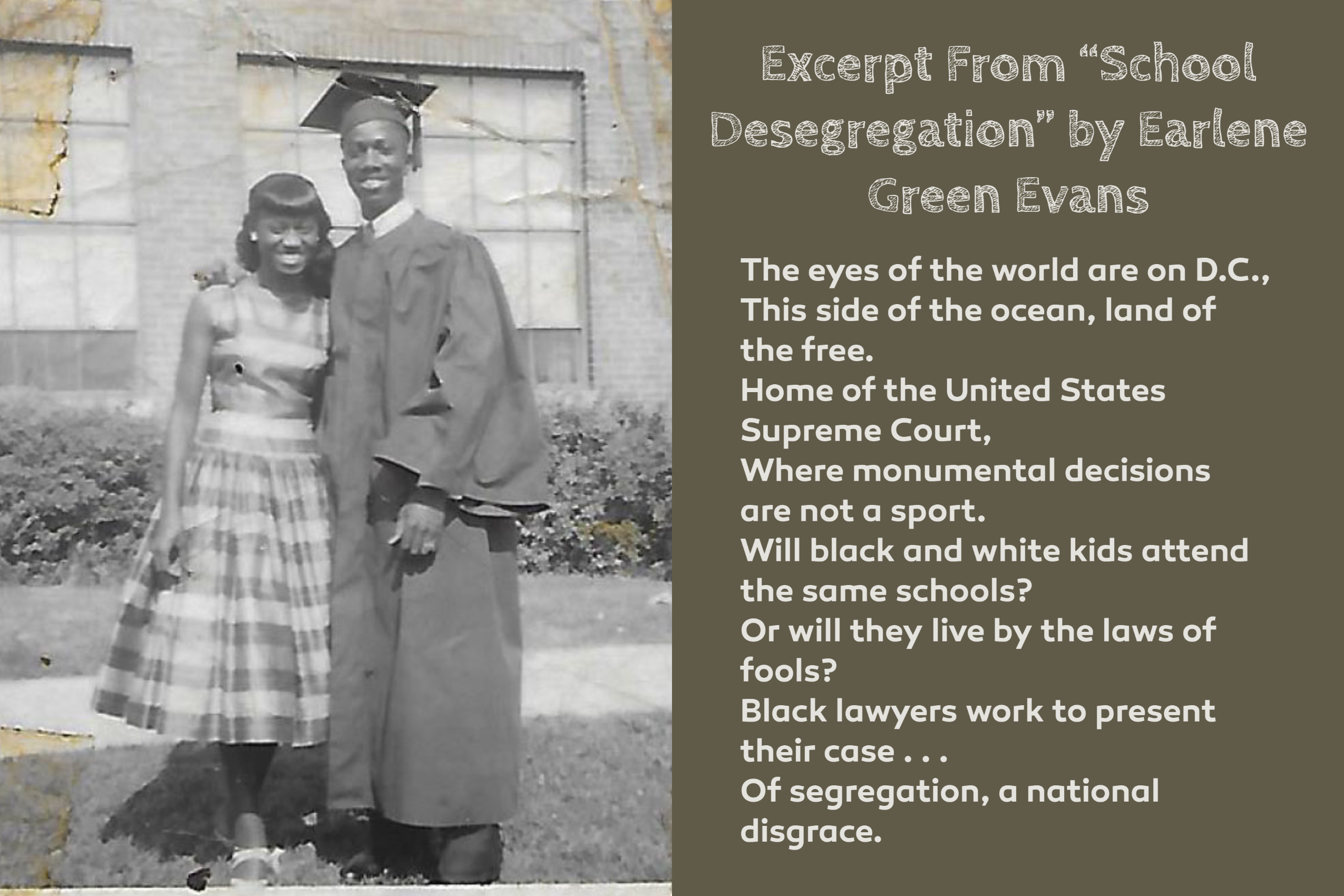
School Desegragation

EarleneEvansSchoolDesegregation

The eyes of the world are on D.C.,
This side of the ocean, land of the free.
Home of the United States Supreme Court,
Where monumental decisions are not a sport.

Will black and white kids attend the same schools?
Or will they live by the laws of fools?
Black lawyers work to present their case . . .
Of segregation, a national disgrace.

Separate, but equal cannot proceed,
Equality, regardless of race or creed.
Spottswood Robinson, Thurgood Marshall and Harold Boulware,
Aim to reverse racial laws, declaring them unfair.

They are key lawyers to Brown versus the Board,
This terrible situation will not be ignored!
A decision is made by the nine in black,
That segregationists are on the wrong track.

Now, every black child in any public school,
Will benefit from this constitutional rule.
Thanks to the judges of the highest court,
Thanks to the lawyers who challenged and Fought.

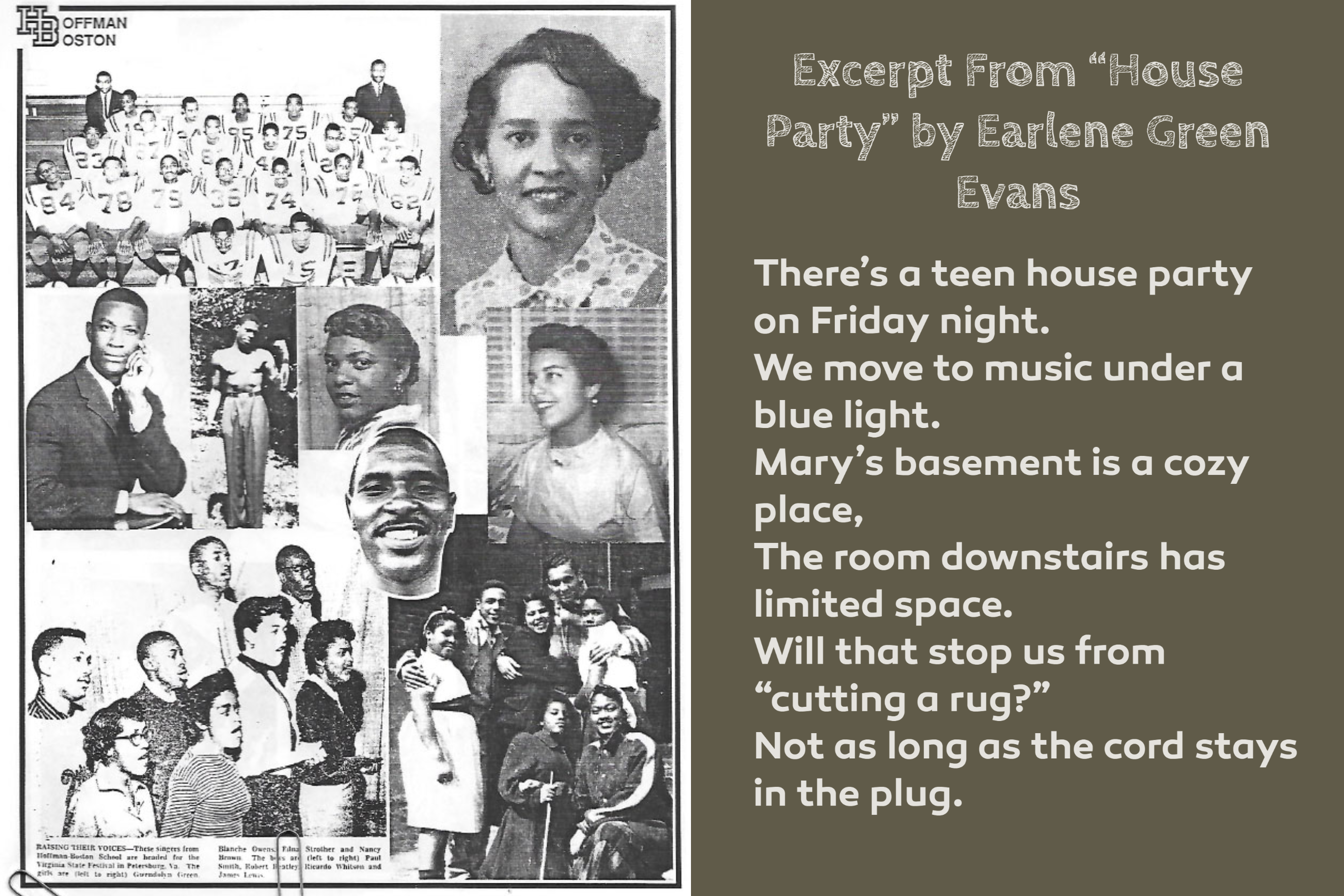
House Party

EarleneEvansHouseParty (1)

There’s a teen house party on Friday night.
We move to music under a blue light.
Mary’s basement is a cozy place,
The room downstairs has limited space.

Will that stop us from “cutting a rug?”
Not as long as the cord stays in the plug.
We bump each other, but we don’t mind,
During the “Mashed Potatoes,” and the forbidden “Grind.”

The “Uptown,” and the “Bird Land” are favorites too,
Performed by members of a Rock and Roll crew.
A scratched record makes an ugly repeat,
Moving the head forward makes the song complete.

Refreshments are provided by Pam and Jade,
We have homemade cookers and lime Kool-Aid.
Everyone stops for a kissing game,
“Spin the Bottle” and hope for your “flame.”

Dancing continues, fast and slow,
Cheers to the couple who “takes the floor.”
The party is fun until Mary’s parents appear,
And remind us that the end is near.

On the last record, we do a slow-moving dance,
And steal a little kiss, taking a chance.
Then tell Mary, our house party host,
We enjoyed the evening to the utmost!

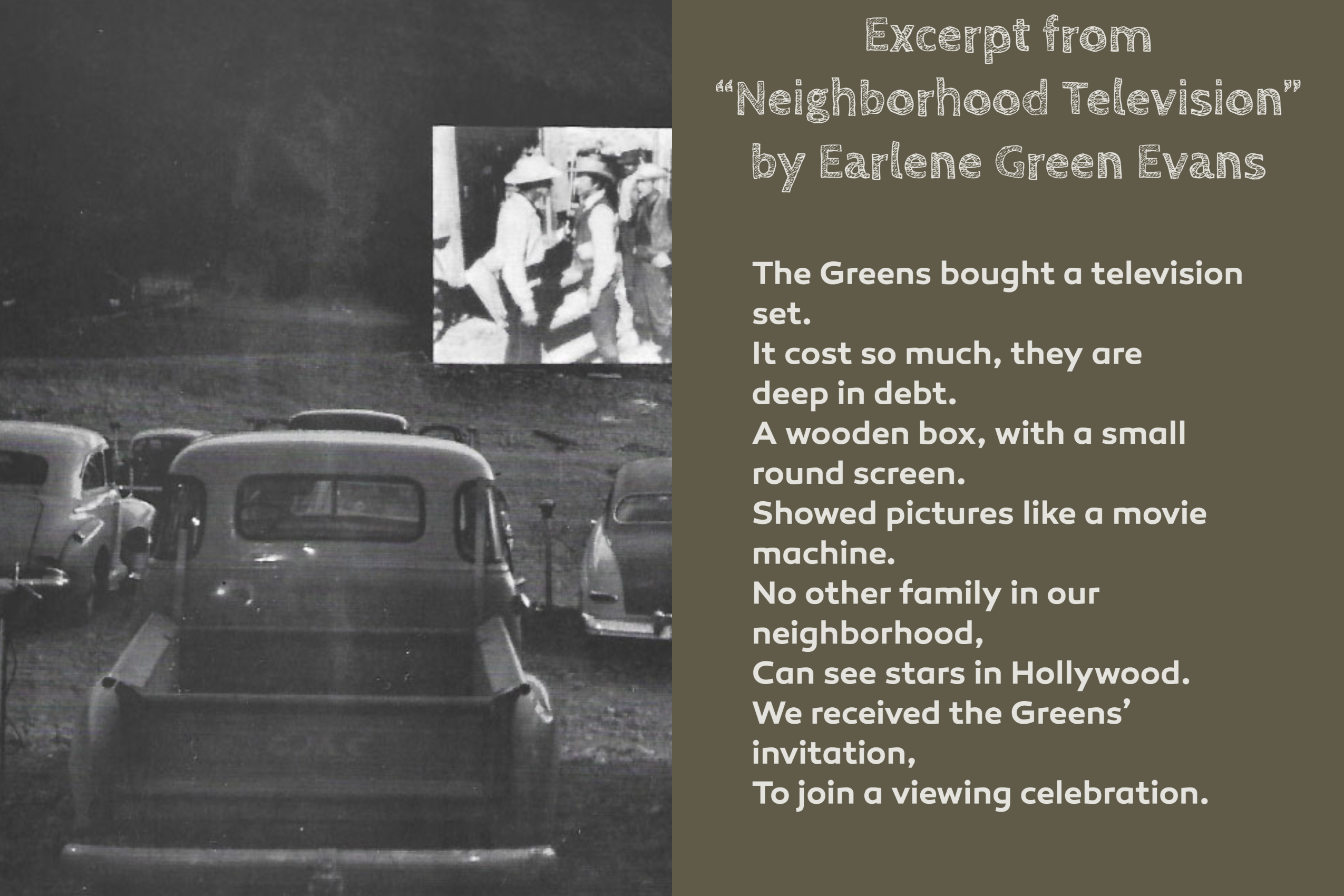
Neighborhood Television

EarleneEvansNeighborhoodTelevision

The Greens bought a television set.
It cost so much, they are deep in debt.
A wooden box, with a small round screen.
Showed pictures like a movie machine.

No other family in our neighborhood,
Can see stars in Hollywood.
We received the Greens’ invitation,
To join a viewing celebration.

We gladly accepted and rushed next door.
Neighbors were sitting all over the floor.
The large crowd squeezed one another,
Lacking air, we thought we would smother.

Bodies were twisted, and turned just right,
To behold a show in black and white.
Eyes bulged and mouths dropped wide.
To see what a TV would provide.

The Lone Ranger chased a mean outlaw.
We joined the action with a big, “Hurrah!”
He took out his lasso, aimed it, and threw,
As zigzag lines interrupted our view.

Mr. Green turned knobs from left to right,
The lines on the screen were an awful sight.
We were calm and patient; we had to wait.
After a minute, the picture was straight.

The lasso missed as the picture started to roll,
This interruption was harder to control.
Frustrated, Mr. Green turned different knobs.
We shifted, squirmed, and suppressed our sobs.

When the rolling stopped, we read on the screen,
Words that could spark a mad mob scene.
The message was clear, it made us shriek . . .
“Tune in to The Lone Ranger again next week!”

February 10, 2021 by Web Editor Tagged With: Hoffman-Boston

  • « Go to Previous Page
  • Page 1
  • Interim pages omitted …
  • Page 6
  • Page 7
  • Page 8
  • Page 9
  • Page 10
  • Interim pages omitted …
  • Page 35
  • Go to Next Page »

Primary Sidebar

News

Composite of 10 book covers with text "Books You Missed."

Great Books You Might Have Missed in 2025

Looking for a great book? We're here to … ... about Great Books You Might Have Missed in 2025

Read More News
See More Service Updates

Center for Local History

Photo of President Lyndon B. Johnson shaking hands with Martin Luther King, Jr., at the signing of the Voting Rights Act of 1965. Photograph by Yoichi Okamoto. Courtesy of the Lyndon B. Johnson Library.

The Voting Rights Act of 1965: Remarks by Rev. Dr. DeLishia A. Davis

NAACP Arlington Branch president and pastor Dr. … ... about The Voting Rights Act of 1965: Remarks by Rev. Dr. DeLishia A. Davis

Read More Local History

Director’s Blog

Text reads Too Cool for Yule #18 in lime green bubble text. Dancing silhouettes against a background of audio waves.

Too Cool For Yule #18

As we (finally) reach the home stretch of 2025, it … ... about Too Cool For Yule #18

More Director's Blog

Footer

About Us

  • Mission & Vision
  • Charlie Clark Center for Local History
  • News Room
  • Get Email Updates

Administration

  • Policies
  • Library Staff
  • Job Opportunities
  • Propose a Program or Partnership

Support Your Library

  • Friends of the Library
  • Giving Opportunities
  • Donating Materials
  • Volunteer Opportunities

Our Mission

We champion the power of stories, information and ideas.

We create space for culture and connection.

We embrace inclusion and diverse points of view.


Download the Library App

Download the Library App

Arlington County | Terms & Conditions | Accessibility | Site Map
· Copyright © 2025 Arlington County Government ·