• Skip to primary navigation
  • Skip to main content
  • Skip to footer
Home - Arlington County Virginia - Logo
MENUMENU
  • Join Now
  • My Account
    • Login
    • My Checkouts
    • My Holds
    • My Lists
    • My Reading History
    • About Borrowing
    • About Holds
    • About My Account
  • Hours & Locations
    • All Hours & Locations
    • Holiday Closings
  • News
    • Library News
    • Director's Blog
    • Get Email Updates
  • Contact Us

Arlington Public Library

MENUMENU
  • Search
  • Collections
  • Library Services
  • Events
  • Community Engagement
  • Join Now
  • My Account
    • Login
    • About Borrowing
    • About Holds
    • About My Account
  • Hours & Locations
    • All Hours & Locations
    • Holiday Closings
  • News
    • Library Blog
    • Get Email Updates
  • Contact Us

Web Editor

Halloween in Hall’s Hill

Post Published: October 31, 2023

Oral Histories with Michael Jones and Lance Newman

This Halloween came with hordes of masked and painted trick-or-treaters, tiny ghouls and monsters haunting Arlington’s doorsteps in search of candy. Although this ritual of begging door-to-door for sweets goes back centuries, “trick-or-treating" did not become a widespread phenomenon in the United States until the 1930s.

It wasn’t until after World War II, with the end of sugar rationing and the beginning of national marketing campaigns surrounding Halloween, that trick-or-treating became standard practice for children in cities and suburbs.

In the early 1950s, Lance Newman and Michael Jones were both children living in Hall’s Hill (now High View Park), one of at least eleven Black neighborhoods that were created during the Civil War era in Arlington. In interviews, they remember Hall’s Hill at that time as a tight-knit and self-sufficient community.

Newman, who lived on Lee Highway, said it was “a great place to grow up” where “everybody knew everybody.” Jones grew up on Emerson Street and, like Newman, attended John M. Langston Elementary, which served Black students in the community under segregation.
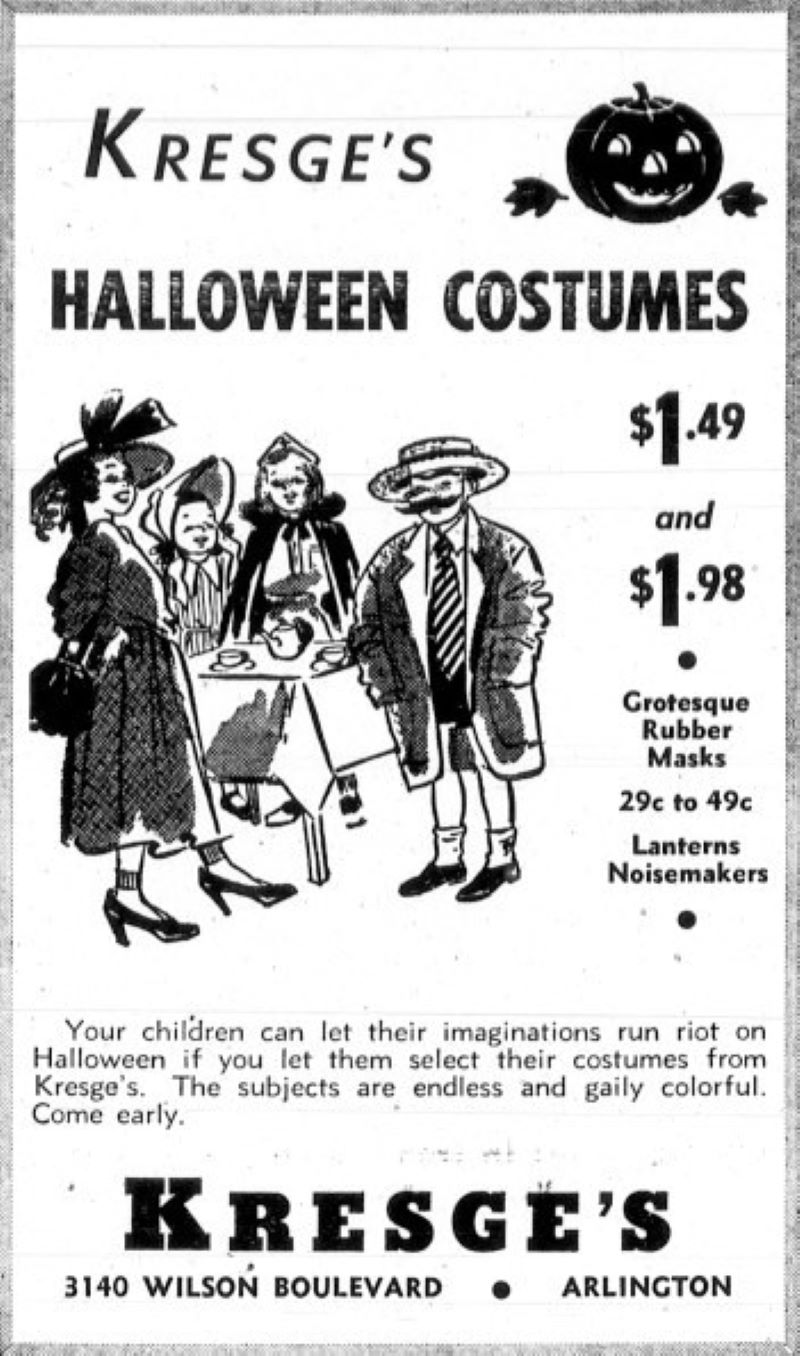
Kresges

Ad for Halloween costumes at Kresge’s, 3140 Wilson Boulevard. The Arlington Sun, vol. 15, no. 49, Arlington, Va, October 27, 1950.

In 1959, Jones and Newman became two of the first four Black students to desegregate Arlington Public Schools when they enrolled in Stratford Junior High, along with Hall’s Hill residents Ronald Deskins and Gloria Thompson.  
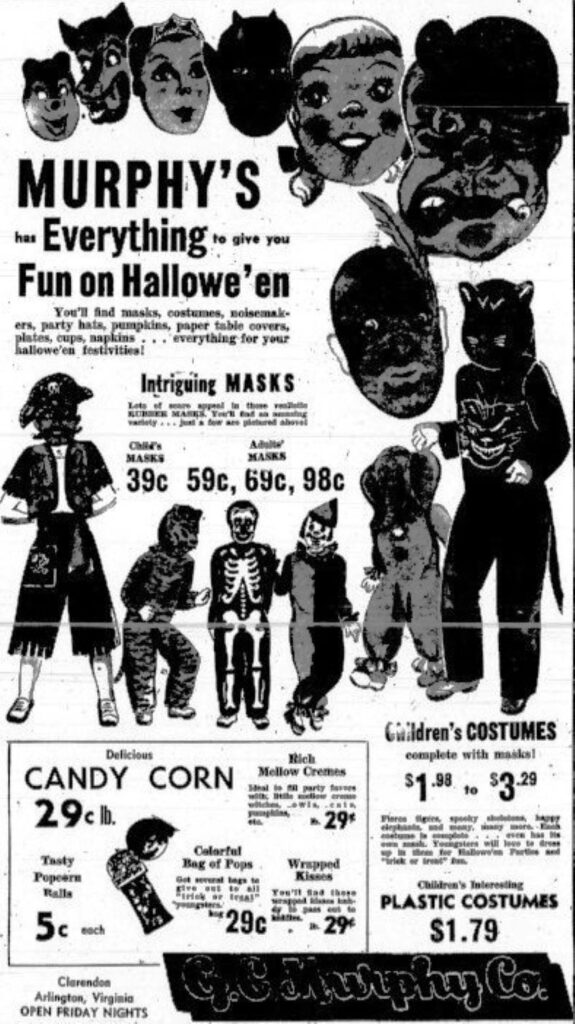
Murphy Ad

Ad for Halloween costumes and candy at Clarendon’s G.C. Murphy, a five and dime store. Daily Sun, vol. 16, no. 155, Arlington, Va, October 18, 1951. 

In his oral history interview, Jones explains how segregation shaped the environment of Hall’s Hill and the lives of those who lived there. He described Hall’s Hill as “a self-contained community,” bounded by a seven-foot-tall segregation wall, which included the neighborhoods of Fostoria and Waycroft.

Constructed from wood and cinderblocks on an individual home-owner level, the entirety of Hall’s Hill was quartered off in the early 1940s with only one entrance and exit. “There were no connecting sites to the other communities of white families around there,” Jones said. “Once you get into the Black community there, you had to come out by the way you came in.”  
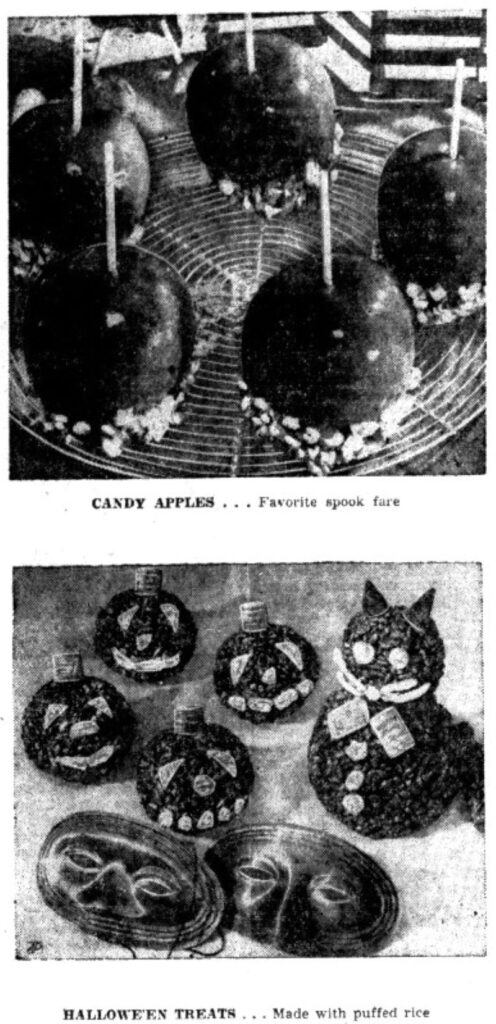
Halloween treats

Candy apples and other Halloween treats pictured for a recipe article in the Daily Sun. Vol. 17, no. 95, October 16, 1952. 

Because of the restrictions that Jones and Newman experienced as Black children under segregation, Halloween offered an opportunity to cross the physical and invisible boundaries between their world and the world “outside” Hall’s Hill.

Disguised in masks and costumes, they could trick-or-treat in their own neighborhoods as well as in the white neighborhood. The goal was to get as much candy as possible – but the “trick” was to not eat it all in one sitting and get sick! 

https://library.arlingtonva.us/wp-content/uploads/2023/10/Newman_Lance_Halloween.mp3

Lance Newman: Every Halloween, we’d go trick-or-treating, and we used to go up to what we called the white section up there—22nd Street, across George Mason Drive—because they were the only ones that gave us tons of candy. Anyway, you know. Kids have masks on, and the people were pretty—and that was a big thing when you were in the second, third, and fourth grade for trick-or-treating, and we just went—you know.  That was another thing that’s different today. Nobody lets their—if you were at that age, you let your kid go alone for pretty good reasons. But you did it in groups, and so that was a fond memory from my experience. 

https://library.arlingtonva.us/wp-content/uploads/2023/10/Jones_Michael_Halloween.mp3

Michael Jones: Halloween was great when I was growing up, because Halloween, because of the masks and the outfits, you couldn’t—you didn’t have to just trick-or-treat in your own neighborhood. Of course, you did—if you put on a good outfit, you could go outside to the white neighborhood and go trick-or-treating, because they wouldn’t know who you were if you had your mask on. So, you could go instead of—if you didn’t get enough candy in the Black neighborhood, you go outside to the white neighborhood and get it. And the one thing—you get those big shopping bags—you know—those bags like you get at Whole Foods—stuff like that—and full of candy. After a while, you grew up, you learned you couldn’t eat all your candy in one night or you’d get sick. You had to put it aside, so it was bountiful once—you know. I guess I learned once I—I guess once I get into Stratford or something—elementary—a little above elementary-school age—where to go for Halloween and things like that. But otherwise, it was—Halloween was great.   
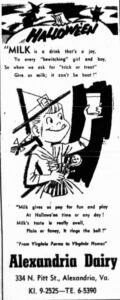
Alexandria Dairy Ad

A Halloween-themed ad for Alexandria Dairy. Daily Sun, vol. 21, no. 76, Arlington, Va, October 25, 1956. 
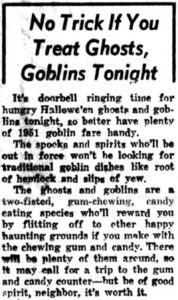
Goblins

Daily Sun, vol. 16, no. 165, Arlington, Va, October 30, 1951. 

For Jones and Newman, trick-or-treating with friends and enjoying the spoils for days (or hours) afterward was their fondest memory of Halloween. Do you have any memories of trick-or-treating in Arlington, or celebrating holidays in Hall’s Hill? We want to hear from you in the comments!

Works Cited

  • Lindsey Bestebreurtje, “A View from Hall's Hill: African American Community Development in Arlington, Virginia from the Civil War to the Turn of the Century.” Arlington Historical Magazine. 2015.  
  • Mark Blitz, “Once There Was a Segregation Wall in Arlington.” Arlington Magazine. June 1, 2020. 
  • Michael Jones Interview. Arlington County Public Library, Oral History Project. 2016.  
  • Wilma Jones, “24 Years is a Long Time to Desegregate.” Arlington Virginia History…From the Black Side (Blog). July 19, 2020. 
  • John Paul Liebertz, A Guide to the African American Heritage of Arlington County, Virginia.  
    Arlington, Va: Dept. of Community Planning, Housing and Development, Historic Preservation, 2016. 
  • Lance Newman Interview. Arlington County Public Library, Oral History Project. 2016.  

Related blogposts from the CLH 

  • The Story of Arlington Public School Desegregation 
  • Oral History: The First Students to Desegregate Arlington Public Schools 
  • Oral History: Halloween Shenanigans 
  • Haunted Arlington: Arlington’s X-files, Pt. 2 

Help Build Arlington's Community History

The Center for Local History (CLH) collects, preserves, and shares resources that illustrate Arlington County’s history, diversity and communities. Learn how you can play an active role in documenting Arlington's history by donating physical and/or digital materials for the Center for Local History’s permanent collection.

Do you have a question about this story, or a personal experience to share? 

Use this form to send a message to the Center for Local History.

Center For Local History - Blog Post Message Form

Do you have a question about this story, or a personal experience to share? Use this form to send a message to the Center for Local History.

"*" indicates required fields
This field is for validation purposes and should be left unchanged.

Share Your Story

October 31, 2023 by Web Editor

Celebrate National Coming Out Day with Arlington’s LGBTQ+ History

Post Published: October 10, 2023

October is LGBTQ+ History Month

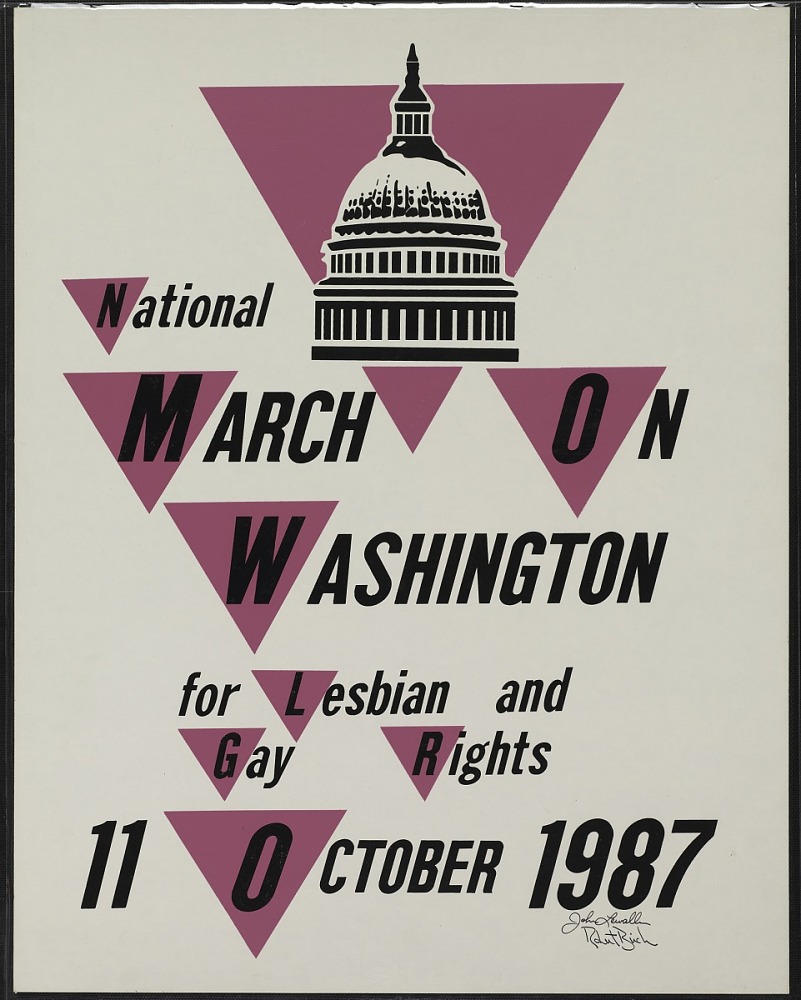
October 11 is National Coming Out Day, celebrated on the anniversary of the Second National March on Washington for Lesbian and Gay Rights - also known as “The Great March,” which took place on October 11, 1987.

The March was organized to draw national attention to LGBTQ+ issues and to demand civil rights and protections for LGBTQ+ individuals. It followed the first National March on Washington for Lesbian and Gay Rights that took place in Washington, D.C., on October 14, 1979. The desire for the second rally was provoked by the escalating AIDS epidemic and by the Ronald Reagan administration's lack of acknowledgment and intervention in the crisis. Marchers also conducted acts of civil disobedience at the Supreme Court in protest of the 1986 ruling in Bowers v. Hardwick, which upheld the constitutionality of state sodomy laws that criminalized sex between two consenting men.

National March on Washington for Lesbian and Gay Rights poster 1987.

Poster used in the Second National March on Washington for Lesbian and Gay Rights in 1987. Credit to Vernon C. Mitchell. From the National Museum of American History.

The Great March involved several days of planned events, including a mass wedding and protest at the Internal Revenue Service, and talks by several speakers, such as Cesar Chavez, Whoopi Goldberg, Eleanor Smeal, and Jesse Jackson. The NAMES Project AIDS Memorial Quilt was displayed for the first time on the National Mall. At that time, it included 1,920 panels and covered a space larger than a football field. The Great March also marked the first time that ACT UP (The AIDS Coalition to Unleash Power) received national press coverage.

For Love of Life: The 1987 March on Washington for Lesbian and Gay Rights. Recorded by Cheryl Spector. Rainbow History Project, March 31, 2022.

Although sources vary, it is estimated that over half a million people attended the Great March. Among them were at least 50 Arlington residents who marched down Pennsylvania Avenue together behind the Arlington Virginia Gay Alliance (AVGA) banner. AVGA – which changed its name in the late 1980s to the Arlington Gay and Lesbian Alliance and is now also known as Equality NoVa – was formed in 1981 to address equal rights issues for LGBTQ+ citizens from a local and state perspective. In the 1980s, AVGA members organized candidate forums, helped educate Arlington law enforcement about the LGBTQ+ community, and were involved in local AIDS activism.

About a month before the Great March, on September 15, 1987, the Arlington County Manager’s Citizens Advisory Committee on AIDS held its first meeting. One of its key members was John Whitener, who also served as chairman of the AVGA Government Affairs Committee.

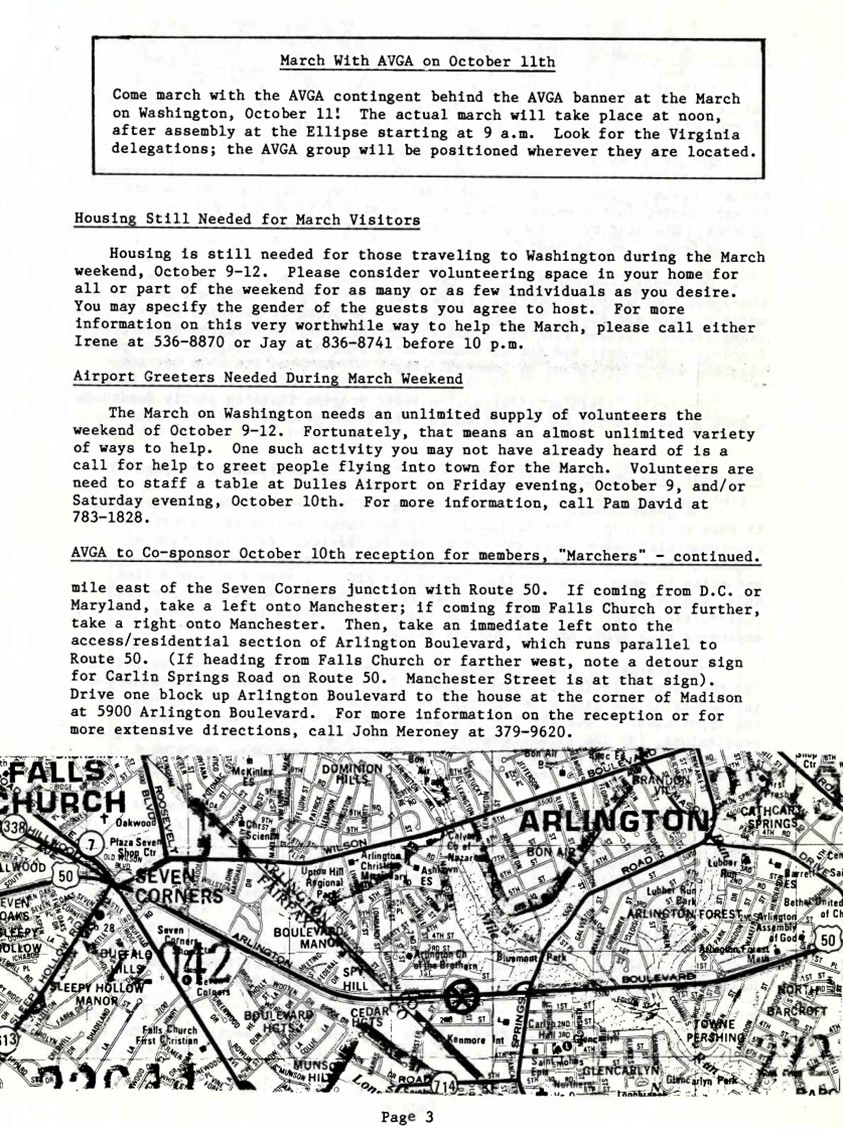
Members and leadership in the AVGA were tirelessly dedicated to organizing in preparation for the Great March. In October, they co-sponsored a housing clearinghouse to provide Virginia activists with a place to stay during the weekend of the March. They distributed press releases and forms to LGBTQ+ organizations and publications throughout the state to spread awareness and support for marchers. They also organized airport greeters to staff a table at Dulles Airport on October 9th and 10th to welcome and assist marchers from out of town.

Directions and map to the March.

Page from the Arlington Virginia Gay Alliance Newsletter, October 1987, including plans surrounding the Great March and a map with John Meroney and Jon Larimore’s house marked for the October 10 reception.

On October 10, AVGA partnered with the Alexandria Gay Community Association (AGCA) to host a special reception to welcome fellow Virginians who had traveled from throughout the state to attend the March. The reception was held at the home of former AVGA president John Meroney and member Jon Larimore, who lived together on Arlington Boulevard. More than 100 people attended the reception, sharing food and building relationships while collaborating to promote civil rights for citizens in the Commonwealth.

National Coming Out Day is a commemoration of the AVGA members, their allies, and other Arlington citizens who gathered on the Ellipse under cloudy skies on October 11, 1987, to march for LGBTQ+ rights. Because of their activism, National Coming Out Day was established to uplift those who proclaim their LGBTQ+ identities and continue to fight for LGBTQ+ liberation.

Works Cited

  • Arlington Gay and Lesbian Alliance. “History.”
  • Arlington Virginia Gay Alliance, Chris De Joy, and Fred Parris. “Arlington Virginia Gay Alliance Newsletter, 1987 October.” Rainbow History Project Digital Collections.
  • Arlington Virginia Gay Alliance, Chris De Joy, and Fred Parris. “Arlington Virginia Gay Alliance Newsletter, 1988 January.” Rainbow History Project Digital Collections.
  • Cheryl Spector. For Love of Life: The 1987 March on Washington for Lesbian and Gay Rights. Rainbow History Project, March 31, 2022.
  • Human Rights Campaign. “National Coming Out Day.”
  • Lena Williams. “200,000 March in Capital to Seek Gay Rights and Money for AIDS.” New York Times, October 12, 1987.
  • Library of Congress. “U.S. Reports: Bowers v. Hardwick, 478 U.S. 186 (1986).”
  • Mark Stein. “Memories of the 1987 March on Washington.” OutHistory, August 2013.
  • Megan E. Springate, “LGBTQ Civil Rights in America.” In LGBTQ America: A Theme Study of Lesbian, Gay, Bisexual, Transgender, and Queer History. National Park Service, 2016.
  • National AIDS Memorial. “About the Quilt.”
  • Vernon C. Mitchell. Poster used in the Second National March on Washington for Lesbian and Gay Rights in 1987. National Museum of American History.
  • Virginia Department of Historic Resources. “Timeline of LGBT History in Virginia and the United States.”

Previous blogposts from the CLH blog LGBTQ+ history:

  • Oral History: LGBTQ Activist Lilli Vincenz
  • Oral History: Arlington’s First Openly LGBTQ Elected Official

Help Build Arlington's Community History

The Center for Local History (CLH) collects, preserves, and shares resources that illustrate Arlington County’s history, diversity and communities. Learn how you can play an active role in documenting Arlington's history by donating physical and/or digital materials for the Center for Local History’s permanent collection.

Do you have a question about this story, or a personal experience to share? 

Use this form to send a message to the Center for Local History.

Center For Local History - Blog Post Message Form

Do you have a question about this story, or a personal experience to share? Use this form to send a message to the Center for Local History.

"*" indicates required fields
This field is for validation purposes and should be left unchanged.

Share Your Story

October 10, 2023 by Web Editor

A Taste of Arlington History

Post Published: September 28, 2023

Recipes from Over 300 Years

Did you know that the Center for Local History holds dozens of cookbooks that document the history of Virginia cuisine from the 17th century to present day?

This includes recipes copied from the housekeeping books of Woodlawn plantation and George Mason’s Gunston Hall, as well as modern takes on old classics, such as Sally Lunn bread and Brunswick stew.

The most unique cookbooks, however, are the community cookbooks that have been lovingly compiled by various church groups and organizations in Arlington over the years.

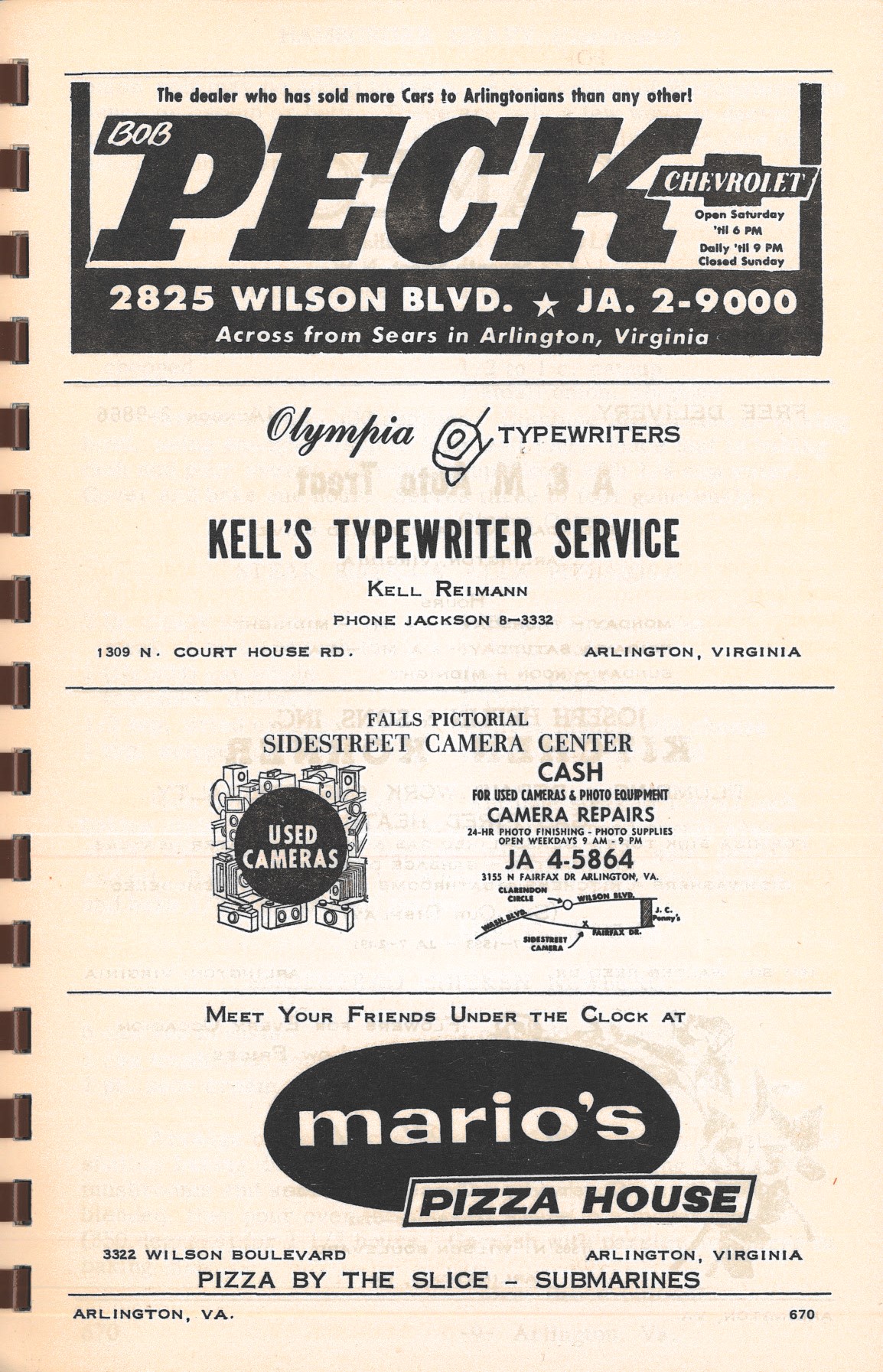
These cookbooks were usually created to raise funds and awareness for different causes in the Arlington community. For instance, the Clarendon United Methodist Church Handbell Choir published Medley of Morsels in December 1986 to raise money to purchase new handbells. In some cases, additional funding was provided by local businesses in exchange for ad space between recipes, providing current readers with a glimpse of bygone eras in Arlington history.

ads for Bob Peck Chevrolet and Mario's Pizza.

These ads are from “Our Favorite Recipes,” created by the Christian Women’s Fellowship of the Pershing Drive Christian Church in 1962. Of these Arlington businesses, including the iconic Bob Peck Chevrolet, only Mario’s Pizza is still operating.

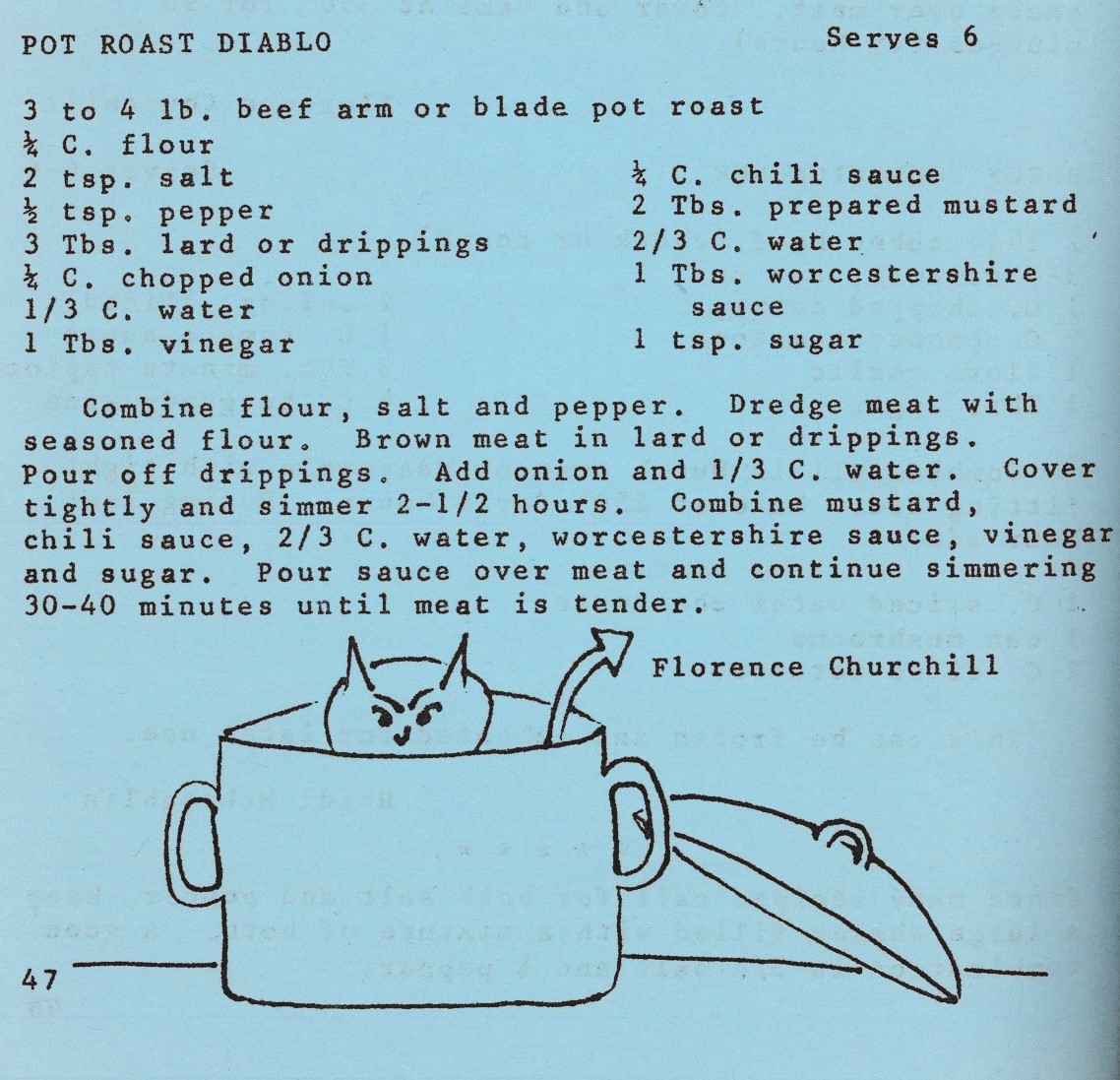
Recipe for pot roast diablo illustrated with a drawing of a devil in a soup pot.

“Kitchen Favorites from the Good Neighbor” was compiled and published by the Arlington County Chapter of the American Red Cross in May 1982 to commemorate the 65th anniversary of the chapter. It’s full of wonderful illustrations by Karen Beasley and was assembled by an army of volunteers. This illustration is for Pot Roast Diablo by Florence Churchill and can be found on page 47.

Fundraising through cookbooks has been an American tradition since 1864 when Maria J. Moss published A Poetical Cookbook (so-called because the recipes rhymed for entertainment and easy memorization) and donated the proceeds to subsidize medical costs for Union soldiers injured in the Civil War.

A century later, so many community organizations had taken up the idea that publishing companies began offering custom cookbook services – templates with built-in illustrations, measurement guides, and helpful tips and tricks marketed toward housewives. That said, many of the CLH’s community cookbooks were printed, illustrated, and constructed “in-house,” harnessing the time and talents of dedicated community members.

In addition to fundraising, cookbooks celebrate community organizations and help document their histories and values. For example, Arlington Presbyterian Church made “Table Treasures” in 2008 to celebrate a “Century of Hospitality” since the church was founded on April 12, 1908. They preface their collection of recipes with an introduction that sketches the history of the congregation and draws upon their organizational archives to illustrate the church’s longtime dedication to feeding the soul and body.

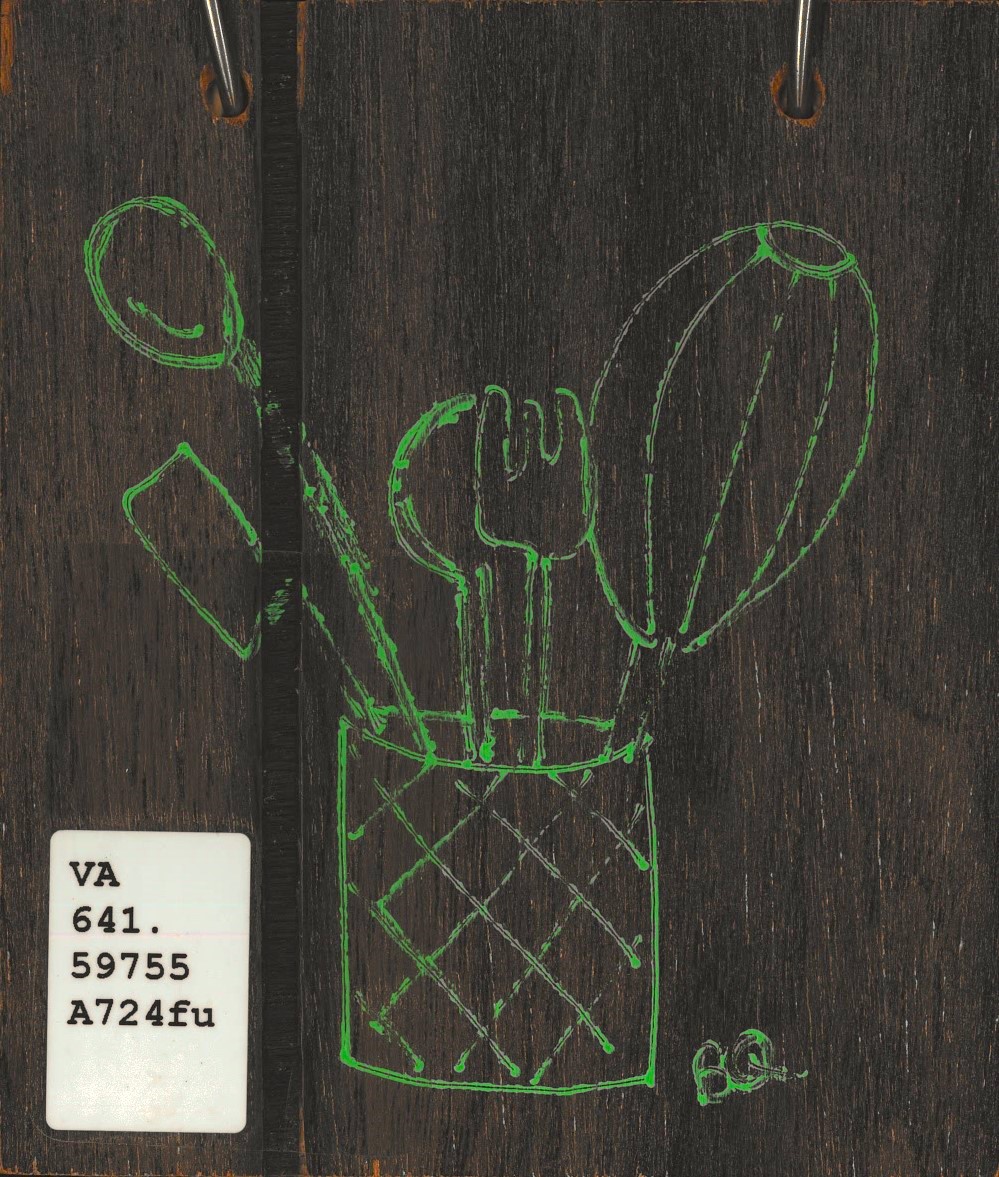
Forest Favorites: Wooden cookbook cover illustrated with green drawings.

“Forest Favorites” was compiled in 1976 by the women of the Miriam Gruber Fellowship at Arlington Forest United Methodist Church. It is bound with wooden covers made by Gene Dauma of the Methodist Men, in keeping with the “forest” theme. The cover illustration was likely done by Betty Quinn, one of the Miriam Gruber Fellowship members.

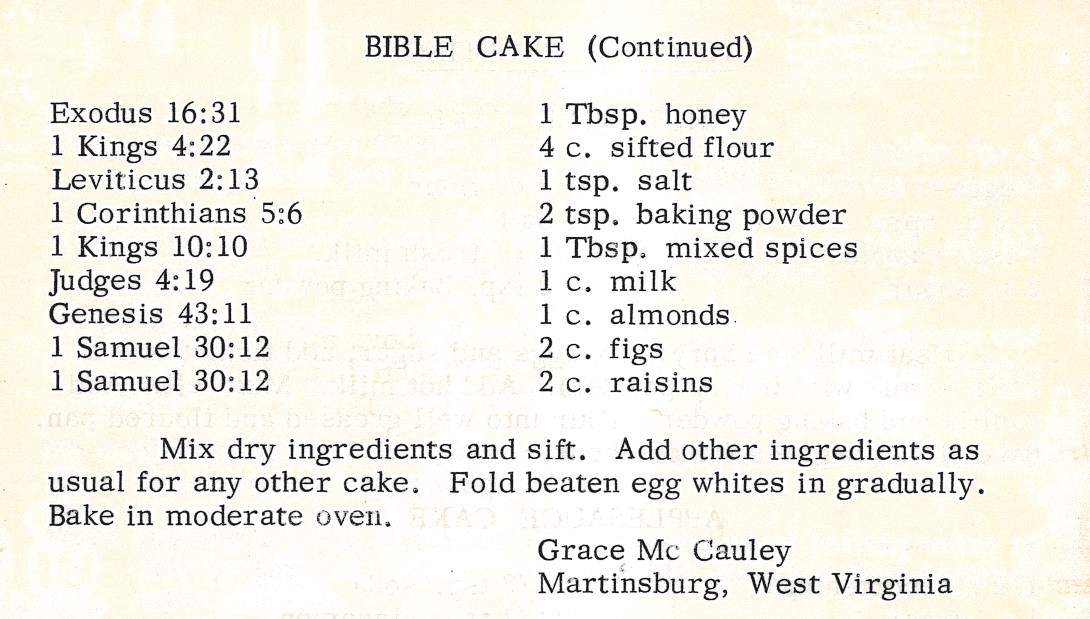
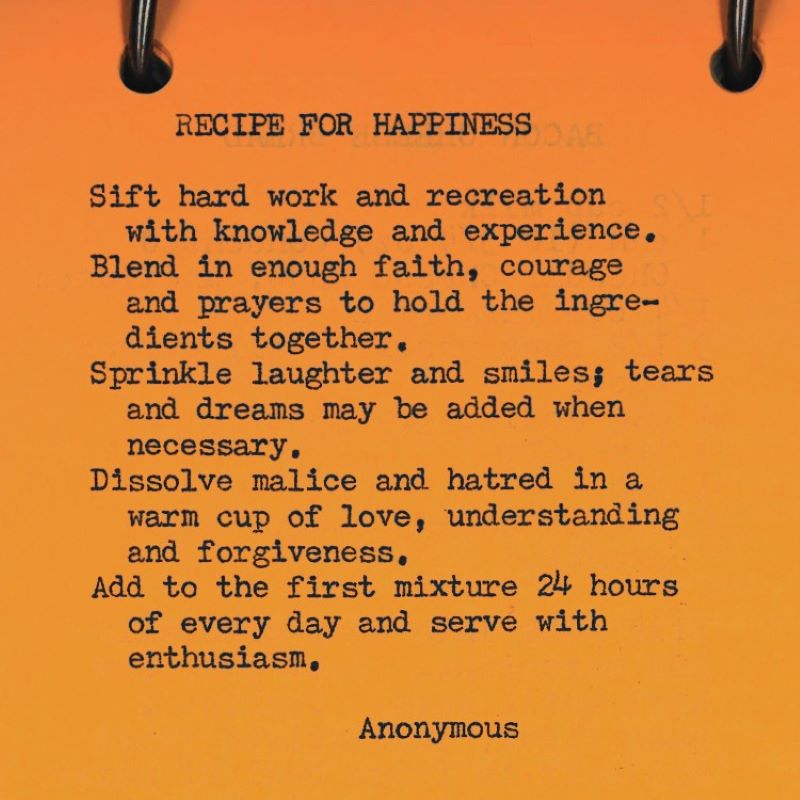
The intimate association between food and faith comes as no surprise, and similar sentiments are found in other church cookbooks that contain recipes for Happiness and tempting cakes inspired by Bible verses.

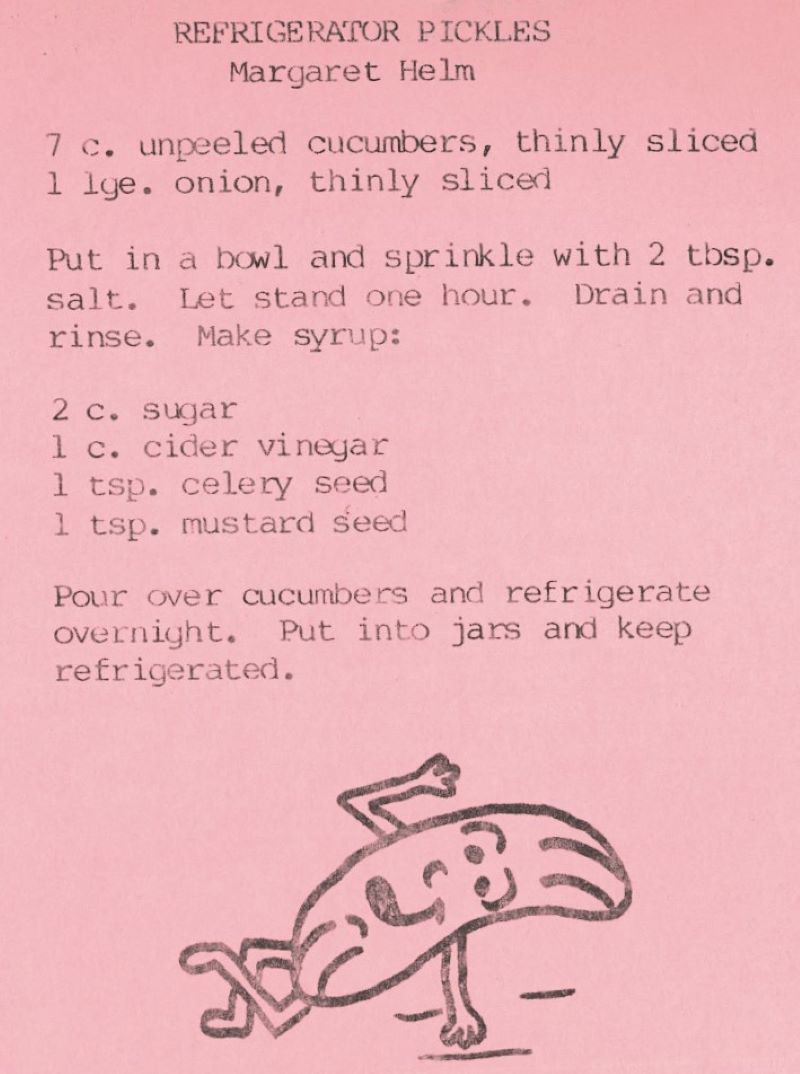
Refrigerator pickle recipe with pickle illustration.

“Medley of Morsels” is chock full of fun illustrations by Handbell Choir members Linda Gilbert and Patti Morris, as well as some contributions from the Kindergarten, First, and Second grade Sunday school classes. This recipe for Refrigerator Pickles by Margaret Helm taken from page 18.

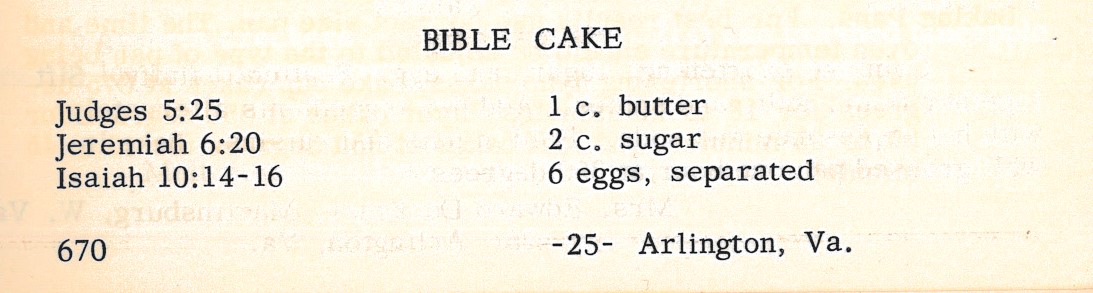
Bible Cake
Bible Cake

Recipe for Bible Cake found in “Our Favorite Recipes” by the Christian Women’s Fellowship of the Pershing Drive Christian Church on pages 25-26.

Recipe for Happiness: Sift hard work and recreation with knowledge and experience. Blend in enough faith, courage and prayers to hold the ingredients together.Sprinkle laughter and smiles; tears and dreams may be added when necessary. Disolve malice and love in a warm cup of love, understanding and forgiveness. Add to the first mixture 24 hours of every day and serve with enthusiasm. - Anonymous

Recipe for Happiness found in “Forest Favorites.”

Most importantly, the CLH’s community cookbook collection preserves the memory of all those who created, perfected, and passed along their beloved home recipes. Most recipes credit their cook, and many are also dedicated to the mothers, grandmothers, church organizers, and community leaders that taught them.

As the Arlington Red Cross puts it in their cookbook, “A recipe that is not shared with others will soon be forgotten, but when it’s shared, it will be enjoyed by future generations.” So please, try out some of the recipes included in this post or stop by to check out what other delicious treats the collection has in store.

Works Cited

All images are from the following cook books in the Library's collection:

  • Arlington County Chapter of the American Red Cross, "Kitchen Favorites from the Good Neighbor." 1982. [VA 641.59755 K62a].
  • Arlington Forest United Methodist Church, "Forest Favorites." 1976. [VA 641.59755 A724fu].
  • Arlington Presbyterian Church, "Table Treasures: Celebrating a Century of Hospitality." 2008. [VA 641.59755 A724t].
  • Christian Women’s Fellowship of the Pershing Drive Christian Church, "Our Favorite Recipes." 1962. [VA 641.59755 O93p].
  • Clarendon United Methodist Church, "Medley of Morsels." 1986. [VA 641.5 UN58].

Additional Source: Jessica Stoller-Conrad. “Long Before Social Networking, Community Cookbooks Ruled The Stove.” The Salt. July 20, 2012.

Help Build Arlington's Community History

The Center for Local History (CLH) collects, preserves, and shares resources that illustrate Arlington County’s history, diversity and communities. Learn how you can play an active role in documenting Arlington's history by donating physical and/or digital materials for the Center for Local History’s permanent collection.

Do you have a question about this story, or a personal experience to share? 

Use this form to send a message to the Center for Local History.

Center For Local History - Blog Post Message Form

Do you have a question about this story, or a personal experience to share? Use this form to send a message to the Center for Local History.

"*" indicates required fields
This field is for validation purposes and should be left unchanged.

Share Your Story

September 28, 2023 by Web Editor

Log in and Manage Your Account in the App

Post Published: May 31, 2023

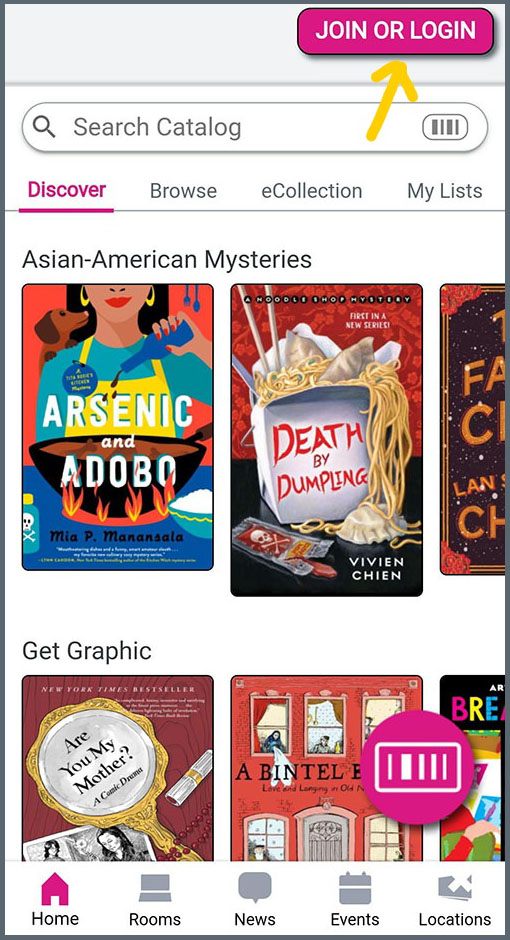
If you install or update the Library App on a mobile device, you may see the JOIN OR LOGIN button in the upper right corner of the home screen.

Join or Login button.

This means you need to add a Library Account to the app before you can place holds, create lists, or do anything related to Library collections.

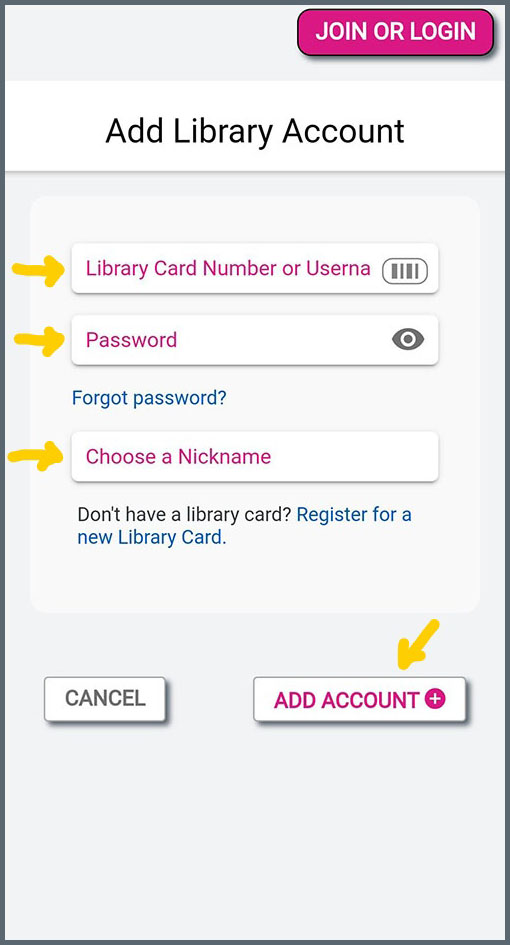
To add a Library Account, you need your library card number/username, and password.

  • If you haven't previously set a username, the default username is your name: FirstMiddle.Last or First.Last - learn more.
  • If you don't remember your password, you can reset it.
  • If you get an error when adding your account, verify your login information by signing in to your account through the Library catalog.


Get Started - Tap the JOIN OR LOGIN Button

Enter Your Library Account info.

Login: Add Your Library Account

  1. Enter your library card number/username.
  2. Enter you Library Account password.
  3. Choose a short nickname for your Library Account (this is just for the app - try initials or abbreviations).
  4. Tap Add Account.

Join

If you don't have a library card tap the Register for a new Library Card link, which takes you to the online library card form.


Open Your Library Acount

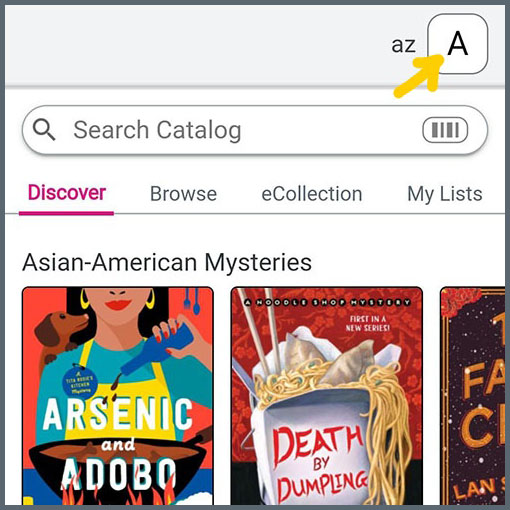
Open Account Panel.

From the Home Screen

  • Tap on your account icon to open your account panel.


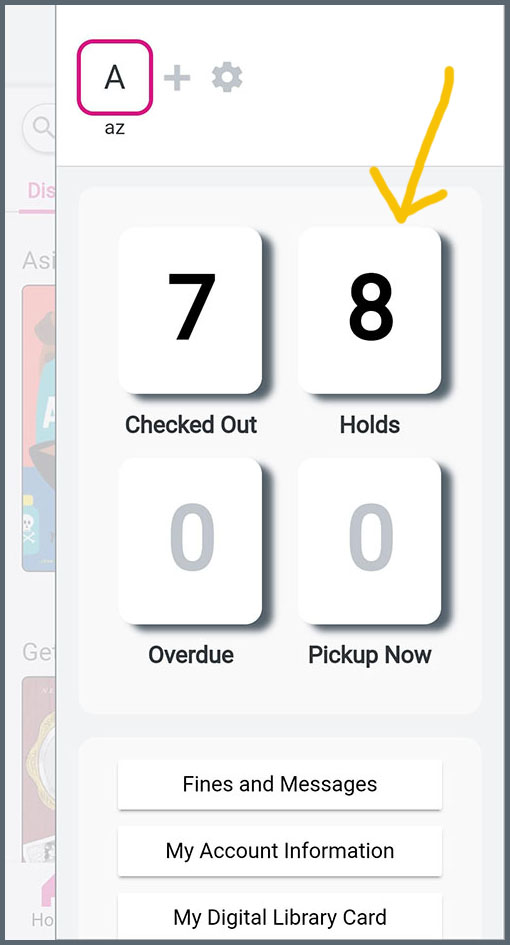
View Your Library Account Information

View Account Info

From your Account panel:

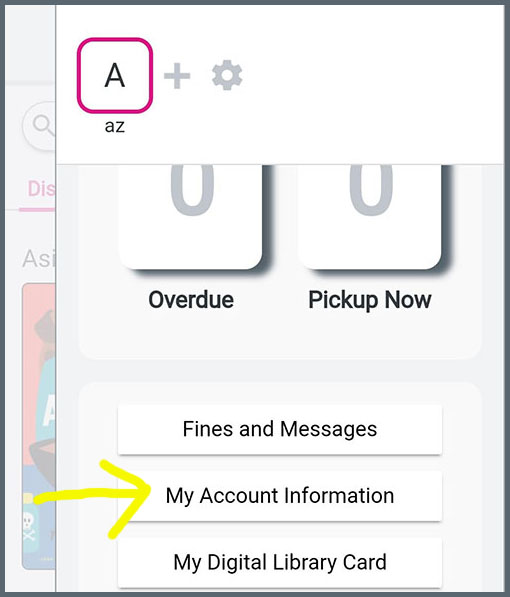
  • Select My Account Information from the menu under the Checked Out / Holds / Overdue / Pickup Now display.


Edit App Profile Settings

My Account Information button
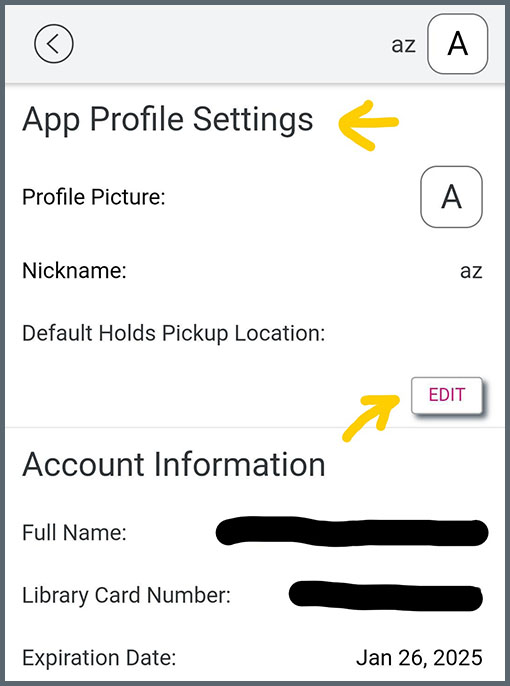
App Profile Settings screen.

To Open App Profile Settings

  • Tap the My Account Information Button in your Library Account Panel

In the App Profile Settings Screen

Tap EDIT to:

  • Change your nickname
  • Set default hold pickup location
  • Set a profile picture from the images on your mobile device

Tap SAVE when done.

Important Note: About the Account Information Screen

Your account information on the lower part of this screen is for reference only. To edit, log into your account on a web browser or speak to Library staff.


Add Multiple Library Accounts

Add additional Library Cards.

Two Ways to Add More Library Cards to Your App

  • Tap on your account icon to open your account panel.
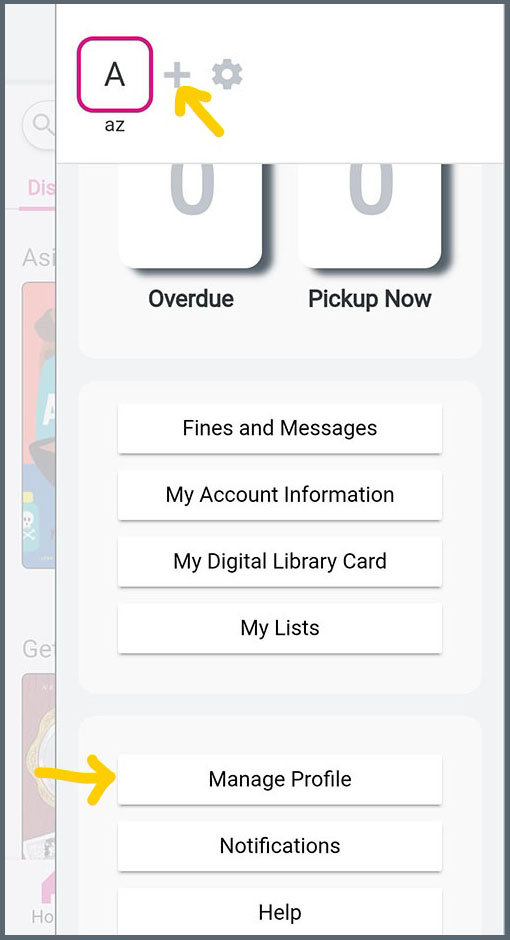
  • Use the + symbol to open the Add Library Account screen, and log in with additional accounts.
  • Use the Manage Profile button to add, move or delete the Library Accounts managed on your app.


Manage Multiple Library Accounts

Switch between accounts in the app.

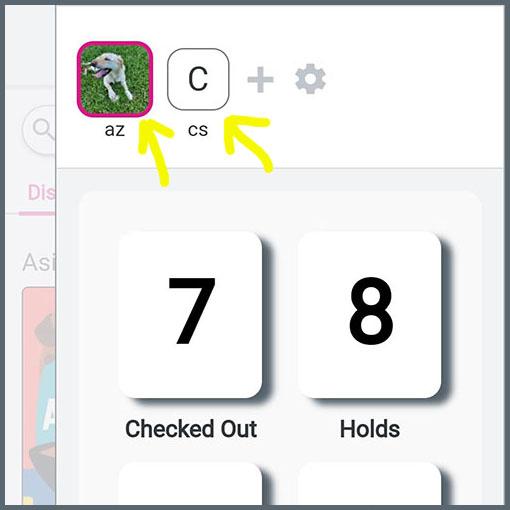
Switch Between Accounts

  • Tap on your account icon to open your account panel.
  • Tap Library Account icons to switch between accounts.


Add, Remove & Reorder Accounts in the App

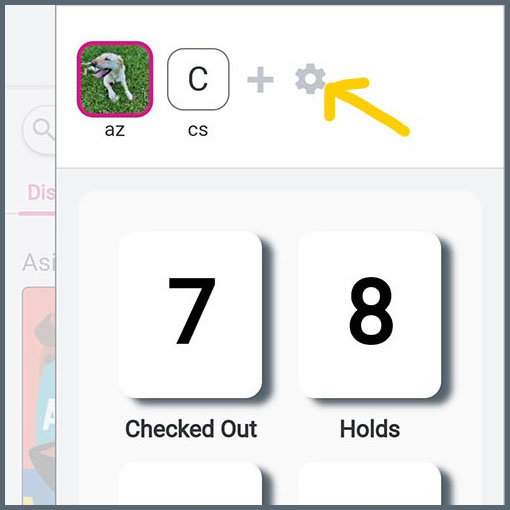
Gear icon in your account panel.
8 Add Remove Accounts

Tap on Your Account Icon to Open Your Account Panel

  • Use the gear icon or the Manage Profile button to go to the Add/Remove Accounts screen.

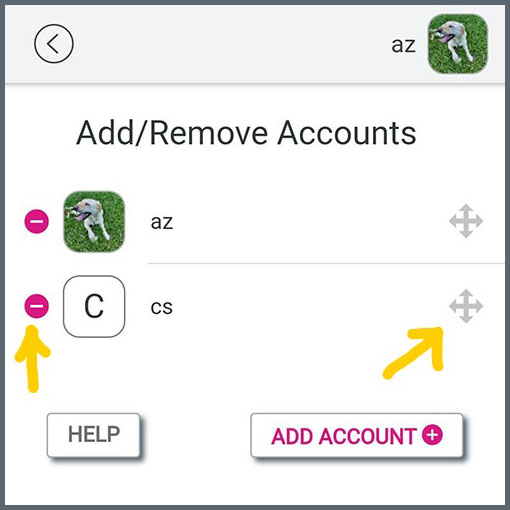
In the Add/Remove Accounts screen

  • Use the delete icon to the left of each Library Account to remove it from the app.
  • Use the directional icon to the right of each Library Account to reorder the accounts in the app.
  • Use the ADD ACCOUNT button to add additional accounts.

Note: The Add/Remove Accounts screen is only for organizing accounts managed on the app.


Use the Library App Feedback Form to send us questions and comments.

The Library App is a collaboration between the Arlington Public Library and Arlington’s Department of Technology Services.

May 31, 2023 by Web Editor

Explore Your Updated Library App!

Post Published: May 30, 2023

The New Arlington Public Library App is Here

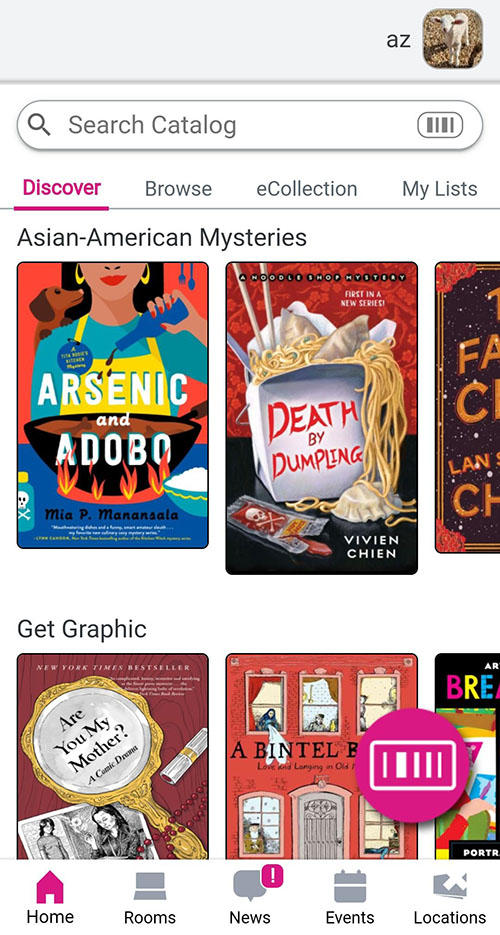
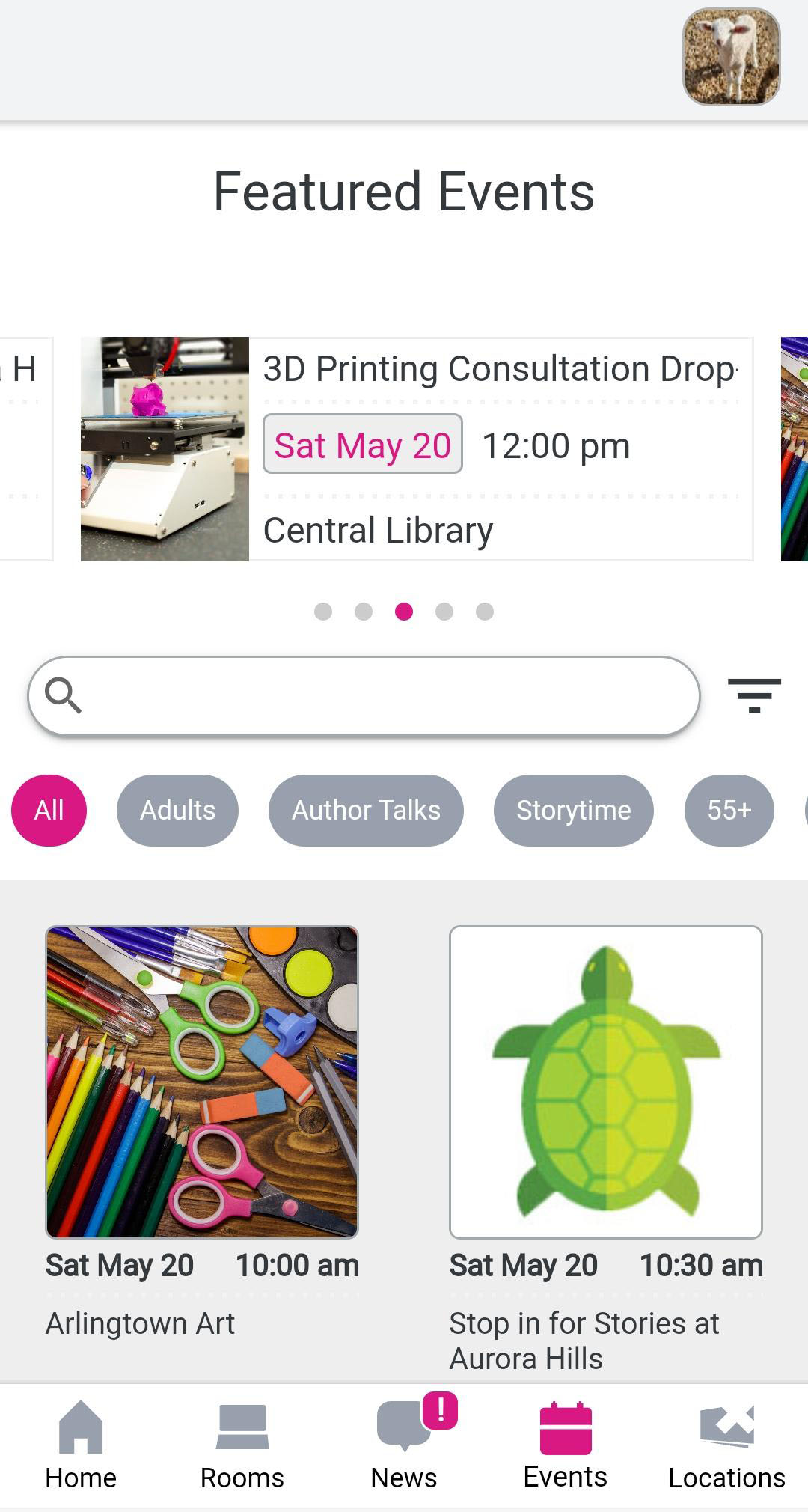
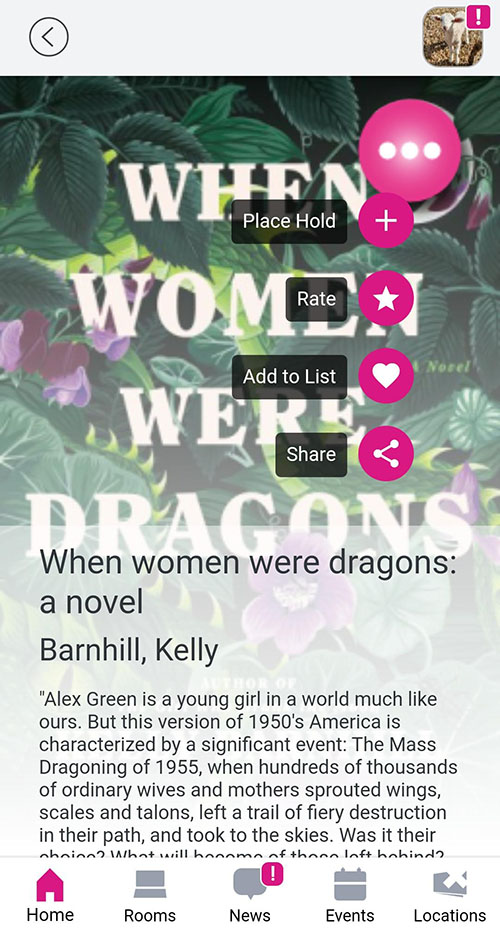
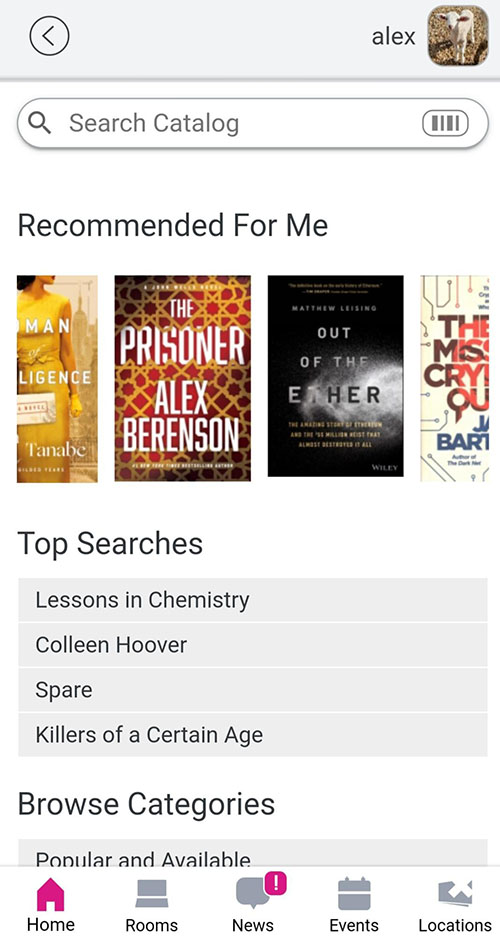
Now available for iOS and Android devices, the updated Library App provides streamlined access to Library collections, introduces new account features, keeps track of multiple card holders, and delivers timely information about Library programs, services, and location updates.

If the app on your device doesn’t update automatically, search your app store for the Arlington Public Library app and manually update to the latest version (v.2.0.17). After updating, you may need to re-enter your account information.

Library app homescreen.
Browse book lists from the homepage.
App featured events screen.
Filter events by interest, date or location.
Rate titles in the app.
Rate titles or add them to your lists.
Recommended titles for me.
Get recommendations based on titles you rate.

New in the Updated App:

  • Browsable booklists and news
  • Create and update your lists in the app
  • Rate titles and see personalized recommendations
  • Place holds on DVD volumes
  • Customize your profile picture
  • Share books and events with your contacts

App Update Improvements:

  • Account overview
  • Event display and filtering
  • Catalog search and refinement
  • Series browse from a catalog record
  • One-touch digital library card

Questions? Comments?

Use the Library App Feedback Form to share your experience.

The Library App is a collaboration between the Arlington Public Library and Arlington’s Department of Technology Services.

May 30, 2023 by Web Editor

Video: History of the American Nazi Party in Arlington

Post Published: November 3, 2022

With Local Author and Historian Charlie Clark

Watch now: https://youtu.be/2m-9t8UznbQ

Since the violent protests by white supremacists in Charlottesville, VA in 2017, the threat of renewed political agitation by neo-Nazis has haunted public safety officials. There may be some lessons to be learned by looking into our own local history.

Why did George Lincoln Rockwell, a former American Navy veteran, choose Arlington County as his base of operations for his racist and anti-Semitic American Nazi Party?  This and other questions are answered in Clark’s illustrated talk, presented in partnership with the Center for Local History.

A longtime journalist in the Washington, D.C. area, Charlie Clark writes the weekly “Our Man in Arlington” column for the Falls Church News-Press. He has just published his fifth book, a memoir of adolescence titled “My Gap Year–Reinterpreted.” Last year he published “George Washington Parke Custis: A Rarefied Life in America’s First Family,” with McFarland Books. With the History Press, he has published “Lost Arlington County, Arlington County Chronicles,” and “Hidden History of Arlington County.” In July 2019, he retired as senior correspondent for Government Executive Media Group, part of Atlantic Media. He previously has worked as an editor or writer for The Washington Post, Congressional Quarterly, National Journal, Time-Life Books, Tax Analysts and the Association of Governing Boards of Universities and Colleges. He lives in East Falls Church with his wife Ellen.


November 3, 2022 by Web Editor

Ronald (Ron) Deskins: A Quiet Pioneer for Civil Rights

Post Published: June 23, 2022

The Center for Local History reflects on the passing of Ronald Deskins, a pioneer of the Civil Rights movement in Arlington County.

In Defiance of Massive Resistance

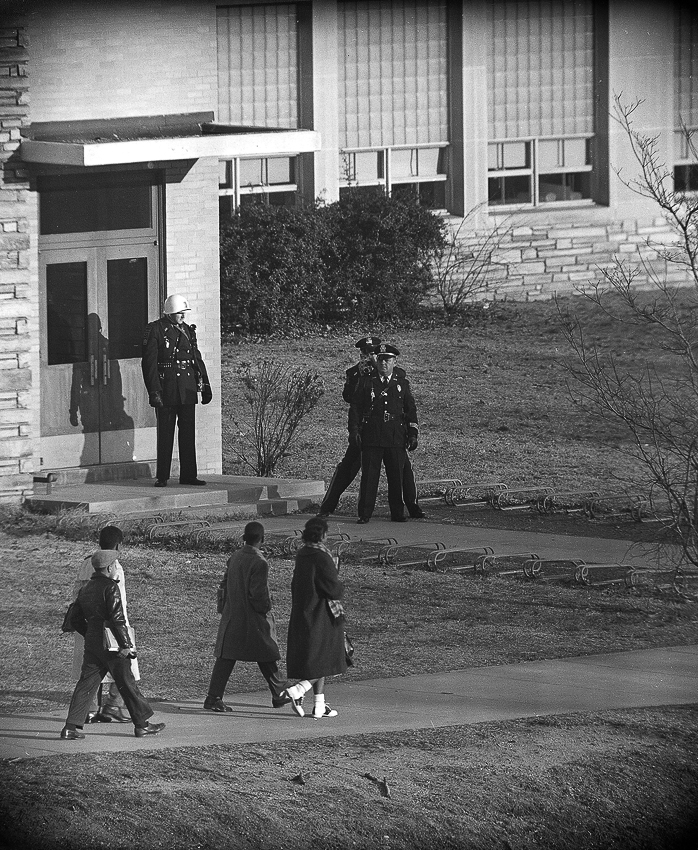
At the young age of 12, Ron Deskins played a crucial role in integrating Virginia public schools. On Feb. 2 1959, Deskins, along with classmates Michael Jones, Gloria Thompson, and Lance Newman, entered then all-white Stratford Junior High in quiet but determined defiance of Virginia Senator Harry Byrd’s policy of Massive Resistance.

This historic moment – often referred to by the press at the time as “The Day Nothing Happened” owing to the lack of violence – is now marked by banners at Dorothy Hamm Middle School, housed since 2019 at the original site of Stratford Junior High School.

"I was pretty nervous that first day," Deskins said at a 2016 tribute to the actions taken in 1959. He went on to mention that a few students "made it their business to make our lives miserable…They were not successful…Although they called us plenty of names."

Three police officers stand at the entrance to Stratford Jr. High School as the four black students enrolled in the previously all-white school arrive for classes in Arlington, Va., on Feb. 3, 1959. One of the officers records the scene with a movie camera. Approaching the entrance are, left to right, Lance Newman, 13, Ronald Deskins, 12, Michael Jones, 12, and Gloria Thompson, 12. (AP Photo)

Three police officers stand at the entrance to Stratford Jr. High School as the four black students enrolled in the previously all-white school arrive for classes in Arlington, Va., on Feb. 3, 1959. One of the officers records the scene with a movie camera. Approaching the entrance are, left to right, Lance Newman, 13, Ronald Deskins, 12, Michael Jones, 12, and Gloria Thompson, 12. (AP Photo)

Edward Hummer, a fellow Stratford and W-L student, interviewed Ronald Deskins for induction into the W-L Athletics Hall of Fame in 2018. At the time, Deskins was volunteering at a public library in Berryville, VA. Hummer recalled the experience of speaking with Deskins about his life:

“I was struck when I read about his very first reaction upon entering his first classroom...The four black kids were taken in a rear door to escape the throng at the front door…the other kids in Ron's homeroom were already seated and had been prepared for his arrival. When he was escorted in a few minutes after the bell, all their heads naturally turned to him as he entered. His first thought on seeing all those heads turn his way was to say to himself, "It's just me."

black and white photograph of 4 black students entering Stratford Junior High in 1959

Ronald Deskins, Michael Jones, Lance Newman, and Gloria Thompson walked into Stratford Junior High School on February 2, 1959. (AP Photo)

Dorothy Hamm Assistant Principal Lisa Moore remarked that it is "our expectation, for all our students and staff to know this history. The history that took place in this building, they need to know that, and live that."

"Our hearts are devastated," Moore added. "This was a huge loss for our community."

Mr. Deskins’ self-effacing manner was typical of his attitude towards his accomplishments and the contributions he made during his lifetime, including his role in the integration of the Fairfax County Fire Rescue Department. Mr. Deskins was the fifth Black firefighter employed by Fairfax County and he helped establish Northern Virginia Minority Firefighters Combined. He eventually achieved the rank of Captain and retired after 34 years of service.

Edward Hummer remembers the man who thought of himself as just me as “quite a guy. It was a great pleasure and a great honor for me to get to know him so many years later when he was inducted into the W-L Athletic Hall of Fame. I am greatly saddened by his death.”

The Center for Local History (CLH) at the Arlington Public Library collects, preserves and shares historical documents that tell the history of Arlington County, its citizens, organizations, businesses and social issues.

The CLH’s Community Archives includes thousands of pages of material related to the desegregation of Arlington Public Schools, and makes these materials available to students, researchers, scholars, authors, teachers and the community.

To learn more visit the Project DAPS website and read the 2018 blogpost, The Desegregation of Arlington Public Schools.

Because there are always more layers of history to find and examine, the CLH continually seeks community donations and oral histories; use this form to send a message to the Center for Local History or contact us at localhistory@arlingtonva.us.

Center For Local History - Blog Post Message Form

Do you have a question about this story, or a personal experience to share? Use this form to send a message to the Center for Local History.

"*" indicates required fields
This field is for validation purposes and should be left unchanged.

Share Your Story

June 23, 2022 by Web Editor

Milton Rowe: Dedication to Country, Community and Family

Post Published: June 2, 2022

Roots, Family and Legacy

Milton Isiah Rowe, Sr., (1925-2016) was born in Washington, D.C., to Hester and Isiah Rowe. His family moved to South Arlington, a community where they had longstanding family ties, in 1927, when Rowe was a young child.

With this move, Milton Rowe began his long life as a Green Valley resident. Over the next 89 years he served in many community and civic roles across the County, and became part of an Arlington legacy.

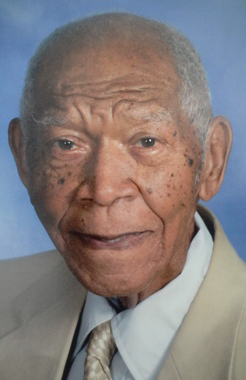
Milton Rowe

Milton Rowe

Family Ties in Arlington

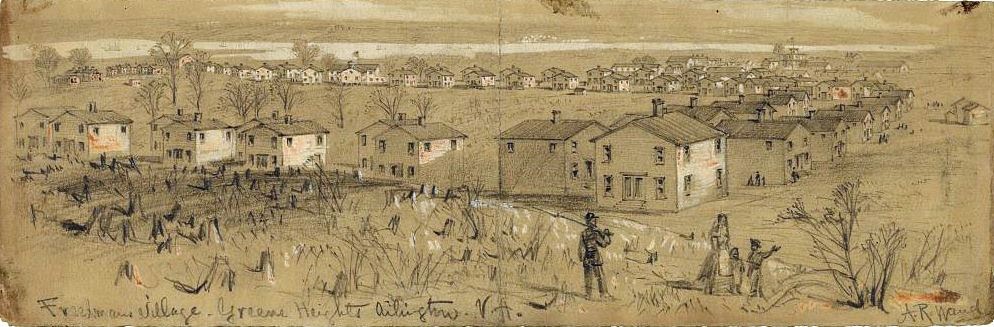
Milton Rowe's great-grandfather was William Augustus Rowe (1834-1907), a pivotal figure in the early development of the Green Valley neighborhood. William Rowe had been born enslaved, and later escaped to Freedmans Village in Arlington.

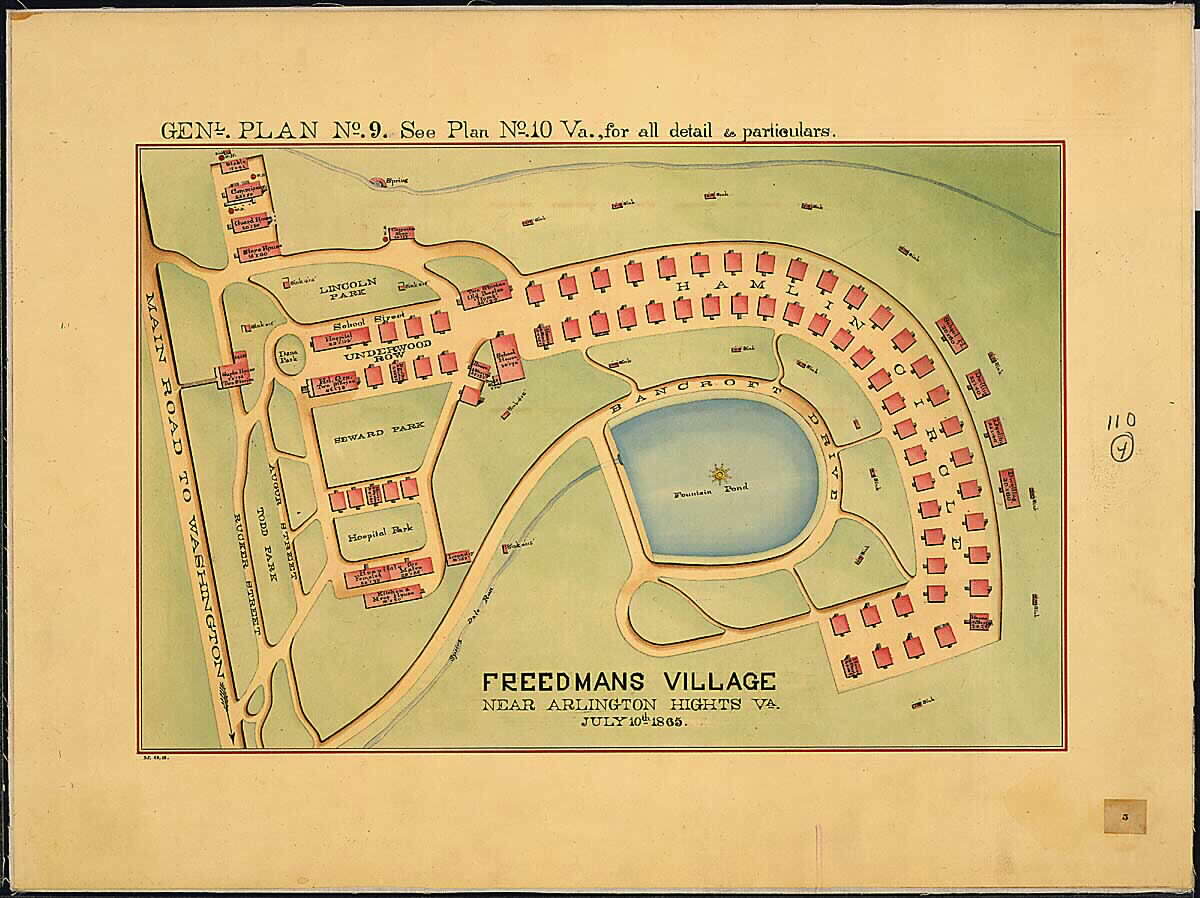
Freedmans Village was established in 1863 on land seized from Robert E. Lee and occupied by the Union Army during the Civil War and became a thriving community for freed slaves.

Ink painting on brown canvas of Freedman's Village

Artist representation of Freedmans Village, circa 1864.

William Rowe first trained as a blacksmith and later served in numerous civic roles, including as the first Black member of the Board of Supervisors and Arlington District Board Chairman.

Learn more about William Augustus Rowe in our blogpost from March, 2021.

Hand drawn and inked map of Freedman's Village

Map of Freedmans Village, circa July 1865.

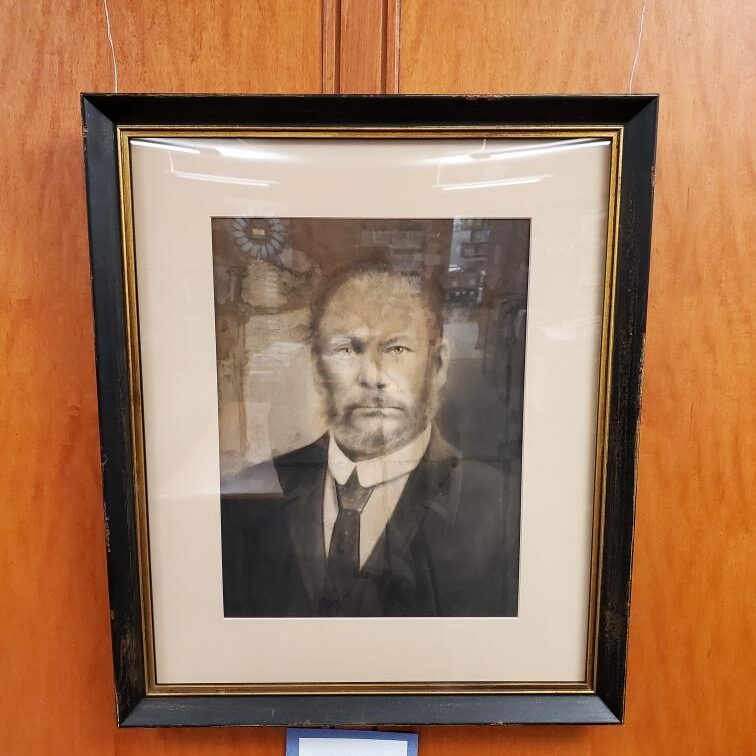
William Rowe

A portrait of William A. Rowe currently hangs in the Center for Local History.

Growing up in Green Valley before WWII

Milton Rowe first attended Kemper Elementary School in Green Valley. At this point, Arlington’s public school system was still segregated. Kemper was the school designated for Black children, and had opened in 1875 within Lomax A.M.E. Zion Church.

By 1893 the school had moved into a new brick, two-story building constructed by Noble Thomas, the first Black contractor in the County. Hoffman-Boston School was the only secondary school available to Black children in Arlington, and many chose to commute outside of the County for educational options.

Rowe attended Garnet-Patterson Junior High School and Armstrong Technical High School in Washington, D.C., for his secondary education. Armstrong was one of only two high schools open to Black students at the beginning of the 20th century

During and After WWII

After high school, Milton Rowe went on to work at the Pentagon and subsequently enlisted into the Coast Guard, where he served on the USS Pocatello during WWII.

Upon his honorable discharge, Rowe returned to the Arlington area to work at the Pentagon and on March 31, 1945 married Ruth Mae Robinson, who also worked at the Pentagon as a typist. They were married in Lomax A.M.E. Zion Church, the church William Rowe and his wife Ellen helped organize in 1863 and where William Rowe had also been an early member.

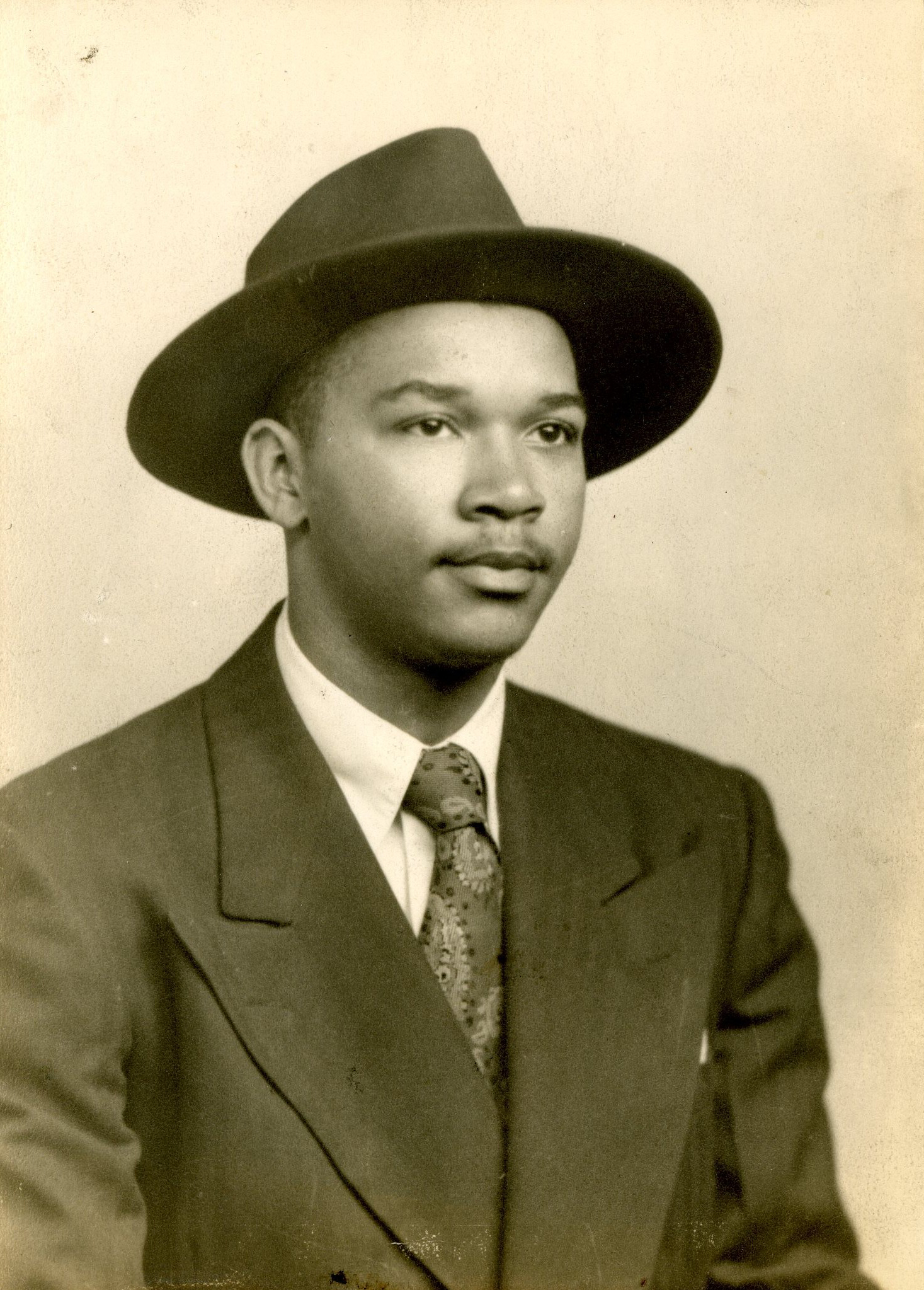
Young African American Man wearing a hat and suit.

Milton Rowe, date unknown.

Ruth and Milton Rowe went on to have four children – Gloria, Milton, Jr., Elroy and Brian (as of June 1, 2022, there are 2 daughters-in-law, one son-in-law, 12 grandchildren, 11 great grandchildren and 3 great, great grandchildren).

In 1995, Milton and Ruth celebrated their 50th wedding anniversary. Ruth died in 2004.

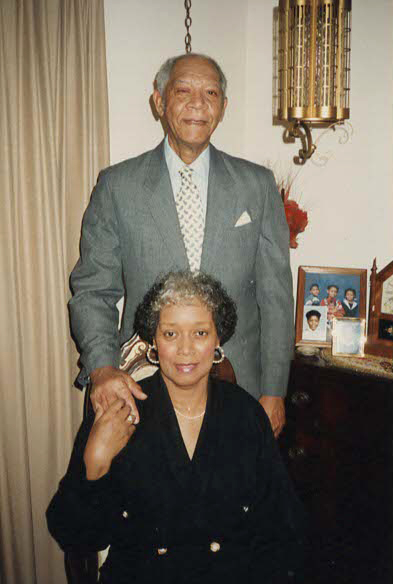
Ruth and Milton Rowe

Ruth and Milton Rowe.

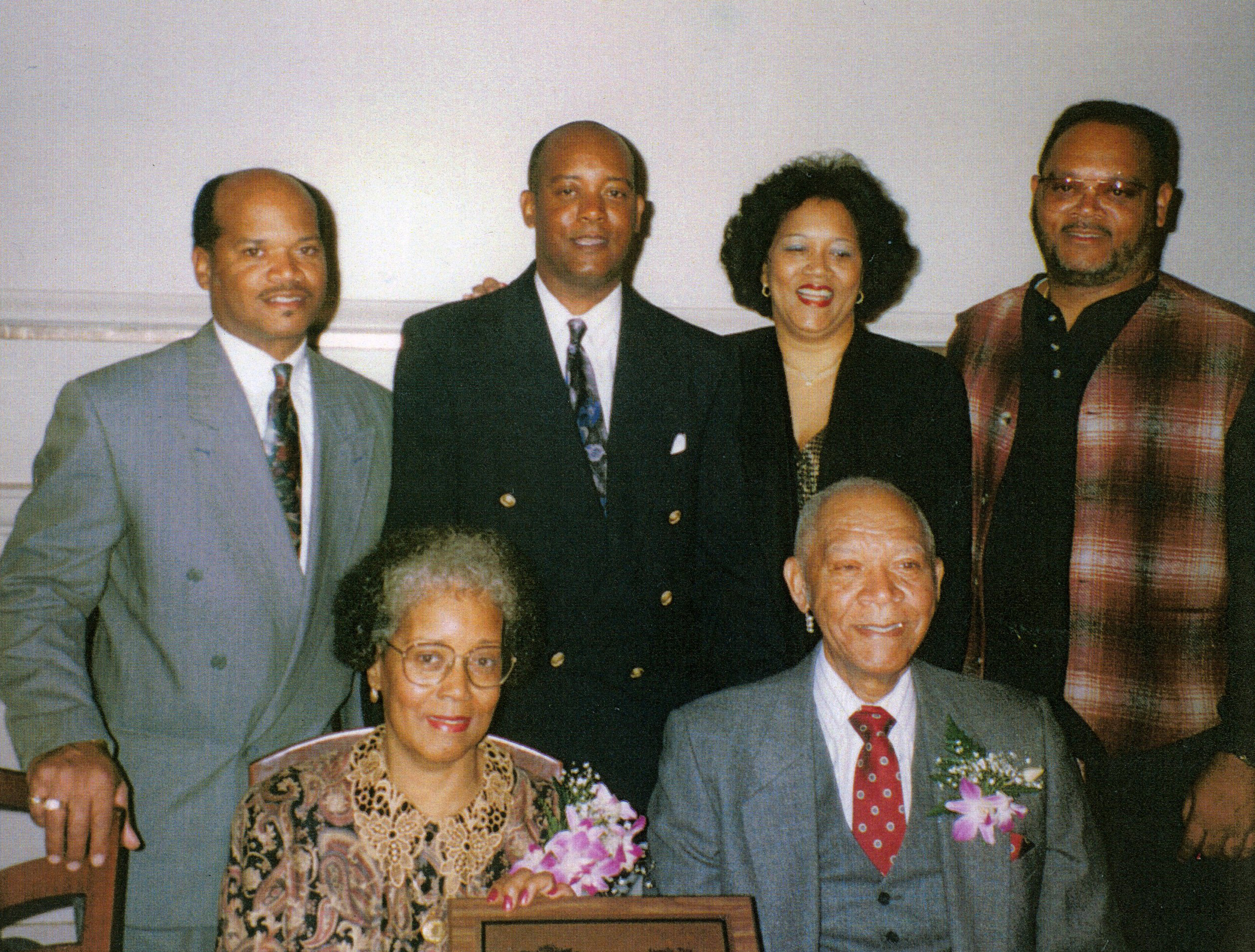
Rowe Family 50th anniversary

The Rowe Family at Ruth and Milton's 50th wedding anniversary party.

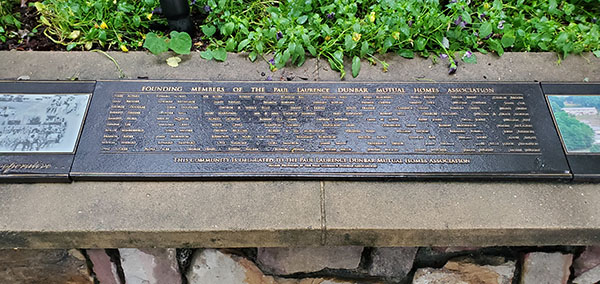
Paul Dunbar Housing Community

Milton and Ruth Rowe were early owners of a home in the Paul Dunbar housing community in Green Valley, a wartime housing unit for Black residents built in 1944 by the Federal Public Housing Authority. They featured 15 masonry buildings with 86 units.

The Dunbar Homes were one of two major housing cooperatives established during the war, along with the George Washington Carver Homes. After the war, Black residents pooled their resources and bought the housing complexes, establishing the first two Black-owned housing cooperatives in the country. The Dunbar Mutual Homes Association maintained the property until 2006, when it was demolished.

In 1955, the couple built and relocated the family into a home near the Army Navy Country Club in south Arlington.

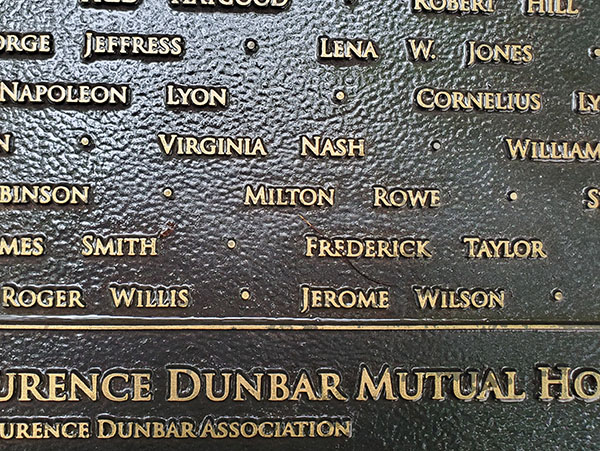
Dunbar Housing Association Plaque
Dunbar Mutual Homes Milton Rowe Plaque

A historic marker celebrating the original members of the Paul Lawrence Dunbar Mutual Homes Association is located at the corner of Shirlington Road and South Four Mile Run, across from the W&OD Trailhead.

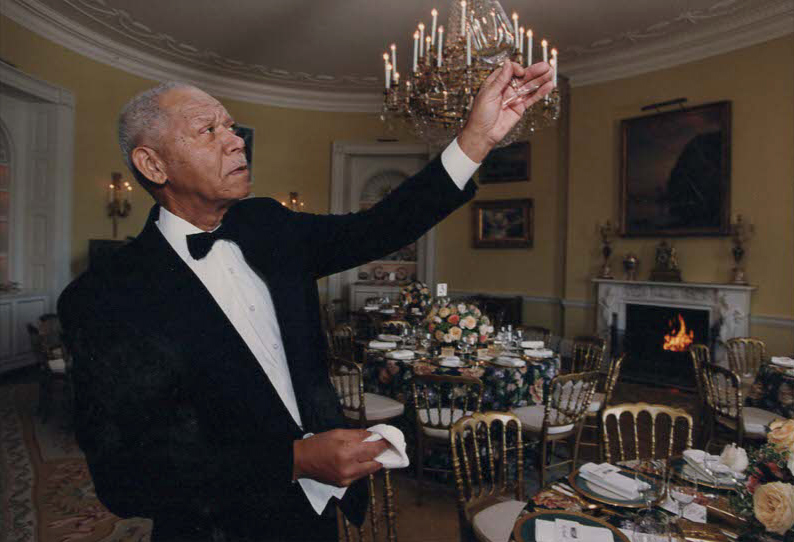
Professional Butler for Embassies and the White House

Rowe retired from the Pentagon after 37 years of service with the army, receiving many letters of commendation for his outstanding performance of duty.

He continued his career as a professional butler, a second job he held throughout his working life.

In this role, he worked at various embassies and the home of Robert F. Kennedy in McLean. There, he remembered meeting John F. Kennedy, whom he once loaned a pair of boots to on a snowy Virginia day. 

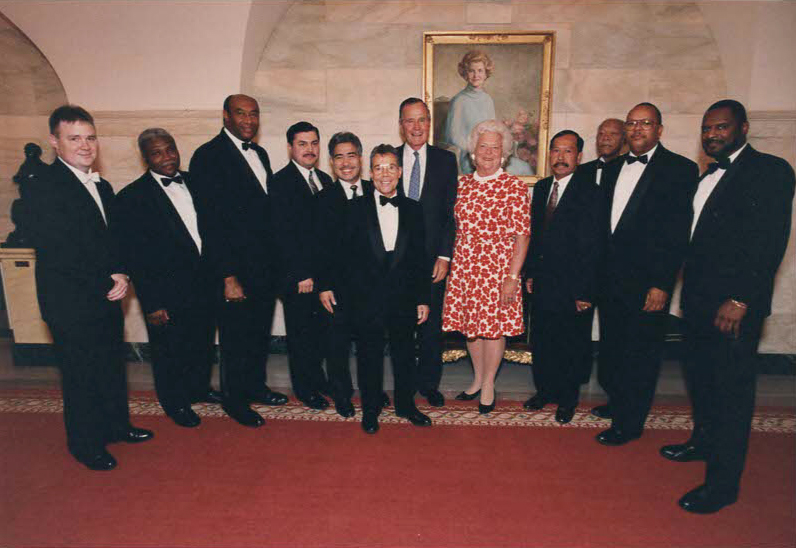
Rowe also served at numerous events at the White House, where he met many of the presidents of the 20th century. 

Milton examins a wine glass.

Rowe at work at the White House.

10 Butlers stand with the President and First Lady.

White House butlers with President George W. Bush and his wife Barbara .

Community Engagement

Milton Rowe was active in the Green Valley community and served on the Trustee Boards and various committees at Lomax A.M.E. Zion.

He was also a member of the Nauck Citizen’s Association (now the Green Valley Civic Association), the Arlington Housing Committee, the NAACP, the Y.M.C.A., the American Legion, and several seniors’ groups. He was also an advisor to his sons’ Boy Scouts Troop #589, which has a historic legacy as one of the first local scouting groups for Black children, established in 1952 by Ernest Johnson.

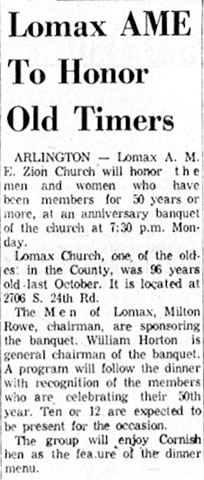
Lomax AME Zion Church will honor the men and women who have been memmbers for 50 years or more at an anniversary banquet of the church at 7:30 p.m. Moday. Ten or twelve are expected to be oresent for the occasion.

A February 17, 1962, Northern Virginia Sun article mentions Milton Rowe’s role as chairman of the Men of Lomax organization, along with details from a church event. Newspaper image courtesy of Virginia Chronicle.

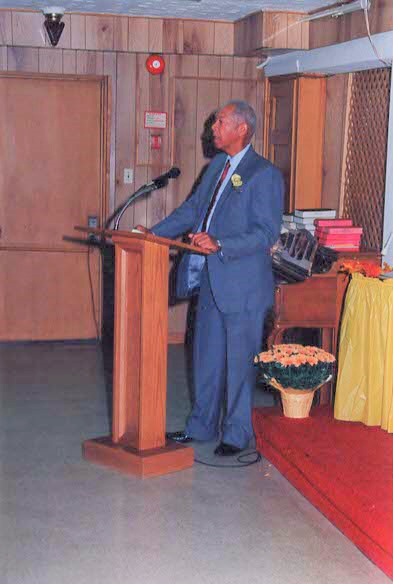
Milton Rowe at podium.

In 2010, NBC reported on Milton Rowe in a feature about the legacy of Freedmans Village on the grounds of Arlington National Cemetery. The cemetery was constructed on the grounds of Freedmans Village, which had been closed by the government in the 1890s to make way for the burial grounds. The closure of Freedmans Village displaced the nearly 1,000 Black residents who had made their homes there. No markers exist to commemorate the freed slaves who had once lived on the land.

Milton Rowe’s life touched many important parts of the County’s history, and his legacy lives on through his many achievements and experiences that made him a pillar of both Green Valley and Arlington at large.


Learn more: Milton Rowe is featured in Dr. Alfred O. Taylor’s book “Bridge Builders of Nauck/Green Valley: Past and Present.”

The Center for Local History at the Arlington Public Library collects, preserves and shares historical documents that tell the history of Arlington County, its citizens, organizations, businesses and social issues. The CLH operates the Research Room at Central Library and the Community Archives program.

Because there are always more layers of history to find and examine, the CLH continually seeks community donations and oral histories.

Use this form to send a message to the Center for Local History or contact us at localhistory@arlingtonva.us.

Center For Local History - Blog Post Message Form

Do you have a question about this story, or a personal experience to share? Use this form to send a message to the Center for Local History.

"*" indicates required fields
This field is for validation purposes and should be left unchanged.

Share Your Story

June 2, 2022 by Web Editor Tagged With: Green Valley

Oral History: Gertrude “Trudy” Ensign

Post Published: May 12, 2022

U.S. Army Intelligence Analyst During World War II

ArlingtonVoices800pxpinksoundwave

Oral histories are used to understand historical events, actors, and movements from the point of view of real people’s personal experiences.

1920-2022

The life of long-time Arlington resident Gertrude "Trudy" Ensign was recently memorialized at Clarendon United Methodist Church. Born October 4, 1920 on a farm in southwest Iowa, Ensign left Iowa to take a job with the Army Security Agency (a precursor to the NSA) during World War II, settling in Arlington, where she lived until her death on February 28, 2022.

In November 2017, Ensign recorded an oral history with the Center for Local History. She spoke about her work during the war, as well as life in Arlington.

In this excerpt from the oral history, she talks about her work during the war. While not a code breaker herself, Ensign worked in Army communications.

Link to oral history blog post.

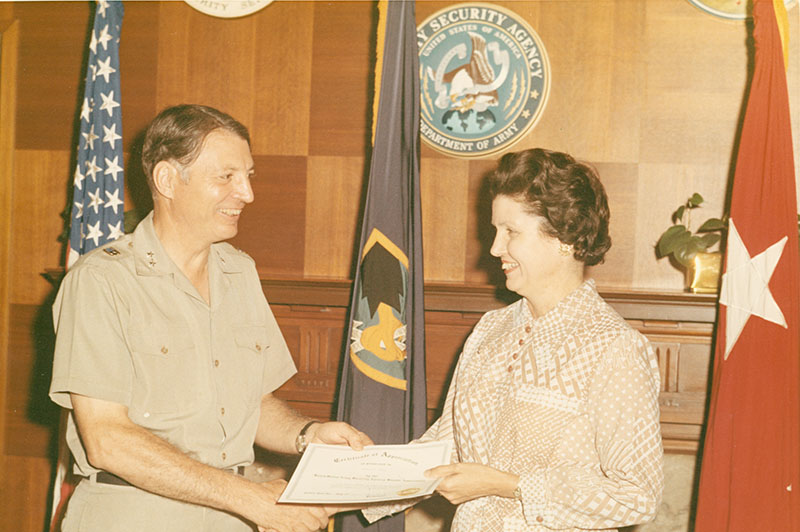
Col. Mosser presents Mrs. Gertrude C. Brown (Ensign) with an Outstanding Performance Rating Award on 30 March, 1971 at Arlington Hall Station (from reverse of photo)

Narrator: Gertrude Ensign
Interviewers: Judith Knudsen
Date: November 6, 2017

INTERVIEWER: Well, when you say there were people there, they were cracking Japanese code. That was not your job.

NARRATOR: Yes. Not my job.

INTERVIEWER: So what codes were you getting? Were you getting the codes that had been cracked, and then you had to encipher with the—

NARRATOR: Okay. This is the part that I think we have to understand, that none of this could happen if we didn’t have field stations.

INTERVIEWER: Okay.

NARRATOR: Because that’s where our intercept came from. Like Vint Hill Farm was an intercept station, and they had a whole field of antennas up out in the field. There were field stations in the Pacific, and there were field stations in Alaska. I think there were some in Europe, too. It made sense. If not field stations, then they had some other options. Maybe they had direction-finding stations, which, you know, you have a unit with direction equipment, maybe 180 degrees, and if you all were pointing at this thing, then you would be able to intercept—find a station, an enemy station you were looking for, and be able to intercept them.

INTERVIEWER: Okay.

NARRATOR: And if you could do that, then you could identify the location, because you were getting the signals from different locations based on where you were. So that was really the part that—our part of what happened at ASA [Army Security Agency]. I mean, we knew that there was a whole building called B Building where they were trying to break the codes. But that was not any of what we were concerned with. When the codes were broken I guess they went wherever they were supposed to go, which would have been, you know, teletyped there someplace else. But anything that we—most that we handled was administrative and keeping the field stations open and things like that. After the war we probably had more like regular communications, because we’d have the commanders of the different field stations come back in. At that point I had moved to a different job, because when—during the war there was no question about you having a job there. But when the war was over, one of the bosses came out to me one day and said, “You know, the war’s over, and the boys are coming back. They said there’s a gentleman here in the area that has the same qualifications you do, because he worked in the field during the war. And he has a promote—he can take your job,” in other words. But they said, There’s a job open down in what we call GAS50, and you can go down and apply for that job. Well, it sort of took me by surprise, of course, but that’s exactly what I did. That job then, the gentleman that interviewed me said, “Well,”—I think I was a GS6, 00:11:00 and he said, “You’ll have to take a break to a GS5.” But then he said, “When you get your promotions, it’ll be a GS5-7-9-11-13,” and so that’s what I did then. So when I retired I was GS13, which was a very nice grade.

INTERVIEWER: Yes, it is a very nice grade.

NARRATOR: It left me a very nice income.

The goal of the Arlington Voices project is to showcase the Center for Local History’s oral history collection in a publicly accessible and shareable way.

The Arlington Public Library began collecting oral histories of long-time residents in the 1970s, and since then the scope of the collection has expanded to capture the diverse voices of Arlington’s community.

To browse our list of narrators indexed by interview subject, check out our community archive. To read a full transcript of an interview, make an appointment to visit the Center for Local History located at Central Library.

Do you have a question about this story, or a personal experience to share? 

Use this form to send a message to the Charlie Clark Center for Local History.

Center For Local History - Blog Post Message Form

Do you have a question about this story, or a personal experience to share? Use this form to send a message to the Center for Local History.

"*" indicates required fields
This field is for validation purposes and should be left unchanged.

Share Your Story

May 12, 2022 by Web Editor

The Henry Louis Holmes Library, 1940-1949

Post Published: February 17, 2022

Created by Arlington's Black Residents to Serve Their Community During Segregation

What follows is the first in-depth history of the Holmes Library, and of segregated library services in Arlington County. Drawn from primary source material held in the Arlington Community Archives as well as the work of researchers at other regional libraries, this history aims to honor the volunteer-led efforts of Arlington’s Black community, and to answer two critical questions: When and why did Arlington desegregate its public libraries?

The story of Arlington’s first library for Black patrons is one of an extraordinary grassroots effort led by members of Arlington’s Black community.

The Henry Louis Holmes Library was established in 1940 as a community-led facility to fill in the gap created by segregationist County and state policies. In order to bring books and material resources to the County’s Black residents who had been denied such services, a group of Black Arlingtonians worked together in order to establish an independent branch.

The Holmes Library would later join the still-segregated County library system as the only branch available to Black Arlingtonians until its closure in 1949, and the subsequent desegregation of Arlington's libraries in 1950.


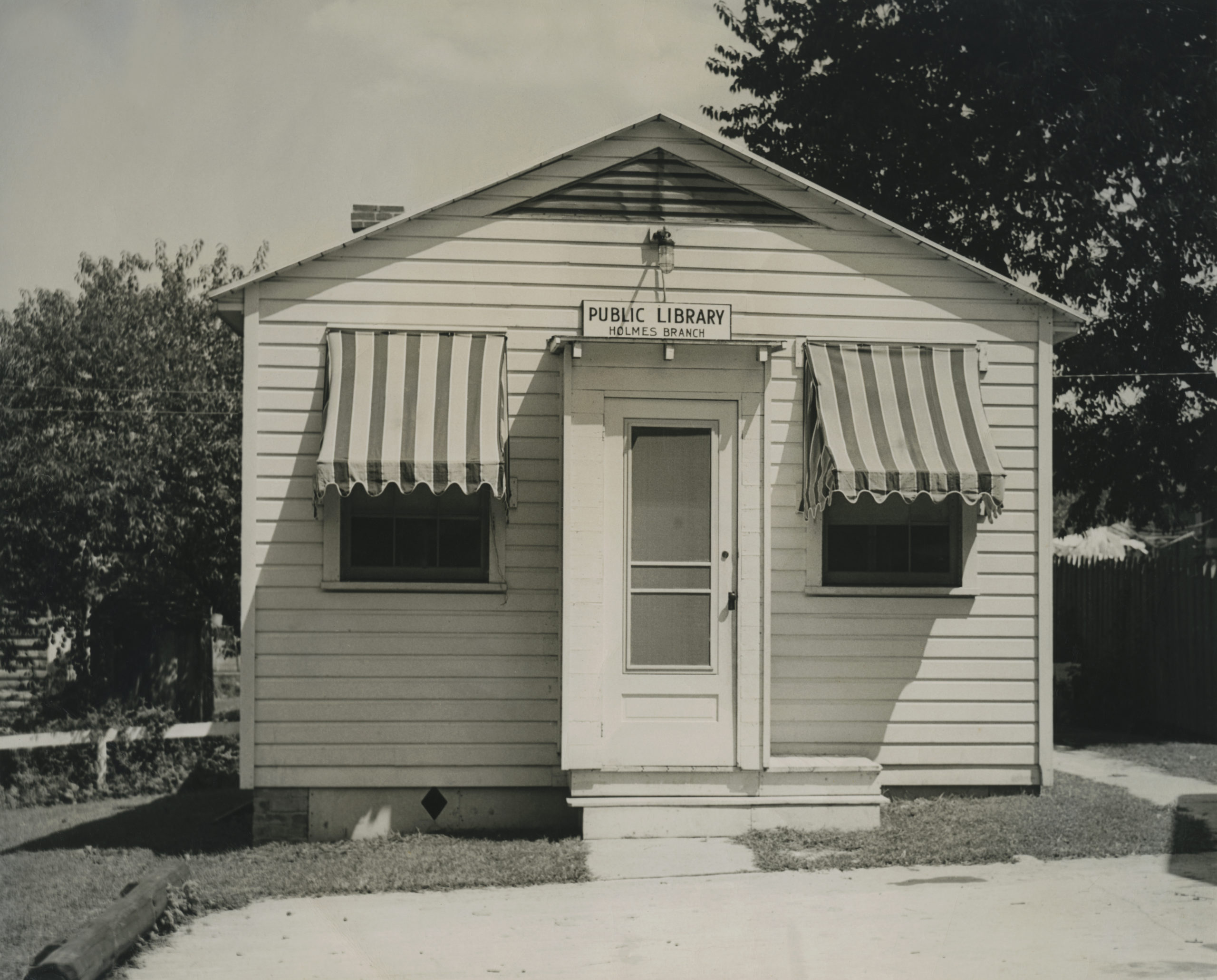
Exterior of the Holmes branch of the Arlington Public Library system. 1946, 1 print, b&w, 8 x 10 in..

Exterior of the Henry Louis Holmes
Library branch, 1946. The building was located in the George Washington Carver Homes complex at 13th Street South and South Queen Streets.

An Exclusionary System

Arlington’s at-large library system began as a series of volunteer-run organizations, which were later incorporated into the County in 1937. Volunteer and civic groups across the County’s neighborhoods started five local branches in the early 20th century: Glencarlyn, Cherrydale, Clarendon, Aurora Hills, and Arlington (later Columbia Pike).

After operating independently for years, in 1936 the Arlington County Library Association was formed, and the following year Libraries became an official County department with a budget that included an allocation of funds for the hiring of a library director.

From their founding, these branches only provided services to white constituents.

Libraries in Other Municipalities

The neighboring jurisdictions around Arlington were similarly segregated during the Jim Crow era, and followed a similar pattern of segregated volunteer-led branches that incorporated into segregated municipal systems. From the 1930s-1960s, libraries became an increasingly significant issue in the fight for equal access to public services, in both the state and the nation. In some places, it took decades to achieve integrated facilities.

In one notable local case, in August 1939, a group of Black Alexandrians held a sit-in at the Queen Street branch of the Alexandria City Public Library, protesting the denial of resources to Black members of the community. Police arrived and arrested the protesters for “disorderly conduct.” Samuel Wilbert Tucker (1913-1990), a lawyer who led the demonstration, was prepared to challenge the City in court, but the City stalled negotiations in an effort to resist integration.

Against Tucker’s wishes for integration, the City instead built a segregated library for Black patrons, which would remain the only option available to Black Alexandria residents until desegregation in the 1960s. The Robert H. Robinson Library was incorporated into the Alexandria system less than a year after the sit-ins under the “separate but equal” segregationist doctrine.

At this time, the only library available in Arlington to Black children was the school library at Hoffman-Boston School, which operated as the only secondary school for Black students until the public school system desegregated in 1959.

Library

Students study in the Hoffman-Boston School
library, circa 1950. Image from RG 307.

An Association to Organize the Library

Facing this lack of local and accessible resources, a group of Black Arlington residents, without financial assistance from the County, came together to establish the Henry Louis Holmes Library Association in July 1940, to maintain a library for use by the Black community. Since this library would serve Black residents across the County, representatives from organizations across Arlington were also called to join in in the efforts. Early members represented the Civic Association of Halls Hill, the Nauck neighborhood and the Jennie Dean Club.

A Board of Directors was also assembled, including the Reverend A. Mackley (representing Mount Olive Baptist Church), Mrs. Henry Chapman, Mrs. Jessie Pollard, Mrs. Annie Belcher, and Mrs. Nora Drew (Mrs. Drew was the matriarch of the Drew family and mother of Charles Drew, a pioneering surgeon and founder of the modern-day blood bank. Her daughter, Nora Drew Gregory, later became a well-known library advocate as a library board trustee for Washington, D.C.).

The group then selected officers and committees, including the Constitution; Name; Books; Accessioning and Cataloging; Program; Ways and Means; Publicity; and Rooms committees. Selected as its first president was Kitty Bruce, with Marie Ponce serving as secretary. Kitty Bruce was chairwoman of the Arlington Inter-Racial Commission and a teacher at the Francis Junior High School in Washington, D.C., a school for Black children living in the Foggy Bottom and Georgetown neighborhoods.

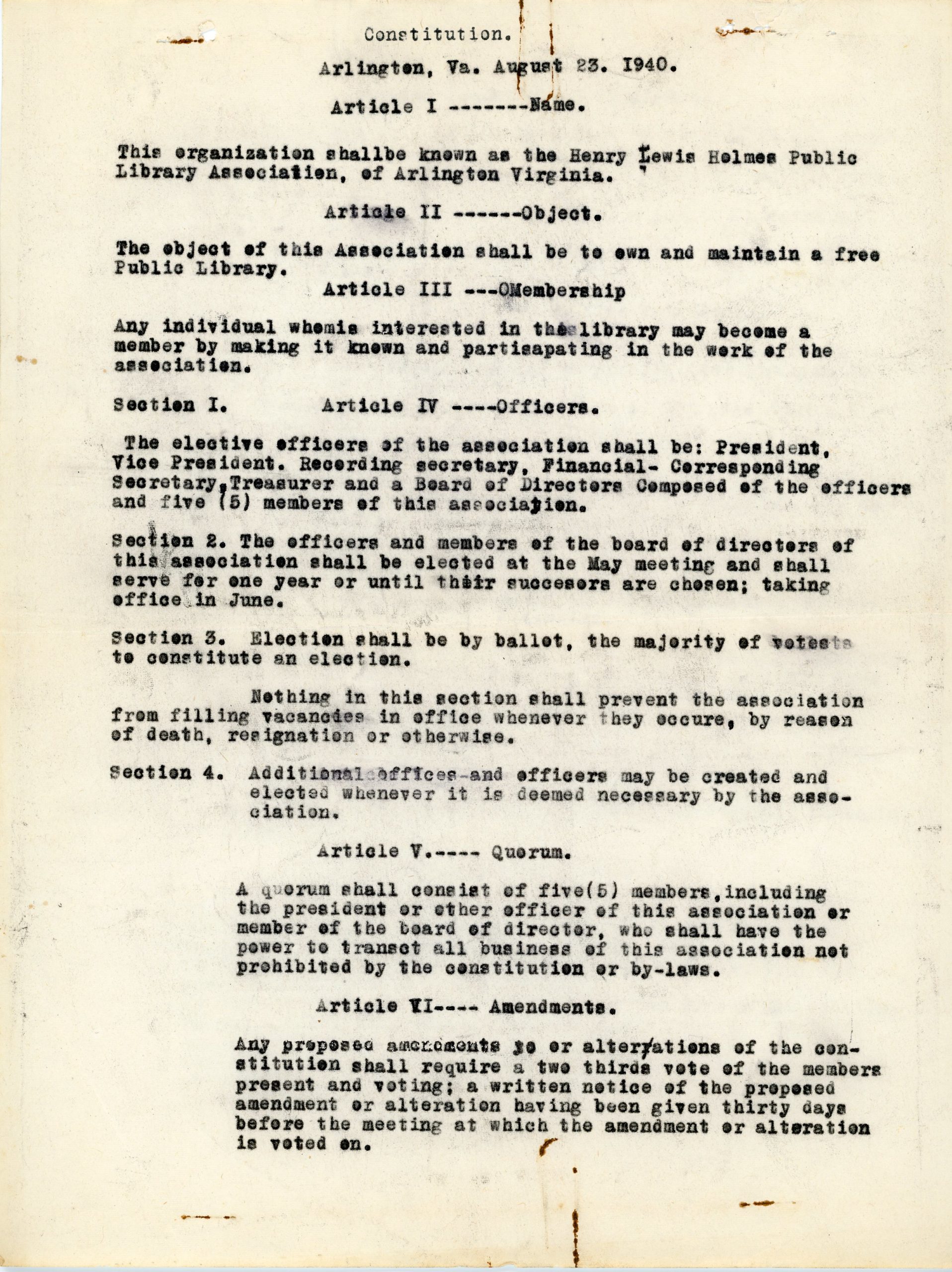
img009

The first page of the Holmes Library Association Constitution. It is notable that the library association, while formed with the intention of serving the Black community, wrote that “Any individual who is interested in the library may become a member by making it known and participating in the work of the association.”

Honoring the Past

In August 1940, the Library Association voted to honor Henry Louis Holmes in both its name and the name of its forthcoming branch. Holmes had been a prominent local civic leader, serving as the elected Commissioner of Revenue for Alexandria from 1877 to 1904. Previously enslaved, Holmes had come to Freedman’s Village in Arlington in his early life. He gained political success in the Reconstruction-era boom of Black political leaders, and was involved with the Radical Republican party, as well as in fraternal organizations such as the Masons and Odd Fellows and as a trustee of St. John’s Baptist Church. He also founded the Butler-Holmes community, a Black streetcar neighborhood in what is now the Penrose neighborhood.

In making this decision, the Association sought the blessing of Mrs. Emma Clifford, Holmes’ daughter, for use of the name. Mrs. Clifford wholeheartedly approved of the naming decision and donated a portrait of Mr. Holmes to the library as well as a set of encyclopedias.

Henry-Holmes
IMG_0222

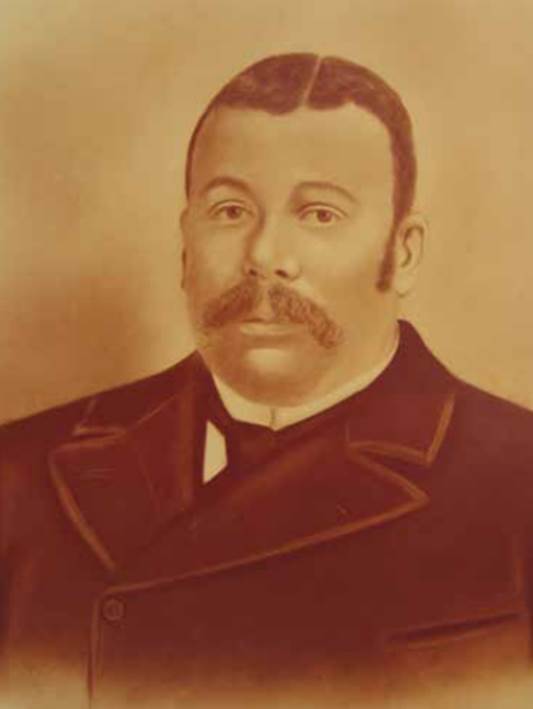
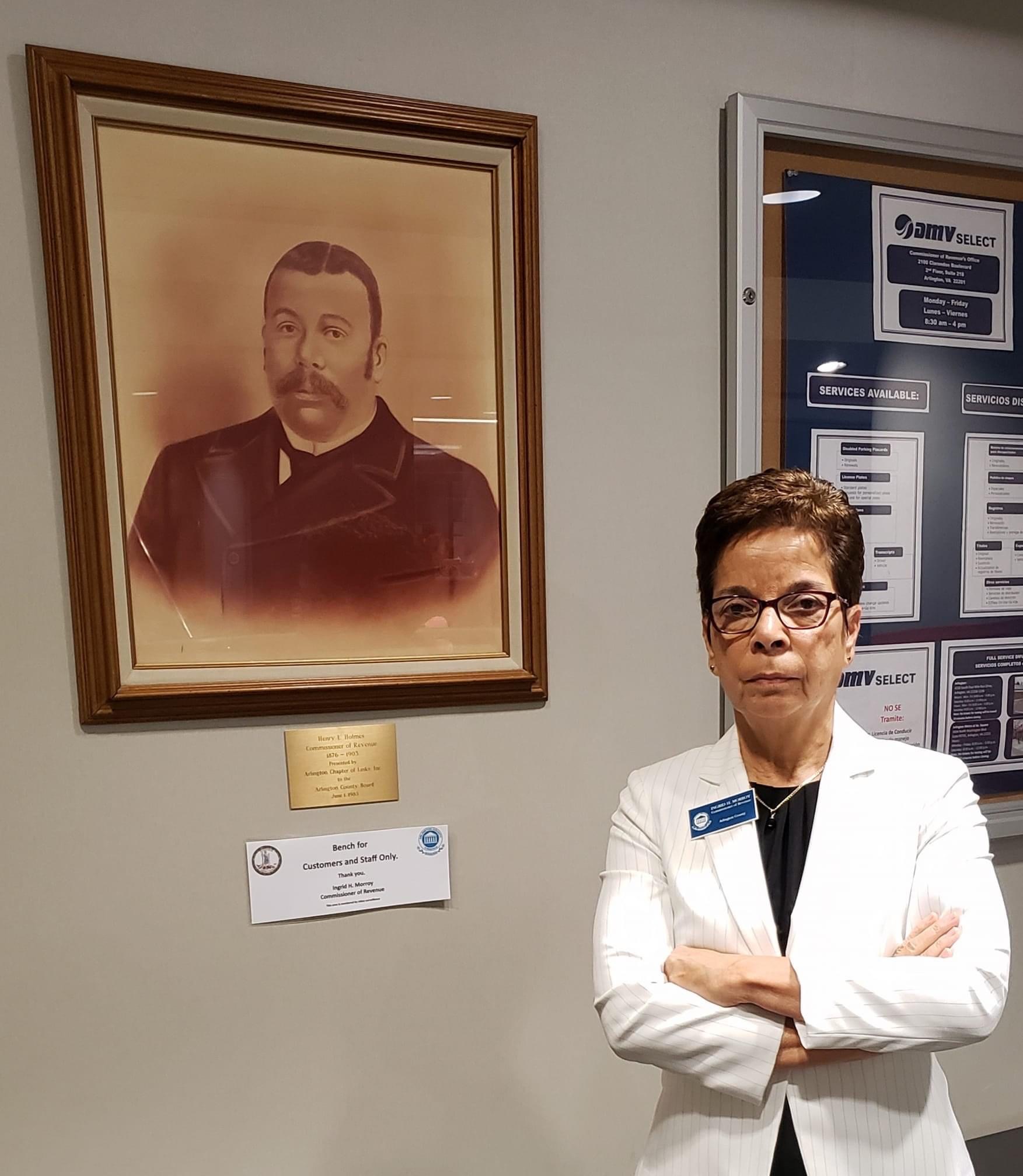
Left: Portrait of Henry L. Holmes, date and artist unknown. Image courtesy of the “Built By the People Themselves” digital exhibit.

Right: The portrait of Holmes is currently located in the offices of the Commissioner of Revenue on the second floor of the Bozman Government Building. It was donated in 1985 by the Arlington Links Club, which described it as having once hung in the original Holmes library building. Former Commissioner of Revenue Ingrid Morroy, elected in November 2003, was the second person of color since Holmes to hold the position in the history of the office. Image courtesy of Susan T. Anderson, Communications Director for the Commissioner of Revenue.

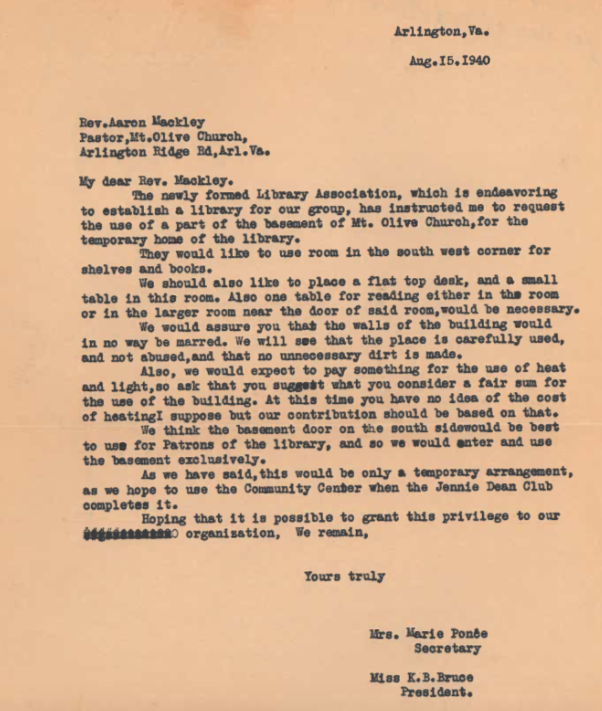
In August 1940, the library formally requested to be housed in the basement of Mount Olive Baptist Church, which was located at 700 South Arlington Ridge Road between Columbia Pike and Washington Boulevard in the Johnson’s Hill/Arlington View neighborhood.

This site was recognized as a temporary location for the library, which was expected to grow in the years to come. By September, the church had formally granted their request in turn, with a few stipulations regarding maintenance and upkeep. For one, the church would not charge the library rent, but asked for an occasional donation for things like the custodian’s salary and fuel.

Screen Shot 2022-02-07 at 1.53.29 PM

Letter from Marie Ponce and Kitty Bruce to the Mount Olive Church requesting use of their space for the Henry Louis Holmes Library.

Finding a Home for the New Library

The library initially supplied its catalog with donated books, which came from organizations such as the Alpha Gamma and Iota Chi Lambda sororities, and book showers hosted by other local civic groups. It was also noted that some books and shelves were donated from the Clarendon Library Association, as initiated by the Association's president Mrs. H.S. Cowman and a Mrs. Rice.

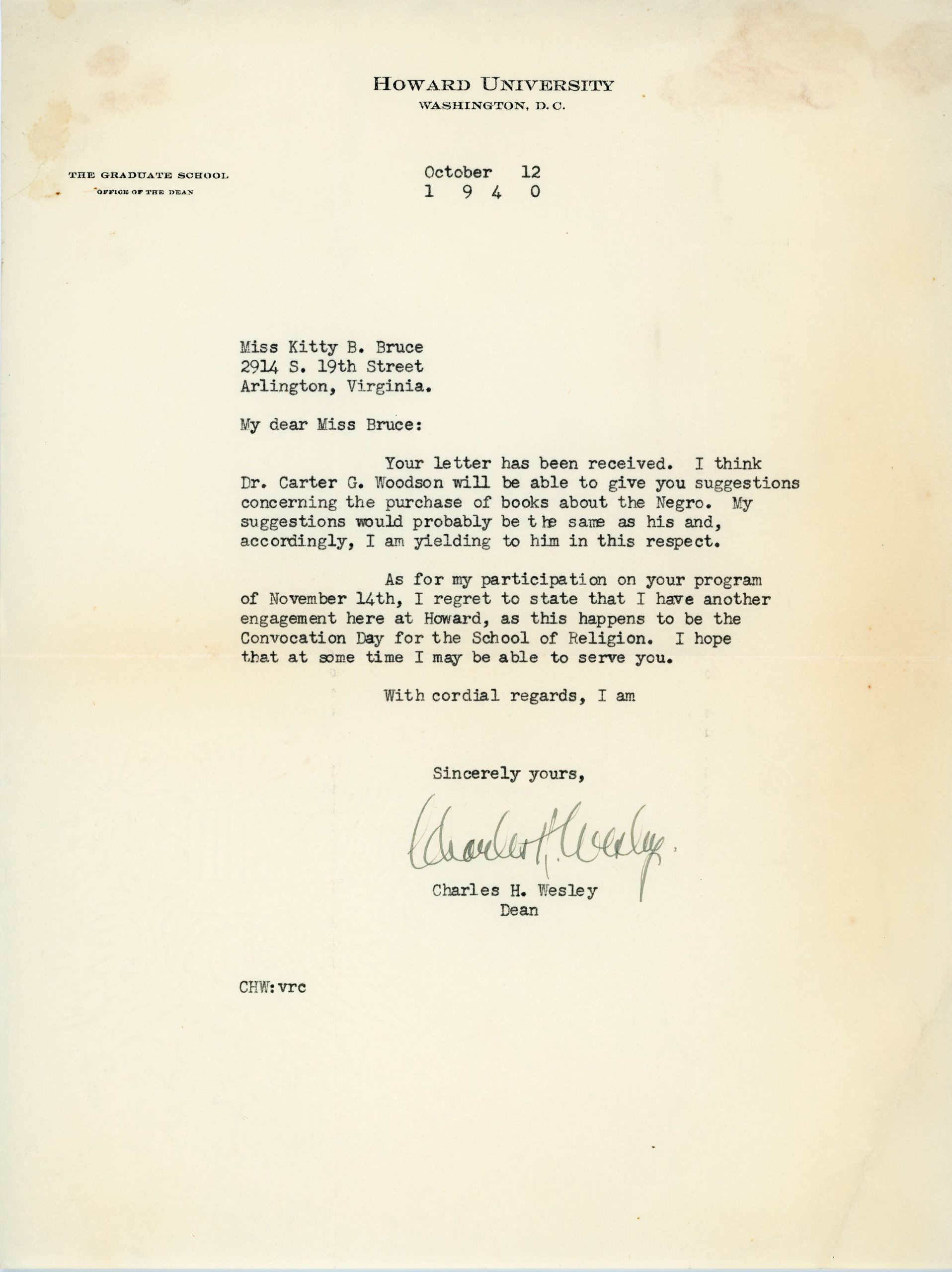
In addition, members of the association wrote letters seeking book recommendations from the historian and scholar Charles H. Wesley – the then-dean of the Howard University Graduate School – and Carter G. Woodson, the renowned Washington-D.C.-based historian, and the founder of Black History Month.

img012

Letter of response from Charles H. Wesley to Holmes Library Association President Kitty Bruce regarding suggestions for books related to Black life for the Holmes Library.

Opening Ceremony

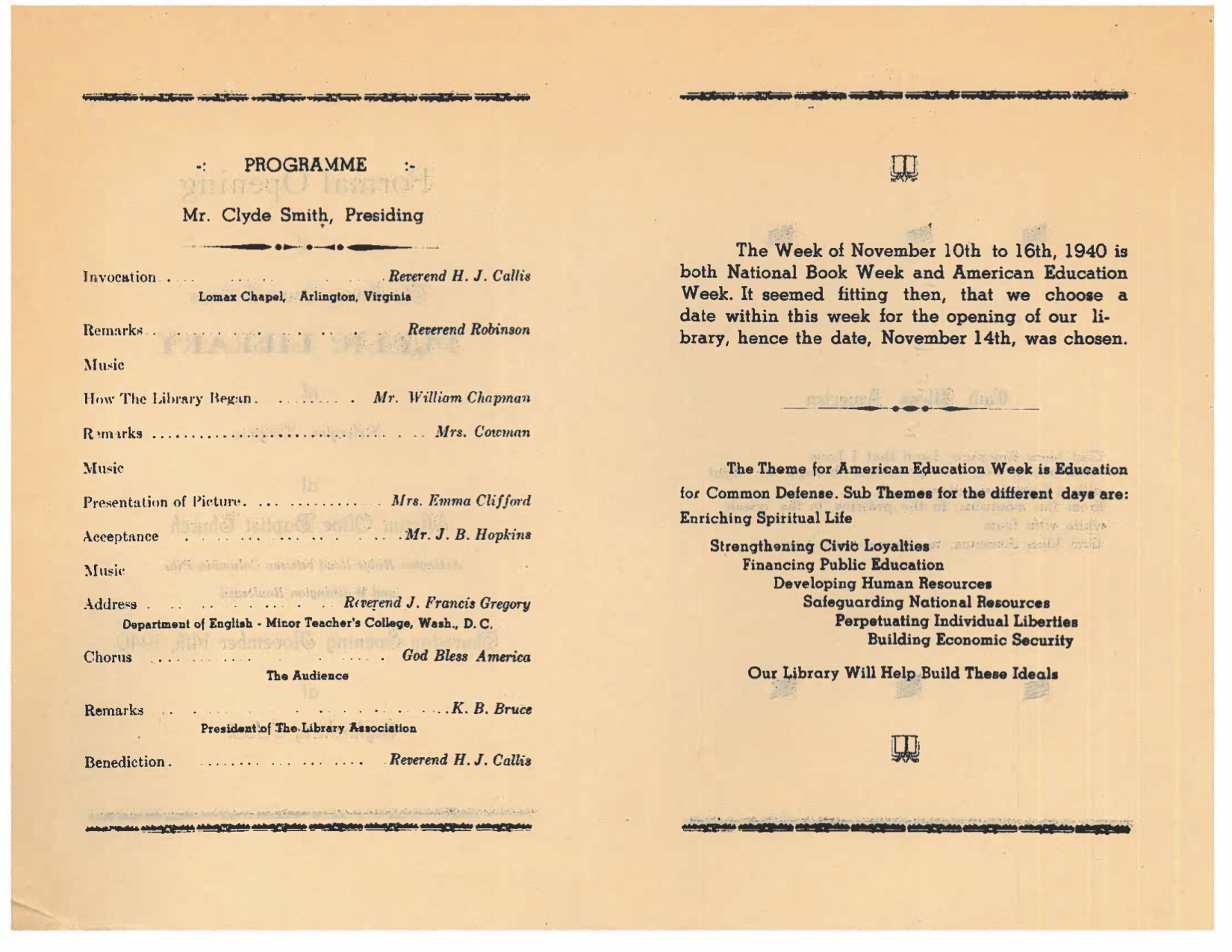
The Henry Louis Holmes Library formally opened on November 14, 1940, a date chosen to align with both National Book Week and National Education Week (Opening program 1 and 2).

Among the festivities marking its debut was a speech by the Rev. Dr. J. Francis Gregory, member of the department of English at the Miner Teachers College (Dr. Gregory’s grandson Francis A. Gregory would become the first Black member of the Washington, D.C., library board of trustees, and was the husband of Nora Drew Gregory. He is the namesake of the Francis A. Gregory Neighborhood Library in Washington, D.C.) Dr. Gregory addressed the crowd and delivered a speech, during which he stated: “The library in any community should be a center of activity in any community, serving as a social, cultural, ethical and spiritual, as well as intellectual, recreational center.” (The Formal Opening of the Henry Louis Holmes Library-1). He also gifted the library a copy of “The Life of Frederick Douglass,” a biography on the famous orator and abolitionist written by his father, James Monroe Gregory.

Opening program-1 (1)
Opening program-2 (1)

Program from the Holmes Library opening at Mt. Olive Church on November 14, 1940.

Another Home for the Holmes

The library was based in the Mount Olive Church basement until 1942, when the church property was taken over by the U.S. government. The church was ordered by the War Department to vacate the property in July 1942 , to make way for roadways leading to the Pentagon’s facilities. The church reopened at a new site at 1600 14th Street South in the Johnson’s Hill/Arlington View neighborhood in 1944.

RG_06_Arlington_County_Churches_MtOlive_1938

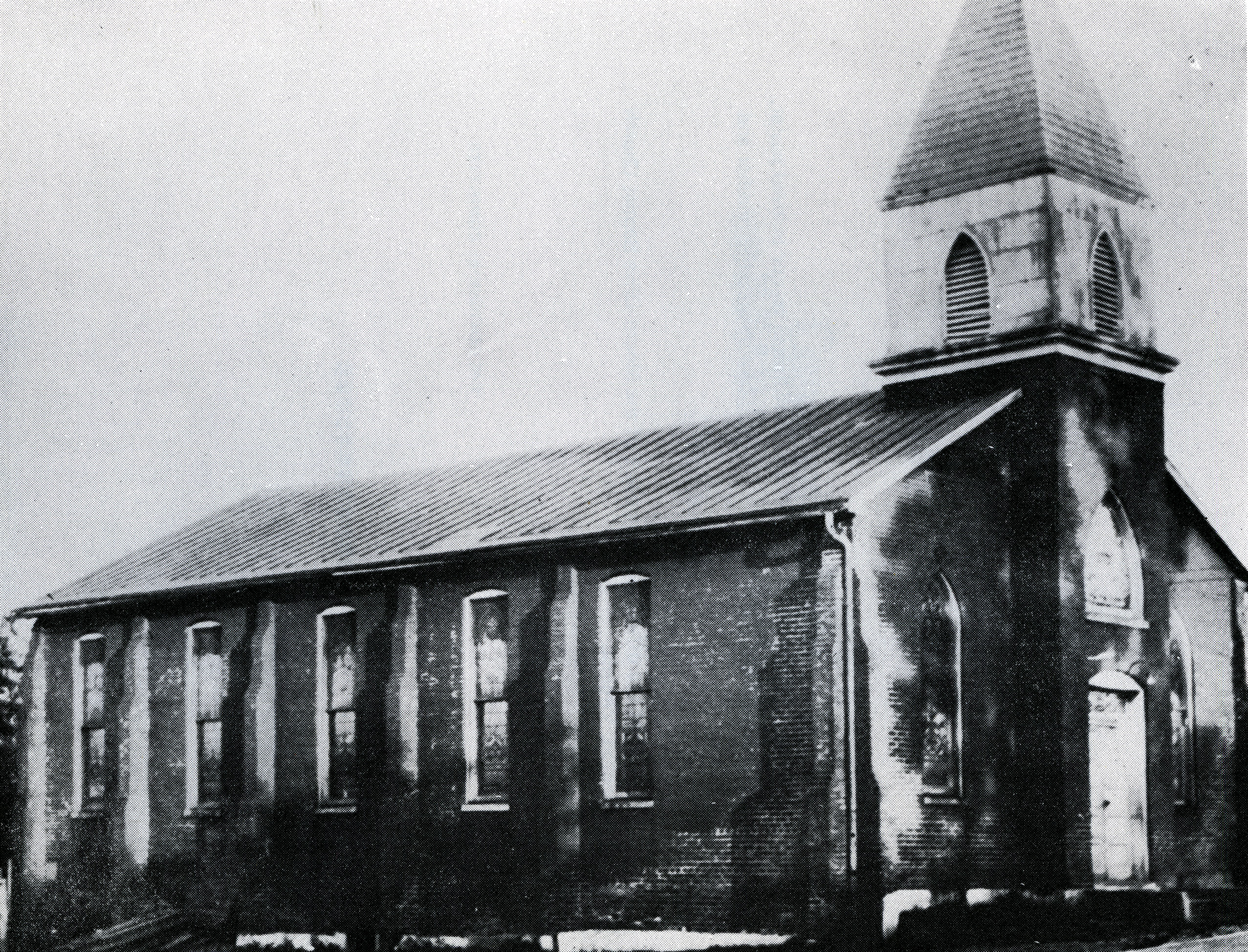
The original Mount Olive building,
circa 1938. From RG 06.

In the meantime, the Holmes Library Association ran programs to benefit the community, including prominent speakers from the broader D.C. community. These included an address by Dr. Rayford Logan, a renowned Black historian, scholar, and professor emeritus at Howard University.

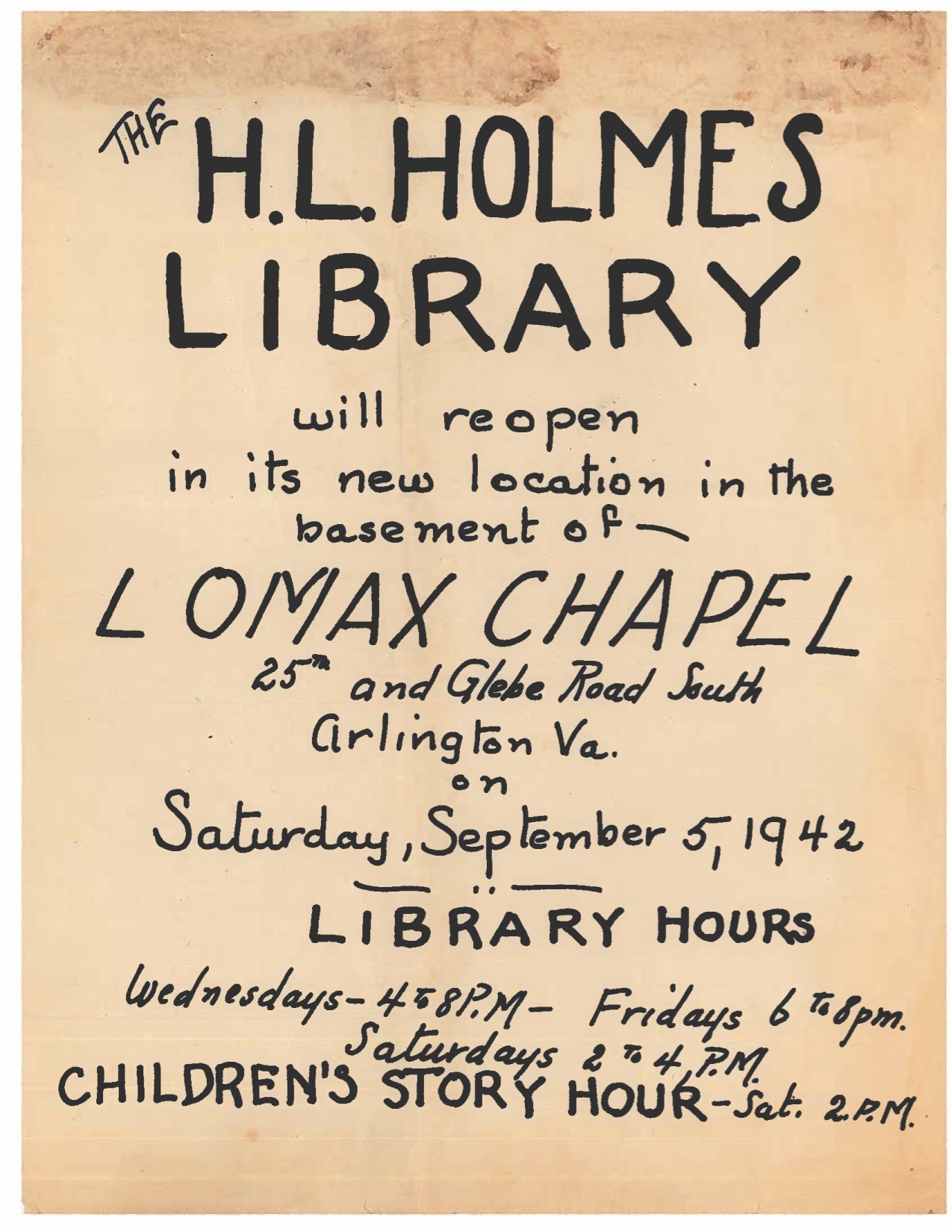
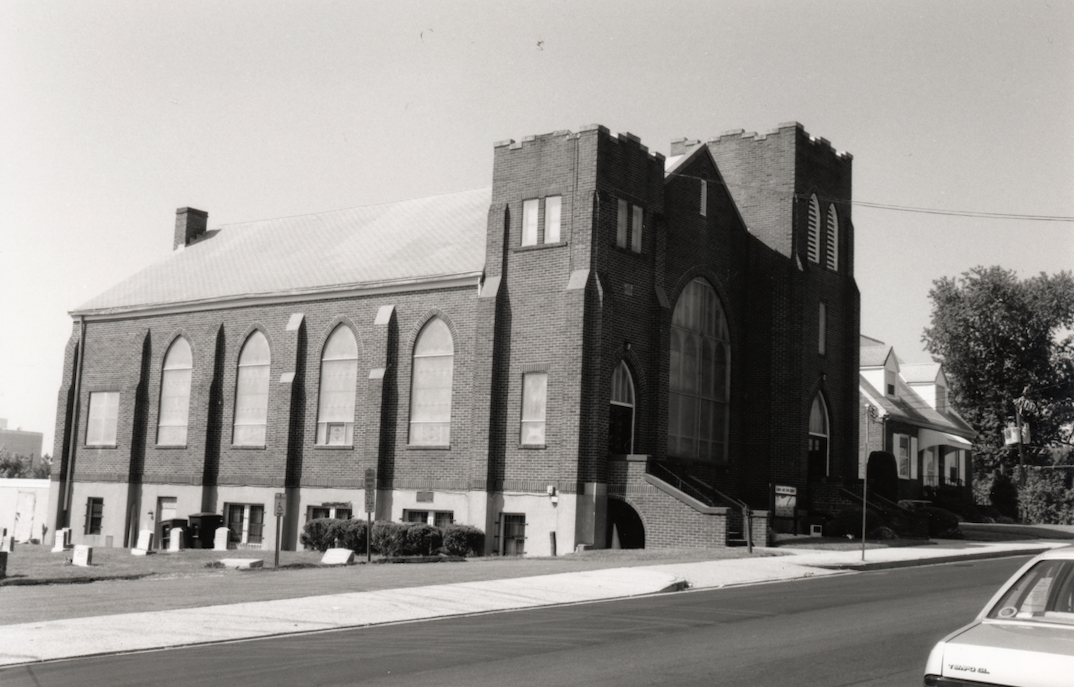
The Holmes Library found its next home in the basement of Lomax A.M.E. Zion Church, where it reopened on September 5, 1942. The Lomax site brought with it new developments, such as a children’s story hour.

Lomax reopening-1942-09-05
Screen Shot 2022-02-15 at 1.03.30 PM

Left: Flyer advertising the debut of the Holmes Library in the basement of Lomax church, its second home after Mount Olive.
Right: Lomax A.M.E. Zion at 2706 South 24th Street, taken August 31, 1996.

The Holmes Branch Incorporates into the County

Since founding the Holmes Library Association, the group had discussed joining with the County library system at a future date. In its initial meetings in July 1940, early long-term plans included eventually seeking financial assistance from the County. The first step in this was meeting County requirements via the American Library Association, which required 1,500 books to qualify as an official library. In its July 25, 1940, meeting minutes, Secretary Marie Ponce wrote: “It is hoped that from this beginning we can eventually work up the 1,500 books required before we can be recognized by the Library association.”

In February 1941 it was reiterated that the group would attempt to seek County aid (rather than state aid), and a Study and Plan Committee was formed to “carefully study out a plan to get aid from the County.” Plans around seeking County aid were always in the context of maintaining the Holmes Library separately, rather than as part of an effort to integrate the County library system.

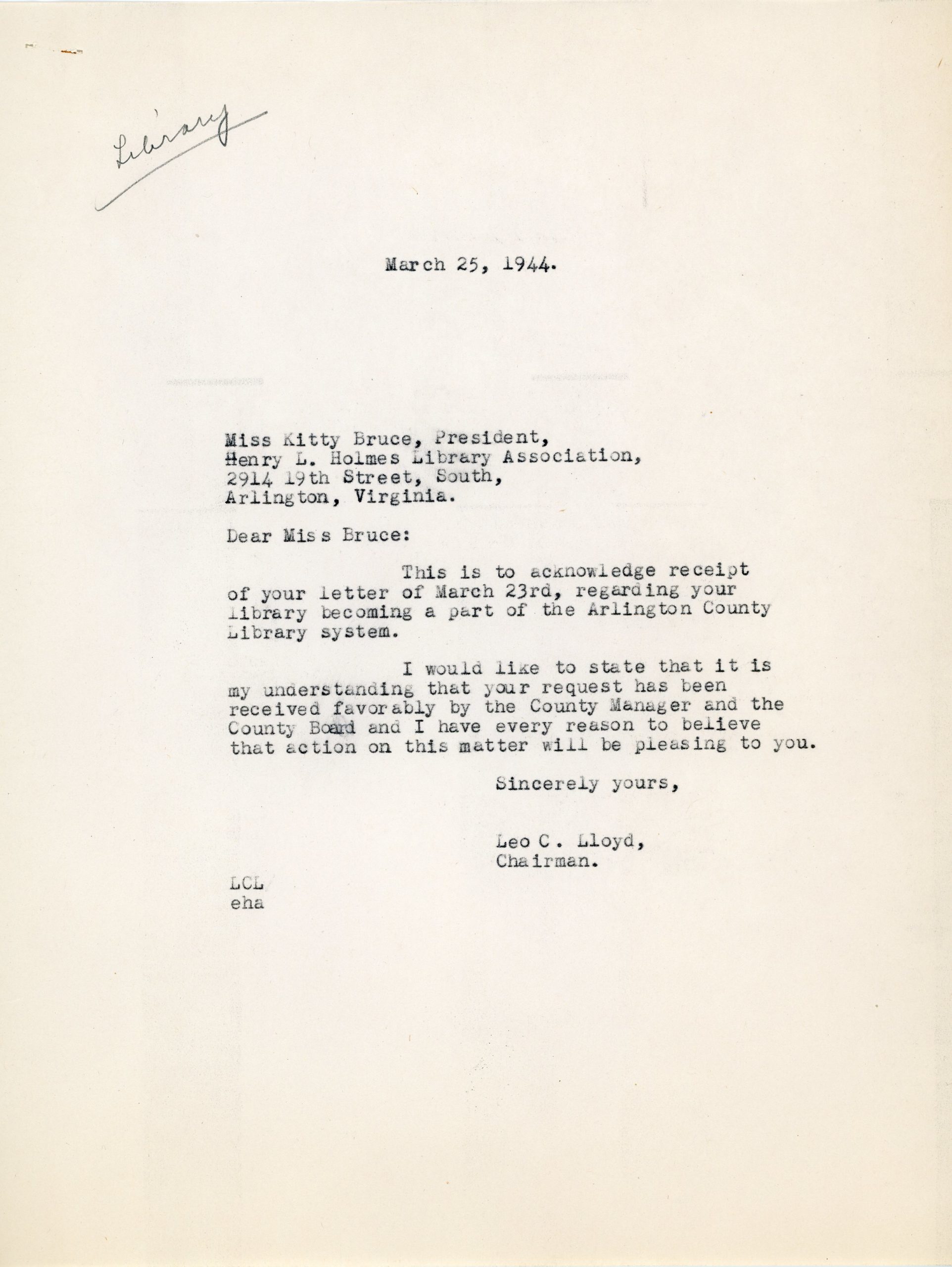
In February 1944, members of the Holmes Library Association met with Mildred Blattner, the County Librarian. By this point, the Holmes Library had surpassed the American Library Association’s requirement of 1,500 books, and offered to turn over its collection of 2,500 books to the County. In March 23 letters to County Board Chair Leo Lloyd and County Manager Frank Hanrahan, the Holmes Association asked to be included in the July 1944 County library budget. On March 25, Lloyd replied that their request had been received favorably, and on April 5, 1944, Holmes Library Association President Kitty Bruce appeared before the County Board to formally appeal for inclusion of the Holmes as a County branch.

img013 (2)
img014

Letters exchanged between Kitty Bruce and Leo Lloyd in March 1944
signal the incorporation of the Holmes Library into the County Library system.

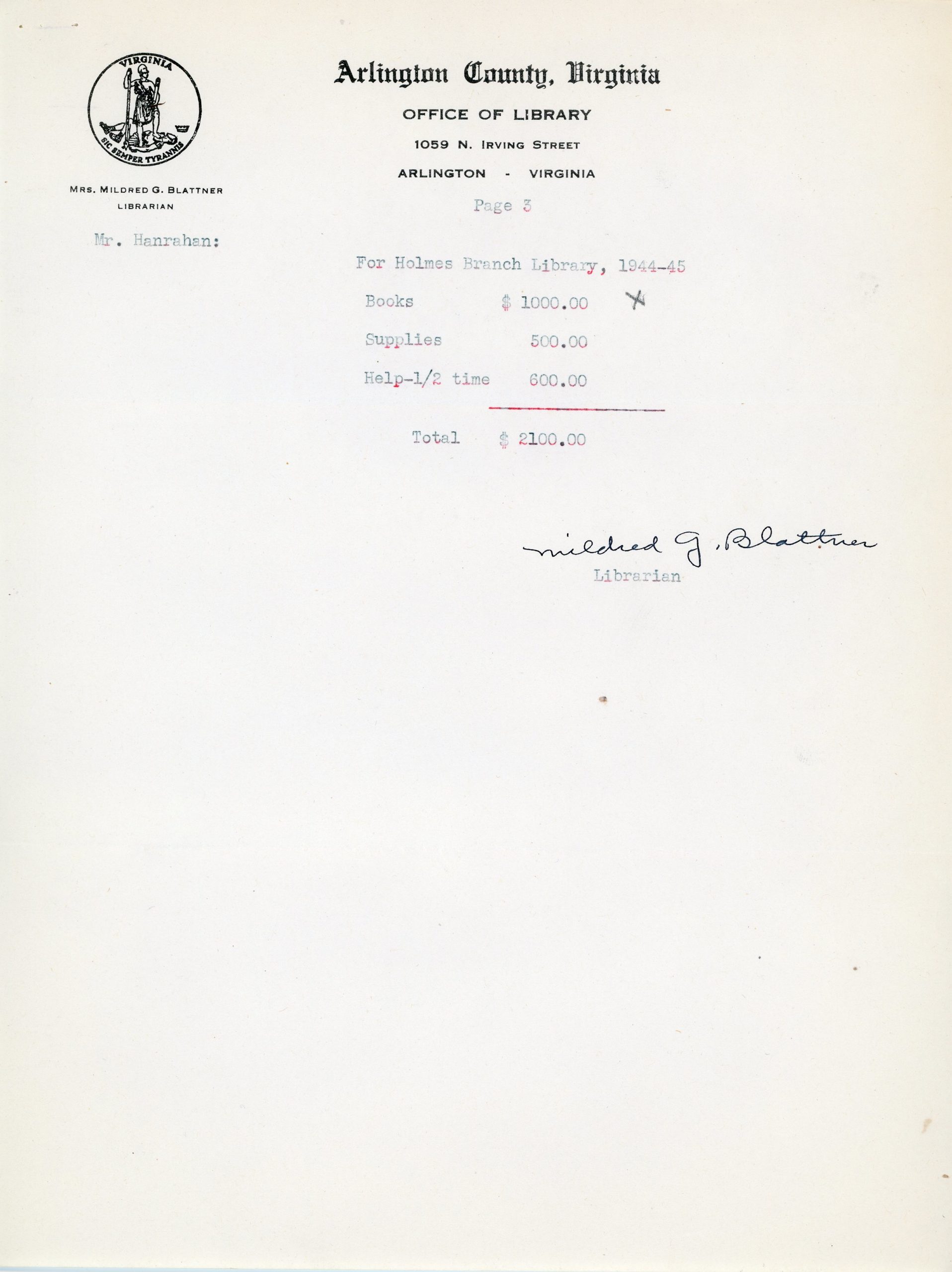
Bruce and the Holmes Library Association were successful. The Holmes Library – now the Holmes Branch – was eventually bequeathed $2,100 from the County Board to open its new branch location, which would formally be a part of the County library system. This site would be the library’s first independent and freestanding building. The County also established a deposit station in the Hoffman-Boston School library in 1945.

Holmes’ Home in the Carver Homes

The Holmes Branch’s final location was in an administrative building in the George Washington Carver Homes complex at 13th Street South and South Queen Streets. The Carver Homes had begun as a Federal Public Housing Authority project in 1943 to house displaced families and individuals largely from East Arlington and Queen City whose homes had been razed during the construction of the Pentagon. By 1944, the housing complex consisted of 270 trailers and 100 temporary public-financed housing units. The same year, after a visit from first lady Eleanor Roosevelt, the government commissioned the George Washington Carver Homes, a permanent, 8-building apartment complex in Arlington View. This, along with the Dunbar Homes, a similar permanent housing complex, was completed in 1944.

img011

The County eventually set aside $2,100 for the Holmes Branch upon its incorporation into the County Library System. The budget allocated funds for the purchase of books, supplies, and the hiring of a part-time librarian.

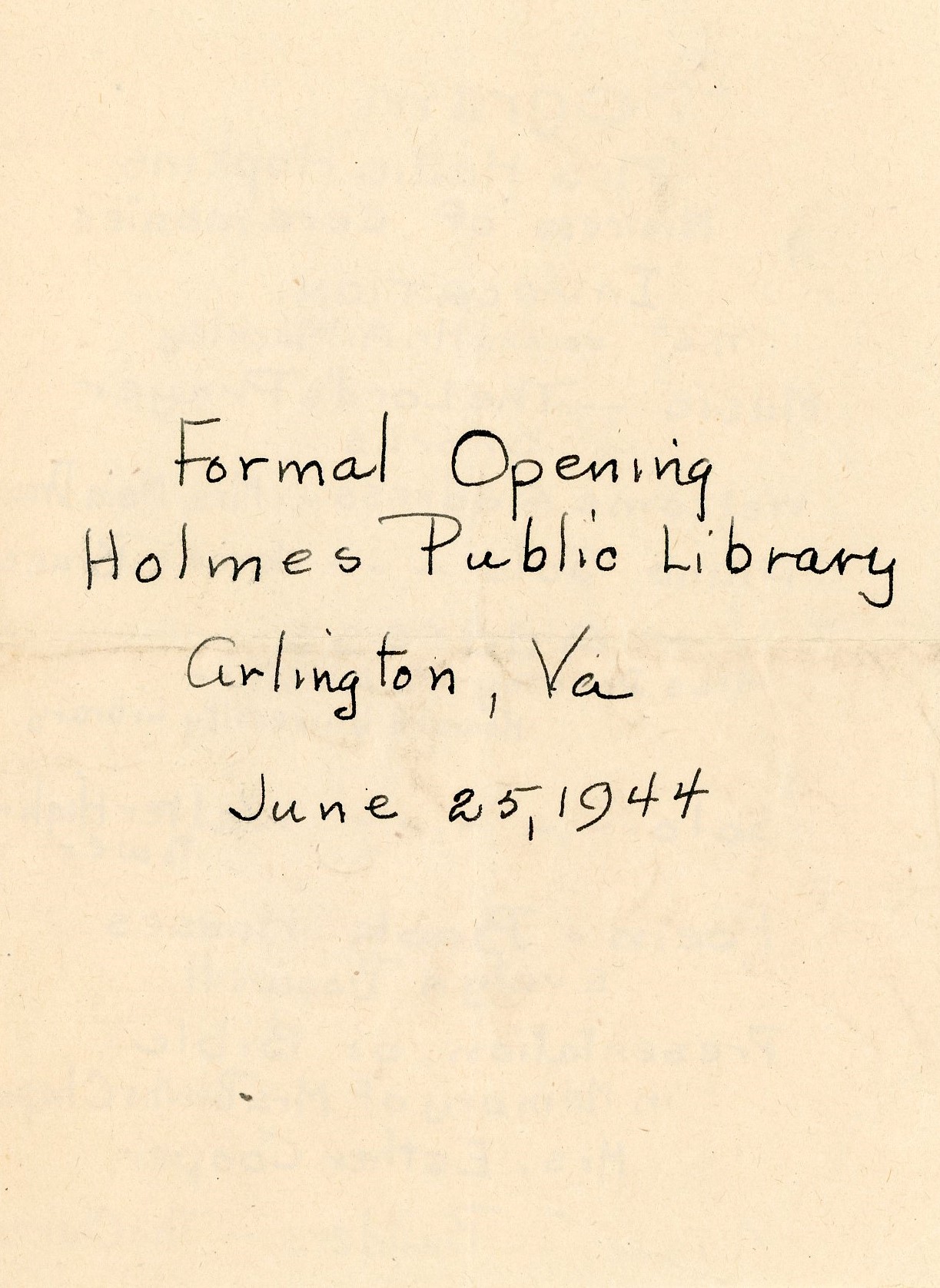
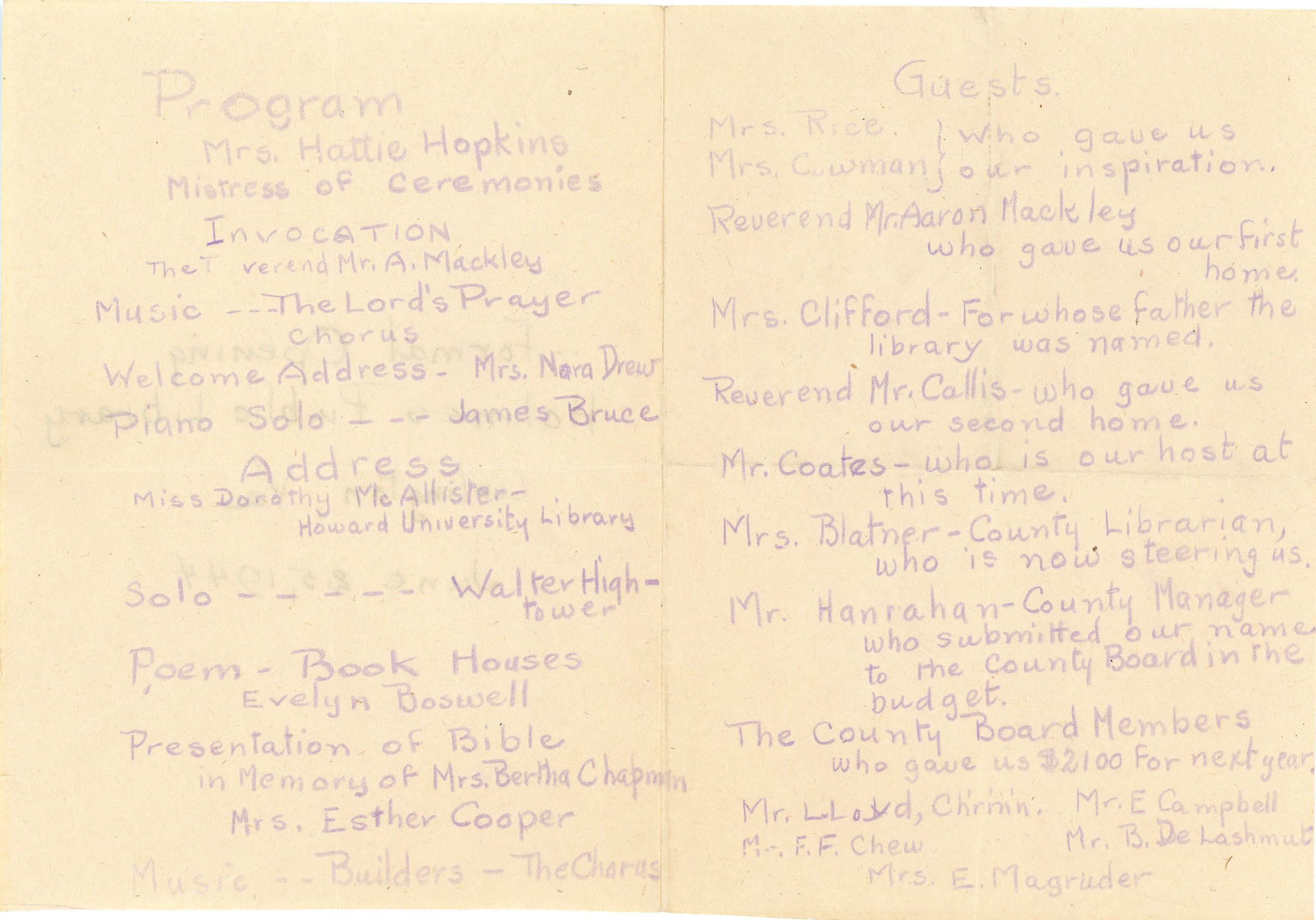
The Holmes Branch opened on the Carver Homes land on June 25, 1944, and was led by branch assistant Constance (Connie) Spencer. The occasion was marked by a robust celebration, featuring a speech by longtime association member Nora Drew, and an address by Howard University Library’s Dorothy McAllister. Branch librarian Madge Sydnor and branch assistant Rosaline Brooks joined the staff the following year.

img007 (2)
img008 (3)

Program from the June 25, 1944, opening of the Holmes Library.

At this point, the activities of the Holmes Library Association largely slowed, as their efforts in fundraising and staffing the library were absorbed by the County. Upon absorbing the Holmes collections into the wider County system, about 1,200 volumes were discarded after being labeled as not meeting branch standards, and 250 books were added from books gifted to the County and other copies.

In some ways, while County aid expanded the scope of the Holmes Library, inequalities and still persisted in how the County operated the branch. In an initial letter from Mildred Blattner to County Manager Frank Hanrahan, she wrote that “Since the reading habits of the colored population are not established I think it advisable to go rather slowly, providing popular books for the adult and standards for the children, until we can create reading habits that warrant a wider scope.”

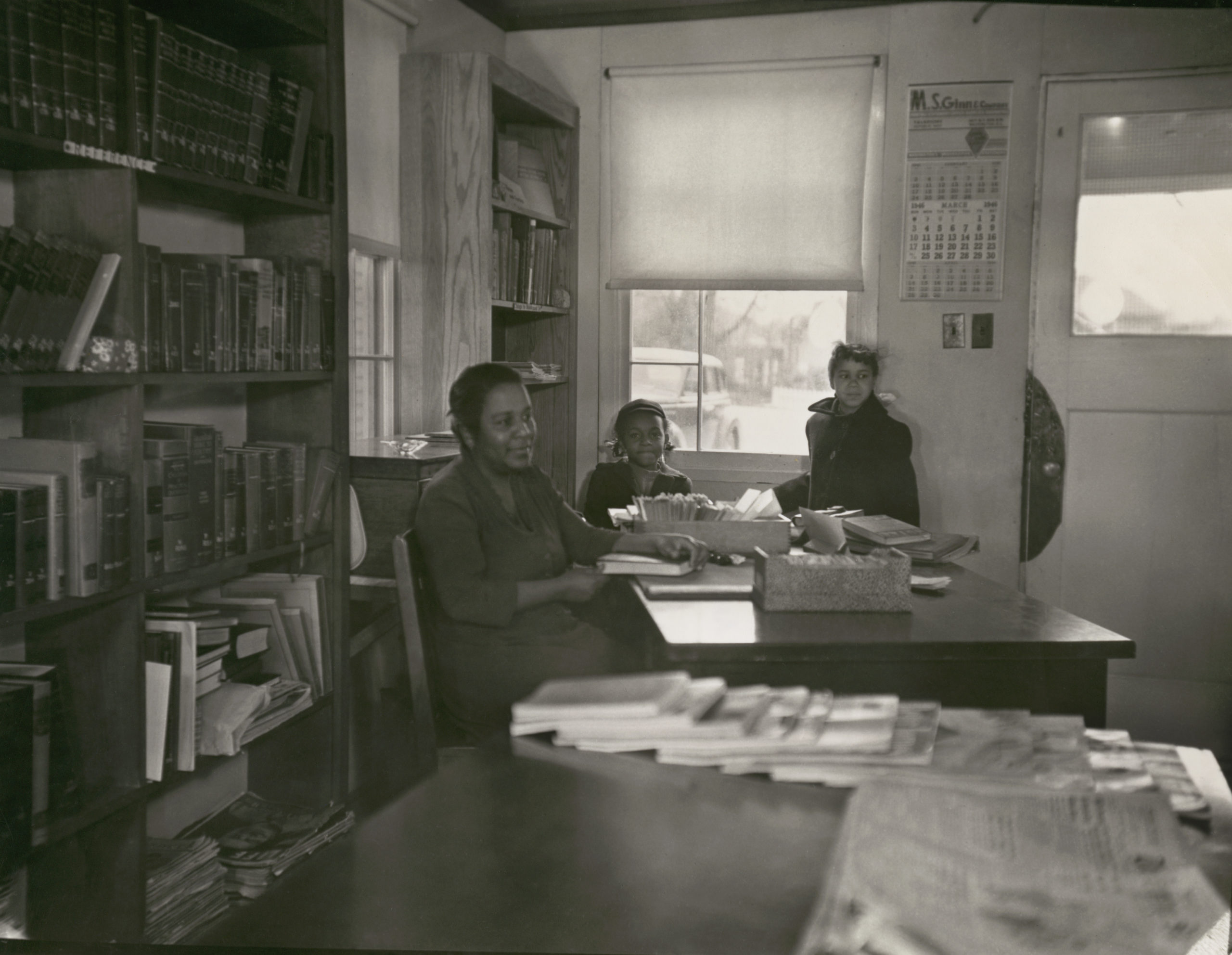
A librarian and two children inside the Holmes Branch of the Arlington Public Library 1946, 1 print, b&w, 8 x 10 in..

A librarian and two children inside the Holmes Library Branch, 1946.

In some of the earliest aggregate circulation statistics between the branches in annual reports, the Holmes Branch consistently had the lowest number of total books. In the 1946-1947 annual reports, the Holmes had about half of the collection of the next lowest-stocked branch, Glencarlyn. From 1948-1949, only 113 additions were made to the Holmes’ collection, while the other branches received additions of anywhere between 500-1,482 books.

1946-1947 Total Book Collection:

Screen Shot 2022-02-15 at 2.04.07 PM

Forced Closure

The Holmes Branch remained open until 1949, when the branch was shuttered along with the sale of the Carver Homes property. After the end of World War II, Congress directed the Public Housing Authority to dispose of the Carver Homes and the Dunbar Homes. The properties were offered to the County for sale, which initially rejected the offers. In response, Black residents founded two cooperatives to purchase the former wartime housing - the Paul Lawrence Dunbar and George Washing Carver Mutual Associations.

The cooperatives’ bids were accepted, and the groups became the first two Black-owned cooperatives in the United States. The cooperatives sought to keep affordable housing options open, as other property developers could have excluded Black residents. Restrictive covenants and other segregated housing laws made purchasing homes and property exceedingly difficult for Black Arlingtonians, along with a general lack of available affordable housing.

Unfortunately, this housing victory came at the expense of the Holmes Branch. In July 1949, in a letter to County Manager A.T. Lundberg, the general housing manager of the Carver Homes reported that the library building was to be demolished to make room for further development.

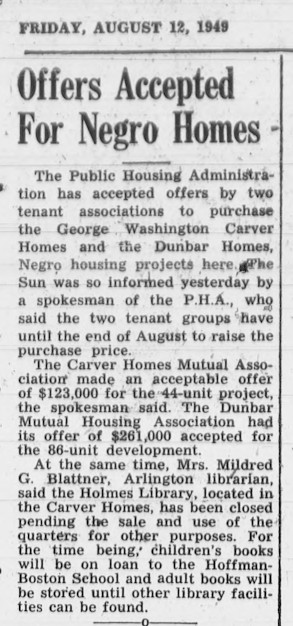
08-12-1949-NVS

Article from the Northern Virginia Sun on August 12, 1949, detailing the sale of the Carver Homes. Image courtesy of Virginia Chronicle.

In response, the Holmes Library Association reactivated in an attempt to save the branch. Mildred Blattner, who had corresponded with the housing manager and the Association, had suggested that continuation of the branch would be possible if a suitable new location was found. The Association swiftly located a new site, near the John H. Langston School, of which the group wrote “we feel that a branch would meet with the enthusiastic response of people in the area.” However, this option never came to fruition.

The children’s book collections – amounting to about 2,000 books – of the Holmes Library were subsequently moved to the library at the Hoffman-Boston School, where they continued to be circulated as public library holdings until 1960. At this point, the 1,617 volumes were likely absorbed by the Hoffman-Boston library, which continued to operate until its final class graduated in 1964.

In library reports, the only staff member listed for Hoffman-Boston was a “Custodian” whose name was not given and was referred to as a “Teacher at the School.” However, Hoffman-Boston in fact had a longtime school librarian whose name was Mildred Johnson.

The rest of the books from the Holmes collection were put into a storage shed behind the Clarendon Branch and used on occasion to replace copies or books or as duplicates if needed in the main library system.

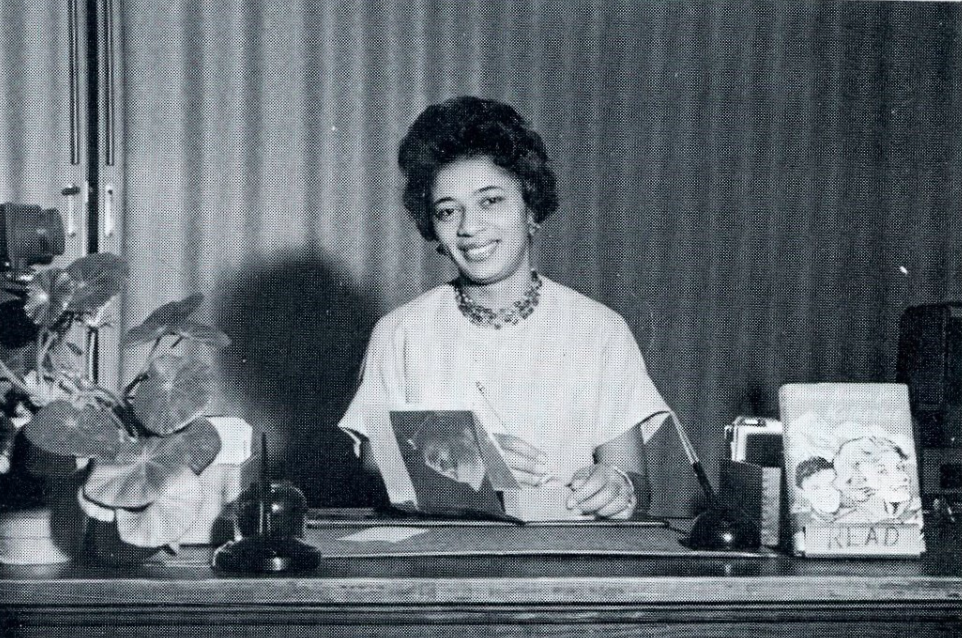
Screen Shot 2022-02-15 at 2.28.27 PM

Mildred Johnson, librarian at the Hoffman-Boston School library,
from its 1962 yearbook.

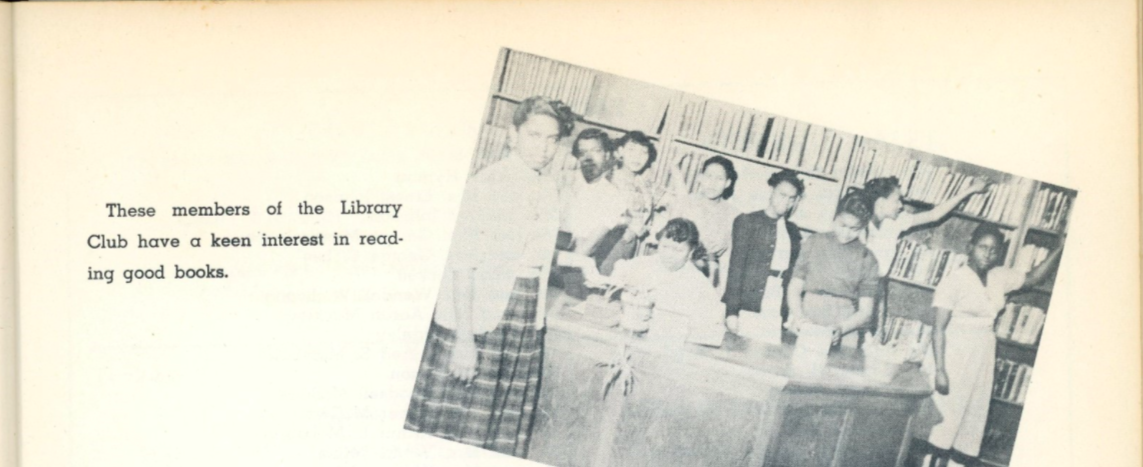
Screen Shot 2022-02-15 at 2.28.39 PM

Members of the Library Club in the Hoffman-Boston Library, from the 1953 yearbook.

A Quiet Desegregation

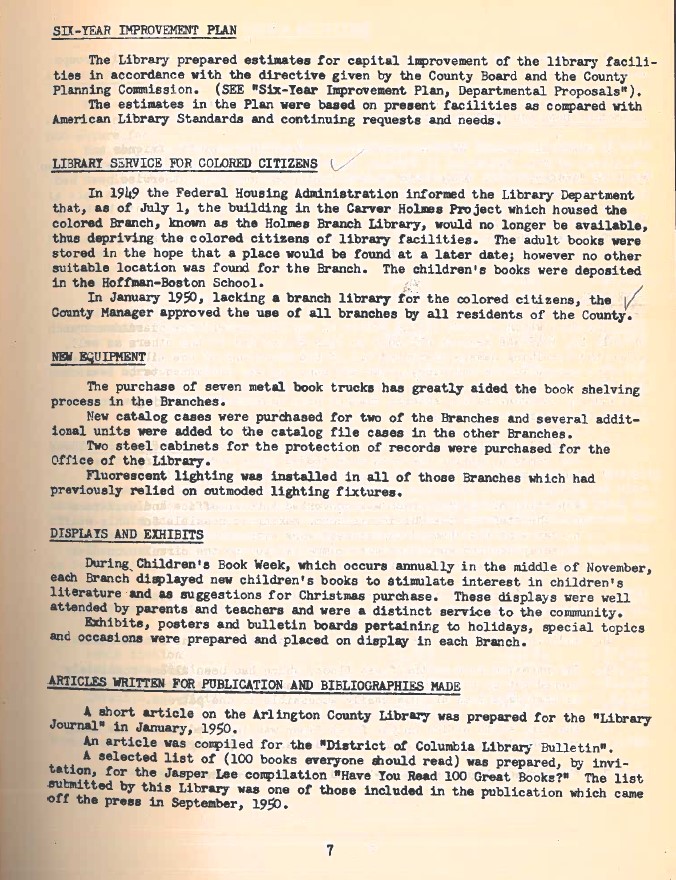
In 1950, Arlington quietly reported that it had desegregated its libraries following the 1949 closure of the Holmes branch. The first mention of desegregation appears in the Library Department Annual Report for 1949-1950. Under the heading “Library Service for Colored Citizens,” it reported “In January 1950, lacking a branch library for the colored citizens, the County Manager approved the use of all branches by all residents of the County.” This was also listed as the date of desegregation in a 1964 report from the Community Council for Social Progress, and mention of library service for colored citizens does not appear in any subsequent annual reports, beyond mention of circulation statistics for the Hoffman-Boston library deposit station.

Annual report-1

Page from the 1949-1950 annual report that details the approval of “the use of all branches by all residents of the County” by the County Manager.

While Arlington’s libraries reported themselves as being open to all residents in 1950, the precise catalyst for desegregation is unclear. Beyond the pragmatic and economic implications of the branch’s closure, this decision may have also been influenced by a 1946 law passed within the Virginia Code, as Chapter 170 of the Laws of Assembly, requiring that libraries receiving state aid would serve all residents. Many library systems used this language to interpret separate but equal services permissible under this stipulation, as Arlington also had done within its system. Previously, the law surrounding libraries had stipulated that “The service of books in County library systems receiving state aid shall be free and given to all parts of the county, region, city or town.” This added specificity in the 1946 law may have prompted the library to integrate rather than continue to maintain separate facilities for Black residents.

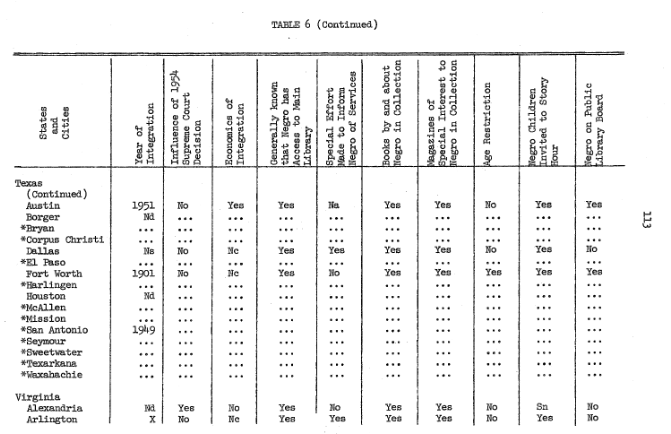
The timeline of desegregation has also been historically misreported in library accounts. Research initiated by the Fairfax County Public Library's Virginia Room found that in a 1963 unpublished thesis titled "Integration in Public Library Service in Thirteen Southern States," written by Bernice Lloyd Bell, surveys were sent out to municipal branches across the South regarding desegregation progress. In its response, Arlington indicated that “the library has always been open to all races.” The survey respondent (who is unknown) also suggested that neither the 1954 Brown vs. Board of Education decision nor economic factors influenced the decision to integrate.

Screen Shot 2022-02-15 at 11.42.54 PM

Survey results from Bernice Lloyd Bell’s unpublished 1963 thesis “Integration in Public Library Service in Thirteen Southern States.”

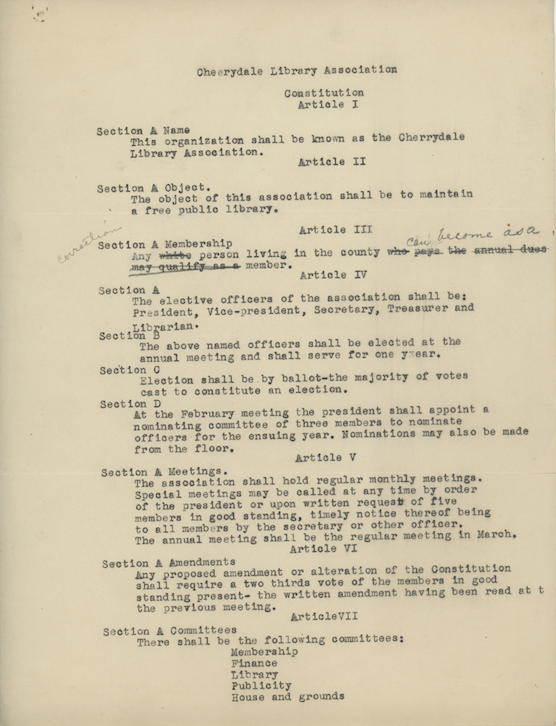
While the 1954 Brown vs. Board response aligns with the timeline of the 1950 decision, the statement that the libraries had “always” been open to all residents was not true. This response was directly contradictory to another survey completed in 1944-1945 by Mildred Blattner for a Virginia State Library report, in which she acknowledges that service to Black residents was only available at a designated branch, not in the main library. Additionally, an undated constitution from the Cherrydale Library Association, a section was amended to change its wording on membership from “Any white person living in the county who pays the annual dues may qualify as a member” to “Any person living in the county can become as a [sic] member.” This change may have reflected the 1950 County desegregation policy, and signals that the library had clearly not always served all residents.

Screen Shot 2022-02-15 at 10.29.33 PM

Cherrydale Library Association and Bylaws, no date. From RG 29.

An Unclear Reality of Desegregation

It is also unclear the degree to which desegregation became publicized, or how Black residents came to use the integrated facilities. No local newspapers reported the desegregation, and though the 1963 survey reported that it was generally known that Black residents could access the main library, there is no quantitative evidence of this.

In a 1986 interview with local civil rights activist Dorothy Hamm, who came to Arlington in 1950, she suggested that at this time the libraries were still unavailable to Black residents, either by law or by the de facto practices of segregation.

Narrator: Dorothy M. Hamm

Interviewer: Edmund Campbell and Cas Cocklin

Date: February 21, 1986

Edmund Campbell: Dorothy, let's look at the conditions you found in Arlington in 1950 as far as the relationship between the races is concerned. Were there legal restrictions that were repugnant to members of the Black race at that time?

Dorothy Hamm: Yes, there were. At that time, the schools were segregated. The libraries did not permit Blacks.

EC: You mean you could not come in and get a book in the library?

DH: No, we did not, the children could not. In fact, we could not.

EC: You're speaking of the public library?

DH: As far as I can recall, the Arlington County Libraries were. The children obtained their information from the school libraries.

EC: Was there any way adult Blacks could obtain books from the library?

DH: I do not believe it was [possible] after so many years I cannot really say.

Continued Inequality Across the County

Even once the libraries had been reported as desegregated, rampant inequalities across the County made access to resources still more difficult for Black residents. In a 1959 speech delivered by an unknown speaker to the local Community Council for Social Progress, it notes that:

“[Black Arlingtonian] children have attended Arl[ington’s] separate and unequal colored schools. Near them is a meagerly equipped playground too small for a ball diamond. They are excluded from nearby white parks and playgrounds where there are ball fields and tennis courts. No Arlington movie will admit them and no Arl[ington] restaurant will serve them. They may use the Arl[ington] public libraries on an unsegregated basis. As the result of an NAACP suit segregation on busses serving Arl[ington] ended about ten years ago.”

So while Arlington’s libraries were eventually open to Black residents, it was in a larger context of a deeply segregated system in which the white majority of the County sought to prevent Black people from accessing resources. As referenced in the above speech, Arlington's public school system did not desegregate until 1959, following an extended legal and bureaucratic battle. The County's parks and recreation system did not desegregate until 1962, when the Negro Recreation Section, which had been designated for Black residents, was absorbed into the main County department.

No records have been found reflecting circulation statistics of Black residents in the integrated system, or how new patrons used the facilities. None of the affiliated librarians or volunteers at the Holmes Branch were later listed as being hired by or on the staff of the main County branches.

Conclusion

While the story of Arlington’s library desegregation is at times murky, the story of the resilience and dedication of the Holmes Library Association is undeniable. Faced with a persistent and systemic denial of resources, this group created a haven for books, learning, and discussion for members of their community at a time when the County would not do so.

This article is based on primary source documents found in the Community Archives at the Center for Local History. Documents regarding the Holmes Library can be found in Record Group 29.

This article was also heavily influenced by research conducted by Fairfax County Public Libraries regarding the desegregation of libraries across Northern Virginia. For a more in-depth look at how other library systems desegregated in Northern Virginia, see this report prepared by Fairfax County Public Libraries – Unequal Access: The Desegregation of Public Libraries in Virginia. FCPL also created a detailed video presentation on the topic, which is available on YouTube: Unequal Access: The Desegregation of Public Libraries in Virginia.

This article was authored by Camryn Bell, who is part of the County's management intern training program and has assisted in the collections of the Center for Local History since 2019. 

We hope this article adds to the conversation about segregation in its many forms, and about the history of race in Arlington County more broadly.

And we want to know: How does this story relate to your story? Do you have memories about the Holmes Library, or about segregation in Arlington's library system? Use the form below to send a message to the Center for Local History.

Center For Local History - Blog Post Message Form

Do you have a question about this story, or a personal experience to share? Use this form to send a message to the Center for Local History.

"*" indicates required fields
This field is for validation purposes and should be left unchanged.

Share Your Story

February 17, 2022 by Web Editor

  • Page 1
  • Page 2
  • Page 3
  • Interim pages omitted …
  • Page 40
  • Go to Next Page »

Footer

About Us

  • Mission & Vision
  • Charlie Clark Center for Local History
  • News Room
  • Get Email Updates

Administration

  • Policies
  • Library Staff
  • Job Opportunities
  • Propose a Program or Partnership

Support Your Library

  • Friends of the Library
  • Giving Opportunities
  • Donating Materials
  • Volunteer Opportunities

Our Mission

We champion the power of stories, information and ideas.

We create space for culture and connection.

We embrace inclusion and diverse points of view.


Download the Library App

Download the Library App

Arlington County | Terms & Conditions | Accessibility | Site Map
· Copyright © 2025 Arlington County Government ·