• Skip to primary navigation
  • Skip to main content
  • Skip to footer

Alert

Holiday: All library locations closed Fri., June 19, for Juneteenth. More Info

Alert

Update: Elevator outages, maintenance and upgrades at Central Library More Info

Alert

Storytimes Will “Take a Nap” through June 20 More Info

Home - Arlington County Virginia - Logo
MENUMENU
  • Join Now
  • My Account
    • Login
    • My Checkouts
    • My Holds
    • My Lists
    • My Reading History
    • About Borrowing
    • About Holds
    • About My Account
  • Hours & Locations
    • All Hours & Locations
    • Holiday Closings
  • News
    • Library News
    • Director's Blog
    • Get Email Updates
  • Contact Us

Arlington Public Library

MENUMENU
  • Search
  • Collections
  • Library Services
  • Events
  • Community Engagement
  • Join Now
  • My Account
    • Login
    • About Borrowing
    • About Holds
    • About My Account
  • Hours & Locations
    • All Hours & Locations
    • Holiday Closings
  • News
    • Library Blog
    • Get Email Updates
  • Contact Us

Web Editor

Director’s Blog: Banned Books Week

Post Published: September 19, 2017

Take a Stand for Books

"You never really understand a person until you consider things from his point of view […] until you climb into his skin and walk around in it."

– Harper Lee, banned book author of "To Kill a Mockingbird"

Established in 1982 by the late Judith Krug, then director of the American Library Association’s (ALA) Office of Intellectual Freedom and a tireless champion of freedom of speech, the annual Banned Books Week promotes free and open access to ideas and information. And it’s a great time for libraries to celebrate the joy of reading, shown in countless studies to be a key factor in determining one’s success in life.

A quick scan of ALA’s list of frequently challenged books reads like a Who’s Who of literary giants – F. Scott Fitzgerald, J.K. Rowling, Walt Whitman, Sherman Alexie, Toni Morrison, Laura Ingalls Wilder, Katherine Paterson. Two years ago, Arlington Public Library hosted an author talk with the legendary Judy Blume, a frequent “contributor” to the banned list, appearing five times over a ten-year period with such titles as “Forever” (7), “Blubber” (30), “Deenie” (42), “Are You There, God? It’s Me, Margaret” (60), and “Tiger Eyes” (89).

Books are change agents. They challenge our beliefs and biases. They expose us to different experiences and cultures. They help us learn to think for ourselves and not follow the crowd or cult of public opinion. They can scare us and they can charm us. They can enliven our spirits and they can cause despair. They honor equally the ordinary and the profound. They can please, they can polarize. Paper or “e,” quarto or quartz, on your phone or in your hands, reading inspires, inflames, evokes and enriches.

Want to know how you can help celebrate Banned Books Week? Commit to reading at least one challenged book (ALA list of frequently challenged books). And if you have a child at home, ask him or her to commit to reading one, too. The family that reads together, thrives together.

We promise it might hurt. And that’s a good thing.

“Let the wild rumpus start.”

– Maurice Sendak, banned book author of "Where the Wild Things Are"
September 19, 2017 by Web Editor

Remembering September 11: An Oral History Collection

Post Published: September 6, 2017

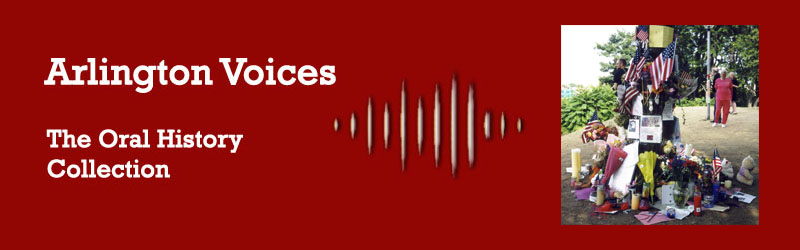
Paper cut sound waveform sign with shadow , and photo of September 11 memorial

In 2006, on the 5th anniversary of the 2001 terrorist attacks, the Center for Local History conducted a series of interviews with first responders and Arlingtonians about their experiences on Sept. 11, 2001, and the days that followed.

The three narrators who you’ll hear from in these clips – Gabriella Day-Dominiguez, Elizabeth Davis, and firefighter Dale Varnau – experienced the same events that day, and yet had uniquely personal responses to the tragedy shaped by their identities and roles within the community.

Transcripts:
NARRATOR: Elizabeth Davis
INTERVIEWER: Diane Gates
DATE: August 2, 2006

ED: Our neighborhood is very friendly people but nobody ever seems to talk to anybody else. But on that day everybody was outside of their house. So I was talking to my neighbors and they didn’t know anything and they were asking me and I didn’t know anything. So we ended up having a kind of a barbecue. Nobody really wanted to be alone. Everybody pulled a little bit of something out of their refrigerator and just gathered together.
DG: It was just impromptu
ED: Totally impromptu.
DG: When your neighbors had the cookout or got together to eat did people seem just quiet and somber. Was anyone crying? Were there people there who knew or wondered if they had a friend that was—
ED: There were a lot of people who knew somebody. I don’t think I knew anybody who knew anybody who had been hurt but there a lot of people who worked in the Pentagon or knew somebody who worked in the Pentagon. Even more than that there were people who knew somebody in New York. And at that point of course we didn’t know what was going on. You had no idea of head count. And the phones were so busy it was very hard to get through to people. So there was a lot of “I don’t know if this person is okay” going on.
But the one thing I noticed for the next, might have been two or three weeks, if you remember they had shut down every single plane everyplace, nothing was flying. So we’d be standing outside and you’d hear a plane go overhead and everybody stopped and everybody sort of cocked their head and just listened and you could tell they were thinking is this us or is this them and that wasn’t just the first day or so, that was two or three weeks.

NARRATOR: Gabriella Daya-Dominiguez
INTERVIEWER: Judy Knudsen
DATE: August 24, 2006

GD-D: My husband in the meantime, what was occurring with him at that moment was he was just entering his office. He was about 200 yards from the building. He saw the plane coming very low overhead. He saw it make a U turn and bank right into his building. At that point he said he knew that this was not an accident, this was an attack and all hell broke loose. The pandemonium in the city was already going on. First with the North Tower. People were just standing there staring. They weren’t really running, they were just watching. But by the second tower hitting people started running frantically.
GD-D: And then another twist of the story is the fact that my father is Arabic. I remember feeling a sense of dread that week. I couldn’t eat at all. I remember food tasted like paper. It was just hard to put something in my mouth and I’m not someone who loses my appetite easily. So it was deeply concerning. I felt that there was going to be an Arab backlash and I was worried about my father, although my father is not Muslim, he’s Christian. But it was an Arab group of terrorists that struck the buildings and I was worried about the perception that the world was going to have about Arabs at that time. I remember being terrified. I remember feeling like I didn’t want to talk to anybody. I was afraid to talk to anybody. I just didn’t know how to explain it.

NARRATOR: Dale Varnau
INTERVIEWER: Judy Knudsen
DATE: December 14, 2009

JK: Right. So after it’s over with, how long did it take you to…. I mean, some people were obviously very freaked out, didn’t recover so well, and I have talked to police and firemen. And some people did—Of course a lot of people internalize things, and you don’t know. I mean, how did you feel, say, afterwards, a few years afterwards? Obviously it still affects you.
DV: Yes. The first I-don’t-know-how-long, I was very angry. I was like, “Let’s go get the people that did this to us! This is America!” I’m very patriotic.
I didn’t notice it bothering me for about a year, but after a year I started, “Hey, I haven’t been sleepin’ that well. I’m startin’ to have nightmares about it, relivin’ it.” So it was pretty close to a year before I started feeling anything physical from it.
DV: And people I’ve talked to—you know, my brother’s a Vietnam vet, and he was like, “Well, I saw a hundred times worse.” “Yeah, well, you were trained for it, I wasn’t!” I was trained to fight fires, you know.
JK: Exactly.
DV: So yes, there was about a year delay for me. I knew other people that the next day had problems. There were a couple of guys that day, that while it was goin’ on, basically they wanted to say, “Okay, I’m done, I’m outta here,” and they wanted to go home right then. But it took about a year for it to really build up in me. I was kind of surprised, I guess this is the first time I’ve really talked about it in depth for a while, that I was starting to crack up a little bit a while ago. But yes, it had a delayed effect for me.

You can explore the entire September 11 oral history collection in the Center for Local History - VA 975.5295 A7243oh ser.5 - or read the transcripts online.

You can also explore our current display of letters, which were sent during the days and weeks after September 11, from children all over the county to Arlington rescue workers.

Photo: Arlington Ridge Rd Overlooking Pentagon – Public Memorial; Source: Photographs of the Arlington Historical Society, PG 230-6928

The goal of the Arlington Voices project is to showcase the Center for Local History’s oral history collection in a publicly accessible and shareable way.

The Arlington Public Library began collecting oral histories of long-time residents in the 1970s, and since then the scope of the collection has expanded to capture the diverse voices of Arlington’s community. In 2016, staff members and volunteers recorded many additional hours of interviews, building the collection to 575 catalogued oral histories.

To browse our list of narrators indexed by interview subject, check out our community archive. To read a full transcript of an interview, visit the Center for Local History located at Central Library.

September 6, 2017 by Web Editor

1930s: Arlington Develops – An Interview with Walter De Groot

Post Published: August 26, 2017

Paper cut sound waveform sign with shadow

The early to mid-20th century was an exceptional period of change and growth for Arlington, and the expansion of the Federal economy from New Deal programs and World War II was one of the largest catalysts.

Over little more than a decade during the 1930s, Arlington began to transform from a country town to a bustling suburb.

Walter De Groot provided our Center with one of the most comprehensive interviews about that time in Arlington’s history, totaling 180 transcribed pages. In this clip, Mr. De Groot remembers not only the technological and infrastructure changes that the war years brought to the area, but also the complicated social implications of war and expansion.

Narrator: Walter De Groot
Interviewer: Sara Collins
Interview Date: June 30, 2004

Transcript:
SC: Were most of the houses in that time, let’s say in the thirties, most of the houses in that neighborhood have outhouses?
WDG: We were probably, as I recall, one of the first houses that had indoor plumbing built into the house. Now that I’m thinking about it we were not on a sewer line, we were on a septic field. But I don’t ever recall any service of it while we were there. And I do not know when they had tied into the road but I’m going to assume it’s probably about the time of World War II because that’s about the time they paved Columbia Pike. That was done with German war prisoners. Columbia Pike, Arlington Boulevard, Lee Highway. All these east-west highways were being covered using war prisoners.
SC: Where did they stay? Where were they housed?
WDG: They came from Arlington Hall.
SC: That’s where they were incarcerated?
WDG: Well, they had some in camps around but I believe they were stationed, held, incarcerated at Arlington Hall area. They had a place over there. In fact, that takes to the story when I was stationed in Germany in ‘54.
We as kids, we used to take things from home like maybe cigarettes or candy or stuff like that and we’d go over to this prison camp. We kids called it the “Cracker Jack Box.” These prisoners in their off time didn’t have anything better to do and they would cut up tobacco cans and tin cans and they’d bend them and twist them and make them like something, like a horse or a bird or a carving. They would carve things. So we never knew if we threw and it was sort of like, “okay it’s your turn.” I’d go over to the fence and one of the prisoners would sort of meander over that way and let’s say I had gotten a few cigarettes. I would throw it over the fence and then he would show up and he’d throw something over the fence. We never knew what we were going to get. So that’s why it was called the “Cracker Jack Box.”
Now when I was in Germany I met a man who it turns out he had been incarcerated there
and he had a young wife. Many of the young German girls spoke English. Why I don’t know other than they got that much of an education as a second language. But I had mentioned to this fellow, I said something and he said, “My wife does not speak English but I do.” And then we got talking about how did you learn to speak such good English and he said, “I was a prisoner in America.”
And I said, “Oh, where?”
He said, “Oh, you wouldn’t know this place. It was a little town called Arlington.”
I said, “Oh my goodness. You came from the Cracker Jack Box.
He said, “You know the town.”
SC: Isn’t that amazing. What a story.

You can find Walter De Groot’s oral history interview in its entirety in the Center for Local History – VA 975.5295 A7243oh ser.3 no.193 – or read it online.

Photo: Boy Scouts Scrap Drive 1940’s; Source: Photographs of the Arlington Historical Society, PG 230-2326


The goal of the Arlington Voices project is to showcase the Center for Local History’s oral history collection in a publicly accessible and shareable way.

From June 2017 – May 2018, we will post one oral history clip and transcript each month, focusing on Arlington’s history, culture and identity.

What is the oral history collection?

Oral history is a popular method of research used for understanding historical events, actors, and movements from the point of view of people’s personal experiences.

The Arlington Public Library began collecting oral histories of long-time residents in the 1970s, and since then the scope of the collection has expanded to capture the diverse voices of Arlington’s community. In 2016, staff members and volunteers recorded many additional hours of interviews, building the collection to 575 catalogued oral histories.

To browse our list of narrators indexed by interview subject, check out our community archive. To read a full transcript of an interview, visit the Center for Local History located at Central Library.

August 26, 2017 by Web Editor

Uncovering Your Roots

Post Published: July 31, 2017

Picture a Family Reunion…

Family members engage with distant relatives seen only once a year, sharing stories of childhood memories.

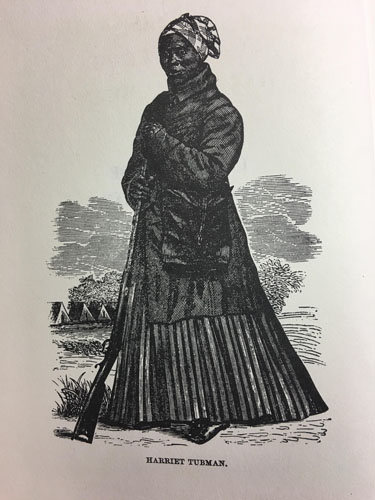
Now, imagine one of those stories leads to an astonishing and life-changing discovery: you’re descended from celebrated abolitionist Harriet Tubman.

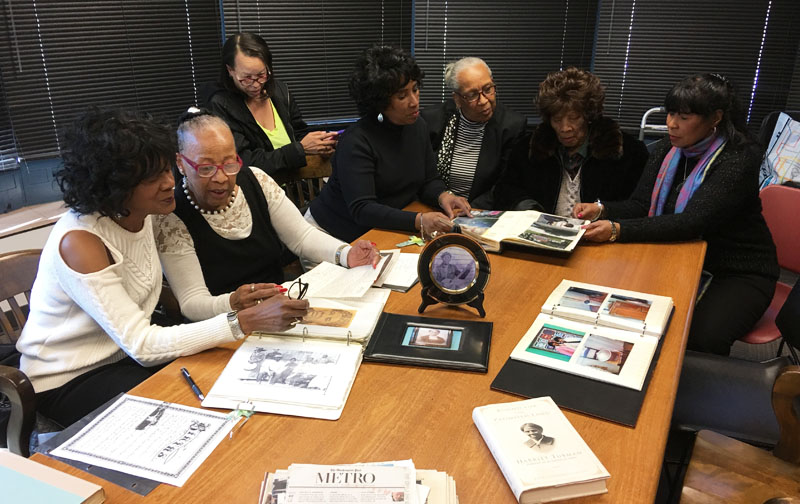
Members of the Ross family sitting around a table examining artifacts from the archive

The Ross family, from left to right: Denise Winfield; Dorothy Jackson; Tina Jackson-Moore; Stephanie Ross Curry; Maryann Ross-Settles; Lula Juanita Ross-Levesque; Audrey Dillard.

In 2011, the Ross family was bewildered when they uncovered just this at their family reunion.

Audrey Dillard (Ross), descended from Harriet Tubman, was in utter disbelief when she found her heritage paired with Tubman’s.

“I remember being at the family reunion and seeing all these binders with information about Harriet Tubman. So, I ask my cousin, “Why on earth is all that information here?” And she said, “You really don’t know do you.” And when I found out, I was in shock!”


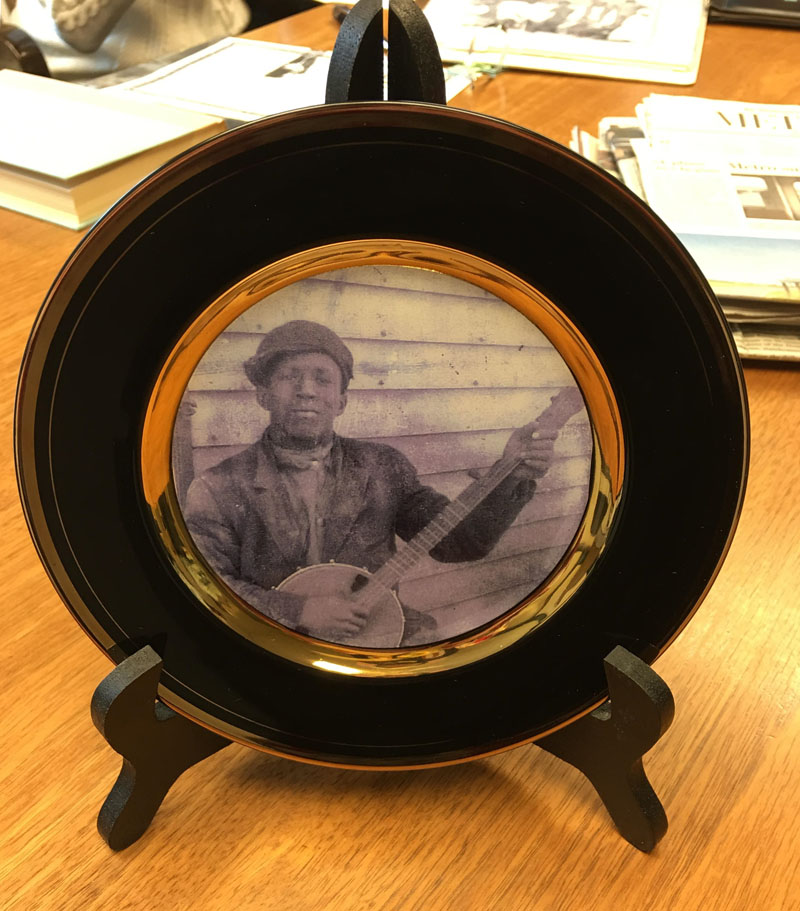
Black and White plate imag eof Granderson "Grady" Ross

Granderson “Grady” Ross

Tubman was born in Maryland circa 1822, so to find that a large majority of her relatives still called this area home was an exciting discovery for the Ross family. Through genealogical research and family recollections and conversations, it was uncovered that Dillard’s grandfather, Granderson “Grady” Ross, was in fact Harriet Tubman’s father, Ben Ross’s nephew. That meant that the Ross family of Northern Virginia and Maryland were in fact direct descendants of Harriet Tubman.

When the realization sank in, Dillard, and her extended family, including her mother, Juanita Ross-Levesque (Granderson Ross’ daughter), who is Tubman’s “second blood cousin on the paternal side,” and likely the closest living relative to Harriet Tubman today, decided that they wanted to follow in Harriet’s footsteps. Therefore, in June of 2011, Harriet’s modern-day relatives took the same journey along the underground railroad, that she so courageously traversed over 165 years ago.

Tubman was a “conductor” on the Underground Railroad for approximately nine years, and during that time she guided countless slaves to freedom. Tubman is revered as one of America’s most historically significant persons. She fought for human rights and freedoms for the duration of her life. Despite the risks and bounty for her capture, she continuously returned to the south via the Underground Railroad to assist with the freeing and relocation of slaves, and continued with her mission to serve and help others until her final days.

During their journey along the Underground Railroad, the Ross family physically and emotionally connected with Tubman and her plight. They fully comprehended the sheer will, strength, fearlessness, and determination that Tubman, and other travelers along the route, possessed. “It was truly a life changing journey,” stated Dillard.

As they continue to delve into their family history and uncover a deeper connection to Tubman, the Ross family hopes to find new relatives and “family members just like us,” who will continue to celebrate, share, and keep the legacy of Harriet Tubman alive and thriving.


To do your own genealogical research or to learn more about Arlington and Northern Virginia’s history, please visit the Center for Local History at Central Library. You can also contact us by email or by calling 703-228-5966.


July 31, 2017 by Web Editor

Arlington Beach, 1927: an Arlington Voices Oral History Interview

Post Published: July 17, 2017

Ruth Jones, born in March of 1913, began to visit Arlington Beach around 1927. The amusement park and beach were popular among area residents in the 1920s.

Arlington Beach occupied space around what was then known as the Long Bridge, and later became the Fourteenth St Bridge complex, from 1923 to 1929. The Washington Airport Corporation eventually bought the land for additional landing space, which then gave away to Pentagon construction.

In this soundcloud audio clip, Mrs. Jones recalls her teenage years spent at the beach with her friends and future husband.

You can find Ruth Jones’ interview in its entirety in the Center for Local History – VA 975.5295 A7243oh ser.3 no.71. For information about Arlington Beach, read the Center for Local History’s post, “A Day at the Beach.”

Photo: Arlington Beach Advertisement 1920; Source: Photographs of the Arlington Historical Society, PG 230-3447


The goal of the Arlington Voices project is to showcase the Center for Local History’s oral history collection in a publicly accessible and shareable way.

From June 2017 – May 2018, we will post one oral history clip and transcript each month, focusing on Arlington’s history, culture and identity.

What is the oral history collection?

Oral history is a popular method of research used for understanding historical events, actors, and movements from the point of view of people’s personal experiences.

The Arlington Public Library began collecting oral histories of long-time residents in the 1970s, and since then the scope of the collection has expanded to capture the diverse voices of Arlington’s community. In 2016, staff members and volunteers recorded many additional hours of interviews, building the collection to 575 catalogued oral histories.

To browse our list of narrators indexed by interview subject, check out our community archive. To read a full transcript of an interview, visit the Center for Local History located at Central Library.


July 17, 2017 by Web Editor

Oral History: An Interview with Ruth Jones

Post Published: July 16, 2017

Ruth Jones, born in March of 1913, began to visit Arlington Beach around 1927. The amusement park and beach were popular among area residents in the 1920s.

Arlington Beach occupied space around what was then known as the Long Bridge, and later became the Fourteenth St Bridge complex, from 1923 to 1929. The Washington Airport Corporation eventually bought the land for additional landing space, which then gave away to Pentagon construction.

In this audio clip, Mrs. Jones recalls her teenage years spent at the beach with her friends and future husband.

Narrator: Ruth Jones
Interviewer: Ingrid Kauffman
Interview Date: March 23, 1999

Transcript:

IK: And so can you tell us about Arlington Beach?
RJ: Well, I was just a young girl, 14 or 15 years old and I met my husband, well, he eventually was my husband.
IK: What was his name?
RJ: Raymond Jones. And he lived in Washington. And we started going to Glen Echo and to Arlington Beach and just having a good time for kids, you know. And so they had a roller coaster, a carousel –
IK: How much did that roller coaster cost?
RJ: Ten cents. A ride at your own risk. That’s the truth, too. It was rickety. After I came to Washington, it was only there for 2 years, 2 or 3 years, then they tore it down.
IK: They tore down the roller coaster?
RJ: Everything. And shut the beach down and all, to put the airport there.
IK: Oh, I see, yes. But tell us about everything you can remember there. You say there was a carousel?
RJ: Yes. And like I said, the roller coaster. And all the places you could go play games –
IK: Like what?
RJ: — along the beach. Like throwing darts to win a bunny or whatever they had, you know. Those kinds of things. And eating places, hot dog stands and things like that. And the dance pavilion was wonderful. It was a big, round pavilion, good music, you know, big band music in those days, big band.
IK: Do you remember any of the bands?
RJ: No, I can’t remember the bands.
IK: But it was live bands, huh?
RJ: Yes. We had a good time dancing. And the beach was great in those days.
IK: So, and then, tell us, you say they tore it down. What do you remember about that?
RJ: All I remember is they tore it down. They said they were closing it to put the airport in. And then they put the airport there. And then it wasn’t very long, even, before they tore that down. And my husband and them used to go to – my husband and daughter’s father-in-law – used to go to where the Pentagon is now. It was all woods, weeds and all. And they used to go there and pick elderberries and wild grapes and made the best wine you ever tasted. It was during Prohibition! But it was good wine.
IK: And you don’t remember any shacks or anything that –
RJ: No, but they built shacks down there. Yes they did. And we had neighbors that lived in Annandale after I moved to Annandale, they lived across the street from me, and they had lived down on the water like that. They were shacks.
IK: Oh, they lived on the water. RJ: They did. And they lived there free. It was federal government, see, they didn’t – but they finally told them to get out, they were putting the Pentagon in. So I’m telling the story lovely, aren’t I?

You can find Ruth Jones’ interview in its entirety in the Center for Local History – VA 975.5295 A7243oh ser.3 no.71. For information about Arlington Beach, read the Center for Local History’s post, “A Day at the Beach.”

Photo: Arlington Beach Advertisement 1920; Source: Photographs of the Arlington Historical Society, PG 230-3447


The goal of the Arlington Voices project is to showcase the Center for Local History’s oral history collection in a publicly accessible and shareable way.

From June 2017 – May 2018, we will post one oral history clip and transcript each month, focusing on Arlington’s history, culture and identity.

What is the oral history collection?

Oral history is a popular method of research used for understanding historical events, actors, and movements from the point of view of people’s personal experiences.

The Arlington Public Library began collecting oral histories of long-time residents in the 1970s, and since then the scope of the collection has expanded to capture the diverse voices of Arlington’s community. In 2016, staff members and volunteers recorded many additional hours of interviews, building the collection to 575 catalogued oral histories.

To browse our list of narrators indexed by interview subject, check out our community archive. To read a full transcript of an interview, visit the Center for Local History located at Central Library.

July 16, 2017 by Web Editor Tagged With: Oral History

Oral History: An Interview with Lilli Vincenz

Post Published: June 15, 2017

Arlington Voices: Lilli Vincenz

Dr. Lilli Vincenz came to the Washington, DC area in 1963 as a WAC (otherwise known as the Women’s Army Corps). After being outed as a lesbian and receiving a general discharge, Dr. Vincenz found a community and a calling in LGB activism.

She quickly became involved in the Mattachine Society of Washington, an important organization in the fight for local and national rights for gay and lesbian Americans. A dedicated community activist, Dr. Vincenz hosted a weekly open house for lesbian women from 1971 to 1979 and founded the Community for Creative Self Development, an empowerment program for the LGB community from 1992 to 2004.

In this audio clip, Dr. Vincenz shares her memories of protesting discrimination against gay and lesbian sexuality with the Mattachine Society.

Narrator: Lilli Vincenz
Interviewer: Diane Kresh
Interview Date: November 14, 2013

Transcript:

DK: Can you talk a little bit about the Mattachine Society?

LV: Oh, I loved it. Yeah. I went there immediate—and I felt so good. It was wonderful. I just loved it.

DK: Well, what did you love about it?

LV: I was free. And then the picketing started and I have that noted also in there. And it was so exciting that that was the most important thing for me. I’ve got to do this, because there’s all the lies that have been made for people who think that gay people are bad people socially. And well, nobody had really told people that it’s all right to be gay. But now, of course, we’re getting this quickly now that this—everywhere now we’re—

DK: Huge change.

LV: Another marriage, another marriage, they’re doing all that!

DK: Did you think that that would happen in your lifetime, those kinds of changes?

LV: Well, early on I didn’t think right away, but I only knew I had to be there. I had to do it, because so few people could do it. And I felt that I could do it.

For more information about Lilli Vincenz, see the Lilli Vincenz collection at the Library of Congress.


The goal of the Arlington Voices project is to showcase the Center for Local History’s oral history collection in a publicly accessible and shareable way.

From June 2017 – May 2018, we will post one oral history clip and transcript each month, focusing on Arlington’s history, culture and identity.

What is the oral history collection?

Oral history is a popular method of research used for understanding historical events, actors, and movements from the point of view of people’s personal experiences.

The Arlington Public Library began collecting oral histories of long-time residents in the 1970s, and since then the scope of the collection has expanded to capture the diverse voices of Arlington’s community. In 2016, staff members and volunteers recorded many additional hours of interviews, building the collection to 575 catalogued oral histories.

To browse our list of narrators indexed by interview subject, check out our community archive. To read a full transcript of an interview, visit the Center for Local History located at Central Library.


June 15, 2017 by Web Editor Tagged With: Oral History

Gardener Yu-hsin Hsu Wins County Volunteer Award

Post Published: April 24, 2017

The County Board will honor two volunteers on Tuesday, April 25 as the 2016 recipients of the Bill Thomas Outstanding Park Service Volunteer Award.

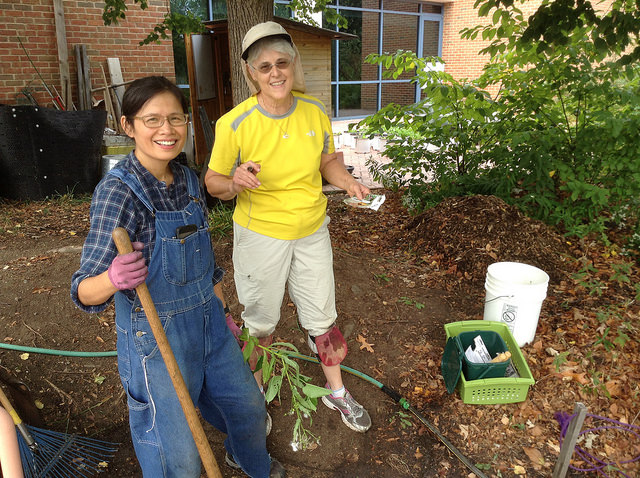
Yu-hsin Hsu, Library Garden Volunteer and Noreen Hannigan

Yu-hsin Hsu, Library garden volunteer, and Master Naturalist Noreen Hannigan

An ardent supporter of Arlington’s natural resources, Yu-hsin Hsu has volunteered with Long Branch Nature Center, the Arlington Central Library pollinator garden, the Natural Resources Management Unit and Arlington Regional Master Naturalists.

Yu-hsin became a volunteer in our gardens in early spring 2016. At that time, she happened to pass by the Library’s native pollinator garden, where she saw a staff member weeding. She offered to help, and has not stopped helping since – eventually taking over the care of the pollinator garden. (This garden is particularly special to Central Library staff, as it was created and nurtured by former coworker Lynn Kristianson, who died in 2015.)

Margaret Brown, Central Services Division Chief at the Library says of Yu-hsin: “She brings to the garden a spunky energy and perseverance, as well as a similar passion for educating others about the critical importance of pollinators and native plants. She is tireless in her efforts and selfless in her generosity.”

At Long Branch Nature Center, Yu-hsin has been invaluable as a Saturday animal care volunteer since fall 2013, logging about 160 hours and freeing up weekend staff to attend to visitor contact and other activities as well as directing other animal care volunteers in their tasks. In addition to animal care, Yu-hsin helps with invasive exotic plant removals and preparing for twice-yearly native plant sales at the center.

The final piece of Yu-hsin volunteering trifecta is her work with the Department of Parks and Recreation’s Natural Resources Management Unit, educating and involving children in the Remove Invasive Plants (RiP) program, volunteering at the native plant nursery, and with habitat restoration projects. She has also helped inventory County plants and animals through the annual National Geographic Bioblitz, and engages in other conservation and outreach activities through the Master Naturalist Program.

April 24, 2017 by Web Editor

Letters Home: Remembering World War I

Post Published: April 3, 2017

When World War I began in mid-August of 1914, it divided the global superpowers into Central and Allied Powers.

But it was not until after the sinking of the Lusitania in 1915 – and incessant pleas from the Allied Powers – that the United States officially entered World War I on April 6, 1917. Then soldiers from all over the United Sates, including Arlington, signed up to “do their part for the War effort.”

Because of new innovations in weaponry and chemical warfare, this was unlike any previous war; more than nine million soldiers perished, and approximately twenty-one million were wounded between 1914-1918.

Many Americans never returned home, but one who did make it back to Arlington was Edward G. Fenwick.

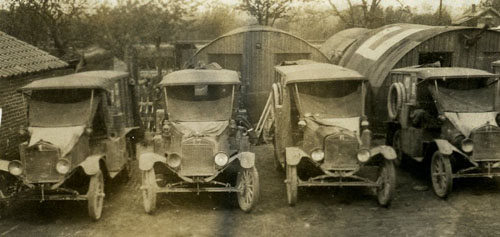
Fenwick served as an ambulance driver during World War I, and his journey through wartime Europe can be relived through his numerous personal correspondences.

Remy Belgium Fenwicks Car

Fenwick’s World War I Ambulance

Fenwick's letter home, page 1

Fenwick’s letter home, page 1

With letters addressed to his loved ones, including his beloved “Momsie,” the contents reveal an intimate look at life behind-the-scenes during war, and a soldier’s internal struggle to maintain a sense of normalcy and familiarity amidst a chaotic war-torn backdrop.

These wartime correspondences, as well as other family records can be found in the Eastman-Fenwick Family Personal Paper Collection at the Center for Local History.  The Eastman-Fenwick Collection details the history of this well-known Arlington family over four generations.  The collection is comprised of wartime letters, (both Civil War and World War I) economic records of the family, 19th century sermons, genealogical materials, and various postcards and correspondences.

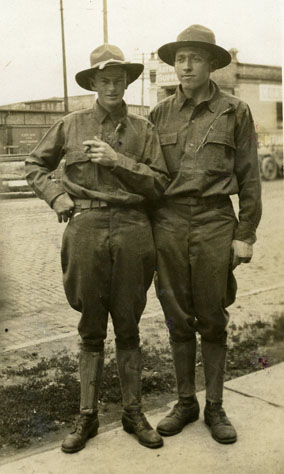
When Kristin Young, an Arlington County employee, discovered that the Center for Local History was going to showcase letters and photographs from World War I, she graciously loaned us a photograph of her grandfather, William Leo Diedrich for our exhibition.

William Leo Diedrich

William Leo Diedrich

Kristin’s grandfather served in France in 1917 and his personal diary quoted that he was “shot and gassed in October 1918.”  He survived the war but Kristin says, “My grandfather didn’t talk much about his service.  Nor did my uncles who served in WWII.  I can say that I am proud of my family’s tradition of service.”  In fact, Kristin is retired from the Navy Reserves.  She stated, “I’d like to think that I continued that tradition and hopefully made him proud.”

View the Center for Local History’s complete online World War I exhibit.

We also invite you to visit the Center for Local History’s Research Room at Central Library to see our World War I mini-exhibition, and to get an up-close-and-personal glimpse into this bygone wartime era.


The Center for Local history is happy to accept archival donations—please contact us through our webpage to speak to a staff member about your collection. 

The Center for Local History is a community driven archive which collects documents, photographs, and other archival records detailing Arlington’s diversified neighborhoods, groups and clubs, and residents.


April 3, 2017 by Web Editor

An Important Note From the Library Director

Post Published: February 14, 2017

directorsblog_diversity2

To our patrons:

We live in interesting times.

Please be assured that Arlington Public Library remains committed to being a welcoming place that accepts all comers regardless of backgrounds, beliefs, origin, income status, and appearance.

We will continue to embrace inclusion and diverse points of view.
We will continue to inspire, to tickle your passion, to quench your thirst to know.
We will encourage you to ask why and why not?
We will continue to be a wellspring for ideas, for conversation, for disagreement, for enlightenment.
We will continue to educate and to provoke.
We will continue to create opportunities for increased understanding: of our world, of our community and of each other.
We will continue to honor truth and fairness, social justice and compassion.
We will stand up for each other and ask that bullies stand down.

We will do all of this as we have always done:

  • With good will and humor and kindness,
  • Through books and community programs,
  • Within our walls and outside in the community.

We may live in interesting times and we will be there for you.

Diane Kresh
Director, Arlington County Public Library


February 14, 2017 by Web Editor

  • « Go to Previous Page
  • Page 1
  • Interim pages omitted …
  • Page 19
  • Page 20
  • Page 21
  • Page 22
  • Page 23
  • Interim pages omitted …
  • Page 40
  • Go to Next Page »

Footer

About Us

  • Mission & Vision
  • Charlie Clark Center for Local History
  • News Room
  • Get Email Updates

Administration

  • Policies
  • Library Staff
  • Job Opportunities
  • Propose a Program or Partnership

Support Your Library

  • Friends of the Library
  • Giving Opportunities
  • Donating Materials
  • Volunteer Opportunities

Our Mission

We champion the power of stories, information and ideas.

We create space for culture and connection.

We embrace inclusion and diverse points of view.


Download the Library App

Download the Library App

Arlington County | Terms & Conditions | Accessibility | Site Map
· Copyright © 2026 Arlington County Government ·