• Skip to primary navigation
  • Skip to main content
  • Skip to footer

Alert

Update: Elevator outages, maintenance and upgrades at Central Library More Info

Home - Arlington County Virginia - Logo
MENUMENU
  • Join Now
  • My Account
    • Login
    • My Checkouts
    • My Holds
    • My Lists
    • My Reading History
    • About Borrowing
    • About Holds
    • About My Account
  • Hours & Locations
    • All Hours & Locations
    • Holiday Closings
  • News
    • Library News
    • Director's Blog
    • Get Email Updates
  • Contact Us

Arlington Public Library

MENUMENU
  • Search
  • Collections
  • Library Services
  • Events
  • Community Engagement
  • Join Now
  • My Account
    • Login
    • About Borrowing
    • About Holds
    • About My Account
  • Hours & Locations
    • All Hours & Locations
    • Holiday Closings
  • News
    • Library Blog
    • Get Email Updates
  • Contact Us

Web Editor

Exploring the Story of Desegregation in Arlington Public Schools

Post Published: February 2, 2017

"Project DAPS"

The richly documented story of public school desegregation in Virginia will be made accessible online by the County that led the way.

On Saturday, Feb. 25, in conjunction with the 2017 Feel the Heritage Festival, Arlington Public Library launches Projectdaps.org, a unique online exhibition and searchable database – built from thousands of photos, documents and recordings – surrounding the legal and moral battles that culminated with four courageous African American students taking their seats on Feb. 2, 1959 at Arlington’s Stratford Junior High School.

black and white photograph of black students entering Stratford Junior High in 1959

Ronald Deskins, Michael Jones, Lance Newman, and Gloria Thompson walked into Stratford Junior High School on February 2, 1959. Center for Local History, Arlington Public Library


“Project DAPS” (Desegregation of Arlington Public Schools) is culled from the holdings of the Library’s Community Archives in the Center for Local History (CLH) at Central Library.

The project explores the historic narrative starting with early integration efforts amid Arlington’s rapid growth of the 1940s. Many items were recently digitized for the first time.

In 2016, the Stratford school property was declared a local historic district. Library Director Diane Kresh says the timing was perfect for creating a “complementary and comprehensive digital collection to tell the story of this signal milestone in our rich community history.”

Because there are always more layers of history to find and examine, the CLH continually seeks community donations and oral histories, particularly as they relate to desegregation following the historic day at Stratford. To contribute, contact the CLH at 703-228-5966 or localhistory@arlingtonva.us.

This digital access project was completed using new FY2017 funding in the Department of Libraries budget dedicated to increasing public access to government records and archival materials.

The Center for Local History at Arlington Public Library is committed to collecting, preserving, and sharing the history of Arlington County. 
 

February 2, 2017 by Web Editor Tagged With: local history news

Don’t Touch That Dial, 2016 Edition

Post Published: December 13, 2016

The Library Director’s Annual Yule Blog

Since 2008, each December I have created a mix tape of seasonal favorites.

They’ve been known variously as” Don’t Touch that Dial” (I imagine there will come a day in the not too distant future when readers will have no idea what I mean by this — perhaps those days are here?), “Too Cool for Yule” and “The Director’s Annual Yule Blog.”

There are many thousands of songs to choose from, across all genres, and putting together this annual list is one of the things I most look forward to.

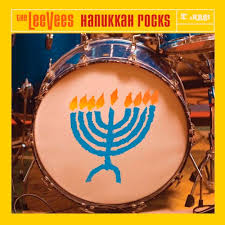
cover: "Hanukkah Rocks"As with that first list, I observe two major criteria: I really like the song and (mostly) stay away from the purely goofy — barking dogs, flattened grandmas – (although this year, I couldn’t resist, “Gelt Melt” by The LeeVees in homage to Chanukah, the eight-day Festival of Lights that begins on Christmas Eve); and I include a version of “Have Yourself a Merry Little Christmas” – that wistful confection penned by Hugh Martin and Ralph Blane, and introduced by Judy Garland in the 1944 MGM musical Meet Me in St. Louis, directed by Garland’s soon-to-be-husband, Vincent Minnelli, one of the greatest directors of movie musicals. I don’t believe there is a singer who has not covered this song and while Garland is still the standard by which I measure any cover, Luther Vandross does a terrific job with it, cool and swinging, and makes me miss him all the more.


cover

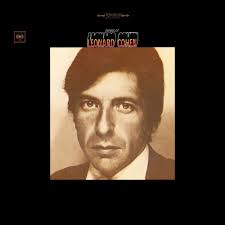
And speaking of losses, in 2016 we said good bye to several giants of the music industry: Prince, David Bowie, Sharon Jones, Maurice White, Merle Haggard, Leon Russell, Glenn Frey, Leonard Cohen, Ralph Stanley and too many others gone too soon.

While not technically a holiday song of the “holly, jolly” variety, Cohen’s “Winter Lady” captures his essence as poet and troubadour. And Stanley’s “Christmas is Near” is grassy and old-timey. Which brings me to “Who Knows Where the Time Goes,” by British folk rocker Sandy Denny – haunting, lyrical, a perfect accompaniment to late year musings.


The Weepies Say I am You (cover)


I close with “The World Spins Madly On” by Indie folkies, The Weepies. Because this was 2016.


2016 Too Cool for Yule a vintage photograph of a child at christmas holding a candle


So click, spin or sing along.

And please consider posting a comment below to tell us what you think or to share your holiday favorite —be it musical, audio-visual, literary, traditional, or food-oriented. We would love to hear from you.

And while you’re at it, have yourself a merry little. . .


December 13, 2016 by Web Editor Tagged With: yule blog

Director’s Blog: The Right to Vote

Post Published: November 3, 2016

It was in Miss Barbara Nelson’s first grade class at Stewart-Tuckahoe that I first learned that the choices I made could affect the world.

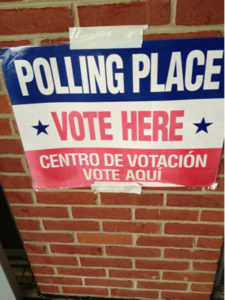
polling place sign

It was November of 1960, and Miss Nelson asked the class to put our heads on our desks and, by a show of hands, vote for President.

She called John Kennedy’s name first and being new to this form of civic engagement, I peeked and saw one of my friends raise her hand – I followed her lead. A moment later, Miss Nelson asked how many were voting for Richard Nixon. Again, I peeked, saw how a second friend was voting, and promptly committed voter fraud. Miss Nelson shared the results, acknowledged that there had been an error but decided against a recount. I was spared.

I can’t say that was the beginning of my social consciousness but I was very interested in politics and government throughout my years in public school and at age 18, voted for the first time in November, 1972. It was a thrill and a sign (along with getting a driver’s license) that I had reached adulthood.

I’ve never missed an election since and when my two sons were little, I took them with me to help me cast my ballot, their reward: red, white and blue “I Voted” stickers. Years later, one of those boys stood in line with me to help me cast my vote for the first African-American President. The enormity of that moment was not lost on either one of us.


It’s a point of pride that Central Library is one of many polling locations.

Not because we’re a big facility with a large auditorium and a lot of free parking, but because our very existence as the public library is predicated on a belief that people have a right to know.

Free and unfettered access to information makes our democracy work by giving people the tools they need to pursue the lives they imagined. 

That is a sacred covenant that we, as librarians, never take for granted.

This election season has seemed exceptionally long and it’s no surprise that many (all?) of us are counting the days until it is over. To hasten its end (and it will end), however, is to pay insufficient attention to what voting is all about: taking a stand, making a commitment to oneself and others, being an active participant in the wider community.

Turn on the TV, open the newspaper, listen to the radio – we’re told that this election is more important than ever.

Not so. Every election is important and every vote counts. And it’s a privilege that for people in many parts of the world is not enjoyed.

On Tuesday, vote as if your life depends on it; it does.


November 3, 2016 by Web Editor Tagged With: Arlington Years

Voter Organization Focused on Local Issues for 93 Years

Post Published: October 27, 2016

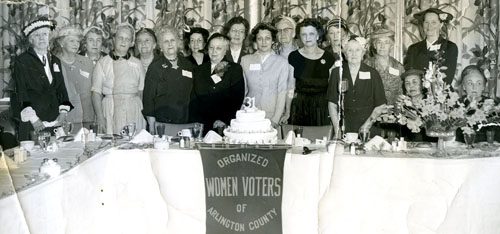
black and white photograph of Organized Women Voters

The Organized Women Voters of Arlington was founded in 1923, just three years after the 19th amendment to the U.S. Constitution extended the right to vote to women.

A decidedly non-partisan organization, the OWV was unique in its distinct attention to matters facing the County. In an interview with the Northern Virginia Sun in 1958, then-president Ms. Woolley stated she believed “that the Organized Women Voters of Arlington is the only women voters’ group in the United States that is concerned solely with matters of local interest.”

While the OWV’s objective was to “collect and disseminate political and civic information,” it also served an important role as a space for the improvement of women’s social position within the county. Many prominent female leaders from Arlington, including county board members and former state senator Mary Margaret Whipple, have been a part of this significant organization.

In an oral history recorded in 1983, former OWV President Mrs. Sue Renfro remembered a time early on in the organization’s history when the two functions of education and political support intersected:

“At the first meeting there was a Sheriff Fields that came to speak to the ladies since they were having the vote. And he promised them that he would do something for them, so they asked him would he be willing to make an appointment [appoint a woman, and he replied] “Well, yes, under the circumstances.”

So then they had the election. Sheriff Fields won, and he just seemed to forget about appointing a lady. And the ladies decided that they should go and inspect the jail.

So they made several trips to inspect the jail, and finally it was reported that the sheriff looked up one day and saw the committee coming again to inspect the jail and decided that he might just appoint one of them, and he appointed Mrs. Pauline Duncan.

… She was the first deputy woman sheriff in the Commonwealth of Virginia.”

In the photo above, attendees gather at the OWV’s 31st birthday luncheon in 1954.

These were high-profile events for the organization, and every year the group named a “Woman of the Year” from Arlington County. In 1938, First Lady Eleanor Roosevelt was an honored guest. Today, the Organized Women Voters still meets on the 4th Tuesday of every month from September through May at Essy’s Carriage House, to hear from candidates and county representatives.

Thank you to current president Nancy Renfro for the information regarding the organization’s current activities.


Learn More from the Center for Local History at the Central Library.

You can request to view materials in person from Record Group 17 – Records of The Organized Women Voters of Arlington County – or read the full interview excerpted above with Sue Renfro and Lillian Simms, cataloged as VA 975.5295 A7243oh ser.3 no.215.


October 27, 2016 by Web Editor

Library Director Receives Women of Vision Award

Post Published: June 29, 2016

Women of Vision

On June 28, Library Director Diane Kresh was honored with the 2016 Women of Vision Award by the Commission on the Status of Women.

Each year, the Commission honors women from the fields of government, business and the nonprofit world who have shown extraordinary leadership and commitment to the community.

2016 marks the 30th anniversary of the awards.

This year’s Women of Vision Awards also include Rebecca Carpenter, the founder and CEO of organic urban agriculture company Sprout, and Susan Senn, a former Arlington Public Schools teacher who now serves on the Executive Board for the Arlington Branch of the American Association of University Women.


Diane’s remarks highlight her passion for mentoring women in the workplace and supporting young people in our community, as well as the power of stories to connect us:

Good evening. Thank you Ingrid, Caroline and the Commission on the Status of Women. I am honored to be here in the company of all of you, including many former winners of this prestigious award, and my County colleagues, friends and family.

Diane Kresh at Women of Vision awards

photo courtesy of AED BizLaunch

Perhaps it is no coincidence that 42 years ago this month, I began working in a library. Growing up in Arlington in the early 1960’s, becoming a librarian was perhaps the furthest thing from my mind, in spite of a penchant for alphabetizing my baseball trading cards. In those pre-Title IX days, I lived for sports – especially softball – and a career in physical education seemed more likely. However, within a few years of that first library job, I earned my Masters in Library Science and joined a profession known for its advocacy on behalf of the disenfranchised and marginalized.

A few years ago, I was writing a blog post to promote our outstanding summer reading program for children and teens when I remembered an event that, as much as anything, contributed to a lifelong commitment to empowering the disempowered.

It occurred in Mrs. Cheatham’s 8th grade English class and arrived in the form of a Scholastic magazine short story. “Sucker” by celebrated novelist Carson McCullers (“The Heart is a Lonely Hunter” and “Ballad of the Sad Café”), described a cruel hurt inflicted on an orphaned teen-child, so gullible and starved for affection and acceptance that his hurt, suffered at the hands of an insensitive older cousin Pete, the story’s narrator, still takes my breath away, close to 50 years later. We have each of us probably known a Sucker; or at times, maybe, been one: the nerdy kid who tags along, always at a distance, grateful to be allowed to do that. The kind of kid who will do anything to fit in, be wanted, the kind of kid who is prone to hero worship and typically chooses the wrong hero, a hero unworthy of such devotion, and who, ultimately, inevitably will disappoint.

“Sucker” was my first brush with young adult fiction and the realization that those you most depend on are not always there for you. I read S.E. Hinton’s classic, “The Outsiders” later that same year, but didn’t pick up young adult fiction, again until shortly after I arrived at Arlington Public Library when I requested a reading list of core YA titles from our Youth Services staff. Be careful what you ask for. Although I got through only about half of the list, I was unnerved by the range of experiences these fictional heroes and heroines confronted in their still young lives: teen pregnancy, addiction, gender preference, bullying; teens facing moral dilemmas, teens facing death, teens facing the consequences of their own actions. Pretty heavy and mature stuff in stories that revealed how challenging and lonely it is for young people to come of age, now more than ever. Stories that reminded me of how important adults are in the lives of teens whether we are parents, mentors, neighbors, teachers, or librarians. How important it is to be that someone willing to listen at a time when a teen needs it most.

From the women I coach who are trying to lean in and have it all to the young people of our community who struggle to find their voices, the Library is a beacon, a safe haven, a clean, well-lighted place that says: we listen, you belong. I am grateful to Arlington County for granting me the opportunity to give back to a community that set me on my path with confidence and purpose. And I am grateful to the Advisory Commission on the Status of Women and their tireless advocacy for the social and economic interests of women.

I’ll close with a quotation from one of my heroes, Eleanor Roosevelt who knew something about public service and whose commitment to social justice and human rights and freedoms sets a bar that I aspire to reach. She also knew something about the power of women’s voices. Perhaps her words will resonate with some of you . . .

“A woman is like a tea bag – you never know how strong she is until she gets in hot water.”

Thank you.


Women of Vision awards are presented each year by the Arlington County Commission on the Status of Women as part of the celebration of Women’s History Month. The awards are given to individuals who demonstrate a strong commitment to women’s issues and have, over time, developed and communicated their vision for women and engaged community members and other leaders in order to realize this vision.


June 29, 2016 by Web Editor

Public Shoe Store Donates Records to Center for Local History

Post Published: February 29, 2016

Farewell to an Arlington Landmark, 1938-2016

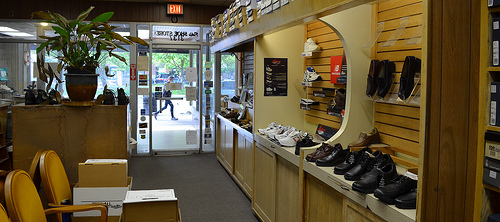
shoes in a shoe store

The Public Shoe Store in Clarendon, one of the oldest long-term businesses in Arlington, closed its doors on February 27.

S. H. “Doc” Friedman, the store’s owner and a podiatrist by training, has finally decided to retire after 78 years in the business [Arlnow.com]. Specializing in comfort shoes and custom fitting, it is one of the rare specialty stores of its kind left in the area and will certainly be missed by its many long-time customers.

“Doc” Friedman is donating the records of the Public Shoe Store, as well as the sign from the front of the store, to the Center for Local History at the Arlington Public Library.

In doing so, he is making sure that the Public Shoe Store’s place in the history of the community is preserved.

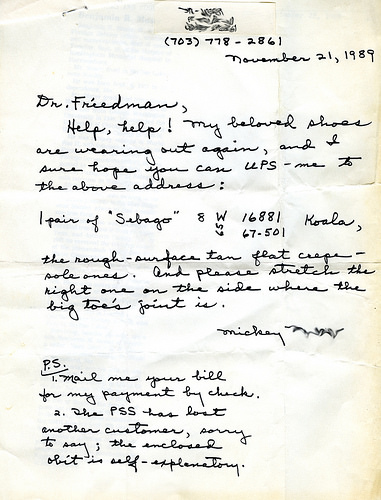
handwritten letter requesting shoes
Letter to 'Doc" Friedman from a loyal customer (click to enlarge)

Did you know that the Center for Local History collects historical business records as well as the records of Arlington organizations?

These records help tell the story of the development of the community and provide unique testimony to the achievements of your business or organization. Placing these records in an archival repository helps assure that they will be preserved and become part of the community’s collective memory.

If you have business or organizational records you would like to donate, please contact the Center for Local History at 703-228-5966, or email localhistory@arlingtonva.us.


February 29, 2016 by Web Editor Tagged With: local history news

Celebrate Black History: Hall’s Hill +150

Post Published: February 1, 2016

This year marks the 150th anniversary of the notable Hall’s Hill/High View Park neighborhood in north Arlington.

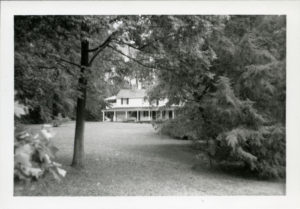
Bazil Hall home behind trees

Bazil Hall home, 1700 N. George Mason Dr., c. 1866

The name Hall’s Hill comes from Bazil Hall, an Alexandria (now Arlington) County farm owner in antebellum Northern Virginia.  Following the difficult Civil War years, Hall gradually broke up and sold his estate, including its noted rise, in small parcels to freed slaves, generally for $10-15 per acre.

Hall, according to a 1969 interview with Robert Nickerson, urged blacks to buy as much land as they could, saying a time would come when they would no longer be allowed to acquire such property. In Nickerson's words: "[H]e told the truth.”  In the 1890s, before enforced segregation kicked in, the lots were also advertised in the Washington Bee, the region's black newspaper.

In the early days of the Hall's Hill community, most residents had gardens and often raised chickens and hogs. In oral histories, they fondly described a life built around church, community and social activities. Block parties, sledding and the neighborhood baseball team, known as the Virginia White Sox, were just some of the pastimes.

"The Hill" is remembered as a place where you knew everyone and everyone knew you, and children understood that if they misbehaved in front of neighbors, their parents would soon hear of it.  A close-knit community, the people of Hall's Hill looked out for one another.

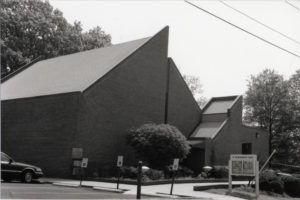
Mount Salvation Baptist Church

Mount Salvation Baptist Church

Bounded by Lee Highway (north), Glebe Road (east), North 17th Street (south) and George Mason Drive (west),  residents established many of their own stores, schools and houses of worship.  The churches in particular remain an ongoing source for social, cultural and religious enrichment.

Until the 1950s the neighborhood was separated from the adjacent white community by an 8-foot-high fence that ran between the backyards of blacks and whites.  Only a small part of the fence remains today. It can be seen from N. 17th Street.

Members of the community played  significant roles in the national and local Civil Rights movement of the 1950s and 60s, working to desegregate public schools, housing, theaters, hospitals, libraries and eating facilities.

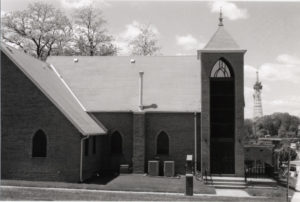
Calloway Methodist Church

Calloway Methodist Church

Arlington County officially changed the neighborhood's name to High View Park in 1965. However, many long-time residents still prefer to call the area by its original name.

Today an aging population and changing demographics place the community on the brink of significant change, but as long as the stories of residents are collected, preserved, and celebrated, its history and significant contributions will be not be lost.

From an oral history with Welbe “Peggy” Earline Deskins done in 2003:

“I think it’s always important to… remember your roots and to remember where you started from… the why and how of everything.  I think that helps in your later life and it certainly helps other people as they’re coming along.

If you lose it all, [there] comes the time when there’s a whole race who just knows nothing.... You might have to even start out from the beginning, but when you do, if you have some references, then you know what to start with.

I think you should always... keep track of history... people were different in that time.  People helped each other a lot more.  People were a lot more open with each other, you know.  I mean you could run next door and get a cup of sugar you know...  it was just different.  And those are the kinds of things I think that help people to keep going and to prosper.”

February 1, 2016 by Web Editor Tagged With: local history news

Director’s Blog: Golden Years

Post Published: January 14, 2016

dkglam

They put you down, they say I'm wrong

You tacky thing, you put them on

Rebel Rebel

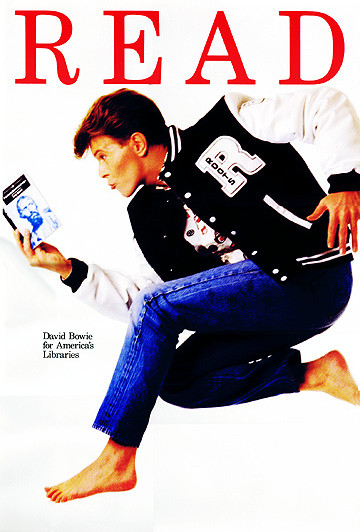
You don’t know what you’ve got until it’s gone.  I have been feeling that way for the past few days while reading the many moving tributes to the late cultural icon, David Bowie.  I have been reminded, too of how much he had been a part of my life without actually being in my life.  Just a handful of years older then I, Bowie personified where I was or, more often, where I wanted to be through his many reinventions. There was Bowie the glam, Bowie the space oddity, Bowie the bi-, Bowie who fell to earth, Bowie the fashionista, Bowie the crooner, and Bowie the Warhol, his sly turn as the High Priest of Pop as if he needed another 15 minutes of “Fame."

read

On vinyl, film, the stage, in the pages of glossies, on the arms of super-star models, Bowie was the protean taste shifter, the master of surprise, the eyebrow raiser, the envelope pusher. He always seemed to get “there” –wherever “there” was – ahead of everyone else.  When it was hip to be hip, he was the hippest; when cool was the thing, he was ice.  Imagine Bowie as Mr. Freeze instead of Schwarzenegger (“Holy ‘hasta la vista, baby’ Batman”).  Even the recent fuss over Jaden Smith (Will’s son) wearing a dress in an apparent nod to gender fluidity felt pretty “been there.”

David Bowie’s life was devoted to art and over many decades he shared the fruits of his curiosity with all of us.  One gift of his he may not have been conscious of sharing: the gift of courage.  Through his example, he showed all of us how to live a life of purpose and authenticity. How to believe in ourselves, especially when others don’t.  How to be a private person in a very public business.  How to court change and relish difference.  How to keep it real and fresh.  And how to keep on.

I read a few weeks ago about the release of his latest album – number 25, and thought, wow… good for him, still out there doing it.  And as I listen to it now, and realize it’s not the latest but the last, I feel privileged to have been a witness to a life well lived.  About his artistic journey, Bowie once said, "I don't know where I'm going from here but I promise it won't be boring."

No, Mr. Jones. It wasn’t.

Golden Years.

As to books, the Goblin King really enjoyed those too.

January 14, 2016 by Web Editor Tagged With: in Memoriam

Grant Helps Preserve Memories of “Little Saigon”

Post Published: January 7, 2016

The rich cultural history of Arlington’s “Little Saigon” community will be told through a new guide produced with a $9,000 grant from the Virginia Foundation for the Humanities.

January 7, 2016 by Web Editor Tagged With: local history news

Roadmap for Preserving, Sharing Arlington’s Past

Post Published: December 16, 2015

The County’s History Task Force—charged with creating a vision capturing, preserving and sharing online Arlington’s history – has made its final recommendations to the County Manager.

December 16, 2015 by Web Editor Tagged With: local history news

  • « Go to Previous Page
  • Page 1
  • Interim pages omitted …
  • Page 20
  • Page 21
  • Page 22
  • Page 23
  • Page 24
  • Interim pages omitted …
  • Page 40
  • Go to Next Page »

Footer

About Us

  • Mission & Vision
  • Charlie Clark Center for Local History
  • News Room
  • Get Email Updates

Administration

  • Policies
  • Library Staff
  • Job Opportunities
  • Propose a Program or Partnership

Support Your Library

  • Friends of the Library
  • Giving Opportunities
  • Donating Materials
  • Volunteer Opportunities

Our Mission

We champion the power of stories, information and ideas.

We create space for culture and connection.

We embrace inclusion and diverse points of view.


Download the Library App

Download the Library App

Arlington County | Terms & Conditions | Accessibility | Site Map
· Copyright © 2026 Arlington County Government ·