• Skip to primary navigation
  • Skip to main content
  • Skip to footer

Alert

Holiday: All library locations closed Fri., June 19, for Juneteenth. More Info

Alert

Update: Elevator outages, maintenance and upgrades at Central Library More Info

Alert

Storytimes Will “Take a Nap” through June 20 More Info

Home - Arlington County Virginia - Logo
MENUMENU
  • Join Now
  • My Account
    • Login
    • My Checkouts
    • My Holds
    • My Lists
    • My Reading History
    • About Borrowing
    • About Holds
    • About My Account
  • Hours & Locations
    • All Hours & Locations
    • Holiday Closings
  • News
    • Library News
    • Director's Blog
    • Get Email Updates
  • Contact Us

Arlington Public Library

MENUMENU
  • Search
  • Collections
  • Library Services
  • Events
  • Community Engagement
  • Join Now
  • My Account
    • Login
    • About Borrowing
    • About Holds
    • About My Account
  • Hours & Locations
    • All Hours & Locations
    • Holiday Closings
  • News
    • Library Blog
    • Get Email Updates
  • Contact Us

Web Editor

Our Annual “Too Cool for Yule” Blog

Post Published: December 4, 2015

AKA“Don’t Touch that Dial” Mix

 The National Day of Listening has now gone past.
But we’re just getting started with tunes to broadcast.black and white photo of snow covered trees
There’s something for everyone, simply click our mix and see.
You won’t be disappointed. And the best thing: it’s free.

Some songs are grassy and some songs are sassy.
A few we’ll call jazzy while others are classy.
There are songs for the hip.
And songs for the flip. Even songs that will help you give winter the slip.

You can listen for pleasure.  You can listen for fun.black and white photograph of two children with a sled
You can listen with family while errands are run.
The point is to listen the whole year through.
A good thing to practice.  For me and for you.

From our “house” to your house,
we wish you our best.

And thank you for being oursleigh
Most Honored Guests.


The “Don’t Touch That Dial” Playlist 2015

Find the Complete 2015 list in Spotify

santa lawn ornament with sign saying "do not touch"Wexford Carol — The London Fox Woodwind Quintet

I Wonder as I Wander/The Gravel — John Jacob Niles, The Traditional

Hallelu! — Stephen Paulus, Magnum Choral

To Shorten Winter’s Sadness — Thomas Weelkes, Passamezzo

Philov-Volte-Philov from Terpsichore — Michael Praetorius, Waverly Consortholiday window display

Wassail Song — Jean Ritchie

Hespanoleta — The Traditional, Galliarda

Winter Wonderland — Willie Nelson

My Favorite Things — Dave Brubeck Quartet

Let It Snow! Let It Snow! Let It Snow! — Ella Fitzgerald

Baby, It’s Cold Outside — Rod Stewart and Dolly Parton

Swingin’ Them Jingle Bells — Fats Waller

Boogie Woogie Santa Claus — Deana Carter

Hark the Herald Angel Sing — Folk Angel

Light of the Stable — Ricky Skaggs

Zat You, Santa Claus? — Ingrid Lucida

Cool Yule — Navidad!

Merry Christmas Baby — The Gumbo Brothers

Sleigh Ride — New York Jazz Trio

Do You Hear What I Hear? — Glen Valley Boyz

This Christmas — Mary J. Blige

Christmas (Baby Please Come Home) — Darlene Love

Have Yourself a Merry Little Christmas — Luther Vandross

Silver Bells — Renée Fleming and Kelli O’Hara

Auld Lang Syne — Warner Chappell Productions

Got your own list or song suggestion? Please share with a comment below.

Have your own photos to share from holiday’s past and present? Please post them on the Library Facebook page.

Yule Blogs past: 2008, 2009, 2010, 2011, 2012, 2013, 2014

All photos by or of Diane Kresh


December 4, 2015 by Web Editor Tagged With: yule blog

Remembering Arlington History Preservationist Sara Collins

Post Published: November 20, 2015

Delegate Alfonso Lopez joined Library Director Diane Kresh on Nov. 20 to honor former County history preservationist Sara Collins.

Sara Collins Resolution

Collins died last year after a remarkable career with the Library and what is now the Center for Local History at Central.

Her work was remembered this year with a resolution in the General Assembly.

Delegate Lopez made his presentation at the final meeting of the County’s History Task Force.

The group of County staff and residents is working on a 5-year plan for the future preservation and study of Arlington historic documents and records, both official and those generated by private citizens, businesses and organizations.

A final task force report will be presented to the County Board next month.

November 20, 2015 by Web Editor Tagged With: local history news

Celebrating 170 Years of Service

Post Published: November 9, 2015

It’s not every day that we get to celebrate our own…

2015 service honorees 2

On Thursday, Nov. 5, Arlington County celebrated six Library employees for extraordinary terms of service. These are some of the remarkable people who have made and kept Arlington Public Library a renowned community institution.

From left to right: David Beach (30 years), Frances Coles (25 years), Anne Brooks (30 Years), Susan McCarthy (30 years), M. Ann Morgan (30 years) and Sally Dewey (25 years).

We thank these MVPs for their dedication to our team and if you see them at work in the libraries, feel free to do the same. We couldn’t do what we do without them.


November 9, 2015 by Web Editor

Director's Blog: Take a Stand for Books

Post Published: September 23, 2015

An email from Powell’s Books in Portland, Ore. arrived in my inbox yesterday reminding me that Sept. 28 – Oct. 3 is Banned Books Week.  

DK bannedEstablished in 1982 by the late Judith Krug, then director of the American Library Association’s Office of Intellectual Freedom and a tireless champion of freedom of speech, the annual Banned Books Week promotes free and open access to ideas and information. And it’s a great time for libraries to celebrate the joy of reading, shown in countless studies to be a key factor in determining one’s success in life.

A quick scan of ALA’s list of frequently challenged books reads like a Who’s Who of literary giants. Next month Arlington Public Library presents in person the legendary Judy Blume, a frequent “contributor” to the list, appearing five times over a ten-year period with such titles as “Forever” (7), “Blubber” (30), “Deenie” (42), “Are You There, God? It’s Me, Margaret” (60), and “Tiger Eyes” (89).

Tiger_EyesBooks are change agents. They challenge our beliefs and biases. They expose us to different experiences and cultures. They help us learn to think for ourselves and not follow the crowd or cult of public opinion. They can threaten us and they can charm us.  They can enliven our spirits and they can cause despair. They honor equally the quotidian and the profound. They can please, they can polarize. Paper or “e,” quarto or quartz: Reading inspires, inflames, evokes and elevates.

Want to know how you can help celebrate Banned Books Week? Commit to reading at least one challenged book. And if you have a child at home, ask him or her to commit to one, too.

We promise it might hurt. And that’s a good thing.

September 23, 2015 by Web Editor

9/11: What Children Felt

Post Published: September 9, 2015

Note: We shared the basic contents of this post last year at this time. The reader response was so strong that we present it again. And we never forget.

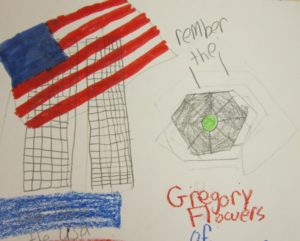
Fourteen years ago, young people from across the United States shared their gratitude, fear, patriotism and sorrow with the police and firefighters of Arlington Virginia.

a child's drawing of two tall buildings, the American flag and the Pentagon.Their unsolicited drawings and letters–preserved in the collections of Arlington Public Library’s Center for Local History–now show inevitable signs of age. Some of the young artists and writers no doubt have children of their own.
Sept. 11 letter

But the emotions of those grade schoolers and teens remain as fresh and powerful as the day they were put on paper and mailed from places like Renton, Wash., Toledo, Ohio, Clarksdale, Miss. and more locally Ashburn and the District.

The messages were welcomed and then saved. To preserve is to remember.

There are many ways to learn more and take part in the commemoration of Sept. 11, 2001 in Arlington:

  • Read or listen to the Center for Local History’s oral histories from first responders and others
  • Browse a collection of online resources
  • Watch the video interview by Library Director Diane Kresh with Pat Creed, co-author, “Firefight: Inside the Battle to Save the Pentagon on 9/11“
  • Visit the National 9/11 Pentagon Memorial


September 9, 2015 by Web Editor Tagged With: local history news

Remembering Arlington’s Freedman’s Village

Post Published: September 3, 2015

A new bridge to Arlington’s past

drawing of Freedmans Village BridgeOn Sept. 10, 2015, Arlington officials will formally dedicate “Freedmans Village Bridge,” the replacement overpass for Washington Boulevard at Columbia Pike.

The naming honor for the 19th century Arlington community of former slaves was approved by the state after a 2008 request from the County Board. Washington Boulevard is officially a state route.

freedmans village

The new bridge incorporates medallion images of the village, which was established as a model community by federal military officials on the captured property of Confederate General Robert E. Lee’s Custis-Lee estate in 1863. The village, which included housing, schools, a hospital and vocational facilities, was intended to be a temporary stopping point for the former slaves to establish themselves before moving on. Yet the community lasted and even thrived until 1900 when, after decades of trying, the government closed the village, persuading residents to accept payment to leave. Many found homes in other Arlington neighborhoods such as Hall’s Hill and Nauck.

Arlington TV spoke with Dr. Talmadge Williams in 2009 to explore the history and legacy of Freedman’s Village. Williams, an Arlington historian, educator and civil rights leader, died last year.

Although “Freedman’s Village” is now commonly spelled with the apostrophe, County preservation staff recommended that the bridge name not include the punctuation as a more accurate rendition of the name from when the community existed.

More than 28,000 residents of Freedman’s Village are buried in Section 27 of Arlington National Cemetery.


September 3, 2015 by Web Editor Tagged With: local history news

Legacy: Hall’s Hill VFD and Station No. 8

Post Published: August 4, 2015

A Timeline of the Rich History of the Hall’s Hill Volunteer Fire Department

For decades during segregation, Fire Station #8 was the only Arlington, Va. station staffed by African Americans.

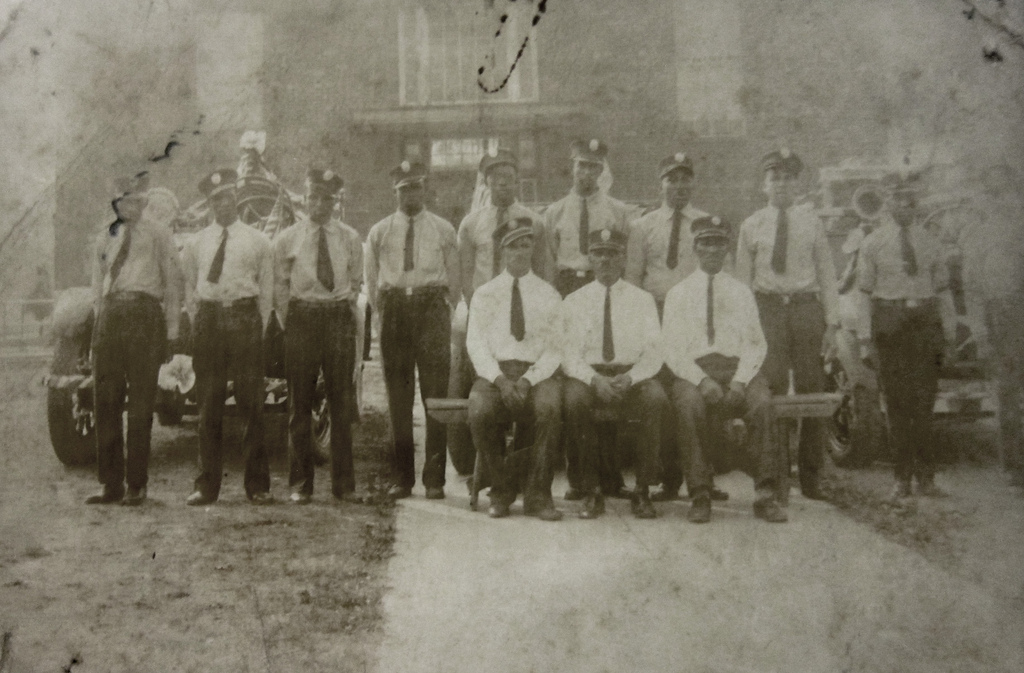
Tap or click on images to view larger versions.


African American men in white shirts and dark ties

Halls Hill Volunteer Fire Department, taken on the grounds of the John M. Langston Elementary School, probably 1930s

1898

First firefighting company in future Arlington County formed in Cherrydale by volunteers.

Other volunteer firefighting companies to follow will include Ballston in 1908 and Clarendon in 1909.

1918

Group of volunteer firefighters forms in the Hall’s Hill area, an African American neighborhood that began as home to many freed slaves and was kept separate from adjacent white communities in part by an 8-foot wooden fence.

The Hall’s Hill firefighters acquire a 60-gallon chemical tank, which has to be pulled by six men over unpaved, often muddy roads. At some point, company equipment is housed on the grounds of the John Langston Elementary School, 2121 N. Culpeper St.

1920

Arlington County is formally established by the Virginia General Assembly from the previously named “Alexandria County.”

Hall's Hill Volunteer Fire Station

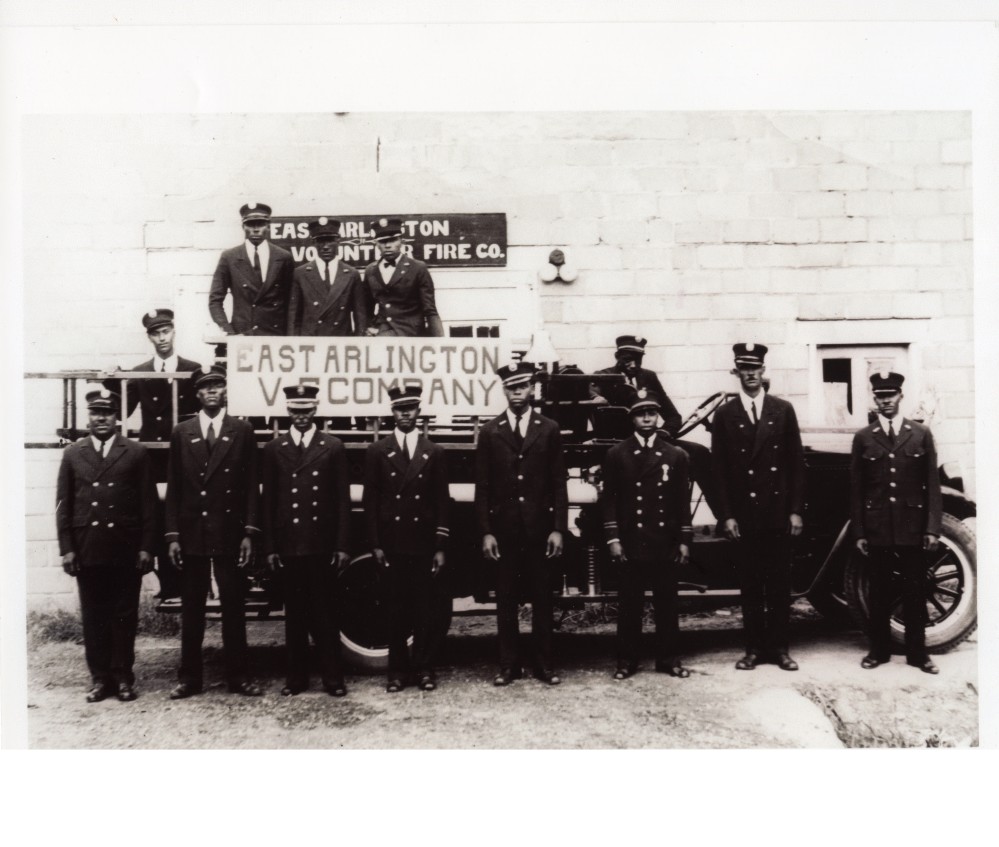
East Arlington Volunteer Fire Company 

1925

Hall’s Hill Volunteer Fire Department (HHVFD) elects its first officers and trustees.

Another African-American volunteer firefighter company is formed, the East Arlington VFD, later to be disbanded by the County Board in February 1941 as the “Hell’s Bottom” area of Arlington is prepared for construction of the Pentagon.

1926

HHVFD buys its first motor-driven engine, a 1917 Mitchell, with funds raised through door-to-door canvassing and pledged donations. The 60-gallon tank is mounted on the Mitchell.

1927

HHVFD is officially incorporated. The company buys a one-ton Chevrolet chassis, which is mounted with two 60-gallon tanks.

HHVFD moves to a lot on Lee Highway and a telephone is installed in the firehouse. Each residence in the community receives a card asking for a donation of 25 cents each month to support the fire company. Fire calls are routed by the chief operator of the local phone company.

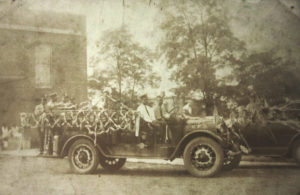
African American man driving an old firetruck draped in bunting

Hall’s Hill Volunteer Firetruck, probably 1930s, apparently marking a national celebration. 

1932 

Arlington government begins paying for equipment and the utility bills for volunteer fire companies in the County and provides HHVFD with its first pumper.

1933 

HHVFD company acquires a 1929 Diamond-T truck.

1934 

The HHVFD relocates to a lot at 2209 North Culpeper St. near Lee Highway and a new firehouse is built. The land is owned by the Hicks family, which runs several businesses including the Hicks Store and Restaurant just west.

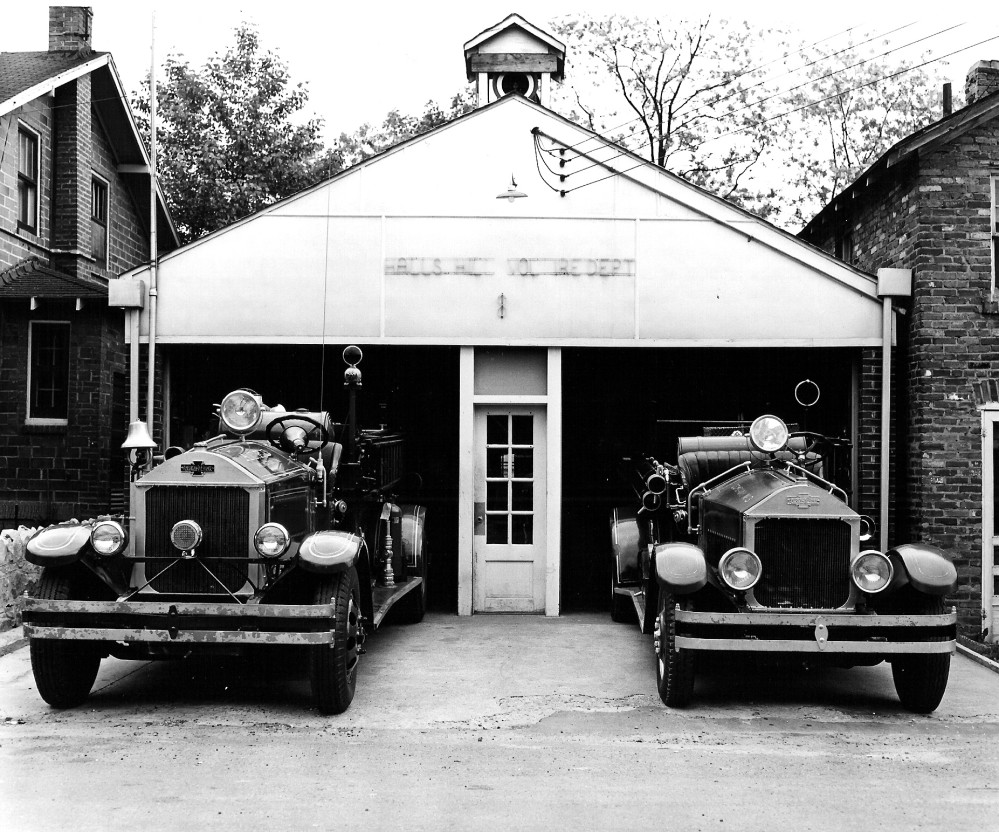
Hall's Hill Volunteer Fire Station

Halls Hill Station 8, 2 trucks

The firehouse develops as a de facto community center, providing a constant source for local news and conversation and eventually offering the convenience of a pay telephone and a soda machine. The volunteers would eventually add recreation and sleeping quarters in the 1950s to accommodate expanded shifts and more firefighters.

To indicate a fire call, volunteers are summoned to the station by a blaring siren mounted on the roof under a simple square belfry.

1935 

A blanket organization of Arlington fire companies—the Arlington County Fireman’s Association– is formed but without the Hall’s Hill and East Arlington men.

1937 

The Arlington County Fire Marshall becomes the Chief of the Fire and Safety Division and goes on the official government payroll as the first firefighting professional.

1940 

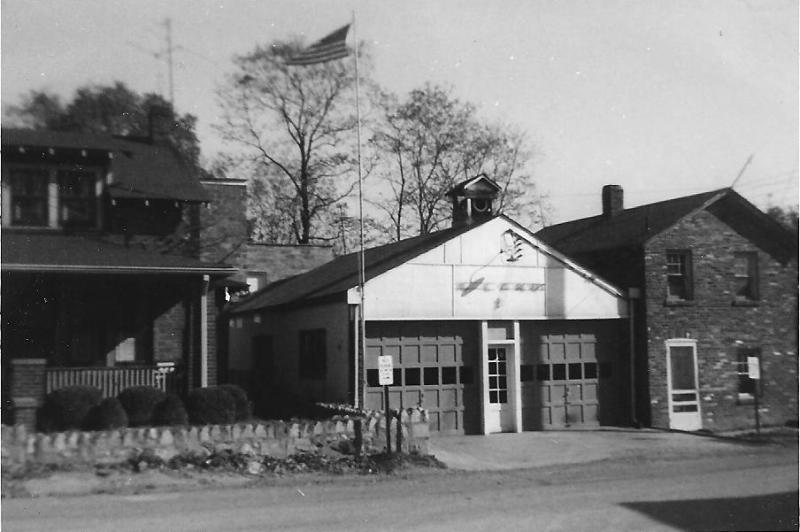
Hall's Hill Volunteer Fire Station

Fire Station 8, 2209 Culpeper St

The County begins negotiating a pay rate for a professional fire staff—to work within the volunteer companies primarily as drivers–in July. Hall’s Hill will be last among the firefighting companies assigned paid professionals with three men added in January 1951.

As a unified County Fire Department comes together, Arlington government formally begins paying rent to the volunteer companies, including Hall’s Hill, for the use of their firehouses.

Jimmie Taylor, born in 1936 and a Hall’s Hill resident from childhood, remembers the HHVFD having an unofficial mascot, a large German Shepard named Brownie, who seemed to have no specific owners but would often hang around the firehouse and even follow crews on calls. Brownie’s role was later taken, on a somewhat more official basis, by a Dalmatian named Miss Weeks, who had puppies each named for a day of the week.

Taylor recalls HHVFD volunteers sometimes pushing an aging firetruck onto Lee Highway to get its engine started as the vehicle rolled down the hill. Rochester Weeden was frequently behind the wheel. Weeden was known throughout the neighborhood as “Maybe-so,” the result of what Taylor says was Weeden’s ready response to almost any question and also his philosophy toward the balky truck.


Hall's Hill Volunteer Fire Department

Rear view of Hall’s Hill Fire Station No. 8, 2209 North Culpeper 

1941

The County Board agrees to pay six of Arlington’s seven volunteer fire departments a monthly rate of $455 for designated professional firefighters. The HHVFD is excluded.

Equipment from the now-disbanded East Arlington VFD is transferred to the HHVFC.

The HHVFD company’s Diamond-T is replaced with a 1935 GMC truck.

1944 

The Hicks family deeds the 2209 North Culpeper lot to the “Trustees of the Arlington County Fire Department Engine No. 8.”

1950-1951 

The company’s 1935 GMC truck is replaced by a 600-gallon pumper built in 1929. Two-way radios are also added.

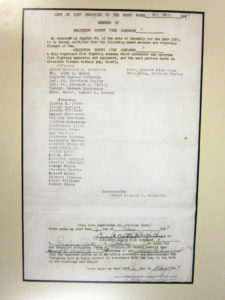
Typed list of volunteer firefighters

1947 list of Volunteer Firefighters at Fire Station 8

1951 

Station No. 8’s first three County-paid firefighters arrive in January to be followed by a fourth later in the year. A fifth is added in 1952, a sixth in 1953 and two more in 1954. All men are African-American. The same will hold true for subsequent hires into the early 1960s.

A popular notion holds that No. 8 is the first officially black-run and -operated fire station south of the Mason-Dixon line.

Original paid firefighters of Station No. 8, in order of hire: Alfred Clark, Julian Syphax, George McNeal, Archie Syphax, Hartman Reed, James K. Jones, Carroll Deskins, Henry Vincent, Carl Cooper, Ervin Richardson, Jimmy Terry, Wilton Hendricks, Bill Warrington and Bobby Hill.

According to Station No. 8 firefighter Hartman Reed, who was hired in 1952, “We were a segregated station and for some reason, the feeling during those years was that they wouldn’t involve us in things that were outside of our jurisdiction too often.” Reed was interviewed for a 2008 Arlington Public Library oral history.

During a huge inferno in Rosslyn on a particularly cold night, almost all County fire crews are called in except those of Station No. 8. That night Reed tells the only other man on duty at Hall’s Hill: “Thank goodness for Jim Crow.”

Hall's Hill Volunteer Fire Department

1929 American LaFrance 600 gallon pumper Acquired by HHVFD in 1953

Reed recalls a house fire at which the owner would not let Station No. 8 crews take their positions. Other stations had to be summoned. He describes the episode as somewhat rare but says that when Station No. 8 responded to calls beyond Hall’s Hill, he and colleagues would often hear insults including one barrage from a drunk man being treated for a broken ankle. “We were trying to help him but it didn’t make no difference,” Reed remembered with a laugh in 2008.


1957  

Alfred Clark becomes the first African American fire captain in the County, continuing to serve at Station No. 8. His daughter Kitty remembers that when the station later became integrated in the 1960s, some white firefighters said they “would not serve under a ‘Ni…’ and even wrote it on the chalkboard. The battalion chief came up, ordered it removed, and told the white firefighters they will serve and respect Captain Clark.”

black and white photo of Halls Hill volunteer Fire Department

Halls Hill Pumper

1959

In an attempt to prevent the integration of Arlington’s Stratford Junior High School, Rep. Joel T. Broyhill (R-Va.) visits the home of Carrol Deskins to imply that the Station No. 8 firefighter could lose his job if his son Ronnie joins other African American students in enrolling at the school. Deskins tells Broyhill to leave. Ronnie Deskins and three other students make Stratford Virginia’s first integrated public school on Feb. 2. Carrol Deskins remained a firefighter.


1960

The Arlington Council on Human Relations issues a leaflet condemning the “limitations and uncertain opportunities which daily confront Negro citizens in Arlington” as “a blight on the  county and a burden upon all of its residents.” In June, civil rights activists launch a series of lunch counter sit-ins at Arlington drug stores and eateries, including some within blocks of Hall’s Hill. Corporate ownerships drop segregated seating within days.

Hall's Hills Volunteer Fire Department

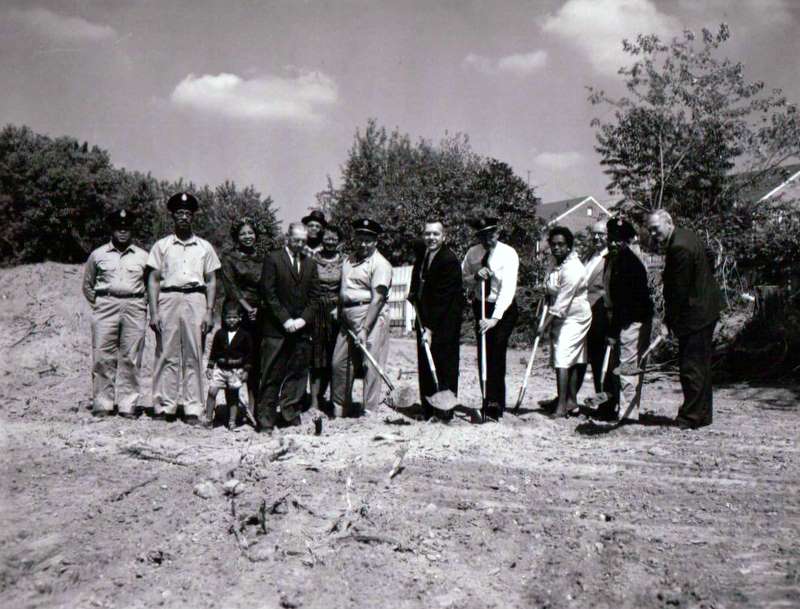
Ground breaking for new Fire Station No. 8, 1962. Construction lasted about a year.

1962

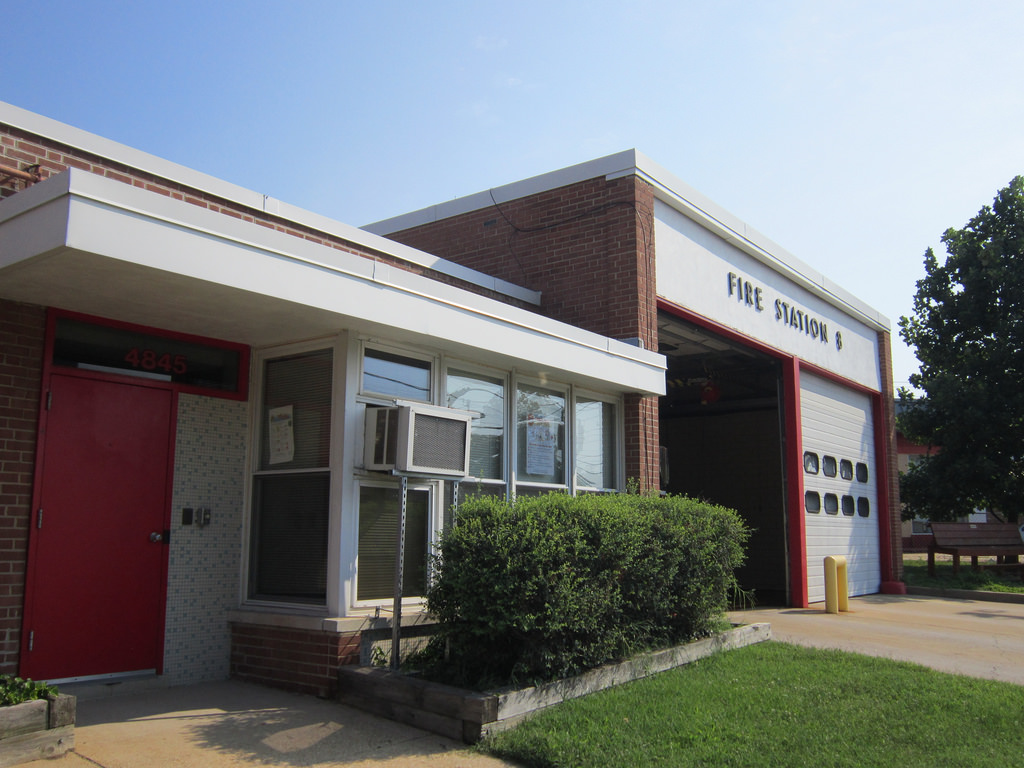
Ground is broken for a new Station No. 8 on land immediately east of the 2209 North Culpeper site, where, among other things, a small grocery store and an auto shop had stood. The new firehouse will have the address 4845 Lee Highway. The site is made up of five parcels that will be purchased by the County from 1962 to 1968. The final parcel is deeded by the Hall’s Hill Volunteer Fire Department and the Hicks family.


Late 1962-Early 1963

Integration reaches the Arlington County Fire Department including Station No. 8, as it prepares for a new, larger home next door.

1963

The new Station No. 8 at 4845 Lee Highway opens June 17 with two pumpers and a new 100-foot aerial ladder truck. It is staffed with 17 paid firefighters and several volunteers. The first floor contains a dispatch board, offices, sleeping and recreation areas. The basement includes a community room.

Hall's Hill Volunteer Fire Department

New Fire Station No. 8, 1963

Probably 1964

Arlington-based American Nazi Party leader George Lincoln Rockwell visits Station No. 8 in full storm trooper regalia to speak with firefighters about his plan to pay African Americans to relocate to Africa. Then-Lieutenant Reed remembers the meeting as “amusing” but describes Rockwell as “dead serious.” Rockwell, who had taunted civil rights protesters during Arlington lunch counter sit-ins in 1960, will be shot dead by an associate in the parking lot of the Dominion Hills Shopping Center on Wilson Boulevard in August 1967.

1968

While other Arlington fire stations are dispatched into the District when riots break out following the April 4 assassination of Dr. Martin Luther King, Station No. 8 is not asked to participate. Reed says he never knew why.

1974

The Arlington County Fire Department makes history with the hiring of Judy Livers (later Brewer), the nation’s first female firefighter. She is assigned to Station No. 4 in Clarendon and goes on to a distinguished career, retiring in 1999 as a battalion chief.

1999

Fire Station 8, 2015

Fire Station 8, 2015

A study for the County Manager identifies Station No. 8, plus three others, for possible “relocation, consolidation, replacement or closure” because it is on a “cramped site” and “poorly situated in relation to the heavy traffic on Lee Highway.” Studies of response times in 2000 and 2012 will reinforce County interest in moving Station No. 8 to a new location in north Arlington.

2016

After community resistance to a move, the Arlington County Board votes to build a new Fire Station No. 8 on the station’s current Lee Highway site.

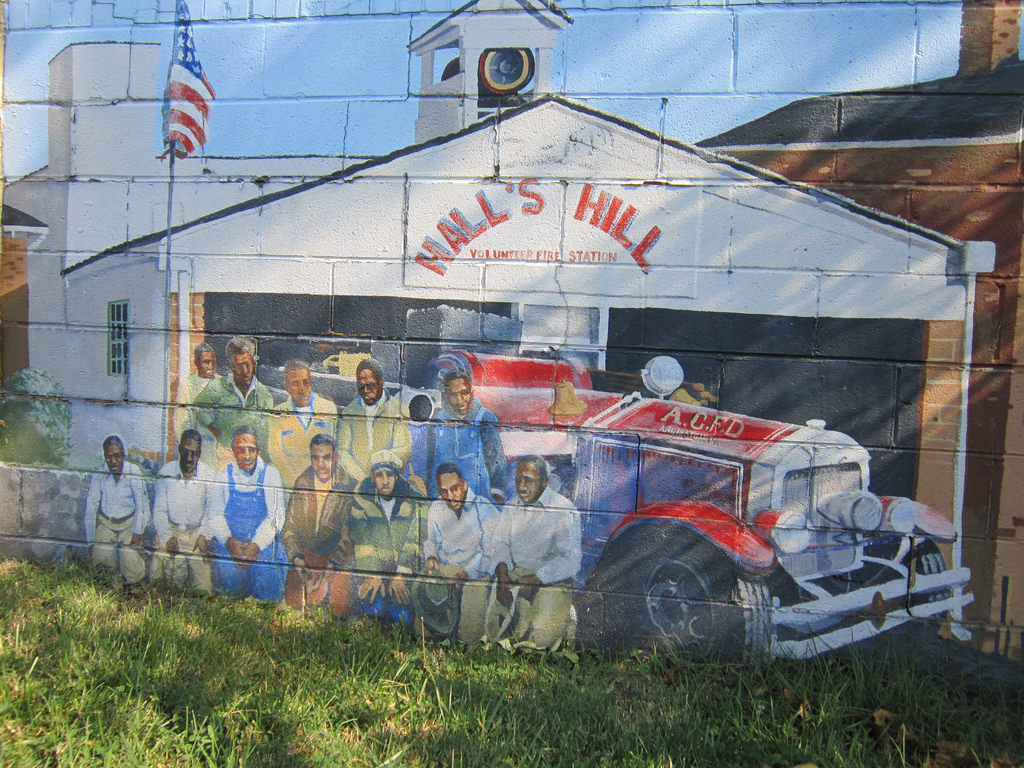
From the Hall’s Hill murals by Roderick Turner, located adjacent to Langston-Brown Community Center.
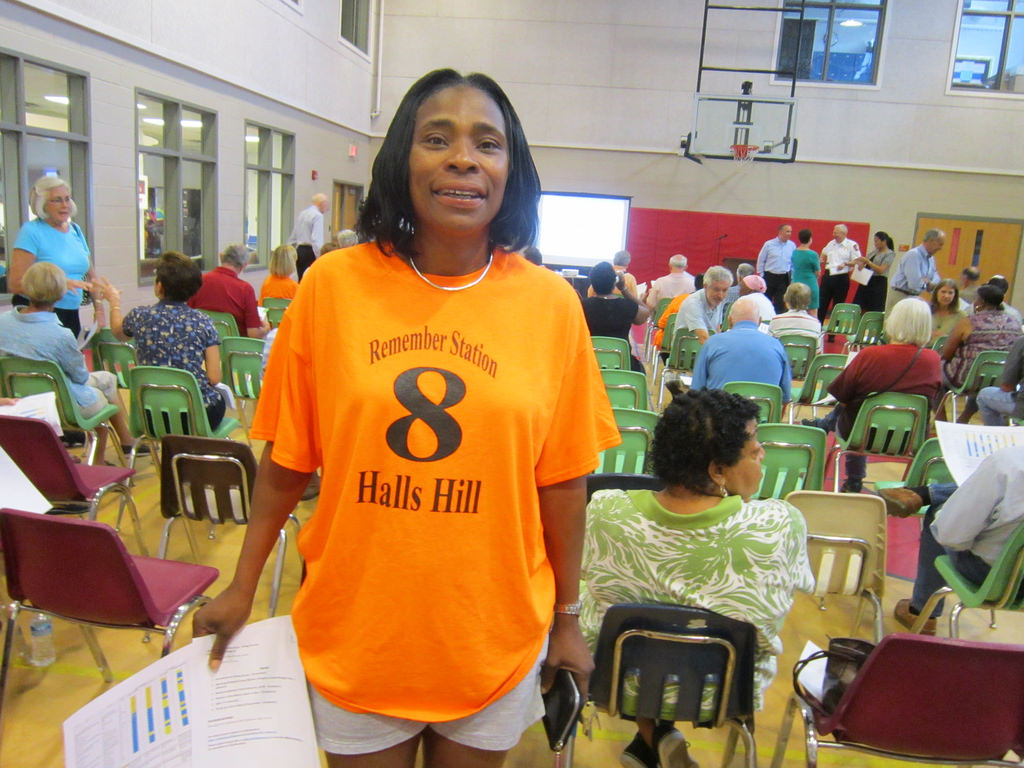
Remember Station 8, Paulette Washington
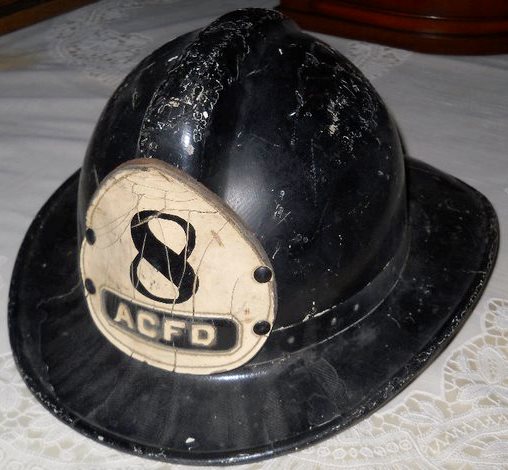
Rare Vintage Station No. 8 Turnout Gear

More images of HHFVD/Station No. 8 on flickr


Do you have suggested additions or corrections for this timeline? Please use the comments section below.

This timeline was written by Peter Golkin, a former Library staff person. Assistance was provided by Judy and Arthur Branch, Kitty Clark-Stevenson, Capt. Chuck Kramaric, Jimmie Taylor, Hartman Reed and the Arlington VA Virtual Fire Museum.

Read more articles on Arlington’s history on the Center for Local History Blog.

For more information regarding the materials and collections available for research, please contact the Center for Local History at 703-228-5966.


August 4, 2015 by Web Editor Tagged With: local history news

Voices of Little Saigon in Clarendon: Public Art on View at Central Library

Post Published: May 4, 2015

Public Art and Oral Histories Honor Clarendon’s Vietnamese Heritage

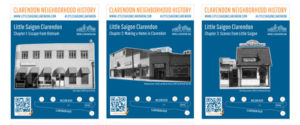
Clarendon Neighborhood History ad

On May 9, 2015, artist Khánh H. Lê’s temporary public installation will be on display in the fountain of Clarendon Central Park for “Echoes of Saigon,” a multimedia celebration honoring the journey of Clarendon’s Vietnamese community during the late 1970’s and 1980’s.

In addition to the public art installation, Echoes of Saigon will include hands on art activities, music, a walking tour led by former community members, a County Board proclamation, special guest speakers, other displays, and the Lemongrass Food Truck.

Following the May 9 event, the artwork will move to the Center for Local History at Central Library.


About the Artist and Installation

This artwork draws on primary sources to highlight the history of Little Saigon – the thriving hub of Vietnamese commerce and social activity that existed in Clarendon in the late 1970s and ‘80s. Similar to his work for the mobile gallery Art on the ART Bus, Lê has created a mixed media townscape, embedded with memories of an ethnic enclave that no longer exists.

Lê has reproduced photographs by Michael Horsley, who documented Little Saigon during its heyday, to create structures that resemble individual businesses that existed. The buildings further tell the stories of Little Saigon through the inclusion of audio components that play excerpts of recent oral history interviews with former Little Saigon community members. The interviews were conducted by graduate students from Urban Affairs & Planning in Virginia Tech’s School of Public & International Affairs.

Commissioned by Arlington Public Art, the installation also includes a sculptural apricot blossom tree and folded paper boats that come together to form flowers, symbolizing the journeys of Vietnamese immigrants who left their homeland to create a new community in Clarendon and a new life in America.


About “Echoes of Little Saigon”

In the fall of 2014, Arlington County’s Historic Preservation Program and the Center for Local History collaborated with graduate students from Virginia Tech’s Department of Urban Affairs & Planning to explore ways to document, preserve, and celebrate the cultural heritage and diversity of Arlington. One of the resulting projects focused on the enclave in Clarendon once known as Little Saigon. The students conducted oral histories with members of the Vietnamese community who immigrated to Arlington during the 1970s and ‘80s, and those who shopped at or owned the many Vietnamese restaurants and businesses that existed in Clarendon during that time. The students also provided recommendations for increasing awareness about Little Saigon and recognizing the contributions of the Vietnamese community to Arlington.

Inspired by the students’ work, County staff and volunteers have continued to collaborate with community members, Virginia Tech professor Dr. Elizabeth Morton, and her students Judd Ullom and Carlin Tacey to organize today’s event honoring Clarendon’s Vietnamese heritage and to launch a Little Saigon Smartphone tour created by Judd Ullom.

County staff, local artists, students, and members of the region’s Vietnamese American community are continuing to explore other ways to commemorate and raise awareness about the contributions of Little Saigon to Arlington’s cultural heritage. Future goals include creating a permanent historic marker to honor this history.


For additional information, and to access the Little Saigon Smartphone tour, visit www.littlesaigonclarendon.com.


May 4, 2015 by Web Editor

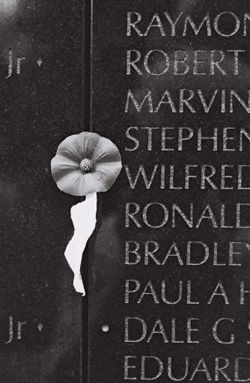
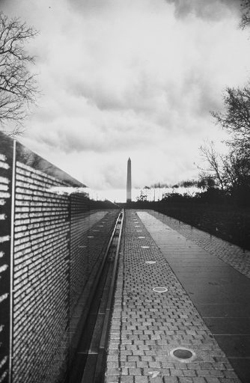
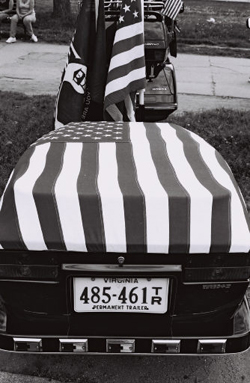
40 Years Since Saigon Fell

Post Published: April 30, 2015

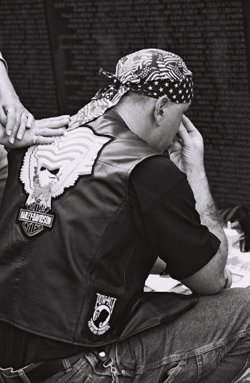
Saigon, the capital of South Vietnam, was captured April 30, 1975 as the United States pulled out its remaining diplomats and military personnel in the lost fight against the the communist north.

Photos of the Vietnam Veterans Memorial by Library Director Diane Kresh

Vietnam War Memorial close up
Vietnam War Memorial

Vietnam War veteran funeral
Vietnam War veteran


April 30, 2015 by Web Editor Tagged With: in Memoriam

Director’s Blog: The Cookie Chronicles

Post Published: January 22, 2015

If the sign-up sheets haven’t yet begun circulating in your office, don’t fret.  They will soon.

The annual Girl Scout retail juggernaut is underway, spinning thousands of signatures into hundreds of millions of dollars in roughly six weeks’ time, a pace and margin of profit that is the envy of many CEOs.

black and white photo of an Arlington Girl Scout troop

Julia Veitch Thomas with Arlington Girl Scout troop. She started the Girl Scouts in Arlington and Alexandria County. Photo circa 1920. Courtesy of Johnathan Thomas.

What began in 1917 as a modest troop fundraiser in Merle Haggard’s Muskogee, Okla. has become both a model of entrepreneurship and training program in “Life Skills 101.”

According to the Girl Scouts, young girls and women learn five basic skills: “goal setting, decision making, money management [boxes are priced at $4 each], people skills, and business ethics.” And consistent with the times we live in, cookie sales in at least two national councils–Houston and Minneapolis–have gone mobile.

Girls Scouts and their moms have not baked cookies in decades, even though an enterprising troop leader in Chicago created an inexpensive cookie recipe in the 1920s.

Two companies, Little Brownie Bakers, a subsidiary of Keebler, and ABC Bakers, are licensed to bake the cookies and may choose to produce among eight varieties, three of which–Thin Mints, Trefoils, and Peanut Butter Sandwich cookies–are mandatory.  And there is some autonomy among troop councils as to which varieties they sell (provided they sell “The Big Three”), and which names they use: “Samoas” aka “Caramel deLites.”

Other useful bytes of information about cookies:

  • they have little or no trans fat and no preservatives or artificial flavors
  • vegan “Thin Mints” are now available
  • Little Brownie Bakers does not use any high fructose syrup in its cookies
  • the packaging is sustainable.

Not all adjustments to the nutritional value of the cookies, however, have succeeded. For example, low-fat and sugar-free varieties didn’t sell well and are no longer produced.  They are cookies, after all.  And some varieties, “Snaps,” an iced oatmeal raisin cookie; “Double Dutch,” a double chocolate; and my own fleeting favorite, “Dulce de Leche,” will never see the inside of a cookie jar or sack lunch again.cookie

That’s the way the cookie crumbles.

I was a Girl Scout in Arlington in the mid-1960s, and was one of the legions of young girls selling cookies.  In those days, the operation was pretty low-tech.  I would come home from school, change into my uniform, and hit the houses in my neighborhood unaccompanied (something I cannot imagine a Scout doing today), lugging my cardboard carton of 12 boxes of the Big Three. No driving around with a parent, no meet-ups with other scouts and mothers to sell cookies in front of a grocery store or library, no sign-ups sheets carried by my father to his office. Just me, my carton and my sales pitch.

girl scouts graphicTo the list of life skills that cookie selling teaches, I would add:  self–confidence; the ability to look an adult in the eye; perseverance (I refused to quit going door-to-door until every box was sold); the value of team work and how achieving something individually (selling my share) contributes to the greater good (troop camping trips).

In fact, it’s the camping trips I most remember from my years as a Girl Scout–the fun of being outdoors and hiking, telling ghost stories and sleeping in huge canvas tents with wooden floors.  And cooking foil-wrapped dinners.

Most people have tried their hand at making “S’mores,” the campfire confection first recorded in “Tramping and Trailing with the Girl Scouts” (1927).  While S’mores are great, I prefer the campfire treat favored by my troop: a red apple (Fuji or Gala work best), cored and filled with the candy “Red Hots,” wrapped in foil and baked over a fire.  Sweet, cinnamony, spicy, nutritious (well, sort of) and delicious.

For that treat alone, I would turn back the clock.

————————————————————————

black and white girl scouts photo

The author, top row, second from right.

Were you a Girl Scout? Have a tale to add to “Cookie Chronicles”?

Please do so in the comments section below.

January 22, 2015 by Web Editor Tagged With: Arlington Years

  • « Go to Previous Page
  • Page 1
  • Interim pages omitted …
  • Page 21
  • Page 22
  • Page 23
  • Page 24
  • Page 25
  • Interim pages omitted …
  • Page 40
  • Go to Next Page »

Footer

About Us

  • Mission & Vision
  • Charlie Clark Center for Local History
  • News Room
  • Get Email Updates

Administration

  • Policies
  • Library Staff
  • Job Opportunities
  • Propose a Program or Partnership

Support Your Library

  • Friends of the Library
  • Giving Opportunities
  • Donating Materials
  • Volunteer Opportunities

Our Mission

We champion the power of stories, information and ideas.

We create space for culture and connection.

We embrace inclusion and diverse points of view.


Download the Library App

Download the Library App

Arlington County | Terms & Conditions | Accessibility | Site Map
· Copyright © 2026 Arlington County Government ·