• Skip to primary navigation
  • Skip to main content
  • Skip to primary sidebar
  • Skip to footer

Alert

Update: Elevator outages, maintenance and upgrades at Central Library More Info

Home - Arlington County Virginia - Logo
MENUMENU
  • Join Now
  • My Account
    • Login
    • My Checkouts
    • My Holds
    • My Lists
    • My Reading History
    • About Borrowing
    • About Holds
    • About My Account
  • Hours & Locations
    • All Hours & Locations
    • Holiday Closings
  • News
    • Library News
    • Director's Blog
    • Get Email Updates
  • Contact Us

Arlington Public Library

MENUMENU
  • Search
  • Collections
  • Library Services
  • Events
  • Community Engagement
  • Join Now
  • My Account
    • Login
    • About Borrowing
    • About Holds
    • About My Account
  • Hours & Locations
    • All Hours & Locations
    • Holiday Closings
  • News
    • Library Blog
    • Get Email Updates
  • Contact Us

Center for Local History Blog

Dedicated to collecting, preserving and sharing the history of the community.

This Week in 19th Amendment History: The 19th Amendment is Officially Adopted

Post Published: August 26, 2020

August 26, 1920: 19th Amendment is Adopted

Celebrate the 100th anniversary of the 19th Amendment with stories about the people and events that led to the passage of women’s suffrage in the United States.

The 19th Amendment was officially adopted into the U.S. Constitution on August 26, 1920, marking another significant date on the journey to achieve universal suffrage.
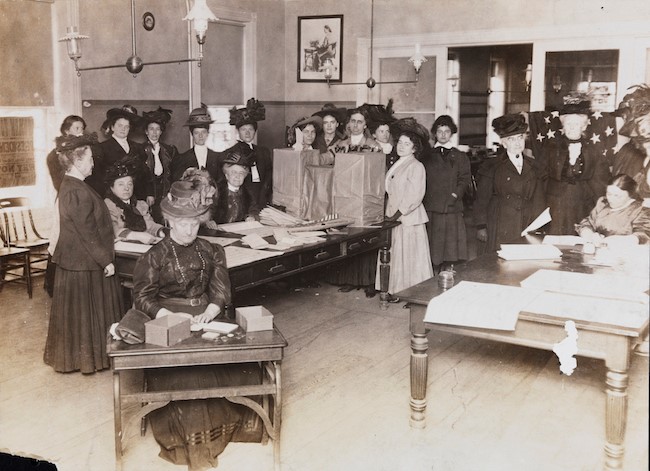
Unknown Photographer

“Unknown Photographer, ‘Women voting,’ circa 1925.” Image courtesy of the Museum of the City of New York.

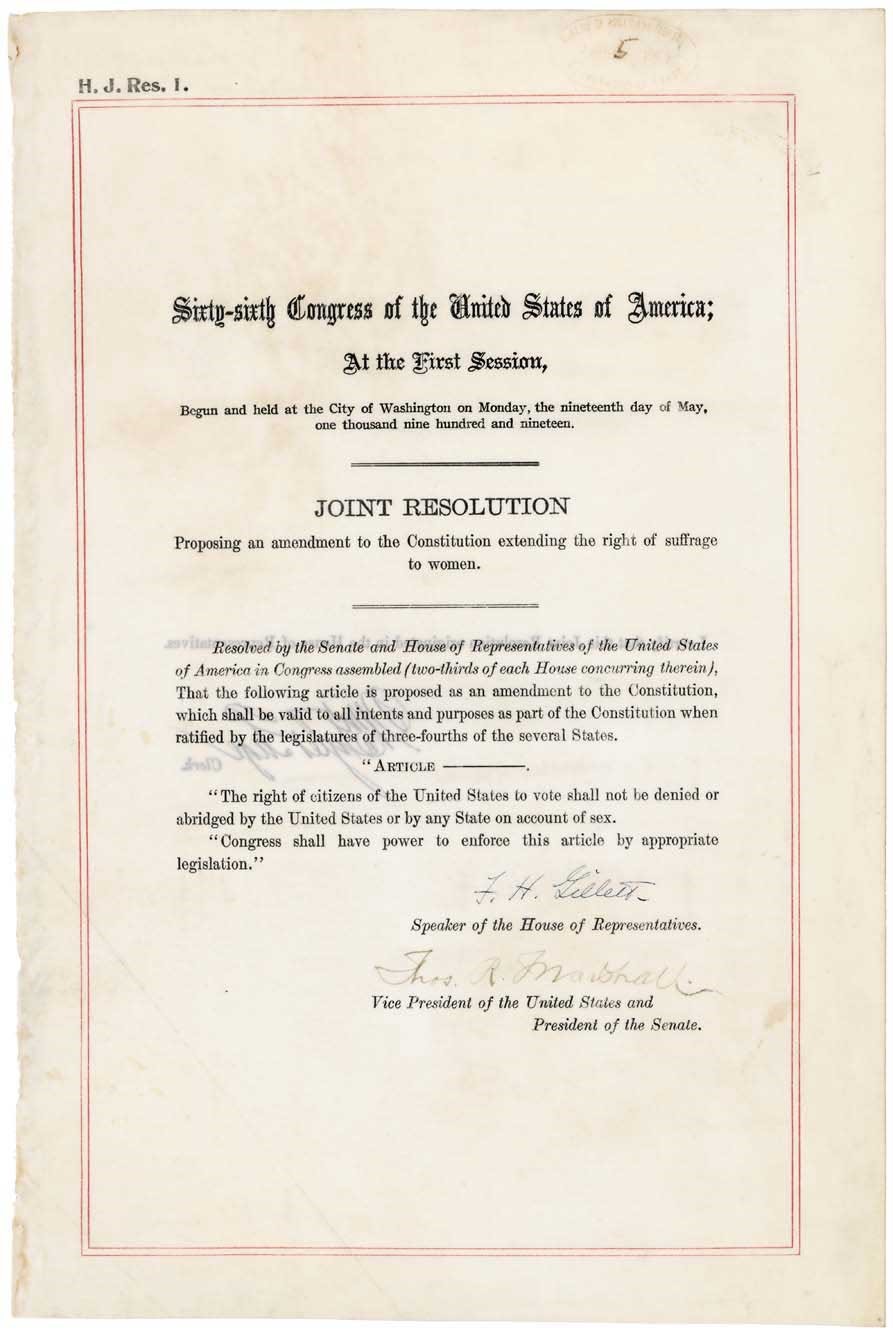
Consisting of two sections, the Amendment reads: “The right of citizens of the United States to vote shall not be denied or abridged by the United States or by any State on account of sex” and “Congress shall have power to enforce this article by appropriate legislation.”

The journey of the 19th Amendment was decades in the making, the culmination of generations of activists and groups advocating for women’s right to vote. Its legislative journey was also long in the making: after repeated attempts to pass the amendment, starting as early as 1878, it finally passed the House of Representatives with a two-thirds majority vote in January of 1918.

In June 1919, it was approved by the Senate and sent to the states for ratification. Tennessee sealed the amendment’s success when on August 18, 1920, it became the 36th state to sign on, making ratification official and making women’s suffrage law.

But the journey didn’t end with Tennessee’s dramatic clinching vote. The certified record of action of the state’s legislature was sent via train to Washington, D.C., and arrived just over a week later on August 26. (Virginia notably rejected the 19th Amendment in February of 1920 and didn’t formally ratify the it until February 21, 1952.)
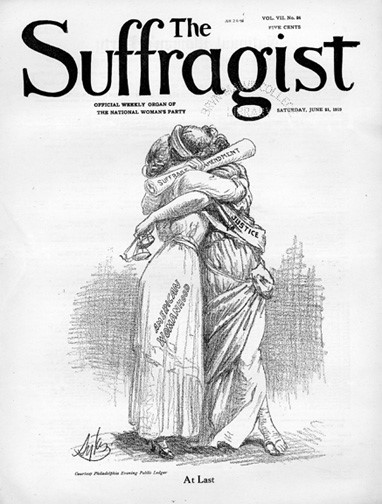
The Suffragist

Cover of The Suffragist, the National Woman’s Party’s weekly newsletter, celebrating the passage of the 19th Amendment in the Senate, June 21, 1919. Image courtesy of the Bryn Mawr College Library.

Signing the 19th Amendment

Early the morning of August 26, U.S. Secretary of State Bainbridge Colby signed the Amendment without ceremony at his home. In contrast to the formalities and ceremony of other pieces of legislation, no leaders of the suffrage movement were present at the signing, nor were any members of the press, or any recording devices.

This lack of ceremony upset some suffragists, such as Abby Scott Baker of the National Woman’s Party, who declared,

“It was quite tragic. This was the final culmination of the women’s fight, and, women, irrespective of factions, should have been allowed to be present when the proclamation was signed. However, the women of America have fought a big fight and nothing can take from them their triumph.” (From the New York Times, August 27, 1920.)
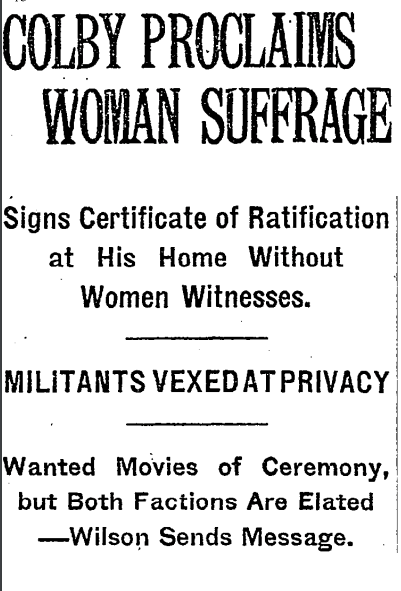
Headline from New York Times

Headline from the New York Times the day after the 19th Amendment was adopted, August 27, 1920. Image courtesy of the New York Times.

Later that day, suffragist and head of the conservative National American Suffrage Associate Carrie Chapman Catt, along with fellow organization member Helen H. Gardiner, were received at the White House by then-president Woodrow Wilson and First Lady Edith Wilson, marking the only governmental celebration of the signing day.

Numerous groups were excluded from the rights extended by the 19th amendment, including Native Americans, women in some U.S. territories, women of Asian descent, and others excluded from obtaining citizenship. African Americans were also systemically prevented from voting through Jim Crow laws and voter suppression, and African American woman activists such as Fannie Lou Hamer and Diane Nash helped to eventually secure the Voting Rights Act of 1965 – another national milestone in the fight to truly secure universal suffrage for all.

Women's Equality Day

In 1973, as the Equal Rights Amendment was going under review in Congress, President Nixon signed Proclamation 4236 declaring August 26 Women’s Equality Day.

This was a symbolic end to the decades-long struggle for women’s suffrage, and due recognition of the scores of activists and groups who had toiled to achieve to right to vote, but the journey toward universal suffrage didn’t stop with the 19th amendment

Countless people are still fighting for their right to vote today, and the milestone of the 19th Amendment is a reminder of how far we have come, and how far we still have to go in pursuit of fully equal voting rights.

Read stories about the people and events that led to the passage of women’s suffrage in the United States.
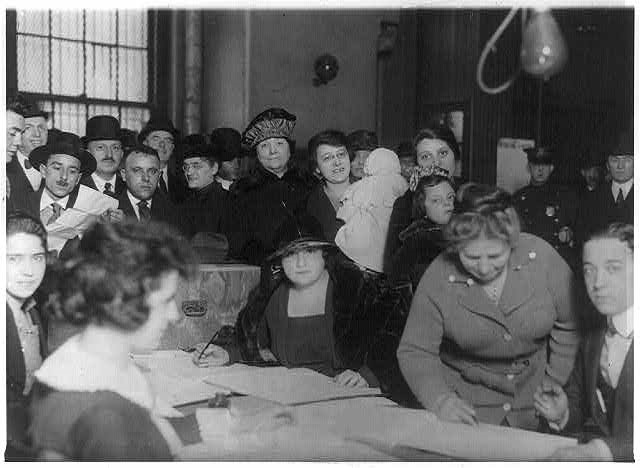
Women Out

“Women out in force, Men and women at the voting poll, Oliver and Henry Streets, New York City,” circa 1922. Image courtesy of the Library of Congress.

Twelve Reasons

“Twelve Reasons Why Women Should Vote.” Image courtesy of the Museum of the City of New York.

2020 marked the centennial of the passage of the 19th Amendment. 
August 26, 2020 by Web Editor

This Week in 19th Amendment History: The Ratification of the 19th Amendment

Post Published: August 18, 2020

August 18, 1920: 19th Amendment is Ratified

Celebrate the 100th anniversary of the 19th Amendment with stories about the people and events that led to the passage of women’s suffrage in the United States.

This week, we celebrate the 100 anniversary of the 19th Amendment’s ratification. On August 18, 1920, a day nearly a century in the making, Tennessee became the last of the needed 36 states (or, ¾ of the United States) to secure adoption of the Amendment.

House Joint Resolution

House Joint Resolution I proposing the 19th Amendment to the States. Image courtesy of the National Archives.

The amendment had initially been introduced to Congress in 1878, but attempts to pass through the House had repeatedly failed. In the following years, countless individuals and activist groups fought toward the goal of granting women their full democratic voting rights.

The 19th Amendment finally passed through the House of Representatives on May 21, 1919, followed by the Senate on June 4, 1919. From there, it was sent to the states for ratification, which took over a year.

Tennessee’s position as the final ratifying state has become something of a legend, coming down to the decision of a 24-year-old state representative named Harry T. Burn. After easily passing the amendment in the Tennessee House, its Senate took longer to come to a decision. Intense lobbying led to what was described as a “War of the Roses” – where supporters of suffrage donned yellow roses to symbolize their loyalty during the legislative proceedings, while anti-suffragists wore red.

After two tied votes, it came down to young Burn, who – after receiving an encouraging letter from his aging mother – broke the tie with an “Aye,” thus putting an end to the back-and-forth, and cementing Tennessee’s role in the history of women’s suffrage.

Tennessee’s position as the final ratifying state has become something of a legend, coming down to the decision of a 24-year-old state representative named Harry T. Burn. After easily passing the amendment in the Tennessee House, its Senate took longer to come to a decision. Intense lobbying led to what was described as a “War of the Roses” – where supporters of suffrage donned yellow roses to symbolize their loyalty during the legislative proceedings, while anti-suffragists wore red.

After two tied votes, it came down to young Burn, who – after receiving an encouraging letter from his aging mother – broke the tie with an “Aye,” thus putting an end to the back-and-forth, and cementing Tennessee’s role in the history of women’s suffrage.

Tennessee Ratified

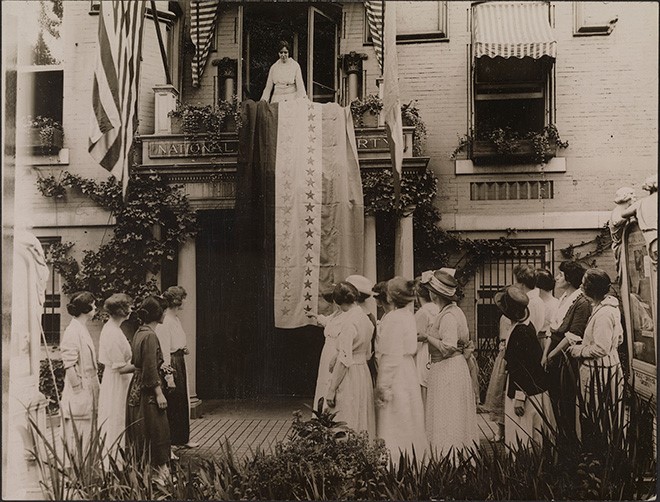
“When Tennessee the 36th State Ratified, Aug 18, 1920, Alice Paul, National Chairman of the Woman’s Party, Unfurled the Ratification Banner from Suffrage Headquarters."
This photo captures suffragist Alice Paul unfurling a completed “ratification flag” with 36 stars. Image courtesy of the Library of Congress.

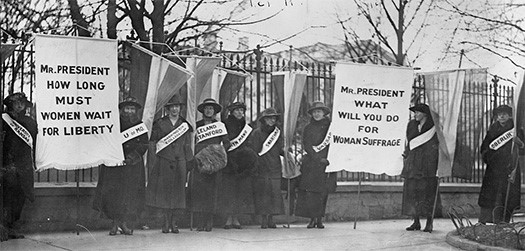
But the drama of this down-to-the-wire story, in which a young man appears to play the starring role, should not overshadow the decades of labor and work done by the actual activists behind the cause. Suffragists were tireless, sophisticated, and revolutionary in their means and methods. They used grassroots organizing, and initiated legal challenges. And when 12 women walked from their Lafayette Square headquarters to picket outside of the White House’s North Gate, hoping to gain the attention of then-president Woodrow Wilson, these suffragists were among the first groups to demonstrate outside of the White House.

The celebration of successful suffrage would also be incomplete without recognition of the African American women and other POC activists whose efforts have largely gone unsung in the retrospective view of the fight for suffrage. These individuals and groups worked tirelessly for the cause, even amidst rampant racism within and without the suffrage movement.

Read stories about the people and events that led to the passage of women’s suffrage in the United States.

Picket Line

“The First Picket Line-College Day in the picket line,” February 1917. Image courtesy of the Library of Congress.

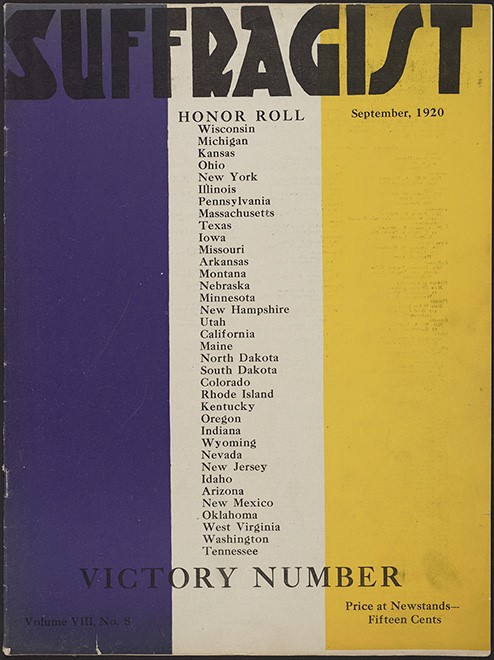
Honor Roll in The Suffragist

The “Honor Roll” in The Suffragist, a weekly newspaper published by the Congressional Union for Woman Suffrage, listing the 36 states in the order they ratified the 19th amendment. Image courtesy of the Library of Congress.

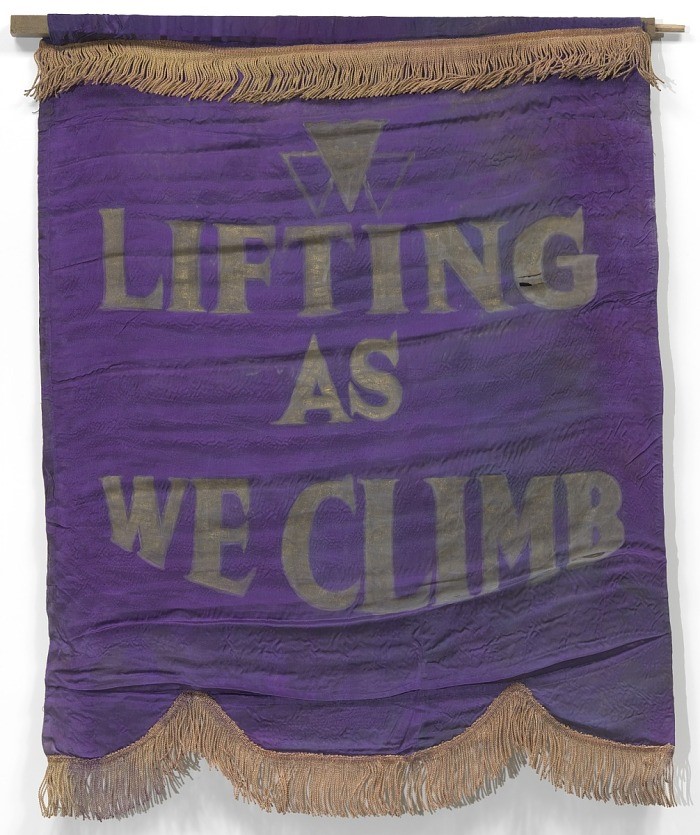
NACWC Banner

A banner from the National Association of Colored Women's Clubs with its motto, “Lifting as we climb,” circa 1924. The organization was founded by prominent suffragist Mary Church Terrell in 1896 as the National Association of Colored Women. Terrell also served as its first president. Image courtesy of the National Museum of African American History & Culture.

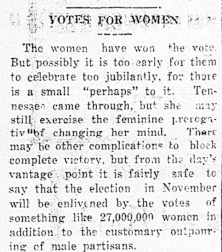
Excerpt from Alexandria Gazette

An excerpt from local coverage of the ratification of the 19th Amendment in the Alexandria Gazette, from August 19, 1920. Image courtesy of the Virginia Chronicle.

Unfortunately, although the 19th Amendment was ratified on this historic date, millions were still not able to vote equally in practice. The Amendment did not include voting rights for Native Americans, women in some U.S. territories, women of Asian descent, and others excluded from obtaining citizenship. African American women and men also faced rampant voter suppression, Jim Crow laws, and many other systemically imposed barriers to the ballot box.

Countless are still fighting for their right to vote today, and the milestone of the 19th Amendment is a reminder of how far we have come, and how far we still have to go in pursuit of fully equal voting rights.

2020 marks the centennial of the passage of the 19th Amendment. 
August 18, 2020 by Web Editor

A Year of Stories and Milestones in the Fight for Women’s Suffrage

Post Published: August 17, 2020

Celebrating the 19th Amendment

Celebrate the 100th anniversary of the 19th Amendment with stories about the people and events that led to the passage of women’s suffrage in the United States.

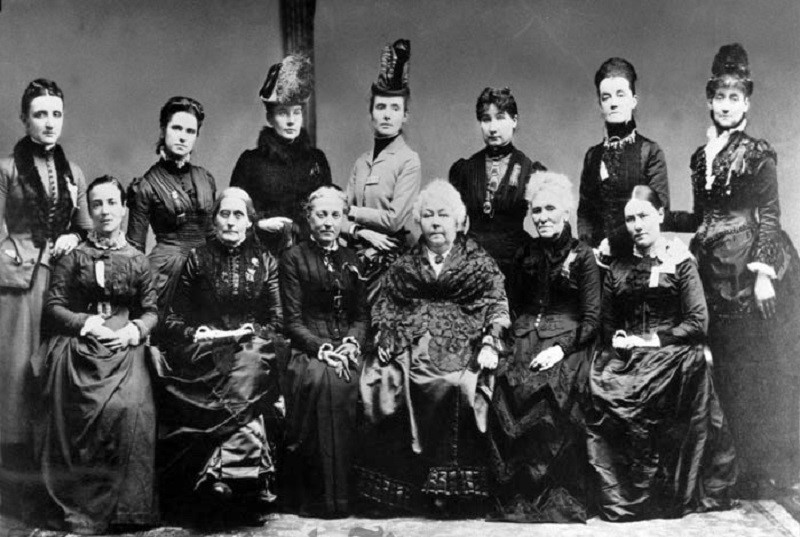
Executive Commitee

The executive committee of the National Woman’s Suffrage Association. Image courtesy of Encyclopedia Brittanica.

Over the course of the last year, the Center for Local History has collected the stories of the individuals and groups that helped lay the foundation for women’s suffrage in the United States.

As the Library commemorates the 100th anniversary of the 19th Amendment, a major milestone in enacting the democratic principles of our nation, read the stories detailing the people and events that led up to this historic moment.

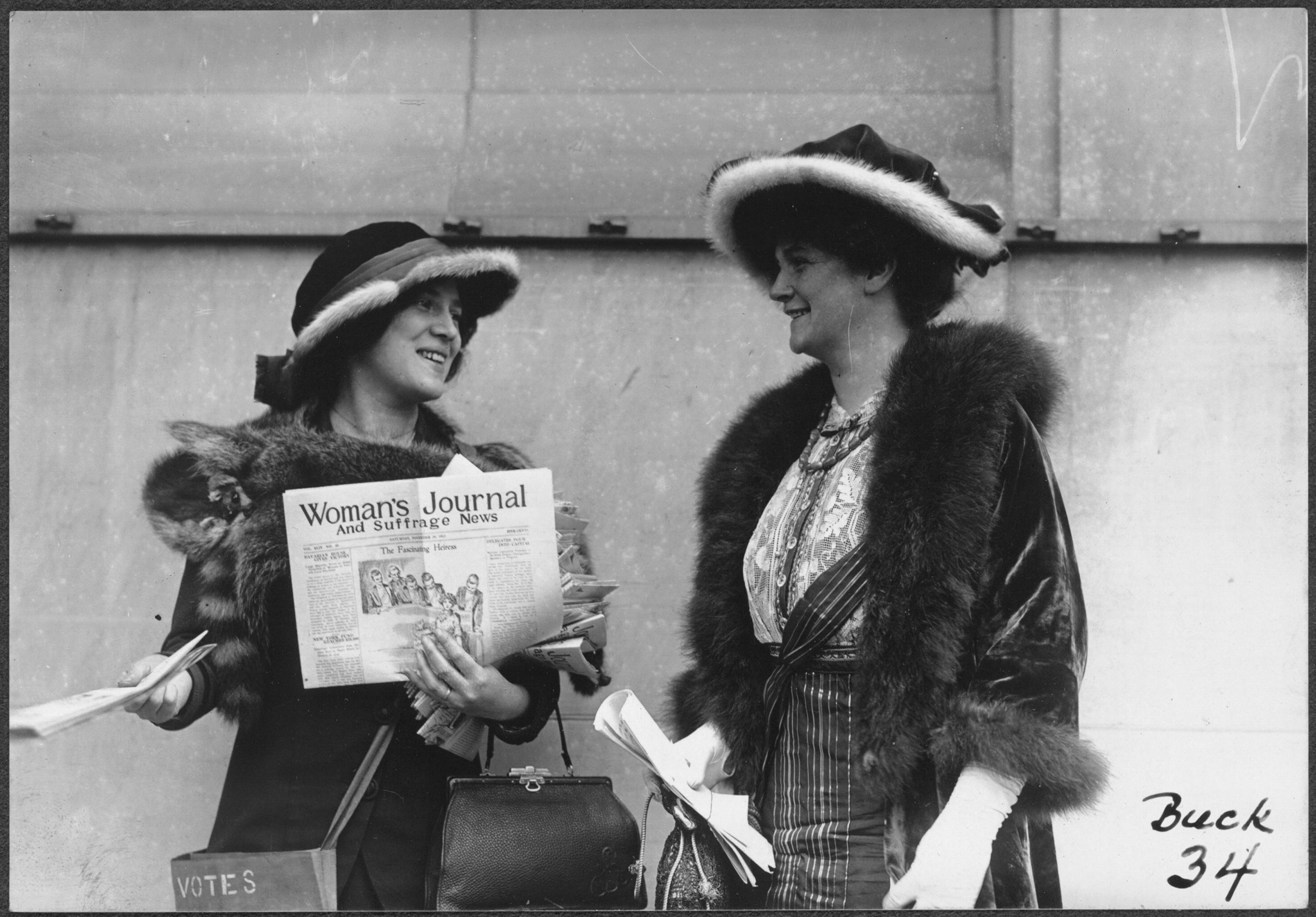
January 8: The First Issue of The Women’s Journal

Womans Journal 3

Suffragist Margaret Foley distributing the Woman’s Journal and Suffrage News, 1913. Library of Congress Prints and Photographs Division.

The Woman’s Journal was a women’s rights publication that produced its first issue on January 8, 1870.  One of the most significant and popular publications of the women’s suffrage movement, it ran in various forms from 1870 to 1931. Founded by suffragist Lucy Stone and her husband Henry Browne Blackwell in Boston, Massachusetts, the Woman's Journal aimed to provide a broad segment of women with information on the women’s rights movement and the suffrage cause.

Read the rest of the story.

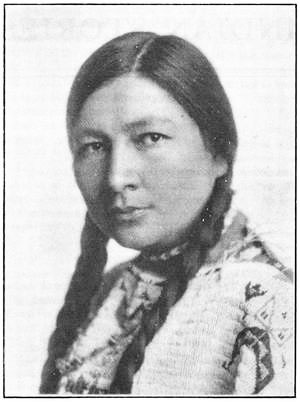
January 26: Zitkála-Šá

Zitkála-Šá 6

Image of Zitkála-Šá ca. 1921, courtesy of the Library of Congress

Nationally recognized as an author and activist, Zitkála-Šá was a vocal proponent for citizenship and voting rights for Native Americans. A Lyon Park resident later in life, she passed away on this date in 1938 and is buried in Arlington Cemetery.

Read the rest of the story.

March 10: Hallie Quinn Brown

Portrait of Hallie

Hallie Quinn Brown. Image courtesy of Wilberforce-Payne Unified Library.

Born on March 10, 1865, Hallie Quinn Brown was a preeminent educator, writer, public speaker, and activist in the causes of civil rights and suffrage throughout the 19th and 20th centuries. She was a president of the National Council of Colored Women and worked on political campaigns throughout her life.

Read the rest of the story.

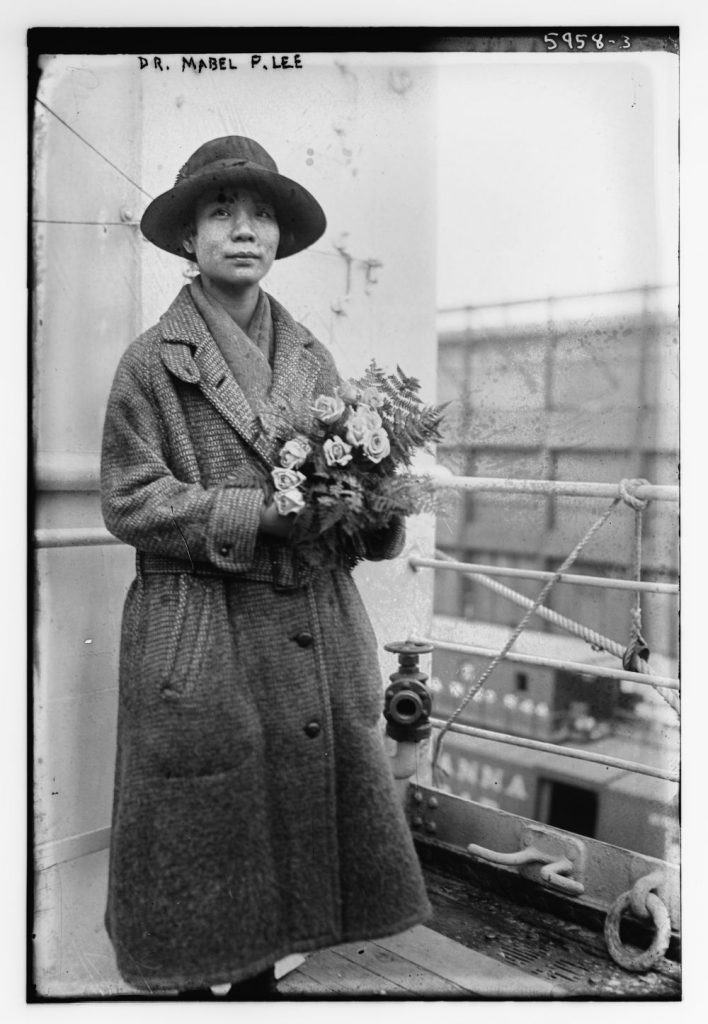
May 4: Mabel Ping-Hua Lee

Mabel Lee

Dr. Mabel Lee, date unknown. Photo from the George Grantham Bain Collection, courtesy of the Library of Congress.

On May 4, 1912, Mabel Ping-Hua Lee made history when she led one of New York City’s major suffrage parades on horseback. Lee was an active suffragist and activist throughout her life despite the barriers around her – for example, Chinese women such as Lee herself would not be able to vote until the Chinese Exclusion Act was removed in 1943 and they could become citizens.

Read the rest of the story.

May 10: The 11th National Women’s Rights Convention

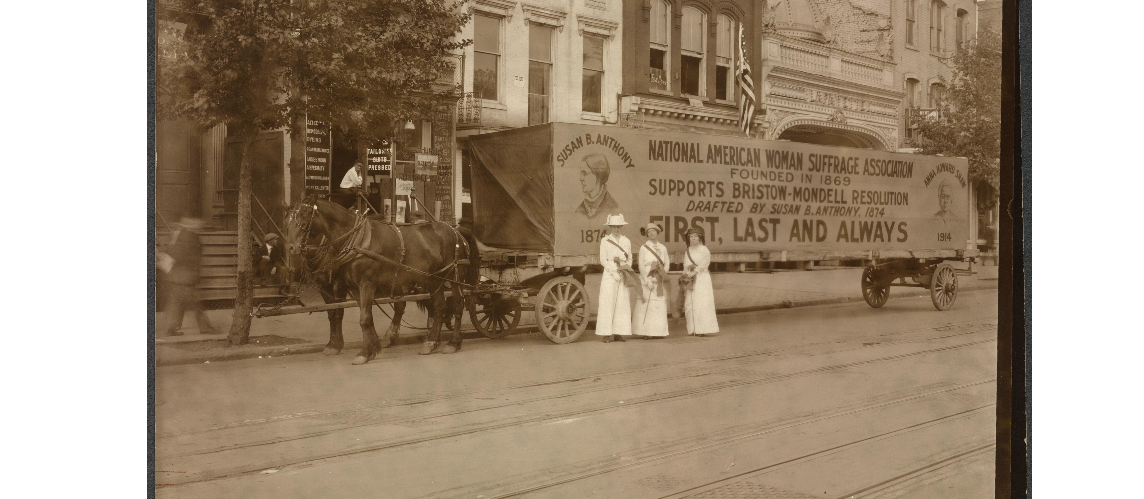
Horse Drawn Float

“Horse-drawn float declares National American Woman Suffrage Association’s support for Bristow-Mondell amendment.” Circa 1914. Image courtesy of the Library of Congress.

In 1866, the women’s suffrage movement experienced a significant change in its organization as the various groups leading the struggle toward women’s suffrage split over certain issues. Key among them was support for the 15th Amendment, (passed in 1869), which states that "The right of citizens of the United States to vote shall not be denied or abridged by the United States or by any State on account of race, color, or previous condition of servitude."

Read the rest of the story.

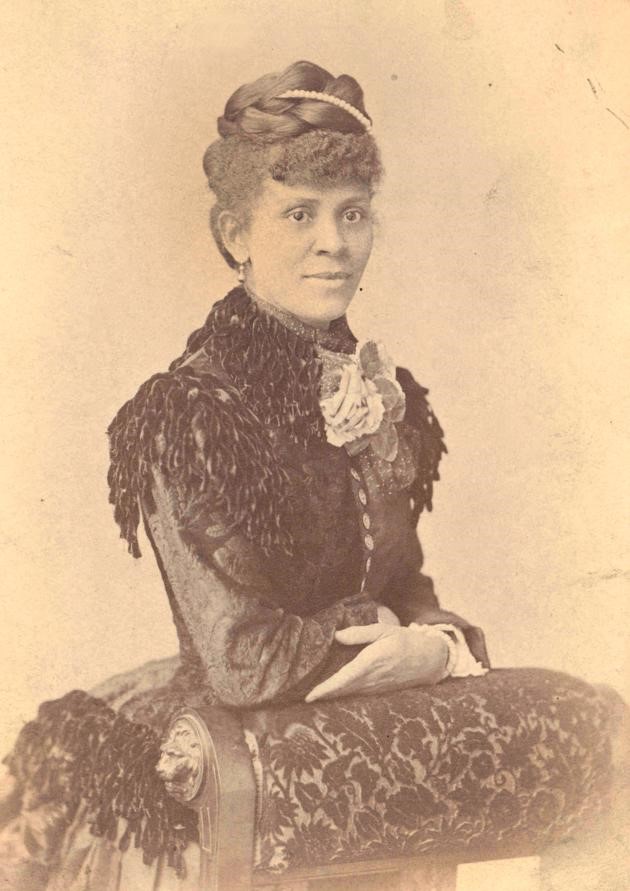
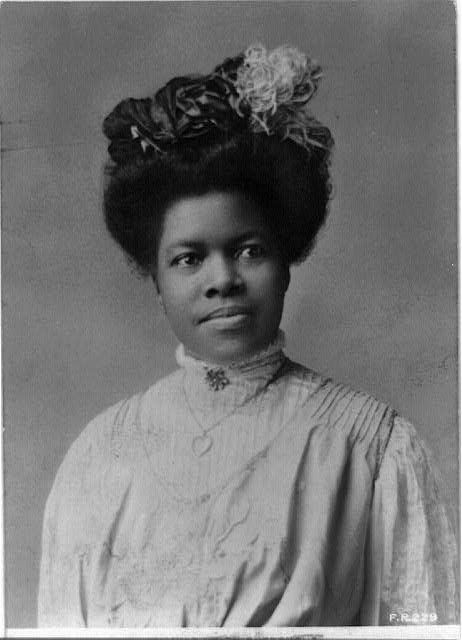
May 20: Nannie Helen Burroughs

Nannie 1920

Nannie Helen Burroughs photographed between 1900 and 1920. Image courtesy of the Library of Congress.

Nannie Helen Burroughs, who was a leading educator, feminist and suffragist in the Washington, D.C., area throughout the early 20th century, founded a school for girls and women and was an active member in her community.

Read the rest of the story.

July 16: Ida B. Wells

Ida B. Wells

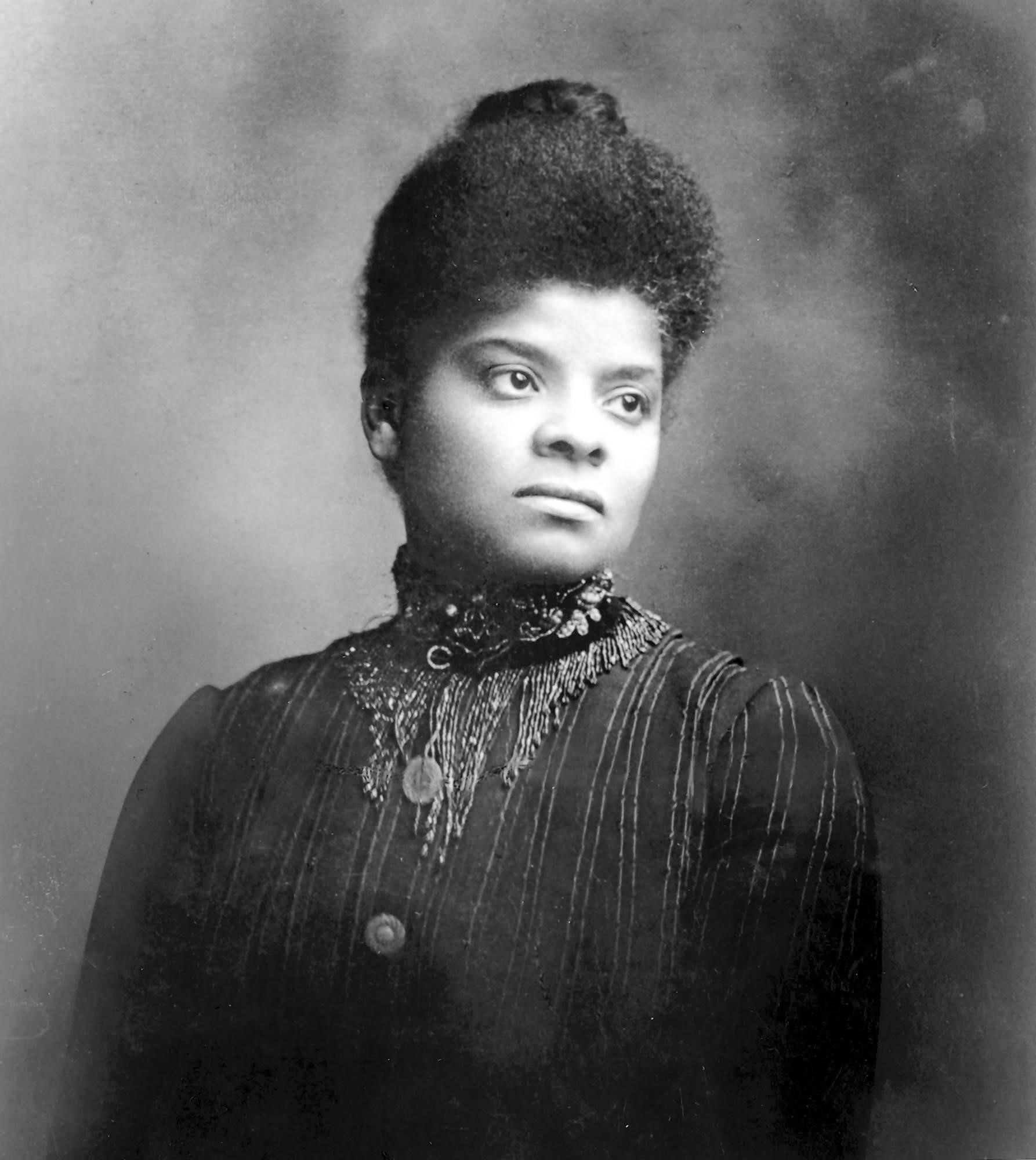
Portrait of Ida B. Wells, circa 1893. Image courtesy of the National Park Service.

Ida B. Wells was an investigative journalist, activist, and suffragist who led an anti-lynching crusade in the United States in the 1890s. She was also one of the founders of the National Association for the Advancement of Colored People (NAACP).

Read the rest of the story.

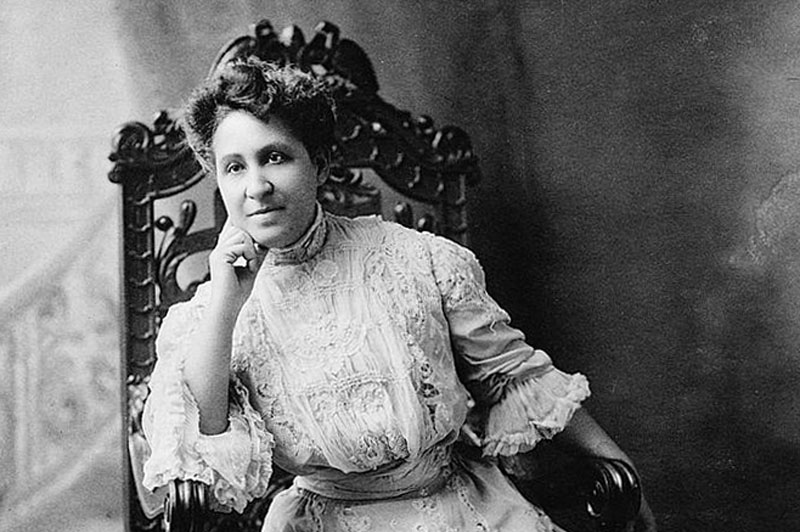
September 23: Mary Church Terrell

Mary Church Terrell

Mary Church Terrell, photo taken between 1880 and 1900, printed later. Library of Congress Prints and Photographs Division.

Born on September 23, 1863, Mary Church Terrell was a D.C. suffragist who was a tireless champion of women’s rights and racial justice. She was the first president of the National Association of Colored Women, an active member of the National American Woman Suffrage Association, and was engaged in lawsuits related to civil rights well into her eighties.

Read the rest of the story.

October 17: Agatha Tiegel Hanson

Video of Agatha Tiegel Hanson, reminiscing [about her college experiences] with unnamed younger people. From the Gallaudet Archives. No transcript, undated.

Agatha Tiegel Hanson was the first female graduate (and valedictorian) of Gallaudet University and an early champion of both deaf and women’s rights. Hanson, who passed away on October 17, 1959, was instrumental in organizing women’s groups on Gallaudet’s campus and continued to advocate for equality throughout her life.

Read the rest of the story.

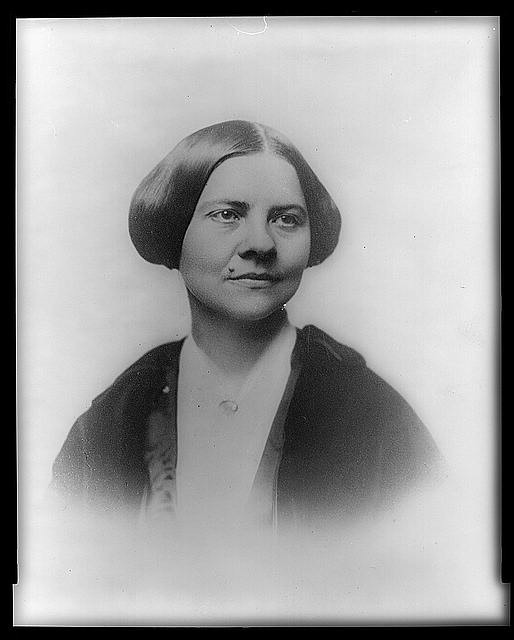
October 23: The National Woman’s Rights Convention

Womans convention 2

Lucy Stone, one of the Convention’s lead organizers and a speaker at the event.

On October 23, 1850, the first National Woman’s Rights Convention began in Worcester, Massachusetts. Amidst the ringing fervor of the mid-19th-century clarion call for expanding women’s rights – with the right to vote as its central tenet – this day would emerge as a significant step in solidifying the goals and action plan of the women’s suffrage movement in the United States.

Read the rest of the story.

November 14: The Night of Terror

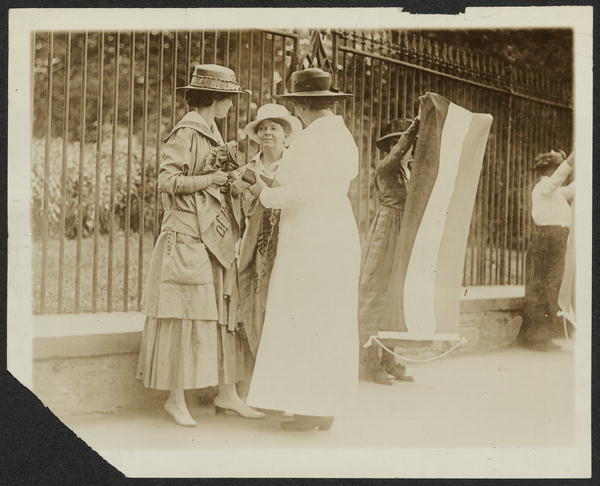
Florence Youmans of Minnesota (left), clutching a suffrage propaganda banner, and Annie Arniel of Delaware (center), being approached in front of the White House gates by an unidentified policewoman, who appears to have seized Arniel's banner, while a third unidentified suffrage picket watches from behind her tri-color purple, white, and gold National Woman's Party flag, and a fourth picket looks away in a different direction.

Policewoman arrests Florence Youmans of Minnesota and Annie Arniel (center) of Delaware for refusing to give up their banners. June 1917. Library of Congress Prints and Photographs Division.

On November 14, 1917, a group of suffragists underwent a horrifying night of torture and abuse that would come to be known as the “Night of Terror.” On this day in history, 33 women protesters were taken to the Occoquan Workhouse in Fairfax County and subjected to brutal treatment by the prison’s guards in retaliation for the women’s ongoing peaceful protest for the right to vote.

Read the rest of the story.

November 26: Sojourner Truth

Sojouner Truth 2

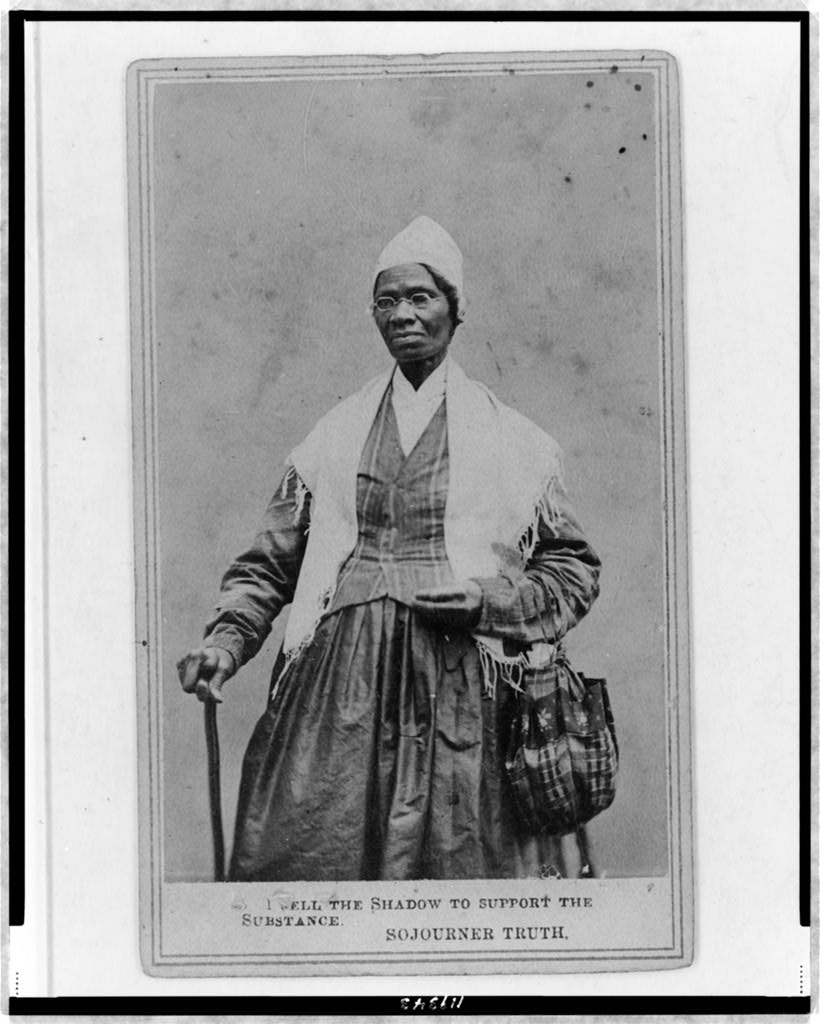
Portrait of Sojourner Truth. Caption on portrait reads: "I sell the shadow to support the substance." Library of Congress Prints and Photographs Division.

November 26 marks the anniversary of the death of legendary suffragist and abolitionist Sojourner Truth. Born into slavery as Isabella Baumfree (sometimes written as Bomfree) in 1797, Truth was enslaved in Dutch-speaking Ulster County, New York, where she was bought and sold four times throughout her life.

Read the rest of the story.

December 10: Wyoming Day

Wyoming Day 2

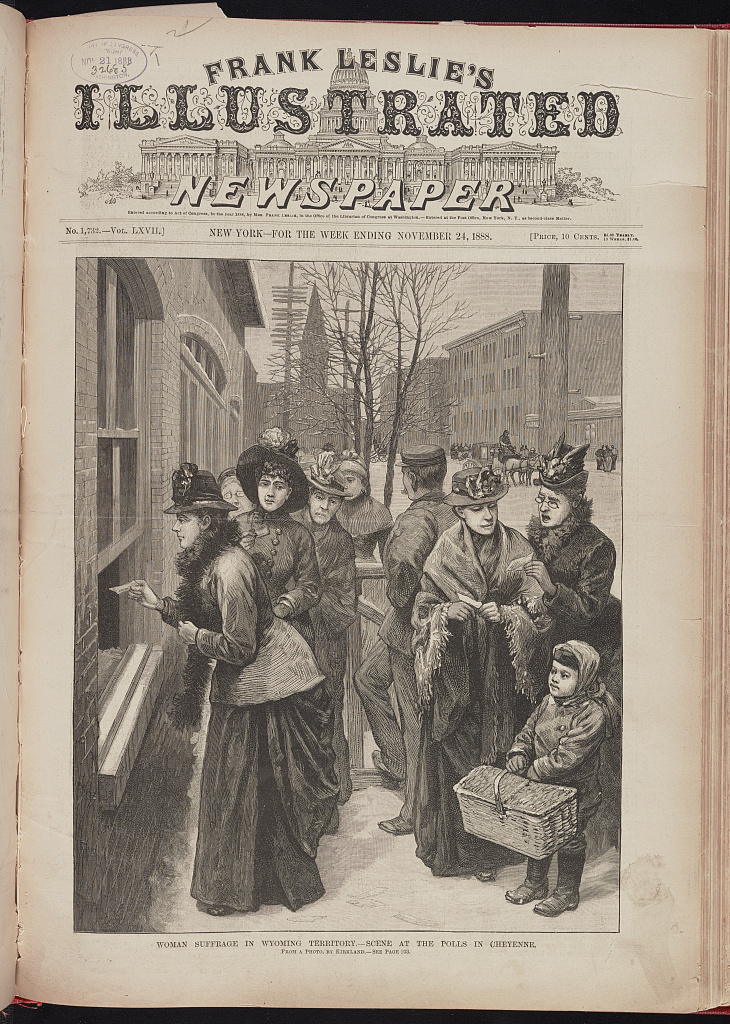
“Scene at the Polls in Cheyenne,” 1888.
Library of Congress Prints and Photographs Division.

On December 10, 1869, the frontier territory became the first to explicitly grant women the right to vote when Governor John Campbell approved “An Act to Grant to the Women of Wyoming Territory the Right of Suffrage and to Hold Office.”

Read the rest of the story.

To learn more about Arlington's history, visit the Center for Local History on the first floor of the Central Library.

Do you have a question about this story or a personal experience to share? 

Use this form to send a message to the Center for Local History.

Center For Local History - Blog Post Message Form

Do you have a question about this story, or a personal experience to share? Use this form to send a message to the Center for Local History.

"*" indicates required fields

This field is for validation purposes and should be left unchanged.

Share Your Story

August 17, 2020 by Web Editor

The Early History of Arlington’s Libraries

Post Published: August 6, 2020

Arlington’s Libraries have been a mainstay of the county landscape for generations – but how did the library system as we know it come to be?

Construction Central Library

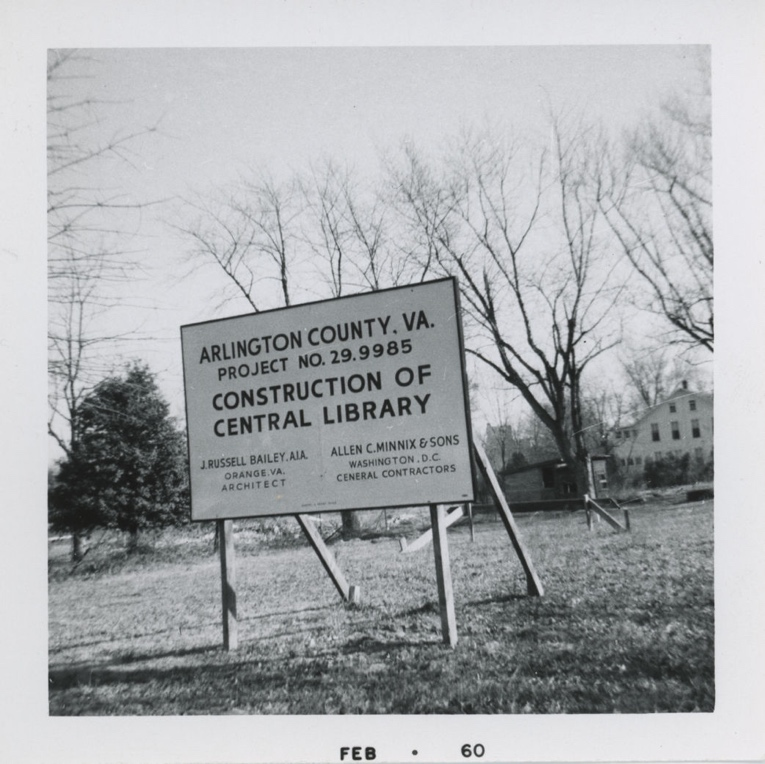
Construction signage for Arlington’s Central Library, February 1960.

Before the year 1936, Arlington County had been served by five independent libraries: Glencarlyn, Cherrydale, Clarendon, Aurora Hills, and Arlington/Columbia Pike. These were volunteer-led efforts run independently rather than as a unilateral system, and that individually received limited financial support from the County. These locations were largely established and managed by women members of the Arlington community.

In 1936 however, the Public Library system changed forever. A group of citizens and representatives from those five libraries joined together to form a collective Countywide system and to appeal for increased County financial support. Four delegates from each branch as well as four delegates at large met to discuss the possibility of a cohesive, singular library system and what that would entail.

Article From NVA 1
Article From NVA 2

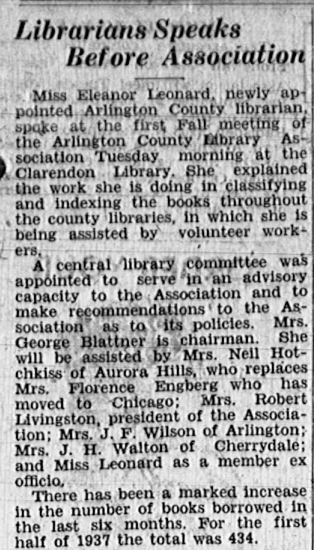
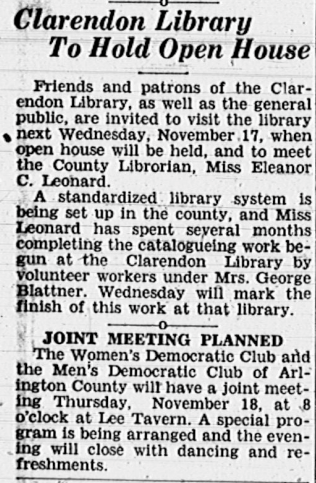
Articles from the Northern Virginia Sun describing the early efforts of Eleanor Leonard and the Arlington County Library Association. From September 17, 1937 (L), and November 11, 1937 (R).

A year later, in 1937, the newly formed Arlington County Library Association began work to establish Arlington’s first library system. In its early days, the Association completed a survey of the County’s libraries, population and resources to help guide their planning process. The group also conducted an “educate-your-county-officials” campaign, and eventually won their support. The County Manager at the time, Frank Hanrahan, agreed to their proposal under the condition that the proposed branches would need to meet ALA standards.

The group also voted unanimously to hire a professional librarian to oversee the formation of the library system. The County government later designated $3,500 to the libraries', $3,000 of which was for operational costs and $500 to pay the salary of the hired librarian.

Aurora Hills

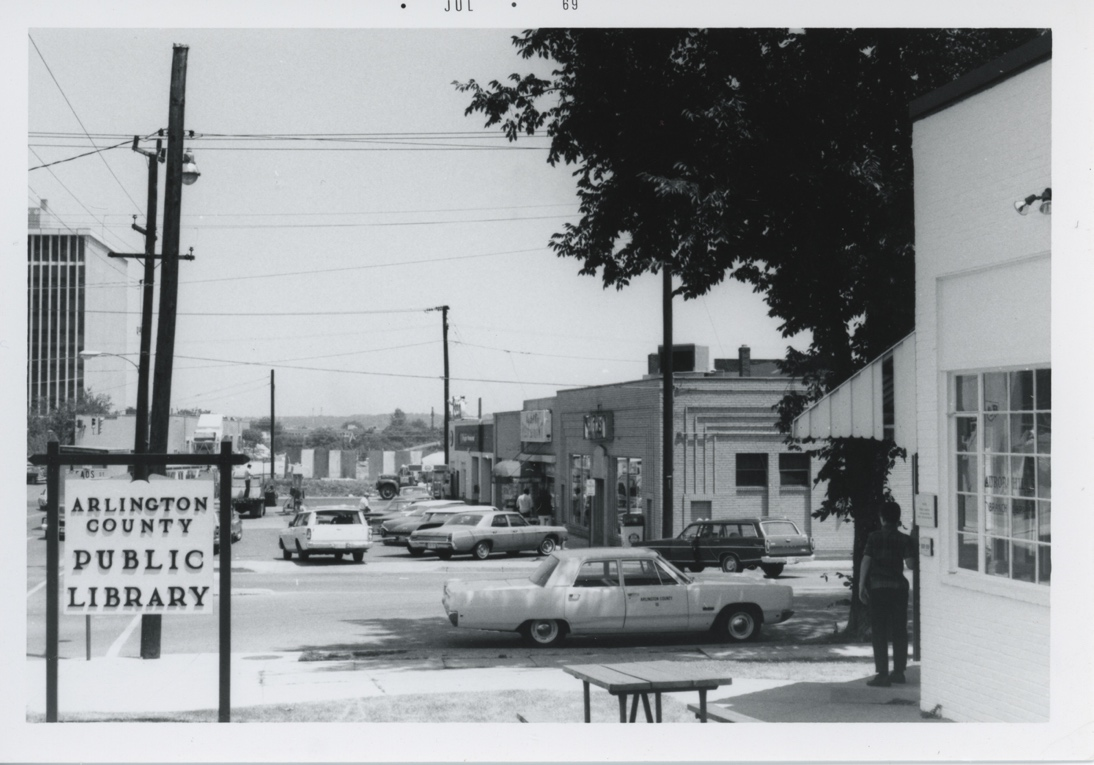
The Aurora Hills branch of the Arlington Public Library, July 1969.

In July of 1937, Eleanor Leonard was hired for the librarian position. Among her efforts to standardize and streamline the library system, she discarded damaged material, cataloged the library’s holdings, and trained volunteers in all aspects of library work. By the fall of 1939, the five libraries had been standardized, while the daily work of running the libraries continued to be done by volunteers. By July 1938, 11,328 books had been reclassified and cataloged according to American Library Association standards.

Architecture Columbia Pike

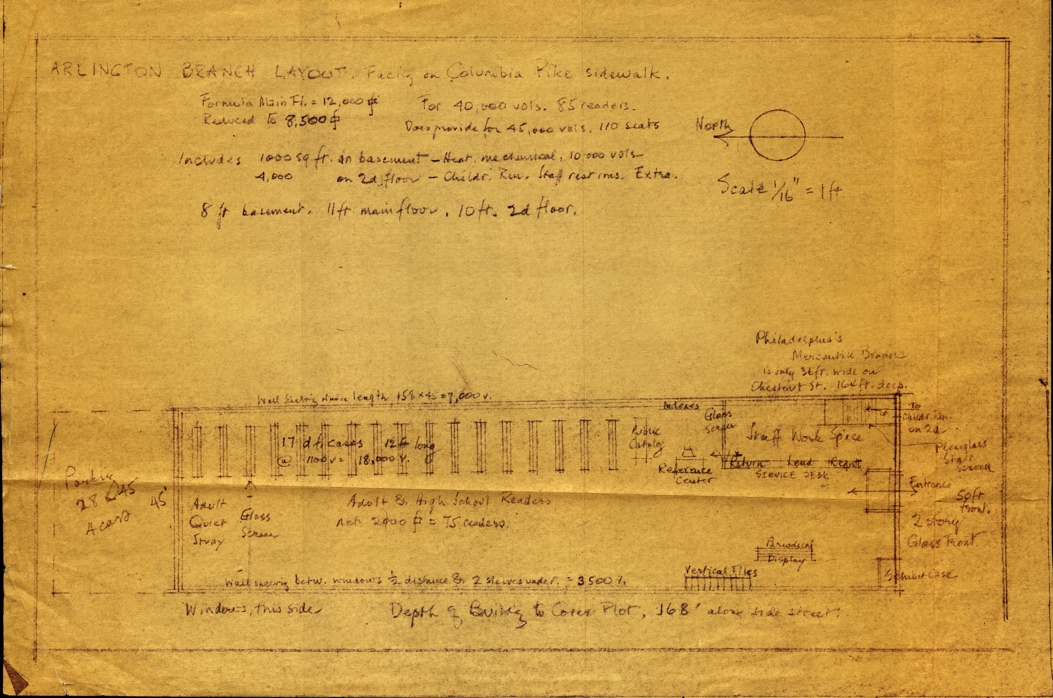
Architectural plans for the Columbia Pike Library, date unknown.

About a decade later, in 1949, eight branches were in operation, among them: Aurora Hills, Cherrydale, Clarendon, Columbia Pike, Glen Carlyn, Holmes, Shirlington (formerly Fairlington), and Westover branches.

The Holmes branch closed in 1949, and the Clarendon location became the Central Library, while the rest of the branches continue to stand where they are today, ready to serve their respective local communities again once the pandemic is over.

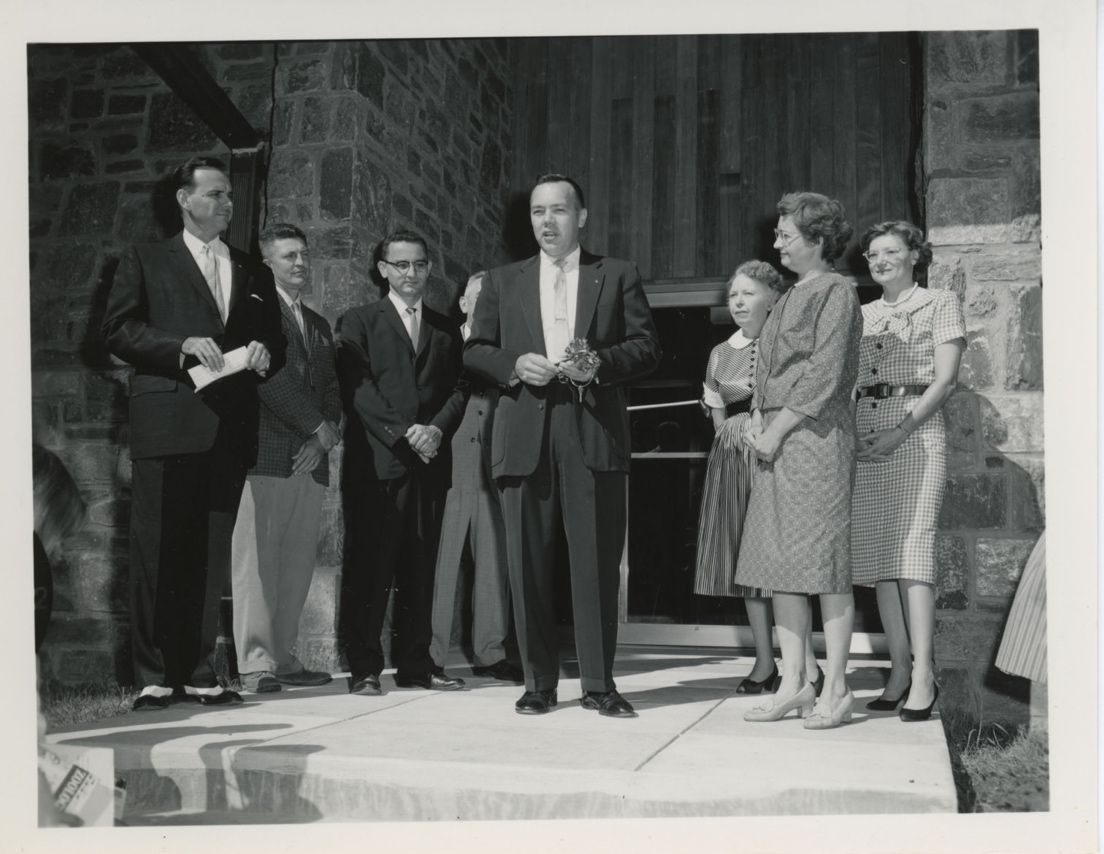
Cherrydale Opening

Cherrydale Library opening celebration, 1961.

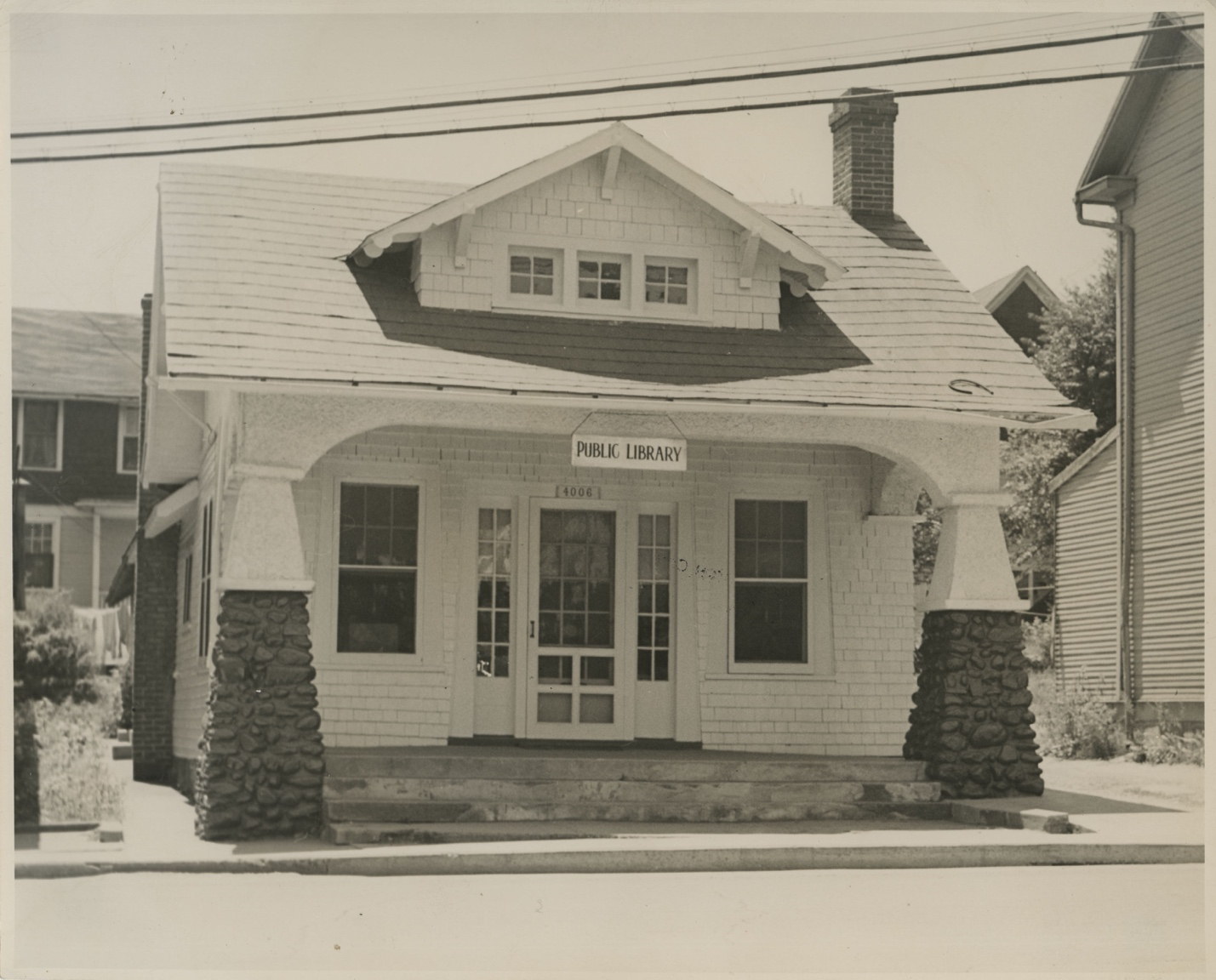
Cherrydale Library

Front side of the Cherrydale Library at 4006 Lee Highway, where it operated from 1946-1961.

This post is a condensed version of the “Libraries” section of the Library’s Women’s Work project, featuring materials from RG 29: Arlington County Public Library Department Records.

To learn more about Arlington's history, visit the Center for Local History on the first floor of the Central Library.

Do you have a question about this story, or a personal experience to share? 

Use this form to send a message to the Center for Local History.

Center For Local History - Blog Post Message Form

Do you have a question about this story, or a personal experience to share? Use this form to send a message to the Center for Local History.

"*" indicates required fields

This field is for validation purposes and should be left unchanged.

Share Your Story

August 6, 2020 by Web Editor

Celebrating Dark Star Park

Post Published: July 30, 2020

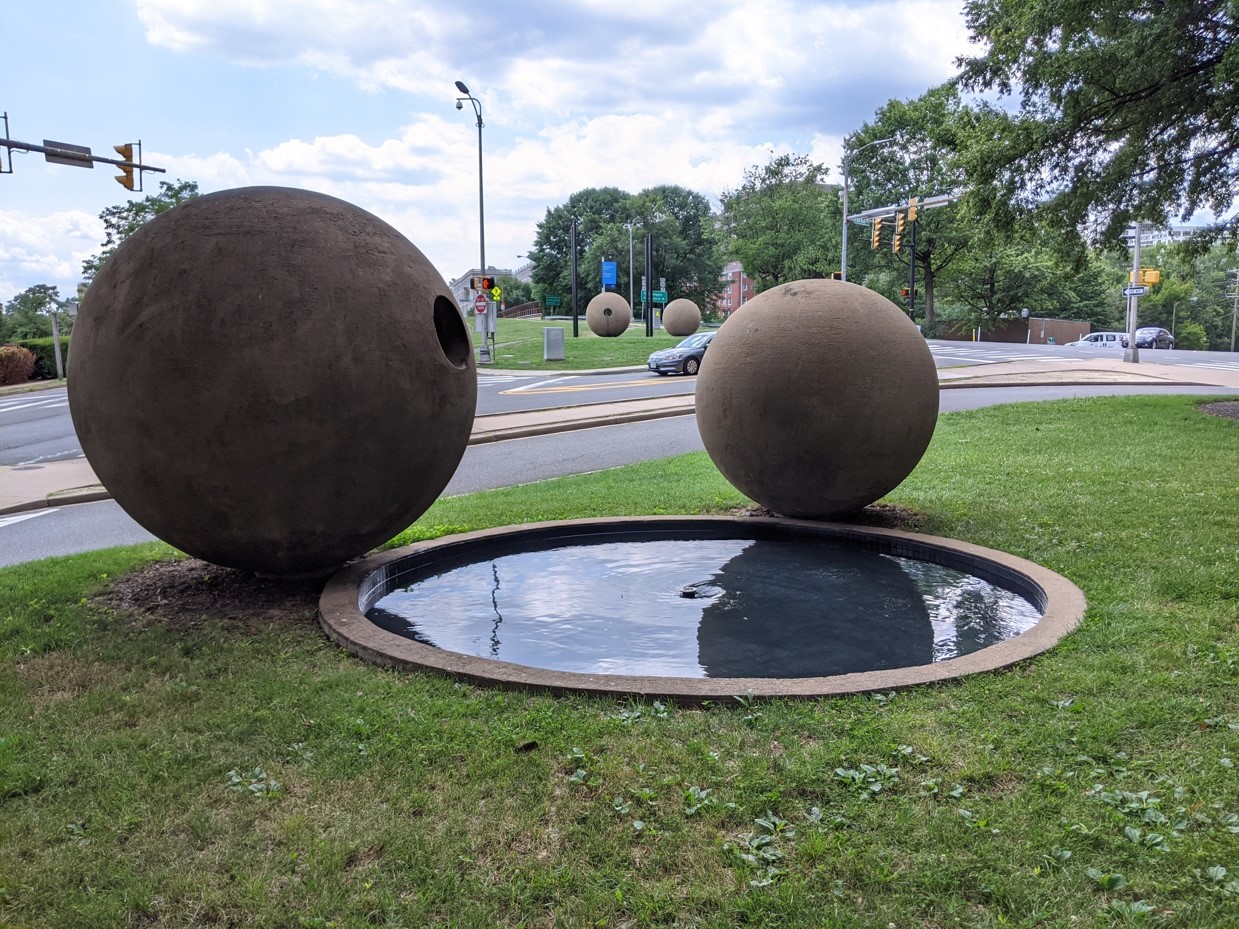
Reflecting Pool

One of the reflecting pools at Dark Star Park. Image courtesy of Camryn Bell.

Embedded between the office buildings, businesses, and roadways of Rosslyn is a unique piece of public art - Dark Star Park. Each summer, at approximately 9:30 a.m. on August 1, morning light strikes the group of large spheres that make up the sculpture to create an eclipse-like effect, which lasts - much like a real eclipse - only for a few minutes.

How did this unusual public sculpture come to be?

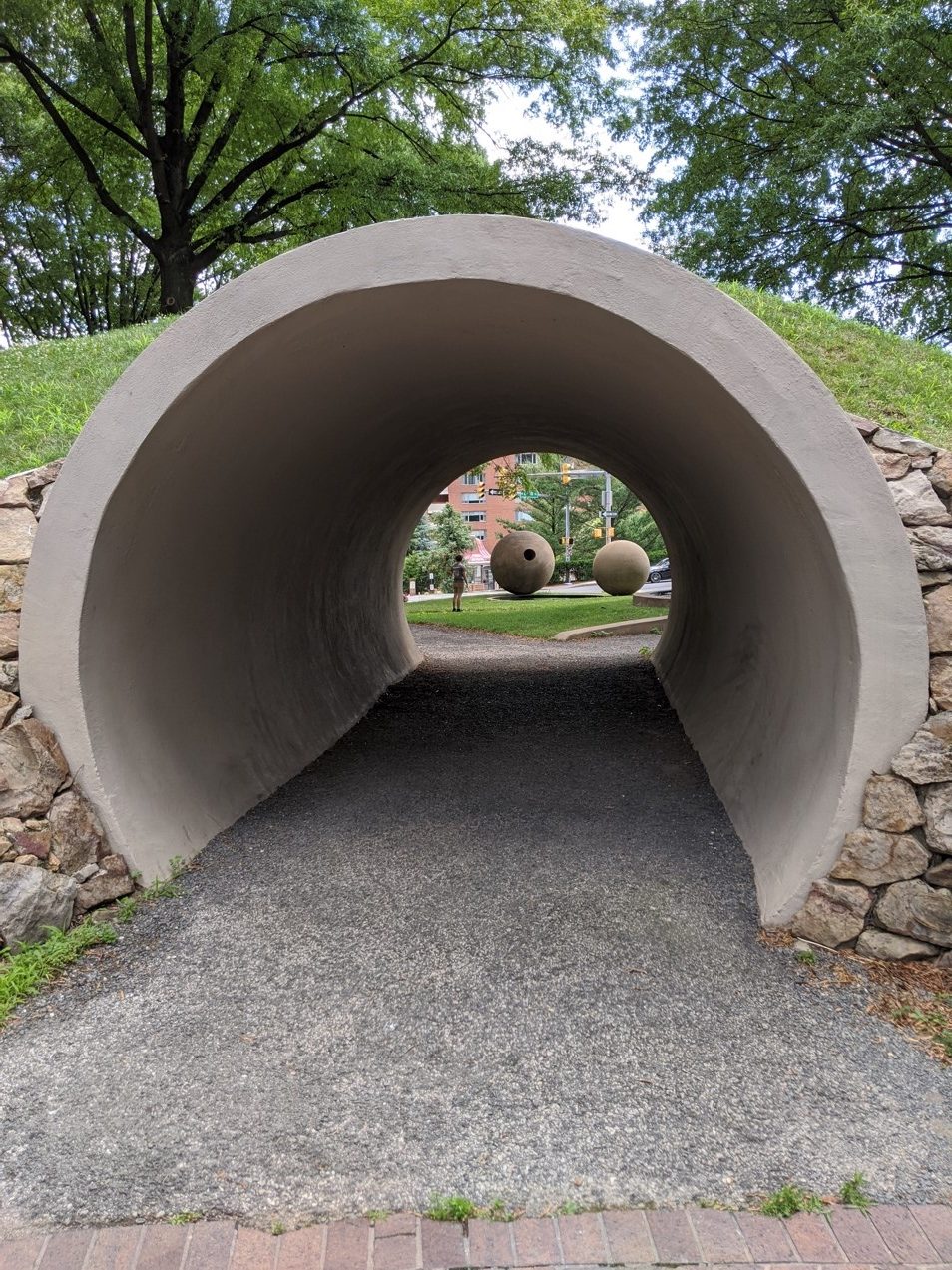
Tunnels

View from one of the tunnels at Dark Star Park. Image courtesy of Camryn Bell.

Dark Star Park 35th Anniversary Celebration – this Arlington TV feature showcases the August 1st, 2019, alignment of light and shadow at the park, and is accompanied by an original score from local artists Janel and Anthony.

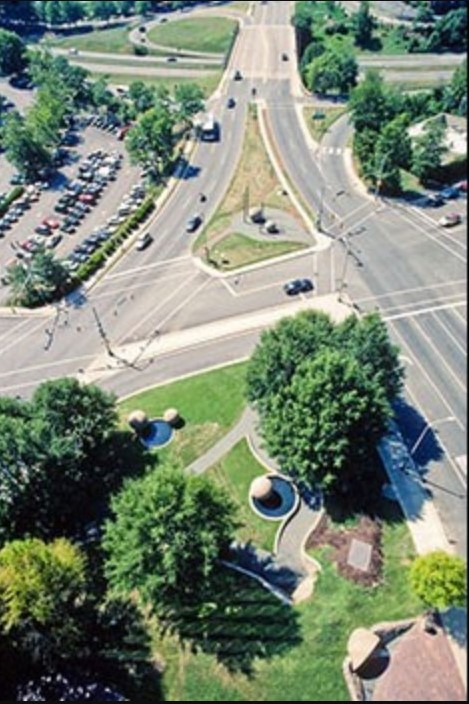
Built in 1984, Dark Star Park is the entry to the Rosslyn neighborhood, at a triangle formed by the intersection of North Fort Myer Drive, North Lynn Street, and N. Meade Street. It was constructed on the site of a former gas station, occupies 0.4 acres of land, and was designed to commemorate the anniversary of the purchase of the land by William Henry Ross, which would later become Rosslyn (Ross served as the neighborhood's namesake).

Dark Star Park seen from above shows an intersection with trees

Aerial view of Dark Star Park. Image courtesy of Arlington County.

Artist Nancy Holt (1938-2014), who was chosen to helm the project in 1979, was somewhat apprehensive about the project upon entering Rosslyn, in part because the site was a vacant lot overrun with trash. In a 1988 documentary on the park, she said, “I was overwhelmed with how cold and distant a place Rosslyn was … It’s a concrete network here with very little thought about human beings, human scale, human maneuverability.”

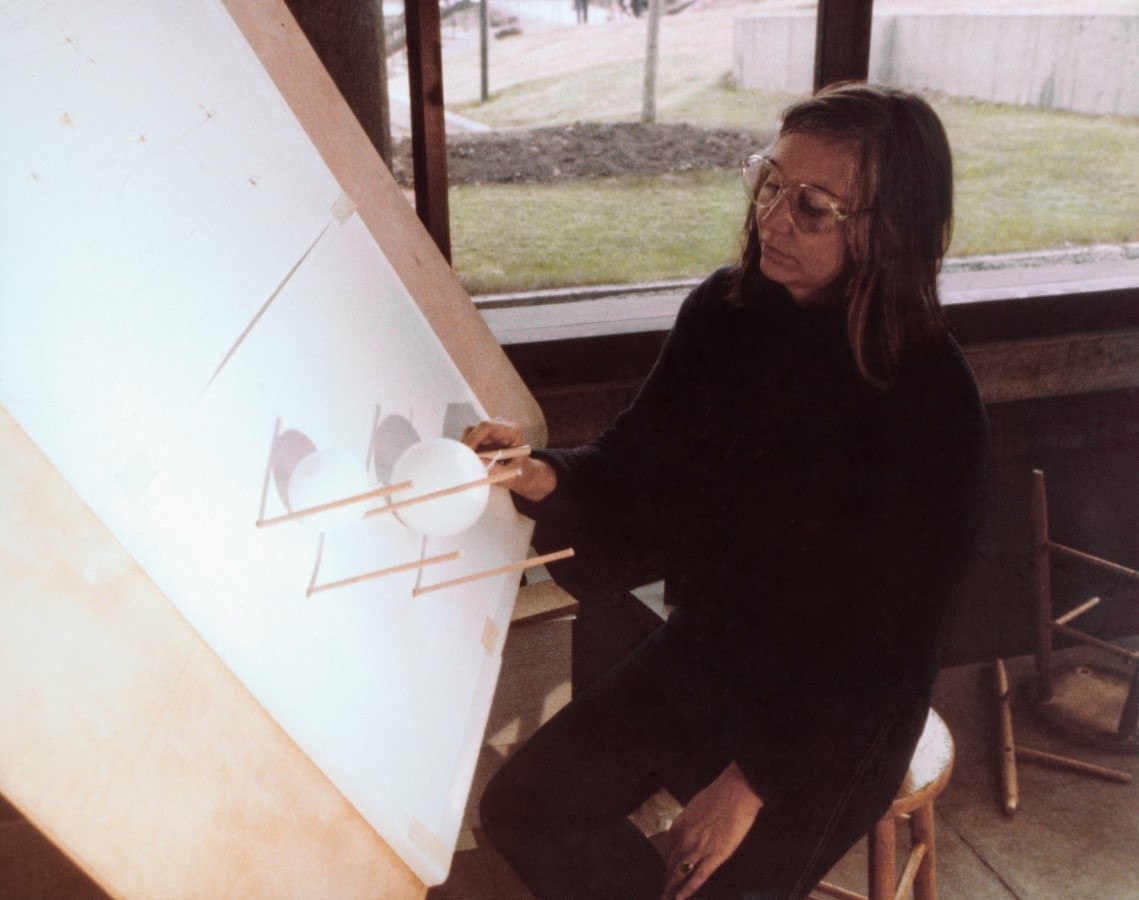
Nancy Holt

Nancy Holt designing Dark Star Park. Image courtesy of the Holt/Smithson Foundation via DCist.

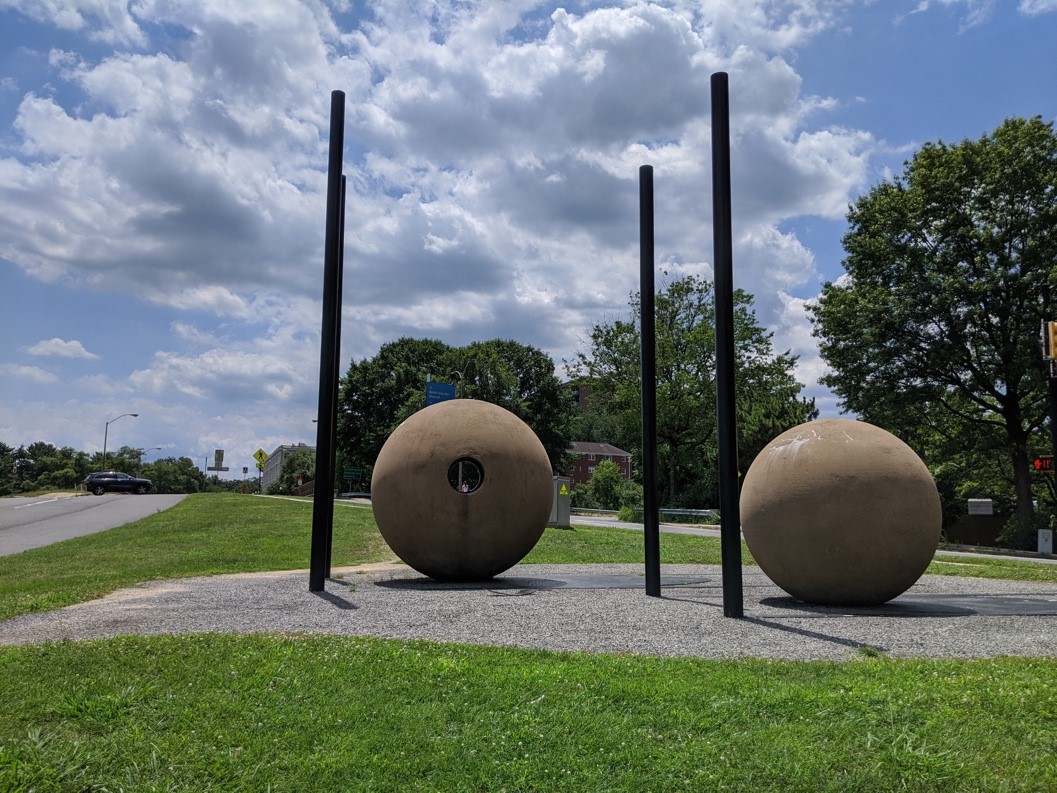
Dark Star Park combines elements of landscape architecture, sculpture, and astronomy. The piece is comprised of five gunite (air-placed concrete) spheres resembling fallen, extinguished stars, as well as two pools, four steel poles, and two tunnels.

Dark Star Park was commissioned by Arlington County during a transitional time in Rosslyn -  the Metro had recently arrived in Arlington, and development was still on the rise. The County funded the project with $200,000 from public and private sources, as well as a National Endowment for the Arts grant. (DCist, July 30, 2019)

Gunite Spheres

Some of the gunite spheres and steel poles at Dark Star Park. Image courtesy of Camryn Bell.

Holt oversaw every aspect of the park’s design and development, and also served as a contractor on the project. She was a preeminent member of the land art movement, which rose to recognition in the 1970s. While practitioners of this style mainly concentrated in open natural spaces – places that could easily accommodate the monumental scale of the works associated with the movement – Holt’s work in Dark Star Park was unique due to its urban setting. In terms of her design approach, Holt said,

“I feel that the need to look at the sky—at the moon and the stars—is very basic, and it is inside all of us. So when I say my work is an exteriorization of my own inner reality, I mean I am giving back to people through art what they already have in them.”

Holt's Sun Tunnels

Some of Holt’s other pieces were located in much larger environments than Dark Star Park. "Sun Tunnels," 1973-1976, is located in the Great Basin Desert of Utah. Image courtesy of the Utah Museum of Fine Arts.

The creation of Dark Star Park marked a significant first for the Arlington area: it was the first work of public art produced by the County. This was prior to the establishment of the County’s formal public art program that was inaugurated with the adoption of a Public Art Policy – nearly 16 years after the creation of Dark Star Park.

In the decades since, Arlington’s public art program has become a robust part of the County landscape.

Dark Star Park itself is also one of the first national examples of “integrated public art,” meaning that the art in the public site is inseparable from its setting and is a total environment to be experienced holistically.

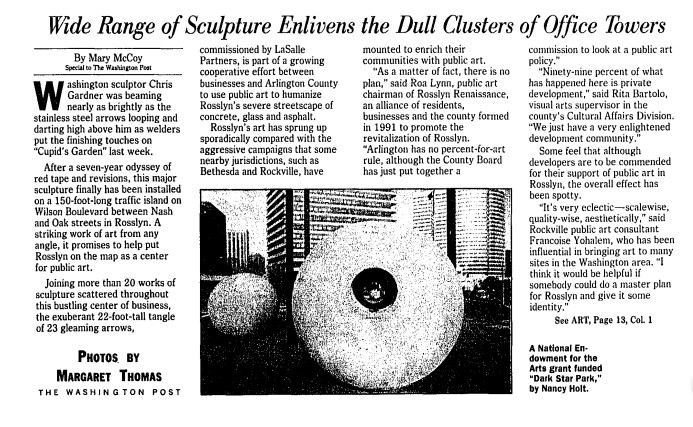
Newspaper Article

Excerpt from December 9, 1993, article by Mary McCoy on public art in Arlington and Dark Star Park. From the Washington Post.

Holt planned the design of Dark Star Park using miniature clay models. She worked with astrophysicists to determine placement of the spheres and poles to align with the light at exactly 9:32 a.m. on the August 1 anniversary – a time of day chosen simply because Holt enjoyed the way the light hit at that moment. The need for exactness in alignment was in part why the park underwent a renovation in 2002, allowing Holt to reorient the spheres that had shifted over the years due to the changes in the Earth’s axis.

One common mistake about Dark Star Park Day is that the August 1 alignment is meant to celebrate the birthday of Grateful Dead lead guitarist Jerry Garcia. This assumption is compounded by the coincidence of the band’s song titled “Dark Star.”

NewsMakers: Dark Star Park – an Arlington TV feature on Dark Star Park from 2009, including a speech from Nancy Holt.

Learn more:

The documentary "Troublemakers" – available at the Library – discusses the history of the land art movement and features Nancy Holt.

The DVD "Art in the Public Eye: The Making of Dark Star Park" by Nancy Holt is available for viewing in the Center for Local History.

Do you have a question about this story, or a personal experience to share? 

Use this form to send a message to the Center for Local History.

Center For Local History - Blog Post Message Form

Do you have a question about this story, or a personal experience to share? Use this form to send a message to the Center for Local History.

"*" indicates required fields

This field is for validation purposes and should be left unchanged.

Share Your Story

July 30, 2020 by Web Editor

Fun in the Sun: Summers of Arlington’s Past

Post Published: July 22, 2020

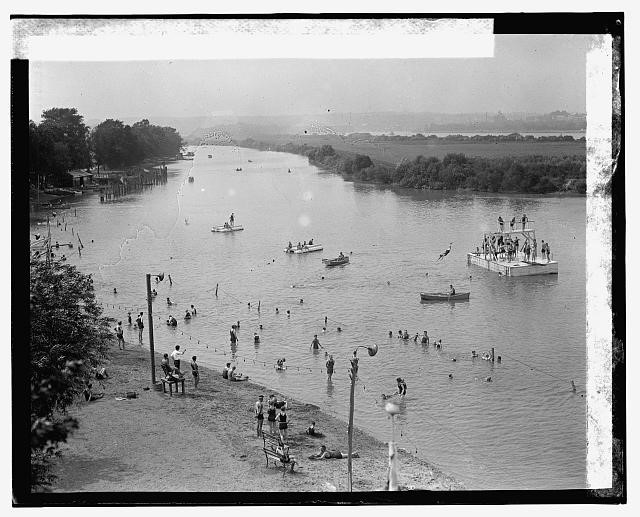
Arlington may not come to mind when you think of a beachy oasis, but in the 1920s, we had one of the region’s premier beaches right here.

The Arlington Beach and Amusement Park opened on May 30, 1923, on the Potomac River in the area near the Fourteenth Street Bridge (then known as Long Bridge). For nearly a decade, this was a go-to spot on a hot Arlington day.

Beach in 1925

Arlington Beach, circa 1925. Image courtesy of the Library of Congress.

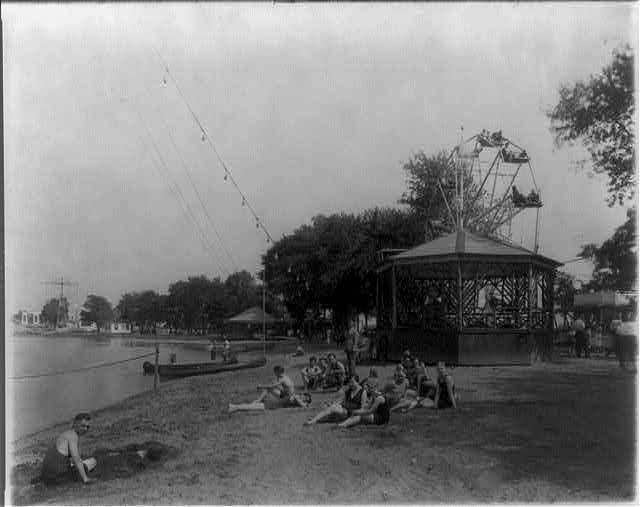
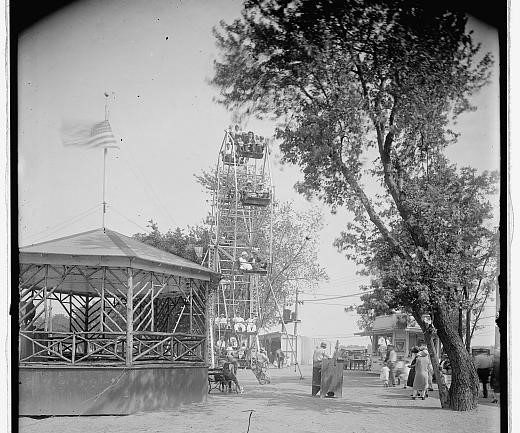
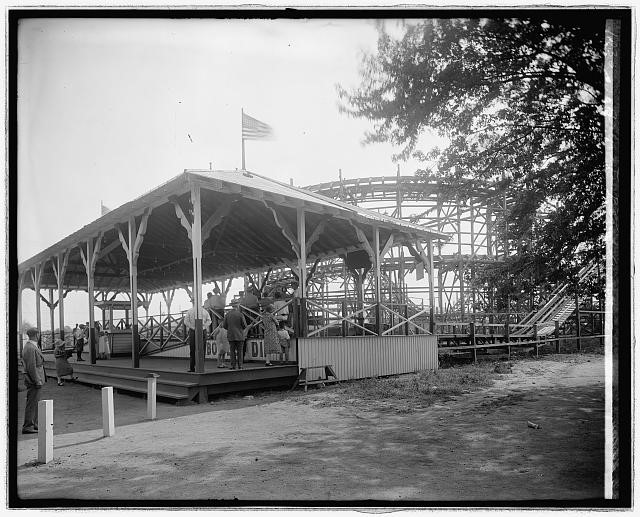
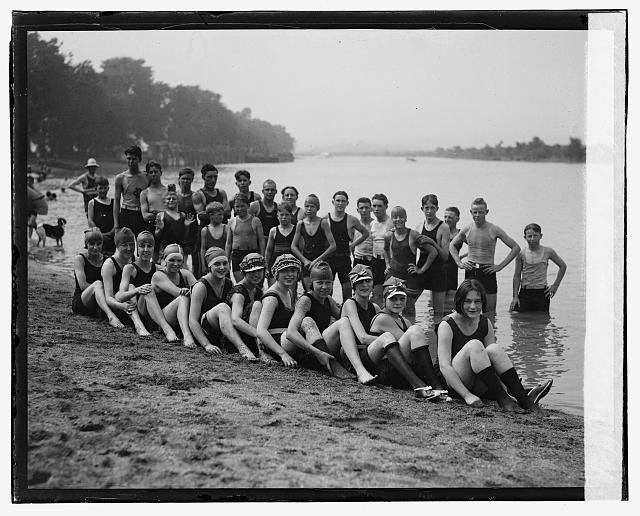
The beach was an immensely popular Arlington spot, with crowds of up to 12,000 during the most sweltering days, according to Arlington Magazine. The location featured both a sandy beach on the shores of the Potomac as well as bathhouses and the accompaniments of a full-scale amusement park: a merry-go-round, Ferris wheel, aerial swings, a rollercoaster called “The Whip,” and a ride called “The Dodgem.” Swimmers could use the beach’s diving board and swim at night under searchlights.

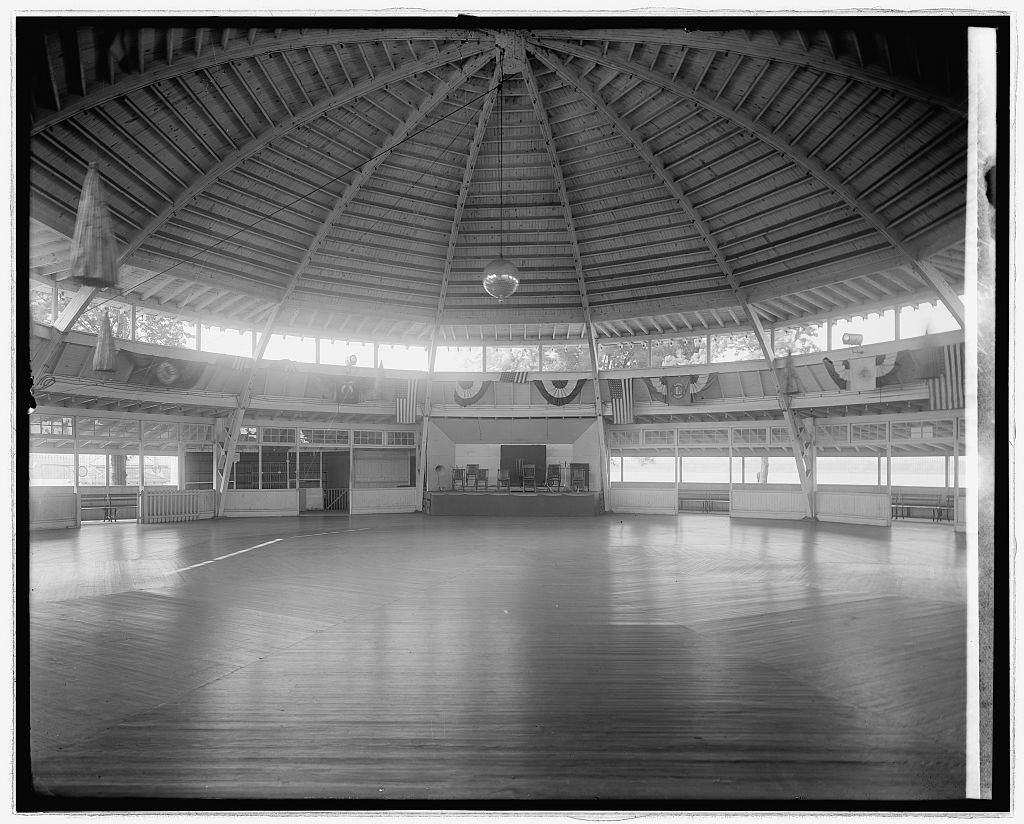
Dance Pavilion

Dance pavilion, Arlington Beach. Image courtesy of the Library of Congress.

The park’s dance pavilion was also one of its major draws in its opening season, providing a spot for people of all ages to spend summer evenings – the Washington Jazz Orchestra even performed here. In line with the rising car culture of the early 20th century, the park also advertised extensive parking facilities – important to draw customers from all around the region.

It’s notable that as popular as the Arlington Beach was, it was among the many segregated recreational areas in the County. Even though it was located near predominantly African American neighborhoods, including East Arlington and Queen City, the beach and amusement park were segregated for the duration of their existence.

Beachgoers

Beachgoers at Arlington Beach, June 16, 1923. Image courtesy of the Library of Congress.

According to a research project on segregation in Arlington conducted by Lindsey Bestebreurtje at George Mason University: “County resident James ‘Jimmy’ Taylor recalled that Black children swam ‘in a creek on Route 50 called Blue Man Junction.’” African American Arlingtonians were also not permitted to use public pools, and the county’s first pool to allow African American children wouldn’t open up until the 1960s.

Interview with Ruth Jones

Center for Local History, Arlington Public Library · July 2017 - Arlington Beach - Ruth Jones

In a 1999 oral history interview with Ingrid Kauffman, Ruth Jones described going to the beach as a teenager. Born in March of 1913, Ruth began to visit Arlington Beach around 1927. Oral histories are used to understand historical events, actors, and movements from the point of view of real people’s personal experiences.

Narrator:  Ruth Jones
Interviewer: Ingrid Kauffman
Date: March 23, 1999

Ingrid Kaufman: And so can you tell us about Arlington Beach?

Ruth Jones: Well, I was just a young girl, 14 or 15 years old and I met my husband, well, he eventually was my husband.

IK: What was his name?

RJ: Raymond Jones. And he lived in Washington. And we started going to Glen Echo and to Arlington Beach and just having a good time for kids, you know. And so they had a roller coaster, a carousel.

IK: How much did that roller coaster cost?

RJ: Ten cents. A ride at your own risk. That’s the truth, too. It was rickety. After I came to Washington, it was only there for 2 years, 2 or 3 years, then they tore it down.

IK: They tore down the roller coaster?

RJ: Everything. And shut the beach down and all, to put the airport there.

Waterfront

Along the waterfront, Arlington Beach, circa 1925. Image courtesy of the Library of Congress.

As Jones describes, the location was eventually compromised by the construction of the nearby Hoover Airport. The traffic at the airfield grew to include both passenger and mail air service, which provided disruptive to the festivities of the beachgoers and park attendees. The Hoover airfield was also notoriously dangerous – and the aviation industry notoriously unregulated at this point – so the proximity of the beach and park also became a safety issue.

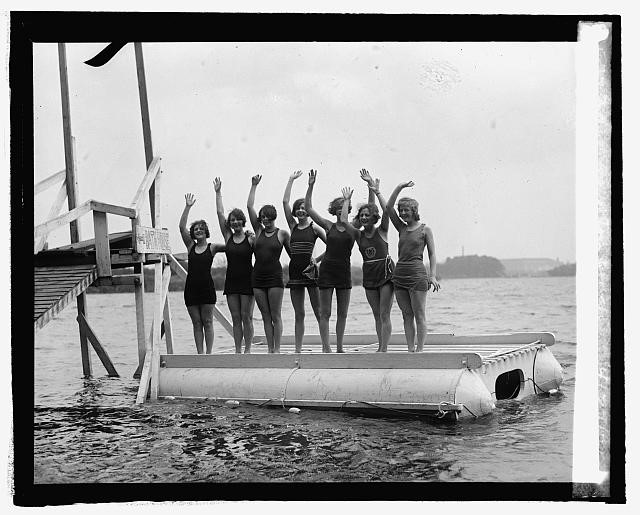
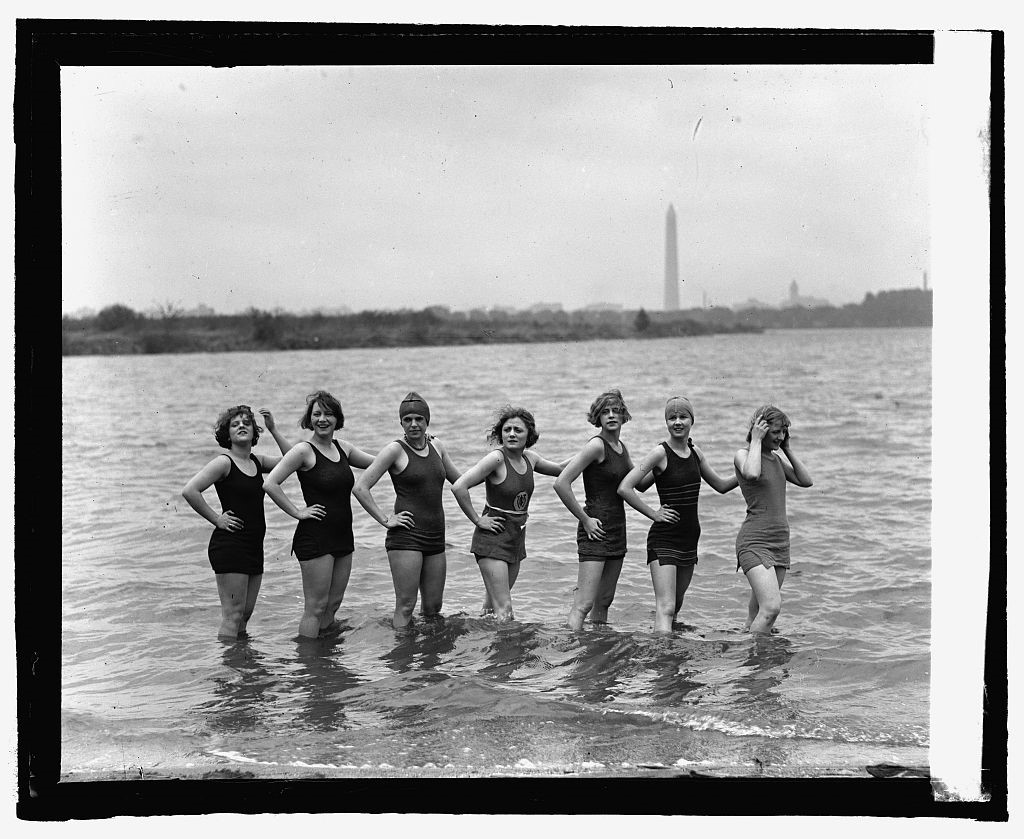
Girls 1
Girls 2

Girls from Keith’s [vaudeville circuit] at Arlington Beach, April 29, 1925. Image courtesy of the Library of Congress.

In 1929, the Washington Air Corporation bought the beach property in order to expand the Washington Airport, which later merged with the Hoover Airport as the Washington-Hoover Airport. However, with the construction of the Washington National Airport (now Ronald Reagan), the Washington-Hoover Airport closed. The former beach grounds were then purchased by the U.S. Department of War and became part of the Pentagon.

Amusement Park

Amusement park, Arlington Beach. Image courtesy of the Library of Congress.

Rides at Arlington Beach

Rides at Arlington Beach. Image courtesy of the Library of Congress.

This article was expanded from previous articles on Arlington Beach from 2008 and 2017.

Do you have a question about this story, or a personal experience to share? 

Use this form to send a message to the Charlie Clark Center for Local History.

Center For Local History - Blog Post Message Form

Do you have a question about this story, or a personal experience to share? Use this form to send a message to the Center for Local History.

"*" indicates required fields

This field is for validation purposes and should be left unchanged.

Share Your Story

July 22, 2020 by Web Editor

This Week in 19th Amendment History: Ida B. Wells

Post Published: July 15, 2020

July 16, 1862: Ida B. Wells is Born

Celebrate the 100th anniversary of the 19th Amendment with stories about the people and events that led to the passage of women’s suffrage in the United States.

Ida B. Wells was an investigative journalist, activist, and suffragist who led an anti-lynching crusade in the United States in the 1890s. She was also one of the founders of the National Association for the Advancement of Colored People (NAACP).

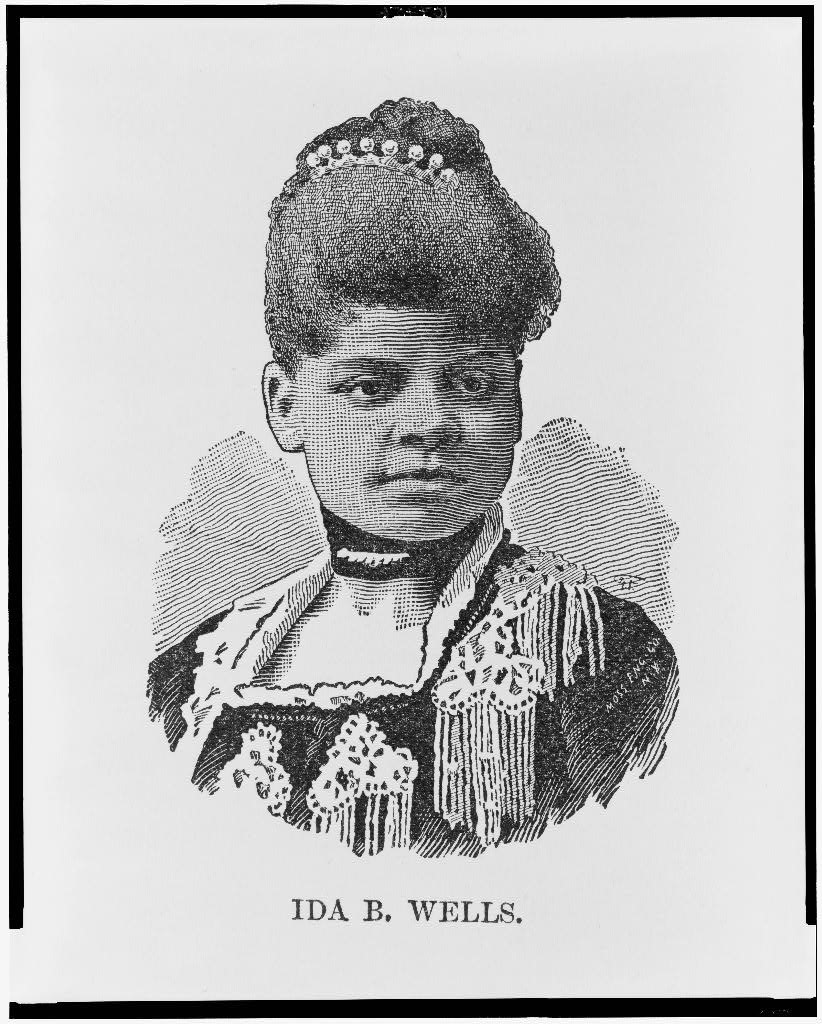
Ida B. Wells

Portrait of Ida B. Wells, circa 1893. Image courtesy of the National Park Service.

Early Life

Ida B. Wells was born into slavery on July 16, 1862, in Holly Springs, Mississippi, to James and Lizzie Wells. Following the conclusion of the Civil War, Wells’ parents became politically active as the country navigated Reconstruction. Ida's father, James, was a member of the Freedmen’s Aid Society, as well as one of the founders of Rust College in Holly Springs – one of 10 historically Black universities founded before 1868 that is still operating today. Encouraged to pursue her education, Ida later enrolled at Rust College but was ousted from her studies after a dispute with the university’s president.

Ida B. Wells 3

Image courtesy of the Library of Congress.

At only age 16, she lost both of her parents and her infant brother to a yellow fever epidemic that had decimated Holly Springs. Left with custody of her other siblings, Wells was able to convince a school administrator that she was 18, and began teaching to support her family. In 1882, she moved with her siblings to Memphis to live with an aunt, and there she continued to work as a teacher. She began classes at Fisk University in Nashville, where she would commute to by train. On one of these trips in May 1884, Wells – who had purchased a first-class ticket – was forced to move to a segregated car for African American passengers. Wells refused to move and was forced off of the train. Wells went on to sue the railroad and won a settlement in court.

Inspired by this incident, Wells pivoted her career toward writing about the topics of race and politics. Under the pseudonym “Iola,” Wells’ work was published in a number of Black-owned newspapers and periodicals. She also went on to hold shares of two newspapers: The Free Speech and Headlight, and Free Speech. All the while, she continued teaching in the segregated Memphis school system, of which she was also a vocal critic. Due to her vocal stance against segregation in the city and in the schools, as well as her criticism of the condition of schools, she was fired from her position.

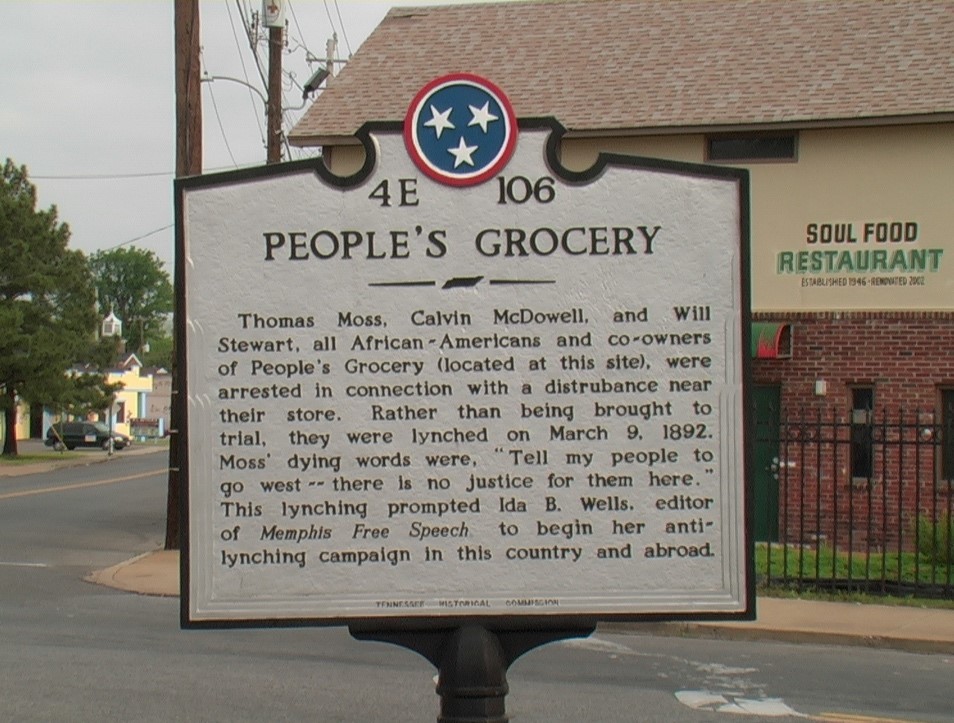
People's Grocery Lynchings

In 1892, Wells’ journalistic focus took a turn. After the murder of a friend and two of his business associates at the hands of a lynch mob in Memphis, Wells began reporting on the epidemic of lynching in the South.

The three men, Thomas Moss, Calvin McDowell, and Will Stewart, had owned a storefront called People’s Grocery that was successfully competing with white businesses in the city. They were attacked and fought back, then were arrested, and subsequently dragged from jail by a white mob and lynched. This prompted Wells, who was also a godmother to Moss’ daughter, to write articles against lynching, and she frequently risked her own life to travel and learn more about killings that occurred in the region.

In 1898, she traveled to Washington, D.C., to present her anti-lynching campaign to then-president William McKinley.

People's Grocery Marker

A marker at the site of the 1892 People’s Grocery lynching. Image courtesy of the Lynching Sites Project, Memphis.

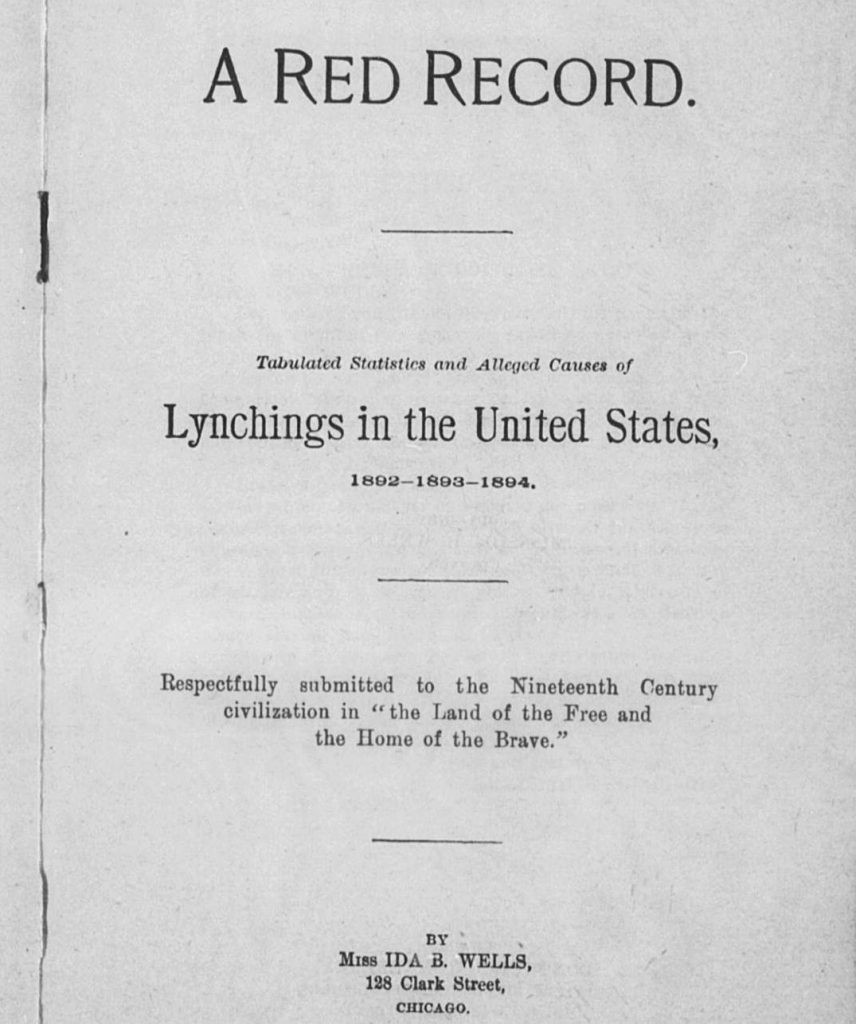
Wells faced violence herself over the course of her reporting – in response to one of her editorials, a white mob stormed her newspaper’s office and destroyed her property there. Wells was in New York at the time, but the incident led to her moving to Chicago, where she continued reporting on lynching for the New York Age; a newspaper helmed by T. Thomas Fortune, who had also been formerly enslaved. In 1892, she compiled her reporting on lynching into a book, titled “Southern Horrors: Lynch Law in All Its Phases.”

Attack on Wells Report

A report of the attack on Wells’ office in Memphis from the Washington Bee, June 11, 1892. Image courtesy of the Library of Congress.

Front Page Wells Book

The front page of one of Wells’ books on lynching in the United States, published 1895. “A Red Record” was a follow-up to “Southern Horrors,” and included more statistics and case details. Image courtesy of the Library of Congress.

The Alpha Suffrage Club

In addition to her reporting work, Wells was a founding member of numerous civil rights groups including the National Association of Colored Women and the Negro Fellowship League. She also attended the founding conference of what would later become known as the National Association for the Advancement of Colored People (NAACP).

Wells’ work in advancing the suffrage cause was also prolific. In January 1913, she founded the Alpha Suffrage Club in Chicago, where she also served as president. The club aimed to promote city representatives who would best serve the Black community and who favored suffrage. The Alpha Suffrage Club was crucial in Illinois passing its Equal Suffrage Act on June 25, 1913, which granted women suffrage in the state.

As a result of their efforts, Wells and other members were invited to march in the 1913 Suffrage Parade in Washington, D.C. However, at the parade, Wells and the members of her group were asked to march at the back of the procession by the white parade organizers, to which Wells refused, joining in in the midst of the action.

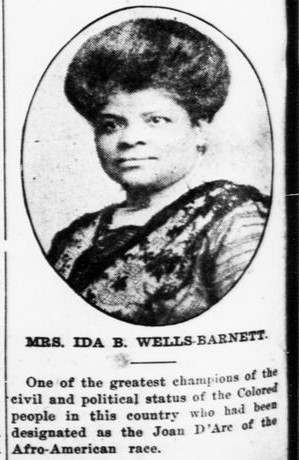
Profile of Ida B. Wells

A profile of Ida B. Wells in Salt Lake City’s The Broad Ax, July 14, 1917. Image courtesy of the Library of Congress.

Legacy

Wells died in 1931 but continued her career and life as an activist until the end of her life. In 1929 and 1930, she ran for state senator but was defeated – however, simply running as an African American was unprecedented at the time and her campaign was revolutionary in and of itself.

Wells’ legacy has long been overlooked in the scope of women’s suffrage, civil rights activism, and the progression of investigative reporting in the country. Just this year, she was posthumously awarded the Pulitzer Prize, “For her outstanding and courageous reporting on the horrific and vicious violence against African Americans during the era of lynching.” She is also among those featured in the New York Times’ “Overlooked” project, which highlights individuals who previously were not given the space for an obituary. You can read their retroactive obituary for Wells on their website.

A monument has also been proposed to honor Wells in her longtime home of Chicago.

Ida B. Wells 2

Image courtesy of the League of Women Voters Chicago.

The Library has a number of resources to learn more about Ida B. Wells, as well as some of her original works:

By Ida B. Wells:

  • Mob Rule in New Orleans: Robert Charles and His Fight to Death
  • The Red Record
  • Southern Horrors: Lynch Law in All Its Phases
  • The Memphis Diary of Ida B. Wells

About Ida B. Wells:

  • Ida: A Sword Among Lions, by Paula Giddings
  • To Tell the Truth Freely: The Life of Ida B. Wells, by Mia Bay

2020 marked the centennial of the passage of the 19th Amendment. 
July 15, 2020 by Web Editor

Stories of Arlington’s Activists

Post Published: July 8, 2020

Arlington has a history of dedicated community members fighting against racism, prejudice, and injustice through protests, community organizing, and legal work.

Sitins

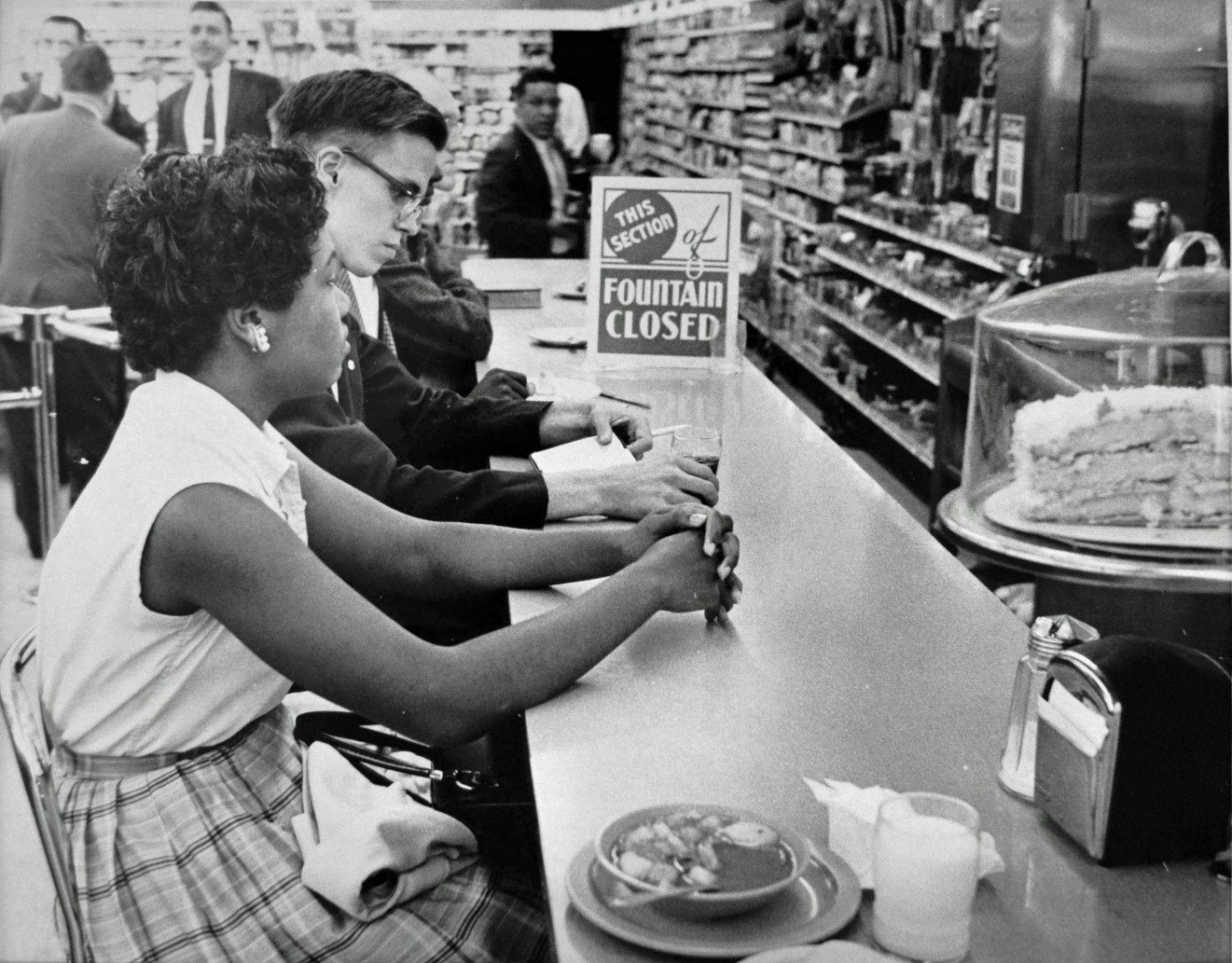
June 10, 1960, Gwendolyn Green (later Britt) and David Hartsough sit at the People’s Drug Store counter. Protests such as this happened at counters in seven locations in Arlington including two in Shirlington. DC Public Library, Star Collection, ©Washington Post. Read more about Shirlington.

Collected here are stories about some of those individuals and groups, told through documents donated to the Center for Local History. This is only a small sampling of stories that make up the history of Arlington’s activist community, and we are dedicated to telling the stories of those who have fought in Arlington’s continued struggles against inequalities.

The CLH invites you to play an active role in documenting our history by donating physical and/or digital materials for the Community Archives.

A Fight for Educational Equality: Civil Rights Activist Dorothy Hamm

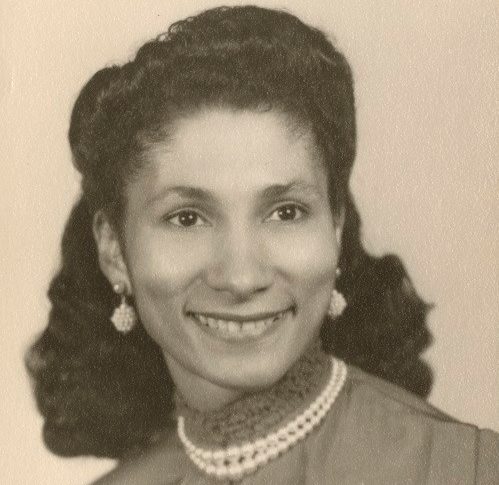
Dorothy Hamm was an Arlingtonian at the forefront of the civil rights movement and leader of the efforts to desegregate the county’s schools and theaters.

Dorothy Hamm Portrait

Image courtesy of Carmela Hamm, from the Library of Virginia.

Excerpt:

In 1956, Hamm, along with her husband, became plaintiffs in the first civil action case filed to integrate the Arlington Public School system. When no action towards integration had been taken a year after the suit was filed, Hamm and her husband took their oldest son, Edward Leslie Jr., to enroll at Stratford Junior High School. They, and other African-American students who attempted to enroll in the still segregated Arlington schools, were denied admission that year. In September 1957, a few days after the opening of the school year, crosses were burned on the lawns of two Arlington families, and at the Calloway United Methodist Church, a central location for organizers in the effort to desegregate the schools, and a site of workshops held by ministers, lawyers, and educators preparing parents and students for school integration.

Over the course of this process, Hamm recalled in interviews many experiences with discrimination and intimidation.

Read the rest of the story.

Oral History: Desegregation of Arlington’s Public Schools

Two stories in this list chronicle the struggle to desegregate Arlington Public Schools told through oral history interviews, historical documents, and legal proceedings.

You can also learn more about the people and events that made up this historic effort in the library’s online exhibition, Project DAPS.

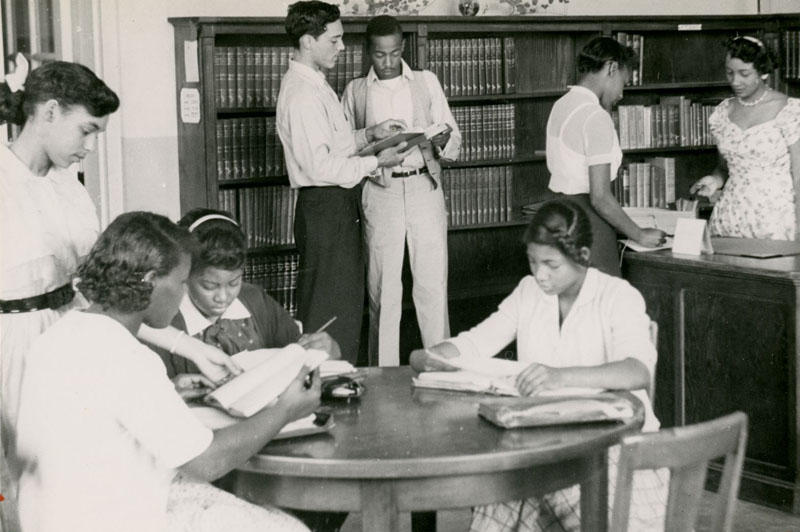
African American students reading in the library

African American students reading in the library.

Excerpt:

In this clip from 1986, Hamm shared her experience trying to register her son for school at Stratford and her activity in lawsuits to desegregate public facilities in Arlington County.

Dorothy Hamm has been honored by the County with the naming of a new middle school in Cherrydale, the Dorothy Hamm Middle School, which opened in September 2019.

Read the rest of the story.

The Story of Arlington Public School Desegregation

black and white photograph of 4 black students entering Stratford Junior High in 1959

Ronald Deskins, Michael Jones, Lance Newman, and Gloria Thompson walked into Stratford Junior High School on February 2, 1959.

Excerpt:

At 8:45 a.m. on February 2, 1959, four young students from the nearby Hall’s Hill neighborhood entered Stratford Junior High School in Arlington, Virginia.

When they stepped into Stratford that day, they became the first students to desegregate a public school in the Commonwealth of Virginia.

Many Arlingtonians know that theirs was the first county in Virginia to desegregate. It is a point of pride. But it’s not the whole story.

Read the rest of the story.

“If You Don’t Vote, You Don’t Count”

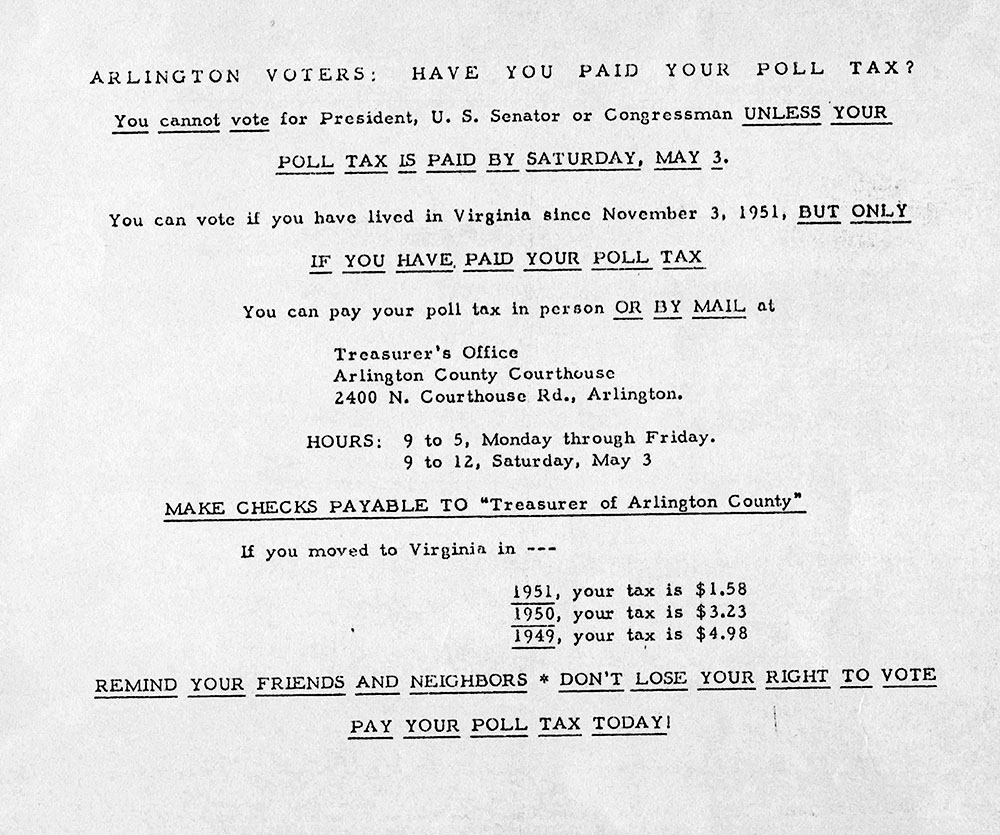
“If You Don’t Vote, You Don’t Count” looks at the poll taxes imposed to restrict voters and prevent African Americans from voting in the county, and the actions taken by local activists to combat this voter suppression.

1951 Flyer reminding voters to pay their 1951 Pol Tax

1951 flyer telling Arlington residents how to pay their poll tax in order to vote in the upcoming election.

Excerpt:

In 1876, after the Fifteenth Amendment granted African-Americans the right to vote, Virginia passed a poll tax to restrict African-American men from voting. Although this law was repealed in 1882, in 1901 the Virginia General Assembly called for a new constitution with the explicit purpose to secure the right of suffrage of the state's white men, and to take away the right to vote from anyone in the state who wasn't white.

The new constitution, which passed in 1902, reinstated the poll tax. This required voters to pay a tax of $1.50 six months prior to an election for each of the three years preceding an election. This disenfranchised approximately 90% of the black men and, counter to the intentions of those who had drafted the new constitution, nearly 50% of the white men who had previously been registered to vote in Virginia. The 1902 constitution also created an administrative structure that was difficult for any average citizen to navigate, further disenfranchising many poor men.

Read the rest of the story.

Our Back Pages: Arlington’s Own Declaration of Civil Rights

Next, read about efforts to continue the efforts of desegregation beyond the schools when a group of Arlington activists drafted their own Declaration of Civil Rights.

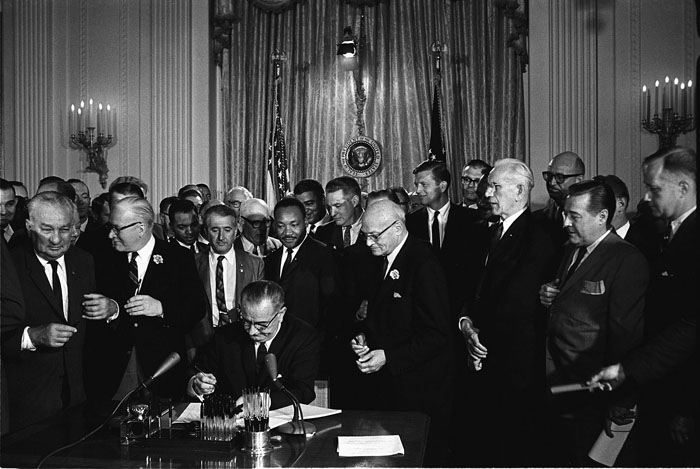
President Lyndon B. Johnson signs the Civil Rights Act of 1964 into law as various Civil Rights leaders look on, including the Reverend Martin Luther King, Jr. Photo courtesy of the LBJ Library, photo by Cecil Stoughton .

President Lyndon B. Johnson signs the Civil Rights Act of 1964 into law as various Civil Rights leaders look on, including the Reverend Martin Luther King, Jr. Photo courtesy of the LBJ Library, photo by Cecil Stoughton.

Excerpt:

Published just a little over a year after Arlington became the first school district in Virginia to desegregate, this document is a powerful reminder that despite those four students integrating Stratford Junior High in 1959, segregation in Arlington was still far from over. Many institutions in Arlington remained segregated, and this document specifically enumerates some of them: from sit-down restaurants and movie theaters to maternity wards, to playgrounds and pony rides for children.

Item six contains one of the leaflet’s most powerful observations: “It is the uncertainty about so many aspects of his life that is trying for a Negro in Arlington. Some years ago he knew exactly what his limitations were. He didn’t like being limited but he knew what to expect. Now he is tired of being unknowing about his status.” In the years leading up to the passage of the Civil Rights Act in 1964, this was indeed the reality for many Blacks in the South.

Read the rest of the story.

To learn more about Arlington's history, visit the Center for Local History on the first floor of the Central Library.

Do you have a question about this story or a personal experience to share? 

Use this form to send a message to the Center for Local History.

Center For Local History - Blog Post Message Form

Do you have a question about this story, or a personal experience to share? Use this form to send a message to the Center for Local History.

"*" indicates required fields

This field is for validation purposes and should be left unchanged.

Share Your Story

July 8, 2020 by Web Editor

The Census: Then & Now

Post Published: June 25, 2020

The 2020 census is currently underway nationally – but what did the census look like in the past?

The U.S. census is a ten-year event in the United States, as stipulated in the constitution in Article I, Section 2, empowering Congress to carry out the census in “such manner as they shall by Law direct.” Every decade, each household gets a chance to count themselves, contributing data that determines nearly $1 trillion of funding that is distributed on the local level as well as congressional apportionment.
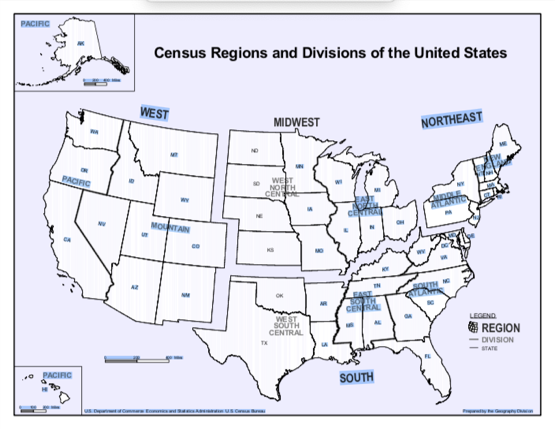
Census Regions Map

Image courtesy of the U.S. Census Bureau.

Early Censuses

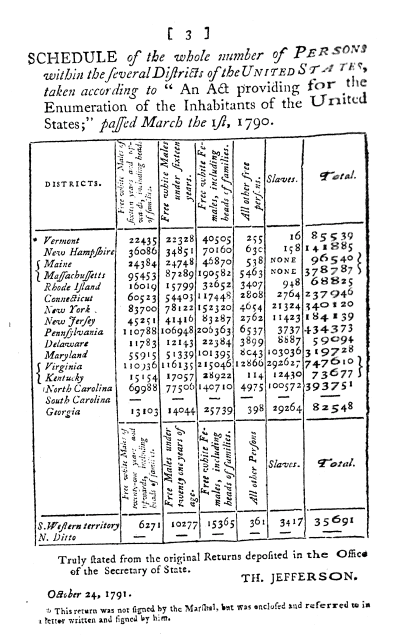
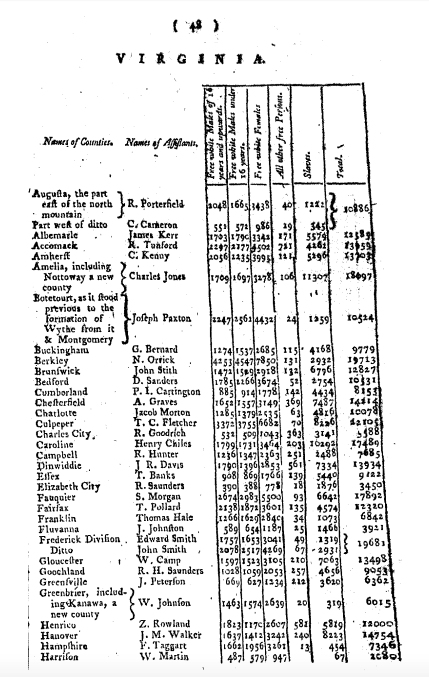
The first U.S. census was taken in 1790 and counted 3.9 million residents in the whole of the country. The census has occurred every 10 years since – making it one of the very first and longest-lasting actions made by our early government. The early censuses were conducted by assistant U.S. marshals who were instructed to “make a just and perfect enumeration and description of all persons … according to the best of [their] ability.” Virginia is part of Region 3, Division 2, of the census’ designated statistical regions and is part of the South Atlantic group. Arlington was part of the first 1790 census, however, the residents of what is now Arlington County would have been counted under the regional designation of Fairfax County.
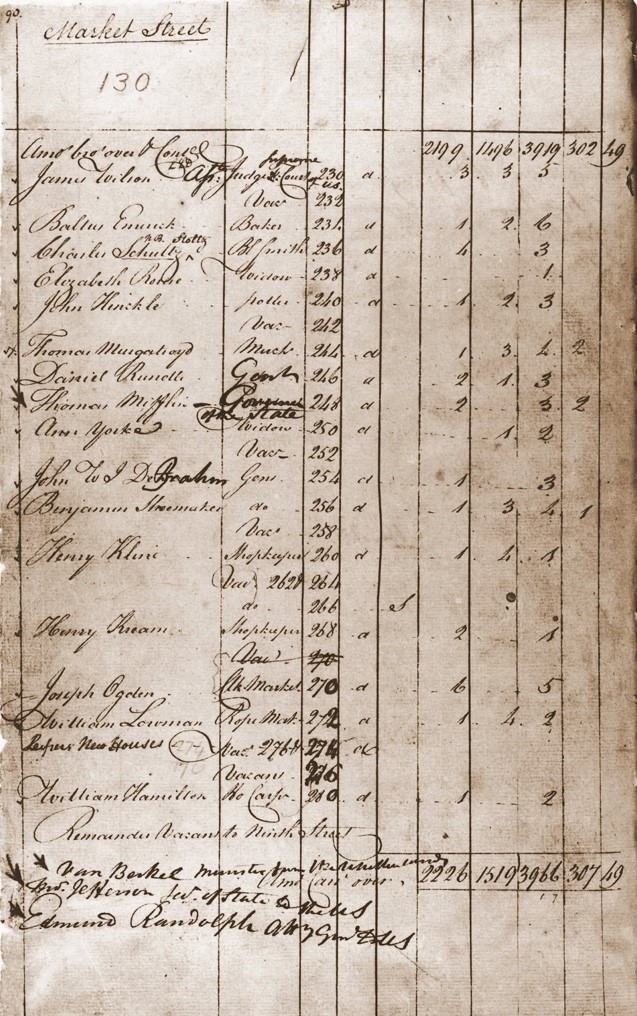
Census Records

A census enumerator’s records from the 1790 census. Image courtesy of the U.S. Census Bureau.

Although you can now take the census by multiple methods, early copies of the census were completed exclusively by paper. Early iterations of the census show a much different set of questions that are now included in a modern-day census.

There were only six questions on the first census – the name of the white, male householder, and then the names of all the other people in the household, divided into these categories: Free white males who were at least 16 years old; free white males who were under 16 years old; free white females; all other free persons; and slaves, who under the constitution were counted as three-fifths of a person. These questions highlight the fundamental inequalities that determined life at this point in U.S. history and are cause to reflect on who was counted, how they were counted, and who got to do the counting – all important questions when evaluating census data from a historical lens.

1790 Census 1
1790 Census 2

Excerpts from the 1790 census highlighting Virginia. Image courtesy of the U.S. Census Bureau.

Changes to the Census

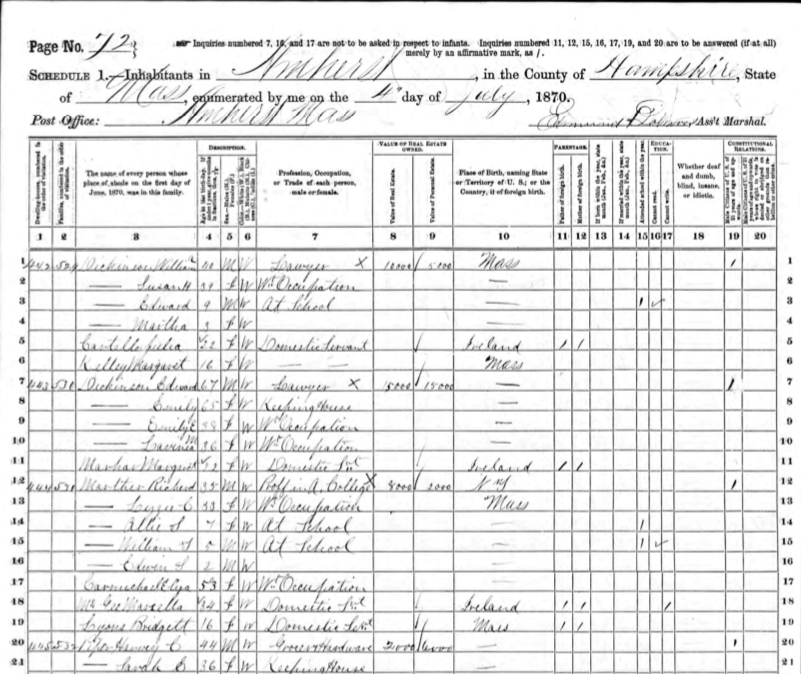
Over the years, the census has changed its format and its questions. The 1870 census was the first to eliminate what was called the “slave questionnaire,” and was reordered after the conclusion of the Civil War to only include schedules for "General Population," "Mortality," "Agriculture," "Products of Industry," and "Social Statistics."

The census only started counting Native Americans in 1860 and started including Native Americans living on reservations in 1890. Other racial categories on the census also developed into the latter half of the 19th century as immigration from non-European countries increased. These categories are an ever-developing part of the census and continue to diversify today. (For a more detailed look at how the U.S. census has historically measured race in the U.S., Science News has an overview of some of the key changes the census has seen.)

1870 Census

An example of an 1870 census schedule. Image courtesy of the U.S. Census Bureau.

Some other technical changes have occurred over the years as well: the 1810 Census collected economic data on the quantity and value of manufactured goods, expanding for the first time on the original six questions. In 1850, the census began collecting "social statistics,” such as information about taxes, education, crime, and value of estate, and mortality data. In 1940, in response to the devastation of the Great Depression, additional questions were asked of a sample of the population, including questions on internal migration, veteran status, and the number of children ever born to women. In recent decades, the census has turned toward more simplified forms – the 2000 census was the shortest since 1820, with only seven questions on the short form, and this trend has continued up to today.

Other changes over the years have included the methods of taking the census: the 1960 census was the first census to be mailed out to households and was the first year the census results were counted by computer. This year’s census is the first with the option to complete the form by phone or online.

Another historical development to this year’s census is it is the first to include a question about same-sex relationships, where respondents can identify as “same-sex husband/wife/spouse” or “same-sex unmarried partner.”

Census Taker 1920

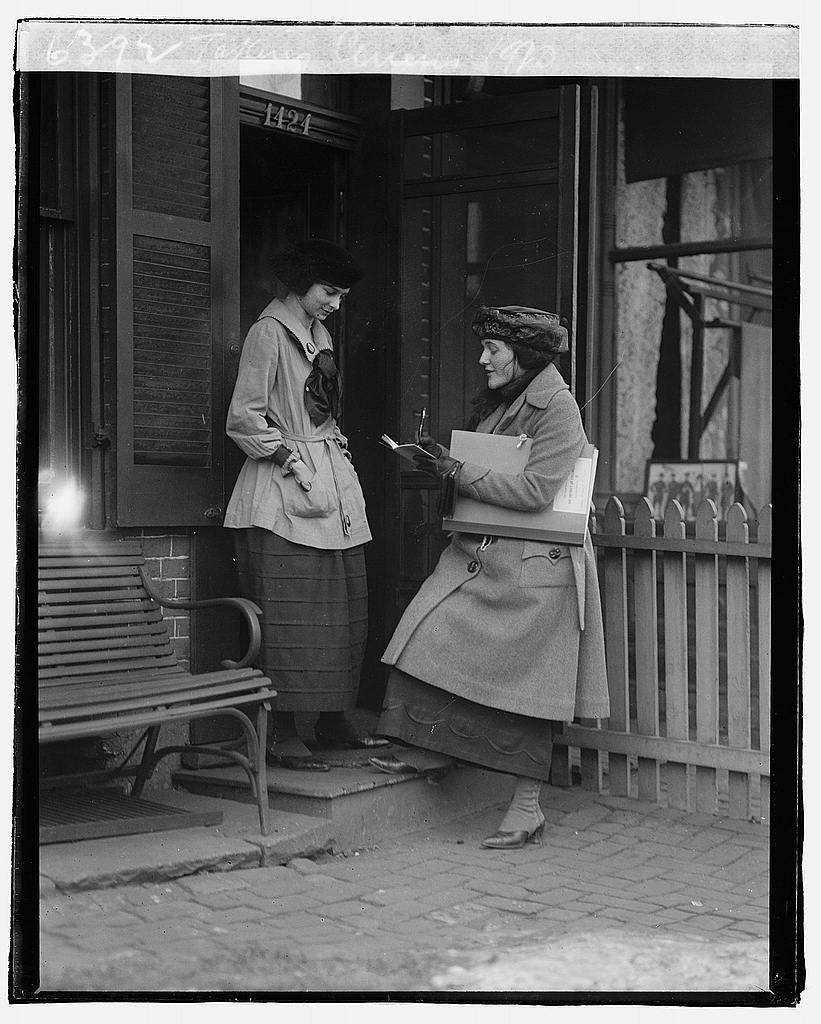
A census-taker circa 1920. Image courtesy of the Library of Congress.

Want to learn more? You can explore historical census data through the county going back to 2000. This site also includes maps and other data related to the history and demographics of Arlington. You can also search through historical census documents through the National Archives’ digital collections.

Do you have a question about this story, or a personal experience to share? 

Use this form to send a message to the Charlie Clark Center for Local History.

Center For Local History - Blog Post Message Form

Do you have a question about this story, or a personal experience to share? Use this form to send a message to the Center for Local History.

"*" indicates required fields

This field is for validation purposes and should be left unchanged.

Share Your Story

June 25, 2020 by Web Editor

Rediscover Shirlington

Post Published: June 18, 2020

Before European colonization, a Necostin Native American village was located on the land near the current Village at Shirlington shopping center.

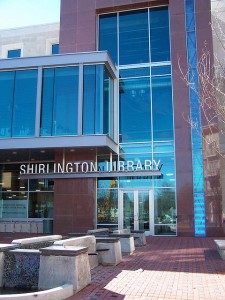
Shirlington Library

Shirlington Branch Library, circa 2007.

On January 21, 1705, William Struttfield, one of 48 original settlers who owned land in present-day Arlington, patented a 543-acre tract south of Four Mile Run that included what is now Shirlington. He sold the land to Colonel John Carlyle and it stayed in the Carlyle family into the mid-19th century.

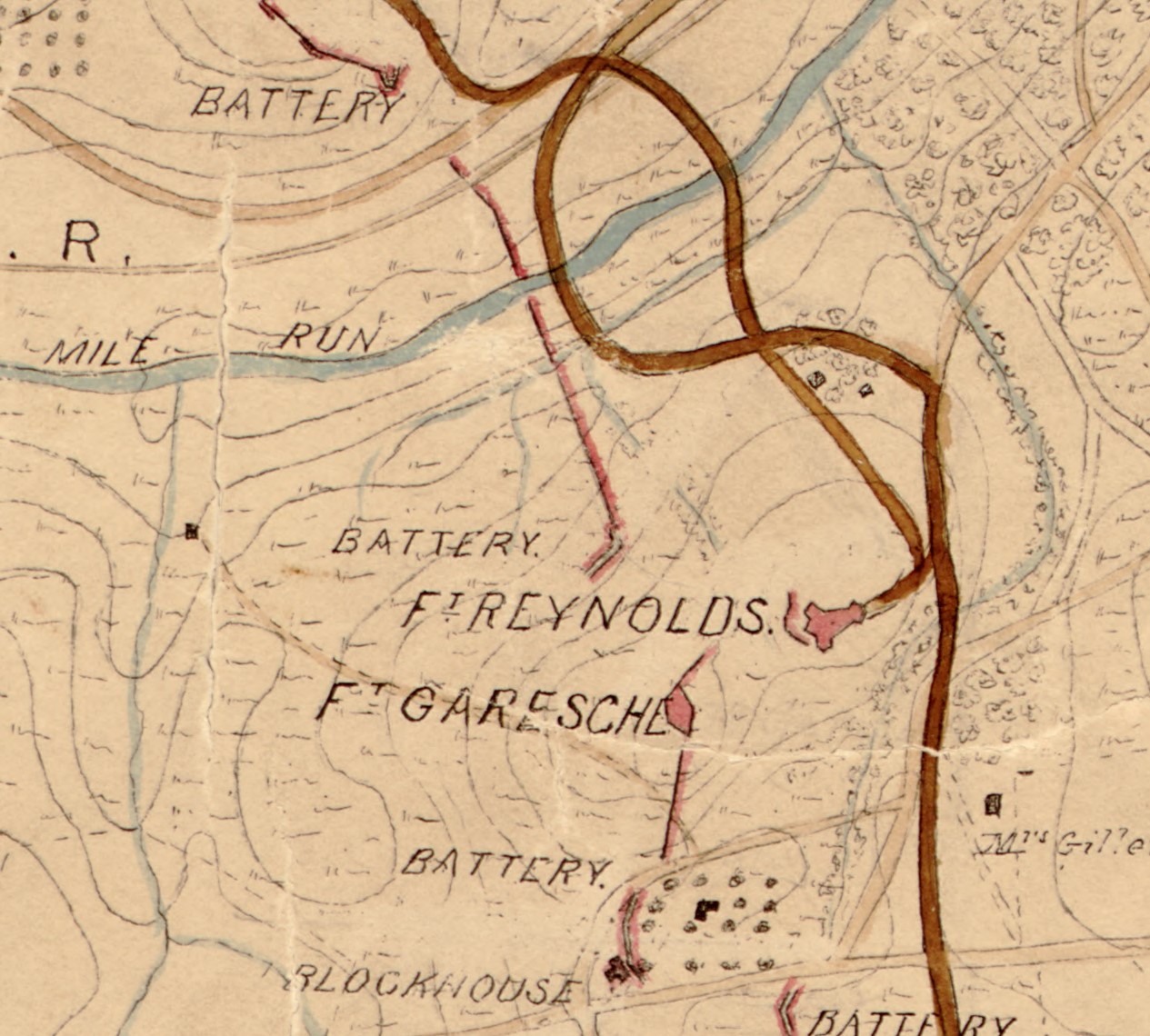
The hill southwest of present-day Shirlington served as a fortification within the Defenses of Washington that were erected by Union forces during the Civil War. Fort Blenker, later renamed Fort Reynolds, was built in 1861 and selected by the Union due to the view it afforded of the valley along Four Mile Run.

Shirlington Forts

Map of the Environs of Washington: Compiled from Boschkes’ Map of the District of Columbia and From Surveys of the U.S. Coast Survey showing the Line of Defenses of Washington as Constructed during the War from 1861 to 1865 Inclusive. The red arrow points to Fort Reynolds and the blue arrow points to the approximate present-day location of the Village at Shirlington. Source: Library of Congress.

Joseph Cherner, a Jewish immigrant from Russia with a successful car dealership and repair shop, considered opening an airport near Four Mile Run but decided to invest in a shopping center instead. He purchased 200,000 cubic yards of fill to raise the grade by as much as 13 feet, channelized two creeks, and constructed roads and alleyways through the property. Cherner attracted new businesses to the development by offering tenants very low rental rates in exchange for a percentage of the businesses’ profits. He combined the names of nearby Shirley Highway (Interstate 395) and Arlington to name the area. The proximity to this still-under-construction roadway was meant to promote traffic to the new shopping center.

The shopping center opened in December 1943, with a supermarket, gift shop, clothing cleaners, beauty parlor, and shoe repair shop in one-story storefronts of limestone and granite construction with Art Deco architectural detailing. The layout of the streets was as it is now, with the shops facing each other across a central median. More stores opened in 1944, including a Gulf filling station which is likely the extant gas station but with substantial changes

While stores allowed African Americans patrons to shop, they were barred from services, such as eating at lunch counters and restaurants and using leisure facilities. This was particularly difficult for residents of Fort Barnard Heights and Green Valley, the primarily African American communities next to the shopping center.

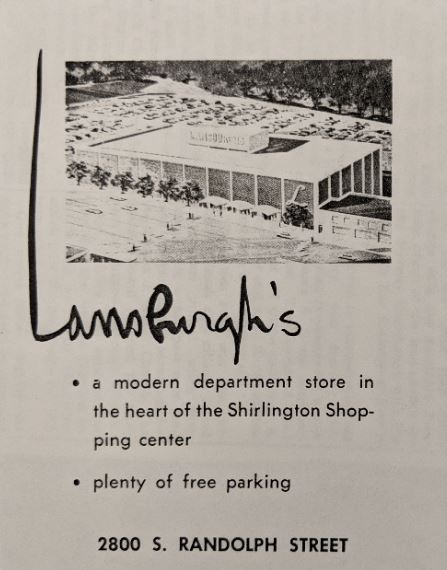
Following Joseph Cherner’s death in 1956, his wife Ruth (née Schlom) Cherner, assumed the role of the president of the Shirlington Corporation. She led the company through a land swap with Arlington County’s Property Yard in May 1957 that increased acreage at the north boundary of the Shirlington Business Center by seven acres. She became a prominent businesswoman in the Arlington real estate market. Lansburgh’s Department Store opened in September 1959 on the former Property Yard land and served as a new retail anchor for the shopping center.
1962 Arl Blu Book

Bird’s eye view rendering of Lansburgh’s Department Store at the Shirlington Shopping Center, 1962. Source: Arlington Blu Book, 1962, Center for Local History Archives, Arlington County Public Library.

In January 1960, the Nauck Citizens’ Association (a precursor to the present-day Green Valley Civic Association) proposed a business district along South Shirlington Road to offer services to people of color. This business area would include a motel, theater, restaurant, bowling alley, and office space for professional services. Lutrelle F. Parker, chairman of the Nauck Citizens’ Association, asserted that they did not intend for the business center to detract from desegregation efforts that were currently being undertaken throughout the south. Rather the citizens’ group aimed to supply necessary services to African American citizens until other commercial areas were desegregated.

In June 1960, spurred by protest movements across America, black and white college students held sit-ins at lunch counters around Arlington including Lansburgh’s Colonial Room and Woolworth’s lunch counter in Shirlington. Both businesses responded by closing their counters. After negotiations between demonstrators and business owners, Woolworth’s in Shirlington was the first lunch counter to desegregate on June 22, serving a group of black and white students. Woolworth’s action was followed that same day as Lansburgh’s, Kahn’s, Peoples, and Drug Fair desegregated their Arlington restaurants.

Sitins

June 10, 1960, Gwendolyn Green (later Britt) and David Hartsough sit at the People’s Drug Store counter. Protests such as this happened at counters in seven locations in Arlington including two in Shirlington. DC Public Library, Star Collection, ©Washington Post.

The popularity of Shirlington declined in the mid-1960s and into the 1970s with the opening of several new shopping centers. In the early-1970s, Shirlington Business Center saw the closure of many of its anchor retail stores. Jelleff’s closed in 1972, followed shortly by Lansburgh’s (which was replaced by Best Products) and the Shirlington Motor Company’s Ford dealership, both in 1973.

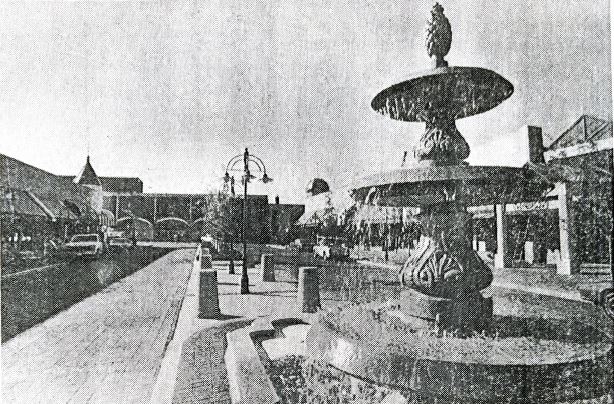
Several revitalizations were considered, including one featuring a manmade lagoon. The owners abandoned this project before construction began. In July 1982, a new $250-million renovation began, led by developer Oliver T. Carr. Carr’s plan called for up to 429,000 square feet of additional retail space and 694,000 square feet of office space in 8- to 12-story buildings. It also included the construction of a 400-room hotel and 590 condominium units. The limestone and granite façades of the existing buildings were reused while most of the ground level architecture and all the interiors were demolished. The 1987 finished design included copper turrets and domes crowning the buildings at the entrance off South Randolph Street, Victorian-era inspired street lighting, cut-throughs for increased pedestrian circulation, and a large Beaux-Arts fountain in the central median.

1986-11-1

Redesigned 28th Street South (renamed Campbell Avenue in 2007), 1986. Source: Benjamin Forgey, “In Shirlington, Main Street Revisited,” The Washington Star, November 1, 1986, Center for Local History Archives, Arlington County Public Library.

Federal Realty Investment Trust purchased what is now known as the ‘Village at Shirlington’ in 1996. In November 2006, the new Shirlington Town Center was unveiled, including the Shirlington Branch Library and a new location for the Signature Theatre Company. In July 2007, the County changed the name of 28th Street South to Campbell Avenue in honor of Edmund and Margaret Elizabeth Pfohl Campbell, who were instrumental in desegregating Arlington’s public schools. Elizabeth Campbell founded and was later president of WETA public broadcasting station, located in Shirlington.

Joseph and Ruth Cherner’s 1943 vision is still a destination shopping location in Arlington. The popularity of this neighborhood hub is evidence of the Cherners’ shrewd perception of the retail services the community needed.

IMG_20190906_173948

View of the Shirlington shopping complex looking east from the median on Campbell Avenue, 2019.  Source: Arlington County Historic Preservation Program.

"Preservation Today: Rediscovering Arlington" is a partnership between the Arlington Public Library and the Arlington County Historic Preservation Program.

Preservation Today: Rediscovering Arlington
Stories from Arlington’s Historic Preservation Program

Arlington’s heritage is a diverse fabric, where people, places, and moments are knitted together into the physical and social landscape of the County.

Arlington County’s Historic Preservation Program is dedicated to protecting this heritage and inspiring placemaking by uncovering and recognizing all these elements in Arlington’s history.

To learn more about historic sites in Arlington, visit the Arlington County Historic Preservation Program.

June 18, 2020 by Web Editor

  • « Go to Previous Page
  • Page 1
  • Interim pages omitted …
  • Page 9
  • Page 10
  • Page 11
  • Page 12
  • Page 13
  • Interim pages omitted …
  • Page 35
  • Go to Next Page »

Primary Sidebar

News

Three men writing on squares of the AIDS Quilt.

New: Explore 2,800+ Arlington Courier Photos

Explore more than 2,800 photos of local life in … ... about New: Explore 2,800+ Arlington Courier Photos

Read More News
See More Service Updates

Center for Local History

Three men writing on squares of the AIDS Quilt.

New: Explore 2,800+ Arlington Courier Photos

Explore more than 2,800 photos of local life in … ... about New: Explore 2,800+ Arlington Courier Photos

Read More Local History

Director’s Blog

Henry Wadsworth Longfellow.

Director’s Message: National Poetry Month

I Hear America April is National … ... about Director’s Message: National Poetry Month

More Director's Blog

Footer

About Us

  • Mission & Vision
  • Charlie Clark Center for Local History
  • News Room
  • Get Email Updates

Administration

  • Policies
  • Library Staff
  • Job Opportunities
  • Propose a Program or Partnership

Support Your Library

  • Friends of the Library
  • Giving Opportunities
  • Donating Materials
  • Volunteer Opportunities

Our Mission

We champion the power of stories, information and ideas.

We create space for culture and connection.

We embrace inclusion and diverse points of view.


Download the Library App

Download the Library App

Arlington County | Terms & Conditions | Accessibility | Site Map
· Copyright © 2026 Arlington County Government ·