• Skip to primary navigation
  • Skip to main content
  • Skip to primary sidebar
  • Skip to footer

Alert

Update: Elevator outages, maintenance and upgrades at Central Library More Info

Home - Arlington County Virginia - Logo
MENUMENU
  • Join Now
  • My Account
    • Login
    • My Checkouts
    • My Holds
    • My Lists
    • My Reading History
    • About Borrowing
    • About Holds
    • About My Account
  • Hours & Locations
    • All Hours & Locations
    • Holiday Closings
  • News
    • Library News
    • Director's Blog
    • Get Email Updates
  • Contact Us

Arlington Public Library

MENUMENU
  • Search
  • Collections
  • Library Services
  • Events
  • Community Engagement
  • Join Now
  • My Account
    • Login
    • About Borrowing
    • About Holds
    • About My Account
  • Hours & Locations
    • All Hours & Locations
    • Holiday Closings
  • News
    • Library Blog
    • Get Email Updates
  • Contact Us

Center for Local History Blog

Dedicated to collecting, preserving and sharing the history of the community.

Exhibition Pays Tribute to Women in Arlington

Post Published: February 11, 2020

Women's Work: Then & Now
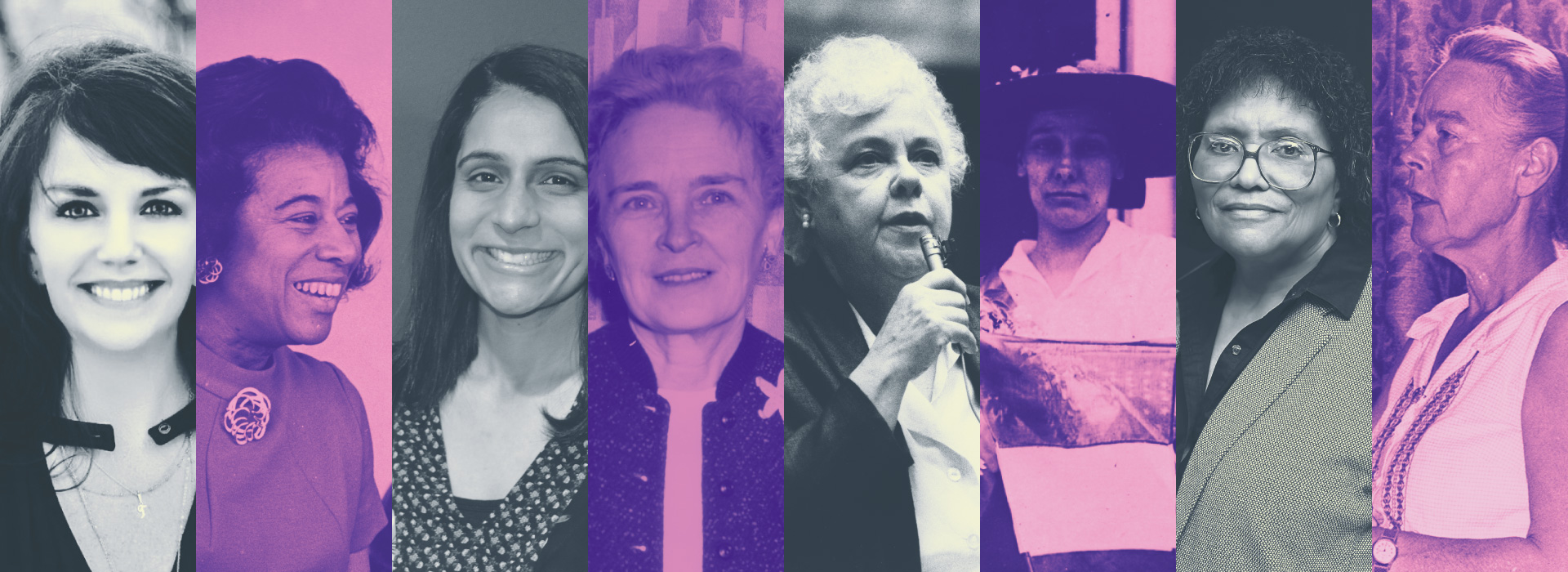
faces of many women from exhibit

The 29 Arlington women profiled in the exhibit include (from left to right) Caroline Gary Romano, Margarite Syphax, Seema Jain, Dr. Phoebe Hall Knipling, Mary A. R. Marshall, Gertrude Crocker, Marguerete Luter and Cornelia Bruere Rose, Jr.

In March, Arlington Public Library will launch a new exhibition at Central Library, titled “Women’s Work: Then & Now.”

  • March 5 through April 2 at Central Library.
  • Exhibition opening Thursday, March 5, 6:30 p.m., followed by an author talk with featured guest Liza Mundy, author of "Code Girls."
RSVP

The opening reception will be followed by an author talk with Liza Mundy. In "Code Girls: The Untold Story of the American Women Code Breakers of World War II," Mundy uncovers the truth about the army of women code-breakers who worked behind the scenes here in Arlington and in Washington DC, and brings to life the forgotten history of these unsung heroes whose efforts helped save hundreds of lives.
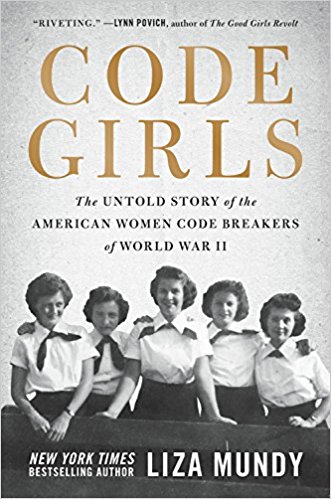
book cover of "code girls"

The exhibition commemorates both Arlington County’s 100th anniversary and the 100 years since the passage of the 19th Amendment. Included in this exhibition are stories, photographs, letters and memorabilia, which spotlight individuals and groups of Arlington women who dedicate their work to improve their community and the lives of others.

“These stories show that women are strong, resilient, even fierce when necessary, and that they are more than able to carry out the work before them,” said Diane Kresh, Director of Arlington Public Library. “Arlington would not be the same without them.”

Discover and learn about the work of Anna Barber, Charlene Bickford, Ellen Bozman, Judith Brewer, Elizabeth Campbell, Gertrude Crocker, Pauline Haislip Duncan, Alice Fleet, Alice Foster, Saundra Green, Critchett Hodukavich, Seema Jain, Carolyn (Carrie) Johnson, Cintia Johnson, Dr. Phoebe Hall Knipling, Puwen Lee, Marguerete Luter, Mary A. R. Marshall, Sushmita Mazumdar, Ruby Lee Minar, Constance (Connie) Ramirez, Caroline Gary Romano, Cornelia Bruere Rose, Jr., Virginia Lillis Smith, Florence Starzynski, Margarite Syphax, Nancy Tate, Marjorie Varner, and Dr. Emma Violand-Sanchez.

The nominees, selected by the 16 exhibition partners, were based on their groundbreaking, visionary and ongoing contributions to the communities they serve. Also included in this exhibition, are women who were curated from the Center for Local History’s online exhibition, “Women’s Work: Stories of Persistence and Influence.”

The exhibition partners are AED-Cultural Arts, Arlington County Commission on the Status of Women, Arlington County Department of Human Services, Arlington County Department of Parks and Recreation, Arlington County Fire Department, Arlington County Police Department, Arlington County Sheriff’s Office, Arlington Food Assistance Center, Arlington Historical Society, Arlington Public Schools, CPHD-Historic Preservation, Encore Learning, Friends of the Arlington Public Library, Girl Scouts Association 60, League of Women Voters of Arlington and WomenWork (WoW) Employee Resource Group.
February 11, 2020 by Web Editor Tagged With: news release archive

Oral History: Renting in Clarendon in the 1950s

Post Published: February 6, 2020

Interview with Ann Brock

Arlington Voices the Oral History Collection

Oral histories are used to understand historical events, actors, and movements from the point of view of real people’s personal experiences.

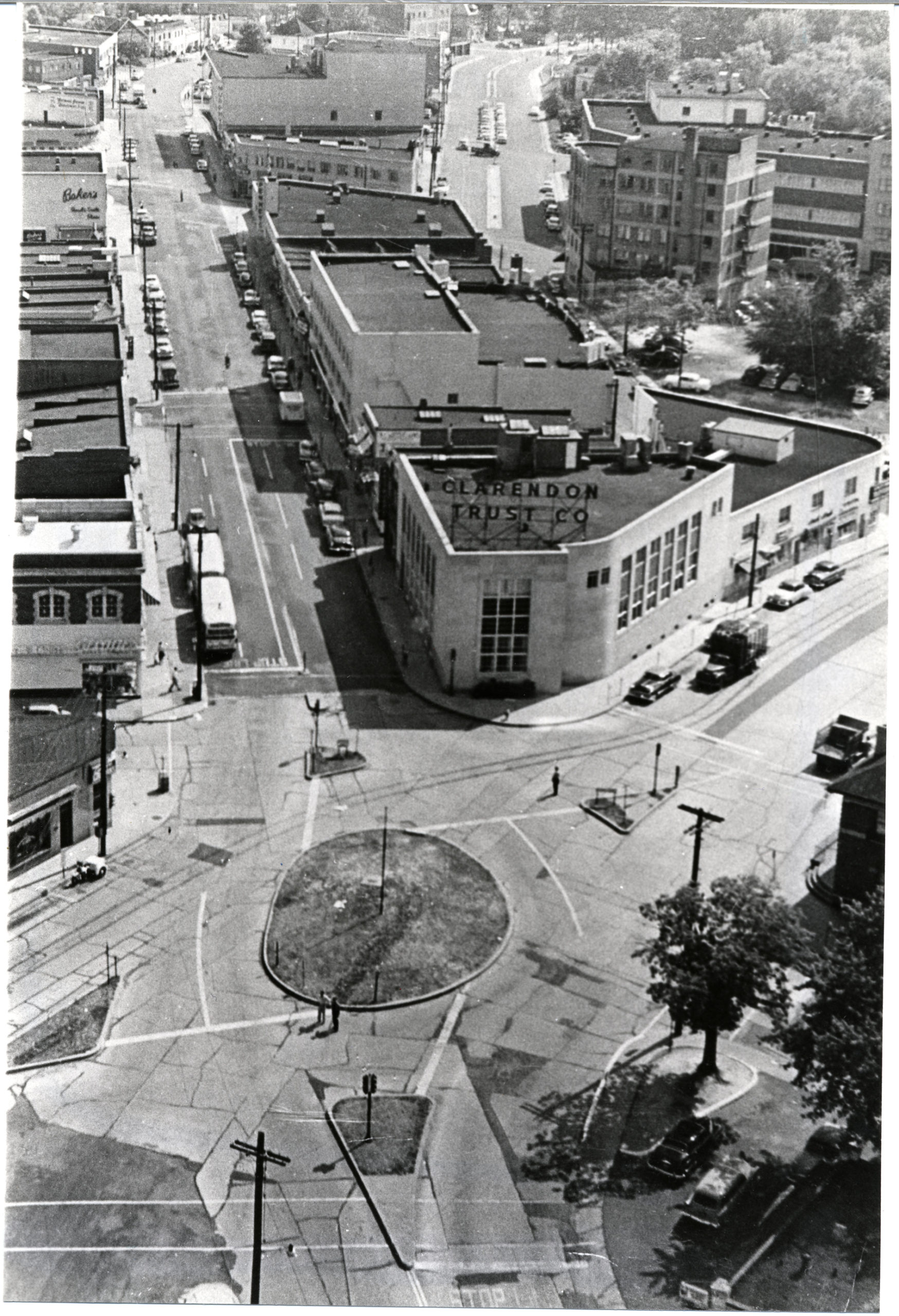
Arlington in the 1940s and 1950s was very different than it is today, but it has always remained an interesting and unique place to live. In this oral history segment, longtime Clarendon resident Ann Brock shares her memories of renting apartments in the neighborhood when she and her husband were newlyweds in the early 1950s.

230-1109p Brock

Photo of Clarendon Circle Intersection, circa 1950s. On the right is Washington Boulevard, top center is Clarendon Boulevard. and left is Wilson Boulevard.

Narrator: Ann Brock
Interviewer: Emily Curley
Date: February 27, 2019

EC: So where was the first place that you lived in Clarendon?

AB: Are you ready for this?

EC: I’m ready.

AB: Where the IHOP is now, there was a Chinese laundry and my husband and I had an apartment over top the Chinese laundry. That was our first residence.

EC: (laughs) Okay, and what was that like?

AB: It was unusual—(laughing)—but it was fun.

EC: Okay. So where did you move after that?

AB: Well, I’ve got to think because we moved quite a few places. Let me say at one point we lived on North Nelson Street in a duplex apartment there. And then we lived at what was called then, the Lehigh apartments which bordered Arlington Boulevard and the name Lehigh came from the old Arlington Boulevard being Lee Boulevard, which divided north and south. And then we moved, briefly, out to McLean and we were only there about a year and then we came back. We rented our house on Washington Boulevard for fourteen years before we purchased it.

EC: Okay. Can you describe what renting was like back then? Was it as difficult as it is now?

AB: Oh, it was nothing—when we lived in the Lehigh apartment we had a one-bedroom apartment for $37.50 a month. And then after we had our son we moved to a two-bedroom apartment in Lehigh, same place, and that was $97.50 a month. Unbelievable isn’t it?

The goal of the Arlington Voices project is to showcase the Center for Local History’s oral history collection in a publicly accessible and shareable way.

The Arlington Public Library began collecting oral histories of long-time residents in the 1970s, and since then the scope of the collection has expanded to capture the diverse voices of Arlington’s community. In 2016, staff members and volunteers recorded many additional hours of interviews, building the collection to 575 catalogued oral histories.

To browse our list of narrators indexed by interview subject, check out our community archive. To read a full transcript of an interview, visit the Center for Local History located at Central Library.

February 6, 2020 by Web Editor

Question for the Archives: Where Was My School?

Post Published: January 30, 2020

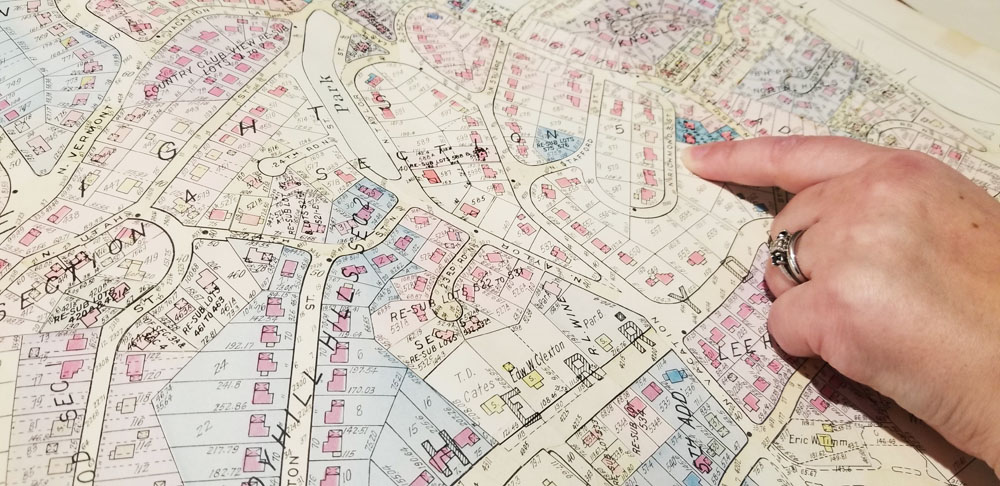
Last week the Center for Local History was contacted by a patron looking for the name of an Arlington school he attended for one year as a child.

Property map showing north richmond st

1952 Arlington property map

The man was able to give us the following information: He lived on North Richmond Street, in North Arlington, and the bus ride to the unknown school was short. He mentioned the school was older and made of brick. And when Taylor Elementary School opened the following year in 1953, he switched schools.

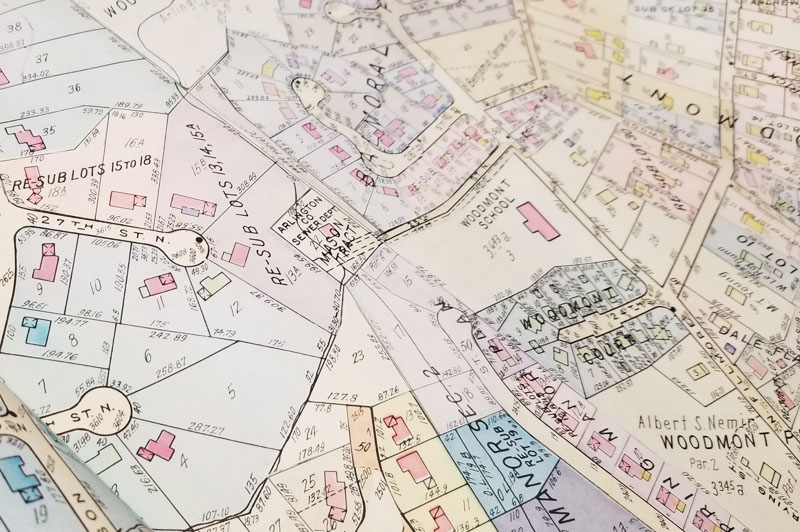
After looking at our maps and checking on when specific schools were built, archivist Heather determined that it’s most likely that the patron went to Woodmont Elementary School in the 1952-53 school year. Woodmont was built in 1926, with a few later additions. The other candidate that was farther away, Nottingham, was built in 1952, so it wouldn’t have that “old” feel the patron mentioned. Woodmont is also close enough to North Richmond Street to be considered a short bus ride in 1952.

Property map showing Woodmont School

1952 Arlington property map

To see more items like these, or to learn more about Arlington's history, visit the Center for Local History on the first floor of the Central Library.

Do you have a question about this story, or a personal experience to share? 

Use this form to send a message to the Center for Local History.

Center For Local History - Blog Post Message Form

Do you have a question about this story, or a personal experience to share? Use this form to send a message to the Center for Local History.

"*" indicates required fields

This field is for validation purposes and should be left unchanged.

Share Your Story

January 30, 2020 by Web Editor

This Week in 19th Amendment History: The Death of Zitkála-Šá

Post Published: January 28, 2020

January 26, 1938

Celebrate the 100th anniversary of the 19th Amendment with stories about the people and events that led to the passage of women’s suffrage in the United States.

In celebration of her work for Native American's voting rights, we are republishing our "Rediscover Zitkála-Šá" post from March 13, 2019. This version of the post includes additional photographs and captions.

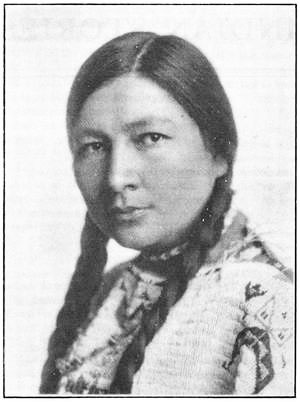
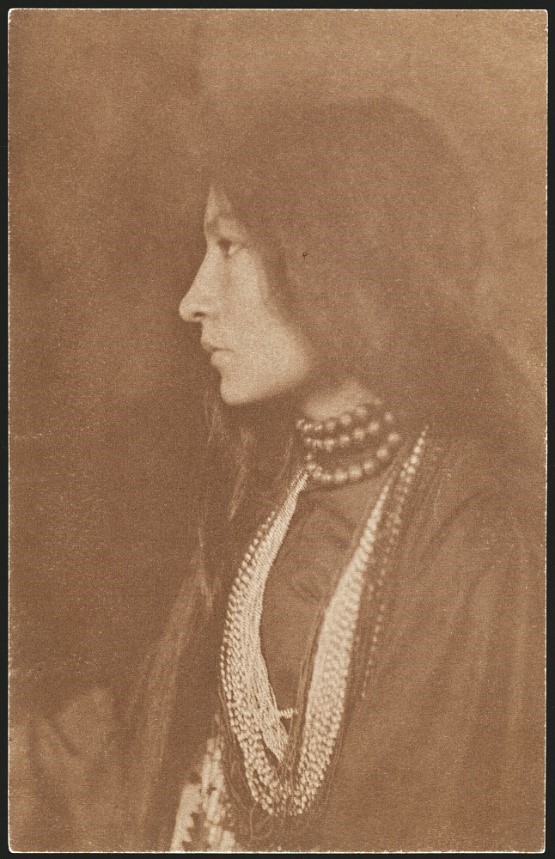
On January 26, 1938, Zitkála-Šá, life-long advocate for Native American rights and a resident of 261 North Barton Street in Lyon Park, died at age 61. She was buried under the name Gertrude Simmons Bonnin, in Arlington National Cemetery.

Zitkála-Šá 6

Image of Zitkála-Šá ca. 1921, courtesy of the Library of Congress

A nationally recognized Native American author and activist, Zitkála-Šá was a vocal proponent for citizenship rights for Native Americans. Born in South Dakota into a Yankton Dakota Sioux family, she thrived on the Yankton Indian Reservation until Quaker missionaries recruited some of the reservation’s children to attend a Quaker manual labor school where she was given the Christian name Gertrude Simmons. Although she enjoyed learning to read and write, she experienced first-hand the damage of having her heritage stripped away.

Feeling torn between her life on the reservation and her forced assimilation into white mainstream culture, Zitkála-Šá pursued higher education and distinguished herself as a public speaker on social and political issues.

“Folded hands lie in my lap, for the time forgot. My heart and I lie small upon the earth like a grain of throbbing sand. Drifting clouds and tinkling waters, together with the warmth of a genial summer day, bespeak with eloquence the loving Mystery round about us.”

"Why I Am A Pagan," Atlantic Monthly, Volume 90, 1902

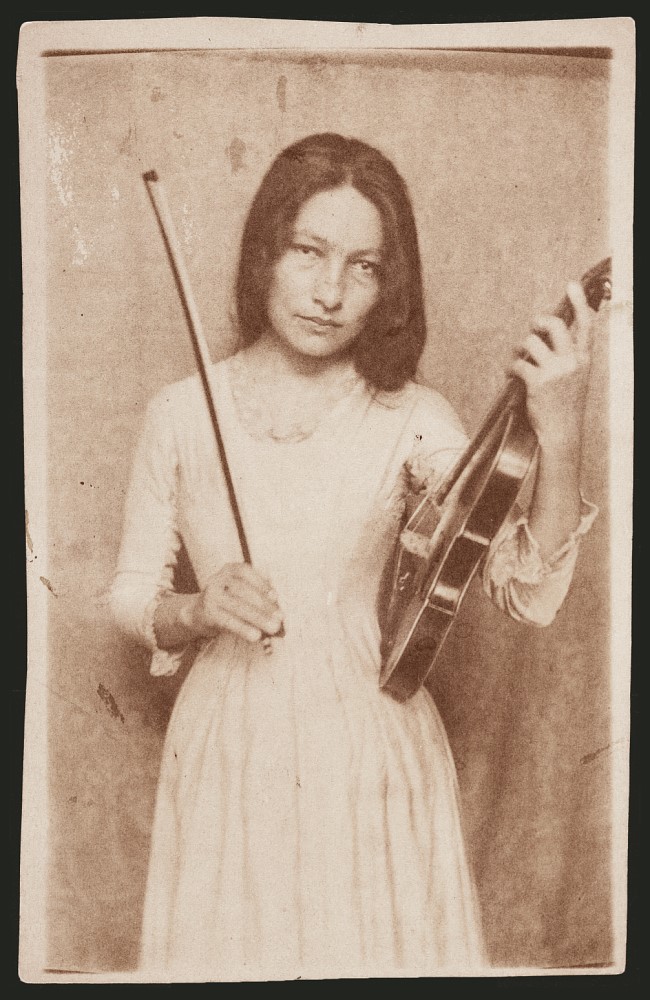
Zitkála-Šá 4
Zitkála-Šá 5

Zitkála-Ša photographs by Gertrude Käsebier, circa 1898. Image courtesy of the National Museum of American History.

Her largely autobiographical work on indigenous life was published by the Atlantic Monthly and Harper’s Monthly, including “Impressions of an Indian Childhood” and “The Trial Path” among many more. She collected tribal stories and legends into collections and authored poems examining the intersection of nature, Native American life, and mainstream white American life.

In 1910, she began a collaboration with composer William F. Hanson, and the subsequent “The Sun Dance Opera” was the first opera authored by a Native American (under the name Gertrude Simmons).

“It was next to impossible to leave the iron routine after the civilizing machine had once begun its day's buzzing; and as it was inbred in me to suffer in silence rather than to appeal to the ears of one whose open eyes could not see my pain, I have many times trudged in the day's harness heavy-footed, like a dumb sick brute.”

"The School Days of an Indian Girl," Atlantic Monthly, Volume 85, 1900

As a member of the Society of American Indians, Gertrude Simmons (the name she used in records and public affairs) lectured nationally and lobbied for citizenship rights for Native Americans who were not naturalized U.S. citizens by birth but could apply through pathways such as military service, renouncing tribal affiliations, or accepting land allotments. As a previous clerk for the Bureau of Indian Affairs, she criticized the bureau for its mistreatment of Indigenous children placed in national education systems that forced assimilation and Christian values.

Zitkála-Šá 3

Zitkála-Ša photographed by Joseph T. Kelley, 1898 (printed 1901). Image courtesy of the National Portrait Gallery.

In 1916, her husband, Captain Raymond Talefase Bonnin (also of Yankton descent), lost his position at the Bureau of Indian Affairs in Utah and they moved to Washington D.C. where, as editor of the Society of American Indian’s publication American Indian Magazine, Gertrude Simmons Bonnin wrote about and exhibited treatises on many controversial issues. In 1923, she co-authored “Oklahoma’s Poor Rich Indians: An Orgy of Graft and Exploitation of the Five Civilized Tribe, Legalized Robbery” which discussed theft and murder by corporations seeking access to Native American-owned oil-rich lands. The article is credited with influencing the development of the Indian Reorganization Act of 1934, which returned government and land management to Native Americans.

Zitkála-Šá 1

Group at the Artists Carnival and Book Fair of the National League of American Pen Women on April 15, 1920. Zitkála-Ša third from left.  Image courtesy of the Library of Congress.

On November 3, 1925, Gertrude and Raymond Bonnin purchased the stone bungalow at 261 North Barton Street in Arlington. from the first owners, Loyd and Bernice Claire. The Claires had built the house only one year earlier, having bought it from the well-known Lyon & Fitch real estate development. The Lyon & Fitch real estate team sold the Lyon Park subdivision properties with deed restrictions and covenants, including one preventing the property from being sold or rented to non-whites for a period of 99 years. The census recognized people of Native American ancestry as white and therefore the Bonnin's were not prevented from purchasing the property.

In 1924, the Indian Citizenship Act granted citizenship to all Native Americans, but did not automatically afford voting rights. In response, Gertrude Simmons Bonnin co-founded and presided over the National Council of American Indians to unify First Nations in the movement to gain voting rights, healthcare, legal standing, and land rights. She also created the Indian Welfare Committee of the General Federation of Women’s Clubs, speaking often in Washington, Arlington, and Fairfax.

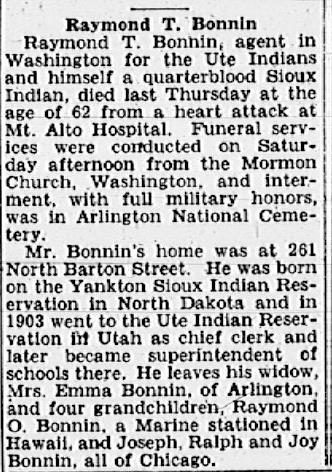
Gertrude Simmons Bonnin spent the remainder of her life in Arlington as president of the Council of American Indians, speaking and writing about the continuing political and social mistreatment of Native Americans. After her death, her husband continued to live in their home until his death in 1942 when the property was left in trust to their grandchildren.

Zitkála-Šá 2

Obituary for Zitkála-Ša’s husband, Raymond T. Bonnin. From The Northern Virginia Sun, October 2, 1942

References

United States of America, Bureau of the Census. Fifteenth Census of the United States, 1930. Washington, D.C.: National Archives and Records Administration, 1930. T626, 2,667 rolls.

Arlington County Land Records Office, various deeds pertaining to Gertrude S. Bonnin and R.T. Bonnin: Deed Book 609, p. 237, book 319, p. 64, and book 174, p. 152.

Zitkála-Šá, “The School Days of an Indian Girl”, Atlantic Monthly, Volume 85, 1900.

Zitkála-Šá, “Why I Am A Pagan”, Atlantic Monthly, Volume 90, 1902.

Further Reading

Lewandowski, Tadeusz. Red Bird, Red Power: The Life and Legacy of Zitkala-Ša, Norman: University of Oklahoma Press, 2016. (Available from the Library)

Susag, Dorothea M., Zitkala-Sa (Gertrude Simmons Bonnin): A Power(full) Literary Voice, Studies in American Indian Literatures, University of Nebraska Press, Series 2, Vol. 5, No. 4 (Winter 1993), pp. 3-24.

Tsjeng, Zing, Forgotten Women: The Leaders. London: Cassell Illustrated, 2018. (Available from the Library)

Capaldi, Gina. Red Bird Sings: the Story of Zitkala-̈Sa, Native American Author, Musician, and Activist, Carolrhoda Books, 2011. (Available from the Library)

2020 marks the centennial of women’s suffrage in the United States.

January 28, 2020 by Web Editor

The First Arlington County Fair

Post Published: January 15, 2020

For over 40 years the Arlington County Fair has been an important community event in both the County and Northern Virginia.

Arlington held its first County Fair in 1977, led by a nonprofit, all-volunteer group, which organized and operated the event.

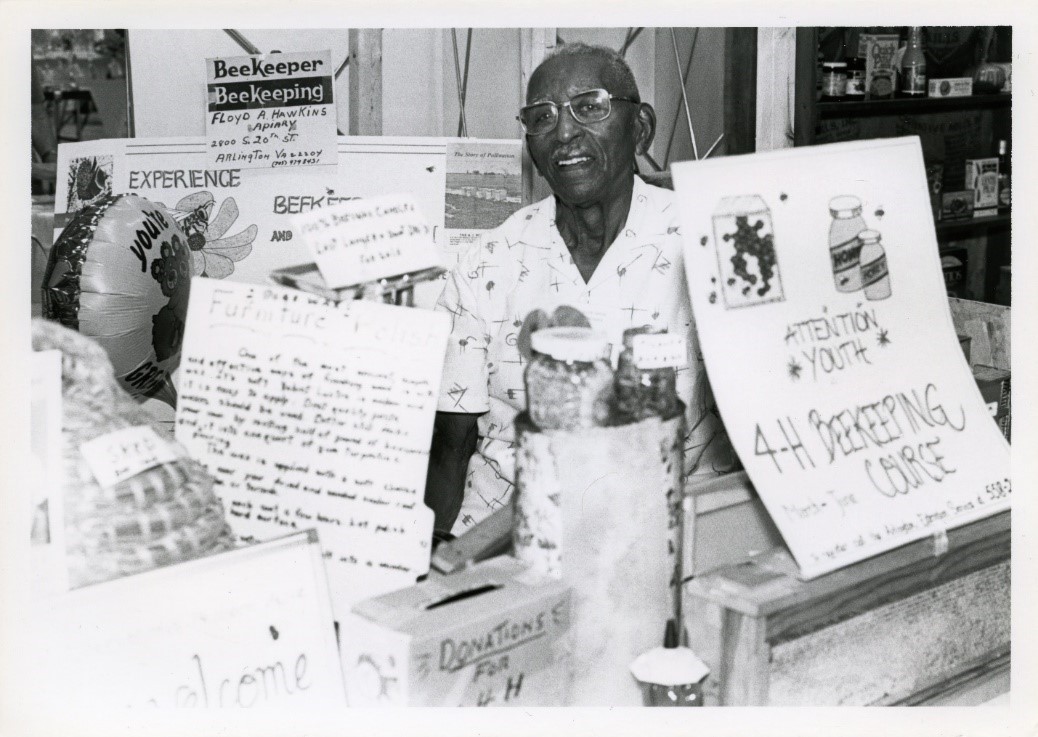
Floyd Hawkins, who at the age of 81 helped start the Arlington County Fair, and served as the Fair’s treasurer for 10 years, from 1977 to 1987.

Floyd Hawkins, who at the age of 81 helped start the Arlington County Fair, and served as the Fair’s treasurer for 10 years, from 1977 to 1987.
The Center for Local History conducted an oral history interview with Hawkins in 1986.

Harvest Day

The idea for the Fair emerged from the County’s community gardens program. Resident gardeners had been planning a Harvest Day to display the produce from the program’s 10 community garden plots. One thing led to another, and the idea expanded to involve more members of the Arlington community.

The First Arlington County Fair

The inaugural Arlington County Fair began on Friday, August 26, 1977, at the Thomas Jefferson Community Center. It started with a ribbon-cutting ceremony at noon and ended at 6 p.m. on Sunday, August 28.

It was noted at the time that Arlington's fair was the only event of this type held between Gaithersburg, MD, and Manassas, VA. It was also billed as one of the country's rare “urban fairs” – combining the elements of a traditional county fair in an urban setting. Anticipation for the Fair brewed around this melding of the new and old, as one reporter noted in an August 25, 1977 Washington Post preview:

“Where can an exceptional chrysanthemum raised on the tenth-floor balcony of the Crystal House apartment complex in Arlington receive its just due? Until this week, nowhere. However, if entered before 9 a.m. Friday it could be a blue-ribbon winner in the First Annual Arlington County Fair.”

Among the activities at the first Arlington County Fair were ribbon competitions in home arts, preserving, crafts, cake decorating, produce, flower arranging, individual flowers, paints, photography, sculpture, clothing, and baked goods. Also featured were exhibits and demonstrations of arts and crafts, as well as booths from groups such as the Arlington Office of Consumer Affairs and the Juvenile and Domestic Relations Court. The Arlington County Fair, according to Ware Page - the first chairman and a local freelancer in consulting and advertising - was designed to appeal to the diversity of Arlington’s population:

“Our fair is unique. It will reflect Arlington’s pluralistic nature. There will be religious groups, business interests, local gardeners, charity and community groups all under one roof.”

While there was a limited livestock showing at the event – two pigs, two sheep, and two goats imported from the 4-H club in Loudoun county – there was plenty of flora and fauna to go around. About 270 families were farming loaned plots established by the community garden program, and many of them participated in activities.

Like today, entrance to the first Arlington County Fair was free, and a variety of items were available for purchase among the many booths and vendors. But another important element of the typical rural fair (and today's County Fair) was missing in 1977 - a midway.

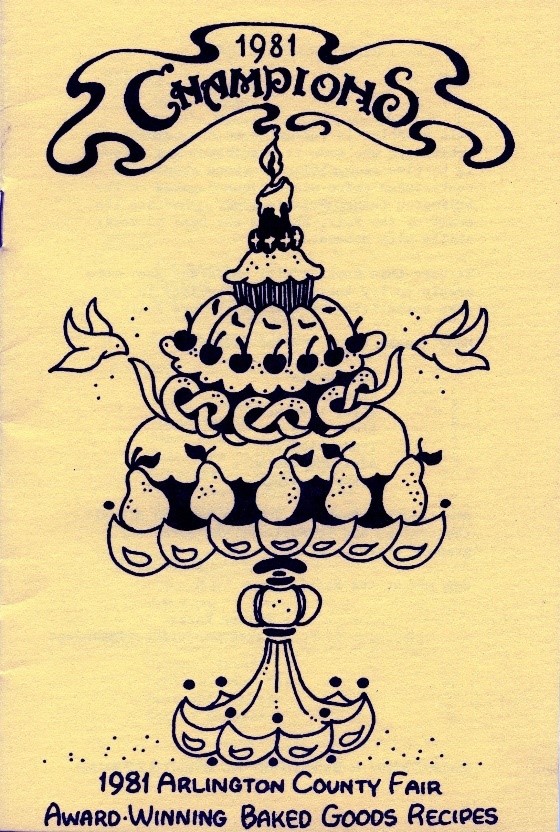
County Fair 4
County Fair 5

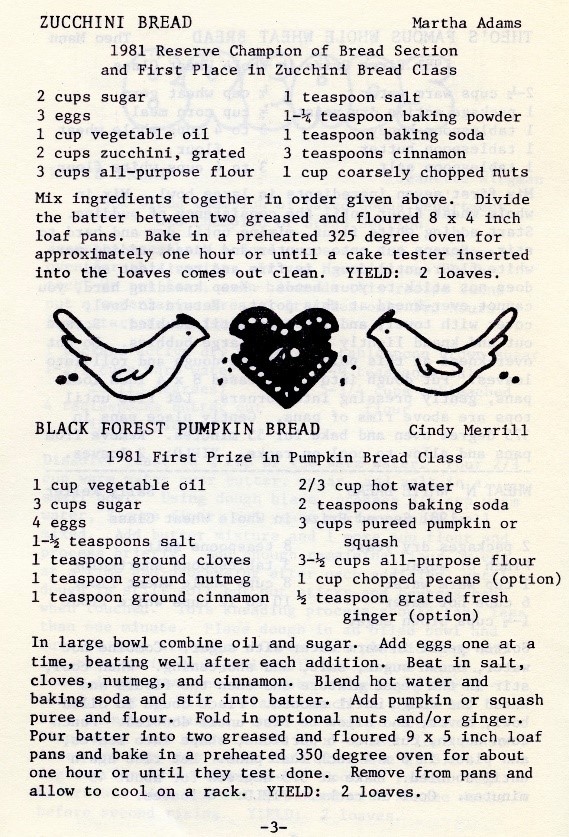
Excerpts from the compilation of winning recipes from the baked goods competition, 1981 Arlington County Fair.

County 2 Photo

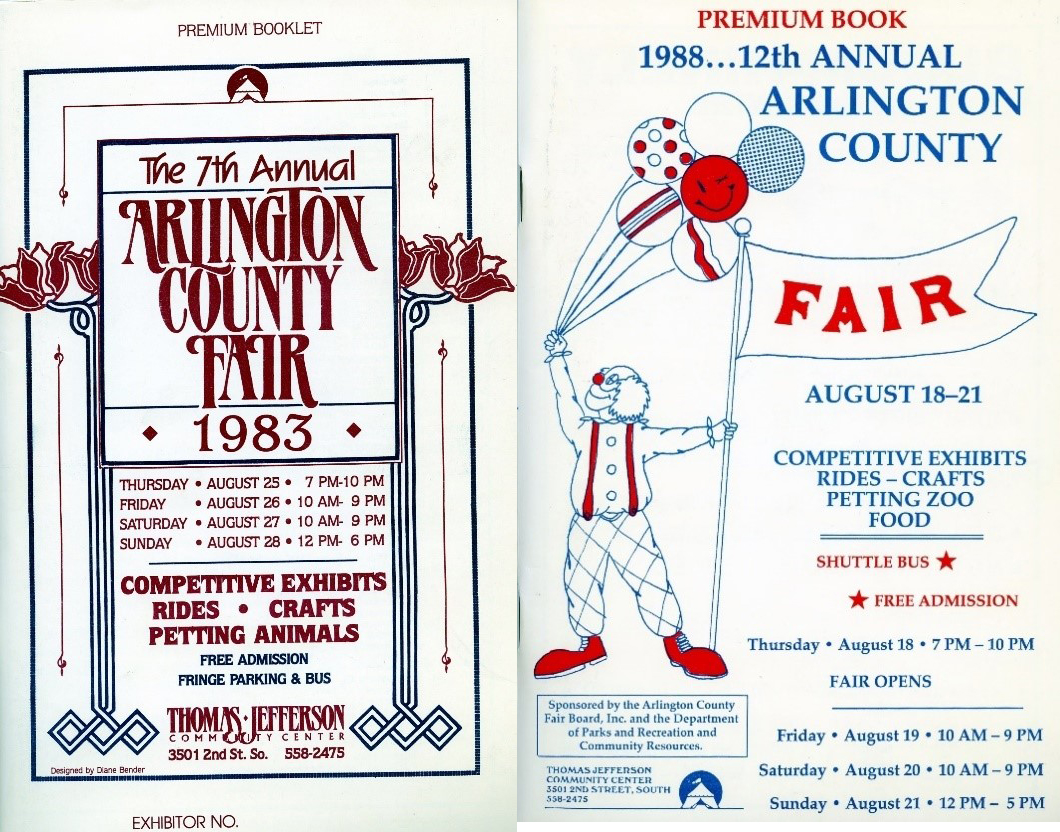
Arlington County Fair "premium booklets" from 1983 and 1988 include information about shuttle buses, competitions and schedules.

Rapid Growth in the 1980s

By 1983, only five years after the Arlington County Fair began, more than 200 booths and exhibitors were registered to exhibit over the Fair weekend. By 1984, the live entertainment boasted a diverse range of performers including a ventriloquist, the Old Dominion Cloggers, barbershop quartet music by the Arlingtones, bluegrass, jazz, big band music, and Hungarian folk songs. Karate demonstrations and aerobic dancing were also performed.

Livestock Out, Thrill Rides In

Livestock mostly ceased making any appearances after 1977, with a few exceptions (such as pony rides and racing piglets). Midway rides were added in later years.

County Fair 6

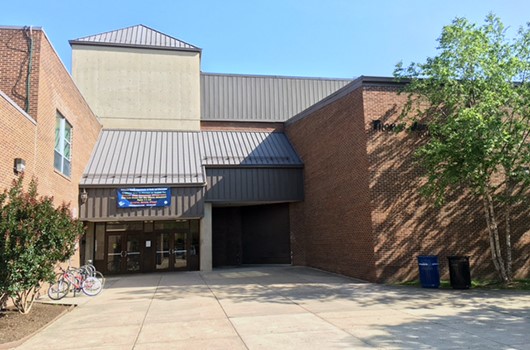
The Thomas Jefferson Community Center, where the Arlington County Fair has taken place since 1977.

"Yesterday, Today & Tomorrow"

The Arlington County Fair has become one of the largest free events on the East Coast, with attendance reaching over 84,000.

After the first few years, each County Fair has had a theme: “Arlington – Yesterday, Today & Tomorrow” (1986); “The Many Faces of Arlington” (2003); “Groovy Since 1977” (2016), which payed tribute to the County Fair’s origins, are just a few.

What will this year's theme be? We'll find out this summer when we see you at the County Fair!

To learn more about Arlington's history, visit the Center for Local History on the first floor of the Central Library.

Do you have a question about this story, or a personal experience to share? 

Use this form to send a message to the Center for Local History.

Center For Local History - Blog Post Message Form

Do you have a question about this story, or a personal experience to share? Use this form to send a message to the Center for Local History.

"*" indicates required fields

This field is for validation purposes and should be left unchanged.

Share Your Story

January 15, 2020 by Web Editor

This Week in 19th Amendment History: First Issue of The Woman’s Journal

Post Published: January 7, 2020

January 8, 1870

Celebrate the 100th anniversary of the 19th Amendment with stories about the people and events that led to the passage of women’s suffrage in the United States.

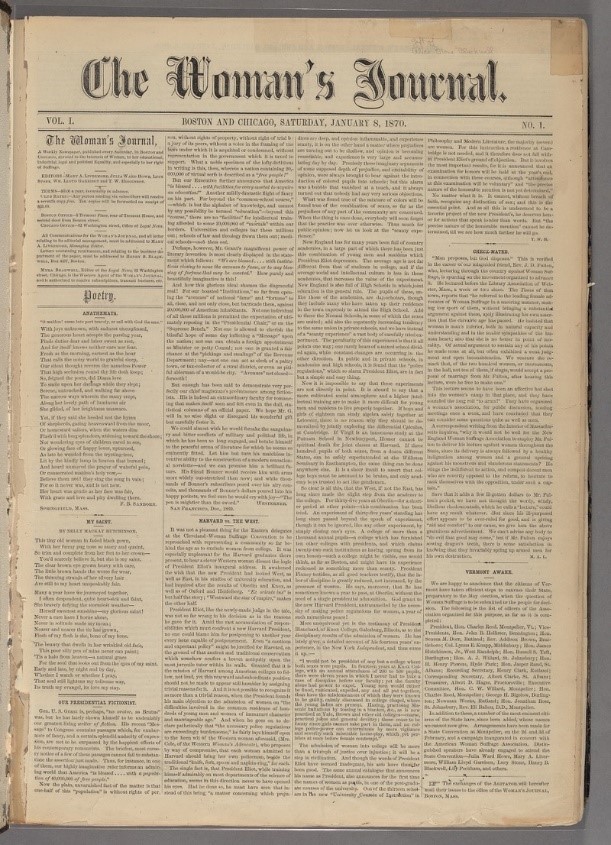
The Woman’s Journal was a women’s rights publication that produced its first issue on January 8, 1870.  One of the most significant and popular publications of the women’s suffrage movement, it ran in various forms from 1870 to 1931.

Founded by suffragist Lucy Stone and her husband Henry Browne Blackwell in Boston, Massachusetts, the Woman's Journal aimed to provide a broad segment of women with information on the women’s rights movement and the suffrage cause. Content included speeches, debates, and women’s convention notes, all under the broader banner of the mission:

“devoted to the interests of Woman – to her educational, industrial, legal and political equality, and especially to her right of suffrage.”

Womans Journal 1

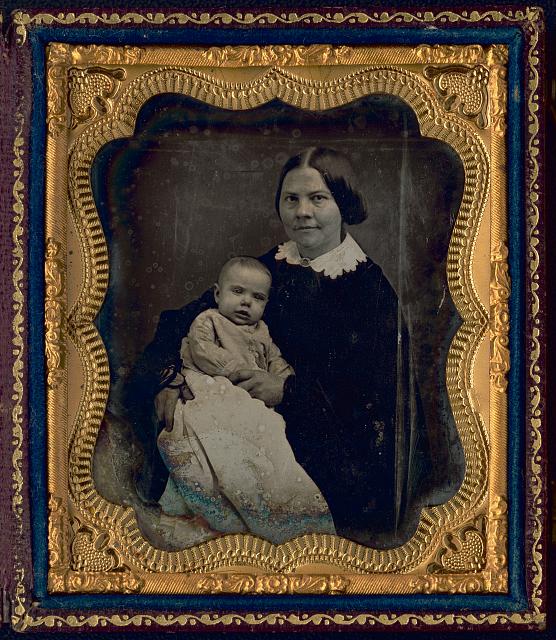
Lucy Stone with daughter Alice Stone Blackwell. Library of Congress Prints and Photographs Division.

The Journal’s first issue aligned with a significant anniversary in the suffrage timeline, as Susan B. Anthony and Elizabeth Cady Stanton’s journal, The Revolution, had published its first copy on January 8, 1868, two years prior.

The Woman’s Journal was a weekly publication and published every Saturday in Boston and Chicago. In addition to Stone, editors of the first issue included Mary Livermore, Julia Ward Howe, William Lloyd Garrison and, T.W. Higginson.

Stone and Blackwell’s daughter Alice Stone Blackwell started as an editor in 1881 and became sole editor in 1909 after her mother and father’s deaths, where she remained in the position until 1917.

The Woman’s Journal was funded with a $10,000 seed donation from benefactor Elizabeth Eddy and sustained itself through advertisements and subscriptions. At the time of the first publication, subscriptions started at an annual price of $3.00, with deals offered to readers who brought in more subscribers.

Though ad sales were sparse, the journal notably did not allocate space for tobacco, liquor, or medicinal advertisements.

The Journal’s leadership did attempt to reach a larger audience by hiring suffragists licensed as “newsboys” to hawk the publication on the Boston Common.

The inaugural issue of The Woman's Journal included articles such as “Woman as a Preacher,” which contended that women could and should be leaders in their religious communities; a history of “Women’s Rights in France During the Last Century”; and investigative pieces “What the Women of California are Doing” and “Can Women Hold Office in Iowa?”.

Womans Journal 2

Front page of the first issue of the Woman’s Journal, published January 8, 1870, from Harvard Library.

Womans Journal 3

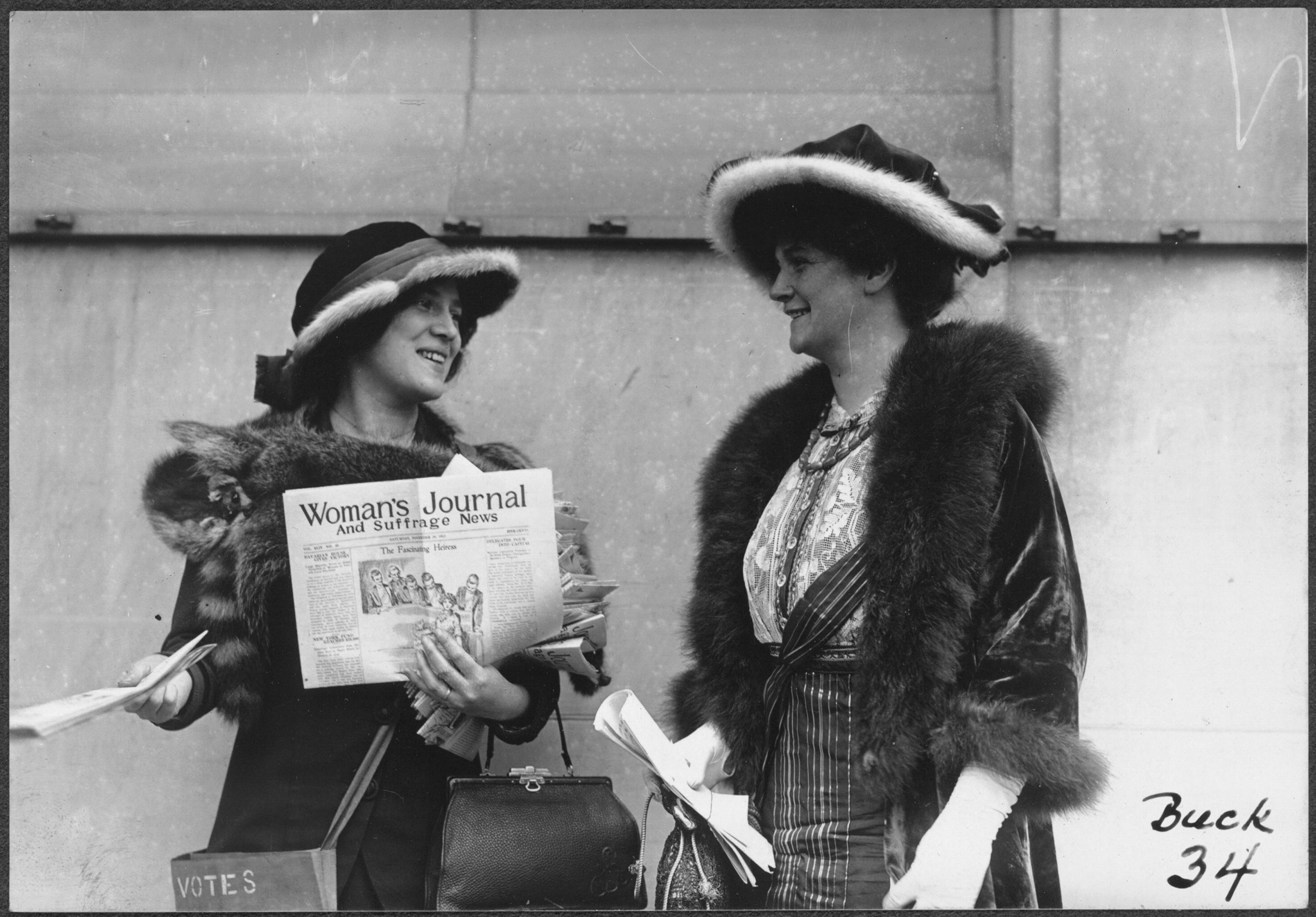
Suffragist Margaret Foley distributing the Woman’s Journal and Suffrage News, 1913. Library of Congress Prints and Photographs Division.

In 1916, the Journal hired Margaret Foley – a well-known speaker on women’s issues – to travel and host speaking engagements in the South and Midwest to promote the publication.

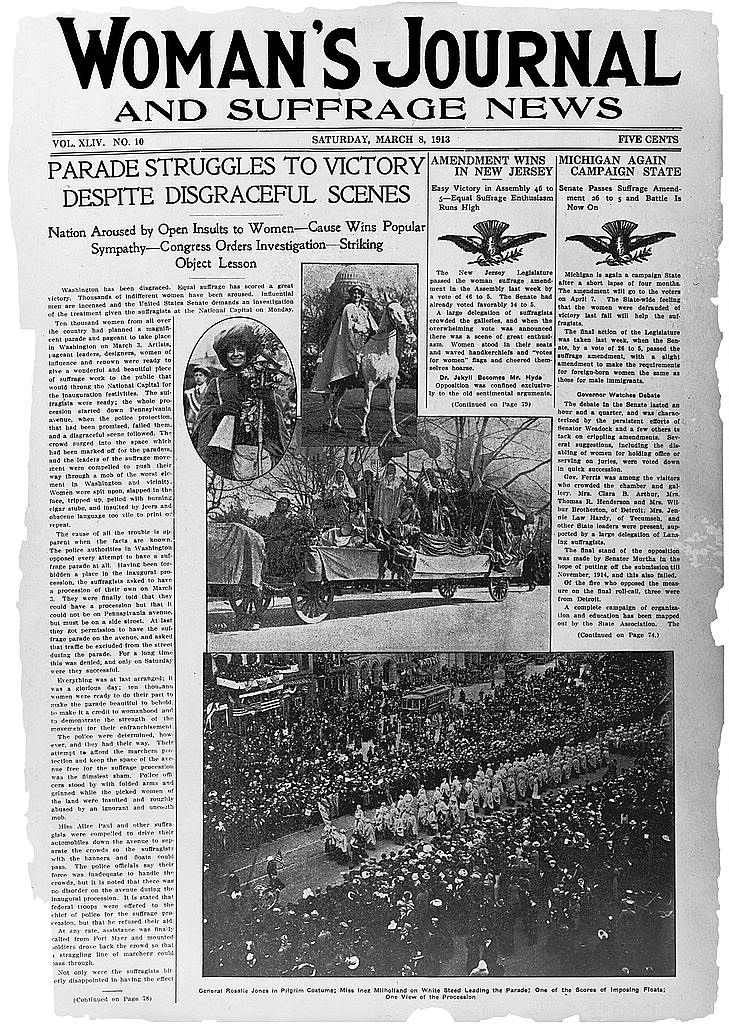
During its six decades, the Journal was absorbed and affiliated with numerous other suffrage journals, newsletters and periodicals. When the Journal was founded, it incorporated the Woman’s Advocate, and in 1910 it joined with the National American Woman Suffrage Association’s (NAWSA) in-house publication, the Progress. From 1910-1912, NAWSA contributed financial support and managerial oversight, and the Journal was subtitled as the “official organ of the National American Woman Suffrage Association.” From 1912 to 1916, the Journal was referred to as the Woman’s Journal and Suffrage News.

Womans Journal 4

Front page of the ‘Woman’s Journal and Suffrage News” with the headline: ‘Parade struggles to victory despite disgraceful scenes,’ shows images of the women’s suffrage parade in Washington, March 3, 1913.
Library of Congress Prints and Photographs Division.

In response to prolonged financial instability, in 1917, the Woman’s Journal was sold to Carrie Chapman Catt’s Leslie Woman Suffrage Commission, which proceeded to merge the Journal, the Woman Voter, and National Suffrage News to form a new title, The Woman Citizen.

The Woman Citizen took the place as NAWSA’s official publication and published until the late 1920s, when it was again called the Woman’s Journal. This iteration of the publication ran until 1931.

Learn more

The full archives of the Woman’s Journal are now available through Harvard Library’s online digitized collection.

2020 marked the centennial of women’s suffrage in the United States. 

January 7, 2020 by Web Editor

What Happened to Arlington’s Radio Towers?

Post Published: December 19, 2019

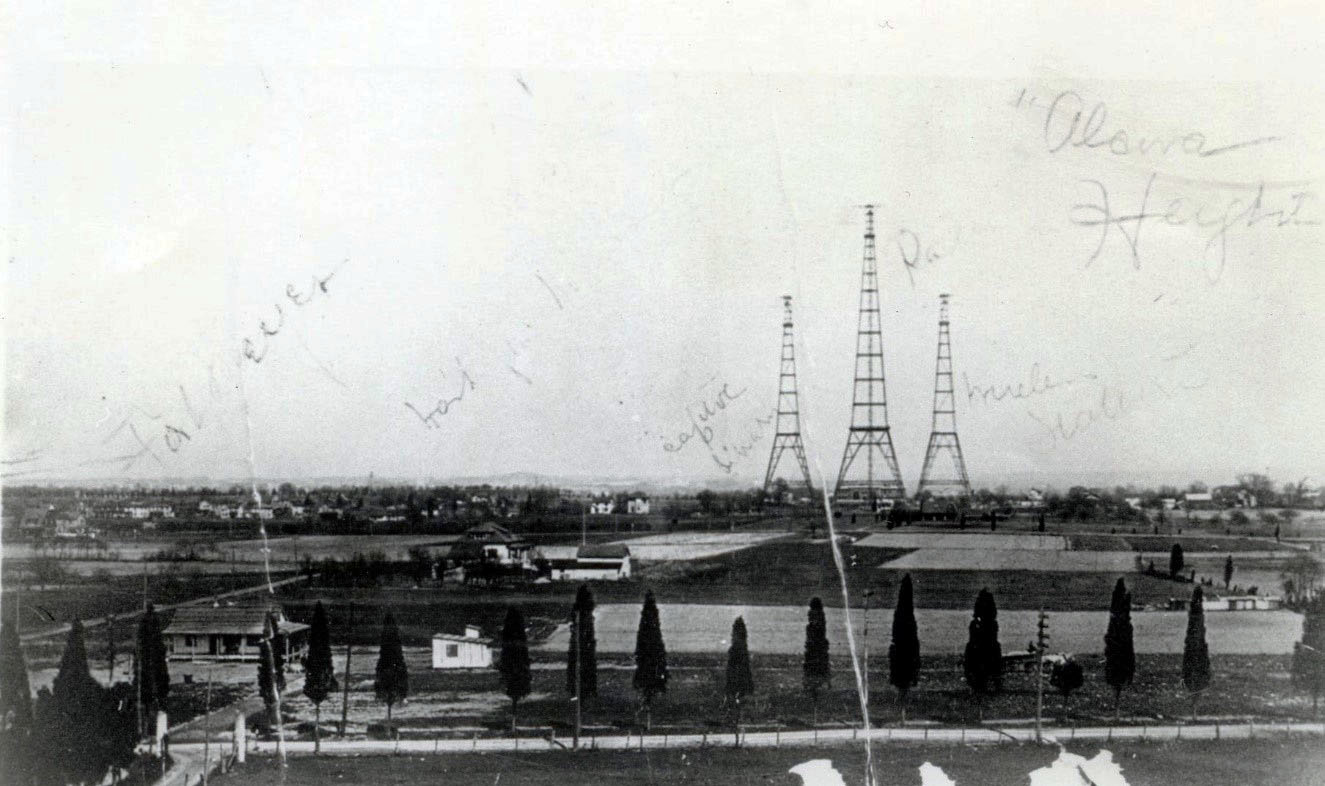
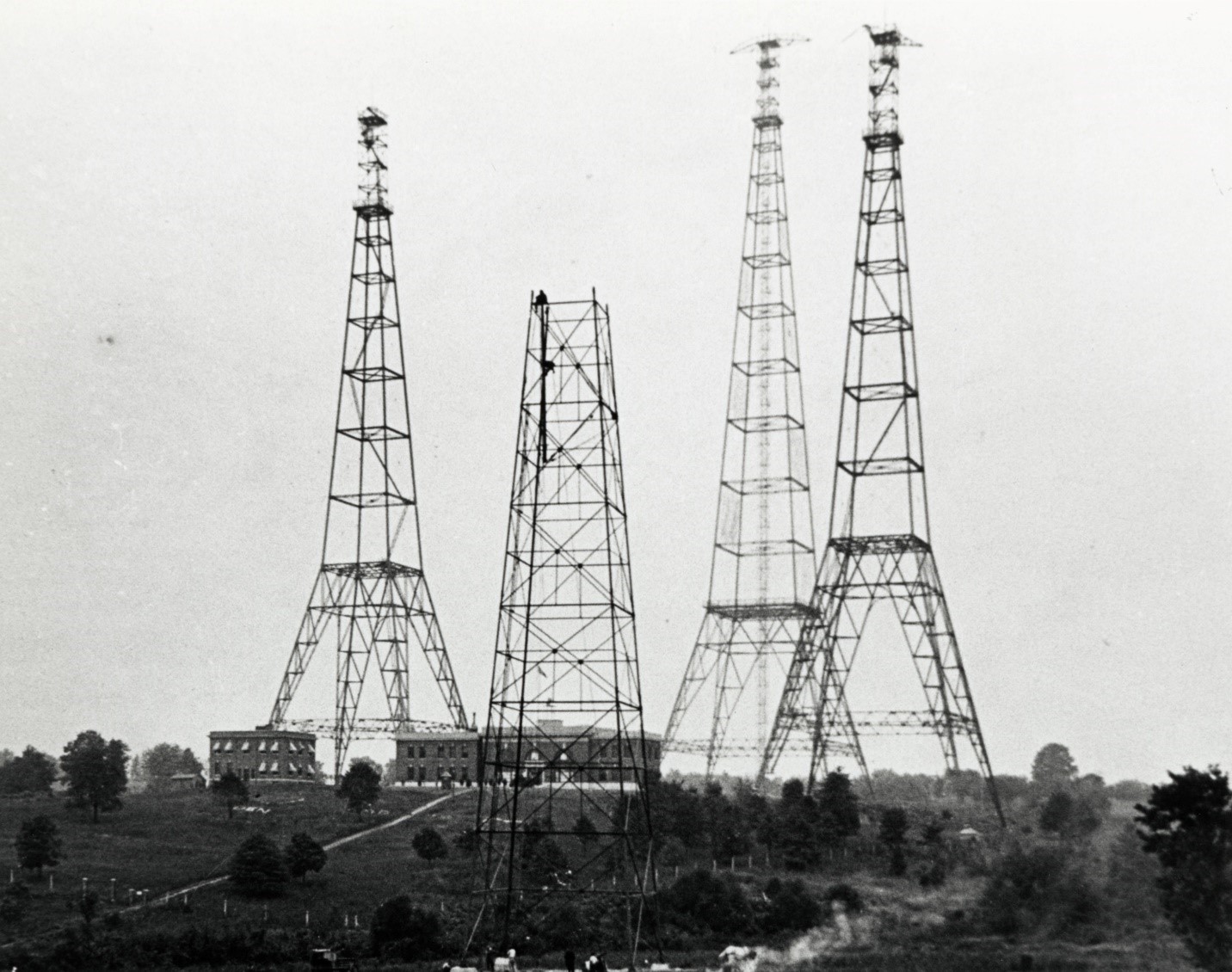
From 1913 to 1941, the Arlington Radio Towers dominated the Arlington skyline, visible for miles in either direction. 

Standing at the intersection of Columbia Pike and Courthouse Road, the towers were built by the U.S. Navy Department to house the nation’s first radio station.

Arlington Radio towers and Alcova Heights neighborhood, color adjusted

Arlington Radio Towers and Alcova Heights neighborhood, date unknown.

Referred to as “Radio Arlington” or “NAA,” the station provided numerous services while it was active, and used multiple transmitters, which operated on both longwave and shortwave frequencies.

The Navy selected Arlington as the site of this historic structure after a survey of numerous potential locations in the Washington, D.C., area. Upon choosing a tract near Fort Myer, 13.4 acres of land was transferred from the War Department to the Navy, and construction began in 1911.

In addition to the towers themselves, two other facilities were built on the site: one to house the transmitters and serve as office space for the superintendent of the Naval Radio Service, and another to house receiving transmitters and quarters for the crew.

The towers came to be known as the “Three Sisters.” The tallest stood at 600 feet tall, with its accompanying “sisters” at 450 feet. This made the 600-foot tower the tallest freestanding radio tower in the world at the time of its construction, as well as the most powerful station (2,643 meters and 113 kHz, respectively). The towers were also the second-largest man-made structure in the world at the time, second to the Eiffel Tower, to which the towers also drew comparisons in their respective designs. In 1923, two 200-foot towers were added to the structure.

Radio Tower 1

The Arlington Radio Towers, ca. 1920.

Designed to facilitate communication between the government and fleet commanders at sea, and as part of a “high-powered chain” of connected radio towers linking Washington, D.C., to the rest of the country, the towers pioneered efforts in advancing wireless communication. In 1915, the president of AT&T made a telephone call from New York City to Mare Island, California, via the Arlington towers – the first transmission of this type. Later that year, the towers made the first Trans-Atlantic voice communication with a call between the Three Sisters and the Eiffel Tower – a distance of more than 3,600 miles. The towers also served as the nation’s timekeeper and weather station, broadcasting daily time signals and weather reports between 1913 and 1936.

The towers initially used a 100-kilowatt Fessenden rotary-spark, which remained in use until July 8, 1923. The Federal Telegraph Company also installed 35-kilowatt Poulsen arc transmitters, which were found to be superior and from then on more widely used. In the 1920s, vacuum tube transmitters mostly replaced the older models both in Arlington and other broadcasting towers installed by the Navy.

View of Radio Towers on Court House, color adjusted

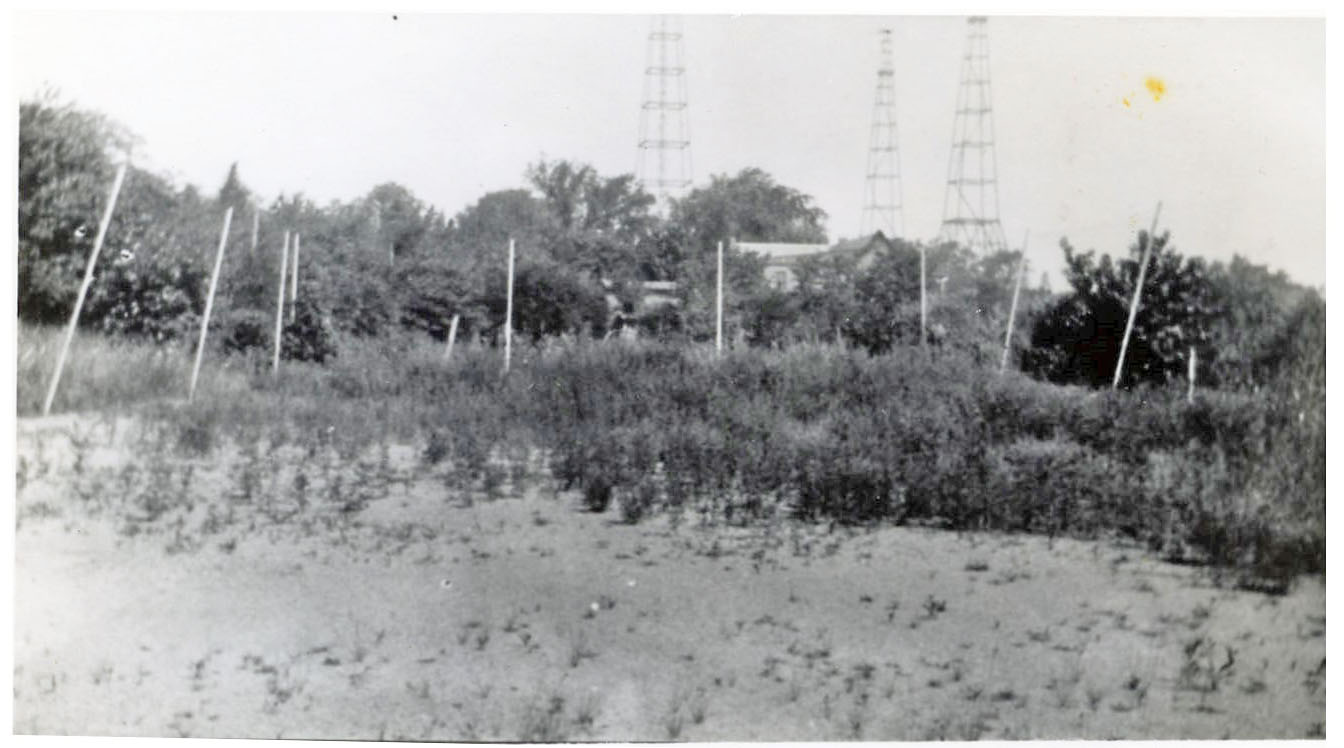
Arlington Radio Towers, date unknown. Photo caption reads:
“View of Radio Towers on Court House [sic] Road, from rear of Sommers house, showing how undeveloped the area was.”

In 1917, the towers also played a quiet but important role in the United States’ entry into World War I.

According to the Arlington Historical Society, on the morning of April 6, as Congress decided to enter the U.S. into the war, the Joint Resolution was to be sent to President Woodrow Wilson for signing at 1:00 p.m. that day. Fifteen minutes before the signing was to take place, all stations of the navy system were instructed to cease operations to receive the signal that war was imminent. As the president signed the resolution, a naval commander in the executive office manually signaled an assistant standing in the adjacent State, War, and Navy Building (now the Eisenhower Executive Office Building), who notified the radio station, which transmitted the first declaration of war sent by radio to U.S. warships at sea.

The radio industry was under the control of the federal government during the war, and the Three Sisters towers continued to broadcast time signals, weather reports, and news bulletins throughout wartime. During this period, civilians were banned from possessing and operating radio receivers, but this ban was lifted on April 15, 1919.

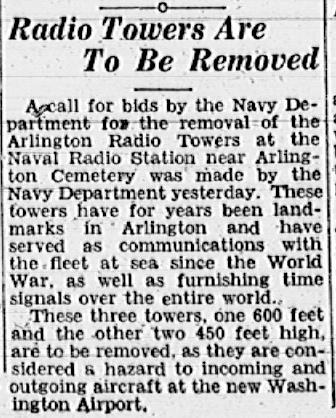
The towers were dismantled in 1941, described as a menace to the newly constructed Washington National Airport (which had replaced the Washington-Hoover Airport that same year). The radio transmission carried by the towers was transferred to Annapolis, as were the towers themselves, which were disassembled and reconstructed at the Maryland site.

Radio Tower News

News article from The Northern Virginia Sun, January 3, 1941.

Transmitting equipment from the Three Sisters also went to Annapolis, while receiving equipment was transferred to a station at Cheltenham. The Navy later brokered a $1 contract for the removal of the remainder of the structure, which was taken for scrap.

Until 1956, the Arlington site served primarily as a link between the different Naval Communication Stations in Washington, D.C. The Navy ordered the disestablishment of NAA on July 1 of that year, followed by various ceremonies championing the legacy of the bygone structures and the station itself. The Annapolis and Cheltenham sites then took on the duties that were, up until then, still being conducted at the Arlington location. Today, the site formerly occupied by the towers is still home to military communications departments, including the Defense Communications Agency.

The Arlington community missed the towers very much, with one writer for the Northern Virginia Sun eulogizing their absence:

“The skyline will seem blank to those accustomed to the sight of the ‘three sisters,’ but, like everything else, the sense of their loss will not last long. Time moves too fast for that.”

Radio Tower 5
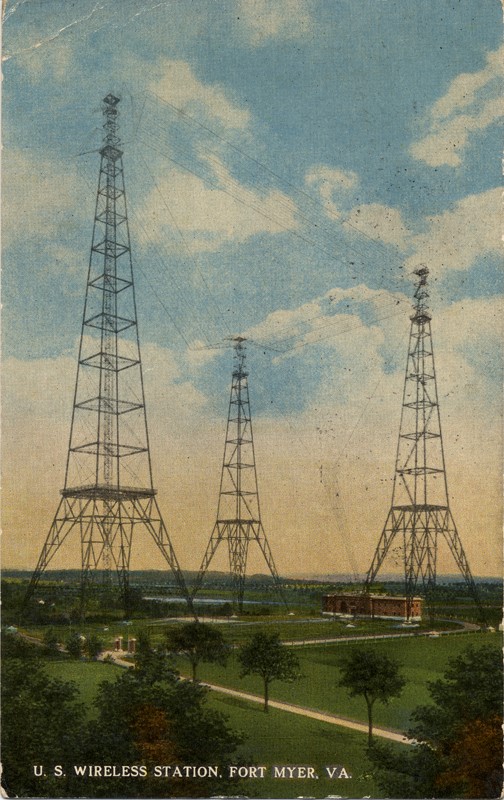
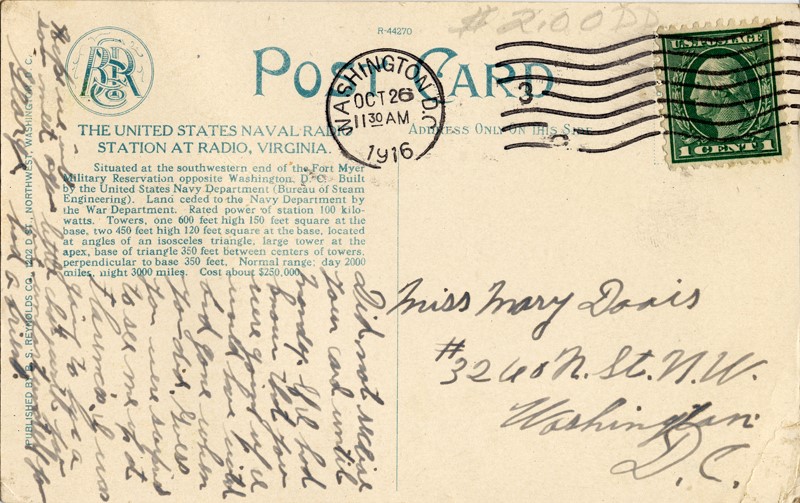
Radio Tower Postcard

A "U.S. Wireless Station Fort Myer, VA" postcard sent in 1916 shows a color photograph of the radio towers.

To learn more about Arlington's history, visit the Center for Local History on the first floor of the Central Library.

Do you have a question about this story, or a personal experience to share? 

Use this form to send a message to the Center for Local History.

Center For Local History - Blog Post Message Form

Do you have a question about this story, or a personal experience to share? Use this form to send a message to the Center for Local History.

"*" indicates required fields

This field is for validation purposes and should be left unchanged.

Share Your Story

December 19, 2019 by Web Editor

This Week in 19th Amendment History: Wyoming Day

Post Published: December 10, 2019

December 10, 1869

Celebrate the 100th anniversary of the 19th Amendment with stories about the people and events that led to the passage of women’s suffrage in the United States.

One hundred and fifty years ago this week, Wyoming made a significant – though complicated – stride on the path toward women’s suffrage.

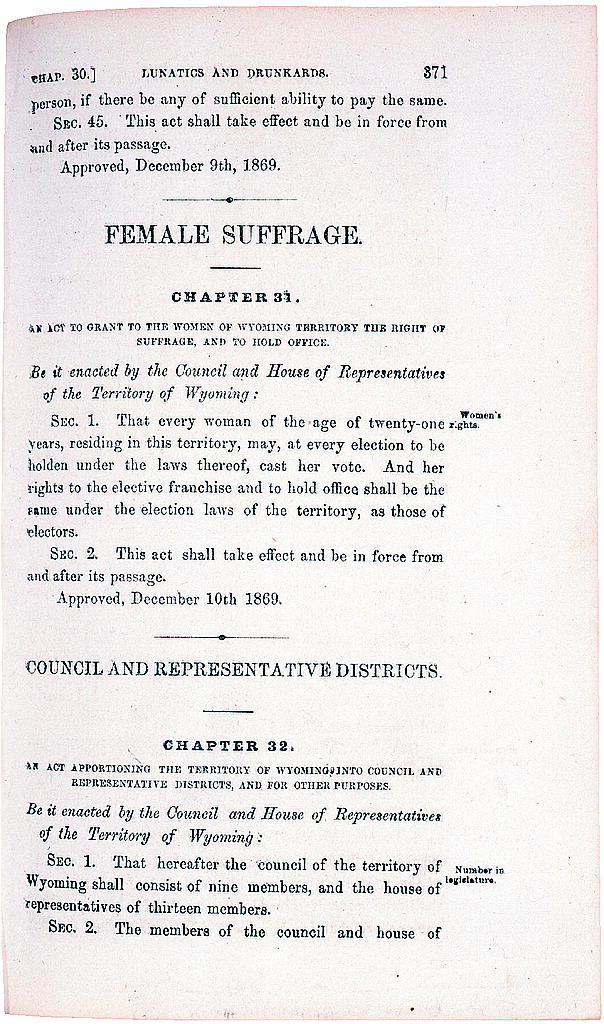
On December 10, 1869, the frontier territory became the first to explicitly grant women the right to vote when governor John Campbell approved “An Act to Grant to the Women of Wyoming Territory the Right of Suffrage and to Hold Office.”

Wyoming Territory

Wyoming had been founded as a territory in July 1868, a time when post Civil War Reconstruction politics determined much of the legislative landscape.

President Grant appointed an almost entirely Republican government in 1869, including the territory’s governor, secretary, and attorney general. These “Radical Republicans” were named after their support for and passage of the 14th Amendment - guaranteeing that former slaves would be citizens and protected equally under the law - and the 15th Amendment - guaranteeing that individuals could not be denied the right to vote based on race or previous slave status.

The question of women's suffrage was also being raised throughout American politics. Suffrage bills in the Washington, Nebraska and Dakota territories had failed in the 1850s and 1860s, as had constitutional amendments that would have granted women the right to vote.

William Bright

The Wyoming bill was introduced by (among others) a saloon keeper turned territorial legislator originally from Alexandria, Virginia. William Bright had fought for the Union Army during the Civil War, and later found his way to Wyoming during the gold rush, where he settled in South Pass.

Bright began his foray into the political scene as a Democrat. Like many of his fellow Democrats after the Civil War, Bright disagreed with the "Radical Republicans" and President Ulysses S. Grant in regards to Reconstruction, and had been known to speak out against them - but he appears not to have opposed the issue to women's suffrage.

Wyoming Day 1

Photo of the suffrage bill.
Library of Congress Prints and Photographs Division.

Despite Wyoming's "Radical Republican" leadership - attorney general Joseph Carey issued an official legal opinion emphasizing the 15th Amendment’s stipulation that no one (man) could be denied the vote on the basis of race - in the September 1869 territorial election only Democrats were elected to the legislature. Wyoming’s delegate to Congress that year was a Democrat.

William Bright was among the Democrats elected to the upper house of the Wyoming legislature (referred to as the Council) and subsequently appointed as president of the Council.

This legislature soon produced a significant series of laws in favor of women’s rights, including a resolution allowing women to sit in on legislative proceedings, a law guaranteeing teachers be paid equally no matter their gender, and a bill ensuring that married women could have property rights independent of their husbands.

Wyoming Day 2

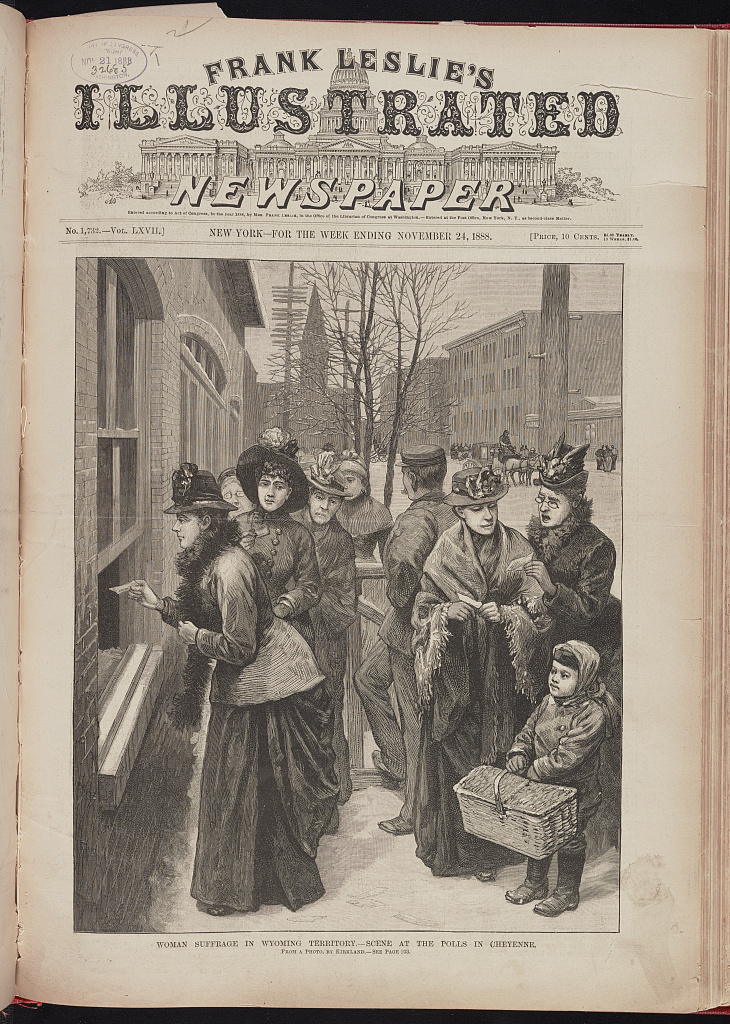
“Scene at the Polls in Cheyenne,” 1888.
Library of Congress Prints and Photographs Division.

The Wyoming Bill

Bright’s suffrage bill followed. Upon introducing the bill, it passed in the Council 6-2. In the House, it faced more pushback. Attempts were made to sabotage the bill through racial prejudice, including by adding an amendment to extend the right to vote to women of color. This amendment was not added to the final bill.

One amendment that did prevail was to raise the voting age for women from 18 to 21. After this addition, the suffrage bill passed 7-4 with one abstention. Governor Campbell signed the bill into law a few days later.

No records were made of the actual proceedings of the legislative session that resulted in the bill’s passage, but newspaper reports reflect a nearly humorous atmosphere accompanying this historic legislation, suggesting that the bill itself may have been perceived as a joke. The Cheyenne-based Wyoming Tribune reported that “amid the greatest hilarity, and after the presentation of various funny amendments and in the full expectation of a gubernatorial veto, an act was passed enfranchising the women of Wyoming.”

Esther Morris

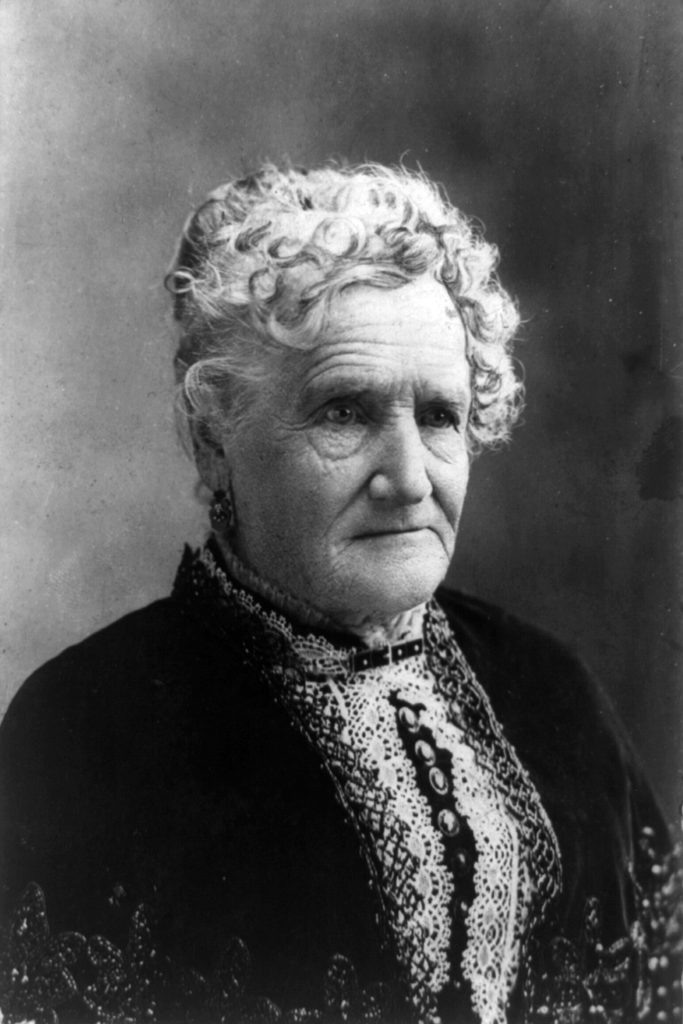
Mrs. Esther Morris, the 1st woman judge in Wyoming Territory.
Library of Congress Prints and Photographs Division.

Getting the Vote for Women

Though the exact details of what other events directly precipitated the suffrage law are unclear, one frequently-referenced 1926 account credits South Pass resident Esther Hobart Morris as its catalyst.

Morris purportedly hosted a tea party as a forum to present her case for women’s suffrage to legislators, allegedly including Bright. While Morris’s actual role in the bill has been contested, it is notable that following the 1869 passage of the suffrage law, she became the first female justice of the peace in the United States (taking over after her predecessor resigned in protest of the new law).

In September 1870, Wyoming women formally voted in their first election and the territory’s second. On September 6, sixty-nine-year-old Louisa Swain of Laramie, Wyoming, became the first woman in the country to democratically cast a vote. About 300 of the total 600 eligible women voted, and many selected Republicans on their ballots. A Republican took over the position as delegate to Congress, and by 1871 a swath of Republicans broke into the previously Democrat-dominated legislature.

However, all was not smooth sailing in this new era: the newly elected legislature soon passed a bill to repeal the 1869 law, which was vetoed by Governor Campbell, whose veto was then overridden by a two-thirds vote in the House. Once it reached the Council, the bill then failed by one vote, and the suffrage law stood, never to be challenged again.

Why Women's Suffrage?

Various theories have been proposed as to the motivations behind passage of the bill, which at the time was a radical decision.

Was suffrage a publicity stunt designed to bring more settlers (and female settlers in particular) to the territory? In 1869 Wyoming was comprised of only about 6,000 recorded adult men and 1,000 women. It was also the most recently designated territory, and quite remote.

Was the bill a political power move to keep the Democrats in territorial power? Added to any possible political maneuvering was the potential for a reactionary veto by the Republican governor - had that happened, it would have been an embarrassing blow to Campbell and a boon to the Democrats.

Was the bill a sign of the schism growing between the abolitionists/Reconstructionists and the suffragists? Some of the Wyoming legislators argued that white women should have the vote instead of the African-Americans enfranchised under the 15th Amendment, or that they should be prioritized in the steps toward universal suffrage. The divide between those in support of the 15th Amendment and those against it would prove to be significant in the suffrage movement, with famous suffragists such as Elizabeth Cady Stanton and Susan B. Anthony opposing the enfranchisement of African-American men. This divide came to define much of the suffrage movement itself.

The Equality State

Despite the questionable motives surrounding this landmark day, Wyoming – which was later nicknamed “the Equality State” – continued its progressive legislative streak, and in 1889 approved the country’s first state constitution granting full voting rights to women.

In 1924, the state garnered another national first when Nellie Tayloe Ross was elected the first female governor in the United States.

2020 marks the centennial of women’s suffrage in the United States. 

December 10, 2019 by Web Editor

The Early History of Arlington’s Parks and Recreation Department

Post Published: December 4, 2019

Starting with a $500 allocation in 1933, Arlington has grown over the past 75 years from one public park on Four Mile Run in 1941 to a Countywide system of parks, playgrounds, and programs.

In 1933, the Arlington County Board earmarked $500 for parks and playgrounds – amenities that at the time were still rare in the county. The initial funding of $500 was reduced from a proposed $2,500, but it allowed for the acquisition of land and maintenance of parcels that had been donated by developers.

This was the beginning of the County's first parks and recreation department, formally established in 1944 as the Department of Parks and Playgrounds.

First Public Park

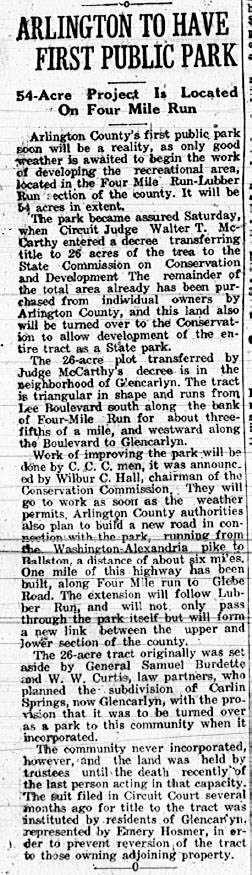
Starting in 1936, the Arlington County School Board was given oversight of all recreational programs. That year also marked another major milestone - the acquisition of the County’s first public park. Located in the Four Mile Run-Lubber Run area, the park spanned 54 acres, and maintenance and development of the park were completed by members of the Civilian Conservation Corps, a work relief program established as part of President Franklin Roosevelt’s New Deal.

In 1941, the Lubber Run Park formally opened to the public. Opening day was planned as a grand celebration, with a ceremony attended by State and County officials, and a massing of the colors performed by the Fort Myer Color Guard. But the festivities were rained out in a torrential downpour, and the park’s ceremonial start instead began simply, with its use by members of the County.

Parks and Rec

News story from the Northern Virginia Sun, February 13, 1936

In 1948 the County Board shifted the responsibility of County parks to the County Manager.

Recreation Centers

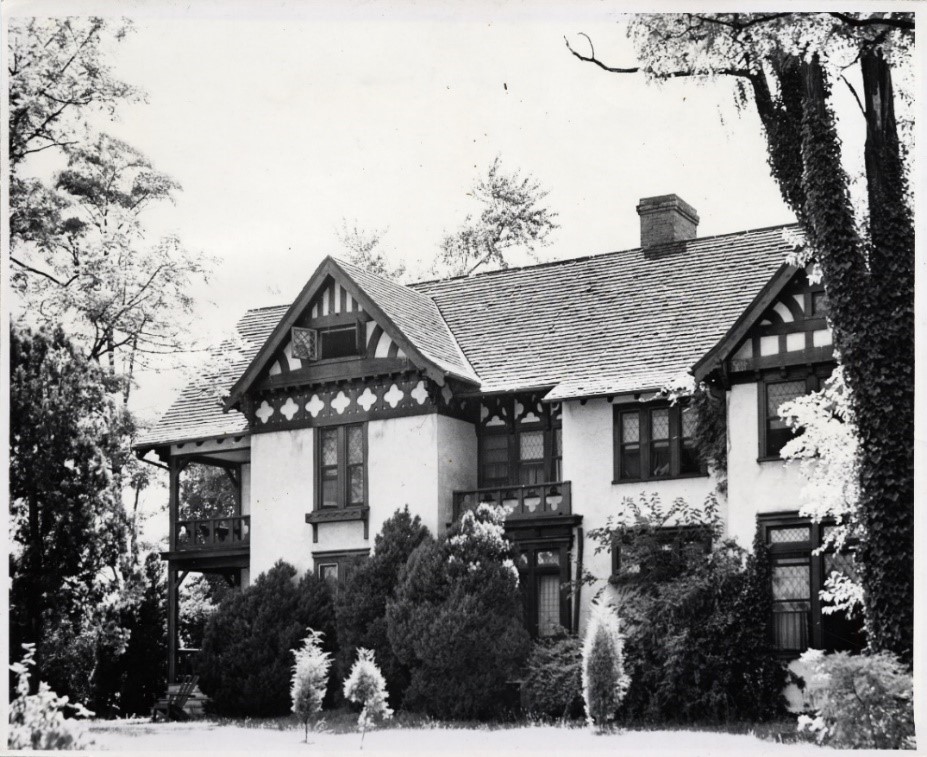
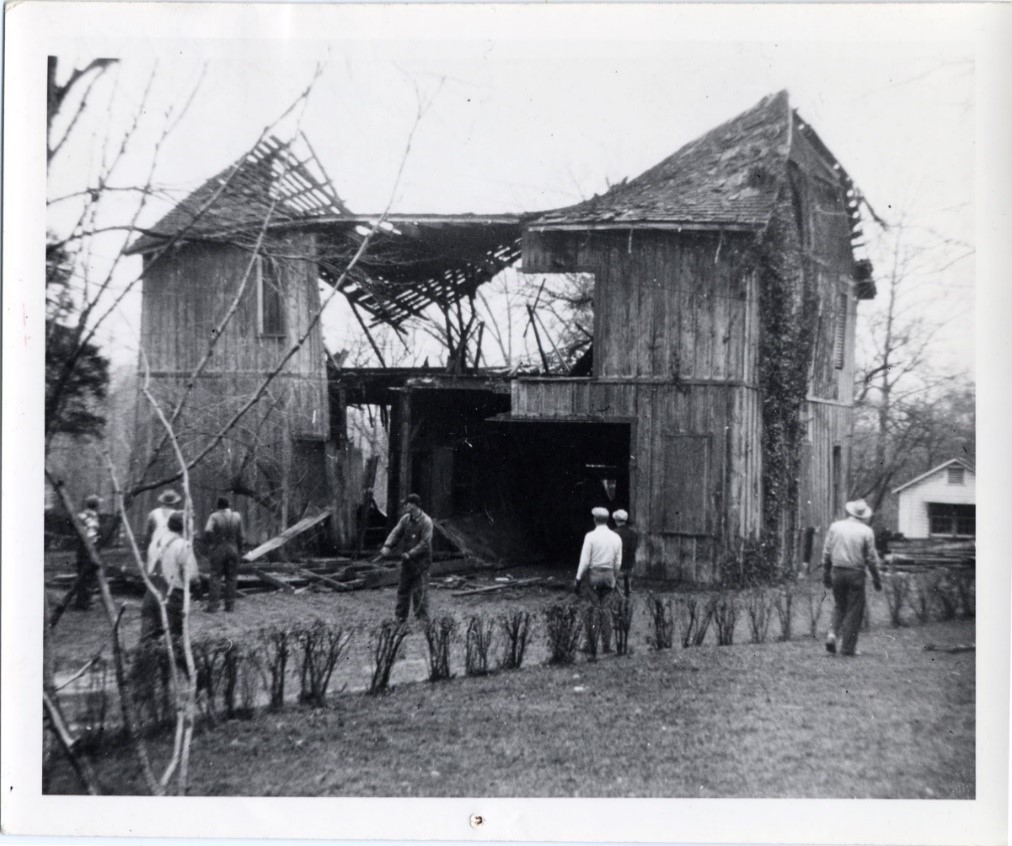
In 1951, Arlington County purchased the Henderson House at 4811 Third Street North to establish its first recreation center, later called the Arlington Recreation Center. The Center burned down in 1954, and in 1956 it was replaced with the Lubber Run Community Center, which remained open until 2018.

Henderson House

Henderson House, circa 1950.

Henderson Barn Fire

Henderson House barn after the fire, 1954.

Growth and Innovation

The Department of Recreation and Parks (as it was known starting in 1953) continued to grow, as did its innovations and additions.

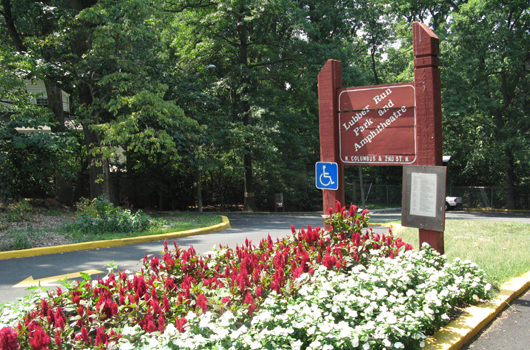
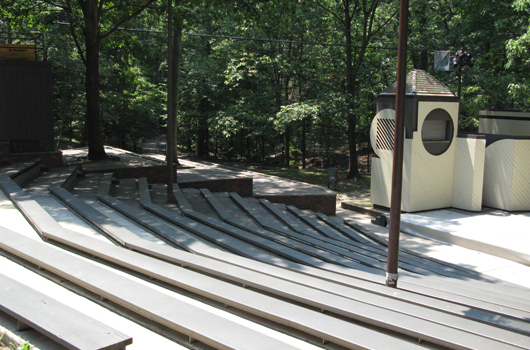
In 1954, the department established the Silver Age Club No. 1, Virginia's first public recreation program designed for senior citizens. In 1960, Arlington's first therapeutic recreation playground was established for children with special needs. And by 1971, the County's parks included lighted outdoor sports facilities, an amphitheater in Lubber Run Park, and the establishment of nature trails.

Lubber Run Park
Lubber Run Ampitheater

Lubber Run Park Entrance Sign and Lubber Run Park Amphitheater, respectively. Photos courtesy of Arlington, VA Parks and Recreation.

Negro Recreation Section

Until 1962, the Arlington parks system was segregated. The Negro Recreation Section was designated by the parks department for African-American members of the community who were denied access to County parks. Created in 1948, the Negro Recreation Section provided sports and arts-related programming and held public events, which were often held at the Langston Recreation Center or Hoffman-Boston School. Ernest E. Johnson served as its supervisor from 1948-1962.

Parks and Recreation Today

In 2012, the parks system became formally known as the Department of Parks and Recreation, as it is referred to today. Currently, about 11 percent of Arlington’s land is reserved for parks, amounting to thousands of acres across the county.

Learn more and Arlington’s Department of Parks and Recreation through an interactive timeline of the department’s history.

Learn more about the history of the Negro Recreation Section in the Center for Local History’s Community Archives.

To learn more about Arlington's history, visit the Center for Local History on the first floor of the Central Library.

Do you have a question about this story, or a personal experience to share? 

Use this form to send a message to the Center for Local History.

Center For Local History - Blog Post Message Form

Do you have a question about this story, or a personal experience to share? Use this form to send a message to the Center for Local History.

"*" indicates required fields

This field is for validation purposes and should be left unchanged.

Share Your Story

December 4, 2019 by Web Editor Tagged With: Hoffman-Boston

This Week in 19th Amendment History: The Death of Sojourner Truth

Post Published: November 27, 2019

November 26, 1883

Celebrate the 100th anniversary of the 19th Amendment with stories about the people and events that led to the passage of women’s suffrage in the United States.

Born into slavery as Isabella Baumfree (sometimes written as Bomfree) in 1797, Truth was enslaved in Dutch-speaking Ulster County, New York, where she was bought and sold four times throughout her life. In 1827, she escaped with her daughter, Sophia after her master failed to uphold the recently-passed New York Anti-Slavery law, and Truth and her daughter were taken in by an abolitionist family who bought their freedom.

Soon after her escape, Truth sued for the freedom of her five-year-old son Peter, who had been sold illegally under the New York law and transported to Alabama. Truth won the case and secured the return of her son, making her among the first black women to successfully sue a white man in court.

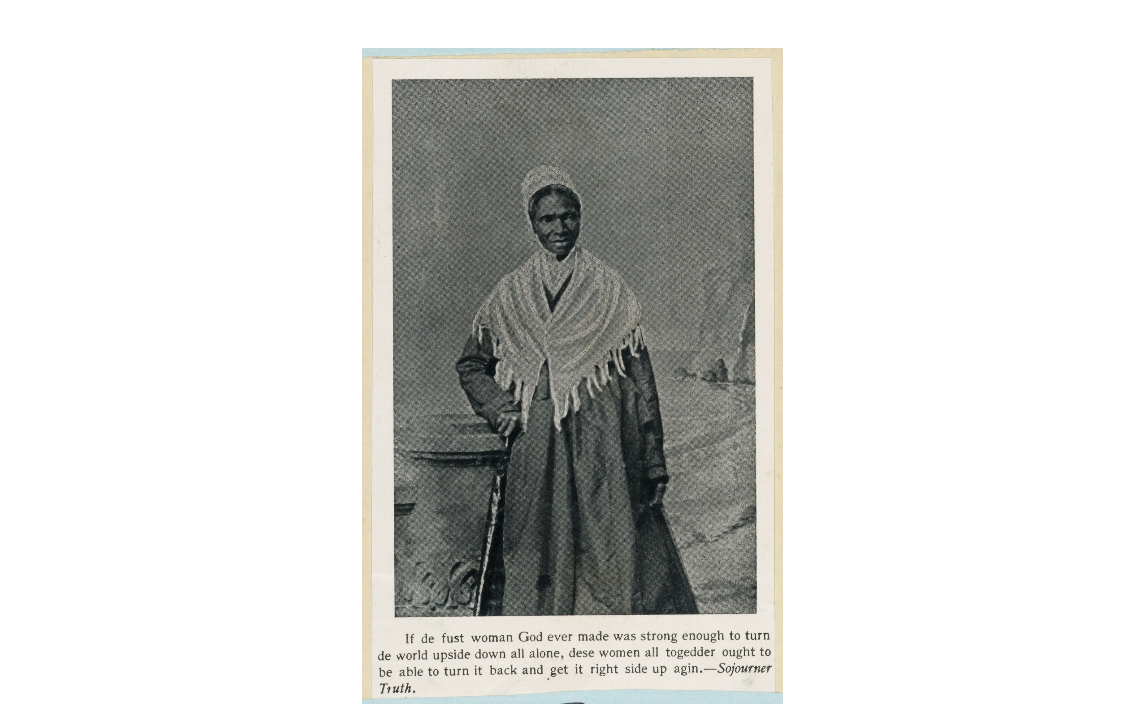
Sojouner Truth 4

Photo of Sojourner Truth. Caption on photo reads: "If de fust woman God ever made was strong enough to turn de world upside down all alone, dese women all togedder ought to be able to turn it back and get it right side up agin." Library of Congress Prints and Photographs Division.

Beginning in 1828, Truth lived in New York City where she joined in the religious revival movement that came to be known as the Second Great Awakening. She became a Christian and worked in a Methodist perfectionist commune which stressed the belief of the equality of all human beings.

Truth renamed herself on June 1, 1843 - the day of Pentecost, which commemorates the Holy Spirit filling Jesus’ disciples - and was christened “Sojourner Truth.”

Working as a traveling preacher, Truth met William Lloyd Garrison and Frederick Douglass, prominent members of the abolitionist movement. She also met suffragists Elizabeth Cady Stanton and Susan B. Anthony over the course of her travels. Later in life, however, Truth distanced herself from the mainstream suffrage movement because activists such as Anthony did not support granting the right to vote to African Americans.

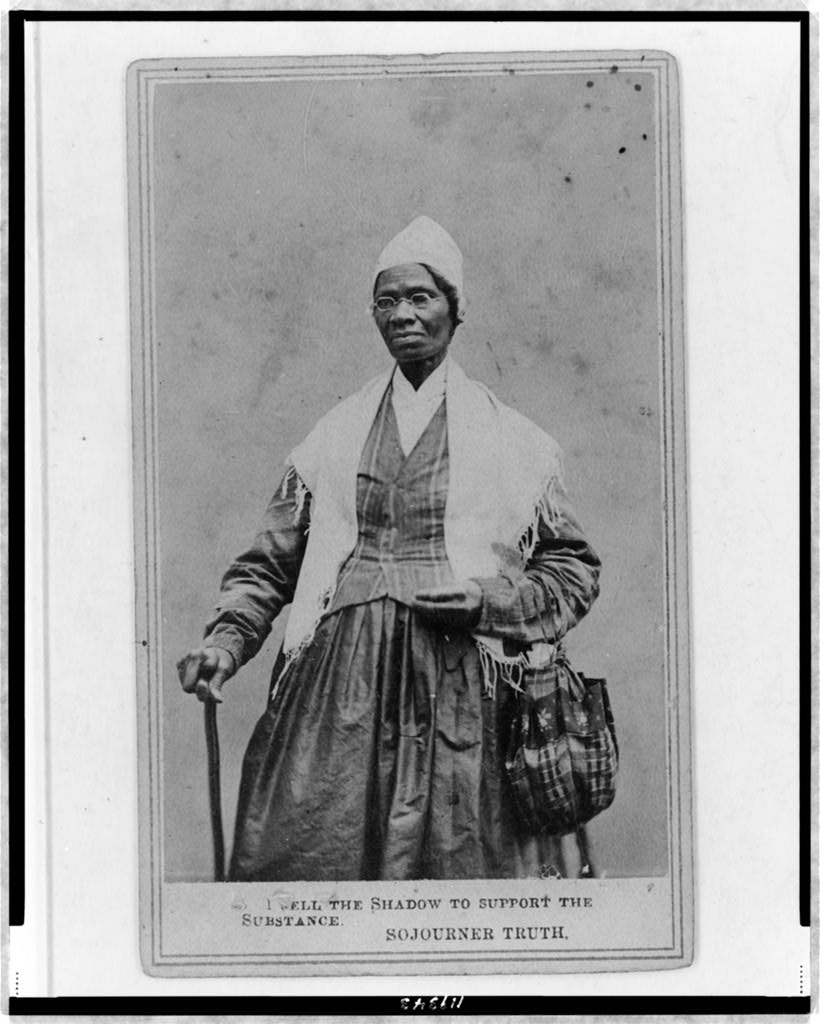
Sojouner Truth 2

Portrait of Sojourner Truth. Caption on portrait reads: "I sell the shadow to support the substance." Library of Congress Prints and Photographs Division.

Truth rose to national prominence both for her speeches and published works. In 1850, she published her autobiography, “The Narrative of Sojourner Truth,” which reached widespread acclaim and readership. In 1851, Truth embarked on a lecture tour that included a stop at the National Women’s Convention (the second of its kind) in Akron, Ohio, where she delivered what would become the famous “Ain’t I a Woman?” speech.

The speech is best known in its 1863 reproduction by a white abolitionist named Frances Dana Barker Gage, which introduced the line “Ain’t I a Woman?” (originally written as “Ar’n’t I a woman?”). However, this iteration was an extreme reworking of Truth’s original speech, with Gage changing most of Truth’s words and falsely attributing a southern slave dialect. The most authentic version of the speech was published soon after its delivery by Rev. Marius Robinson in the Anti-Slavery Bugle and does not include its famous titular line. From that original 1851 transcript:

“May I say a few words? I want to say a few words about this matter. I am a woman’s rights. I have as much muscle as any man and can do as much work as any man. I have plowed and reaped and husked and chopped and mowed, and can any man do more than that? I have heard much about the sexes being equal; I can carry as much as any man, and can eat as much too, if I can get it. I am as strong as any man that is now. As for intellect, all I can say is, if women have a pint and man a quart - why can’t she have her little pint full? You need not be afraid to give us our rights for fear we will take too much, for we can’t take more than our pint’ll hold.”

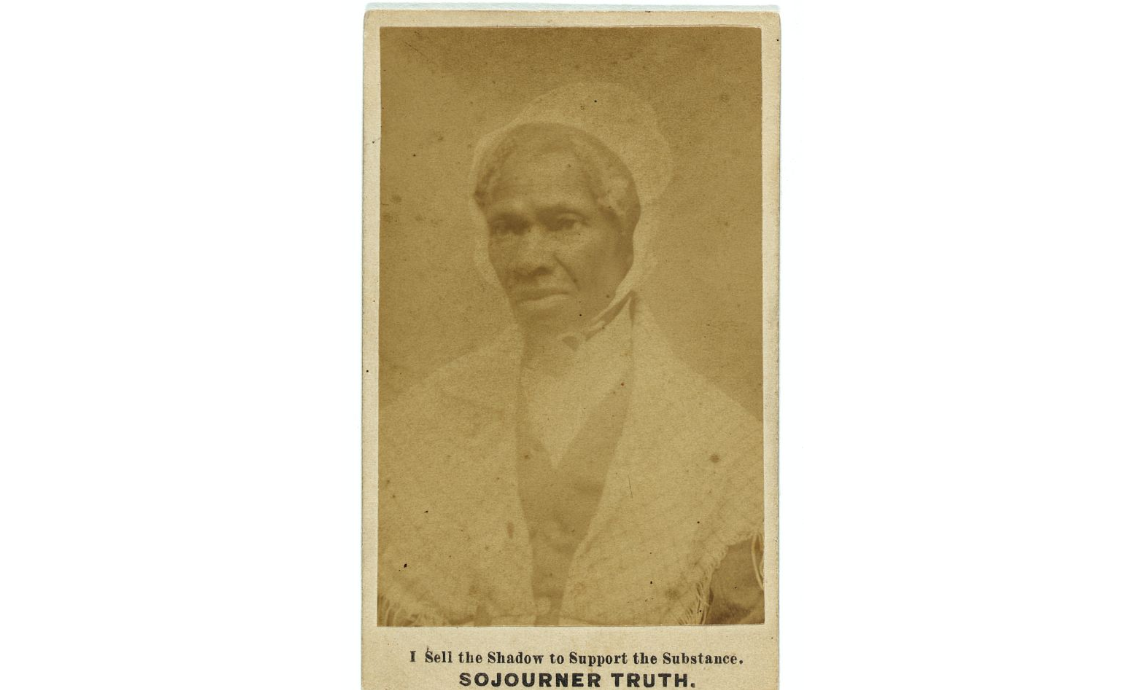
Sojouner Truth 3

Portrait of Sojourner Truth. Caption on portrait says: "I sell the shadow to support the substance." Library of Congress Prints and Photographs Division.

In 1857, Truth moved to Battle Creek, Michigan, where she helped escaped slaves cross to the North via the Underground Railroad. When the Civil War commenced, she worked to recruit African American men to fight in the Union Army and collected money and supplies for the troops. Among those who joined the cause was Truth’s grandson, James Caldwell, who was taken prisoner as a member of the Massachusetts Infantry Regiment and spent years in a few prisoner of war camps.

During the Civil War, she continued to lobby against segregation, and spent time in Washington, D.C. In 1864, following a violent incident she faced on a D.C. streetcar, Truth met with Abraham Lincoln to challenge the segregation of streetcars. She also counseled African American soldiers, taught former slaves domestic skills, and sought out jobs for African Americans who were left homeless and without jobs. In a letter written in February 1864, Truth commented on a visit to freedmen during the war: “It is good to live in it & behold the shackles fall from the manacled limbs. Oh if I were ten years younger I would go down with these soldiers here & be the Mother of the Regiment!”

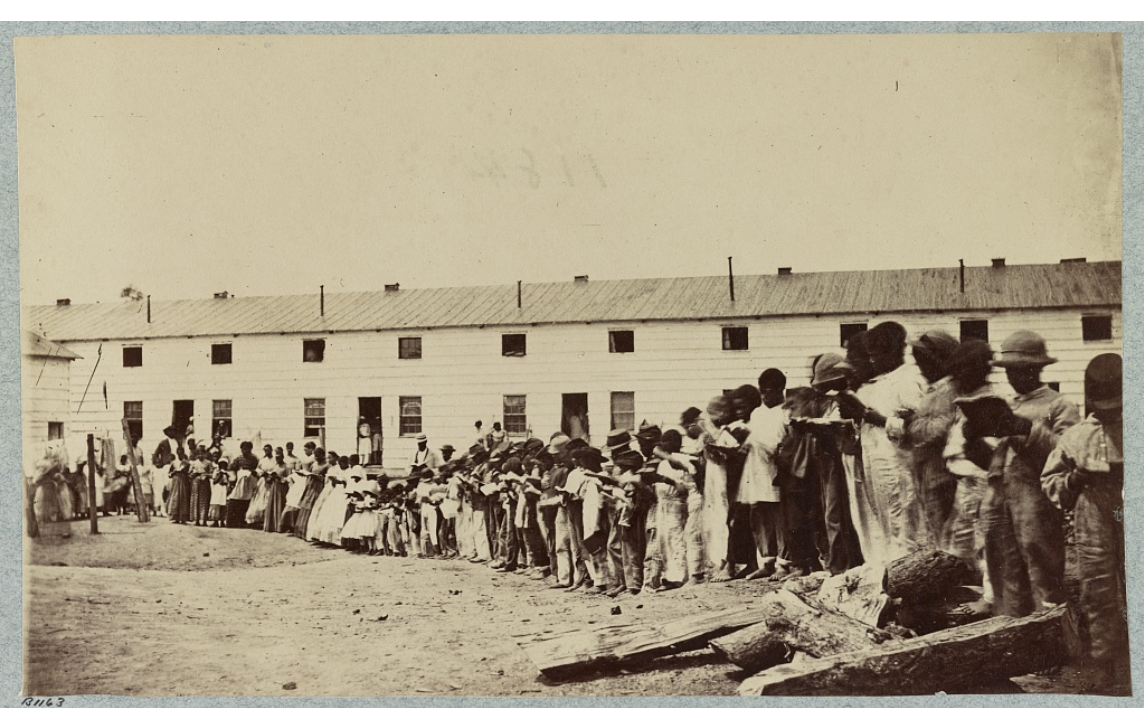
Freedmen's Village

The photograph shows African-American adults and children reading books in front of their barracks. Library of Congress Prints and Photographs Division

In 1865, Truth accepted a position with the National Relief Association at Freedmen’s Village in Arlington Heights. Situated at the intersection between Columbia Pike and South Joyce Street, this stretch of land was a settlement for former slaves between 1863 and 1900. Here, Truth served as “counselor to the freed people,” and provided support at the Freedmen’s Bureau, where she collected provisions for patients in the Freedmen’s Hospital. Truth also advocated securing land grants from the government to former slaves, though these calls largely went unanswered by Congress.

Truth spent her final years in Michigan. She continued to speak on and advocate for the issues of women’s rights, universal suffrage, and prison reform until her death in 1883.

Learn more in “The Narrative of Sojourner Truth,” available at the Library and online.

2020 marked the centennial of women’s suffrage in the United States. 

November 27, 2019 by Web Editor

  • « Go to Previous Page
  • Page 1
  • Interim pages omitted …
  • Page 12
  • Page 13
  • Page 14
  • Page 15
  • Page 16
  • Interim pages omitted …
  • Page 35
  • Go to Next Page »

Primary Sidebar

News

Three men writing on squares of the AIDS Quilt.

New: Explore 2,800+ Arlington Courier Photos

Explore more than 2,800 photos of local life in … ... about New: Explore 2,800+ Arlington Courier Photos

Read More News
See More Service Updates

Center for Local History

Three men writing on squares of the AIDS Quilt.

New: Explore 2,800+ Arlington Courier Photos

Explore more than 2,800 photos of local life in … ... about New: Explore 2,800+ Arlington Courier Photos

Read More Local History

Director’s Blog

Henry Wadsworth Longfellow.

Director’s Message: National Poetry Month

I Hear America April is National … ... about Director’s Message: National Poetry Month

More Director's Blog

Footer

About Us

  • Mission & Vision
  • Charlie Clark Center for Local History
  • News Room
  • Get Email Updates

Administration

  • Policies
  • Library Staff
  • Job Opportunities
  • Propose a Program or Partnership

Support Your Library

  • Friends of the Library
  • Giving Opportunities
  • Donating Materials
  • Volunteer Opportunities

Our Mission

We champion the power of stories, information and ideas.

We create space for culture and connection.

We embrace inclusion and diverse points of view.


Download the Library App

Download the Library App

Arlington County | Terms & Conditions | Accessibility | Site Map
· Copyright © 2026 Arlington County Government ·