• Skip to primary navigation
  • Skip to main content
  • Skip to primary sidebar
  • Skip to footer

Alert

Update: Elevator outages, maintenance and upgrades at Central Library More Info

Alert

Storytimes Will “Take a Nap” through June 20 More Info

Home - Arlington County Virginia - Logo
MENUMENU
  • Join Now
  • My Account
    • Login
    • My Checkouts
    • My Holds
    • My Lists
    • My Reading History
    • About Borrowing
    • About Holds
    • About My Account
  • Hours & Locations
    • All Hours & Locations
    • Holiday Closings
  • News
    • Library News
    • Director's Blog
    • Get Email Updates
  • Contact Us

Arlington Public Library

MENUMENU
  • Search
  • Collections
  • Library Services
  • Events
  • Community Engagement
  • Join Now
  • My Account
    • Login
    • About Borrowing
    • About Holds
    • About My Account
  • Hours & Locations
    • All Hours & Locations
    • Holiday Closings
  • News
    • Library Blog
    • Get Email Updates
  • Contact Us

Center for Local History Blog

Dedicated to collecting, preserving and sharing the history of the community.

Hoover Airport

Post Published: September 19, 2019

Arlington has had congested traffic conditions for almost 100 years...
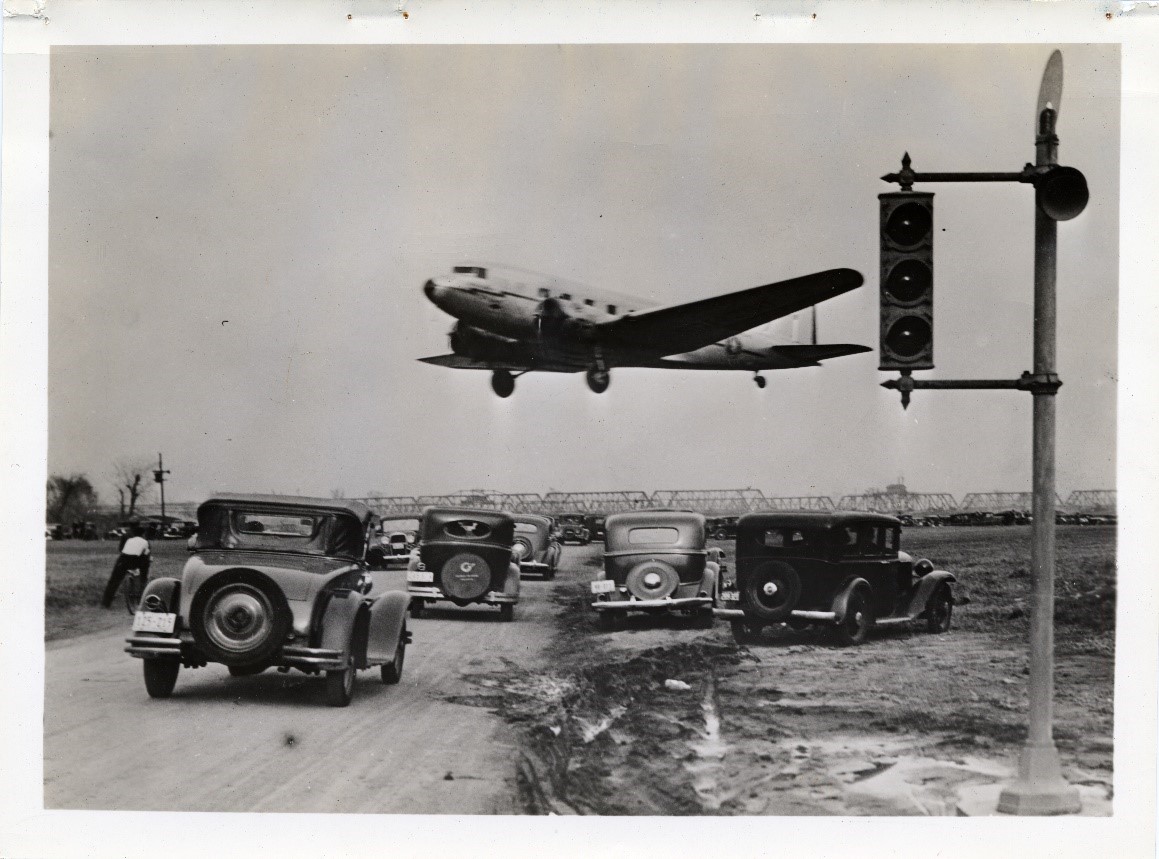
cars on military road

Cars driving on Military Road as a small plane flies in to land at Hoover Airfield, mid-1930s

In 1925, Thomas Mitten, head of the Philadelphia Rapid Transit Company, sought to begin daily passenger flights between Philadelphia and Washington, D.C. as part of the 150th celebration of the Declaration of Independence.

Finding no appropriate airfield in the District, Mitten selected a new site in Arlington to build an airfield, at the present-day site of the Pentagon. The land was just large enough for a single runway and a small hangar.
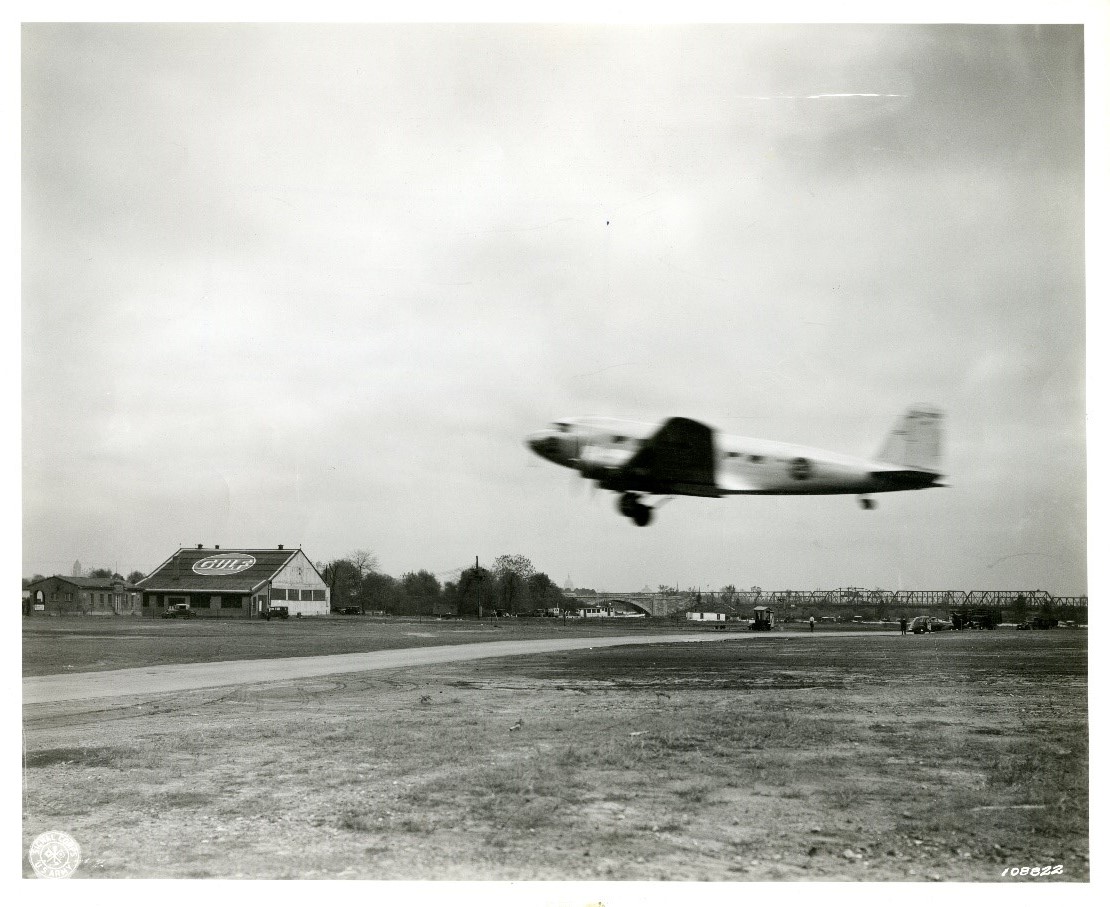
plane flying over military rd 1925

Plane flying over Military Road to land, 1935

On July 16, 1926, 150 years after the signing of the Declaration, the airfield was christened Hoover Field (after then-Secretary of Commerce Herbert Hoover) and started passenger and mail air services.
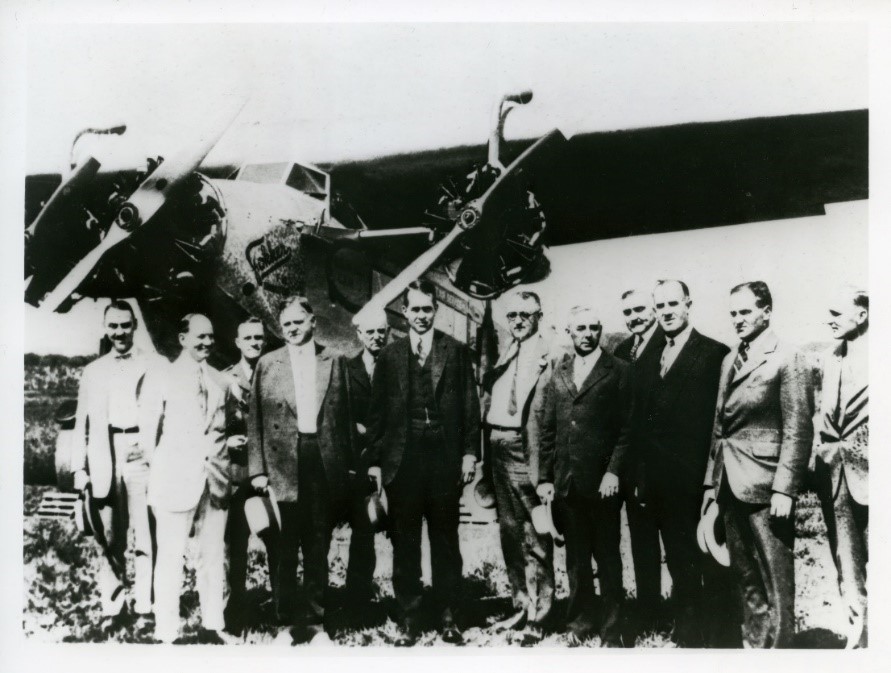
Herbert Hoover

Herbert Hoover (4th from left), Secretary of Commerce, at the opening of Hoover Field with one of the three Fokker Planes of PRT Flights to Philadelphia Sesquicentennial Expo, July 16, 1926.

Hoover Field quickly became known as one of the most dangerous airfields in the country. Multiple problems plagued the field including a major road—Military Road— that ran along the east side of the field, poor visibility from the nearby landfill that burned trash, and a site that was too small to viably hold an airfield.
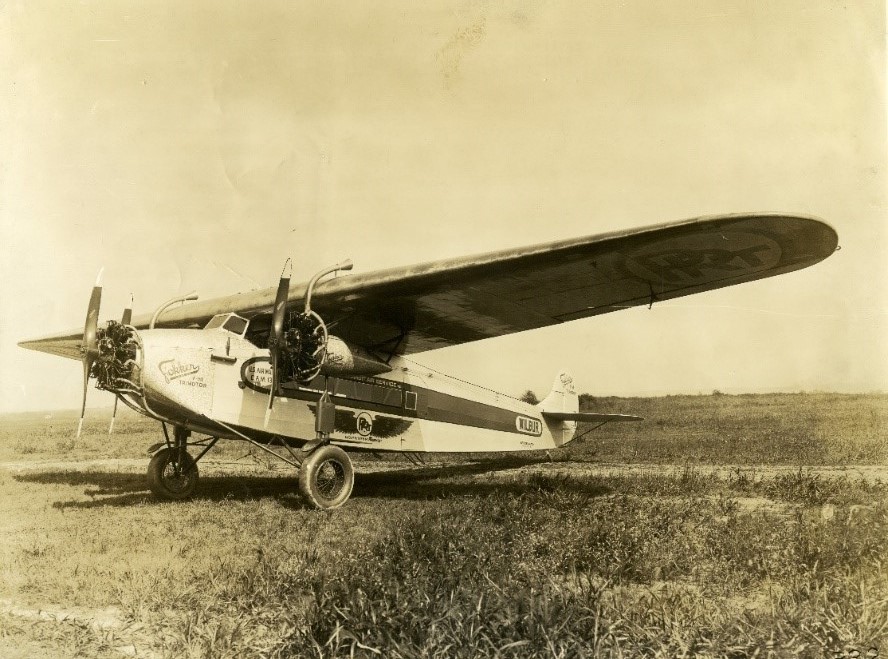
Hoover Airplane

Fokker F-VII Trimotor "Wilbur," operated by the Philadelphia Rapid Transit Air Service between Philadelphia, Washington, and Norfolk, VA for transportation of mail, freight, and passengers at Hoover Field, 1926.

In 1927 a second airfield named Washington Airport opened on land directly adjacent to Hoover Field. The two airfields operated jointly for a time and in 1933 they merged under the name Washington-Hoover Airport.

Washington-Hoover Airport did not yield better safety results than Hoover Field, as they had a reputation of having the poorest aviation ground facilities of any major city in the United States.

Military Road now ran between the two airfields, so airport management attempted to stop traffic on the road to allow planes to land and take off, but were fined by county officials for obstructing traffic. It took a congressional act to allow the airport to install traffic lights, but even with these lights, the road caused dangerous and confusing conditions for both pilots and drivers as seen in the first photograph.

Eventually Military Road was rerouted around the airport.

Washington-Hoover Airport remained open until 1941. With the opening of the much larger Washington National Airport (now known as Ronald Reagan Washington National Airport), Washington-Hoover was no longer needed. The land was purchased by the United States Department of War, and became part of The Pentagon’s grounds.
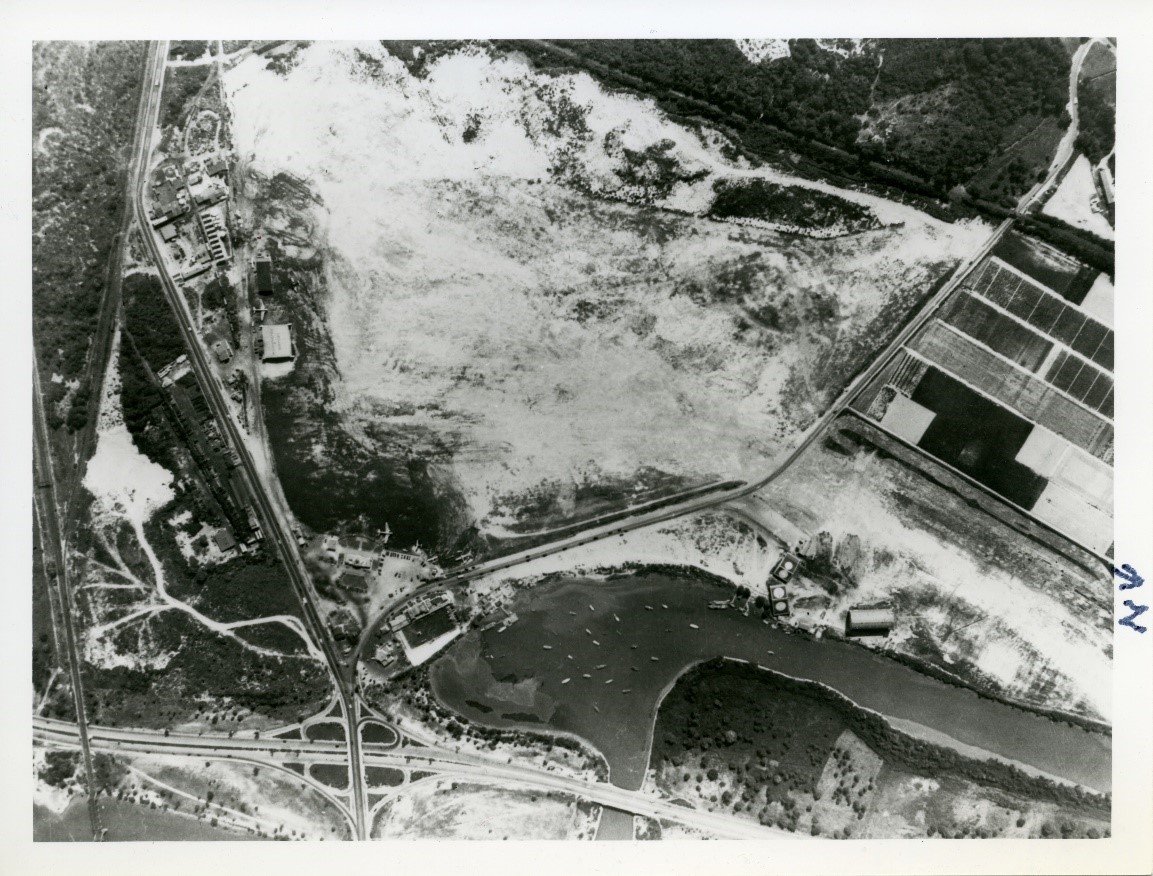
hoover ariel map

Hoover Airport (lower right) with Blimp Hangar and two plane hangars; Washington Airport (center lower left); Military Road bisects the two fields, mid-1930s.

To learn more about Arlington's history, visit the Center for Local History on the first floor of the Central Library.

Do you have a question about this story, or a personal experience to share? 

Use this form to send a message to the Center for Local History.

Center For Local History - Blog Post Message Form

Do you have a question about this story, or a personal experience to share? Use this form to send a message to the Center for Local History.

"*" indicates required fields
This field is for validation purposes and should be left unchanged.

Share Your Story

September 19, 2019 by Web Editor

Remembering September 11: Cards for Firefighters

Post Published: September 10, 2019

Eighteen years ago, children from around the country showed their support for Arlington's first responders with homemade cards filled with drawings and words of encouragement.

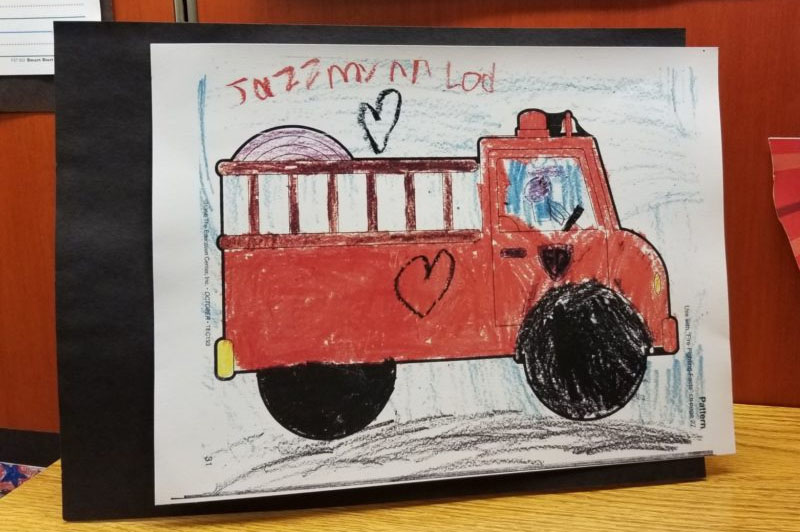
drawing of a firetruck with a heart

Drawing of a red firetruck with heart on the side; child's card from the Center for Local History Community Archives.

On September 11, 2001, terrorists hijacked a west coast-bound plane taking off from nearby Dulles Airport and crashed it into the Pentagon. Within minutes of the attack, firefighters and first responders from Arlington County, Fort Myer, and Reagan National Airport arrived at the scene. Arlington County Fire Department took the lead, establishing an Incident Command System (ICS) across the Washington-metro region to respond to the emergency. Firefighters managed to get the fire under control on the first day, but it took three days to fully extinguish the fire, and reach, as Arlington County Fire Chief Edward Plaugher described it, “the heart of the crash site.”

In total, 189 people died in the attack on the Pentagon, including the 64 passengers and crew on Flight 77.

These attacks devastated our community, but support flowed in to Arlington from around the nation. Children from across the country—from as far as Washington state to as close as Arlington, VA—sent homemade thank you cards to the Arlington County Fire Department in appreciation of their efforts to fight the fire and rescue survivors.

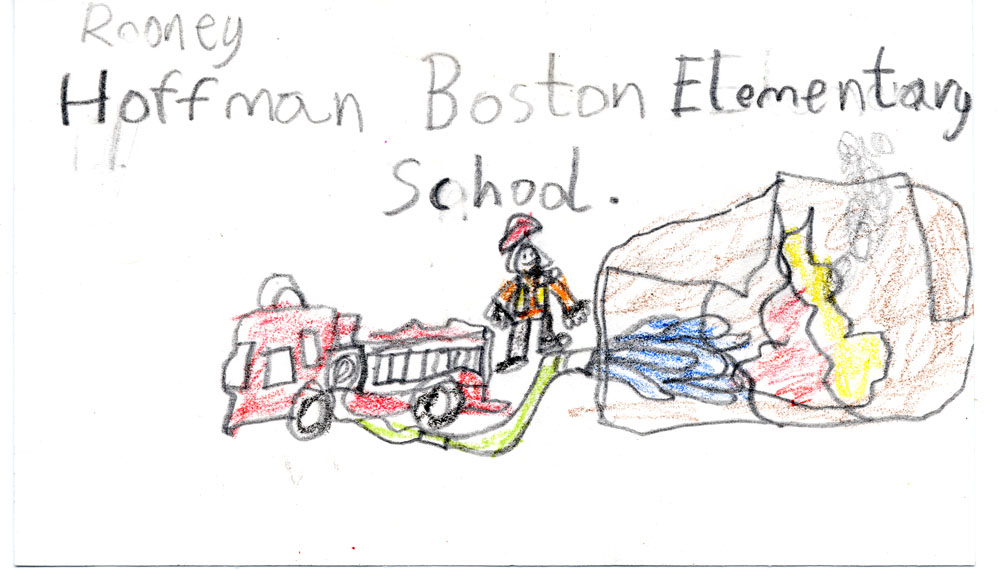
Drawing of firefighter putting out a fire at the Pentagon

Drawing of firefighter using a water-hose from firetruck to put out a fire from a burning building; child's card from the Center for Local History Community Archives.

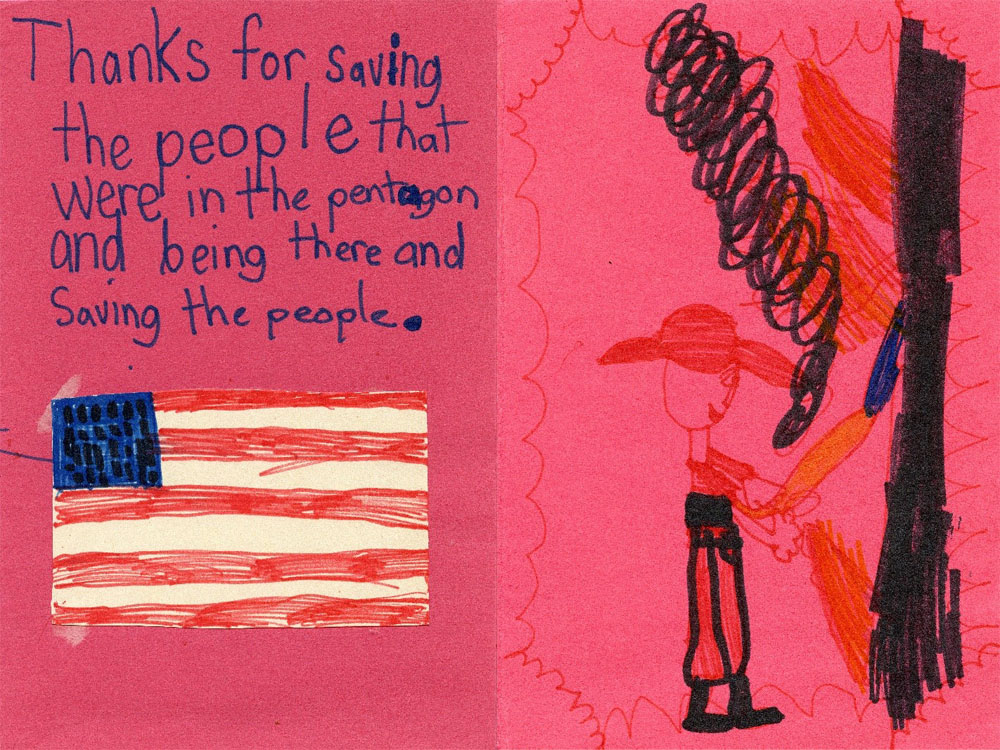
The card pictured below, from a child not named, features an American flag and a firefighter putting out a fire. The child thanks the firefighters for saving lives and being there for the people at the Pentagon. This is a theme for almost all of the cards.

folded card on red construction paper

Child's card from the Center for Local History Community Archives.

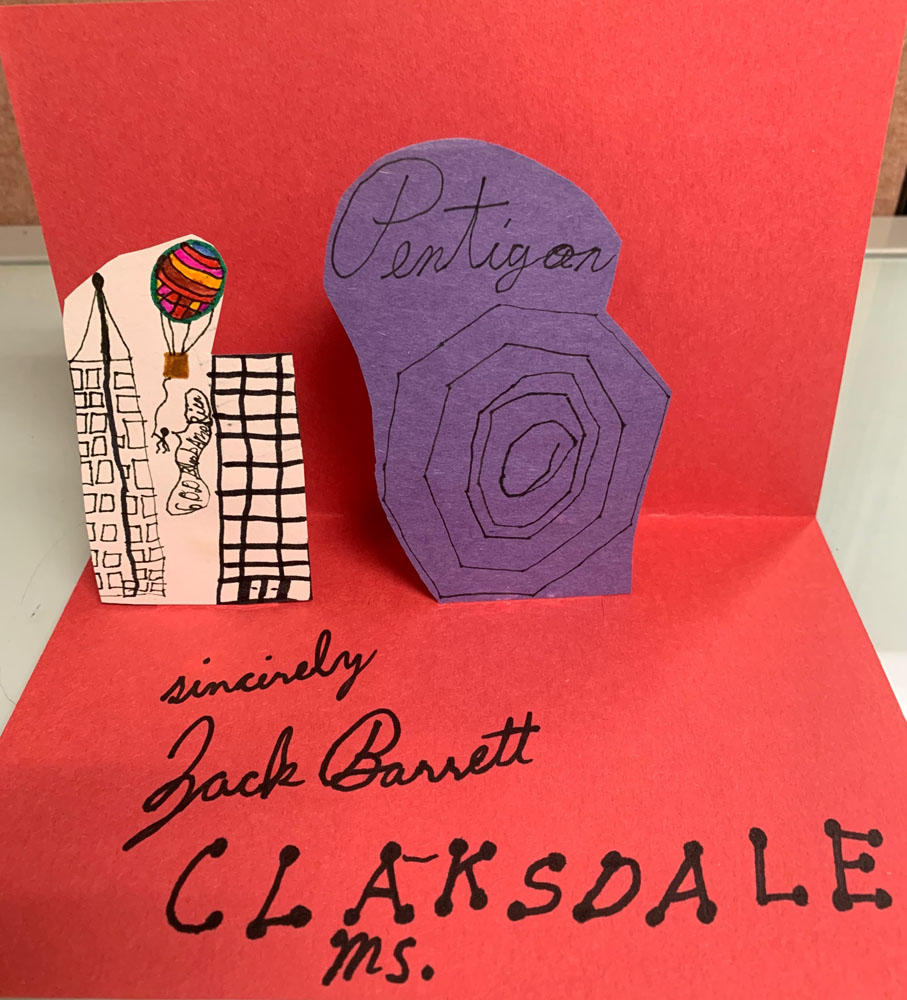
Zack Barrett made a pop-up card thanking the firefighters for keeping our nation running.

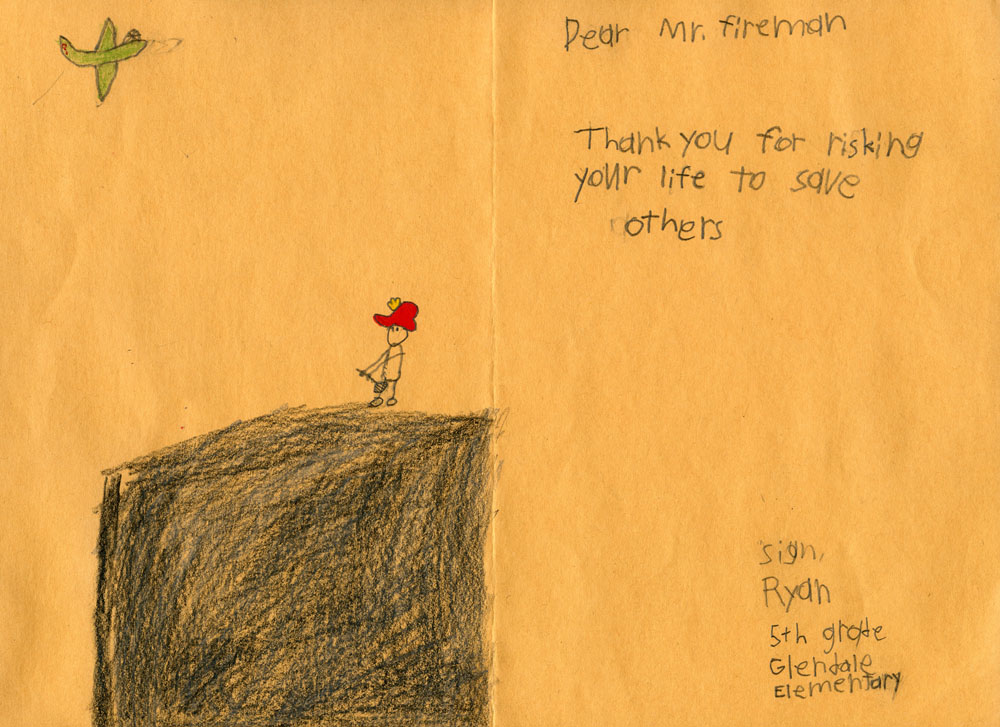
5th grader Ryan drew a picture of a firefighter on top of a building, and thanked them for risking their lives.

Pop-up card of the Pentagon
Drawing of a firefighter standing on a building

Children's cards from the Center for Local History Community Archives.

These, and the hundreds of other unsolicited drawings and letters sent to the Arlington County Fire Department, are preserved in the Community Archive at the Center for Local History.

Some of the young artists and writers no doubt have children of their own today, but the emotions remain as fresh and powerful as the day they were put on paper and mailed from places like Renton, WA, Toledo, OH, Clarksdale, MS - and more locally Ashburn, VA and Washington DC.

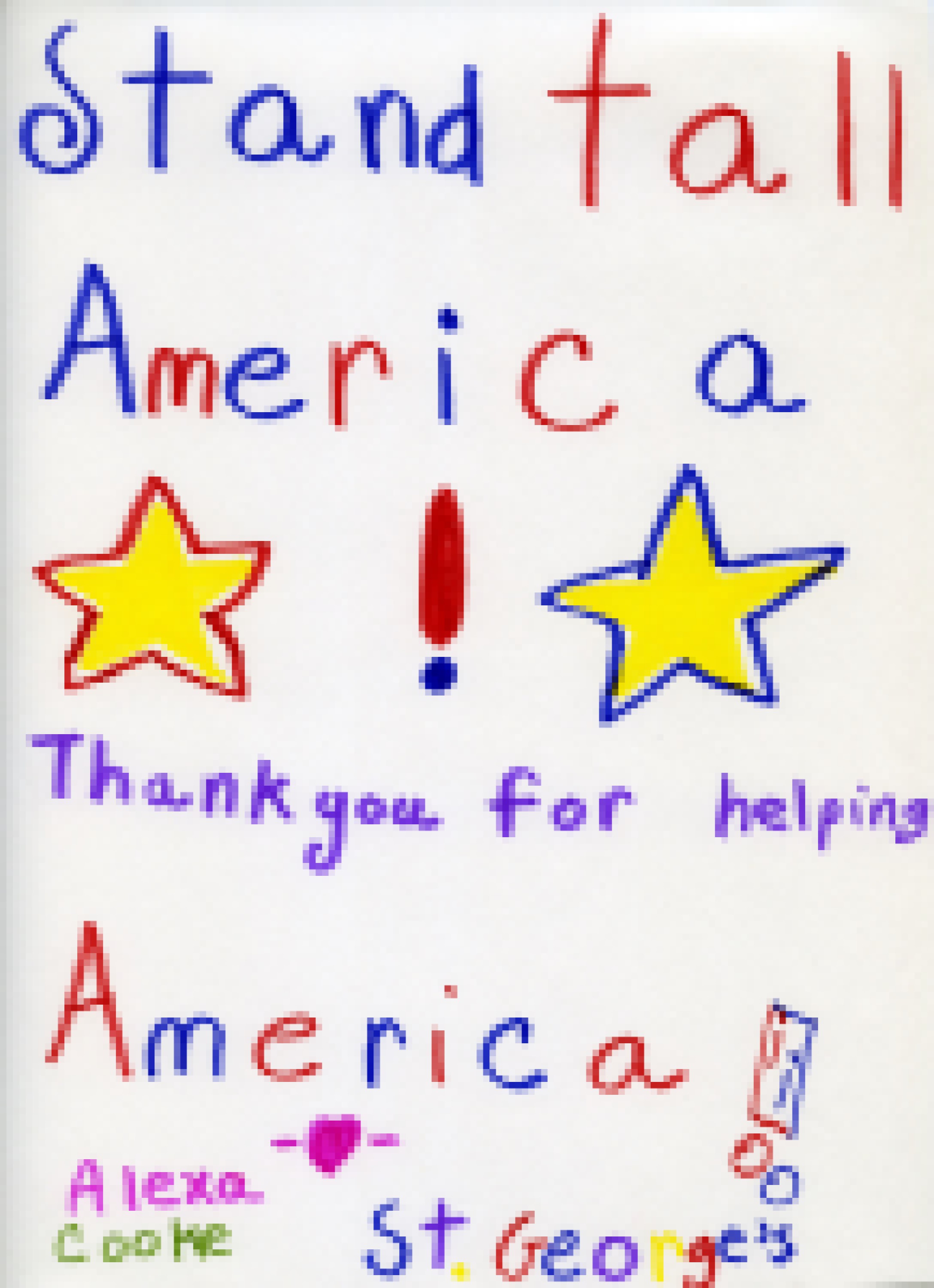
Stand Tall America

Child's card with two yellow stars and an exclamation point that says "Stand tall America! Thank you for helping." From the Center for Local History Community Archives.

Read a detailed account of the Arlington County Fire Department emergency response to the attack on the Pentagon in the blog post, "Attack on the Pentagon - Sept. 11, 2001," published Friday, March 18, 2005 by Arlington Fire Journal & Metro D.C. Fire History.

Listen to oral history interviews with first responders and Arlingtonians about their experiences on Sept. 11, 2001, and the days that followed.

To see more of the Children's Cards, or to learn more about Arlington's history, visit the Center for Local History on the first floor of the Central Library.

Do you have a question about this story, or a personal experience to share? 

Use this form to send a message to the Center for Local History.

Center For Local History - Blog Post Message Form

Do you have a question about this story, or a personal experience to share? Use this form to send a message to the Center for Local History.

"*" indicates required fields
This field is for validation purposes and should be left unchanged.

Share Your Story

September 10, 2019 by Web Editor

The Jefferson School

Post Published: September 5, 2019

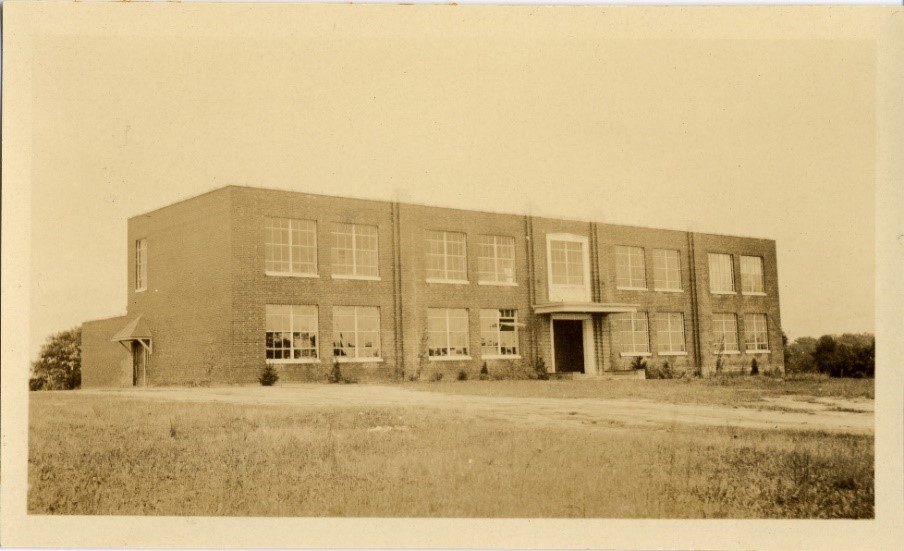
Have you driven or walked past the Army Navy Country Club in South Arlington?  The Jefferson School opened on that same ground in 1870, to educate African-American students.

Jefferson School 1

 Jefferson School Main Building, 1932

The school was named after the "Jefferson district," where it was located. Arlington, then part of Alexandria County, was split into three districts: Jefferson, Arlington, and Washington. The Jefferson School was the first African-American school in the Jefferson district, and one of two schools for African Americans in Alexandria County.

Attendance could be spotty when the school began due to many families needing older children to help with planting and harvesting; in 1872, the school had just ten students. With the help from a local trustee, the Jefferson school got a new building and attendance began to rise. In 1889, the school trustees purchased a new property on Johnson's Hill (at the far eastern end of Columbia Pike). By 1895, attendance had swelled to over 120 students, necessitating the addition of a second story to the building on Johnson Hill, and a second teacher.

photo of the Jefferson School, date unknown

Jefferson School Annex, date unknown.

On June 29, 1912, residents of the Jefferson District petitioned the school board to construct a new school building to replace the two-room school house on Johnson’s Hill. The Board agreed to the petition and purchased a three-acre property from the South Arlington Cemetery Corporation in 1914. One year later, the 4-room school house opened, serving African American students from first to ninth grade.

[History timeline note: Alexandria County was renamed Arlington County in 1920]

By 1930, enrollment exceeded the school’s capacity and Arlington County officials started planning an addition. The addition, which was completed in 1931, doubled the size of the school. One year later, Superintendent Fletcher Kemp renamed the Jefferson School as Hoffman-Boston Junior Colored High School, after Edward C. Hoffman, former principal of the Jefferson School, and Ella M. Boston, former principal of Kemper (another African-American school in Arlington).

Hoffman-Boston became the first African American high school in the county; the first senior class graduated in 1942.

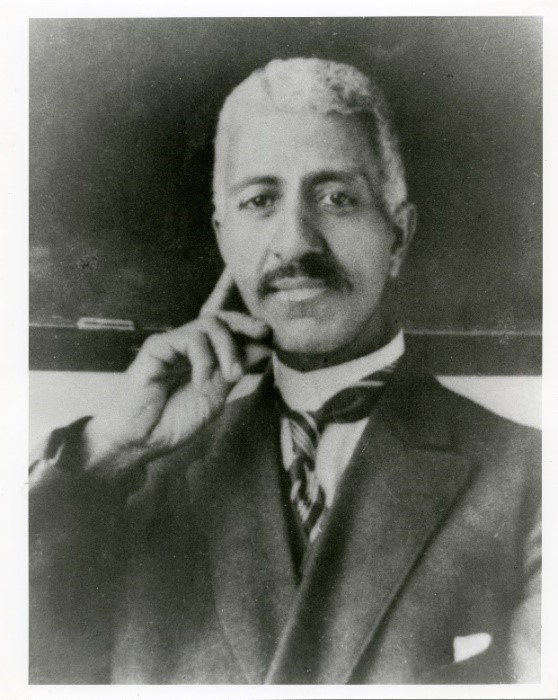
Edward Hoffman

Edward Hoffman, 1866-1926. 

Possibly born at Freedman's Village, and raised in Arlington County, Edward Hoffman attended Howard University, enlisted in the U.S. Navy in 1887, and was Principal of Jefferson School by 1896 until 1926.

Hoffman-Boston High School closed in 1964 as Arlington County integrated its schools. Today the building houses Hoffman-Boston Elementary School, located on South Queen Street.

Sources

"A Guide to the African American Heritage of Arlington County, Virginia," pages 49-51, produced by the Arlington County Historic Preservation Program in 2016, available in print at the Library.

"A Guide to the African American Heritage of Arlington County, Virginia," is also available as a downloadable PDF.

To learn more about Arlington's history, visit the Center for Local History on the first floor of the Central Library.

Do you have a question about this story, or a personal experience to share? 

Use this form to send a message to the Center for Local History.

Center For Local History - Blog Post Message Form

Do you have a question about this story, or a personal experience to share? Use this form to send a message to the Center for Local History.

"*" indicates required fields
This field is for validation purposes and should be left unchanged.

Share Your Story

September 5, 2019 by Web Editor Tagged With: Hoffman-Boston

Bob Peck Chevrolet

Post Published: August 29, 2019

If you've driven down Glebe Road in Ballston over the past few years, you might have noticed the diamond-shaped design on the facade of a new office building at 800 N. Glebe Rd.

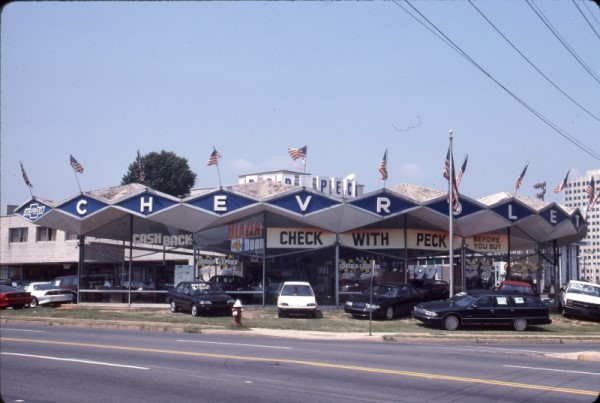
The diamond shape was chosen to commemorate Bob Peck Chevrolet, which stood at the same location from 1964 until 2006.

Bob Peck

Peck Chevrolet, 1991

In 1939, Bob Peck, along with his business partner Lawrence Kenyon, opened Kenyon-Peck Chevrolet in Clarendon. But in 1942, with the onset of World War II, the federal government ordered automobile manufacturers to cease production and instead turn their attention to making military vehicles and other essential military items. Peck and Kenyon survived the declining new car business by selling used cars and servicing vehicles.

Peck and Kenyon ran the business together until the early 1950s when Kenyon left the business, at which point Peck changed the name to Peck Chevrolet.

Bob Peck 2

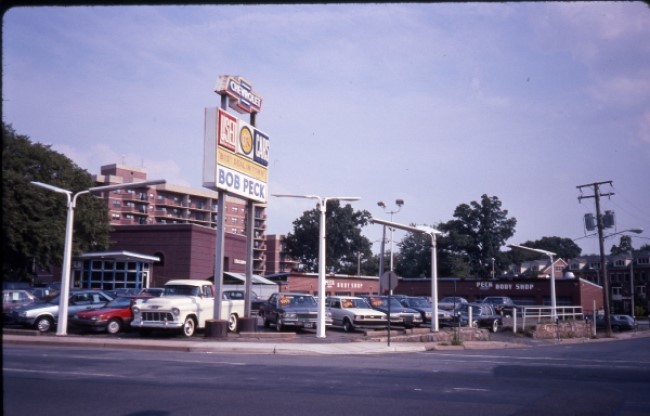
Bob Peck Chevrolet Body Shop, Danville & Wilson Blvd., 1993

In 1964, Bob Peck opened a showroom in Ballston at the corner of North Glebe Road and Wilson Boulevard.

This location—designed by local architect Anthony Musolino—instantly became an iconic Arlington landmark. The dealership featured a transparent circular showroom made of glass with a butterfly roofline of the diamond-shaped, blue panels spelling “Chevrolet.”

Although Peck Chevrolet was demolished in 2006, a replica of the distinctive blue and diamond roofline, along with a Bob Peck historical marker, now welcome visitors to the office building that took its place.

To see more photos of Peck Chevrolet, or to learn more about Arlington's history, visit the Center for Local History on the first floor of the Central Library.

Do you have a question about this story, or a personal experience to share? 

Use this form to send a message to the Center for Local History.

Center For Local History - Blog Post Message Form

Do you have a question about this story, or a personal experience to share? Use this form to send a message to the Center for Local History.

"*" indicates required fields
This field is for validation purposes and should be left unchanged.

Share Your Story

August 29, 2019 by Web Editor

The Great Northern Virginia Elephant Hunt

Post Published: August 22, 2019

The year was 1906. The place, Northern Virginia. If you were standing outside on August 21, you might have seen four enormous grey animals with extremely long noses gallop past, destroying buildings and crops between Arlington and Fairfax County. This might also have been your first sighting of an elephant on the loose.

“Barlow’s Elephants” was an animal act featured at the Luna Park amusement park, in Arlington. The four elephants, Annie, Jennie, Queenie, and Tommie, were part of a very popular traveling show that arrived at Luna Park on August 20, 1906.

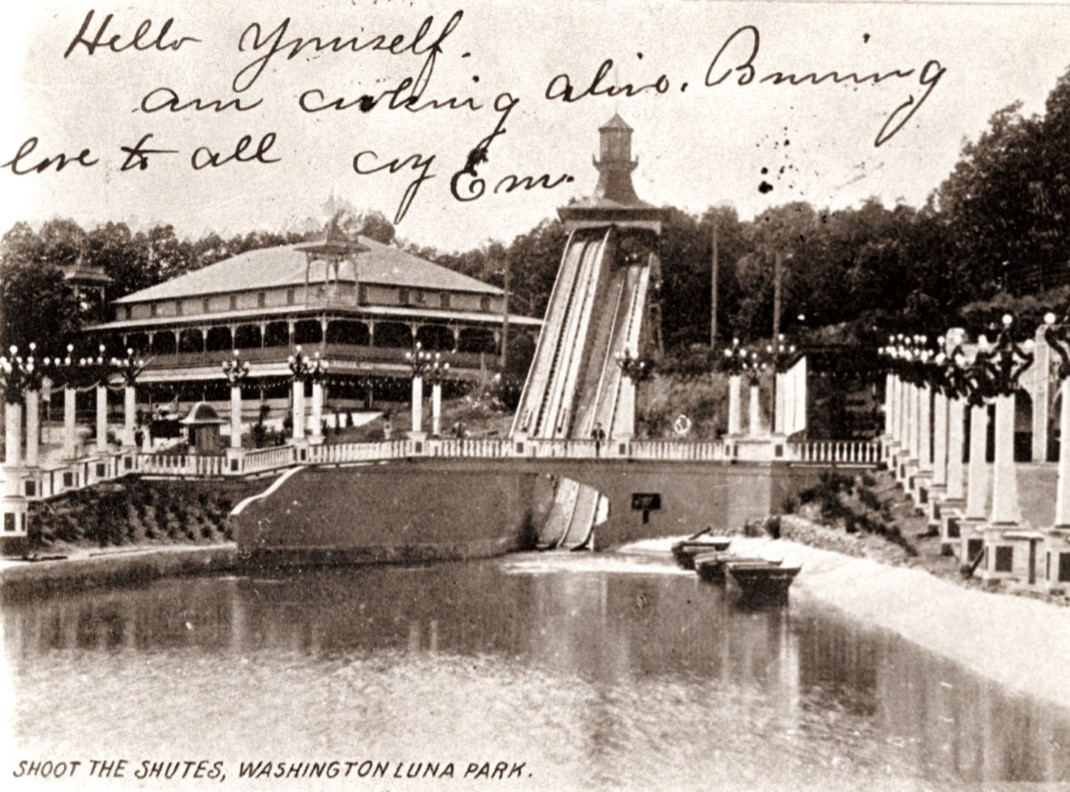
Postcard of Luna Park

Postcard of Shoot the Shutes water amusement at Luna Park. Hand written text might read: "Hello yourself. Am cooking alive. Burning love to all"

The next day, the four elephants escaped from their quarters. Deciding to take matters in their own trunks, they began a tour of the local area. Annie was corralled quickly before she could make a full escape, but Jennie, Queenie, and Tommie remained at large for more than a week.

Peter Barlow, head trainer of “Barlow’s Elephants,” could not catch up with the elephant herd after capturing Annie. So he posted a reward of $500 for the capture of any of the runaways. This inspired the Washington Post to write a short poem in their honor:

“Four little elephants, chained in a row,
They break loose and away they go;
Keepers call it serious “Biz,”
And pachyderm price has surely “Riz.”

A few locals attempted to round up the elephants on their own but were unsuccessful.

Barlow and his crew eventually captured Tommie in Fairfax County, and after eight days, and with help, all four elephants were finally rounded up. The elephants were then loaded on a freight train at Burke Station, and returned safely to Coney Island.

Although we, unfortunately, have no photographs of Annie, Jennie, Queenie or Tommie, we do have images of Luna Park (seen above).

Arlington's Luna Park opened in the summer of 1906 to much fanfare and served as a fun escape for local adults and children for almost a decade. The park stretched along Four Mile Run on South Glebe Road and South Eads Street, covering nearly forty acres (the County’s water pollution plant now occupies this land). Although most of this land was devoted to picnic and playground areas, ten-acres were dedicated to amusement rides, a dance hall, a roller rink, a movie theater, and of course, a space for elephant and other circus animal acts.

To see more items relating to the elephant hunt, visit the Center for Local History on the first floor of the Central Library.

Do you have a question about this story, or a personal experience to share?

Use this form to send a message to the Center for Local History.

Center For Local History - Blog Post Message Form

Do you have a question about this story, or a personal experience to share? Use this form to send a message to the Center for Local History.

"*" indicates required fields
This field is for validation purposes and should be left unchanged.

Share Your Story

August 22, 2019 by Web Editor

Rediscover Grace Murray Hopper

Post Published: August 19, 2019

Mathematician, Navy Veteran, Arlington Resident

Grace Murray Hopper broke down gender barriers throughout her career in the emerging field of computer science.

Ironically, her many accolades even included being named the first computer science "Man of the Year" in 1969 by the Data Processing Management Association.

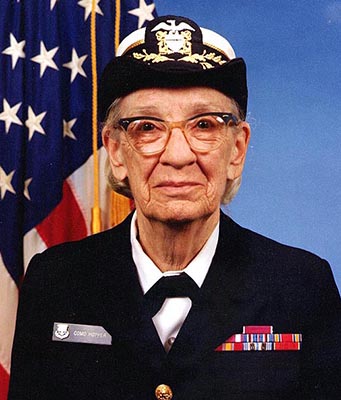
Grace_Hopper

Grace Hopper 1984 - US Government Public Domain

Born in 1906, in New York City, Grace Murray Hopper, nee Grace Brewster Murray was raised in a time most when women were expected to not pursue careers. After the Great Depression employed women were perceived as taking jobs from men deemed to have a greater need to support their families.

However Grace Brewster Murray was raised in a family where education mattered. Murray attended Vassar College for her undergraduate degree in mathematics and physics. She completed her master’s and doctoral degrees in mathematics at Yale in 1930 and 1934, respectively, while continuing to teach at Vassar. Between 1934 and 1937, Yale awarded only seven doctorates in mathematics, and only one to a woman, Murray.

Grace Hopper LOC (002) Resize

Image courtesy of the Library of Congress

Hopper, as she was then known (she married in 1930 and divorced in 1945 but kept her married name for the remainder of her life) taught until 1943 when she felt that she should enlist in the military to support the war effort.

During World War I, women were accepted into the Navy as Yeomen (F), which was the first time women were allowed into the armed forces as anything but nurses. Navy enlistment was once again opened to women in 1942 via the women’s auxiliary WAVES unit (Women Appointed for Voluntary Emergency Service). The Rear Admiral who presented the idea to the Senate stated they expected enlistment “will probably go up around 10,000 before we get through with it,” clearly not expecting the almost 100,000 women who served in the Navy before the end of World War II.

Hopper was accepted on her second enlistment attempt and she graduated at the top of her WAVES class after a 60-day officer training. Gender bias was evident, however, as Hopper received a commission that read “I do hereby appoint him a Lieutenant (junior grade) of the U.S. Naval Reserve.”

When Hopper reported to the Navy Liaison Office at Harvard in 1944, she did not expect to be given only one week to comprehend the workings of the Mark 1 computer. Fortunately, Hopper’s lifelong interest in many disciplines and deep understanding of mathematics provided her the foundation to quickly interpret the groundbreaking technology.

While working on the Mark II computer in 1947, Hopper and her team found a moth inside the inner workings of the machine, which had prevented the relay from operating. Although at the time they did not use the term ‘debugging,’ to describe the incident, this anecdote has been widely used to source the phrase. The remains of the moth are preserved safely inside the group’s log book at the Smithsonian Institution.

In 1949, Hopper entered the private sector to work on the UNIVAC I commercial computer, but remained in the Naval Reserve. The UNIVAC I required original work on a compiler system that would convert one programming language into another. FLOW-MATIC was developed for the UNIVAC system, and via the CODASYL (Committee on Data Systems Language) consortium, Hopper developed COBOL (Common Business-Oriented Language) which was adopted by the Department of Defense and standardized in the 1960s.

Hopper remained in the Naval Reserve after she entered the private sector in 1949 to work on the UNIVAC I commercial computer. Here, she began original work on a compiler system that would convert one programming language into another. FLOW-MATIC was developed for the UNIVAC system, and via the CODASYL (Committee on Data Systems Language) consortium, Hopper developed COBOL (Common Business-Oriented Language) which was adopted by the Department of Defense and standardized in the 1960s.

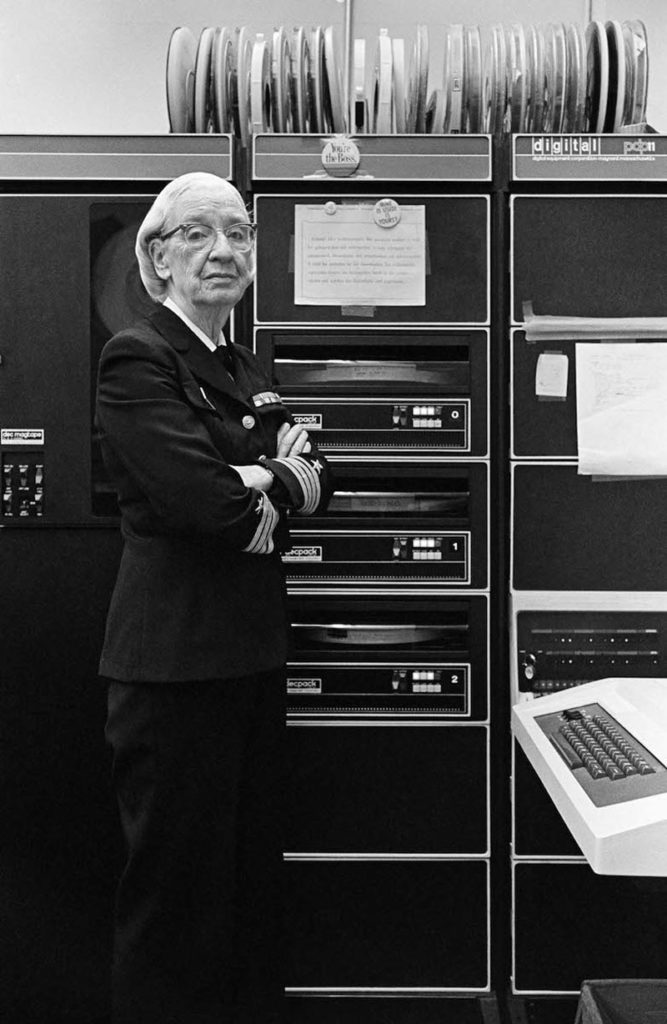
Grace_Murray_Hopper_in_her_office_in_Washington_DC_1978_Lynn_Gilbert

Image courtesy of Lynn Gilbert copyright 1978

Although Hopper attempted to retire from the Naval Reserve as a Commander in 1966, she was recalled to active duty in 1967 and served as the director of the Navy Programming Languages Group as a Captain. Hopper retired a second time in 1971 but was recalled to active duty once again. She was promoted to Commodore, later renamed ‘Rear Admiral (Lower Half),’ making her one of very few female admirals.

Hopper had a passion for collecting, filling three apartments in RiverHouse in Pentagon City with the objects she treasured throughout her extensive travels and career. Six years after her final retirement, Grace Murray Hopper died at her home in RiverHouse on New Year’s Day, 1992. She was buried at Arlington National Cemetery with full military honors and posthumously received the Presidential Medal of Freedom in 2016, one of many military awards she received during her life. Her other awards include the World War II Victory medal, the Defense Distinguished Service medal, two National Defense Service medals and three Armed Forced Reserve medals.

Her biographer, Kathleen Williams, describes her as a person with “an intense focus, a tireless dedication, and an irrepressible urge to innovate.” In addition to her many honorary degrees, titles and accolades, the largest gathering for women in computing is named in her honor, with more than 15,000 women attending each year. Arlington County maintains a park on the grounds of RiverHouse in her honor.

References

Billings, C. W. (1989). Grace Hopper, Navy Admiral & Computer Pioneer. Hillfield, NJ: Enslow.

Grace Murray Hopper (1906-1992): A legacy of innovation and service. (2017, February 27). Retrieved from https://news.yale.edu/2017/02/10/grace-murray-hopper-1906-1992-legacy-innovation-and-service

Lee, J. (n.d.). Grace Brewster Murray Hopper. Retrieved from https://history.computer.org/pioneers/hopper.html

Learn More

“Grace Hopper: Admiral of the Cyber Sea” by Kathleen Williams in Library of Naval Biography, Naval Institute Press, 2012.

“Grace Hopper: Queen of Computer Code” by Laurie Wallmark

“Grace Hopper and the Invention of the Information Age” by Kurt Beyer

Watch a popular video of Grace Hopper lecturing at MIT: https://www.youtube.com/watch?v=ZR0ujwlvbkQ

"Preservation Today: Rediscovering Arlington" is a partnership between the Arlington Public Library and the Arlington County Historic Preservation Program.

Preservation Today: Rediscovering Arlington
Stories from Arlington’s Historic Preservation Program

Arlington’s heritage is a diverse fabric, where people, places, and moments are knitted together into the physical and social landscape of the County.

Arlington County’s Historic Preservation Program is dedicated to protecting this heritage and inspiring placemaking by uncovering and recognizing all these elements in Arlington’s history.

To learn more about historic sites in Arlington, visit the Arlington County Historic Preservation Program.

August 19, 2019 by Web Editor

“If You Don’t Vote, You Don’t Count”

Post Published: August 15, 2019

Can you imagine having to pay a tax for the three previous years before you could cast your vote in an election? Or registering to vote for a federal election, and then discovering that doing so had not registered you to vote in a local election?

Poll taxes and dual registrations are two systems that were used in Virginia between 1876 and 1966 in order to restrict who had access to voting.

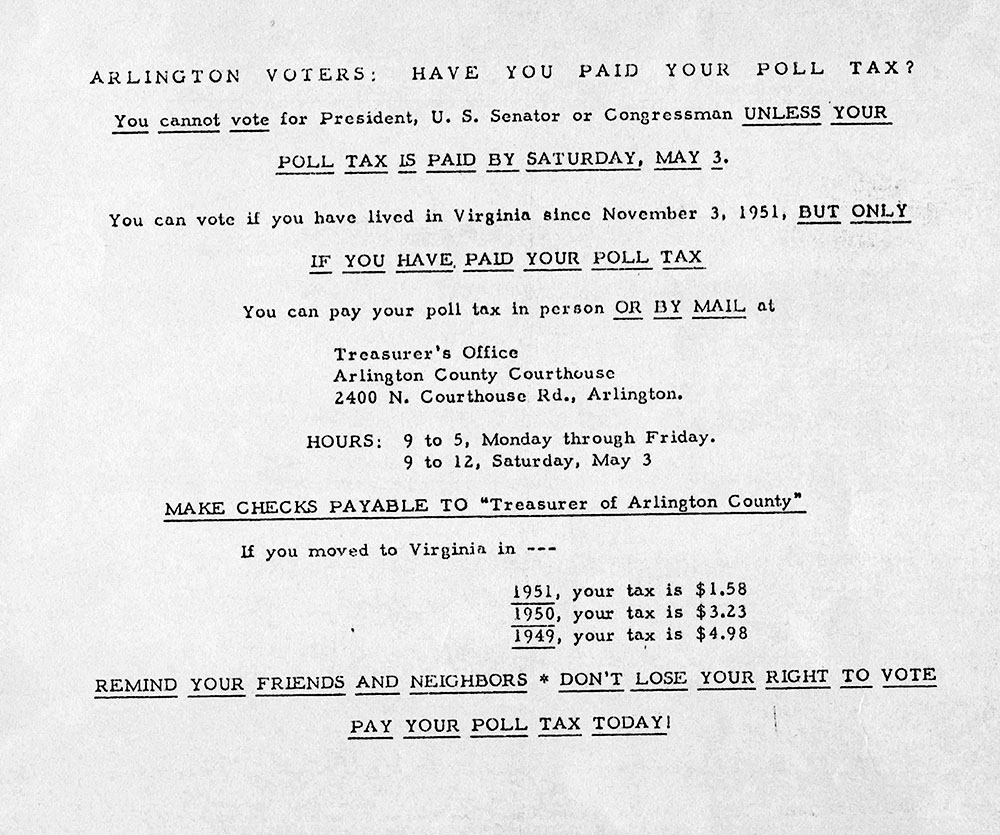
1951 Flyer reminding voters to pay their 1951 Pol Tax

1951 flyer telling Arlington residents how to pay their poll tax in order to vote in the upcoming election

In 1876, after the Fifteenth Amendment granted African-Americans the right to vote, Virginia passed a poll tax to restrict African-American men from voting. Although this law was repealed in 1882, in 1901 the Virginia General Assembly called for a new constitution with the explicit purpose to secure the right of suffrage of the state's white men, and to take away the right to vote from anyone in the state who wasn't white.
(Read the Report of the proceedings and debates of the Constitutional Convention, state of Virginia : held in the city of Richmond June 12, 1901, to June 26, 1902)

The new constitution, which passed in 1902, reinstated the poll tax. This required voters to pay a tax of $1.50 six months prior to an election for each of the three years preceding an election. This disenfranchised approximately 90% of the black men and, counter to the intentions of those who had drafted the new constitution, nearly 50% of the white men who had previously been registered to vote in Virginia. The 1902 constitution also created an administrative structure that was difficult for any average citizen to navigate, further disenfranchising many poor men.

(American history timeline note: the 19th Amendment of the U.S. Constitution was ratified in 1920, prohibiting the states and the federal government from denying the right to vote to citizens of the United States on the basis of sex.)

While the 24th Amendment of the U.S. Constitution (ratified in 1964) outlawed poll taxes in federal elections, it did not prevent states like Virginia from continuing to require poll taxes for state and local elections. At the time five states—Alabama, Arkansas, Mississippi, Texas, and Virginia—retained poll taxes.

Virginia maintained poll taxes for state and local elections until 1966 when the Supreme Court ruled in Harper v. Virginia State Board of Elections that poll taxes were unconstitutional. Four years later, the Virginia Constitution of 1971 explicitly forbid the Virginia General Assembly from requiring poll taxes as a prerequisite to voting.

Between 1964 and 1966, when Virginians were required to pay poll taxes to vote in state and local elections but not in federal elections, Virginia instituted the dual registration system. Put in place when ratification of the 24th Amendment was all but certain, the dual registration system automatically extended federal registration to those who registered for state and local elections, but it did not automatically extend state and local registration to those who registered for federal elections. Since registering to vote and paying the poll tax were separate actions, this system disproportionately hurt those who only registered for federal elections.

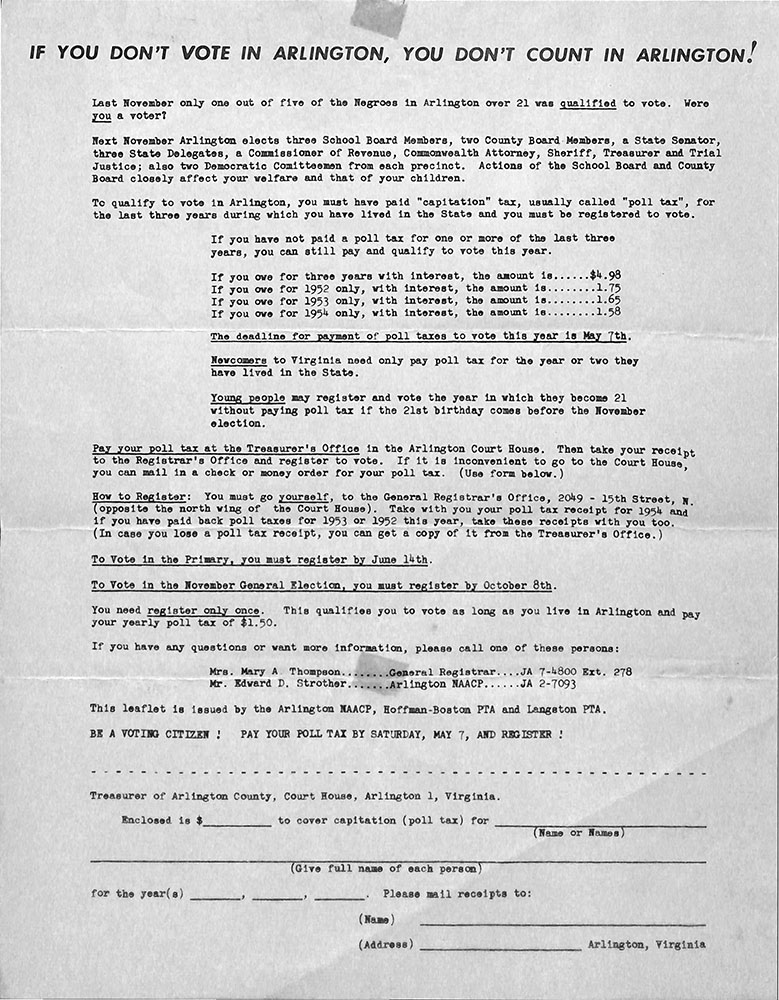
These flyers were created in the 1950s by the local NAACP, and the Hoffman-Boston and Langston PTAs. They were designed to encourage Arlington's African-American residents to pay their poll taxes in order to vote in upcoming elections, frequently using a variation of the phrase, "If you don't vote in Arlington, you don't count in Arlington."

1954 Poll Tax Flyer from NAACP and Hoffman Boston PTA

1954 flyer on how to pay your poll tax in order to vote in upcoming School Board, County and State elections, created by the NAACP and Hoffman Boston and Langston PTAs. View item information on ProjectDAPS.

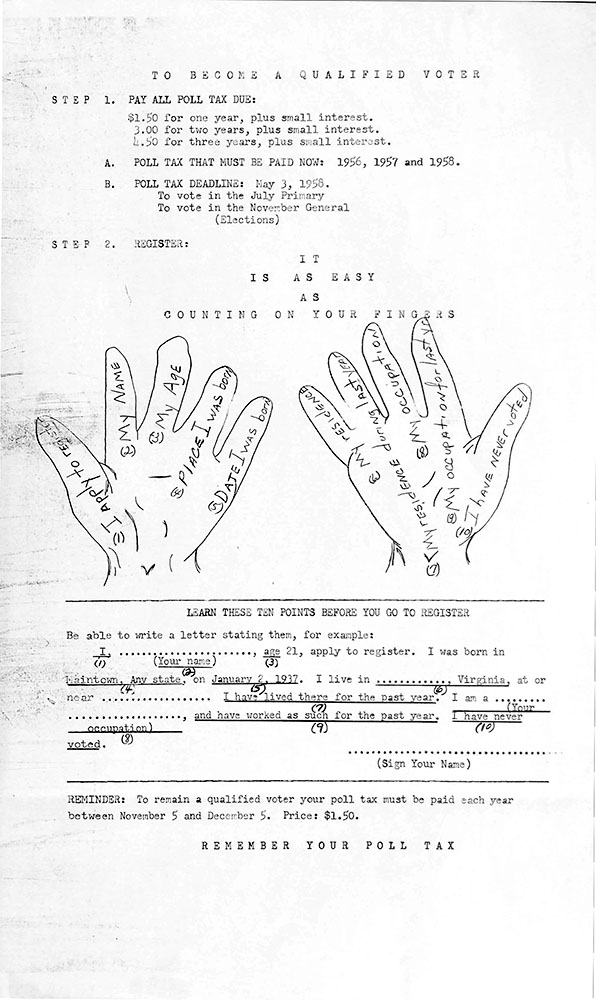
1958 flyer on the 10 points to learn in order to become a qualified voter

1958 flyer on the 10 points to learn in order to become a qualified voter. View item information in ProjectDAPS.

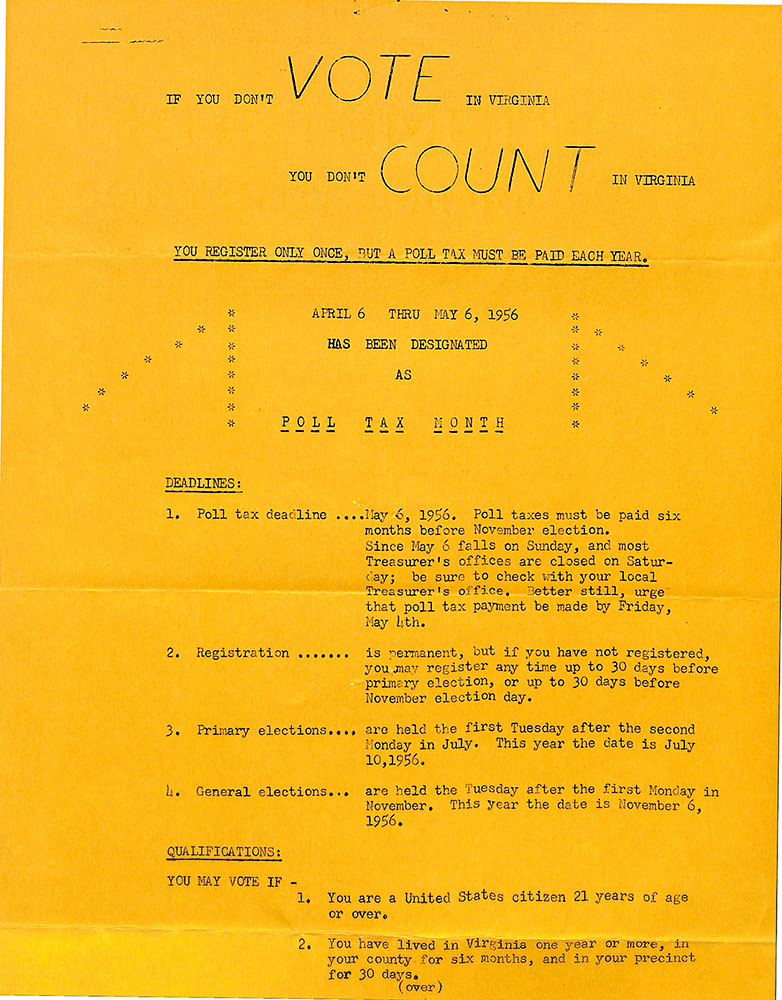
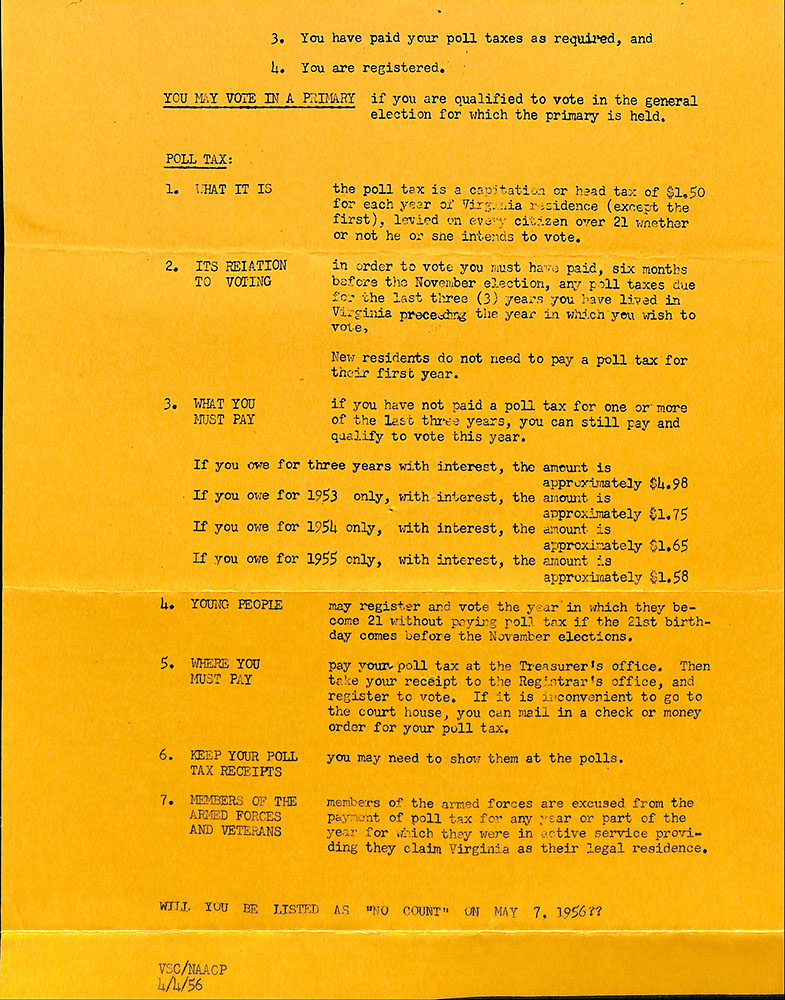
1950s NAACP Virginia Poll Tax Flyer, page 1
1956 NAACP Virginia Poll Tax Flyer

Poll Tax Month: a 1956 Virginia Poll Tax Flyer created by the NAACP, explaining what the poll tax was and how it related to being able to vote in both local and federal elections. View item information in ProjectDAPS.

Portia Haskins of Arlington filed suit against the Virginia Board of Elections and the Arlington County general registrar after she was required to re-register to vote in the November 1965 election despite paying her poll taxes in February and registering for federal elections the previous year.

On April 1, 1966, in Portia A. Haskins v. Levin Nock Davis et al. a Federal District Court ruled in favor of Haskins arguing that “[t]he provisions of Virginia’s dual voter registration…which treat persons who are registered only for federal elections differently from persons registered for all elections violate the equal protection laws of the 14th Amendment.”

To see more items relating to the poll tax, visit the Center for Local History's ProjectDAPS website, or visit the Center for Local History on the first floor of the Central Library.

Do you have a question about this story, or a personal experience to share? 

Use this form to send a message to the Center for Local History.

Center For Local History - Blog Post Message Form

Do you have a question about this story, or a personal experience to share? Use this form to send a message to the Center for Local History.

"*" indicates required fields
This field is for validation purposes and should be left unchanged.

Share Your Story

August 15, 2019 by Web Editor Tagged With: Hoffman-Boston

Pencil Me In: Waneta’s Dance Card

Post Published: August 7, 2019

Have you ever “penciled someone in” for coffee, or said “my dance card is full” when you're busy?

Both sayings refer back to the historic dance cards used at formal dances in the 19th and early 20th centuries.

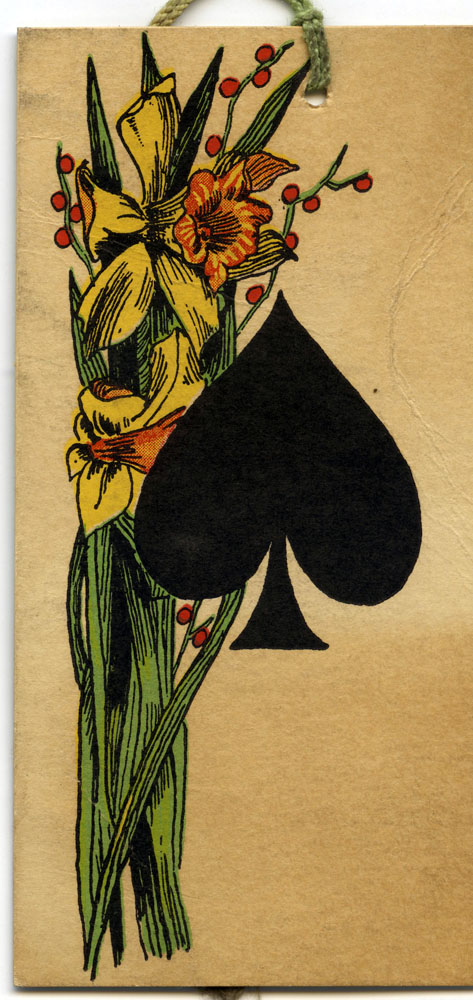
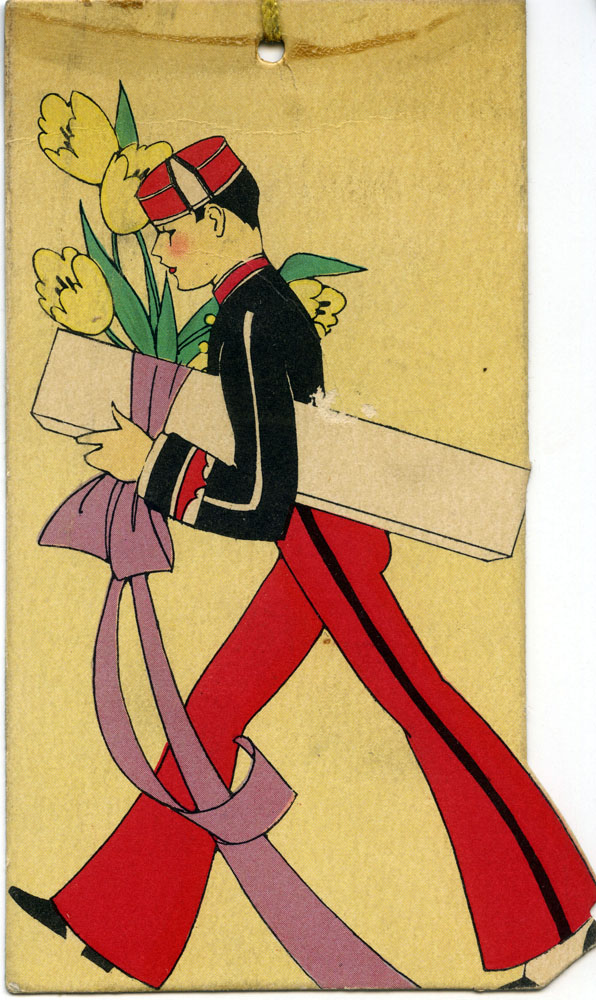
dance card decorated with daffodils and a spade
dance card decorated with a drawing of a bellboy carrying a flower box

These beautifully decorated dance cards, from Waneta Blue’s time at the University of Virginia during the 1920s, were not only a practical way to keep track of social engagements and dance partners, but also a small keepsake from formal dances and parties.

Dance cards became popular at balls and social events in Europe and the United States during the 1800s and remained common at dances planned for students until the 1940s.

At a dance, young men wrote their names just once in the card of each of the young women with whom they wanted to dance. Dance cards often looked like a booklet with decorative cover, and included the order of dances, including the music and composers.

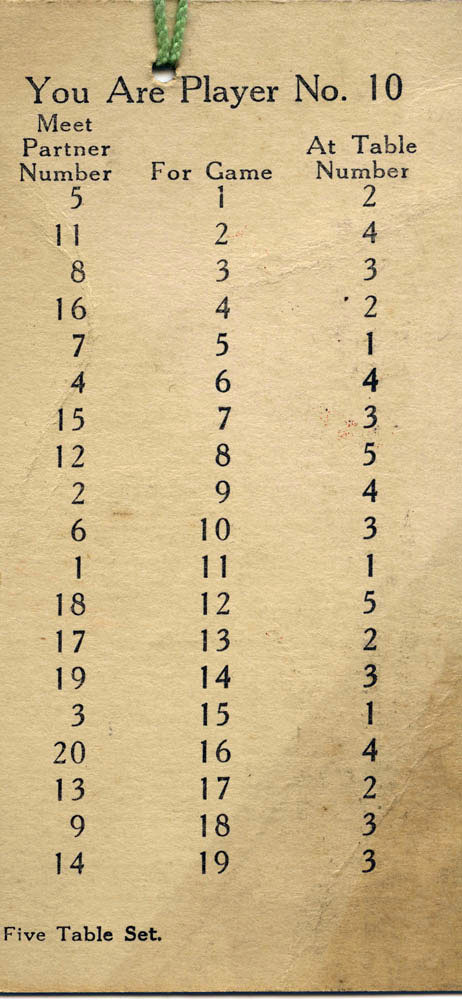
Card reading "You are player no. 10" and then instructions for where to sit and how to find your partner
Waneta Blue's dance card, with no names filled in

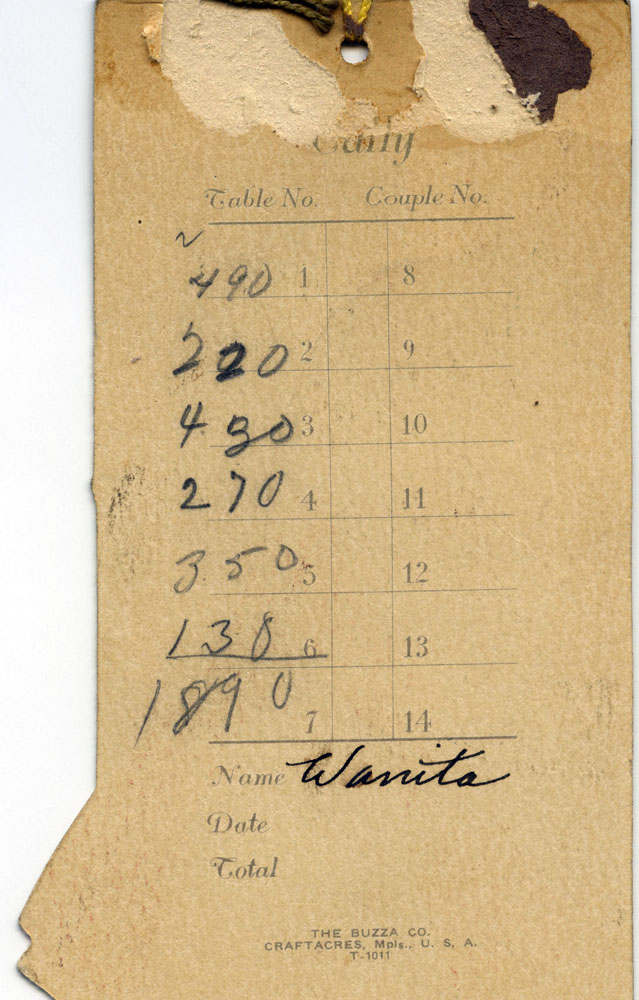
As you’ve probably noticed, it was completely up to the men to decide to put their names on a woman’s dance card, and to initiate the dancing. While Waneta Blue's card doesn’t reveal any of the names of her dance partners, her evening appears to have also included at least one table game with a randomly assigned partner.

One interesting note: judging by the records in our collection, Waneta Blue appears to have experimented at times with spelling her first name with an "i" instead of an "e." An example of this can be seen at the bottom of her dance card.

The items photographed here are from our Community Archives collection, Records of the Blue Family. The collection also includes greeting cards to members of the family, school records of the Blue sisters, and more materials from Waneta Blue’s years at the University of Virginia in the 1920’s.

To learn more, visit the Center for Local History on the first floor of the Central Library.

Do you have a question about this story, or a personal experience to share? 

Use this form to send a message to the Center for Local History.

Center For Local History - Blog Post Message Form

Do you have a question about this story, or a personal experience to share? Use this form to send a message to the Center for Local History.

"*" indicates required fields
This field is for validation purposes and should be left unchanged.

Share Your Story

August 7, 2019 by Web Editor

Dog Days with the Allwine Children

Post Published: August 1, 2019

Arlingtonians have always loved dogs...

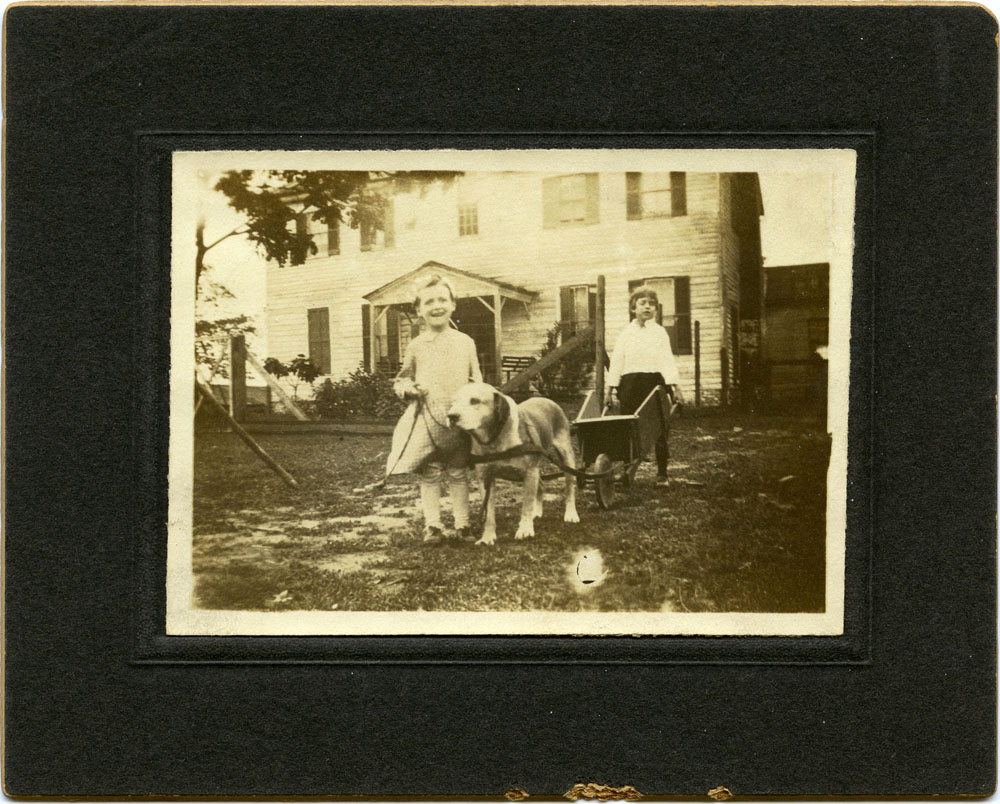
Two children and a dog cart, date unknown, after 1912

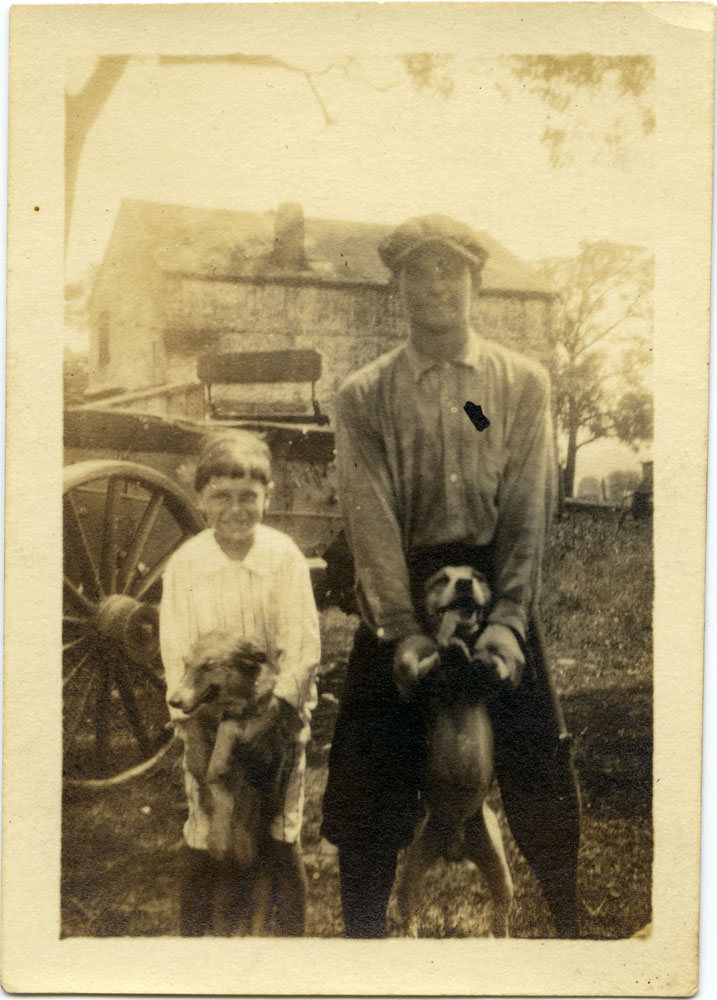
The inscription on this photo reads: "V.A., A.A., Taft" - Vivian Allwine, --- Allwine (her brother, first name unknown), and Taft the dog.

In the early part of the 1900s, on the site that later became Reagan National Airport, Vivian Allwine Ford grew up on a farm named Abingdon Plantation.

She was born at home, on December 31, 1912, and lived there with her mother, father, and six brothers until 1922. The Allwine family grew corn, tomatoes, apples, and peppers, and sold their produce in Washington, DC. They also raised animals including donkeys, chickens and turkeys.

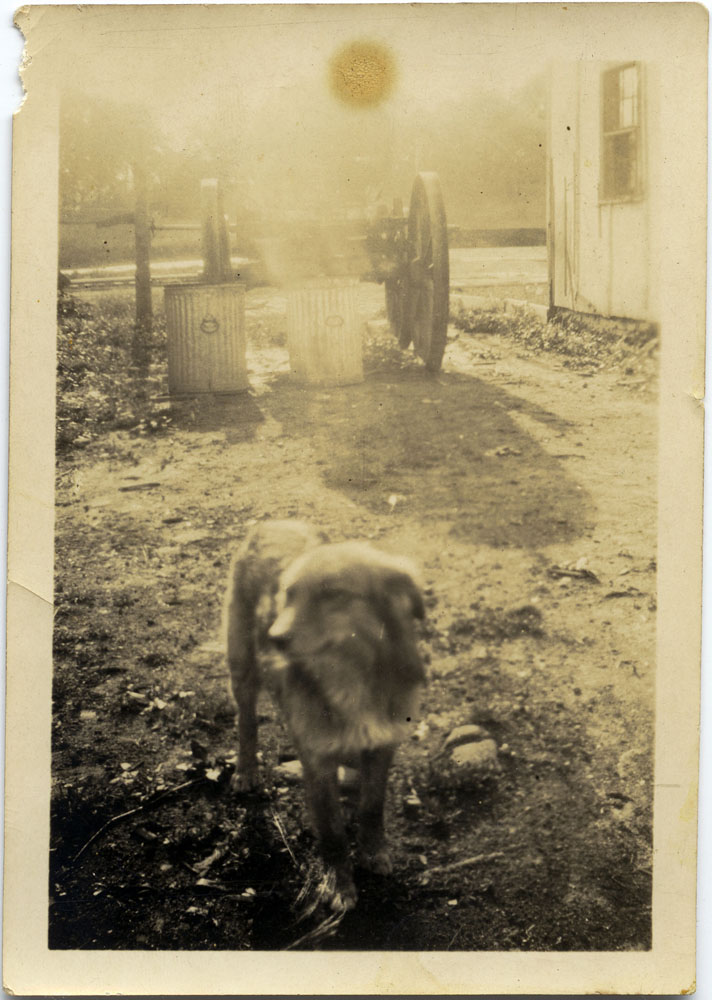
But as these photos show the Allwine family children were particularly fond of their four-legged best friends.

Two boys with dogs
Collie looking dog

Although the dogs in the photos are not identified by breed, they appear to be mixed herding and hunting dogs – maybe a collie and a beagle mix - which would have made them well suited for farm work as well as playing with rambunctious children. Based on the inscription on the back of the first photo, one of the dogs appears to have been named "Taft," possibly after President William Howard Taft who held office from 1909-1913.

In an oral history conducted in 2005, when she was 92, Vivian Allwine Ford recalled life on Abingdon Plantation in the 1920’s. Her father managed the brickyard on the property and her mother, Jeanette, opened a small grocery store on 23rd Street in Arlington.

The original Abingdon Plantation was once the home of George Washington’s stepson, John Parke Custis. Custis bought the land in 1778 in order to raise his family near Washington’s home at Mt. Vernon, as well as the family home of his wife Eleanor Calvert, in Mt. Airy, Maryland.

The remains of the plantation are still visible today near the airport.

To learn more about Arlington's history, visit the Center for Local History on the first floor of the Central Library.

Do you have a question about this story, or a personal experience to share? 

Use this form to send a message to the Center for Local History.

Center For Local History - Blog Post Message Form

Do you have a question about this story, or a personal experience to share? Use this form to send a message to the Center for Local History.

"*" indicates required fields

This field is for validation purposes and should be left unchanged.

Share Your Story

August 1, 2019 by Web Editor

Thrills and Chills at Arlington Beach

Post Published: July 24, 2019

A day at the beach sounds relaxing, but visitors to Arlington Amusement Beach in the 1920s sometimes got more thrills - and even chills - than anticipated…

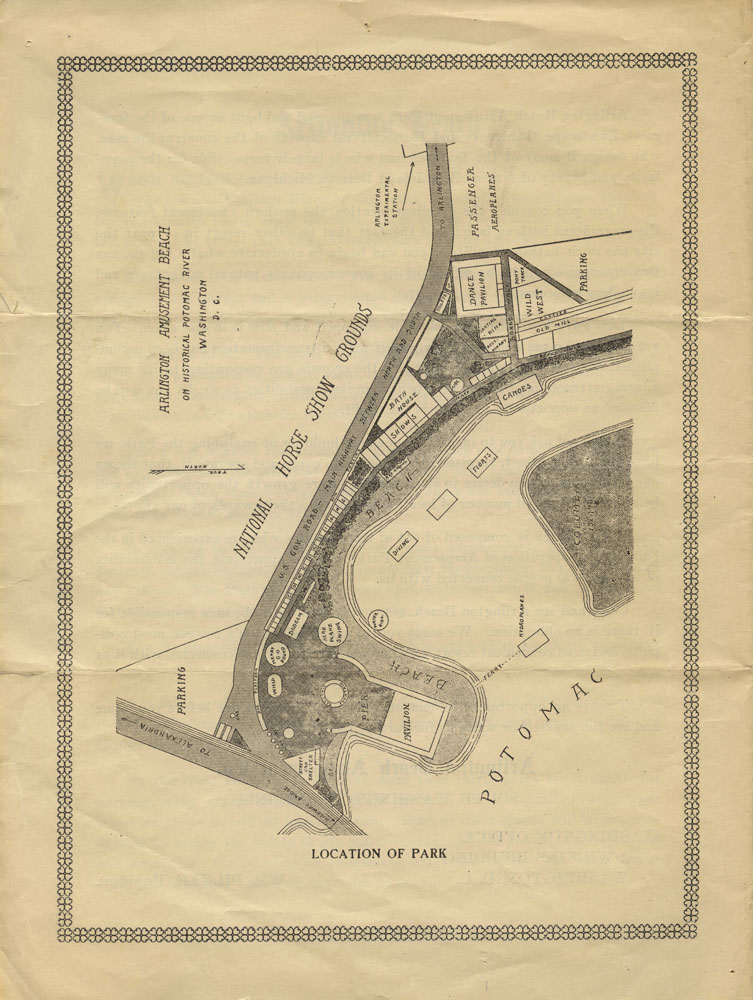
Located along the Potomac River near present-day Long Bridge Park from 1923-1929, Arlington Amusement Beach was also quite close to a local aviation field.

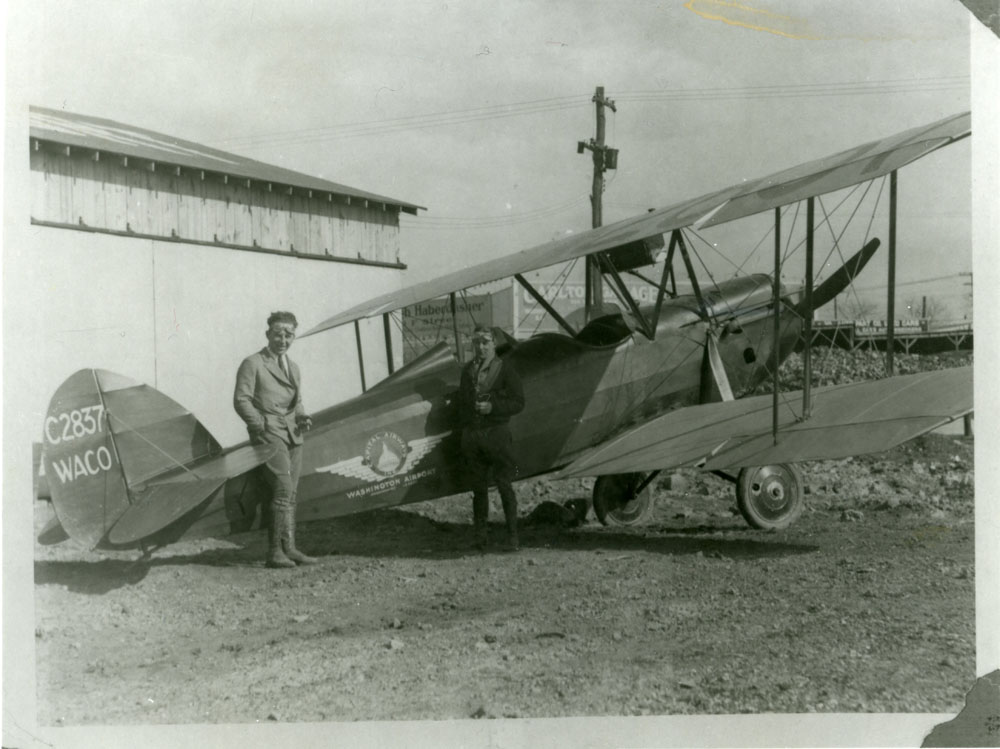
photo of a biplane at Washington Airport, 1920s

A biplane at Washington Airport, 1920s (exact date unknown)

black and white aerial photo showing Hoover field, the beach, and Washington airport, 1926

Aerial view of Hoover field, the Arlington Amusement Beach, and Washington airport, 1926.

The famous aviator Charles Lindbergh didn’t make his first historic trans-Atlantic flight until 1927, so many beach-goers were as fascinated by the spectacle of low flying planes practicing takeoffs and landings at National Aviation Field - and later Hoover Field and Washington Airport - as they were interested in a day on the water.

The first photo, taken in the late 1920s, shows a plane at Washington Airport. The second photo, taken in 1926, shows an aerial view of Hoover field, the Arlington Amusement Beach, and Washington airport.

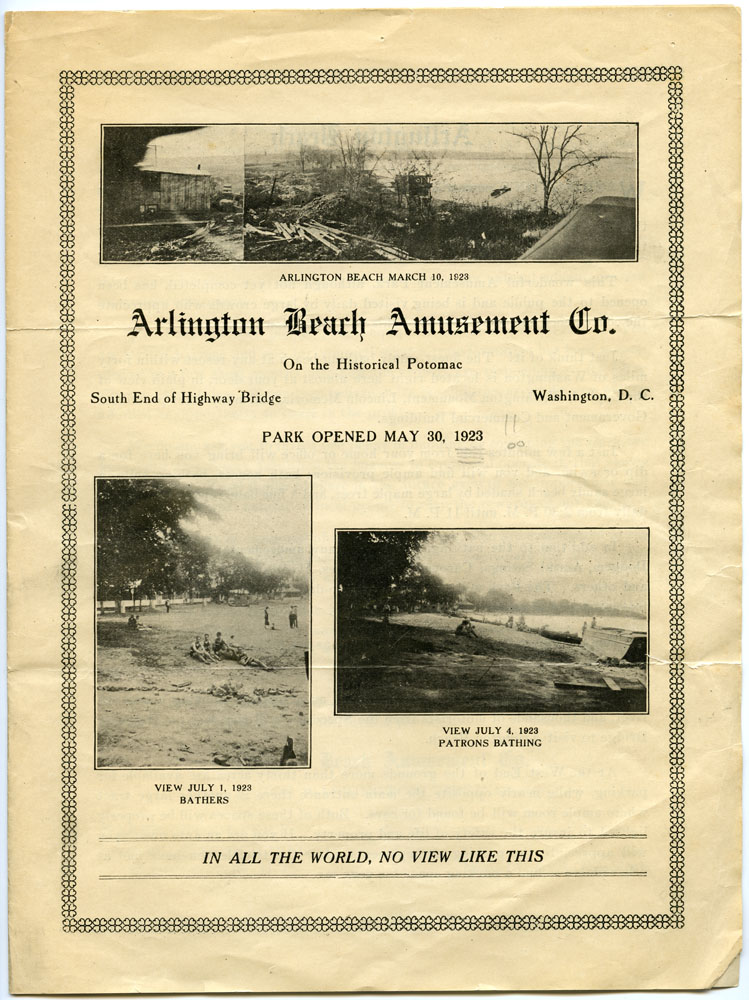
Arlington Branch Amusement Park cover of flyer
Arlington Branch Amusement Park map

Arlington Beach pamphlet, cover and page 4

But airplane watching wasn’t always fun. Beach-goers occasionally witnessed plane crashes and accidents, some even fatal.

On June 17, 1923, 2,000 people watched as Clarendon resident Clarence A. Rossignol fell to his death attempting to jump from airplanes to entertain the beach crowd. He was reportedly hoping that by successfully completing this stunt he would sign a contract with Arlington Amusement Beach to perform regularly.

In another accident, due to a heavy tailwind, a two-passenger plane crashed into the Potomac. Luckily both the pilot and his passenger—a tourist seeking the “thrill of a ride in an airplane”—survived.

To learn more visit the Center for Local History on the first floor of the Central Library.

Do you have a question about this story, or a personal experience to share? 

Use this form to send a message to the Center for Local History.

Center For Local History - Blog Post Message Form

Do you have a question about this story, or a personal experience to share? Use this form to send a message to the Center for Local History.

"*" indicates required fields
This field is for validation purposes and should be left unchanged.

Share Your Story

July 24, 2019 by Web Editor

  • « Go to Previous Page
  • Page 1
  • Interim pages omitted …
  • Page 14
  • Page 15
  • Page 16
  • Page 17
  • Page 18
  • Interim pages omitted …
  • Page 35
  • Go to Next Page »

Primary Sidebar

News

LibraryFest: Happy 250!

July 18, enjoy free all-day fun at LibraryFest!

Join us for a free, all-day community … ... about July 18, enjoy free all-day fun at LibraryFest!

Read More News
See More Service Updates

Center for Local History

Three men writing on squares of the AIDS Quilt.

New: Explore 2,800+ Arlington Courier Photos

Explore more than 2,800 photos of local life in … ... about New: Explore 2,800+ Arlington Courier Photos

Read More Local History

Director’s Blog

Arlington Public Library staff marching in the 2025 D.C. World Pride Parade.

Director’s Message: Pride Month

Words Matter Arlington Public Library … ... about Director’s Message: Pride Month

More Director's Blog

Footer

About Us

  • Mission & Vision
  • Charlie Clark Center for Local History
  • News Room
  • Get Email Updates

Administration

  • Policies
  • Library Staff
  • Job Opportunities
  • Propose a Program or Partnership

Support Your Library

  • Friends of the Library
  • Giving Opportunities
  • Donating Materials
  • Volunteer Opportunities

Our Mission

We champion the power of stories, information and ideas.

We create space for culture and connection.

We embrace inclusion and diverse points of view.


Download the Library App

Download the Library App

Arlington County | Terms & Conditions | Accessibility | Site Map
· Copyright © 2026 Arlington County Government ·