• Skip to primary navigation
  • Skip to main content
  • Skip to primary sidebar
  • Skip to footer

Alert

Holiday: All library locations closed Monday, May 25 for Memorial Day. More Info

Alert

Update: Elevator outages, maintenance and upgrades at Central Library More Info

Home - Arlington County Virginia - Logo
MENUMENU
  • Join Now
  • My Account
    • Login
    • My Checkouts
    • My Holds
    • My Lists
    • My Reading History
    • About Borrowing
    • About Holds
    • About My Account
  • Hours & Locations
    • All Hours & Locations
    • Holiday Closings
  • News
    • Library News
    • Director's Blog
    • Get Email Updates
  • Contact Us

Arlington Public Library

MENUMENU
  • Search
  • Collections
  • Library Services
  • Events
  • Community Engagement
  • Join Now
  • My Account
    • Login
    • About Borrowing
    • About Holds
    • About My Account
  • Hours & Locations
    • All Hours & Locations
    • Holiday Closings
  • News
    • Library Blog
    • Get Email Updates
  • Contact Us

Center for Local History Blog

Dedicated to collecting, preserving and sharing the history of the community.

Everything Under the Sun

Post Published: July 8, 2008

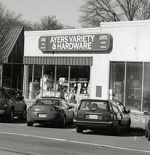
Ayers’ Variety & Hardware in Westover is a unique store; their specialty is everything. From screws to toys to lawn decorations to fishing line, if you need it, you can probably find it at Ayers’.

Ayers’ Hardware, as it is known to locals, was established by John W. Ayers, a World War II veteran from Georgia. He relocated to the Washington area while working for Woolworth’s in 1924, but opened up J. W. Ayers Five and Ten Cents Store in 1948. Ayers was known as the Mayor of Westover, handing out candy to neighborhood children, providing materials to classrooms in nearby elementary and middle schools, and becoming active in several civic groups in Arlington such as the Kiwanis Club and the Arlington Chamber of Commerce. He was active in the community by working for sidewalks and streetlights, and overseeing the Westover Christmas tree, Halloween dances and “Westover Days.” Ayers was a lynchpin of the community even after he turned over the store to his 32 employees in a profit-sharing plan in 1968.

Many were worried when Ayers died in 1976 that the store would disappear and the community spirit of Westover would fade. However, the Kaplan family bought Ayers Variety & Hardware in 1977 from the Ayers estate and has continued to stock it’s shelves with quirky and practical items at good prices. It still serves as an anchor for the small stretch of stores on Washington Boulevard near Walter Reed school, and is a distinctive part of the Arlington business landscape.

What About You?
What do you remember about J. W. Ayers or his store? Let us hear from you!

July 8, 2008 by Web Editor

Life During Wartime

Post Published: June 24, 2008

On May 24, 1861, Union troops came over the river to Arlington. At the time, Alonzo Hayes, Jr., lived with his widowed mother, Malvina, his two attractive older sisters, Annie and Mary, and his brother, William, in a two-story house at Sunnyside Farm, two miles from Aqueduct Bridge.

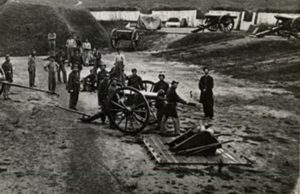
Company L, Second New York Artillery, at Fort C. F. Smith in August, 1865.

Sunnyside farm was adjacent to six Union forts protecting Washington and was occupied by a succession of Union troops. Fences and timber were removed to build forts and corduroy roads and for firewood. A stable with over 1,000 horses was built on their property and Union soldiers boarded in their home.

According to a 1975 Oral History interview by his granddaughter Mrs. Janet Hayes Baldwin, twelve-year-old Alonzo was hit in the heel by a stray shell from a Union fort across the river and limped for the rest of his days. Alonzo also caught smallpox from the troops but survived with no scarring. The family would entertain soldier visitors who were well-behaved but seemed to be homesick, but the widowed mother would sometimes send her daughters upstairs during those visits.

The site of Sunnyside Farm is now the Arlington Science Focus School and children still play on the lawn of Emily Hayes Park, which was donated to Arlington County by Janet Baldwin’s maiden aunt Emily Hayes.

The photograph above was marked for publication, and shows Company L, Second New York Artillery, at Fort C. F. Smith in August, 1865. The original is owned by the Library of Congress.

What About You?
Do you know about Civil War events in Arlington? Is there evidence of the war on your property? Let us hear from you!

June 24, 2008 by Web Editor

Arlington Analog Technology

Post Published: May 6, 2008

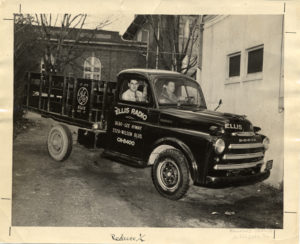
Ellis Radio and Television

Cleffie L. Ellis was born in Warren County, N.C. and moved to the Washington area in the 1930s, where he attended the old Capital Institute of Radio and Technology.

In 1937 he established Ellis Radio, later Ellis Radio and Television, in the Cherrydale section of Arlington. The shop also carried large household appliances.

Customers would come to view the new medium of television as well as attend demonstrations of household products. Mr. Ellis operated his store until 1988. In 1960 he founded Arlington Electronic Wholesalers.

What About You?

Do you have memories of Ellis Radio and Television or other early Arlington businesses? Please let us know!


May 6, 2008 by Web Editor

Changing Times

Post Published: April 8, 2008

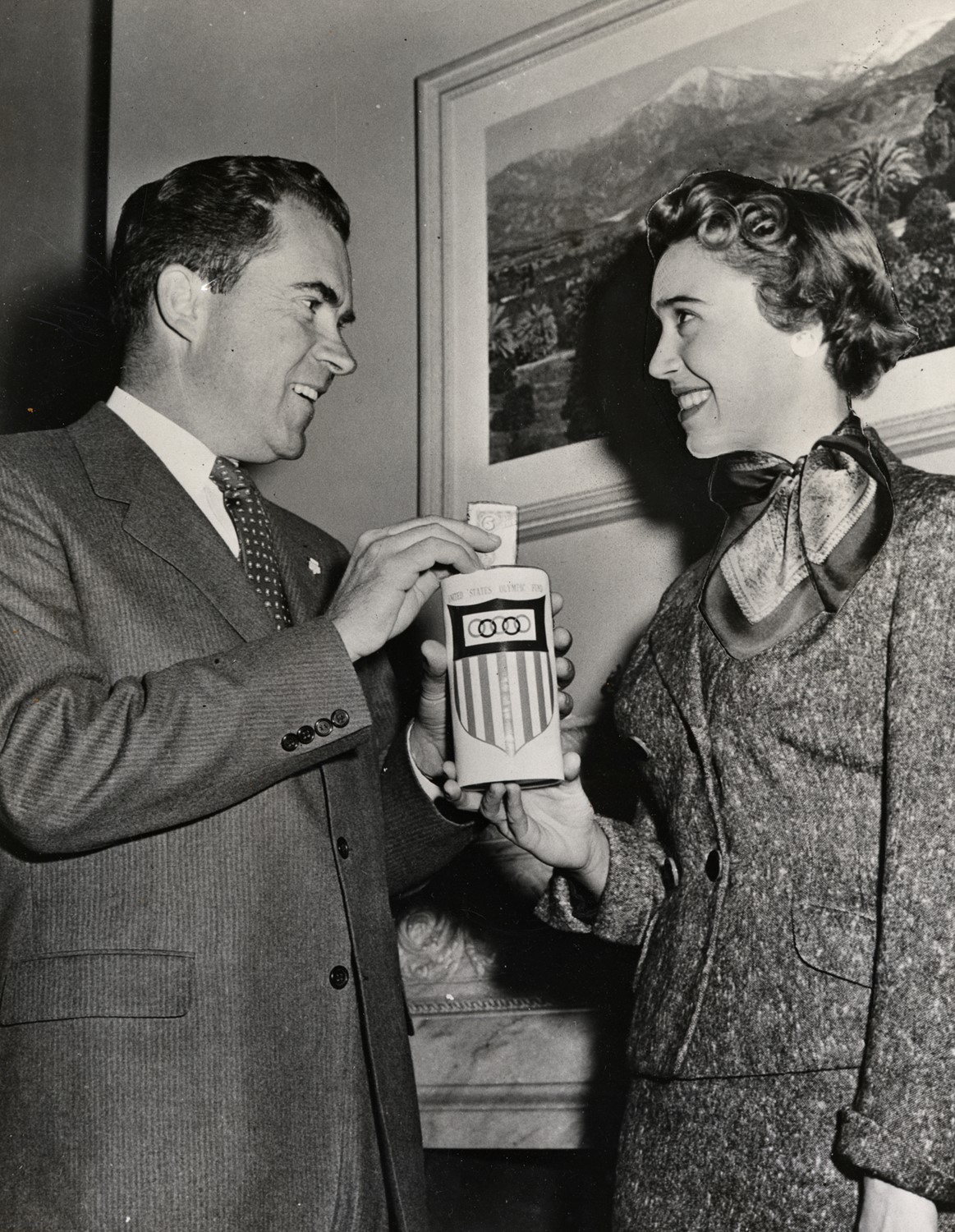
As an example of Arlington’s gradual change from a rural to an urban county, a milk can is used to collect coins from parking meters in the 1950’s.

What About You?

Do you have memories about Arlington’s change from a rural to an urban county? Please let us know!


April 8, 2008 by Web Editor

Stormy Weather

Post Published: March 11, 2008

Georgetown waterfront

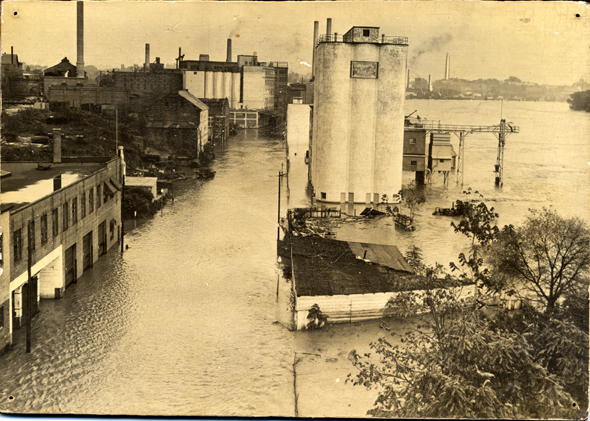
The photo above is of an unidentified industrial area of Arlington flooded by the Potomac River.

If you look carefully, you can see the Washington Monument in the distance. The photograph is dated from the mid-20th century, and the Virginia Room is looking for more information about this photograph.

We have an answer! Alert readers emailed the Virginia Room to let us know that this area is in fact Georgetown, near the Key Bridge. The silos belong to the Washington Flour Company. Thank you for your help!


What About You?

Do you know anything about this area of Arlington? Do you remember the Potomac flooding? What about other floods in Arlington? Please let us know!


March 11, 2008 by Web Editor

Boy Scouts – Still Doing Good Turns

Post Published: February 12, 2008

Excerpt from Oral History with Walter DeGroot


Boy Scouts today are still working on merit badges, and Eagle projects, doing community service such as food drives, and enjoying camping and outdoor adventures.

Walter DeGroot’s Oral History in the Virginia Room describes Scouting in the 1940’s.

For Truman’s 1946 inauguration:

“We marched down Pennsylvania Avenue and whatever that street is in front of the White House and then from there we dispersed. And I was so proud of myself. And it was cold that day. It was cold.”

Camping on the Columbia Pike farm and greenhouse property owned by the father of a fellow scout, Jimmy Goings, from the Arlington Methodist Church Boy Scout troop:

“It was a kind of a neat place to go camping. The boys would get on the AB&W; bus, and get off at Mr. Going’s, and drag our tents and the sort up the hill. We camped up there a lot. Behind that there was a very large stone quarry. It was more like a gravel pit. That’s about where Hechinger’s used to have a big store on Route 7 there. And of course Route 7 was the Bailey’s Crossroads Airport. I think we boys used to hike…just to get the cold water from the [Carlin] spring, and then go back over to the camp.”

What About You?

Do you have photos and recollections of Boy Scouts in Arlington? Please let us know!


February 12, 2008 by Web Editor

Arlington Spring Resort

Post Published: January 22, 2008


The first outdoor recreation area in Arlington was developed at Arlington Spring on the banks of the Potomac near Arlington House.

George Washington Parke Custis, the father-in-law of Robert E. Lee, was a hospitable man who kept many artifacts in Arlington House and dedicated his life to the preservation of the memory of his step- grandfather and adoptive father, George Washington.

Arlington Spring was initially used as a place to entertain family and friends, but in 1824 Custis opened it to the public in for a Fourth of July celebration. Arlington Spring contained a kitchen, dining hall and dancing pavilion, and up to 200 visitors a day came by boats, canal boats and later steam excursion boats to attend sheep shearing contests, political speeches or for recreation. Field tents used by George Washington during the Revolution were used on special occasions such as the Revolutionary war hero Marquis de Lafayette’s visit to Arlington in October 1824. It was reported that 2,000 people attended the Fourth of July celebration at Arlington Spring in 1848.

This Arlington Spring illustration is from an 1853 drawing in Harper’s magazine by Benson Lossing.

What About You?

Do you have memories of favorite outdoor recreations in Arlington and on the Potomac? Please let us know!


January 22, 2008 by Web Editor

An Early Hybrid Vehicle

Post Published: January 8, 2008

The Evans Autorailer was a unique gasoline powered bus with retractable flanged pilot wheels with the ability to run on railroads. Six were acquired by the struggling Arlington & Fairfax Railway Company in June 1936, with an investment from Evans Product Company of Detroit. It was planned for these trolley replacements to run on rails through Rosslyn and convert to rubber tires to complete their trip over the Key Bridge into Georgetown. However, the Capital Transit Company successfully defended their exclusive franchise across the bridge, and the line ceased operation in January 1939.

Several of the autorailers were then acquired by the Washington and Old Dominion Railroad to use for line maintenance. This photo shows a W & O D autorailer converted for line maintenance with an added platform. The Fowler Carbonics building seen in the photo's background later became the Cherry Smash soda plant in Arlington.

What About You?
Do you have memories or pictures of autorailers or other Northern Virginia rail or trolley lines? Please let us know!

January 8, 2008 by Web Editor

An Aerial View: Interchange of Arlington Blvd. with Washington Blvd., c. 1950

Post Published: December 11, 2007

WWII brought much growth and development to Arlington.

But as one can see from this photo of the interchange of Arlington Boulevard. with Washington Boulevard, c. 1950, much of Arlington was still quite undeveloped several years after the War was over.

Trivia Note: Generally, only Boulevards, Drives, Highways and Roads cross the county in unbroken continuity (“streets,” whether numbered or named, rarely do). Arlington Boulevard is such a road and is the dividing line between North and South Arlington.

What About You?

Do you have any memories of Arlington road development? Let us know!


December 11, 2007 by Web Editor

Rixey Mansion

Post Published: November 27, 2007

Among the many stately and historic homes located in Arlington County, the Rixey Mansion deserves a special mention.

Set on one of four farms owned by Washington resident and Assistant Surgeon General of the U.S. Navy Dr. Presley M. Rixey, the Rixey Mansion was built to replace the property’s old farmhouse which burned down in 1907. The mansion was constructed in 1919-1920 under the supervision of Dr. Rixey and architects Frank Upman and Percy C. Adams and was thought to be one of the most sophisticated and elaborate residences of its time, boasting an exquisite stairway, a grand drawing room, banquet room, and a first floor covered with marble, designed in a black and white geometric pattern.

After Dr. Rixey’s death in 1928, the farm was purchased by Mrs. Ida K. Polen and was used as a tea house. In 1937, following a fire at the Washington Golf and Country Club, the house was temporarily used as a dining facility until a new building was completed.

In 1948, the estate was purchased by the Religious of the Sacred Heart of Mary and upon the establishment of Marymount College in 1950, the Rixey mansion became the central building or “Main House” of the university.

What About You?
Do you have any memories of Rixey Mansion? Let us know!


November 27, 2007 by Web Editor

  • « Go to Previous Page
  • Page 1
  • Interim pages omitted …
  • Page 28
  • Page 29
  • Page 30
  • Page 31
  • Page 32
  • Interim pages omitted …
  • Page 35
  • Go to Next Page »

Primary Sidebar

News

Three men writing on squares of the AIDS Quilt.

New: Explore 2,800+ Arlington Courier Photos

Explore more than 2,800 photos of local life in … ... about New: Explore 2,800+ Arlington Courier Photos

Read More News
See More Service Updates

Center for Local History

Three men writing on squares of the AIDS Quilt.

New: Explore 2,800+ Arlington Courier Photos

Explore more than 2,800 photos of local life in … ... about New: Explore 2,800+ Arlington Courier Photos

Read More Local History

Director’s Blog

Henry Wadsworth Longfellow.

Director’s Message: National Poetry Month

I Hear America April is National … ... about Director’s Message: National Poetry Month

More Director's Blog

Footer

About Us

  • Mission & Vision
  • Charlie Clark Center for Local History
  • News Room
  • Get Email Updates

Administration

  • Policies
  • Library Staff
  • Job Opportunities
  • Propose a Program or Partnership

Support Your Library

  • Friends of the Library
  • Giving Opportunities
  • Donating Materials
  • Volunteer Opportunities

Our Mission

We champion the power of stories, information and ideas.

We create space for culture and connection.

We embrace inclusion and diverse points of view.


Download the Library App

Download the Library App

Arlington County | Terms & Conditions | Accessibility | Site Map
· Copyright © 2026 Arlington County Government ·