• Skip to primary navigation
  • Skip to main content
  • Skip to primary sidebar
  • Skip to footer

Alert

Holiday: All library locations to close early at 5 p.m. on Nov. 25 and all day Nov. 26 & 27 in observance of Thanksgiving. More Info

Alert

Central Library garage will be closed Monday, Nov. 23 through Wednesday, Nov. 25 for maintenance. More Info

Alert

Update: No elevator service from garage & Quincy St. entrance closed during Central Library upgrades. More Info

Home - Arlington County Virginia - Logo
MENUMENU
  • Join Now
  • My Account
    • Login
    • My Checkouts
    • My Holds
    • My Lists
    • My Reading History
    • About Borrowing
    • About Holds
    • About My Account
  • Hours & Locations
    • All Hours & Locations
    • Holiday Closings
  • News
    • Library News
    • Director's Blog
    • Get Email Updates
  • Contact Us

Arlington Public Library

MENUMENU
  • Search
  • Collections
  • Library Services
  • Events
  • Community Engagement
  • Join Now
  • My Account
    • Login
    • About Borrowing
    • About Holds
    • About My Account
  • Hours & Locations
    • All Hours & Locations
    • Holiday Closings
  • News
    • Library Blog
    • Get Email Updates
  • Contact Us

News

Dorothy Hamm: Speaking Out

Post Published: June 3, 2021

Graphic image of a megaphone

Join us for a new series of stories from the Center for Local History highlighting members of our community who made a difference in ways that helped shape our history and created positive change.

Their voices were not always loud, but what they said or did had a significant impact on our community.

Dorothy Hamm

Dorothy Hamm was born in 1919 in Caroline County, Virginia. The only school that accepted African-American students was six miles away from her home, and in 1926 her family moved to Fairfax County where the children could attend elementary school. When Hamm graduated from primary school, the family found that there was no accessible junior high or high school for African-American students. Because her mother was a government employee, Dorothy attended secondary schools in Washington, D.C., and went on to enroll in Miner Teacher’s College.
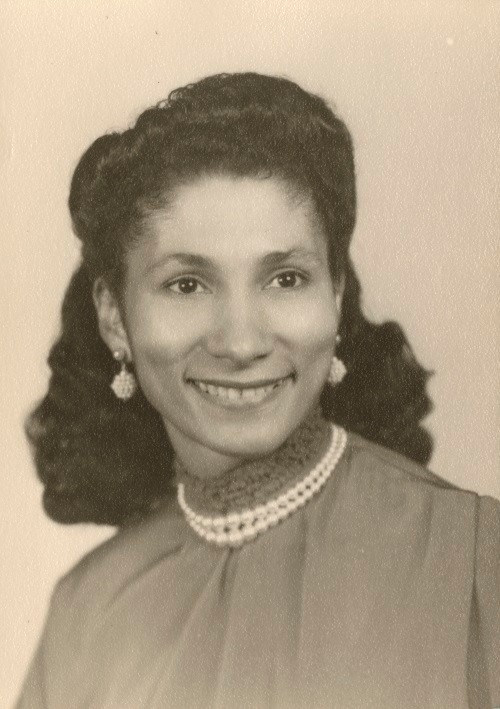
Dorothy Hamm Portrait

Dorothy Hamm, date unknown. Image courtesy of Carmela Hamm, from the Library of Virginia.

Hamm married Edward Leslie Hamm, Sr., in 1942 and the couple moved to Arlington in 1950, where they raised their three children. In 1954, the Supreme Court ruled segregation illegal in the public schools in Brown vs. Board of Education. In 1956, the Hamms became plaintiffs in the first civil action case filed to integrate the Arlington Public School system. When no action had been taken a year after the suit was filed, Dorothy and her husband took their oldest son, Edward Leslie, Jr., to enroll at Stratford Junior High School, and were not allowed to admit him to the school.

A few days after the opening day of the school year in September 1957, crosses were burned on the lawns of two Arlington families and the Calloway United Methodist Church. The church was a central location for desegregation organizers.
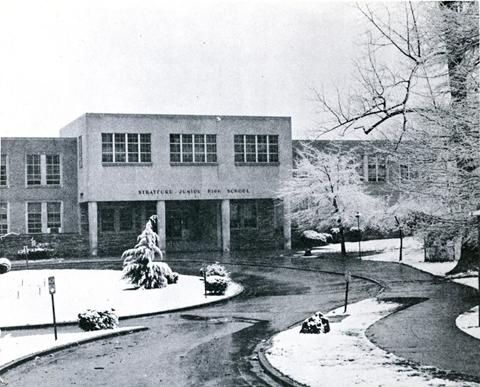
Hamm

Due to the efforts of Dorothy Hamm, in 1959, Stratford Junior High School became the first school in Arlington to desegregate. This made Arlington the first County in Virginia to desegregate its schools.

On January 19, 1959, Senator Harry F. Byrd’s policy of statewide “massive resistance” was outlawed by the Virginia Supreme Court. On February 2, 1959, Ronald Deskins, Michael Jones, Lance Newman, and Gloria Thompson were enrolled in Stratford Junior High. Hamm’s sons entered Stratford later that year.

In 1960, Hamm was a plaintiff in a court action to eliminate the pupil placement form, which was used to exclusively assign African-American students to certain schools to get around the Supreme Court’s ruling on desegregation. In 1961, Hamm was a plaintiff in a court action to integrate the athletic program of the Arlington Public Schools. Hamm’s son had been barred from participating in Stratford’s wrestling program because of the physical contact between Black and white students. As a result of the court action, discrimination in Arlington athletic programs was declared to be illegal.

In 1963, Hamm was the plaintiff in a civil action case to eliminate the poll tax and remove the race designation from public forms and voting records in Arlington County. The same year, she initiated legal action and helped to organize picketing efforts in protest of segregation of Arlington’s theaters. Along with four other protesters, Hamm was arrested for picketing at the Glebe Theater. Their efforts were ultimately successful, and Hamm and her son Edward Leslie, Jr., became the first African-American customers to be admitted to the theater.

Hamm continued her political activism as an officer of elections in the County for more than 27 years and worked with the Congress on Racial Equality (CORE). She and her husband also participated in the 1963 March on Washington and the Poor People’s March on Washington in 1968.

Hamm passed away in 2004, but her legacy in Arlington lives on.
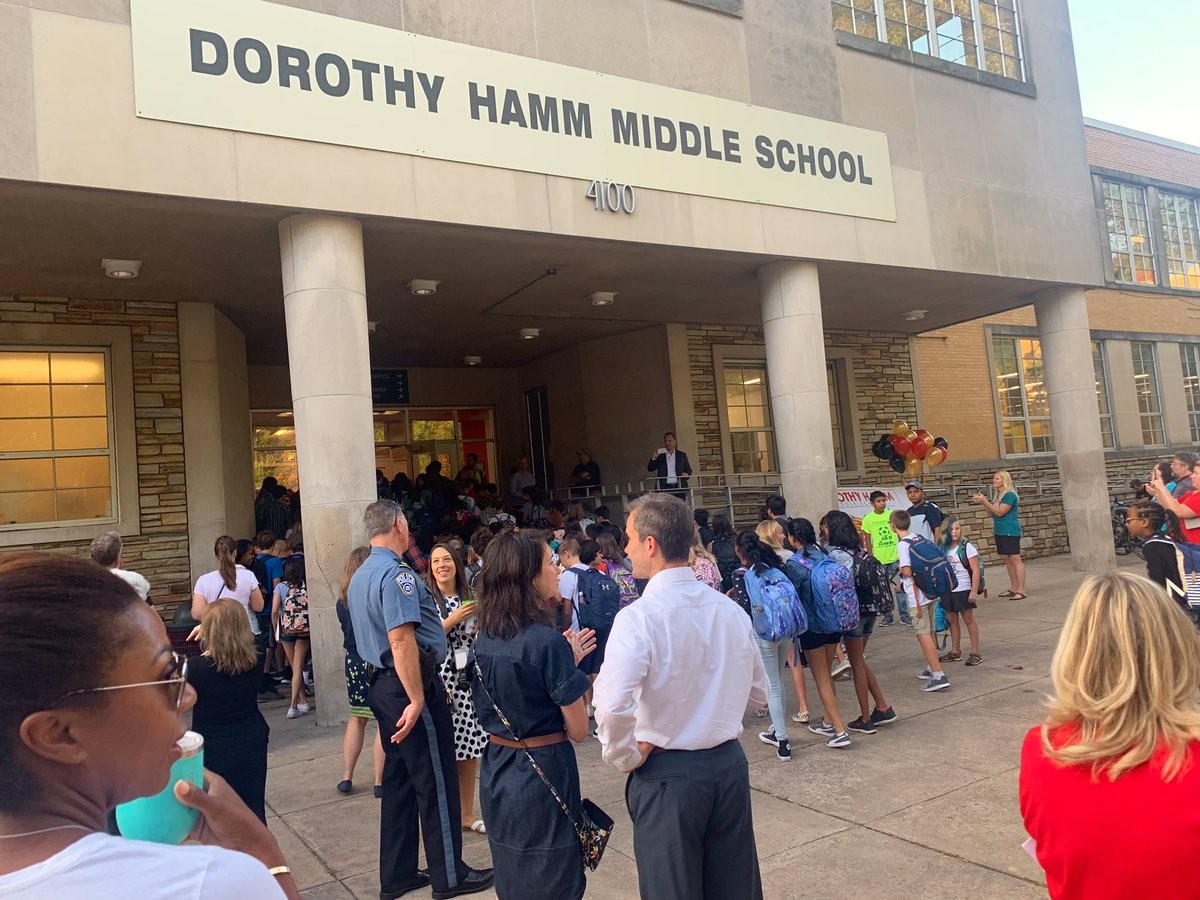
Dorothy Hamm Middle School

Dorothy Hamm Middle School, which was named in Hamm’s honor in 2019. Image courtesy of Arlington Public Schools.

Do you have a question about this story, or a personal experience to share? 

Use this form to send a message to the Charlie Clark Center for Local History.

Center For Local History - Blog Post Message Form

Do you have a question about this story, or a personal experience to share? Use this form to send a message to the Center for Local History.

"*" indicates required fields
This field is for validation purposes and should be left unchanged.

Share Your Story

June 3, 2021 by Web Editor

The History of Arlington’s Logo and Seal

Post Published: May 27, 2021

Arlington is currently in the process of changing its iconography. Let's take a look back at the previous versions of the Arlington Logo as the County begins the process of updating its visual identity.

Arlington County was formally designated in 1920, changing its name from Alexandria County in order to distinguish itself from the nearby City of Alexandria. The County initially used the Virginia state seal in official documents, which depicts the Roman goddess Virtus conquering Tyranny. It is accompanied by Virginia's state motto, “Sic Semper Tyrannis,” or “Thus Always to Tyrants.”

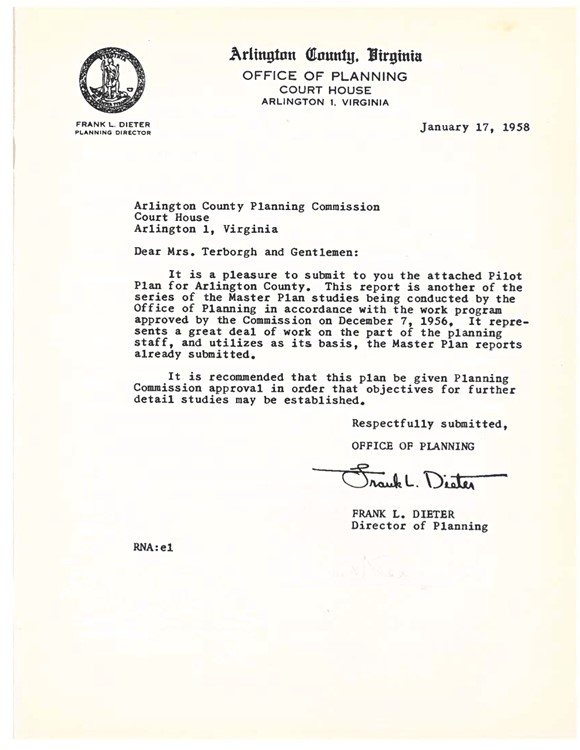
Office of Planning Letter

Example of usage of the Virginia state seal in County documents, circa 1958.

Arlington House

Around the mid-1960s, Arlington began using an unofficial County seal. However, the Commonwealth’s Attorney decided that the County Board did not have the authority to adopt a seal. The County Board subsequently authorized the use of a visual signature on documentation, but in 1969 declined to make it a seal based on this legal guidance. Because of this designation, then-County Manager Vernon Ford described the seal as a “decorative medallion.”

The unofficial seal featured Arlington House and the date 1801 in later versions. This was contested by Arlington history expert Eleanor Templeman. The date was chosen to represent the formal establishment of the County of Alexandria, but Templeman argued that it could be incorrectly interpreted as the date of construction of Arlington House, which commenced in 1802. The 1801 date prevailed, however, remaining on the County seal into the 1980s.

The main image on the seal, Arlington House, was the longtime home of Robert E. Lee, leader of the Confederate Army. The building was constructed by slave labor for George Washington Parke Custis, who was George Washington’s step-grandson and Lee’s father-in-law. After the start of the Civil War, the Lee family fled and the property was used by Union troops as a burial site, and the location would eventually become part of Arlington National Cemetery.

Since 1972, the site has formally been known as “Arlington House, the Robert E. Lee Memorial,” reinstating its ties to the Confederate leader. In 2020, legislation was proposed to remove Lee’s name from the historical site, citing the erasure of Black Americans who lived in slavery on the property.

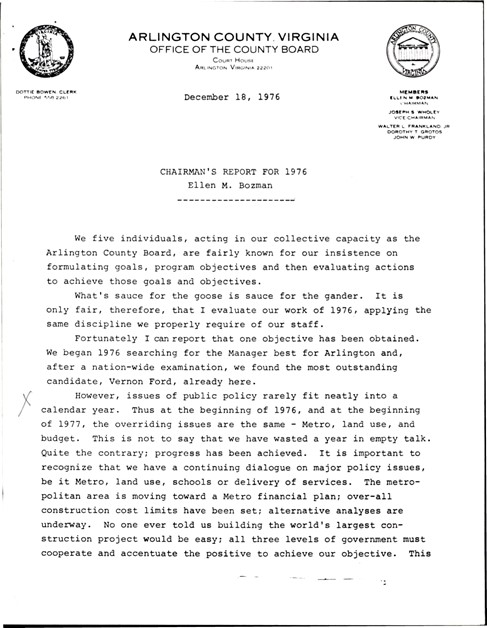
74 State Seal
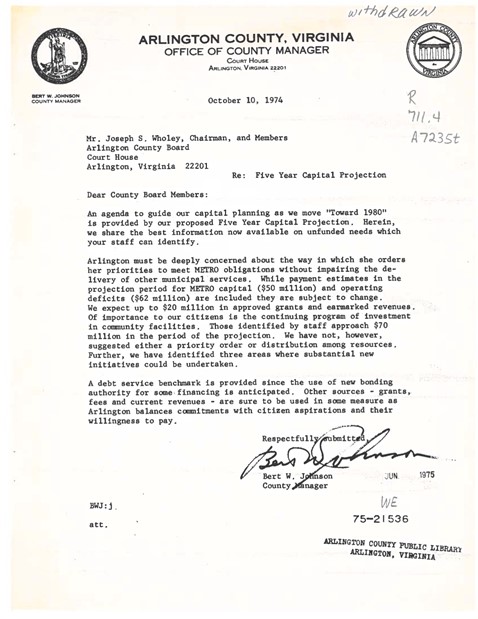
76 State Seal

Examples of use of the state seal and unofficial County seal, from 1974 and 1976.

The "A" Logo

In 1976, the County began using an unofficial logo in the form of a stylized “A,” with Arlington House also appearing on this image. The logo was designed by Susan Neighbors, a professional illustrator from Arlington, who produced five designs based on County guidance. These options were then voted on by the public at ballot boxes placed at the County libraries, and the “A” logo won the contest.

A Logo 79
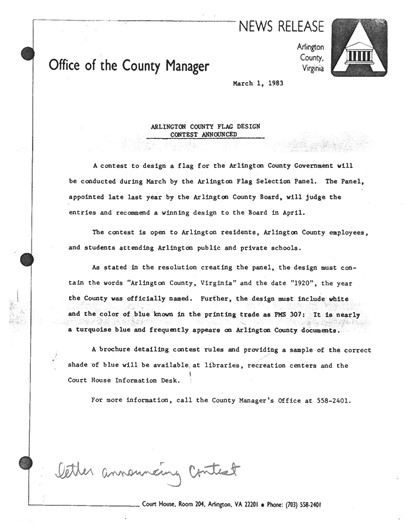
A Logo 83

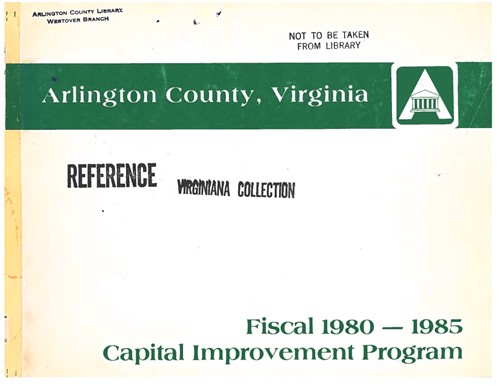
Example of the “A” logo used by the County starting in 1976. Image circa 1979 and 1983.

County Flag Design

In September 1982, the County set out to adopt an official design for the County flag, and the County Board adopted a resolution for a flag design competition and a Flag Selection Panel to choose the design. In March of 1983, the County released a call for entries for the design of the flag to the public. Design requirements included the use of blue and white colors, and the words “Arlington County, Virginia,” as well as “1920.”

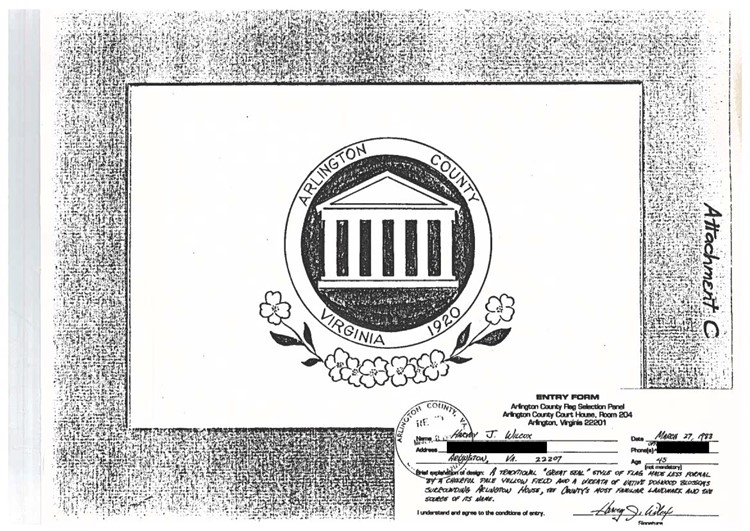
One hundred and ten people submitted designs for the contest, and Harvey J. Wilcox was selected as the winner in April of 1983. Wilcox, a deputy general counsel for the Navy, had no formal design experience and came up with the design while homebound with the flu. His imagery reflected the County’s unofficial logo and seal with a depiction of Arlington House, accompanied by a white ring and sprays of dogwoods underneath. Yellow was chosen as the background color for the flag.

Harvey Wilcox Entry

Harvey Wilcox’s winning entry for the 1983 design contest.

After consulting with the Virginia Attorney General, who issued a different opinion than the one about 20 years prior, the County’s authority to have a flag was dependent on the County having a seal. So, Wilcox’s design then became the County seal, which would subsequently be presented on the County flag.

The inclusion of “1920” from the original design rules was also dropped for the final iteration, due in part to the issues that were raised by Templeman decades before. One of the issues was Arlington had multiple dates in its history that could be considered as equally significant in its history. The County seal and flag were officially adopted on June 18, 1983.

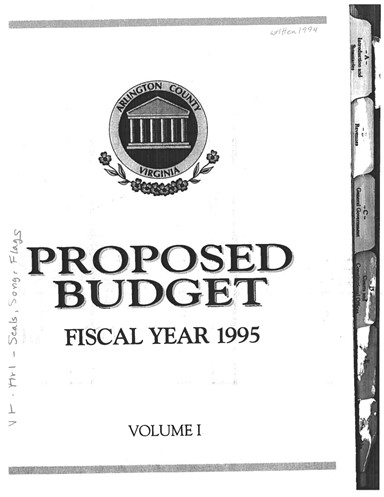
New County Seal 1
New County Seal 2

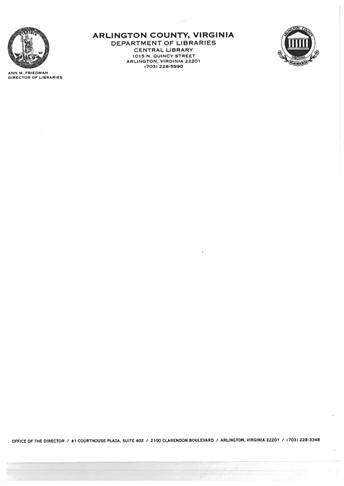
Examples of the new County seal on official documents and letterhead. Images from 1994 and the late 1990s.

The Future of the Logo

The next major step in Arlington’s formal iconography was when the County created and adopted an official logo in 2004. The logo came along with a redesign of the County website that same year and was designed by the D.C. office of Gensler Studio 585. Focus groups were held with design professionals, members of the business community, and members of the general public.

The resulting design was adopted in the summer of 2004, and, like the County seal, included a stylized representation of Arlington House, but the design drew some criticism. In a public poll of more than 1,000 responses conducted by the Arlington Sun Gazette, 81 percent opposed the new design, 15 percent supported it and 3 percent voted, 'it's OK, I guess.’ In October 2004, a petition was circulated calling for the removal of the logo, and it “even inspired a piece of folk art by an artist, who rendered the new logo in dead cicada shells."

County Logo 04

Arlington County’s logo, adopted in 2004.

The County seal and logo were then used concurrently, but for different outlined purposes. In general, the seal is used for items relating to the County Board and for more permanent items (such as the County flag, permanent signage, and certificates).

The logo is considered a marketing sign and is used on departmental materials (such as County vehicles and general correspondence). In 2007, the County sought public comment and issued an update to the seal due to persistent inconsistencies in its rendering. The update kept the same imagery on the seal, but restored the original “Arlington blue” and refined it for online use.

In September 2020, the County announced that it would adopt a process to develop a new logo and seal, moving away from imagery related to Arlington House in County iconography. In January 2021, a Logo Review Panel was assembled to review concept submissions from the community, and in April announced five options selected from a pool of more than 250 ideas.

Stay tuned to the County’s homepage to submit your art for the next round of logo design submissions.
Pre 2007 Graphic 1
Pre 2007 Graphic 2

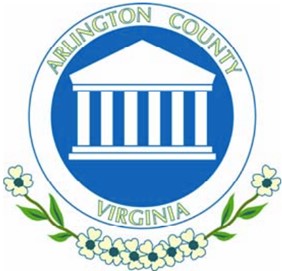
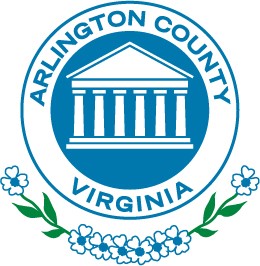
A pre-2007 graphic file of the County seal and the updated version, which is still in use today.

Do you have a question about this story, or a personal experience to share? 

Use this form to send a message to the Charlie Clark Center for Local History.

Center For Local History - Blog Post Message Form

Do you have a question about this story, or a personal experience to share? Use this form to send a message to the Center for Local History.

"*" indicates required fields
This field is for validation purposes and should be left unchanged.

Share Your Story

May 27, 2021 by Web Editor

Arlington Council on Human Relations: Speaking Out

Post Published: May 20, 2021

Graphic image of a megaphone

Join us for a new series of stories from the Center for Local History highlighting members of our community who made a difference in ways that helped shape our history and created positive change.

Their voices were not always loud, but what they said or did had a significant impact on our community.

Arlington Council on Human Relations

On December 1, 1958, members of the public were invited to a meeting held at the Rock Springs Congregational Church. The meeting was organized by Pastor Sidney Lovett, as well as Hubert Beckwith and Paul Rilling, President and Executive Director respectively of the Virginia Council on Human Relations.

It was on that evening that the Arlington Council on Human Relations was formed.

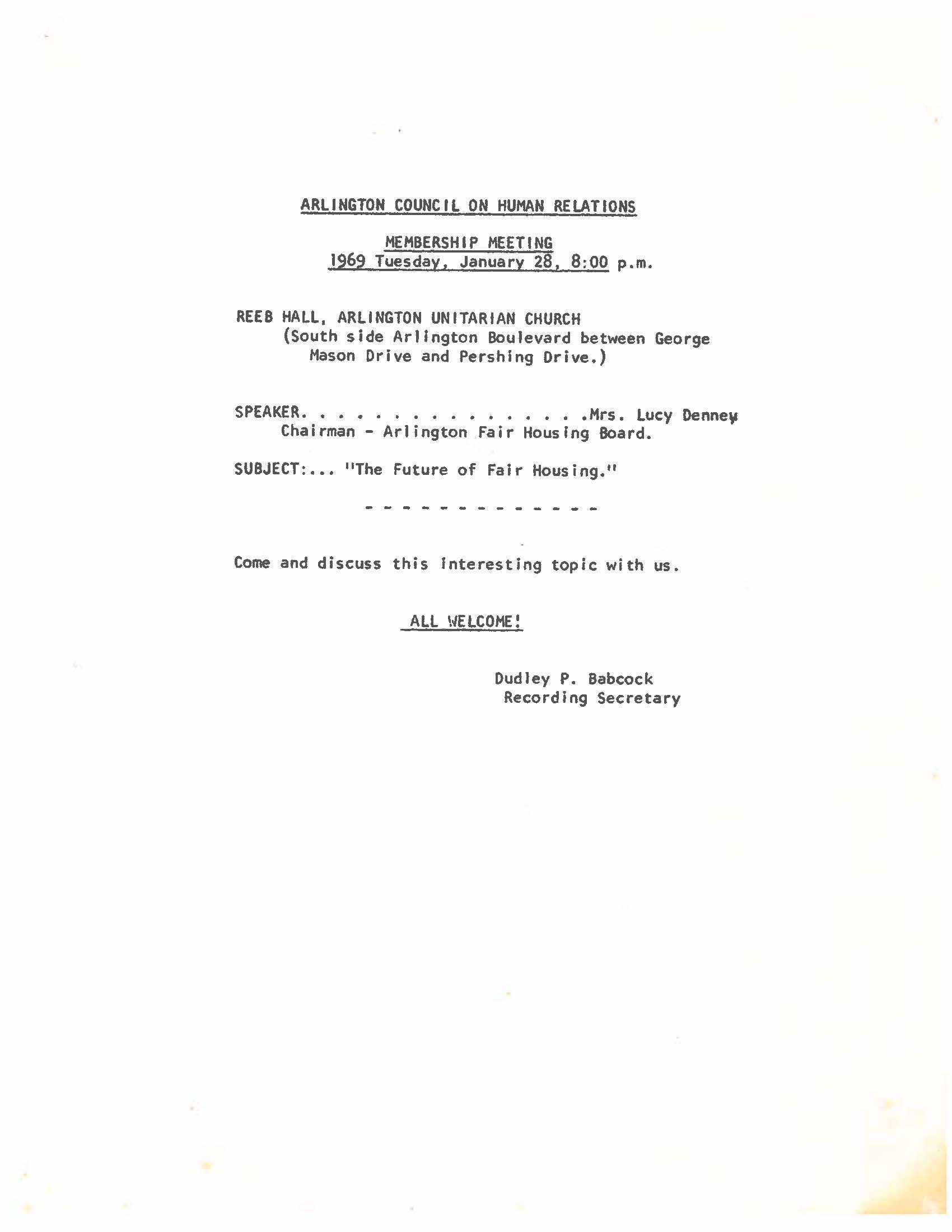
123-1-1-1-7

Membership meeting letter from Dudley P. Babcock.

The purpose of the Council was to improve the economic, civic, and racial conditions in Arlington County. Affiliated with the Virginia Council on Human Relations and coordinating with other local, regional, and national agencies and organizations, the council sought to promote better understanding and communication while trying to lessen tensions between the different groups living and working within Arlington County’s borders.

The County at this time was strictly segregated. Not only were there “white” schools and “Black” schools, but playgrounds were segregated, theaters maintained separate seats for Blacks, and they couldn't stay at any motels or hotels in the County. Even the Arlington Hospital was segregated as there was only one maternity ward and no Black mother could have her baby there except in cases of emergency. Low-income housing was also an ongoing problem.

The Council formed committees to address these various issues. Months were spent writing letters to theatre owners, and picket lines were formed at theatres. Many meetings were held with various organizations and businesses. A joint meeting with Arlington Hospital was arranged.

123-1-1-1-6

1967 announcement from the Council of Human Relations of Arlington, Alexandria and Fairfax.

Change was slow, but the Council members persisted and while the struggles were sometimes bitter, progress was made. Arlington Public Schools began the process of desegregation, public playgrounds and theatres were integrated and some motels began to accept Black people. Black women were accepted in the maternity wing of Arlington Hospital, and lunch counters throughout the County were integrated. And all of this took place before the Civil Rights Act of 1964 was passed.

While the early 1960s was the most active period, the Council continued their social justice work throughout the 60s, focusing primarily on affordable housing and poverty issues.

123-1-1-2-22

1969 Council letter to Bernie Pony Rental.

Do you have a question about this story, or a personal experience to share? 

Use this form to send a message to the Charlie Clark Center for Local History.

Center For Local History - Blog Post Message Form

Do you have a question about this story, or a personal experience to share? Use this form to send a message to the Center for Local History.

"*" indicates required fields
This field is for validation purposes and should be left unchanged.

Share Your Story

May 20, 2021 by Web Editor

Cycling Through Arlington’s History

Post Published: May 13, 2021

May is National Biking Month, and to celebrate, let’s take a look at Arlington’s decades-long history of bicycle enthusiasm!

1939

The County Sheriff’s department and a local chapter of the VFW team up to form a bicycle safety club for youth in Arlington. According to a February 24, 1939 news article, the “bicycle rage of the [18]90s” was on the upswing, and conditions for cycling were hazardous on the local roads.

1941

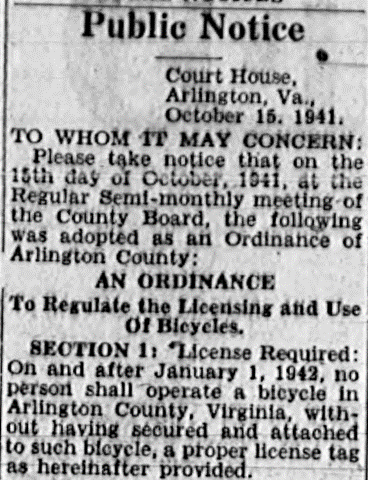
The County issues a set of rules for regulating bicycle use.

Cyclists were required to carry a license and tag, and bicycles were not to be ridden “faster than is reasonable and proper.”

Picture1

Notice about bicycle laws from the October 17, 1941 issue of the Northern Virginia Sun. Image courtesy of Virginia Chronicle.

1950s

Bicycling remains a popular recreational activity in Arlington, though largely regulated to neighborhood street cycling alongside pedestrians.

1967

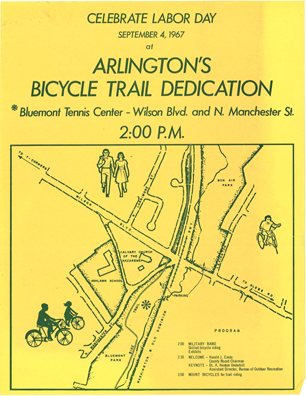
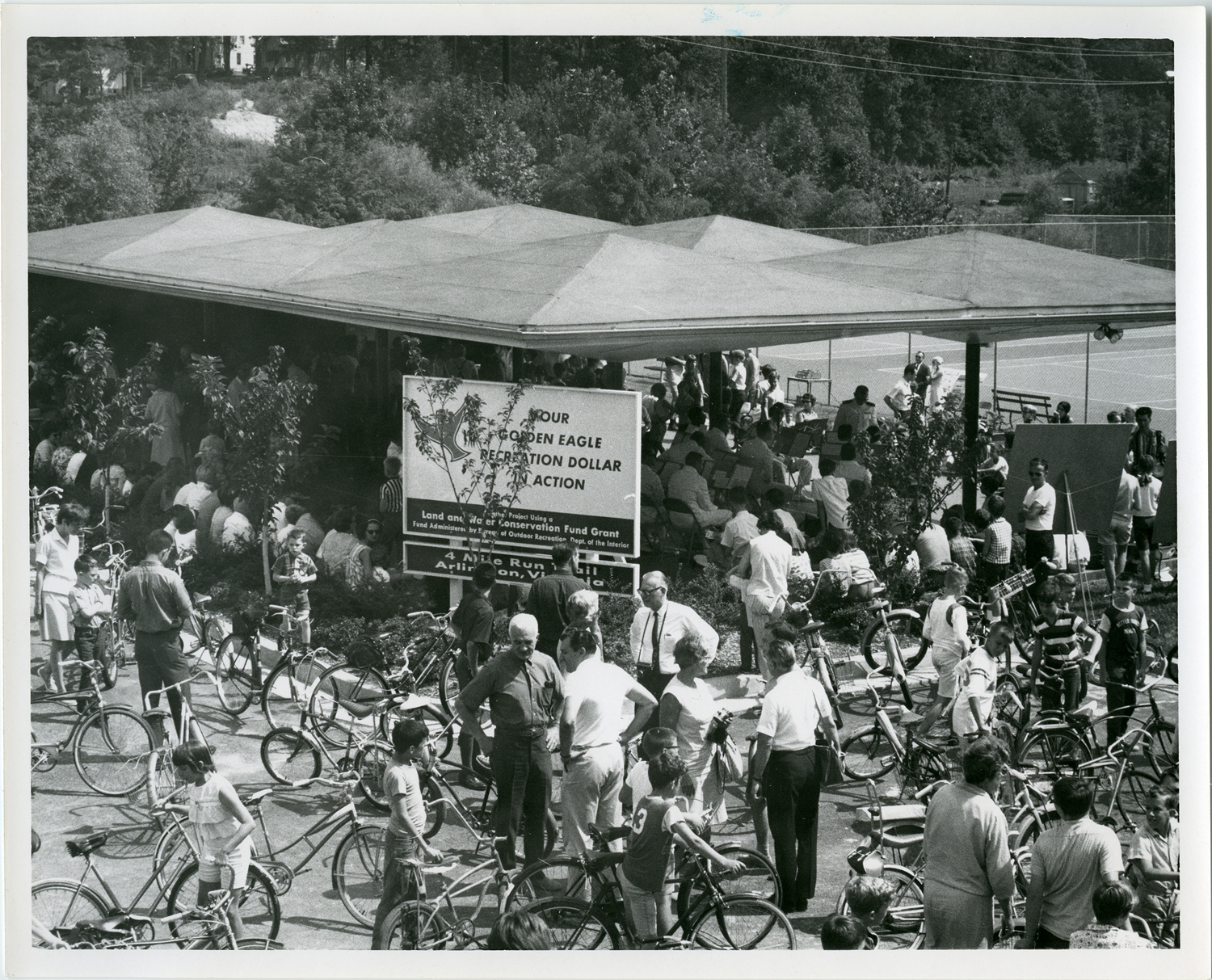
Arlington paves its first bicycle facility: a multi-use trail made of crushed limestone of about three miles along Four Mile Run. The trail opening included a ceremony at Bluemont Park, a performance by the Navy band, and cycling exhibitions.

This was also the first bicycle trail in the nation to be built with federal funds.

Picture4

Program from the opening of Arlington’s first bike trail. Image courtesy of the VA State Department of Conservation and Recreation via BikeArlington.

Picture5

A crowd gathers on bikes for a conservation event at Four Mile Run, circa the late 1960s. (214-9205)

1972

The Washington Area Bicyclists Association is formed, drawing members from the DMV region and advocating for improved bicycle facilities.

1973

The County completes its first commuter bikeway, connecting to the Spout Run Parkway and providing access to Rosslyn. Additionally, an eleven-member Bicycle Advisory Committee is established to advise on cycling-related issues and development.

Picture7

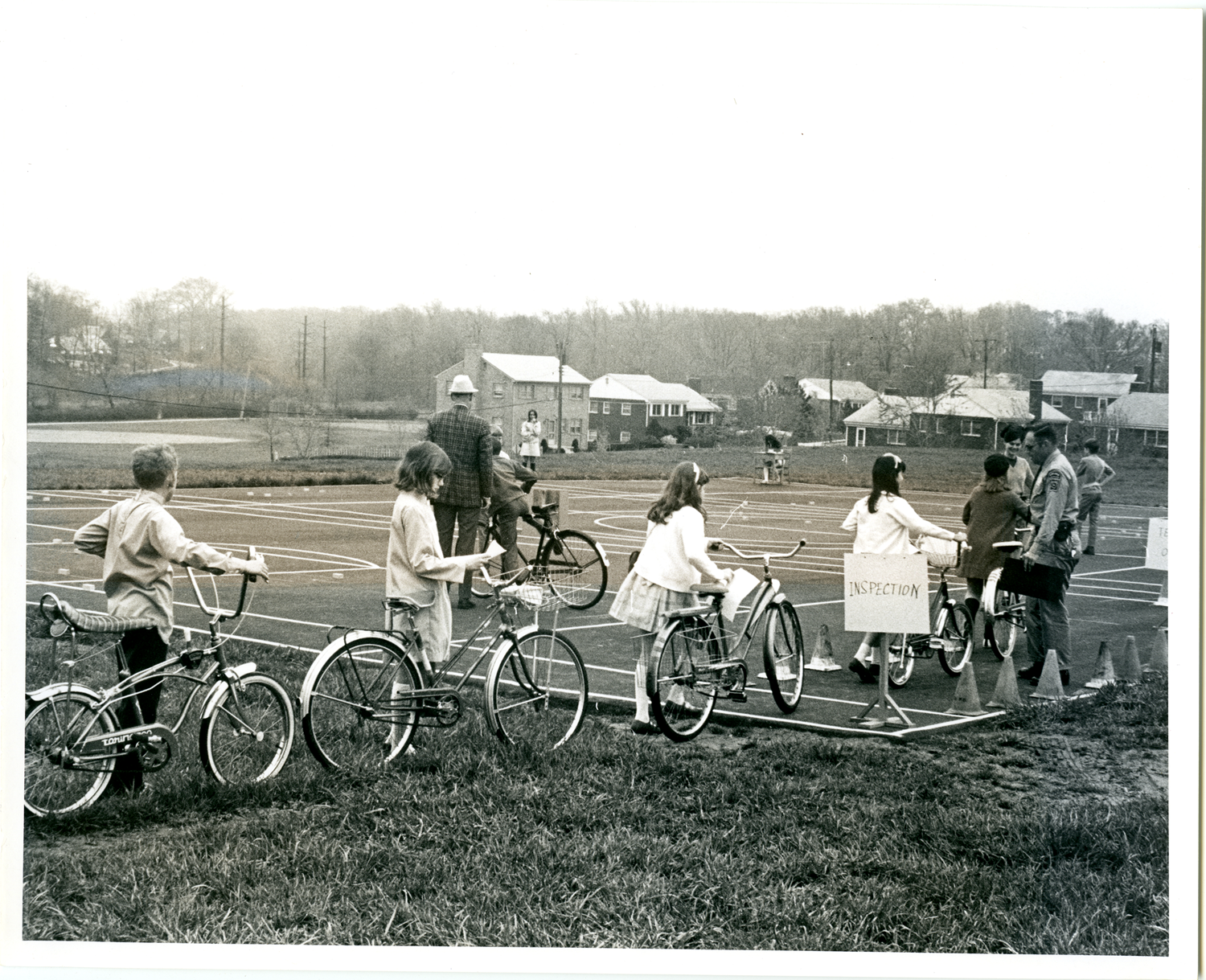
Children line up for bicycle safety inspection, run by the Arlington County Police Department, 1969.

1974

Arlington’s Master Bikeway plan is released, which calls for an 80-mile network of trails for commuter and recreational use.

1977

Metro stations debut in Arlington, which shapes the County’s transportation plan to include a bike trail along the route of I-66 and bicycle parking at the new stations.

1982

Custis Trail is completed, adding 8.5 miles of trail to the area.

Picture9

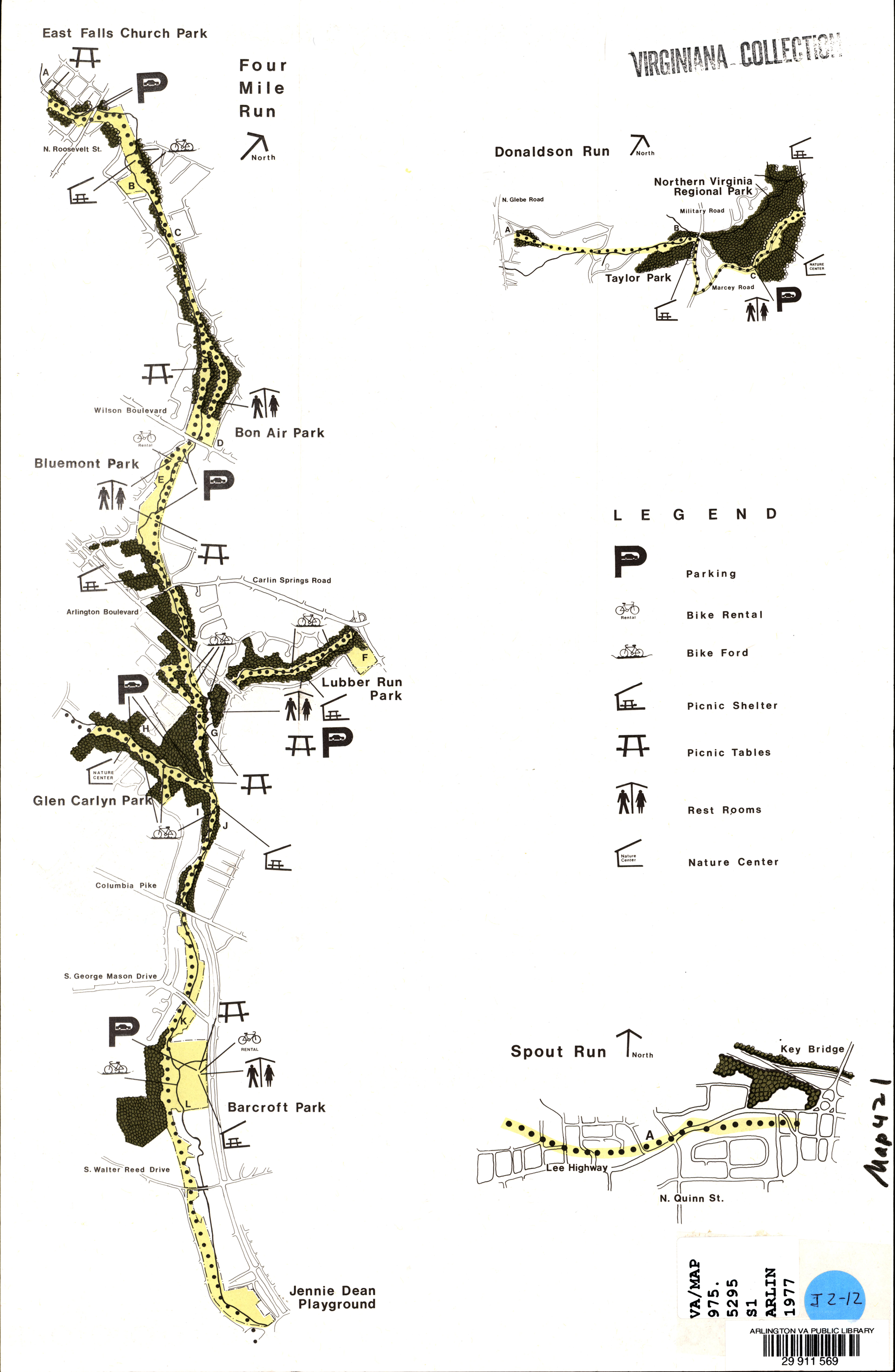
Map of County bike trails, 1977.

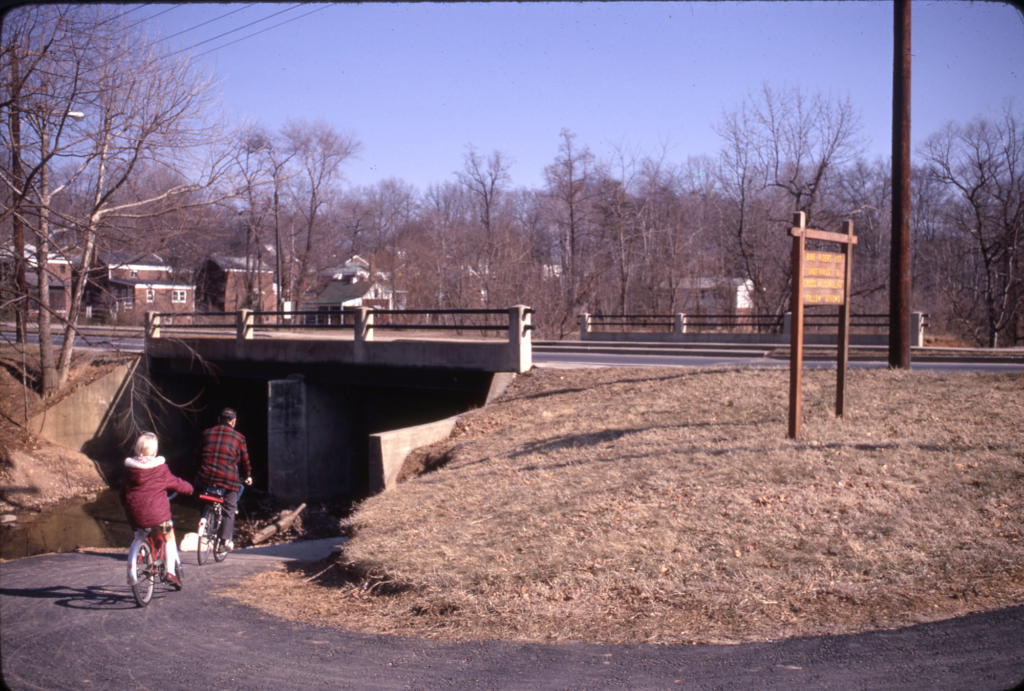
Bike underpass at Wilson Boulevard and Four Mile Run

Bike underpass at Wilson Boulevard and Four Mile Run. Date unknown. (210-0103)

1994

The Arlington Bicycle Transportation plan is adopted, and $7.3 million is eventually allocated to develop new bike trails, bicycle lanes, and bicycle parking.

2008

The County adopts the Bicycle Element, a new planning document focused on continuing bicycle development.

2010

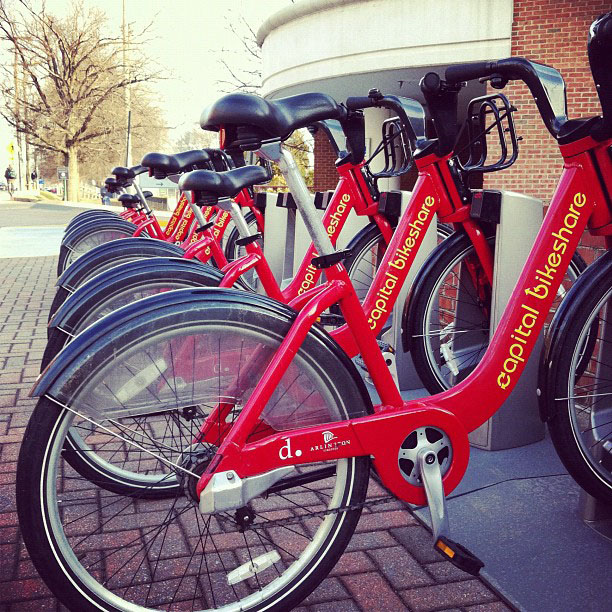
Arlington launches Capital Bikeshare in partnership with the District of Columbia.

bike share

First generation Capital Bikeshare bicycles, February 2012 at Central Library.

Sources

Active Living and Biking: Tracing the Evolution of a Biking System in Arlington, Virginia, by Royce Hanson and Garry Young

Baseline Report – The State of Bicycling in Arlington, County publication

To learn more about Arlington's history, visit the Center for Local History on the first floor of the Central Library.

Do you have a question about this story, or a personal experience to share? 

Use this form to send a message to the Center for Local History.

Center For Local History - Blog Post Message Form

Do you have a question about this story, or a personal experience to share? Use this form to send a message to the Center for Local History.

"*" indicates required fields
This field is for validation purposes and should be left unchanged.

Share Your Story

May 13, 2021 by Web Editor

Joan Trumpauer Mulholland: Taking a Stand

Post Published: May 6, 2021

Graphic image of a megaphone

Join us for a new series of stories from the Center for Local History highlighting members of our community who made a difference in ways that helped shape our history and created positive change.

Their voices were not always loud, but what they said or did had a significant impact on our community.

Joan Trumpauer Mulholland

Joan Trumpauer Mulholland (1941-Present) is a civil rights activist, educator, and founder of the Joan Trumpauer Mulholland Foundation.  She is best known for her role as a white freedom rider, risking her personal safety in pursuit of equality and social justice while defying racist attitudes and prejudices towards Blacks during the Jim Crow era.

Born in the District of Columbia and raised in Arlington County, Mulholland was deeply troubled at an early age by what she perceived as unfair treatment of minorities when a school friend dared her to walk through a predominantly Black section of town.  Despite being only 10 years old, she felt the discomfort and alienation of the people she observed and thus vowed to play a role in changing attitudes and contributing to the elimination of racism in American society.

Following what she felt was an unfulfilling year spent attending Duke University, Mulholland spent the next year working on Capitol Hill which led to her involvement with the Nonviolent Action Group from Howard University.  1960 found her participating in sit-ins which often led to her being arrested and labeled as mentally ill owing to her unique status as a white, southern woman.  One of these sit-ins took place on June 10, 1960, at the Drug Fair drugstore in Cherrydale in an attempt to integrate the lunch counter.  Mulholland documented these experiences in a diary, which detailed conditions of her confinement which included segregated cells, what she was given to eat, and how she forged bonds with her Black counterparts.

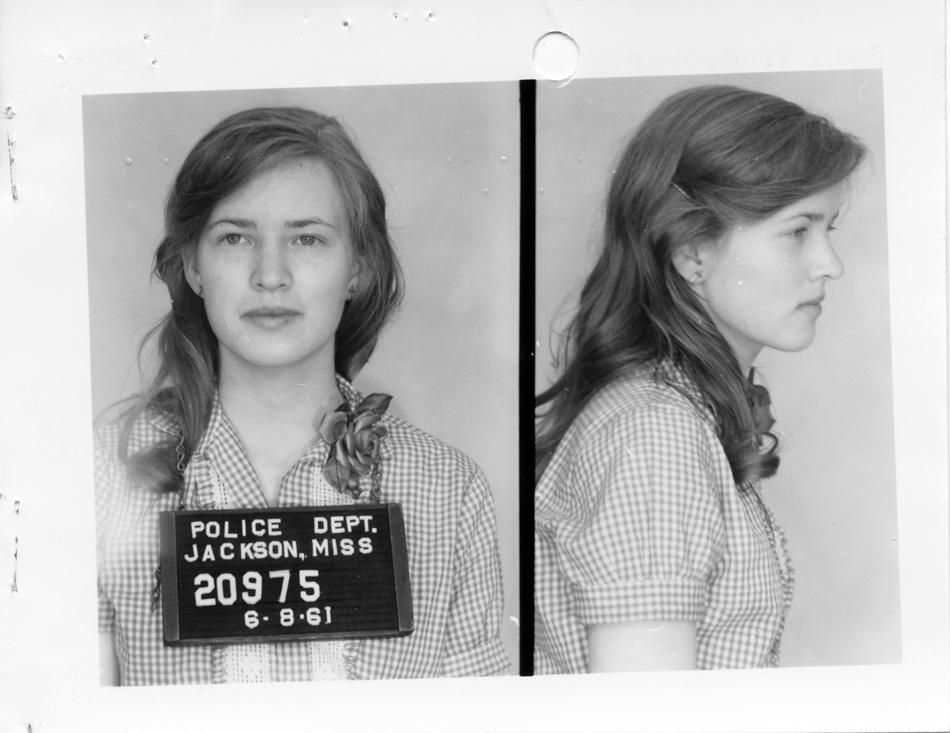
1961 saw Mulholland joining the Freedom Riders, an integrated group of Black and white activists who defied the southern practice of segregated busing by refusing to travel separately.  That summer, Mulholland, accompanied by activists Stokely Carmichael, Hank Thomas, and others, traveled to Jackson, Mississippi, with members of the Congress of Racial Equality.

Mulholland mug shot

Mugshot of Joan Trumpauer Mulholland, June 8, 1961.

After refusing to leave a bus station area there, Mulholland was arrested and taken to Parchman Penitentiary in Mississippi, a notoriously harsh prison. Mulholland, who was only 19 at the time, refused to post bail. Since there was no women’s wing of the prison then, she was housed on death row for two months and kept in a cramped, segregated cell with 17 other women.

Mulholland served her two-month sentence plus additional time to work off the $200 fine she owed, before attending school at Tougaloo College in Jackson where she had enrolled during her incarceration.  While a junior at Tougaloo, she participated in a sit-in at Woolworth’s lunch counter in Jackson, which resulted in considerable violence and great risk to her safety.  In August of 1963, she helped organize the March on Washington before graduating from Tougaloo in 1964.

After returning to Arlington later that same year, Mulholland married, had five sons, worked at Patrick Henry Elementary School as a teacher’s aide and in 2014 founded the Joan Trumpauer Mulholland Foundation, dedicated to involving new generations in activism and social justice.  “I want to show the younger folks that you can do something that will have an effect,” she said in 2015.  “It’s just a matter of starting.”

Do you have a question about this story, or a personal experience to share? 

Use this form to send a message to the Charlie Clark Center for Local History.

Center For Local History - Blog Post Message Form

Do you have a question about this story, or a personal experience to share? Use this form to send a message to the Center for Local History.

"*" indicates required fields
This field is for validation purposes and should be left unchanged.

Share Your Story

May 6, 2021 by Web Editor

Oral History: West Brothers Brick Company

Post Published: April 29, 2021

Interview with Rayfield Barber

Arlington Voices the Oral History Collection

Oral histories are used to understand historical events, actors, and movements from the point of view of real people’s personal experiences.

Arlington was once a hub for brick production – providing the materials that would make up many of the homes and buildings in the area.

The West Brothers Brick Company was founded in 1844 and came to Arlington shortly after the Civil War in 1866. Boosted by clay deposits along the Potomac, the West brothers bought 40 acres and established a powerhouse production site of local brick. Other companies quickly followed suit, and the region supported 10 plants that used local clays by 1905 - mostly producing red brick, though the West Brothers also made clay tile as well.

The company remained in operation in Arlington until 1942, when the land was taken over by the federal government to build the Pentagon. About 250 people were employed by the company at this time, and the West Brothers Brick Company subsequently moved operations to Landover, Maryland.

Bricks made by the company were used in notable buildings around the Capital Region, including the White House, the Pentagon, the Supreme Court building, both Senate office buildings, and the Capitol.

In this oral history interview, Rayfield Barber discusses his time working as a machine operator at the West Brothers Brick Company. Barber began working for the company around the time of the Great Depression in 1932, working 10 hours a day for twelve and a half cents an hour. To get to work, he would take the bus from Columbia Pike in the Barcroft neighborhood, and would later walk from the brickyard to his home in Green Valley.

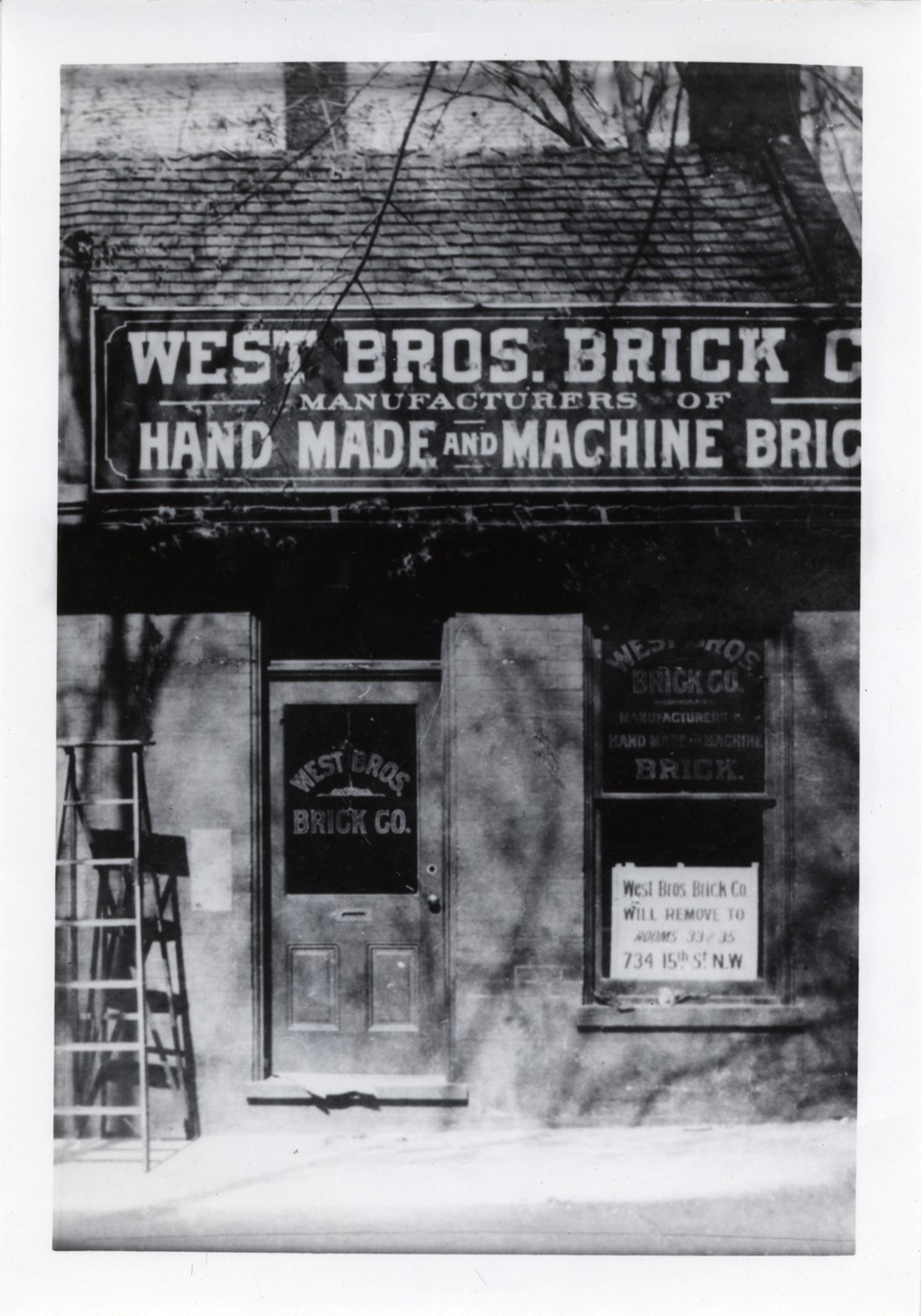
Office

West Brothers Brick Company offices at 720 15th NW in Washington, D.C., 1902.

Barber worked for West Brothers until 1937, at which point the brick workers went on strike. Later, he worked at the Hoover Airport and the National Airport for over 50 years after the Hoover airfield closed down. As a porter, he waited on celebrities like Clark Gable, Eleanor Roosevelt, and the Kennedys, and in 1991 he was honored for his longtime service.

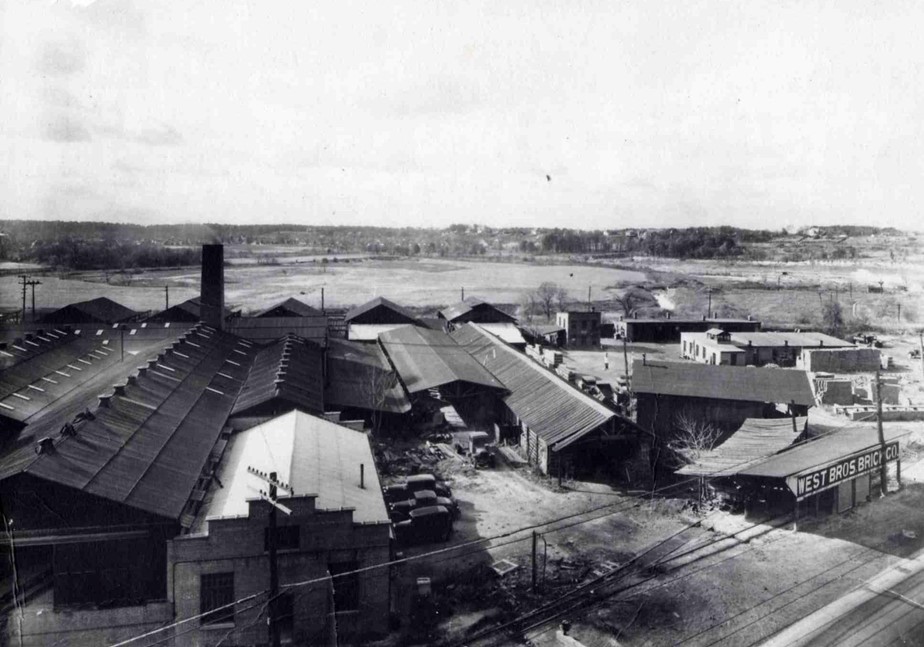
Panoramic 1
Panoramic 2

West Brothers brickyard panoramic, 1903.

Narrator: Rayfield Barber
Interviewer: Edmund Campbell and Cas Cocklin
Date: July 17, 1991

https://library.arlingtonva.us/wp-content/uploads/2021/04/Barber_RayField_19910717-1.mp3

Cas Cocklin: Tell us a little bit around the brickyard.  How large was it more or less?  And how many people were employed there?  I know perhaps you don't know the exact number but roughly?

Rayfield Barber: It was a pretty large brickyard because they made bricks and tile at West Brothers Brick Company.

CC: To whom were they selling these?  To the government or to private contractors?

RB: They was selling them to the government and to private contractors.  They had a bunch of Dutch kilns which they start the bricks in.  What would happen, they would bring this through the machine, they had one machine that ran over and over with molds in it and then clay would fall into the molds and when it come around and it had a belt, a conveyor belt . . .

CC: Now was this just one mold at a time or did they have a row of molds?

RB: No, it was a whole lot of molds in this here wheel-like thing and it was big tubs in there and it would fill up, I guess it was just 4 x 8 for the bricks and then the clay would fall in there and then pat down and when it come around it had something like a knife blade, cut it off and when they did that, the plunge would drop down and knock the bricks out and they'd come right out on this conveyor belt and they'd have men standing in line, about five men standing in line off bearing the bricks. Putting them, setting them on these carts.

CC: Were they also inspecting them at the same time, in case one was broken or something?

RB: No, if it was broken, the men would just throw that brick away.

Edmund Campbell: Where did you get clay?

RB: The clay was right now where the Pentagon City is, there's a clay field right down in there and it had a little dinky, a little engine that ran by steam.

West Brothers 1942

The West Brothers brick kilns, right, were eventually razed to build Pentagon. Photo from 1942.

The goal of the Arlington Voices project is to showcase the Center for Local History’s oral history collection in a publicly accessible and shareable way.

The Arlington Public Library began collecting oral histories of long-time residents in the 1970s, and since then the scope of the collection has expanded to capture the diverse voices of Arlington’s community. In 2016, staff members and volunteers recorded many additional hours of interviews, building the collection to 575 catalogued oral histories.

To browse our list of narrators indexed by interview subject, check out our community archive. To read a full transcript of an interview, visit the Center for Local History located at Central Library.

April 29, 2021 by Web Editor

Arlington’s Signature Soda: Cherry Smash

Post Published: April 15, 2021

Did you know that Arlington was once home to one of the country’s most popular sodas?

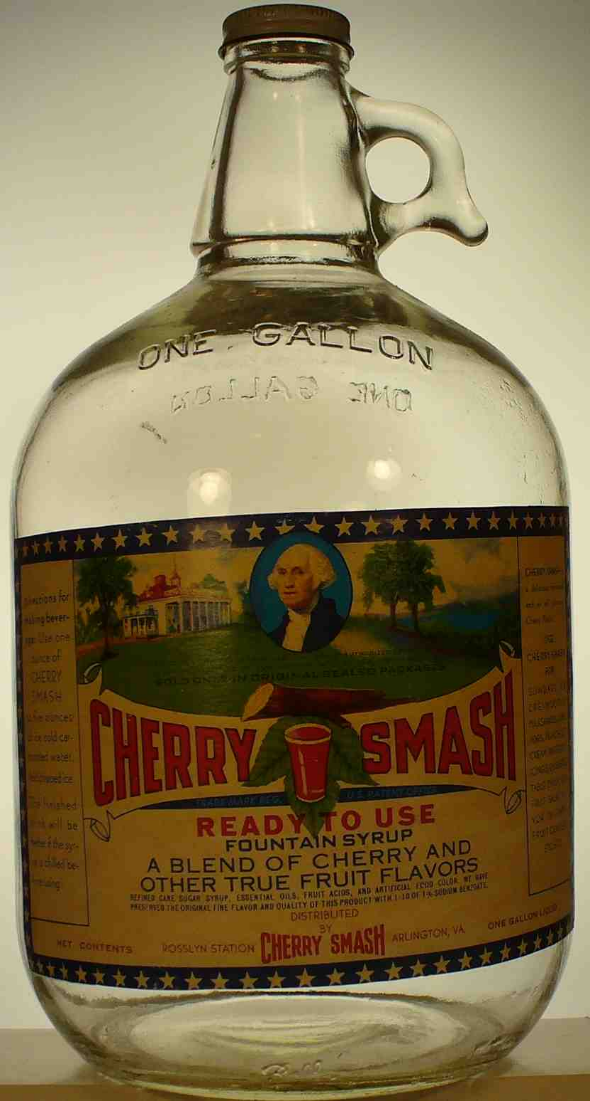
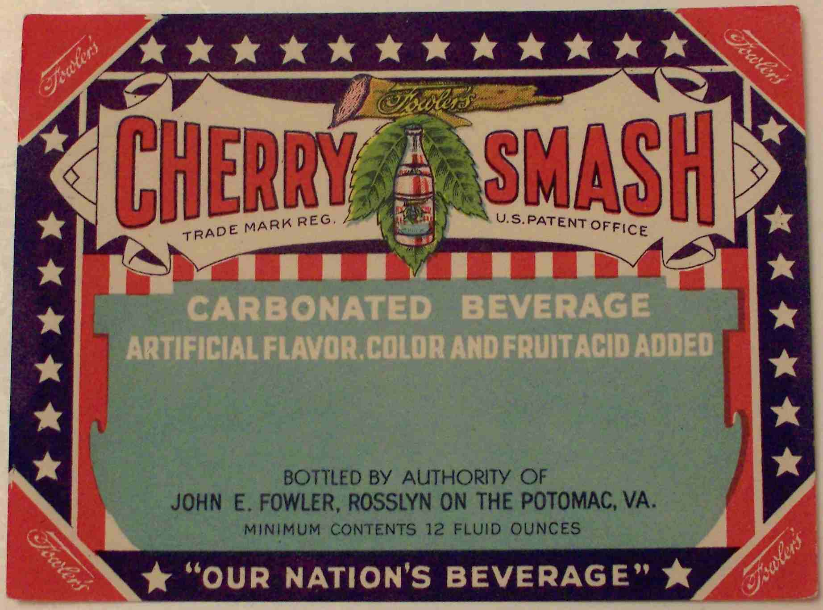
Gallon Jug
Bottling Location

A one-gallon Cherry Smash syrup jug, from the Rosslyn bottling location (left). A Cherry Smash logo, noting the Rosslyn location (right). Images courtesy of Washington, D.C., Area Beer and Soda Bottles collector, Chosi.

Cherry Smash soda was founded in 1901 by John E. Fowler in Richmond, Virginia. The company produced a cherry-flavored syrup that could be added to carbonated water or ice cream, and the drink gained early popularity amidst the rise of the soda fountain, earning the nickname of “Our nation’s beverage.” Throughout the early 1900s, there was even a Cherry Smash-sponsored amateur baseball team in the Richmond League.

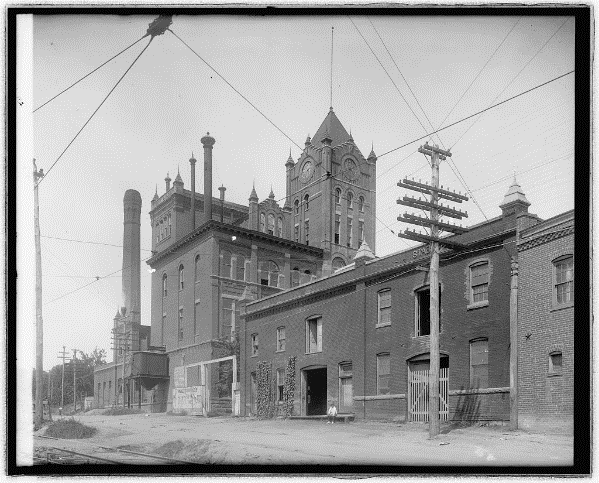
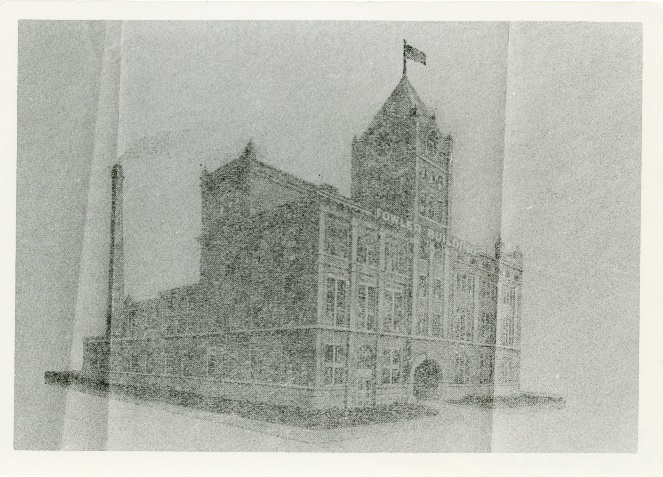
The soda came to Arlington right around the time Prohibition went into effect. With a plan to move the company’s headquarters from Richmond to Arlington, Fowler purchased the Arlington Brewery in 1920 for $125,000 and converted it into a Cherry Smash plant (also referred to as the “Fowler Building”).

Brewing Company
Fowler

Arlington Brewing Company, which became known as the Fowler Brewery after purchase by John Fowler (left). Dated between 1910 and 1926. Image courtesy of the Library of Congress. Fowler Brewery Letterhead, date unknown (right).

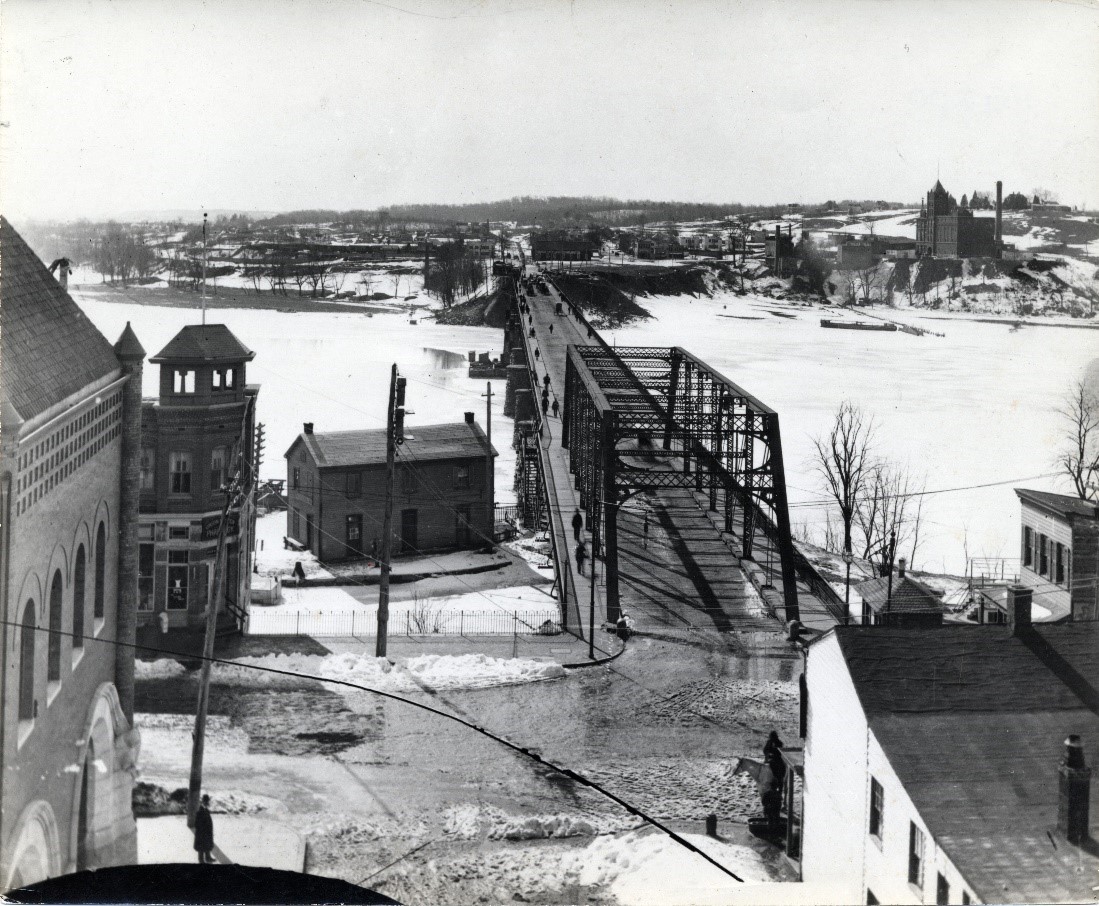
The site was initially known as the Consumer Brewery and was built in 1896 by Albert Goenner, a local architect who also oversaw the construction of the original County courthouse. Located near what was the old Aqueduct Bridge, it was a major purveyor of alcohol in the region during a time when Rosslyn was known for being a hotbed of criminality. From the 1880s to the early 1900s, people from the District and the greater Capital region would come over Arlington’s bridges to gamble and drink, most notably in Rosslyn’s saloons.

In 1904, however, nearly 50 of the saloons, bordellos, and gambling houses were shut down by Virginia Commonwealth Attorney Crandall Mackey, and Rosslyn’s salacious reputation began to wane. The same year, the Consumer Brewery reorganized and was renamed the Arlington Brewing Company and continued to produce beer for out-of-state sale until production was banned in 1918.

Bridge

View from Georgetown of the Rosslyn area across the Aqueduct Bridge, circa 1900. The then-Consumer Brewery can be seen at the top right corner.

When the Cherry Smash company set up shop in Arlington in 1920, the soda was one of the largest soda brands in the country, second only to Coca-Cola. As Cherry Smash ingratiated itself into the Arlington landscape, Fowler also became a prominent member of Arlington’s business community, advocating for business development in Rosslyn in the 1920s and serving as chairman of the Arlington Trust Company Bank from 1925 until his death in 1960.

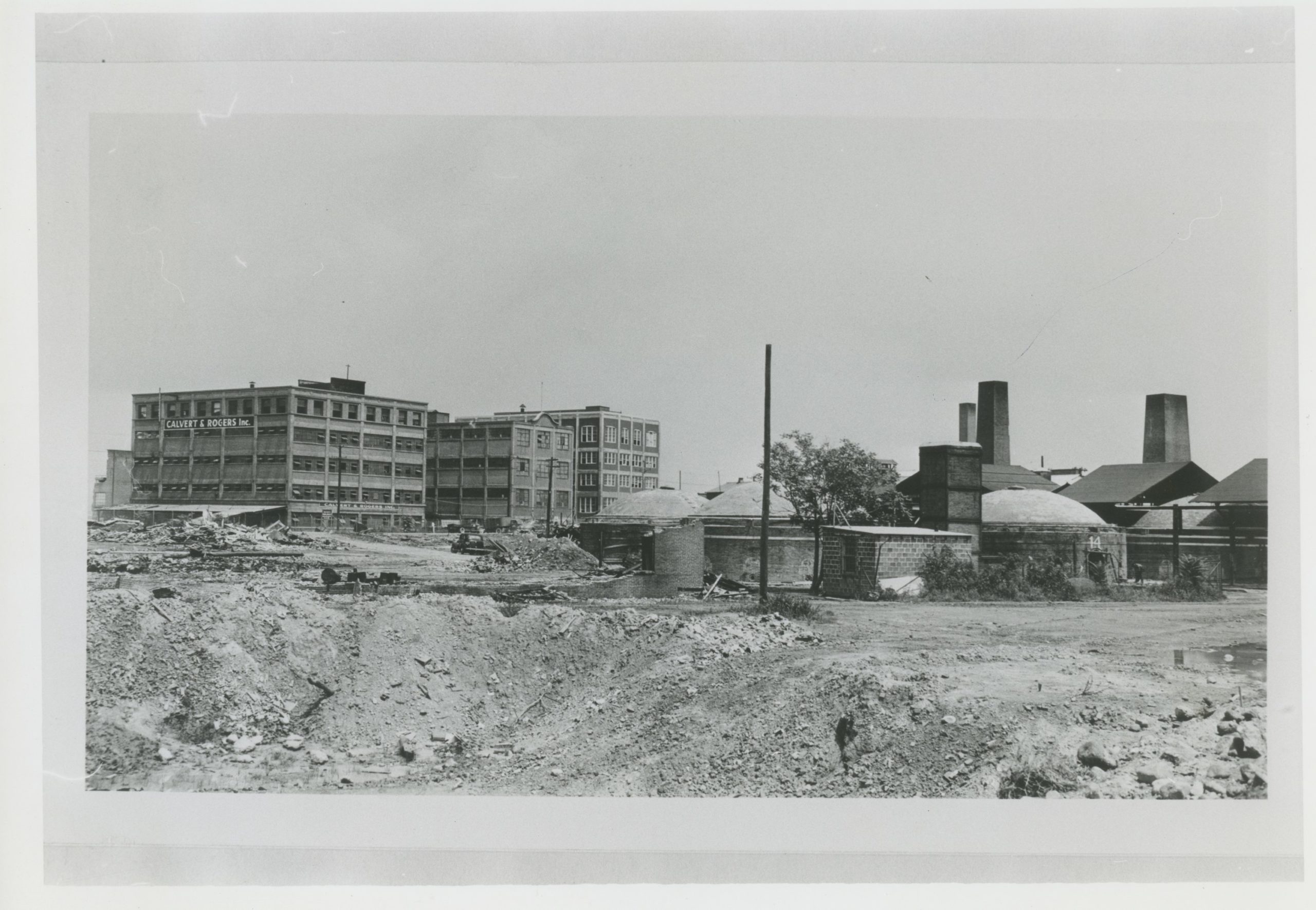
Cherry Smash continued to be manufactured and bottled at the Rosslyn site until around the 1950s. Numerous other operations also took place on or adjacent to the Cherry Smash property, including a lithographing company, a laundry facility, a hardware warehouse, a millwork facility, and a tree surgery company. In 1943, part of the Cherry Smash plant was used to manufacture and bottle wine, connecting the location back to its pre-Prohibition roots.

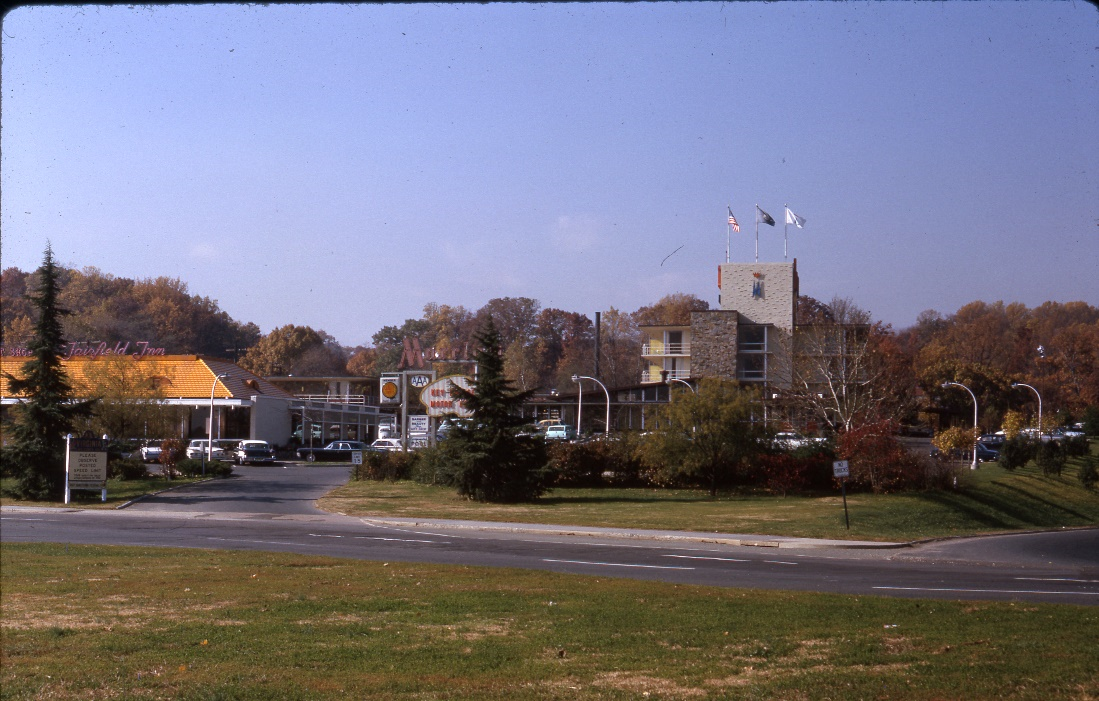
In 1940, J. Willard Marriott opened a Hot Shoppe next to the Cherry Smash facilities, which had become a highly successful local restaurant chain since the first location debuted in D.C. in 1927. In 1958, Marriott demolished the soda plant to construct a “Hot Shoppe’s Motel,” which in 1959 debuted as the “Marriott Motor Hotel,” and was later called the Key Bridge Marriot.


Syrup Dispenser

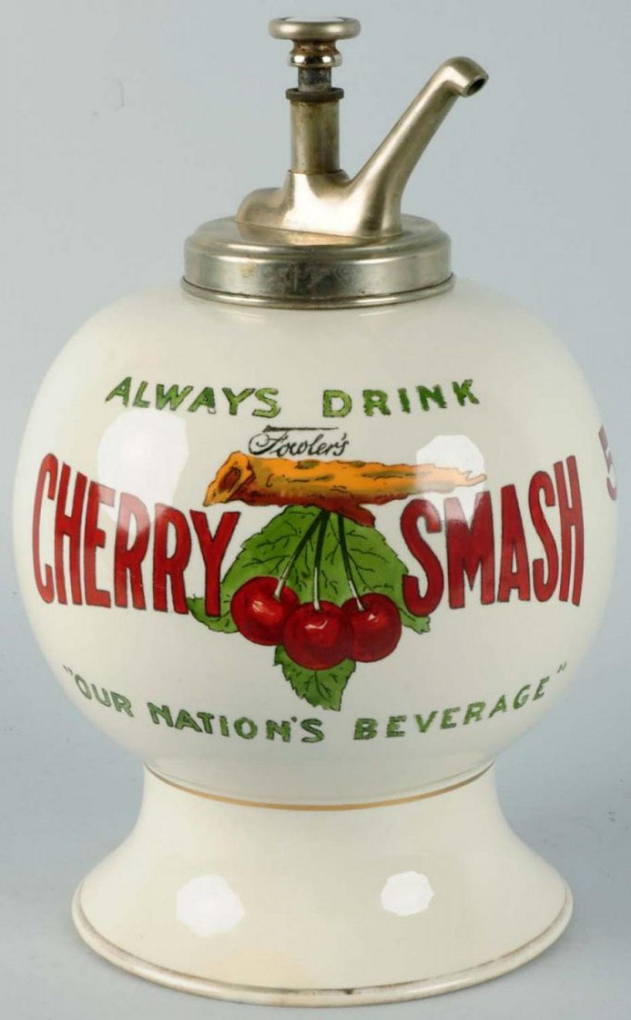
An early Cherry Smash syrup dispenser that would have been used at a soda fountain. This particular style was called a ball dispenser. Image courtesy of Lancaster County News.

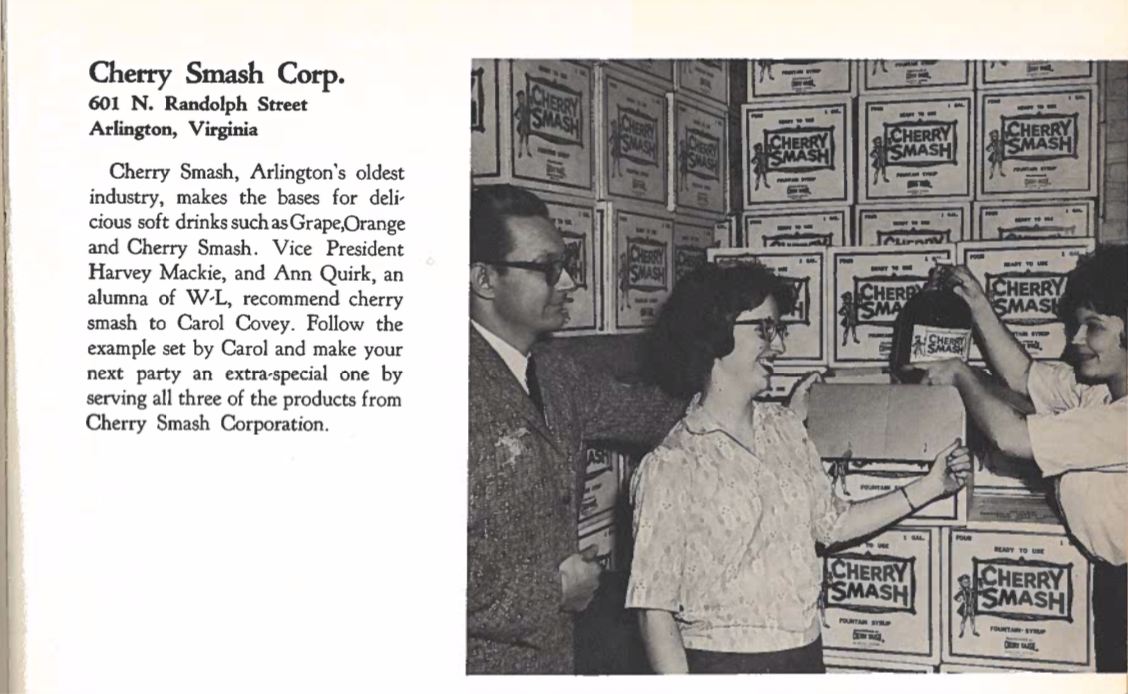
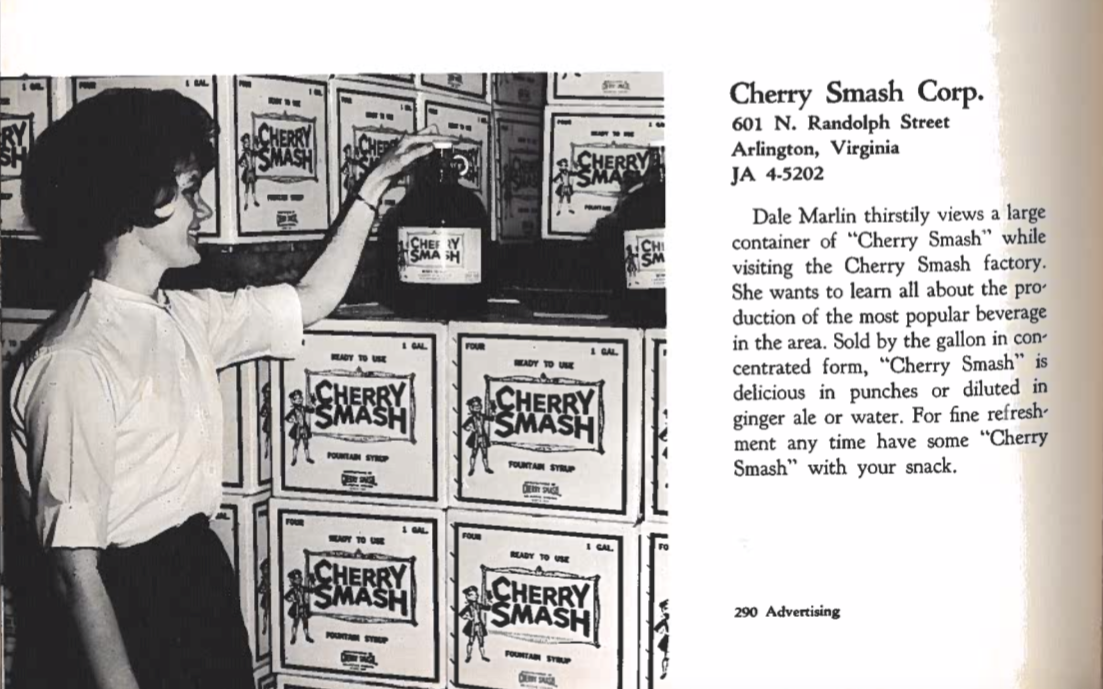
In the 1950s, Washington A-list investor C. Wyatt Dickerson purchased the company, and Robert Pond (who later founded the still-existing Pond Roofing) served as president during this era. Cherry Smash continued to be manufactured in Arlington into the 1960s at a new location at 601 North Randolph Street in the Ballston area, where it was bottled and sold in gallon form.

Cherry Smash’s legacy lives on in Arlington through artifacts at the Arlington Historical Society and through throwbacks such as New District Brewery’s Sour Cherry Smash beer.

News Excerpt

Excerpt from the “Year of Bargaining Accomplished” advertising section of the 1962 “Blue and Gray” yearbook from Washington-Lee High School (now Washington-Liberty High School).

Newspaper Excerpt

Excerpt from the “Reflections through Enterprise” advertising section of the 1963 “Blue and Gray” yearbook from Washington-Lee High School (now Washington-Liberty High School).

Formerly Cherry Smash

View of the old Marriott Hotel near the Key Bridge, on the site of what was formerly the Cherry Smash factory. Photo was taken in December 1962.

Learn more:

For more information about the area’s history with brewing, check out Capital Beer: A Heady History of Brewing in Washington, D.C., available at the Library.

To learn more about Arlington's history, visit the Center for Local History on the first floor of the Central Library.

Do you have a question about this story, or a personal experience to share? 

Use this form to send a message to the Center for Local History.

Center For Local History - Blog Post Message Form

Do you have a question about this story, or a personal experience to share? Use this form to send a message to the Center for Local History.

"*" indicates required fields
This field is for validation purposes and should be left unchanged.

Share Your Story

April 15, 2021 by Web Editor

Oral History: Bob & Edith’s Diner

Post Published: April 1, 2021

Interview with Gregory Bolton

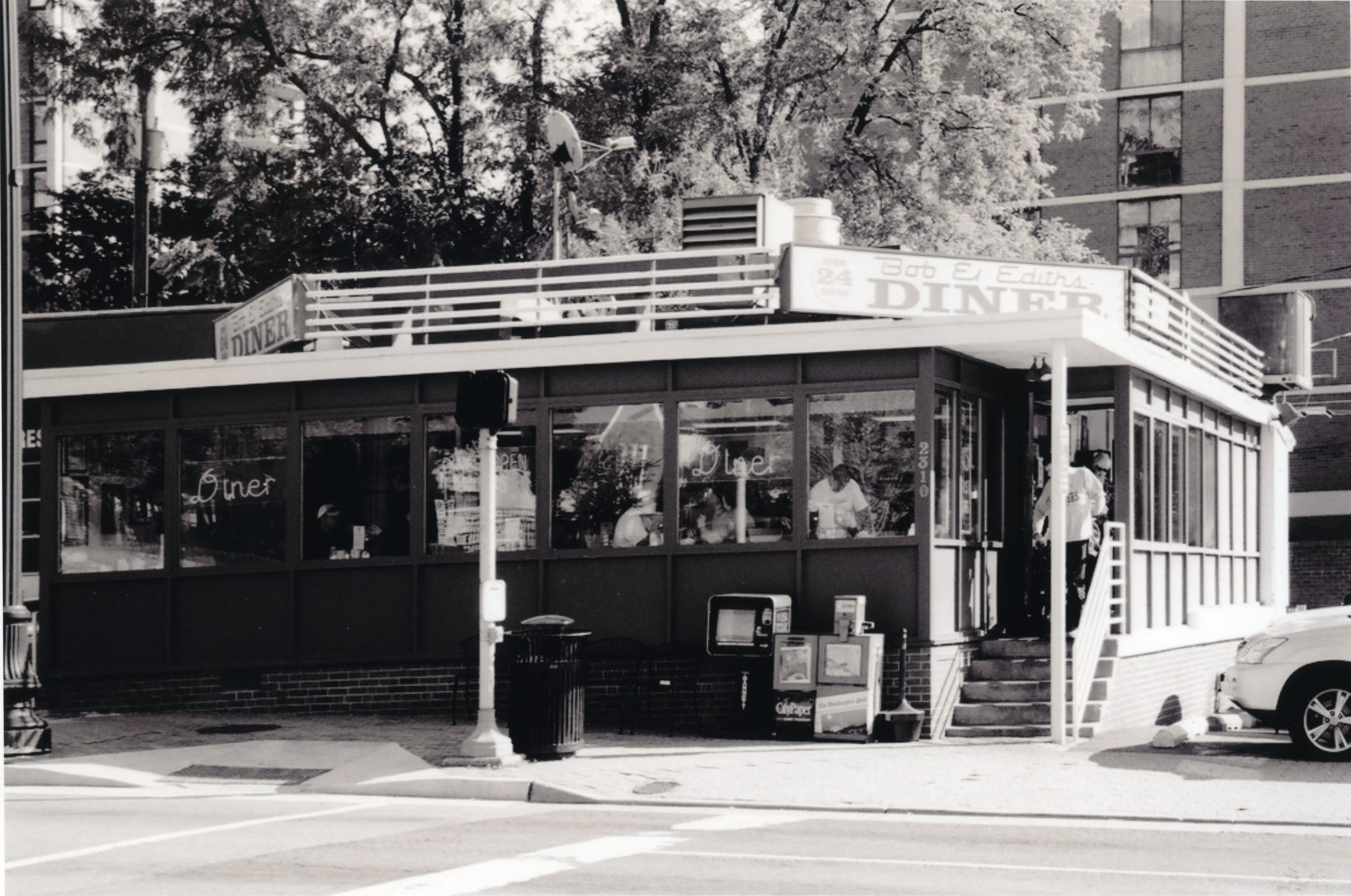
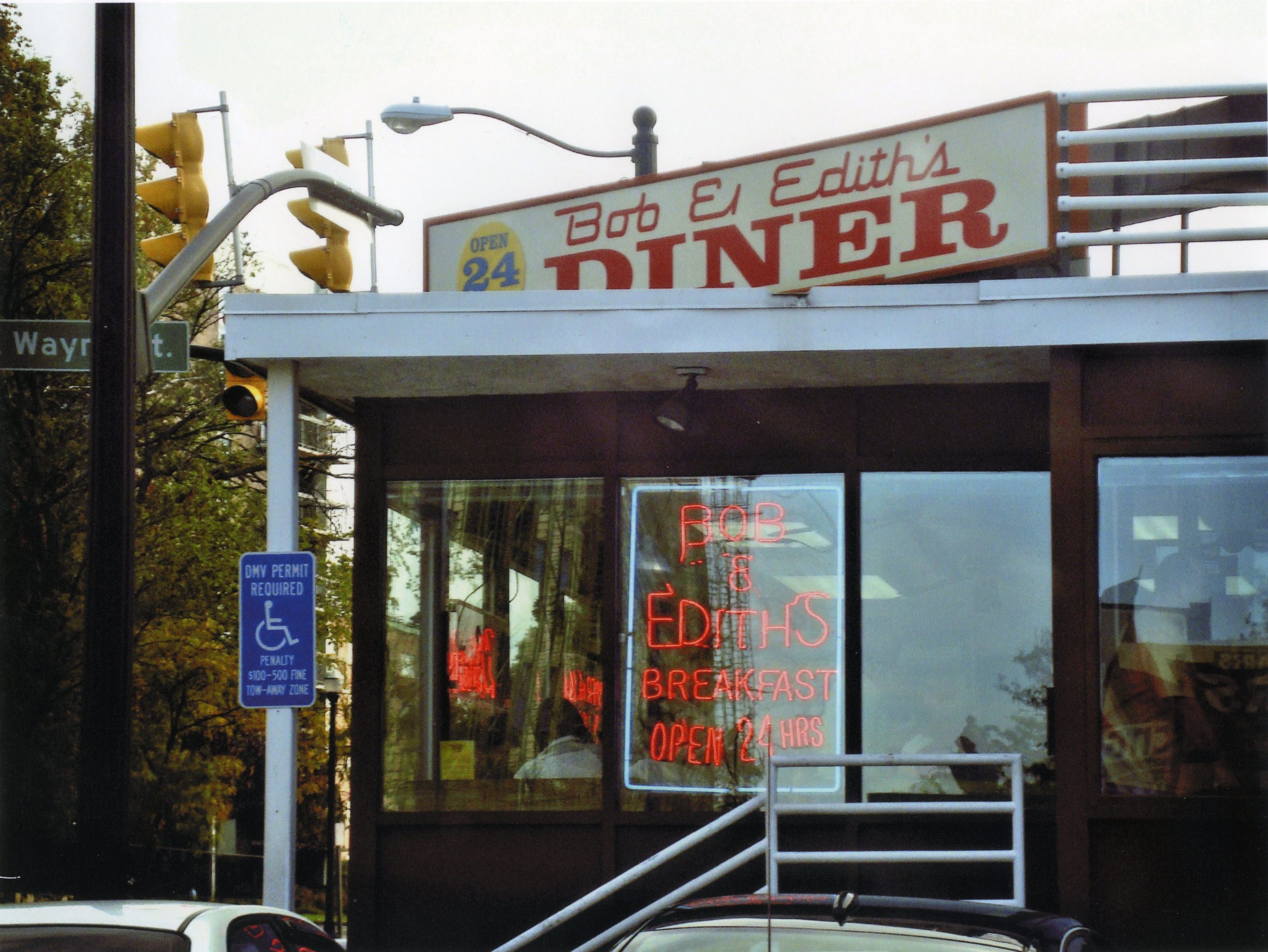
Diner 1

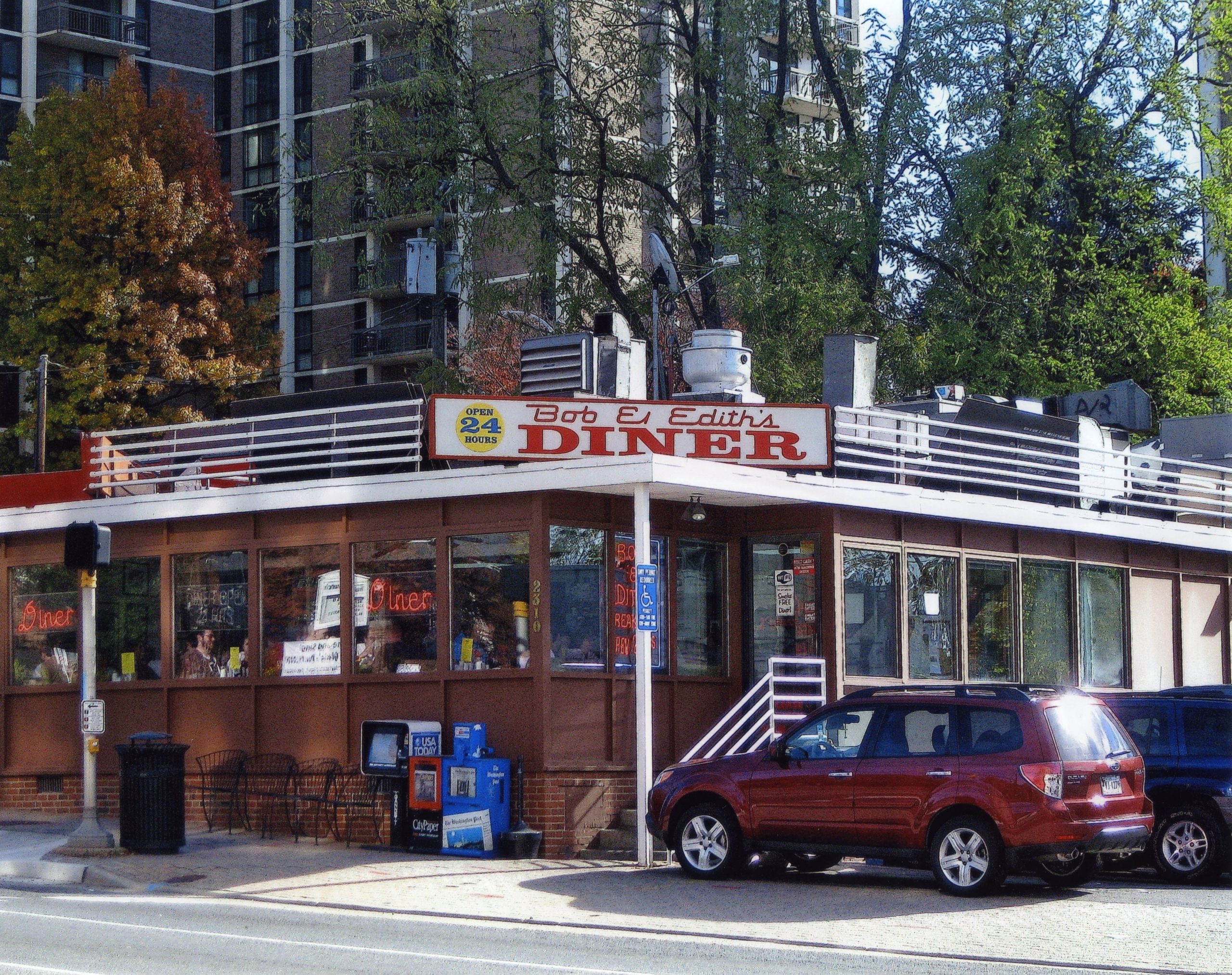
“Bob & Edith’s Diner with high rise apartment in background,” 2010. Photo by Emma Chaplin as part of the “Capturing Arlington” photo contest.

Arlington Voices the Oral History Collection

Oral histories are used to understand historical events, actors, and movements from the point of view of real people’s personal experiences.

Bob & Edith’s Diner has been an Arlington mainstay for more than 50 years. Established in 1969 by Bob and Edith Bolton, the original Bob & Edith’s got started when the couple took over the location of a “Gary’s Donut Dinette” for $800. The diner started with simple Southern dishes, such as country hams, scrapple, bologna, bacon, and country breakfasts.

The Boltons later added several locations in addition to the flagship diner on Columbia Pike, and in 1982, the diner expanded from a 10-stool counter to 5 stools and 7 booths. The interiors include many photos of the Bolton family, as well as Dallas Cowboys ephemera and a jukebox.

Bob & Ediths

“Color shot of Bob & Edith’s Diner,” 2010. Photo by Muna Abdulkader as part of the “Capturing Arlington” photo contest.

In this oral history interview, Bob and Edith’s son Gregory Bolton describes the history and operations of the diner and its expanding menu. Today, his son and daughter, Christopher and Tamara Bolton run Bob & Edith’s, continuing the family tradition.

Narrator: Gregory Bolton
Interviewer: Virginia Smith
Date: December 19, 2011

https://library.arlingtonva.us/wp-content/uploads/2021/03/Bolton_Gregory_20111219.mp3
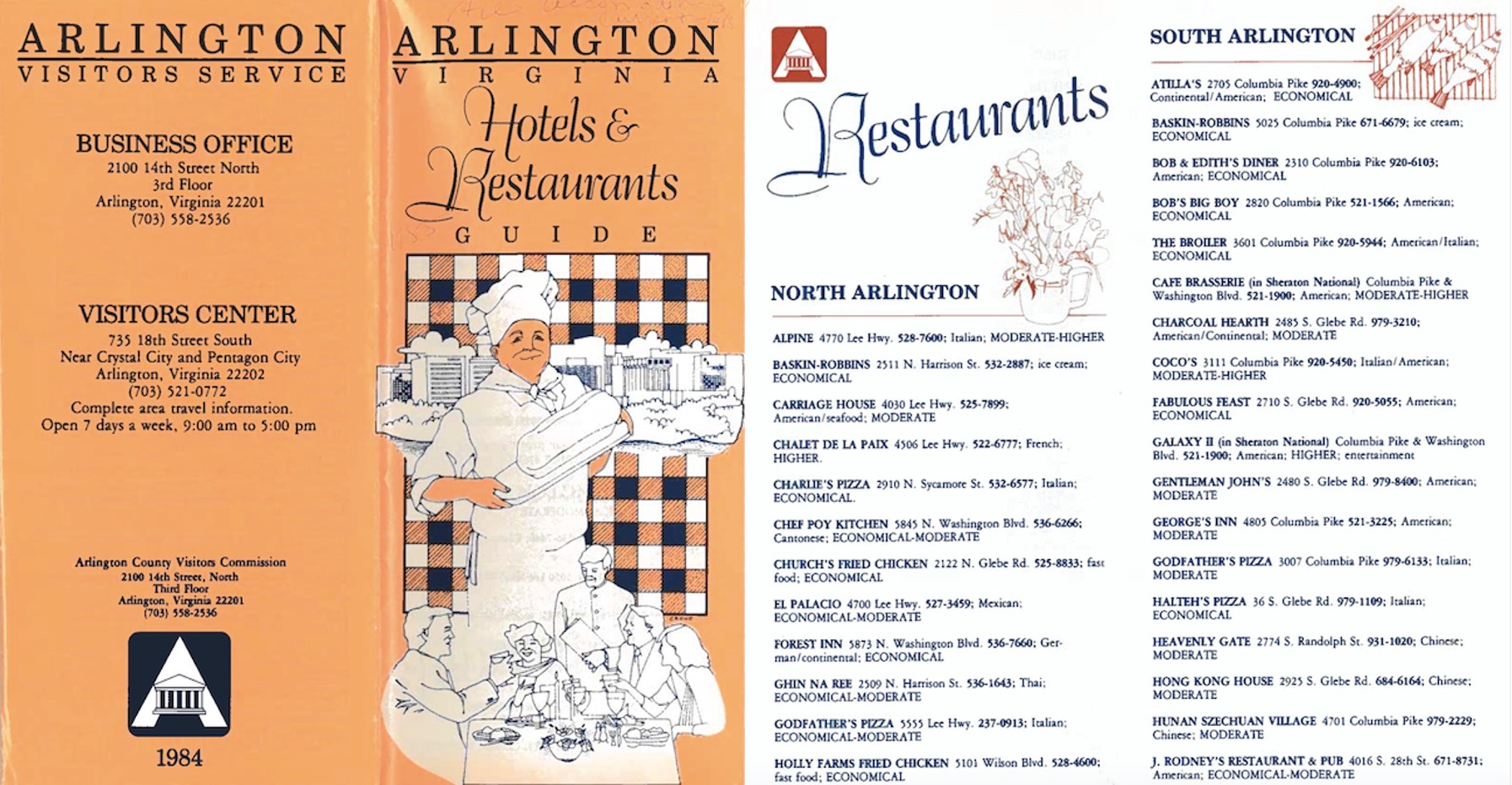
Hotel Guide 84

Bob & Edith’s Diner featured in the South Arlington section of a 1984 Arlington hotel and restaurant guide.

Hotel Restaurant Guide

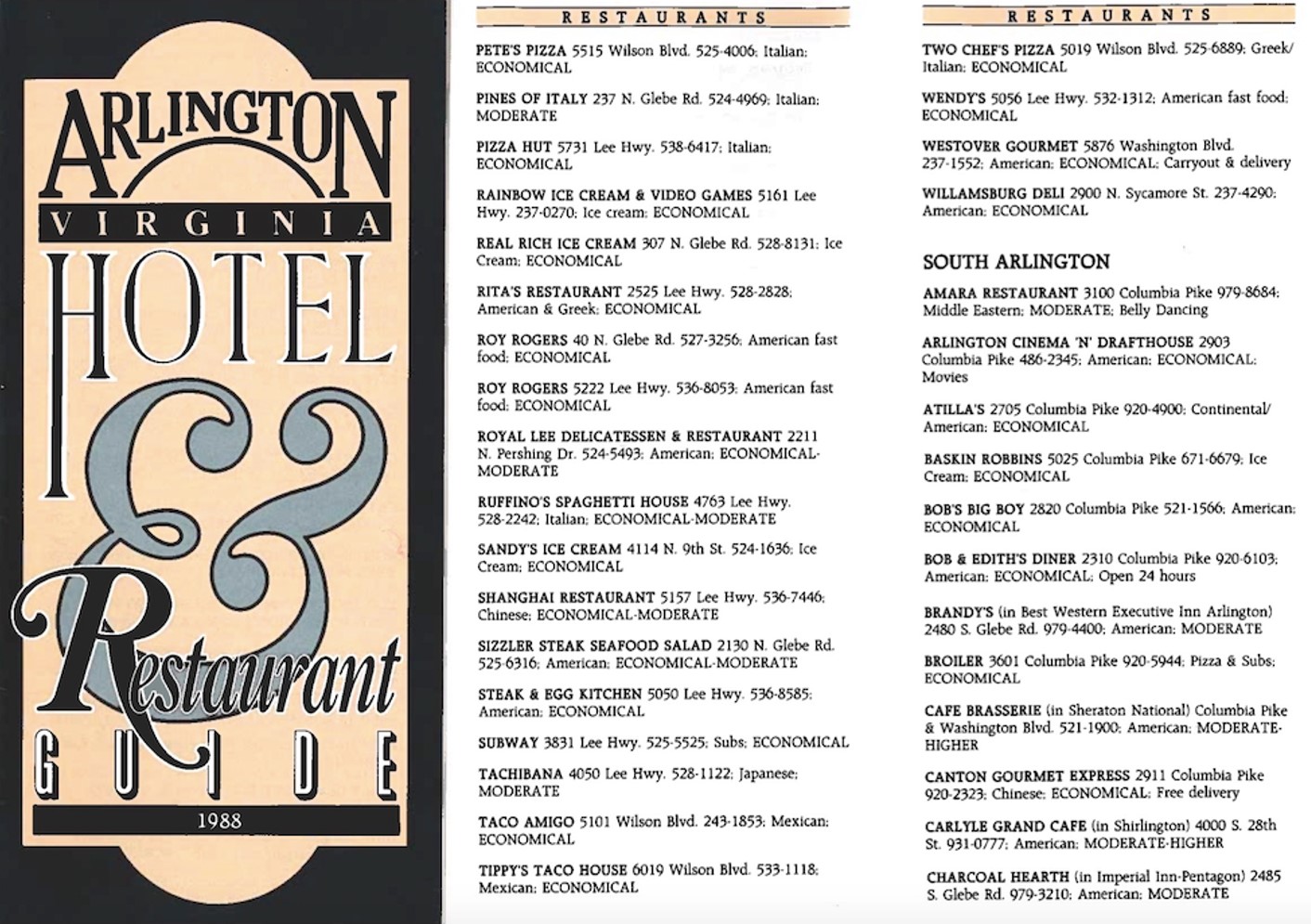
Bob & Edith’s Diner featured in the South Arlington section of a 1988 Arlington hotel and restaurant guide.

Gregory Bolton: When I was growing up, there was no such thing as really a menu. What there was—above the, in front of the ten stools that were there, and above the grills, there were just signs, such as The Serviceman’s Special. We’d have an artist that would paint these signs up, roughly around sixteen inches, by maybe twenty inches. And it would, for example, would have a serviceman eating a chipped beef breakfast, that we would call it SOS, Serviceman’s Special. And each product was put across the front of the diner, and that’s how you would choose what you would like. There was no hand menu; it was across the board. And we’d replace them like once or twice a year.

Virginia Smith: And then when did you go to a menu, a printed menu?

GB: We probably went to a menu, I would say maybe about twenty-five years ago. The first ten or fifteen years it was pretty much all up in front of you; you picked it out, different ideas and different products. But the menu’s ten, fifteen times larger now than it was back then.

VS: Yeah. Did you get people coming down from the Pentagon?

GB: Yes ma’am. We had Pentagon, and the Navy Annex are very big customers. We had a lot of servicemen. I would say it’s seventy-five, eighty percent is government-related, whether it’s the County, state, Pentagon—

VS: Well, it’s affordable.

GB: —The military. They seem to be very pleased with the operation, and they keep coming back.

OG Bob

“The original Bob & Edith’s Diner,” 2010. Photo by Matthew Welborn as part of the “Capturing Arlington” photo contest.

Sources
https://www.bobandedithsdiner.com/About-Us

The goal of the Arlington Voices project is to showcase the Center for Local History’s oral history collection in a publicly accessible and shareable way.

The Arlington Public Library began collecting oral histories of long-time residents in the 1970s, and since then the scope of the collection has expanded to capture the diverse voices of Arlington’s community. In 2016, staff members and volunteers recorded many additional hours of interviews, building the collection to 575 catalogued oral histories.

To browse our list of narrators indexed by interview subject, check out our community archive. To read a full transcript of an interview, visit the Center for Local History located at Central Library.

April 1, 2021 by Web Editor

William A. Rowe: Taking a Stand

Post Published: March 25, 2021

Graphic image of a megaphone

Join us for a new series of stories from the Center for Local History highlighting members of our community who made a difference in ways that helped shape our history and created positive change.

Their voices were not always loud, but what they said or did had a significant impact on our community.

William A. Rowe

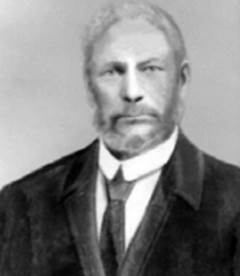
William Augustus Rowe (1834-1907) was a pivotal figure in the early development of the Green Valley/Nauck community. In the face of a post-Civil War world in which the Emancipation Proclamation was more legal decree than societal reality, Rowe persevered to achieve many firsts as a Black policeman, politician, elected official, district Supervisor and Chairman, and community leader.

William A. Rowe

William A. Rowe, possibly 1880's

Born into enslavement around 1834, Rowe eventually escaped and settled in the Freedman’s Village community. There, he trained and became a skilled blacksmith prior to becoming the first Black policeman in Arlington County. Rowe soon proved himself to be an able and effective politician, becoming the first Black elected to the Board of Supervisors. He served as Supervisor of the Jefferson District from 1871 to 1879 and as Arlington District Board Chairman from 1879 to 1883 after moving to Green Valley/Nauck, where he had previously purchased 5 acres of land from Sewell Corbett.

Upon Rowe’s departure from the Jefferson District, he earned this extraordinary resolution from the other two white supervisors:

“Resolved that the resignation of William A. Rowe as a member of this board having been made known, the faithful and efficient discharge of his duties during the past ten years, and the upright and honorable conduct that has marked his public service entitles him to the confidence, esteem, and gratitude of the people of this County.”

William A. Rowe’s tenure with the Board of Supervisors is as follows:

  • July 1, 1871-June 30, 1872, Jefferson Township, Board of Supervisors
  • July 1, 1872- June 30, 1873, Jefferson Township, Chairman, Board of Supervisors
  • July 1, 1873- June 30, 1874, Jefferson Township, “President” (Chairman), Board of Supervisors
  • July 1, 1874- April 2, 1879, Jefferson District, Chairman (moved from Jefferson to Arlington District)
  • July 1, 1879- June 30, 1883, Arlington District, Chairman

After his resignation as Chairman in 1883, he was appointed Superintendent of the Poor, a position he held through June of 1886.

Rowe continued to live in Green Valley/Nauck, where his son George served as a deacon at Lomax AME Zion Church, until his passing on December 5, 1907.

Do you have a question about this story, or a personal experience to share? 

Use this form to send a message to the Charlie Clark Center for Local History.

Center For Local History - Blog Post Message Form

Do you have a question about this story, or a personal experience to share? Use this form to send a message to the Center for Local History.

"*" indicates required fields
This field is for validation purposes and should be left unchanged.

Share Your Story

March 25, 2021 by Web Editor

Roberta Flack’s Arlington Roots

Post Published: March 18, 2021

Roberta Flack is known worldwide for her voice, songwriting and overall musical ability, for which she has won multiple Grammys. Flack has performed on stages across the world, and her roots are here in her hometown of Arlington.

Early Life

Flack was born near Asheville, North Carolina, in 1937, and moved to the Green Valley (formerly referred to as Nauck) neighborhood in Arlington when she was five years old. Musical from an early age, Flack began playing the organ and piano around age 9 and performed at local churches including Macedonia Baptist Church and Lomax AME Zion.

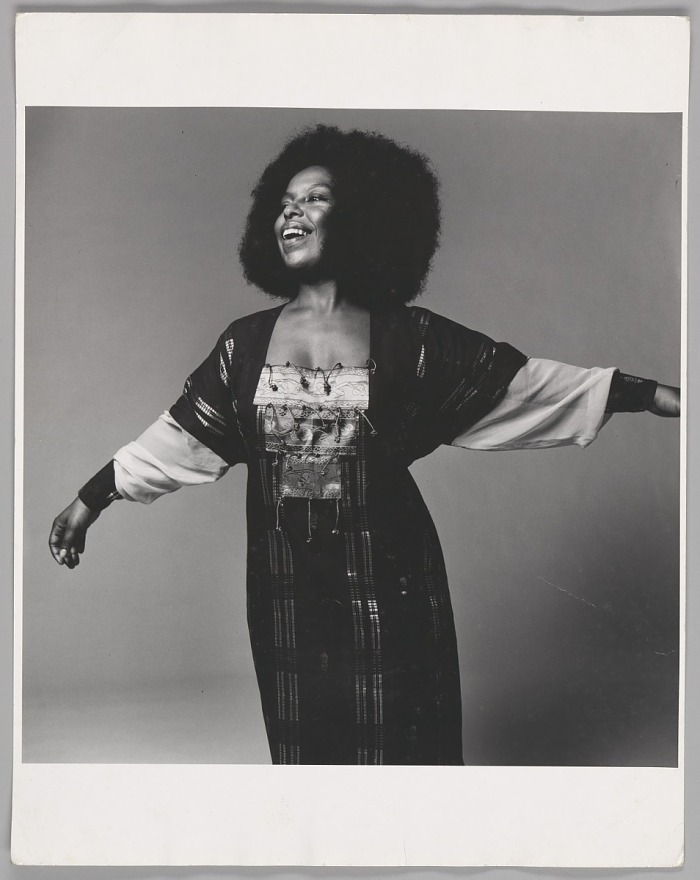
Roberta Flack 2

Roberta Flack photographed by Anthony Barboza, 1971. Image courtesy of the National Museum of African American History and Culture.

Flack grew up playing Chopin, Schumann, Bach, and Beethoven, and at 13, won a statewide contest by performing a Scarlatti sonata. One of her piano teachers was Lottie B. Bellamy, an Arlington resident and longtime organist at Macedonia Baptist Church. Flack’s mother, Irene Flack, was also a prominent community member, serving as the longtime chief baker at Wakefield High School and as an organist at Lomax AME Zion.

Flack attended Hoffman-Boston High School – then the only school available for African American children in Arlington – until age 15, when she was awarded a full music scholarship to Howard University. After graduating at 19, she went on to become a music teacher in Farmville, North Carolina, teaching about 1,300 students at all grade levels in the city’s segregated school system.

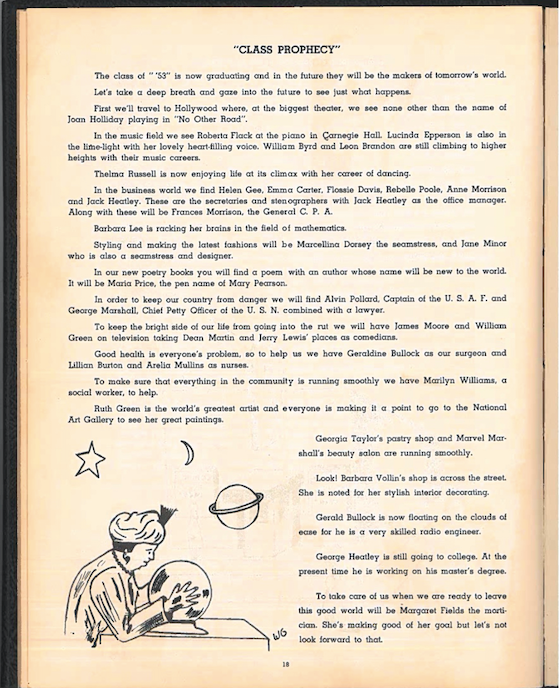
Senior Yearbook 1
Senior Yearbook 2

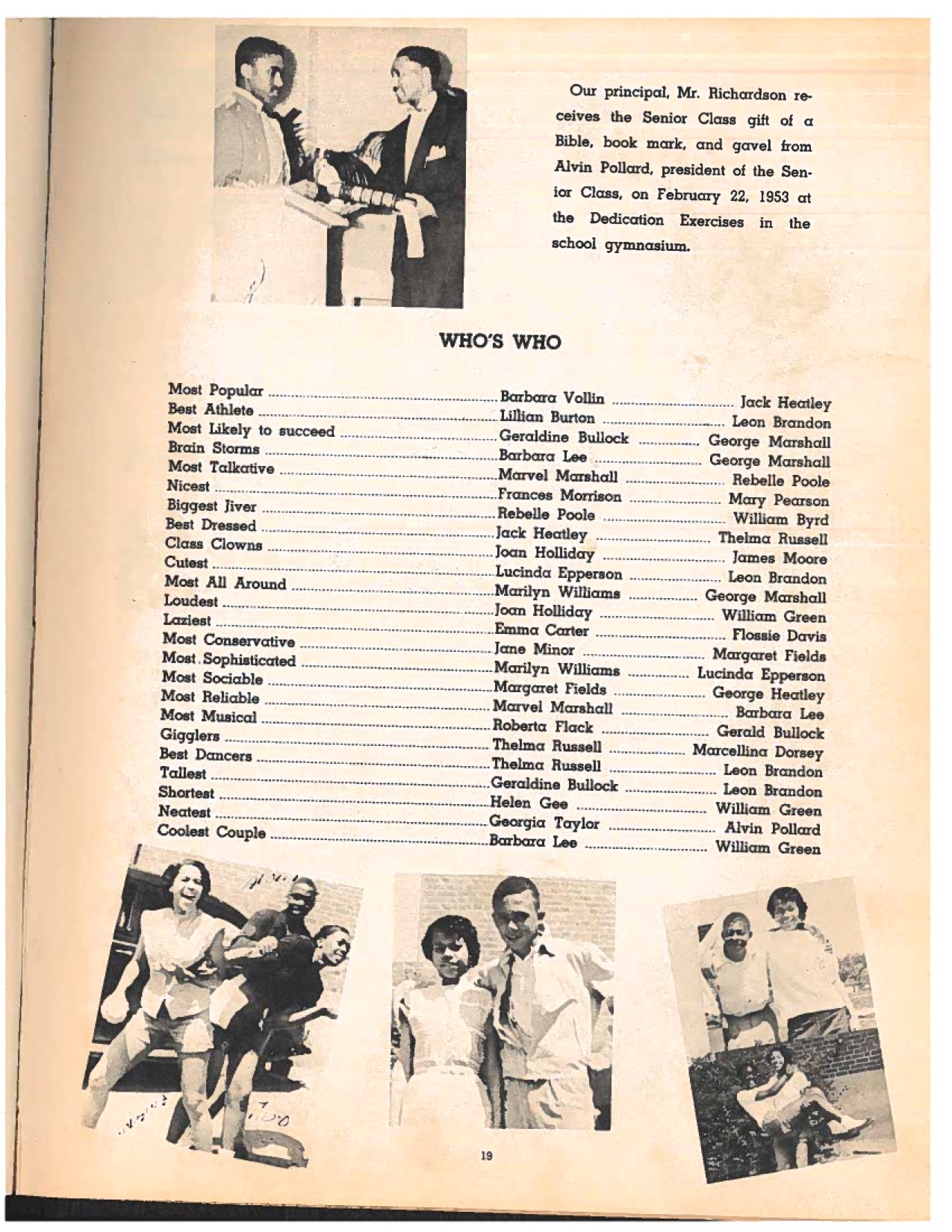
In Roberta Flack’s 1953 senior yearbook at Hoffman-Boston, she was listed as “most musical” in the class superlatives, and in the “Class Prophecy,” her classmates predicted she would play piano at Carnegie Hall. This prediction eventually came true when Flack performed there in 1971 (and again in 1981).

Starting Her Career

Flack's music career took off in D.C., where she also continued to work as a teacher at the Rabaut and Brown junior high schools in the D.C. public school system. She began performing in the evenings at locations such as the Tivoli Theater and Mr. Henry’s in the District. At the Tivoli, she also worked as a backing pianist for opera singers, and her spark as a solo performer came with a rendition of “Jingle Bell Rock” performed at the restaurant, where Flack said it was her "cue that people would listen to [her] as a singer.”

Mr. Henry’s became one of her regular venues, and the club’s owner, Henry Yaffe, even turned the apartment above the club into the “Roberta Flack Room” for her performances – adding in church pews and a Mason & Hamlin piano to create a more intimate energy than the more raucous main stage. She started off playing Sunday brunch sets for $20 a week, initially with a folk-inspired repertoire. However, as her fame and success as a performer quickly grew, she began to consider pursuing it full-time. Of this time in her life, she said:

"It took courage to leave my classroom job because I was a Black person who had grown up in Arlington, Virginia, through the ‘50s and ‘60s; now I’m teaching school in the late ‘60s and I decide I want to sing. These days, there’s lots of things that you can go for, but in those days you had to have a lot of heart and a strong desire to do that.”

Watercolor Portraits

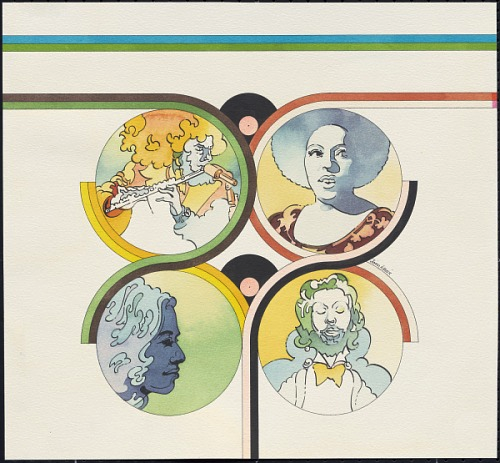
Watercolor portraits of Roberta Flack, Harry Nilsson, Carole King, and Ian Anderson (starting clockwise from top right), circa 1973. Image courtesy of the National Portrait Gallery.

Legacy

In 1969, she recorded her first album, First Take, with Atlantic Records. Aptly recorded in only 10 hours, the song’s discography was informed by pieces she had developed at Mr. Henry’s. Flack continued to return to the venue as her career took off, using it as a home base during her other performances in the District.

One of her first big hits was from that first album when in 1973 Clint Eastwood featured her song “The First Time Ever I Saw Your Face” (a folk ballad Flack had taught to her students in school glee clubs) in the film “Play Misty for Me.” Flack collaborated with many artists over the course of her career, including Donny Hathaway, Peabo Bryson, and for her album Oasis, Flack collaborated with longtime friend Maya Angelou on four songs, including “And So It Goes.”

Flack has continued to make music well into the 21st century, and in 2020, was the recipient of the Grammy’s Lifetime Achievement Award.

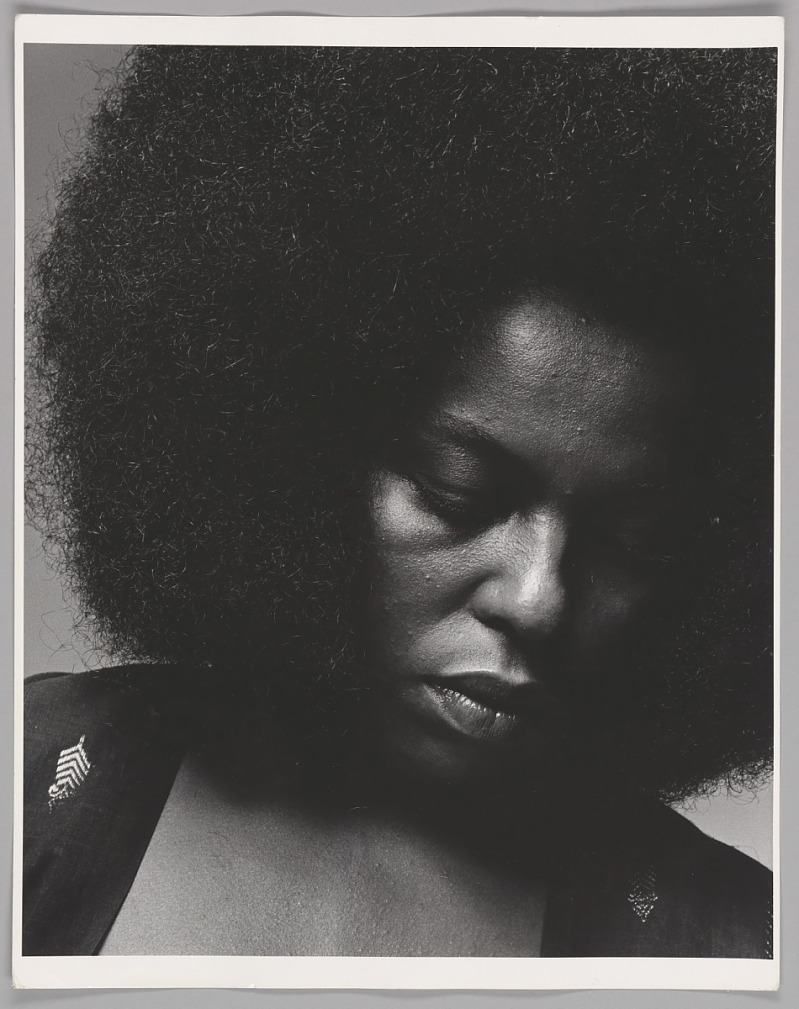
Roberta Flack

Roberta Flack photographed by Anthony Barboza, 1971. Image courtesy of the National Museum of African American History and Culture.

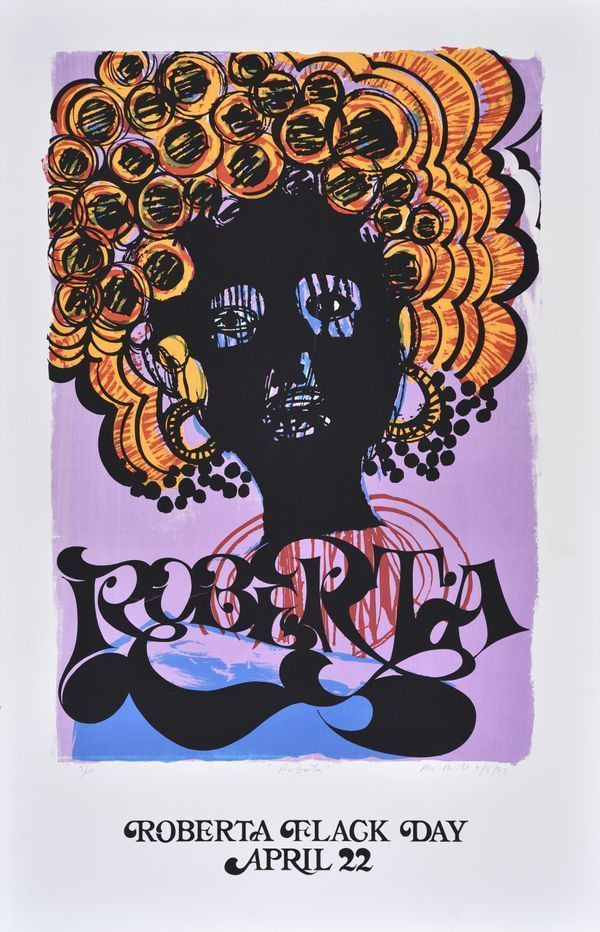
Human Kindness Day

Poster from “Roberta Flack Human Kindness Day” on April 22, 1972, in Washington, D.C., to celebrate Flack. Image by Lloyd McNeill & Lou Stovall, courtesy of Di and Lou Stovall from the “What's Going Around: Lou Stovall and the Community Poster, 1967–1976” exhibit at the Columbus Museum.

Learn More

“Cover Me: The Stories Behind the Greatest Cover Songs of All Time” features a section discussing the history of Roberta Flack’s cover of “Killing Me Softly,” and the subsequent Fugees rendition.

March 18, 2021 by Web Editor Tagged With: Green Valley

  • « Go to Previous Page
  • Page 1
  • Interim pages omitted …
  • Page 11
  • Page 12
  • Page 13
  • Page 14
  • Page 15
  • Interim pages omitted …
  • Page 26
  • Go to Next Page »

Primary Sidebar

News

An 80s punk-rock inspired poster that reads Still Too Cool for Yule #19. A Holiday Playlist from the Library Director.
Still Too Cool For Yule #19

There are few things I enjoy more than culling … ... about Still Too Cool For Yule #19
Read More News
See More Service Updates

Center for Local History

Large banner that reads, “Let there Be Peace on Earth” displayed near the Pentagon following the 9/11 terrorist attacks. Photo credit Diane Kresh. Charlie Clark Center for Local History, 133-01-02-01-130

Resilience and Community

September 11, 2001 "When terrorists slammed into … ... about Resilience and Community

Read More Local History

Director’s Blog

An 80s punk-rock inspired poster that reads Still Too Cool for Yule #19. A Holiday Playlist from the Library Director.

Still Too Cool For Yule #19

There are few things I enjoy more than culling … ... about Still Too Cool For Yule #19

More Director's Blog

Footer

About Us

  • Mission & Vision
  • Charlie Clark Center for Local History
  • News Room
  • Get Email Updates

Administration

  • Policies
  • Library Staff
  • Job Opportunities
  • Propose a Program or Partnership

Support Your Library

  • Friends of the Library
  • Giving Opportunities
  • Donating Materials
  • Volunteer Opportunities

Our Mission

We champion the power of stories, information and ideas.

We create space for culture and connection.

We embrace inclusion and diverse points of view.


Download the Library App

Download the Library App

Arlington County | Terms & Conditions | Accessibility | Site Map
· Copyright © 2026 Arlington County Government ·