• Skip to primary navigation
  • Skip to main content
  • Skip to primary sidebar
  • Skip to footer

Alert

Holiday: All library locations to close early at 5 p.m. on Nov. 25 and all day Nov. 26 & 27 in observance of Thanksgiving. More Info

Alert

Central Library garage will be closed Monday, Nov. 23 through Wednesday, Nov. 25 for maintenance. More Info

Alert

Update: No elevator service from garage & Quincy St. entrance closed during Central Library upgrades. More Info

Home - Arlington County Virginia - Logo
MENUMENU
  • Join Now
  • My Account
    • Login
    • My Checkouts
    • My Holds
    • My Lists
    • My Reading History
    • About Borrowing
    • About Holds
    • About My Account
  • Hours & Locations
    • All Hours & Locations
    • Holiday Closings
  • News
    • Library News
    • Director's Blog
    • Get Email Updates
  • Contact Us

Arlington Public Library

MENUMENU
  • Search
  • Collections
  • Library Services
  • Events
  • Community Engagement
  • Join Now
  • My Account
    • Login
    • About Borrowing
    • About Holds
    • About My Account
  • Hours & Locations
    • All Hours & Locations
    • Holiday Closings
  • News
    • Library Blog
    • Get Email Updates
  • Contact Us

News

Arlington Farms

Post Published: May 29, 2019

By 1941, the last of the property where the USDA's Experimental Farm had been located (at the northeast tip of Arlington) was transferred to the War Department for use in the National Defense Program.
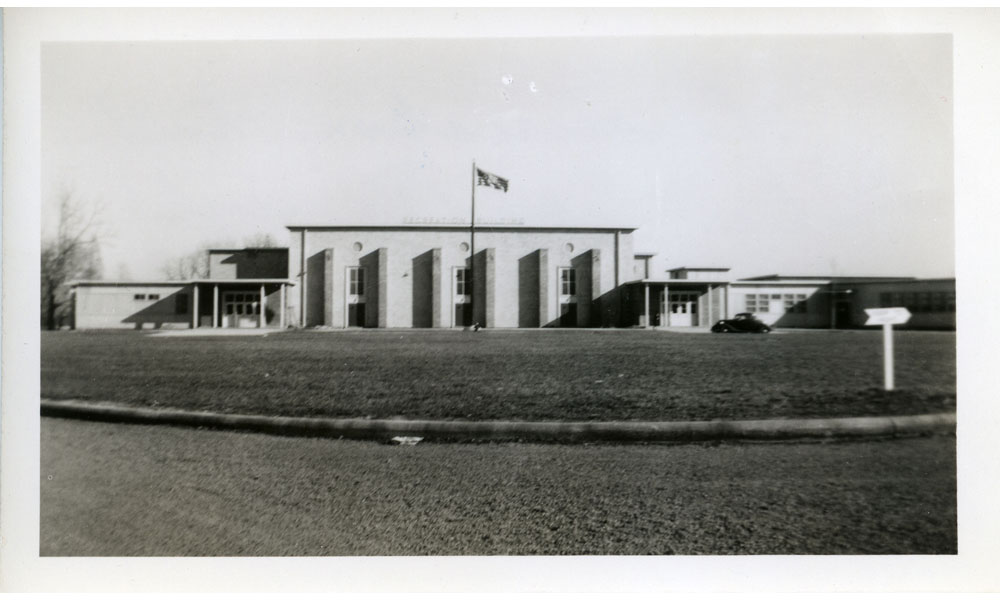
Arlington Farms recreation hall where Saturday night dances were held. Arlington Farms was nicknamed “Girl Town” and was a popular spot for soldiers and sailors stationed at nearby bases.

Arlington Farms recreation hall where Saturday night dances were held.  c. 1944.
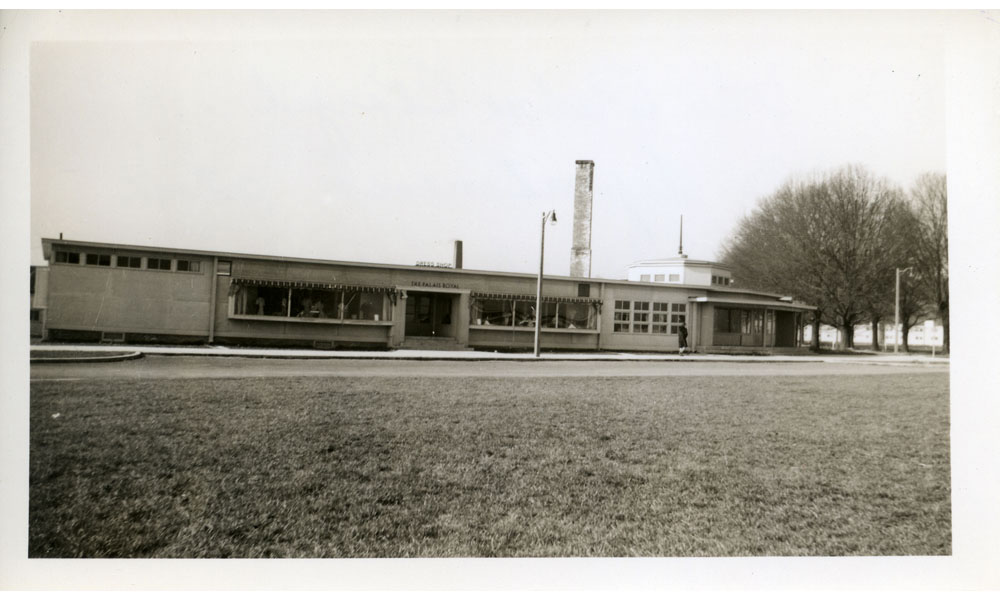
The Palais Royal—Arlington Farms’ department store and beauty shop. In addition to a store and recreation hall, Arlington Farms had a chapel, a post office, and a cafeteria.

The Palais Royal—Arlington Farms’ department store and beauty shop.  c. 1944.
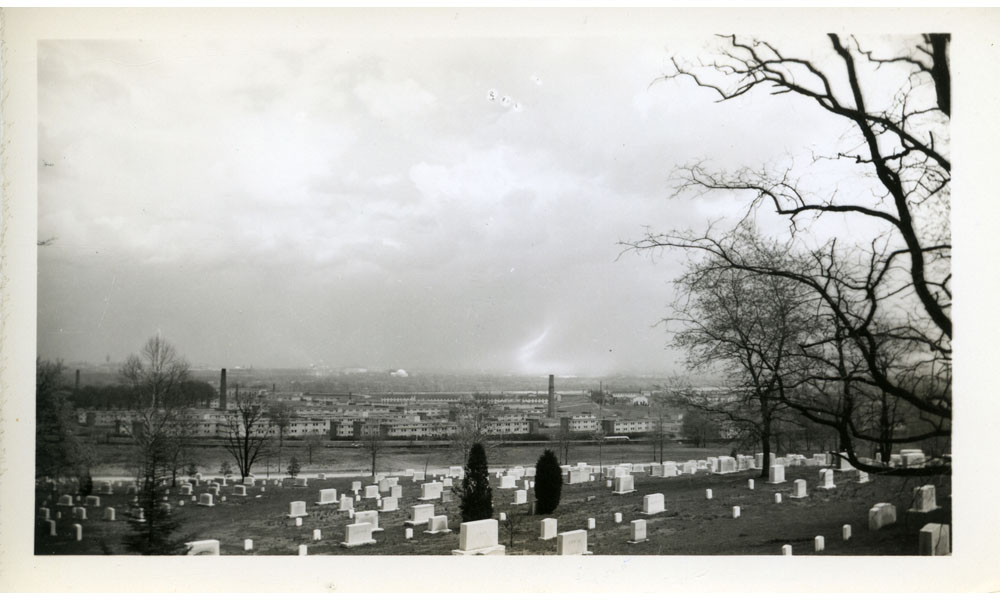
A view of Arlington Farms from Arlington National Cemetery, Washington, D.C. is visible in the background.

A view of Arlington Farms from Arlington National Cemetery, Washington, D.C. is visible in the background. c. 1944.

In 1943, the United States Government transformed that land into war residences for female civil servants and service members during World War II. Six of the ten dorms were reserved for civilians and government employees, while the remaining four were for military servicewomen.

Most of the women living at Arlington Farms worked at the Pentagon, the Navy Annex, or Arlington Hall Station, the headquarters of the Army’s Signal Intelligence Service. During World War II, women entered the workforce in unprecedented numbers—accounting for approximately 40% of the workforce between 1940 and 1945.

Arlington Farms was nicknamed “Girl Town” and was a popular spot for soldiers and sailors stationed at nearby bases. In addition to the department store, beauty shop and recreation hall pictured in the photographs above, Arlington Farms also had a chapel, a post office, and a cafeteria.

The complex’s buildings were demolished in the 1960s and today Arlington National Cemetery occupies the land.

To see more items like these, or to learn more about Arlington's history, visit the Center for Local History on the first floor of the Central Library.

Do you have a question about this story, or a personal experience to share? 

Use this form to send a message to the Center for Local History.

Center For Local History - Blog Post Message Form

Do you have a question about this story, or a personal experience to share? Use this form to send a message to the Center for Local History.

"*" indicates required fields

This field is for validation purposes and should be left unchanged.

Share Your Story

May 29, 2019 by Web Editor

An Experimental Farm

Post Published: May 22, 2019

Did you know that Arlington was at the forefront of experimental farming in the early 20th Century?

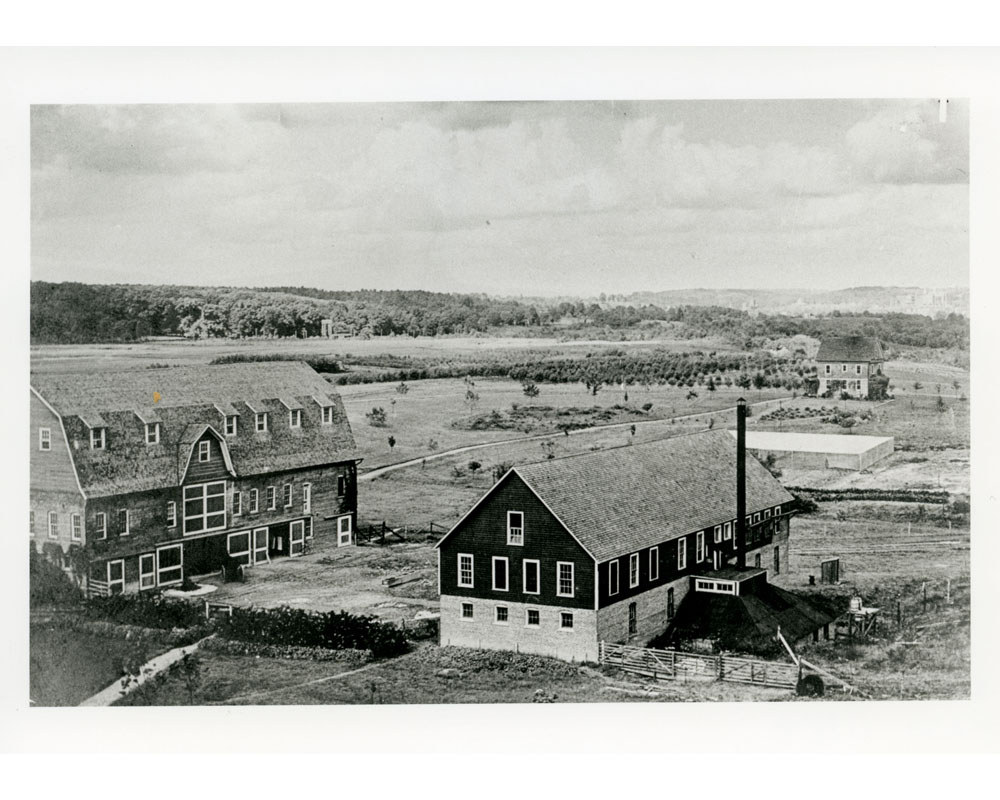
In 1900, Congress transferred 400 acres of land along the Potomac near Ft. Myer to the Department of Agriculture in order to create an experimental farm for plant testing, and the improvement of plants and cultivation.

Horse-drawn cultivator, Arlington Farm, 1908, Arlington House in background

Horse-drawn cultivator, Arlington House in background, 1908.

two farm buildings surrounded by open fields

Experimental Farm, USDA, date unknown.

A lot of fascinating and far-reaching work was conducted at the Experimental Farm over the next forty years:

  • The Farm naturalized over 100,000 types of foreign plants for domestic use, using seeds collected from Americans traveling aboard on governmental or private missions. Soybeans are one of the best-known crops to be introduced this way.
  • When a plant disease threatened to wipe out the domestic sugarcane industry in the 1920s the Farm led the way in developing immunity to this blight, which ultimately resulted in the rebuilding of the sugarcane industry.
  • One of the more unusual examples of the Farm’s experiments involved grasses for golf greens. Before WWI the country’s golf courses were almost entirely dependent on German grown seed for their grasses. When the supply was cut off by the war, golf courses throughout the country contributed funds for experiments at Arlington to develop new domestic varieties.
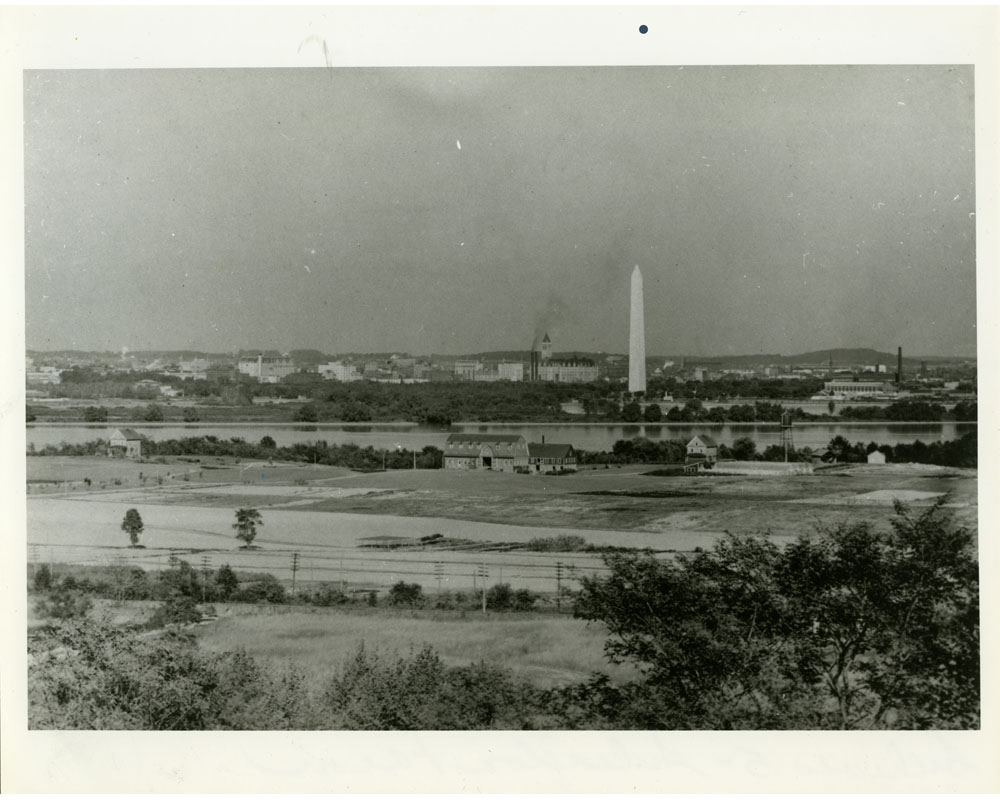
looking over the Experimental Farm land towards the National Monument

U.S. Dept. of Agriculture photo of the Experimental Farm, 1906. National Monument in the background.

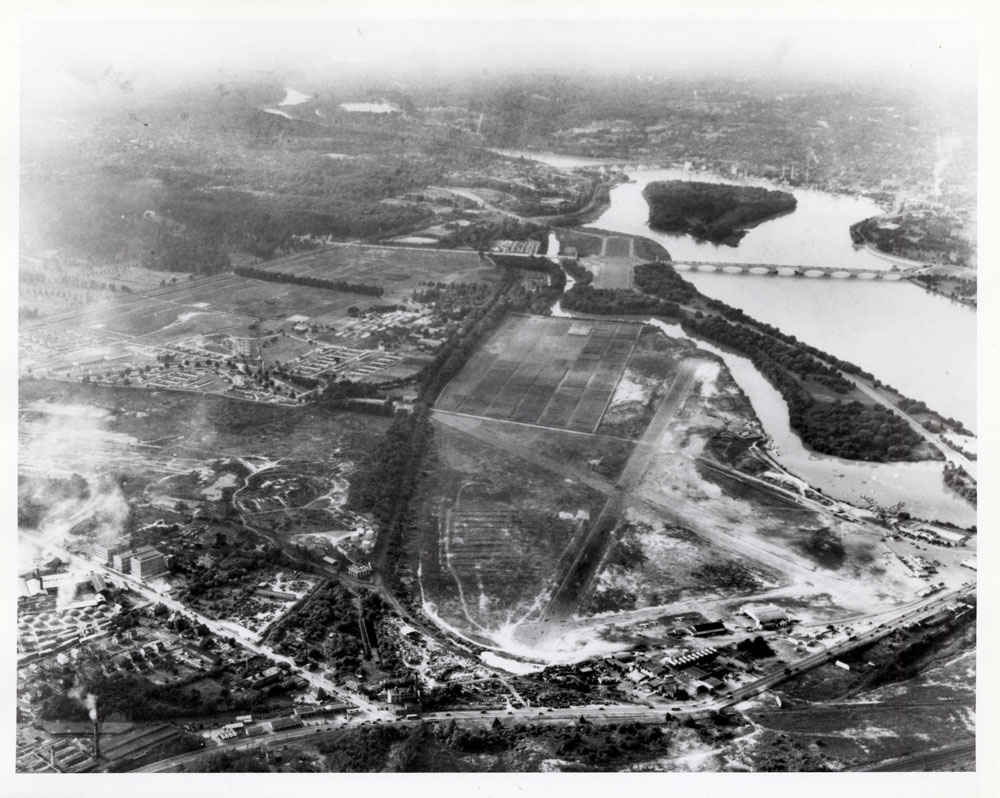
Aerial View, Shows area now occupied by Pentagon, Airport, Memorial Bridge, Aqueduct Bridge, Experimental Farm, 1919

Aerial View of the Experimental Farm, 1919, shows area now occupied by the Pentagon and Airport. Bridges are Memorial Bridge and Aqueduct Bridge.

With the development of Arlington National Cemetery and the construction of Memorial Bridge there was pressure to relocate the farm. In 1932 much of the farm’s work was shifted to Beltsville, MD.

By 1941 the remainder of the property had been transferred to the War Department for use in the National Defense Program.

To see more items like these, or to learn more about Arlington's history, visit the Center for Local History on the first floor of the Central Library.

Do you have a question about this story, or a personal experience to share? 

Use this form to send a message to the Center for Local History.

Center For Local History - Blog Post Message Form

Do you have a question about this story, or a personal experience to share? Use this form to send a message to the Center for Local History.

"*" indicates required fields
This field is for validation purposes and should be left unchanged.

Share Your Story

May 22, 2019 by Web Editor

Hygiene Class for New Mothers

Post Published: May 7, 2019

Happy Mother's Day to all the women who have worked to keep us both healthy and clean!

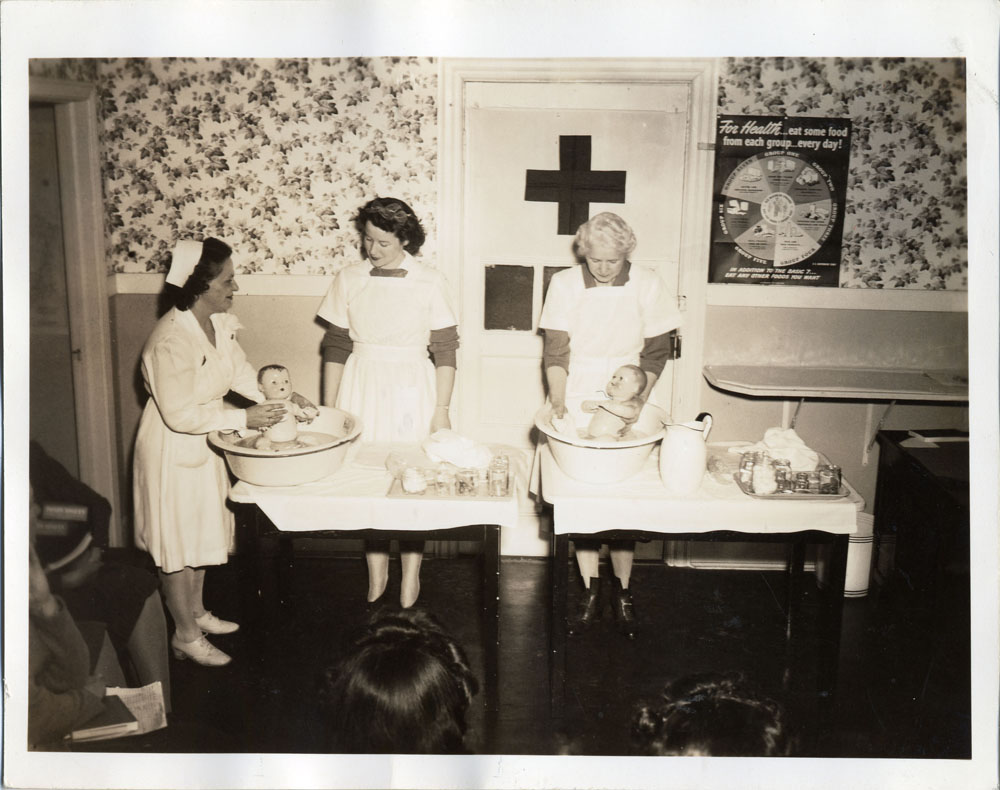
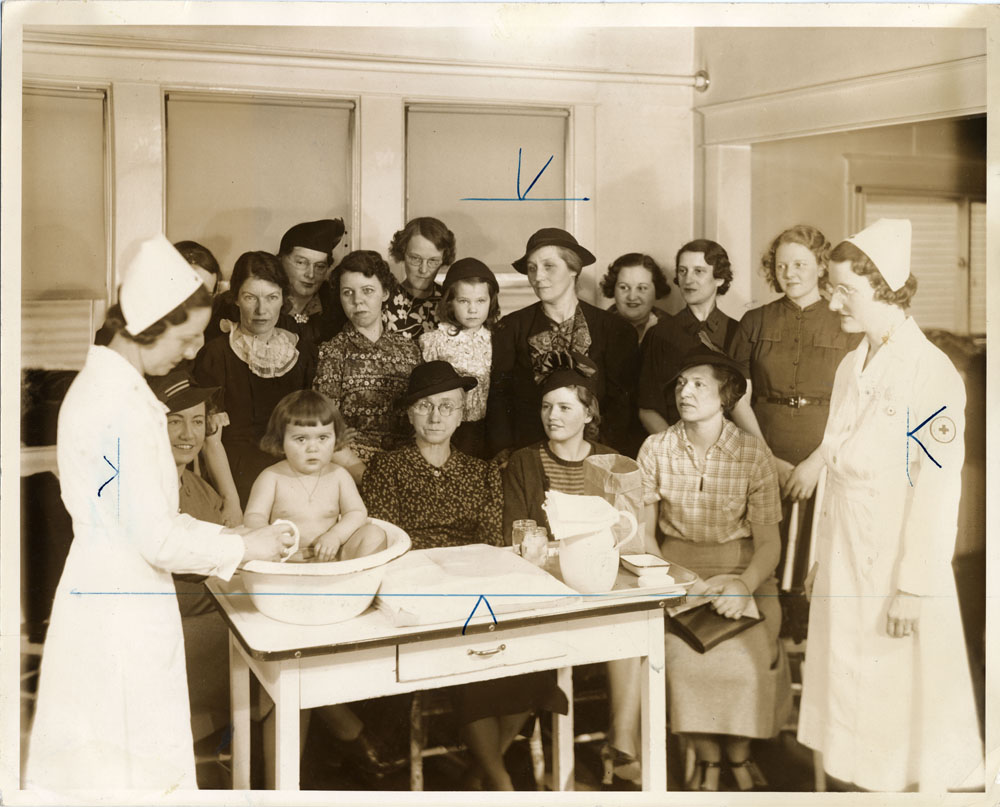
These photos are from Arlington Health Department hygiene classes, which were offered for new and expectant mothers in the 1930s and 1940s.

Health Department baby bath demonstration by home nursing staff, 1943

Home hygiene clinic, 1938

Health Department baby bath demonstration by home nursing staff, 1943

Baby bath demonstration, 1943

During this time period, health and cleanliness were considered one and the same, so personal hygiene was seen as essential to being healthy.

The classes for new mothers covered maternity hygiene, infant hygiene, and preschool hygiene. Among other things, nurses demonstrated the best way to wash a toddler and a baby.

To see more items like these, or to learn more about Arlington's history, visit the Center for Local History on the first floor of the Central Library.

Do you have a question about this story, or a personal experience to share? 

Use this form to send a message to the Center for Local History.

Center For Local History - Blog Post Message Form

Do you have a question about this story, or a personal experience to share? Use this form to send a message to the Center for Local History.

"*" indicates required fields
This field is for validation purposes and should be left unchanged.

Share Your Story

May 7, 2019 by Web Editor

Edmond C. Fleet, Community Swimming Pool Supporter

Post Published: April 18, 2019

Edmond C. Fleet (1902-1983) was a civilian pastry chef for the United States Navy, who found significant ways to put his organizing talents to good use for the Nauck community.

Besides being a member of the local African-American Elks Lodge, Masonic Lodge, and Oddfellows, he was a co-founder of the Veteran’s Memorial Branch of the YMCA, located at 3440 22nd Street S, one block away from Macedonia Baptist Church.

Built in 1953, the Veteran’s Memorial YMCA served the “non-white” residents of the county. Located near Drew School, it naturally had a strong bond with neighborhood children, especially since the county’s Parks and Recreation system was still segregated.

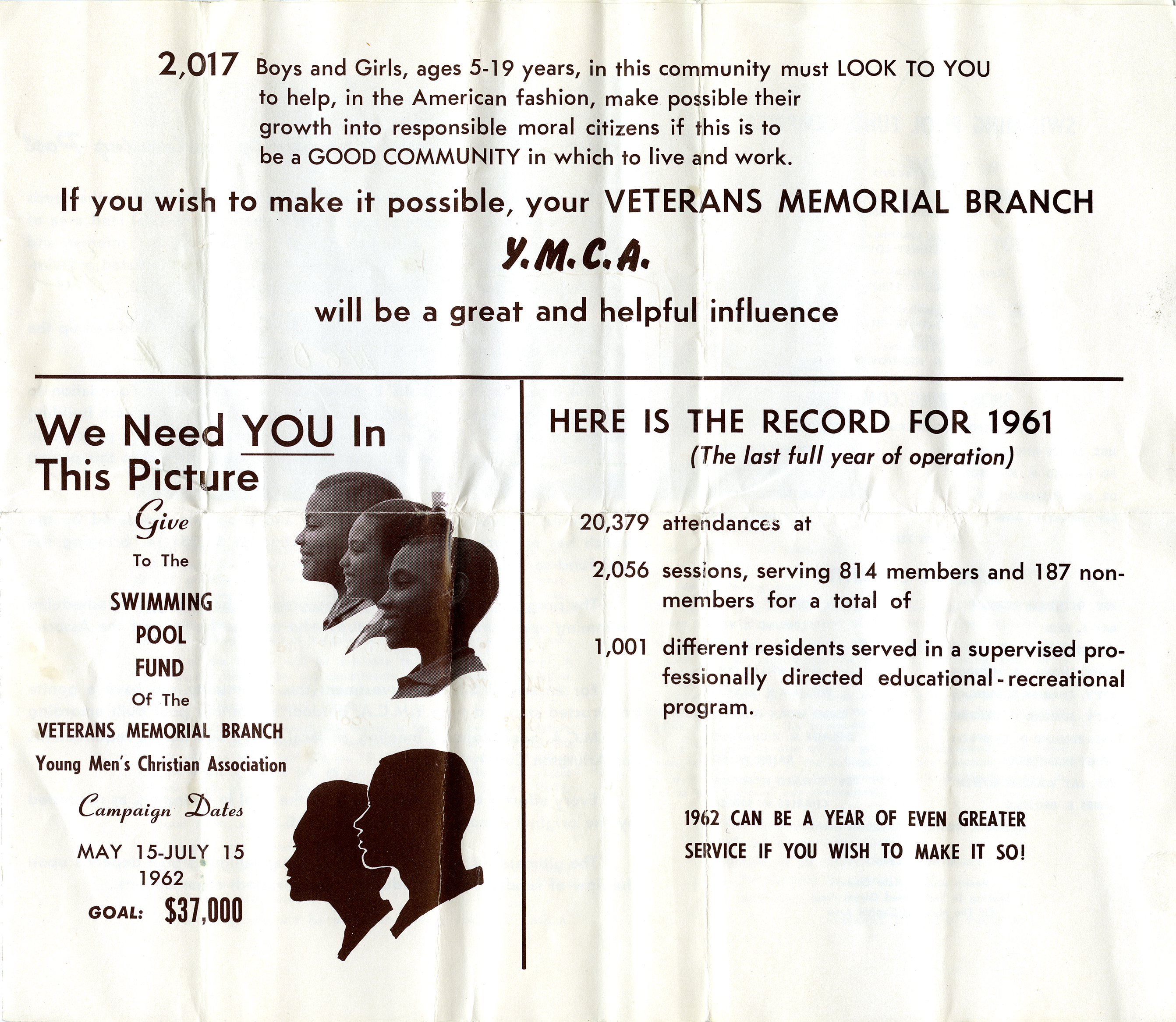
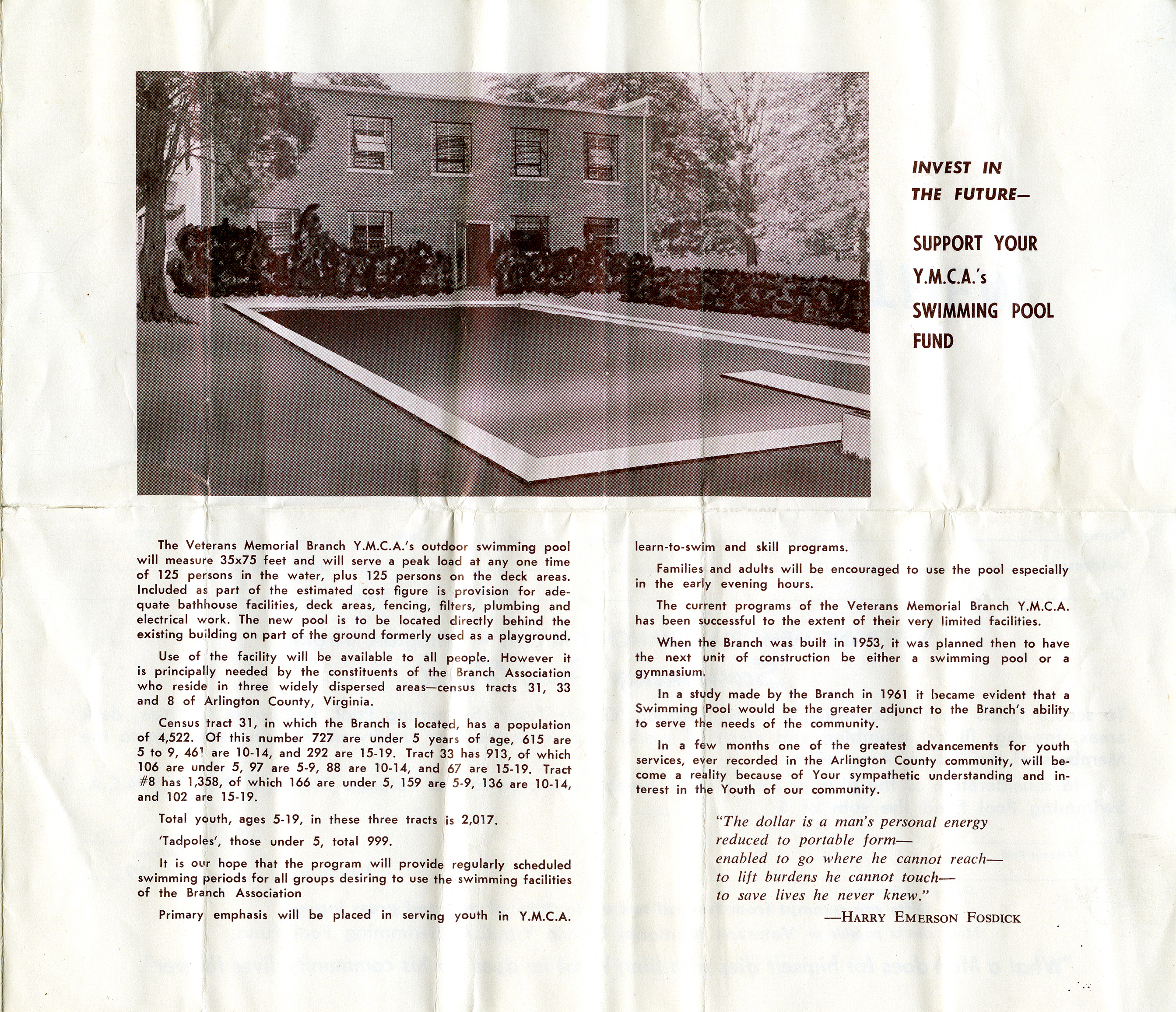
In the late 1950s, this YMCA started a campaign to build a swimming pool as there were no pools in the County that would allow African-Americans in.

Front page of mailer asking for donations for construction of Veteran's Memorial YMCA pool.
Third page of mailer sent out to get contributions for construction of the Veteran's Memorial YMCA swimming pool.

This 1962 pledge brochure, which lists Fleet as a member of the Advisory Committee, details plans for the pool and asks for community support. Fleet put his money where his mouth was, and donated money to the YMCA and other organizations in which he was involved, including Mt. Zion Baptist Church where he was in the choir.

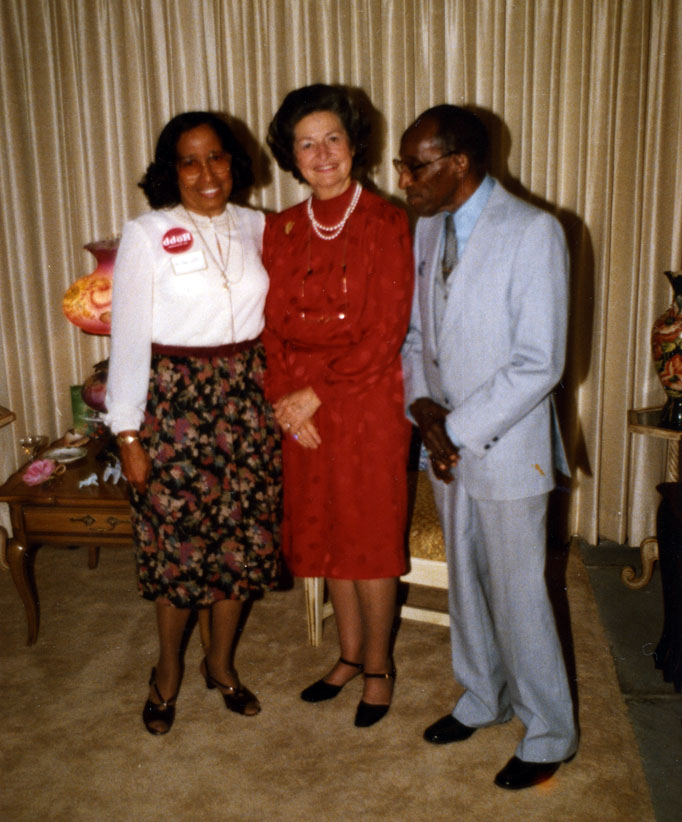
Fleet was involved in local politics too, hosting Lady Bird Johnson at his home for a Chuck Robb campaign event in 1977, when he ran for Lieutenant Governor of Virginia. (Chuck Robb is married to Lady Bird and President Johnson's daughter, Lynda Bird Johnson Robb.)

Edmund Fleet and an unknown woman flank Lady Bird Johnson at a Chuck Robb campaign event held at Fleet's house

Lady Bird Johnson flanked by Edmond C. Fleet and an unidentified Robb supporter, 1977.

To learn more about Edmund C. Fleet and the Veteran’s Memorial YMCA, visit the Center for Local History on the first floor of the Central Library.

Do you have a question about this story, or a personal experience to share? 

Use this form to send a message to the Center for Local History.

Center For Local History - Blog Post Message Form

Do you have a question about this story, or a personal experience to share? Use this form to send a message to the Center for Local History.

"*" indicates required fields
This field is for validation purposes and should be left unchanged.

Share Your Story

April 18, 2019 by Web Editor Tagged With: Green Valley

Rediscover Zitkála-Šá

Post Published: March 13, 2019

Native American Advocate and Author

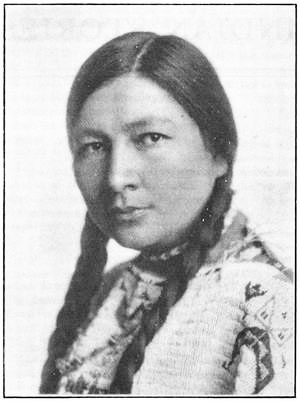
On January 26, 1938, Zitkála-Šá, life-long advocate for Native American rights and a resident of 261 North Barton Street in Lyon Park, died at age 61. She was buried under the name Gertrude Simmons Bonnin, in Arlington National Cemetery.

Photo of a woman in traditional native american clothing

Image of Zitkála-Šá ca. 1921, courtesy of the Library of Congress

A nationally recognized Native American author and activist, Zitkála-Šá was a vocal proponent for citizenship rights for Native Americans. Born in South Dakota into a Yankton Dakota Sioux family, she thrived on the Yankton Indian Reservation until Quaker missionaries recruited some of the reservation’s children to attend a Quaker manual labor school where she was given the Christian name Gertrude Simmons. Although she enjoyed learning to read and write, she experienced first-hand the damage of having her heritage stripped away. Feeling torn between her life on the reservation and her forced assimilation into white mainstream culture, Zitkála-Šá pursued higher education and distinguished herself as a public speaker on social and political issues.

“Folded hands lie in my lap, for the time forgot. My heart and I lie small upon the earth like a grain of throbbing sand. Drifting clouds and tinkling waters, together with the warmth of a genial summer day, bespeak with eloquence the loving Mystery round about us.”  

"Why I Am A Pagan," Atlantic Monthly, Volume 90, 1902

Her largely autobiographical work on indigenous life was published by the Atlantic Monthly and Harper’s Monthly, including “Impressions of an Indian Childhood” and “The Trial Path” among many more. She collected tribal stories and legends into collections, and authored poems examining the intersection of nature, Native American life, and mainstream white American life.

In 1910, she began a collaboration with composer William F. Hanson, and the subsequent “The Sun Dance Opera” was the first opera authored by a Native American (under the name Gertrude Simmons).

“It was next to impossible to leave the iron routine after the civilizing machine had once begun its day's buzzing; and as it was inbred in me to suffer in silence rather than to appeal to the ears of one whose open eyes could not see my pain, I have many times trudged in the day's harness heavy-footed, like a dumb sick brute.”

"The School Days of an Indian Girl," Atlantic Monthly, Volume 85, 1900

As a member of the Society of American Indians, Gertrude Simmons (the name she used in records and public affairs) lectured nationally and lobbied for citizenship rights for Native Americans who were not naturalized U.S. citizens by birth but could apply through pathways such as military service, renouncing tribal affiliations, or accepting land allotments. As a previous clerk for the Bureau of Indian Affairs, she criticized the bureau for its mistreatment of Indigenous children placed in national education systems that forced assimilation and Christian values.

In 1916, her husband, Captain Raymond Talefase Bonnin (also of Yankton descent), lost his position at the Bureau of Indian Affairs in Utah and they moved to Washington D.C.  where, as editor of the Society of American Indian’s publication American Indian Magazine, Gertrude Simmons Bonnin wrote about and exhibited treatises on many controversial issues. In 1923, she co-authored “Oklahoma’s Poor Rich Indians: An Orgy of Graft and Exploitation of the Five Civilized Tribe, Legalized Robbery” which discussed theft and murder by corporations seeking access to Native American-owned oil-rich lands. The article is credited with influencing the development of the Indian Reorganization Act of 1934, which returned government and land management to Native Americans.

On November 3, 1925, Gertrude and Raymond Bonnin purchased the stone bungalow at 261 North Barton Street in Arlington. from the first owners, Loyd and Bernice Claire. The Claires had built the house only one year earlier, having bought it from the well-known Lyon & Fitch real estate development. The Lyon & Fitch real estate team sold the Lyon Park subdivision properties with deed restrictions and covenants, including one preventing the property from being sold or rented to non-whites for a period of 99 years. The census recognized people of Native American ancestry as white and therefore the Bonnins were not prevented from purchasing the property.

In 1924, the Indian Citizenship Act granted citizenship to all Native Americans, but did not automatically afford voting rights. In response, Gertrude Simmons Bonnin co-founded and presided over the National Council of American Indians to unify First Nations in the movement to gain voting rights, healthcare, legal standing, and land rights. She also created the Indian Welfare Committee of the General Federation of Women’s Clubs, speaking often in Washington, Arlington, and Fairfax.  

Gertrude Simmons Bonnin spent the remainder of her life in Arlington as president of the Council of American Indians, speaking and writing about the continuing political and social mistreatment of Native Americans. After her death, her husband continued to live in their home until his death in 1942 when the property was left in trust to their grandchildren.

References

United States of America, Bureau of the Census. Fifteenth Census of the United States, 1930. Washington, D.C.: National Archives and Records Administration, 1930. T626, 2,667 rolls.

Arlington County Land Records Office, various deeds pertaining to Gertrude S. Bonnin and R.T. Bonnin: Deed Book 609, p. 237, book 319, p. 64, and book 174, p. 152.

Zitkála-Šá, “The School Days of an Indian Girl”, Atlantic Monthly, Volume 85, 1900.

Zitkála-Šá, “Why I Am A Pagan”, Atlantic Monthly, Volume 90, 1902.

Further Reading

Lewandowski, Tadeusz. Red Bird, Red Power: The Life and Legacy of Zitkala-Ša, Norman: University of Oklahoma Press, 2016. (Available from the Library)

Susag, Dorothea M., Zitkala-Sa (Gertrude Simmons Bonnin): A Power(full) Literary Voice, Studies in American Indian Literatures, University of Nebraska Press, Series 2, Vol. 5, No. 4 (Winter 1993), pp. 3-24.

Tsjeng, Zing, Forgotten Women: The Leaders. London: Cassell Illustrated, 2018. (Available from the Library)

Capaldi, Gina. Red Bird Sings: the Story of Zitkala-̈Sa, Native American Author, Musician, and Activist, Carolrhoda Books, 2011. (Available from the Library)

"Preservation Today: Rediscovering Arlington" is a partnership between the Arlington Public Library and the Arlington County Historic Preservation Program.

Preservation Today: Rediscovering Arlington
Stories from Arlington’s Historic Preservation Program

Arlington’s heritage is a diverse fabric, where people, places, and moments are knitted together into the physical and social landscape of the County.

Arlington County’s Historic Preservation Program is dedicated to protecting this heritage and inspiring placemaking by uncovering and recognizing all these elements in Arlington’s history.

To learn more about historic sites in Arlington, visit the Arlington County Historic Preservation Program.

March 13, 2019 by Web Editor

Oral History: Getting Involved in Local Politics

Post Published: March 7, 2019

Arlington Voices the Oral History Collection

Interview with Ellen Bozman, Longest Serving County Board Member

Ellen Bozman is an important name in Arlington County. As the longest serving member of the Arlington County Board to date, Bozman supported countless causes that have made long lasting impacts on the county and Northern Virginia.

Born and raised in Illinois, Bozman came to Arlington after graduating from Northwestern University. She began her public service in Arlington with the League of Women Voters and served on other boards and committees until her run for County Board in 1974. During her time on the Board, Bozman saw significant changes in Arlington - its development, transportation, and citizens were very different when she retired in 1997 than they had been when she began 23 years earlier.

In this oral history clip, Bozman shares with interviews Edmund Campbell and Cas Cocklin her experiences working on other boards and committees before her first run as a Democrat-backed Independent candidate for the County Board:

NARRATOR: Ellen Bozman
INTERVIEWER 1: Edmund Campbell
INTERVIEWER 2: Cas Cocklin
DATE: May 15, 1987

EC: You ultimately became President of the League, did you?

EB: Yes. Those were busy years for the League and I was President from '63 to '65. Then, as you know, once you have been president of an organization, there's no readymade spot for you so you look around and you tend to do other things. Then I later chaired the Health and Welfare Council of Arlington and the Committee of One Hundred and finally in the early '70's chaired the Rock Springs Congregational Church Council. About that time, some of my friends jokingly said well since you've done a church council, you're ready to run for the Board.

CC: Had you ever given any thought prior to that to getting into politics?

EB: Only recently prior to that. And the change really came about when I served on the Planning Commission. Up until the time I served on the Planning Commission, I didn't think that, first of all, I thought of myself as an administrator rather than a politician. Secondly, I had been through some, I had been standing on the fringes and involved in some very, very tumultuous political times in Arlington.

EC: Such as?

EB: Well, when you go way back and I remember Barbara Riches who was on the School Board saying to me, "I don't care when they throw garbage on my front porch because I know they don't have anything more important they're doing." Very split community. Very difficult and personal political campaigns. A kind of atmosphere that I didn't think that I was ready or wanted to participate in. But times change.

To learn more about Ellen Bozman;s life and work, visit the Center for Local History's online exhibit, Women's Work.


The goal of the Arlington Voices project is to showcase the Center for Local History’s oral history collection in a publicly accessible and shareable way.

What is the oral history collection?

Oral history is a popular method of research used for understanding historical events, actors, and movements from the point of view of people’s personal experiences.

The Arlington Public Library began collecting oral histories of long-time residents in the 1970s, and since then the scope of the collection has expanded to capture the diverse voices of Arlington’s community. In 2016, staff members and volunteers recorded many additional hours of interviews, building the collection to 575 catalogued oral histories.

To browse our list of narrators indexed by interview subject, check out our community archive. To read a full transcript of an interview, visit the Center for Local History located at Central Library.

March 7, 2019 by Web Editor

Green Valley Pharmacy

Post Published: February 22, 2019

Dr. Leonard “Doc” Muse

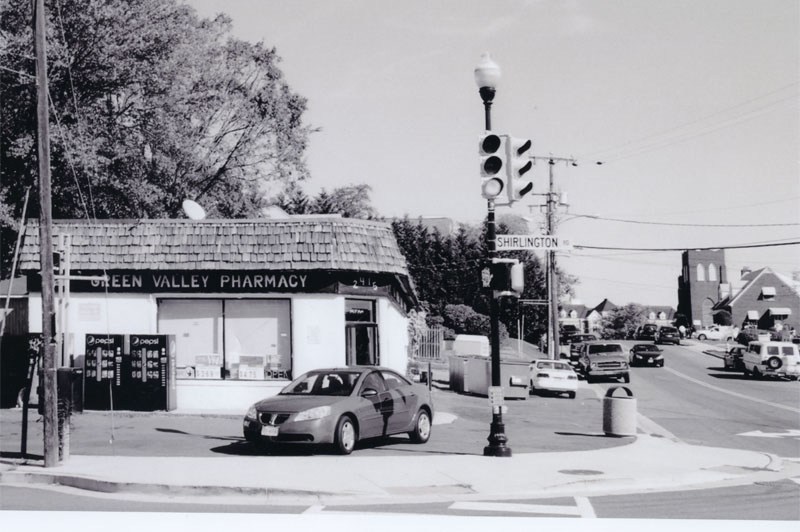
Have you traveled down Shirlington Rd in the Nauck neighborhood, and stopped for a snack at the one story, white, shingled building on the corner of Shirlington Rd and 24th Rd S?

Green Valley Pharmacy 2010

Established in 1952, the Green Valley Pharmacy is the first (and only) pharmacy and lunch counter in Arlington that would serve African American patrons during the Jim Crow era.

The man who opened the pharmacy was Dr. Leonard “Doc” Muse, a pharmacist and social activist. Muse was born in Florida in 1923 and after serving in World War II used his GI benefits to attend the Howard University School of Pharmacy. In 1952, he and his partner Waverly Jones bought the former Hyman’s Grocery and opened the Green Valley Pharmacy. The pharmacy served black and white customers, but mainly served as a neighborhood hub for Nauck- as a lunch counter, a drug store, and a first job for many young people in Green Valley. Doc provided free lunches for the hungry and free medications for those who could not afford their prescriptions.

In 2013, Green Valley Pharmacy was named as an Historic District by the Arlington County Board, and Muse himself was honored by the Arlington NAACP with the Community Appreciation Award. Muse’s commitment to social activism established him as a pillar of the Nauck community, positively influencing the young people of Green Valley and providing a social and political hub for the residents of Nauck.

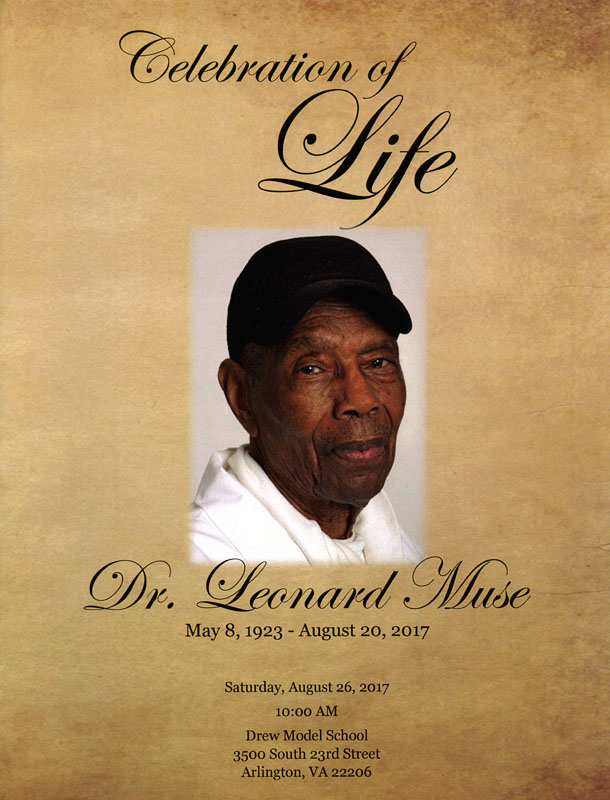
Dr. Leonard Muse died on August 20, 2017.

A celebration of life service was held in his honor at Drew Model School on Saturday, August. 27, 2017.

Memorial program for Dr. Leonard Muse, 8/26/2017

The photo of Green Valley Pharmacy was taken by Matthew Welborn in 2010, as part of a student photography contest, "Capturing Arlington," sponsored by the Center for Local History.

To see more items like these, or to learn more about Arlington's history, visit the Center for Local History on the first floor of the Central Library.

Do you have a question about this story, or a personal experience to share? 

Use this form to send a message to the Center for Local History.

Center For Local History - Blog Post Message Form

Do you have a question about this story, or a personal experience to share? Use this form to send a message to the Center for Local History.

"*" indicates required fields
This field is for validation purposes and should be left unchanged.

Share Your Story

February 22, 2019 by Web Editor

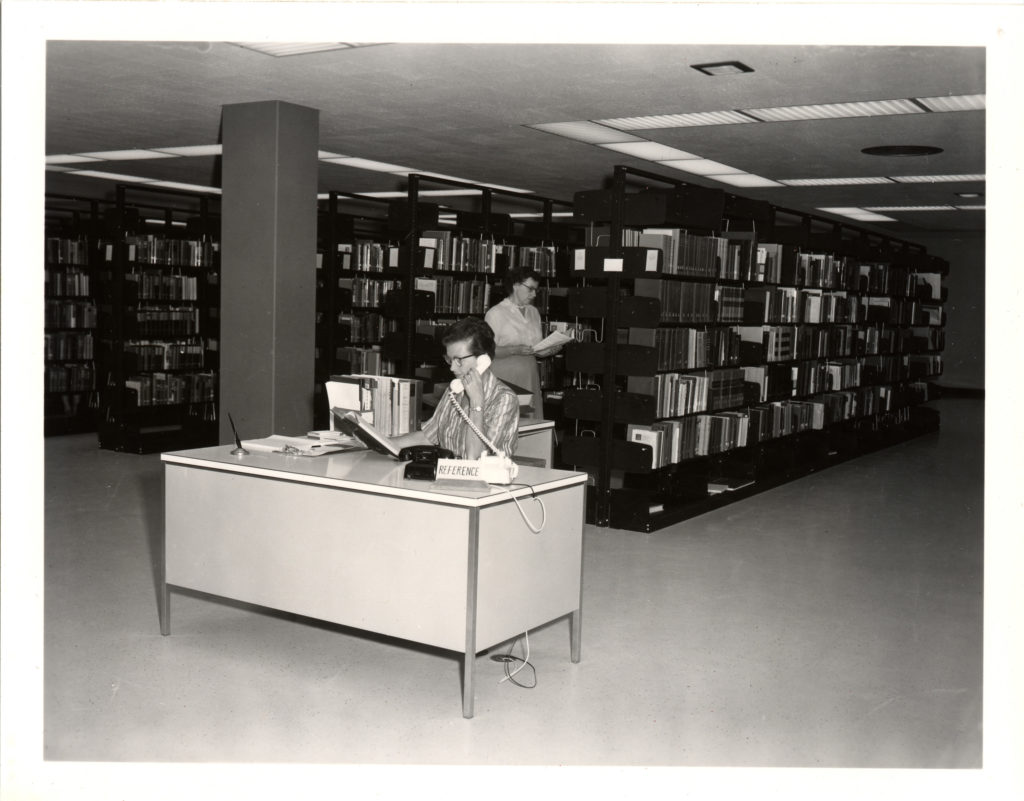
Where Were These Photos Taken?

Post Published: January 24, 2019

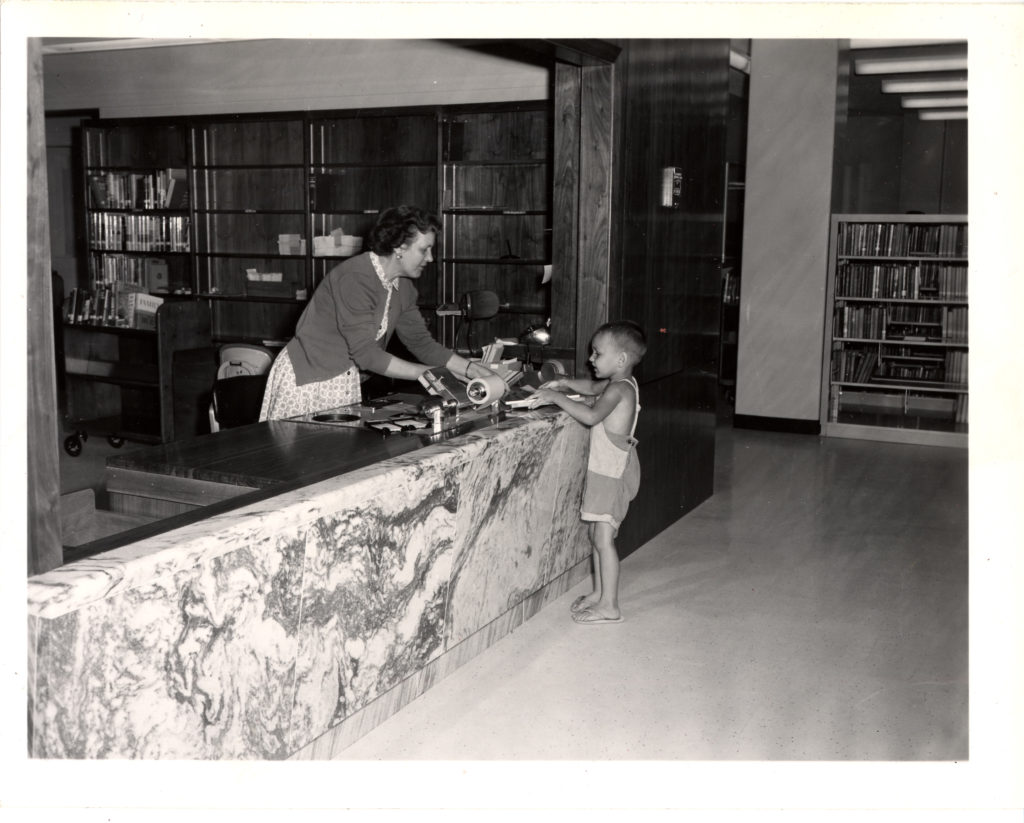
Can you guess the location of these images? 


Central Library Reference Desk, early 1960s, librarians speaks to young child


Central Library Reference Desk, early 1960s, librarian on phone

Here are a few clues:

  • The photos were taken in the early 1960s, shortly after the building was completed.
  • This building was the first publicly financed construction project for this County department, and has housed this department since the 1960s - although it underwent a major renovation in the early 1990s.
  • In 1995, the department installed the first public internet terminals with the help of a grant.

If you guessed that the photos feature Central Library, you are correct!

Although Central Library no longer looks the way it did in these photos, the spirit of the Library has remained the same – to serve the residents of Arlington County and create space for culture and connection.

To learn more about the history of Arlington Public Library visit The Center for Local History's online exhibit “Women’s Work.”

To see more photos from Arlington’s diverse history visit the Center for Local History, located on the 1st floor of Central Library.

January 24, 2019 by Web Editor

Neighborhood Activist Joan Cooper

Post Published: January 17, 2019

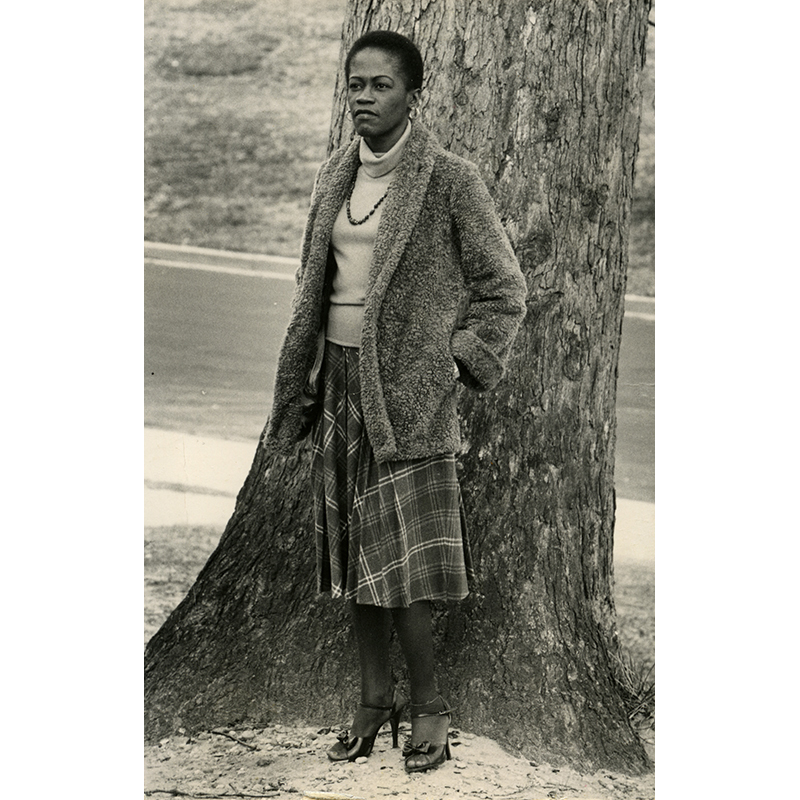
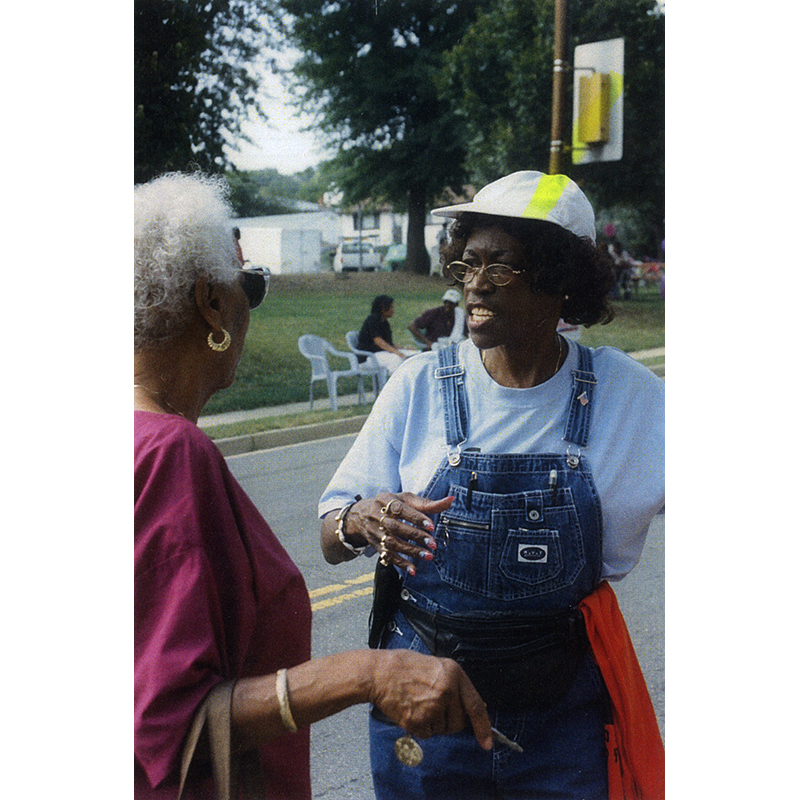
For nearly 50 years, community activist and Nauck resident Joan Cooper worked for change in her neighborhood. 

cooper020
cooper004c
Cooper
cooper019c

She also challenged others to make changes to improve the community, stating, “People have to realize, that we as community members have to do our job, too.”

During her active years Cooper helped to advocate for an integrated school system in Arlington County, drove individuals to drug and alcohol detox programs, helped patrol corner blocks of the Nauck neighborhood, and worked tirelessly to rid her streets of illicit narcotics.

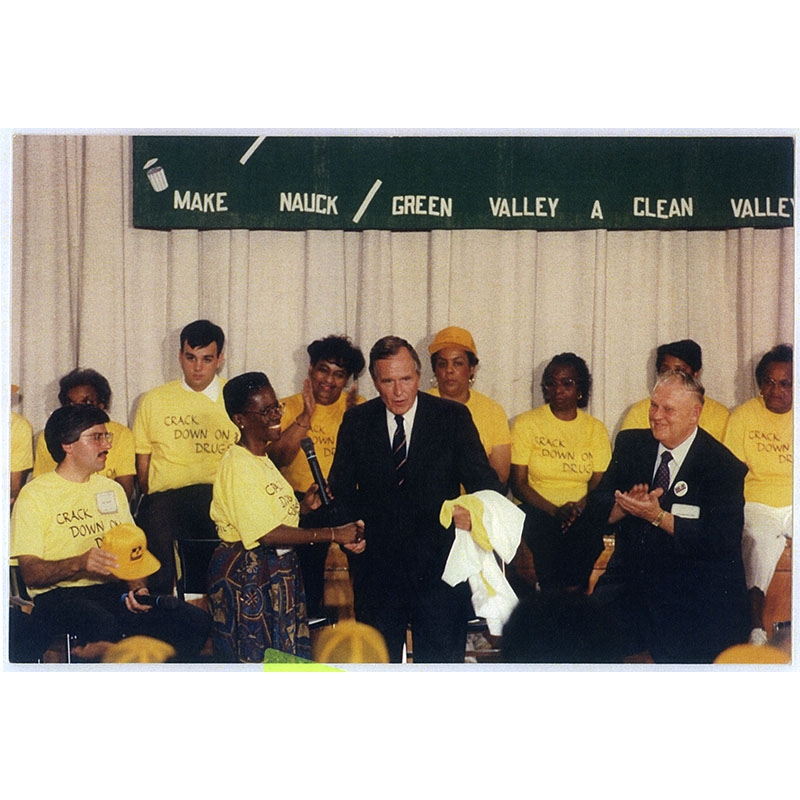
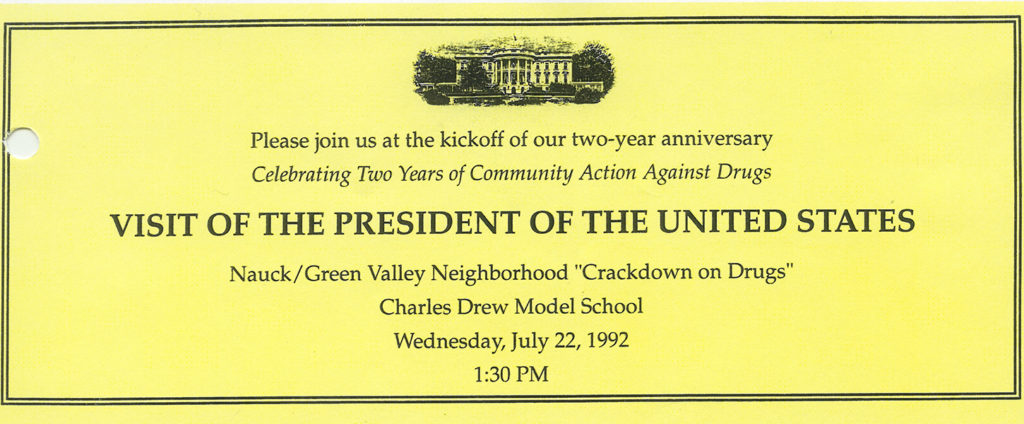
“Be persistent, consistent, and insistent,” was her message, and in July 1992, through an initiative called “Crackdown on Drugs,” Cooper’s efforts and leadership on this campaign were recognized by then President George H.W. Bush, when he visited Drew Model School.

cooper003

In the same year, she was also named a Notable Woman of Arlington by the County’s Commission on the Status of Women.

To learn more about Joan Cooper, make an appointment to visit the Center for Local History.  located on the 1st floor of Central Library. To learn more about the Green Valley neighborhood you can also visit the the Green Valley Heritage Project page.

January 17, 2019 by Web Editor Tagged With: Green Valley

How To Prepare Tin Cans For Collection in 1943

Post Published: January 10, 2019

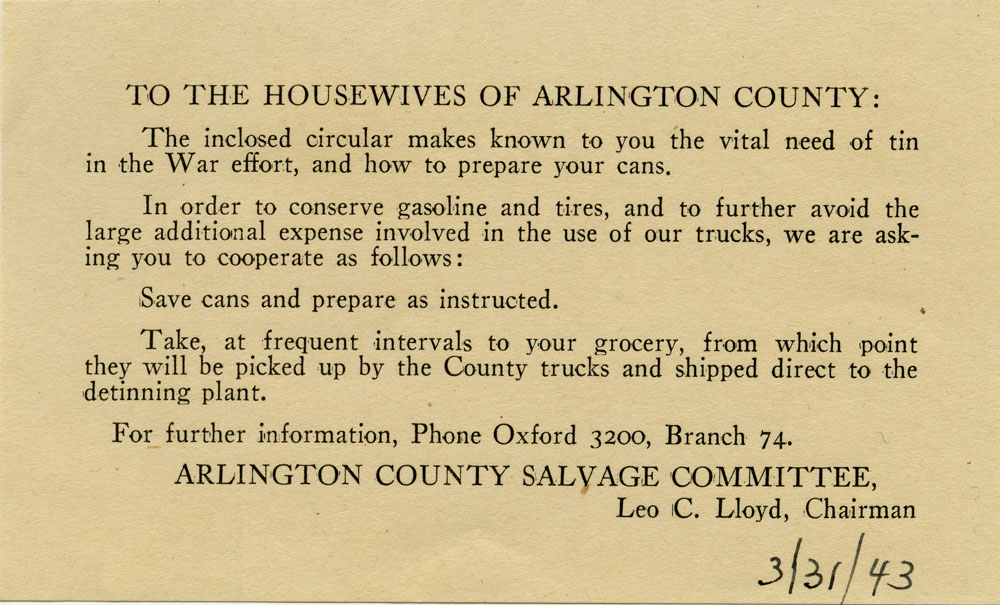
This colorful advertisement from 1943, produced by the Arlington County Salvage Committee, describes “To the Housewives of Arlington County” how to properly clean and prepare tin cans for recycling in order to aid war efforts during WWII.


Side one of the "How to prepare cans for collection" circular


side two is addressed "The the Houisewives of Arlington County"

The two sided circular, which “makes known to you the vital need of tin in the War effort,” is part of the Robert McAtee, (1913-2014) archival collection. Mr. McAtee, who lived in Arlington for most his life, and in the Maywood neighborhood for decades, owned Seven Corners Rentals on Leesburg Pike. McAtee was an active community historian who documented both his neighborhood and physical changes throughout Arlington county. Thanks to donors like Mr. McAtee, who spent a majority of his life collecting material culture about Arlington County, historians today are able to see the significant shifts and changes of the community over the last century.

To learn more about Robert McAtee, life in Arlington during WWII, or to see more items like this, visit the Center for Local History located on the 1st floor of Central Library.

January 10, 2019 by Web Editor

  • « Go to Previous Page
  • Page 1
  • Interim pages omitted …
  • Page 19
  • Page 20
  • Page 21
  • Page 22
  • Page 23
  • Interim pages omitted …
  • Page 26
  • Go to Next Page »

Primary Sidebar

News

Holiday: All library locations to close early at 5 p.m. on Nov. 25 and all day Nov. 26 & 27 in observance of Thanksgiving.

The Shop will be closed Nov. 26 - 28. The … ... about Holiday: All library locations to close early at 5 p.m. on Nov. 25 and all day Nov. 26 & 27 in observance of Thanksgiving.

Read More News
See More Service Updates

Center for Local History

Large banner that reads, “Let there Be Peace on Earth” displayed near the Pentagon following the 9/11 terrorist attacks. Photo credit Diane Kresh. Charlie Clark Center for Local History, 133-01-02-01-130

Resilience and Community

September 11, 2001 "When terrorists slammed into … ... about Resilience and Community

Read More Local History

Director’s Blog

An American flag is draped over a portion of the Pentagon near where the structure was hit by a plane during the 9/11 attack. Photo credit Diane Kresh. Charlie Clark center for Local History, 133-01-02-01-107

On the 25th Anniversary of September 11

"Never Forget." When I hear that phrase today, … ... about On the 25th Anniversary of September 11

More Director's Blog

Footer

About Us

  • Mission & Vision
  • Charlie Clark Center for Local History
  • News Room
  • Get Email Updates

Administration

  • Policies
  • Library Staff
  • Job Opportunities
  • Propose a Program or Partnership

Support Your Library

  • Friends of the Library
  • Giving Opportunities
  • Donating Materials
  • Volunteer Opportunities

Our Mission

We champion the power of stories, information and ideas.

We create space for culture and connection.

We embrace inclusion and diverse points of view.


Download the Library App

Download the Library App

Arlington County | Terms & Conditions | Accessibility | Site Map
· Copyright © 2026 Arlington County Government ·