• Skip to primary navigation
  • Skip to main content
  • Skip to primary sidebar
  • Skip to footer

Alert

Holiday: All library locations closed Fri., June 19, for Juneteenth. More Info

Alert

Update: Elevator outages, maintenance and upgrades at Central Library More Info

Alert

Storytimes Will “Take a Nap” through June 20 More Info

Home - Arlington County Virginia - Logo
MENUMENU
  • Join Now
  • My Account
    • Login
    • My Checkouts
    • My Holds
    • My Lists
    • My Reading History
    • About Borrowing
    • About Holds
    • About My Account
  • Hours & Locations
    • All Hours & Locations
    • Holiday Closings
  • News
    • Library News
    • Director's Blog
    • Get Email Updates
  • Contact Us

Arlington Public Library

MENUMENU
  • Search
  • Collections
  • Library Services
  • Events
  • Community Engagement
  • Join Now
  • My Account
    • Login
    • About Borrowing
    • About Holds
    • About My Account
  • Hours & Locations
    • All Hours & Locations
    • Holiday Closings
  • News
    • Library Blog
    • Get Email Updates
  • Contact Us

Center for Local History Blog

Dedicated to collecting, preserving and sharing the history of the community.

Holiday Postcard Collection

Post Published: December 20, 2018

Did you know that the study and collection of postcards is called Deltiology?

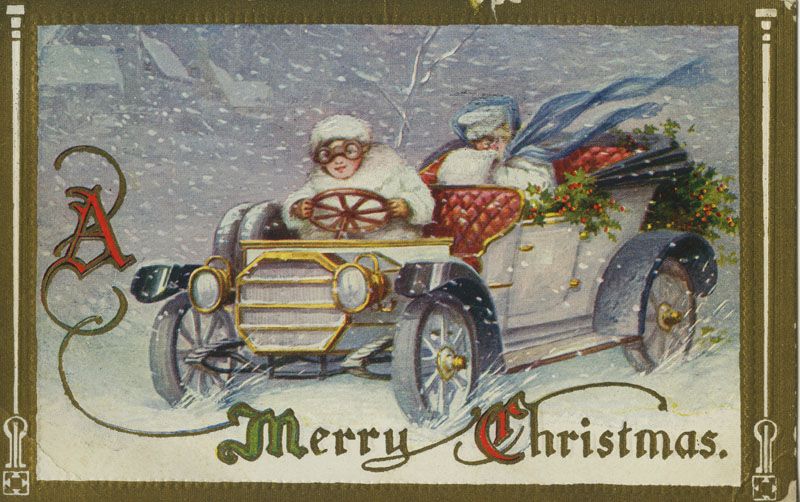
drawn postcard image of a woman in white furs driving an antique car in the snow

This 1910 postcard depicts a cheerful traveler braving the snowy roads in an open topped roadster, laden with holly and holiday cheer, on the way to celebrate Christmas with friends or family...

The Center for Local History has a large collection of holiday themed postcards from the early-to-mid 20th Century. Most are colorful, ornate, and have a slogan of merriment wishing the receiver good tidings, like this one. There are also postcards for birthdays, New Year’s, Valentine’s Day, Halloween, St. Patrick’s Day, and the Fourth of July.

The first American postcard was pressed in 1873. Postcards quickly became an inexpensive form of communication, growing in popularity throughout the 19th and 20th Centuries. They are still sold around the world as a way to share the story of your journey and adventures, or to just send a “hello” to your loved ones.

To see the postcard collection, or learn more about Arlington’s diverse history, visit us at the Center for Local History located on the 1st floor of Central Library.
December 20, 2018 by Web Editor

The Dudley Family Home

Post Published: December 12, 2018

Oh, to sled down that hill...

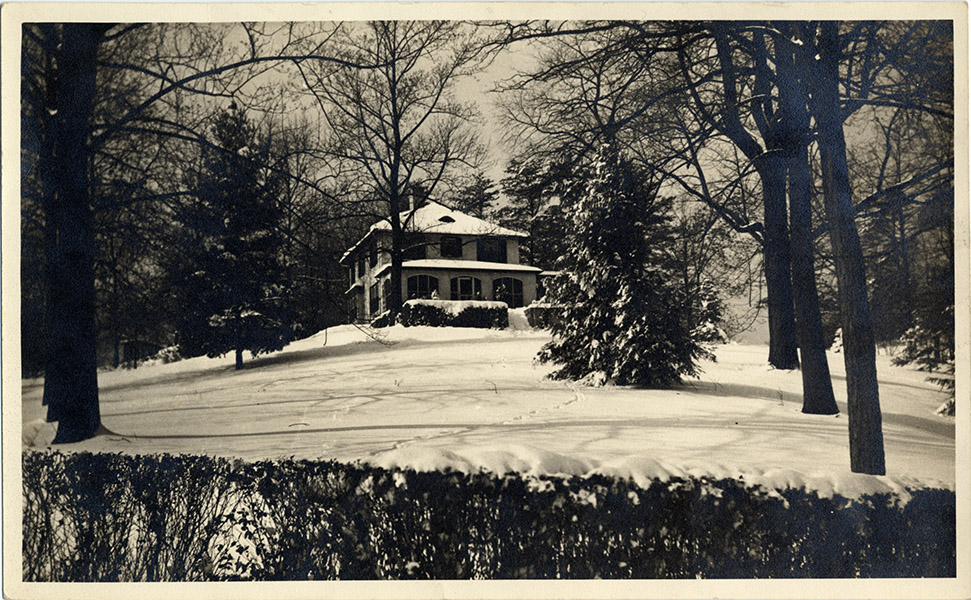
Dudley Family Home, 1920s black and white photo, taken on a hill covered in snow

The Dudley Family Home stood on a hill on North Military Road - the same hill where you now find the Cherrydale Branch Library, one of Arlington’s beloved neighborhood libraries.

This photo, taken in the 1920s, comes from the Dudley Family Photographs, 1920-1950 collection. The collection contains an assortment of intimate family portraits, beach adventures, local business, and street scenes, taken mostly during the 1920s and 1930s. Examining the Dudley Family images allows viewers to step back into time and feel as though we are part of their adventures…

To learn more about The Dudley Family, Cherrydale Branch Library, Arlington’s diverse history, or to see more images like this, visit us at the Center for Local History located on the 1st floor of Central Library.
December 12, 2018 by Web Editor

Wakefield High School Student Posters

Post Published: December 6, 2018

The students who attended Wakefield High School during the 1969/1970 school year were a busy and creative group.

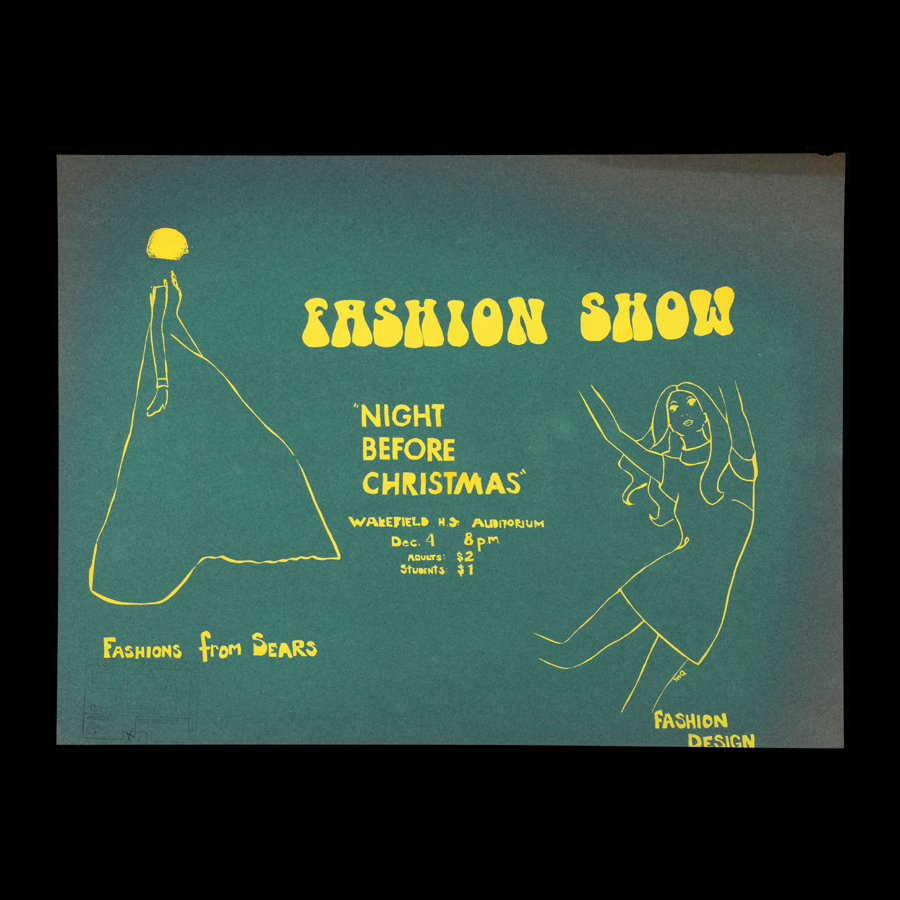
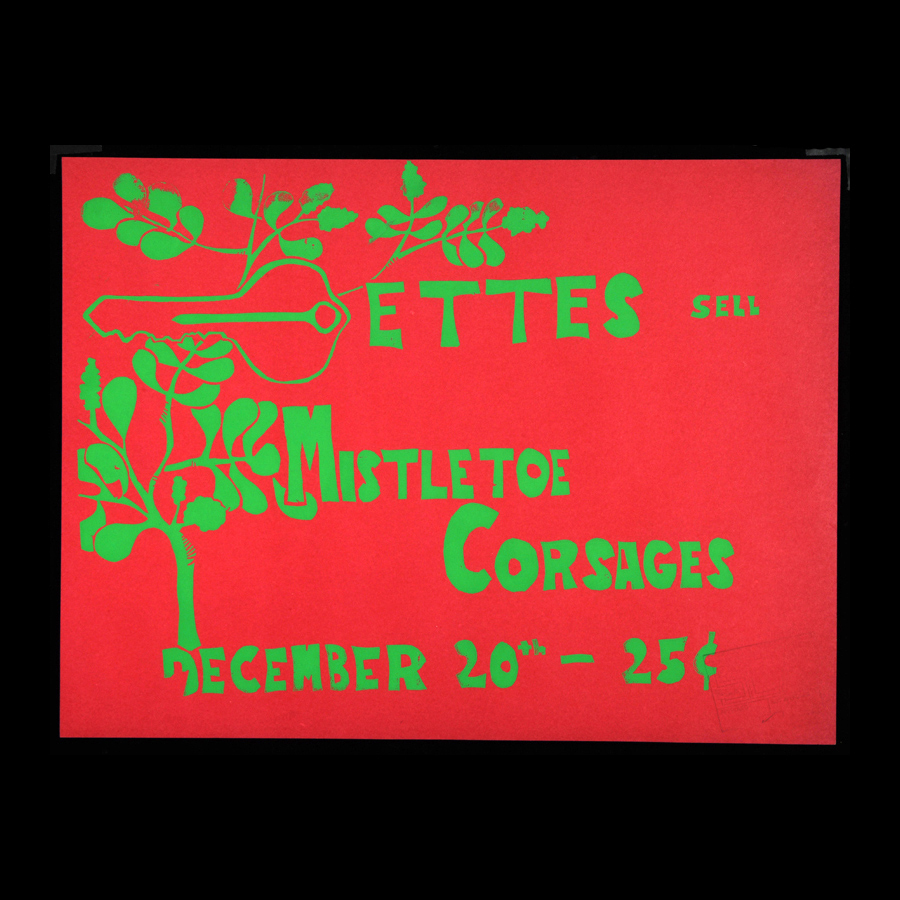
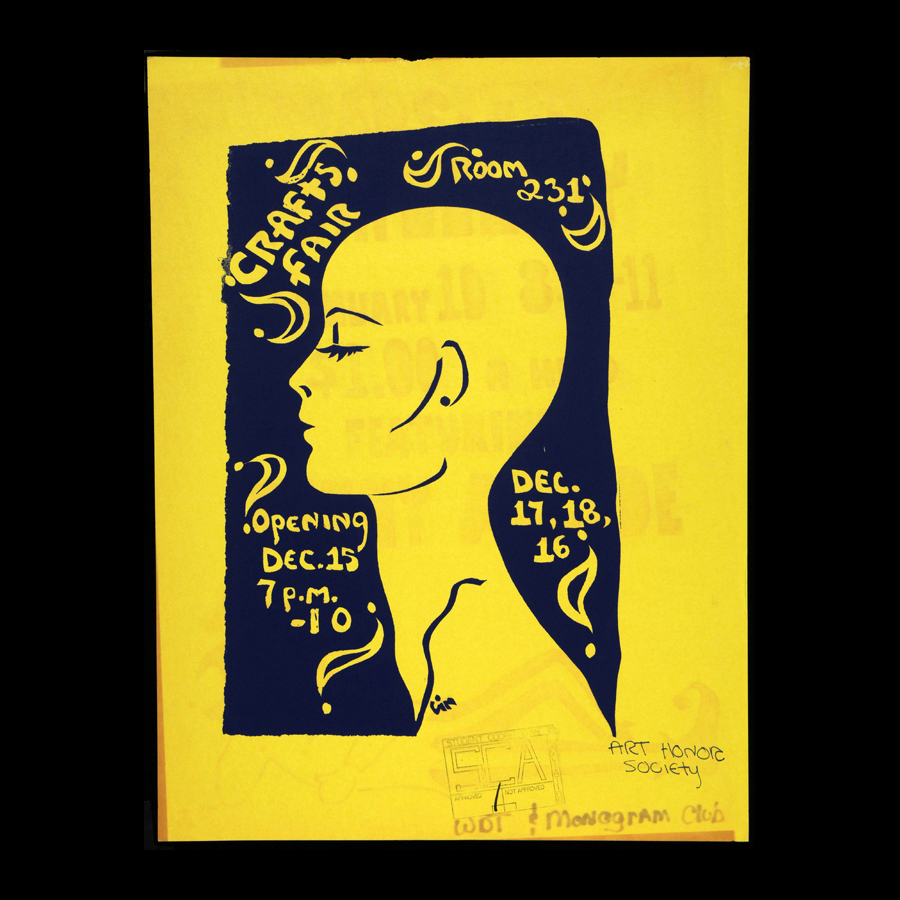
From after school clubs to theater productions; from student body elections to themed dances; Wakefield students showcased their events, programs and causes with simple but effective hand silkscreened posters:

Green sikscreened poster, text reads "Fashion show featuring Fashions from Sears"
Red silk screened poster, text reads "mistletoe corsages"
Yellow silkscreen poster with image of a manequin head, text reads "Crafts fair"
Purple silkscreened posted, text reads "Crafts Fair" with image of a pirate ship

David Crist, graduate of Wakefield Class of 1970, saved and donated over 90 of these posters to the Center for Local History.

The first image above features an advertisement for “The Night Before Christmas Fashion Show" from December 1969, and was silk screened onto either poster board or construction paper. In a very era-appropriate touch, the poster highlights that “Fashions by Sears” were to be modeled at the evening’s 8:00 p.m. production.

The Center for Local History's online Community Archives includes a large number of high-resolution images of the Wakefield 1969-970 Student Posters.

December 6, 2018 by Web Editor

Murphy & Ames Lumber and Hardware

Post Published: November 23, 2018

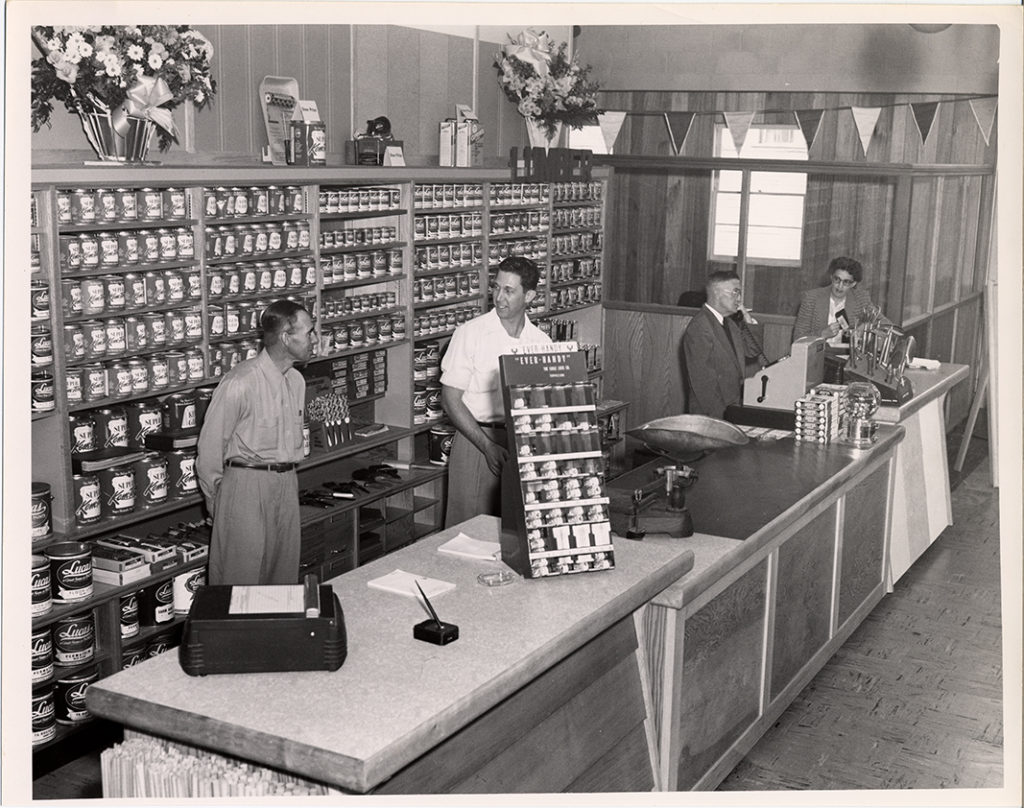
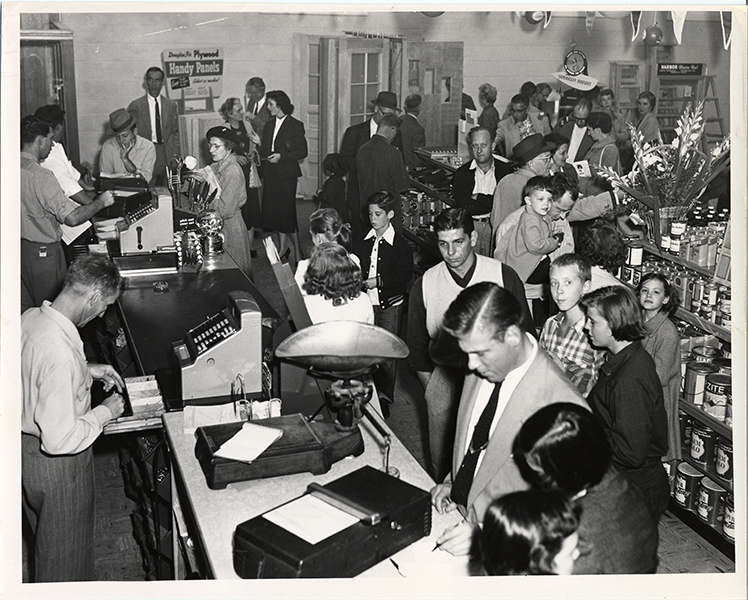
Arlington has long been home to many flourishing small businesses, including the original Murphy & Ames lumber and hardware company:

Murphy & Ames Rosslyn location, unknown date

Located in Rosslyn from 1908 to the 1960s, Murphy & Ames became known as a prominent company in the County. In 1951 a fire consumed their Rosslyn flagship store, but the devastation did not deter then President, W.P. Ames, Sr. He quickly rebuilt and expanded the company’s service offerings, even adding a new location in Falls Church.

The company’s goal was to serve Arlington County’s (and the surrounding communities) changing landscape and building needs. With the 1950s and 1960s housing boom, Murphy & Ames began to offer additional services, such as having an expert millwork craftsmen on-hand, and the company worked diligently to attend and serve Arlington’s ever-growing and ever-changing population.

By the early-to-mid 1960s, Murphy & Ames had expanded to Fairfax and Herndon thanks to the opening of I-66. Now with four stores in full operation, W.P. Ames made the decision to close and ultimately tear down his Rosslyn store. A ten-story office building was built on the former site, and with the continual decline of residential growth in Rosslyn, the area became an urban hub for office spaces through the remaining decades of the 20th Century.

To learn more about Murphy & Ames, or Arlington’s diverse history, visit the Center for Local History located on the 1st floor of Central Library.

November 23, 2018 by Web Editor

Oral History: Dedication of the Tomb of the Unknown Soldier

Post Published: November 8, 2018

Arlington Voices the Oral History Collection

Interview with Agnes Quade

In observance of Veteran’s Day, the staff at the Center for Local History present a clip of an oral history interview with Charles and Agnes Quade, who recalls attending the first dedication of the Tomb of the Unknown Solider, at Arlington National Cemetery on November 11, 1932. After some research about Sgt. Frank Witchey (spelled Witchie here) we have determined that Mrs. Quade misspoke during her interview and based on her information about meeting the Sergeant, she was actually there on the original dedication date in November 1921 (thank you to an eagle-eyed patron for pointing this out to us!).

In this segment, Mrs. Quade shares her memories of seeing Sergeant Witchey - a man her husband would eventually meet - play Taps at the Unknown Soldier’s tomb.

NARRATOR: Agnes Quade
INTERVIEWER: Theda Nichols
DATE: May 3, 1975

TN: Now, while we’re on the War subject, didn’t you tell me that you had attended the first dedication of the Unknown Soldier in 1932?

AQ: Yes.

TN: Uh-huh.

AQ: I did.

TN: Could you tell me what you remember about that?

AQ: And that was just a wonderful, impressive occasion. I went out to the National Cemetery, to the Amphitheater. And my mother was here from Atlanta, Georgia, at the time – had come 600 miles; and I thought, “Oh, how wonderful [that] we are here for such a solemn day.” It meant so much to everyone.
And when we arrived, out at the Cemetery, I asked one of the men who had charge of the services if it would be possible that we could get a seat.
And he said, “Oh, no!” – that all the seats were taken, and that others – we just didn’t have any room for anyone else in the Amphitheater; we could stand outside, and we could hear, probably.
And I said, “But my mother’s here, and she’s from Atlanta, Georgia.”
He said, “Just a minute, Lady.”
And over he came with two tickets, which I still have – and I treasure! – and brought me a program. And he ushered us in to about the fourth row of the Amphitheater.
And it was a very solemn service. I have Kodak pictures of the first Unknown Soldier’s Tomb – with the wreath, and with the colors, the flags, and the different divisions of the military, which were at that particular service.
And I would like to add there that the man, who was Sgt. Witchie, is a wonderful bugler – played “Taps” that day over the Unknown Soldier’s Tomb – on November the 11th, 1932.
And in several years, my husband happened to meet Sgt. Witchie; and now we have an autographed copy, a picture, framed, of him playing “Taps” at the Unknown Soldier’s Tomb on November the 11th, 1932.

You can find Charles and Agnes Quade’s interview in its entirety at the Center for Local History- VA 975.5295 A7243oh ser.2 no.24 

The goal of the Arlington Voices project is to showcase the Center for Local History’s oral history collection in a publicly accessible and shareable way.

What is the oral history collection?

Oral history is a popular method of research used for understanding historical events, actors, and movements from the point of view of people’s personal experiences.

The Arlington Public Library began collecting oral histories of long-time residents in the 1970s, and since then the scope of the collection has expanded to capture the diverse voices of Arlington’s community. In 2016, staff members and volunteers recorded many additional hours of interviews, building the collection to 575 catalogued oral histories.

To browse our list of narrators indexed by interview subject, check out our community archive. To read a full transcript of an interview, visit the Center for Local History located at Central Library.

November 8, 2018 by Web Editor Tagged With: Oral History

Women’s Work: Ruby Lee Minar

Post Published: November 7, 2018

Have you shopped in Lee Heights? Visited Lyon Park?

Then you have been to neighborhoods created by real estate developer Ruby Lee Minar.

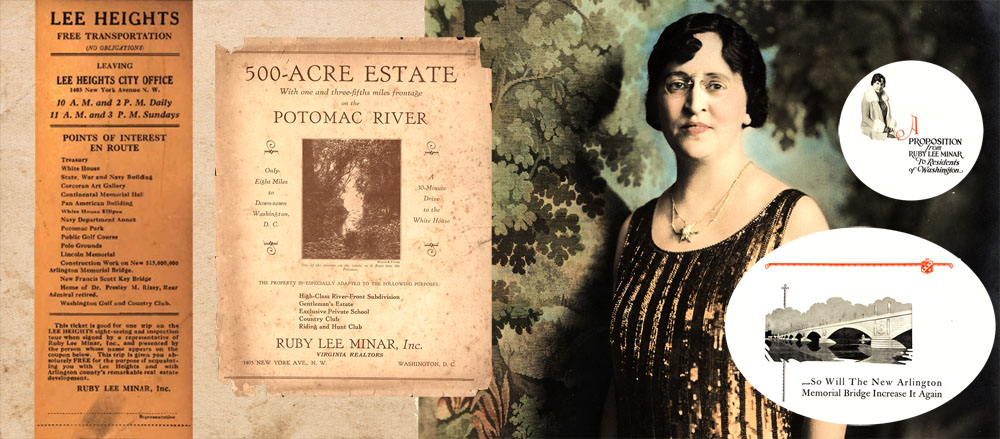
Composite of images from the Ruby Lee Minar exhibit

You can read a short history of Ruby Lee Minar's influential career in Arlington real estate development in our online exhibit, Women's Work.  The exhibit includes original documents, which are housed in the Center for Local History's Community Archive.

In the 1920s, entrepreneur Ruby Lee Minar built a real estate empire in and around Arlington. It was so expansive that the American Business Review described her as the “most successful woman in realty development in the country.”

By May 1921, Minar had become the exclusive sales agent for the Lyon Park subdivision owned by Lyon & Fitch. Minar also purchased a 400-acre tract of land between the Washington Golf and Country Club and the Potomac River, which was developed into a subdivision named Lee Heights.

Ruby Lee Minor was a prominent advocate for women’s rights in her roles as first president of the Washington, D.C. Soroptimist Club, a worldwide civic organization for business and professional women. She became the first woman admitted to the Virginia Real Estate Association and went on to be the only woman on the Alexandria-Arlington-Fairfax Real Estate Board.

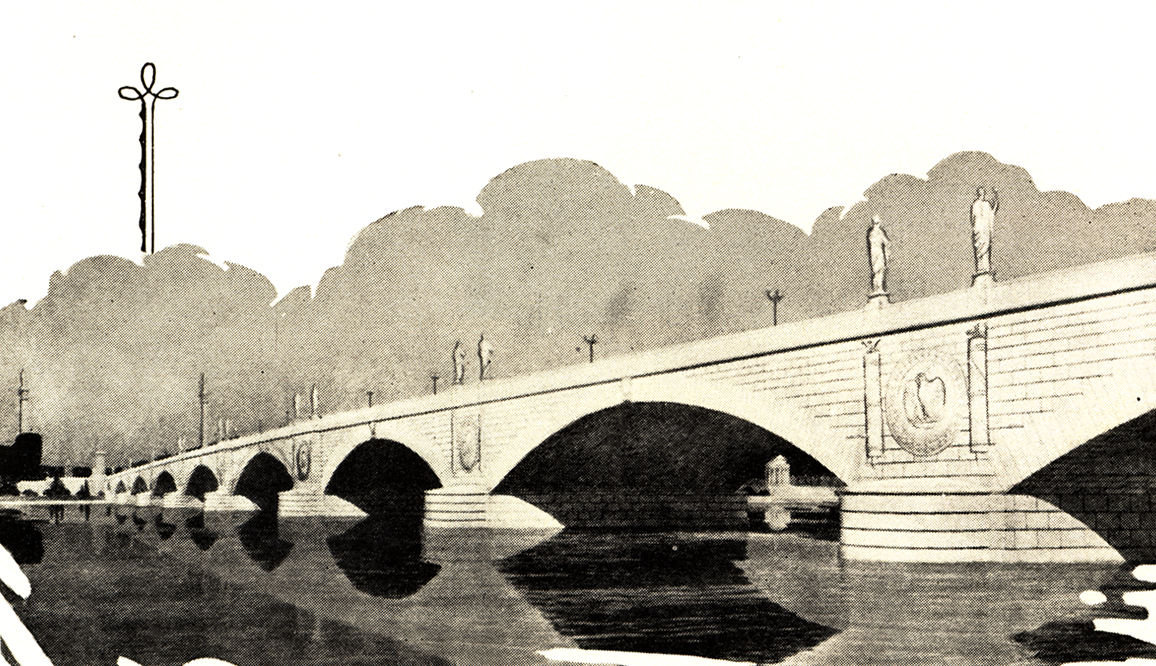
Graphic image of the Memorial Bridge
Memorial Bridge illustration, from Ruby Lee Minar's brochure advertising Lee Heights

November 7, 2018 by Web Editor

Oral History: Halloween Shenanigans

Post Published: October 18, 2018

Arlington Voices the Oral History Collection

Interview with Shirley Bowman, Courthouse Neighborhood Resident

With Halloween quickly approaching, the staff at the Center for Local History want to share a segment of a particularly interesting story about Halloween in what is now the Courthouse neighborhood of Arlington.

In this clip, taken from a larger interview with narrators Tally and Shirley Bowman, Shirley shares an anecdote about an unnamed neighbor who showed trick-or-treaters silent films from the Women’s Christian Temperance Union - a group that supported, among other things, the prohibition of alcohol.

Only after slightly bribing her son, another neighbor found out that these films about drunkenness and its dangers were being shown to the neighborhood children each Halloween. When Shirley confronted this neighbor, the films stopped.

Additionally, Shirley fondly recalls other neighborhood Halloween traditions, including taking pictures of trick-or-treaters in their costumes.

NARRATOR 1: Tally Bowman
NARRATOR 2: Shirley Bowman (speaking in this clip)
INTERVIEWER: Kate O'Connor
DATE: September 20, 1988

Transcript:

SB: Williams was the not the first people that lived in the house on the other side of Clements. They bought it from an old woman, older woman that was WCTU, do you remember, Women's Christian Temperance Union. Oh, Lord, I haven't said that word.
She used to give Halloween parties to all the children in the neighborhood and show them these movies on people drunk, they were almost like, well they were silent movies was what they were. And these men would get their paychecks and go to a saloon, you know, and then go out and our kids had never seen anything like that and here this was trying to teach them not to do this sort of thing, I guess. I guess that's what it was for.

And it was a couple of Halloweens before we found out, in fact, we didn't know, yeah, they'd gone over there…. You know, the children, she showed them, you know, kids, you don't get too much out of them. You know, she showed some movies. But she had lots of cookies and lots of punch, that's the only thing they would talk about until one day, Jenny Bond came over from Barton Street. She said, "Shirley, Halloween's coming up. Do you know what kind of movies she shows those kids?" And I said, "No. I really don't. But gee whiz, I thought they would be nice movies coming from over there, WCTU, you know, Women's Christian Temperance Union." And she said, "Well you know what happened at our house last night?"

Bill, her oldest boy about seven years old, her husband was late coming home. He was a lawyer in the government and he had a real high job over there. She said, "Well, I wonder what happened to Daddy?" And he said, "Well, maybe he stopped by the saloon and got some beers." And she said, "Where did you get that from?" So on questioning him and
feeding him some ice cream and cake, she found out that he found it over there at the Halloween party. So maybe he stopped by a saloon and was getting a couple of beers.

Well, that put a stop to that. I went over there and talked to her about that. I said, "You know, these families around here are not that type of family."

KO: How did she respond? Did she say why?

SB: Oh, she thought it was great. She had to quit having these parties because she wouldn't stop showing the movies. Everybody laughed. Frances's three daughters used to go down there, you know. I mean, it was funny. But it was something you didn't care anything about, having year after year.

KO: What about Halloween?

SB: Oh, everybody had their lights on. Everybody invited the children into the house. And my mother used to sit right there, she loved Halloween. She had the baskets of goodies and she would give out all the . . . and I would take pictures of the kids and we had a lot of strays too, but we never, not for years, I mean the first years we didn't, it was just neighborhood kids. And then friends away would always bring their children.

You can find Tally and Shirly Bowman's interview in its entirety in the Center for Local History - VA 975.5295 A7243oh ser.3 no.9a.


The goal of the Arlington Voices project is to showcase the Center for Local History’s oral history collection in a publicly accessible and shareable way.

What is the oral history collection?

Oral history is a popular method of research used for understanding historical events, actors, and movements from the point of view of people’s personal experiences.

The Arlington Public Library began collecting oral histories of long-time residents in the 1970s, and since then the scope of the collection has expanded to capture the diverse voices of Arlington’s community. In 2016, staff members and volunteers recorded many additional hours of interviews, building the collection to 575 catalogued oral histories.

To browse our list of narrators indexed by interview subject, check out our community archive. To read a full transcript of an interview, visit the Center for Local History located at Central Library.

October 18, 2018 by Web Editor Tagged With: Oral History

Treasures from the Archive

Post Published: October 2, 2018

October is National Archives Month

photo of Arabeth setting up objects in the display case
Archivist Arabeth sets up a display at Central Library

What's An Archivist? Why Are Archives Important?

  • Archives are a place where people can go to look at the documentary evidence of past events, such as letters, reports, photographs, diaries and other primary sources.
  • Archivists are specially trained in preserving original materials and helping people access them.

The Center for Local History at Arlington Public Library houses our Community Archives, and Research Room. It is also home to a growing collection on digital collections and exhibits.

Visit Central Library this month to view our exhibit of objects from the Archives. The exhibit includes a Washington-Lee crew team megaphone from 1958, a photo of the demolition of the "Old Arlington Courthouse" on February 23, 1997, and an instructional voting machine, circa 1902-1944.

Everyone Has A Story

This year we're celebrating National Archives Month with the launch of a new weekly Instagram feature.

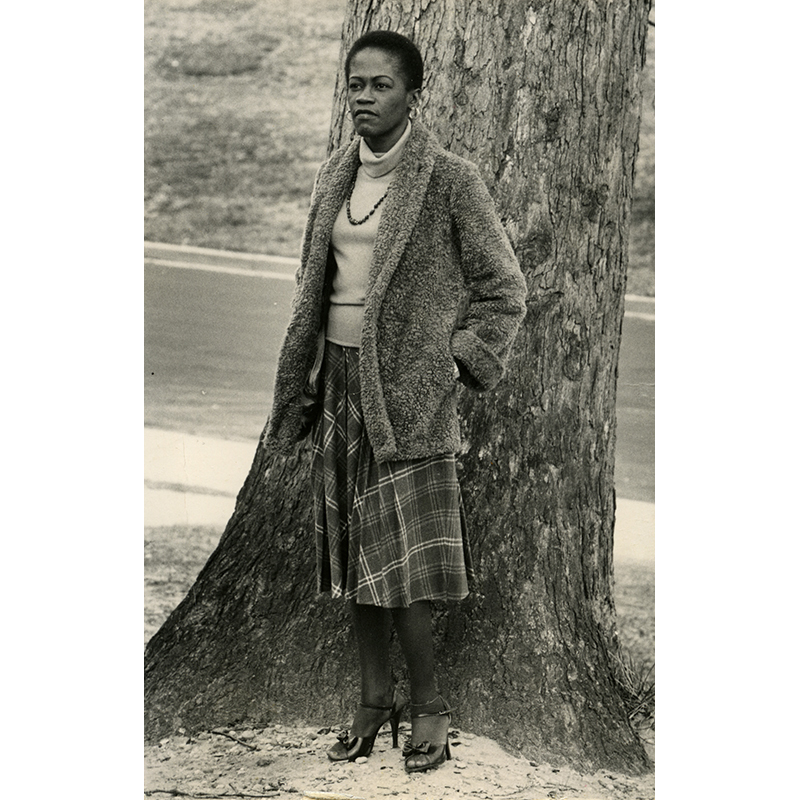
Each Thursday, we'll post an image from the Center for Local History's archival collection. We started last week with this picture of Richard Walker, photographed in 1981 by Lloyd Wolf.

Photo of Richard Walker standing in a shop doorway

Follow us on Instagram @arlingtonvalib

October 2, 2018 by Web Editor

Oral History: Interview with Nguyen Ngoc Bich

Post Published: May 7, 2018

Vietnam Center Photo

Vietnamese Community Leader

In recognition of Asian and Pacific Island American Heritage Month, for May we are sharing community leader Nguyeb Ngoc Bich's oral history describing the Vietnamese refugee community in Arlington from roughly 1975 to 1980.

During that 5-year period, the U.S. population of Vietnamese immigrants - many of whom were refugees - had grown from 15,000 to 245,000. At the same time, the Clarendon neighborhood was transformed from a declining shopping destination to a supportive and bustling enclave, brimming with stores that provided both imported goods and a sense of community for Vietnamese-Americans. This area became known informally as “Little Saigon.”

But as construction on the Metro was completed and leases expired, Vietnamese business owners moved west to the Eden Center in Falls Church. This move was spearheaded by Nguyen Ngoc Bich, who had first come to the U.S. in the 1950s as a student.

In this clip, Mr. Bich describes the economic and social contexts of the rise of Little Saigon.

NARRATOR: Nguyen Ngoc Bich
INTERVIEWER: Andrea Dono
DATE: November 9, 2014

Transcript:

AD: Did you call it Little Saigon, or did you have another name for that area?

NNB:
Little Saigon. Well, because before April 1975 the whole Vietnamese community in the Washington area was probably no more than about 3,000 people. But nonetheless, these three thousand people became the anchor for family. For instance, our family became the anchor for trying to resettle these twenty-some people that we brought from Vietnam and so on and so forth. Because of the fall of South Vietnam the embassy had to close. Then these people also have to find some way to make a living, and so a secretary there at the Embassy of Vietnam, her name is Zu Mak Zu (?), she was the very first one to open what you call the Saigon Market on Wilson Boulevard in the Clarendon area.
I think we were sort of lucky in a sense at the time. They were talking about building the Metro, and so they tore down a lot of things in the Clarendon area, and so the real estate became very, very cheap. Many of the major American establishments moved out. And because of that some of this real estate became available for very cheap. But they gave you a very short contract, like six months or one quarter.

AD: Were most of the buildings in that Little Saigon area mostly commercial, or were there some social services as well?

NNB: No, mostly commercial because the social services for the refugees tend to be run out of American establishments like the US CC, US Catholic Conference, the Catholic university or the Lutheran Services that are on 16th Street. In fact, the Lutheran Services is only three blocks away from the Vietnamese Buddhist temple up there. While most of the things are here, businesses, restaurants, tailor shop, photo shop, jewelry store, bridal things, we had all that. We all congregated around the Clarendon area. At one point we might have—I don’t think maybe 100, probably not 100, easily 70 or 80 establishments that catered to Vietnamese customers. And so a trip to Clarendon gets you not only to go and get what you need but also run into a lot of friends, new friends that we make, and that became the core of the community in this area.

You can find Nguyen Ngoc Bich’s interview in its entirety in the Center for Local History - VA 975.5295 A7243oh ser.12 no.1. Photo: Vietnam Center Clarendon, Source: Photographs of the Arlington Historical Society, PG 230-1096


The goal of the Arlington Voices project is to showcase the Center for Local History’s oral history collection in a publicly accessible and shareable way.

From June 2017 – May 2018, we will post one oral history clip and transcript each month, focusing on Arlington’s history, culture and identity.

What is the oral history collection?

Oral history is a popular method of research used for understanding historical events, actors, and movements from the point of view of people’s personal experiences.

The Arlington Public Library began collecting oral histories of long-time residents in the 1970s, and since then the scope of the collection has expanded to capture the diverse voices of Arlington’s community. In 2016, staff members and volunteers recorded many additional hours of interviews, building the collection to 575 catalogued oral histories.

To browse our list of narrators indexed by interview subject, check out our community archive. To read a full transcript of an interview, visit the Center for Local History located at Central Library.

May 7, 2018 by Web Editor Tagged With: Oral History

Ellen Bozman – A Civic Leader Dedicated to the Community She Loved

Post Published: April 26, 2018

Role Model - Visionary - Trailblazer

On Saturday, April 28, the Arlington County Board will hold a a dedication ceremony from 10-11 a.m. at Courthouse Plaza.

To honor Bozman’s work and legacy, the Courthouse Government Center building will be renamed as the Ellen M. Bozman Government Center.

Ellen Bozman working in the County board room, surrounded by a man, two women and a child sitting on the desk

In 1973, Ellen Bozman first ran for the Arlington County Board under the slogan “Let’s keep Arlington a good place to live…and make it better.” During her tenure from 1974 to 1997 as the longest-serving county board member to date, Bozman’s dedicated service and ingenuity fulfilled this goal. Her foresight and leadership guided Arlington as it transitioned from a suburban enclave to bustling urban community, as she advocated for controlled development, instituting services for the elderly and children, and open government.

You can read a short history of Ellen Bozman's life and career in our online exhibit, Women's Work, and see original documents about her work on the County Board in the Center for Local History's Community Archive.

“Ellen Bozman set the bar high for civic service and leadership,” former Arlington County Board member Jay Fisette said. “It is entirely fitting that the County offices be named for Ellen — a visionary who helped guide Arlington’s growth for decades, played a key role in developing Metro here, and who maintained the highest ethical standards throughout her decades of service to this community that she loved. Ellen believed in open, inclusive, competent government as a powerful agent of progress.”

Bozman plaque

In August, 2017, former County Board member Fisette received a petition signed by 62 prominent Arlington residents asking that the Board name the County Office Building for Bozman. The County’s Historical Affairs and Landmark Review Board unanimously approved the naming on September 20, 2017.

The plaque in Bozman's honor reads:

The Government Center is dedicated in memory of

The Honorable
Ellen M. Bozman
1925-2009

Role Model – Visionary – Trailblazer

“A distinguished civic leader who dedicated her career to the community she loved.”

Six-time Board Chair with 24 years of public service, Bozman set a high bar for civic service and leadership.

In a time when few women held public leadership roles, she distinguished herself as a passionate leader and pioneer, effective consensus-builder and powerful agent of change.

She was instrumental in embracing public transit solutions, affordable housing, public education and integrated social services programs.

Her vision and passion for the community helped guide Arlington’s growth for decades, leading the County through its most transformative years.

April 26, 2018 by Web Editor

  • « Go to Previous Page
  • Page 1
  • Interim pages omitted …
  • Page 18
  • Page 19
  • Page 20
  • Page 21
  • Page 22
  • Interim pages omitted …
  • Page 35
  • Go to Next Page »

Primary Sidebar

News

All library locations will be closed for Juneteenth.

Holiday: All library locations closed Fri., June 19, for Juneteenth.

All Library locations and Arlington County … ... about Holiday: All library locations closed Fri., June 19, for Juneteenth.

Read More News
See More Service Updates

Center for Local History

Three men writing on squares of the AIDS Quilt.

New: Explore 2,800+ Arlington Courier Photos

Explore more than 2,800 photos of local life in … ... about New: Explore 2,800+ Arlington Courier Photos

Read More Local History

Director’s Blog

Arlington Public Library staff marching in the 2025 D.C. World Pride Parade.

Director’s Message: Pride Month

Words Matter Arlington Public Library … ... about Director’s Message: Pride Month

More Director's Blog

Footer

About Us

  • Mission & Vision
  • Charlie Clark Center for Local History
  • News Room
  • Get Email Updates

Administration

  • Policies
  • Library Staff
  • Job Opportunities
  • Propose a Program or Partnership

Support Your Library

  • Friends of the Library
  • Giving Opportunities
  • Donating Materials
  • Volunteer Opportunities

Our Mission

We champion the power of stories, information and ideas.

We create space for culture and connection.

We embrace inclusion and diverse points of view.


Download the Library App

Download the Library App

Arlington County | Terms & Conditions | Accessibility | Site Map
· Copyright © 2026 Arlington County Government ·