• Skip to primary navigation
  • Skip to main content
  • Skip to primary sidebar
  • Skip to footer

Alert

Update: Quincy St entrance closed during upgrades at Central Library. More Info

Home - Arlington County Virginia - Logo
MENUMENU
  • Join Now
  • My Account
    • Login
    • My Checkouts
    • My Holds
    • My Lists
    • My Reading History
    • About Borrowing
    • About Holds
    • About My Account
  • Hours & Locations
    • All Hours & Locations
    • Holiday Closings
  • News
    • Library News
    • Director's Blog
    • Get Email Updates
  • Contact Us

Arlington Public Library

MENUMENU
  • Search
  • Collections
  • Library Services
  • Events
  • Community Engagement
  • Join Now
  • My Account
    • Login
    • About Borrowing
    • About Holds
    • About My Account
  • Hours & Locations
    • All Hours & Locations
    • Holiday Closings
  • News
    • Library Blog
    • Get Email Updates
  • Contact Us

Center for Local History Blog

Dedicated to collecting, preserving and sharing the history of the community.

Oral History: Interview with Local Business Owner Robert Tramonte of the Italian Store

Post Published: December 15, 2017

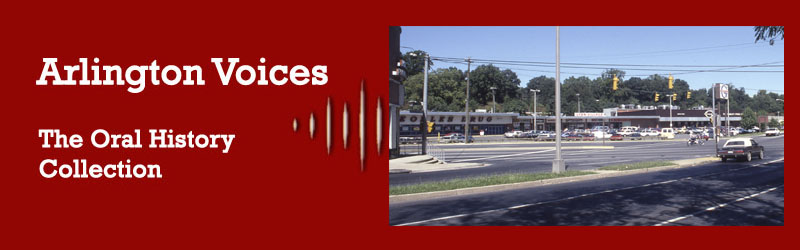
Paper sound waveform with shadow and photo of Italian Store in 1980s

A Cornerstone of the Growing Lyon Village Community

Arlington has no shortage of local businesses offering high quality food, goods, and services, and it might surprise you to learn just how long some of them have been established in the community.

The Center for Local History has a growing collection of interviews with current and former business owners, the majority of which have been recorded by our volunteer Virginia Smith.

The Italian Store, a multi-location market replete with delicacies from fresh sandwiches to a gelato bar, opened in 1980 in the then “sleepy little shopping center” of Lyon Village. In this interview, co-owner Robert Tramonte takes us back to the days of the store’s founding before winding the clock further back to the days of his great-grandfather’s immigration to the United States from Italy.

NARRATOR: Robert Tramonte
INTERVIEWER: Virginia Smith
DATE:   March 20, 2013


Transcript:

RT: The founding of The Italian Store. Well, we started in 1980 and right before 1980, my brother and I were working for my father. My father is an attorney in Arlington but on the side with his brother, Tony, he owned a nightclub in Georgetown called The Bayou.  We ran the nightclub for four or five years until right between ’79 and ’80 when my dad sold it to the Cellar Door Company and within six months of selling the Bayou, we opened up The Italian Store.

VS: What was Lyon Village like in 1980 when you and your brother and dad went looking for a place to establish the joint as we say—the joint?

RT: Lyon Village was kind of a sleepy little shopping center.  Back in 1980, I don’t even think very few people even knew the name of the shopping center.  And the property where The Italian Store sits, they had for many years, even when I was a little kid, they had something there called Bernie’s Amusements which they had a pony ring there and they had these little boats and they had some batting cages and things like that. My sister and I remember riding the ponies when we were really young.

VS: So, you opened up the first day, who comes in? Who are your early buyers, early clients?

RT: In the early days, we really didn’t know what our clientele would be or we didn’t know what we were going to sell either. So, anybody that asked us for anything, we said yes which got us into a little trouble now and then. But, the very first day we were busy.  People were anxious to have this new store open and we had a core of people I felt the first couple years that were Italian and they really supported us and they went out of their way to spend money to make sure that we survived.  We knew their names. They knew us. We knew exactly what their order was going to be. We would put things aside, special ordered for them and they really helped us in the beginning. Also in the beginning, since we didn’t know exactly where this business was going to take us, we had a lot of restaurants that ordered from us.

VS: What would they order?

RT: Back in those days, this is 1980 now—but my brother made my fresh mozzarella and you can get mozzarella pretty easily nowadays but back in those days, it was very hard to find so my brother almost every day of the week, he was making fresh mozzarella and we would sell it to the restaurants.  We do very little of that today because the supplies are there, much more readily available. We have to work a little bit harder now to get products that people can’t find and we do. I still think that we have the best network to New York of anybody in this area. We have suppliers that I don’t think anybody else deals with.

VS: Tell me a little bit about who came here in 1889.

RT: 1889 was my great grandfather, Vincenzo Tramonte.  I haven’t been able to track down the exact location but, apparently [00:36:00] there was a group, they had an Italian food store there and my father said that it was a food store. It was also a general store. It was also a place where if you were a new immigrant, you could probably get a loan to kind of help you out. So we have a little bit of history in Manhattan, in the Italian food business.

VS: It is not out of the question that you should have opened The Italian Store, the food store.

RT: Exactly.

You can find Robert Tramonte’s interview in its entirety in the Center for Local History – VA 975.5295 A7243oh ser.3 no.283. Photo: Lyon Village 1986; Source: Arlington Photographs: Before and After – The Guy W. Starling Collection PG210-0085


The goal of the Arlington Voices project is to showcase the Center for Local History’s oral history collection in a publicly accessible and shareable way.

From June 2017 – May 2018, we will post one oral history clip and transcript each month, focusing on Arlington’s history, culture and identity.

What is the oral history collection?

Oral history is a popular method of research used for understanding historical events, actors, and movements from the point of view of people’s personal experiences.

The Arlington Public Library began collecting oral histories of long-time residents in the 1970s, and since then the scope of the collection has expanded to capture the diverse voices of Arlington’s community. In 2016, staff members and volunteers recorded many additional hours of interviews, building the collection to 575 catalogued oral histories.

To browse our list of narrators indexed by interview subject, check out our community archive. To read a full transcript of an interview, visit the Center for Local History located at Central Library.


December 15, 2017 by Web Editor Tagged With: Oral History

Exploring World War 1: Faces of War

Post Published: October 27, 2017

Honoring Arlington’s Veterans

Among the plaques that constitute the Arlington County War Memorial at 3140 Wilson Boulevard is one that honors thirteen Arlington County soldiers and sailors who made the ultimate sacrifice while serving in World War I.

An exhibit featuring their stories will be on display in the Central Library lobby this November, in honor of the 100th Anniversary of World War I.

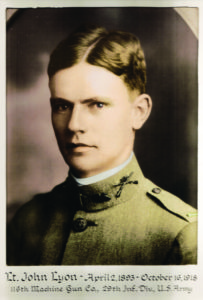
One of those men was John Lyon, son of Arlington developer, newspaper publisher and lawyer Frank Lyon and his wife Georgie Hays Wright Lyon, who was born in Ballston in 1893.

Photo of Lt, John Lyon, April 2, 1893 - Oct. 15 1918

John Lyon: April 2, 1893 – Oct. 15 1918

After attending the University of Virginia and Georgetown University, Lyon began his World War I service in May of 1915 by volunteering as a Hospital Corps ambulance driver in France, predating the United States entry into the war by almost two years. After arriving in France, he was assigned to Belgium, where he transported wounded troops from field hospitals to larger facilities further from the battlefields.

After returning to the U.S. in December of 1915, he enlisted in the U.S. Army and was stationed on the Mexican border in Cameron County, Texas for the next six months.

Under the leadership of General John J. Pershing, Lyon was a machine gunner in the 29th Infantry Division as part of the American Expeditionary Force and was deployed to Europe on April 6, 1917, after the United States’ entry into World War I.

After returning to France, he was promoted from sergeant to lieutenant of the 166th Infantry of the 29th Division and quickly saw front line duty in the trenches. In September of 1918, the 29th Division became part of the Muese-Argonne Offensive, the final Allied offensive of World War I, which lasted 47 days, claiming 28,000 German and 26,277 American lives.

Lieutenant Lyon was a casualty of the Muese-Argonne Offensive on October 15, 1918, giving his own life to attend to a wounded comrade, Major H.L. Opie.

Opie wrote of Lyon’s valor in a letter to the Lyon family:

“Lieutenant Lyon had the guns of his platoon posted in partial shelter on my left, against counter attack. He saw me fall wounded and leaving his guns, ran directly to my assistance in the face of certain death. He was killed by the fire of an enemy machine gun and fell within a few feet of me.”

On April 20, 1920, Lieutenant Lyon was posthumously awarded the distinguished Service Cross, becoming Arlington’s most decorated World War I soldier. Arlington VFW Post 3150 was named after him on November 11, 1934.

The family name remains highly visible in present day Arlington County through Frank Lyon’s many contributions, including his development of the Lyon Park and Lyon Village neighborhoods.

The exhibit also includes biographical information on:

Robert Bruce, Frank Edward Dunkin, Oscar Lloyd Housel, Ralph Lowe, Arthur C. Morgan, Irving Thomas Chapman Newman, Frederick Wallis Schutt, Henry Smallwood, Edward J. Smith, Harry R. Stone, Harry Emory Vermillion, and Archie Walters Williams.

In assembling this exhibit, the Center for Local History librarians would like to acknowledge a very helpful article by Annette Benbow in the Arlington Historical Society Magazine (V15, #2, 2014), which gives a comprehensive description of the thirteen men from Arlington who died in WWI.


October 27, 2017 by Web Editor

Oral History: Interview with Native American Navy Pilot Thomas Oxendine

Post Published: October 26, 2017

Arlington Voices: The Oral History Collection

Native American Experience in the U.S. Military

Thomas Oxendine, from Pembroke, North Carolina, became the first Native American Navy Pilot when he served in World War II.

Oxendine had an illustrious career as a Navy pilot, earning the Distinguished Flying Cross for landing at sea and under gunfire to make a rescue. After 29 years in the Navy, Oxendine transitioned to civilian life as the head of public information with the Bureau of Indian Affairs and settled down in Arlington, Virginia, where he lived until his death in 2010. His oral history interview sheds light into the complex history of Native American and United States Federal Government relations in the 20th century, and is a wonderful source in this time of reflection on Veteran, Native American, and United States founding history.

In this clip, Thomas Oxendine describes the segregation of Native Americans in the US Military, and gives an account of his famous rescue on Yap Island.

NARRATOR: Thomas Oxendine
INTERVIEWER: Joe B. Johnson
DATE: May 22, 2007

Transcript:

TO: Well, as I was just pointing out my background is a little unusual in that I am a Lumbee Indian, born on a farm near Pembroke, North Carolina.
In 1941 – very unusual. There was an enterprising person who had a flying school in Lumberton, North Carolina, Horace Barnes. And he petitioned the government to do a study by training ten Indians to fly, and do a study similar to what they were doing with blacks down at Tuskegee, Alabama. So I was fortunate enough at age eighteen to get a license to fly. So at the time of Pearl Harbor I already could fly and went down to join up in January, and joined the Navy and became the first American Indian to go through Navy flight training.
You may have an interest in how that came about, because the policies of government during the days of segregation were a little unusual, in that the way the Armed Forces dealt with segregation, the Army only segregated black people. They had all black people doing what they did in the Army, they did it in a segregated unit. There were no restrictions on Indians in the Army. They could attain any level they had the skills and qualifications. So it only applied to blacks.
At the same time over in the Navy, the Navy restricted their officer corps to Caucasians. Indians could be any of the enlisted grades but not an officer, and blacks could only be steward’s mates. Again, that’s not good or bad, that’s flat out the way it was. In fact, the application for me signing up for the Navy had three categories: they were Caucasian, Negro, others. I don’t know who all the others were but Indians were in the “others.” So the qualifications for a naval officer was Caucasian and certain age. I think it was 19-26.
I found out the Navy has a problem with me in that at the time I applied, the Navy had enlisted pilots called NAPs or Naval Aviation Pilots. The Army had Flying Sergeants and what they did is: they did routine maintenance flights, ferried airplanes and what have you. But the war had just broken out and the Navy did away with the enlisted program. So I’m not restricted from entering flight training.
However, if they put me in, by the time I get to the other end, completion, there is no enlisted program. So it took a couple of months and finally permitted me to enter and then I got all kind of publicity as the first American Indian to go through Navy flight training. But that was kind of a fluke, and I don’t know of any others who came in until President Truman integrated the Armed Forces in 1947.
JJ: All right. That’s an unusual way to get through, and you then went through the training and went on to be an active aviator and had a career.
TO: Right.
JJ: You made at least one rescue?
TO: Yes, on July 24, 1944. It happened at Yap Island. We got a message that there were three downed pilots, in too close to the beach for their submarines to pick up. We were one hundred or so miles away, and flew in to make that rescue. The first pilot was going without anyone in his backseat and we spotted the raft, and he landed and made that recovery. They said there was a third pilot crew member in the water also, but without a life raft, and that is very difficult from being airborne to locate a person who is just in there with a life jacket under enemy gun fire.
But while that rescue is taking place by the other aircraft, I finally spotted him, and I went in to make the rescue, and the gun fire got really heavy and the air group commander said: “Do not land, do not land,” but I had already made up my mind I would not take my eyes off this person.
So I landed and went in and picked him up and leveled out and avoided the gunfire. I didn’t get hit but had splashes all around while I’m making that. So I kind of wiped my brow and said” Thank goodness I was able to do that.”

You can find Thomas Oxendine’s interview in its entirety in the Center for Local History – VA 975.5295 A7243oh ser.3 no.207


The goal of the Arlington Voices project is to showcase the Center for Local History’s oral history collection in a publicly accessible and shareable way.

From June 2017 – May 2018, we will post one oral history clip and transcript each month, focusing on Arlington’s history, culture and identity.

What is the oral history collection?

Oral history is a popular method of research used for understanding historical events, actors, and movements from the point of view of people’s personal experiences.

The Arlington Public Library began collecting oral histories of long-time residents in the 1970s, and since then the scope of the collection has expanded to capture the diverse voices of Arlington’s community. In 2016, staff members and volunteers recorded many additional hours of interviews, building the collection to 575 catalogued oral histories.

To browse our list of narrators indexed by interview subject, check out our community archive. To read a full transcript of an interview, visit the Center for Local History located at Central Library.


October 26, 2017 by Web Editor Tagged With: Oral History

Code Girls and Arlington Hall: A Diverse History

Post Published: October 24, 2017

From Girls School to Cryptanalysis Hub

Author Liza Mundy, who did research for her book "Code Girls" in our Center for Local History, spoke at Central Library on Thursday, Oct. 26 at 7 p.m.

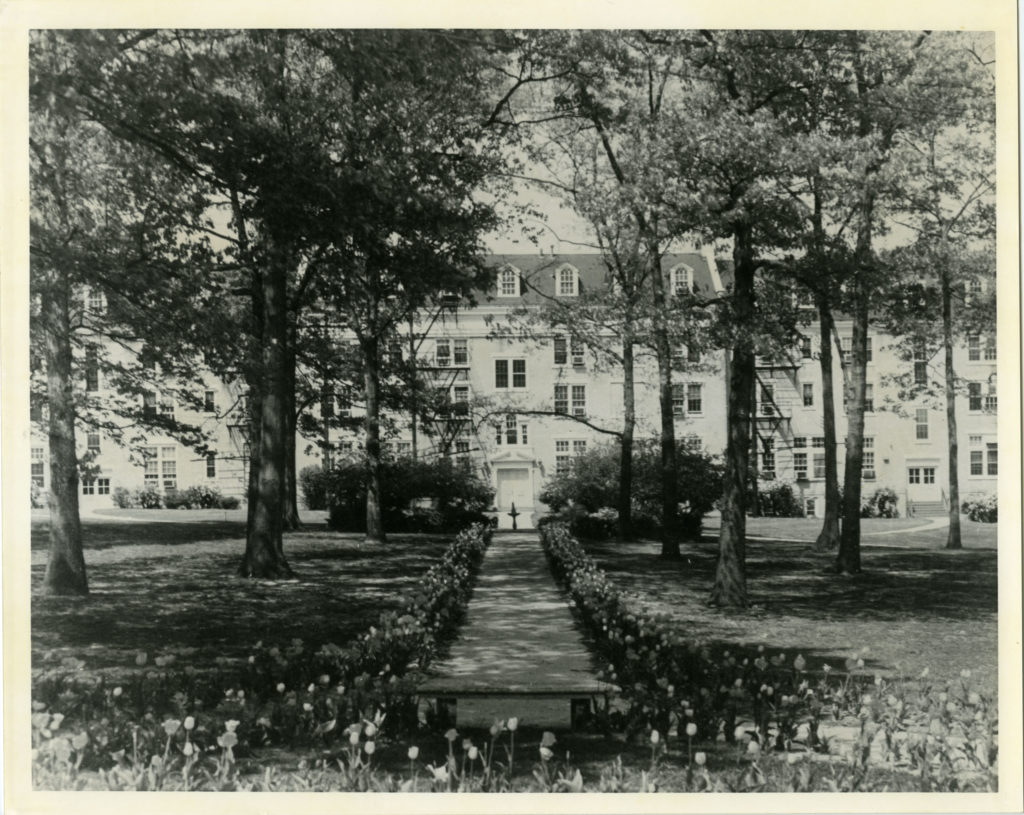
Exterior of Arlington Hall girls school, ca. 1940. From the late 1927 to 1942, Arlington Hall was a private educational institution in Arlington, Virginia. It was a Junior College as well as a four-year boarding high school. In 1930, the school was known for its thorough instruction, recreational features and manicured landscaping. The main building housed administrative offices, classrooms, and a dormitory. It quickly became a beloved and well-known accredited institution for upper-class women around the country.
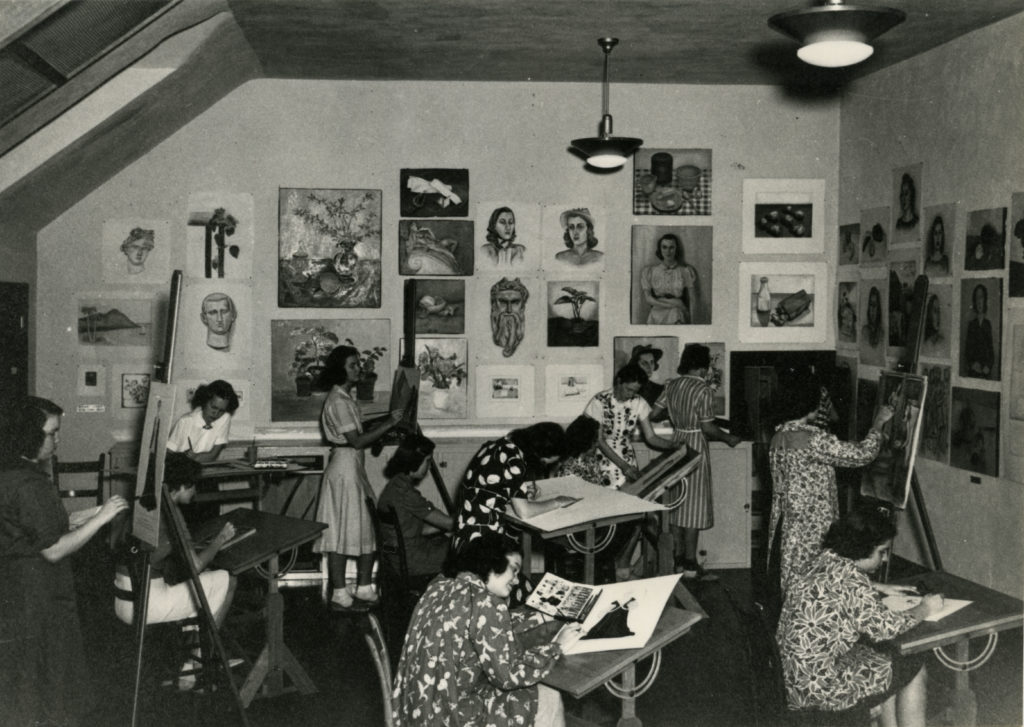
Arlington Hall girls school art class, ca. 1940. Arlington Hall sought to provide its students’ with social graces as well as with physical and intellectual development. By 1935 the college offered courses in music, art, and drama, plus training in home economics, secretarial skills, and physical education. It had both indoor and outdoor riding arenas and a noted equestrian club.
Letter to Arlington Hall Girls School alumnae from Virginia Hamilton on the school being requisitioned by the US Army, 6/15/1942. From Arlington Hall: Monument to Intelligence – Periscope Spring 1987 – and Social Graces and Espionage – April 2011 – Virginia Living Magazine – “The Army discovered the great property that was Arlington Hall and decided they could not let it slip through their fingers. The Army “invoked the War Powers Act and seized the acreage, paying the trustees of Arlington Hall $650,000, a sum that barely covered the mortgage.” Once it was commandeered in June 1942, Arlington Hall became known as Arlington Hall Station. Although this was an Army instillation, civilians outnumbered military personnel. Less than a year after becoming “Arlington Hall Station,” over 2,300 civilians worked on the compound while the Army only had fewer than 800 military employees.

From 1927 to 1942, Arlington Hall was an all-female Junior College with a four-year high school department.  It was a boarding school for high school and junior college students and was a “fully accredited school.”

The college offered courses in music, art, and drama, plus training in home economics, secretarial skills, and physical education.

In June 1942, the US Government took over Arlington Hall as their new location for military intelligence and cryptanalysis work.

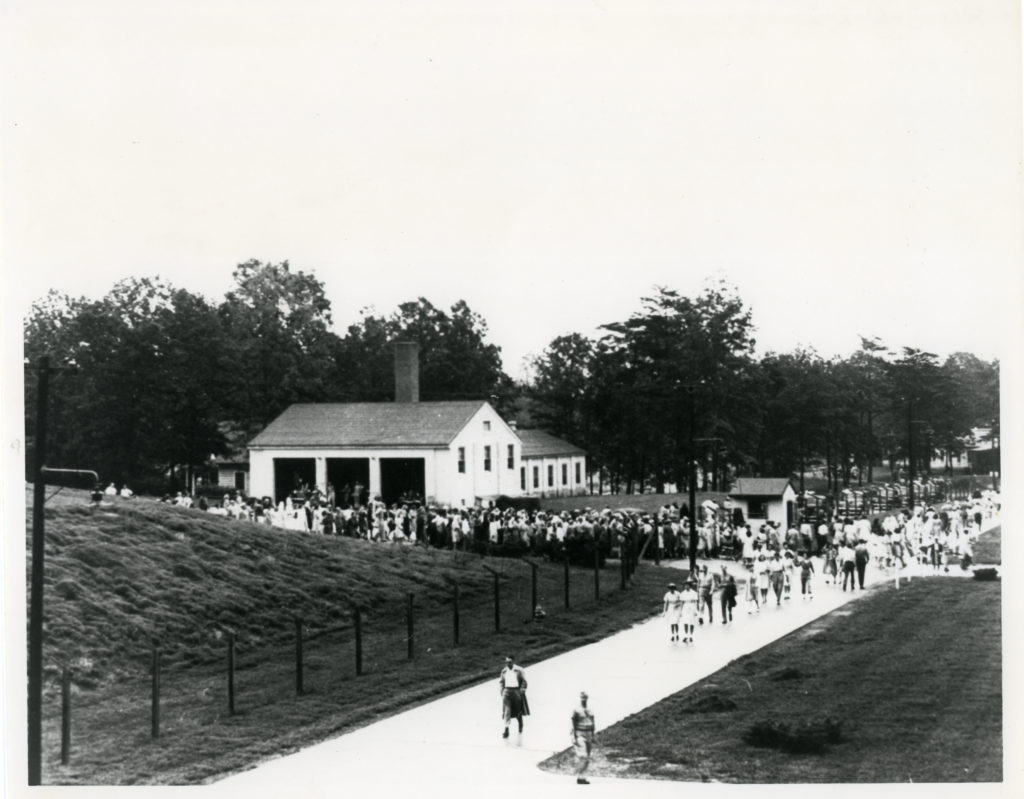
Workers arriving to Arlington Hall Station, 1940s. Historic American Buildings Survey – Arlington Hall: Photographs Written Historical and Descriptive Data – “In January 1944, a directive ordered an increase in the size of the Arlington Hall Station staff. An additional 700 enlisted women, 200 officers, and 2, 275 civilian employees were assigned to the facility. In anticipation of this increase, plans were prepared for the construction of thirteen centrally-heated, mobilization-type barracks, a fourteen-bed dispensary, a 620-seat auditorium and theater, a troop administration building, a new motor repair shop, a new mess hall, a new post exchange building, a new Post engineer office and shop, a recreation building, a 9,000 square-foot warehouse, and additional cafeteria facilities. No new office space was required since most of the new personnel were to be assigned to graveyard or swing shifts.”
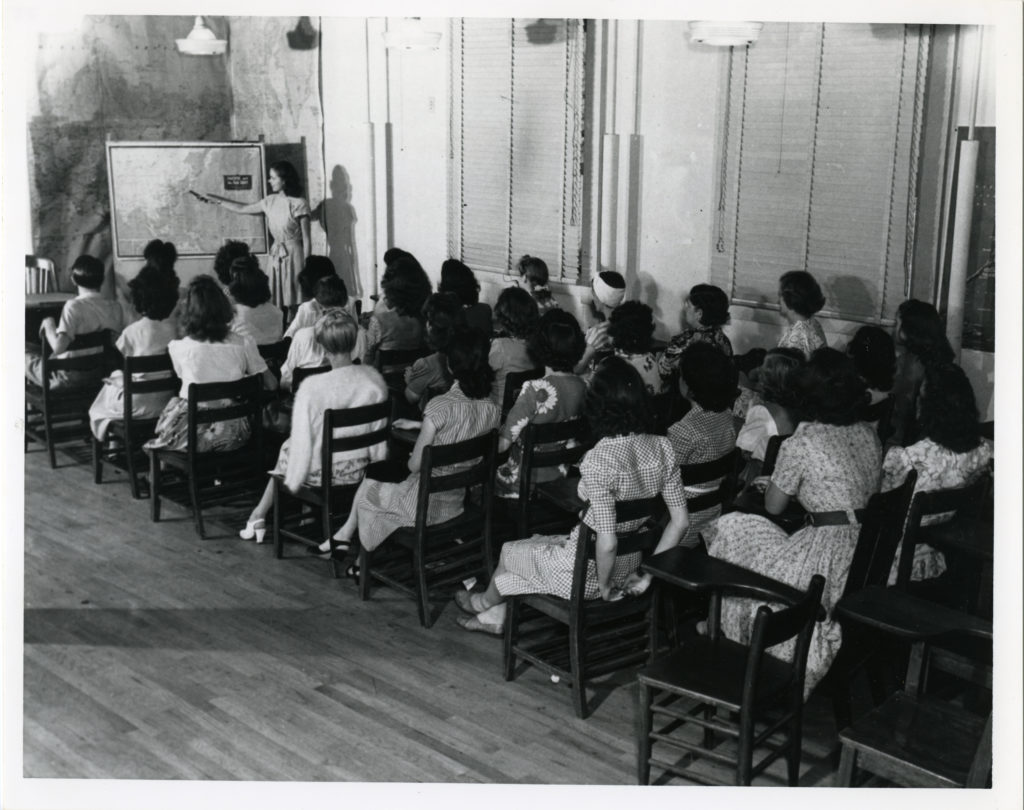
Women in classroom, Arlington Hall Station, 1940s. Pg. 20 in “The Secrets of Arlington Hall” by Ernest Goldstein –“Anonymous thousands of young women, who were recruited from the hills and small towns of the South, made a major contribution to the success of Arlington Hall, without either the satisfaction of fully understanding what they were doing or of receiving recognition.”
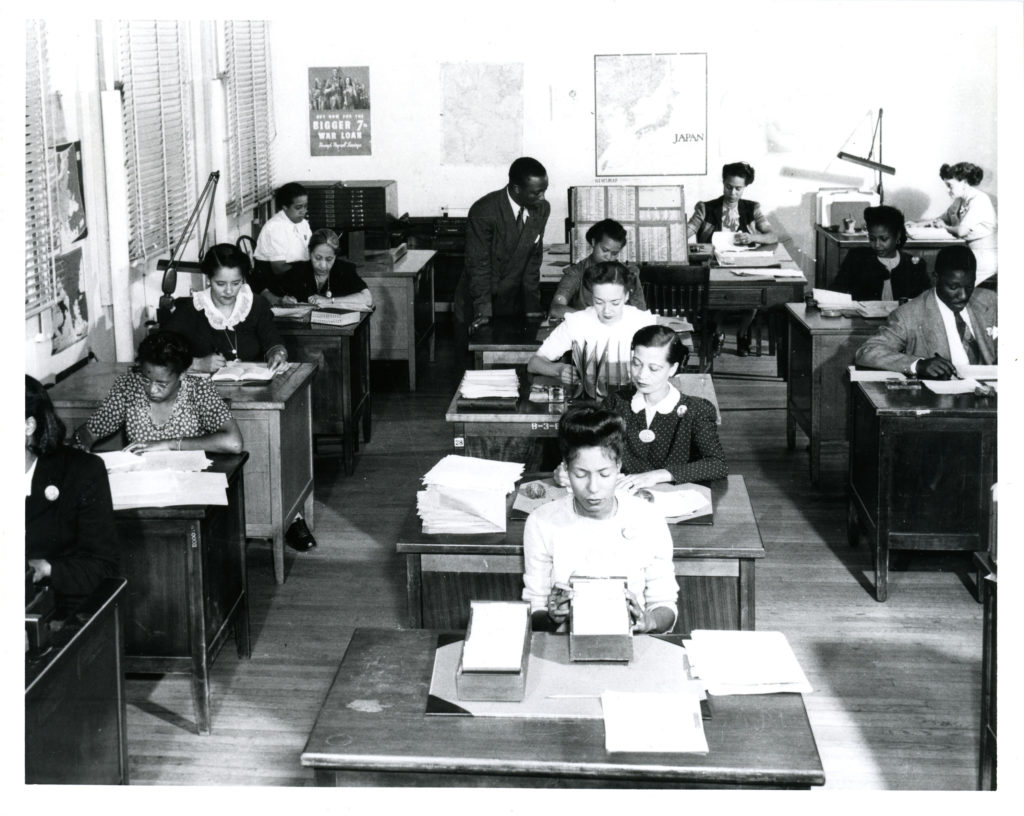
African American Code Breakers. Code Girls – The Untold Story of the American Women Code Breakers of World War II by Liza Mundy – Pg. 208 – “There was also a special code-breaking unit whose existence was unknown to many of the white workers. The African American unit monitored the enciphered communications of companies and banks to see what was being transmitted in the global private sector and who was doing business with Hitler and Mitsubishi.”

Arlington Hall Station, as it was known during the military’s occupation, became a central hub for the WACs – Women’s Army Corps– and over 1,000 women worked and thrived during wartime America at the complex.  Many of these women became “Code Girls” – cryptanalysts responsible for the decoding and deciphering of the Japanese Imperial/Diplomatic code, known as “Purple.”

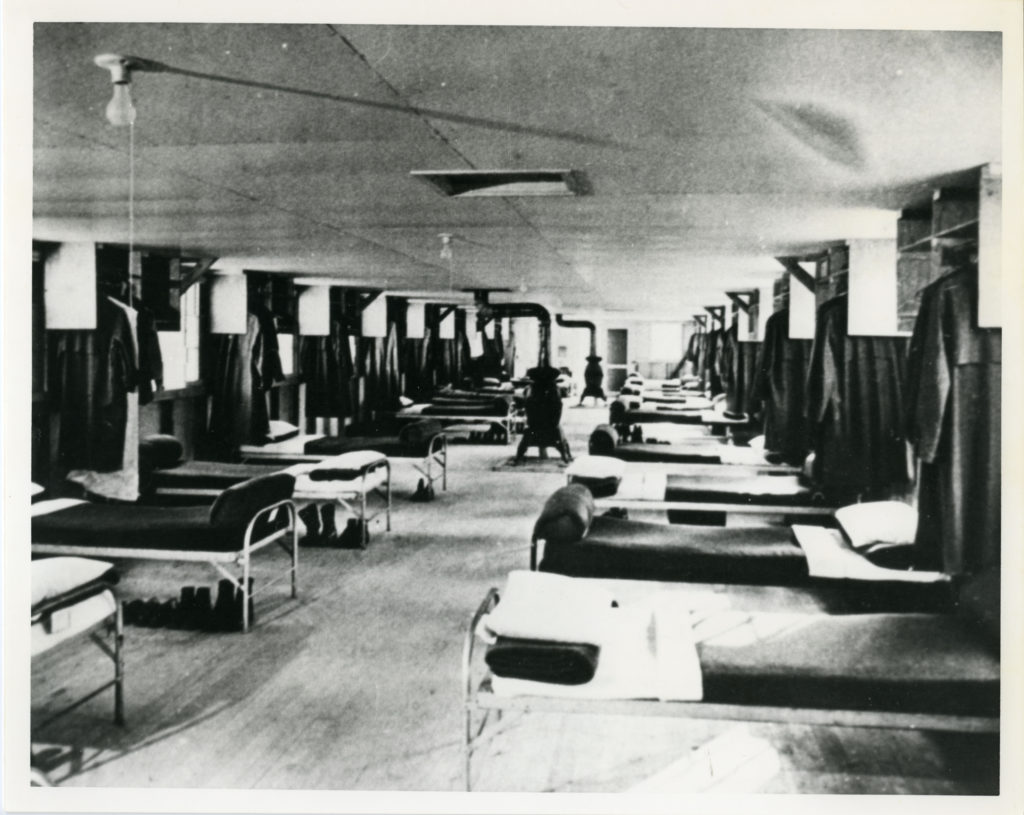
Arlington Hall Station barracks, 1940s. Breaking Codes Breaking Barriers – Pg. 16 – “By the end of December 1943, the WAC detachment of the 2d SSB at the Hall stood at about 225. The enlisted women were initially housed in one-story enlisted men’s barracks. Ann Brown was assigned to Arlington Hall in the early years: “We were assigned 20 to a room. We had pot-bellied stoves at either end we had to tend. The new barracks were built of concrete block which held the summer heat. Many women, especially those living on the second floor, pulled their mattresses outdoors to sleep, returning them back inside each morning.”
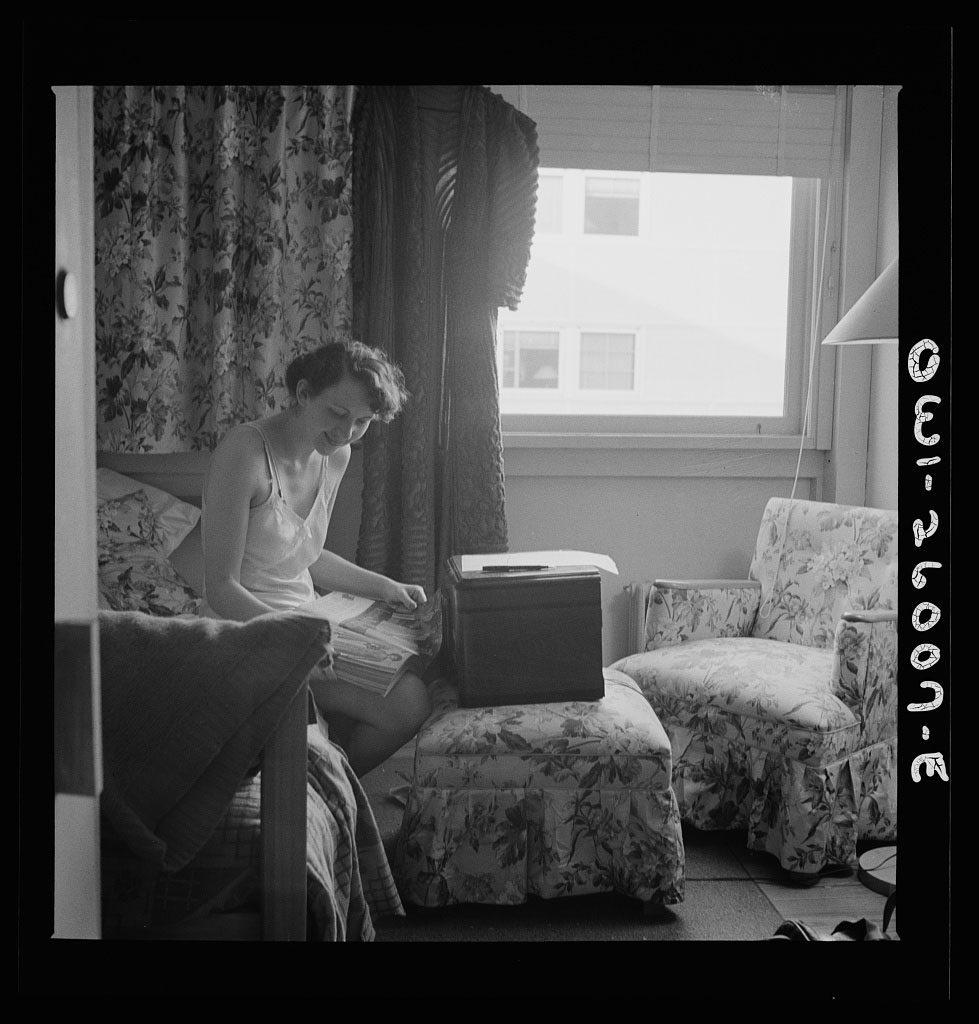
Arlington Farm Dorm Life, image from the Library of Congress. Code Girls – The Untold Story of the American Women Code Breakers of World War II by Liza Mundy – Pg. 47 – “At Arlington Farms, women could take meals in the cafeteria and send their clothes to be laundered or dry-cleaned. Maids cleaned their rooms weekly. There were pianos and snack bars, and little cubbyholes meant to resemble the “dating booths” of American drugstores. Each dormitory was named after an American state.”

After WWII had ended, the National Security Agency called Arlington Hall Station home for a few years, and until the late 80s, several intelligence think-tanks and divisions remained at Arlington Hall.  Today, in 2017, Arlington Hall remains a federal instillation and a training center.

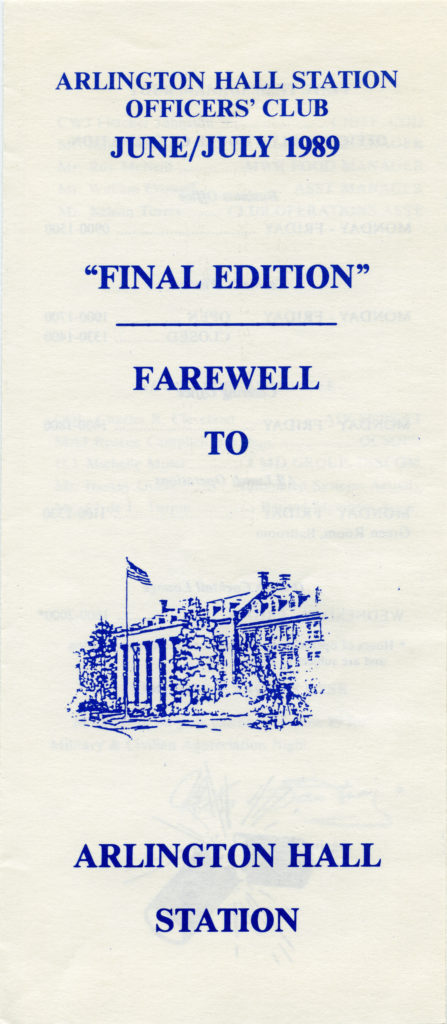
Brochure with activities at the Arlington Hall Station Officers Club for June and July, 1989, including farewells to Arlington Hall Station. Social Graces and Espionage – April 2011 – Virginia Living Magazine – “By V-J Day, AH Station had become massive employing 5,700 civilians, more than 1,000 military officers and men, and 1,000 WACs (Women’s Army Corps.) When “peace” was reached the employees and civilians declined, and within months of the war’s end, only 35 WACs remained.”
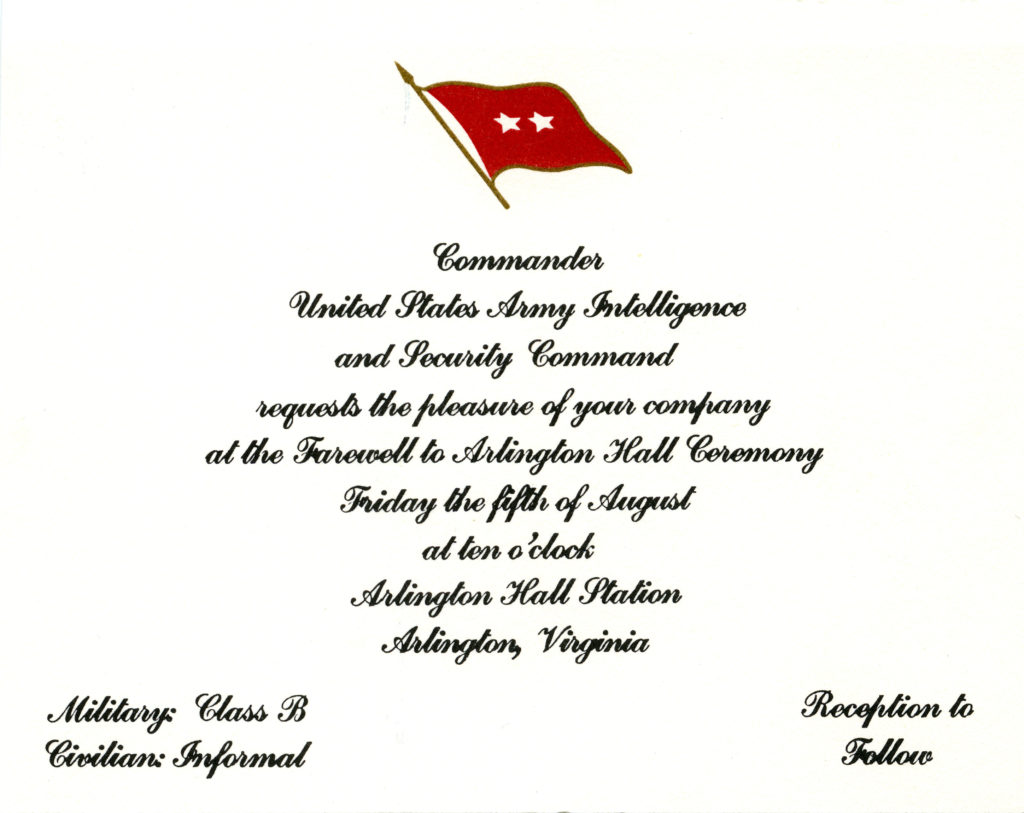
Invitation to Farewell to Arlington Hall ceremony, 8/5/1988. Historic American Buildings Survey – Arlington Hall: Photographs Written Historical and Descriptive Data – Pg. 1 – “Arlington Hall Station was the headquarters for the United States Army Intelligence activities from 1942-1989. In the early stages of the war, it became the hub for Signal Intelligence Service (SIS) which were responsible for “cryptanalysis of intercepted enemy messages, development of codes and ciphers for the Army, and production of Army cipher machines.” The codebreakers of Arlington Hall Station “provided crucial intelligence information that broke the Japanese military and diplomatic cipher coded systems. Arlington Hall Station remains more than a military post. It is a reminder if the more gentle days of Arlington Hall Junior College for Girls and a memorial to outstanding intelligence successes of WWII. It has become inseparably linked with the history and heritage of Military Intelligence.”

To learn more about Arlington Hall – and all things Arlington, please come visit the Center for Local History at the Arlington Central Library.

For more information regarding the materials and collections available for research, please contact the Center for Local History at 703-228-5966.

October 24, 2017 by Web Editor

Hispanic Heritage Month: An Interview with Vanessa Cárdenas

Post Published: October 13, 2017

Arlington Voices: The Oral History Collection

The Center for Local History hosts a diverse collection of Oral History interviews with Latino and Hispanic narrators, covering the cultural, economic, and political aspects of life in and before Arlington.

While Latino and Hispanic people have been a part of this region’s history since long before 1950, the population boom of the mid and late twentieth century in Arlington included a dramatic growth in these groups as well.

In this interview, Vanessa Cárdenas shares her memories of her time at Washington-Liberty High School (formerly Washington-Lee), the importance of the Latin American Student Association in her life, and her service to her fellow students. Hispanic Heritage Month first became an annual time of celebration recognized at the national level in 1988 (you can read more about the month-long observance on the County website). 


Interviewer: Ingrid Kauffman
Narrator: Vanessa Cárdenas
Interview Date: November 18, 1999

Transcript:

VC: In the 10th grade we were lucky that the National Association of Hispanic Journalists came to Washington-Lee looking for a partnership. They wanted to mentor and partner with a group of Latino students. I was very lucky to be there at that time. Washington-Lee accepted, and they were trying to form a group of students. Initially it was just going to be a mentoring sort of program. But then it developed into the students forming an association, and that's how the Latin American Students Association was born back in 1989. That was really the beginning I think of one of the most respected student organizations in Arlington and the longest to be here.
LASA's objective was to portray a positive image of the Latino students. That was very important for us. We were not just a cultural organization that did dances and food. We wanted to provide a positive image of Latinos.
IK: So what did you do in connection with the journalists' organization?
VC: Basically what they did, they came once a month, they brought a speaker, usually a professional in journalism, sometimes different fields. They would speak to us about careers. They were very supportive in the first two years, and I think that was crucial because that was when the organization started.
But the other thing that they gave us was for the first time to see a Latina, a Latino, who were in different positions, who were professionals. Although from back home I knew there were professionals, people who made it. But all of that tends to go away. Unconsciously, I think, you just start taking that in. So that's one thing that made a difference in my life.
We also contributed a lot to the school. I think that Washington-Lee changed a lot from the time I started to the year I graduated. I think it was because of LASA, the role it was playing, because it was pushing for things. I remember when I got there, 9th, 10th grade, even 11th grade, in the yearbook you hardly saw pictures of Latinos.
IK: Why is this?
VC: Just because most of the yearbook staff, the people, the kids were white or minorities that were really integrated.
IK: So the informal shots were not of Latinos.
VC: Yes. Everybody had the picture, but when you go to a game or something, you didn't see -- not just Latinos, but kids from the HILT program. It was like we didn't exist. By the time I graduated, the yearbook staff was going to the HILT classes to explain to them what the yearbook was. So I think it really made a difference. The other way it did, another of our objectives was to have more Latinos students getting involved in the different clubs and sports. We took some of the Latinos that were already on teams like track team, soccer team, because even in soccer there weren't very many Latinos on the soccer team back then. We'd pair them up, and that increased the number of kids who were into sports.
IK: What do you mean?
VC: For example, we would call Gustavo, he was in the mainstream program. He came in to LASA, we would ask him if he would be willing to take one or two students who might be interested in being on the track team. And he did, and he took them with him--he spoke Spanish. He'd guide them, little things like that. Even to try out for a club is very intimidating. That's how LASA changed Washington-Lee for the better. And I think as a result of LASA, the Hispanic Parents Association was formed. One of the objectives that our sponsors had was to also get a group of parents involved. Most of our parents were involved in the Hispanic Parents Association as well. It was almost like the students' association. It was really a good time to be at Washington-Lee, I think.

You can read Vanessa Cárdenas’ interview in its entirety in the Center for Local History - VA 975.5295 A7243oh ser.3 no.153.


The goal of the Arlington Voices project is to showcase the Center for Local History’s oral history collection in a publicly accessible and shareable way.

From June 2017 – May 2018, we will post one oral history clip and transcript each month, focusing on Arlington’s history, culture and identity.

What is the oral history collection?

Oral history is a popular method of research used for understanding historical events, actors, and movements from the point of view of people’s personal experiences.

The Arlington Public Library began collecting oral histories of long-time residents in the 1970s, and since then the scope of the collection has expanded to capture the diverse voices of Arlington’s community. In 2016, staff members and volunteers recorded many additional hours of interviews, building the collection to 575 catalogued oral histories.

To browse our list of narrators indexed by interview subject, check out our community archive. To read a full transcript of an interview, visit the Center for Local History located at Central Library.
October 13, 2017 by Web Editor

Remembering September 11: An Oral History Collection

Post Published: September 6, 2017

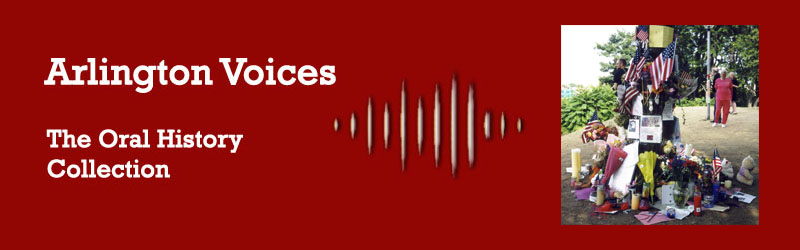
Paper cut sound waveform sign with shadow , and photo of September 11 memorial

In 2006, on the 5th anniversary of the 2001 terrorist attacks, the Center for Local History conducted a series of interviews with first responders and Arlingtonians about their experiences on Sept. 11, 2001, and the days that followed.

The three narrators who you’ll hear from in these clips – Gabriella Day-Dominiguez, Elizabeth Davis, and firefighter Dale Varnau – experienced the same events that day, and yet had uniquely personal responses to the tragedy shaped by their identities and roles within the community.

Transcripts:
NARRATOR: Elizabeth Davis
INTERVIEWER: Diane Gates
DATE: August 2, 2006

ED: Our neighborhood is very friendly people but nobody ever seems to talk to anybody else. But on that day everybody was outside of their house. So I was talking to my neighbors and they didn’t know anything and they were asking me and I didn’t know anything. So we ended up having a kind of a barbecue. Nobody really wanted to be alone. Everybody pulled a little bit of something out of their refrigerator and just gathered together.
DG: It was just impromptu
ED: Totally impromptu.
DG: When your neighbors had the cookout or got together to eat did people seem just quiet and somber. Was anyone crying? Were there people there who knew or wondered if they had a friend that was—
ED: There were a lot of people who knew somebody. I don’t think I knew anybody who knew anybody who had been hurt but there a lot of people who worked in the Pentagon or knew somebody who worked in the Pentagon. Even more than that there were people who knew somebody in New York. And at that point of course we didn’t know what was going on. You had no idea of head count. And the phones were so busy it was very hard to get through to people. So there was a lot of “I don’t know if this person is okay” going on.
But the one thing I noticed for the next, might have been two or three weeks, if you remember they had shut down every single plane everyplace, nothing was flying. So we’d be standing outside and you’d hear a plane go overhead and everybody stopped and everybody sort of cocked their head and just listened and you could tell they were thinking is this us or is this them and that wasn’t just the first day or so, that was two or three weeks.

NARRATOR: Gabriella Daya-Dominiguez
INTERVIEWER: Judy Knudsen
DATE: August 24, 2006

GD-D: My husband in the meantime, what was occurring with him at that moment was he was just entering his office. He was about 200 yards from the building. He saw the plane coming very low overhead. He saw it make a U turn and bank right into his building. At that point he said he knew that this was not an accident, this was an attack and all hell broke loose. The pandemonium in the city was already going on. First with the North Tower. People were just standing there staring. They weren’t really running, they were just watching. But by the second tower hitting people started running frantically.
GD-D: And then another twist of the story is the fact that my father is Arabic. I remember feeling a sense of dread that week. I couldn’t eat at all. I remember food tasted like paper. It was just hard to put something in my mouth and I’m not someone who loses my appetite easily. So it was deeply concerning. I felt that there was going to be an Arab backlash and I was worried about my father, although my father is not Muslim, he’s Christian. But it was an Arab group of terrorists that struck the buildings and I was worried about the perception that the world was going to have about Arabs at that time. I remember being terrified. I remember feeling like I didn’t want to talk to anybody. I was afraid to talk to anybody. I just didn’t know how to explain it.

NARRATOR: Dale Varnau
INTERVIEWER: Judy Knudsen
DATE: December 14, 2009

JK: Right. So after it’s over with, how long did it take you to…. I mean, some people were obviously very freaked out, didn’t recover so well, and I have talked to police and firemen. And some people did—Of course a lot of people internalize things, and you don’t know. I mean, how did you feel, say, afterwards, a few years afterwards? Obviously it still affects you.
DV: Yes. The first I-don’t-know-how-long, I was very angry. I was like, “Let’s go get the people that did this to us! This is America!” I’m very patriotic.
I didn’t notice it bothering me for about a year, but after a year I started, “Hey, I haven’t been sleepin’ that well. I’m startin’ to have nightmares about it, relivin’ it.” So it was pretty close to a year before I started feeling anything physical from it.
DV: And people I’ve talked to—you know, my brother’s a Vietnam vet, and he was like, “Well, I saw a hundred times worse.” “Yeah, well, you were trained for it, I wasn’t!” I was trained to fight fires, you know.
JK: Exactly.
DV: So yes, there was about a year delay for me. I knew other people that the next day had problems. There were a couple of guys that day, that while it was goin’ on, basically they wanted to say, “Okay, I’m done, I’m outta here,” and they wanted to go home right then. But it took about a year for it to really build up in me. I was kind of surprised, I guess this is the first time I’ve really talked about it in depth for a while, that I was starting to crack up a little bit a while ago. But yes, it had a delayed effect for me.

You can explore the entire September 11 oral history collection in the Center for Local History - VA 975.5295 A7243oh ser.5 - or read the transcripts online.

You can also explore our current display of letters, which were sent during the days and weeks after September 11, from children all over the county to Arlington rescue workers.

Photo: Arlington Ridge Rd Overlooking Pentagon – Public Memorial; Source: Photographs of the Arlington Historical Society, PG 230-6928

The goal of the Arlington Voices project is to showcase the Center for Local History’s oral history collection in a publicly accessible and shareable way.

The Arlington Public Library began collecting oral histories of long-time residents in the 1970s, and since then the scope of the collection has expanded to capture the diverse voices of Arlington’s community. In 2016, staff members and volunteers recorded many additional hours of interviews, building the collection to 575 catalogued oral histories.

To browse our list of narrators indexed by interview subject, check out our community archive. To read a full transcript of an interview, visit the Center for Local History located at Central Library.

September 6, 2017 by Web Editor Tagged With: September 11

1930s: Arlington Develops – An Interview with Walter De Groot

Post Published: August 26, 2017

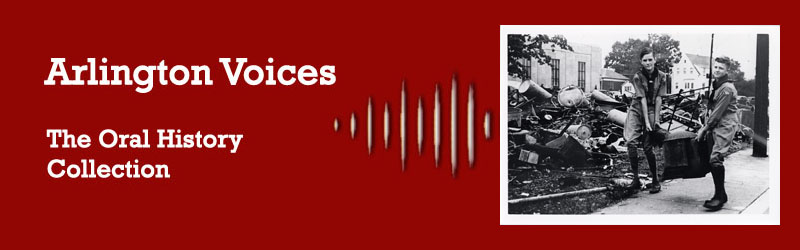
Paper cut sound waveform sign with shadow

The early to mid-20th century was an exceptional period of change and growth for Arlington, and the expansion of the Federal economy from New Deal programs and World War II was one of the largest catalysts.

Over little more than a decade during the 1930s, Arlington began to transform from a country town to a bustling suburb.

Walter De Groot provided our Center with one of the most comprehensive interviews about that time in Arlington’s history, totaling 180 transcribed pages. In this clip, Mr. De Groot remembers not only the technological and infrastructure changes that the war years brought to the area, but also the complicated social implications of war and expansion.

Narrator: Walter De Groot
Interviewer: Sara Collins
Interview Date: June 30, 2004

Transcript:
SC: Were most of the houses in that time, let’s say in the thirties, most of the houses in that neighborhood have outhouses?
WDG: We were probably, as I recall, one of the first houses that had indoor plumbing built into the house. Now that I’m thinking about it we were not on a sewer line, we were on a septic field. But I don’t ever recall any service of it while we were there. And I do not know when they had tied into the road but I’m going to assume it’s probably about the time of World War II because that’s about the time they paved Columbia Pike. That was done with German war prisoners. Columbia Pike, Arlington Boulevard, Lee Highway. All these east-west highways were being covered using war prisoners.
SC: Where did they stay? Where were they housed?
WDG: They came from Arlington Hall.
SC: That’s where they were incarcerated?
WDG: Well, they had some in camps around but I believe they were stationed, held, incarcerated at Arlington Hall area. They had a place over there. In fact, that takes to the story when I was stationed in Germany in ‘54.
We as kids, we used to take things from home like maybe cigarettes or candy or stuff like that and we’d go over to this prison camp. We kids called it the “Cracker Jack Box.” These prisoners in their off time didn’t have anything better to do and they would cut up tobacco cans and tin cans and they’d bend them and twist them and make them like something, like a horse or a bird or a carving. They would carve things. So we never knew if we threw and it was sort of like, “okay it’s your turn.” I’d go over to the fence and one of the prisoners would sort of meander over that way and let’s say I had gotten a few cigarettes. I would throw it over the fence and then he would show up and he’d throw something over the fence. We never knew what we were going to get. So that’s why it was called the “Cracker Jack Box.”
Now when I was in Germany I met a man who it turns out he had been incarcerated there
and he had a young wife. Many of the young German girls spoke English. Why I don’t know other than they got that much of an education as a second language. But I had mentioned to this fellow, I said something and he said, “My wife does not speak English but I do.” And then we got talking about how did you learn to speak such good English and he said, “I was a prisoner in America.”
And I said, “Oh, where?”
He said, “Oh, you wouldn’t know this place. It was a little town called Arlington.”
I said, “Oh my goodness. You came from the Cracker Jack Box.
He said, “You know the town.”
SC: Isn’t that amazing. What a story.

You can find Walter De Groot’s oral history interview in its entirety in the Center for Local History – VA 975.5295 A7243oh ser.3 no.193 – or read it online.

Photo: Boy Scouts Scrap Drive 1940’s; Source: Photographs of the Arlington Historical Society, PG 230-2326


The goal of the Arlington Voices project is to showcase the Center for Local History’s oral history collection in a publicly accessible and shareable way.

From June 2017 – May 2018, we will post one oral history clip and transcript each month, focusing on Arlington’s history, culture and identity.

What is the oral history collection?

Oral history is a popular method of research used for understanding historical events, actors, and movements from the point of view of people’s personal experiences.

The Arlington Public Library began collecting oral histories of long-time residents in the 1970s, and since then the scope of the collection has expanded to capture the diverse voices of Arlington’s community. In 2016, staff members and volunteers recorded many additional hours of interviews, building the collection to 575 catalogued oral histories.

To browse our list of narrators indexed by interview subject, check out our community archive. To read a full transcript of an interview, visit the Center for Local History located at Central Library.
August 26, 2017 by Web Editor

Uncovering Your Roots

Post Published: July 31, 2017

Picture a Family Reunion…

Family members engage with distant relatives seen only once a year, sharing stories of childhood memories.

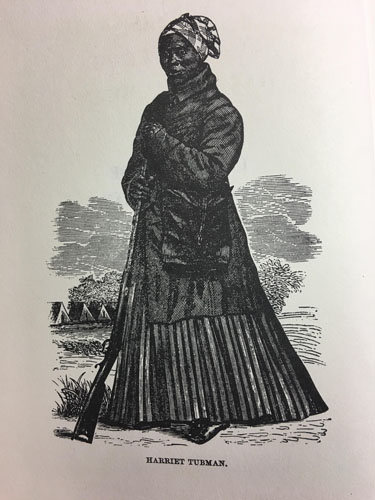
Now, imagine one of those stories leads to an astonishing and life-changing discovery: you’re descended from celebrated abolitionist Harriet Tubman.

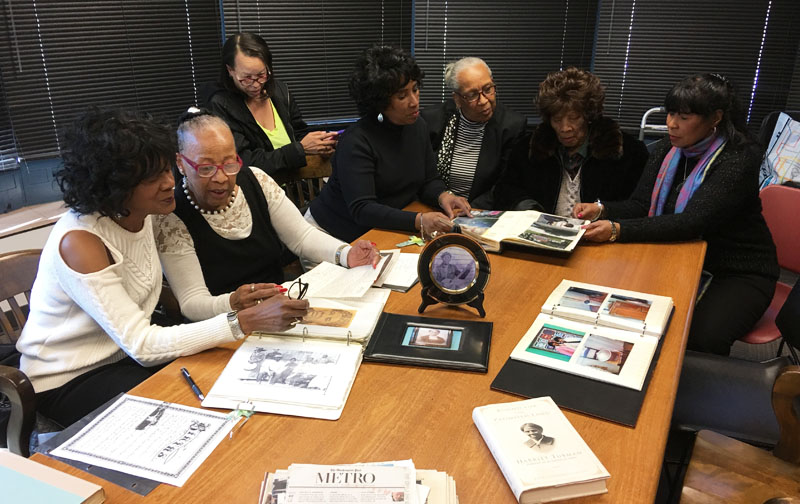
Members of the Ross family sitting around a table examining artifacts from the archive

The Ross family, from left to right: Denise Winfield; Dorothy Jackson; Tina Jackson-Moore; Stephanie Ross Curry; Maryann Ross-Settles; Lula Juanita Ross-Levesque; Audrey Dillard.

In 2011, the Ross family was bewildered when they uncovered just this at their family reunion.

Audrey Dillard (Ross), descended from Harriet Tubman, was in utter disbelief when she found her heritage paired with Tubman’s.

“I remember being at the family reunion and seeing all these binders with information about Harriet Tubman. So, I ask my cousin, “Why on earth is all that information here?” And she said, “You really don’t know do you.” And when I found out, I was in shock!”


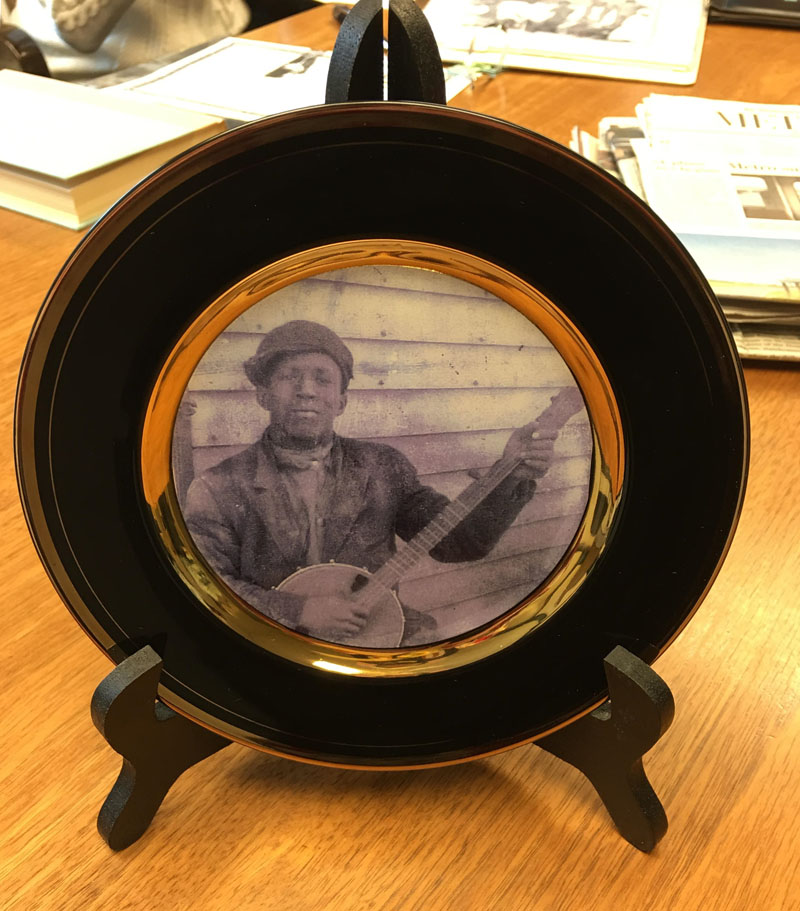
Black and White plate imag eof Granderson "Grady" Ross

Granderson “Grady” Ross

Tubman was born in Maryland circa 1822, so to find that a large majority of her relatives still called this area home was an exciting discovery for the Ross family. Through genealogical research and family recollections and conversations, it was uncovered that Dillard’s grandfather, Granderson “Grady” Ross, was in fact Harriet Tubman’s father, Ben Ross’s nephew. That meant that the Ross family of Northern Virginia and Maryland were in fact direct descendants of Harriet Tubman.

When the realization sank in, Dillard, and her extended family, including her mother, Juanita Ross-Levesque (Granderson Ross’ daughter), who is Tubman’s “second blood cousin on the paternal side,” and likely the closest living relative to Harriet Tubman today, decided that they wanted to follow in Harriet’s footsteps. Therefore, in June of 2011, Harriet’s modern-day relatives took the same journey along the underground railroad, that she so courageously traversed over 165 years ago.

Tubman was a “conductor” on the Underground Railroad for approximately nine years, and during that time she guided countless slaves to freedom. Tubman is revered as one of America’s most historically significant persons. She fought for human rights and freedoms for the duration of her life. Despite the risks and bounty for her capture, she continuously returned to the south via the Underground Railroad to assist with the freeing and relocation of slaves, and continued with her mission to serve and help others until her final days.

During their journey along the Underground Railroad, the Ross family physically and emotionally connected with Tubman and her plight. They fully comprehended the sheer will, strength, fearlessness, and determination that Tubman, and other travelers along the route, possessed. “It was truly a life changing journey,” stated Dillard.

As they continue to delve into their family history and uncover a deeper connection to Tubman, the Ross family hopes to find new relatives and “family members just like us,” who will continue to celebrate, share, and keep the legacy of Harriet Tubman alive and thriving.


To do your own genealogical research or to learn more about Arlington and Northern Virginia’s history, please visit the Center for Local History at Central Library. You can also contact us by email or by calling 703-228-5966.


July 31, 2017 by Web Editor

Arlington Beach, 1927: an Arlington Voices Oral History Interview

Post Published: July 17, 2017

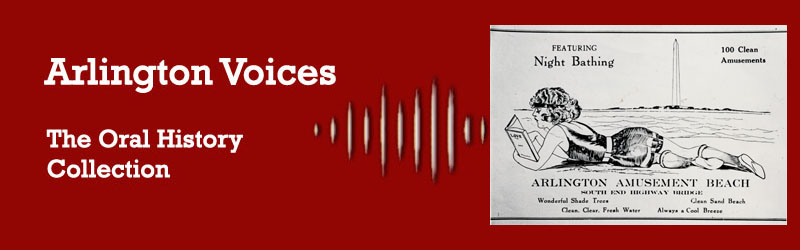
Ruth Jones, born in March of 1913, began to visit Arlington Beach around 1927. The amusement park and beach were popular among area residents in the 1920s.

Arlington Beach occupied space around what was then known as the Long Bridge, and later became the Fourteenth St Bridge complex, from 1923 to 1929. The Washington Airport Corporation eventually bought the land for additional landing space, which then gave away to Pentagon construction.

In this soundcloud audio clip, Mrs. Jones recalls her teenage years spent at the beach with her friends and future husband.

You can find Ruth Jones’ interview in its entirety in the Center for Local History – VA 975.5295 A7243oh ser.3 no.71. For information about Arlington Beach, read the Center for Local History’s post, “A Day at the Beach.”

Photo: Arlington Beach Advertisement 1920; Source: Photographs of the Arlington Historical Society, PG 230-3447


The goal of the Arlington Voices project is to showcase the Center for Local History’s oral history collection in a publicly accessible and shareable way.

From June 2017 – May 2018, we will post one oral history clip and transcript each month, focusing on Arlington’s history, culture and identity.

What is the oral history collection?

Oral history is a popular method of research used for understanding historical events, actors, and movements from the point of view of people’s personal experiences.

The Arlington Public Library began collecting oral histories of long-time residents in the 1970s, and since then the scope of the collection has expanded to capture the diverse voices of Arlington’s community. In 2016, staff members and volunteers recorded many additional hours of interviews, building the collection to 575 catalogued oral histories.

To browse our list of narrators indexed by interview subject, check out our community archive. To read a full transcript of an interview, visit the Center for Local History located at Central Library.
 

July 17, 2017 by Web Editor

Oral History: An Interview with Ruth Jones

Post Published: July 16, 2017

Ruth Jones, born in March of 1913, began to visit Arlington Beach around 1927. The amusement park and beach were popular among area residents in the 1920s.

Arlington Beach occupied space around what was then known as the Long Bridge, and later became the Fourteenth St Bridge complex, from 1923 to 1929. The Washington Airport Corporation eventually bought the land for additional landing space, which then gave away to Pentagon construction.

In this audio clip, Mrs. Jones recalls her teenage years spent at the beach with her friends and future husband.

Narrator: Ruth Jones
Interviewer: Ingrid Kauffman
Interview Date: March 23, 1999

Transcript:

IK: And so can you tell us about Arlington Beach?
RJ: Well, I was just a young girl, 14 or 15 years old and I met my husband, well, he eventually was my husband.
IK: What was his name?
RJ: Raymond Jones. And he lived in Washington. And we started going to Glen Echo and to Arlington Beach and just having a good time for kids, you know. And so they had a roller coaster, a carousel –
IK: How much did that roller coaster cost?
RJ: Ten cents. A ride at your own risk. That’s the truth, too. It was rickety. After I came to Washington, it was only there for 2 years, 2 or 3 years, then they tore it down.
IK: They tore down the roller coaster?
RJ: Everything. And shut the beach down and all, to put the airport there.
IK: Oh, I see, yes. But tell us about everything you can remember there. You say there was a carousel?
RJ: Yes. And like I said, the roller coaster. And all the places you could go play games –
IK: Like what?
RJ: — along the beach. Like throwing darts to win a bunny or whatever they had, you know. Those kinds of things. And eating places, hot dog stands and things like that. And the dance pavilion was wonderful. It was a big, round pavilion, good music, you know, big band music in those days, big band.
IK: Do you remember any of the bands?
RJ: No, I can’t remember the bands.
IK: But it was live bands, huh?
RJ: Yes. We had a good time dancing. And the beach was great in those days.
IK: So, and then, tell us, you say they tore it down. What do you remember about that?
RJ: All I remember is they tore it down. They said they were closing it to put the airport in. And then they put the airport there. And then it wasn’t very long, even, before they tore that down. And my husband and them used to go to – my husband and daughter’s father-in-law – used to go to where the Pentagon is now. It was all woods, weeds and all. And they used to go there and pick elderberries and wild grapes and made the best wine you ever tasted. It was during Prohibition! But it was good wine.
IK: And you don’t remember any shacks or anything that –
RJ: No, but they built shacks down there. Yes they did. And we had neighbors that lived in Annandale after I moved to Annandale, they lived across the street from me, and they had lived down on the water like that. They were shacks.
IK: Oh, they lived on the water. RJ: They did. And they lived there free. It was federal government, see, they didn’t – but they finally told them to get out, they were putting the Pentagon in. So I’m telling the story lovely, aren’t I?

You can find Ruth Jones’ interview in its entirety in the Center for Local History – VA 975.5295 A7243oh ser.3 no.71. For information about Arlington Beach, read the Center for Local History’s post, “A Day at the Beach.”

Photo: Arlington Beach Advertisement 1920; Source: Photographs of the Arlington Historical Society, PG 230-3447


The goal of the Arlington Voices project is to showcase the Center for Local History’s oral history collection in a publicly accessible and shareable way.

From June 2017 – May 2018, we will post one oral history clip and transcript each month, focusing on Arlington’s history, culture and identity.

What is the oral history collection?

Oral history is a popular method of research used for understanding historical events, actors, and movements from the point of view of people’s personal experiences.

The Arlington Public Library began collecting oral histories of long-time residents in the 1970s, and since then the scope of the collection has expanded to capture the diverse voices of Arlington’s community. In 2016, staff members and volunteers recorded many additional hours of interviews, building the collection to 575 catalogued oral histories.

To browse our list of narrators indexed by interview subject, check out our community archive. To read a full transcript of an interview, visit the Center for Local History located at Central Library.
July 16, 2017 by Web Editor Tagged With: Oral History

  • « Go to Previous Page
  • Page 1
  • Interim pages omitted …
  • Page 20
  • Page 21
  • Page 22
  • Page 23
  • Page 24
  • Interim pages omitted …
  • Page 36
  • Go to Next Page »

Primary Sidebar

News

Support library programs and collections and shop for amazing deals at the biannual FOAL book sale at Central Library.

2026 Fall Book Sale

October 22-25, score rare finds and amazing deals … ... about 2026 Fall Book Sale

Read More News
See More Service Updates

Center for Local History

Large banner that reads, “Let there Be Peace on Earth” displayed near the Pentagon following the 9/11 terrorist attacks. Photo credit Diane Kresh. Charlie Clark Center for Local History, 133-01-02-01-130

Resilience and Community

September 11, 2001 "When terrorists slammed into … ... about Resilience and Community

Read More Local History

Director’s Blog

An American flag is draped over a portion of the Pentagon near where the structure was hit by a plane during the 9/11 attack. Photo credit Diane Kresh. Charlie Clark center for Local History, 133-01-02-01-107

On the 25th Anniversary of September 11

"Never Forget." When I hear that phrase today, … ... about On the 25th Anniversary of September 11

More Director's Blog

Footer

About Us

  • Mission & Vision
  • Charlie Clark Center for Local History
  • News Room
  • Get Email Updates

Administration

  • Policies
  • Library Staff
  • Job Opportunities
  • Propose a Program or Partnership

Support Your Library

  • Friends of the Library
  • Giving Opportunities
  • Donating Materials
  • Volunteer Opportunities

Our Mission

We champion the power of stories, information and ideas.

We create space for culture and connection.

We embrace inclusion and diverse points of view.


Download the Library App

Download the Library App

Arlington County | Terms & Conditions | Accessibility | Site Map
· Copyright © 2026 Arlington County Government ·