• Skip to primary navigation
  • Skip to main content
  • Skip to primary sidebar
  • Skip to footer

Alert

Holiday: All library locations closed Fri., June 19, for Juneteenth. More Info

Alert

Update: Elevator outages, maintenance and upgrades at Central Library More Info

Alert

Storytimes Will “Take a Nap” through June 20 More Info

Home - Arlington County Virginia - Logo
MENUMENU
  • Join Now
  • My Account
    • Login
    • My Checkouts
    • My Holds
    • My Lists
    • My Reading History
    • About Borrowing
    • About Holds
    • About My Account
  • Hours & Locations
    • All Hours & Locations
    • Holiday Closings
  • News
    • Library News
    • Director's Blog
    • Get Email Updates
  • Contact Us

Arlington Public Library

MENUMENU
  • Search
  • Collections
  • Library Services
  • Events
  • Community Engagement
  • Join Now
  • My Account
    • Login
    • About Borrowing
    • About Holds
    • About My Account
  • Hours & Locations
    • All Hours & Locations
    • Holiday Closings
  • News
    • Library Blog
    • Get Email Updates
  • Contact Us

News

Serving Arlington During the COVID-19 Pandemic

Post Published: April 20, 2020

National Library Week: April 19-25, 2020

Three months ago, we could not have guessed at the nationwide changes now affecting the way we live and work.

Today, the long-term effects of this global pandemic on our community can only be imagined. Libraries, parks and schools are closed, restaurants have shut down and many of us are stuck at home or caring for loved ones.

Yet this crisis has also shown our strength. Arlington residents, community organizations, and County departments have joined forces in an outpouring of love, care and dedication to tackle the issues that result from these challenging times.

At Arlington Public Library, our dedicated staff are no different.

This week we join libraries around the country for National Library Week, to celebrate the many ways in which libraries and librarians strengthen our communities — with commitment, heart, and goodwill.

Here are just a few of the many ways in which Library staff are responding to Arlington’s evolving needs:

  • Coordinating a new community partnership to ensure no one in Arlington goes hungry.
  • Helping to create Personal Protective Equipment for medical professionals.
  • Connecting volunteers with community organizations and needs.
  • Creating new programs that provide creative outlets for the community.

While we all our facing a “new normal” our hope is that all our collaborative efforts will make life a little easier.

Stay safe, stay well, and stay hopeful.

Diane

Scrawled signature of Diane Kresh

Diane Kresh
Director
Arlington Public Library
April 20, 2020 by Web Editor

The Old Bay-Eva Castle of Arlington

Post Published: April 9, 2020

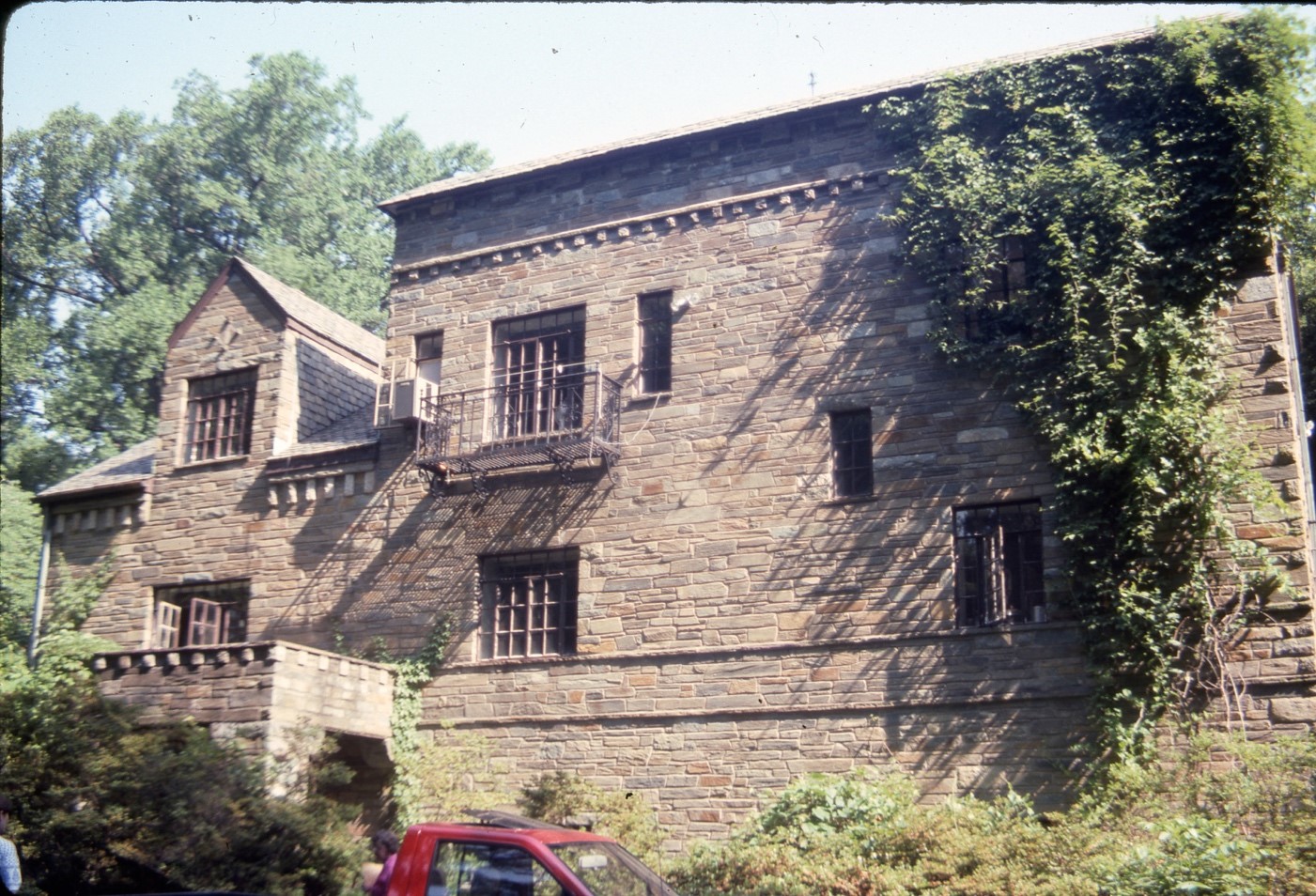
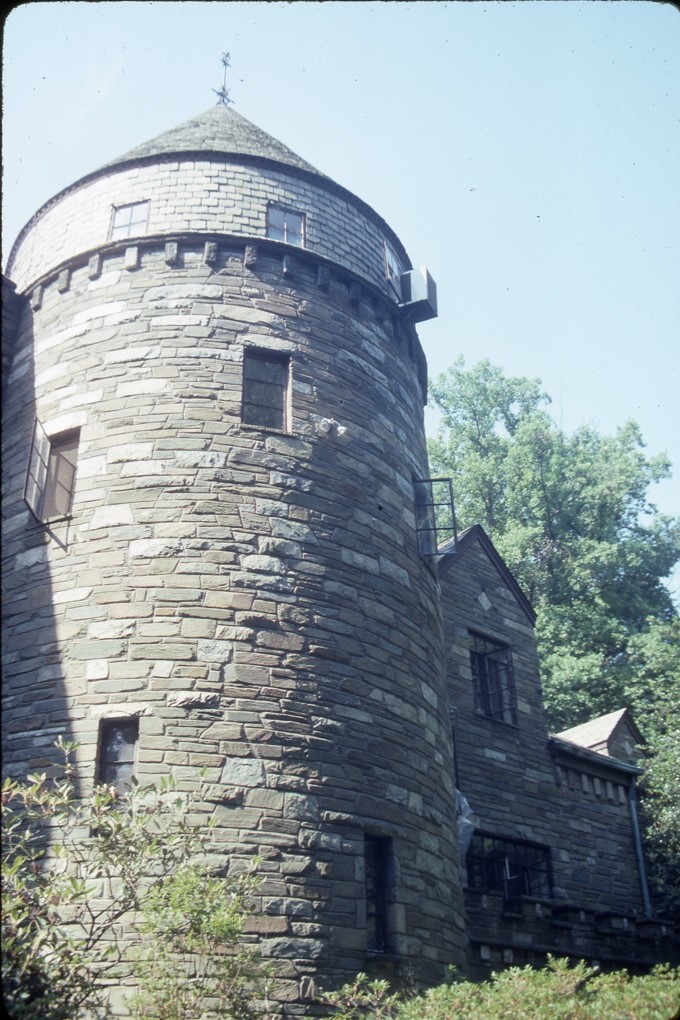
Arlington is home to many examples of interesting architecture, but the Bay-Eva Castle (also known as Jacobs Castle) stands as one of the most dramatic buildings to grace the County’s landscape.

Bayeva Castle 1

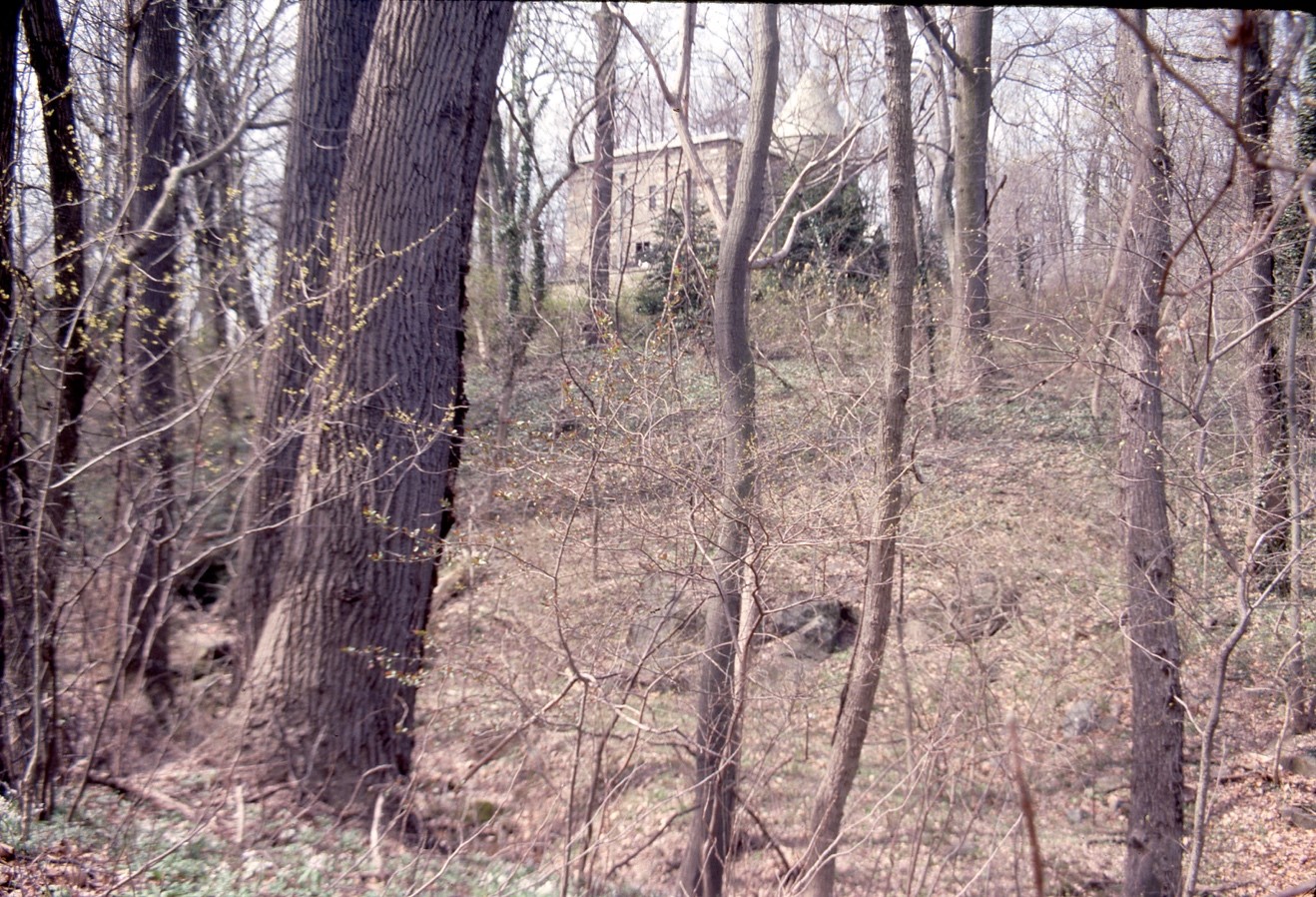
Overlooking the Potomac on a bluff of the Palisades near Rosslyn, in an area near what is now the Fort Bennett Park and Palisades Trail, the 9,200-square-foot fortress became well-known throughout the region.

The building was the home of obstetrician and gynecologist Dr. J. Bay Jacobs and his wife, Eva Harris Jacobs. Dr. Jacobs was a well-known physician and worked at the Georgetown and Arlington Hospitals. The location of the castle, halfway between those two localities, was perfect for the demands of his career and for access to the city. Eva Jacobs was also involved in the Arlington community as President of the Business and Professional Women’s Club and as the author of the historical novel “Feather on the Dart.”

The castle was designed after a trip the couple took to Bavaria in the 1930s, drawing inspiration from the sweeping turrets and stonework found in Bavaria's historic buildings. When the couple returned, they began construction in 1938, with ongoing additions and improvements being added into the 1950s.

The property the castle was built on was part of the former Thomas B. Dawson Estate, 81 acres that also included the Dawson Bailey House (now maintained by the County as part of the Dawson Terrace Community Center). The Jacobs family then bought 4 acres - what was called the “Spring lot” - from Thomas Dawson’s daughter Bessie Dawson in 1936.

Bayeva Castle 3

According to the Historical Marker Database, Mrs. Jacobs drew out the design for the home while sitting outside on a tree stump in the rain, sheltered by an umbrella. The outside of the castle took three months to cover with stone, and in some places, the stone walls were 18 inches thick. It was also constructed with a slate roof, copper gutters, and oak flooring.

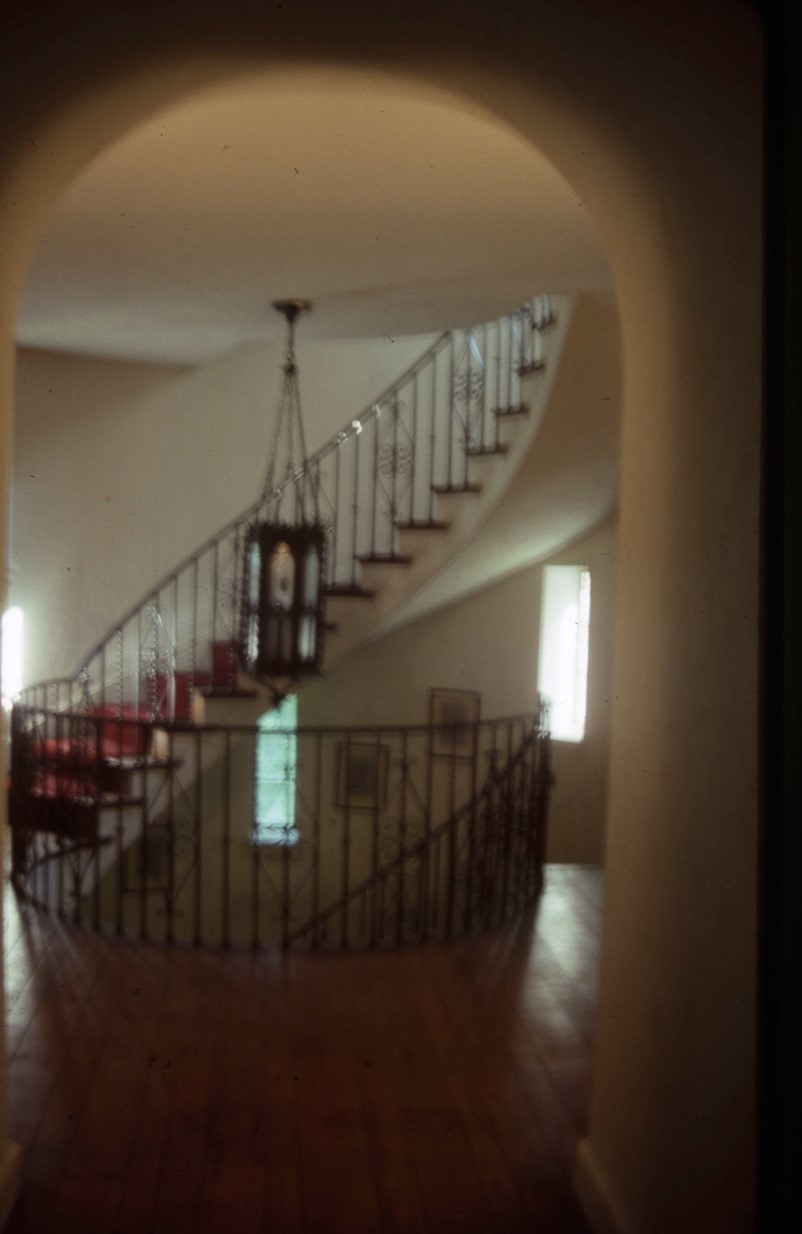
The abode included an indoor tiled fish pond, as well as a wrought iron staircase in the castle’s 35-foot turret, and flooring in the first-floor living room with a motif of carved butterflies in the shape of a bowtie. The turret also included an additional room that Eva Jacobs used as a studio space.

Bayeva Castle 7
Bayeva Castle 6

After the death of Eva Jacobs in 1979 and Dr. J. Bay Jacobs in 1988, the castle was deeded to the American College of Obstetricians and Gynecologists, and the antique furnishings were sold at auction. The property was later sold by the College to a developer, who had planned on developing the land into a community center. However, before these plans were realized, they went bankrupt and the property was foreclosed on.

According to The Arlingtonian, in the early nineties the castle was used as a collective house for a group of recent college graduates, who paid $1,000 in rent for the entire structure.

The castle was razed and demolished in November 1994.

Bayeva Castle 4

Many Arlington residents remember the castle as it stood, with many commenting on its “eerie” presence. In keeping with this reputation, when demolition workers were going through the house, the body of a baby was found in a small boarded passageway. This was explained to be one of the preserved bodies of stillborn babies Dr. Jacobs used in his teaching as an obstetrician, and no criminal charges were filed.

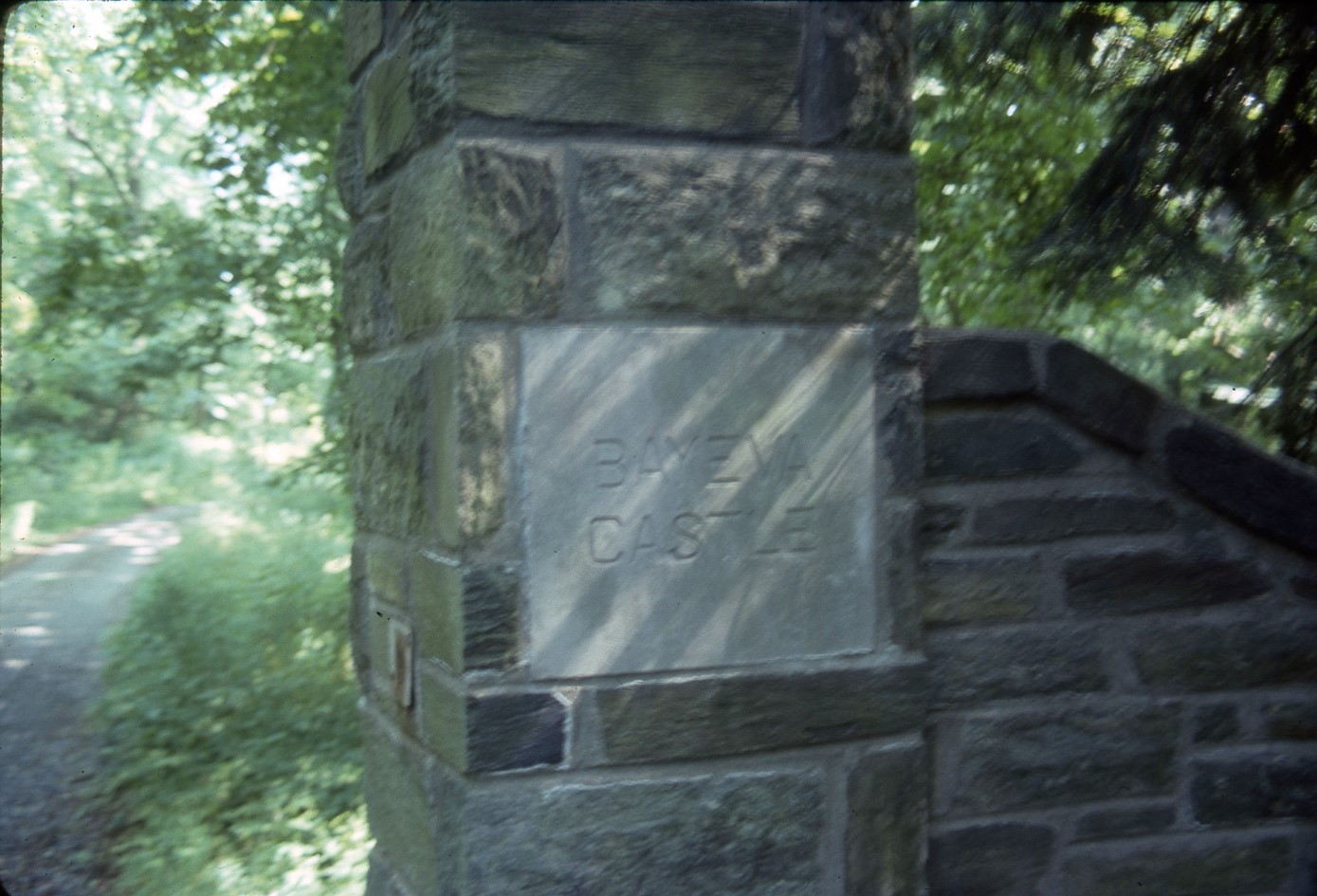
Today, a historical marker and a stone column bearing the Bay-Eva Castle name are the last remnants of the grand building that once stood on the bluff.

Bayeva Castle 9

Resources

The Historical Marker Database

The Arlingtonian

To learn more about Arlington's history, visit the Center for Local History on the first floor of the Central Library.

Do you have a question about this story, or a personal experience to share? 

Use this form to send a message to the Center for Local History.

Center For Local History - Blog Post Message Form

Do you have a question about this story, or a personal experience to share? Use this form to send a message to the Center for Local History.

"*" indicates required fields

This field is for validation purposes and should be left unchanged.

Share Your Story

April 9, 2020 by Web Editor

Angel of the Battlefield: Humanitarian Clara Barton

Post Published: March 19, 2020

Clara Barton (1821-1912)

Celebrate the 100th anniversary of the 19th Amendment with stories about women who have used their voices and their votes to better their communities and help shape the United States.

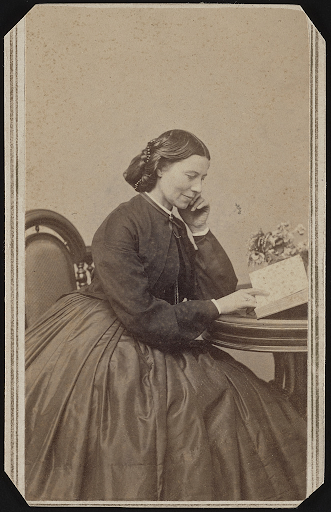
pic3

“Union Nurse Clara Burton,” photograph by C.R. Claflin, ca. 1865. Image courtesy of the Library of Congress. 

Clara Barton is an enduring symbol of humanitarianism for her work during the American Civil War, where she played a fundamental role in distributing much needed provisions and medical supplies to the Union Army. She was also renowned as an educator, nurse and a founder of the American Red Cross.

Barton was born on December 25, 1821, in Oxford, Massachusetts, the youngest of five children. She had her first experience in nursing while caring for her brother David and later became a teacher at age 18.

Early Career

At 24, she founded a school for children on the site of her brother’s mill and in 1852 she established the first free school in Bordentown, New Jersey. Barton resigned from her teaching position upon discovery that the school had hired a man at twice her salary. She left the post on the principle that she would never work for less than a man.

Following her teaching career, Barton began working as a recording clerk for the U.S. Patent Office in Washington, D.C., making her the first woman to hold the position. In line with her beliefs on the fundamental equality of women, she was paid $1,400 as a salary – the same as her male colleagues. After this milestone, however, she faced backlash. The then-Secretary of the Interior Robert McClelland opposed women serving in the government and demoted her to a copyist position at a lower salary.

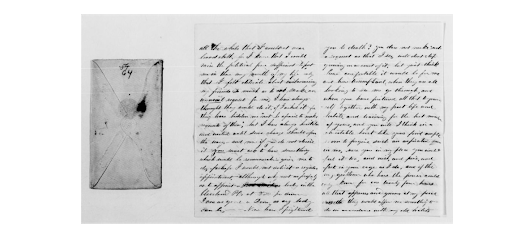
pic4

February 13, 1860, Letter from Clara Barton to her nephew Bernard Vassall, which discusses women’s oppression. Part of the Clara Barton Papers at the Library of Congress.

American Civil War

In 1861, like all Americans, Barton’s life changed with the start of the Civil War. She quit her post in government and dedicated herself to bringing supplies to Union soldiers in need. She started by taking supplies to the men of the 6th Massachusetts Infantry housed in the unfinished Capitol building, some of whom had been her students and her peers growing up.

Barton collected relief articles including clothing, assorted foods, and supplies for sick and wounded soldiers, and appealed to the public to garner more donations. She also read to soldiers in the camps, wrote letters and prayed with them.

pic1

Soldiers of the 6th Regiment Massachusetts volunteer militia, one of the groups that Clara Barton helped bring supplies during the Civil War. Image courtesy of the Library of Congress.

In 1862, she received official permission to transport supplies to battlefields and was present at every major battle in Maryland, Virginia and South Carolina. After the battle of Cedar Mountain in August 1862, Barton brought in a wagon load of supplies drawn by a four-mule team to the field hospital. Upon her arrival, the surgeon on duty commented: “I thought that night if heaven ever sent out a[n] … angel, she must be one – her assistance was so timely.” This led to Barton gaining the nickname “Angel of the Battlefield.”

Of her time on the battlefield, Barton said: “I may be compelled to face danger, but never fear it, and while our soldiers can stand and fight, I can stand and feed and nurse them."

Though she had no formal medical training, in 1864 she was named head nurse for one of General Benjamin Butler’s units. In the aftermath of the war, Barton was also involved in helping prepare former enslaved people for freedom, as well as marking graves, testifying to Congress about her experience in the war, and helping locate missing soldiers. To help the latter cause, she established the Office of Correspondence with Friends of the Missing Men, which she operated out of her home on 7th Street in Washington, D.C. The Office received and answered over 63,000 letters and identified over 22,000 missing men during its four years of operation. A tracing service similar to this operation would eventually become a crucial part of the operations of the Red Cross.

file

“Clara Barton. A wartime photograph by Brady,” ca. 1890-1910. Image courtesy of the Library of Congress.

Red Cross

After the war, Barton continued to serve her nation. After a visit to Europe, she was inspired by the Red Cross in Geneva, Switzerland, and lobbied to establish a branch in the United States. On May 21, 1881, the American Association of the Red Cross was formed, built up by Barton’s work writing pamphlets, lecturing and meeting with President Rutherford B. Hayes on the topic of support for the organization.

Barton was elected the group’s first president, and in 1882, the United States joined the International Red Cross. As its leader, Barton oversaw relief work for victims of the Johnstown Flood in 1889 and the Galveston Flood in 1900, among other events. She remained with the Red Cross until 1904, and that same year established the National First Aid Association of America.

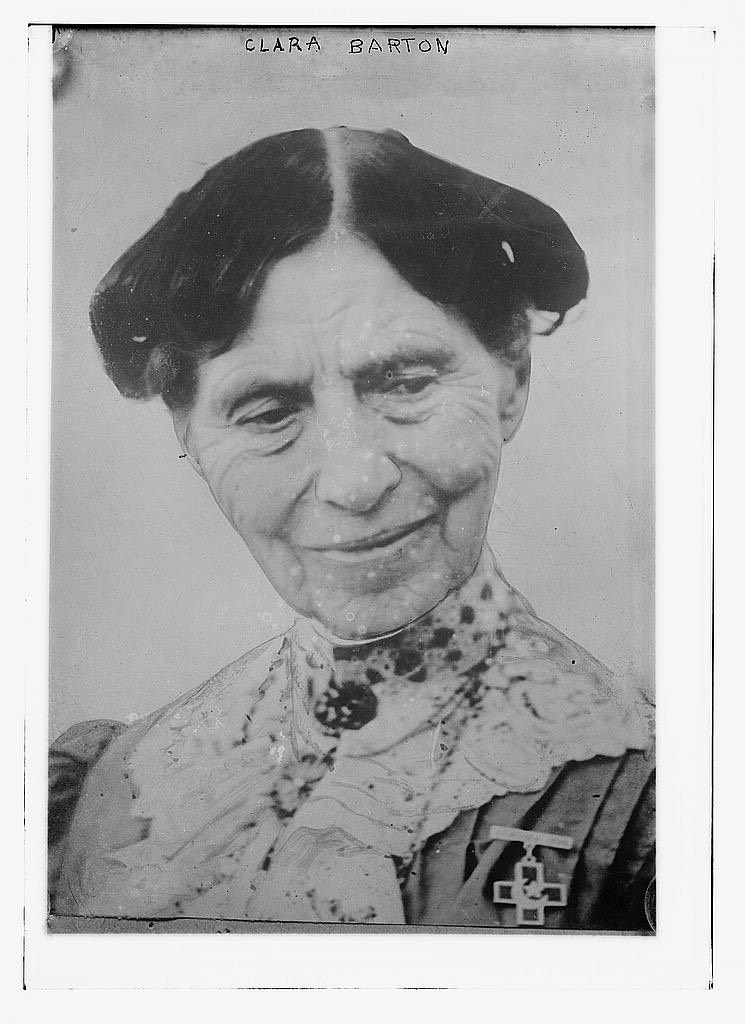
pic

Clara Barton, ca. 1911. Image courtesy of the Library of Congress.

Later Years

Barton was also involved in civic causes including education, prison reform, women’s suffrage, and civil rights.

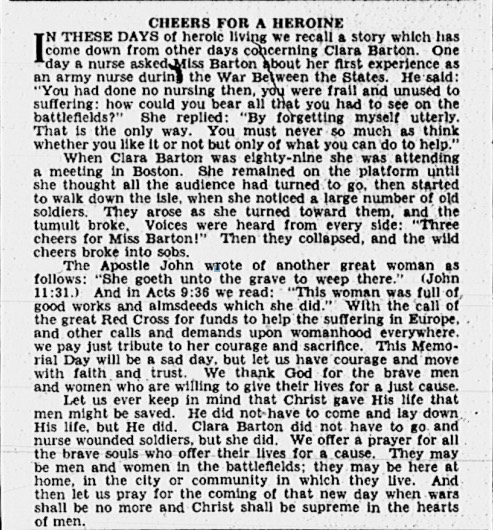
Barton died on April 12, 1912. Since her death, Barton has frequently been turned to as an example and reminder of American heroism, as in this newspaper article from May 31, 1940, written by The Northern Virginia Sun in the days leading up to World War II:

pic 5

March 19, 2020 by Web Editor

This Week in 19th Amendment History: Hallie Quinn Brown

Post Published: March 11, 2020

March 10, 1845

Celebrate the 100th anniversary of the 19th Amendment with stories about the people and events that led to the passage of women’s suffrage in the United States.

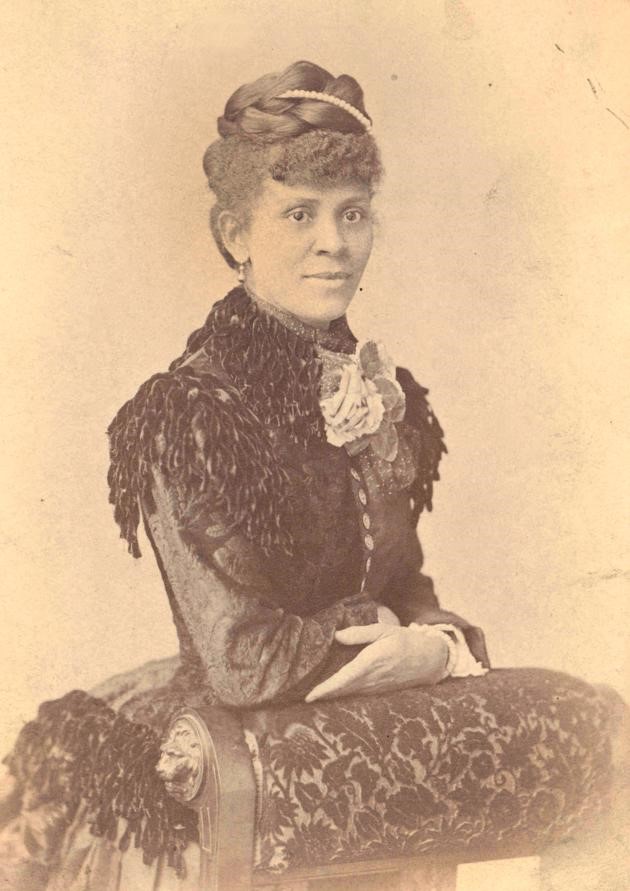
Hallie Quinn Brown was a preeminent educator, writer, public speaker and activist in the causes of civil rights and suffrage throughout the 19th and 20th centuries. 

Portrait of Hallie

Hallie Quinn Brown. Image courtesy of Wilberforce-Payne Unified Library.

Brown was born on March 10, 1845 (sometimes reported as 1849) in Pittsburgh, Pennsylvania, to Frances Jane Scroggins and Thomas Arthur Brown – both of whom were freed slaves and involved with the Underground Railroad. Brown attended Wilberforce University in Ohio and graduated as the salutatorian. She also studied at the Chautauqua Lecture School, making her among the first African American woman university graduates in the United States at the time.

Following graduation Brown taught in Mississippi and South Carolina, and in 1885 became dean of Allen University. She also worked at public schools in Dayton, Ohio, establishing a night class for migrant workers. Brown was eventually appointed dean of women at the Tuskegee Institute in Alabama, where she worked alongside Booker T. Washington. She later returned to her alma mater as a professor, and from 1893-1903 served as professor of elocution at Wilberforce.

Wilberforce U

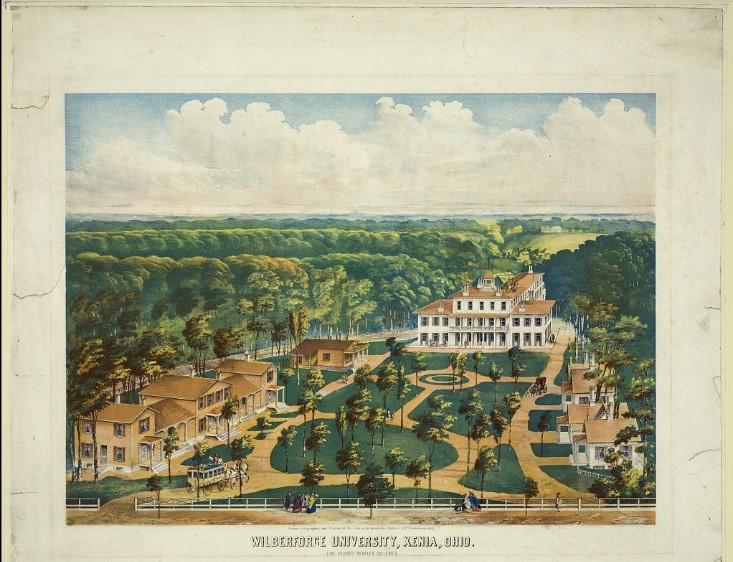
Lithograph of Wilberforce University, ca. 1850-1860. Courtesy of the Library of Congress.

Brown was dedicated to the advancement of women’s clubs for African American women. In 1893, she was the principal promoter of the Colored Woman’s League, which went on to become part of the National Association of Colored Women (NACW). She also served as president of the Ohio Federation of Colored Women’s Clubs from 1905-1912 and as president of NACW from 1920-1924.

A renowned elocutionist, Brown conducted speaking tours and gained a significant following, particularly in the United Kingdom. During these tours, she made several appearances before Queen Victoria, and in 1889, shared tea with the queen. In 1899, she also represented the United States at the International Congress of Women, which met in London. Brown was also a staunch advocate for temperance causes, women’s suffrage, and civil rights, often delivering speeches on the topic of granting full citizenship to women and guaranteeing civil rights for African Americans.

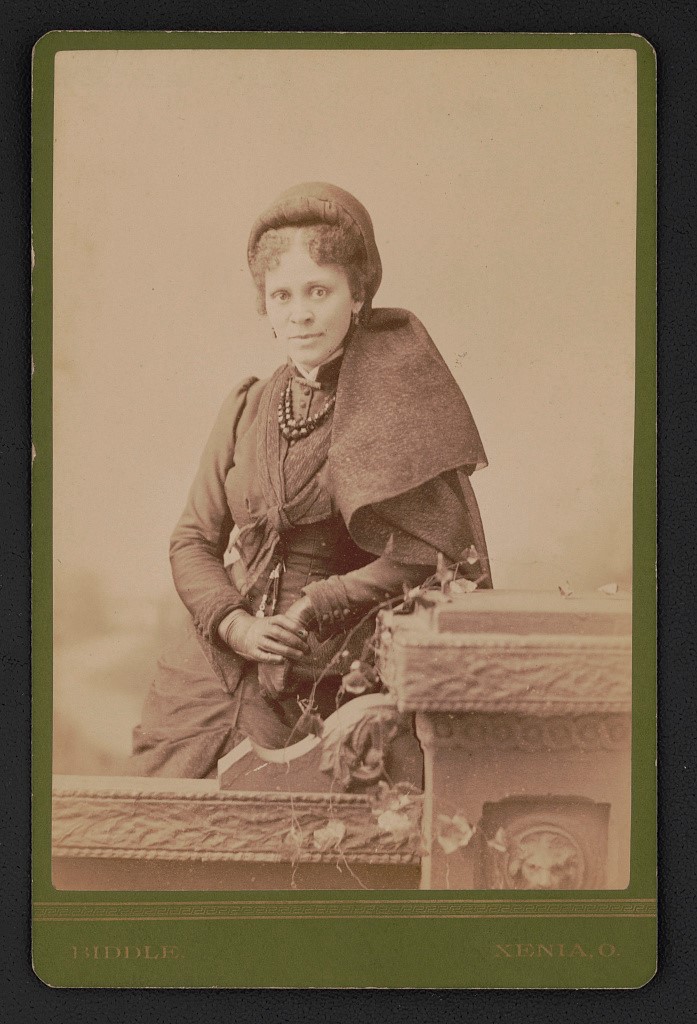
Hallie Quinn

Hallie Quinn Brown photographed by F.S. Biddle between 1875 and 1888. Courtesy of the Library of Congress.

In a speech delivered at an 1889 conference of the African Methodist Episcopal Church (AME Church), Brown drove home her point of equality between men and women:

“I believe there are as great possibilities in women as there are in men. … We are marching onward grandly. … I repeat we want a grand and noble womanhood, scattered all over the land. There is a great vanguard of scholars and teachers of our sex who are at the head of institutions of learning all over the country. We need teachers, lecturers of force and character to help to teach this great nation of women.”

Throughout her life, Brown continued to stand up for her belief in equality, and in 1893 she organized a campaign against the exclusion of African American women from the Columbian Exposition in Chicago.

As president of NACW, she also denounced, through writings and speeches, a statue proposed by the United Daughters of the Confederacy that portrayed African American women in a stereotypical light. After widespread protest led by the African American community, including D.C. activist Mary Church Terrell, the bill proposing the monument died in the House (though it had passed in the Senate).

Among her other activist efforts, she began a campaign to preserve the home of Frederick Douglass in Washington, D.C., which was ultimately successful. Brown was later active in Republican politics, directing campaign work on behalf of President Calvin Coolidge and addressing the Republican party’s national convention in 1924.

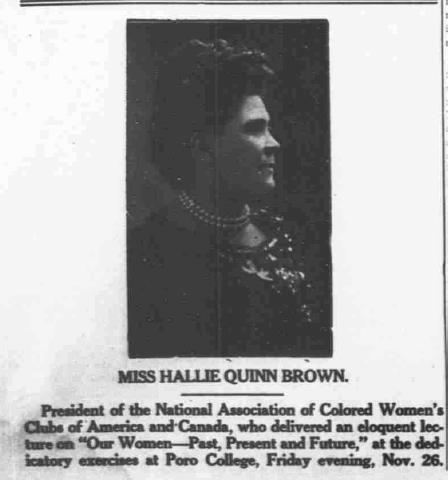
Newspaper Hallie

A feature on Hallie Quinn Brown from the December 4, 1920, issue of Poro College’s The Broad Ax newspaper. Courtesy of the Illinois Digital Newspaper Collection.

Brown passed away on September 16, 1949. Her legacy lives on through her many published works, including the 1926 “Homespun Heroines and Other Women of Distinction,” which includes short biographies of sixty African-American women.

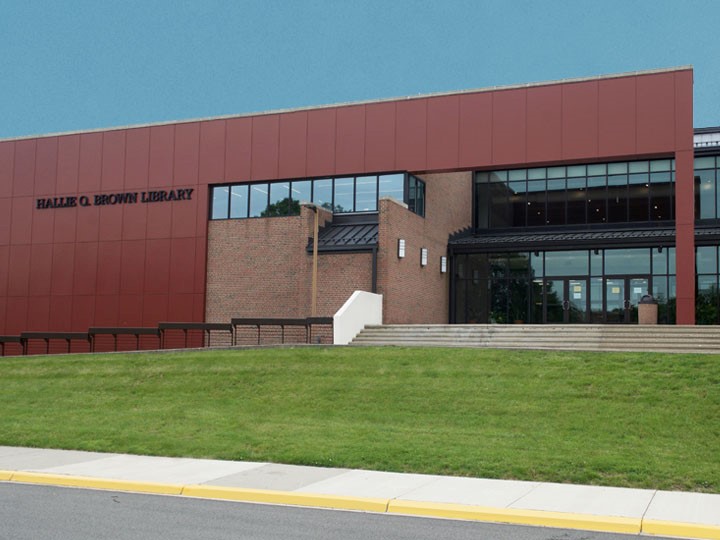
Brown is also the namesake of the Hallie Q. Brown Memorial Library at Central State University in Wilberforce, Ohio and the Hallie Q. Brown Community Center in St. Paul, Minnesota.

Library

The Hallie Q. Brown Memorial Library at Central State University in Wilberforce, Ohio. Image courtesy of Central State University.

2020 marked the centennial of women’s suffrage in the United States. 

March 11, 2020 by Web Editor

Oral History: Bringing the Metro to Arlington

Post Published: March 4, 2020

Interview with Roye Lowry

The arrival of the Metrorail in 1977 forever changed the landscape of Arlington, shaping the region for decades to come.

Arlington Voices the Oral History Collection

Oral histories are used to understand historical events, actors, and movements from the point of view of real people’s personal experiences.

In 2010, Arlington County released the documentary, “Arlington County’s Smart Growth Journey." It focused on the development of Arlington via the Metro system and featured interviews with people involved in this historic growth period. In this interview, narrator Roye Lowry details the trials and tribulations of the landmark Metro project, some of which are featured in the Smart Growth documentary.

Lowry served on Arlington’s County Board from 1962-1965. During that time he helped lay the groundwork for the construction of the Northern Virginia Metro system and related County development.

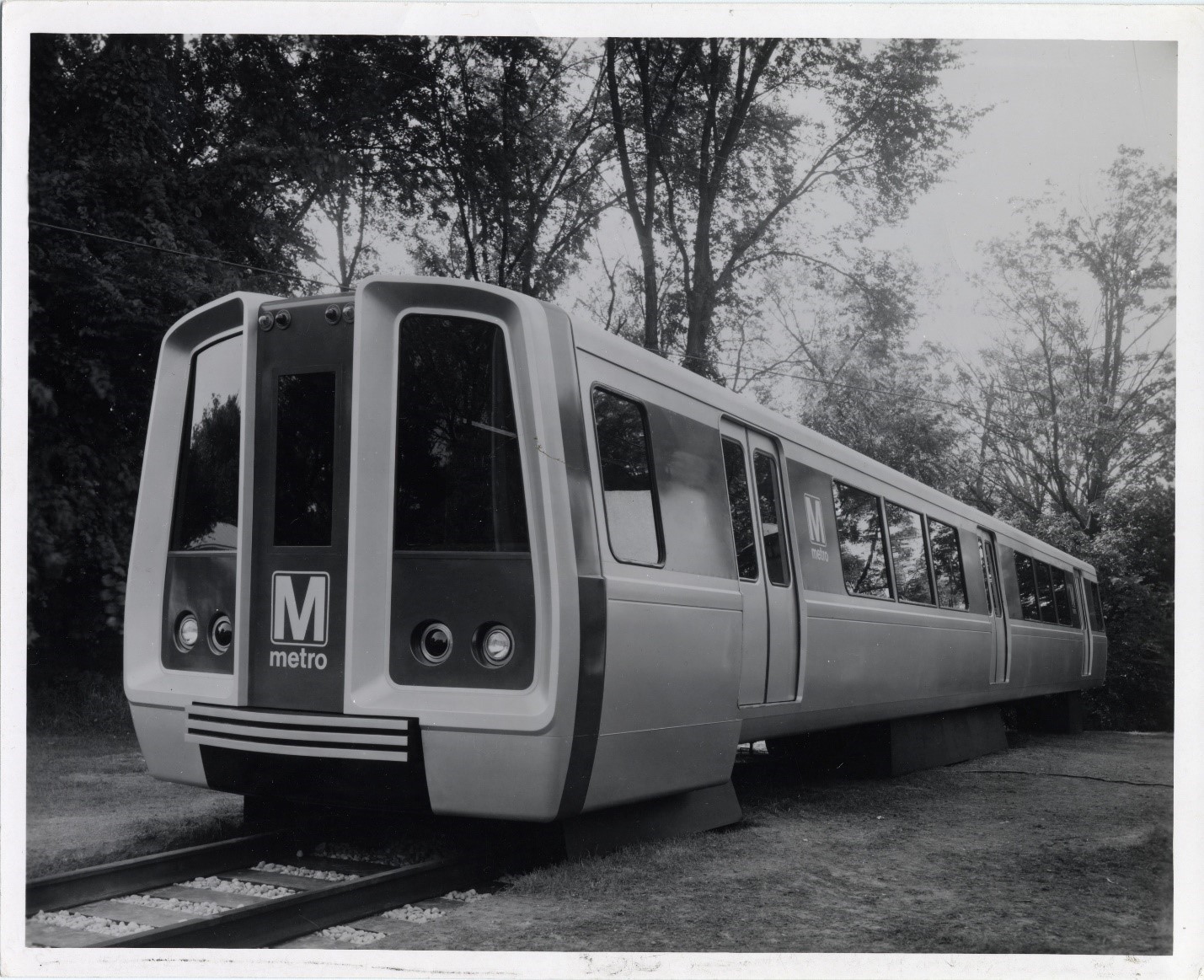
Metro 1

Metrorail car, 1969, WMATA photo.

Narrator:  Roye Lowry
Interviewer: Mary Curtius
Date: December 5, 2007

From the documentary:

[7:35]: The schools were a major interest. But also, the development of Arlington became of interest because we were just building apartments and gas stations almost everywhere.

[14:57]: The first place was Rosslyn. We got to give a lot of credit to the man who was then the head of our highway division, Stoneburner, Mr. Stoneburner because they wanted to run 66 right flat down what would have then been the middle of Rosslyn, which would distort any possibility of development.

[13:27]: When they began to talk Metro plans, we were for it because that is the only way we’re going to escape having highways.

[29:17]: The notion was we tried to unite public purpose and private profit. If you can successfully do that in anything you’ve got a winner.

From the oral history interview:

On the Metrorail coming to Arlington:

Roye Lowry: Arlington was just in the way. People who lived out in the hinterlands, no matter where, they just wanted to get through here to get to Washington. We lived here. We were in the way and we weren’t going to move. We had this notion of preserving a community of approximately 200-210,000 people. That was the notion and it turned out to be pretty good.

Mary Curtius: What was the population back in ‘61, ‘62? Was it anywhere near 200,000?

RL: No, it had to be 160,000 maybe, something like that.

Metro 2

Rosslyn Station construction sign with crane in background.

On development in Arlington:

MC: Do you think you understood at the time. I understand the preservation motive, you wanted to save Arlington from being carved up.

RL: But we’re redeveloping at the same time.

MC: Did you think it would help redevelopment, that Metro would help redevelopment?

RL: We were pretty sure it would. Metro is going to run through Arlington. There are going to be some stations. It’s not just going to run through Arlington. It took much longer than was anticipated to get it going. I remember when there was some kind of ceremony, dedication ceremony or something in Clarendon when the Orange Line. It was a big celebration. I was standing there in the crowd and I saying it’s seven years behind schedule right now when it gets there.

Roye Lowry conducted this interview as part of Arlington County’s “Smart Growth” documentation project, and the full interview can be accessed at the Center for Local History – VA 975.5295 A7243oh series 8, no. 10. Fifteen additional interviews in this series are also available at the Center for Local History, and the full “Arlington County Smart Growth Journey” documentary is available online.

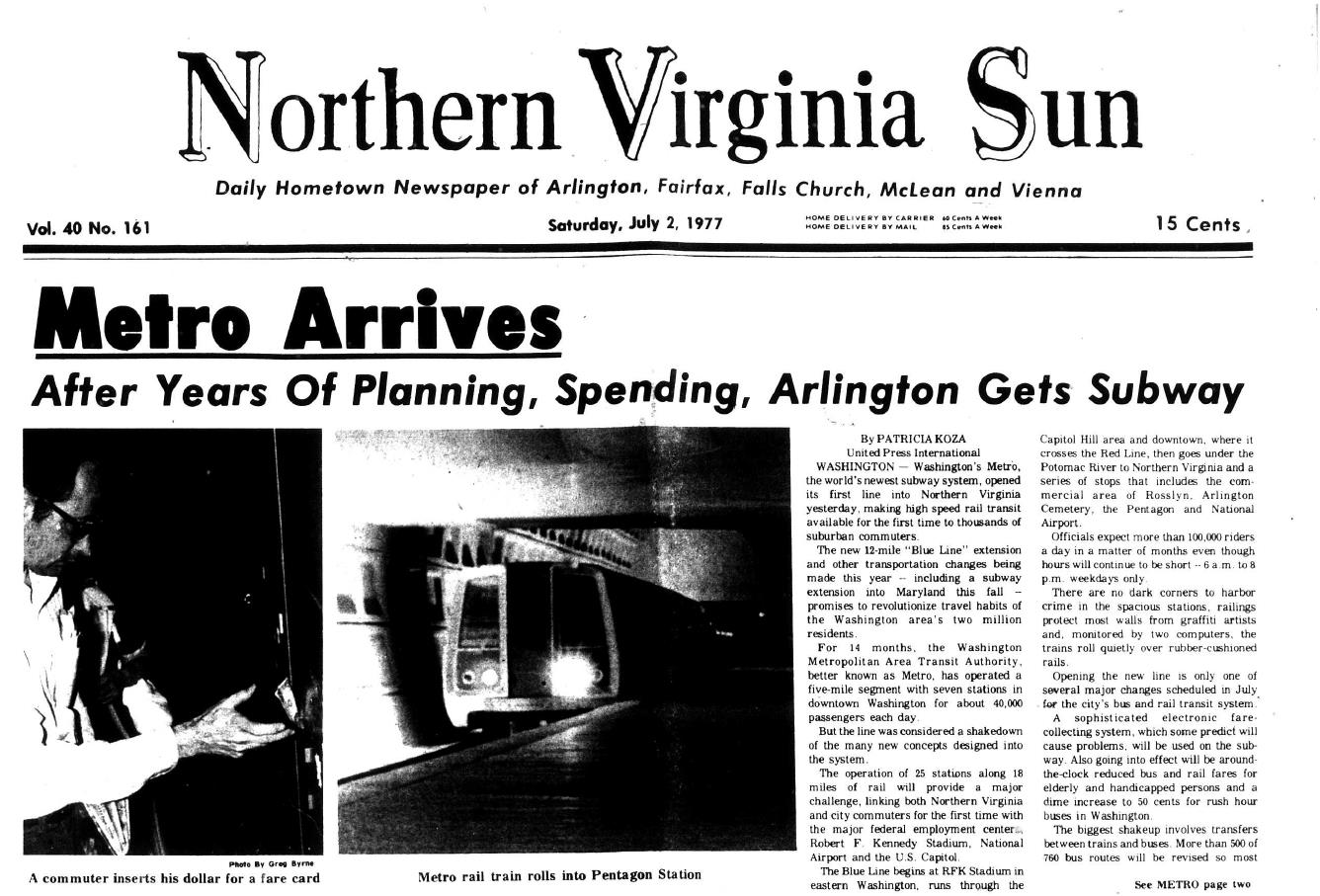
Metro 3

Front page of the Northern Virginia Sun, from July 2, 1977.

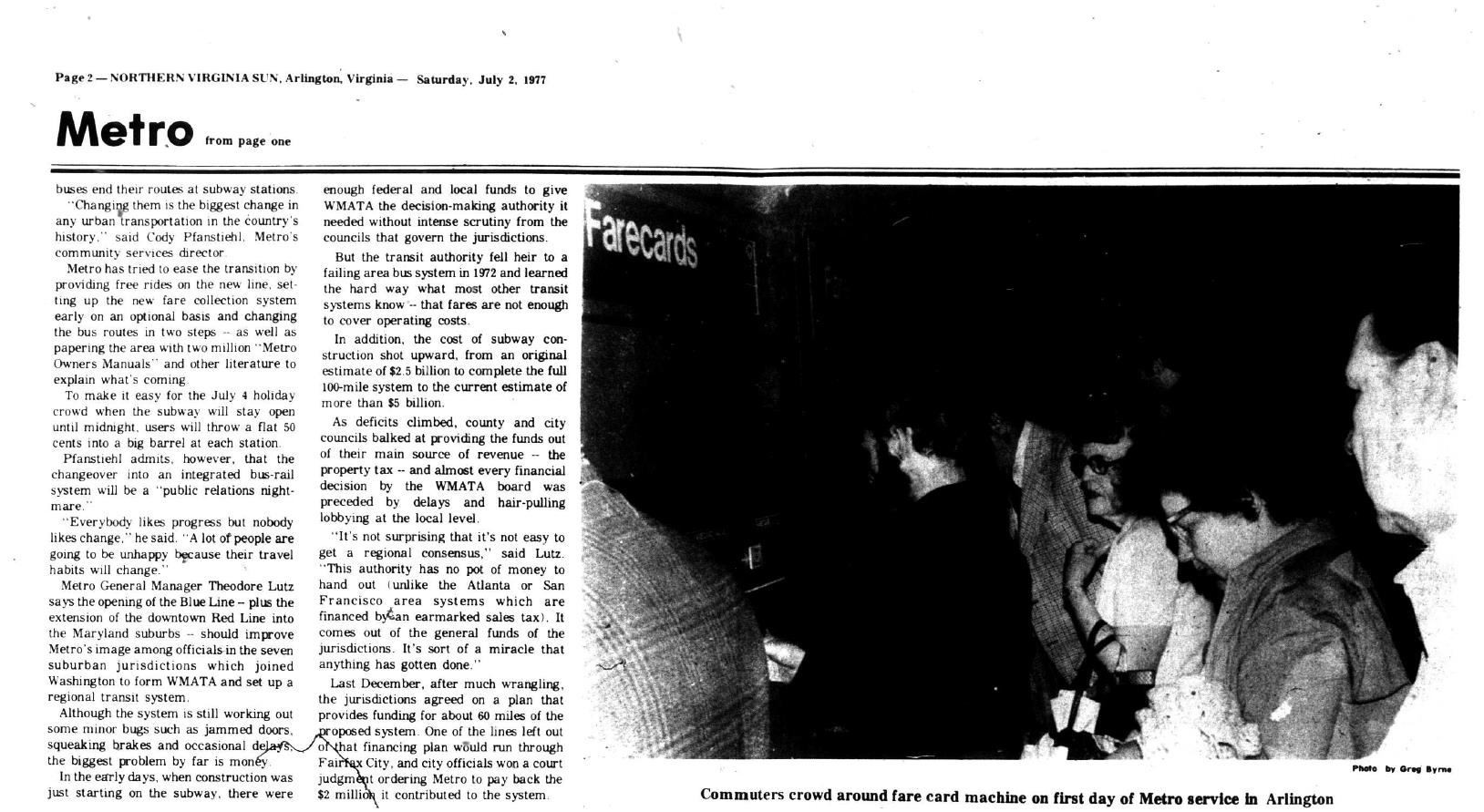
Metro 4

Page 2 of the Northern Virginia Sun, from July 2, 1977.

The goal of the Arlington Voices project is to showcase the Center for Local History’s oral history collection in a publicly accessible and shareable way.

The Arlington Public Library began collecting oral histories of long-time residents in the 1970s, and since then the scope of the collection has expanded to capture the diverse voices of Arlington’s community. In 2016, staff members and volunteers recorded many additional hours of interviews, building the collection to 575 catalogued oral histories.

To browse our list of narrators indexed by interview subject, check out our community archive. To read a full transcript of an interview, visit the Center for Local History located at Central Library.

March 4, 2020 by Web Editor

A Fight for Educational Equality: Civil Rights Activist Dorothy Hamm

Post Published: February 27, 2020

Dorothy Hamm (1919-2004)

Celebrate Black History Month and the 100th anniversary of the 19th Amendment with stories about women who have used their voices and their votes to better their communities and help shape the United States.

For decades, Dorothy Hamm was at the forefront of the civil rights movement in Arlington, working tirelessly to bring equality to the County. She led the charge to successfully desegregate Arlington’s schools and theaters, and was involved in numerous community organizations and leadership positions.

Early Life

Dorothy Hamm was born in 1919 in Caroline County, Virginia, in a family of seven children. The only school that accepted African-American students was six miles away from their home, so in 1926 the family moved to Fairfax County where the children could attend elementary school.

However, Virginia was still a segregated state, and when Hamm graduated from primary school the family found that there was no junior high or high school for African-American students within a thirty-five-mile radius. Instead, because her mother was a government employee, Dorothy was able to attend secondary schools in Washington, D.C. She went on to enroll in Miner Teacher’s College, also in D.C.. She also attended classes at the Cortez Peters School of Business and George Washington University.

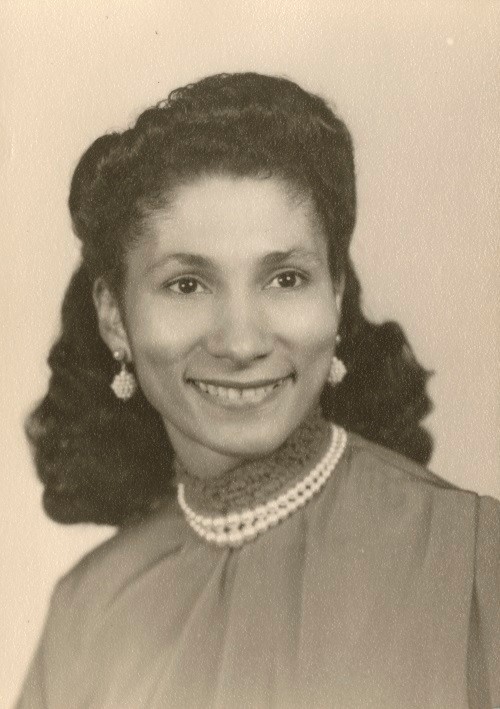
Dorothy Hamm Portrait

Image courtesy of Carmela Hamm, from the Library of Virginia.

Hamm married Edward Leslie Hamm, Sr., in 1942 and the couple moved to Arlington in 1950, where they would raise their three children. During this time, Hamm worked in numerous government positions, including as an administrator in the Army Surgeon General’s Office, where she worked until 1963.

The catalyst for Hamm’s involvement in the civil rights movement came in the form of the 1954 Supreme Court decision that ruled segregation illegal in public schools.

Arlington Public Schools

In 1956, Hamm, along with her husband, became plaintiffs in the first civil action case filed to integrate the Arlington Public School system. When no action towards integration had been taken a year after the suit was filed, Hamm and her husband took their oldest son, Edward Leslie Jr., to enroll at Stratford Junior High School. They, and other African-American students who attempted to enroll in the still segregated Arlington schools, were denied admission that year. In September 1957, a few days after the opening of the school year, crosses were burned on the lawns of two Arlington families, and at the Calloway United Methodist Church, a central location for organizers in the effort to desegregate the schools, and a site of workshops held by ministers, lawyers and educators preparing parents and students for school integration.

Over the course of this process, Hamm recalled in interviews many experiences with discrimination and intimidation.

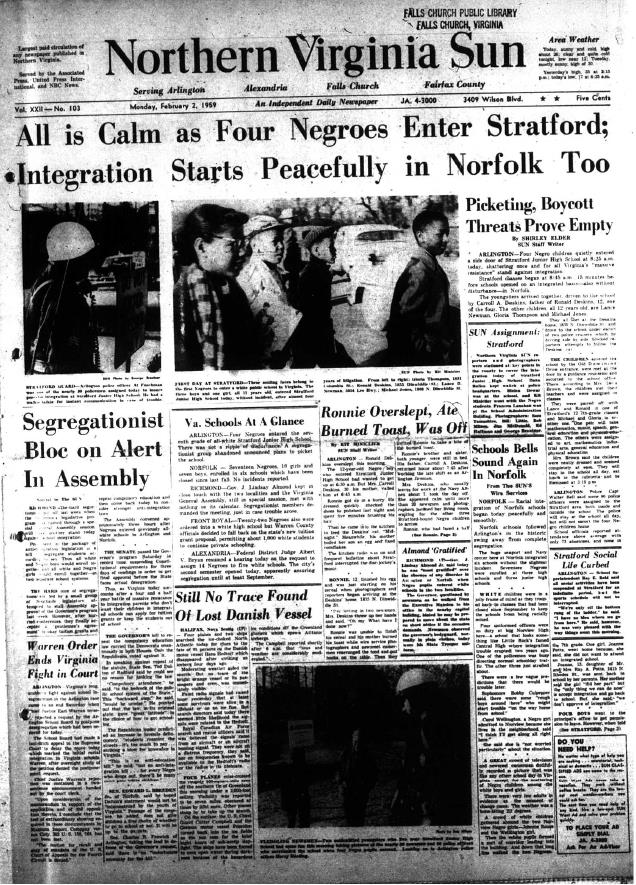
North VA Sun Article

Frontpage of The Northern Virginia Sun, February 2, 1959.

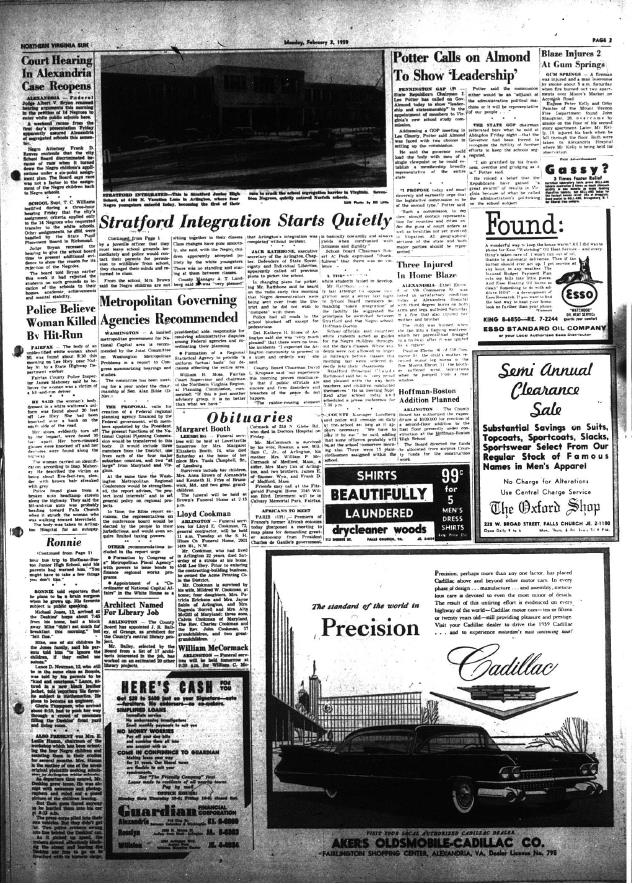
Second page of article Northern Virginia Sun, headline reads "Stratford Integration Starts Quietly."

Page 2 of The Northern Virginia Sun, February 2, 1959.

On January 19, 1959, Senator Harry F. Byrd’s statewide policy of “massive resistance” to the Supreme Court ruling was outlawed by the Virginia Supreme Court.

On February 2, Ronald Deskins, Michael Jones, Lance Newman, and Gloria Thompson were enrolled as the first black students at Stratford Junior High, making Arlington the first county in Virginia to integrate its schools. Hamm’s sons would enter Stratford later that year.

In 1960 Dorothy Hamm was a plaintiff in another case, a court action to eliminate the pupil placement form, which was used to exclusively assign African-American students to certain schools as a means to get around the Supreme Court’s ruling on desegregation.

In 1961, Hamm was again a plaintiff in a court action to integrate the athletic program of the Arlington Public Schools, after Hamm’s son had been barred from participating in Stratford’s wrestling program because of the physical contact between Black and white students. As a result of the court action, discrimination in Arlington athletic programs was declared to be illegal.

Civic Life

In 1963, Hamm was the plaintiff in a civil action case to eliminate the poll tax and remove the race designation from public forms and voting records in Arlington County. (Read "If you Don't Vote, You Don't Count", our story from August 15, 2019, about the history of the poll tax in Arlington County, to learn more.)

The same year, Hamm also became involved in the fight to desegregate Arlington’s theaters. She initiated another civil court suit and helped to organize what would become a year of picketing efforts in protest of segregation. Along with four other protesters, Hamm was arrested for picketing at the Glebe Theater. The theater owner then struck a deal with the protesters that if they ceased picketing for thirty days, he would admit African-American patrons to the theater. This was successful, and Hamm and her son Edward Leslie Jr., became the first African-American customers to be admitted.

Hamm and her husband also participated in the 1963 March on Washington, helping to organize bus transportation to take Arlington residents into the city to take part in the March. In 1968, they also participated in the Poor People’s March on Washington, and helped to provide food and housing for fellow marchers.

Hamm continued her political activism as a delegate to Arlington County and Virginia State conventions in 1964 and was appointed Assistant Registrar and Chief Election Officer in Arlington’s Woodlawn precinct. She also worked with the Congress on Racial Equality (CORE) as they organized in Arlington and served as an officer of elections in Arlington for more than twenty-seven years.

Writing

Dorothy Hamm was also known for her work as a poet and playwright.

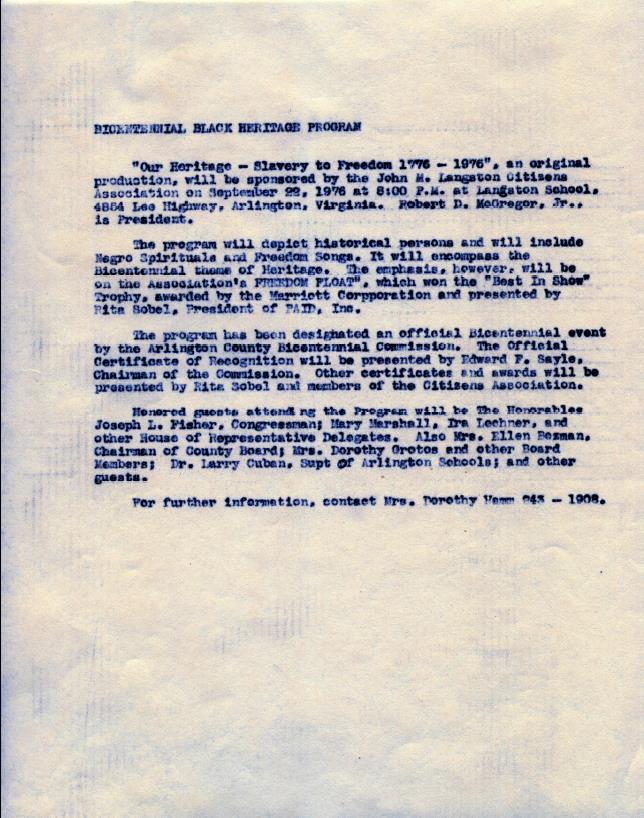
In 1976, her play “Our Heritage: Slavery to Freedom 1776-1976” was designated as an official bicentennial event in Arlington County. In 1984, she wrote and directed the play “Our Struggle for Equality,” which was performed by the drama club of Calloway United Methodist Church and later developed into a documentary for television.

Play Description

Description of Dorothy Hamm’s 1976 play “Our Heritage: Slavery to Freedom 1776-1976,” which was performed as part of Arlington’s bicentennial celebrations. Part of the Dorothy Hamm Papers.

Legacy

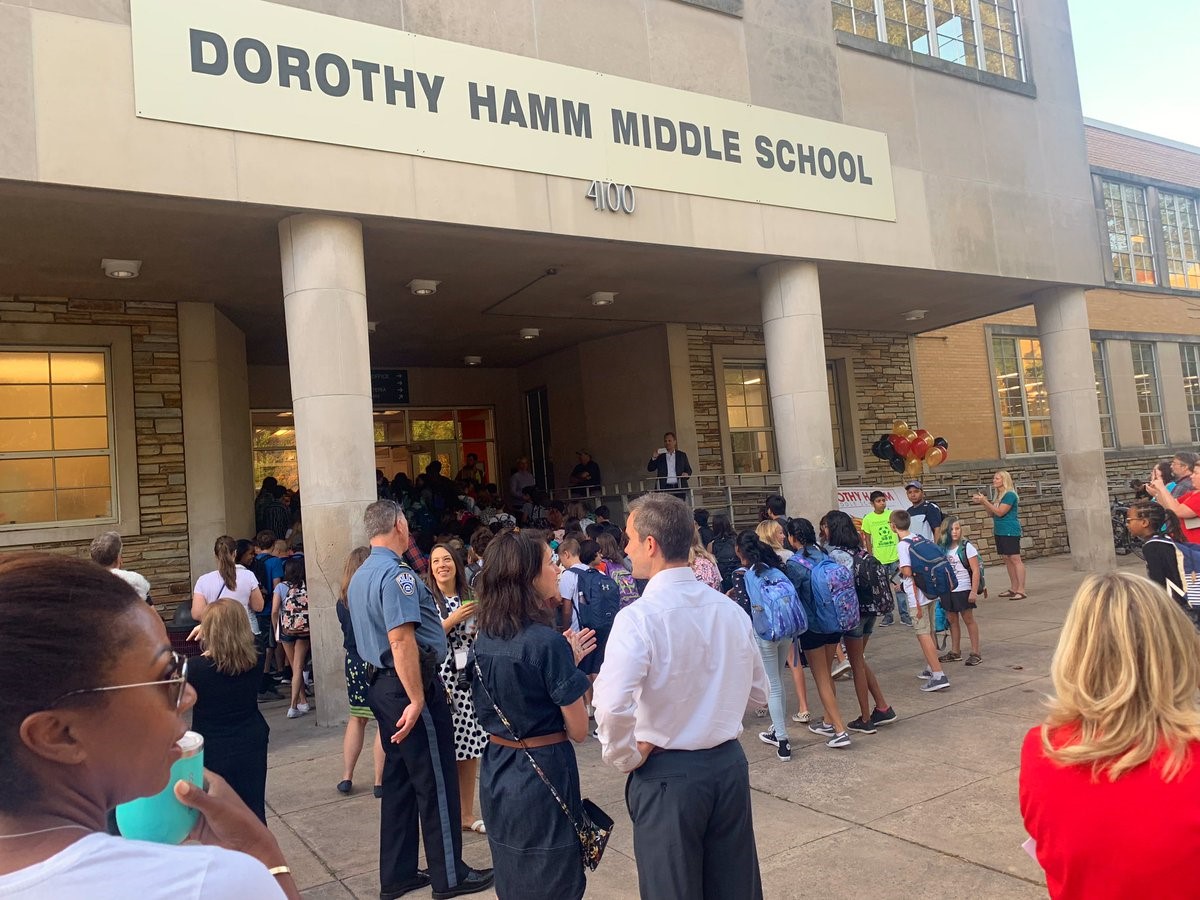
Dorothy Hamm died in 2004, but her legacy and mark on Arlington live on. On March 1, 2002, the Virginia Legislature’s House Joint Resolution No. 458 was enacted commending Hamm and her efforts in the civil rights movement.  And in 2019, the Dorothy Hamm Middle School began its first year named in her honor (in the building that formerly was the site of Stratford Junior High and the H-B Woodlawn Secondary Program).

In her autobiography, Hamm wrote about her response to the question of why she fought so hard for equal education and other equal opportunities. She writes:

“Even now, I am asked the same questions. There are many reasons, but one of the most important was my determination to answer the “Why can’t I?” question raised by our eight-year-old son, Bernard Caldwell Hamm. … Finally, I had to truthfully answer his ‘Why can’t I?’ question and explain to him that Stratford was for White children and he could not attend because he was a colored boy. I knew then that with the help of others, I had to fight to help change the ‘Separate but Equal Laws.’”

Dorothy Hamm Middle School

Dorothy Hamm Middle School, which was named in Hamm’s honor in 2019. Image courtesy of Arlington Public Schools.

Learn More

“Notable Women of Arlington: Third Series,” published by the Arlington County Commission on the Status of Women.

“Integration of Arlington County Schools: My Story,” by Dorothy Hamm.

Interview Dorothy M. Hamm, conducted in 1986, VA 975.5295 A7243oh ser.3 no.58.

The Dorothy M. Hamm Papers, 1937-1977, VA/ARCH RG 349.

February 27, 2020 by Web Editor

Lomax Church and Library Celebrate Records Acquisition

Post Published: February 18, 2020

Donation Received from one of Arlington's Oldest Black Churches

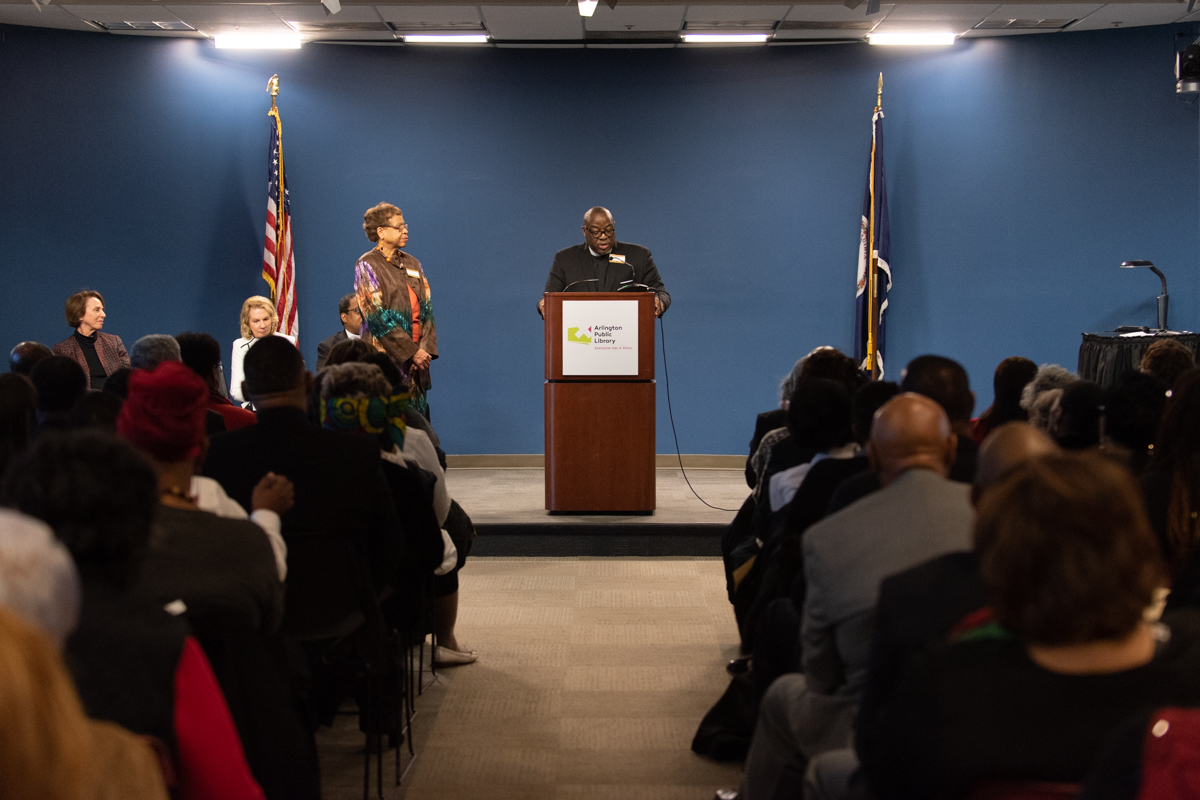
On February 9, 2020, Arlington's Lomax A.M.E. Zion Church and the Center for Local History celebrated the donation of the Church's archival records to the Center's Community Archives. 

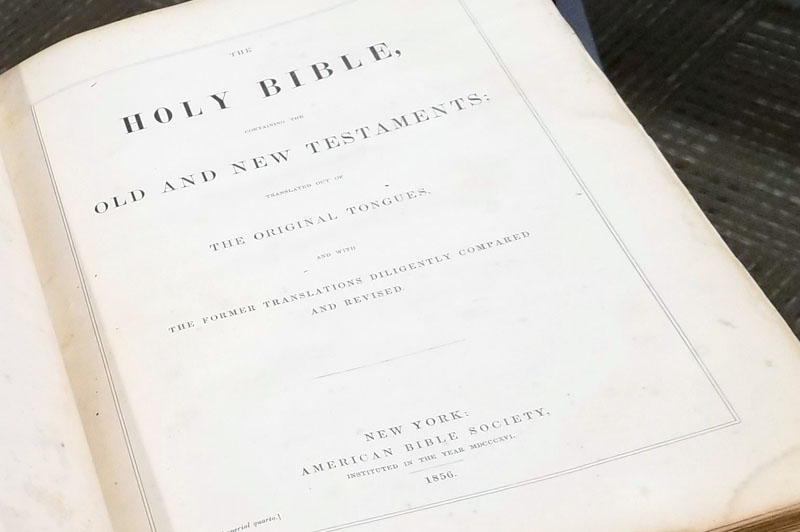
The donation included a large 19th century pulpit bible, printed in 1856.

Now members of the community and beyond can research and discover more about the history of one of Arlington's oldest African-American churches.

Photo of Lomax Bible

19th-century pulpit Bible, currently on display at the Center for Local History.

JBG_0656

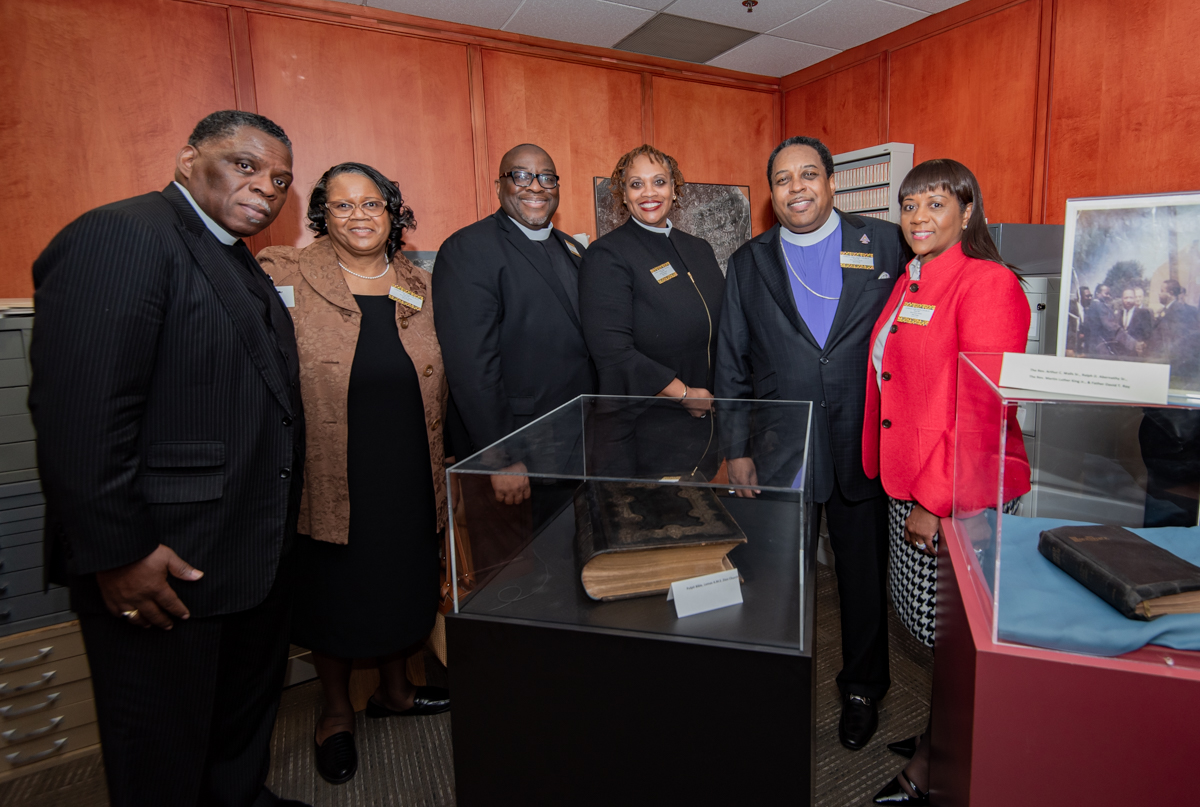
From Left: Arlington County Board Member Matt de Ferranti, Reverend Dr. Adrian V. Nelson, Arlington County Board Chairwoman Libby Garvey, Unidentified Church Member, Center for Local History Manager Judith Knudsen, Lomax Archives Chairwoman Brenda Cox, Unidentified Church Member, Bishop W. Darin Moore, Virtual Library Services Manager Stacia Aho, and Unidentified Church Members.

First established by freed slaves on June 12, 1866, in Freedman's Village, Lomax was originally named Wesley Zion Church under the leadership of Reverend Richard Thompkins. In 1874, the congregation decided to purchase land for a permanent home at an original price of $75 with a down payment of $5. In 1876, when T.H. Lomax was elected Bishop and assigned to the Lomax District, the name was changed to Lomax A.M.E. Zion Church.

In the days leading up to the March on Washington in August of 1963, civil-rights activists from around the country were housed in the Lomax Fellowship Hall, and the Reverend Dr. Martin Luther King Jr. and Reverend Ralph Abernathy spoke in the church parking lot prior to this monumental event. A photo of Reverend Dr. Martin Luther King Jr. and Reverend Ralph Abernathy speaking with members of the Lomax Church can be viewed at the Center for Local History.

JBG_0677

Reverend Dr. Adrian V. Nelson (third from left) and Bishop W. Darin Moore (second from right) with members of the Lomax Church in front of 19th-century pulpit Bible on display at the Center for Local History.

Lmaz Bible, frontspiece

19th-century pulpit Bible, printed in 1856, donated by Arlington's Lomax A.M.E. Zion Church; currently on display at the Center for Local History.

Center for Local History manager Judith Knudsen and her team worked with Lomax Church Archives Committee and its Chairwoman, Brenda Cox, to prepare and move materials for the acquisition. This donation was years in the making and both the Center for Local History and the church's Archives Committee spent countless hours to facilitate the exchange of materials.

Over 100 members of the Lomax Church, as well as Deputy County Manager Shannon Flanagan-Watson and three County Board Members: Arlington County Board Chairwoman Libby Garvey; Arlington County Board Member Matt de Ferranti; and Arlington County Board Member Christian Dorsey attended the ceremony.

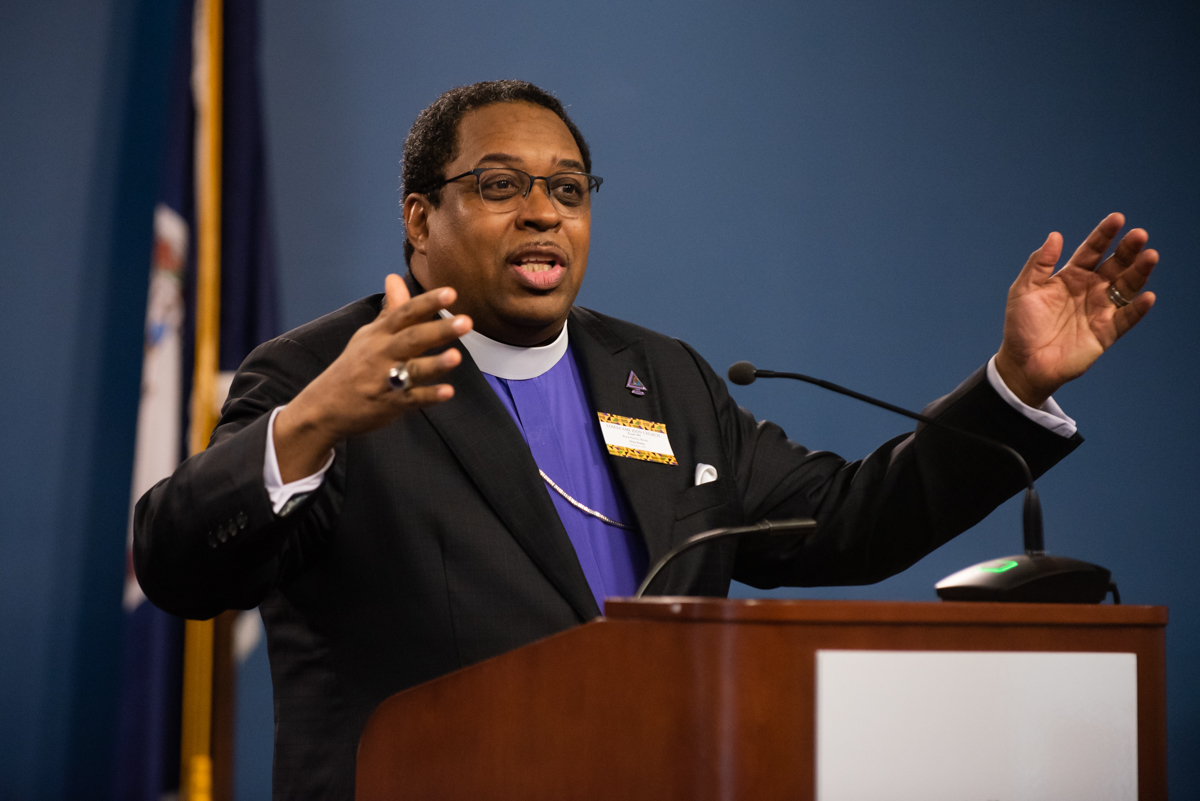
Judith Knudsen and Libby Garvey both gave introductions before Reverend Dr. Adrian V. Nelson and Bishop W. Darin Moore each delivered a speech to those in attendance, highlighting the history of the Church and the significance of the archival donation.

DSC_7828

Reverend Dr. Adrian V. Nelson

DSC_7878

Bishop W. Darin Moore

After the ceremony, a reception was held in the Center for Local History, where food and refreshments were served, courtesy of the Friends of the Arlington Public Library.

The Center for Local History invites the Arlington Community to play an active role in documenting their history by donating physical and/or digital materials for the Center for Local History’s permanent collection.

Learn more about the donation process, and how to make a donation.

February 18, 2020 by Web Editor

Valentine’s Day Postcards

Post Published: February 11, 2020

The price of a stamp to mail a postcard in the early 1900s was just one penny. 

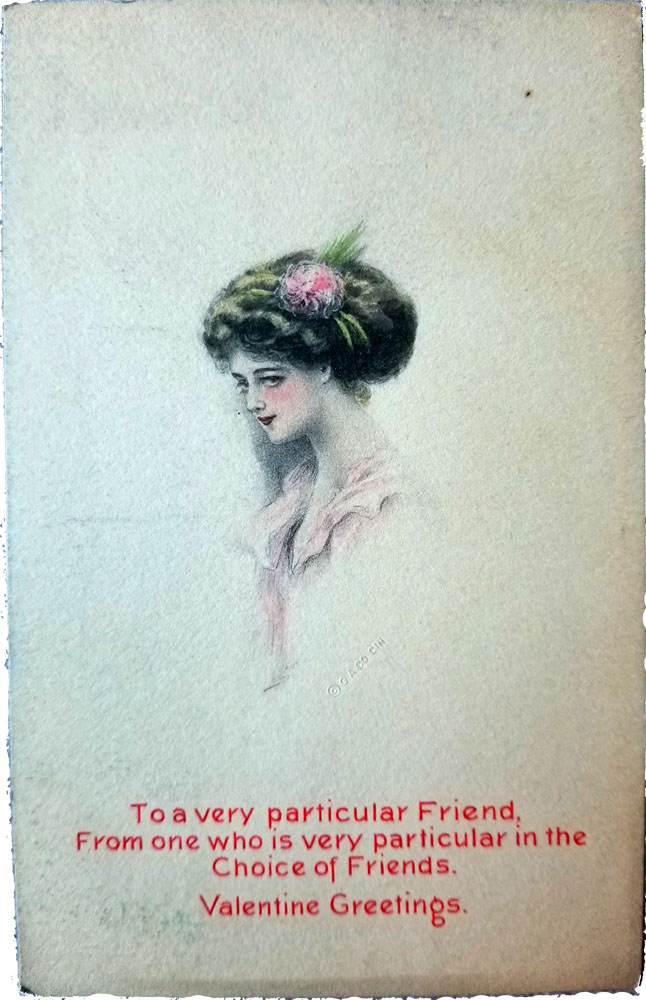
To a very particular friend, from one who is very particular in the choice of friends. Valentine's Greetings.

Postcard sent from Morgantown. WV, February 14, 1913

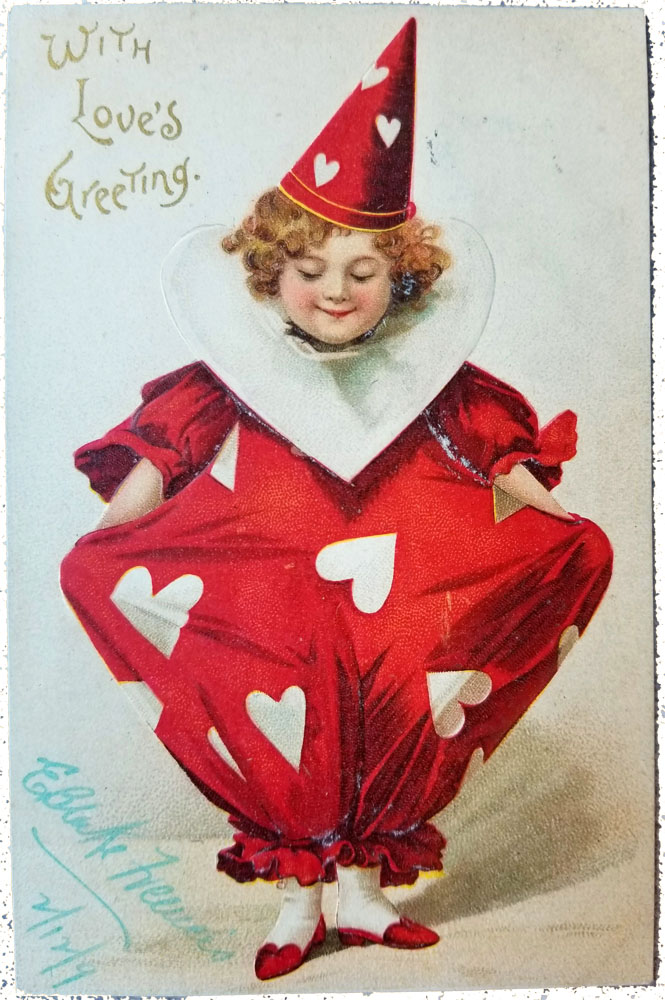
Postcard: With Love's Greeting

Postcard sent from Annapolis, MD, February 12, 1909

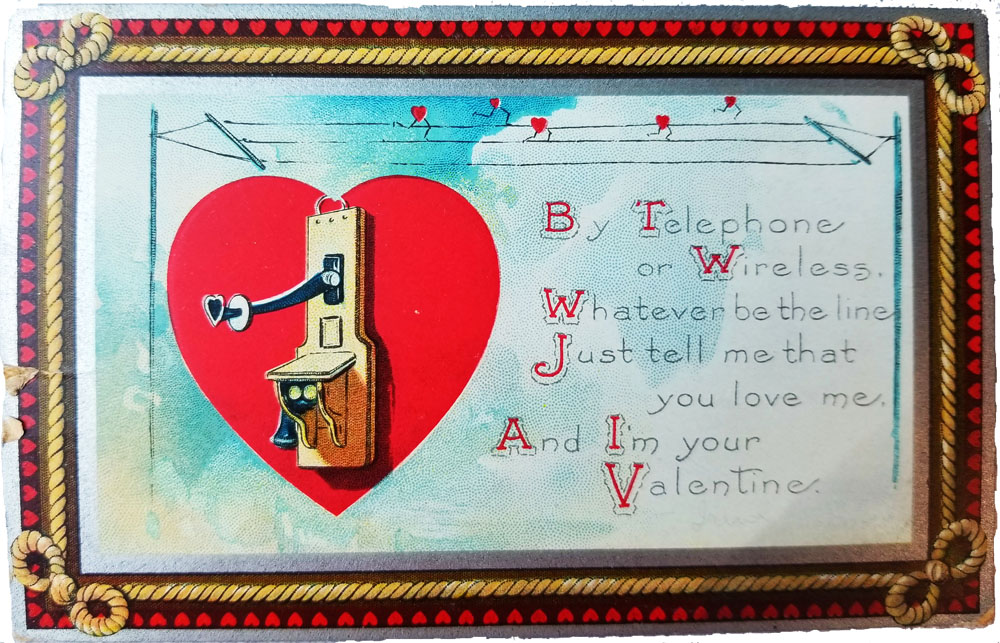
These Valentine's Day postcards, part of a collection sent from around the region to Miss Irene Andris, have postmarks ranging from 1906 through 1913. Some include personal messages, but many are simply addressed to the recipient.

Irene Andris was the grandmother of a Library employee, who donated the collection to the Center for Local History.

By Telephone or Wireless, Whatever be the Line, Just tell me that you love me and I'm your valentine

Postcard sent from Morgantown. WV, date stamp illegible.

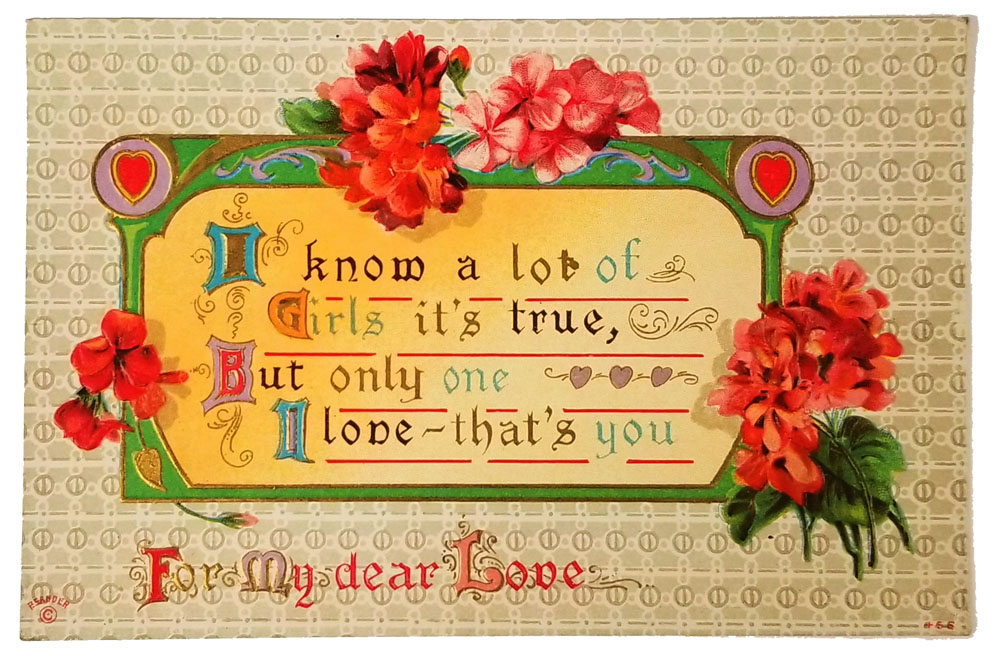
I know a lot of girls it's true but only one I love - that's you. For my dear love.

Postcard sent from Morgantown. WV, February 14, 10 a.m., no year.

The Center for Local History has a large collection of holiday-themed postcards from the early-to-mid 20th Century. There are also postcards for birthdays, New Year’s, Christmas, Halloween, St. Patrick’s Day, and the Fourth of July. 

The first American postcard was pressed in 1873. Postcards quickly became an inexpensive form of communication, growing in popularity throughout the 19th and 20th Centuries. The study and collection of postcards, which you've just learned a little bit about by reading this, is called Deltiology.

To see more of the postcard collection, or to learn more about Arlington's history, visit the Center for Local History on the first floor of the Central Library.

Do you have a question about this story, or a personal experience to share? 

Use this form to send a message to the Center for Local History.

Center For Local History - Blog Post Message Form

Do you have a question about this story, or a personal experience to share? Use this form to send a message to the Center for Local History.

"*" indicates required fields

This field is for validation purposes and should be left unchanged.

Share Your Story

February 11, 2020 by Web Editor

Exhibition Pays Tribute to Women in Arlington

Post Published: February 11, 2020

Women's Work: Then & Now

faces of many women from exhibit

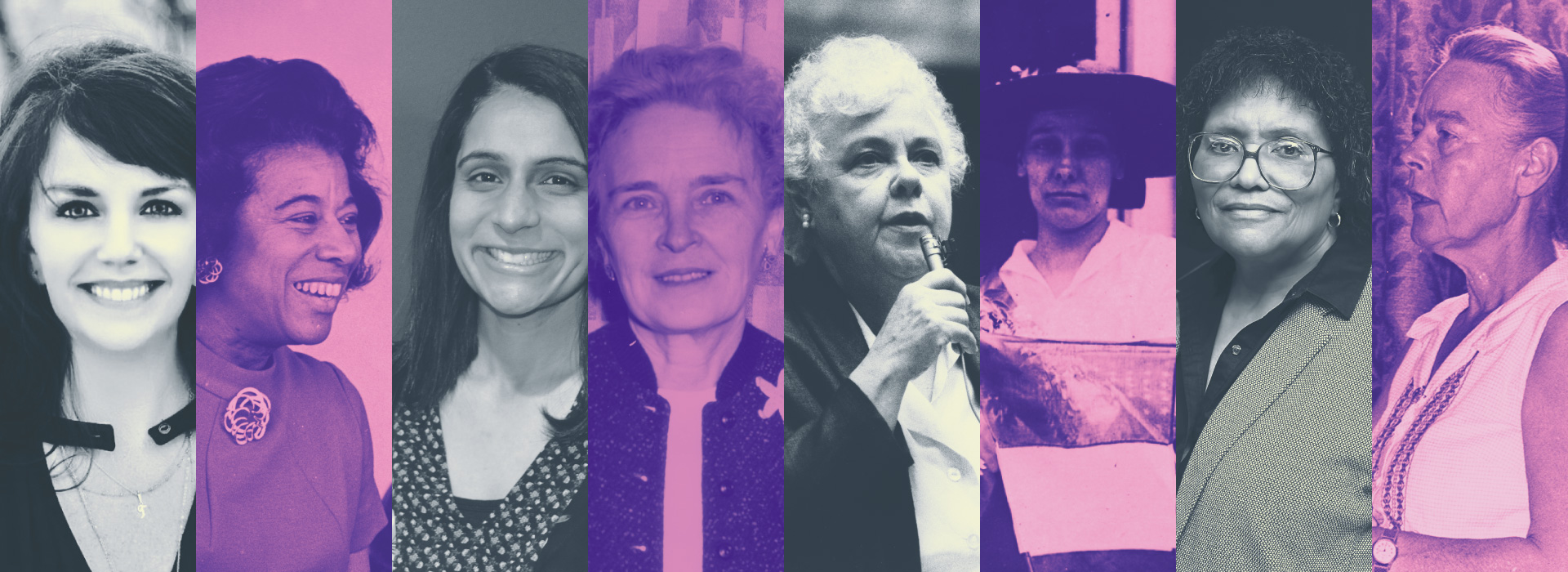
The 29 Arlington women profiled in the exhibit include (from left to right) Caroline Gary Romano, Margarite Syphax, Seema Jain, Dr. Phoebe Hall Knipling, Mary A. R. Marshall, Gertrude Crocker, Marguerete Luter and Cornelia Bruere Rose, Jr.

In March, Arlington Public Library will launch a new exhibition at Central Library, titled “Women’s Work: Then & Now.”

  • March 5 through April 2 at Central Library.
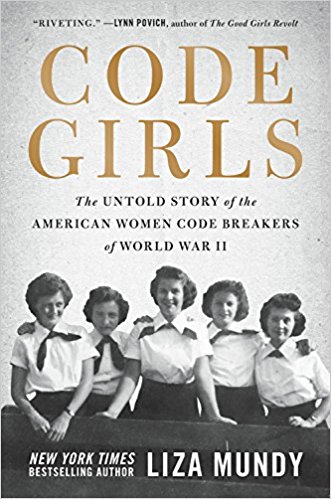
  • Exhibition opening Thursday, March 5, 6:30 p.m., followed by an author talk with featured guest Liza Mundy, author of "Code Girls."
RSVP

The opening reception will be followed by an author talk with Liza Mundy. In "Code Girls: The Untold Story of the American Women Code Breakers of World War II," Mundy uncovers the truth about the army of women code-breakers who worked behind the scenes here in Arlington and in Washington DC, and brings to life the forgotten history of these unsung heroes whose efforts helped save hundreds of lives.

book cover of "code girls"

The exhibition commemorates both Arlington County’s 100th anniversary and the 100 years since the passage of the 19th Amendment. Included in this exhibition are stories, photographs, letters and memorabilia, which spotlight individuals and groups of Arlington women who dedicate their work to improve their community and the lives of others.

“These stories show that women are strong, resilient, even fierce when necessary, and that they are more than able to carry out the work before them,” said Diane Kresh, Director of Arlington Public Library. “Arlington would not be the same without them.”

Discover and learn about the work of Anna Barber, Charlene Bickford, Ellen Bozman, Judith Brewer, Elizabeth Campbell, Gertrude Crocker, Pauline Haislip Duncan, Alice Fleet, Alice Foster, Saundra Green, Critchett Hodukavich, Seema Jain, Carolyn (Carrie) Johnson, Cintia Johnson, Dr. Phoebe Hall Knipling, Puwen Lee, Marguerete Luter, Mary A. R. Marshall, Sushmita Mazumdar, Ruby Lee Minar, Constance (Connie) Ramirez, Caroline Gary Romano, Cornelia Bruere Rose, Jr., Virginia Lillis Smith, Florence Starzynski, Margarite Syphax, Nancy Tate, Marjorie Varner, and Dr. Emma Violand-Sanchez.

The nominees, selected by the 16 exhibition partners, were based on their groundbreaking, visionary and ongoing contributions to the communities they serve. Also included in this exhibition, are women who were curated from the Center for Local History’s online exhibition, “Women’s Work: Stories of Persistence and Influence.”

The exhibition partners are AED-Cultural Arts, Arlington County Commission on the Status of Women, Arlington County Department of Human Services, Arlington County Department of Parks and Recreation, Arlington County Fire Department, Arlington County Police Department, Arlington County Sheriff’s Office, Arlington Food Assistance Center, Arlington Historical Society, Arlington Public Schools, CPHD-Historic Preservation, Encore Learning, Friends of the Arlington Public Library, Girl Scouts Association 60, League of Women Voters of Arlington and WomenWork (WoW) Employee Resource Group.

February 11, 2020 by Web Editor Tagged With: news release archive

Oral History: Renting in Clarendon in the 1950s

Post Published: February 6, 2020

Interview with Ann Brock

Arlington Voices the Oral History Collection

Oral histories are used to understand historical events, actors, and movements from the point of view of real people’s personal experiences.

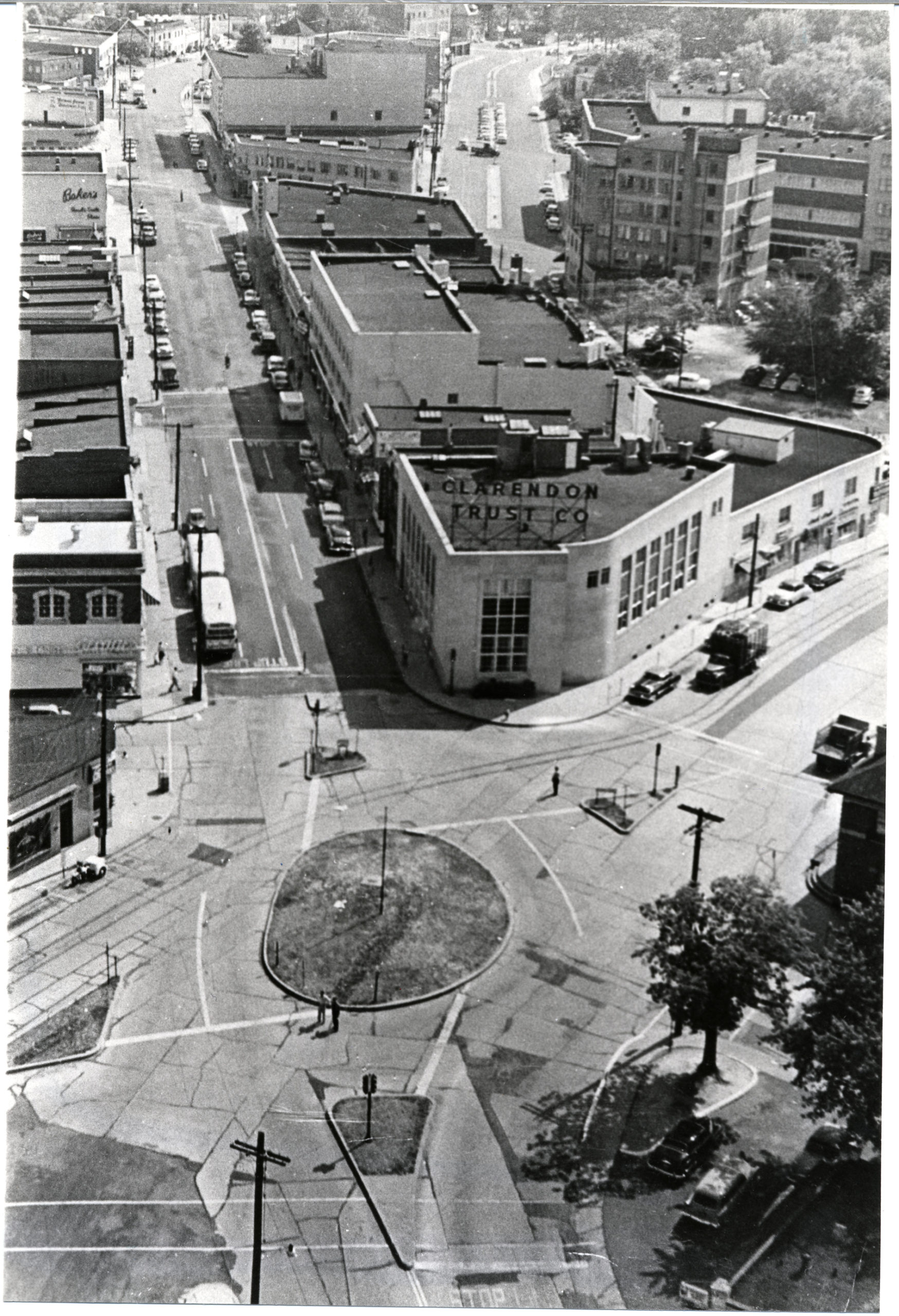
Arlington in the 1940s and 1950s was very different than it is today, but it has always remained an interesting and unique place to live. In this oral history segment, longtime Clarendon resident Ann Brock shares her memories of renting apartments in the neighborhood when she and her husband were newlyweds in the early 1950s.

230-1109p Brock

Photo of Clarendon Circle Intersection, circa 1950s. On the right is Washington Boulevard, top center is Clarendon Boulevard. and left is Wilson Boulevard.

Narrator: Ann Brock
Interviewer: Emily Curley
Date: February 27, 2019

EC: So where was the first place that you lived in Clarendon?

AB: Are you ready for this?

EC: I’m ready.

AB: Where the IHOP is now, there was a Chinese laundry and my husband and I had an apartment over top the Chinese laundry. That was our first residence.

EC: (laughs) Okay, and what was that like?

AB: It was unusual—(laughing)—but it was fun.

EC: Okay. So where did you move after that?

AB: Well, I’ve got to think because we moved quite a few places. Let me say at one point we lived on North Nelson Street in a duplex apartment there. And then we lived at what was called then, the Lehigh apartments which bordered Arlington Boulevard and the name Lehigh came from the old Arlington Boulevard being Lee Boulevard, which divided north and south. And then we moved, briefly, out to McLean and we were only there about a year and then we came back. We rented our house on Washington Boulevard for fourteen years before we purchased it.

EC: Okay. Can you describe what renting was like back then? Was it as difficult as it is now?

AB: Oh, it was nothing—when we lived in the Lehigh apartment we had a one-bedroom apartment for $37.50 a month. And then after we had our son we moved to a two-bedroom apartment in Lehigh, same place, and that was $97.50 a month. Unbelievable isn’t it?

The goal of the Arlington Voices project is to showcase the Center for Local History’s oral history collection in a publicly accessible and shareable way.

The Arlington Public Library began collecting oral histories of long-time residents in the 1970s, and since then the scope of the collection has expanded to capture the diverse voices of Arlington’s community. In 2016, staff members and volunteers recorded many additional hours of interviews, building the collection to 575 catalogued oral histories.

To browse our list of narrators indexed by interview subject, check out our community archive. To read a full transcript of an interview, visit the Center for Local History located at Central Library.

February 6, 2020 by Web Editor

  • « Go to Previous Page
  • Page 1
  • Interim pages omitted …
  • Page 16
  • Page 17
  • Page 18
  • Page 19
  • Page 20
  • Interim pages omitted …
  • Page 25
  • Go to Next Page »

Primary Sidebar

News

All library locations will be closed for Juneteenth.

Holiday: All library locations closed Fri., June 19, for Juneteenth.

All Library locations and Arlington County … ... about Holiday: All library locations closed Fri., June 19, for Juneteenth.

Read More News
See More Service Updates

Center for Local History

Three men writing on squares of the AIDS Quilt.

New: Explore 2,800+ Arlington Courier Photos

Explore more than 2,800 photos of local life in … ... about New: Explore 2,800+ Arlington Courier Photos

Read More Local History

Director’s Blog

Arlington Public Library staff marching in the 2025 D.C. World Pride Parade.

Director’s Message: Pride Month

Words Matter Arlington Public Library … ... about Director’s Message: Pride Month
More Director's Blog

Footer

About Us

  • Mission & Vision
  • Charlie Clark Center for Local History
  • News Room
  • Get Email Updates

Administration

  • Policies
  • Library Staff
  • Job Opportunities
  • Propose a Program or Partnership

Support Your Library
  • Friends of the Library
  • Giving Opportunities
  • Donating Materials
  • Volunteer Opportunities

Our Mission

We champion the power of stories, information and ideas.

We create space for culture and connection.

We embrace inclusion and diverse points of view.


Download the Library App
Download the Library App
Arlington County | Terms & Conditions | Accessibility | Site Map
· Copyright © 2026 Arlington County Government ·