Arlington Reads 2010: Know What You Eat

Here’s a little bit of last night’s Arlington Reads Community Book Discussion of Wendell Berry’s “The Memory of Old Jack,” moderated by Georgetown Professor Patrick Deneen:
Here’s a little bit of last night’s Arlington Reads Community Book Discussion of Wendell Berry’s “The Memory of Old Jack,” moderated by Georgetown Professor Patrick Deneen:

Installed: 2010
Created: 1930s, restored 2004
Material: Leaded stained glass
Permanently installed at the Westover Branch Library in 2010.
Many thanks to Cultural Affairs’ Public Art Program for helping the Library to procure the windows, as well as the previously installed granite finial. We hope that our patrons will enjoy seeing them!
Three other Tiffany windows rescued from the Abbey Mausoleum were installed at the Arlington Arts Center (now the Museum of Contemporary Art Arlington) in 2004. From an Arlington County press release:
It was the type of discovery that makes an historian’s heart quicken. Three years ago, Arlington County staff rescued 13 stained glass windows from the Abbey Mausoleum, slated for demolition.
Upon closer examination, Cultural Affairs Division and the Historic Preservation Program staff discovered a signature pane on one of the windows that read “Louis C. Tiffany, NY” which appears to be authentic, based upon typical examples Tiffany’s signature from the period and consultation with several stained glass experts.
Today, three windows have been restored to their original beauty and installed at the Arlington Arts Center, 3550 Wilson Blvd.
Twelve of the 13 original mausoleum’s windows had a simple geometric/floral composition. The 13th and largest window is religious themed, portraying Christ extending his hand in benediction. It is this window which contains the signature pane, which confirms, at minimum, this panel’s authenticity to the degree possible absent written documentation of the commission.
The window is dedicated to E. St. Clair Thompson, a wealthy Mason who was interred at the Abbey Mausoleum in 1933, and likely commissioned by his family, possibly with the rest of the geometric windows, in memoriam. The panel (as well as all the windows when originally removed from the Mausoleum in 2001) is severely damaged from years of vandalism and neglect and in storage until an appropriate mode of deaccessioning it may be determined.
The restoration and expansion of the historic Maury School for the Arlington Arts Center provided the windows with a new home. Three geometric windows were selected for restoration and installation at the Center and were successfully repaired with the use of matching glass fragments from the other Mausoleum windows that were damaged beyond repair. The windows now appear much as they did when they were first installed at the Abbey Mausoleum decades ago.
About Abbey Mausoleum
Built on a hillside overlooking Arlington Cemetery and the Potomac River in 1924, the Abbey Mausoleum was once a grand final resting-place for Washington, DC’s elite. The mausoleum, built by the United States Mausoleum Company from 1924 to 1926, was an impressive Romanesque style structure that neighbored Arlington National Cemetery and in 1942 was included within the grounds of Henderson Hall, the U.S. Marine Corps headquarters.
With its granite exterior, marble interior, and stained glass windows, the building was said to have resembled a cathedral. With the bankruptcy of the managing Abbey Mausoleum Corporation in the 1950s, the building fell victim to vandalism and neglect.
In 2000, the U.S. Navy gained ownership of the site, which it wished to redevelop. Based upon the mausoleum’s poor condition, the Navy decided to tear it down. They then assumed the enormous task of contacting the families of those interred at the mausoleum in order to relocate remains, a process which took several years. Arlington County was given the opportunity to salvage architectural features from the historic building, including the Tiffany windows.
Learn more from Arlington Public Art.
Thoughts From County Native and Arlington Public Library Director, Diane Kresh
 The last several days of wintery white-out are testament to the old adage that there can be too much of a good thing.
So when I wasn’t on County snow status conference calls, or checking on Library facilities in my all-wheel drive or concocting strange meals out of refrigerator odds and ends, how did I keep the stir crazies away? By loading up on free books and DVDs from my favorite local source, Arlington Public Library.
 For books, I dug into (and finished) Jayber Crow, penned by Wendell Berry (this year’s Arlington READS author and an early booster of the environment and proponent of sustainability: “waste not want not”) and 1968: The Year that Rocked the World, Mark Kurlanksy’s riveting account of the year that woke me up to the world (Kurlansky is also author of several great social histories including Salt and Cod).
By contrast, my DVD viewing drifted toward the more eclectic with A Fish Called Wanda (insane fun), The Station Agent (everyone needs a friend), Short Cuts (the lives of 22 Raymond Carver short story characters woven together by the masterful Robert Altman), The Taking of Pelham 1-2-3 (not the Travolta travesty; but the gritty-city original from 1974 with Robert Shaw and Walter Matthau) and Lawrence of Arabia, which I needed two full snow days to finish. Whew!!! All of these . . . and more . . . waiting for you at the Library.
So that’s what I did on my winter vacation. What did you do? Please share in the comments section below. And if you were out there taking some pics of plows, puppies in the snow, spinning tires, or just the plain old white stuff itself, please consider sharing your photos with us by sending them to libweb@arlingtonva.us.
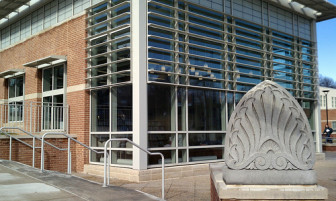
Installed: 2010
Created: 1930s, restored 2004
Materials: Granite.
Permanently installed outside the Westover Branch Library.
What’s a finial? In architecture, it’s an ornament (carved in stone or wood, or cast in plaster) that is placed at the top of an arch. Ours was originally part of the old Abbey Mausoleum in Arlington.
Many thanks to Cultural Affairs’ Public Art Program for helping the Library to procure the finial, as well as the Tiffany windows.
About Abbey Mausoleum
Built on a hillside overlooking Arlington Cemetery and the Potomac River in 1924, the Abbey Mausoleum was once a grand final resting-place for Washington, DC’s elite. The mausoleum, built by the United States Mausoleum Company from 1924 to 1926, was an impressive Romanesque style structure that neighbored Arlington National Cemetery and in 1942 was included within the grounds of Henderson Hall, the U.S. Marine Corps headquarters.
With its granite exterior, marble interior, and stained glass windows, the building was said to have resembled a cathedral. With the bankruptcy of the managing Abbey Mausoleum Corporation in the 1950s, the building fell victim to vandalism and neglect.
In 2000, the U.S. Navy gained ownership of the site, which it wished to redevelop. Based upon the mausoleum’s poor condition, the Navy decided to tear it down. They then assumed the enormous task of contacting the families of those interred at the mausoleum in order to relocate remains, a process which took several years. Arlington County was given the opportunity to salvage architectural features from the historic building, including the Tiffany windows.
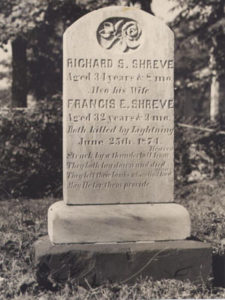 Of the two Shreve family cemeteries in Arlington, the Southern-Shreve cemetery could possibly lay claim to having a more unique history. Located on the north side of Fairfax Drive, between North Frederick and North Harrison streets, the cemetery sat near the property of Richard and Frances (Redin) Southern. Richard Southern was a landscape architect and horticulturist, who became known for pioneering the use of the tomato as a food. It may seem hard to believe in these modern times, but prior to Southern’s efforts, the tomato was widely regarded as being poisonous and was only used for decorative purposes.
The land was given as a dowry by Frances Redin’s brother, a prominent Georgetown attorney, and was the burial place of John Redin, father of Frances and her brother. This generous act may have been precipitated by the fact that the Southerns cared for John Redin during his final years. He was buried in the garden of the Southern’s home in 1832, his gravestone being the first in what was to become the family cemetery.
Being neighbors of the Shreves, Birches, and Balls, the families intermarried and the house and property remained in the Shreve family until 1904.
There are approximately 20 marked stones in the cemetery, which is still in fairly good condition today, with the most notable being that of Richard and Francis Shreve, who were both killed by lightning on June 25th, 1874. The inscription reads: “Struck by a thunderbolt from Heaven, they both lay down and died, they left three lambs whom God had given them, may he for them provide.”
What About You?
Do you have any stories involving local family history? Let us know!
Here we come a caroling—‘tis the season to be seasonal. It’s that most wonderful time of the year for decking and hauling, tinseling and snowballing (at least somewhere), so it’s time for another list of much beloved songs to drive the dark away. In looking over last year’s inaugural list, I see we have a hard act to follow. Decisions, decisions—whether to go ironic or indie? Caroler or crooner? Classical or comedy? Hipster or hippie? Rhythm ‘n’ blues-er or rocker? Too much to choose from because ANYONE who has ever dared to call himself or herself a singer has made an album or two (or three) of seasonal favorites, those tunes that nestle in like ear worms as the Macy’s T-Day balloons are launched, not to be freed until early January.
Much as I did last year, I decided to go for the eclectic sampler, the kind of box of treats my family used to buy at the Russell Stover Candies store at Seven Corners Shopping Mall.
No barking dogs, no marauding reindeer committing granny-cide, no warbling, woodland rodents, and not a lot you’re likely to hear in the grocery aisles. Not even a Bob Dylan re-interpretation (too scary). Just a little of this and a little of that—something new, something blue and maybe a tune (or two) new to you.
So grab a hot cuppa, slip into a Snuggie and, once again click, spin or play your way into the holidays. And post a comment below with YOUR list of favorites—be they musical, audio-visual, photographic, literary or memories of the most notable gifts ever given or received as you and yours celebrate the best of the season—be it Christmas, Eid, Hanukah, Kwanzaa, Diwali, the Solstice or any other.
Repeat the sounding joy. . .
10. “Winter Wonderland”—Rosemary Clooney. Long before there was dreamy George there was his Aunt Rosie, one of the best of the canaries (girl singers) to come outta the Big Band era. She really swings, "are you listening?"
9. “Do You Hear What I Hear”—The Roches (from “We Three Kings”). A trio of hip sisters, neo-folkies with a twist. I picked this one because I like the song so much but the whole deal is great.
8. “Jingle Bells”—Barbra Streisand. On steroids. A frighteningly fast take on a holiday classic, recorded in 1967 when La Barbra was no doubt still channeling Fanny Brice. Catch it if you can; it must be heard to be believed.
7. “Greensleeves”—John Coltrane, live in 1961 at the fabled Village Vanguard with his greatest band ever, featuring pianist McCoy Tyner, bassist Jimmy Garrison and drummer Elvin Jones.
6. “River”—Herbie Hancock: The Joni Letters.
It's coming on Christmas.
They're cutting down trees.
They're putting up reindeer.
And singing songs of joy and peace.
Herbie and Joni, it doesn’t get any better than this.
5. "The Wild Wood Carol”—Cambridge Singers (from “Christmas Day in the Morning”), conducted by John Rutter. After a nine millionth hearing of the John Rutter “Gloria” last Christmas, a friend of mine remarked that he was going to devote the rest of his life to destroying every extant recording of it. But that’s Rutter the composer. Rutter the choral conductor puts the Brit stiff upper lip to good use with this crystalline clear collection of classics that stays in my CD changer throughout the whole of December.
4. “A Christmas Song”—Charles Bressler and Ned Rorem (from “Rorem: Songs of Rorem”). And for the truly adventuresome, check out Susan Graham’s “Songs of Ned Rorem.” Take special note of “Stopping by Woods on a Snowy Evening.” Luscious.
3. “Santa Claus is Back in Town”—Elvis Presley. The King. 
2. “Run Run Rudolph”—Chuck Berry. Hey hey my my. Rock and roll will never die.
1. “Have Yourself A Merry Christmas”—The Carpenters. Last year I closed my list with Judy Garland’s version . With this pick, I am starting a tradition within a tradition, to close with a different cover of my super all-time fave song of the season. I own a lot of versions and there are scores out there--even one by Twisted Sister. So we should be more than good until 2050. And still I will never, ever put Bob Dylan’s version on this list.
Bonus Tracks: One silly, one serious and one off-the-wall.
 1. “Simply Having a Wonderful Christmas Time”—Wings. Sir Paul McCartney doing what he does best. Tossing off a little nothing and making it all look easy.
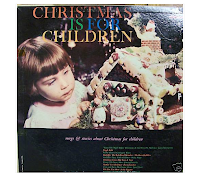
2. “I Fell Out of A Christmas Tree”—Little Rita Faye. Okay. This is the off-the-wall one. From a goofy and strange Christmas album I owned when I was a kid. It had Lionel Barrymore reading ‘Twas the Night Before Christmas, among other strangenesses. The whole thing is just plain weird.
3. “The Holly and the Ivy”—The Medieval Babes. The whole album is a little new agey and other worldly.
Thoughts From County Native and Arlington Public Library Director, Diane Kresh
 It was announced at today’s County Board Meeting that Arlington Public Library was voted “Best Place to Learn Something New” in the 2009 Arlington’s Best Best Business (People’s Choice “ABBIES”) Awards. Thanks for all your support!
 In accepting this award, we, the staff of Arlington Public Library, are simply building on the groundwork laid by the remarkable women of Arlington in the early days of the 20th century. They had no money, no books, no knowledge of library procedures. But what they did have was vision, heart and moxie. Operating out of spaces scrounged from likely and unlikely places–a double garage, a school, a storefront, the second floor of a bank, a venerable town hall, a fire house–these mighty women, known variously as the Cherrydale League of Women Voters, the Women’s Civic Club of Clarendon, the Arlington Community Club, the Jefferson District Women’s Club, the Library Committee of the Aurora Hills Garden Club grew Arlington Public Library one book and one building at a time.
And they were not afraid of doing it for themselves.
When a roof leaked over a circulation desk at one location, they plugged the hole with blotter paper. When they needed money for books and supplies, they baked and sponsored lectures. When the properties their libraries were housed in sold, they packed and took their shows down the road, to other locations.
In 1937, “the libraries” became a department within the County government with an annual budget of $3500 and a newly minted trained librarian. The goal was to begin to create the system of seven branches plus Central we enjoy today. Mrs. Nat Hynes, Mrs. Fred A. Lyons, Mrs. Frances V. Speek, Mrs. C.C. Nikiforoff and many others, hometown heroes whose names you won’t come across in the standard history texts, but whose collective will and determination speaks volumes. Ms. Robert Livingston summed it up best when she said in an article that appeared in the Washington Star in 1938: “Where there’s a woman’s will in a good cause, she generally finds the way, if she refuses to become discouraged.” I think it’s safe to say that this was a bunch of women who did not get discouraged.
The facts in this brief entry are courtesy of the Virginia Room of the Arlington Public Library, a treasure trove of Arlington’s unsung heroes if there ever was one. So if you are reading this, thank a librarian.And thanks for learning with us.
See you again soon.
Diane
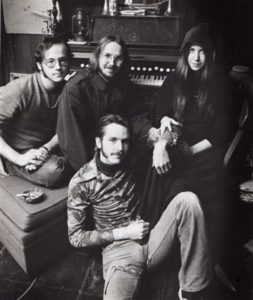 Progressive rock… I’m sure that some of you still have a few King Crimson, Yes, Moody Blues, or Emerson, Lake, & Palmer albums lurking in your collections somewhere. While never approaching the popularity of the aforementioned groups, Arlington’s very own entry into the progressive rock sound of the 70’s, The Seventh Dawn, had a story arguably as unique as any, and a sound that avoided the pitfall of many of their superstar contemporaries, which has led to a modest, but well deserved reappraisal of the band that few could have predicted.
Essentially a songwriting project of three brothers, Heff, Bil, and Eric Munson, along with Heff’s girlfriend and wife-to-be Ann, The Seventh Dawn was formally launched in 1973. In early 1975, a college friend at Virginia Commonwealth University suggested the band record a vinyl record to accompany a “mock-up album cover” he was doing as an art assignment. Using the recording equipment available at the school’s electronic music laboratory, the resulting album, “Sunrise”, was completed in 1976. 200 copies of the disc were pressed. Though the recording was primitive by the standards of the day, there was no denying the quiet power and charm of the performances, and the songwriting was strong throughout. “Sunrise” reflected the tastes of the members, with strains of The Beatles, King Crimson, and progressive British folk acts such as Steeleye Span and Renaissance being evident.
A follow-up album, “Dreams” was recorded, but not released due to financial constraints. Weathering numerous lineup changes, the band soldiered on until breaking up 1981.
Years later, fate intervened when their seemingly forgotten album found its way into the hands of serious record buffs in the 1990’s, fetching a very expensive price on the collectors market. This resulted in the album’s reissue on vinyl, and eventually, a 2007 reissue on CD with bonus tracks, and, the release of the long deferred second album, “Dreams” as well.
What About You? Do you remember The Seventh Dawn? Let us know!
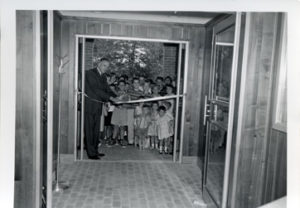
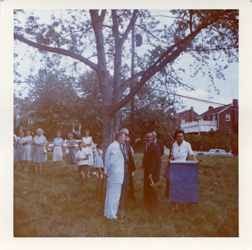
The new Westover Branch Library opened October 31, 2009, at the corner of Washington Boulevard and N. McKinley Road. It is a dual use facility shared with the schools and located on the site of the original Walter Reed School.
When the previous building opened in 1963, 3000 books were borrowed on the first day, a record number of check-outs for a single day at that time, according to then library director Jane Nida.
The whole library system was expanding during this period, and at one of the dedications, County Board member Roye Lowry made the following remarks, a reminder of the importance and power of libraries:
“The serenity of this building and the quiet atmosphere of its interior should not mislead us, for this is meant to be an exciting and even dangerous place…Awaiting us here will be the best and the worst in ourselves and in all men…If you enter this place, you shall not leave unmarked, for this is a place where illusions are shattered, where prejudices are destroyed, where hopes and ideals are kindled anew…
A library is a dangerous place for anyone who is afraid of new ideas. I hope that we will always keep it that way.”
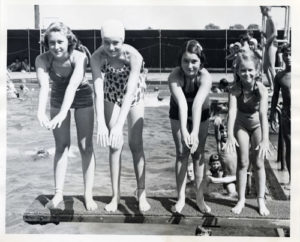
The young girls above are enjoying a rarity in Arlington County: swimming in an outdoor pool.
Although there are private swim clubs all over Northern Virginia, Arlington has only one outdoor public pool, at Upton Hill, which is part of the Northern Virginia Regional Park Authority, not the county.
Young people in Arlington were still able to learn to swim. The county was unique in that by 1968, there were indoor pools and instruction at every public senior and junior high school. However, swimming outside during the summer could be more difficult. The Department of Parks and Recreation tried to help with their summer day camp program. New in the summer of 1953, campers went biweekly to “the Marine Corps pool” and “the Middleburg pool” according to the annual report. That report specifically stated “[b]ecause of lack of facilities, swimming and golf are not a part of the Department’s sports activities.” Today, classes are still offered through the county – year-round, inside.
What About You?
Where did you go swimming in Arlington? Did you attend the county’s day camp? Do you know anything about “the Marine Corps pool” and “the Middleburg pool”? Let us know what you remember!